Author: Imported Author 1852151

  • COVID vaccines available for Louisiana residents at these Miss-Lou area pharmacies

    COVID vaccines available for Louisiana residents at these Miss-Lou area pharmacies

    Starting the week of January 4, Louisiana will receive the first very limited doses of Moderna’s COVID-19 vaccine that will be available at approximately 100 pharmacies across the state.

    These vaccines will be available only for:

    • People 70 years old and above
    • Ambulatory/outpatient care personnel
    • People being treated for end stage renal disease (patients on dialysis)
    • Schools of allied health students/residents/staff
    • Home agency patients and personnel

    In the Miss-Lou area, participating pharmacies include:

    Concordia Parish – Book’s Pharmacy in Vidalia  (318) 414-2616 

    Franklin Parish – K & S Drugs in Winnsboro  (318) 435-7858

    Rapides Parish – Holloway Pharmacy in Pineville  (318) 466-3113

    West Feliciana Parish – St. Francisville Pharmacy  (225) 245-5141

    Click HERE for Vaccine locations in the rest of Louisiana.

    Patients must contact a participating pharmacy and make an appointment at the pharmacy. Patients who arrive without an appointment will not be vaccinated. Vaccinations are BY APPOINTMENT ONLY. Do not arrive at a location without an appointment.

  • After naming Nashville suicide bombing suspect, focus turns to motive

    After naming Nashville suicide bombing suspect, focus turns to motive

    By KIMBERLEE KRUESI, MICHAEL BALSAMO and ERIC TUCKER

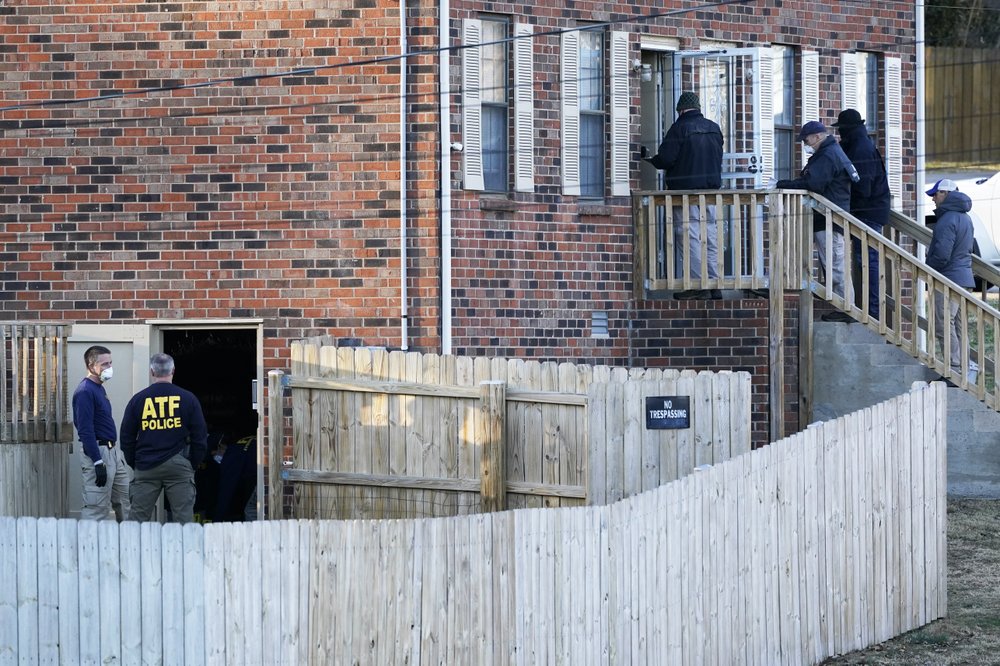
    NASHVILLE, Tenn. (AP) — With federal officials having identified the man believed to be behind Nashville’s Christmas Day bombing, authorities now turn to the monumental task of piecing together the motive behind the explosion that severely damaged dozens of downtown buildings and injured three people.

    While officials on Sunday named Anthony Quinn Warner, 63, as the man behind the mysterious explosion in which he was killed, the motive has remained elusive.

    “We hope to get an answer. Sometimes, it’s just not possible,” David Rausch, the director of the Tennessee Bureau of Investigation said in a Monday interview on TODAY. “The best way to find motive is to talk to the individual. We will not be able to do that in this case.”

    In just a few days, hundreds of tips and leads have been submitted to law enforcement agencies. Yet thus far, officials have not provided information on what possibly drove Warner to set off the explosion. According to officials, he had not been on the radar before Christmas. A TBI records report released Monday showed that Warner’s only arrest was for a 1978 marijuana-related charge.

    “It does appear that the intent was more destruction than death but again that’s all still speculation at this point as we continue in our investigation with all our partners,” Rausch added.

    Furthermore, officials have not provided insight into why Warner selected the particular location for the bombing, which damaged an AT&T building and continued to wreak havoc on cellphone service and police and hospital communications in several Southern states as the company worked to restore service.

    Forensic analysts were reviewing evidence collected from the blast site to try to identify the components of the explosives as well as information from the U.S. Bomb Data Center for intelligence and investigative leads, according to a law enforcement official who said investigators were examining Warner’s digital footprint and financial history, as well as a recent deed transfer of a suburban Nashville home they searched.

    The official, who was not authorized to discuss an ongoing investigation and spoke to the AP on condition of anonymity, said federal agents were examining a number of potential leads and pursuing several theories, including the possibility that the AT&T building was targeted.

    Korneski said Sunday that officials were looking at any and all motives and were interviewing acquaintances of Warner’s to try to determine what may have motivated him.

    The bombing took place on a holiday morning well before downtown streets were bustling with activity and was accompanied by a recorded announcement warning anyone nearby that a bomb would soon detonate. Then, for reasons that may never be known, the audio switched to a recording of Petula Clark’s 1964 hit “Downtown” shortly before the blast.

    Warner, who public records show had experience with electronics and alarms and who had also worked as a computer consultant for a Nashville realtor, had been regarded as a person of interest in the bombing since at least Saturday, when federal and local investigators converged on the home linked to him.

    Federal agents could be seen looking around the property, searching the home and the backyard. A Google Maps image captured in May 2019 had shown a recreational vehicle similar to the one that exploded parked in the backyard, but it was not at the property on Saturday, according to an Associated Press reporter at the scene.

    On Sunday morning, police formally named Warner as being under investigation.

    Officials said their identification of Warner relied on several key pieces of evidence, including DNA found at the explosion site. Investigators had previously revealed that human remains had been found in the vicinity.

    In addition, investigators from the Tennessee Highway Patrol recovered parts from the RV among the wreckage from the blast, and were able to link the vehicle identification number to an RV that was registered to Warner, officials said.

    “We’re still following leads, but right now there is no indication that any other persons were involved,” Korneski said. “We’ve reviewed hours of security video surrounding the recreation vehicle. We saw no other people involved.”

    Police were responding to a report of shots fired Friday when they encountered the RV blaring a recorded warning that a bomb would detonate in 15 minutes. Suddenly the warning stopped, and “Downtown” started playing.

    The RV exploded shortly afterward, sending black smoke and flames billowing from the heart of downtown Nashville’s tourist scene, an area packed with honky-tonks, restaurants and shops.

    Buildings shook and windows shattered streets away from the explosion near a building owned by AT&T that lies one block from the company’s office tower, a landmark in downtown.

    But on Sunday, just blocks from where the bombing took place, tourists had already begun to fill the sidewalks on Lower Broadway, a central entertainment district. Some took selfies while others tried to get as close as possible to the explosion site, blocked by police barricades.

    Earlier Sunday, the officers who responded provided harrowing details, at times getting choked up reliving the moments that led up to the blast.

    “This is going to tie us together forever, for the rest of my life,” Metro Nashville police Officer James Wells, who suffered some hearing loss due to the explosion, told reporters at a news conference. “Christmas will never be the same.”

    Officer Brenna Hosey said she and her colleagues knocked on six or seven doors in nearby apartments to warn people to evacuate. She particularly remembered a startled mother of four children.

    “I don’t have kids but I have cousins and nieces, people who I love who are small,” Hosey said, adding she had to plead with the family to leave the building as quickly as possible.

    ___

    Balsamo and Tucker reported from Washington. Associated Press journalists Scott Stroud and Mark Humphrey in Nashville contributed to this report.

  • Jupiter, Saturn merging in night sky, closest in centuries

    Jupiter, Saturn merging in night sky, closest in centuries

    CAPE CANAVERAL, Fla. (AP) — Jupiter and Saturn will merge in the night sky Monday, appearing closer to one another than they have since Galileo’s time in the 17th century.

    Astronomers say so-called conjunctions between the two largest planets in our solar system aren’t particularly rare. Jupiter passes its neighbor Saturn in their respective laps around the sun every 20 years.

    But the one coming up is especially close: Jupiter and Saturn will be just one-tenth of a degree apart from our perspective or about one-fifth the width of a full moon. They should be easily visible around the world a little after sunset, weather permitting.

    Toss in the winter solstice in the Northern Hemisphere, the longest night of the year — and the summer solstice in the Southern Hemisphere — and this just-in-time-for-Christmas spectacle promises to be one of the greatest of Great Conjunctions.

    “What is most rare is a close conjunction that occurs in our nighttime sky,” said Vanderbilt University’s David Weintraub, an astronomy professor. “I think it’s fair to say that such an event typically may occur just once in any one person’s lifetime, and I think ‘once in my lifetime’ is a pretty good test of whether something merits being labeled as rare or special.”

    It will be the closest Jupiter-Saturn pairing since July 1623, when the two planets appeared a little nearer. This conjunction was almost impossible to see, however, because of its closeness to the sun.  Considerably closer and in plain view was the March 1226 conjunction of the two planets — when Genghis Khan was conquering Asia. Monday’s conjunction will be the closest pairing that is visible since way back then.

    Saturn and Jupiter have been drawing closer in the south-southwest sky for weeks. Jupiter — bigger and closer to Earth — is vastly brighter.

    “I love watching them come closer and closer to each other and the fact that I can see it with my naked eyes from my back porch!” Virginia Tech astronomer Nahum Arav said in an email.

    To see it, be ready shortly after sunset Monday, looking to the southwest fairly low on the horizon. Saturn will be the smaller, fainter blob at Jupiter’s upper right. Binoculars will be needed to separate the two planets.

    Despite appearances, Jupiter and Saturn will actually be more than 450 million miles (730 million kilometers) apart. Earth, meanwhile, will be 550 million miles (890 million kilometers) from Jupiter.

    A telescope will not only capture Jupiter and Saturn in the same field of view, but even some of their brightest moons.

    Their next super-close pairing: March 15, 2080.

  • Louisiana lieutenant governor tests positive for COVID-19

    Louisiana lieutenant governor tests positive for COVID-19

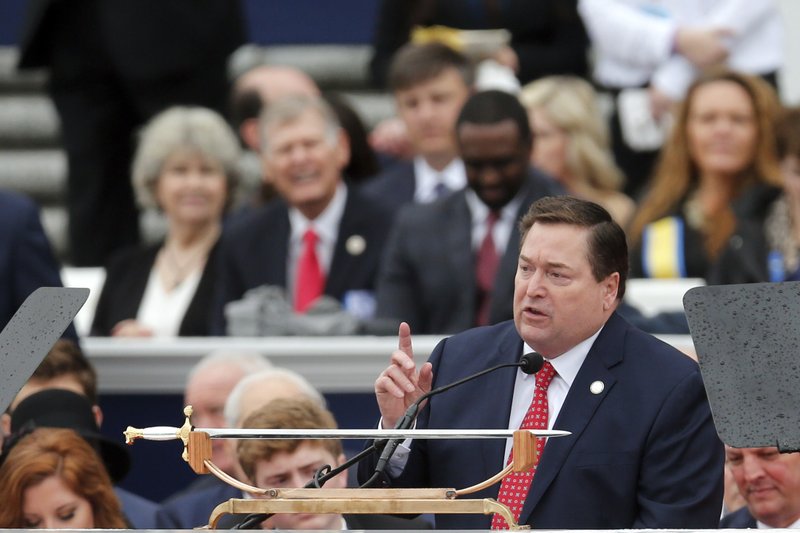
    BATON ROUGE, La. (AP) — Lt. Gov. Billy Nungesser said he has COVID-19 and is resting at home with mild symptoms, becoming Louisiana’s fourth statewide elected official to test positive for the coronavirus disease.

    Nungesser, a Republican in his second term as lieutenant governor, confirmed in a Wednesday night Twitter post that he tested positive for COVID-19.

    “Thank you to everyone for your prayers. Today, I tested positive for #COVID but have very mild symptoms. Will be resting up and feeling better soon! As we head into the holidays, my thoughts and prayers are with all those affected by COVID,” he tweeted.

    Nungesser told The News-Star that he’s “reaching out to everybody I’ve seen in the last few days” to notify them of his infection. He said his mild symptoms include a fever, but no breathing problems.

    The lieutenant governor joins three other Republican statewide elected officials in Louisiana who have previously had COVID-19 and have since recovered: U.S. Sen. Bill Cassidy, Attorney General Jeff Landry and Treasurer John Schroder.

  • Louisiana man jailed for life over $20 marijuana sale has been freed

    Louisiana man jailed for life over $20 marijuana sale has been freed

    Winslow’s life sentence appealed on the grounds of ineffective assistance of counsel

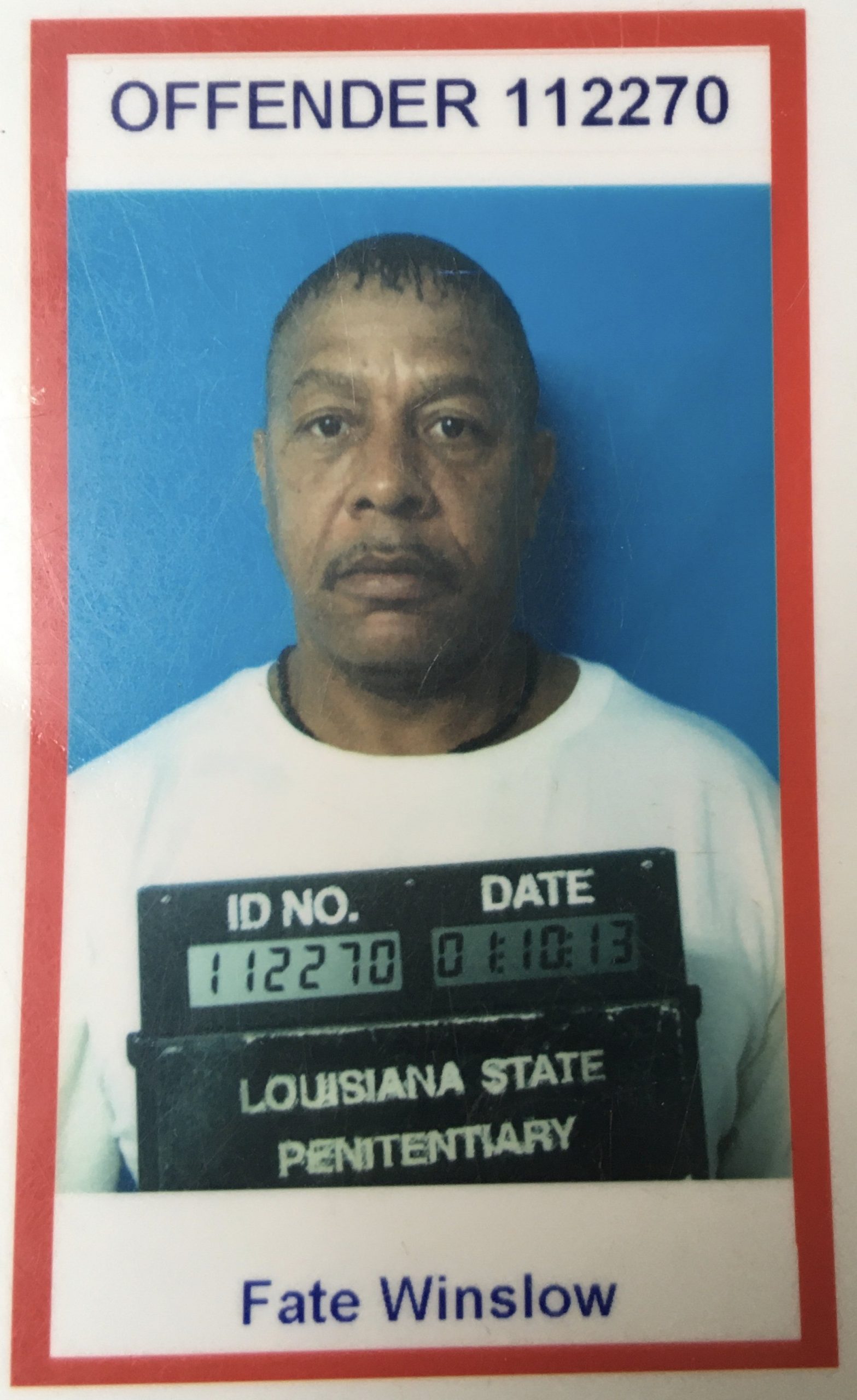
    NEW ORLEANS (AP) — A Louisiana man who was arrested and sentenced to life for selling $20 in marijuana to undercover officers when he was homeless has been freed from prison.

    WWL-TV reported that Fate Winslow was released from Louisiana State Penitentiary at Angola on Wednesday and was on his way back home after serving 12 years of a life sentence.

    “I was so happy to get out,” Winslow told WWL-TV after his release. “A life sentence for two bags of weed? I never thought something like that could happen.”

    Winslow was sentenced under the state’s repeat offender law. His case has garnered attention as the Louisiana wrestles with criminal justice issues and overincarceration.

    According to the station, Winslow was approached by undercover officers in Shreveport in 2008, and they asked him where they could get some marijuana. Winslow borrowed a bike, went and found some marijuana and came back to give it to the officers who then gave him $5 so he could buy some food, according to his attorneys at the Innocence Project New Orleans.

    Winslow had already been convicted of three previous non-violent crimes stretching from when he was a 17-year-old to when he was 36, making him susceptible to the state’s repeat offender law.

    The Innocence Project New Orleans took up his case, appealing his life sentence on the grounds of ineffective assistance of counsel. He was eventually re-sentenced to time served. The director of the Innocence Project New Orleans, Jee Park, said Winslow received an “obscenely excessive sentence given his life circumstances and crime, and today, we are correcting that unconstitutional, inhumane sentence.”

  • Chuck Yeager, 1st Person To Break The Sound Barrier, Dies At 97

    Chuck Yeager, 1st Person To Break The Sound Barrier, Dies At 97

    Yeager, from a small town in the hills of West Virginia, flew for more than 60 years, including piloting an X-15 to near 1,000 mph at Edwards in October 2002 at age 79.

    Retired Air Force Brig. Gen. Charles “Chuck” Yeager, the World War II fighter pilot ace and quintessential test pilot who showed he had the “right stuff” when in 1947 he became the first person to fly faster than sound, has died. He was 97.

    Yeager died Monday, his wife, Victoria Yeager, said on his Twitter account. “It is w/ profound sorrow, I must tell you that my life love General Chuck Yeager passed just before 9pm ET. An incredible life well lived, America’s greatest Pilot, & a legacy of strength, adventure, & patriotism will be remembered forever.”

    Yeager’s death is “a tremendous loss to our nation,” NASA Administrator Jim Bridenstine said in a statement.

    “Gen. Yeager’s pioneering and innovative spirit advanced America’s abilities in the sky and set our nation’s dreams soaring into the jet age and the space age. He said, ‘You don’t concentrate on risks. You concentrate on results. No risk is too great to prevent the necessary job from getting done,’” Bridenstine said.

    “In an age of media-made heroes, he is the real deal,” Edwards Air Force Base historian Jim Young said in August 2006 at the unveiling of a bronze statue of Yeager.

    He was “the most righteous of all those with the right stuff,” said Maj. Gen. Curtis Bedke, commander of the Air Force Flight Test Center at Edwards.

    Yeager, from a small town in the hills of West Virginia, flew for more than 60 years, including piloting an X-15 to near 1,000 mph (1,609 kph) at Edwards in October 2002 at age 79.

    “Living to a ripe old age is not an end in itself. The trick is to enjoy the years remaining,” he said in “Yeager: An Autobiography.”

    “I haven’t yet done everything, but by the time I’m finished, I won’t have missed much,” he wrote. “If I auger in (crash) tomorrow, it won’t be with a frown on my face. I’ve had a ball.”

    On Oct. 14, 1947, Yeager, then a 24-year-old captain, pushed an orange, bullet-shaped Bell X-1 rocket plane past 660 mph to break the sound barrier, at the time a daunting aviation milestone.

    “Sure, I was apprehensive,” he said in 1968. “When you’re fooling around with something you don’t know much about, there has to be apprehension. But you don’t let that affect your job.”

    The modest Yeager said in 1947 he could have gone even faster had the plane carried more fuel. He said the ride “was nice, just like riding fast in a car.”

    Yeager nicknamed the rocket plane, and all his other aircraft, “Glamorous Glennis” for his wife, who died in 1990.

    Yeager’s feat was kept top secret for about a year when the world thought the British had broken the sound barrier first.

    “It wasn’t a matter of not having airplanes that would fly at speeds like this. It was a matter of keeping them from falling apart,” Yeager said.

    Sixty-five years later to the minute, on Oct. 14, 2012, Yeager commemorated the feat, flying in the back seat of an F-15 Eagle as it broke the sound barrier at more than 30,000 feet (9,144 meters) above California’s Mojave Desert.

    His exploits were told in Tom Wolfe’s book “The Right Stuff,” and the 1983 film it inspired.

    Yeager was born Feb. 23, 1923, in Myra, a tiny community on the Mud River deep in an Appalachian hollow about 40 miles southwest of Charleston. The family later moved to Hamlin, the county seat. His father was an oil and gas driller and a farmer.

    “What really strikes me looking over all those years is how lucky I was, how lucky, for example, to have been born in 1923 and not 1963 so that I came of age just as aviation itself was entering the modern era,” Yeager said in a December 1985 speech at the Smithsonian Air and Space Museum.

    “I was just a lucky kid who caught the right ride,” he said.

    Yeager enlisted in the Army Air Corps after graduating from high school in 1941. He later regretted that his lack of a college education prevented him from becoming an astronaut.

    He started off as an aircraft mechanic and, despite becoming severely airsick during his first airplane ride, signed up for a program that allowed enlisted men to become pilots.

    Yeager shot down 13 German planes on 64 missions during World War II, including five on a single mission. He was once shot down over German-held France but escaped with the help of French partisans.

    After World War II, he became a test pilot beginning at Wright-Patterson Air Force Base in Dayton, Ohio.

    Among the flights he made after breaking the sound barrier was one on Dec. 12. 1953, when he flew an X-1A to a record of more than 1,600 mph. He said he had gotten up at dawn that day and went hunting, bagging a goose before his flight. That night, he said, his family ate the goose for dinner.

    He returned to combat during the Vietnam War, flying several missions a month in twin-engine B-57 Canberras making bombing and strafing runs over South Vietnam.

    Yeager also commanded Air Force fighter squadrons and wings, and the Aerospace Research Pilot School for military astronauts.

    “I’ve flown 341 types of military planes in every country in the world and logged about 18,000 hours,” he said in an interview in the January 2009 issue of Men’s Journal. “It might sound funny, but I’ve never owned an airplane in my life. If you’re willing to bleed, Uncle Sam will give you all the planes you want.”

    When Yeager left Hamlin, he was already known as a daredevil. On later visits, he often buzzed the town.

    “I live just down the street from his mother,” said Gene Brewer, retired publisher of the weekly Lincoln Journal. “One day I climbed up on my roof with my 8 mm camera when he flew overhead. I thought he was going to take me off the roof. You can see the treetops in the bottom of the pictures.”

    Yeager flew an F-80 under a Charleston bridge at 450 mph on Oct. 10, 1948, according to newspaper accounts. When he was asked to repeat the feat for photographers, Yeager replied: “You should never strafe the same place twice ’cause the gunners will be waiting for you.”

    Yeager never forgot his roots and West Virginia named bridges, schools and Charleston’s airport after him.

    “My beginnings back in West Virginia tell who I am to this day,” Yeager wrote. “My accomplishments as a test pilot tell more about luck, happenstance and a person’s destiny. But the guy who broke the sound barrier was the kid who swam the Mud River with a swiped watermelon or shot the head off a squirrel before going to school.”

    Yeager was awarded the Silver Star, the Distinguished Flying Cross, the Bronze Star, the Air Medal and the Purple Heart. President Harry S. Truman awarded him the Collier air trophy in December 1948 for his breaking the sound barrier. He also received the Presidential Medal of Freedom in 1985.

    Yeager retired from the Air Force in 1975 and moved to a ranch in Cedar Ridge in Northern California where he continued working as a consultant to the Air Force and Northrop Corp. and became well known to younger generations as a television pitchman for automotive parts and heat pumps.

    He married Glennis Dickhouse of Oroville, California, on Feb. 26, 1945. She died of ovarian cancer in December 1990. They had four children: Donald, Michael, Sharon and Susan.

    Yeager married 45-year-old Victoria Scott D’Angelo in 2003.

  • House votes to decriminalize marijuana at federal level

    House votes to decriminalize marijuana at federal level

    The bill, which passed 228-164, now goes to the Republican-controlled Senate, where it is unlikely to advance.

    WASHINGTON (AP) — The Democratic-controlled House on Friday approved a bill to decriminalize and tax marijuana at the federal level, reversing what supporters called a failed policy of criminalization of pot use and taking steps to address racial disparities in enforcement of federal drug laws.

    Opponents, mostly Republicans, called the bill a hollow political gesture and mocked Democrats for bringing it up at a time when thousands of Americans are dying from the coronavirus pandemic.

    “With all the challenges America has right now, (Republicans) think COVID relief should be on the floor, but instead, the Democrats put cats and cannabis” on the House floor, said House Minority Leader Kevin McCarthy, R-Calif. “They’re picking weed over the workers. They’re picking marijuana over (providing) the much-needed money we need to go forward″ to address the pandemic.

    McCarthy’s comment about cats referred to a separate bill approved by the House to ban private ownership of big cats such as lions and tigers, a measure boosted by the Netflix series “Tiger King.″ That bill, approved by the House on Thursday, would allow most private zoos to keep their tigers and other species but would prohibit most public contact with the animals.

    Democrats said they can work on COVID-19 relief and marijuana reform at the same time and noted that the House passed a major pandemic relief bill in May that has languished in the Senate.

    Supporters say the pot bill would help reverse adverse effects of the decades-long “war on drugs” by removing marijuana, or cannabis, from the list of federally controlled substances while allowing states to set their own rules on pot. The bill also would use money from an excise tax on marijuana to address the needs of groups and communities harmed by the drug war and provide for the expungement of federal marijuana convictions and arrests.

    “For far too long, we have treated marijuana as a criminal justice problem instead of as a matter of personal choice and public health,″ said Rep. Jerry Nadler, D-N.Y., chairman of the House Judiciary Committee and a key sponsor of the bill. “Whatever one’s views are on the use of marijuana for recreational or medicinal use, the policy of arrests, prosecution and incarceration at the federal level has proven unwise and unjust.″

    The vote comes at a time when most Americans live in states where marijuana is legal in some form, and lawmakers from both parties agreed that national cannabis policy has lagged woefully behind changes at the state level. That divide has created a host of problems — loans and other banking services, for example, are hard to get for many marijuana companies because pot remains illegal at the federal level.

    Four states, including New Jersey and Arizona, passed referendums allowing recreational cannabis. Voters made Oregon the first state in the nation to decriminalize possession of small amounts of cocaine, heroin and methamphetamine.

    Rep. Barbara Lee, D-Calif., called the House bill an important racial justice measure. Lee, who is Black, said the bill is the product of years of work by a range of advocates and is long overdue.

    The bill “is a major step, mind you, a major step toward ending the unjust war on drugs and racial inequities that are central to these laws,″ Lee said.

    The bill also would open up more opportunities for marijuana businesses, including access to Small Business Administration loans to help ensure that minorities can take part in an industry dominated by white famers and growers. “This is a job-creating industry, and (the bill) also provides economic opportunities for minority-owned business owners,” Lee said.

    The bill, which passed 228-164, now goes to the Republican-controlled Senate, where it is unlikely to advance. A related bill that would give pot businesses access to traditional banking services has languished in the Senate after being approved by the House last year.

    Louisiana Rep. Steve Scalise, the No. 2 House Republican, said GOP lawmakers have been pushing for weeks to bring up a bill that allows small businesses to receive another round of Paycheck Protection Program loans. Many small businesses are struggling or have closed as a result of the pandemic.

    If House Speaker Nancy Pelosi brought the GOP bill to the House floor, “it would get over 400 votes,″ Scalise told Fox News. ”And yet, she’s actually focused more on legalizing pot this week than on helping those small businesses with PPP loans. It’s just unbelievable how tone deaf (Democrats) are to these small businesses and the jobs, the families that are tied to them.”

    Among its provisions, the legislation would authorize a 5% sales tax on marijuana products to fund programs aimed at assisting people and communities harmed in the so-called war on drugs, such as job training and legal aid. It also would require federal courts to expunge prior marijuana convictions.

    The Big Cat Public Safety Act also is unlikely to move forward in the Senate.

    Sen. Ted Cruz, R-Texas, criticized Democrats, saying in a tweet that they are moving to “Prosecute Tiger King” rather than address issues related to the COVID-19 pandemic.

    But Carole Baskin, whose animal rescue organization is featured in the Netflix series, said the legislation would culminate a decades-long effort to end abuse of tiger cubs and other big cats, and protect the public and first responders from injuries and death.

    “None of these important goals are partisan in any way, and we hope the Senate will follow suit quickly to make it into law,″ said Baskin, CEO and founder of Florida-based Big Cat Rescue.

  • Patrick Quinn, co-founder of ALS Ice Bucket Challenge, dies at 37

    Patrick Quinn, co-founder of ALS Ice Bucket Challenge, dies at 37

    The ALS ice bucket challenge has raised more than $200 million worldwide for Lou Gehrig’s disease research.

    patrick quinn

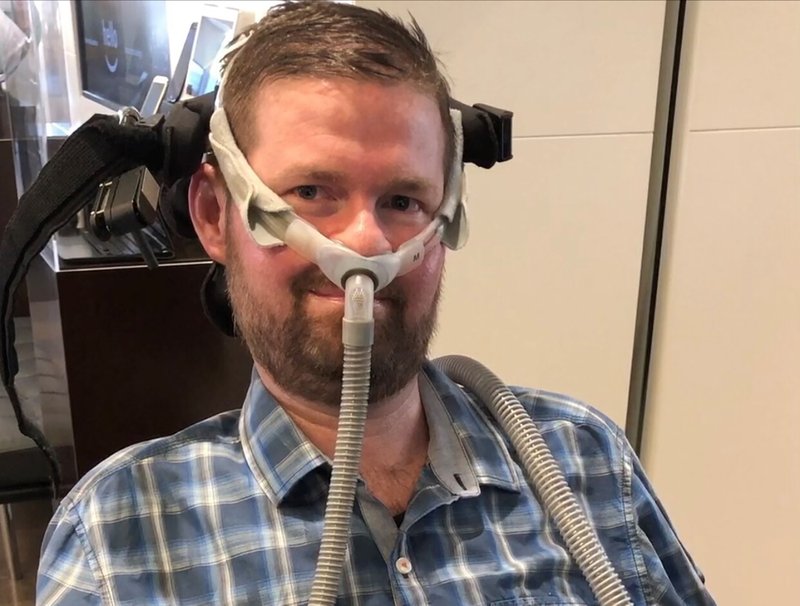
    Pat Quinn was diagnosed with Lou Gehrig’s disease, also known as amyotrophic lateral sclerosis, in 2013, a month after his 30th birthday, the organization said in a statement announcing his death.


    “Pat fought ALS with positivity and bravery and inspired all around him,” the association said. “Those of us who knew him are devastated but grateful for all he did to advance the fight against ALS. … Our thoughts are with the Quinn family and all of his friends and supporters. Pat was loved by many of us within the ALS community and around the world.”

    In 2014, Quinn saw the ice bucket challenge on the social media feed of professional golfer Chris Kennedy, who first dared his wife’s cousin Jeanette Senerchia to take a bucket of ice water, dump it over her head, post a video on social media and ask others to do the same or to make a donation to charity. Senerchia’s husband had ALS.

    Quinn and co-founder Pete Frates, along with their teams of supporters, helped popularize the challenge. The ALS Association said Quinn “knew it was the key to raising ALS awareness,” calling it “the greatest social media campaign in history.” Frates, a former Boston College baseball player, died in December 2019 at the age of 34.

    When the two picked it up, the phenomenon exploded, the organization said. Thousands of people participated in the viral trend, including celebrities, sports stars and politicians — even Donald Trump before his election and cartoon character Homer Simpson. Online videos were viewed millions of times.

    “It dramatically accelerated the fight against ALS, leading to new research discoveries, expanded care for people living with ALS, and significant investment from the government in ALS research,” the organization’s statement said.

    Lou Gehrig’s disease, named after the New York Yankees great who suffered from it — is also known as ALS or motor neuron disease. It is a progressive neurodegenerative disease that leads to paralysis due to the death of motor neurons in the spinal cord and brain. There is no known cure.

    The organization added that Quinn continued to raise awareness and funds after popularizing the challenge. In 2015, the association honored him, among others, as “ALS Heroes” — an award given to people living with the disease who have had a significant positive impact on the fight against it.

    On the 5th anniversary of the challenge, Quinn, who was from Yonkers, New York, addressed a crowd in Boston.

    “Nobody knew the Ice Bucket Challenge would become a worldwide phenomenon, but we united as one because that is what it takes to change a disease like ALS,” he said. “There are warriors all over the world unwilling to accept it as a death sentence. … We will never stop fighting together. I will not leave this Earth until I know the next person diagnosed with ALS has a real plan to live with this disease, not just die from it.”

  • 2020 Natchez Christmas Parade Application

    Time to fill out your applications for the 2020 Downtown Natchez Christmas Parade!

    ***$20 entry fee due when the application is being submitted***

    Some new rules in place this year due to COVID-19:

    FLOATS MAY NOT THROW CANDY

    ALL FLOAT RIDERS MUST WEAR A MASK AT ALL TIMES

    MAXIMUM OF 7 RIDERS PER FLOAT

    NO MOTORCYCLES, HORSES, OR CARS

    NO SANTA CLAUS ON ANY FLOATS EXCEPT THE LAST FLOAT

    Tap or click here to download and print the 2020 Christmas Parade Application PDF

    Applications are due by November 28th and MUST include the entry fee, proof of vehicle insurance, and the signed application


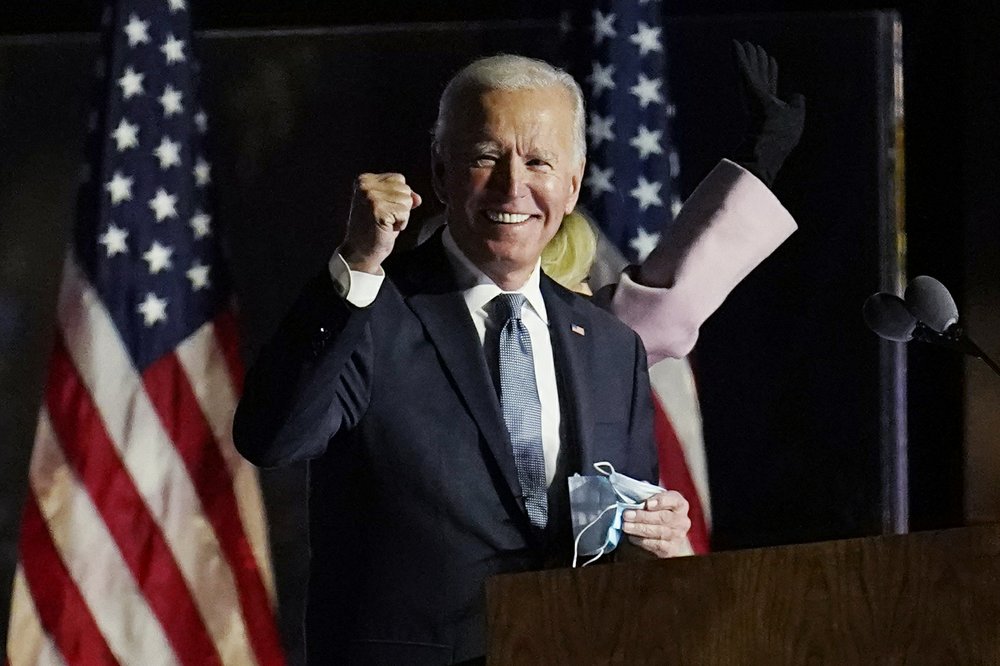
  • Biden wins White House, vowing new direction for divided US

    Biden wins White House, vowing new direction for divided US

    WASHINGTON (AP) — Democrat Joe Biden defeated President Donald Trump to become the 46th president of the United States on Saturday, positioning himself to lead a nation gripped by a historic pandemic and a confluence of economic and social turmoil.

    His victory came after more than three days of uncertainty as election officials sorted through a surge of mail-in votes that delayed the processing of some ballots. Biden crossed 270 Electoral College votes with a win in Pennsylvania.

    Trump refused to concede, threatening further legal action on ballot counting.

    Biden, 77, staked his candidacy less on any distinctive political ideology than on galvanizing a broad coalition of voters around the notion that Trump posed an existential threat to American democracy. The strategy proved effective, resulting in pivotal victories in Michigan and Wisconsin as well as Pennsylvania, onetime Democratic bastions that had flipped to Trump in 2016.

    Biden, in a statement, said he was humbled by the victory and it was time for the battered nation to set aside its differences.

    “It’s time for America to unite. And to heal,” he said.

    “With the campaign over, it’s time to put the anger and the harsh rhetoric behind us and come together as a nation,” Biden said. “There’s nothing we can’t do if we do it together.”

    Biden was on track to win the national popular vote by more than 4 million, a margin that could grow as ballots continue to be counted.

    Trump was not giving up.

    Departing from longstanding democratic tradition and signaling a potentially turbulent transfer of power, he issued a combative statement while he was on his Virginia golf course. It said his campaign would take unspecified legal actions and he would “not rest until the American People have the honest vote count they deserve and that Democracy demands.”

    Trump has pointed to delays in processing the vote in some states to allege with no evidence that there was voter fraud and to argue that his rival was trying to seize power — an extraordinary charge by a sitting president trying to sow doubt about a bedrock democratic process.

    Kamala Harris also made history as the first Black woman to become vice president, an achievement that comes as the U.S. faces a reckoning on racial justice. The California senator, who is also the first person of South Asian descent elected to the vice presidency, will become the highest-ranking woman ever to serve in government, four years after Trump defeated Hillary Clinton.

    Trump is the first incumbent president to lose reelection since Republican George H.W. Bush in 1992.

    Early Saturday he left the White House for his Virginia golf club dressed in golf shoes, a windbreaker and a white hat as the results gradually expanded Biden’s lead in Pennsylvania.

    Trump repeated his unsupported allegations of election fraud and illegal voting on Twitter. One of his tweets, quickly flagged as potentially misleading by Twitter, claimed: “I WON THIS ELECTION, BY A LOT!”

    In Wilmington, Delaware, near a stage that has stood empty since it was erected to celebrate a potential victory on Election Night, people cheered and pumped their fists as the news that the presidential race had been called for the state’s former senator arrived on their cell phones.

    On the nearby water, two men in a kayak yelled to a couple paddling by in the opposite direction, “Joe won! They called it!” as people on the shore whooped and hollered. Biden was expected to take the stage for a drive-in rally after dark.

    There were scenes of celebrations in some big cities across America, including New York. And a crowd thronged the recently christened “Black Lives Matter” plaza in Washington to cheer just a few blocks from the White House.

    Americans showed deep interest in the presidential race. A record 103 million voted early this year, opting to avoid waiting in long lines at polling locations during a pandemic. With counting continuing in some states, Biden had already received more than 74 million votes, more than any presidential candidate before him.

    Trump’s refusal to concede has no legal implications. But it could add to the incoming administration’s challenge of bringing the country together after a bitter election.

    Throughout the campaign, Trump repeatedly refused to commit to a peaceful transfer of power, arguing without evidence that the election could be marred by fraud. The nation has a long history of presidential candidates peacefully accepting the outcome of elections, dating back to 1800, when John Adams conceded to his rival Thomas Jefferson.

    More than 236,000 Americans have died during the coronavirus pandemic, nearly 10 million have been infected and millions of jobs have been lost. The final days of the campaign played out against the backdrop of a surge in confirmed cases in nearly every state, including battlegrounds such as Wisconsin that swung to Biden.

    The pandemic will soon be Biden’s to tame, and he campaigned pledging a big government response, akin to what Franklin D. Roosevelt oversaw with the New Deal during the Depression of the 1930s. But Senate Republicans fought back several Democratic challengers and looked to retain a fragile majority that could serve as a check on such Biden ambition.

    The 2020 campaign was a referendum on Trump’s handling of the pandemic, which has shuttered schools across the nation, disrupted businesses and raised questions about the feasibility of family gatherings heading into the holidays.

    The fast spread of the coronavirus transformed political rallies from standard campaign fare to gatherings that were potential public health emergencies. It also contributed to an unprecedented shift to voting early and by mail and prompted Biden to dramatically scale back his travel and events to comply with restrictions. Trump defied calls for caution and ultimately contracted the disease himself. He was saddled throughout the year by negative assessments from the public of his handling of the pandemic.

    Biden also drew a sharp contrast to Trump through a summer of unrest over the police killings of Black Americans including Breonna Taylor in Kentucky and George Floyd in Minneapolis. Their deaths sparked the largest racial protest movement since the civil rights era. Biden responded by acknowledging the racism that pervades American life, while Trump emphasized his support of police and pivoted to a “law and order” message that resonated with his largely white base.

    The president’s most ardent backers never wavered and may remain loyal to him and his supporters in Congress after Trump has departed the White House.

    The third president to be impeached, though acquitted in the Senate, Trump will leave office having left an indelible imprint in a tenure defined by the shattering of White House norms and a day-to-day whirlwind of turnover, partisan divide and the ever-present threat via his Twitter account.

    Biden, born in Scranton, Pennsylvania, and raised in Delaware, was one of the youngest candidates ever elected to the Senate. Before he took office, his wife and daughter were killed, and his two sons badly injured in a 1972 car crash.

    Commuting every night on a train from Washington back to Wilmington, Biden fashioned an everyman political persona to go along with powerful Senate positions, including chairman of the Senate Judiciary and Foreign Relations Committees. Some aspects of his record drew critical scrutiny from fellow Democrats, including his support for the 1994 crime bill, his vote for the 2003 Iraq War and his management of the Clarence Thomas’ Supreme Court hearings.

    Biden’s 1988 presidential campaign was done in by plagiarism allegations, and his next bid in 2008 ended quietly. But later that year, he was tapped to be Barack Obama’s running mate and he became an influential vice president, steering the administration’s outreach to both Capitol Hill and Iraq.

    While his reputation was burnished by his time in office and his deep friendship with Obama, Biden stood aside for Clinton and opted not to run in 2016 after his adult son Beau died of brain cancer the year before.

    Trump’s tenure pushed Biden to make one more run as he declared that “the very soul of the nation is at stake.”