Author: Imported Author 1852152

  • Calls To Reopen Classrooms Grow As Teachers Get Vaccinated

    Calls To Reopen Classrooms Grow As Teachers Get Vaccinated

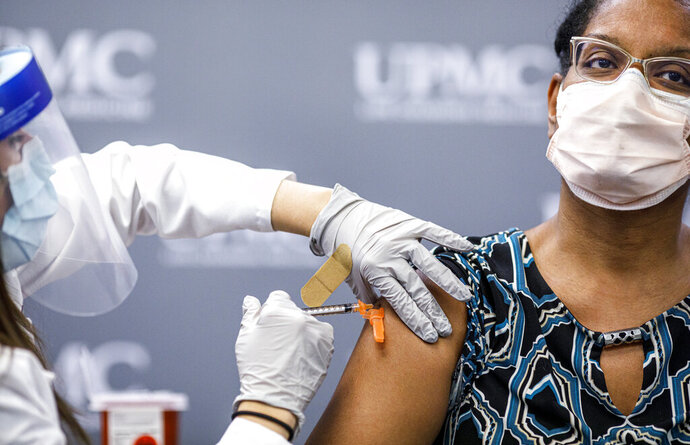
    State leaders around the U.S. are increasingly pushing for schools to reopen this winter — pressuring them, even — as teachers begin to gain access to the vaccine against the raging pandemic.

    View all (14)

    Ohio’s governor offered to give vaccinations to teachers at the start of February, provided their school districts agree to resume at least some in-person instruction by March 1. In Arizona, where teachers began receiving shots this week, the governor warned schools that he expects students back in the classroom despite objections from top education officials and the highest COVID-19 diagnosis rate in the nation over the past week.

    “We will not be funding empty seats or allowing schools to remain in a perpetual state of closure,” said Republican Gov. Doug Ducey. “Children still need to learn, even in a pandemic.”

    The U.S. recorded an all-time, one-day high of 4,327 deaths on Tuesday, according to Johns Hopkins University. The nation’s overall death toll from COVID-19 has topped 380,000, closing in fast on the number of Americans killed in World War II. Confirmed infections have reached about 23 million.

    President-Elect Joe Biden initially pledged to reopen a majority of the nation’s schools within his first 100 days but recently revised the goal to most of the country’s K-8 schools. He has said teachers should be eligible for vaccinations as soon as possible after those who are at highest risk.

    Some states aren’t waiting, but the process can be scattershot.

    Meika Mark, a ninth-grade English teacher in Orange County, New York, got vaccinated Tuesday at a hospital, using a link a friend texted her.

    “It’s just word of mouth: ‘Here’s a link and hopefully you get a slot,‘” said Mark, who contracted the virus in March and spent the rest of the school year teaching remotely. “I know of a woman who had her husband sit in front of a computer literally all day and just click the refresh button until an appointment came up.”

    Mark, 34, is now doing some in-person teaching and is grateful for the added layer of protection.

    “I don’t want to go through it again,” said Mark, who still has headaches from her bout with COVID-19.

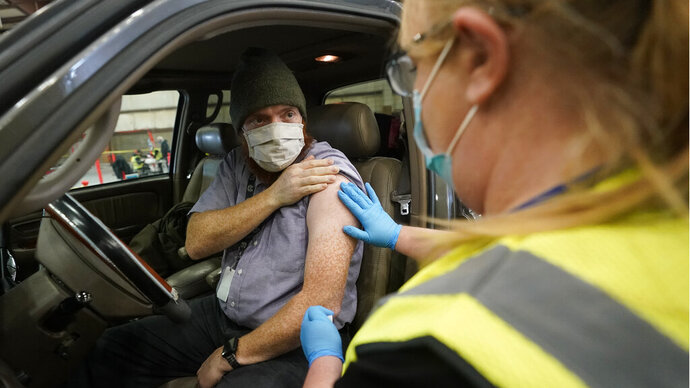
    High school band director Michael Crookston was among the first teachers to get a vaccination in Utah, which is among the earliest states to give priority to educators. Crookston has been in the classroom since the new school year began, despite having diabetes, which puts him at greater risk from the coronavirus.

    “It’s been a thing I’ve been looking forward to, a little bit like Christmas,” said Crookston, who teaches at Davis High School, north of Salt Lake City, where he used a parent’s donation to buy 12 air filters for his band room, as well as face masks and covers on students’ instruments.

    Utah Gov. Spencer Cox has said he wants to vaccinate all teachers by the end of February.

    Salt Lake City, the state capital, has been hit hard by the virus and was the only district in Utah to stay all-remote this school year. That has angered some GOP leaders, who have threatened to withhold the $1,500 bonuses planned for the rest of the state’s teachers.

    An estimated 10.3 million Americans have received their first shot of the vaccine, or about 3% of the population, according to the Centers for Disease Control and Prevention. That is an increase of 1 million from the day before, indicating that the vaccination drive is ramping up after a slow start.

    But the U.S. is still well short of the hundreds of millions who experts say will need to be inoculated to vanquish the outbreak.

    A report released Wednesday by the CDC adds to the evidence suggesting that children aren’t the main drivers of community transmission. It found that increases in reported cases among adults were not preceded by increases among children and teens. The findings suggest young adults may contribute more to the spread than children do.

    Chicago began a phased-in reopening of its schools this week, with about 5,000 pre-kindergarten and special education returning to classrooms and other grades planned in the weeks to follow. Illinois teachers are not eligible for vaccines yet, but Chicago officials are providing virus tests on school grounds for staff.

    New York State expanded vaccine eligibility to teachers this week. But in New York City, the nation’s largest school district, with 1.1 million students, Mayor Bill de Blasio said Wednesday that while that opens up “a world of possibility,” middle and high schools will remain closed indefinitely.

    California Gov. Gavin Newsom has proposed a $2 billion plan to pay for testing, protective equipment and other safety enhancements to reopen the lowest grades as soon as Feb. 16.

    But educators said it is too soon to know when California’s 600,000 teachers can expect to be vaccinated. Jeff Freitas, president of the California Federation of Teachers, said vaccinations have to come first, then schools can talk about reopening.

    “We cannot put our own lives, the lives of our students, and our communities at risk during what is clearly an escalating crisis in our state,” the union leader said.

    California’s rollout of vaccines has been slower than anticipated, with the first phase, involving health care workers and nursing home residents, still underway.

    On Wednesday, Chiefs of Change, a bipartisan group of school administrators, called on state and federal officials to make teachers and other school employees immediately eligible for vaccinations and provide more resources to conduct testing and contact tracing in school districts.

    “Those individuals are very uncomfortable and they’re very scared about coming back into school, no matter how safe we make it,” said Robert Runcie, superintendent of Broward County’s public schools in Florida.

    Mark, the New York teacher, said her colleagues are “chomping at the bit” to get vaccinated. But she knows it will be a while until she can teach in-person full time again.

    “I told my students before that every day is one day closer to normalcy,” she said. “I think if we just remind ourselves of that, it just helps to pause and live in the moment for a minute.”

    ___

    Whitehurst reported from Salt Lake City; Terry Tang contributed from Phoenix, and Carolyn Thompson from Buffalo, New York.

  • Edwards Keeps Same COVID-19 Rules, Urges Work From Home

    Edwards Keeps Same COVID-19 Rules, Urges Work From Home

    BATON ROUGE, La. (AP) — With an unrelenting coronavirus spike bearing down on Louisiana, Gov. John Bel Edwards called on the state’s employers Tuesday to keep as many workers as possible in their homes, but he didn’t tighten restrictions on businesses any further.

    The Democratic governor said he’s renewed the same coronavirus rules that he’s had in place since late November, which were slated to expire Wednesday. Those rules include a statewide mask mandate, limits on crowd sizes, provisions keeping bars limited to outdoor and takeout service and restrictions on the number of customers allowed in nonessential businesses such as restaurants, gyms and salons.

    Edwards said the state is starting to see a worsening outbreak because of activities over the holidays. But he said the case spikes appear to be driven more by informal gatherings in people’s homes, rather than trips to restaurants or bars.

    “The mitigation measures really do work, but only to the extent that people follow them,” he said.

    While he stopped short of toughening the rules, Edwards called on Louisiana’s business owners to allow workers to do their jobs remotely where feasible, rather than in offices around the state. He said that would help limit unnecessary exposure to the COVID-19 illness caused by the virus.

    Edwards said he’ll keep the current coronavirus rules in place for at least another four weeks, though he’s indicated people and businesses should expect to face restrictions until wider distribution of the coronavirus vaccine is available — likely to be months away.

    While off to a slow start, Louisiana’s pace of vaccinations appeared to be improving, under data released Tuesday by the state health department. The agency said Louisiana has received 320,000 doses of Pfizer and Moderna coronavirus vaccines through this week. Nearly 160,000 doses had been administered by Tuesday, with more than 21,600 people completing both doses of the two-dose vaccine.

    The vaccine in Louisiana is available to health care employees, EMS workers, firefighters, people with kidney failure, anyone age 70 or older and people who live and work at nursing homes and other long-term care facilities. About 850,000 people fall into those categories, according to Edwards administration estimates.

    While people wait for the vaccine, Louisiana continues to grapple with record numbers of COVID-19 cases and hospitalizations.

    The state is averaging more than 2,800 new confirmed infections each day over the last week. More than 7,500 COVID-19 deaths in the state have been confirmed since March, with dozens more added each day in recent weeks. And 2,035 COVID-19 patients were hospitalized Tuesday, according to the health department data.

    “We’ve not yet seen the suggestion that we are peaking and going down,” said Dr. Joe Kanter, the governor’s chief public health adviser. “Things are as bad now as they’ve ever been. We do anticipate they’re going to get worse.”

    Under Edwards’ current Phase 2 rules, restaurants, gyms, salons, casinos, malls and other nonessential businesses will have to continue limiting customer numbers to 50% of their occupancy rate. Crowds at churches will stay restricted to 75% of occupancy.

    Bars will remain limited to takeout, delivery and outside seating, because no parish meets the low percentages of coronavirus tests returning positive required to allow indoor drinking at bars. Indoor gatherings for weddings and events will continue to be limited to 75 people or a maximum of 25% occupancy, whichever is less. Outdoor gatherings have looser limits.

    The governor’s restrictions are being challenged in court by House Republicans.

    Before Edwards announced renewal of the coronavirus rules, his Environmental Quality Secretary Chuck Carr Brown announced he tested positive for COVID-19 and had mild symptoms. Brown said in a statement that he’s receiving treatment with monoclonal antibodies to try to keep his symptoms from worsening.

    “From the onset of the epidemic, we have emphasized mask-wearing and social distancing at the agency, but obviously some fatigue with the strict measures has set in,” Brown said. “We will rededicate ourselves to making sure we don’t let our guards down for even an instant.”

    ___

    Follow AP’s coverage of the pandemic at https://apnews.com/hub/coronavirus-pandemic and https://apnews.com/UnderstandingtheOutbreak. Follow Melinda Deslatte on Twitter at http://twitter.com/melindadeslatte.

  • Lawsuit: Regulation Illegally Blocks Business Serving Kids

    Lawsuit: Regulation Illegally Blocks Business Serving Kids

    NEW ORLEANS (AP) — A New Orleans woman says in a federal lawsuit that she’s being unconstitutionally denied the right to run a business providing care to special needs children.

    The suit was filed Tuesday on behalf of Ursula Newell-Davis, who said she wants to run a business providing “respite” services — giving care and education services to disabled or challenged children whose parents can’t be with them around the clock.

    Filed on her behalf by the Pacific Legal Foundation and the Louisiana-based Pelican Institute for Public Policy, the lawsuit opposes the state requirement that she prove a need for the service through a “Facility Need Review.”

    The suit says the state requirement is really an unconstitutional way of protecting the interests of existing care providers. The requirement for a Facility Need Review “permits the Department to reject an applicant solely because there are purportedly ‘enough’ businesses already operating,” the suit says. “This is simple, unconstitutional economic protectionism.”

    Defendants in the lawsuit are several state health officials. The state has not yet filed its response.

  • Louisiana State Police: Deputies Killed Man Who Shot At Them

    Louisiana State Police: Deputies Killed Man Who Shot At Them

    MONTEGUT, La. (AP) — Sheriff’s deputies in southeast Louisiana fatally shot a man who was firing a rifle at them, state police said.

    Terrebonne Parish sheriff’s detectives were sent to a home in Montegut on Tuesday afternoon to investigate a report of an aggravated assault by a man with a rifle, authorities said in a news release. The man began shooting after they tried to negotiate with him, state police said.

    The man died at a hospital. Nobody else was hurt. Authorities have not released the races or identities of those involved in the shooting southeast of Houma.

    State police are investigating — standard procedure in Louisiana for shootings by local officers.

  • ‘Welcome To Vicksburg’ Signs Approved

    ‘Welcome To Vicksburg’ Signs Approved

    VICKSBURG, Miss. (AP) — Soon, motorists will see “Welcome to Vicksburg” signs along Interstate 20.

    The city’s Board of Mayor and Aldermen last week cleared the way for the creation and installation of the signs by approving a $49,768 contract with Atwood Fence Co. of Kosciusko to make the 10-foot-by-20-foot signs. Crews will install them at the westbound Clay Street and eastbound Halls Ferry exits on Interstate 20.

    Sam Andrews, Mayor George Flaggs Jr.’s chief of staff, said the installation date will depend on when the signs are completed, The Vicksburg Post reported.

    Andrews said the city has the permit from the Mississippi Department of Transportation to install the signs, “So we’re able to proceed,” Andrews said. “As soon as the signs are ready, we’ll put a plan in place to get the signs installed safely on the interstate.”

    While Atwood will handle the manufacturing and installation of the signs, city crews will handle much of the remaining parts of the project, which includes installation of lighting and landscaping.

    The project is being funded using state tourism bond money.

  • Member Of Mississippi Board Of Health Dies Of COVID-19

    Member Of Mississippi Board Of Health Dies Of COVID-19

    JACKSON, Miss. (AP) — A member of Mississippi’s state Board of Health has died of coronavirus-related complications.

    Dr. Ed Dalton Barham, of Clinton, died last Saturday, according to an obituary. He was 79.

    Barham, known as Tad or Taddy, had served on the board since 2012, after being appointed by former Gov. Phil Bryant. He was elected chairman in 2017.

    “He felt it was a privilege and an honor to serve in a leadership position to help promote public health in Mississippi,” his family wrote in his obituary.

    Barham was a graduate of Mississippi College and George Washington School of Medicine. He served in the U.S. Army and at Walter Reed Army Medical Center. He spent eight years at Walter Reed teaching and practicing radiology, reaching the rank of Lieutenant Colonel.

    Barham served as Chief of Radiology at Doctor’s Hospital, the V.A. Medical Center, River Oaks Hospital and Woman’s Hospital in Mississippi. He practiced the majority of his professional life — over 35 years — at Woman’s Hospital, according to his family. At the time of his death, he was serving as the Chief Medical Officer and Chairman of the Board of Woman’s Hospital.

    The state Health Department reported Wednesday that Mississippi had 1,942 new confirmed cases of the virus as of Tuesday evening. The department also reported 31 deaths Wednesday. The state has reported nearly 243,899 cases of the virus and 5,315 related deaths since the start of the pandemic.

    ___

    Follow AP coverage of the pandemic at https://apnews.com/UnderstandingtheOutbreak.

  • US Shifts To Speed Vaccinations; Won’t Hold Back 2nd Doses

    US Shifts To Speed Vaccinations; Won’t Hold Back 2nd Doses

    WASHINGTON (AP) — Barely a month into a mass vaccination campaign to stop the COVID-19 pandemic, the Trump administration unexpectedly shifted gears Tuesday to speed the delivery of shots. A slow start had triggered widespread concern from states and public health officials.

    Now, Health and Human Services Alex Azar has announced two major changes. First, the government will no longer hold back required second doses of the Pfizer-BioNTech and Moderna vaccines, practically doubling supply. Second, states should immediately start vaccinating other groups lower down the priority scale, including people age 65 and older, and younger people with certain health problems.

    The move better aligns the outgoing administration with the new Biden-Harris team. On Friday, President-elect Joe Biden said he will rapidly release most available vaccine doses to protect more people. He said he supported immediately releasing vaccines that health authorities were holding back out of caution, to guarantee they would be available for people needing their second dose.

    “We had been holding back second doses as a safety stock,” Azar said on ABC. “We now believe that our manufacturing is predictable enough that we can ensure second doses are available for people from ongoing production. So everything is now available to our states and our health care providers.”

    Simultaneously, he gave states the green light to dramatically expand the pool of people eligible to receive vaccines.

    “We are calling on our governors to now vaccinate people aged 65 and over, and under age 65 with a (health condition) because we have got to expand the group,” he said.

    As of Monday morning, the government had distributed about 25.5 million doses to states, U.S. territories and major cities. But only about 9 million people had received their first shot. That means only about 35% of the available vaccines had been administered.

    Initially, the shots were going to health care workers and nursing home residents. Those 75 and older were next in line. But problems arose even in vaccinating that limited pool of people. Some hospital and nursing home workers have been hesitant to get the vaccine. Scheduling issues created delays in getting shots to nursing homes.

    Some states, including Arizona, have or are planning to open up mass vaccination centers, aiming to inoculate thousands of people a day in a single location. In Florida, Gov. Ron DeSantis opened up vaccinations to people 65 and older. In other states, local health authorities have started asking residents 65 an older to register, in anticipation the vaccination campaign would be expanded.

    “We’ve got to get to more channels of administration,” said Azar. “We’ve got to get it to pharmacies, get it to community health centers.

    “We will deploy teams to support states doing mass vaccination efforts if they wish to do so,” he added.

    Although Azar said the shift was a natural evolution of the Trump administration’s efforts, as recently as Friday he had raised questions about whether Biden’s call to accelerate supplies was prudent. The Trump administration, which directed a crash effort to develop and manufacture vaccines, is hoping to avoid a repeat of earlier debacles with coronavirus testing. Dubbed “Operation Warp Speed,” the effort has produced two highly effective vaccines, with more on the way.

    Each state has its own plan for who should be vaccinated, based on recommendations from the federal Centers for Disease Control and Prevention. The CDC recommendations give first priority to health care workers and nursing home residents.

    But the slow pace of the vaccine rollout has frustrated many Americans at a time when the coronavirus death toll has continued to rise. More than 376,000 people have died, according to the Johns Hopkins database.

    U.S. Surgeon General Jerome Adams said hundreds of thousands of people are getting vaccinated every day across the nation, but the pace of inoculations needs to improve.

    “We’re in a race against this virus and quite frankly, we’re behind,” Adams told “Fox & Friends.” “The good news is that 700,000 people are getting vaccinated every single day. We’re going to hit 1 million people and we need to continue to pick up that pace.”

    In Philadelphia, health department spokesman James Garrow, said the new direction from Washington will take time to figure out before it impacts vaccine distribution in the city. “This is a wholesale change out of the blue after months of planning,” Garrow said.

    Washington, D.C. on Monday opened up vaccines to residents 65 years and older and the system was quickly overwhelmed. People reported problems with the website for registration and hours-long waits to register by phone. A message on the city’s website Tuesday morning read, “All 6,700 of the available vaccination appointments for the week of 1/11/21 were filled.”

    Biden is expected to give a speech Thursday outlining his plan to speed vaccines to more people in the first part of his administration. His transition team has vowed to release as many vaccine doses as possible, rather than continuing the Trump administration policy of holding back millions of doses to ensure there would be enough supply to allow those getting the first shot to get a second one.

    The Pfizer-BioNTech vaccine requires a second shot about three weeks after the first vaccination. Another vaccine, this one produced by Moderna, requires a second shot about four weeks afterward. One-shot vaccines are still undergoing testing.

    ___

    AP writers Candice Choi in New York and Carole Feldman in Washington contributed.

  • Army Corps Proposes $2B To Improve Levees In South Louisiana

    Army Corps Proposes $2B To Improve Levees In South Louisiana

    NEW ORLEANS (AP) — A federal agency is proposing $2 billion in improvements to the levee system that protects against hurricane flooding along portions of seven parishes in south Louisiana.

    The Army Corps of Engineers plans virtual public meetings Tuesday and Wednesday on its planned revisions to the 30-mile Upper Barataria levee system that includes the west banks of Jefferson, St. Charles and St. John the Baptist Parishes.

    Officials say the improvements would provide storm surge protection in the event of a so-called 100-year storm event, giving roughly 360,000 additional coastal residents the same reduced level of storm surge damage as residents of New Orleans.

    The Times-Picayune/The New Orleans Advocate reports the plan calls for building new levees and elevating existing ones to between 12.5 and 14 feet (3.8 and 4.3 meters). Construction would be scheduled to start in 2023, with completion expected by the end of 2026.

    The state and federal governments would have to reach an agreement to share the cost of the project.

  • Sheriff: Louisiana Man Attacked Relative To Kill “Demon”

    Sheriff: Louisiana Man Attacked Relative To Kill “Demon”

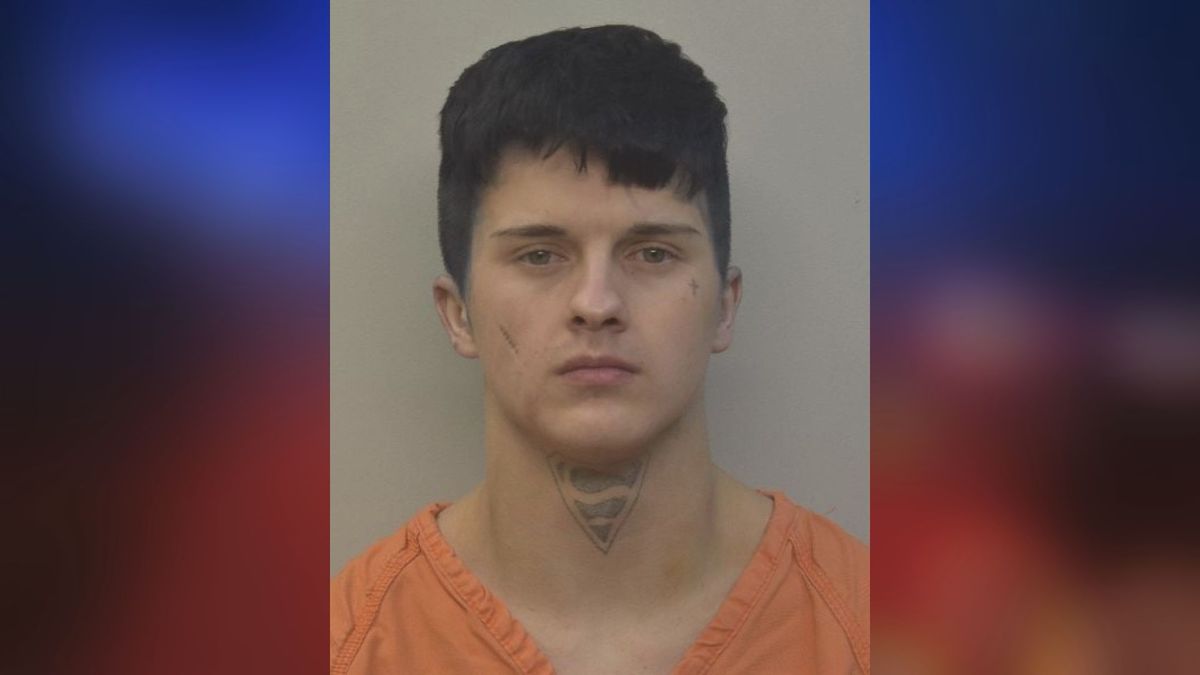
    LAKE CHARLES, La. (AP) — A Louisiana man charged with attempted murder told investigators he was trying to kill “a demon” when he used a knife to repeatedly slash a relative, authorities said.

    The Calcasieu Parish Sheriff’s Office said deputies responding to a call Wednesday found 19-year-old Patrick T. Amos covered in blood and he told them he had just killed a family member.

    Deputies found the victim suffering from multiple lacerations made by a knife, but still alive. The relative was taken to a hospital and in stable condition Friday, the sheriff’s office said in a news release.

    Amos later told detectives he and been using methamphetamine and “was being tormented by a demon that was inside the family member and he attempted to kill it with a large knife.” He was charged with second-degree attempted murder.

    It was not immediately known if Amos had an attorney.

  • Jefferson Parish Republican Abruptly Resigns From La. House

    Jefferson Parish Republican Abruptly Resigns From La. House

    BATON ROUGE, La. (AP) — A Louisiana lawmaker from Jefferson Parish has abruptly resigned from his elected position.

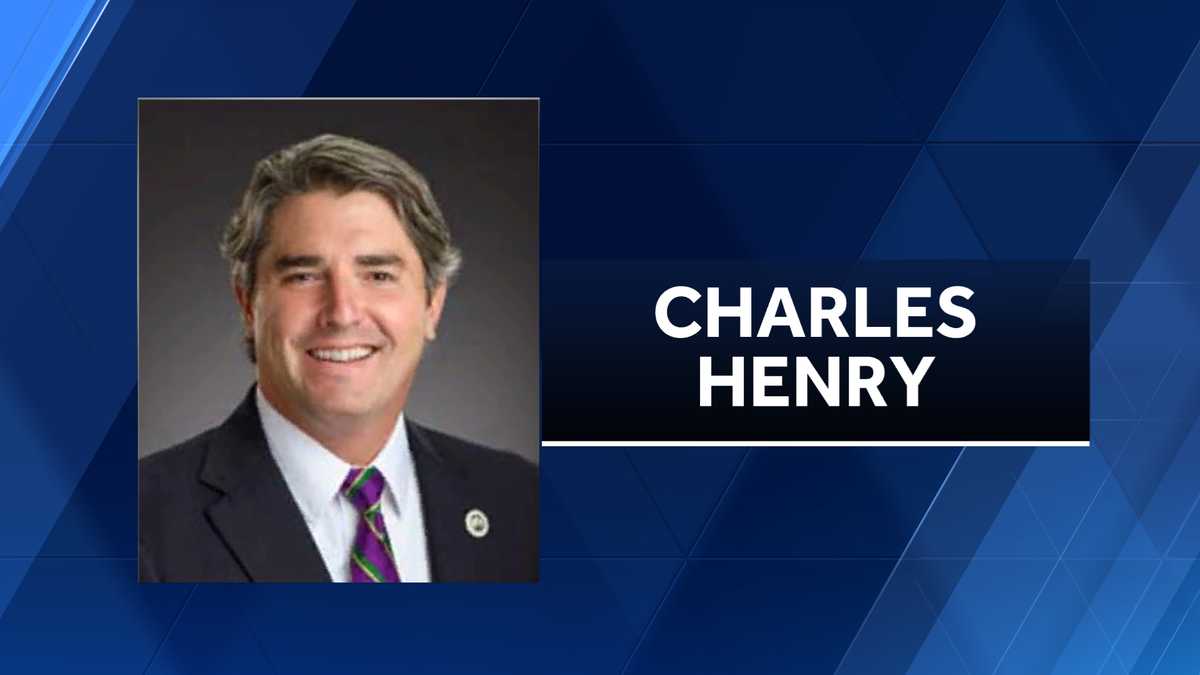
    The House of Representatives clerk’s office confirmed Tuesday that Republican Rep. Charles Henry submitted his resignation to House Speaker Clay Schexnayder on Monday. The resignation from the 105-member chamber was effective immediately.

    “As of today, he is no longer a member,” said House Clerk Michelle Fontenot.

    Henry was elected to the seat in 2019. Previously, he had been chief of staff for Republican U.S. Rep. Steve Scalise.

    Henry didn’t provide a reason in his resignation letter and didn’t offer a public statement about his exit from the House. He didn’t return a phone call seeking information. His brother, Republican state Sen. Cameron Henry, and Schexnayder also didn’t immediately respond to calls for comment.