Author: Imported Author 1852152

  • Sheriff: Louisiana Man Rode Electric Cart From Bar To Bar

    Sheriff: Louisiana Man Rode Electric Cart From Bar To Bar

    HOUMA, La. (AP) — A Louisiana man has avoided a driving while intoxicated charge by operating an electric-powered shopping cart to get from one bar to another.

    A news release from the Terrebonne Parish Sheriff’s Office says 32-year-old Brice Kendell Williams is accused of taking the cart Sunday from a Walmart in Houma to a bar about half a mile (0.8 kilometers) away. Col. Terry Daigre says a deputy found the cart parked between two cars in the bar’s parking lot.

    The sheriff’s office says Williams told the deputy he thought he might get charged with DWI if he drove his own vehicle from bar to bar.

    Williams was arrested nevertheless, and charged with felony “unauthorized use of a movable.” It’s unclear whether he had an attorney to speak for him.

  • Medical Marijuana In Louisiana: Questions About Cost Arise

    Medical Marijuana In Louisiana: Questions About Cost Arise

    BATON ROUGE, La. (AP) — Three months after medical marijuana became available in Louisiana, doctors and clinics say some patients are finding the cost for therapeutic cannabis too high for treatment, pricing them out of a medication they waited years to obtain.

    Nine pharmacies dispense medicinal-grade pot and set their individual prices. Dispensary owners say their charges reflect an industry with startup charges, small patient numbers and lengthy regulatory hurdles to meet.

    In August, Louisiana became the first Deep South state — and one of more than 30 states nationwide — to dispense medical marijuana, four years after state lawmakers agreed to give patients access. Now, the state is grappling with the growing pains of a new medical market and a patient group that can’t use health insurance to cover costs.

    Kathryn Thomas, CEO of The Healing Clinics, said a third of the medical marijuana patients across its five clinics in Shreveport, Monroe, Baton Rouge, Houma and Lafayette can’t foot the bill for the product.

    “They can’t afford ongoing treatment,” Thomas said. “It’s becoming the program for the elite.”

    The only cannabis currently available comes in a flavored liquid tincture, a bottle containing a dropper to use. One bottle can range from about $90 to $220, depending on concentration and pharmacy, according to medical marijuana advocates.

    Dr. Victor Chou, who has a medical marijuana clinic in Baton Rouge with more than 600 patients, said many of his patients take a dosage of about one bottle per month and are finding relief from chronic conditions. But one-quarter of his patients, Chou said, can’t afford the medication.

    “The average chronic pain patients would be spending maybe $1,000 a month at current prices for what they need,” he said.

    About 3,500 people have received medical marijuana since the program began, according to the Louisiana Board of Pharmacy. Under state law, Louisiana is allowing cannabis to treat a long list of diseases and disorders, such as cancer, seizure disorders, epilepsy, glaucoma, post-traumatic stress disorder and Parkinson’s disease.

    “We’re now working through the real kinks of a startup business and industry,” said Jesse McCormick, with the Louisiana Association for Therapeutic Alternatives representing the nine dispensaries. “They’re just like everybody else out here, trying to stay open and keep the lights on.”

    Only the agricultural centers at Louisiana State University and Southern University are authorized to grow medical marijuana.

    GB Sciences, LSU’s grower, is the only one currently providing product. John Davis, president of GB Sciences Louisiana, wouldn’t disclose its wholesale prices, but said pharmacies determine their own markups.

    McCormick said the pharmacies have higher tax liabilities and banking costs than other businesses, and he said some Louisiana dispensaries built facilities and carried costs for months with no income waiting for cannabis products.

    “I finally came up with our prices the night before we opened. It really was based on our expenses and what we had spent and lost, and what we needed to recover in five years,” said Doug Boudreaux, a pharmacist and co-owner of the Shreveport medical marijuana dispensary Hope Pharmacy.

    Pharmacies say if they get more patients, prices will go down. They say any addition of new products also will help, such as plans to offer dissolving strips taken by mouth and topical creams.

    Doctors and patients hope the addition of a second grower would drive down costs.

    Southern’s grower, Ilera Holistic Healthcare, is setting up operations, with plans to have medical marijuana on pharmacy shelves next year. Ilera CEO Chanda Macias said the company will have a manufactured-suggested retail price for products and will stress customer affordability to pharmacies.

    Chou’s hopeful the cost difficulties some patients are having will be addressed.

    “I want to be clear: there are a lot of people who are getting a really, really good benefit out of this. I have many people who tell me they’ve been totally pain free for the first time in years,” he said.

    ___

    Follow Melinda Deslatte on Twitter at http://twitter.com/melindadeslatte

  • Heritage Of Resistance: Reenactment To Honor Slave Rebellion

    Heritage Of Resistance: Reenactment To Honor Slave Rebellion

    NEW ORLEANS (AP) — Against the modern backdrop of oil refineries, strip malls and gated communities, hundreds of reenactors will gather Friday in southeastern Louisiana to remember a time when slavery flourished as a blight on America and some enslaved people fought back.

    They plan to reenact the largest slave rebellion in American history.

    Dressed in period costumes and holding machetes or rifles they will march 26 miles (42 kilometers) over two days from the sugar plantation country along the Mississippi River to the New Orleans suburbs.

    “I think it will be an amazing experience,” said artist Dread Scott , who conceived of the project, and whose works address racial injustice and oppression.

    “Seeing hundreds of black folk with machetes and muskets and sickles and sabers, flags flying, chanting to traditional African drumming, is going be an amazing moment. And people would be like, ‘What am I looking at? This doesn’t make sense,’” he said. “It will be an area where people can learn a lot and think a lot.”

    Reenactments have long been a staple of Civil War heritage in the South, where people don Confederate and Union uniforms and stage mock battles. But this effort seeks to illustrate the struggle over slavery that came to be the heart of that war.

    Scott first envisioned it about eight years ago. He’d wanted to stage a slave rebellion reenactment — maybe Nat Turner’s 1831 uprising in Virginia — but then a colleague told him about the uprising in Louisiana.

    Slaves across a stretch of plantations organized for months before launching their rebellion on Jan. 8, 1811. Over two days the group grew to an estimated 200 to 500 people, according to Daniel Rasmussen’s book “American Uprising: The Untold Story of America’s Largest Slave Revolt.”

    Their goal was to march on New Orleans and establish a free republic. The rebellion was inspired in part by the Haitian revolution but conceived by people born in Louisiana and Africa, said Dr. Ibrahima Seck, the director of research at the Whitney Plantation and a historical advisor to the reenactment.

    Most were field hands who toiled in hot, wet and humid conditions that contributed to their 13% yearly death rate, he said. Rasmussen writes that slaves in Louisiana’s sugar plantations faced “more brutal punishments and lives shorter lives” than elsewhere in North America.

    Scott said the project sprung from his interest in how people liberate themselves and in slavery’s continuing effects on America today. He was also intrigued to learn about the little-known rebellion’s goals and how close it came to success.

    “You can’t actually understand American society if you don’t understand slavery, and you can’t understand slavery if you don’t understand slave revolts,” he said.

    The reenactment comes at a time of heightened racial tension in the United States, following the election of President Donald Trump in 2016. One of the most contentious episodes came in August 2017 when hundreds of white nationalists descended on Charlottesville, Virginia, to protest the planned removal of a Confederate statue. One person was killed when a white nationalist plowed his car into a crowd of counterprotesters.

    Bob Snead, who heads the arts group Antenna that’s producing the rebellion reenactment with Scott, said that was a key turning point. Some questioned whether the reenactment should even go on, but Snead said there was also a strong feeling that the project was more important than ever.

    Organizers have taken precautions. They’ll have law enforcement and private security, and reenactors are advised not to engage with anyone along the route who might harass them.

    The very public nature of the project should help, Scott said. They’ve reached out to area residents and will have lots of community involvement.

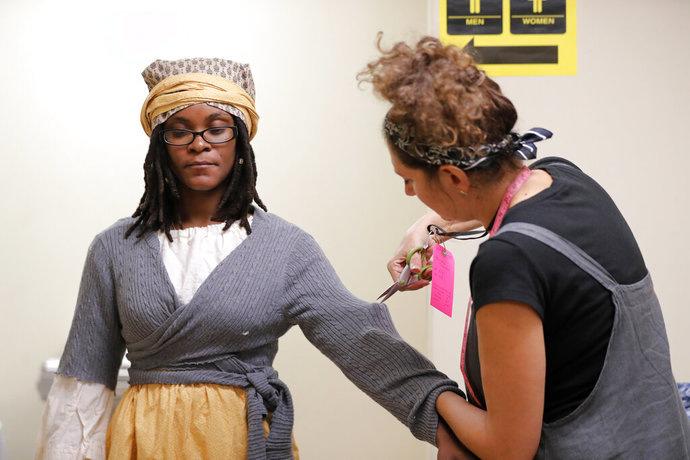
    Scott emphasizes that the reenactment is a community effort, where months and years of preparation that brought people together are as much a part of the art as the event itself. They’ve held outreach events in the parishes the marchers will traverse. They’ve filed for permits, staged rehearsals and held sewing circles where people have come together to create costumes.

    Part of the challenge was that there were few paintings of slaves to refer to, said Allison L. Parker who’s responsible for the costumes. She combed through pictures of runaway slaves and paintings and images of enslaved people in South America and the Caribbean for research.

    For many of the African American participants, it’s important to highlight the fact that enslaved people did not accept their fate. They fought back. Julie Joseph has been coming to the sewing circles and will take part in the reenactment. She said black history in America is often overlooked or ignored.

    “With this project, it’s highlighting the tenacity and the resilience that the people who were enslaved had to want to break free, to want to create their own republic,” she said. “I think that’s something that’s been really encouraging to me and something that’ll be really encouraging to a lot of other black people to know that I come from fighters.”

    Karen Kaia Livers, the community outreach organizer for Antenna, said there’s a popular misconception that slaves in southern Louisiana and New Orleans were happy and that their enslavers were “good people.”

    “That’s not the truth. Slavery is still slavery. And owning people and belonging to someone else is not freedom, not what America is all about,” she said.

    After a climactic battle between the slaves and planters, the rebellion was crushed. Rasmussen describes how the planters chopped the heads off the slaves’ corpses — about 100 altogether — and displayed them along the road going from New Orleans into the plantation country.

    But the reenactment will end with the reenactors gathering in New Orleans’ Congo Square where slaves used to gather on Sundays. Scott said he did not want to end by focusing on the brutality of white people but on the concept of black people trying to create their own republic.

    “I’m choosing to focus on a vision of freedom and emancipation,” he said.

    __

    Follow Santana on Twitter @ruskygal.

  • Trump Plugs Son’s Book While Accusing Bidens Of Self-Dealing

    Trump Plugs Son’s Book While Accusing Bidens Of Self-Dealing

    WASHINGTON (AP) — President Donald Trump has accused former Vice President Joe Biden of major ethical lapses and railed against Biden’s son for allegedly profiting off his father’s office.

    But on Monday, Trump used his Twitter feed to publicize a new book by his eldest son, Donald Trump Jr., telling his 66.5 million followers that they should “Go order it today!”

    “My son, @DonaldJTrumpJr is coming out with a new book, “Triggered: How the Left Thrives on Hate and Wants to Silence Us” – available tomorrow, November 5th!” Trump wrote on Monday, calling it a “great new book that I highly recommend for ALL to read.”

    That kind of promotional tweet would be a violation of ethics rules if it had come from any federal employee other than the president, said Liz Hempowicz, the director of public policy at the Project On Government Oversight, a nonpartisan government watchdog group.

    “Frankly he’s using his Twitter account to try to financially benefit his son,” she said Monday. “That’s not only distasteful, but it’s a misuse of public office and it would be an official misuse of public office if it was anyone other than the president.”

    The tweet also highlights a well-practiced tactic of Trump trying to turn a weakness into an attack on his opponents.

    In this case, Trump has zeroed in on Biden’s son Hunter, going as far as to ask foreign governments, including Ukraine and China, to investigate the Biden family’s business dealings. Those efforts helped spark the impeachment inquiry into his conduct.

    Biden is a leading contender for the Democratic nomination and could face Trump in the general election next year.

    “The Biden family was PAID OFF, pure and simple!” Trump insisted in a tweet last month, despite no evidence suggesting that the former vice president received any payments or that Hunter Biden did anything illegal. The younger Biden has acknowledged he displayed poor judgment when he took a post on the board of a Ukrainian energy firm, Burisma, after his father became the Obama administration’s point person on U.S.-Ukraine relations.

    Hunter Biden also recently said that he would step down from the board of directors of a Chinese-backed private equity firm because his service had become a “distraction.”

    Trump is repeating the playbook he used during his 2016 campaign, when he tried to paint his then-Democratic rival Hillary Clinton as corrupt and trustworthy, mixing legitimate criticism of her past with unfounded conspiracy theories.

    Trump is the first president in modern history who has failed to divest from his business holdings. He makes frequent trips to his for-profit golf clubs, continues to collect dues at his members-only properties, and hosts fundraisers and foreign delegations at hotels that bear his family’s name.

    And his sons continue to operate his company, at one point trying to launch a lower-budget hotel chain they hoped would appeal to Trump voters.

    The White House did not respond to questions Monday. But a spokesman for Trump Jr. defended the tweet, insisting that there is little in common between a father promoting his son’s book and a son being paid large sums of money by foreign companies because of his last name.

    Trump Jr. has become the prime warmup act for his father, headlining events, appearing in interviews and drawing speculation about his own potential future in politics.

    “Don had been a public figure for over a decade now and has spent that time building his own unique brand,” said Trump Jr. spokesman Arthur Schwartz, adding that the president’s son “got this book deal based on his own hard work and effort in becoming one of the most popular and sought after Republican figures in the country.”

    The Justice Department has argued that the president’s tweets represent official statements from the White House.

    Biden’s campaign did respond to a request for comment.

    ___

    Follow Colvin on Twitter at https://twitter.com/colvinj

  • Rispone Slams Ad Linking Him To David Duke In Louisiana Race

    Rispone Slams Ad Linking Him To David Duke In Louisiana Race

    BATON ROUGE, La. (AP) — Louisiana’s Republican gubernatorial candidate Eddie Rispone said a radio ad linking him and President Donald Trump to former Ku Klux Klan leader David Duke is “disgusting,” and he’s using it to rally support from pro-Trump voters.

    Rispone blamed Democratic incumbent John Bel Edwards for the advertising by the New Orleans-based Black Organization for Leadership Development, or BOLD.

    There’s no evidence Edwards, the Deep South’s only Democratic governor, is connected to the effort. Both an Edwards spokesman and the BOLD member featured in the advertising said the governor’s campaign wasn’t involved.

    One of several radio spots the organization’s PAC is running, the ad encourages minority voters to “vote against hatred” by choosing Edwards.

    “What is the difference between David Duke, Eddie Rispone and Donald Trump? The only difference is that Rispone will be governor if you don’t stop him. These people are telling you every day that they do not care about you or anyone who looks like you,” New Orleans Councilman Jay H. Banks says in the ad.

    Trump supports Rispone, who built his campaign on his backing of the president and has responded with his own radio ads claiming that Edwards supporters hate Trump.

    Early voting continues through Saturday in the Nov. 16 election.

    At an early voting stop Monday, Rispone accused Edwards and his backers of “playing the race card again.” His campaign is trying to capitalize off the attack spots by energizing Trump supporters against the Democratic incumbent.

    “It’s disgusting. The governor has to answer for that,” Rispone said.

    Rispone’s ads play excerpts of BOLD radio spots that slam Trump and connect them both to Duke, a Republican former Louisiana state lawmaker who’s made failed bids for other offices in the state.

    In one Rispone response ad, a narrator says: “That’s how far the radical left will go to keep liberal John Bel Edwards in power. And if you don’t agree they’ll call you a racist.” The ad urges voters to vote against Edwards and “his Trump hating friends.” The other ad says Edwards is “too weak to stop these hateful attacks, too cowardly to condemn them.”

    Edwards spokesman Eric Holl said the BOLD advertising was “not paid for or authorized by the John Bel Edwards campaign.” But Edwards hasn’t directly denounced the messaging.

    Trump has targeted Edwards for ouster, planning a Wednesday rally for Rispone in Monroe. Edwards has steered clear of criticizing a president who won Louisiana by 20 percentage points and remains popular, instead saying he’s worked well the White House and will continue to do so.

    The BOLD ads, most of which feature Banks, seek to drum up support for Edwards from anti-Trump voters. One asks voters to “remember that sickening feeling you got when you woke up and realized Donald Trump was elected president.” Another tells voters they “can send a message directly to Trump that his politics of lies and hate won’t work here.”

    Banks said the Edwards campaign wasn’t involved in the ads. Banks defended the advertising and tying Rispone to Duke, saying that Rispone’s campaign approach has mirrored Duke’s unsuccessful 1991 campaign for governor.

    “I don’t know why Mr. Rispone’s mad. What are we saying that’s not true?” Banks said. “David Duke ran on a very similar platform to what he’s running on, anti-New Orleans, anti-Medicaid, anti-anything that helps people who aren’t rich.”

    Banks said Rispone has embraced a president with “white supremacist views” and is trying to vilify New Orleans and minorities by repeatedly calling New Orleans a “sanctuary city.”

    Beyond the radio ad, a door-hanger that the Rispone campaign and a Republican state senator said has been circulated to households also links Rispone and Trump to Duke. It’s unclear who paid for that advertising. Banks said BOLD wasn’t involved in the effort.

    ___

    Follow Melinda Deslatte on Twitter at http://twitter.com/melindadeslatte

  • Marker Honors 200-Year-Old Black Church In Mississippi

    Marker Honors 200-Year-Old Black Church In Mississippi

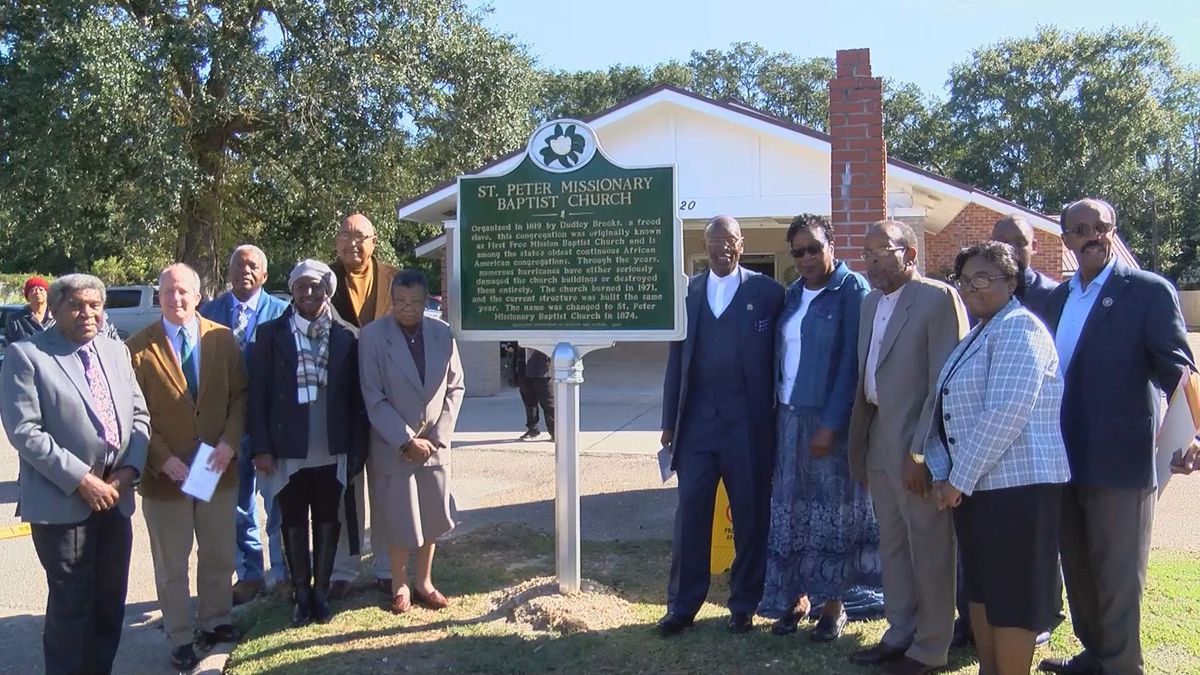
    PASCAGOULA, Miss. (AP) — A new historical marker is honoring the oldest continuously operating African American church in Mississippi.

    Members of St. Peter Baptist Church in Pascagoula gathered Saturday to celebrate the unveiling of a marker that was placed by the Mississippi Department of Archives and History.

    The coastal church was founded in 1819 by a freed slave named Dudley Brooks. It originally was called First Free Mission Baptist Church.

    Pastor William H. Marshall tells WLOX-TV that he’s pleased the congregation is being recognized by the state.

    Congregants buried a time capsule with church programs and other items. The plan is to dig it up in 20 years.

  • White Nationalists Seen Filming At Lynching Victim Memorial

    White Nationalists Seen Filming At Lynching Victim Memorial

    People carrying a white nationalist flag were caught on security cameras trying to film in front of a new memorial to lynching victim Emmett Till.

    Patrick Weems, executive director of the Emmett Till Memorial Commission, told The Associated Press that the incident was captured Saturday by new security cameras at the memorial site in Mississippi. Security video from the commission shows the people, including a person carrying the flag of a neo-Confederate group flag, filming at the site. They are seeing running away after a security alarm sounds.

    In the video, a man can be heard saying they are at the memorial “that represents the civil rights movement for blacks.” “What we want to know is, where are all the white people?” he continued before the clip ends. The group was carrying a white flag with a large cross, a symbol associated with the League of the South.

    The Southern Poverty Law Center has described the League of the South as a neo-Confederate hate group.

    “They basically showed a group of people coming out and filming what looked to be some kind of propaganda video at the historic marker,” Weems said.

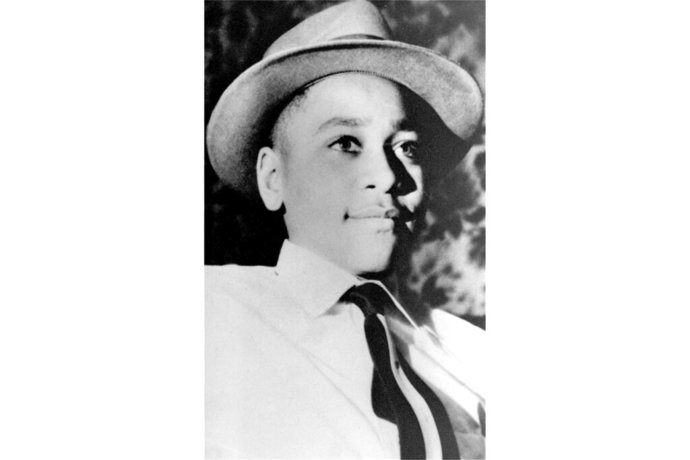
    Till was 14 when he was kidnapped, beaten and killed in 1955 after he allegedly whistled at a white woman. An all-white jury in Mississippi acquitted two white men of murder charges. The memorial is at the site where Till’s body was pulled from the Tallahatchie River.

    The camera system and alarms are part of an updated security system that accompanies a new bullet-proof memorial to Till that was dedicated Oct. 19. The bulletproof sign and security measures come after the first three markers were vandalized.

    The first historical marker was placed in 2008. Someone tossed it in the river. The second and third signs were shot at and left riddled with bullet holes.

    The new 500-pound (225-kilogram) steel sign has a glass bulletproof front, Weems said.

    The commission is trying to raise money for a permanent memorial site and received some donations after the video was discovered.

    “We hope this hate speech leads to positive action,” Weems said.

    ___

    This story has been corrected to show that it was an allegation that Till whistled at a white woman. With AP Photo.

  • Hot Springs Man Arrested After Brother Dies In Fall

    Hot Springs Man Arrested After Brother Dies In Fall

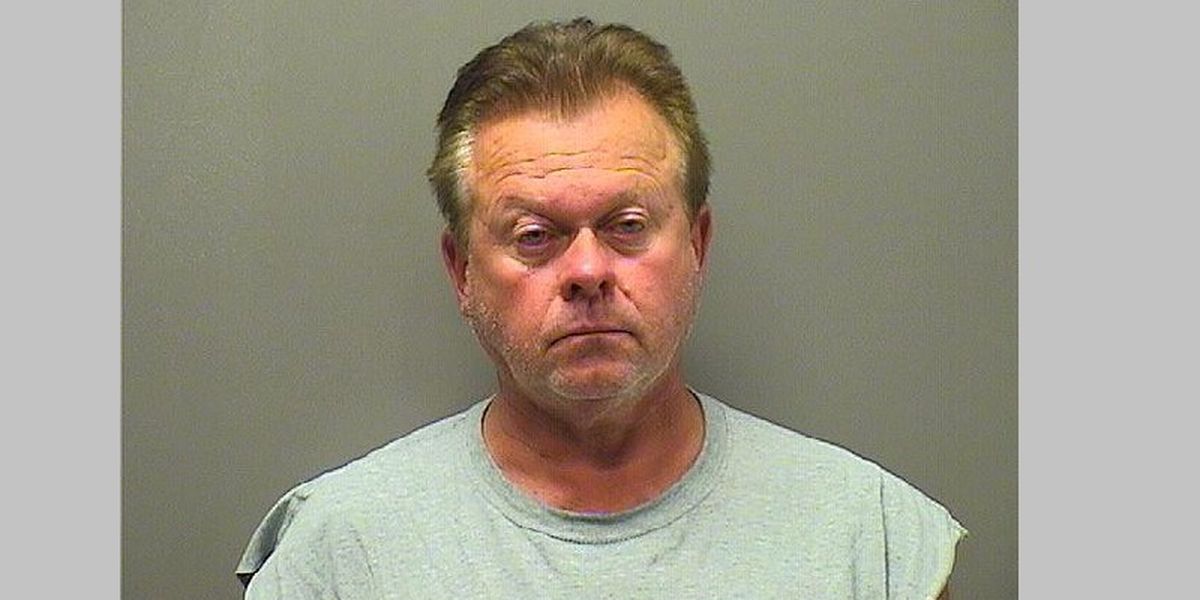
    HOT SPRINGS, Ark. (AP) — Authorities say a Hot Springs man was arrested on a second-degree murder charge after he allegedly pushed his brother out of a moving vehicle, causing his death.

    An affidavit says 57-year-old Richard Dean Ammons was arrested Thursday for the death of his brother, Johnnie Adams. The affidavit says Johnnie Adams told police before his death that they two had been “arguing over corn dogs” before he was pushed from a Jeep.

    Authorities say Johnnie Adams later died at a Hot Springs hospital.

    Richard Ammons remained jailed Monday morning on $10,000 bond. The Sentinel-Record reports the affidavit says Richard Ammons told police that he did not recall what the argument was about.

    On Friday, Judge Ralph Ohm issued a gag order preventing attorneys or authorities from speaking publicly about the case.

    ___

    Information from: The Sentinel-Record, http://www.hotsr.com

  • Veteran Ranger Heading To Country’s First National Park

    Veteran Ranger Heading To Country’s First National Park

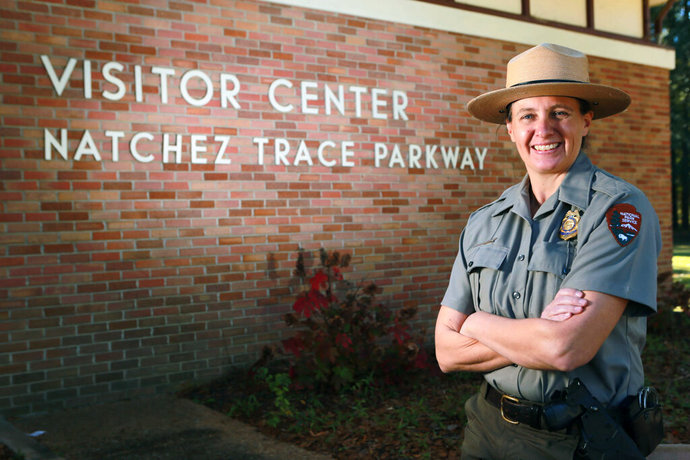
    TUPELO, Miss. (AP) — Sarah Davis has enjoyed her time in Tupelo and has nothing but praise for the people and environment.

    “The people are friendly, Tupelo is a great size town with a great location,” said Davis, the chief ranger for the Natchez Trace Parkway. “It’s five hours to the beach and four hours to the mountains.

    “I enjoy hunting and fishing, and this is a sportsman’s paradise.”

    Davis is heading to Yellowstone National Park, where she will become its first female chief ranger.

    Davis, a 20-year veteran of the National Park Service, came to Tupelo in 2012 from an office in Washington, D.C. where she had a 76-mile commute one-way each day to work.

    “I wanted to get back to working in a park, not sitting at a desk,” Davis said. “When this position came open, I applied. I had worked at the Blue Ridge Parkway so I had a good idea of what to expect.

    “I am originally from North Carolina. Coming here was like coming home. Everybody is so welcoming.”

    Since the parkway is a 444-mile long road, Davis wanted to improve safety and reduce the number of fatalities. While most of the traffic on the parkway is around the Tupelo and Jackson areas, the majority of the serious injuries and fatalities are in more rural areas where higher speeds play a role.

    Moving rangers away from the big cities helped. So did a new case reporting system and switching to electronic tickets. Between the two, the time writing tickets and doing paperwork has been cut in half, giving them more time to patrol.

    While motorists may not be big fans of the parkway’s 50 mph speed limit, it is there for a reason.

    “Physics is the biggest reason,” Davis said. “The parkway is very unforgiving. It’s a narrow road with no shoulders. There is very little chance to react.”

    The increased patrols, unmarked cars and other measures has had an effect on speeding, distracted driving and fatalities. All have dropped.

    While she has enjoyed her stay with the Natchez Trace, her remaining time here is measured in weeks. Part of the park service’s formula is based on short stays and transfers. That allows new people to bring new ideas to the nation’s parks and historic sites to make sure they don’t become stale.

    The next assignment for Davis will be as chief ranger at Yellowstone, the country’s first national park and at 2.2 million acres, the largest in the lower 48 states. It is also the park she has visited the most. She admitted working at Yellowstone was definitely on her bucket list.

    “I someone says if they could only visit one national park, which one? It has to be Yellowstone,” she said. “It has so much to offer — mountains, meadows, the lake, waterfalls, geysers, mud pots. Then there’s the wildlife — bison, bears, elk and wolves.

    “There are thousands of things to see and everything is spectacular. The opportunity to protect and be a part of Yellowstone is something special.”

    The move will definitely be a step up for Davis. Where she currently oversees around 45 rangers and has a budget of $3.5 million, at Yellowstone she will have a budget closer to $18 million and a staff of 275 employees.

    “I will be here until Thanksgiving and then start the move,” Davis said. “In Yellowstone, I will be living in historic Officers Row in the Mammoth-Hot Springs area.

    “I will actually be walking distance from the office and be able to walk home for lunch.”

    The biggest change for the Southern girl who likes it hot will be dealing with the cold weather. Some areas of the park are under snow nine months out of the year. But that will be fun and new for her and at least one of her two dogs.

    “The older one has seen snow before,” Davis said. “The other one is a Mississippi dog, so I look forward to introducing her to snow for the first time.”

    ___

    Information from: Northeast Mississippi Daily Journal, http://djournal.com

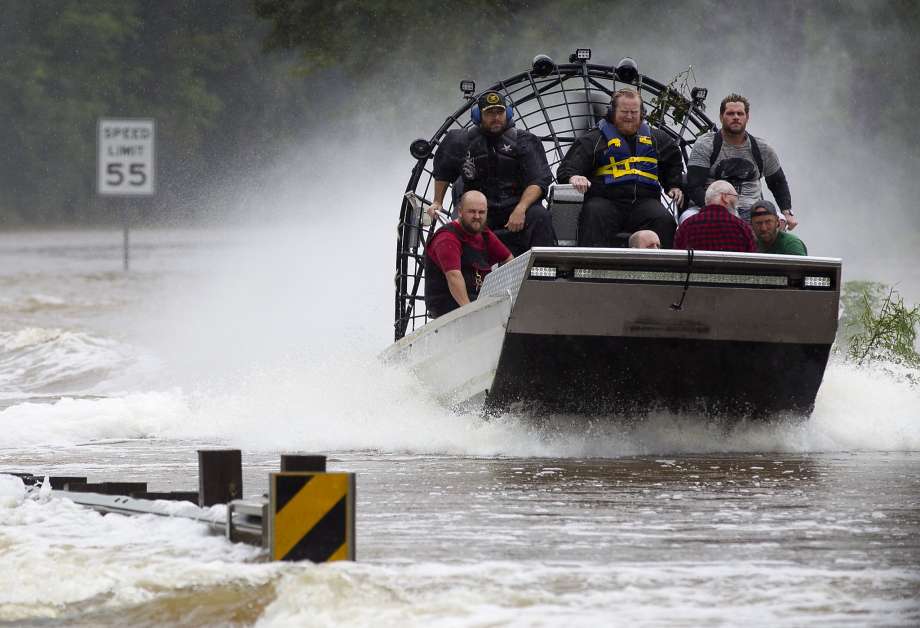
  • Louisiana Volunteer Rescue Crew ‘Cajun Navy’ Changes Name

    Louisiana Volunteer Rescue Crew ‘Cajun Navy’ Changes Name

    LAFAYETTE, La. (AP) — A volunteer search and rescue group in Louisiana says it has changed its name to avoid confusion with a similarly named organization whose leader is accused of taking money from a fundraiser meant for children.

    The director of Pinnacle Search and Rescue, formerly known as Cajun Navy 2016, told KADN-TV it sped up its name change when the president of a separate group called America’s Cajun Navy was charged with fraud two weeks ago. News outlets report the change also comes as its own president, Jon Bridgers, faces fraud charges after a homeowner said he agreed to do contracting work on a house but never finished.

    Pinnacle Search and Rescue director Ben Husser said some were confusing the two organizations.

    Both groups include private boat owners who assist rescue operations.