Author: Imported Author 1890002
-
Natchez aldermen approve more crime cameras
NATCHEZ, Miss. – The Board of Aldermen approved buying $15,000 worth of crime cameras to add to those already in place after a prominent downtown Natchez resident complained Tuesday about a shooting near his High Street home.In urging the board to purchase more surveillance cameras, Mike Blattner expressed concerns Natchez could be developing “a black eye” as a crime-ridden town. “If we don’t get this under control, Natchez is not going to make it,” Blattner said.Natchez already has about 150 outside surveillance cameras throughout the city that have proved effective in curbing and solving crime, said Police Chief Walter Armstrong.“We are trending in the right direction,” said Armstrong, who has issued crime statistics showing rates are down. For example, there were three murders in Natchez last year, down from the 12 in 2018; 142 burglaries last year, down from the 172 in 2018; 11 robberies last year, down from the 24 in 2018.However, Blattner said the city should “blanket” downtown Natchez with more cameras and “nip this (crime) in the bud.” He told aldermen of a recent shooting spree near his antebellum home Cherokee involving two vehicles driving by his house. The case remains under investigation.Blattner expressed concerns that Natchez’s status as a tourist destination could be ruined if the city develops a reputation for crime. He has a steep financial stake in this. Blattner and business partners in November bought Dunleith, the antebellum Natchez bed-and-breakfast mansion, restaurant and event venue that closed after its previous owner went bankrupt. Blattner said the New Orleans-based hotel group’s multimillion-dollar purchase of Dunleith will get the once-popular Natchez tourist destination reopened to employ about 50 or so people.While Natchez’ six aldermen voted Tuesday to allocate $15,000 for more street cameras, it’s uncertain how many that will buy. Armstrong said costs range from about $150 to $350 per camera. He noted their placement will take time as he decides where to strategically locate them. He said he wants the cooperation of residents and businesses whose properties the cameras could be on. WiFi and electric connections are required for the monitoring system used to help police respond to crime in real time or for follow-up investigations.The decision to buy more crime cameras Tuesday came in a city boardroom filled to capacity with people apparently concerned about crime. One women wrought with emotion was told to leave after she was denied her request by Mayor Darryl Grennell to address the board concerning a complaint she had about police’s response to an incident impacting her. -

Longwood’s 50th Anniversary
The Pilgrimage Garden Club is marking an important 50th anniversary this month. It acquired Longwood on Jan. 26, 1970, when the McAdams Foundation donated the historic Natchez mansion to the club.
Kelly and Ina May McAdams of Austin, Texas, had purchased the 90-acre estate in 1968 from the descendants of Haller Nutt. He was the wealthy cotton planter who had the house built in 1860-61 but left unfinished after losing his fortune during the Civil War.
The McAdams, through their foundation, gave the mansion, its furnishings and 4.4 acres to the Pilgrimage Garden Club. They sold the rest of acreage to the club later in 1970. In deeding the property to the PGC, the McAdams considered the club the best group to preserve Longwood in its unfinished state as the largest octagonal mansion in the United States.
After taking ownership 50 years ago, the PGC appointed a committee headed by Natchez physician Homer Whittington to assess what needed to be done for Longwood’s restoration, according to William Whitwell, author of the book “The Heritage of Longwood.”
The roof and gutters were especially deteriorated. Leaks had heavily damaged the inside timber. Longwood’s old barn was torn down, yielding wood needed for replacing the mansion’s rotted timber. Pilasters on the top domed cupola were rebuilt. Mansion galleries and columns had rotted or fallen due to decay. A start was made to replace them.
In preparing for the February 1971 dedication of Longwood’s status as a National Historic Landmark, restoring the mansion’s front porch was made a high priority by the club.
Sears provided free paint and sent an expert from Chicago to give advice on painting Longwood. The club contracted painters to scrape off original paint and paint anew. Some verandas, balcony balustrades and columns were actually bare of paint when technicians arrived in 1971 to inspect Longwood. As renovations continued in 1973, a restoration expert recommended the aluminum silver paint on Longwood’s iconic onion-shaped dome be painted reddish tan.
Longwood’s overall restoration proceeded in accordance to specifications conceived by original architect Samuel Sloan. Natchez contractor Dix Fowler and his crew worked to stabilize Longwood from within.
Prior to the McAdams’ 1970 donation, Ina May McAdams discussed the family’s intentions to give Longwood to the National Park Service. In an October 1969 letter, Ina May said the McAdams thought the NPS was best suited to “keep (Longwood) maintained for posterity.” However, if the NPS “will not take it, we will search for some other worthy entity – for we have dedicated ourselves to seeing that Longwood becomes and remains a national shrine.”
Three months later, the McAdams found that worthy entity: the Pilgrimage Garden Club.
The McAdams sold the rest of the property (about 82 acres) to the PGC on Aug. 1, 1970. In a May 1970 letter, Kelly McAdams said his family wanted to sell the land to the PGC because “the women of Natchez, and the Pilgrimage Garden Club in particular, should have control of this entire property.”
McAdams urged the garden club to buy the land. Otherwise, he said, his children would push to sell it for possibly more money to anyone who would “develop it as they wish.” McAdams evidently did not want the land commercially developed because “we share the desire of the (PGC) women that no subdivision be put there which will detract from Longwood.”
For the 50 years since the Pilgrimage Garden Club acquired Longwood, it has kept the architectural marvel preserved and has shared its history for the thousands of visitors who tour the National Historic Landmark.
Primary sources for this are books written by William Whitwell (“The Heritage of Longwood”) and Ina May McAdams (“The Building of Longwood”). Documents in Longwood’s archives were also used.
-

Adams County airport plans for future upgrades
NATCHEZ, Miss. – Upgrades for the Natchez-Adams County Airport are being planned to ensure it remains a viable transportation modal.“It’s deteriorating. It needs to be addressed,” airport consultant Joe Levraea told the Adams County Board of Supervisors.The board on Tuesday heard Levraea and airport Director of Aviation Richard Nelson discuss plans for runway resurfacing and lighting at the 74-year-old county-owned facility.Nelson said an airport master plan has been in the works to show what’s needed for funds to be sought largely from the federal government.While the Natchez-Adams County Airport is aged and needs improvements, its basic infrastructure is solid, Nelson said. It currently doesn’t have commercial passenger service but is set up for that potential. A more immediate need is to ensure the airport can sufficiently accommodate airplanes for businesses or industries wanting to locate in Adams County, the airport representatives told county supervisors Tuesday.Nelson said an ongoing project is installing new airfield lighting controls. Another project in the plans is rehabilitating the airport’s main runway. Estimated costs: $6 million, with the Federal Aviation Administration providing 90 percent to combine with state and local funds (5 percent each), according to Nelson. The airport’s share would be around $200,000-$300,000. Actual construction would be two years away around March 2022.The Natchez-Adams County Airport dates back to1946, when its property was obtained from the U.S. Army Corps of Engineers through a coastal-defense program, according to an historical account posted on the airport’s website (flyhez.com). Runways were constructed then in the military style of the day.The existing terminal building was constructed in 1959 by Natchez and Adams County. Hardy-Anders Field was named to honor two Adams County military pilots killed during World War II. The terminal building was named in 2003 as a tribute to longtime airport director Billy Simmons and wife Helen.Passenger airline service was offered at the airport from the early 1950s to the late 1980s and again briefly in the mid-1990s. Over the years, the two runways have been upgraded and lighting has been added and improved, bringing the airport in line to hold an air-carrier certificate.The airport is governed by a five-member board: Gary Holloway, David Gaude, Edward Ealey, Theodore Johnson and John McCullough. The Adams County Airport Commission is appointed by the five county supervisors. -
Natchez-Adams pool improvements on tap with more funds
NATCHEZ, Miss. – Adams County supervisors have discussed providing more money for further improving Natchez-Adams County’s new swimming pool, but they’ve held off funding until a financial review of the city-county recreation program is finalized.
While plans are underway with state and local funds for heating and covering the outdoor pool for use in cold weather, the Mississippi Department of Wildlife, Fisheries and Parks has made more state money available, said Natchez Community Development Director James Johnston. However, the city and county needs to provide more local funds to combine with state funds to qualify for the extra money.
Johnston said additional funds could pay for a pool-chlorination system, spectator bleachers and storage accommodations for the year-old pool. The total budget estimate for the additional improvements is about $80,000. This would augment the $264,000 already budgeted for heating and covering the pool.
The Board of Supervisors in November hired accountants to audit how the city-county Recreation Commission’s finances have been handled. With funds provided by Natchez and Adams County boards, the Recreation Commission operates the public swimming pool, ballfields and parks. The city-county recreation program’s finances and management have been in disarray this past year. Questions have arisen about how money the commission gets is being spent and accounted for.
County Administrator Joe Murray told supervisors last week that accountants have been reviewing the recreational finances and that city, county and recreation officials need to assess the findings “so everybody can be on the same page.”
As the new Adams County Board of Supervisors begins its term, a new state law took effect Jan. 1 letting county supervisors give themselves a pay raise. The new law lets Mississippi’s county supervisors increase their pay by three percent. A publicly recorded vote by the board is required for this pay raise. Adams County supervisors in 2016 did raise their annual salary to $44,700 each.
The board ended its first public meeting Jan. 6 to discuss behind closed doors various matters, including personnel issues, litigation and a new business interested in locating in Adams County.
-

Adams County Sheriff, Travis Patten, gives warning to community with weekend approaching.
Adams County Sheriff Travis Patten warned that recent gang-related violence and killings at Mississippi prisons could bleed into Adams County.
Among the four state inmates killed in the past week or so in prison fights was Terrandance Dobbins, who the sheriff said was a gang leader from Adams County being buried here Saturday. Rival gangs have “declared war” on each other in state prisons and the streets, Patten said. The sheriff noted he and his deputies will “be there in force” to quell any potential gang-related violence as Dobbins is buried in Adams County.
Four inmates have died and several have been injured at two state prisons and one regional jail during “major disturbances” since Dec. 29, according to the state Department of Corrections. A system-wide lockdown was initiated last week at all state prisons imposing more restrictions on inmates.
-
New Adams County board holds first meeting
NATCHEZ, Miss. – The new Adams County Board of Supervisors began the first meeting of its four-year term Monday with the election of Ricky Gray as president.
Gray and Angela Hutchins are the board’s two veterans as three newcomers became supervisors last week with the start of the new year. Gray began his second term as District 4 supervisor while Hutchins enters her third term representing District 3. She was elected to be the board’s vice president.
New supervisors Warren Gaines of District 5, Wes Middleton of District 1 and Kevin Wilson of District 2 joined Gray and Hutchins to reappoint Joe Murray as county administrator and Scott Slover as board attorney – two key county officials who’ve been at the board table during meetings with supervisors for at least eight years.
The supervisors on Monday also reappointed other long-serving holdovers to county government positions, such as the county engineer, inventory clerk and purchasing clerk.
-

Natchez government buildings left out of state historic-preservation funds
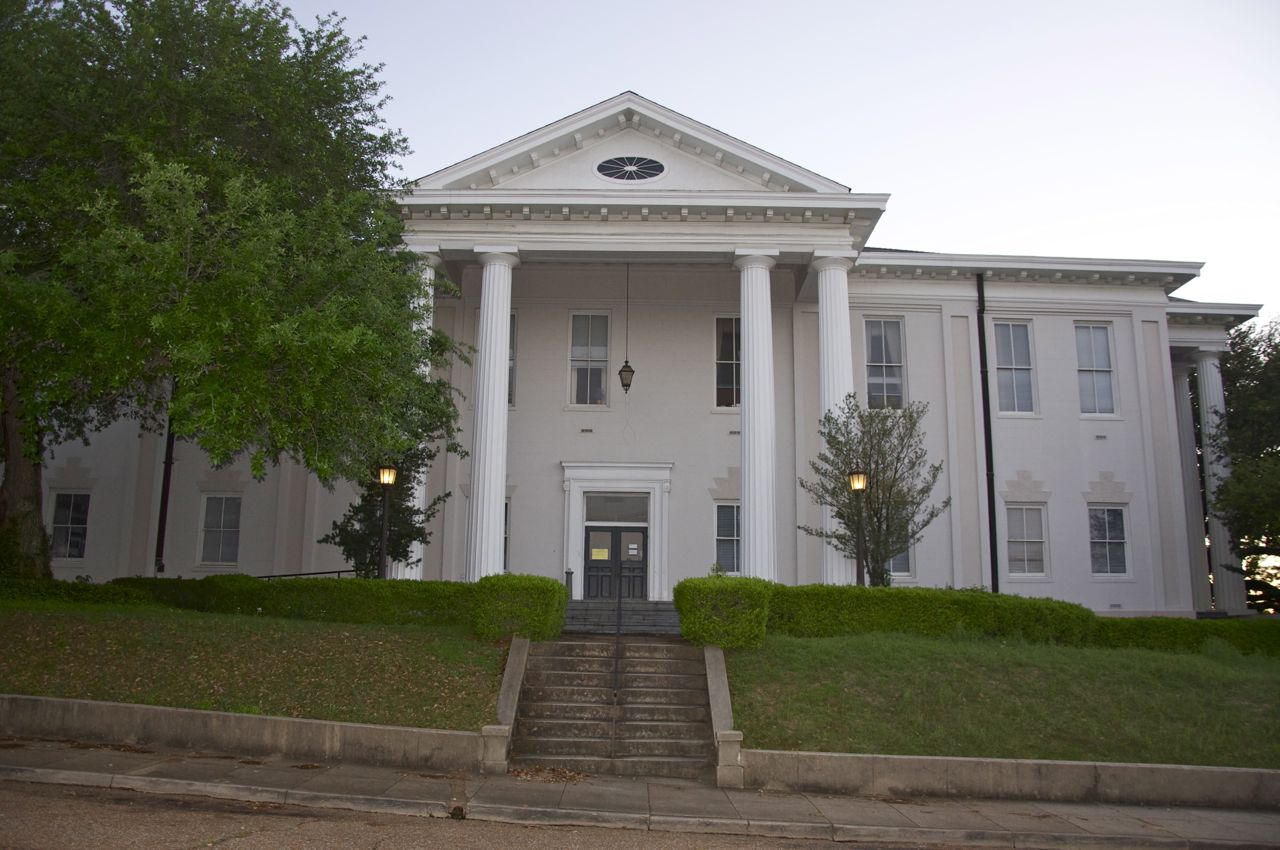
NATCHEZ, Miss. – Funds requested for reroofing the Adams County Courthouse and Natchez City Hall are not among the state historic-preservation grants recently awarded.The courthouse and city hall got left out from grants approved last week by state Department of Archives and History trustees. However, about $500,000 is going to two other historic Natchez landmarks: the Natchez Institute and Temple B’Nai Israel. (see article previously posted here)The Adams County Board of Supervisors and Natchez Board of Aldermen had applied for grants from the Mississippi Department of Archives and History for repairing their aged government buildings, but they’re not on the list of 17 recipients from around the state announced Monday.The county courthouse and city hall have leaky roofs the two boards are struggling to find funds for fixing.A state-declared Mississippi landmark, the Adams County Courthouse was built around 1820 and extensively remodeled in the 1920s, according to MDAH. Natchez City Hall was built in 1924 by the courthouse and is also a state-designated Mississippi landmark.Natchez Mayor Darryl Grennell said city officials will try to find other funds for the municipal building’s roof repairs, which has been estimated to cost at least $220,000.The courthouse’s leaky roof prompted a judge to order county supervisors to pay the costs of moving her judicial office elsewhere. Adams County Circuit Judge Debra Blackwell in October demanded they pay the $400-a-month rent for space at a lawyer’s office across the street from the courthouse. Maintenance workers have been doing piecemeal roof repairs to curb the rain dribble, but it continues unabated into the courthouse. -

Natchez board selects developers for old railroad depot
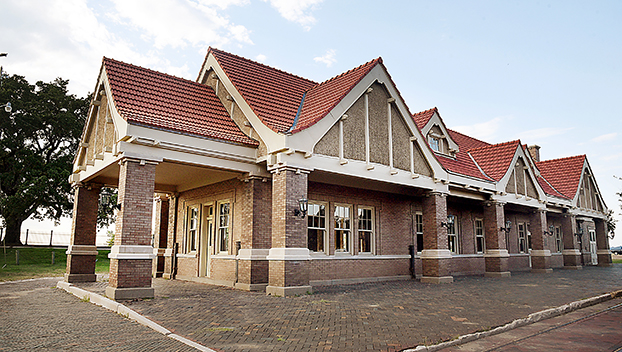
NATCHEZ, Miss. – The mayor and aldermen will be negotiating with a group led by movie director Tate Taylor to complete the restoration of Natchez’ old railroad depot on Broadway Street and turn it into a restaurant.
The group’s plans call for converting the 109-year-old building into “a world-class bar and café” alongside an outdoor live-music venue overlooking the Mississippi River. It also envisions using it as a party place for actors, production crews and others involved with Taylor’s nearby movie studio.
The Natchez Board of Aldermen on Tuesday selected the partnership – known as Church Hill Variety – that includes Taylor and renowned chef Nick Wallace. Their plans for the city-owned depot bested a proposition offered by hotelier Warren Reuther’s company.
Natchez Mayor Darryl Grennell said he and aldermen will meet in January to finalize details of a lease with Church Hill Variety that’s to include its financial terms and abilities for bringing the old train depot back to life. City leaders’ plans call for the developers to take advantage of the site’s “spectacular river and sunset views” and make it “a prime destination for locals and tourists from sun up to sun down, especially on weekends.”
According to Church Hill Variety’s proposal submitted to city officials last month, the eatery will serve breakfast in the morning and remain open into the night to focus on serving “classic cocktails, small plates and capturing the majesty and romance of the river views.”
Also noted in the plans is the Broadway Street depot’s close walking distance to Crooked Letter Studio, the former beer distributorship on High Street that Taylor is using for making movies.
Taylor this past summer in Natchez directed the filming of “Breaking News in Yuba County.” His earlier movies include “The Help.” Taylor – who lives in the Church Hill community near Natchez – is joined by chef Wallace, movie producers John Norris and Thor Juell in the train depot’s development.
Taylor, Norris and Juell are also involved with another newly formed group – Film Natchez – working to get more movies produced here.
While the old depot’s exterior was renovated in 2016 by the city, it has remained a vacant unfinished shell as the Board of Aldermen held up plans for completing the interior’s restoration. About $900,000 was spent in city and federal funds to restore the exterior.
The board in 2016 leased the building to Natchez Grand Hotel and Monmouth owner Reuther. He began restoring the building’s interior, but the contract was nullified by aldermen amid protests that city officials didn’t seek proposals from others.
After the bidding process opened earlier this year for more offers, Reuther’s company – New Orleans Hotel Consultants – and Church Hill Variety were the only two submitting proposals by the Nov. 1 deadline.
The former railroad depot was vacated in 2013 when a restaurant and souvenir shop were evicted so the building could be renovated.
The train depot was built around 1910 by the Yazoo & Mississippi Valley Railroad and later owned by Illinois Central Railroad. Passenger-rail service to Natchez terminated in the 1940s when World War II ended. The building became a restaurant in the mid-1970s.
-

Adams County board’s outgoing members bid farewell
NATCHEZ, Miss. – The Adams Board of Supervisors held its final meeting of the four-year term Monday – the last for three members rejected by voters in the recent elections.
Supervisors Calvin Butler, Mike Lazarus and David Carter will be replaced next month by three freshmen: a former county road department employee, the son of a former Natchez mayor and the only Republican holding office in Adams County government.
New supervisors Warren Gaines, Wes Middleton and Kevin Wilson in January will be joining current board members Angela Hutchins and Ricky Gray to lead Adams County’s operations for the next four years.
Lazarus, the county board’s longest-serving member and most loquacious, leaves his District 1 post after 12 years there. “It’s been fun,” said Lazarus, whose sentiments were echoed by Butler and Carter as they spoke at their last scheduled meeting Monday.
Lazarus did say the job comes with challenges. “Every day you’ve got to make decisions. I hope I’ve made the right decisions.”
He noted decisions by county supervisors can have long-lasting impact, such as setting a multimillion-dollar-a-year budget, maintaining county roads and luring new jobs-producing industries to Adams County. “When you cast those votes, it’s there forever,” Lazarus said.
Lazarus lost the August Democratic primary to Middleton, the son of former Natchez mayor Jake Middleton who helps operate his family-owned janitorial supply business.
Butler, who’s been president of the county board the past four years, represents District 5. First elected in 2011, he was defeated in the August primary by Gaines, who worked for the Adams County road department in recent years.
Wilson beat Carter in last month’s general election for the District 2 supervisory position. Wilson is the only Republican holding an Adams County office — with the exception of Robert Greene, a Republican elected in November to the obscure county post of county surveyor.
Wilson is the first GOP supervisor since Sammy Cauthen served on the county board before losing his re-election in 2007. Carter — a rarity in local government as an independent unaffiliated with a political party — served two terms.
Wilson, owner of oil-, timber- and commercial real estate-related businesses, has been an outspoken critic of the Natchez-Adams County school board. He filed a a 2017 lawsuit set to be heard Dec. 11 at the Mississippi Supreme Court challenging the school board’s plans for financing campus building improvements.
Gray, who begins his second term in 2020, said the two county board veterans and three new supervisors will have disagreements, but they ultimately must be “all about moving Adams County forward.”
The supervisors will take their oaths of office at the turn of the new year and hold their first regular meeting Jan. 6.
-

Natchez board supports efforts to lure movie producers
NATCHEZ, Miss. – The Board of Aldermen plans to ask the state Legislature next year to allow city funds to be allocated to help get more movies and TV shows filmed in Natchez.
Aldermen on Tuesday endorsed legislation to let the city’s economic development agency divert money to a new group – Film Natchez – that’s working to get more cinematic productions here. Film Natchez leaders include movie director Tate Taylor and producer John Norris, who this summer filmed Breaking News in Yuba County in Natchez.
Current state law dictates how local funds are used for Natchez Inc., the business-recruitment agency for the city and Adams County. A bill can be filed to allow Natchez Inc. to act as a conduit for city funds to be specifically used to attract more filmmakers to Natchez, said city attorney Bob Latham.
The Mississippi Legislature begins its annual session in January
Among other matter at Tuesday’s city board meeting, aldermen agreed to let the state’s environmental protection agency have more underground water tests done at city-owned property that once was a tire plant.
As Mayor Darryl Grennell and the Board of Aldermen try to rid themselves of the old Titan tire property on Kelly Avenue, the state Department of Environmental Quality continues to monitor the site for contamination
City leaders have been entangled in a legal dispute against Titan, the property’s former tenant that ended its lease of the long-dormant tire plant in 2017.
Few details about the lawsuit have been publicly brought up by city officials in the past couple of years as they discuss it in closed-door sessions. The city sued Titan for damages it allegedly caused to the property. Grennell and Latham have said they ultimately want the Illinois-based company to take ownership of the sprawling facility. The land and its deteriorating buildings are a financial and legal albatross for the city.
The lawsuit did find its way to the Mississippi Supreme Court, which earlier this year denied Titan’s appeal to halt trial-court proceedings in Adams County Circuit Court.
The old tire factory abuts Kelly and South Concord avenues and has been the source of pollution. Gasoline and cleaning solvents have seeped into groundwater. It’s been monitored by DEQ for several years.
The tire plant was constructed for Armstrong Rubber Co. in 1939 with state financing. The property was deeded to the city. The Natchez tire manufacturer once had more than 1,000 employees. After Armstrong left, the property was used by successor tire-making tenants Fidelity, Condere and Titan. Titan took over in 1998 but shuttered the factory in 2001. It continued to lease the vacant property from the city until 2017. Titan removed factory equipment that belongs to the city, which is a point of contention in the city’s legal dispute with Titan.
The 80-year-old tire plant is about a half-mile from Martin Luther King Street between MLK and D’Evereaux Drive in north Natchez.
Natchez and Adams County government leaders have discussed applying for a federal grant to pay for further assessing the extent of the pollution and how much clean-up costs would be. The federal government provides money to rehabilitate polluted industrial properties that could be redeveloped. The so-called Brownfields program enables states, communities and other stakeholders to work together to prevent, assess, clean up and reuse polluted properties.