BY LAURA KINIRY (Smithsonian Magazine)
Perhaps more than ever, now is a time to appreciate America’s small towns. As we begin to see the other side of a pandemic that kept so many of us isolated, it is easier to understand the value in those things we’ve missed. Whether it’s by enjoying an outdoor summer concert with neighbors or by catching up with friends at the local brewpub, a sense of community has been hard to find for many; Zoom and FaceTime made for adequate, virtual stand-ins, but they don’t compare to the real thing. It’s those in-person interactions with familiar faces that make small towns so alluring. That is, along with the independent shops, hidden gem parklands, historic sites and architecture, unique restaurant finds, and, of course, a slower pace of life and relative affordability that numerous city dwellers are finding more and more appealing.
Fortunately, many of America’s small towns are emerging from the effects of Covid-19 resilient and ready to welcome visitors. Some, like Dyersville, Iowa, are finally hosting long-anticipated sporting events that the pandemic placed on hold. Others, such as Council Grove, Kansas, are celebrating historic anniversaries. Whatever the case, the 15 places we’ve chosen as the best small towns to visit in 2021 are prime examples of perseverance and preservation, and reminders of all that we love about small towns in the first place.
Council Grove, Kansas (pop. 2,182)
Council Grove was once a prominent stop along the Santa Fe Trail (aka the Great Prairie Highway), a famed 19th-century trade and travel route that ran 1,200 miles between Franklin, Missouri, and Santa Fe, New Mexico. This year celebrates the trail’s bicentennial, and the town is commemorating its historic role with Santa Fe Trail 200, a lively lineup of historic reenactments, an antique wagon show, a BBQ contest and other anniversary events. Council Grove will also be the first checkpoint along the American Solar Challenge, a biennial solar car race that will be tracing the Great Prairie Highway, beginning on July 27.
As the northern terminus of the 47.2 mile Flint Hills National Scenic Byway, which winds among rolling hills and wide-open prairie (in fact, Tallgrass Prairie National Preserve is home to one of the world’s last remaining tallgrass prairie ecosystems), Council Grove is scenic as well. Downtown is brimming with brick storefronts housing independently owned shops like Weathered Wood Home, known for its reclaimed-wood picture frames, and Flint Hill Books. Despite the pandemic, businesses such as The Territory Ballroom, a coworking, wedding venue, and (eventual) lodging space, and Riverbank Brewing are also preparing to open their doors.
You may want to try the 1857 Hays House restaurant, considered to be the oldest continuously operating restaurant west of the Mississippi River. For something a little more immersive, Council Grove’s Trail Days Cafe and Museum serves up Native American and Old World foods (think bison pot roast with succotash or baked ham with sweet potatoes) in the 19th-century Rawlinson-Terwilliger Home, either the first or the last home seen by travelers on the Santa Fe Trail depending on the direction they were traveling. Each month, the museum’s dining tables display the story of someone or something from local history, and onsite artifacts include century-plus-old kerosene lanterns and a commemorative plate from the 1976 Bicentennial.
As for outdoor recreation, don’t miss the 117-mile multi-use Flint Hills Trail, the seventh-longest rail trail in the country. It connects with Morris County’s Allegawaho Memorial Heritage Park, home to the last known Kaw (or Kansa) Indian Tribe settlement in Kansas.
Council Grove and surrounding Morris County feature more than two-dozen historic sites, many of which are associated with the Santa Fe Trail. Council Oak, for instance, is the site where, in 1825, Osage tribe leaders granted Euro-American travelers right of way across Osage lands, ensuring their safety along the historic thoroughfare. The aptly named Last Chance Store was the last place to purchase goods en route to Santa Fe, and visitors can see actual trail ruts created by Santa Fe travelers about five miles west of town.
Fayetteville, West Virginia (pop. 2,806)
With the official designation earlier this year of the country’s newest national park, New River Gorge National Park and Preserve, neighboring Fayetteville has been buzzing. However, this laid-back, tight-knit community (named for American Revolutionary War hero Marquis de Lafayette) has long been a place where adventure reigns. Just ask the proprietors of Water Stone Outdoors, a Fayetteville sporting shop that’s been outfitting climbers, whitewater rafters, backpackers and campers for more than 25 years.
In fact, the nearby New and Gauley Rivers offer world-class whitewater rafting, and the Fayetteville area is home to some of the best rock climbing along the East Coast. It’s also a prime spot for mountain biking, with the town’s Arrowhead Bike Farm being a one-stop shop for mountain bike rentals, accessible trails, and even overnight camping.
Adventure pursuits aside, Fayetteville’s natural scenery is stunning, with cascading waterfalls, scenic parks and breathtaking views that overlook the New River Gorge. The region is also home to a wealth of Appalachian history, including a Civil War Trail and nearby mining towns like Nuttallburg and Thurmond.
Downtown is chock full of quirky shops like Wild Art Wonderful Things, where you can pick up Appalachian-made products like state-shaped embroideries and bottles of River Rat Hot Sauce, and Great Googly Moogly, a gift store specializing in crystals and moonstone pendants. Vintage dishware and cherubic figurines more your thing? Swing by The Hobbit Hole.
Fayetteville is home to the original Pies and Pints, a stone hearth pizza place with a decidedly cult following. (The gorgonzola and grape pie is a fan favorite.) For a cup of joe and a scrumptious slice of carrot cake, nothing beats Cathedral Cafe, with its laid-back vibe and early 20th-century church setting. Even stained-glass windows are part of the decor. The Wood Iron Eatery whips up made-from-scratch dishes in Fayetteville’s historic Ankrom-Dickerson House, or opt for a craft brew and trivia games at Southside Junction Tap House.
While the town’s landmark New River Gorge Bridge—an 876-foot-high single-span arch bridge that’s also one of the world’s longest—is impressive on any day, it’s especially so each third Saturday in October. This is Bridge Day, the only time that it’s legal to BASE jump in a national park (and professional BASE jumpers take full advantage of it). Bridge Walk offers a heart-thumping adventure of a different kind: guided tours beneath the bridge, along its 24-inch-wide catwalk.
Muscle Shoals, Alabama (pop. 13,146)
Aretha Franklin found her voice right here in Muscle Shoals, Alabama’s own music capital. It was at this northwestern Alabama town’s FAME Studios that the singer recorded her first top-ten hit, “I Never Loved a Man (The Way I Love You),” in 1967, essentially launching her career.
Scheduled for release on August 13, the Aretha biopic Respect will thrust both FAME Studios and Muscle Shoals into the spotlight. The town will showcase the Queen of Soul with a bevy of exhibitions and tours.
When it comes to the region’s music history, however, this is just the beginning. The Shoals, which along with Muscle Shoals consist of nearby Tuscumbia, Florence, and Sheffield, are also home to the Muscle Shoals Sound Studio. Started by four musicians from FAME’s house band in 1969, this iconic studio has recorded The Rolling Stones, Lynyrd Skynyrd and Bob Dylan among other musical icons. Another not-to-miss spot is the Alabama Music Hall of Fame, which highlights the more than 1,200 Alabama musicians (including Hank Williams and Alabama Shakes) who have helped shape the state’s music scene. Visitors can even record a song of their own at the Hall of Fame’s onsite vocal studio.
The Shoals are dotted with famous homes like the Frank Lloyd Wright-designed Rosenbaum House; the Birthplace, Museum and Library of W.C. Handy, the “Father of the Blues;” and Ivy Green, the birthplace of Helen Keller, where the author’s and activist’s original Braille typewriter remains on view.
As for local dining, area restaurants run the gamut from the Southern chain and Mississippi Delta favorite, Champy’s World Famous Fried Chicken, to Odette, a neighborhood eatery serving up Southern-inspired dishes like fried gulf oysters and blackened catfish. One of the most unique eateries is Tuscumbia’s Rattlesnake Saloon, an open-air watering hole tucked beneath a natural stone bluff. The unusual locale even earned it a place on The Food Network’s “Craziest Restaurants in America.”
Manitou Springs, Colorado (pop. 5,283)
“Manitou Springs is the perfect combo of Mother Nature, friendly people, and a robust arts and culture scene,” says local resident Amy Mogck. Tucked between Pikes Peak and the Garden of the Gods, a National Natural Landmark known for its sandstone rock formations, it’s an ideal spot for anyone who loves the great outdoors. This mountain town gets its name from the eight mineral springs around town, each one sporting its own special properties (like the Navajo Spring’s natural bubbling waters, and the strong flowing waters of Twin Spring, popular for making mineral water lemonade) and taste.
Hiking is a prominent area activity, with nearly a dozen easy-to-moderate marked trails in nearby Red Rock Canyon Open Space. Hardcore trekkers prefer the steep Manitou Incline, which climbs 2,011-feet (and 2,768 steps that were once railway ties for a funicular) in less than a mile up Rocky Mountain, resulting in spectacular panoramic views.
The historic Pikes Peak Cog Railway offers another sky-high summit vista, traveling nine miles to the 14,115-foot-tall summit of prominent Pikes Peak. Riders of America’s highest railway (and the world’s highest cog train), which, by the way, has received an intensive overall, complete with both brand new rails and new railway cars, will often see moose and bighorn sheep reside along the slope. The peak itself is home to the new sustainably-built Pikes Peak Summit Visitor Center, an indoor and outdoor interpretive space opening this summer. Once at the top, many choose to hike or bike back down the mountain, but not before filling up on the homemade donuts that are a Pikes Peak speciality.
Back in town, visitors and locals alike can enjoy the works of local artists at Green Horse Gallery, which showcases everything from raku pottery to hand-colored etchings of Colorado peaks. Pick up colorful wine-stoppers and llama-shaped tea infusers at The Ten Spot, where everything costs $10 or less, or play skeeball at Arcade Amusements, a penny arcade with an old school prize counter.
Round out the arcade experience with a visit to nearby Patsy’s, a more-than-century-old concession stand where popcorn, funnel cake and salt-water taffy are the norm. For something more substantial, Manitou Brewing Company serves up craft beers and elevated bar food like jalapeno-topped burgers served on brioche buns, while the family-owned wine bar Swirl is known for its gourmet grilled cheeses and homemade flatbreads. In the mood for BBQ and live music? Then Armadillo Ranch is a must.
Hatch, New Mexico (pop. 1,955)
It’s been 100 years since horticulturist Fabián García publicly introduced his hybrid chile, “New Mexico No. 9,” the grandmother of all New Mexican chile peppers today. To pay homage, consider a visit to Hatch, a small agricultural village in southern New Mexico known as the “Chile Capital of the World.” The oh-so-flavorful Hatch pepper is named after the spot, given that the Hatch Valley is where the bulk of Hatch peppers are grown. This is thanks to its unique terroir, which includes fertile volcanic soil.
Despite the town’s tiny size, Hatch swells to more than 30,000 people annually during the Hatch Chile Festival, a two-day celebration held over Labor Day weekend that features everything from chile cook-offs to the crowning of a Chile Queen. This year marks 50 years since the festival’s inception. The pandemic thwarted last year’s celebration, making the 2021 gathering extra-special.
The scent of roasting chiles permeates the air in late summer and early fall along Hall Street, Hatch’s main thoroughfare, where mom-and-pop shops sell chile peppers in all forms. Ristras—decorative dried chile pods that are both edible and a good luck symbol—hang on the patios and in doorways of places like Chile Fanatic and Hatch Chile Sales, beckoning visitors to shop for chile powder, salsas and ristras of their own.
Chile peppers keep their star status when it comes to dining, as well. For a quarter of a century, the family-owned Pepper Pot has been serving up Mexican American dishes like green chile stew and red chile enchiladas (a favorite of late food personality, Anthony Bourdain, who said that their red enchiladas were the best ever). Then there’s Sparky’s, a roadside eatery and attraction that’s known as much for the fiberglass statues dotting its rooftop and lining the street (including Ronald McDonald, Yogi Bear, a Roswell-inspired green alien and a towering Uncle Sam) as it is for its cuisine. Sparky’s green chile cheeseburgers are a talked-about phenomenon, though this beloved counter-service spot also whips up wood-fired barbeque, espresso drinks and a wide array of shakes.
Hatch is just nine miles north of the entrance to Spaceport America, the first purpose-built commercial spaceport on the planet and testing grounds for Virgin Galactic’s human spaceflights. Final Frontier Tours offers private pre-scheduled tours of the facility, including the chance to experience a rapidly accelerating G-shock simulator, comparable to what astronauts feel in flight.
Goshen, New York (pop. 5,344)
This summer, Goshen welcomes the opening of LEGOLAND New York, a combined theme park and resort where you can construct, climb, ride and splash, and then bed down in a LEGO-themed hotel. However, the town itself has a much larger history.
Goshen sits among the East Coast’s black dirt farming region, roughly 26,000 acres of extremely fertile soil left over from an ancient glacier lake. It’s also a part of New York’s scenic Hudson Valley and the seat of Orange County: an area ripe with rolling hills, orchards and farmland, not to mention one steeped in equine culture.
In fact, Goshen is known as the “Trotting Capital of the World.” The town’s historic half-mile harness racing track, opened in 1838, is the oldest active horse trotting track on the planet, as well as the oldest continuously operated horse racing track in the country. Informal horse races even took place along Goshen’s Main Street as early as the mid-1700s.
The local Harness Racing Museum offers a deep dive into local harness-racing history with tens-of-thousands of associated artifacts, including a vast collection of Currier and Ives trotting prints. Its Hall of Fame is a who’s who among the sport, including those like Artsplace, the fifth-leading money-winning pacing sire of all time, and racetrack designer Charles E. “Chuck” Coon, whose innovative ideas helped increase both safety and speed.
Goshen is home to a charming Main Street where you’ll find family-owned businesses like Joe Fix Its, a bicycle and ice skating shop that’s been a fixture since 1946. The downtown area also has ample spots to snack and eat, including the casual Howell’s Café, Café Yen (where cups of iced caramel macchiatos are the norm), and Catherine’s Restaurant, an American eatery that offers both a more formal white-cloth dining experience and a low-key, brick-walled pub. The Stagecoach Inn—a former 18th century stagecoach stop that’s been fully renovated into a five-star inn and tavern-style restaurant—is Goshen’s de facto place for special occasions.
Visitors and locals alike can pick up bottles of kombucha and homemade beef jerky at the weekly Goshen Farmers Market, Fridays late May through October, or set out on foot or bicycle along the Heritage Trail, an 18-mile rail-to-trail connecting various Orange County villages on the converted bed of the former Erie Railroad.
Nevada City, California (pop. 3,144)
With its Victorian-era homes, balconied 19th-century structures and a main street lined with gas street lamps (the only ones still operating west of the Mississippi), Nevada City looks like something straight out of a Hallmark Christmas movie. No surprise, since it was the actual locale for Hallmark’s 2006 film, The Christmas Card, and still draws thousands of the movie’s fans from coast-to-coast, especially during its annual December Victorian Christmas celebration, complete with costumed carolers, arts and crafts stalls, and plenty of mulled wine. This well-preserved Gold Rush town is also the gateway to northern California’s Tahoe National Forest, 871,495 acres of pine, oak and fir trees, rivers, and lakes where activities like fishing and snowshoeing are all par for the course.
Gold Rush history permeates Nevada City, which was originally settled as a mining camp in 1849. The National Exchange Hotel, an 1856 Victorian brick property that’s also one of the oldest continuously operating hotels west of the Rockies, underwent a massive renovation. Now reopened, this historic 38-guest-room treasure pairs vintage furnishings with modern amenities (think electric kettles and Italian linens). Of course, visitors can also get a feel for the place by sipping libations in its National Bar, or dining on plates of cabbage cassoulet at its new restaurant Lola, named for famed entertainer, dancer and former Nevada County resident Lola Montez.
Opened in 1865, Nevada City’s Nevada Theatre is a space for live performances, art and films that is also the oldest continuously operating theatre venue along the U.S. West Coast. Literary luminaries Mark Twain and Jack London even appeared here on stage during the late 19th century. Local entertainment hits its pinnacle in late summer with the town’s annual Nevada City Film Festival, which is now in its 21st year.
Nevada City’s downtown shop offerings range from longtime purveyor Utopian Stone, with its one-of-a-kind gemstone necklaces, to the travel-inspired goods (including Mexican Dia de los Muertos figurines and Bali batik fabrics) of Shiva Moon. For locally made body wash or a field guide to the Sierra Nevadas, swing by KitKitDizzi. Wine tasting rooms and spots to satisfy your sweet tooth abound, including the old-timey Nevada City Chocolate Shoppe known for its creamy and crunchy slices of Nevada City Gold.
Gold panning in Nevada County rivers still remains a popular pastime, but so too is mountain biking and hiking. Cyclists test their jumps and skills on the Hoot Trail, a singletrack that winds through forest and along ridge-lined switchbacks, before refuelling on locally brewed draft beers and burgers at The Wheelhouse, occupying an old telegraph office on Highway 20.
The multi-use 3.2 mile Deer Creek Tribute Trail, beginning in downtown Nevada City, highlights the history of both the local Chinese immigrants and the native Nisenan people, Nevada County’s original inhabitants.
Bath, Maine (pop. 8,319)
Bath is known as the “City of Ships,” a center of nautical history that was once a major supplier of 19th century sailing vessels. These days it’s the home of naval shipbuilders, Bath Iron Works, as well as Maine’s First Ship, a local nonprofit currently reconstructing the Virginia, a 51-foot-long replica of the first English ship built in the Americas (in 1607), for use as a floating classroom. Originally planning to launch this year, the more-than-a-decade-long project has been delayed due to Covid, and is rescheduled for spring 2022. Bath is also where you’ll find the Maine Maritime Museum, a 20-acre campus on the banks of the Kennebec River that features boat building demos, exhibits like the newly renovated “Snow Squall: An American Clipper,” and even the restored Percy & Small Shipyard, America’s only surviving wooden shipyard site. The museum offers lighthouse and nature cruises, including one for “mini mariners” 12-and-under, throughout the summer.
But while shipbuilding remains a prominent part of Bath’s lure, the small town has plenty more to offer, such as a downtown historic district filled with architectural treasures, from Queen Anne-style manors to Federal and Greek-Revival civic buildings. Now in its 50th year, Sagadahoc Preservation, Inc., is dedicated to preserving and maintaining this structural heritage. To celebrate their Golden Jubilee, the organization is hosting a walking tour of the city’s hidden gardens, June 19.
This year also marks two decades since Main Street Bath came onto the scene, breathing new life (and bringing economic security) into the downtown commercial district. This includes the annual summer concert series, a series of outdoor performances ranging from jazz ensembles to Fleetwood Mac tribute bands that Main Street Bath puts together in collaboration with the town’s Chocolate Church Arts Center, named for its chocolatey brown exterior.
Today you’ll also find spots like the Bath Brewing Company, where house-brewed IPAs and Irish Reds come served alongside plates of bacon-topped cheese fries and short rib sliders. Other dining options include Bruno’s, with its wood-fired specialty pizzas, and local stalwart J.R. Maxwell & Company, known for its beer-batter-fried seafood and weekend prime rib special. If it’s Whoopie pies and pecan sticky buns you’re after, you can’t go wrong at Bath’s landmark Mae’s Cafe and Bakery, which also serves breakfast all day.
For nature lovers, Bath is home to Kennebec Estuary and its five-mile-long, multi-use Whiskeag Trail. Both bald eagles and amphibians enjoy the mixed woods and freshwater marshes of Thorne Head Preserve, while nearby Reid State Park is known for its sandy beaches, coastal dunes and island views.
Brevard, North Carolina (pop. 7,609)
The great outdoors remains a key part of traveling safely during the Covid-19 pandemic, which is good news for Brevard. That’s because alfresco adventure is at the heart of this small western North Carolina town and its surrounding Transylvania County.
This is where the original Hunger Games was filmed, after all.
Brevard’s nickname, “Land of Waterfalls,” is well-earned, thanks to more than 250 cascades in the area. These include Sliding Rock, a glistening 60-foot natural waterslide that empties itself into a seven-foot-deep swimming hole, attracting daredevils galore each summer. Brevard is also the gateway to more than half-a-million acres of stunning wilderness known as Pisgah National Forest, and within easy driving distance to Gorges State Park and DuPont State Recreational Forest, a major mountain biking hub in the southeast. The area offers plenty of opportunities for hiking, rock climbing and water activities, such as fly fishing and whitewater rafting, in the upper French Broad River—one of the oldest rivers on the planet. But beyond these usual suspects, Brevard offers a rare adventure that begs trying after the year we’ve had: river snorkeling. Biologists leading outings with Oxbow River Snorkeling will be sure to point out species like river redhorse, central stonerollers and elusive eastern hellbender salamanders.
As with nature, Brevard and music go hand-in-hand. Last year, the town’s prestigious Brevard Music Center (BMC), a summer training institute for young musicians, who during their tenure also get to perform alongside world-famous musicians like Yo-Yo Ma and Itzhak Perman, debuted its new lakeside Parker Concert Hall. Due to the pandemic, however, the hall’s inaugural series will kick off this October with a performance by the Jasper String Quartet.
Each September, the town draws tens-of-thousands of visitors with its Mountain Song Festival, a two-day acoustic line-up of everything from bluegrass and newgrass (modern bluegrass) to folk and jazz. The area-based Steep Canyon Rangers—known for their collaborations with actor/banjoist Steve Martin—are the festival’s host band. Local singers and bands perform year round at downtown’s 185 King Street, a chill music hall serving up sandwiches and pouring pints of Brevard’s own Noblebräu beer.
Other town highlights include the Art Deco-style Co-Ed Cinema, a 1930s single-screen theater showing first-run films, and the colorful O.P. Taylor’s toy store, sporting over 6,000-square-feet of action figures, board games and more. Of course, Brevard’s white squirrels (legend has it they’re descendants of two 1949 carnival escapees) are an attraction all their own.
Pimento cheese sandwiches and chocolate banana shakes are the norm at Rocky’s Grill and Soda Shop, Brevard’s original 1940s-era soda fountain and eatery, while The Hub and Pisgah Tavern is the go-to place for mountain bike rentals, as well as pales and ales accompanied by a rotating array of food trucks. And weary heads rest at Brevard’s Red House Inn, a lovingly renovated B&B located within what was once a general store.
Dyersville, Iowa (pop. 4,130)
In the 1989 blockbuster film, Field of Dreams, Ray Liotta’s character, Shoeless Joe Jackson, asks Kevin Costner’s Ray Kinsella, “Is this Heaven?”
“No,” replies Kinsella. “It’s Iowa.”
More specifically, Dyersville, Iowa. Thirty-plus-years later, fans of the movie, baseball, perseverance and passion are still flocking to this Midwest locale to visit the world-famous Field of Dreams movie site. Here, you can run the bases, tour the Lansing Family Farm House (which served as the Kinsella family home in the film, and is also available for overnight rentals), and shop for movie-themed bobbleheads and activewear at the Baseballism store.
This summer, Dyersville will also play host to the first-ever regular-season Major League Baseball game in the state of Iowa: The MLB at Field of Dreams Game Presented by GEICO, an August 12 match between the Chicago White Sox and the New York Yankees. It will take place just over from the original Field of Dreams site on a specially constructed, regulation-size field.
Baseball is undoubtedly a beacon in this largely agricultural town, even attracting youth leagues who compete here each summer through a collaboration between All-Star Ballpark Heaven and the Baseball Factory, a company that helps promote student athletes. Those who visit through October can also visit Dyersville’s seasonal downtown exhibit “If You Build It,” highlighting the making of the film.
However, the town didn’t earn its “Farm Toy Capital of the World” title for nothing. Not only is Dyersville home to multiple farm toy manufacturers, but it’s also where you’ll find the National Farm Toy Museum, with tens-of-thousands of farm toys, including John Deere tractors and Bruder trucks, on display. Other local attractions include the Victorian-housed Dyer-Botsford Doll Museum, and the Becker Woodcarving Museum, showcasing works of the late Iowa carver, Jack Becker, ranging from eight-foot-tall grandfather clocks to hand-carved chess sets.
Dyersville’s Basilica of St. Francis Xavier is a more than 125-year-old Gothic Revival-style structure that’s one of only two basilicas in Iowa. It’s known for its dazzling array of stained glass windows. For those who prefer shopping, Plaza Antique Mall stocks classic advertising prints, sports memorabilia and the varied finds of more than 200 dealers.
The multiuse Heritage Trail, runs for 26 miles between Dyersville and Dubuque, showcasing Iowa’s mill town and mining heritage en route. All this sightseeing is sure to stir up your appetite too. Textile Brewery dishes out gourmet pretzels and cauliflower crust flatbreads, along with site-brewed beers like black ales and oatmeal stouts, all in the space of a former sewing factory.
Ely, Minnesota (pop. 3,390)
Ely sits on the edge of the Boundary Waters Canoe Area Wilderness (BWCAW), over one million acres of interconnected lakes and streams, uncut forest and remote wetlands that just last year became the world’s largest internationally certified Dark Sky Sanctuary. Tucked within the boundaries of northeast Minnesota’s Superior National Forest, the BWCAW features more than 1,200 miles of canoe- and kayak-only water routes. During the 18th and 19th centuries, Canadian voyageurs used these channels to transport fur. Today, they’re a paddler’s dream.
Winter is Ely’s longest season. While dogsled adventures are a popular pastime (the town’s moniker is actually “Sled Dog Capital of the World”), cross-country skiing, ice fishing, and even family-friendly kicksledding, a mix of both skiing and dog sledding that involves propelling a chair through snow by kicking, all take center stage over approximately seven months of the year.
The colorfully painted one- and two-story structures along downtown Ely’s Sheridan Street (its main thoroughfare) exude endless charm, especially when blanketed in snow. Ely’s storefronts are also home to a wealth of locally made goods, like the warm winter boots and moccasins of Steger Mukluk, Wintergreen Northern Wear’s outdoor apparel (all designed, cut, and sewn onsite), and even Crapola!, Ely’s own uniquely named granola company that’s known for its signature cranberry and apple mix. Piragis Northwoods Company offers all the supplies you’ll need for a fully outfitted paddling trip, while the Brandenburg Gallery is the perfect spot for perusing the works of National Geographic photographer and local native, Jim Brandenburg.
Moose, black bear, beaver and timber wolf can be seen in the greater Ely region. Pay a visit to the town’s International Wolf Center, a 17,000-square-foot facility where you can watch gray wolves frolic and hunt. Or get a close-up look at the North American Bear Center’s resident black bears Ted, Holly, Lucky and Tasha during daily behind-the-scenes tours.
Hungry? Don’t miss the massive burgers at Stony Ridge Resort & Cafe (which doubles as an RV and tent campground), or pair a Blueberry Blonde ale with a beef brisket sandwich at Ely’s Boathouse Brewpub & Restaurant. Join local residents for coffee roasted onsite and vino by the glass at Northern Ground Coffee + Wine Bar. Evergreen Restaurant is known for its all-day selection of fine casual cuisine, including corned beef hash for breakfast and broiled walleye at dinner.
Wallace, Idaho (pop. 946)
At the foot of North Idaho’s Bitterroot Mountains sits an incredibly resilient, Old West mining town. Not only did Wallace, Idaho, survive both the Big Burn of 1910 (a devastating wildfire that essentially shaped the U.S. Forest Service) and the collapse of the silver market, but in 1970 the town went head-to-head with the federal government. Turns out the latter wanted to run Interstate 90 straight through Wallace’s center, but local residents weren’t having it, so the interstate now skirts the town. Today all of Wallace is on the National Register of Historic Places, a beaut of mining-era brick buildings that look much as they did in the late 19th century.
In fact, Wallace is the self-declared “Probable Center of the Universe,” and according to its citizens, for good reason. A proclamation given by then-mayor Ron Garitone on September 25, 2004, avowed, “Our government-contracted scientists…have, after years of diligence, been unable to unearth one scintilla of earth that Wallace is NOT the center of the universe.”
This year Wallace is celebrating the centennial births of two native Hollywood elite: Doris Houck, known for her roles in several Three Stooges films, and The Postman Always Rings Twice star Lana Turner, whose childhood home at 217 Bank Street still stands, and is in the midst of a renovation. It’s also hosting its inaugural Wallace Music Festival this September 18.
Wallace remains an active mining center and its museums reflect its history. At the Wallace District Mining Museum, visitors can catch a new exhibit highlighting the contributions of Buffalo Soldiers in North Idaho, as well as the town’s role in Hollywood history. (The 1997 thriller Dante’s Peak was filmed in town). The Oasis Bordello Museum is housed in a former bordello, active until 1988, and includes many of its original furnishings, and the Union Pacific Depot Museum, located within Wallace’’s original 1901 château-style railway station, showcases railroad history in the greater Coeur d’Alene Mining District. Those who want a deeper dive into Wallace’s mining history can embark on the Sierra Silver Mine Tour. A former miner leads you on an underground excursion through the mine’s main drift, which later became a lab for high school students.
You won’t find chain restaurants in Wallace. Instead, choose from plenty of watering holes (including the town’s oldest, Metals Bar), craft breweries, and independently owned restaurants, including local landmark steakhouse Albi’s Gem Bar and Restaurant, and Red Light Garage, where huckleberry shakes go hand-in-hand with jalapeno burgers and roadside memorabilia.
The surrounding forests are a hotbed of outdoor activity, from ziplining and skiing to hiking and bicycling along the Route of the Hiawatha, a 15-mile-long “crown jewel” of rail-to-trail adventures that passes beside waterfalls, across sky-high train trestles, and through old railway tunnels. The Trail of the Coeur d’Alenes is another rail-to-trail stunner that runs for 73 miles, traveling alongside Wallace and the shore of Lake Coeur d’Alene as it winds through the mountainous Silver Valley.
Just outside of town is the Pulaski Tunnel Trail, a four-mile-long out-and-back hiking trail that follows the route forest ranger Edward Pulaski took during the Big Burn of 1910 to save 39 men on his crew.
Charlevoix, Michigan (pop. 2,338)
It’s little wonder that this small resort town in north Michigan (aka “Up North”) goes by the name, “Charlevoix, the Beautiful.” The scenic town sits right on the banks of Round Lake and the Pine River, a natural harbor and channel that together connect the turquoise blue waters of Lake Charlevoix with Lake Michigan. The bright red Charlevoix South Pier Light Station marks the spot.
This summer, visitors will get an opportunity to fully experience Charlevoix’s Hotel Earl, a historic motel that’s been revamped as a 56-guest-room boutique property—complete with an additional third story and a new in-ground swimming pool. It opened to the public last September, and is named for self-taught architect Earl Young, a Charlevoix legend. Young created more than two dozen “mushroom houses” that look as though they’ve been plucked straight from the Shire of author J.R.R. Tolkien’s fictional Middle-earth. Made of local stone and topped with cedar-shake roofs, some are rentable, though curious souls can also embark on a guided or self-guided tour to view them all.
This summer, Charlevoix will also see the grand opening of Hungry Ducks Farm, a petting zoo where families can feed baby ducks, meet miniature goats, fluffy chickens and water buffalo. Embark on train and carousel rides at the farm, and peruse displays of antique farm toys and quilts. The new attraction is just down the street from Charlevoix’s beloved Castle Farms. A Sears, Roebuck, & Co. executive built this French Normandy-style castle and its surrounds in 1918 as a model dairy farm, though it’s since been used as an artist colony and rock concert locale. Now a wedding and event venue, the property hosts its own guided tours and is known for its lush gardens, an on-site museum dedicated to World War I, and the state’s largest model railroad winding along more than 2,500 feet of track.
Charlevoix’s walkable downtown is filled with boutique shops like Harwood Gold, a fifth-generation maple syrup farm selling maple sauces and spreads, not to mention espressos, lattes and fresh-from-the-oven hand pies. (If the hand pies leave you hungry for more, check out the World’s Largest Cherry Pie, a quirky roadside attraction out past the Charlevoix Municipal Airport paying tribute to the 17,420-pound, then-world-record-holding cherry pie the town cooked up in 1976.) For original gifts, like jewelry made with Petoskey stones (fossilized coral that’s been churned into pebbles with hexagon-shaped cell patterns by the Great Lakes), a stop at The Lake House is a must. Rather hunt for your own Petoskey stones along Charlevoix’s waterbanks? Head to Michigan Beach.
Town eateries run the gamut from the landmark fine-dining Stafford’s Weathervane to the casual Villager Pub, a local favorite known for its fried whitefish. Smoke on the Water is the place for slow-smoked barbecue and hearty breakfasts.
Whether it’s bicycling along the 26-mile-long Little Traverse Wheelway from Charlevoix to Harbor Springs, or hitting up the hiking trails, ski slopes and ice-skating rink at Mt. McSauba, Charlevoix offers plenty of ways to enjoy the great outdoors. The 2,678-acre Fisherman’s Island State Park is home to tree-covered bogs and sand dunes, more than six miles of unspoiled Lake Michigan shoreline and waters ripe for swimming.
Natchez, Mississippi (pop. 14,981)
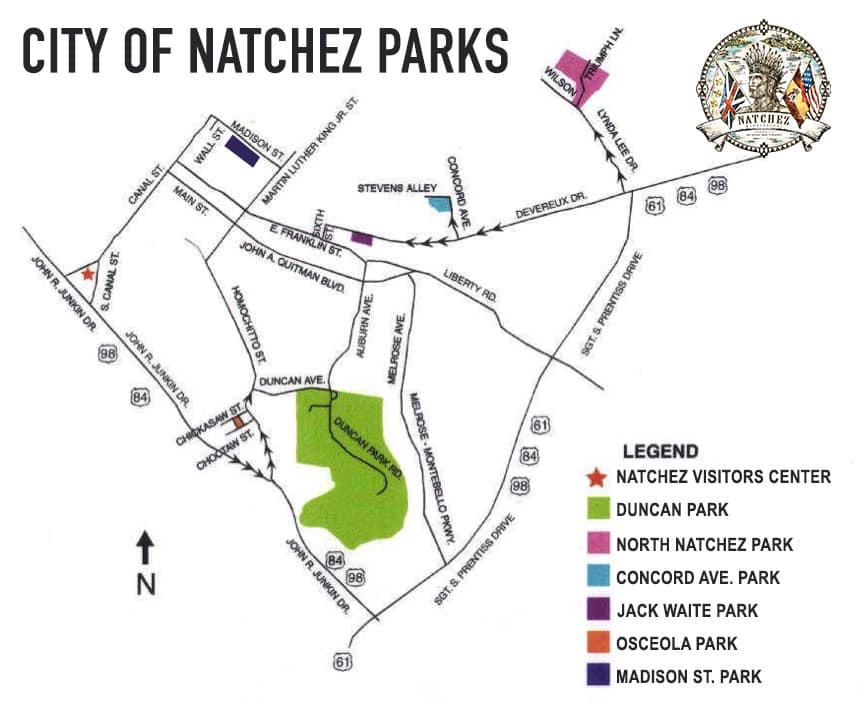
History runs deep in Natchez. Not only is this Southern town considered to be the oldest continuous European settlement on the Mississippi River, but it’s also the point of origin for the Natchez Trace Parkway, a 444-mile scenic drive that roughly winds along the “Old Natchez Trace.” American Indians used the latter as a travel corridor for centuries, and it’s now lined with a handful of hikable sections. Natchez is perched along the Great River Road, a 3,000-mile, ten-state byway that follows the Mississippi River from Missouri to the Gulf of Mexico. Earlier this year, the Federal Highway Administration granted the Great River Road status as an All-American Road, a prominent designation that brings a whole new light to the area.
Nicknamed the “Jewel of the Mississippi,” Natchez is brimming with historic buildings, from pre-Civil War mansions to religious sites, including Temple B’Nai Israel, an architectural treasure built in 1905 that’s home to Mississippi’s oldest Jewish congregation. A walkable downtown boasts antique shops and unique stores, such as ArtsNatchez, a non-profit highlighting the glazed ceramics, metal clay jewelry and other handmade works of regional artists, and Silver Street Gallery & Gifts, purveyor of gumbo bowls, Mississippi state flags, and more.
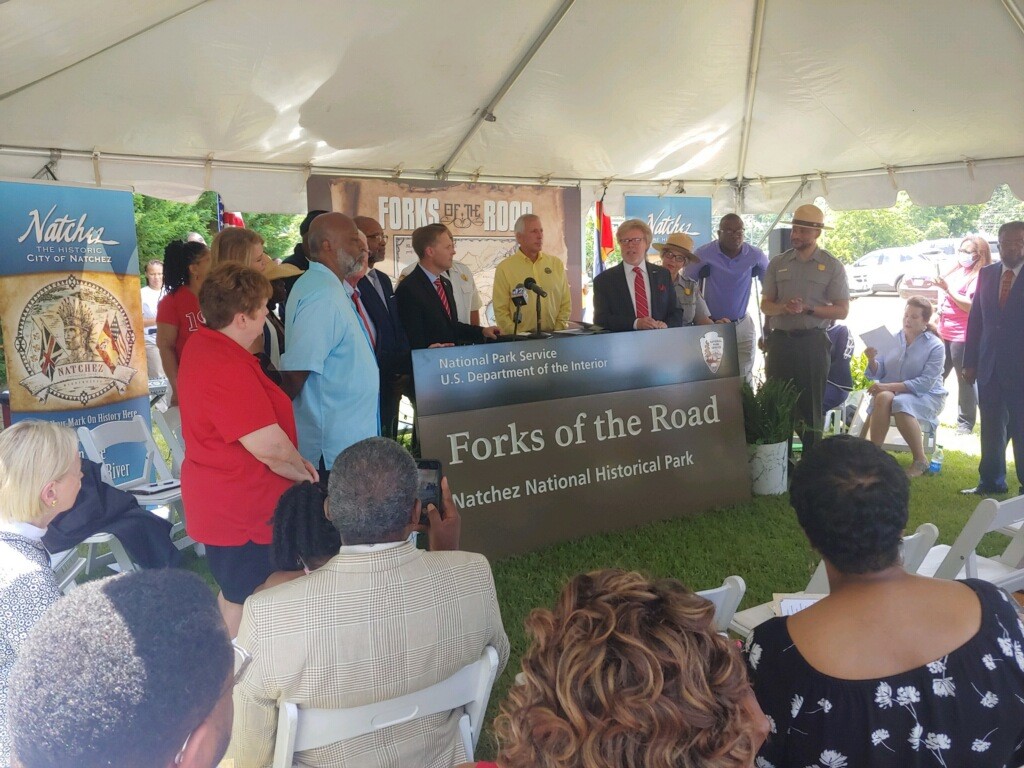
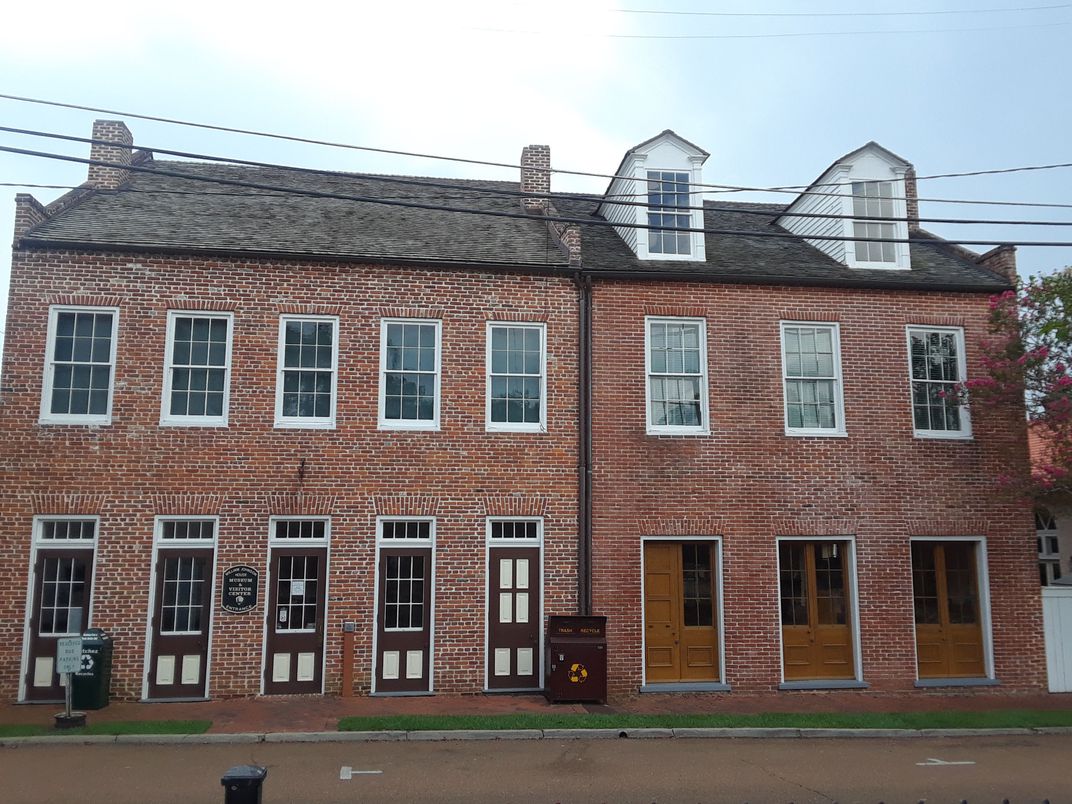
Natchez is also home to several National Park sites, including Forks of the Road, the location of one of the largest slave markets in the U.S. during the 1830s and 1840s. Display boards tell the story of the thousands of men and women who were sold into enslavement here, and a potential interpretive center is in the works. The William Johnson House is a townhome where the emancipated businessman William Johnson once resided, and the Grand Village of Natchez Indians is a National Historic Landmark honoring the homeland of the local Natchez Indians, the area’s first inhabitants. This 128-acre park features an on-site museum filled with locally excavated artifacts, a reconstructed Natchez Indian house and three prehistoric Native American burial grounds.
The town’s second Soul Food Fusion Festival, a culinary celebration highlighting the diversity of Natchez culture, food and music, most notably those of the region’s African American and Native American residents, takes place June 18-20. It’s the brainchild of Jarita Frazier-King, the owner of Natchez Heritage School of Cooking, which hosts classes and special events showcasing African American recipes and heritage, and promotes food as a universal language.
Whether it’s barbecued beef brisket at the roadside Pig Out Inn, a chocolate malt and seafood basket at Bellemont Shake Shop, or an ever-changing fine dining menu that might include charcoal grilled chicken or cast iron pork chop (along with music Friday and Saturday evenings) at the cozy Kitchen Bistro and Piano Bar, Natchez offers a diverse array of dining options. Grab a cocktail atop the Natchez Manor Bed & Breakfast, home to the town’s only rooftop bar, or pair a brick-oven margherita pizza with a tap-poured pilsner at Natchez Brewing Company and Kitchen.
Music lovers can also delight in the annual Natchez Festival of Music, which takes place late May through June and includes performances in everything from jazz tributes to show tune favorites.
Litchfield, Connecticut (pop. 8,094)
Located midway between New York City and Boston, Litchfield has long been a getaway for East Coast city dwellers. This well-preserved example of an 18th-century New England village boasts its own village green, along with plenty of surrounding countryside to explore. As U.S. locales continue reopening following their pandemic closures, Litchfield is no exception. This summer will see the return of the Litchfield Hills Road Race on June 13, and the June 22 reopening of the natural history museum at White Memorial Conservation Center, a 4,000-acre nature center of forest, fields and wetlands that’s also home to 40 miles of trails for hiking and cross-country skiing.
This year also marks 80 years since Litchfield’s Laurel Ridge Farm planted its spectacular 11-acre field of daffodils, an April-to-May blooming that’s almost a “rite of passage” for local school children.
Not only is this small town home to the country’s first law school, where former U.S. vice president Aaron Burr was once a student, but Litchfield is also the birthplace of author and abolitionist Harriet Beecher Stowe, born in 1811. Delve into its diverse history through artifacts like prints, drawings and old papers at the Litchfield History Museum. Of course, if it’s spirits you’re after, Litchfield Distillery offers tastings of gin, whiskey and vodka, as well as tours of its facility, which pumped out about 1,500 gallons of hand sanitizer during the pandemic.
Downtown Litchfield is brimming with antique stores, clothing boutiques and restaurants, including the Market Place Tavern, an American eatery located within the old Litchfield jail (its early 19th-century jail cells are still visible). Other local dining spots include the landmark Village Restaurant and the long-running West Street Grill, a French- and Italian-inspired bistro where celebrity sightings are commonplace. For more than 50 years, The Dutch Epicure Shop has been tempting local residents and visitors alike with Black Forest cake, seasonal pies and fruit tarts. Although visits to the main property are currently on hold, Litchfield’s award-winning Arethusa Farm serves up scoops of old-fashioned ice cream in flavors like strawberries and sweet cream chocolate chip at various regional storefronts, including one in nearby Bantam.
Each October, leaf peepers head to Litchfield to take in the vibrant fall colors of Mount Tom State Park, also known for its hiking, swimming, and somewhat surprisingly, scuba diving in the park’s 56-acre spring-fed pond, which reaches to 48 feet deep. You’ll find more hiking trails at Topsmead State Forest, the former summer estate of Connecticut businesswoman Edith Morton Chase. For swimming, Bantam Lake, the state’s largest natural lake, is a regular go-to. Photographers flock to the Ripley Waterfowl Conservancy, where more than 80 bird species, including golden pheasants, black-bellied plovers and raptors, like a Harris’s Hawk named Dusky (whom visitors can get to know up-close), reside. Former Smithsonian secretary (1964-1984) Sidney Dillion Ripley II and his wife, Mary Livingston Ripley, donated the land for this esteemed nonprofit in 1985.
The rolling hills outside of Litchfield are where you’ll find the 16-acre Haight-Brown Vineyard, Connecticut’s first farm winery, and Lee’s Riding Stable, which offers guided hour-long rides on horseback. For weekend stays, The Litchfield Inn provides a mix of luxury and themed rooms, including one resembling a rustic log cabin.