Author: Imported Author 2289001

  • Plans ‘on track’ for 158th Annual Miss-Lou Memorial Day Parade set for Monday, May 27

    Plans ‘on track’ for 158th Annual Miss-Lou Memorial Day Parade set for Monday, May 27

    NATCHEZ, Miss. — Everything is on track for the 158th Annual Miss-Lou Memorial Day Parade, according to Laura Ann Jackson, who chairs the Committee for the Miss-Lou Memorial Day Parade. She said the long-running event will be a memorable experience for local residents and visitors.

    “This event is an important part of Natchez and Vidalia history,” Jackson said. “It’s part of our heritage. It’s our way of honoring our military service members, especially those who made the ultimate sacrifice in defense of our country.”

    The parade will take place on Monday, May 27. It is known for having long lines of participants – sometimes in the hundreds — marching from Vidalia, across the Natchez-Vidalia Bridge, and to the Natchez National Cemetery at 41 Cemetery Road, where a ceremony is held. The site for the ceremony is on the west side of the cemetery overlooking the river front.

    File photo of ceremony at the Miss-Lou Memorial Day Parade. Courtesy of James Theres

    “This year, we’re going strong and we’re going to have special guests from out of town that include a church group from Chicago,” Jackson said.

    Jackson noted this year’s guests will include filmmaker James Theres, the executive producer and director of the film, “The 30th of May” (2016). Theres described the film as the “amazing, untold story of an African American Memorial Day tradition in the Deep South that dates back to the end of the Civil Ward.”

    “I look forward to coming back to Natchez and participating in the 30th of May celebration, one of the longest-running, consecutive Memorial Day observances in the country,” said Theres. “It’s a tradition like no other dating back to the end of the civil war.”

    Williams Terrell, publisher and editor of The Bluff City Post, has covered the parade for more than 30 years. He said it is an event that “you just have to see.”

    “People come from everywhere,” he said. “Some come all the way from Seattle, Washington, to walk over that bridge. That is really something to see and experience.”

    This year, Adams County Sheriff Travis Patten and the Rev. Louis Banks, pastor of Union Baptist Church, Vidalia, will serve as grand marshals. Banks is also a member of the American Legion Post 590 in Vidalia, said Jackson.

    The ceremony

    The ceremony at the cemetery will start at 11 a.m. and will last for one hour. Jackson will serve as the master of ceremonies. The program will feature retired Army Sgt. Linda McClure of Alexandria as the guest speaker. She will be introduced by her husband, retired Army Lt. Col. Jeff McClure.

    File photo of marching band at the Miss-Lou Memorial Day Parade. Courtesy of James Theres

    The Natchez High School AF JROTC will present the colors, followed by Nolan Cubie, who will lead the audience in the Pledge of Allegiance. Charlotte Taylor, the assistant director of the Mississippi National Cemetery Complex at Natchez, will give the Welcome.

    The program will include solo performances by Mayor Dan Gibson and 2019 Cathedral High School graduate Damira McGruder. Jackson said McGruder is a pre-med biology student at the University of Southern Mississippi in Hattiesburg, where she plans to graduate this year.

    A Memorial Day Band musical solo will be presented by Caymond Riley of the Elnora Riley Group in Vidalia.

    “The late Ms. Elnora Riley had been part of this program since I was a child,” said Jackson. “She was a member of the Women’s Relief Corps.”

    “Taps” will be performed by Master Sgt. Wilbert Washington, director of the AF JROTC. Taylor will give the Closing Remarks.

    Parade route

    Jackson outlined the parade route as follows:

    The lineup will begin at 8 a.m. at Zion Baptist Church at 601 Magnolia Street in Vidalia. At 9 a.m., the parade will start at the foot of the Louisiana side of the bridge. It will proceed across the bridge to the Natchez Visitor Center at 640 S. Canal St., where the  participants will stop for a 30-minute break.

    File photo of the Miss-Lou Memorial Day Parade. Courtesy of William Terrell/The Bluff City Post

    Shuttles will be available at the Visitor Center and cemetery.

    From the Visitor Center, the participants will proceed north on Canal to Franklin Street. At Franklin, they will move along to Pearl Street and from Pearl to Oak Street. From Oak, they will proceed to Maple Street and then travel north to Cemetery Road.

    Committee members working with Jackson to organize the procession include Douglas McCallister, Dorothy Sanders, Renard Chatman, and Nathaniel Williams.

    For more information, call Laura Ann Jackson at 601-446-9052.

  • Dr. Ariela Gross will discuss “Erasing Slavery” at May 28 meeting of Natchez Historical Society

    Dr. Ariela Gross will discuss “Erasing Slavery” at May 28 meeting of Natchez Historical Society

    NATCHEZ, Miss. – Dr. Ariela Gross, distinguished professor of Law at the UCLA School of Law, will talk about slavery and its impact on the rule of law at the Tuesday, May 28 meeting of the Natchez Historical Society.

    The meeting is free to the public and will be held at the Historic Natchez Foundation, 108 S. Commerce St., in Natchez. It will begin with a social at 5:30 p.m. and Gross’ presentation at 6 p.m. Gross’ lecture is titled, “Erasing Slavery – How Stories of Slavery and Freedom (in Natchez) Shape Battles Over the Constitution.”

    Gross said she has spent a significant amount of time doing research in Natchez.

    “Just as monuments and plantation tours have presented a version of history that erased the experience of slavery and Black agency in ending slavery — and as many legislatures are trying to erase slavery and racism from the teaching of US history, the Supreme Court has tried to erase slavery from the memory of the Constitution,” she said.

    “By putting slavery in the deep past and portraying freedom as a gift from white people to Black people, they deny the continuing legacies of slavery and the responsibility to redress them,” she noted. “I’m trying to make the connections between the way we are telling these histories in local culture and politics in places like Natchez, and how history is shaping our constitutional law.”

    Alan Wolf, who serves as a director of the society and its program chair, said Gross is one of the nation’s most accomplished and respected scholars of legal history.

    “Dr. Gross will describe how disputed narratives we tell about slavery and emancipation, for example through monuments, memorials, films, novels, and tourist sites, shape the environment in which Constitutional law is determined,” Wolf said.

    As a professor, Gross teaches Contract Law, Constitutional Law, Enslavement and Racialization in U.S. Legal History and other courses on race and legal history. She is “a legal historian whose scholarship focuses on the ways race, racism, and slavery have shaped law, politics, and culture in the Americas,” according to her online bio.

    Gross is a graduate of Harvard College and Stanford Law School. She earned her Doctor of Philosophy at Stanford University. She has served as a visiting professor at Stanford Law School, Tel Aviv University, and Kyoto University, among others.

    In addition to being a well-respected professor, Gross is a prolific writer. The list of books that she has authored includes “Becoming Free, Becoming Black: Race, Freedom, and Law in Cuba, Virginia, and Louisiana” with Alejandro de la Fuente” (Cambridge University Press, 2020); “What Blood Won’t Tell: A History of Race on Trial in America” (Harvard University Press, 2008); and “Double Character: Slavery and Mastery in the Antebellum Southern Courtroom (Princeton University Press, 2000).

    This program is funded in part by a grant from the Mississippi Humanities Council, through funding by the National Endowment for the Humanities.

    For more information, visit natchezhistoricalsociety.org or call 601-492-3004. Emails may be sent to info@natchezhistoricalsociety.org

  • Mississippi 3rd U.S. Colored Cavalry returning to Natchez

    Mississippi 3rd U.S. Colored Cavalry returning to Natchez

    NATCHEZ, Miss. – Re-enactors of Mississippi 3rd U.S. Colored Cavalry will ride into Natchez on Thursday, June 13, and set up camp on the Bluff, announced Ser Seshsh Ab Heter-Clifford M. Boxley.

    “They will ride into Natchez as the [cavalry] did in October of 1864 on their way down to Woodville, where they defeated the Confederates,” he said.

    The 3rd U.S. Colored Cavalry program will be held in Natchez for the third time. It was previously held in 2014 and 2018. Boxley said the re-enactors will engage the public and talk about the cavalry’s history during the Civil War. He noted the event is a celebration of history and recognition of the military contributions of African Americans.

    The encampment is free and open to the public. It will last from 9-4 p.m. Boxley said the re-enactment is all about education. “We want people to visit the set-up and interact with the re-enactors,” he said. “We want them to see the horses and get educated about the use of weapons, which are replicas.”

    Richard Wilder, president of Buffalo Soldiers Florida Inc., said he looks forward to participating in the program.

    “It’s very exciting,” he said. “Our mission statement says that we are lecturers of history. We try to share that history as realistically and accurately as possible. Not much is being said or is known about the 3rd U.S. Colored Cavalry. It is an honor for us to represent this regiment and to be in the same places as our ancestors.”

    Boxley believes the colored cavalry, who were also called “Black Horse Soldiers,” have not received the credit that is due to them. The unit came to Natchez on Oct. 3, 1864 before traveling to Woodville, which they reached on Oct. 5, 1864. There, they captured prisoners and supply wagons, and with assistance from the 5th Illinois Cavalry Regiment, they attacked the Confederates who were camping at Bowling Green Plantation, which was owned by Judge Edward McGehee, and forced them to retreat, according to historians.

    The cavalry burned the plantation, seized cannons, and captured 41 Confederate soldiers, before heading back to Natchez, according to William A. Dobak, author of “Freedom by the Sword: The U.S. Colored Troops 1862-1867.”

    Role-play actors

    As for the participants in the Natchez encampment, Boxley said they will include a representative of the Natchez-based 6th Heavy Artillery who joined the cavalry at Kingston, after they defeated the Confederates in Woodville.

    In addition to Boxley, the coordinator of Friends of the Forks of the Road Society Inc., participants in the program will include Darrell White, Royal Hill, Danielle Terrell, Jamall McCullen, Jackie Marsaw, all of whom were role-play actors of the Black and Blue Civil War Living History program. For the upcoming program, they will portray important figures of various regiments who accompanied the cavalry.

    Boxley said he will portray “the old, enslaved man who showed Union Major General Ulysses S. Grant where to cross over the Mississippi River from the Louisiana side to Bruinsberg where there were good roads to get up behind Vicksburg.”

    Wilder will portray Alfred Woods, a former slave who ran away. “When the 3rd U.S. Colored cavalry was formed, he was one of the first to join and he became a spy for the Union Army,” Wilder said.

    White will serve as a Union sailor who worked as a crewman on the Union Navy Boat that transported the 3rd U. S. Colored Cavalry and other white Union regiments on their way to Wilkinson County after camping in Natchez.

    Hill will portray a Mississippi Marines Brigade fireman on the boat Queen of the West, the flagship of the brigade; Terrell will portray Margaret Wood, wife of the 3rd U. S. Colored Cavalry Scout Alfred Wood; McCullen will portray Carey Blanchard of the 70th Infantry USCT; and Marsaw will appear as Ellen Anderson of Warren County whose property as seized by the Union Cavalry on May 1864.

    Re-enactors with Buffalo Soldiers Florida Inc. will ride into Natchez at 8 a.m. Thursday, June 13, as members of the 3rd U.S. Colored Cavalry. The riders pictured represent A Troop 10th Cavalry regiment. They rode into Bartow, Fla., in 2021, where they honored the May 20, 1865, emancipation of the enslaved in Florida. Three of them will participate in the Natchez event. From left are Corporal Arthur Battles, Trooper Joel Wilder, Trooper Richard Wilder, and First Sergeant H.L. Williams.

    Route and activities

    Beginning at 8 a.m., on June 13, nine re-enactors, which include seven Black soldiers and two White officers, will ride from the Forks of the Road to the Natchez Bluff.

    The troops will ride on St. Catherine Street to N. Dr. M.L.K. Street, where they will turn left and ride to Main Street and turn right. From there, they will ride down Main to Broadway Street and turn right to the encampment site on the Bluff.

    The program will begin with the bugle call for reveille at 9 a.m., at which time the flag will be raised. The troops will be inspected and then they will fall out for breakfast.

    A re-enactor portraying Colonel Embury D. Osband will demonstrate the loading and firing of civil war era weapons. The program will end with the sound of retreat at 4 p.m., which signals the end of the day.

    Boxley said he’s hopeful that local residents and visitors alike will come out for the day’s program. “We invite everyone to come right in. We think they will enjoy the experience and learn a lot about Natchez’s history,” he said.

    Boxley said the Civil War re-enactment in Natchez is one of four he initiated that will be held this year. The other sites include Vicksburg National Military Park from June 7-8; the Old Capitol Museum in Jackson from June 10-12; and Claiborne County Fair Grounds in Port Gibson on June 12.

    For more information, call Ser Boxley at 601-442-4719.

  • Wiggins to discuss his new book at April 23 meeting of Natchez Historical  Society

    Wiggins to discuss his new book at April 23 meeting of Natchez Historical Society

    NATCHEZ, Miss. — Historian and retired educator James Wiggins will discuss his new book, “Outliving the White Lie: A Southerner’s Historical, Genealogical and Personal Journey” (University Press of Mississippi, 2024), at the Tuesday, April 23 meeting of the Natchez Historical Society.

    The meeting is free to the public and will be held at Historic Natchez Foundation at 108 S. Commerce St. It will begin with a social at 5:30 p.m. and the presentation at 6 p.m. Wiggins book will be available for purchase at the meeting.

    Cover of “Outliving the White Lie: A Southerner’s Historical, Genealogical and Personal Journey” by James Wiggins

    “I am very much looking forward to my talk at the Natchez Historical Society,” said Wiggins. “I certainly want to promote the book, but more, this is a vitally important topic that cries out for more discussion and greater understanding. I hope we can advance those goals on April 23rd.”

    Wiggins said his talk will focus on the lies often told about slavery and race in the nation’s history, from colonial times to the present.

    Wiggins will discuss the “lies of commission, omission, and willful ignorance,” while acknowledging his own “ancestors’ participation in that process over time, as well as his own,” he said.

    Wiggins’ book is described by his publisher as  “part history and part memoir.” The work is praised by David R. Roediger, co-editor of “The Construction of Whiteness: An Interdisciplinary Analysis  of Race Formation and the Meaning of a White Identity.”

    “Comprised of poignant, interwoven reflections on family, public history, and personal experience, Outliving the White Lie provides a sweeping history of the costs of slavery and white supremacy to the South and nation,” Roediger wrote.

    Wiggins is a retired instructor of History at Copiah-Lincoln Community College, a position he held from 1981 to 2016. He holds a Bachelor of Arts and a Master of Arts in History from Mississippi State University.

    Among other things, Wiggins created and taught non-credit Adult Education  courses at Co-Lin on “Slavery in the Antebellum South in Global Perspective,” “Slavery and the Origins of the Civil War,” “Slavery and the Civil War,” and “Reconstruction, Jim Crow and the Civil Rights Movement.”

    Additionally, Wiggins lectured for the Roads Scholar Travel Program on Slavery in American History. When he was not teaching or lecturing, Wiggins wrote and published columns in The Natchez Democrat.

    Wiggins is a resident of Natchez. He said he has spoken for the Natchez Historical Society a number of times over the years.

    The April 23 program is funded in part by a grant from the Mississippi Humanities Council, through funding by the National Endowment for the Humanities.

    For more information, visit natchezhistoricalsociety.org or call 601-492-3004. Emails may be sent to info@natchezhistoricalsociety.org

  • Sculptor Bob Willis receives Award of Merit for bust of Hiram Rhodes Revels

    Sculptor Bob Willis receives Award of Merit for bust of Hiram Rhodes Revels

    NATCHEZ, Miss. — Dr. Roscoe Barnes III, cultural heritage tourism manager for Visit Natchez, recently presented sculptor Bob Willis with the Award of Merit on behalf of the Mississippi Historical Society. Barnes, who is vice president of the society, said Willis was not able to attend the society’s annual meeting in February, where the award was formally announced.

    “Willis’ work as a sculptor is simply amazing, and his talent is extraordinary,” said Barnes. “We could have mailed the award to him, but we thought it best to make a personal presentation. I was honored to make the presentation at the Visit Natchez office.”

    Awards of Merit are presented annually by the society to individuals or organizations for their outstanding archival, museum, or media interpretation work. Willis was recognized for the bust of Hiram Rhodes Revels that he sculpted for Zion Chapel A.M.E. Church in September 2023.

    Brother Rogers, the society’s secretary-treasurer, said Willis’ bust of Revels “is significant not just in Mississippi history, but in American history.”

    Revels was the first African American to serve in the U.S. Congress. He also was an early pastor of Zion Chapel and the first president of what is today Alcorn State University.

    Willis, who lives in Oklahoma, accepted the award with his wife, Lynn, by his side. He said he was “truly humbled” to receive it and that he was grateful to honor the legacy of Revels.

  • African descendants of Prince Ibrahima returning to Natchez

    African descendants of Prince Ibrahima returning to Natchez

    NATCHEZ, Miss. — Twenty West African elders, all descendants of Prince Abdul Rahman Ibrahima ibn Sori, are planning a return visit to Natchez in May, according to Princess Karen Chatman, who is coordinating the event.

    Princess Karen Chatman, a descendant of Prince Abdul Rahman Ibrahima ibn Sori, is pictured here with Elder Elijah Moody Berry in Timbo, Guinea, in West Africa, in December 2022.

    The elders are from Timbo, Guinea, in West Africa. They are of the Official Royal House of Sori, said Chatman.  They will be in Natchez from Wednesday, May 8, to Saturday, May 11.

    Their ancestor, Abdul Rahman (1762-1829), was an African prince from Timbo, who was captured in 1788 at the age of 26 and shipped to the United States where he was sold in Mississippi as a slave. He spent 40 years toiling on the plantation of Thomas Foster before he gained his freedom in 1848.

    Abdul Rahman returned to Africa in 1829, but he died of yellow fever in Monrovia, Liberia, before he reached his home in Futa Jallon (now Guinea). He was 67.

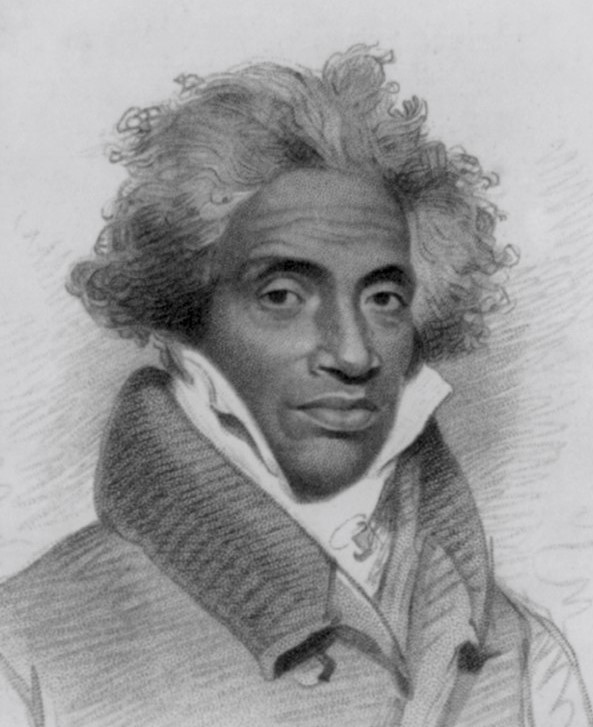
    Portrait of Prince Abdul Rahman Ibrahima ibn Sori by Henry Inman and engraved by Thomas Illman. Available through U.S. Library of Congress.

    Abdul Rahman’s story is told in Terry Alford’s book, “Prince among Slaves: The True Story of an African Prince Sold into Slavery in the American South” (Oxford University Press). It is also dramatized in the film, “Prince Among Slaves” (Unity Productions Foundation), which is based on Alford’s book.

    The Timbo elders visited Natchez for the first time in May 2023. During their stay, they met with their local relatives, also descendants of the prince, according to Chatman. On their next visit, they plan to meet with local leaders, historians, and dignitaries for the purpose of building and strengthening relationships, Chatman said.

    “Now we’re looking for sustainable interaction,” she said, noting they hope to meet with changemakers, representatives from the Natchez Historical Society, Historic Natchez Foundation, African American Museum of History and Culture and Visit Natchez, among other groups,

    “We want to experience the places that Prince Sori visited and review records related to his history and the people who knew him,” she said.

    The theme for the next visit is “Walking in the Footsteps of a Prince.”

    The elders of Timbo will hold a symposium on Thursday, May 9, at the Natchez Convention Center. In addition to leading discussions about the life history of Abdul Rahman, Chatman said she will debut the film “From PRINCE TO SLAVE” that was a collaboration between the elders of Timbo and the U.S. Embassy in Guinea. Its purpose is to share historical information about the prince’s departure from Guinea and the latest research on his life, Chatman said.

    Additionally, Chatman said, the elders of Timbo are hoping to work alongside the community and the mayors’ office to have a road or street in Natchez “on the path to the Thomas Foster property” named in Abdul Rahman’s honor. It was on Foster’s land where the prince spent 40 years enslaved.

    Chatman said her organization, The Natchez to Timbo Connection, has opened a local office in Natchez to facilitate ongoing efforts in the areas of  research, culture, education, and cultivation of relationships. The office is managed by Darrel White, the mayor-appointed volunteer liaison, and Kerri Lewis, the organization’s  director of History and Culture.

    The elders of Timbo envision having university students from Timbo coming to Natchez and working with Alcorn State University and other universities within the United States. “We’re interested in collaborations that allow for shared experiences and the introduction of diverse cultures” Chatman said.

    Chatman, a native of Natchez, is a direct descendant of Abdul Rahman and his wife, Isabella. She said her great-great-grandmother was the couple’s daughter. In recent years, her work on her ancestor has been supported by Mayor Dan Gibson and others in Natchez.

    “Mayor Gibson is a catalyst for the sharing of culture,” she said. “He’s an advocate for inclusion. He’s also a leader, an innovative thinker, and a champion when it comes to democracy. He’s shown that every single time I’ve spoken with him.”

    Gibson will join the delegation when they travel to Hartford, Conn., and Washington, D.C.

    “I am honored to represent Natchez in these activities that highlight this significant chapter in American History,” Gibson said. “The story of Prince Rahman is like no other. His is a noble tale of tragedy intertwined with both the best and worst of humanity. I am so grateful to see his legacy being given the recognition so very much deserved.”


    Elders’ Itinerary

    May 8: Welcome Lunch Meeting for the delegation hosted by Mayor Dan Gibson and the Natchez Board of Aldermen from 11 to 2 p.m. at NAPAC museum.

    May 9: A symposium with the theme “Walking in the Footstep of a Prince” at the Natchez Convention Center with guest speakers from the Office of the U.S. Secretary of State, along with Trinity College and Center Church of Hartford, Conn. The elders will also meet with Natchez leaders and history organizations, including representatives of the Grand Village of the Natchez Indians.

    May 10: Tour of Natchez, including visits to antebellum homes and other historic sites.

    May 11: Meeting with local family members. Meeting with Jackson Mayor Chokwe Antar Lumumba is also planned.

    May 12: Travel to Hartford, Conn., the home of Thomas Gallaudet (1787-1851), developer of American Sign Language, who assisted Abdul Rahman in raising money for his return home. The elders will also visit Trinity College.

    May 16: Travel to Washington, D.C., where Abdul Rahman briefly stayed and gained the support of President John Quincy Adams.

    May 21: They leave the United States and return to Africa on Tuesday, May 21.

  • Thelma Newsome to speak at 84th commemoration  of Rhythm Night Club Fire

    Thelma Newsome to speak at 84th commemoration of Rhythm Night Club Fire

    NATCHEZ, Miss. – Thelma Newsome, a retired educator and former member of the Natchez-Adams School District Board of Education, will be the guest speaker for the 84th commemoration of the Rhythm Night Club fire of April 23, 1940.

    This year’s event will be held at 12 p.m. Saturday, April 27, at the Rhythm Night Club (on site) Memorial Museum at #5 St. Catherine Street, Natchez. It is free and open to the public.

    Monroe Sago is pictured with the historical marker that tells the story of the Rhythm Night Club Fire.

    Monroe and Betty Sago, the museum’s owners, have been holding the annual ceremony for the past 16 years. The theme this year is “Your Journey, Your Success.”

    According to Betty Sago, the commemorative event honors the 209-plus victims that died in the club fire in 1940, as well those who survived that “went on with their lives and made a life for themselves, even though they carried a burden for a number of years.”

    The victims of the fire included Walter Barnes and members of his band. Woodrick McGuire, band director of Brumfield School, also died in the fire.

    In addition to Newsome and the Sagos, this year’s program will feature soloists Janice Bernard Sago and Tonie Hunt, who will join others in providing music. Roscoe Barnes III will serve as master of ceremonies.

    Monroe Sago said they are delighted to have Newsome as the guest speaker. Newsome is one of the managers of the Dr. John Bowman Banks Museum and the project director for the recently published booklet, “St. Catherine Street, Natchez, MS: Yesteryear through Today.”

    During the ceremony, a $500 scholarship will be presented to a student who crafted a winning essay on the museum.

    “We present a scholarship every year,” said Monroe Sago. “Last year the scholarship was matched by a donation of $500 from Magnolia Bluff Casino and Hotel. So we awarded the student a $1,000 scholarship.”

    Last year’s winner was Charnecia Green, a student of Natchez Early College at Co-Lin, who plans to attend Alcorn State University School of Nursing in Natchez.

    The ceremony will open with the siren blast of a fire engine from the Natchez Fire Department. As in previous years, door prizes will be given away, and refreshments will be provided.

    At the end of the program, visitors are encouraged to tour the museum, which has acquired several new items in its collection. Those items include an Acrosonic piano, telephone, a Coca-Cola sign, a vintage tin Coca-Cola lunch box that advertises a six bottle carton for 25 cents, and a “Rhythm Nite Club” sign.

    For more information, call 601-597-0557 or send email to bettysago@rnconsitemm.org.

  • Alcorn to host art exhibition and forum on race and history

    Alcorn to host art exhibition and forum on race and history

    NATCHEZ, Miss. – An art exhibition and conversation on race and history will be held on Wednesday, April 3, at Alcorn State University, Lorman, in Belles Lettres Hall.

    The program is hosted by the Alluvial Collective, Mississippi Humanities Council, and Alcorn State University’s Southwest Mississippi Center for Culture and Learning. It will start with the launch of Mikael Levin’s exhibition, “Critical Places: Sites of American Slave Rebellion,” from 1 to 3 p.m.

    Following the exhibition, guests will be asked to join a facilitated dialogue circle from 3 to 4:30 p.m. to discuss their thoughts, according to organizers. On Thursday, April 4, another dialogue will be held at the same time and place.

    “Levin’s exhibition, which is touring the South, features compelling photographs of historic landscapes that were once the sites of slave rebellions, raising important questions for viewers about the history of race in America,” said Teresa Busby, executive director of Alcorn’s Southwest Mississippi Center for Culture and Learning.

    Mikael Levin

    Levin said the rebellions continue to have an impact. “In showing how the rebellions of the enslaved are remembered in the landscape (or the lack thereof), I hope to prompt an awareness of how these rebellions still reverberate in social patterns and economic structures,” he said.

    Inspired by the exhibited photographs, the Alluvial Collective’s dialogue circles provide a facilitated space for discussions with a focus on deep listening, storytelling, and radical empathy.

    “Over our 25 years of work, we’ve found that art serves as a very powerful entry point to engage with history. It takes people out of their usual way of thinking, leaving them open to new perspectives,” said April Grayson, director of Community and Capacity Building at The Alluvial Collective. “The visual power of Levin’s photographs reminds people that history is among us, even in places that seem mundane.”

    “Critical Places” will be on display until May 31. For more information, call Teresa Busby at phone 601-877-6551 or visit https://alluvialcollective.org/.

  • New booklet tells the history of St. Catherine Street

    New booklet tells the history of St. Catherine Street

    NATCHEZ, Miss. — A free booklet that highlights the cultural history of St. Catherine Street is now available to the public.

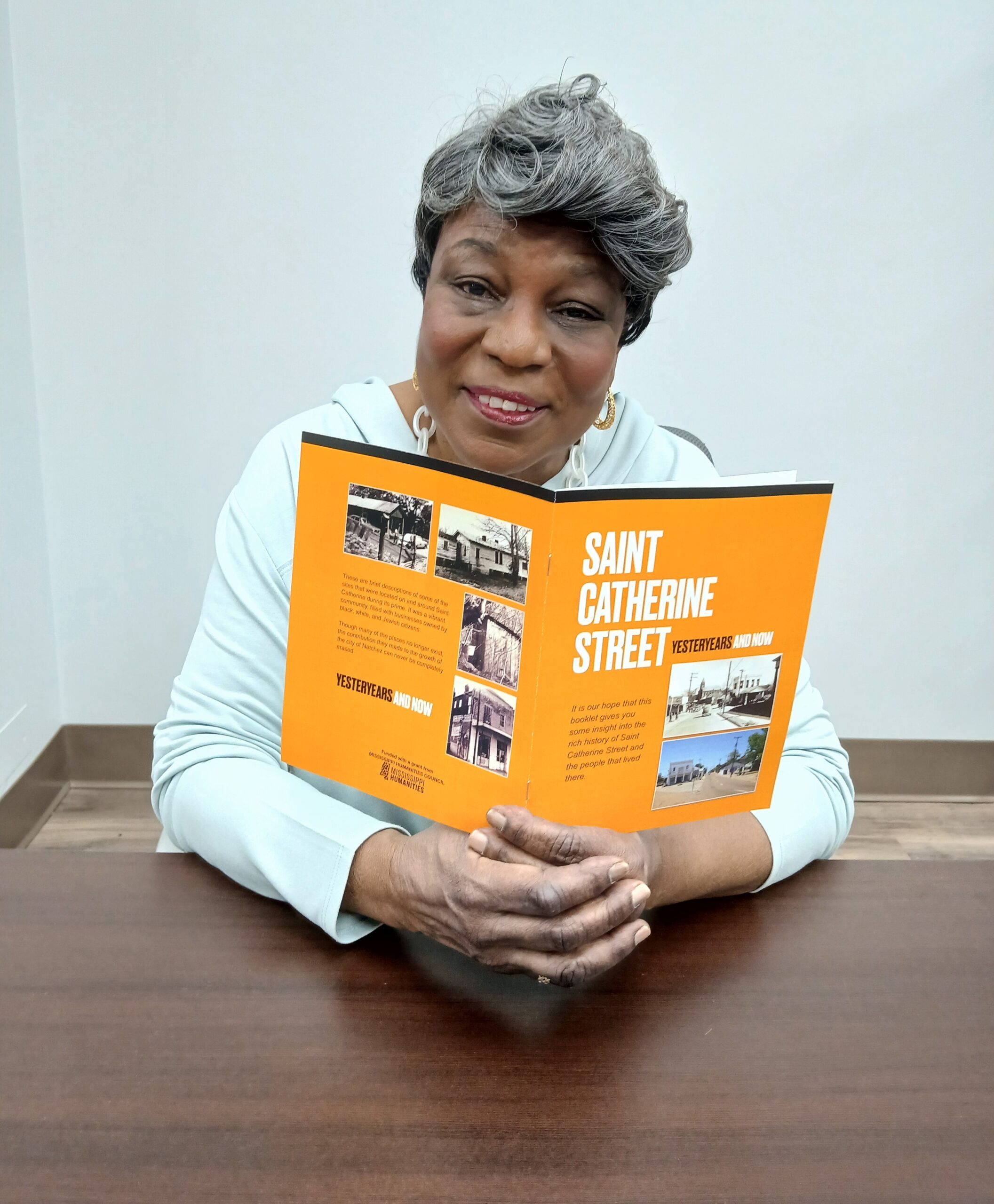
    Titled, “St. Catherine Street Yesteryears and Now,” the booklet features more than 40 historical sites in the area that was once known as Natchez’s “Black Wall Street.” Photos of various buildings are included along with colorful anecdotes and historical descriptions.

    Thelma Newsome, a staff member of the Dr. John Bowman Banks Museum, spearheaded the publication project. As project director, she plans to use the booklet for tours and other platforms to tell the complete history of  St. Catherine, she said.

    “Though many of the places no longer exist, the contribution they made to the growth of the city of Natchez can never be completely erased,” she stated in the text on the back cover of the publication. She also noted that St. Catherine was once “a vibrant community, filled with businesses owned by Black, White, and Jewish citizens.”

    This new publication sheds light on many untold and rarely told stories about St. Catherine Street.

    The booklet is part of a larger project, which is called, “St. Catherine Street, Natchez, MS: Yesteryear through Today.” The project uses tours, photographs, and oral history to share the rare stories of the people, buildings, culture, and businesses on St. Catherine from as far back as the 1930s, according to Newsome.

    In 2022, the project was awarded a $5,000 grant by the Mississippi Humanities Council. The booklet was funded with this grant.

    The purpose for the booklet, in general terms, is summed up in a sentence on its front cover: “It is our hope that this booklet gives you some insight into the rich history of Saint Catherine Street and the people that lived there.”

    Much to offer

    Newsome said the publication has much to offer. “I encourage people to read it and relive vicariously the things we shared on St. Catherine Street,” she said.

    Of the 41 stories presented, the one that stands out to her is “Hot Tamales,” which focuses on Mr. Jabo Johnson and his family who lived at 196 St. Catherine.

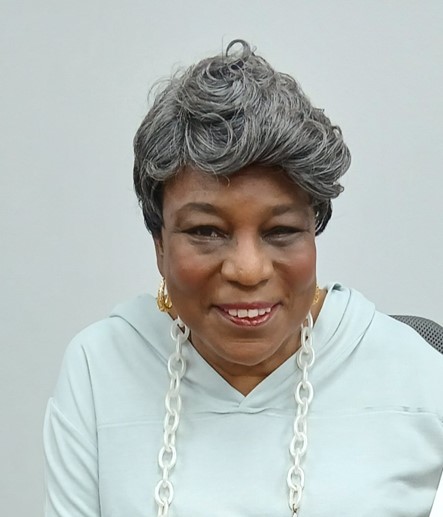
    Thelma Newsome displays an open copy of the new publication on the history of St. Catherine Street.

    “I knew that family personally,” Newsome said. “We ate hot tamales on Saturday nights. Back then, they cost about thirty cents a dozen.”

    Newsome, a retired educator, said the idea for the booklet originated with a conversation she was having with Dora Hawkins, and Jacqulyn Williams. All three of them are members of Rose Hill Missionary Baptist Church, which owns the Dr. John Banks House.

    They were discussing the Natchez Deacons for Defense and Justice, and the role of the Dr. John Banks House in the civil rights movement.

    “I started telling them about all the things that happened on St. Catherine, where I grew up,” Newsome said. “They were floored by the amount of information I shared with them. At one point, Dora said, ‘You should do something on the history of this street.’”

    And that’s when the idea for the booklet was born.

    “They wanted that information to be shared with others,” Newsome said. “We want everyone to understand what a viable part that St. Catherine played in the formation of the City of Natchez.”

    Fresh content

    The booklet presents 10-pages of content that feature historical nuggets with photos of historical sites on each page. Featured sites and people include:

    George F. Bowles House, Dr. John Bowman Banks Museum, Rhythm Night Club Memorial Museum, Mr. Whitehead’s Photo Shop, Three Together, Knoxall’s Grocery, The Iceman, Forks of the Road, Bob Lee’s Cleaners, Red Horse;

    Texaco Service Station, O’Brien House, Holy Family Catholic Church and St. Francis High School, Ms. Sadie V. Thompson, Community Market, Ace Theater, White Rooster, Hot Tamales, Mr. Joe’s Store, Perrault Street;

    George’s Alley, Churches, Brown’s Velvet Ice Cream, Other Entrepreneurs, Snow White Cleaners, The Bush House, Grocery Store Etc., Monmouth Street, Shotgun Houses, Donut Shop;

    Ebony Barber Shop, Funeral Homes, Zion Chapel A.M.E. Church and Parsonage, Brumfield School, Winston Hill, 69 Saint Caterine Street, Combo Restaurant, Cedar’s Alley (Street), Junkin Street, Rembert Street, and Mr. Frazee Miller.

    Copies of the St. Catherine Street booklet are available for free at Visit Natchez, Historic Natchez Foundation, NAPAC museum, and Natchez City Sightseeing Tours in the lobby of the Natchez Grand Hotel.

    The booklet may be downloaded at https://visitnatchez.org/wp-content/uploads/St-Catherine-Street-Tour.pdf

    For more information, call Roscoe Barnes III at Visit Natchez at 601-492-3004.

  • Dr. Max Grivno will speak at March 26 meeting of  the Natchez Historical Society

    Dr. Max Grivno will speak at March 26 meeting of the Natchez Historical Society

    NATCHEZ, Miss. – Dr. Max Grivno, associate professor of History at the University of Southern Mississippi, is returning to Natchez to talk about diplomacy in the early years of the city’s history.

    Grivno will present his lecture, “Natchez Diplomacy, 1540-1730,” at the Tuesday, March 26 meeting of the Natchez Historical Society at 108 S. Commerce St. The program is free to the public. It will begin with a social at 5:30 p.m. and the presentation at 6 p.m.

    “I am excited to have the opportunity to return to Natchez and to speak to the historical society,” said Grivno. “The previous decade has seen an outpouring of work focused on the Natchez nation — work that has changed how we understand these people and their place in the history of the Lower Mississippi River Valley.  I look forward to sharing some of those findings with the society.”

    Grivno is associate professor of History at the University of Southern Mississippi and editor of The Southern Quarterly. Specifically, he will speak about Native American diplomacy in the colonial period in Natchez.

    Alan Wolf, a director of the society and its program chair, explained that Dr. Grivno’s presentation will examine how the Natchez wrestled with notable and critical changes diplomatically.

    “He will look at Natchez diplomacy with other native peoples and the Natchez attempts to secure alliances with the encroaching European empires, while all the while attempting to maintain their own economic and political independence,” he said.

    Grivno has spoken for the society in the past. For example, in November 2022, he gave a lecture on the topic, “Hernando De Soto and the First European Contact with the Mississippi Civilization of the Lower Mississippi Valley.” It was well received.

    This March 26 program is funded in part by a grant from the Mississippi Humanities Council, through funding by the National Endowment for the Humanities.

    For more information, visit natchezhistoricalsociety.org or call 601-492-3004. Emails may be sent to info@natchezhistoricalsociety.org