Category: Entertainment

  • Depp takes stand in libel trial, claims Amber Heard hit him

    Depp takes stand in libel trial, claims Amber Heard hit him

    LONDON (AP) — Johnny Depp gave evidence in a London court on Tuesday, denying claims that he hit ex-wife Amber Heard and accusing her of assaulting him and depicting him as a “monster.”

    Depp sat in the witness box in a wood-paneled High Court courtroom on the first day of his libel case against The Sun over an article that branded him a “wife-beater.” The “Pirates of the Caribbean” star began by taking the court oath and giving his full name: John Christopher Depp II.

    Depp is suing the tabloid’s publisher, News Group Newspapers, and its executive editor, Dan Wootton, over an 2018 story alleging he was violent and abusive to model-actress Heard during their short, tempestuous marriage. Depp strongly denies the claim.

    Depp said Heard had “said to the world that she was in fear of her life from me, and I had been this horrible monster if you will. Which was not the case.”

    Depp, 57, and Heard, 34, met on the set of the 2011 comedy “The Rum Diary” and married in Los Angeles in February 2015. They divorced in 2017, and now bitterly accuse one another of abuse.

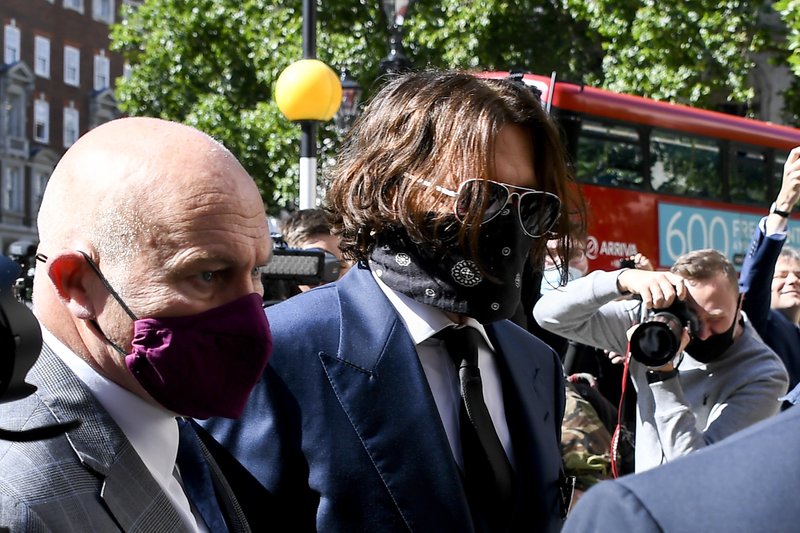
    Depp and Heard arrived by separate entrances at the neo-Gothic court building on the opening day of the three-week trial, one of the first to be held in person since Britain began to lift its coronavirus lockdown. Both wore face coverings over their noses and mouths. Proceedings have been spread over several courtrooms to allow for social distancing.

    Witnesses are scheduled to include Depp’s former partners, Vanessa Paradis and Winona Ryder, both of whom have submitted statements supporting him.

    Depp’s claim centers on an April 2018 story in The Sun headlined: “Potty – How can JK Rowling be ‘genuinely happy’ casting wife beater Johnny Depp in the new Fantastic Beasts film?”

    While Heard isn’t on trial, the case is also a showdown between the former spouses, who accuse each other of being controlling, violent and untruthful.

    Describing one incident in which Heard claims he hit her, Depp said the opposite was true.

    “As things tended to do, (it) escalated and got physical, ending with a bit of assault. Ms. Heard struck me,” he said.

    He painted himself as a peacemaker who tried to de-escalate things.

    “Whenever it would escalate I would try to go to my own corner, as it were … before things got out of hand,” he said.

    The Sun’s defense relies on Heard’s allegations of 14 incidents of violence by Depp between 2013 and 2016, in locations including Los Angeles, Australia, Japan, the Bahamas and on a private jet. He denies them all and says Heard attacked him with items including a drink can and a cigarette. He also claims that on one occasion Heard or one of her friends defecated on his bed.

    “She was the abuser, not him,” Depp’s lead lawyer, David Sherborne, said in a written statement.

    “She is a highly complex and aggressive individual who suffered extreme mood swings, would provoke endless circular arguments, and fly into violent rages.”

    The case is set to put the two performers’ complex private lives under a microscope.

    Under cross-examination by The Sun’s lawyer, Sasha Wass, Depp acknowledged taking myriad drugs over the years, including marijuana, cocaine, LSD, ecstasy, magic mushrooms and prescription pharmaceuticals.

    He said his drug use began when he was an 11-year-old child with “not a particularly stable or secure or safe home life.” He said it was “the only way that I found to numb the pain.”

    Wass also tried to depict Depp as someone with an anger management problem, bringing up an 1989 arrest for assault and a later incident in which he damaged a New York hotel room.

    “I was angry, but that doesn’t mean I have an anger problem,” Depp said.

    In pre-trial wrangling, the Sun’s lawyers tried to have the suit thrown out on the grounds that Depp failed to disclose text messages he exchanged with an assistant showing that he tried to buy “MDMA and other narcotics” while he was in Australia with Heard in 2015.

    Heard alleges that Depp subjected her to “a three-day ordeal of physical assaults” while they were in the country after drinking and taking drugs.

    The newspaper’s lawyer, Adam Wolanski, said withholding the texts was a breach of a previous court order requiring Depp to provide all documents from separate libel proceedings against Heard in the United States. Depp is suing Heard for $50 million for allegedly defaming him in a Washington Post article about domestic abuse. That case is due to be heard next year.

    Last week, judge Andrew Nicol ruled that Depp had breached the court order, but refused to throw out the actor’s claim.

    He also rejected an attempt by Depp to force Heard to disclose evidence including communications with actor James Franco and Space-X founder Elon Musk, with whom she allegedly had affairs while involved with Depp.

    The judge said the issue of Heard’s extramarital relations was irrelevant to the central issue in the case, which is “whether Mr. Depp assaulted Ms. Heard.”

    Depp’s lawyer, Sherborne, said the actor had brought the case to “clear his reputation.”

    “This is not a case about money,” he said. “It is about vindication.”
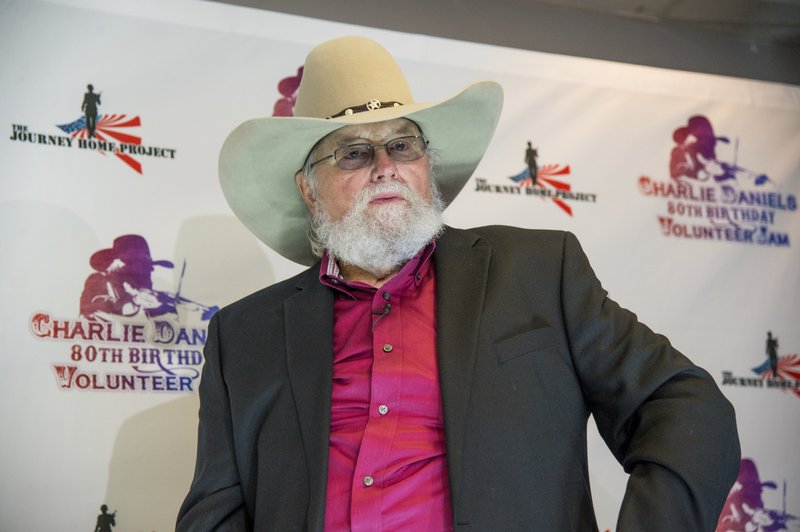
  • Country rocker and fiddler Charlie Daniels dies at age 83

    Country rocker and fiddler Charlie Daniels dies at age 83

    NASHVILLE, Tenn. (AP) — Country music firebrand and fiddler Charlie Daniels, who had a hit with “Devil Went Down to Georgia,” has died at age 83.

    A statement from his publicist said the Country Music Hall of Famer died Monday at a hospital in Hermitage, Tennessee, after doctors said he had a stroke.

    He had suffered what was described as a mild stroke in January 2010 and had a heart pacemaker implanted in 2013 but continued to perform.

    Daniels, a singer, guitarist and fiddler, started out as a session musician, even playing on Bob Dylan’s “Nashville Skyline” sessions. Beginning in the early 1970s, his five-piece band toured endlessly, sometimes doing 250 shows a year.

    “I can ask people where they are from, and if they say `Waukegan,′ I can say I’ve played there. If they say `Baton Rouge,′ I can say I’ve played there. There’s not a city we haven’t played in,” Daniels said in 1998.

    Daniels performed at White House, at the Super Bowl, throughout Europe and often for troops in the Middle East.

    He played himself in the 1980 John Travolta movie “Urban Cowboy” and was closely identified with the rise of country music generated by that film.

    “I’ve kept people employed for over 20 years and never missed a payroll,” Daniels said in 1998. That same year, he received the Pioneer Award from the Academy of Country Music.

    In the 1990s Daniels softened some of his lyrics from his earlier days when he often was embroiled in controversy.

    In “The Devil Went Down to Georgia,” a 1979 song about a fiddling duel between the devil and a whippersnapper named Johnny, Daniels originally called the devil a “son of a bitch,” but changed it to “son of a gun.”

    In his 1980 hit “Long Haired Country Boy,” he used to sing about being “stoned in the morning” and “drunk in the afternoon.” Daniels changed it to “I get up in the morning. I get down in the afternoon.”

    “I guess I’ve mellowed in my old age,” Daniels said in 1998.

    Otherwise, though, he rarely backed down from in-your-face lyrics.

    His “Simple Man” in 1990 suggested lynching drug dealers and using child abusers as alligator bait.

    His “In America” in 1980 told this country’s enemies to “go straight to hell.”

    Such tough talk earned him guest spots on “Politically Incorrect,” the G. Gordon Liddy radio show and on C-Span taking comments from viewers.

    “The Devil Went Down to Georgia” was No. 1 on the country charts in 1979 and No. 3 on the pop charts. It was voted single of the year by the Country Music Association.

    In the climactic verse, Daniels sang:

    “The devil bowed his head because he knew that he’d been beat.

    “He laid that golden fiddle on the ground at Johnny’s feet.

    “Johnny said, `Devil just come on back if you ever want to try again.

    “I told you once you son of a gun, I’m the best that’s ever been.”

    He hosted regular Volunteer Jam concerts in Nashville in which the performers usually were not announced in advance. Entertainers at these shows included Don Henley, Amy Grant, James Brown, Pat Boone, Bill Monroe, Willie Nelson, Vince Gill, the Lynyrd Skynyrd Band, Alabama, Billy Joel, Little Richard, B.B. King, Stevie Ray Vaughan, Eugene Fodor and Woody Herman.

    Daniels, a native of Wilmington, N.C., played on several Bob Dylan albums as a Nashville recording session guitarist in the late 1960s, including “New Morning” and “Self-Portrait.”

    Eventually, at the age of 71, he was invited to join the epitome of Nashville’s music establishment, the Grand Ole Opry. He was inducted in the Country Music Hall of Fame in 2016.

    He said in 1998 that he kept touring so much because “I have never played those notes perfectly. I’ve never sung every song perfectly. I’m in competition to be better tonight than I was last night and to be better tomorrow than tonight.”

    Daniels said his favorite place to play was “anywhere with a good crowd and a good paycheck.”

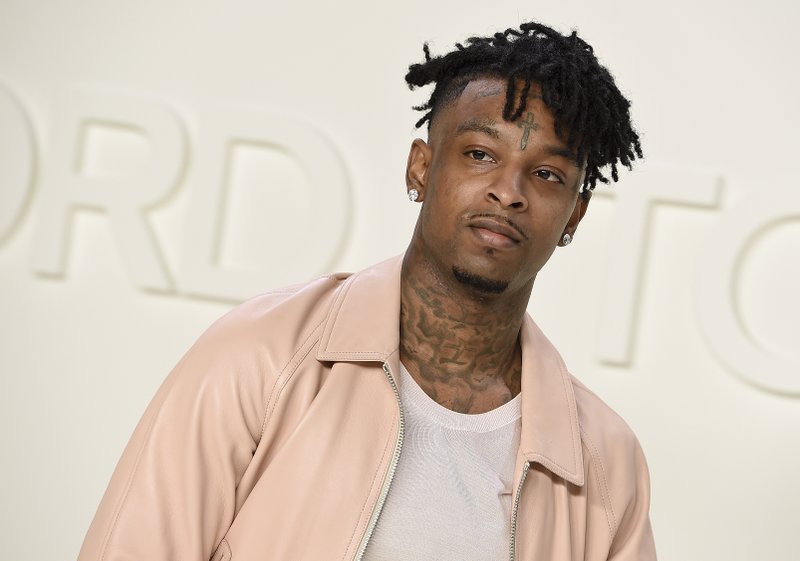
  • 21 Savage launches free online financial program for youth

    21 Savage launches free online financial program for youth

    LOS ANGELES (AP) — Rapper 21 Savage will be launching a free online financial literacy education program for youth sheltered at home during the coronavirus pandemic.

    The Grammy winner announced his new Bank Account At Home nationwide initiative on Wednesday. His efforts will include a partnership with Atlanta mayor Keisha Lance Bottoms to provide free WiFi and tablets for undeserved students in the city.

    “I feel like it’s important more than ever to give our next generation the tools to succeed in life,” the rapper in a statement.

    21 Savage said he wants to empower youth to manage their money. His program will work with mobile banking service provider Chime and EverFi, an education technology platform. The rapper launched his Bank Account program in 2018 to teach financial literacy to teenage students across the United States.

    The rapper’s single “A Lot” won a Grammy for best rap song earlier this year.

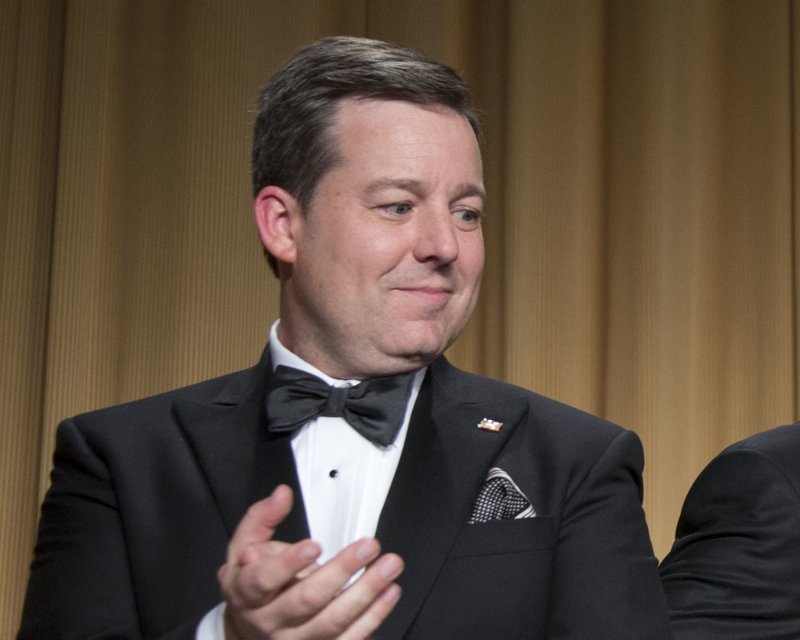
  • Fox News’ Ed Henry fired after sexual misconduct allegation

    Fox News’ Ed Henry fired after sexual misconduct allegation

    NEW YORK (AP) — Fox News on Wednesday fired daytime news anchor Ed Henry after an investigation of sexual misconduct in the workplace.

    The network said it had received a complaint last Thursday from an attorney about the misconduct. An outside investigator was hired and, based on the results of that probe, Fox fired Henry.

    Henry, who co-anchored “America’s Newsroom” between the hours of 9 a.m. and noon on weekdays, had slowly rehabilitated his career on Fox following a four-month leave of absence that ended in 2017. That followed published reports of an extramarital affair that he had conducted with a Las Vegas cocktail waitress.

    Fox offered no details of the complaint that resulted in Henry’s firing, only to say that it happened “years ago.” Henry could not immediately be reached for comment.

    The alleged victim is represented by noted sexual harassment attorney Douglas Wigdor. He also would not provide any details of the case.

    Henry’s former co-anchor, Sandra Smith, announced the firing on the air. Fox said she’ll continue in her role with rotating co-anchors until a full-time replacement is hired.

    Henry, a former White House correspondent for Fox, was only recently elevated to the role on “America’s Newsroom.” He got the job after Bill Hemmer moved to Shepard Smith’s afternoon time slot.

    In a memo to staff, Fox News Media CEO Suzanne Scott and President Jay Wallace reminded employees of Fox’s 2017 overhaul of its human resources operation and the avenues they can follow with a sexual harassment complaint.

    Fox’s late former chairman, Roger Ailes, was fired in 2016 following harassment allegations made by former anchor Gretchen Carlson. Prime-time anchor Bill O’Reilly lost his job a year later following the revelations of settlements reached with women who had complaints about his behavior.

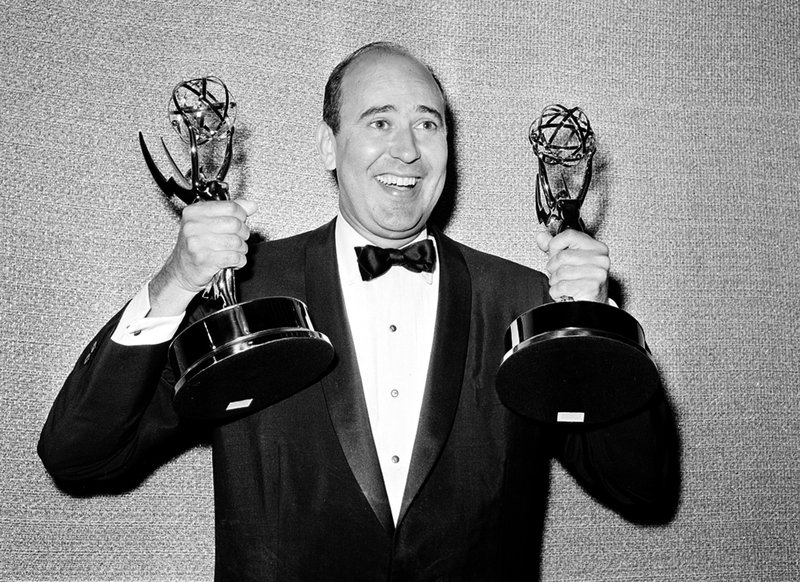
  • Carl Reiner, beloved creator of ‘Dick Van Dyke Show,’ dies

    Carl Reiner, beloved creator of ‘Dick Van Dyke Show,’ dies

    NEW YORK (AP) — Carl Reiner, the ingenious and versatile writer, actor and director who broke through as a “second banana” to Sid Caesar and rose to comedy’s front ranks as creator of “The Dick Van Dyke Show” and straight man to Mel Brooks’ “2000 Year Old Man,” has died. He was 98.

    Reiner’s assistant Judy Nagy said he died Monday night of natural causes at his home in Beverly Hills, California.

    One of show business’ best liked men, the tall, bald Reiner was a welcome face on the small and silver screens, in Caesar’s 1950s troupe, as the snarling, toupee-wearing Alan Brady of “The Dick Van Dyke Show” and in such films as “The Russians Are Coming, the Russians Are Coming” and “It’s a Mad, Mad, Mad, Mad World.”

    In recent years, he was part of the roguish gang in the “Ocean’s Eleven” movies starring George Clooney and appeared in documentaries including “Broadway: Beyond the Golden Age” and “If You’re Not in the Obit, Eat Breakfast.”

    Tributes poured in online, including from actor Josh Gadd, who called Reiner “one of the greatest comedic minds of all time,” and writer Bill Kristol, who said: “What a life!” Actor Alan Alda tweeted “His talent will live on for a long time, but the loss of his kindness and decency leaves a hole in our hearts.”

    Films Reiner directed included “Oh, God!” starring George Burns and John Denver; “All of Me,” with Steve Martin and Lily Tomlin; and the 1970 comedy “Where’s Poppa?” He was especially proud of his books, including “Enter Laughing,” an autobiographical novel later adapted into a film and Broadway show; and “My Anecdotal Life,” a memoir published in 2003. He recounted his childhood and creative journey in the 2013 book, “I Remember Me.”

    But many remember Reiner for “The Dick Van Dyke Show,” one of the most popular TV series of all time and a model of ensemble playing, physical comedy and timeless, good-natured wit. It starred Van Dyke as a television comedy writer working for a demanding, eccentric boss (Reiner) and living with his wife (Mary Tyler Moore in her first major TV role) and son.

    “The Van Dyke show is probably the most thrilling of my accomplishments because that was very, very personal,” Reiner once said. “It was about me and my wife, living in New Rochelle and working on the Sid Caesar show.”

    The pilot, written by Reiner, starred himself as Rob Petrie, and aired in July 1960. When the show was reworked (CBS executives worried Reiner would make the lead character seem too Jewish), Van Dyke was cast and the program ran from 1961 to 1966. One famous fan, Orson Welles, was known for rushing to his bedroom in the afternoon so he could be near a TV when the show was on.

    “Although it was a collaborative effort,″ Van Dyke later wrote, ”everything about the show stemmed from his (Reiner’s) endlessly and enviably fascinating, funny, and fertile brain and trickled down to the rest of us.”

    The story line had Petrie as the head writer for “The Alan Brady Show,” a comedy-variety series not unlike “Your Show of Shows,” in which Reiner, as Brady, was the egocentric star. Petrie’s fellow writers were character actors Morey Amsterdam as Buddy Sorrell and Rose Marie as Sally Rogers.

    It was an early parody of the Caesar show, which would later be dramatized in the film “My Favorite Year” and Neil Simon’s play “Laughter on the 23rd Floor.”

    Besides acting in and producing the “Van Dyke” series, Reiner wrote or co-wrote dozens of episodes. Although the show was the very best of good clean fun, it wasn’t clean enough for network censors. Reiner often battled network officials over the sleeping arrangements of Rob and his wife; the Petries slept in twin beds. He wanted them to sleep in a double bed.

    Reiner had joined the classic comedy revue “Your Show of Shows” in 1950 after performing in Broadway plays. Much of Reiner’s early work came as a “second banana” — although, as Caesar once put it, “Such bananas don’t grow on trees.” He performed in sketches — satirizing everything from foreign films to rock ‘n’ roll — and added his talents to a writing team that included Brooks, Simon, Woody Allen and Larry Gelbart.

    “As second banana,” he told TV Guide, “I had a chance to do just about everything a performer can ever get to do. If it came off well, I got all the applause. If it didn’t, the show was blamed.”

    It was during the “Show of Shows” years that Reiner and Brooks started improvising skits which became the basis for “The 2000 Year Old Man.” Reiner was the interviewer, Brooks the old man and witness to history.

    Reiner: “Did you know Jesus?”

    Brooks: “I knew Christ, Christ was a thin lad, always wore sandals. Hung around with 12 other guys. They came in the store, no one ever bought anything. Once they asked for water.”

    After the pair performed the routine at a party, Reiner said Steve Allen insisted they turn their banter into a record. The album, “2000 Years with Carl Reiner and Mel Brooks,” appeared in 1960 and was the start of a million-selling franchise.

    The duo won a Grammy in 1998 for their “The 2000 Year Old Man in the Year 2000” and Reiner won multiple Emmys for his television work. In 2000, he received the Kennedy Center Mark Twain Prize for Humor. When the sound system failed at the start of the ceremonies, Reiner called from the balcony, “Does anybody have four double-A batteries?”

    Besides “All of Me,” Reiner directed Martin in “Dead Men Don’t Wear Plaid,” “The Man With Two Brains” and “The Jerk.”

    Reiner is the father of actor-director Rob Reiner. The younger Reiner starred as Archie Bunker’s son-in-law on “All in the Family,” and directed “When Harry Met Sally …” and “The Princess Bride.” Rob Reiner said in a tweet Tuesday that his “heart is hurting. He was my guiding light.”

    Carl Reiner was born in 1922, in New York City’s borough of the Bronx, one of two sons of Jewish immigrants. He grew up in a working-class neighborhood, where he learned to mimic voices and tell jokes. After high school, Reiner attended drama school, then joined a small theater group.

    During World War II, Reiner joined the Army and toured in GI variety shows for a year and a half. Back out of uniform, he landed several stage roles, breaking through on Broadway in “Call Me Mister.”

    He married his wife, Estelle, in 1943. Besides son Rob, the couple had another son, Lucas, a film director, and a daughter, Sylvia, a psychoanalyst and author. Estelle Reiner, who died in 2008, had a small role in Rob Reiner’s “When Harry Met Sally…” — as the woman who overhears Meg Ryan’s in a restaurant and says, “I’ll have what she’s having.”

    His greatest disappointment was “Bert Rigby, You’re a Fool,” a 1989 musical he wrote and directed that starred Robert Lindsay, a British actor Reiner believed could be a new Dick Van Dyke. The film flopped, and Reiner’s career as a director faded.

    Reiner, inducted into the Academy of Television Arts and Sciences’ Hall of Fame, remained involved in other entertainment projects. In the 1990s, he reprised the Alan Brady character for an episode of “Mad About You.”

    His death was first reported Tuesday by celebrity website TMZ.

  • Critics slam country artists for playing for unmasked crowds

    Critics slam country artists for playing for unmasked crowds

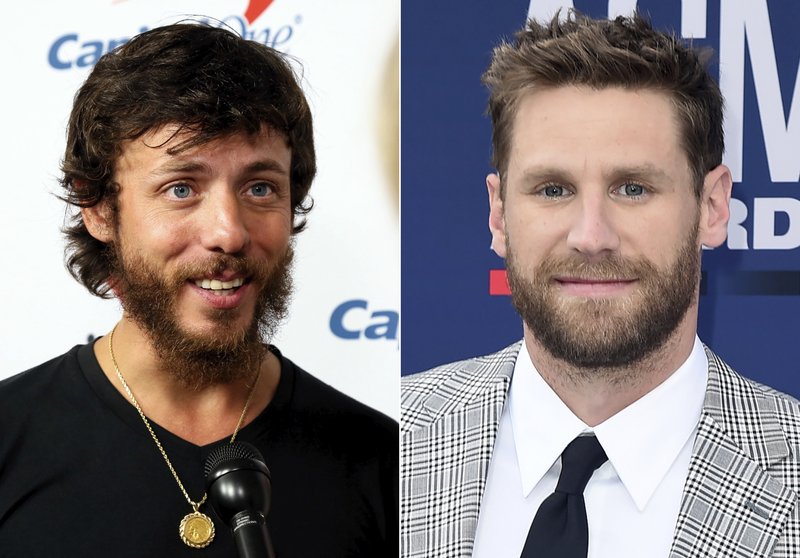
    NASHVILLE, Tenn. (AP) — Fellow musicians and fans alike are criticizing country artists who performed at outdoor concerts this weekend where social media pictures showed large, tight crowds without masks, even as COVID-19 cases resurge in the United States.

    Country singer Chase Rice posted video of his concert in East Tennessee with the words “We Back,” on the same week state health officials reported the biggest one-day jump in people testing positive for the coronavirus.

    Country star Kelsea Ballerini called Rice “selfish” for risking people’s health by playing in front of a large crowd. Americana star Jason Isbell also indirectly piled on, saying some country artists were “so broke” they played concerts over the weekend “regardless of what might happen to their non-isolated, maskless audience!” Country singer Mickey Guyton said video of the crowd at Rice’s concert made her sick to her stomach.

    A representative for Rice said he declined to comment over the weekend. But the owner of the venue where Rice played said the concert was approved by both city and county officials.

    “We are reevaluating the series from the top to bottom following the inaugural show on June 27 — from implementing further safety measures, to adding stanchions, to converting the space to drive-in style concerts, to postponing shows,” said Brian May, who co-owns the former Brushy Mountain State Penitentiary, where the concert was held.

    May said the venue has a normal capacity of 10,000, but only 954 tickets were sold in advance and state guidelines allowed for 50% capacity in an outdoor venue. May also said they asked all guests to wear masks and had signs encouraging social distance.

    Country singer Chris Janson also played an outdoor music festival in Filer, Idaho, where the governor decided to keep the state at stage 4 of reopening due to a recent surge in infections.

    A statement from the Highway 30 Music Fest said they added more bleachers so fans could spread out and be socially distant, although a recap video on their social media account showed some crowding at the front of stages and hardly any people wearing masks.

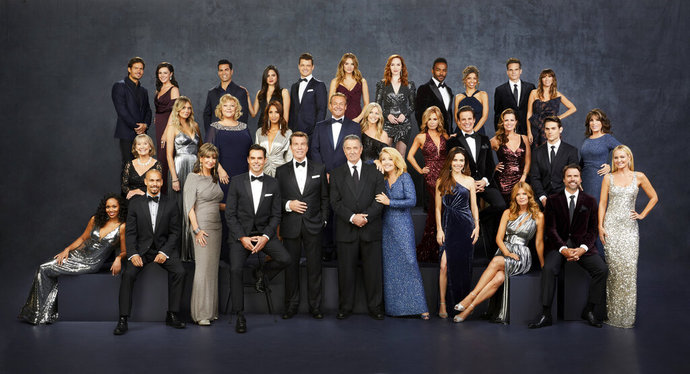
  • Daytime Emmys: ‘The Young And The Restless’ Wins Best Drama; “Jeopardy!” Wins Best Game Show

    Daytime Emmys: ‘The Young And The Restless’ Wins Best Drama; “Jeopardy!” Wins Best Game Show

    Nominees, presenters and hosts checked in remotely instead of gathering at the Pasadena Civic Auditorium

    LOS ANGELES (AP) — “The Young and the Restless” won best drama at the first virtual Daytime Emmys along with three acting trophies on Friday night, with some winners speaking out about racial injustice.

    Ellen DeGeneres accepted the trophy for best entertainment talk show for her self-titled program.

    “I intend to use the next two years of my show as a platform for change, to amplify voices of Black people and people of color and to educate my audience,” she said from home. “More than ever, I feel like this is a responsibility to effect change.”

    CBS’ “The Young and the Restless,” whose co-creator Lee Philip Bell died in February at age 91, earned four other trophies in technical categories.

    Jason Thompson, who plays Billy Abbott on “The Young and the Restless,” won his first Daytime Emmy for lead actor in a drama series. He becomes the third actor who has played the part to win. David Tom did so in 2000, and Billy Miller won in 2010, 2013 and 2014. Thompson had been nominated five previous times for his stint on “General Hospital,” but didn’t win.

    Bryton James of “Y&R” earned supporting actor honors, while Eva LaRue won for guest performer on the show.

    “The world is fighting against racial injustice and it’s our responsibility as the human race to educate ourselves and take action, because until we all can acknowledge and empathize with the problem there will always be a problem,” James said from his sofa.

    Alex Trebek won best game show host for the second straight year and “Jeopardy!” claimed game show honors.

    At 79, Trebek continues to preside over the popular quiz show while battling pancreatic cancer. In March, he announced he had survived one year of treatment. Taping of the show has since been suspended during the coronavirus pandemic, which has affected talk shows and daytime dramas.

    “I’ll be honest with you, this one is a shock, very surprising to me,” Trebek said. “Speaking as one who has now been nominated 32 times and won seven times, I think I can say with some degree of authority that winning is nicer.”

    Heather Tom of “The Bold and the Beautiful” earned lead dramatic actress honors for her longtime role of Katie Logan. Tamara Braun of “General Hospital” won as supporting actress.

    Singer Kelly Clarkson won best entertainment talk show host for the first season of her eponymous show.

    “Watch out @johnlegend I’m comin’ for that EGOT status,” Clarkson tweeted, referring to her fellow singer’s victories at the Emmys, Grammys, Oscars and Tony awards.

    The team from “General Hospital” won directing honors, while best writing went to the team from “The Bold and the Beautiful.”

    Other winners included ABC’s “The View” for informative talk show and NBC’s “Today” for morning show.

    Olivia Rose Keegan of “Days of Our Lives” won for younger actor or actress in a drama series.

    The women of “The Talk” — Sharon Osbourne, Sheryl Underwood, Eve, Carrie Ann Inaba and Marie Osmond — presided over the two-hour telecast on CBS. The 47th annual awards were back on a broadcast network for the first time since 2011 after being relegated to cable or streaming in recent years.

    Nominees, presenters and hosts checked in remotely instead of gathering at the Pasadena Civic Auditorium, where the show was to be held June 12.

  • A New Orleans Black-Owned Bakery Wants To Nourish The Nation

    A New Orleans Black-Owned Bakery Wants To Nourish The Nation

    One day, they hope that Viola’s breads, baked in New Orleans, will be sold in grocery stores across the nation.

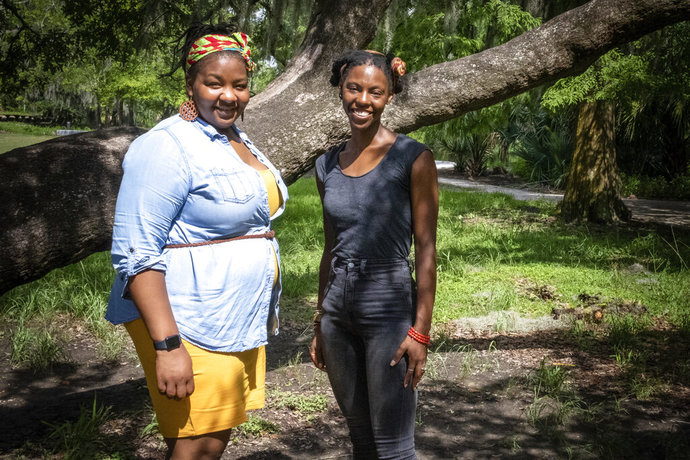
    NEW ORLEANS (AP) — Kathryn Conyers is not a baker, but she tried. And she failed. When she sought advice from her friend Carla Briggs, a trained pastry chef, Conyers was too embarrassed to send photos of the lackluster loaves. In the end, Briggs decided that she needed to come over and bake the bread herself.

    A month later, as the coronavirus pandemic ramped up, the friends saw shelves in New Orleans barren of bread and thought, ‘maybe baking bread could be a business.’ Soon after that, Viola’s Heritage Breads was born.

    “Viola just sounds nice and homey, like somebody’s grandmother that maybe would have a recipe that exists today but didn’t really get the recognition,” Conyers said.

    Conyers and Briggs said they didn’t see many Black-owned bakeries and wanted to bring a business to New Orleans that celebrates both Black entrepreneurship and heritage. The recipes draw on their roots, using local Southern ingredients like Louisiana sweet potatoes.

    The breads, which the pair deliver themselves around New Orleans or ship nationwide, are generous sandwich loaves like whole wheat brioche, sweet potato rosemary and white einkorn wheat. They’re about goodness, not being gourmet. The fanciest thing that Viola’s sells are tea cakes.

    “This is an untapped market of providing quality sandwich bread,” Briggs said. “So, we jumped right in and it has been fun.”

    Conyers and Briggs have a larger mission: they want to celebrate the too often overlooked Black cooks and chefs in the South.

    “I’ve worked at Emeril’s and I’ve worked at the Ritz Carlton,” said Briggs of her time cooking in New Orleans, “and the people making the stocks and things that make these chefs great are mostly African Americans. They are creating the basis of this food, but their names aren’t on it.”

    For now, Viola’s Heritage Breads is run from Brigg’s kitchen. Louisiana’s cottage food law allows businesses with less than $20,000 in sales to operate from a home with some limitations. The two still have their day jobs. Conyers, who has degrees in finance and law, works for a New Orleans non-profit organization that builds playgrounds around the country. Briggs, who left restaurant work due to a carpal tunnel syndrome, founded Eat Your Words, which teaches literacy through food.

    Though the start is small, the women have big aspirations for Viola’s.

    “It’s not something that’s a hustle. Can it grow and live on to be a staple?” Conyers said. “Can we build wealth and knowledge that could be passed on generationally?”

    Briggs wants Viola’s to create better opportunities for New Orleans restaurant workers.

    “I’ve been trained with the best people ever,” said Briggs, who graduated from the prestigious culinary school at Johnson & Wales University, “but it’s hard to get a job here and get respected and get paid for the knowledge and experience that I have in food.”

    One day, they hope that Viola’s breads, baked in New Orleans, will be sold in grocery stores across the nation.

    “What does it look like to have a bread or item that reflects me? That reflects us. That I see on the shelf that’s not necessarily like Aunt Jemima,” Conyers said.

    To order Viola Heritage Breads, visit her website.

  • Country music reckons with racial stereotypes and its future

    Country music reckons with racial stereotypes and its future

    NASHVILLE, Tenn. (AP) — When country singer Rissi Palmer was working on her debut album, she wanted a song like Gretchen Wilson’s “Redneck Woman,” a song that would introduce her and tell her story to fans.

    On her 2007 debut single, “Country Girl,” she celebrated her country roots while explaining that she didn’t have to look or talk a certain way to call herself a country girl.

    “I said that I am not white in the first verse, and the label was like, ‘No, no, no,’” said Palmer, who then rewrote the lyrics to make it feel more universal. “It was very intentional when I wrote that song to talk about all the women, or all the people, that might not necessarily fit in the box, but are still of the same mindset.”

    The country music industry has long been hesitant to address its long and complicated history with race, but the death of George Floyd in police custody and the protests it sparked in the U.S. and around the world became a sound too loud for the genre to ignore.

    Over the past weeks, country artists, labels and country music organizations posted about Black Lives Matter on social media, participated in the industry wide Blackout Tuesday or denounced racism outright. On Thursday, Grammy-winning country group, The Dixie Chicks announced it would drop “dixie″ from its name. The group said in a statement that it wanted to meet “this moment.”

    But Black artists say the industry still needs to address the systematic racial barriers that have been entrenched in country music for decades. Stereotypes that country music is just for white audiences, written by white songwriters, and sung by mostly white males are reinforced daily on country radio, playlists, label rosters and tour lineups. In recent years, however, the conversations about country music have shifted to a broader acknowledgement that non-white artists have always been in the genre, even if they aren’t always recognized.

    Artist/scholar Rhiannon Giddens received a MacArthur Foundation grant for her work to reclaim Black contributions to country and folk music. And artists like Darius Rucker, Kane Brown and Jimmie Allen have all had No. 1 country hits in recent years, while Mickey Guyton just released an unflinching song called “Black Like Me.” But that ingrained culture of exclusivity remains a struggle to change.

    “You can look at the reviews of my first album. I was called colored, like, ‘I didn’t know colored people like country music,’” said Palmer, who had three singles reach the Hot Country Songs Chart. “I used to get messages all the time on MySpace, saying, ‘I am so sick of you. Why are you trying to be white?’ or ‘Why are you trying to take over country music?’”

    Change hasn’t been easy. After Grammy-winning country group Lady Antebellum announced they were changing their name to Lady A, they later had to apologize to a Black singer who had been using that stage name for years.

    Atlanta-based country rapper Breland also wanted to address, with a wink and a smile, country music’s racial blinders with his TikTok-fueled song “My Truck.” The music video starts with a white guy in a black cowboy hat singing as smoke billows across a dusty landscape, then Breland abruptly shoves him out of the frame to announce, “Don’t touch my truck.”

    “I just felt like it was time for people to change their perspective on what country music is and what country music can be, because there is an audience of country music listeners under 30 who believe Black Lives Matter,” said Breland, whose song reached No. 26 on Billboard’s Hot Country Songs chart and has been remixed with Sam Hunt.

    Like Lil Nas X’s genre bending “Old Town Road,” Breland playfully fuses trap rhythms with country tropes about horses, do-si-dos and beer on his self-titled EP and sings with country artists Chase Rice and Lauren Alaina. Breland said country music labels can’t just continue to focus on one type of audience.

    “There’s a group of country listeners who love country music because of the way it sounds, but don’t love some of the politics that they know are going on behind the scenes,” he said.

    Historically country music was created by and played in both white and Black communities in the South, but the music became marketed along racial lines in the Jim Crow era, said Amanda Marie Martinez, a historian and writer who is studying country music and race. White country music was stigmatized early on as “hillbilly music” so the industry started pushing it toward the rising white middle class as a way to make the genre more respected and hugely profitable.

    “In the process, they’ve also prioritized the white, middle income, relatively conservative listener as their demographic, kind of the opposite of youth culture,” Martinez said.

    But there were periods of diversity, such as the post-Civil Rights era, when Black artists like Charley Pride, Linda Martell, O.B. McClinton and Stoney Edwards were having success, alongside Johnny Rodriguez and Freddy Fender, who were singing in English and Spanish.

    Black artists today are also reclaiming spaces that have been overwhelmingly white domains.

    Claude Kelly and Chuck Harmony, who work as a duo called Louis York, were already hit-making songwriters and producers behind pop songs like “Party in the USA” by Miley Cyrus and “Grenade” by Bruno Mars when they moved to Franklin, Tennessee, a Nashville suburb that is home to historical sites of a major Civil War battle and plantations where slaves were once held. There they set up their Weirdo Workshop artist collective and have worked with Jimmie Allen and noted author/poet Caroline Randall Williams.

    “We knew that if we were to make our mark in this town as musicians and as Black musicians that playing the Grand Ole Opry would be the pinnacle for that,” Harmony said.

    They got a standing ovation at the Opry, but more importantly for Harmony, he wanted the audience to learn about country music’s roots.

    “I just wanted their unbiased, undivided attention, so that they can make the correlation between the music that they came to see and the music that we make as Black people,” Harmony said.

    Both the Academy of Country Music and the Country Music Association started diversity task forces more than a year ago when country music was being criticized for a lack of female voices and women were being left out of major categories like entertainer of the year.

    Becky Gardenhire, a top executive at talent agency WME in Nashville who leads ACM’s diversity task force, said they are looking at ways to recruit and retain diverse voices, both in the boardroom and on the stage, with efforts like mentorships, networking and outreach to build up a pipeline of future leaders and artists.

    “We’re hungry for diversity. We want the candidates to come and knock on the door, but we have to also show them that the door is open for them,” said Damon Whiteside, CEO of ACM.

    But just as country artists outwardly reflect a predominantly white image, there are few Black country music executives working behind the scenes. Candice Watkins got one of her first big breaks in country music working as the day-to-day manager for Keith Urban between 2009 and 2011.

    “That changed my life because obviously he’s a superstar,” said Watkins, who is now the vice president for marketing for Big Loud Records, whose roster includes Jake Owen and Morgan Wallen.

    But in that manager’s role, she realized that she was often the only Black person at the boardroom table. Watkins said her label supports her and values her opinion, but she knows that might not be the same for other minorities and their companies.

    “How is a young A&R person empowered to come back to the table and maybe pitch a Black artist or person of color? Culturally speaking, do they feel free to do that or do they automatically know this is dangerous ground for them to even bring up?” Watkins said. “There’s a dismantling of culture that needs to happen.”

    Palmer, who is recording a podcast that focuses on the experiences of women of color in country music, said she feels optimistic that the current discussions about race and country music can lead to progress, if real changes are implemented.

    “I love country music, always have, always will. It’s healing music. It’s beautiful music at its core. It’s heartfelt. It’s spiritual,” Palmer said. “And it would be a shame if not everybody got to enjoy it because of the outward package.”

  • The Dixie Chicks Officially Change Their Name To The Chicks

    The Dixie Chicks Officially Change Their Name To The Chicks

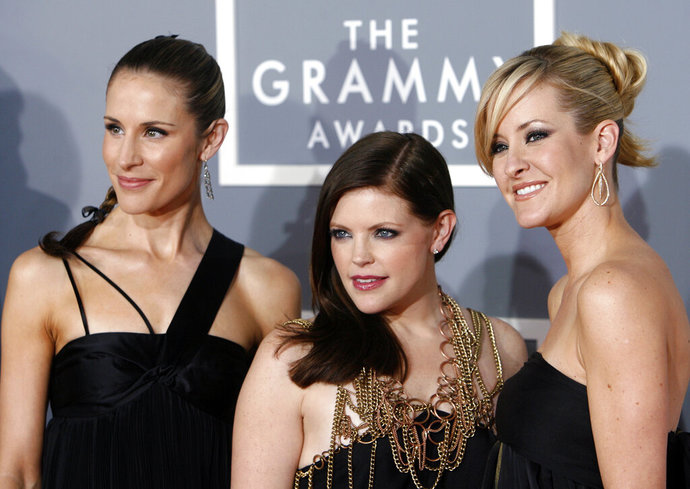
    NASHVILLE, Tenn. (AP) — Grammy-winning country group The Dixie Chicks have dropped the word Dixie from their name, now going by The Chicks.

    The band’s social media accounts and website were changed on Thursday to the refer to the new name for the band, which is made up of Martie Maguire, Natalie Maines and Emily Strayer. The band also recognized that the name was already in use by a band in New Zealand.

    “A sincere and heartfelt thank you goes out to ‘The Chicks’ of NZ for their gracious gesture in allowing us to share their name. We are honored to co-exist together in the world with these exceptionally talented sisters,” the band said in a statement.

    The move follows a decision by country group Lady Antebellum to change to Lady A after acknowledging the word’s association to slavery. A statement on The Chicks’ website said “We want to meet this moment.” The term Dixie refers to Southern U.S. states, especially those that belonged to the Confederacy.

    The Chicks, who are releasing their first new album in 14 years next month, also released a new video for their new song, “March March” that features videos and images from the recent Black Lives Matter rallies.

    Lady A received criticism with their name switch after a Black singer revealed she’d been performing as Lady A for years.

    The Chicks are the best selling female group in America with more than 33 million albums sold in the United States, according to the Recording Industry Association of America. Formed originally in Texas as a bluegrass group, the band hit commercial fame with their breakthrough album “Wide Open Spaces.” The band has won 13 Grammys.

    The band was shunned by country radio over an incident in 2003 when lead singer Maines criticized then-President George W. Bush because of the Iraq War. They responded to the backlash with their song “Not Ready to Make Nice,” and swept the Grammys in 2007 winning three of the top all-genre categories.