Category: Local News

  • Advanced DNA Testing Identifies “Natchez John Doe” as Kentucky Man After 2024 Discovery

    In March 2024, what began as a routine traffic stop in Natchez, Mississippi, led to a disturbing discovery that would take months of scientific work to unravel.

    During the stop, the driver directed officers with the Natchez Police Department to a remote location just ten feet off the road between Fatherland Road and the turnoff to First Lutheran Church. There, beneath a layer of fallen leaves, officers uncovered skeletal remains buried in a shallow grave. The remains were largely intact, but the head was missing.

    The Mississippi State Medical Examiner’s Office determined that the remains belonged to an adult male estimated to stand between 5 feet 9 inches and 6 feet 4 inches tall. An identification card found nearby suggested the man may have been around 70 years old. However, authorities were unable to confirm his identity. Despite a lengthy investigation, the man remained unidentified and became known as “Natchez John Doe.” His case was entered into the National Missing and Unidentified Persons System (NamUs) as UP124871.

    In June 2024, in an effort to advance the investigation, the Mississippi State Medical Examiner’s Office partnered with Othram, a forensic laboratory based in The Woodlands, Texas, to determine whether advanced DNA testing could help identify the remains. The partnership was reported at the time by the Natchez Democrat, which can be read here

    Othram scientists developed a DNA extract from the skeletal evidence and used Forensic-Grade Genome Sequencing® to build a comprehensive DNA profile. The company’s in-house forensic genetic genealogy team then conducted a forensic search using the profile, generating new investigative leads that were returned to law enforcement.

    With this new information, investigators conducted follow-up work that led them to potential relatives of the unidentified man. A reference DNA sample was collected from a possible family member and compared to the unknown man’s DNA profile using Othram’s KinSNP® rapid relationship testing. The testing confirmed a close biological relationship, ultimately identifying the man as William Francis Harrington of Kentucky.

    The advanced DNA testing and forensic genetic genealogy work in the case was funded through DNASolves®, Othram’s crowdfunding platform. Donations from members of the public helped cover the costs associated with the specialized testing required to generate investigative leads.

    According to Othram, this marks the 38th publicly announced case in Mississippi in which officials have utilized the company’s identity inference pipeline to assist in identifying unidentified human remains.

    Authorities have not released additional details about the circumstances surrounding Harrington’s death, and the investigation remains ongoing.

    Othram’s website with information about the case can be found here

  • Mardi Gras beads are an environmental nightmare. LSU hopes a 3D printer and okra can change that

    Mardi Gras beads are an environmental nightmare. LSU hopes a 3D printer and okra can change that

    NEW ORLEANS (AP) — It is Carnival season in New Orleans. That means gazillions of green, gold and purple Mardi Gras beads.

    Once made of glass and cherished by parade spectators who were lucky enough to catch them, today cheap plastic beaded necklaces from overseas are tossed from floats by the handful. Spectators sometimes pile dozens around their necks, but many are trashed or left on the ground. A few years ago after heavy flooding, the city found more than 46 tons of them clogging its storm drains.

    The beads are increasingly viewed as a problem, but a Mardi Gras without beads also seems unfathomable. That is why it was a radical step when the Krewe of Freret made the decision last year to ban plastic beads from their parade.

    “Our riders loved it because the spectators don’t value this anymore,” Freret co-founder Greg Rhoades said. “It’s become so prolific that they dodge out of the way when they see cheap plastic beads coming at them.”

    This year, beads are back, but not the cheap plastic ones. Freret is one of three krewes throwing biodegradable beads developed at Louisiana State University.

    The “PlantMe Beads” are 3D-printed from a starch-based, commercially available material called polylactic acid, or PLA, graduate student Alexis Strain said. The individual beads are large hollow spheres containing okra seeds. That is because the necklaces can actually be planted, and the okra attracts bacteria that help them decompose.

    2.5 million pounds of trash

    Kristi Trail, executive director of the Pontchartrain Conservancy, said plastic beads are a twofold problem. First, they clog the storm drains, leading to flooding. Then those that aren’t caught in the drains are washed directly into Lake Pontchartrain, where they can harm marine life. The group is currently preparing to study microplastics in the lake.

    The trend toward a more sustainable Mardi Gras has been growing for years and includes a small but growing variety of more thoughtful throws like food, soaps and sunglasses. Trail said there is no good data right now to say if those efforts are having an impact, but the group recently got a grant that should help them answer the question in the future.

    “Beads are obviously a problem, but we generate about 2.5 million pounds of trash from Mardi Gras,” Trail said.

    First algae beads, now PlantMe beads

    Strain works in the lab of Professor Naohiro Kato, an associate professor of biology at LSU. He first got the idea to develop biodegradable beads in 2013 after talking to people concerned about the celebration’s environmental impact. As a plant biologist, Kato knew that bioplastics could be made from plants and got curious about the possibilities.

    The first iteration of the lab’s biodegradable beads came in 2018, when they produced beads made from a bioplastic derived from microalgae. However, production costs were too high for the algae-based beads to offer a practical alternative to petroleum-based beads. Then Strain started experimenting with 3D printing, and the PlantMe Bead was born.

    For the 2026 Carnival season, LSU students have produced 3,000 PlantMe Bead necklaces that they are giving to three krewes in exchange for feedback on the design and on how well they are received by spectators.

    One funny thing, Kato said, is that people have told him they love how unique the PlantMe Beads are and want to keep them.

    “So wait a minute, if you want to keep it, the petroleum-plastic Mardi Gras bead is the best, because this won’t last,” he said.

    ‘Let’s throw things that people value’

    The lab is still working on ideas for a more sustainable Mardi Gras. Strain is experimenting with a different 3D printer material that biodegrades quickly without needing to be planted. Kato is talking with local schools about turning Mardi Gras bead-making into a community project. He envisions students 3D printing necklaces while learning about bioplastics and plant biology. And he is still exploring ways to make algae-based bioplastic commercially viable.

    Ultimately, however, Kato said, the goal should not be to replace one plastic bead with a less harmful one. He hopes Mardi Gras embraces the idea of less waste.

    Rhoades said Freret is moving in the same direction.

    “In 2025, we were the first krewe — major parading organization — to say, ‘No more. No more cheap beads. Let’s throw things that people value, that people appreciate, that can be used year-round,’ ” Rhoades said.

    One of the most coveted items they throw is baseball hats with the Freret logo. He sees people wearing the hats around the city, and he says other krewes have noticed.

    “I really believe that we, and other krewes, are able to inspire your larger krewes,” he said. “They want people to like their stuff. They want people take their stuff home, and use it, and talk about it, and post it on social media, and say, ‘Look what I just caught!’ ”


  • On This Day in Mississippi History: The Tragic Fall of the Windsor Mansion

    On This Day in Mississippi History: The Tragic Fall of the Windsor Mansion

    February 17, 2026, marks a somber anniversary in the history of Claiborne County, Mississippi. On this day in 1890, the Windsor mansion, once the largest antebellum Greek Revival residence in the state, was tragically destroyed by fire.

    Construction of the Windsor mansion began in 1859 for Smith Coffee Daniell II, a wealthy cotton planter. Built by enslaved African Americans and supervised by architect David Shroder, the project was completed in the spring of 1861. The massive home covered 17,000 square feet and featured between 23 and 25 rooms, each with its own fireplace.

    Its architectural profile was defined by 29 massive Corinthian columns, each standing 40 feet tall and topped with ornate iron capitals. The mansion was a marvel of its time, even including interior bathrooms supplied by rainwater tanks in the attic. Smith Daniell died on April 12, 1861, just weeks after the home was finished.

    During the American Civil War, Windsor served as a strategic point for both sides. Confederate forces utilized its domed cupola as an observation platform and signal station. In 1863, after Union General Ulysses S. Grant landed nearby at Bruinsburg, Federal troops took control of the mansion, using it as both a hospital and an observation post following the Battle of Port Gibson.

    The mansion survived the Civil War and remained a center for social gatherings for decades. However, on that fateful day in February 1890, disaster struck when a guest dropped ashes from a cigarette or cigar into a pile of construction debris left by carpenters on the third floor. The resulting fire consumed the wooden structure, leaving behind only the iconic brick and stucco columns, cast iron stairways, and balustrades.

    Today, the site is known as the Windsor Ruins, a haunting and popular historical attraction administered by the Mississippi Department of Archives and History (MDAH). Of the original structure, 23 full columns and five partial columns remain standing on the 2.1-acre site.

    Listed on the National Register of Historic Places and designated a Mississippi Landmark, the ruins continue to capture the imagination of visitors and have even been featured in films such as Ghosts of Mississippi. In 2023, MDAH completed a stabilization project to ensure these “silent sentinels” remain standing for future generations to reflect on Mississippi’s complex past.


  • 17-Year-Old Charged with Murder in Fatal Maryland Heights Apartment Shooting in Natchez

    Natchez police have arrested a 17-year-old in connection with a February shooting that left one woman dead and a man injured.

    According to Natchez Police Chief Cal Green, Daylon Pernell has been charged with second-degree murder, attempted murder, shooting into a motor vehicle, and discharging a firearm within city limits.

    The shooting occurred on February 8, 2026, at the Maryland Heights Apartments. Natchez Mayor Dan Gibson said the victims were sitting inside their vehicle near the apartment complex office when gunfire erupted.

    Police confirmed that Deja Davis, 29, was killed in the shooting. A male victim was also injured. Authorities have not released additional details about his condition.

    The investigation remains ongoing. Anyone with information is encouraged to contact the Natchez Police Department.

  • Alcorn State Alumna Lt. Col. Alicia E. King Honored for Distinguished Military Service During Black History Month

    Alcorn State Alumna Lt. Col. Alicia E. King Honored for Distinguished Military Service During Black History Month

    Alcorn State University is recognizing one of its accomplished alumni this Black History Month, highlighting a career defined by service, leadership, and global impact.

    Lt. Col. Alicia E. King, a native of Liberty, Mississippi, and a 2006 graduate of Alcorn State University, continues to exemplify the institution’s “Always Alcorn” spirit through her commitment to military service and professional excellence. King earned her commission as a Military Intelligence Officer while attending Alcorn and later obtained a Master of Business Administration with a concentration in entrepreneurship from American Military University.

    Her military career includes multiple combat deployments and leadership assignments across the world. From 2008 to 2009, King deployed to Iraq in support of Operation Iraqi Freedom. She later served in Afghanistan from 2010 to 2011 in support of Operation Enduring Freedom, where she assumed command of Headquarters and Headquarters Company, Special Troops Battalion, 101st Sustainment Brigade.

    Over the years, her assignments have taken her to installations and posts spanning Fort Campbell, Kentucky; the Republic of Korea; Germany; and Guantanamo Bay, Cuba. She currently serves as an adjudicator for the U.S. Physical Disability Agency under Human Resources Command, continuing her record of dedicated service to soldiers and their families.

    King’s distinguished service has earned her numerous military honors, including the Bronze Star Medal, the Meritorious Service Medal with four Oak Leaf Clusters, and the Army Commendation Medal with two Oak Leaf Clusters.

    As Alcorn State University celebrates Black History Month, leaders are spotlighting alumni like Lt. Col. King whose achievements reflect the university’s legacy of producing graduates who lead with excellence and make meaningful contributions at home and abroad.

  • Natchez announces ‘Kick Back at NAPAC’ Black History program

    NATCHEZ, Miss. — This year’s Kick Back at NAPAC program will celebrate retired Black educators over the age of 80. The annual event, presented in recognition of Black History Month, will be held 5:30 p.m., Thursday, February 19, at Rose Hill Missionary Baptist Church at 607 Madison Street.

    “Celebrating our Black Educators” is the theme for the program, which will be hosted by Rose Hill Missionary Baptist Church. It is free and open to the public.

    NAPAC Executive Director Bobby Dennis said the program will include a panel discussion that he will moderate to highlight the contributions of the retired educators. The panelists will include Zandra McDonald, superintendent of the Natchez-Adams School District, and retired educators Joyce Arceneaux-Mathis, Thelma Newsome, Cleveland Watts, and Larry Jackson.

    The Rev. LeRoy White, pastor of Rose Hill Missionary Baptist Church, will present opening remarks.

    “Our educators have helped shape the history of our community. It will be a great opportunity to highlight those who during difficult times contributed so much,” he said.

    The panel discussion will be followed by a presentation of an Angel Award to each of the senior retirees. The honorees include:

    Estelle Banford, Melissa Bolden, Betty Bowser, Roland Bowser, Artis T. Simmons Butler, Camille Carter, Mildred Carter, Mildred Dunham, Lillian Clarke Edney, Nancy Green;

    Renza Grennel, Pearl H. Groom, Leola Harris, Peggy Hickombottom, Larry Jackson, Bessie Jenkins, Joyce Johnson, Lillian Johnson, Wilbur Johnson, Marjorie Kinds;

    Mable King, Fred Marsalis, Mildred Mitchell, Lorene Mock, Clara Pinkney, Laura Price, Bonita Reed, Evelyn Smith, Mary C. Smith, Mary Stanton;

    Flora Terrell, Elnora Washington, Cleveland Watts, Jacqulyn Williams, Jenette Wilson, Willie “Bill” Woods, Willie “Coach” Woods, Clementine Youngblood, Eva Love, Jimmy Love, and Audrey Irving Dean.

    The Kick Back at NAPAC program is supported by Walmart, Concordia Bank, Regions, and United Mississippi Bank.

    For more information, call 601-445-0728.

  • Downtown Natchez Partners Celebrate Student Reading Success with Book Donation at McLaurin Elementary

    A celebration of reading brought together students, educators, business owners, and community leaders at McLaurin Elementary School as more than 40 local fourth graders received new books to take home.

    The event, held in the school library, was the result of a collaborative effort connecting Dixon Books of Historic Downtown Natchez, the Downtown Natchez Alliance, The Hunter Law Firm, and Vicki’s Books for Kids Fund through the Community Foundation of Mississippi. The initiative recognized strong reading growth in Mrs. Jazzalin Noble’s fourth grade classes and rewarded students with their own copies of Diary of a Wimpy Kid: Party Pooper.

    Dixon Books donated the overstocked titles after store owners identified an opportunity to place the books directly into the hands of young readers. Through coordination with school leadership, Mrs. Noble’s classes were selected in recognition of their reading progress and dedication throughout the school year.

    The Downtown Natchez Alliance, the city’s local Main Street America organization, helped coordinate the effort and shape it into a student-centered literacy celebration. Following a group reading, each student received a copy of the book to build their personal library at home.

    The donation was made on behalf of Vicki’s Books for Kids Fund, established through the Community Foundation of Mississippi to support children’s literacy in honor of Jennifer Boone’s mother.

    “As I was growing up, my mom told me if I knew how to read and if I found the right book, I could learn how to do anything,” said Jennifer Boone, co-owner of Dixon Books. “So, when it came time to open a book store we ordered books to help us learn how to do it and we did. Always remember: If I can read, I can do anything.”

    The Hunter Law Firm joined the initiative as an early collaborator and sponsored a pizza party for students following the celebration. Terrence D. Hunter, owner of the firm, said supporting student achievement aligns with the firm’s commitment to family, community, and justice.

    “When our kids are learning, growing, and being celebrated for their hard work, that’s something worth showing up for,” Hunter said. “I’m proud we could play a small role in recognizing their success and encouraging them to keep reading.”

    Mrs. Noble said access to books and positive reinforcement are essential to building long-term success in the classroom.

    “I tell my students all of the time, in order to succeed, you have to read,” Noble said. “We’ve been testing, there are so many tests throughout the school year and the students get tired. I remind them that if they persevere and go back to their reading skills to help them find their answers, they will excel and gain new knowledge.”

    She plans to use the books as part of classroom instruction, combining discussion and reading skills practice to strengthen both comprehension and enjoyment.

    “My plan is to read the book as a class, have discussion, and use the skills we’ve learned throughout the year to help them nurture their love of reading and adventure in books,” Noble said. “I always tell my students, whatever it is you want to do in life, you can do it, but the preparation and execution starts now.”

    Leah Hunter, Executive Director of the Downtown Natchez Alliance, said the initiative reflects the Main Street America Four Point Approach — Organization, Promotion, Design, and Economic Vitality — in action.

    “This project is a strong example of the Main Street America approach at work,” Hunter said. “We are not only supporting downtown businesses but also building partnerships that strengthen our community. By connecting a local bookstore, a philanthropic fund, a law firm, and a school, we created a meaningful literacy experience for students. That connector role is central to our mission in Historic Downtown Natchez. We also hope to see many of these students and their families visiting downtown, exploring local businesses, and continuing their reading journeys.”

    Dixon Books is located at 514 Main Street in Historic Downtown Natchez and is co-owned by Jennifer and Walter Boone and John and Ginger Weaver.

    For more information, contact Leah Hunter, Executive Director of Downtown Natchez Alliance, at director@natchezdna.org or 601-571-8394.

  • Smith Calls for Order After Contentious Natchez Board Meeting

    Alderman Sarah Carter Smith began Tuesday’s Natchez board meeting by urging fellow aldermen to be orderly after their session last month got inflamed by testy exchanges. Smith, who’s Natchez mayor pro tempore, presided over yesterday’s meeting in place of Mayor Dan Gibson, who was absent.

    The Board of Aldermen “was contentious and we were out of order,” Smith said of its Jan. 27 meeting, when they discussed the process for seeking applicants to replace Natchez Police Chief Cal Green, who’s retiring.

    Smith directed her colleagues Tuesday to abide by Robert’s Rules of Order by speaking only when recognized, not to interrupt others and otherwise “maintain decorum” – or they’ll be booted out of the meeting if too unruly.

    “I just want to see us follow our Robert’s rules and be respectful of one another and the person that’s speaking,” she said.

    Alderman Billie Joe Frazier said he respects his colleagues and understands the need for order, but “on this board, everyone has a voice. You just can’t ram something down people’s throat and we just sit here and take it.”

  • Natchez to Dedicate Second Marker Honoring Prince Ibrahima

    Natchez to Dedicate Second Marker Honoring Prince Ibrahima

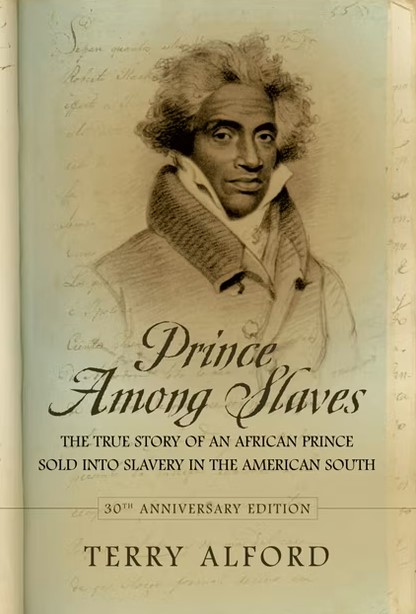
    NATCHEZ, Miss. – February 9, 2026 – Natchez, Mississippi will soon dedicate the city’s second Mississippi Department of Archives and History (MDAH) historical marker honoring Prince Abdul Rahman Ibrahima (1762–1829), an African nobleman who was enslaved in the Natchez area for about 40 years before ultimately regaining his freedom.

    The marker will be dedicated on April 8, 2026, during a public ceremony on Silver Street near the Under-the-Hill docks. The event is free and open to the public.

    “I am so grateful for the continued progress we are making in better telling all of the great stories of Natchez,” says Dan Gibson, Mayor of Natchez. “The story of Prince Ibrahima is one of those remarkable stories that for many years has gone largely untold. But gradually many are learning this story. There are even books and documentaries on it – Prince Ibrahima is a big deal. His is a story of love overcoming hate and of courage overcoming fear. I am excited that this marker will soon grace our riverfront, and I encourage all lovers of freedom to learn more about this amazing man and his amazing story.”

    The location was intentionally selected as the place where Ibrahima first arrived in Natchez as an enslaved man and later departed the city as a free man with his wife, Isabella. The dedication date marks April 8, 1828, the day the couple left Natchez following Ibrahima’s emancipation, creating what organizers describe as a powerful “full circle” moment in the city’s history.

    Born into royalty in Futa Jallon in present-day Guinea, Ibrahima was a scholar and military leader before being captured in battle and sold into slavery. Transported to Mississippi, he spent decades enslaved before an international campaign involving the U.S. government and global advocates led to his release and return to freedom.

    The new marker builds on ongoing efforts to expand and deepen interpretation of African American history in Natchez through public history initiatives, education, and community-led storytelling. The dedication will complement February programming and look ahead to additional heritage initiatives planned for spring 2026.

    “This marker allows us to more fully tell Prince Ibrahima’s story in the very place where his journey in Natchez began and ended,” says Dr. Roscoe Barnes III, cultural heritage tourism manager at Visit Natchez and president of the Mississippi Historical Society. “It is an important addition to how our city showcases its history and a meaningful step in how we recognize the people that shaped this city.”

    Additional details about the dedication ceremony and related programming will be announced closer to the event.


  • LaKisica Bowman Named Ferriday Police Chief, Fulfilling Childhood Dream of Service

    LaKisica Bowman has wanted to wear a badge since she was a child.

    That dream, which began when she was just 11 years old, became reality in a new way Tuesday night when Bowman was officially named Ferriday’s new Police Chief during the town’s monthly board meeting.

    Alderman Dra’Carl Walker made the motion to hire Bowman, which was seconded by Gail Pryor. Gloria Lloyd and Andre Keys voted in favor of the appointment, while Devonte Schiele cast the lone dissenting vote.

    At 27 years old, Bowman steps into the leadership role with a mix of experience, determination and a clear sense of purpose.

    “I’m ready to take on the responsibility,” Bowman said. “I know I am more than capable of doing it. Fifty percent of why I wanted to be a police officer is the thrill. I’m not really a behind-the-desk person. The other 50 percent is the love I have for people. I want to be a peacemaker. I try to keep my emotions out of things, which is a long lesson in itself. I try to use logic and keep it professional.”

    Bowman graduated from the police academy in November 2021, just one month before earning her degree from Grambling State University. Since then, she has built a wide-ranging résumé in law enforcement and corrections.

    Her experience includes five years with Concordia Parish Corrections, two years with Louisiana Probation and Parole and three years with the Jonesville Police Department. She has also worked at Angola, Elayn Hunt Correctional Center and Swanson.

    “I have pretty much seen everything,” Bowman said.

    While serving as interim chief, Bowman has already implemented changes within the department, including installing new flooring in the dispatch office and reorganizing the department’s arrest report book. She said additional improvements are planned.

    “My biggest thing is structure and moral,” she said. “It needs to be a lot better. I’ve worked in big cities, and they don’t play around. That was instilled in me.”

    Bowman emphasized that community support will be critical as she leads the department forward. Town leaders echoed that sentiment, pointing to both her qualifications and her willingness to step up.

    “I think we need to have a police chief to stay in compliance,” Walker said. “We need some young people stepping up into important positions. She deserves a chance. She’s qualified to be chief, and she’s eager to lead.


    This story first appeared in the Concordia Sentinel and a link can be found here.