Category: Louisiana News

  • More Than Half of Concordia Parish Class of 2026 Earns Eligibility for TOPS Scholarships

    More Than Half of Concordia Parish Class of 2026 Earns Eligibility for TOPS Scholarships

    More than half of Concordia Parish School District’s Class of 2026 has qualified for TOPS marking a significant academic milestone for the district.

    According to the district, 112 of the 198 graduating seniors have met the requirements to receive a TOPS scholarship, which provides qualifying students with tuition assistance at eligible Louisiana colleges and universities.

    District officials said the achievement reflects several years of focused efforts to improve student performance on the ACT and WorkKeys assessments, two key components of TOPS eligibility.

    School leaders credited teachers, principals, counselors, and support staff for helping students raise test scores and prepare for postsecondary education.

    Officials also noted that the increase in TOPS-qualified graduates represents more than just scholarship opportunities. By reducing the financial burden of college tuition, the program gives more students access to higher education while creating opportunities that can have a lasting impact on local families.

    The district has already set its next goal, aiming to increase the number of TOPS-qualified graduates by an additional 20 percent by the end of the 2028 school year

    District officials congratulated the Class of 2026 on the accomplishment, calling it a reflection of the hard work and dedication of students, educators, and families throughout Concordia Parish.

  • Tuwanna Williams Named Adams County Administrator

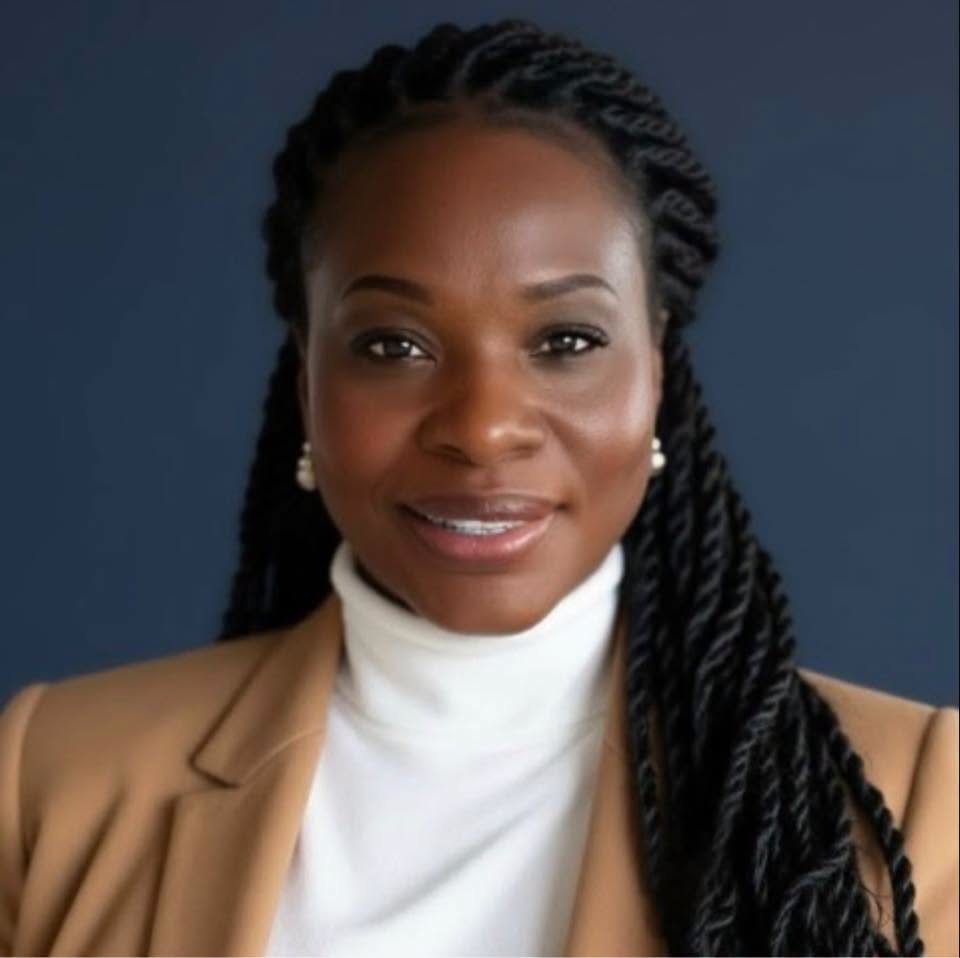
    Tuwanna Williams Named Adams County Administrator

    NATCHEZ, MS- Tuwanna Williams has been selected as the next Adams County Administrator following a unanimous vote by the Adams County Board of Supervisors.

    Board President Angela Hutchins said the county reviewed eight applicants before interviewing three finalists. Williams was unanimously chosen by the board and is expected to begin her new role in approximately two weeks.

    Williams succeeds Mitzi Conn, who resigned in May after serving as county administrator for about a year. She is well known in the Natchez-Adams County community for her work in workforce development, having previously led the collaborative workforce initiative before joining Copiah-Lincoln Community College.

    Listen Up Y’all Media congratulates Williams on her appointment and wishes her all the best as she begins serving Adams County in her new role.[contentDiscovery widget_name=”Content Discovery” display_title=”no” type=”latest” categories=”2419-5″ image=”none” timestamp=”show” count=”3″ paginate=”no”]

  • Concordia Parish Sheriff’s Office Nears Launch of Project Lifesaver Program

    Concordia Parish Sheriff’s Office Nears Launch of Project Lifesaver Program

    The Concordia Parish Sheriff’s Office is one step closer to launching a new program designed to help locate residents with autism, dementia, Alzheimer’s disease, and other conditions that may cause wandering behavior.

    The sheriff’s office recently completed the first phase of testing and field training required for Project Lifesaver certification, marking a significant milestone in the development of the program. The initiative is being launched in partnership with Pieces of B L U E and will provide specialized assistance to vulnerable residents and their families.

    According to the Concordia Parish Sheriff’s Office, deputies are undergoing training and certification to prepare for the official rollout of the program.

    Sheriff David Hedrick said the program will provide an important resource for the parish.

    “I am happy we can bring programs like this to the parish,” Hedrick said. “CPSO will be the fourth parish in Louisiana to offer this program and have the Project Lifesaver equipment. In the unfortunate event that an individual with autism or dementia goes missing in our parish, we will be ready. My deputies will be fully trained, certified and have the equipment needed to find a missing person wearing a Project Lifesaver tracking device.”

    Officials said additional training and certification requirements must be completed before the program officially launches. Information about eligibility requirements and how residents can apply for a Project Lifesaver tracking device will be released in the coming weeks.

    Once operational, the program is expected to provide families with an added layer of security and peace of mind while enhancing the sheriff’s office’s ability to respond to missing person incidents involving at-risk individuals.

  • Kids are in a ‘reading recession,’ as test scores continue to decline

    MODESTO, Calif. (AP) — Before every important test, teacher Nancy Barajas dims the lights, turns on a disco ball and blasts music from her playlist. Her sixth graders dance together as a “pre-celebration” to boost their confidence, then take their exam.

    Lately, there’s been a lot to celebrate in elementary schools in Modesto, California. Both reading and math scores have increased consistently over the past several years.

    But across the country, results are gloomier. Researchers warn that the U.S. is experiencing a reading recession — a slide predating the pandemic’s disruptions in schooling.

    Scholars at Harvard, Stanford and Dartmouth analyzed state test scores from third to eighth grade for over 5,000 school districts in 38 states, allowing comparisons across school districts and states in a national Education Scorecard.

    What they found was sobering: Only five states plus the District of Columbia had meaningful growth in reading test scores from 2022 to 2025. Nationally, students remain nearly half a grade level behind pre-pandemic reading scores and only slightly better in math.

    While schools have focused on catching kids up since the COVID-19 pandemic upended education, reading test scores have been falling since 2013 for eighth graders and 2015 for fourth graders, according to the National Assessment of Educational Progress.

    “The pandemic was the mudslide that had followed seven years of steady erosion in achievement,” said Thomas Kane, a Harvard professor who helped create the Education Scorecard.

    Still, some states and school districts are making progress — largely by shifting toward phonics-based instruction and providing extra support for struggling readers.

    The picture is also brighter in math.

    Almost every state in the analysis saw improvements in math test scores from 2022 to 2025. Student absenteeism also declined in most states. In over 400 U.S. school districts, including Modesto, reading or math growth outpaced demographically similar districts in the same state.

    A shift toward phonics and extra reading support

    Researchers are still debating the reading recession’s causes.

    One possible factor, researchers say, is the rise of social media on smartphones and corresponding declines in kids’ recreational reading. States have also backed off on strict consequences for schools whose students fail to make progress on standardized tests, Kane said.

    But the states that improved reading scores — notably Louisiana, Maryland, Tennessee, Kentucky and Indiana — all had one thing in common: They ordered schools to teach with a phonics-based approach known as the “ science of reading.”

    For years, schools taught reading using approaches that de-emphasized phonics and encouraged strategies such as guessing words based on context clues. As reading scores tumbled over the past decade, parents, scholars and literacy advocates pushed for teaching methods that align with decades of research about how kids learn to read — largely by sounding out words.

    Along with reforming teaching methods, states have also required schools to screen for learning disabilities such as dyslexia and hire coaches to help teachers improve their reading instruction.

    That said, “science of reading” reforms did not guarantee success. Some states, including Florida, Arizona and Nebraska, changed parts of their reading instruction but still saw test scores fall.

    In Modesto, reading instruction was revamped during the pandemic, and math a couple years earlier. The district created a new department to help students who are still learning English. Schools also ramped up teacher training, paying educators $5,000 to complete an extensive “science of reading” program called LETRS, or Language Essentials for Teachers of Reading and Spelling.

    Modesto’s test scores grew enough to represent an extra 18 weeks of learning in math and 13 weeks in reading. Nevertheless, the district still has a way to go: Overall scores remain far below grade level.

    Getting kids ‘consistently in the seat’ key to Detroit’s success

    A focus on reading has also improved scores in Detroit — but so have efforts to get kids in school more consistently. For years, the large urban district struggled with deplorable school conditions, leading to a 2016 lawsuit in which students argued they’d been denied the “right to read.”

    The lawsuit ended in a settlement of over $94 million, money that helped move the needle. While the district is still far below the national average, student test scores have grown faster than in similar urban districts in Michigan.

    “It took a lot to rebuild systems, and now kids are learning at higher levels, but I’m still not satisfied. And I think that’s the next challenge: continuing to motivate, inspire and change things,” said Detroit Superintendent Nikolai Vitti.

    The money has helped Munger Elementary-Middle School, located in a largely Latino neighborhood in Detroit, to employ 18 educators who give kids extra support in small groups. An attendance agent also makes calls to the homes of absent students, even showing up at their doors.

    Just a few years ago, says first grade teacher Samantha Ciaffone, it was normal for about seven or eight kids to be absent from her class every day. Now it’s usually only one or two.

    “It allows us to be better educators to see kids consistently in the seat instead of once or twice a week,” said Ciaffone. “It makes such a difference.”

    A bright spot in the South

    For the last decade, the South has stood out as a region leading the way on education reforms — bucking an established trend of landing at the bottom of education rankings. Southern states were quick to change to research-based teaching methods, and states have paid to train and coach teachers.

    It’s paid off. Louisiana and Alabama were the only states where math scores were higher in 2025 than pre-pandemic. Louisiana is also the only state that beat its pre-pandemic average in reading, with 87% of traditional public school students attending a district where scores are higher than in 2019.

    Alabama had standout gains in reading following the pandemic, driven by a state law requiring every school to use phonics-based instruction. The Legislature modeled math reforms in 2022 off Alabama’s reading successes. The state’s Numeracy Act standardized math instruction, required regular testing and mandated intervention for kids who lacked adequate math skills.

    Oxmoor Valley Elementary in Birmingham hired a full-time math specialist this year to help struggling kids. The school, which made the state’s “failing” list in 2016, has steadily improved math and reading scores, although a majority of kids still test below proficient in both subjects.

    “We can provide all of these supports, but at the same time, hold kids to high expectations,” Birmingham Superintendent Mark Sullivan said.

    Researchers stress such progress is possible across the U.S., because it’s been done before. Starting in the 1990s, the country saw decades of growth in test scores and graduation rates, while racial disparities declined. That progress continued until the mid-2010s.

    “We made enormous progress as a country in terms of educational success from over a 30-year period. Test scores went up dramatically,” said Stanford professor Sean Reardon. “And so I think that says, as a country, we can improve education and educational opportunity.”

    At Modesto’s Fairview Elementary, where Barajas teaches, students now practice their reading speed and fluency every day. After a dance break, the class reads a one-page text together in unison for one minute, then students split into pairs to read again. Students learning English are paired with native English speakers, and each child gets a turn reading with Barajas.

    “Eventually, you get through the word like it’s water,” one boy said. “You just say it smooth.”

    ____

    The Associated Press’ education coverage receives financial support from multiple private foundations. AP is solely responsible for all content. Find AP’s standards for working with philanthropies, a list of supporters and funded coverage areas at AP.org.

  • 85-year-old French widow caught in Trump’s immigration crackdown describes her detention

    ORVAULT, France (AP) — At night, silence fell over the Louisiana immigration detention facility where 85-year-old Marie-Thérèse Ross was held. Then the wailing began.

    ’’Children crying, and even babies,” said Ross, the French widow of a U.S. military veteran, whose arrest last month as part of the Trump administration’s i mmigration crackdown made international headlines.

    Ross spoke to The Associated Press on Monday about her 16 days in federal immigration custody after being arrested on April 1 in Alabama following an alleged visa overstay, and the late-in-life love story that brought her to the United States. She has been released and returned to France.

    The experience in detention, she said, changed her, and her view of politics.

    She was held in a dormitory-style room with 58 other women, mostly mothers. ‘’Some of them didn’t know where their children were,” she said. ‘’I think it’s terrible for a woman not to know where her children are.”

    Her arrest in Alabama unfolded so quickly that she barely understood what was happening. Five men, who identified themselves as immigration officers, banged on her door and windows at 8 a.m. before handcuffing her and placing her in a vehicle, she said. She was still wearing her bathrobe, slippers and pajamas.

    She was transferred two days later to a facility in Basile, Louisiana. Later that month, she was freed. She is now recovering in a suburb of Nantes in western France with her family. French Foreign Minister Jean-Noel Barrot had publicly called for her release, saying that U.S. Immigration and Customs Enforcement methods are “not in line” with French standards.

    Ross had entered the U.S. to start a new life with William B. Ross, a retired U.S. soldier she had met when he was stationed in France in the 1950s and she was a secretary at NATO.

    Between 1962 and 2022, they stayed in touch via William’s wife, who was friends with Marie-Therese. “After we both became widowed, we decided to spend holidays together,” Marie-Therese Ross said. ‘’Then feelings came back, and we decided to marry last year.” She crossed the Atlantic and moved in with him in Anniston, Alabama.

    After he died of natural causes in January, a dispute emerged over his estate.

    His sons rerouted mail from the Alabama residence, leading their stepmother to miss an immigration-related appointment, an Alabama judge noted in a court order. The judge accused one son — a former Alabama State Trooper who now works as a federal employee — of using his position to prompt the detention of his stepmother, and urged a federal investigation into what happened.

    The stepson denied involvement in her arrest. Marie-Therese described warm relations with William’s sons before he died. After his death, she said, they ‘’transformed.”

    The U.S. Department of Homeland Security said Tuesday that Ross overstayed her 90-day visa and that U.S. Immigration and Customs Enforcement detention facilities are “regularly audited and inspected” to comply with national standards.

    “All detainees are provided with proper meals, quality water, blankets, medical treatment, and have opportunities to communicate with their family members and lawyers. ICE has higher detention standards than most U.S. prisons that hold actual U.S. citizens,” the department said.

    At the detention facility in Louisiana, Ross described strict rules, constant shouting from guards and condescending treatment.

    “The prison was clean, the food was OK, but it was the way they spoke to us,” she told the AP. “The guards could not speak without yelling.”

    She described the place as noisy. ’’Everybody was talking loudly so everybody could hear what they were saying, but when silence came, you could hear children crying and even babies crying,″ she said. ’’There’s babies in this jail.″

    Despite the conditions, Ross described moments of solidarity among detainees. “During the night, if my bed cover slipped away, I felt a small hand putting it back,” she said. “I didn’t know who it was, but they pampered me because I was older than them.”

    She said the women called her “Grandma.” She kept a handmade friendship bracelet given to her by another detainee, woven from strips of colored plastic, a gift she wears today.

    Family members said Ross is still struggling with memory gaps and emotional distress following her detention. She said she wants to seek medical follow-up in France to address symptoms consistent with post-traumatic stress and is receiving support.

    Ross said she continues to think about the women she met in custody, most of them from South America. Many were mothers separated from their children.

    Her experience changed the way she sees the United States and its immigration policies, Ross said. Her husband was a Trump supporter and they used to watch Fox News together. But she was shocked to learn firsthand how immigrants are treated inside immigration facilities.

    She used to view the U.S. as a “country of freedom, where people are not arrested based on how they look, and where those who are detained are treated fairly and with respect.” But the women she met did not deserve to be detained, she said. “Their only fault was to be South American.”

    As she recovers in France, Ross still thinks about them: “When I left this jail in Louisiana, I told them that if I ever had the chance to speak about them, I would do it, to help them.”

  • Missouri’s new US House map goes to court while Louisiana and South Carolina consider redistricting

    Missouri’s top court is hearing an important legal challenge Tuesday to one of President Donald Trump’s earliest redistricting successes, while lawmakers in Louisiana and South Carolina weigh whether to become the latest Republican states to redraw U.S. House districts ahead of the November midterm elections.

    Rather than waning, a national redistricting battle that began 10 months ago has intensified — inflamed by a recent U.S. Supreme Court ruling that weakened the federal Voting Rights Act and provided grounds for states to try to eliminate voting districts with large minority populations.

    Missouri was the second Republican state after Texas to heed Trump’s call last year to redraw congressional districts to help the GOP win additional seats in the midterms. At issue before the Missouri Supreme Court is whether the new districts violate a state constitutional requirement to be compact, and whether they can remain in place for the midterms despite an initiative petition seeking to force a public referendum.

    In South Carolina, the issue facing Republican lawmakers is whether redrawing the state’s lone Democratic-held seat could open the door to a clean sweep for Republicans or backfire with losses by making more districts competitive for Democrats. State senators have yet to decide whether to allow consideration of a redistricting plan put forth in the House after the legislature’s regular work ends Thursday.

    Congressional redistricting also is under consideration in Louisiana, where the Supreme Court’s recent ruling invalidated a majority-Black district as an illegal racial gerrymander. The state’s May 16 congressional primaries already have been postponed. What remains undecided is how many seats Republicans will try to pick up while redrawing the districts.

    Alabama also is poised to switch its congressional districts after the U.S. Supreme Court on Monday overturned an order mandating use of a map with two largely Black districts. The high court sent the case back to a lower court, where plaintiffs quickly requested a new order stopping Alabama from switching U.S. House districts. Alabama Gov. Kay Ivey on Tuesday set an Aug. 11 date for special congressional primaries in the four impacted districts — the 1st, 2nd, 6th and 7th.

    The winner-take-all primaries will select nominees first in the midterms.

    “For years, we have fought for this outcome, and I am proud to celebrate this win for Alabamians,” Ivey said.

    Republicans think they could gain as many as 14 seats from new House maps enacted so far in Texas, Missouri, North Carolina, Ohio, Florida and Tennessee. Democrats, meanwhile, think they could gain six seats from new maps in California and Utah. The Virginia Supreme Court last week struck down a redistricting effort that could have yielded four more winnable seats for Democrats.

    South Carolina weighs political risks of redistricting

    A South Carolina House committee is to consider Tuesday whether to send a congressional redistricting plan to the full chamber for debate. The House also appears poised to pass legislation that could delay the June 9 congressional primaries until August to allow time for new districts to be enacted. That comes even as some absentee and overseas military ballots already have been cast.

    Any redistricting effort also must clear the Senate, where support is less certain. Two-thirds of senators have to agree before the regular General Assembly session ends Thursday to let the legislature take up redistricting later.

    Trump said on social media Monday that he was closely watching the redistricting vote, urging South Carolina senators to “be bold and courageous” and to delay the House primaries so new districts can be drawn.

    Although Republicans have a supermajority in the chamber, several senators aren’t sure the proposed map guarantees the GOP will win the seat long-held by Democratic U.S. Rep. Jim Clyburn. They also think enough Democratic voters could be pushed into other districts that the plan could backfire, resulting in a 5-2 or even a 4-3 Republican split.

    Some also question whether it is fair for Republicans to get all the seats in a state where the Democratic presidential candidate has gotten at least 40% of the vote every election this century, even if Trump is asking for the new map.

    Louisiana GOP looks to target one or two seats

    State Sen. Caleb Kleinpeter, a Republican who oversees the Louisiana Senate committee tasked with redistricting, said his panel plans to vote Tuesday on a U.S. House map, with a full Senate vote expected Thursday.

    The committee has several options, including versions that would leave Democrats favored in one district or none. Kleinpeter said a map that eliminated all majority-Black districts would be difficult to defend in court.

    Last Friday, dozens of people urged lawmakers to retain two majority-Black districts during a grueling nine-hour hearing that featured civil rights activists and the only four Black congressmen elected to represent the state since the end of Reconstruction.

    Missouri map splits Kansas City district

    Six Republicans and two Democrats currently represent Missouri in the U.S. House under a map passed by the Republican-led legislature after the 2020 census. But with Trump’s backing, Republican state officials adopted a new map last September that improves their chances of winning an additional seat by targeting a Kansas City district held by longtime Democratic U.S. Rep. Emanuel Cleaver, who previously was the city’s first Black mayor.

    The new House map places portions of Kansas City in neighboring Republican districts and stretches the remainder of Cleaver’s 5th District eastward into Republican-heavy rural areas. A state judge in March rejected an assertion that the map violates a constitutional compactness requirement, finding that the new districts on average are more compact — even if the 5th District is not. That was appealed to the state Supreme Court.

    A separate case also being argued Tuesday at the state Supreme Court contends the new districts should have been automatically suspended in December when opponents submitted more than 300,000 petition signatures seeking to force a statewide referendum.

    Republican Attorney General Catherine Hanaway and Republican Secretary of State Denny Hoskins contend the new districts can be suspended only if — and after — Hoskins determines the petition meets constitutional requirements and has enough valid signatures. Hoskins has until Aug. 4, the day of Missouri’s primary elections, to make that determination.

    A state judge in March agreed with Republicans’ position while also ruling that the plaintiffs lacked grounds to sue and had done so too soon.

    ___

    Brook reported from Baton Rouge, Louisiana, Chandler from Montgomery, Alabama, Collins from Columbia, South Carolina, and Lieb from Jefferson City, Missouri.

  • Supreme Court temporarily extends women’s access to a widely used abortion pill

    WASHINGTON (AP) — The Supreme Court is leaving women’s access to a widely used abortion pill untouched until at least Thursday, while the justices consider whether to allow restrictions on the drug, mifepristone, to take effect.

    Justice Samuel Alito’s order Monday allows women seeking abortions to continue obtaining the pill at pharmacies or through the mail, without an in-person visit to a doctor. It prevents restrictions on mifepristone imposed by a federal appeals court from taking effect for the time being.

    The court is dealing with its latest abortion controversy four years after its conservative majority overturned Roe v. Wade and allowed more than a dozen states to effectively ban abortion outright.

    The case before the court stems from a lawsuit Louisiana filed to roll back the Food and Drug Administration’s rules on how mifepristone can be prescribed. The state claims the policy undermines the ban there, and it questions the safety of the drug, which was first approved in 2000 and has repeatedly been deemed safe and effective by FDA scientists.

    Lower courts concluded that Louisiana is likely to prevail, and a three-judge panel of the 5th U.S. Circuit Court of Appeals ruled that mail access and telehealth visits should be suspended while the case plays out.

    The drug is most often used for abortion in combination with another drug, misoprostol. Medication abortions accounted for nearly two-thirds of all abortions in the U.S. in 2023, the last year for which statistics are available.

    The current dispute is similar to one that reached the court three years ago.

    Lower courts then also sought to restrict access to mifepristone, in a case brought by physicians who oppose abortion. They filed suit in the months after the court overturned Roe.

    The Supreme Court blocked the 5th Circuit ruling from taking effect over the dissenting votes of Alito and Justice Clarence Thomas. Then, in 2024, the high court unanimously dismissed the doctors’ suit, reasoning they did not have the legal right, or standing, to sue.

    In the current dispute, mainstream medical groups, the pharmaceutical industry and Democratic members of Congress have weighed in cautioning the court against limiting access to the drug. Pharmaceutical companies said a ruling for abortion opponents would upend the drug approval process.

    The FDA has eased a number of restrictions initially placed on the drug, including who can prescribe it, how it is dispensed and what kinds of safety complications must be reported.

    Despite those determinations, abortion opponents have been challenging the safety of mifepristone for more than 25 years. They have filed a series of petitions and lawsuits against the agency, generally alleging that it violated federal law by overlooking safety issues with the pill.

    President Donald Trump’s administration has been unusually quiet at the Supreme Court. It declined to file a written brief recommending what the court should do, even though federal regulations are at issue.

    The case puts Trump’s Republican administration in a difficult place. Trump has relied on the political support of anti-abortion groups but has also seen ballot question and poll results that show Americans generally support abortion rights.

    Both sides took the silence as an implicit endorsement of the appellate ruling. Alito is both the justice in charge of handling emergency appeals from Louisiana and the author of the 2022 decision that declared abortion is not a constitutional right and returned the issue to the states.

    ___

    Mulvihill reported from Haddonfield, N.J.

    ___

    Follow the AP’s coverage of the U.S. Supreme Court at https://apnews.com/hub/us-supreme-court.

  • 8 children killed in Louisiana mass shooting remembered at funeral

    Faith leaders and politicians paid tribute at a funeral Saturday to eight children who were killed in a mass shooting last month in Louisiana.

    The victims of the April 19 shooting in Shreveport included seven siblings who were shot by their father in an attack that also killed their cousin.

    The service on Mother’s Day weekend at Summer Grove Baptist Church began with a long procession of mourners slowly filing past eight white caskets with large photos of the children next to them. Gold crowns and bouquets of white flowers were placed on top of the closed caskets. A choir behind the altar and individual singers performed throughout the service.

    “In spite of how you may be feeling today, we still need to know that God is still good,” Bishop Bernard Kimble, senior pastor of the Mount Olive Baptist Church, said in opening remarks.

    The funeral’s pamphlet contained tributes to each of the children, who ranged in age from 3 to 11. Some of them had affectionate nicknames: 3-year-old Jayla Elkins was called “Jaybae”; Kayla Pugh, 6, was “K-Mae”; and Mar’Kaydon Pugh, 10, was “K-Bug.”

    Six-year-old Khedarrion Snow had “a sweet and loving heart,” and “though his life on earth was short, his light was mighty,” according to the pamphlet. Layla Pugh, 7, was “bright, intelligent, bold, and full of love” and enjoyed making TikTok videos with her siblings and cousins.

    Pastor and gospel singer Kim Burrell reminded family and community members trying to make sense of the shootings that “God is still on the throne.”

    “To ask the question, ‘Why is this fair, God? How could you, Lord?’ He’s still God,” Burrell said. “The same God that healed you from the stuff that you don’t want to tell nobody about. But he is a God that doesn’t have to give us all the clues. Just know that he makes no mistakes.”

    The children’s father, Shamar Elkins, used an assault-style weapon despite a 2019 felony firearms conviction. His wife, who was seeking a divorce, and another woman were wounded in the shooting that stretched across two houses in a Shreveport neighborhood.

    Elkins died after fleeing and a police pursuit. It was not clear whether he was killed by officers who fired or from a self-inflicted gunshot, according to police.

    An investigation remains ongoing into the deadliest mass shooting in the U.S. in more than two years.

    During the service, other speakers included Shreveport Councilwoman Tabatha Taylor, who acknowledged that “there are no words sufficient to ease this pain,” while Councilman James Green implored audience members to collectively “take off our funeral face” because “this is a celebration” of the children’s lives.

    Indeed, churchgoers often stood clapping their hands in response to singers and speakers. The children’s names were read or shown several times throughout the service, where Shreveport Mayor Tom Arceneaux expressed the city’s condolences.

    “May we honor them by carrying forward the gentleness, joy and love they so freely shared,” Arceneaux said.

    Louisiana Gov. Jeff Landry ordered U.S. and state flags to be flown at half-staff over the next week at the Capitol and state government buildings. A message read from Landry said the victims “were the light of their homes and the heart of their classrooms. They were full of promise and found joy in the simplest things, such as dancing, playing outside and sharing laughter with family and friends. Their futures were bright and held great promise.”

    “It is incumbent upon us to honor the memory of those lost by standing together against such senseless violence.”

    Among those in attendance was former U.S. Rep. Gabby Giffords, whose political career was cut short by a 2011 assassination attempt.

    “She just wanted to come and just let the family know that this pain is not just in Louisiana,” said U.S. Rep. Cleo Fields, D-Louisiana. “This pain is all across the nation.”

    Buses were made available afterward to transport mourners to a graveside burial. At the conclusion of the church service, Kimble prayed for healing to begin.

    “Help us as we move from this spot,” he said. “Because we know, oh God, grief is only temporary. And if we’ll put our hands in your favor, you’ll lead us through this.”

  • The Supreme Court hands a win to oil and gas companies fighting environmental lawsuits in Louisiana

    WASHINGTON (AP) — The Supreme Court handed a win Friday to oil and gas companies fighting lawsuits over coastal land loss and environmental degradation in Louisiana.

    The unanimous procedural decision gives the companies a new day in federal court after a state jury ordered Chevron to pay upward of $740 million to clean up damage to the state’s coastline, one of multiple similar lawsuits.

    Backed by the Trump administration, the companies said the work in Louisiana started as an effort to quickly increase the supply of aviation gasoline for the U.S. government during World War II and so should be heard in federal court.

    The justices agreed. Justice Clarence Thomas, writing for the 8-0 court, noted Congress has long allowed lawsuits against the government and its contractors to be heard in federal court. This suit, he wrote, is clearly related to Chevron’s wartime efforts to bolster the U.S. aviation fuel supply. Federal courts are seen as a friendlier venue for the companies.

    Louisiana’s coastal parishes have lost more than 2,000 square miles (5,180 square kilometers) of land over the past century, according to the U.S. Geological Survey, which has also identified oil and gas infrastructure as a significant cause. The state could lose an additional 3,000 square miles (7,770 square kilometers) in the coming decades, its coastal protection agency has warned.

    The litigation over the role of oil and gas companies has crossed typical political lines in Louisiana. The hefty jury award came from a community in one of the most conservative, pro-energy parts of the state, said Republican Attorney General Liz Murrill.

    Republican Gov. Jeff Landry, a longtime oil and gas industry supporter, also backed the lawsuits when he was attorney general. Local Louisiana leaders remain determined to keep the litigation alive despite the setback, said attorney John Carmouche.

    “Simply changing where the case will be heard, as has happened, will not deter our efforts to have Big Oil held accountable for the damages they caused and the enormous restoration they owe the people of Louisiana,” Carmouche said.

    Anne Rolfes, the director of the Louisiana Bucket Brigade environmental group, said the decision is a “bump in the road” in efforts to hold the industry accountable for pipelines and canals carving up the natural coastline that have left residents more vulnerable to hurricanes.

    Chevron, on the other hand, applauded the Supreme Court’s decision, saying the claims are related to work that the companies did under federal supervision. “Chevron looks forward to litigating these cases in federal court, where they belong,” the company said in a statement.

    The company denies responsibility for land loss in Louisiana and argues it’s wrong to sue over work done before state environmental regulations were in place.

    The companies appealed to the high court after jurors in Plaquemines Parish — a sliver of land straddling the Mississippi River into the Gulf — found that energy giant Texaco, acquired by Chevron in 2001, had for decades violated Louisiana regulations governing coastal resources by failing to restore wetlands impacted by dredging canals, drilling wells and billions of gallons of wastewater dumped into the marsh.

    The case is one of dozens of lawsuits filed in 2013 alleging oil giants, including Chevron and Exxon, violated state environmental laws for decades. Friday’s ruling overturns a 2024 decision from the U.S. Court of Appeals for the Fifth Circuit. It will affect about a quarter of the dozens of lawsuits filed against various oil companies, Carmouche said.

    The energy industry group Grow Louisiana said the decision should spell the end of the litigation. “These lawsuits have cost Louisiana billions, killed jobs and padded trial lawyers’ pockets,” Executive Director Marc Ehrhardt said. “Enough is enough. Stop these lawsuits.”

    The Louisiana Association of Business and Industry called the decision “an important win for legal clarity.”

    Justice Samuel Alito recused himself from the case, pointing to financial ties to ConocoPhillips. He’s previously recused himself from other cases due to his stock holdings.

    ___

    Brook reported from New Orleans.

  • French government seeking release of 86-year-old French widow detained by ICE

    NEW ORLEANS (AP) — The French government is pressing the U.S. Department of Homeland Security to release the 86-year-old French widow of a military veteran from immigration custody after she was detained earlier this month.

    U.S. Immigration and Customs Enforcement agents detained Marie-Therese Ross in Alabama on April 1 after she overstayed her 90-day visa, according to DHS. Ross is now being held at a federal immigration detention facility in Louisiana.

    Ross is among the thousands of people targeted by the Trump administration’s mass deportation agenda that has detained the spouses of U.S. soldiers and military veterans who previously received greater leniency under scrapped policies.

    Rodolphe Sambou, Consul General of France in New Orleans, told the AP that the French government has “fully mobilized” to push for her release. He said he has visited her in detention twice so far.

    “Given her age, we really want her to get out of this situation as soon as possible,” Sambou said. “We want to get her out of jail.”

    Sambou said that he has been communicating frequently with Ross’ family and French officials in Washington, D.C., Atlanta and Paris to try and coordinate Ross’ release and ensure she has access to sufficient food and health care. He said the French government has also contacted DHS.

    He declined to comment on her legal status or other details of her case.

    Ross married Alabama resident William Ross in April last year, Calhoun County marriage records show. Ross died in January, according to an obituary from his family, which says he was a former captain in the U.S. Army.

    A lawyer who is representing Ross in a separate legal matter did not immediately respond to a request for comment. Ross’ family did not respond to requests for comment.

    ___

    Associated Press writer Samuel Petrequin contributed reporting from France.

    ___

    Brook is a corps member for The Associated Press/Report for America Statehouse News Initiative. Report for America is a nonprofit national service program that places journalists in local newsrooms to report on undercovered issues.