Category: National News

  • Top Trump adviser steps down ahead of impeachment testimony

    Top Trump adviser steps down ahead of impeachment testimony

    WASHINGTON (AP) — President Donald Trump’s top adviser for Russian and European affairs is leaving his job at the White House, a day before he’s scheduled to testify before the House impeachment investigators, a senior administration official said Wednesday.

    Tim Morrison owes his job at the National Security Council to Trump, but his testimony Thursday in the House impeachment inquiry might be central to a push to remove the president from office.

    A senior administration official said Morrison “has decided to pursue other opportunities.” The official, who was not authorized to discuss Morrison’s job and spoke only on condition of anonymity, said Morrison has been considering leaving the administration for “some time.”

    Morrison has been in the spotlight since August when a government whistleblower said multiple U.S. officials had said Trump was “using the power of his office to solicit interference from a foreign country in the 2020 U.S. election.”

    Now it’s his turn in the impeachment probe’s hot seat.

    Morrison, tall and lean with an authoritative voice, will be asked to explain that “sinking feeling” he got when Trump demanded that Ukraine’s president investigate former Vice President Joe Biden and meddling in the 2016 election.

    Morrison, who is in his 40s, is a political appointee in the Trump White House, brought on board by former national security adviser John Bolton to address arms control matters and later shifted into his current role as a top Russia and Europe adviser. It was there that he stepped into the thick of an in-house squabble about the activities of Rudy Giuliani, Trump’s personal attorney who had been conversing with Ukrainian leaders outside of traditional U.S. diplomatic circles.

    Known as a “hawk” in national security circles, Morrison is set to be the first political appointee from the White House to testify before impeachment investigators. The probe has been denounced by the president, who has directed his staff not to testify.

    Regardless of what he says, GOP lawmakers will be hard-pressed to dismiss Morrison, formerly a longtime Republican staffer at the House Armed Services Committee. He’s been bouncing around Washington in Republican positions for two decades, having worked for Rep. Mark Kennedy, R-Minn., Sen. Jon Kyl, R-Ariz., and as a GOP senior staffer on the House Armed Services Committee, including nearly four years when it was chaired by Rep. Mac Thornberry, R-Texas.

    Morrison’s name appeared more than a dozen times in earlier testimony by William Taylor, the acting U.S. ambassador in Ukraine, who told impeachment investigators that Trump was withholding military aid unless the new Ukrainian president, Volodymyr Zelenskiy, went public with a promise to investigate Trump’s political rival Joe Biden and his son Hunter. Taylor’s testimony contradicts Trump’s repeated denials that there was any quid pro quo.

    Taylor said Morrison recounted a conversation that Gordon Sondland, America’s ambassador to the European Union, had with a top aide to Zelenskiy named Andriy Yermak. Taylor said Morrison told him security assistance would not materialize until Zelenskiy committed to investigate Burisma, a Ukrainian gas company that once employed Biden’s son. A White House meeting for Zelenskiy also was in play.

    “I was alarmed by what Mr. Morrison told me about the Sondland-Yermak conversation,” Taylor testified. “This was the first time I had heard that the security assistance — not just the White House meeting — was conditioned on the investigations.”

    Taylor testified that Morrison told him he had a “sinking feeling” after learning about a Sept. 7 conversation Sondland had with Trump.

    “According to Mr. Morrison, President Trump told Ambassador Sondland that he was not asking for a quid pro quo,” Taylor testified. “But President Trump did insist that President Zelenskiy go to a microphone and say he is opening investigations of Biden and 2016 election interference, and that President Zelenskiy should want to do this himself. Mr. Morrison said that he told Ambassador Bolton and the NSC lawyers of this phone call between President Trump and Ambassador Sondland.”

    Morrison told people after Bolton was forced out of his job that the national security adviser had tried to stop Giuliani’s diplomatic dealings with Ukraine and that Morrison agreed, according to a U.S. official, who was not authorized to discuss Morrison’s role in the impeachment inquiry and spoke only on condition of anonymity. The official said Morrison told people that with the appointment of Robert O’Brien as Bolton’s successor, his own future work at the NSC was in a “holding pattern.”

    Bolton had brought Morrison into the NSC in July 2018 as senior director for weapons of mass destruction and biodefence. He’s known as an arms control expert or an arms treaty saboteur, depending on who you ask.

    Morrison, who earned a bachelor’s degree from the University of Minnesota and a law degree from George Washington University, keeps nuclear strategist Herman Kahn’s seminal volume on thermonuclear warfare on a table in his office.

    Daryl Kimball, executive director of the Arms Control Association, said Bolton and Morrison are likeminded. Kimball said both have been known for calling up GOP congressional offices warning them against saying anything about arms control that didn’t align with their views.

    “Just as John Bolton reportedly did, I would be shocked if Morrison did not regard Giuliani’s activities as being out of bounds,” said Kimball, who has been on opposite sides of arms control debates with Morrison for more than a decade.

    ___

    Associated Press writers Zeke Miller and Matthew Lee contributed to this report.

  • Pentagon releases new details on al-Baghdadi raid

    Pentagon releases new details on al-Baghdadi raid

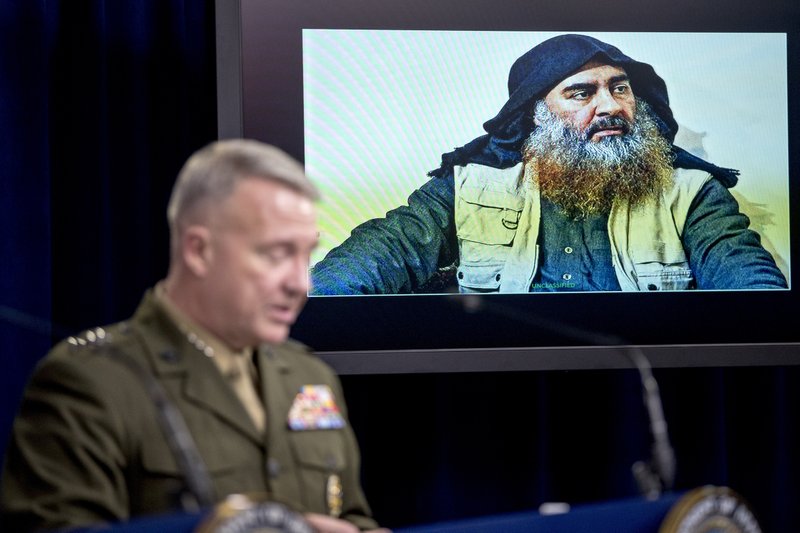
    WASHINGTON (AP) — The general who oversaw the U.S. raid on Islamic State leader Abu Bakr al-Baghdadi provided the most detailed account yet of the operation and said the U.S. is on alert for possible “retribution attacks” by extremists.

    Gen. Kenneth “Frank” McKenzie, head of U.S. Central Command, said al-Baghdadi’s remains were buried at sea within 24 hours of his death inside an underground tunnel where he fled as special operations soldiers closed in on him.

    The Pentagon on Wednesday released the first government photos and video clips of the nighttime operation, including one showing Delta Force commandos approaching the walls of the compound in which al-Baghdadi and others were found.

    Another video showed American airstrikes on other militants who fired at helicopters carrying soldiers to the compound. The U.S. also bombed the compound after the soldiers completed the mission so that it would not stand as a shrine to al-Baghdadi.

    “It looks pretty much like a parking lot with large potholes right now,” McKenzie said.

    The attacking American force launched from an undisclosed location inside Syria for the one-hour helicopter ride to the compound, McKenzie said.

    Two children died with al-Baghdadi when he detonated a bomb vest, McKenzie said, adding that this was one fewer than originally reported. He said the children appeared to be under the age of 12. Eleven other children were escorted from the site unharmed. Four women and two men who were wearing suicide vests and refused to surrender inside the compound were killed, McKenzie said.

    The general said the military dog that was injured during the raid is a four-year veteran with U.S. Special Operations Command and had been on approximately 50 combat missions.

    The dog was injured when it came in contact with exposed live electrical cables in the tunnel after al-Baghdadi detonated his vest, but it has returned to duty, McKenzie said. The dog, named Conan, will leave the Middle East and visit the White House next week, President Donald Trump tweeted.

    Al-Baghdadi was identified by comparing his DNA to a sample collected in 2004 by U.S. forces in Iraq, where he had been detained.

    The U.S. managed to collect “substantial” amounts of documentation and electronics during the raid, McKenzie said, but he would not elaborate. Such efforts are a standard feature of raids against high-level extremist targets and can be useful in learning more about the group’s plans.

    Although the raid was successful, McKenzie said it would be a mistake to conclude that the Islamic State has been defeated.

    “It will take them some time to re-establish someone to lead the organization, and during that period of time their actions may be a little bit disjointed,” the general said. “They will be dangerous. We suspect they will try some form of retribution attack, and we are postured and prepared for that.”

    In outlining the operation, McKenzie said al-Baghdadi had been at the compound in Syria’s northwest Idlib province for “a considerable period,” but he was not specific.

    He said the raid was briefed to Trump on Friday, and McKenzie made the decision to go ahead on Saturday morning.

    McKenzie offered no new details about al-Baghdadi’s final moments.

    “He crawled into a hole with two small children and blew himself up while his people stayed on the grounds,” he said when asked by a reporter about al-Baghdadi’s last moments and Trump’s description of the Islamic State leader as “whimpering and crying and screaming all the way” to his death.

    Other senior Pentagon officials, including Gen. Mark Milley, chairman of the Joint Chiefs of Staff, have said they could not confirm Trump’s description.

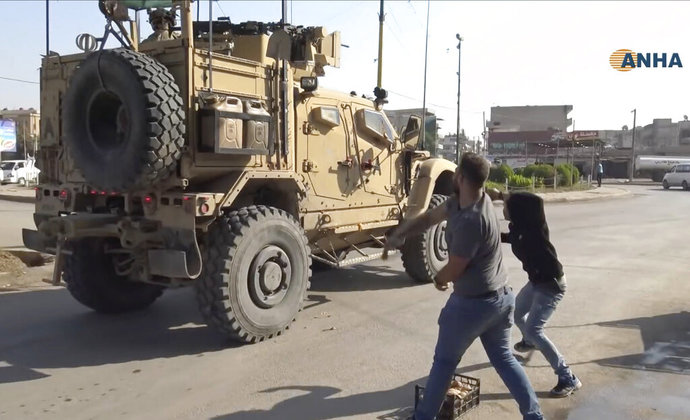
    Several times this month, Trump has said he is withdrawing from Syria and that the troops are “coming home.” But, in fact, the U.S. military remains in the country, shifting positions and gearing up to execute Trump’s order to secure Syria’s oil fields — not for the Syrian government but for the Kurds. Trump also has said he wants to “keep” the oil, although it’s unclear what he means.

    Earlier Wednesday, the acting homeland security secretary, Kevin McAleenan, told a congressional hearing that U.S. security agencies have been reminded of the potential for al-Baghdadi’s death to inspire his followers to launch an attack “in the immediate aftermath.”

    Russell Travers, the acting director of the National Counterterrorism Center, told the same hearing that he does not believe al-Baghdadi’s death will have “much impact” on the organization.

    “If there were significant attacks that were in the planning, that planning will continue. It won’t have that much effect,” Travers aid.

    Within Syria and Iraq, he added, IS has at least 14,000 fighters.

    “That’s an important number,” he said. “Because five, six years ago, when ISIS was at its low point, they were down under a thousand. To us, this tells us the insurgency has a lot of options.”

    FBI Director Chris Wray said the biggest concern in the United States was the “virtual caliphate” that inspires Americans to pledge allegiance to IS and commit acts of violence in the group’s name even without traveling to Syria.

    Rep. Bennie G. Thompson, a Mississippi Democrat and chairman of the House Homeland Security Committee, said he worries that despite al-Baghdadi’s death, the conditions in Syria “are ripe for ISIS to reconstitute.”

    ___

    Associated Press Writer Eric Tucker contributed to this report.

  • Islamic State Leader Leaves A Legacy Of Terror

    Islamic State Leader Leaves A Legacy Of Terror

    BEIRUT (AP) — Abu Bakr al-Baghdadi sought to establish a new Islamic “caliphate” across Syria and Iraq, but he might be remembered more as the ruthlessly calculating militant leader of the Islamic State group who brought terror to the heart of Europe and set up a short-lived organization so extreme that it was shunned even by al-Qaida.

    With a $25 million U.S. bounty on his head, al-Baghdadi steered his chillingly violent and surprisingly disciplined followers into new territory by capitalizing on feelings of Sunni supremacy and disenfranchisement at a time of tumult that followed the Arab Spring.

    One of the few senior IS commanders still at large after two years of steady battlefield losses, al-Baghdadi died Saturday when he detonated his suicide vest in a tunnel while being pursued by U.S. forces north of Idlib, Syria, killing himself and three of his children, U.S. President Donald Trump announced Sunday. He was believed to be 48.

    “He didn’t die a hero, he died a coward, crying, whimpering and screaming,” Trump said at the White House, adding that the U.S. had al-Baghdadi under surveillance for weeks.

    Militants under his command were some of the first jihadis to grow up with the internet, and they deftly exploited social media to tout their military successes, document their mass slaughter, beheadings and stonings, and promote the Islamic State to a global audience.

    The announcement of his death came nearly two years after Iraq announced the defeat of IS and five years after the group humiliated its armed forces and seized nearly a third of the country.

    In April, U.S.-backed Kurdish-led forces in Syria declared the group’s territorial defeat after liberating the village of Baghouz in eastern Syria, its last bastion. The Islamic State saw its territory shrink from an area the size of Britain to a speck in the Euphrates River valley.

    Though at minimum a symbolic victory for Western counterterrorism efforts, it is unclear what impact his death will have on possible future attacks. He was largely regarded as a figurehead of the global terror network, and was described as “irrelevant for a long time” by a coalition spokesman in 2017.

    French President Emmanuel Macron said the death of al-Baghdadi is “only a step,” adding that the fight continues “so that the terrorist organization is definitely defeated.”

    Also unclear is who will replace him as leader. The group has lost many of its senior commanders in U.S.-led airstrikes, including Fadhil Ahmad al-Hayali, described as the group’s No. 2 who was killed in Iraq by an August 2015 U.S. airstrike, and Abu Ali al-Anbari, the extremist group’s leading finance official, who was killed in 2016. Abu Mohammed al-Adnani, the IS spokesman and one of the group’s best-known commanders, also was reported to have been killed in 2016 by a Russian airstrike.

    Al-Baghdadi was born as Ibrahim Awwad Ibrahim Ali al-Badri al-Samarrai sometime in 1971 in Samarra, Iraq, about 95 kilometers (60 miles) north of Baghdad, according to a U.N. sanctions list. His hometown later would be the site of a 2006 bombing by Sunni militants on a revered Shiite shrine — an attack that sparked a wave of sectarian violence that pushed Iraq to the brink of civil war.

    Details of his early life are murky. A brief biography posted to online jihadi forums in 2014 traced his lineage to the Prophet Muhammad’s Quraysh tribe. Its claims, which cannot be independently confirmed, describe al-Baghdadi as coming from a religious family and earning a doctorate from Saddam University for Islamic Studies, the Iraqi capital’s main center at the time for Sunni clerical scholarship. It says he promoted the Salafi jihadi movement, which advocates “holy war” to bring about a strict, uncompromising version of Islamic law, or Shariah.

    According to IS-affiliated websites, al-Baghdadi was detained by U.S. forces in Iraq and sent to Bucca prison in 2004 for his anti-U.S. militant activities, although he was considered a civilian detainee and his jailers were unaware of his jihadi role. He was released 10 months later and joined the al-Qaida branch in Iraq of Abu Musab al-Zarqawi.

    Al-Zarqawi was killed by a U.S. airstrike north of Baghdad in 2006 and al-Baghdadi became a trusted aide of its two most senior figures, Abu Omar al-Baghdadi and Abu Ayyub al-Masri. Al-Baghdadi assumed control of the group, known at the time as the Islamic State of Iraq.

    The group he inherited, al-Qaida’s official franchise in Iraq, already had been weakened by years of U.S. and Iraqi raids and the mobilization of large numbers of Sunni fighters opposed to its extremist ideology. But al-Baghdadi was playing a long game.

    Deploying suicide attackers, roadside explosives, car bombs and Kalashnikov-toting gunmen, he increased the tempo of assaults against Iraqi forces and Shiite civilians as the U.S. military drew down its troops ahead of their December 2011 withdrawal. Prison breaks, including a military-style assault on two Baghdad-area jails in July 2013 that freed more than 500 inmates, bolstered his group’s ranks.

    The chaos of the uprising against President Bashar Assad in Syria provided an opportunity to expand his influence. Al-Baghdadi sent comrades to create a like-minded Sunni extremist group known as the Nusra Front, which more moderate Sunni rebels initially welcomed.

    Over time, more of his fighters and possibly al-Baghdadi himself relocated to Syria, pursuing their plans to restore a medieval Islamic state, or caliphate, spanning both Iraq and greater Syria, also known as the Levant. In April 2013, al-Baghdadi announced what amounted to a hostile takeover of the Nusra Front, saying he was merging it into a new group known as the Islamic State of Iraq and the Levant. The move caught both the Nusra Front and al-Qaida’s central command off guard.

    Nusra Front leader Abu Mohammad al-Golani refused to accept the takeover. Ayman al-Zawahri, al-Qaida’s top leader, tried to end the squabbling and ordered al-Baghdadi’s group to be abolished.

    Al-Baghdadi, however, would not compromise, and al-Qaida eventually had enough. In February, it formally distanced itself from al-Baghdadi, saying it had no connection with his group and “is not responsible for its actions.”

    But al-Baghdadi’s organization was well on its way to achieving the proto-state it coveted, taking control of key cities such as Raqqa, Syria, and Fallujah in Iraq.

    Then came the offensive that would draw the U.S. back into Iraq. In June 2014, al-Baghdadi’s militants and allied Sunni fighters seized Iraq’s second-largest city of Mosul and other Sunni-dominated communities in the north and west of the country. Government troops in many areas put up little resistance, abandoning their posts and leaving behind valuable American-made materiel. Al-Baghdadi’s fighters posted propaganda videos of its forces gunning down captured Shiite troops en masse.

    By month’s end, the group announced its own state governed by Islamic law. Al-Baghdadi became the declared “caliph” of the newly renamed Islamic State group, and Muslims worldwide were urged to pledge allegiance to him.

    On June 29, 2014, the group released a video showing a man purporting to be al-Baghdadi giving a sermon at a Mosul mosque.

    “It is a burden to accept this responsibility to be in charge of you,” he said. “I am not better than you or more virtuous than you. If you see me on the right path, help me. If you see me on the wrong path, advise me and halt me. And obey me as far as I obey God.”

    President Barack Obama launched airstrikes against IS beginning Aug. 8. He acted after thousands of Iraqi Yazidis, followers of an ancient religion with ties to Zoroastrianism, were targeted by al-Baghdadi’s fighters, and to safeguard U.S. interests, including a consulate in the Iraqi Kurdish regional capital of Irbil.

    Islamic State militants responded by beheading Western captives, beginning with freelance American journalist James Foley, and posting their deeds in gruesome online videos.

    The U.S. and Arab allies eventually expanded the military campaign to target IS fighters with airstrikes in Syria, helping U.S.-backed Kurdish fighters battle the group.

    Under pressure in both countries, the group turned outward, claiming responsibility for the Nov. 13 attacks in Paris in which 130 people died, and the March 22 attacks in Brussels that left 32 people dead.

    Iraqi officials said al-Baghdadi was wounded in an airstrike on Nov. 8, 2014, in the town of Qaim, near the Syrian border in Iraq’s Anbar province. Days later, an online audio message purportedly from al-Baghdadi urged his followers to “explode the volcanoes of jihad everywhere.”

    Little is known about al-Baghdadi’s family. An ex-wife, Saja al-Dulaimi, and her daughter from al-Baghdadi, were detained in Lebanon in 2014. She was released a year later as part of a swap with al-Qaida in exchange for kidnapped Lebanese soldiers and police. In July 2018, IS said al-Baghdadi’s son, Huthaifa al-Badri, was killed fighting government forces in central Syria.

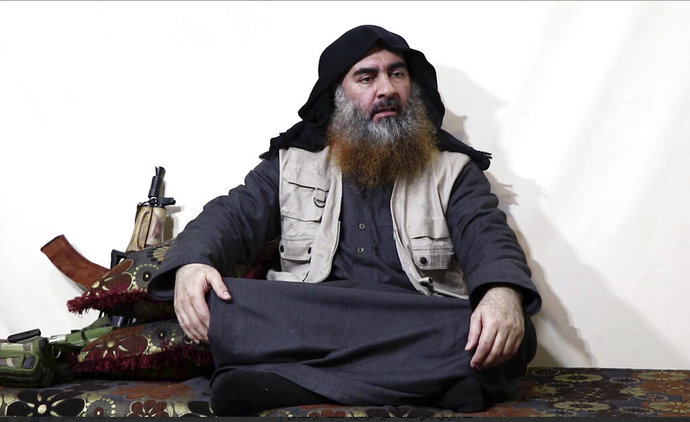
    On April 30, he appeared in a video for the first time in five years, acknowledging defeat in the group’s last stronghold in Syria but vowing a “long battle” ahead. He appeared with a bushy gray and red beard, wearing a black robe with a beige vest and seated on the floor with what appears to be an AK-74 rifle propped up next to him.

    The man said to be Abu Bakr al-Baghdadi in the video also claimed the Easter bombings in Sri Lanka that killed over 250 people were “part of the revenge” against the West.

    “Our battle today is a war of attrition to harm the enemy, and they should know that jihad will continue until doomsday,” al-Baghdadi said.

    ___

    Schreck reported from Bangkok. Associated Press writer Maamoun Youssef in Cairo contributed.

    ___

    Follow Adam Schreck on Twitter at www.twitter.com/adamschreck and Zeina Karam at www.twitter/com/zkaram

  • Lots Of Good Terns: Bird Ready To Fly Off Endangered List

    Lots Of Good Terns: Bird Ready To Fly Off Endangered List

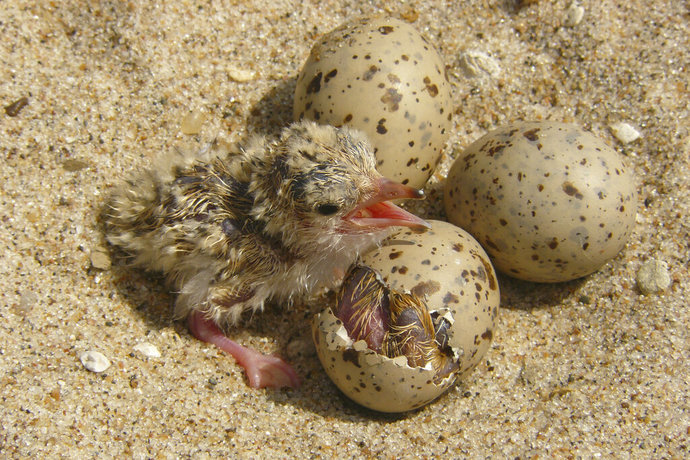
    WASHINGTON (AP) — After 34 years on the endangered species list, a tiny Midwestern bird is ready to fly free of federal protection.

    The number of colonies has jumped from 48 to 480, said the U.S. Fish and Wildlife Service, which on Wednesday proposed taking the bird off the list.

    The delisting started six years after the service first suggested that the species has recovered and after computer modeling showed the population will be stable.

    Even conservationists and advocacy groups that often battle the Trump administration over what goes on and off the endangered list hailed the migrating bird’s recovery as an environmental success story.

    “Delisting is reasonable,” Center for Biological Diversity endangered species director Noah Greenwald said. “It shows that when we actually pay attention and care, we can help species and reverse damage we’ve done in the past. We can undo part of the damage we’ve done to these rivers.”

    American Bird Conservancy president Michael Parr said: “All around it’s a pretty good news situation.”

    After nearly being hunted to extinction for feathers for women’s hats in the 1800s, the Midwestern population of least terns started doing better until after World War II, Fish and Wildlife Service recovery biologist Paul Hartfield said. But then dams, especially on the Missouri River, eliminated the riverside beaches that these tiny birds need.

    Working with the Army Corps of Engineers, biologists concentrated on a smaller bird population in the lower Mississippi River. Changes in water management increased the size of islands and created new ones in the river, making more places for the birds to nest and live, Hartfield said.

    “The least tern in the Mississippi River exploded” from a few hundred birds in the 1980s to at least 10,000 now, he said.

    Greenwald credited the Army Corps of Engineers but added that “the tern has been recovered, but the ecosystem hasn’t.”

    There are three populations of least terns in the United States. One in California is still on the endangered list, and the eastern one is doing fine.

    Least terns are the smallest of terns, but they travel far. Hartfield said one bird was tagged in South Dakota and later was found in Japan.

    “That’s how strong a flyer they are,” he said. “It’s really a tough little bird.”

    They nest on the ground and feed on small fish and live quite long for their size, about 15 years, Hartfield said. These birds migrate every fall to the Caribbean and South America.

    Greenwald, of the Center for Biological Diversity, said the least tern is a good example of how the endangered species law can work even as scientists warn of 1 million species going extinct in coming decades.

    “We should be proud of ourselves for caring for it and protecting it,” he said. “That shows that if we put our mind to it, we can stop the extinction crisis.”

    ___

    Follow Seth Borenstein on Twitter at @borenbears .

    ___

    The Associated Press Health and Science Department receives support from the Howard Hughes Medical Institute’s Department of Science Education. The AP is solely responsible for all content.

    ___

    This story has been corrected to show that the number of colonies, not nests, has jumped from 48 to 480.

  • After Withdrawal, Trump Shifts Focus To Syria’s Oil Fields

    After Withdrawal, Trump Shifts Focus To Syria’s Oil Fields

    WASHINGTON (AP) — As Russian and Turkish leaders divvy up security roles in northeast Syria following an abrupt U.S. troop withdrawal, President Donald Trump is focused on oil fields elsewhere in the war-torn country.

    Trump spurred a fresh wave of criticism Thursday with a tweet noting that he had spoken with Syrian Kurdish military chief Mazloum Abdi and observing that perhaps “it is time for Kurds to start heading to the Oil Region,” an apparent reference to oil fields in Deir el-Zour province of Syria. That’s an area that U.S. military commanders see as critical to holding off an Islamic State resurgence in the region.

    But even as Trump heralded his move to pull nearly all U.S. troops out of what he derided as the “blood-stained sands” of Syria, he’s repeatedly referred to the country’s oil fields as prized land that he’s intent on protecting.

    “We’ve secured the oil, and, therefore, a small number of U.S. troops will remain in the area where they have the oil,” Trump said Wednesday while discussing the pullout of all but 200 to 300 U.S. troops in Syria. “And we’re going to be protecting it, and we’ll be deciding what we’re going to do with it in the future.”

    White House officials did not respond to requests for greater clarity about Trump’s tweet suggesting Kurds head to the oil region.

    The Pentagon released a statement Thursday saying it is committed to sending additional military forces to eastern Syria to “reinforce” control of the oil fields and prevent them from “falling back to into the hands of ISIS or other destabilizing actors.”

    No details were provided on how many or what kind of forces would be sent, or whether decisions on those details have been made.

    Trump’s decision to withdraw the bulk of roughly 1,000 American troops from Syria drew bipartisan condemnation. The decision came after Turkish President Recep Tayyip Erdogan told Trump earlier this month that he intended to carry out an operation to clear the Turkey-Syria border of Kurdish fighters who fought side-by-side with U.S. troops in beating back IS fighters in northeast Syria.

    The Republican president’s comments this week raised fresh concerns that he has an incomplete understanding, or is indifferent to, the fragile dynamics of the region, his critics say.

    “The President of the United States of America appears to be calling for a mass migration of Kurds to the desert where they can resettle atop a tiny oil field,” Brett McGurk, Trump’s former special envoy to the global coalition to defeat IS, wrote on Twitter.

    But the idea of keeping troops in eastern Syria to guard the oil fields resonated with Trump and presented military commanders with a way to keep at least a residual force inside the country. Besides a presence near the oil fields in eastern Syria, some U.S. forces will remain in southern Syria.

    Defense Secretary Mark Esper said that the main goal of the American troop presence is to make sure the Islamic State is contained and unable to gain control of the oil fields and the revenue they generate. The administration also sees some benefit to Kurds being in control of the oil, according to a senior administration official, who briefed reporters on the administration’s deliberations on the Syria withdrawal.

    “The Oil Fields discussed in my speech on Turkey/Kurds yesterday were held by ISIS until the United States took them over with the help of the Kurds,” Trump said in another tweet Thursday. “We will NEVER let a reconstituted ISIS have those fields!”

    Eastern Syria is the center for what remains of Syria’s oil industry, which although in shambles, remains one of the main sources of revenues for the Kurdish-led administration there.

    The Kurdish forces seized control of small oil fields in northeastern Hassakeh province after the government pulled out of most of the Kurdish-majority regions in 2012 to fight rebels elsewhere.

    After expelling Islamic State militants from southeastern Syria in 2018, the Kurds seized control of the more profitable oil fields in Deir el-Zour province.

    A quiet arrangement has existed between the Kurds and the Syrian government, whereby Damascus buys the surplus through middlemen in a profitable smuggling operation that has continued despite political differences. The Kurdish-led administration sells crude oil to private refiners, who use primitive homemade refineries to process fuel and diesel and sell it back to the administration.

    The oil was expected to be a bargaining chip for the Kurds to negotiate a deal with the Syrian government, which unsuccessfully tried to reach the oil fields to retake them from IS. With Trump saying he plans to keep forces to secure the oil, it seems the oil will continue to be used for leverage— with Moscow and Damascus.

    Before the war, Syria produced around 350,000 barrels per day, exporting more than half of it. Most of that oil came from eastern Syria. Foreign companies, including Total, Shell, and Conoco, all left Syria after the war began more than eight years ago.

    Sen. Lindsey Graham, R-S.C., said after meeting with Trump on Thursday that he urged him to stay engaged in Syria.

    “If you can find a way to secure the oil fields from Iran and ISIS, that’s in our national security interest,” Graham said.

    ___

    AP National Security Writer Robert Burns contributed to this report.

  • Correction: Severe Weather-The Latest Story

    Correction: Severe Weather-The Latest Story

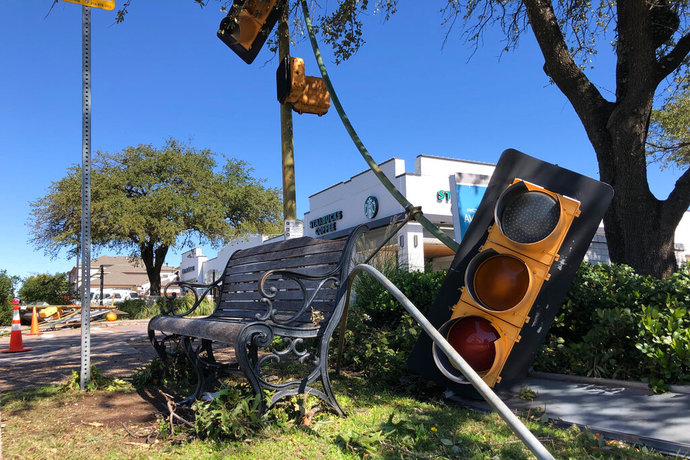
    DALLAS (AP) — In a story Oct. 21 about storms that spawned tornadoes in several states, The Associated Press reported erroneously that the Bush Institute event was in South Texas. It was in south Dallas.

    A corrected version of the story is below:

    The Latest: Bushes home spared by Dallas tornado

    The tornado that caused widespread damage in north Dallas passed closed to the home of former President George W. Bush and Laura Bush but caused no damage

    DALLAS (AP) — The Latest on severe weather that struck portions of the central and southern U.S. (all times local):

    9:30 p.m.

    The tornado that caused widespread damage in north Dallas passed closed to the home of former President George W. Bush and Laura Bush but caused no damage.

    Bush spokesman Freddy Ford said in a statement that “the Bushes are safe and praying for their neighbors around DFW who weren’t as fortunate.”

    The Bushes stuck to their obligations despite the storm.

    Former first lady Laura Bush hosted young leaders from Myanmar on Monday at a Bush Institute event in south Dallas. The institute based at Southern Methodist University in Dallas has sponsored a leadership training program for four years with a focus on Myanmar, a Southeast Asian country struggling with extreme inequities and ethnic cleansing.

    ___

    6:15 p.m.

    A Dallas-Fort Worth television station owned and operated by NBC is apologizing for not airing warnings promptly as a tornado raked Dallas.

    While other network-affiliated stations went wall-to-wall with weather coverage about the tornadoes Sunday night, including one that devastated parts of northern Dallas, KXAS stayed with the football game between the Dallas Cowboys and the Philadelphia Eagles.

    KXAS apologized in a statement issued Monday, saying it “made a mistake by not immediately interrupting the football game with a tornado warning.” Instead, it waited six minutes before breaking into the broadcast.

    The station noted that it streamed live weather coverage on its website and gave updates with on-screen texts. But on reflection realizing “that seconds matter,” station officials now believe it “should have broken into football programming sooner.” Station officials promised to do everything in their power “to make sure this does not happen again.”

    ___

    5:30 p.m.

    Weather officials say a tornado with estimated top winds of about 105 mph damaged an apartment building when it touched down in Memphis, Tennessee.

    Car dealerships, a gas station and other businesses also were damaged as a storm packing heavy rain and strong winds blasted its way through Memphis on Monday morning.

    A National Weather Service report says the EF1 tornado was on the ground for about two minutes after it touched down at 6:38 a.m.

    An apartment complex in southeast Memphis suffered roof damage. Power lines and large trees were torn down in residential neighborhoods, blocking some streets.

    About 35,000 customers lost power. That number was down to about 16,000 customers on Monday afternoon.

    ___

    5 p.m.

    The National Weather Service says at least two tornadoes hit Arkansas during a stormy night that caused chaos across several states.

    The agency says preliminary information shows an EF1 hit Sunday night in Tyronza, located in the northeast corner of the state. Jonesboro TV station KAIT reported that five people were injured there. The weather service did not have an estimate yet of the wind speed.

    The agency also says that their survey team found tornado damage in the area of Siloam Springs, located in the northwest corner of the state. The weather service says tornado damage was also found across the state line in nearby Adair County in Oklahoma, but it was unclear if a single tornado caused damage in both areas or not.

    ___

    3:20 p.m.

    The National Weather Service says the tornado that ripped through North Dallas had a maximum wind speed of 140 mph (225 kph).

    The agency rated the Sunday night tornado as EF3. It says another tornado in the suburb of Rowlett was EF1, with maximum wind speeds of 100 mph (160 kph).

    Tens of thousands of homes and businesses are without power Monday after the swathe of heavy storms hit Dallas before tracking northeast into Arkansas, Oklahoma and Tennessee. Gov. Greg Abbott has issued a disaster declaration for 16 Texas counties.

    Dallas Mayor Eric Johnson says the city was very fortunate to have suffered no fatalities or serious injuries.

    ___

    2:30 p.m.

    Gov. Greg Abbott has issued a disaster declaration for 16 Texas counties following severe overnight storms including a tornado that battered parts of Dallas.

    Abbott’s declaration Monday makes state resources available to local officials, plus waives certain regulations to allow utilities to bring in out-of-state resources.

    The counties covered are: Cass; Cameron; Collin; Dallas; Ellis; Erath; Hunt; Kaufman; Lamar; Panola; Rains; Rockwall; Rusk; Tarrant; Van Zandt; and Wood.

    Tens of thousands of homes and businesses are without power after the swathe of heavy storms hit Dallas before tracking northeast into Arkansas, Oklahoma and Tennessee. Several homes were seriously damaged by the tornado that struck near Dallas Love Field Airport, which was not damaged.

    Mayor Eric Johnson says Dallas was very fortunate to have suffered no fatalities or serious injuries.

    ___

    1:30 p.m.

    Authorities say severe thunderstorms are responsible for the deaths of three people in eastern Oklahoma.

    Oklahoma State Bureau of Investigation spokeswoman Brooke Arbeitman says two teenage boys died of carbon monoxide poisoning late Sunday in Weleetka, about 80 miles (130 kilometers) east of Oklahoma City.

    She says the 14- and 15-year-old boys were using a portable gas generator in a travel trailer after the storms knocked out power in the area.

    Arbeitman says the father of the younger boy went to check on them early Monday and discovered their bodies.

    Emergency management officials say another person died late Sunday night when a tree was blown onto a mobile home near Valliant, about 170 miles (275 kilometers) southeast of Oklahoma City.

    ___

    1:10 p.m.

    One Dallas family says they sheltered in the bathtub and sang as a tornado tore their neighborhood apart but left their home largely intact.

    Dustin and Lauren Collins said Monday that they consider themselves lucky that all they need to do is clear debris from their yard after the twister ripped through the area Sunday night.

    Store fronts and roofs were ripped off at a nearby shopping center. Trees fell onto some homes.

    Dustin Collins says the couple took shelter in the bathroom with their 8-month-old son after he saw the tornado warning on his phone.

    Lauren Collins says they “just sat in the bathtub and sang songs, trying to keep everyone calm.”

    ___

    11:15 a.m.

    Dallas Mayor Eric Johnson says citizens of Dallas should consider themselves lucky that no one was killed when a tornado touched down at night in a densely populated part of the city.

    Johnson said at a news conference Monday morning that officials are still assessing damage. He says the city’s top priority has been making sure everyone is safe.

    The National Weather Service says radar confirmed the tornado struck near Love Field Airport around 9 p.m. Sunday.

    Homes have been heavily damaged, stop lights are out and large trees are down in the area.

    ___

    10:55 a.m.

    Hundreds of flights have been canceled or delayed at airports in North Texas and Arkansas after a storm carrying at least one tornado hit.

    Dallas Love Field spokesman Chris Perry says the airport wasn’t damaged by the twister that slammed a densely populated area near the travel hub Sunday night.

    Flightaware.com reports that 63 flights are delayed and 18 have been canceled at Dallas Love Field on Monday. About 25 were canceled Sunday night.

    The flight-tracking website says 78 flights are canceled at Dallas-Fort Worth International Airport Monday and more than 200 are delayed.

    The Northwest Arkansas Regional Airport, in Bentonville, is reporting it has canceled 17 flights Monday and about a dozen flight are delayed.

    ___

    9:10 a.m.

    Strong storms that moved through Tennessee knocked down trees and power lines and caused minor damage at Memphis International Airport.

    News outlets report Memphis Light, Gas and Water was reporting up to 35,000 customers without power Monday morning as the storms led to tornado warnings in the region.

    Broken windows were reported at the airport, where spokesman Glenn Thomas said passengers in the concourses were directed to shelter in restrooms for a time.

    Weather alerts for the area have expired and airport officials say operations are back to normal.

    No injuries have been reported.

    The weather system was the same one that spawned a tornado in Dallas.

    ___

    8:45 a.m.

    A Home Depot store in north Dallas sustained major damage in severe storms that hit Dallas, but no one was injured.

    The store’s manager tells Dallas TV station KDFW that he sent employees home early and shut down the store after seeing the forecast Sunday night. Images from the scene shows parts of the building collapsed with the roof missing.

    The Home Depot damaged Sunday night was the site of a shooting in April 2018, when a suspected shoplifter opened fire, killing one police officer and wounding two others.

    ___

    7:40 a.m.

    One person has been killed in severe storms that swept through Arkansas after a tree fell on a home early Monday.

    The Benton County Department of Public Safety says the death happened at about 12:30 a.m. in Rogers, about 150 miles (240 kilometers) northwest of Little Rock. Arkansas Gov. Asa Hutchinson confirmed the fatality and said “significant storm damage” occurred in northwest Arkansas.

    The storms, which struck the Dallas area late Sunday, moved through Arkansas in the early morning hours Monday. Several tornado warnings were issued, and damage was also reported in the northeast corner of the state.

    Jonesboro TV station KAIT reports that a gas station was destroyed in the town of Tyronza, about 120 miles (190 kilometers) northeast of Little Rock. Poinsett County Sheriff Kevin Molder tells the TV station that at least two people were injured.

    ___

    7:10 a.m.

    Dallas Stars player Tyler Seguin says his home was heavily damaged by severe storms that swept through Dallas, but no one was hurt.

    The hockey player said on Twitter that he had moved to another home and that the property damaged late Sunday was listed for sale. He wrote: “I just left the area and it is an extremely sad sight to see.”

    The National Weather Service says at least one tornado struck the north Dallas area on Sunday night, and other possible tornadoes were reported as well.

    Heavy damage is reported throughout much of the Dallas area, and tens of thousands of people are without power.

    ___

    6:10 a.m.

    Damage has been reported in parts of Oklahoma and Arkansas from severe storms that earlier spawned a tornado in the Dallas area.

    Tens of thousands of homes and businesses were without power, including the Northwest Arkansas Regional Airport in Highfill, about 155 miles (250 kilometers) northwest of Little Rock. The airport says flights were still departing, though security screenings were being done manually.

    Tornado warnings were in effect Monday morning in far eastern Arkansas near the Mississippi River as the storm system moved to the east.

    The Storm Prediction Center in Norman, Oklahoma, says that areas of Alabama, Louisiana, Mississippi and Tennessee could see severe thunderstorms later Monday.

    ___

    5:05 a.m.

    Dallas Fire-Rescue says there have been no reports of fatalities or serious injuries in the aftermath of a Sunday night tornado, but three people were hospitalized for evaluation of non-life-threatening injuries.

    Spokesman Jason Evans says search teams conducted primary assessments on accessible structures for six hours overnight, but their efforts were “hampered by limited access and lack of proper lighting.” A second set of teams will resume search efforts in daylight.

    Evans says the damage within Dallas is limited to an area bordered by Royal Lane to the north and Northwest Highway to the south, as well as Harry Hines Boulevard to the west and Interstate 75 to the east — essentially, northwest Dallas.

    He says personnel initially responded to calls including “everything from power lines down, to fallen trees to people being injured inside of their homes by broken glass.” Fire-Rescue’s own Station 41 was left “uninhabitable” when high winds stripped the roof and other parts, but no firefighters were injured.

    ___

    3:15 a.m.

    An electric utility says storms across Texas have caused significant damage to power lines, leaving more than 150,000 customers without power in East Texas.

    Oncor said early Monday that there’s no estimated time of restoration. The utility says the damage to power lines took place east of Interstate 35, an area that includes Dallas.

    The National Weather Service confirmed a tornado touched down in Dallas late Sunday night near Love Field Airport. The NWS says a line of strong storms was moving through the Dallas-Fort Worth area early Monday.

    ___

    12:45 a.m.

    The city of Dallas says it hasn’t received reports of fatalities or serious injuries after a tornado touched down Sunday, but it’s assessing the damage.

    According to Oncor, nearly 112,000 customers are affected by power outages. Six Dallas Independent School District campuses have canceled class on Monday, as has The Episcopal School of Dallas.

    The city says in a release that there are reports of gas leaks north of Walnut Hill. Approximately 35 traffic signals aren’t communicating.

    The city of Dallas is preparing to open a shelter by 2 a.m.

    Dallas Fire-Rescue spokesman Jason Evans says in a release that the department is responding to a structural collapse, from which seven people made it out safely. He says the department has responded to multiple calls from people injured in their homes by broken glass.

    ___

    11:05 p.m.

    The National Weather Service has confirmed that a tornado touched down in Dallas.

    Meteorologist Jason Godwin says radar confirmed that the twister touched down Sunday night near Love Field Airport before moving northeast through the city.

    Godwin says the size and severity of the tornado won’t be known until crews arrive to survey the damage. More stormy weather is expected in the area overnight.

    WFAA reports a convenience store collapsed in the storm, but the clerk tells the station everyone who was inside made it out safely.

    ___

    10:40 p.m.

    The National Weather Service says a possible tornado has moved through the Dallas area, causing some structural damage and downed power lines.

    The weather service says the suspected twister moved through the city’s north side on Sunday night. Local media outlets report several structures have been damaged, trailers flipped and tree limbs scattered across roadways. Oncor’s website indicates more than 75,000 customers are without power.

    Dallas police say officers in one part of the city were going door-to-door to check on residents.

    The storm happened as multiple severe thunderstorm watches and warnings covered portions of four counties, including Dallas County.

    There were no immediate reports of injuries.
  • Most States Not Giving Driver’s License Data To Washington

    Most States Not Giving Driver’s License Data To Washington

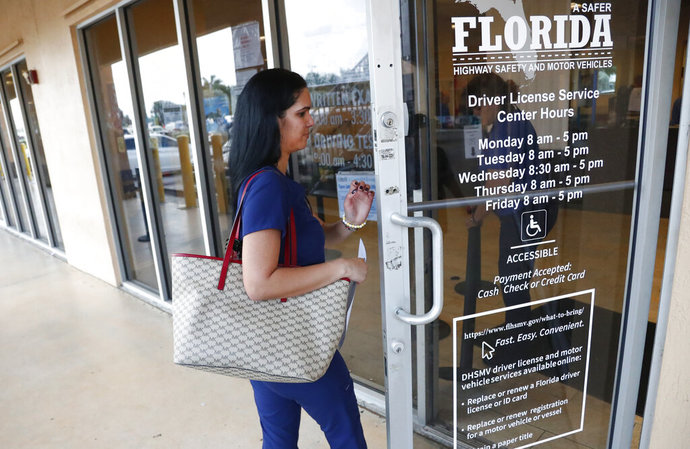
    ORLANDO, Fla. (AP) — An effort by the U.S. Census Bureau to collect state driver’s license records as part of President Donald Trump’s order to gather citizenship information has been a bust so far.

    As of Wednesday, the vast majority of state motor vehicle agencies had not agreed to share their records with the bureau, according to an Associated Press survey of the 50 states. The effort over the past couple of months has alarmed civil rights groups, which see it as part of a backdoor move by the Trump administration to reduce the political power of minorities.

    In August, the bureau began requesting five years’ worth of driver’s license records, promising the information would be kept confidential. The effort began after the U.S. Supreme Court rejected the Trump’s administration plan to add a citizenship question to the 2020 census, and the president instead ordered citizenship data compiled through federal and state administrative records.

    At least 13 states have refused to share the driver’s license data, 17 are still deciding what to do, and 17 haven’t yet received a request, according to the AP survey. Three states didn’t respond to multiple AP queries.

    Republican and Democratic states alike have said no, citing privacy concerns and prohibitions in state law.

    “Philosophically, we believe the information in the database doesn’t belong to us. It belongs to the people who it pertains to,” Maine Secretary of State Matthew Dunlap said. “It’s not ours to give away.”

    Two of the biggest states, California and New York, haven’t received requests yet. Three more of the top five most populous states — Texas, Florida and Pennsylvania — are deciding how to respond.

    Census Bureau officials had no immediate comment.

    Many states got calls or emails similar to one from a Census Bureau official asking an Arkansas Driver Services official if she had time to discuss the bureau’s “new and exciting project.”

    Scott Hardin, a spokesman for the Arkansas agency, said: “We are currently working to determine whether the requested information is eligible for release.”

    Utah officials turned down the request because state law says personal data can be shared only for public safety reasons, said Marissa Cote, a spokeswoman for the Department of Public Safety in the Republican-leaning state.

    Democratic-leaning Nevada also declined.

    “We value our residents’ privacy and hesitate to release records in bulk,” said Kevin Malone, a spokesman for the motor vehicle agency.

    States that haven’t decided how to respond said they were researching the legal and privacy implications. In issuing driver’s licenses, most states require documents such as a birth certificate that would reflect citizenship or require that recipients be either citizens or in the U.S. legally.

    The American Civil Liberties Union has urged states to turn the Census Bureau down.

    The ACLU and other civil rights groups say the requests are part of an overall strategy by the Trump administration to encourage states to use counts of citizens only, as opposed to total population, when redrawing state and local electoral districts. Such a move could make districts older, whiter and more Republican.

    “This endeavor appears to be part of a scheme motivated by an unconstitutional discriminatory purpose to dilute the political power of communities of color,” said Dale Ho, director of the ACLU’s Voting Rights Project.

    The Census Bureau said in its requests that the driver’s license records would be used, in part, to help build a statistical model for calculating the number of citizens and noncitizens in the U.S.

    Even though the president’s order requires collecting the citizenship information, Census Bureau officials are concerned that it could hinder efforts to get people to participate in the 2020 census. The bureau’s own research showed adding a citizenship question to the 2020 questionnaire would have reduced participation, making for a less accurate count.

    Civil rights groups say driver’s license records do a poor job of showing if a person is a citizen.

    They point to what happened earlier this year when Texas’ election chief gave prosecutors a list of 95,000 potential noncitizens on the state’s voter rolls. The list was drawn up with the help of motor vehicle records. But it turned out that many of those people had become citizens before casting their ballots.

    The battle over whether citizen-only counts can be used for congressional reapportionment or redistricting at the state and local levels is being waged in federal courtrooms in Alabama and Maryland.

    It has been longstanding practice in the U.S. to include immigrants living in the country illegally in census counts, which are also used to allocate billions of dollars in federal spending.

    ___

    Associated Press writers Grant Schulte in Lincoln, Nebraska; Andrew Demillo in Little Rock, Arkansas; Lindsay Whitehurst in Salt Lake City; Michelle Price in Las Vegas; and David Sharp in Portland, Maine, contributed to this report.

  • Fans At Rockets Opener Show Support For Hong Kong Protesters

    Fans At Rockets Opener Show Support For Hong Kong Protesters

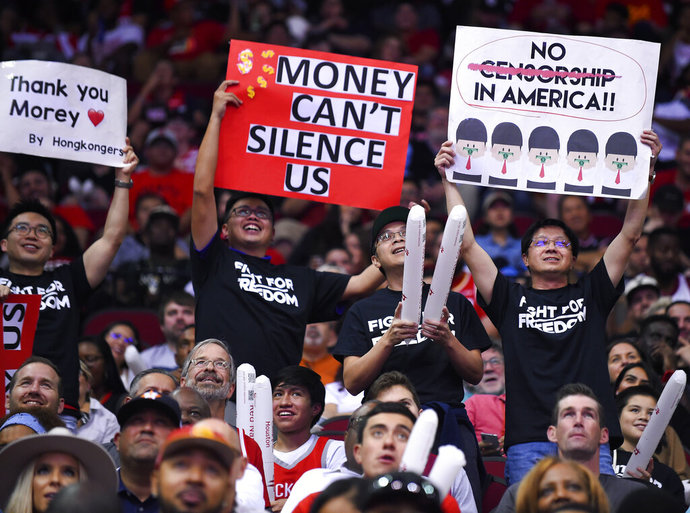
    HOUSTON (AP) — A group of 30 fans at the Houston Rockets’ season opener against Milwaukee held signs and wore shirts in support of anti-government protesters in Hong Kong on Thursday night.

    Houston general manager Daryl Morey angered China with a since-deleted tweet in support of the protesters earlier this month.

    Wednesday’s opening-night games were not televised in China in the wake of Morey’s tweet that caused tension between the NBA and Chinese officials.

    Many in the group wore black T-shirts with white letters that read: “Fight for Freedom.”

    The majority of the group was from Houston’s Vietnamese community, but it also included people from Hong Kong.

    Chris Wong, who was born in Hong Kong and moved to Houston 10 years ago, said he joined the group to support freedom of speech.

    “The NBA and American corporations are facing the issue of free speech,” he said. “They have to ask themselves how much freedom are they willing to give in exchange for the access to the market in China? That’s why we want to send this message to everyone.”

    One man held a sign the read: “Thank you Morey,” with a red heart after Morey’s name. Another sign read: “No censorship in America” and a third declared: “Freedom is not FREE.” Another man held a sign that said: “Fight for freedom, stand with Hong Kong,” which are the exact words included in Morey’s tweet.

    Tram Ho helped organize the group and said the reason for putting it together was simple.

    “We wanted to support the pro-Democracy movement in Hong Kong,” she said. “The NBA’s Morey … tweeted a benign tweet to support the (movement and) the Chinese government overreacted and tried to censor us and that’s not right. So that brought me the idea that we would support … the pro-democratic movement.”

    Rockets owner Tilman Fertitta quickly rebuked his GM after his tweet with a tweet saying that Morey does not speak for the team, but the damage was done. The Chinese Basketball Association, headed by former Rockets star Yao Ming, suspended its ties to the Rockets over the tweet. Events in China promoting a Lakers-Nets series were canceled, NBA media partner Tencent said it was evaluating its plans to cover the league and some Chinese corporations have suspended relationships with the NBA.

  • Astros Fire Exec Taubman After Rant At Female Reporters

    Astros Fire Exec Taubman After Rant At Female Reporters

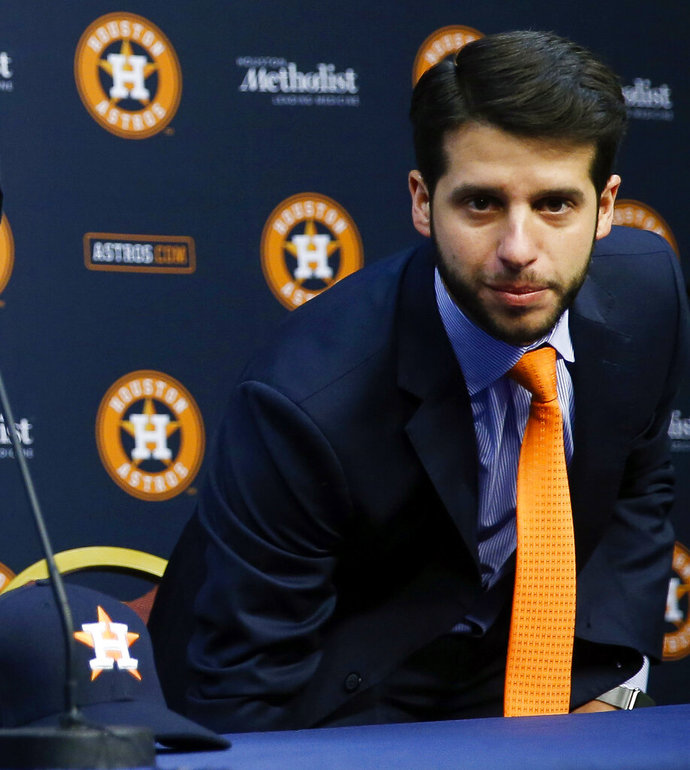
    WASHINGTON (AP) — The Houston Astros fired assistant general manager Brandon Taubman on Thursday for directing inappropriate comments at female reporters during a clubhouse celebration, announcing the decision in the middle of the World Series and putting a renewed spotlight on domestic violence in baseball.

    Sports Illustrated reported Taubman, during the Astros’ clubhouse celebration after winning the American League pennant on Saturday night, repeatedly yelled toward a group of female reporters about closer Roberto Osuna, who was suspended for 75 games last year for violating MLB’s domestic violence policy and then was traded from Toronto to Houston.

    Taubman shouted “Thank God we got Osuna!” according to SI, which said he made similar remarks several times, punctuating them with a profanity. Taubman’s behavior was corroborated by reporters for The Houston Chronicle and Yahoo.

    Astros general manager Jeff Luhnow apologized for the team’s initial response Monday, which was to accuse the SI reporter of making up the story.

    “That original reaction by the Astros was wrong, and we own it as an organization,” Luhnow said during a news conference at Nationals Park, a day before Game 3.

    “There were many people involved in reviewing that and approving that. And I’m not going to get into the details of that. … But regardless of who wrote it and who approved it, it was wrong. It was incorrect. It should never have been sent out. We’ve learned a lesson about it,” he said.

    Taubman had apologized Tuesday for using language that was “unprofessional and inappropriate” in the Astros clubhouse following Saturday night’s pennant-clinching victory over the New York Yankees.

    After an investigation by Major League Baseball and the Astros, Luhnow met with Taubman on Thursday and fired him before the team traveled to Washington in what Luhnow termed “a pretty tough conversation.”

    Taubman did not respond to a text from The Associated Press seeking comment.

    Houston’s initial statement Monday claimed SI tried to “fabricate a story where one does not exist” and maintained Taubman’s comments weren’t directed at reporters. Luhnow said he was among the Astros officials who saw the statement before it was issued.

    “There’s nothing about that first statement that was correct or that’s defensible,” Luhnow said. “The original impression that we had, without doing an investigation — and that’s our fault for not doing the investigation — was that it was two colleagues talking who were overheard and the comments were not directed at anybody in particular, not meant to be mean-spirited in any way or offensive in any way, just supportive of the player who had had a bad night.”

    “But as we continued to investigate, it was clear that they were intended to be heard. And they were completely inappropriate,” he said.

    Luhnow said the Astros decided Wednesday “that we were going to take action unilaterally ahead of Major League Baseball making any recommendations.” He said Taubman’s behavior did not indicate a wider problem in the Astros’ front office.

    “This is not something that’s endemic. This is not a cultural issue,” he said. “We have a lot of really good people in our front office, in our coaching staff, and our team.”

    Houston apologized to the SI reporter, the magazine and people who saw the incident, and to those who were offended.

    “The Astros are very committed to using our voice to create awareness and support on the issue of domestic violence,” the team said in a statement.

    Astros manager AJ Hinch has been critical of Taubman’s behavior since the SI report came out.

    “I continue to be disappointed and just sorry it happened,” Hinch said.

    A 2007 graduate of Cornell with a degree in applied economics, Taubman worked for Ernst & Young and then as an analyst in the equity derivatives group of Barclays Investment Bank before he was hired by the Astros as an analyst in June 2013.

    He was promoted to manager of baseball operations before the 2014 season, director of baseball operations in October 2015, senior director of baseball operations in August 2017 and assistant general manager in September 2018, tasked with major league administrative functions and oversight of analytics and pro player scouting. The Astros announced a contract extension on Sept. 30 and a wider role as assistant general manager, player evaluation.

    “He’s been a valuable employee. We hired him over five years ago, he’s moved up quickly in the organization,” Luhnow said. “He’s smart. He’s hard working. And these comments that he made were out of character. He hasn’t had this type of incident before. This is not a repeating pattern of anything, which is why it was so easy for us to believe that it was more innocent than it turned out to be.”

  • Esper: US Troops, Armored Vehicles Going To Syria Oil Fields

    Esper: US Troops, Armored Vehicles Going To Syria Oil Fields

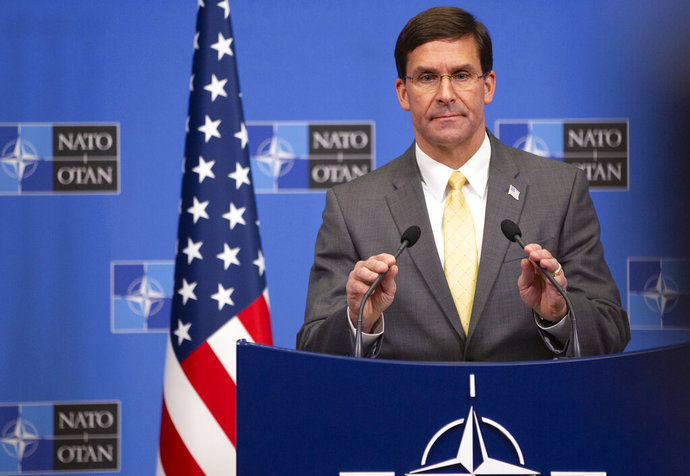
    RUSSELS (AP) — The U.S. will send armored reinforcements into eastern Syria to bolster defenses against a potential move by Islamic State militants on oil fields controlled by U.S.-backed Syrian Kurds, U.S. Defense Secretary Mark Esper said Friday.

    Esper described the added force as “mechanized,” which would likely means it will include tanks and other combat vehicles such as Bradley armored infantry carriers. This would introduce a new dimension to the U.S. military presence , which largely has been comprised of special operations forces not equipped with tanks or other armored vehicles.

    It also would partially reverse the ongoing shrinkage of the U.S. troop presence in Syria. President Donald Trump has ordered the withdrawal of nearly all 1,000 U.S. troops who had been partnering with a Syrian Kurdish-led militia against the Islamic State group. That withdrawal is proceeding even as Esper announced the plan to put reinforcements in the oil-producing area.

    Although Esper did not mention the size of the U.S. reinforcements, it could total several hundred troops because fuel-guzzling tanks and other armored vehicles depend on a large supply and logistical support group.

    Esper’s announcement came even as Trump again indicated in tweets that the U.S. military mission in Syria is completed. He previously has acknowledged a willingness to help protect the oil fields in eastern Syria, suggesting they could benefit the Kurds as well as the U.S., although those resources belong to the Syrian government.

    “Oil is secured,” Trump tweeted Friday. “Our soldiers have left and are leaving Syria for other places, then…. COMING HOME! … When these pundit fools who have called the Middle East wrong for 20 years ask what we are getting out of the deal, I simply say, THE OIL, AND WE ARE BRINGING OUR SOLDIERS BACK HOME, ISIS SECURED!”

    Asked about America’s shifting Syria strategy, Esper said the U.S. mission has always been to prevent the resurgence of IS. “That mission remains unchanged,” he said.

    But Esper said at NATO that the U.S. is “considering how we might reposition forces in the area in order to ensure we secure the oil field.” He added: “We are reinforcing that position. It will include some mechanized forces.”

    The defense secretary did not provide details on the makeup of the reinforcements. He made clear their main purpose is to prevent IS from regaining access to Syrian oil, which prior to 2017 was a major source of its revenue.

    Starting in late 2015 and continuing for many months, the U.S. conducted airstrikes against a range of oil resources in the Deir el-Zour province that had been taken over by IS. The attacks damaged or knocked out oil tanker convoys, oil processing plants, storage facilities, pumping stations, pipelines and refineries. It was called Operation Tidal Wave II, after a World War II air campaign to hit Romania’s oil industry.

    Esper said IS must not be allowed to again threaten the oil.

    “If ISIS has access to the resources, and therefore the means to procure arms or to buy fighters or whatever else they do, then it means it makes it more difficult to defeat ISIS,” he said.

    Esper’s comments at a news conference at NATO headquarters in Brussels reflected one more change in what has been a rapidly shifting U.S. stance on American forces in Syria.

    Just last week, Trump insisted that all American forces in Syria would come home. Then he said the 1,000 in the north would return home and that American troops in the south, numbering about 200 the Al-Tanf garrison in the south, would stay there.

    Trump in the past days has turned a greater focus on the Syrian oil facilities in the eastern part of the country, saying U.S. will stay in Syria to protect them.

    According to officials, top military leaders have pushed for the U.S. to leave forces in Syria to guard against an IS resurgence. While the group’s physical zone of control was largely destroyed by U.S. and Syrian Kurdish forces, insurgents remain in small pockets throughout the country and in Iraq.

    Russian and Turkish leaders have now divided up security roles in northeast Syria following America’s abrupt troop withdrawal from the Turkey-Syrian border region. The American move triggered widespread criticism that the Trump administration had abandoned the Syrian Kurdish fighters who fought alongside the U.S. against IS for several years.

    Trump spurred a fresh wave of condemnation when he tweeted Thursday that he had spoken with Syrian Kurdish military chief Mazloum Abdi and said that perhaps “it is time for Kurds to start heading to the Oil Region.” That was an apparent reference to the oil fields in Deir el-Zour. U.S. military commanders see that region as critical to holding off an IS resurgence there.

    “We’ve secured the oil, and, therefore, a small number of U.S. troops will remain in the area where they have the oil,” Trump said. “And we’re going to be protecting it, and we’ll be deciding what we’re going to do with it in the future.”

    White House officials did not respond to requests for greater clarity about Trump’s tweet suggesting Kurds head to the oil region.

    The Pentagon released a statement Thursday saying it was committed to sending additional military forces to eastern Syria to “reinforce” control of the oil fields and prevent them from “falling back to into the hands of ISIS or other destabilizing actors.”