Category: Regional News

  • Constitutional Amendment #6 seeks to cap property tax rate hikes in Orleans Parish

    Constitutional Amendment #6 seeks to cap property tax rate hikes in Orleans Parish

    Baton Rouge –  Voters have eight constitutional amendments to decide on the November 8th ballot. Amendment #6 could be a source of some confusion as it pertains only to property owners in one parish; Orleans.

    Public Affairs Research Council president Steven Procopio says it has to be voted on statewide because it is a proposed change to the Constitution. He says it places a 10-percent cap on how much Orleans residents’ property assessments can go up in a single year.

    “So say your house is currently $100,000 and you get an assessment for $130,000, your assessment can only go up 10% to $110,000,” said Procopio.

    Procopio says voting YES on Amendment 6 will give Orleans property owners a cushion against any drastic tax hikes.

    “The idea behind it is that it’s hard for people to deal with large tax increases all at once and so this essentially smooths it out, so they are not hit by one big shock.” said Procopio.

    A vote of NO would maintain the current property tax system in Orleans Parish as it is, which could have unintended consequences.

    “This could effect the revenues that these locals are getting in that area, which are needed for important services like schools, police, fire and etcetera,” said Procopio.

    Procopio says PAR never tells voters how they should vote on these matters. They provide information so you can make that decision yourself.

    To read more about the amendments, click here. 

  • Halloween safety tips from Louisiana State Police

    Halloween safety tips from Louisiana State Police

    Baton Rouge –  Trick-or-treaters will be out and about tonight, and Louisiana State Police want to remind motorists to be extra alert and they have a few tips for parents to help keep their children safe. Trooper Javier Leija said to turn on your car lights at dusk tonight, stay off your cell phone while driving and don’t drink and drive.

    “And just stay alert for kids that are walking or maybe crossing the street, or kids that are walking down sidewalks and may dart out in front of them,” said Leija.

    And if you witness a reckless driver, call local authorities to prevent other trick-or-treaters from possibly being injured.

    Before you take your kids around the neighborhood, Leija said to be sure they are dressed in brightly colored costumes or have them wear a glo-stick, so they are visible in the dark and put their name and address in their costume in case you are separated.

    “May sure your kid knows their address, their phone number, and how to dial 9-1-1 before they leave the house,” said Leija.

    It’s against state law for sex offenders to participate in Halloween festivities that includes the handing out of candy. Before you start your trick-or-treating route Leija said to check for registered sex offenders by visiting LSP.org.

    “Click on the Sex Offender link and you can search for a sex offender in your parish, and that should alert you to sex offenders that are located in your area,” said Leija.

    And also monitor your children and don’t let them eat any candy before you check they are individually wrapped and toss any out if they aren’t.

  • Drought snarls Mississippi River transit in blow to farmers

    Drought snarls Mississippi River transit in blow to farmers

    ALONG THE MISSISSIPPI RIVER (AP) — Adam Thomas starts harvesting soybeans on his Illinois farm when the dew burns off in the morning. This year, dry weather accelerated the work, allowing him to start early. His problem was getting the soybeans to market.

    About 60% of the Midwest and northern Great Plain states are in a drought. Nearly the entire stretch of the Mississippi River — from Minnesota to the river’s mouth in Louisiana — has experienced below average rainfall over the past two months. As a result, water levels on the river have dropped to near-record lows, disrupting ship and barge traffic that is critical for moving recently harvested agricultural goods such as soybeans and corn downriver for export.

    Although scientists say climate change is raising temperatures and making droughts more common and intense, a weather expert says this latest drought affecting the central United States is more likely a short-term weather phenomenon.

    The lack of rain has seriously affected commerce. The river moves more than half of all U.S. grain exports but the drought has reduced the flow of goods by about 45%, according to industry estimates cited by the federal government. Prices for rail shipments, an alternative for sending goods by barge, are also up.

    “It just means lower income, basically,” said Mike Doherty, a senior economist with the Illinois Farm Bureau.

    Thomas farms at the confluence of the Ohio and Mississippi rivers and doesn’t own enough grain storage to wait out the high costs of shipping.

    “I’ve had to take a price discount,” he said.

    Climate change is generally driving wetter conditions in the Upper Mississippi River region but in recent months, lower water levels have revealed parts that are usually inaccessible. Thousands of visitors last weekend walked across typically submerged riverbed to Tower Rock, a protruding formation about 100 miles (161 kilometers) southeast of St. Louis. It’s the first time since 2012 that tourists could make the trek and stay dry. On the border of Tennessee and Missouri where the river is a half-mile wide, four-wheeler tracks snake across vast stretches of exposed riverbed.

    In a badly needed break from the dry weather earlier this week, the region finally received some rain.

    “It is kind of taking the edge off the pain of the low water, but it is not going to completely alleviate it,” said Kai Roth of the Lower Mississippi River Forecast Center, adding that the river needs several rounds of “good, soaking rain.”

    Barges are at risk of hitting bottom and getting stuck in the mud. Earlier this month, the U.S. Coast Guard said there had been at least eight such “groundings.” Some barges touch the bottom but don’t get stuck. Others need salvage companies to help them out. Barges are cautioned to lighten their loads to prevent them from sinking too deep in the water, but that means they can carry fewer goods.

    To ensure that vessels can travel safely, federal officials regularly meet, consider the depth of the river and talk to the shipping industry to determine local closures and traffic restrictions. When a stretch is temporarily closed, hundreds of barges may line up to wait.

    “It’s very dynamic: Things are changing constantly,” said Eric Carrero, the Coast Guard’s director of western rivers and waterways. “Every day, when we are doing our surveys, we’re finding areas that are shallow and they need to dredge.”

    After a closed-down section is dredged, officials mark a safe channel and barges can once again pass through.

    In some places, storage at barge terminals is filling up, preventing more goods from coming in, according to Mike Steenhoek, executive director of the Soy Transportation Coalition. He said the influx of grain into a compromised river transportation system is like “attaching a garden hose to a fire hydrant.” High costs for farmers have led some to wait to ship their goods, he added.

    For tourists, much of the river is still accessible. Cruise ships are built to withstand the river’s extremes: Big engines fight fast currents in the spring and shallow drafts keep the boats moving in a drought, said Charles Robertson, president and CEO of American Cruise Lines, which operates five cruise ships that can carry 150 to 190 passengers each.

    Nighttime operations are limited, however, to help ships avoid new obstacles that the drought has exposed. And some landing areas aren’t accessible because of low water — the river is dried out along the edges. In Vicksburg, Mississippi, a cruise ship couldn’t get to a ramp that typically loads passengers, so the city, with help from townspeople, laid gravel and plywood to create a makeshift walkway. For some, it adds to the adventure.

    “They’re experiencing the headlines that most of the rest of the country is reading,” Robertson said.

    Drought is a prolonged problem in California, which just recorded its driest three-year stretch on record, a situation that has stressed water supplies and increased wildfire risk. Climate change is raising temperatures and making droughts more common and worse.

    “The drier areas are going to continue to get drier and the wetter areas are going to continue to get wetter,” said Jen Brady, a data analyst at Climate Central, a nonprofit group of scientists and researchers that reports on climate change.

    Brad Pugh, a meteorologist with the National Oceanic and Atmospheric Administration, said however, that the current drought in the Midwest is likely “driven by short-term weather patterns” and he wouldn’t link it to climate change.

    In the Midwest, climate change is increasing the intensity of some rainstorms. Flood severity on the upper Mississippi River is growing faster than any other area of the country, according to NOAA.

    Some worry that fertilizer and manure have accumulated on farms and could quickly wash off in a hard rain, reducing oxygen levels in rivers and streams and threatening aquatic life.

    In rare cases, communities are moving to alternate sources of drinking water away from the Mississippi. The drought also is threatening to dry out drinking-water wells in Iowa and Nebraska, NOAA says.

    It’s unclear how much longer the drought will last. In the near term, there is a chance for rain, but NOAA notes that in November, below average rainfall is more likely in central states such as Missouri, which would extend shipping problems on the river. In some northern states including Michigan, the winter may bring more moisture, but less rain is expected in southern states.

    “It does take a lot of rainfall to really get the river to rise,” Roth said.

  • EPA opens civil rights investigation into state’s role over Jackson water system

    EPA opens civil rights investigation into state’s role over Jackson water system

    The Environmental Protection Agency wrote in a letter Thursday that it is opening a civil rights investigation into the state of Mississippi’s role in the breakdown of Jackson’s water system.

    The letter is in response to a complaint the NAACP filed on Sept. 27 under Title VI of the Civil Rights Act of 1964. The complaint alleges Mississippi has discriminated against the city on the basis of race, and that the state has “deprived” Jackson of federal funds intended for maintaining safe drinking water systems.

    Mississippi, which has no Black statewide elected officials, is 38% Black and 59% white. Jackson is 83% Black and 16% white.

    The EPA specified in the letter that it will investigate whether the Mississippi Department of Environmental Quality and the Mississippi State Department of Health discriminated against Jackson in their funding of water programs. It will also investigate whether the two state agencies have safeguards and policies to protect against discrimination as required by Title VI.

    “The Mississippi State Department of Health is a regulatory agency that ensures compliance, offers education and guidance, and protects the public health safety of all Mississippians,” Liz Sharlot, a spokeswoman for the state health department, said in a statement. “The Agency also works with all eligible public water systems needing funds to improve their plants through the State Revolving Loan Fund. Extensive information can be found on our website.”

    MDEQ didn’t respond to requests for comment by the time this story published.

    The Health Department oversees Mississippi’s drinking water revolving loan fund, a program that lends municipalities federal money to make water infrastructure upgrades. But the agency, NAACP argued in its complaint, has limited the benefits of those loans by capping loan forgiveness at $500,000 and enforcing a stricter repayment period than what Congress allows for.

    The letter says that the EPA’s Office of External Civil Rights Compliance (OECRC) will contact MSDH and MDEQ in the next 10 days to explain the investigation and potential resolutions.

    The NAACP also requested that the EPA include the Mississippi Department of Finance and Administration in the investigation, but the federal agency declined.

    Today’s letter comes days after U.S. Reps. Bennie Thompson and Carolyn Maloney announced their own investigation into the state’s spending, in which they’ve asked Gov. Tate Reeves to provide information on the state’s allotment of recent historic federal infrastructure funding.

    Reeves’ office did not yet have a comment on the EPA’s letter when this story published.

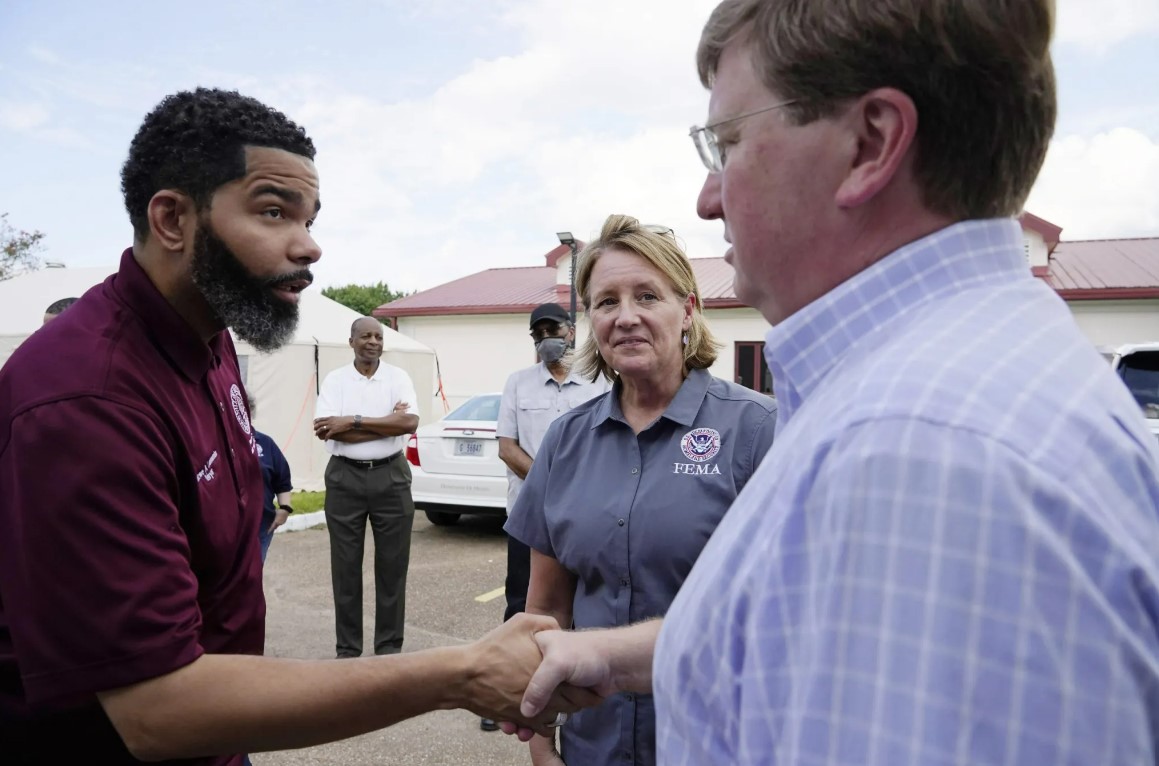
    Earlier on Thursday, Jackson announced it released its own request for proposals (RFP) for a contractor to operate the city’s water plants, tanks, and well system. On Monday, Reeves accused Mayor Chokwe Antar Lumumba of withdrawing from the state’s unified effort to fix the Jackson water system because the mayor wouldn’t participate in the state’s contract procurement. Lumumba responded that city should have the final say on the RFP before it’s published.

    While the state’s request “accurately reflects the scope of work,” the city said in a statement, Jackson’s request includes “specific terms” from the EPA that weren’t in the state’s request.

    mississippitoday.org/2022/10/20/epa-civil-rights-investigation-jackson-water-system


  • ‘Amazing news’: Vidalia mayor reacts to $220M awarded to Syrah

    ‘Amazing news’: Vidalia mayor reacts to $220M awarded to Syrah

    VIDALIA, La. — Syrah Technologies has been awarded $220 million to expand its production of Active Anode Material (AAM) at its Vidalia plant.

    The award is part of $320 million in U.S. Department of Energy funding coming to two Louisiana projects from the Bipartisan Infrastructure Law (BIL) in order to expand the manufacturing of electric vehicle battery components, announced Gov. John Bel Edwards on Thursday.

    AAM, derived from graphite, is a key component of lithium-ion batteries. The funds allow Syrah to proceed with Phase 3 of a multi-stage plan to expand and create over 220 additional jobs in Vidalia, benefiting the whole region, Vidalia Mayor Buz Craft said.

    “It’s amazing news for our area,” he said. “I’m so proud of the company and the work that it’s doing. The people they’re employing is going to have a huge impact on Concordia Parish and the region. It puts Vidalia on the international map.”

    Craft said while he is excited about the announcement, it has been a long time coming.

    He recently met with representatives of the DOE with Syrah CEO Shaun Verner, he said.

    “I was able to sell Vidalia and I’m glad I went,” he said. “It has been hard work and it hasn’t been easy. … All I can do is celebrate the moment. I’m at a loss for words.”

    Craft said Syrah has become an “economic centerpiece” to Vidalia. The 220 additional jobs created means more money spent at “mom and pop shops” and flowing back into the local economy. Additionally, the work Syrah is doing could generate more support for the town from the state and federal levels for other projects, such as repairs to DA Biglane Street and further enhancements to the Vidalia Port facility, which is necessary for Syrah’s operations, Craft said.

    Louisiana’s second award recipient, Koura, has been granted $100 million to build the first U.S. manufacturing plant for lithium hexafluoridephosphate (LiPF6) on the grounds of the company’s existing site in St. Gabriel.

    “These massive investments will have transformational impacts in Vidalia and St. Gabriel and create hundreds of jobs,” Edwards said. “This is another step forward in our important work to diversify and grow Louisiana’s economy, create good-paying jobs, and become leaders in the global energy transition as we move toward our goal of net-zero carbon emissions by 2050. I would like to thank U.S. Energy Secretary Jennifer Granholm for awarding Louisiana this funding, and I would also like to thank President Biden, Sen. Bill Cassidy, and Rep. Troy Carter for their support of the Bipartisan Infrastructure Law that made this possible.”

    Syrah’s expansion is already well underway, with the start of production expected in the third quarter of 2023. Syrah’s Vidalia facility will be the only vertically integrated and large-scale natural graphite AAM outside China.

    Koura’s new plant is expected to create up to 80 new jobs and solve a critical risk in the supply chain for lithium-ion battery production in the U.S., as there are currently no large-scale domestic producers of LiPF6. All of it must be imported from Asia.

    They are expected to produce enough LiPF6 for the domestic production of more than one million electric vehicles per year.

    “This is truly a remarkable time for manufacturing in America, as President Biden’s Agenda and historic investments supercharge the private sector to ensure our clean energy future is American-made,” said U.S. Secretary of Energy Jennifer M. Granholm. “Producing advanced batteries and components here at home will accelerate the transition away from fossil fuels to meet the strong demand for electric vehicles, creating good-paying jobs across the country.”

    U.S. Senator Bill Cassidy, M.D. (R-LA) also announced that Louisiana will receive $319,820,610 from his bipartisan Infrastructure Investment and Jobs Act (IIJA) to bolster U.S. battery manufacturing and compete with China.

    Specifically, Syrah Technologies LLC in Vidalia will receive $219,820,610 to expand its commercial-scale natural graphite active anode material facility and Mexichem Flour, Incorporated (dba Koura) in St. Gabriel will receive $100,000,000 to build the first U.S. manufacturing plant for lithium hexafluorophosphate on the grounds of Koura’s existing fluorochemical production site in St. Gabriel.

    As part of the program, Syrah and Koura will be contributing an additional $224,996,240 and $306,584,087 in private investment to their respective projects, bringing the total investment in Louisiana as a result of this program to $851,400,937.

    Thanks to the bipartisan infrastructure bill funding, Koura is expected to add 80 new jobs to the St. Gabriel facility and Syrah is expected to add 221 jobs in Louisiana.

    Louisiana’s share announced today constitutes 11% of the $2.8 billion in funding under IIJA to grow and strengthen the U.S. battery supply chain and increase U.S. competitiveness with China.

    “More good news for Louisiana coming from the Bipartisan Infrastructure Bill,” said Dr. Cassidy. “This will make batteries produced in the United States more competitive worldwide, along the way employing lots of folks here in Louisiana. It’s good for our state, good for our nation.”

  • Low water disrupts industry along lower Mississippi River

    Low water disrupts industry along lower Mississippi River

    JACKSON, Miss. (AP) — Plummeting water levels in the lower Mississippi River are projected to drop even further in the weeks ahead, a projection shows, dampening the region’s economic activity and potentially threatening jobs in one of the country’s poorest states.

    In Vicksburg, on the Mississippi river’s east bank near the Louisiana line, the water is approaching its lowest level since 2012. The river’s level near that Mississippi city on Thursday was 4.3 feet (1.3 meters), and it is projected to drop to 3 feet (0.9 meters) by Tuesday, according to the National Weather Service.

    Falling water levels have disrupted industrial shipping and tourism in the area and are on pace to keep dropping.

    “Right now, the latest forecast is going to take us down on Nov. 8 down to 2 feet (0.61 meters) at Vicksburg and it could drop a lower than that,” Marty Pope, a hydrologist at the National Weather Service Office in Jackson, told the Vicksburg Post.

    A dearth of rainfall in recent weeks has left the Mississippi River approaching record low levels in some areas across several states. Nearly all of the Mississippi River basin, from Minnesota through Louisiana, has seen below-normal rainfall since late August. The low levels have caused barges to get stuck in mud and sand, disrupting river travel for shippers, recreational boaters and passengers on a cruise line.

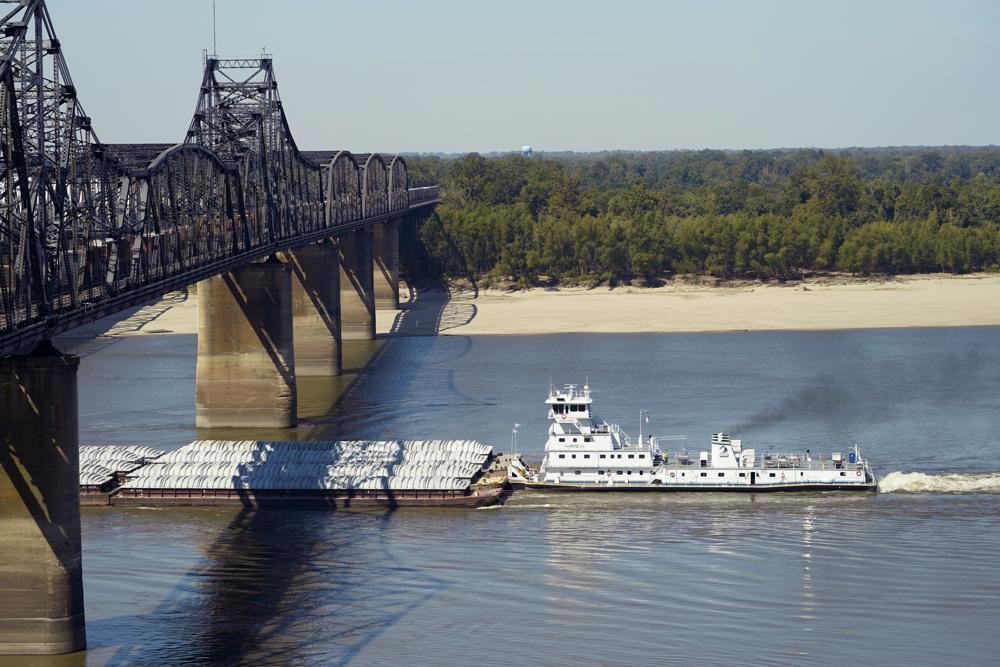
    The lower portion of a Vicksburg bridge, normally submerged in the river, has been exposed to sunlight in recent days. The American Heritage, a paddlewheeler cruise ship, navigated the river with caution.

    Companies that transport industrial products along the river in barges offer a window into the regionwide economic impacts of the low water levels. Companies are loading their barges with less cargo to traverse the river safely.

    Pablo Diaz, president of the Vicksburg Chamber of Commerce, said the Port of Vicksburg has already seen a steep decline in tonnage shipped through the port.

    “It’s definitely lower, and by a long way,” Diaz said. “It’s a cascade effect. Everybody that is having issues north of here who might be sending products through Vicksburg, that (traffic) has slowed down a lot.”

    North of Vicksburg, agricultural products remained stalled in the ports along the river, Diaz said. At least 19 companies rely on the Port of Vicksburg and together they support about 4,000 jobs in the region.

    “Things were going really well on the industrial side before the water problem,” Diaz said. “This is going to be a really big problem if it doesn’t turn around soon. Many jobs depend on our industrial users in this region.”

    The Mississippi River has seen water levels fluctuate year to year in the past. In 2011, the river flooded and caused $2.8 billion in damage. A drought brought the water levels to dangerous lows in 2012.

    The U.S. Army Corps of Engineers has been dredging the Mississippi at several spots to keep river traffic flowing.

  • It’s sneezing season, as ragweed rages

    It’s sneezing season, as ragweed rages

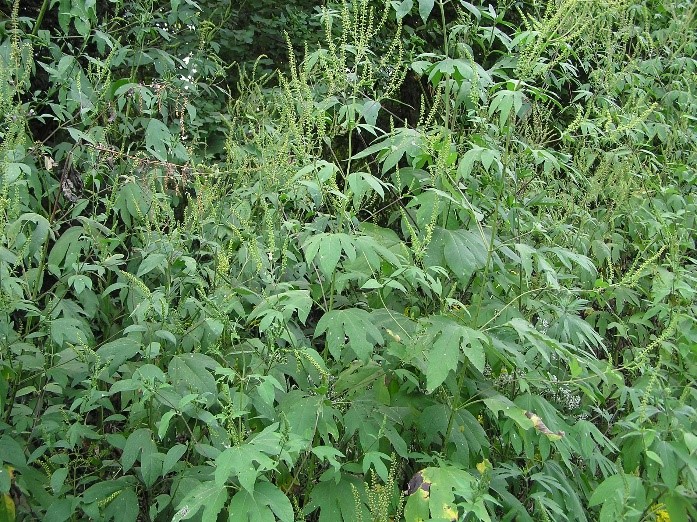
    Baton Rouge – If you suffer from autumn allergies, you might be blaming the wrong culprit. Heather Kirk-Ballard is a horticulturalistat the LSU Ag Center. She says fall is prime ragweed season, even though goldenrod, which is more visible, usually gets the blame.

    “It’s actually ragweed which is actually a very inconspicuous weed which is popping up everywhere right now. It starts at the end of August and goes into November we are in the prime time of it right now,” Kiek-Ballard says.

    She says experts recommend you change your clothes if you can before bringing them into the house, if you have a mudroom or garage. She says if you can stand to get near ragweed you can pull it. Or if you try to control it chemically, you need to use non-selective herbicides which work best early in the season.

    She says once it’s mature, ragweed produces vast amounts of pollen whose particles are extremely small and lightweight.

    “They create a lot of pollen, and it’s wind spread,” she added.

    She says Ragweed’s tiny particles are nearly invisible, but allergy sufferers know they’re there. She says she can always tell.

    “I am not able to take my allergy medicine right now and I have got a throbbing sinus headache, yes I know how it feels to be a sufferer and fall is one of those times,” she added.

  • “Landry for Governor 2023” announcement no big surprise for Louisiana politicos.

    “Landry for Governor 2023” announcement no big surprise for Louisiana politicos.

    Baton Rouge –  Attorney General Jeff Landry has officially launched his campaign to be Louisiana’s next Governor. He made the announcement Wednesday; giving him over a year for campaigning and fundraising. “LAPolitics.com” publisher Jeremy Alford says it comes as little surprise in political circles, as Landry has been (as Alford puts it) “walking for Governor” for some time…

    “..for a couple of years now…fundraising…putting the pieces in place. And now, of course, he’s kind of out the gate,” Alford says.

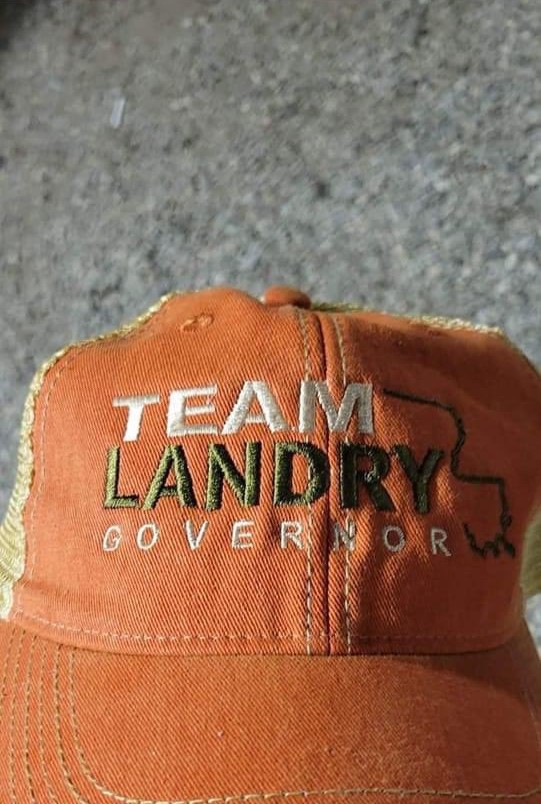
    Landry’s intent to run has been the topic of speculation for months. In September, people were seen at Landry’s annual alligator hunt fundraiser wearing “Landry Governor 2023” logo’ed gear. Alford says he was Landry’s announcement, via a six-minute campaign announcement video, before the November election…

    “I think Jeff Landry is letting the other possible candidates that are looking at this field know that he intends to be the top dog in this race.”

    Others expected to possibly run are Lt. Governor Billy Nungesser & State Treasurer John Schroder. also Congressman Garret Graves and U.S. Senators John Kennedy and Bill Cassidy may also be considering it.

    Alford says Landry has a deep and complex fundraising mechanism that extends into other states and Washington DC.

    His announcement means the state attorney general’s race is now wide open for next year. So far three candidates have announced for that office: Lake Charles lawyer Martin Maley, Crowley state Representative John Stefanski, Lincoln-Union Parish District Attorney John Belton and current state solicitor General Liz Murrill. Alford says the state’s high violent crime rate will make the A.G. race an important one…

    “I think there will be policy implications…possible implications for the way the department (of Justice) is structured, and that’s all going to be discussed.”

  • Federal agency to help pay for Mississippi flood control

    Federal agency to help pay for Mississippi flood control

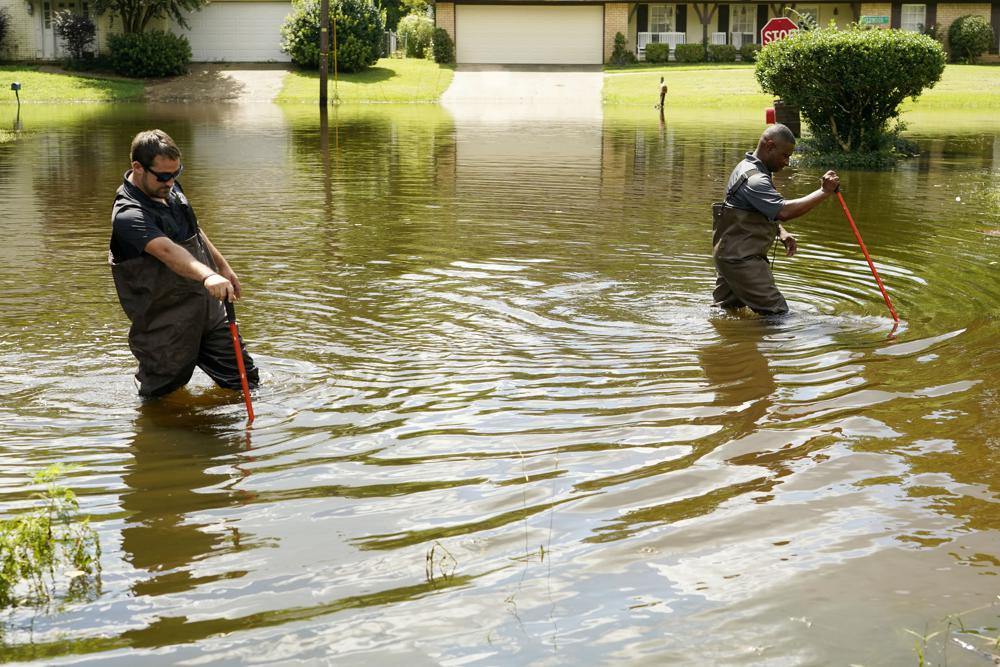
    JACKSON, Miss (AP) — A federal agency has set aside money to help guard Mississippi’s capital city and surrounding areas against flood damage following two deluges in three years.

    The U.S. Army Corps of Engineers announced Monday that it has budgeted $221 million to help fund a local flood-control project. Local leaders described the project as “decades in the making.”

    “After decades of waiting, the citizens of Jackson have finally seen this project come to fruition,” said Robert Graham, a supervisor in Hinds County, where Jackson is located.

    The current levee system doesn’t protect parts of Jackson and the nearby suburbs that are prone to flooding, officials said. The Pearl River Flood Control Project would widen the river that runs through the Jackson area, allowing more water to move through during floods. It would also enlarge levees and remove chokepoints that have caused water to flow over the river banks onto residential areas.

    It would protect local counties from more than $1 billion in potential damages, according to Republican U.S. Sen. Roger Wicker of Mississippi.

    “As I have emphasized repeatedly to the administration, each year that the Jackson metro area lacks adequate flood control is another year when we risk repeating the disaster of the Easter Flood of 1979,” Wicker said, referring to a flood that caused waters to rise to record highs.

    In 2020, days of torrential downpours caused the Pearl River to reach 36.7 feet (11.2 meters) and Jackson homes in the hardest hit neighborhoods were filled with dirty, snake-infested flood water. This year, a swollen Pearl River flooded streets and some homes in Jackson after storms dumped heavy rain. The flooding exacerbated longstanding problems in one of the city’s two water-treatment plants and left people without running water for days.

    Officials said Monday’s announcement is the first step in an ongoing process. The Corps still needs to give local officials the final approval to begin construction.

    The $221 million budgeted by the Corps is part of an $800 million sum the agency plans to spend around the country after receiving funds from the federal infrastructure law signed by President Joe Biden.

    The project will cost $340 million in total, according to Keith Turner, an attorney working on the project. Local officials will need to come up with the remaining funds. “We are working several approaches for these funds including revenue bonds for a portion,” Turner said in an email.

    Local officials have submitted a 3,000-page environmental impact statement to the Corps. The agency will review the statement and issue a final decision on the project. The final decision likely won’t be made for several months, but federal officials have been optimistic about the project’s approval, according to Turner.

    Local officials said the project would be a step toward stability for a city beset by water woes.

    “Jackson has been through a lot. And we’ve weathered the storm,” Graham said. “For the citizens of northeast Jackson, Rankin County, Hinds County, we want to make sure you understand that help is on the way.”

  • Governor: Mississippi capital’s water is again safe to drink

    Governor: Mississippi capital’s water is again safe to drink

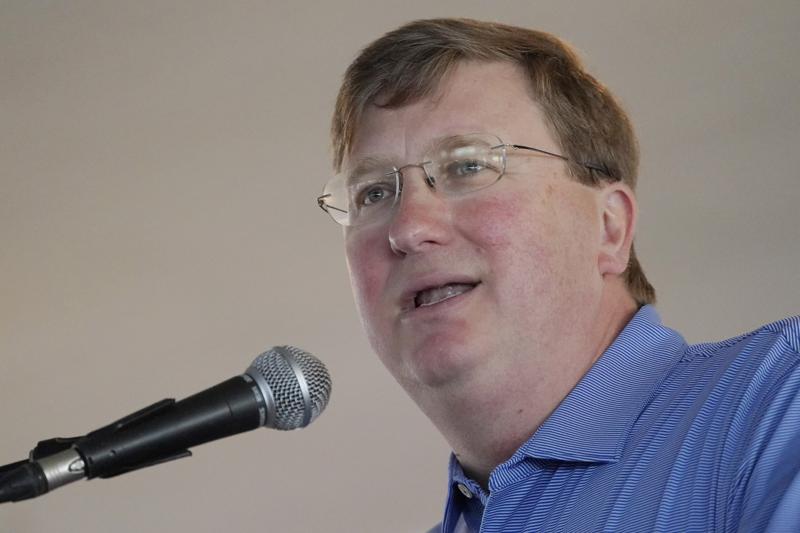
    Mississippi Governor Tate Reeves is facing criticism for his remarks Friday in Hattiesburg, where he said it was “a great day to not be in Jackson.” The governor’s comments drew swift backlash online, with people blasting Reeves for making light of the water situation in the capital city. For nearly seven weeks, Jackson residents had to boil their water because of concern about contaminants. The crisis intensified when the main water treatment facility started to fail, ultimately leaving many people with low water pressure, if any at all.