Category: Regional News

  • New Orleans ready to welcome back Essence Fest after two-year absence

    New Orleans ready to welcome back Essence Fest after two-year absence

    BATON ROUGE –  After a two-year hiatus, the Essence Festival of Culture returns to New Orleans at full strength this holiday weekend. Now in its 27th year, Essence Fest is the nation’s largest music festival, regularly drawing more than half a million visitors to the city. Councilman Oliver Thomas says there’s no way to overstate its importance for the city and state.

    “It’s B-I-G in capital letters now; that’s how big it is now,” said Thomas. “Especially coming out of the pandemic and coming through all of the other economic issues that debilitated and crippled the tourism community.”

    New Orleans has been in the spotlight for the wrong reasons lately, with concerns over crime and city services. Thomas says this is an opportunity for “The Crescent City” to send a message to the nation that it remains one of America’s premier cultural destinations.

    “We’re open, we’re safe, and we value your visitation,” he said. “We value you appreciating our culture, our famous brand of entertainment, and how we host people.”

    This year’s headliners include comedian Kevin Hart, Nicki Minaj, Janet Jackson, and New Edition. Attendees will also be able to attend seminars, shop local vendors, and participate in both in-person and virtual events at the Morial Convention Center. Thomas says the star power is unmatched.

    “No matter who you are…the lineup, the access to power sessions, the culture, the attention to detail, the acts…it is second to none,” Thomas added.

    Festival organizers say that all attendees are required to show proof of a COVID-19 vaccination for admission. Essence Fest starts tonight and ends Sunday.

  • AAA: Despite record high gas prices, 42-million expected to hit the highways this Fourth of July holiday weekend

    AAA: Despite record high gas prices, 42-million expected to hit the highways this Fourth of July holiday weekend

    BATON ROUGE –  Despite high gasoline costs and increased prices for food and lodging, over 47 million Americans are expected to travel this Independence Day weekend. AAA spokesperson Don Redman said that estimate reflects the second-busiest July 4th weekend since the year 2000. He said a great many will be on the highways.

    “There’s going to be a whole new record of people driving for their vacation this 4th of July so it’s just really across the board just a really good sign for the travel industry,” said Redman.

    AAA predicts a 6% increase in driving travel from 2019 for the states of Louisiana, Arkansas, Texas and Oklahoma. Redman said that national trend is reflected here in the Gulf south as well.

    “4.2 million are going to be traveling by car and the total travel volume, flight, trains and cruises, all that stuff will be 4.8 million in our region, said Redman.

    Redman said while the number who intend to drive for the holiday is up airline bookings are down considerably. He said air travel estimates haven’t been this low in over 11 years.

    “It’s people changing their habits from flying to driving, some of the flight cancellations might be a concern, maybe an uptick in some of the air fees,” said Redman.

    Redman said hotel rates are up over 20%, restaurant dining is up over 12%, and airfares have increased about 14%. Nevertheless, he said, people are ready to get out and go after the pandemic.

  • Entergy officials gearing up for record breaking power usage during heat this week and what you do to lower your bill

    Entergy officials gearing up for record breaking power usage during heat this week and what you do to lower your bill

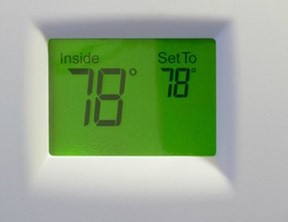
    BATON ROUGE –  The oppressive heat in Louisiana this week will be responsible for the highest power usage on record, that’s according to Entergy. Utility spokesperson David Freese said one way to save on your bill is to set your thermostat to 78 degrees.

    “Setting the thermostat to the recommended temperature during the summer, which is 78 degrees or at the highest comfortable temperature. I mention the highest comfortable temperature because I understand that comfort is going to vary per the household,” said Freese.

    Freese said every degree below 78 can add three percent to your bill.

    Heating and cooling can account for more than 50 percent of your power bill. Freese said there are some other steps besides adjusting your thermostat that you can take to help reduce usage. Like closing blinds and curtains to reduce sunlight in your home, closing vents in unoccupied rooms, and running fans.

    “All of these steps together, collectively can help us be more energy-efficient, cut back on usage and save on our utility bills,” said Freese.

    With the current heat wave responsible for air conditioning units running almost nonstop, Freese said they’ve been in communication with utility partners to assist the power grid should they be unable to meet demand and so far they don’t anticipate any issues.

    “However, if conditions change and things become different, we’ll certainly let our customers know and work to let them know ahead of time,” said Freese.

    For more energy-saving tips click here.

  • State to assist 20-thousand residents with past rent due to COVID hardships

    State to assist 20-thousand residents with past rent due to COVID hardships

    BATON ROUGE –  Louisiana has received more than $100 million in federal housing assistance to assist over 20,000 residents with past rent dating back as far as April 2020. Gina Campo, Deputy Executive Director with the Office of Community Development said the program will assist those who are in danger of being evicted.

    “The program is geared towards paying the landlord directly and also for the up to three months of forward rent under our program guidelines,” said Campo.

    Campo said to be eligible for the Louisiana Emergency Rental Assistance Program the total household income must be at or 80 percent below the area median income. Parishes with populations over 200,000 are running their own rental assistance programs and the state program is for the remaining 57 parishes.

    “There isn’t a deadline, but we do want to get the dollars out the door as quickly as possible, to help as many people as possible,” said Campo.

    The application process is completely paperless, and Campo said homeowners affected by COVID who are behind on their mortgage may also be eligible through the Louisiana Homeowner Assistance Fund program.

    “Just remember laCOVIDhousing.com and all the information on the program and the application portal is there,” said Campo.

    For more information click here.

  • Governor signs bill prohibiting publication of “mug shots”

    Governor signs bill prohibiting publication of “mug shots”

    BATON ROUGE –  Governor Edwards signs into law a bill prohibiting public release of most booking photos – also called “mug shots” – prior to the subject’s conviction. New Orleans Representative Royce Duplessis is the bill’s author. He says the law – which goes into effect on August 1st – will only apply to mug shots of people booked with non-violent offenses.

    “We want to honor the constitutional principle of ‘innocent until proven guilty’ and mug shots are generally prejudicial; regardless of the outcome. Regardless if the person was released on mistaken identity, or if they’re ultimately found not guilty.” Duplessis says.

    The Ascension Parish Sheriff’s Office, and some others, have already made policy prohibiting mug shots at the time of arrest. Duplessis says he brought the legislation because mug shots are hardly ever retracted if a person was found innocent, once they’ve been made public.

    “It will ensure that people who are NOT convicted don’t have this mug shot following them around for the rest of their life, like a digital Scarlet Letter.”

    Duplessis says his bill will apply only to those arrested for non-violent offenses, and publicizing a mug shot will be OK if the subject is a wanted fugitive, considered dangerous and/or a threat to public safety.

    “We just trying to ensure that someone’s reputation or standing in the community isn’t unfairly harmed. That’s the goal, and that’s the balance we’re trying to strike.”

  • New loan program aimed at nursing shortage will create more student debt, won’t add new nurses this year

    New loan program aimed at nursing shortage will create more student debt, won’t add new nurses this year

    A new program intended to graduate more nurses in Mississippi will create more student debt and do little to fix Mississippi’s mounting nursing shortage this year, financial aid experts say. It would also put the state on the hook for tracking down nurses who default on the loans they’ve borrowed.

    The state is lacking about 3,000 nurses, about one-fifth of Mississippi’s entire nursing workforce, according to a recent survey by the Mississippi Hospital Association.

    The Nursing and Respiratory Therapy Education Incentive Program, proposed by Speaker Pro-tem Jason White, R-West, was one of a slew of programs lawmakers created this session to address the nursing shortage. It’s a forgivable loan program through which nursing students can get loans they won’t have to pay back if they work in Mississippi for five years after graduation. Nursing students who don’t hold up their side of the deal will have to pay the loans back with interest.

    Lawmakers allocated $6 million in American Rescue Plan funds to the program. The bill doesn’t spell out how many nurses can get a loan each year, or the amount of loans an individual nursing student will be able to receive.

    Hospital officials say they desperately need more nurses now, but this program won’t put new nurses at patients’ bedsides for years – they’ll have to graduate first. And even though the program was supposed to take effect July 1, the state agency tasked with implementing it says it won’t be able to dole out loans until next year due to the complexity of administering forgivable loans.

    “We have a lot of questions about the program, how it should work, how it can work,” Jennifer Rogers, the director of the Office of Student Financial Aid, said at a recent Post-Secondary Board meeting.

    The new program is similar to ones Mississippi already has on the books for nurses but that lawmakers haven’t funded for years. All five of those programs have better terms for student borrowers, typically requiring nurses to work in the state for one or two years after graduation to get their loans forgiven, instead of five years.

    Lawmakers, flush with stimulus dollars this session, funded those programs for the first time since 2015. Rogers told the Post-Secondary Board she is concerned about offering the new loan program to students considering it has worse terms.

    “If it’s only one-time money, and we made one-year awards this year and then these students are on the hook for five years of service to the state, is that ethical, when we’ve got these other programs?” She asked. “There’s just lots of questions.”

    OSFA wanted lawmakers to pass a different program, the Hospital Nurses and Respiratory Therapist Retention Loan Repayment Program, that was proposed in the Senate. That program, which was written in consultation with Rogers’ office, would have actually erased student debt in Mississippi by repaying existing loans on behalf of nursing students already working in the field. It was also intended to fix the nursing shortage. But House lawmakers refused to negotiate in the final weeks of the legislative session; the bill died in conference.

    White, the sponsor of the House bill, did not return Mississippi Today’s request for comment. On the House floor in early February, Rep. Sam Mims, R-McComb, who chairs the House public health committee, called White’s program a “long-term solution” to the nursing shortage in Mississippi.

    “Our goal is to create more nurses, and that’s what this legislation does,” Mims said. “This could be a long-term fix to get more nurses in our state, because we do know without the nurses … that’s why you’re seeing no beds available at our hospitals.”

    OSFA will likely propose rules for the program in September. The Institutions of Higher Learning is also checking if this program is an allowable use of ARPA dollars, which need to be spent by the end of 2026.

    Mississippi has used various loan programs since the 1940s to encourage people to go into teaching and nursing and other lower-paid health care professions. These programs, in theory, can fix labor shortages by using student debt as a tool to herd borrowers into the field that needs college-educated workers.

    Through forgivable loan programs, states aim to accomplish that by making loans that students can repay by working in a particular industry for a period of time. These types of programs are essentially grants that convert to loans if a student doesn’t fulfill their service obligation, which is why researchers sometimes call them “groans,” said Mark Wiederspan, the director of a state financial aid office in Iowa.

    To administer “groans,” the state essentially has to become a bank. Students sign a promissory note and, if they’re unable to pay the loans back, the state sends them to collections. Even though Mississippi hasn’t awarded new forgivable loans since 2015, OSFA is still collecting about $12 million in debt from 1,500 borrowers who’ve defaulted, according to its recent annual report.

    With loan repayment programs – the program OSFA preferred – the state doesn’t make new loans but tries to attract workers to an industry by promising to forgive their existing student debt. These programs aim to achieve a similar goal but don’t create new opportunities for students to take on state-sponsored debt, which is one reason why states increasingly prefer this type of program.

    “If you think student loans are a problem for students at all, then giving them an additional loan they might not be able to pay off doesn’t seem like a solution,” said Sandy Baum, who studies higher education finance for the Urban Institute. “The solution should be targeted at the loans they’re already taking.”

    The Senate bill would have paid up to $15,000 of student debt – up to $3,000 a year for up to five years – for nurses who work in Mississippi. The bill would have awarded loans to 150 new registered nurse applicants, 50 new practical nurse applicants, and 25 respiratory therapists each year, Sen. Rita Potts-Parks, R-Corinth, explained at a committee hearing in early January.

    “It’s to attempt to address the health care professional shortage, particularly the nurses, LPN, RN, respiratory therapists,” she said. “I think all of us get emails on a weekly or daily basis concerning the need from our hospitals and our universities as well.”

    Another important difference between the two types of programs, Wiederspan said, is that loan forgiveness programs put more money in the pockets of colleges and universities, because students get the loans to pay for school. Loan repayment programs, on the other hand, are essentially a “bonus” for graduates.

    Both types of loan programs have an effect on labor shortages, Wiederspan said, but more research is needed to determine how and why. As a professor at Arizona State University in 2018, Wiederspan reviewed studies of these programs and found that there is “no strong evidence to suggest individuals are enticed into choosing a particular occupation or college major because of the financial support.”

    What’s clear is that loan programs don’t address the root cause of the nursing shortage in Mississippi, Baum said. Hospitals can’t compete with the high wages offered by travel nurse companies. Nursing schools, lacking capacity, have to turn potential students away.

    “The idea that you could go be a nurse someplace where you’re gonna make three times as much money, or you can go to Mississippi and they’re gonna help you pay off your loans? That may influence some people, but it doesn’t seem like a miracle cure to the nursing shortage,” she said.

    A 2018 report from the Congressional Research Service backs up Baum’s point – it found that “despite these programs’ providing a financial inducement for individuals to enter a specific field that is relatively lower paying … the amount received is generally far less than the overall lifetime earnings gap.”

    The report recommends policymakers ask three questions before implementing these types of loan programs: Will people go into a field or industry without the incentive of a loan program? Is student debt “the only or most substantial impediment” to going into that industry? Do these programs encourage students to take on more student debt than they otherwise would have?

    “You’re asking people to make different life choices because of this and making it a little bit easier to go the way you want them to,” Baum said. “But it just seems so obvious that as long as wages are low, it’s gonna have a limited impact than something that’s like this little bandaid.”

    In lieu of forgivable loan programs, states are increasingly moving to loan repayment programs. Before this session, Mississippi seemed to be doing the same.

    In 2014, Wiederspan found the state had the most forgivable loan programs of any in the country. But last year, the state made the switch for teaching, another understaffed industry. Many teacher loan forgiveness programs were disbanded and replaced with the William Winter Teacher Loan Repayment Program.

    These programs also do not address the growing cost of higher education in Mississippi, said Tom Harnisch, the vice president for government relations at the State Higher Education Executive Officers Association. He said lawmakers should look at policies that make it easier for students to afford college and don’t create more student debt.

    “Not to say that these programs don’t have benefits to participants, I’m sure they do, but there are more systemic issues that lawmakers need to look at,” he said. “We need to get back to funding higher education as a public good.”

  • Republican Rep. Palazzo heads to runoff in south Mississippi

    Republican Rep. Palazzo heads to runoff in south Mississippi

    JACKSON, Miss. (AP) — Two incumbent congressmen in Mississippi won party primaries Tuesday. Another advanced to a June 28 runoff.

    1ST DISTRICT

    Republican Rep. Trent Kelly defeated Mark D. Strauss in north Mississippi’s 1st Congressional District.

    Kelly won a 2015 special election to Congress after serving as district attorney for several counties in north Mississippi. He was endorsed in Tuesday’s primary by former President Donald Trump.

    Strauss has a picket fence near his home painted with slogans including “Trump Won” and “COVID tests are poison.”

    On the Democratic side, Dianne Black won, defeating another first-time candidate, Hunter Avery. Black said she wants to expand access to health care and fight climate change.

    2ND DISTRICT

    Mississippi’s lone Democrat in Washington, Rep. Bennie Thompson, defeated one primary opponent. Jerry Kerner ran a low-budget campaign and called Thompson “a gullible follower of the anti-American House leadership.”

    Thompson is chairman of the House Homeland Security Committee and co-chairman of a committee investigating the Jan. 6, 2021, attack on the U.S. Capitol. Thompson has been in Congress since winning a 1993 special election. The 2nd District now encompasses most of western Mississippi and much of the metro Jackson area.

    After Thompson voted Tuesday in Bolton, he spent the day campaigning in his district, which is now about 300 miles (483 kilometers) from north to south. The largely rural 2nd District expanded this year as state legislators redrew the four House districts to account for population changes in the past decade.

    Thompson said in the days before the primary, he went to southwestern Mississippi counties that were added to the district, including Franklin County, where he taught in 1968-69. He said he was happy to see some of his former students.

    “They said, ’Now we finally have a congressperson we can vote for who understands support for public education, who understands support for Social Security, who understands support for veterans,” Thompson told The Associated Press.

    Thompson said he returns to Washington on Wednesday to continue preparing for Thursday night’s televised hearings of the Jan. 6 investigative committee.

    On the Republican side in the 2nd District, military veteran Brian Flowers advanced to a June 28 runoff. Flowers lost to Thompson in 2020 and now says Thompson “is trying to intimidate American patriots” by investigating the activities of Jan. 6, 2021.

    The other 2nd District Republican primary candidates are Michael Carson, a diesel mechanic who cites former President Ronald Reagan as a role model; Ronald Eller, a retired Army captain who is campaigning on free enterprise and limited government; and Stanford Johnson, a truck driver who advocates congressional term limits.

    3RD DISTRICT

    Rep. Michael Guest was in a race with former Navy pilot Michael Cassidy in a three-person Republican primary in central Mississippi’s 3rd Congressional District.

    Guest was first elected to Congress in 2018 after serving as a district attorney in Rankin and Madison counties. He has campaigned on supporting border security and gun rights

    Cassidy criticizes Guest for being in the minority of Republicans who voted to create an outside commission to investigate the Jan. 6, 2021, attack on the U.S. Capitol — a group that would have been separate from the congressional committee now conducting the investigation.

    Also in the 3rd District Republican primary is Thomas B. Griffin, a business owner who says he wants to put Christian values into schools.

    No Democratic primary is being held because Shuwaski A. Young was unopposed for the nomination. He will be on the general election ballot.

    4TH DISTRICT

    Republican Rep. Steven Palazzo is headed to a runoff in south Mississippi’s 4th District. Two other candidates, Jackson County Sheriff Mike Ezell and retired banker Clay Wagner, were in the race for the second spot on the June 28 ballot.

    Palazzo is a military veteran who was first elected to Congress when he defeated a Democratic incumbent in 2010. This year, he faced his largest-ever field of challengers, with six other candidates in the GOP primary.

    A 2021 report by the office of Congressional Ethics found “substantial reason to believe” Palazzo had abused his office by misspending campaign funds, doing favors for his brother, and enlisting staff for political and personal errands. Palazzo declined to fully participate in the investigation, but his spokeswoman at the time, Colleen Kennedy, said the it was based on “false allegations” made by an opponent in a previous primary.

    A Palazzo campaign news release said the congressman was returning to Washington on Tuesday after he voted in Biloxi.

    “It’s an honor to serve south Mississippi, and it’s something I do not take for granted,” Palazzo said in a statement late Tuesday. “I’m grateful for our supporters and volunteers who worked hard in this election and who will work hard to help us over the next three weeks. We now turn our attention to the run-off, and we will not be out-worked. We will continue talking to voters about what we’ve been able to accomplish and our plans for promoting policies to restore economic growth, secure our borders, and keep Americans safe.”

    Challenging Palazzo for the Republican nomination were Carl Boyanton, a former produce business owner who lost to Palazzo in the 2020 GOP primary and filed the complaint that prompted the ethics investigation of the congressman; Raymond N. Brooks, who has been a Gulfport police officer and says he wants to strengthen border security; Ezell, who is also campaigning on border security; Kidron Peterson, a machinist who says he wants to bring manufacturing jobs back to the U.S.; Wagner, who says he wants to limit taxation and regulation; and state Sen. Brice Wiggins, who is campaigning on border security and has worked to expand access to early childhood education programs.

    In the Democratic primary, Johnny L. DuPree defeated David Sellers. DuPree is a former Hattiesburg mayor and was the Democratic nominee for governor in 2011. Sellers is a minister who says he wants to increase the minimum wage and end mass incarceration.

    A Libertarian candidate, Alden Patrick Young, will be on the 4th District ballot in November.

  • State Education chief: More being discussed to make schools safer for kids

    State Education chief: More being discussed to make schools safer for kids

    BATON ROUGE –  After the recent mass shooting at a school in Uvalde, Texas…state education officials are discussing policy changes to help make Louisiana kids safer in class. State Education superint4endent Cade Brumley says there have already been talks between him and about 100 education leaders from school systems statewide. He says the safety of students is Job One, and an important step is for faculty and staff to harbor trust between themselves and the student body, “…having students comfortable with teachers in the building – someone in the building – if they feel like something isn’t right, if they hear something that might not be right, if they see something on social media that doesn’t look right…to report that.” 

    Brumley says more focus will be made on keeping school facilities physically secure as well.

    “Schools should not have open doors all around the exterior of their building. Schools, ideally, should have one single point of entry…where individuals can walk into that place and not have access to all the wings of the school. There are some barriers in place.”

    Brumley says school kids are more “plugged in” to what’s going on than ever before, and school officials need to find ways to reach them, so they can know about violent school incidents in time to take preventive action.

    “If something doesn’t feel right. If something doesn’t look right. If you hear something or see something, you’ve got to speak up. You’ve got to let somebody know.” 

  • 2022 legislative session ends today. CABL says lawmakers made wise investments and passed legislation to improve education

    2022 legislative session ends today. CABL says lawmakers made wise investments and passed legislation to improve education

    BATON ROUGE –  The 2022 legislative session comes to a close today. Council for a Better Louisiana President Barry Erwin says the budget is the most impactful legislation passed, as hundreds of millions of dollars in surplus money and federal aid is set to be used on major projects.

    “Certainly infrastructure was a very big piece of it, transportation, bridges, and also water systems in a lot of these rural areas across the state, “said Erwin.

    Erwin says lawmakers also passed several bills designed to improve education. He says there’s legislation waiting for the governor’s signature that would provide more school choice options for certain students, legislators also provided more incentives to encourage dual enrollment for high schoolers and once a student gets to college.

    “I think there were some things in higher education that are going to make it easier for students to transfer from one institution to another and keep all of their credits that’s actually a pretty big deal,” said Erwin.

    And state lawmakers also approved incentives designed to encourage retired teachers to come back to the classroom. Erwin says not enough certified teachers is a big problem and Louisiana legislators will allow retired teachers to keep collecting their retirement benefits while also getting a paycheck.

    “I think that’s a really good step to send a message that we want our qualified teachers back in the classroom if we can and we want our kids to have good qualified teachers teaching them  ” said Erwin.

  • Four Louisiana teams will play in the NCAA Baseball Tournament; Tigers head to Hattiesburg

    Four Louisiana teams will play in the NCAA Baseball Tournament; Tigers head to Hattiesburg

    BATON ROUGE –  Despite winning 18 SEC games this season, the LSU Tigers will not host an NCAA Baseball Regional. The 16 regional sites were announced last night and the Tigers are not in that number. LSU has an RPI of 25 after going one and two in the SEC Tournament, which is why they’ll be on the road for the regionals.

    But LSU will not have to travel far to play in a Regional. The Tigers will be in the Hattiesburg Regional and will face Kennesaw State on Friday. Army is the other team in the Hattiesburg Regional.

    The Ragin Cajuns are in the NCAA Baseball Tournament for the first time since 2016 after rallying from a five-run deficit beat 25th ranked Georgia Southern seven to six in the Sun Belt Conference Championship game. Will Veillon drove in the winning run with a one-out RBI double in the ninth and Brandon Talley earned the save. U-L Lafayette will head west to College State Regional where they’ll face TCU on Friday. Texas A&M is a 5th national seed and they’ll face Oral Roberts.

    Louisiana Tech won its first postseason conference title since 1987 when it defeated UTSA nine to eight to win the Conference USA Baseball Championship. Right fielder Steele Netterville’s walk-off single puts the Bulldogs in the NCAA Tournament for a second straight season.  The Bulldogs will play Dallas Baptist in the Austin Regional. Texas will face Air Force.

    Southeastern Louisiana will join LSU, Louisiana Tech, and U-L Lafayette in the NCAA Baseball Tournament after the Lions defeated McNeese 11 to seven on Saturday night in Lake Charles. It’s the Lions’ first Southland tournament title since 2014 and will send S-L-U back to the NCAA Tournament for the first time since 2017. SLU, who owns victories this season over Arkansas and Ole Miss, will be at the Auburn Regional. UCLA and Florida State are the other two teams in the Auburn Regional.

    Southern nearly got into the NCAA Tournament as well, but the Jaguars lost to Alabama State six to five in 14 innings in the SWAC Tournament Championship game.