Category: Regional News

  • Storms bring floods and damaging wind across the South; 1 dead in Mississippi

    Storms bring floods and damaging wind across the South; 1 dead in Mississippi

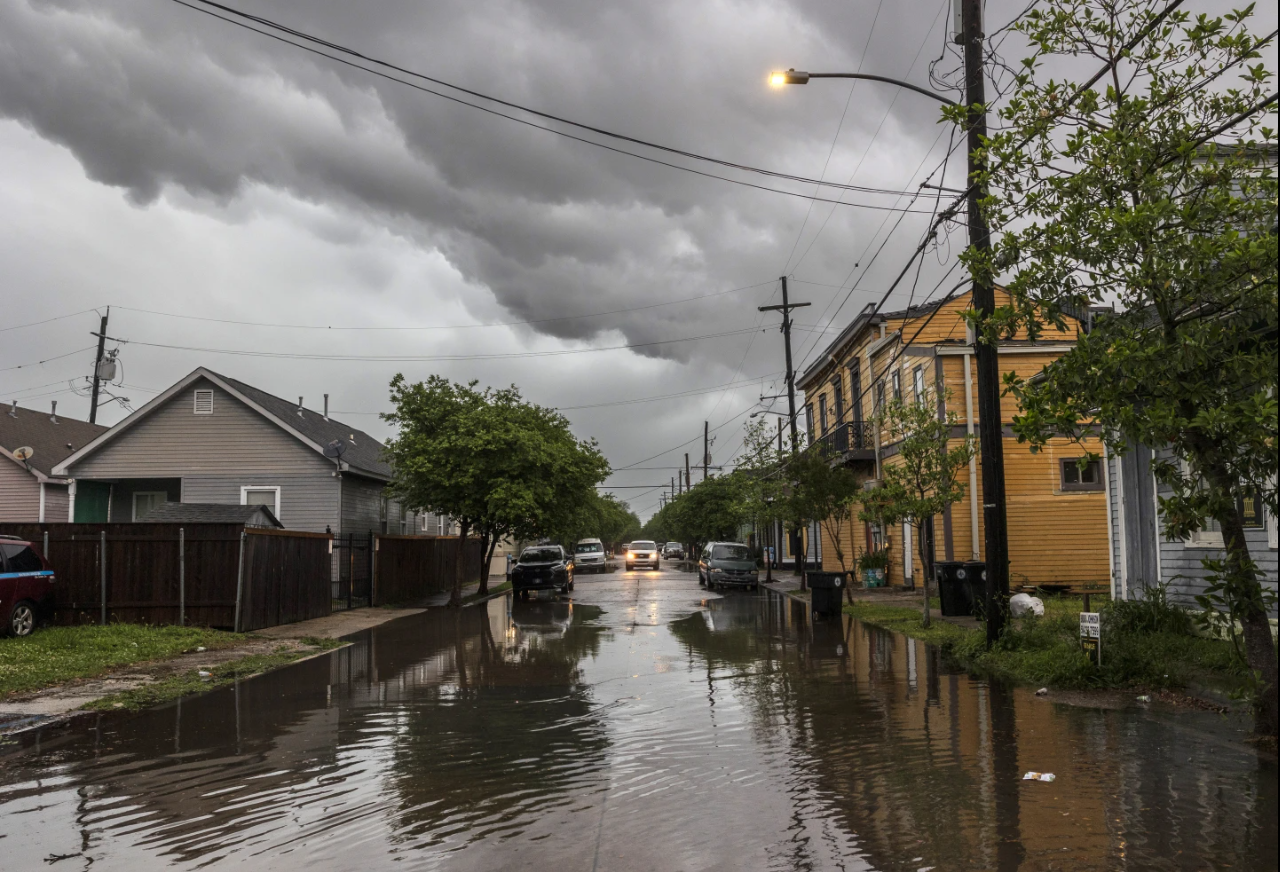
    SLIDELL, La. (AP) — Severe storms blamed for a death in Mississippi spawned a tornado that demolished buildings in one Louisiana city Wednesday while inundating streets in low-lying New Orleans with hours of steady rain that snarled traffic and strained the city’s antiquated drainage system.

    Severe weather stretched across much of the Gulf South with reports of damage from Texas to the Florida panhandle.

    More than 30,000 homes and businesses were without power Wednesday night in Louisiana’s St. Tammany Parish, where a tornado struck the city of Slidell, about 30 miles (48 kilometers) northeast of New Orleans. It ripped roofs off buildings and partially collapsed others in and around the city of about 28,000 people. Authorities said first responders had to rescue people trapped in one heavily damaged apartment building.

    At a Wednesday night news conference, Slidell Mayor Greg Cromer estimated about 75 homes and businesses were damaged in the city. Parish President Mike Cooper said assessments were still underway, but he estimated that hundreds more homes were damaged outside the city.

    Police video showed tree limbs littering the streets and flooded yards that resembled Louisiana swamps. Outside a McDonald’s restaurant, a car was on its side, power poles leaned toward the ground and large pieces of the restaurant’s trademark golden arches were strewn about.

    “I’ve never talked to God so much before in my life,” Robin Marquez said after huddling with coworkers in a two-story building where the roof was ripped away and walls caved in.

    There were no reports of deaths or critical injuries in Slidell.  The National Weather Service said in a social media post Wednesday night that initial surveys of the damage indicate the area was hit by a category EF-1 tornado, with winds anywhere from 86 mph (138 kph) to 110 miles per hour (177 kph). More surveys and analyses were planned to confirm the twister’s strength and path.

    Close to 8 inches (20 centimeters) of rain fell in parts of New Orleans. It came as the system of pipes and pumps that drains the city dealt with problems with its power generating system, forcing workers to divert power from one area to another as needed.

    “During intense rain, the mission sometimes shifts from keeping the streets dry to draining them as quickly as possible,” the New Orleans Sewerage and Water Board, which operates the system, said in a statement Wednesday afternoon.

    Hours after the rain ended, floodwaters lingered in some neighborhoods in New Orleans and in neighboring Jefferson Parish.

    In Mississippi, the death of Shirley Wilson, 64, was attributed to the storm. Wilson had several medical conditions that required her to have access to an electric oxygen machine at all times, Scott County Sheriff Mike Lee said. When her home in the central Mississippi county lost power, her oxygen machine shut down. Emergency responders couldn’t reach her until about 20 minutes after her grandchild called 911 early Wednesday, and she was pronounced dead.

    The Mississippi Emergency Management Agency said 72 homes were damaged.

    In Texas, several people were rescued from homes and vehicles early Wednesday morning when flooding inundated parts of Jasper County, near the Louisiana line, authorities said.

    All major roads into Kirbyville, a Jasper County town of about 2,000 people, were shut down early Wednesday due to the flooding, the sheriff’s office said. Shelters were being set up after about 50 people were displaced from their homes, Billy Ted Smith, the Jasper County emergency management coordinator, said. He estimated the displaced people came from about 20 flooded homes and said there had been around half a dozen people rescued from vehicles. He said no major injuries were reported.

    In the Houston suburb of Katy, strong thunderstorms that passed through the area around 2 a.m. Wednesday collapsed part of the roof of a Firestone repair shop. Storms also damaged businesses and cars in a nearby strip mall, sending a large air conditioning unit that had been on the roof crashing to the parking lot, officials said.

    No one was inside the repair shop, but employees were working at a nearby sports bar when the thunderstorms rolled through, Harris County Fire Marshal Laurie Christensen told reporters later Wednesday morning.

    “We were blessed that no lives were lost,” Christensen said, adding that only minor injuries were reported.

    Some of the damage in Katy had preliminarily been determined to have been caused by an EF-1 tornado with estimated maximum winds of around 90 mph (145 kph), National Weather Service meteorologist Bradley Brokamp said.

    Photos posted on social media showed heavy damage to a church in Port Arthur, Texas, where city officials said they were also dealing with downed trees and powerlines.

    In Mississippi, the sheriff sent out an urgent warning Wednesday to people in parts of Yazoo County, just northwest of Jackson, about a levee failure there. The sheriff’s office called for the evacuation of one subdivision. County officials continued to monitor the levee, WAPT-TV reported.


  • Power lines ignited the largest wildfire in Texas history and one nearby, officials say

    Power lines ignited the largest wildfire in Texas history and one nearby, officials say

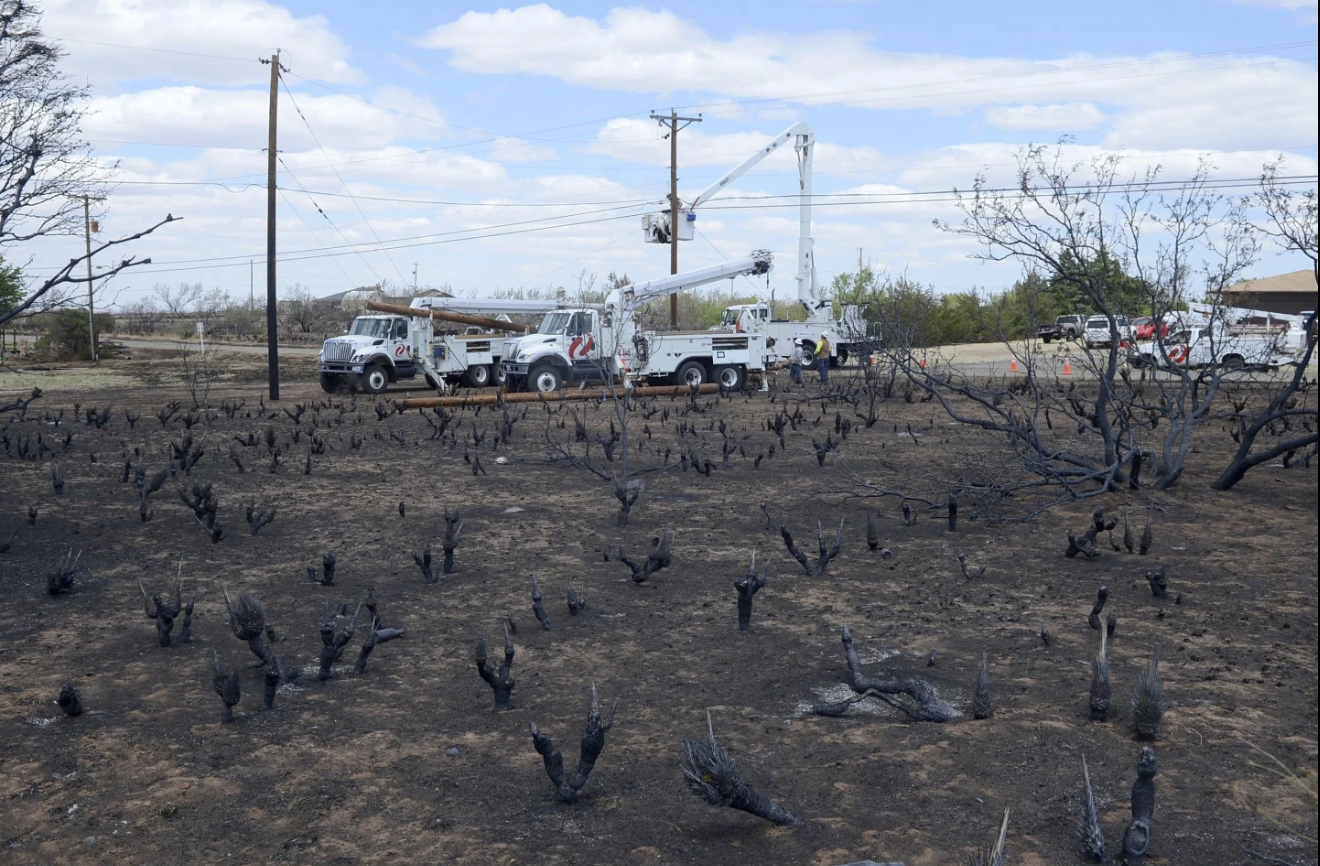
    Power lines ignited massive wildfires across the Texas Panhandle that killed at least two people, destroyed homes and livestock, and left a charred landscape, officials said Thursday, including the largest blaze in state history.

    The Texas A&M Forest Service said its investigators concluded that power lines ignited both the historic Smokehouse Creek fire, which has burned nearly 1,700 square miles (4,400 square kilometers) and spilled into neighboring Oklahoma, and the nearby Windy Deuce fire, which has burned about 225 square miles (582 square kilometers). The statement did not elaborate on what led to the power lines igniting the blazes.

    Utility provider Xcel Energy said its equipment appeared to have sparked the Smokehouse Creek fire. The Minnesota-based company said in the news release that it did not believe its equipment caused the ignition of the Windy Deuce fire, nor was it aware of any allegations that it had. A company spokesman said in an email that there are power lines owned and operated by various companies in that area.

    The wildfires that ignited last week in the windswept rural area prompted evacuations in a handful of small communities, destroyed as many as 500 structures and killed thousands of cattle. When the blazes began on Feb. 26, winds in the area were reaching upwards of 60 miles per hour (97 kilometers per hour). Those strong winds, along with dry grass and temperatures reaching into the 70s and 80s fed the flames.

    Containment levels have been increasing. The Smokehouse Creek fire was 74% contained Thursday, while the Windy Deuce fire was 89%. But the Forest Service warned that high winds were expected to be moving across the dry landscape, increasing fire danger.

    Downed power lines and other utility equipment have led to other major wildfires, including the deadly blaze in Maui last year and a massive California wildfire in 2019.

    A lawsuit filed last week in Hemphill County alleged that a downed power line near the town of Stinnett on Feb. 26 sparked the Smokehouse Creek fire. The lawsuit, filed on behalf of a Stinnett homeowner against Xcel Energy, alleged the blaze started “when a wooden pole defendants failed to properly inspect, maintain and replace, splintered and snapped off at its base.”

    In its Thursday news release, Xcel Energy disputed claims of negligence in maintaining and operating infrastructure.

    In a statement that followed Xcel Energy’s news release, Mikal Watts, the attorney who filed the lawsuit on behalf of the homeowner, said that an inspection Wednesday of the downed utility pole found “a heavily degraded wooden pole that should have been removed from service long ago.” He said the company that conducts pole inspections for Xcel Energy previously found the pole’s condition to be so degraded that it put a red tag on it to signify that it wasn’t safe to be climbed and needed to be replaced immediately.

    Xcel did not immediately respond to those comments from Watts.

    Two women were confirmed killed by the wildfires last week, one who was overtaken by flames south of Canadian after getting out of her truck and another whose remains were found in her burned home in Stinnett. On Tuesday, the fire chief in one of the hardest hit towns died while responding to a house fire. An official said that while the blaze wasn’t caused by a wildfire, Fritch Fire Chief Zeb Smith had been tirelessly fighting wildfires for over a week. An autopsy will determine Smith’s cause of death.

    The small town of Fritch, which lost hundreds of homes in a 2014 wildfire, saw dozens more destroyed last week. Texas Gov. Greg Abbott this week ordered that flags in Fritch be lowered to half-staff to honor Smith.

    The Associated Press has requested the full reports from the Forest Service on the causes of the Smokehouse Creek and Windy Deuce fires.

    Dale Smith, who operates a large ranch east of Stinnett, worked last week to tally up the number of cattle he lost in the wildfires. He said then that he believed a faulty power line was likely to blame, and that he had been concerned about their maintenance.

    “These fires are becoming a regular occurrence,” he said. “Lives are being lost. Livestock are being lost. Livelihoods are being lost. It’s a sad story that repeats itself again and again.”

  • A wildfire scorching the Texas Panhandle has grown to the largest in state history

    A wildfire scorching the Texas Panhandle has grown to the largest in state history

    CANADIAN, Texas (AP) — A wildfire spreading across the Texas Panhandle became the largest in state history Thursday, growing to nearly 1,700 square miles (4,400 square kilometers) of scorched rural ranchlands and destroyed homes.

    The Smokehouse Creek Fire has merged with another blaze and is 3% contained, according to the Texas A&M Forest Service.

    The fire’s explosive growth slowed as snow fell and winds and temperatures dipped, but it was still untamed and threatening more death and destruction. It is the largest of several major fires burning in the rural Panhandle section of the state. It has also crossed into Oklahoma.

    Firefighters have made little progress corralling it, but Thursday’s forecast of snow, rain and temperatures in the 40s offered a window to make progress before temperatures and winds increase this weekend. Authorities have not said what ignited the fires, but strong winds, dry grass and unseasonably warm temperatures fed the blazes.

    Less than an inch of snow is expected, but moisture is not the only benefit, said National Weather Service meteorologist Samuel Scoleri.

    “It will help keep relative humidity down for the day, and that will definitely help firefighters,” Scoleri said.

    Snow and rainfall were expected to end Thursday afternoon, with dry, windy conditions returning Friday and critical fire conditions possible again Saturday and Sunday.

    An 83-year-old woman is the only confirmed death so far, but with flames still menacing a wide area, authorities have yet to conduct a thorough search for victims or tally the numerous homes and other structures damaged or destroyed.

    Nim Kidd, chief of the Texas Division of Emergency Management, said the weekend forecast and “sheer size and scope” of the blaze are the biggest challenges for firefighters.

    “I don’t want the community there to feel a false sense of security that all these fires will not grow anymore,” Kidd said. “This is still a very dynamic situation.”

    The largest fire recorded in state history was the 2006 East Amarillo Complex fire, which burned about 1,400 square miles (3,630 square kilometers) and resulted in 13 deaths.

    This week, walls of flames were pushed by powerful winds while huge plumes of smoke billowed hundreds of feet in the air across the sparsely populated region. The smoke delayed aerial surveillance of the damage in some areas.

    “There was one point where we couldn’t see anything,” said Greg Downey, 57, describing his escape as flames bore down on his neighborhood. “I didn’t think we’d get out of it.”

    The woman who died was identified by family members as Joyce Blankenship, a former substitute teacher. Her grandson, Lee Quesada, said he had posted in a community forum asking if anyone could try and locate her. Quesada said deputies told his uncle on Wednesday that they had found Blankenship’s remains in her burned home.

    Quesada said she’d surprise him at times with funny little stories “about her more ornery days.”

    “Just talking to her was a joy,” he said, adding that “Joy” was a nickname of hers.

    Republican Gov. Greg Abbott issued a disaster declaration for 60 counties. The encroaching flames caused the main facility that disassembles America’s nuclear arsenal to pause operations Tuesday night, but it was open for normal work Wednesday.

    Hemphill County Emergency Management Coordinator Bill Kendall described the charred terrain as being “like a moonscape. … It’s just all gone.”

    Kendall said about 40 homes were burned around the perimeter of the town of Canadian, but no buildings were lost inside the community. Kendall also said he saw “hundreds of cattle just dead, laying in the fields.”

    Tresea Rankin videotaped her own home in Canadian as it burned.

    “Thirty-eight years of memories, that’s what you were thinking,” Rankin said of watching the flames destroy her house. “Two of my kids were married there … But you know, it’s OK, the memories won’t go away.”

    The small town of Fritch, north of Amarillo, lost hundreds of homes in a 2014 fire and appeared to be hit hard again. Mayor Tom Ray said Wednesday that an estimated 40-50 homes were destroyed on the southern edge. Ray said natural gas remained shut off for the town of 2,200.

    Residents are probably not “prepared for what they’re going to see if they pull into town,” Hutchinson County Emergency Management spokesperson Deidra Thomas said in a social media livestream. She compared the damage to a tornado.

    Near Borger, a community of about 13,000 people, emergency officials at one point late Tuesday answered questions from panicked residents on Facebook and told them to get ready to leave if they had not already.

    “It was like a ring of fire around Borger. There was no way out … all four main roads were closed,” said Adrianna Hill, whose home was within about a mile of the fire. She said wind that blew the fire in the opposite direction “saved our butts.”

    The Pantex nuclear weapon plant, northeast of Amarillo, evacuated nonessential staff Tuesday night out of an “abundance of caution,” said Laef Pendergraft, a spokesperson for the National Nuclear Security Administration’s production office at Pantex. Firefighters remained in case of an emergency.

    Pantex tweeted early Wednesday that the facility was “open for normal day shift operations.”

    The Smokehouse Creek Fire spread from Texas into neighboring Roger Mills County in western Oklahoma, where officials encouraged people in the Durham area to flee. At least 13 homes burned in fires in the state’s Panhandle region, officials said Wednesday.

  • At the Florida Man Games, big crowds cheer competitors evading police and wrestling over beer

    At the Florida Man Games, big crowds cheer competitors evading police and wrestling over beer

    ST. AUGUSTINE, Fla. (AP) — They rose up by the dozens from across Florida, caricatured competitors in tank tops and cutoff shorts, for a showdown that treats evading police and wrestling over beer like Olympic sports.

    Promoted as “the most insane athletic showdown on Earth,” the Florida Man Games poke fun at the state’s reputation for bizarre stories that involve brawling, drinking, gunfire, reptile wrangling and other antics carrying a risk of time in jail or intensive care.

    The games kicked off Saturday with the “Star Spangled Banner” played on electric guitar. Then spectators sipping canned beers behind metal barricades cheered and frequently shouted expletives as a dozen teams battled in contests inspired by real events from America’s most surreal state.

    James Gordon of DeLand won the first event, wolfing down a plate loaded with barbecue pork and sausage a fraction of a second before his nearest competitor. He chugged a beer to celebrate.

    “I’ve lived in Florida my whole life,” Gordon said after washing sauce from his hands and beard. “They’re calling these ‘events.’ I’m calling this (expletive) Tuesday afternoon.”

    One event had contenders dueling in muddy water in an inflatable pool, pummeling each other with weapons made from pool noodles and duct tape. Another was a theft-simulation relay in which competitors raced while toting a pair of bicycles, copper pipes and catalytic converters.

    Larry Donnelly trained for the relay race by riding a bicycle around his neighborhood with a second bike strapped to his back. It paid off Saturday, when he won his heat after picking up a bike in each hand and running with them.

    “I have an absolute disregard for self-preservation. I will do anything,” said Donnelly, 42, who owns a St. Augustine pressure-washing business and serves as captain of the five-man team Hanky Spanky. “When I was in the military, I did a little alligator wrestling.”

    Other events involved contenders wrestling sumo-style while holding pitchers of beer, or running from actual sheriff’s deputies while jumping fences and avoiding obstacles. Others faced a scramble to grab cash flying in simulated hurricane winds.

    Spectators paid real money — $45 per ticket or more — to watch the games at Francis Field in downtown St. Augustine. Yusuf El Shihibi said he and his wife made the 180-mile (290-kilometer) trip from Port St. Richey “to watch stupidity occur on the grandest, most spectacular scale.”

    Organizer Pete Melfi said he expected ticket sales to exceed 5,000. He said he was stunned to find nobody else had beaten him to the ripped-from-headlines idea for a spoof sporting event.

    “We kind of give a person an opportunity to live a day in the life of ‘Florida Man’ without ending up in a cop car,” said Melfi, who runs the St. Augustine media outlet The 904 Now. But he had to tone down some racier aspects of the “Florida Man” mythos to obtain a permit.

    ”There’s typically drugs and nudity,” he said. “But the city frowned on it when I asked for drugs and nudity.”

    The “Florida Man” phenomenon seeped into the nation’s conscience thanks in part to a Twitter account that started in 2013 with the handle @_FloridaMan. The account touted “real-life stories of the world’s worst superhero,” sharing news headlines such as “Florida Man Bites Dog to ‘Establish Dominance’” and “Florida Man Tried to Pay for McDonald’s With Weed.”

    Florida’s claim to being the strangest state goes back much further, said journalist Craig Pittman, who wrote the book “Oh, Florida! How America’s Weirdest State Influences the Rest of the Country.” He noted that the first flag to fly over its Capitol in 1845 bore the motto “Let Us Alone.”

    Apparently nobody listened. Florida today has 22 million residents, the third largest population of any U.S. state. And they all share roads, beaches and timeshares with more than 130 million tourists per year.

    “You cram that many people together, they’re bound to start running into each others’ cars and chasing each other with machetes,” Pittman said.

    Pittman noted there have also been plenty of crazy stories featuring Florida women — and plenty of them turned out to watch the games Saturday.

    Sally Yarbrough and her daughter, Danielle Yarbrough, got tickets as a Christmas gift from their boss — along with a case of vodka.

    “Hopefully more women will be here like us,” Danielle Yarbrough said. “We’re usually the only rowdy ones.”

    The only women’s event Saturday was a Florida Ma’am Pinup contest. That should change if the games continue, said Lori “Ice” Fetrick, a former competitor on the 1990s show “American Gladiators” who served as a judge at the Florida Man Games.

    “I personally believe we need the Florida Woman Games,” Fetrick told the crowd, which cheered its approval. “Or maybe put women against the men.”

    Leading up to Saturday, Joshua Barr and his Cooter Commandos teammates spent time whipping up fan support on Facebook with posts showing the trio chugging Pabst Blue Ribbon beer and jogging in jean shorts and mirrored sunglasses. Their team name comes from a turtle species celebrated by their hometown of Inverness.

    The Commandos didn’t stop with online promotion and trash-talking of rival teams. Barr, a 37-year-old movie reviewer and podcaster, said they also printed T-shirts, temporary tattoos and a large custom flag to wave on the field.

    “We might be taking it more seriously than most people,” Barr said. “You kind of just have to be a part of the joke at this point.”


  • First nitrogen execution was a ‘botched’ human experiment, Alabama lawsuit alleges

    First nitrogen execution was a ‘botched’ human experiment, Alabama lawsuit alleges

    MONTGOMERY, Ala. (AP) — An Alabama death row inmate filed a lawsuit Thursday that challenges the constitutionality of nitrogen gas executions, arguing that the first person in the nation put to death by that method shook violently for several minutes in “a human experiment that officials botched miserably.”

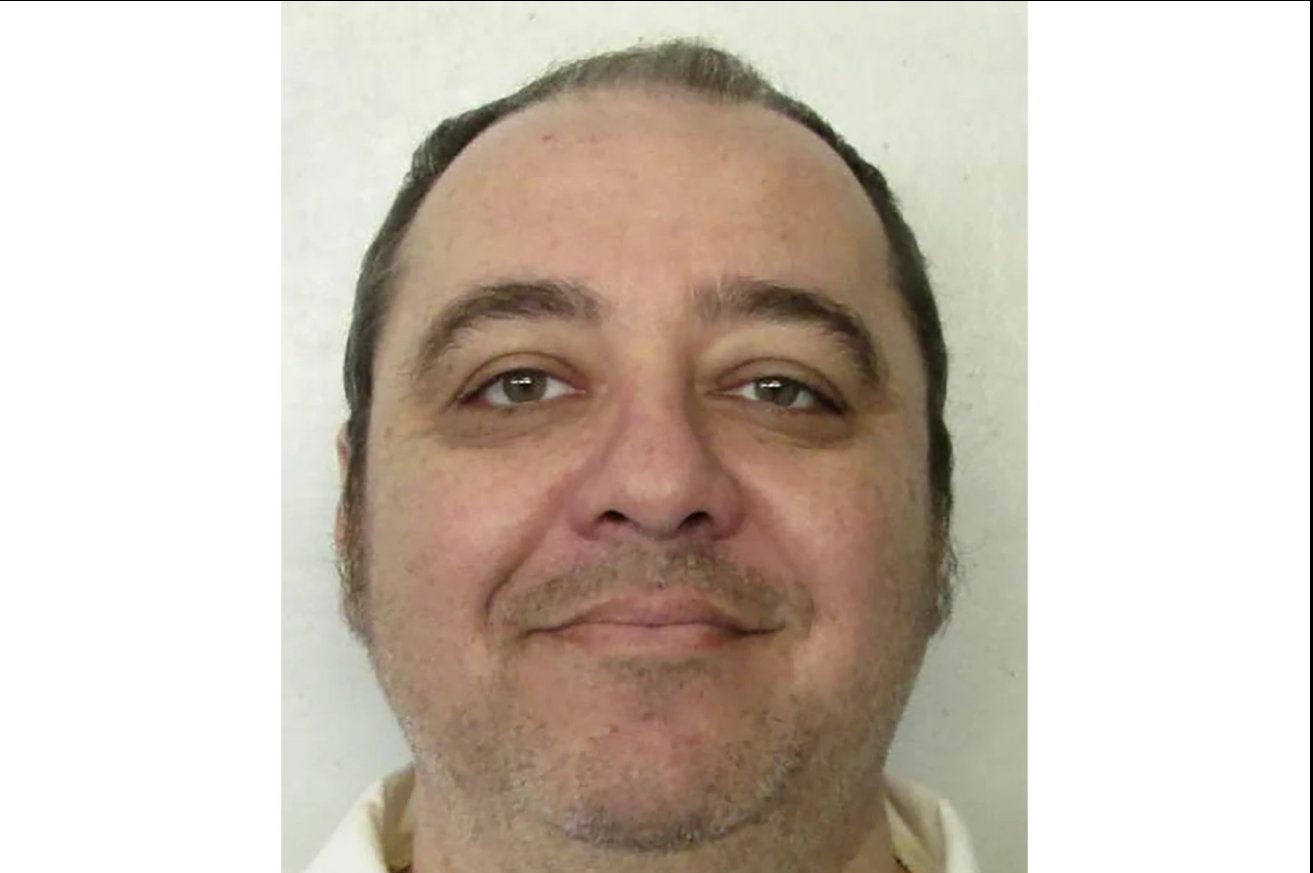
    The lawsuit filed in federal court in Alabama alleges the January execution of Kenneth Eugene Smith by nitrogen gas was torturous and “cannot be allowed to be repeated.” The lawsuit says descriptions from witnesses that Smith shook and convulsed contradicted the state’s promises to federal judges that nitrogen would provide a quick and humane death.

    “The results of the first human experiment are now in and they demonstrate that nitrogen gas asphyxiation is neither quick nor painless, but agonizing and painful,” attorney Bernard E. Harcourt wrote in the lawsuit. The lawsuit was filed on behalf of death row inmate David Phillip Wilson, who was sentenced to death after he was convicted of killing a man during a 2004 burglary.

    The lawsuit seeks a declaratory judgment that the current nitrogen gas asphyxiation protocol violates the inmate’s constitutional right to protection from cruel and unusual punishment.

    Alabama last month became the first state to use nitrogen gas to put an inmate to death. Nitrogen gas is authorized in three states — Alabama, Oklahoma and Mississippi — but no state had previously attempted to use it.

    During the execution, a respirator face mask — which is normally used in industrial settings to deliver life-preserving oxygen — was strapped to Smith’s head. Pure nitrogen gas was then pumped into it, causing him to die from lack of oxygen.

    The U.S. Supreme Court allowed Smith’s execution to proceed last month. The lawsuit contends that media and witness accounts of the execution contradict the state’s prediction to the courts that the nitrogen gas would render Smith unconscious “within seconds.”

    Smith shook in thrashing spasms and seizure-like movements for several minutes at the start of the execution. The force of his movements caused the gurney to visibly move at least once. Reporters from The Associated Press, al.com, the Montgomery Advertiser, the Alabama Reflector and WHNT attended the execution as media witnesses.

    “In stark contrast to the Attorney General’s representations, the five media witnesses chosen by the Alabama Department of Corrections and present at Mr. Smith’s execution recounted a prolonged period of consciousness marked by shaking, struggling, and writhing by Mr. Smith for several minutes after the nitrogen gas started flowing,” the lawsuit stated.

    The lawsuit argues the problematic execution came in a state that already had a “bad track record of botched executions.” Alabama Gov. Kay Ivey in 2022 ordered an internal review of how death sentences are carried out after an unprecedented third failed lethal injection.

    Alabama Attorney General Steve Marshall has maintained that the execution was “textbook” and said the state will seek to carry out more death sentences using nitrogen gas.

    “As of last night, nitrogen hypoxia as a means of execution is no longer an untested method. It is a proven one,” Marshall said the morning after Smith’s execution, extending an offer of help for states considering adopting the method.

    Alabama Corrections Commissioner John Q. Hamm said he thought Smith might have deliberately held his breath, but also said the state expected involuntary movements and the type of breathing that occurs with lack of oxygen.

    “That was all expected and was in the side effects that we’ve seen or researched on nitrogen hypoxia,” Hamm said.


  • Tennessee, Virginia AGs suing NCAA over NIL-related recruiting rules with Vols under investigation

    Tennessee, Virginia AGs suing NCAA over NIL-related recruiting rules with Vols under investigation

    The attorneys general of Tennessee and Virginia filed a lawsuit against the NCAA on Wednesday, a day after the University of Tennessee’s chancellor ripped the association for investigating the school for potential recruiting violations related to name, image and likeness compensation rules.

    The lawsuit filed in the Eastern District of Tennessee claims the NCAA is “enforcing rules that unfairly restrict how athletes can commercially use their name, image and likeness at a critical juncture in the recruiting calendar.”

    “These anticompetitive restrictions violate the Sherman Act, harm the States and the welfare of their athletes, and should be declared unlawful and enjoined.”

    The NCAA already is being challenged in court by a group of state attorneys general challenging the association’s transfer rules, plus it is the defendant in antitrust suits targeting employment status for athletes and billions in television revenue that schools and conferences make off big-time college sports.

    On Tuesday, it was revealed the NCAA was investigating Tennessee and a booster-funded NIL collective that works with Volunteers athletes, the Vol Club run by Spyre Sports Group.

    Tennessee released a scathing letter Chancellor Donde Plowman wrote to Charlie Baker shortly after school officials met with NCAA representatives to discuss the allegations. She said leaders of collegiate sports owe it to students and their families to act in their best interest with clear rules — and that the NCAA is nowhere close to providing that.

    “Instead, 2 1/2 years of vague and contradictory NCAA memos, emails and ‘guidance’ about name, image and likeness (NIL) has created extraordinary chaos that student-athletes and institutions are struggling to navigate,” Plowman wrote. “In short, the NCAA is failing.”

    The university’s athletic director and the governor of Tennessee had her back Wednesday morning.

    Athletic director Danny White shared the state attorney general’s post of the lawsuit on social media within 20 minutes, writing that he appreciated Jonathan Skrmetti standing up for the rights of athletes.

    “At Tennessee, we are always going to work to support our student-athletes’ rights and give them all the tools needed to succeed on and off the field,” White tweeted. “This is what strong leadership looks like!”

    Tennessee Gov. Bill Lee also applauded the University of Tennessee for being “nothing but forthcoming with the NCAA.”

    “And I thank Chancellor Donde Plowman for taking a stand on behalf of all universities and student athletes,” Lee said in a statement.

    Plowman was cheered by Tennessee fans during a pregame ceremony Tuesday night before the fifth-ranked Volunteers lost in men’s basketball to South Carolina.


  • Shock, grief and mourning for 3 Georgia-based US soldiers killed in Middle East drone strike

    Shock, grief and mourning for 3 Georgia-based US soldiers killed in Middle East drone strike

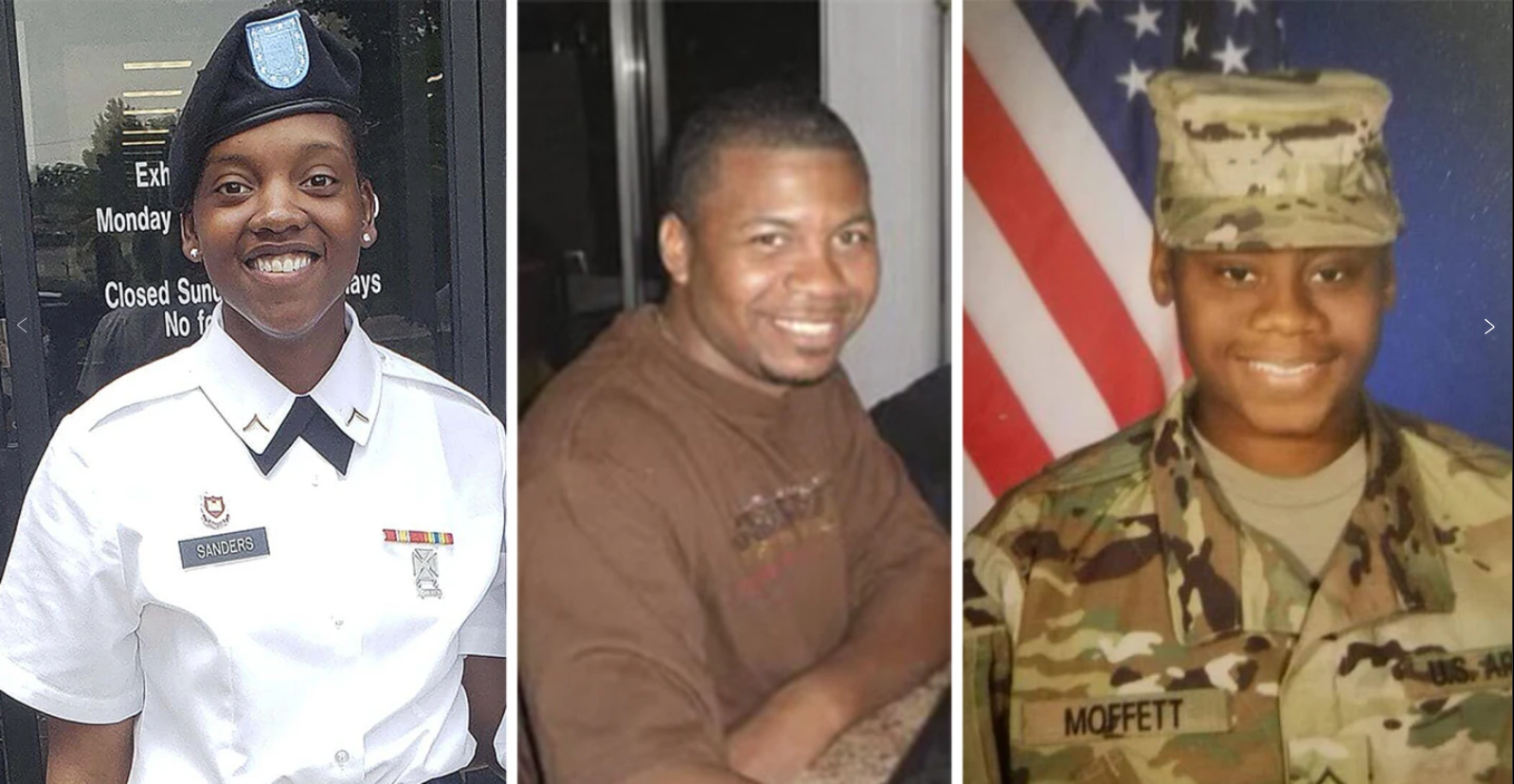
    SAVANNAH, Ga. (AP) — Described by their parents as bubbly and constantly laughing, Spc. Kennedy Sanders and Spc. Breonna Moffett became close friends soon after enlisting in the Army Reserve five years ago. Sgt. William Jerome Rivers served a tour in Iraq before joining the same company of Army engineers.

    The three citizen-soldiers from different corners of Georgia all died in a weekend drone strike on a U.S. base in Jordan near the Syrian border that also wounded more than 40 others. Families of the slain reservists said they were shocked when uniformed military officers came to their doors to deliver the news Sunday.

    While President Joe Biden has promised the U.S. will respond, Moffett’s parents said they hope there’s no escalation in violence that kills more American troops. Their daughter celebrated her 23rd birthday overseas just nine days before she was killed.

    “I just hope and pray no other family has to go through this,” Francine Moffett, the young soldier’s mother, said Monday through tears at the dining table of her Savannah home. “It takes your heart and your soul.”

    Breonna Moffitt joined the Army Reserve in 2019 after graduating from high school. In addition to her military service, she worked for a home care provider cooking, cleaning and running errands for people with disabilities, her parents said. When Moffett left with fellow soldiers from the 718th Engineer Company, 926th Engineer Battalion based at Fort Moore in August, it was her first overseas deployment.

    She was the oldest of four siblings. Every morning, Francine Moffett said, her 8-year-old daughter would call her big sister to say hello while riding to school.

    Whenever the Moffett family called, they typically would hear from Sanders too.

    “Every time I’d call Breonna, I’d see Sanders just stick her head in and say, `Hey! How you doing?’” Francine Moffett said.

    A native of Waycross, 100 miles (160 kilometers) southwest of Savannah, 24-year-old Sanders had volunteered for the Middle East deployment, eager to see a new part of the world, her parents said.

    At home, she helped coach children’s soccer and basketball teams. She also worked at a pharmacy while taking college courses with the aim of becoming an X-ray technician. Lately, however, she had considered becoming a full-time soldier on active duty once her Army Reserve contract was fulfilled.

    “She was loved. She didn’t have any enemies. All the time you saw her smiling,” her father, Shawn Sanders, said in an interview Monday. “This is somebody who was just living life, enjoying life at a young age, working toward a career.”

    At age 46, Rivers had far more military experience than the two young women. The Defense Department said he joined the Army Reserve in New Jersey in 2011 and served a nine-month tour in Iraq in 2018. He joined the 718th Engineering Company at Fort Moore last year and lived in Carrollton, about 45 miles (70 kilometers) west of Atlanta.

    The Associated Press was unsuccessful in attempts to contact Rivers’ family on Monday.

    Georgia Gov. Brian Kemp issued a statement mourning the “inexcusable loss of life” of the three soldiers, saying they “gave the last full measure of devotion in service to this country.” Army Brig. Gen. Todd Lazaroski, commander of the Army Reserve’s 412th Theater Engineer Command, said in a statement: “They represent the best of America.”

    In Sanders’ hometown of Waycross, flags were lowered to half-staff. Her parents said her unit first deployed to Kuwait, then to Jordan where the U.S. operates a logistics support base along the Syrian border.

    In her spare time while deployed, Sanders would practice jiu-jitsu and run to keep in shape. She relaxed by knitting and called home almost daily, her parents said. While she occasionally mentioned drones being shot down nearby, there was no sense of imminent danger, said Oneida Oliver-Sanders, the reservist’s mother.

    When they last spoke the day before she was killed, Sanders said she was thinking about buying a motorcycle — much to her mother’s disapproval. She had also spoken recently of buying a home.

    “All of these different things that she had plans for, you know, were just cut short in the blink of an eye,” Oliver-Sanders said. “I just feel like somebody like her, that’s so full of life, it’s just unfair that she’ll never get to realize those dreams that she had.”


  • Alabama executes a man with nitrogen gas, the first time the new method has been used

    Alabama executes a man with nitrogen gas, the first time the new method has been used

    ATMORE, Ala. (AP) — Alabama executed a convicted murderer with nitrogen gas Thursday, putting him to death with a first-of-its-kind method that once again placed the U.S. at the forefront of the debate over capital punishment. The state said the method would be humane, but critics called it cruel and experimental.

    Officials said Kenneth Eugene Smith, 58, was pronounced dead at 8:25 p.m. at an Alabama prison after breathing pure nitrogen gas through a face mask to cause oxygen deprivation. It marked the first time that a new execution method has been used in the United States since lethal injection, now the most commonly used method, was introduced in 1982.

    The execution took about 22 minutes from the time between the opening and closing of the curtains to the viewing room. Smith appeared to remain conscious for several minutes. For at least two minutes, he appeared to shake and writhe on the gurney, sometimes pulling against the restraints. That was followed by several minutes of heavy breathing, until breathing was no longer perceptible.

    In a final statement, Smith said, “Tonight Alabama causes humanity to take a step backwards. … I’m leaving with love, peace and light.”

    He made the “I love you sign” with his hands toward family members who were witnesses. “Thank you for supporting me. Love, love all of you,” Smith said.

    Alabama Gov. Kay Ivey said the execution was justice for the murder-for-hire killing of 45-year-old Elizabeth Sennett in 1988.

    “After more than 30 years and attempt after attempt to game the system, Mr. Smith has answered for his horrendous crimes,” Ivey said in a statement. “I pray that Elizabeth Sennett’s family can receive closure after all these years dealing with that great loss.”

    Mike Sennett, the victim’s son, said Thursday night that Smith “had been incarcerated almost twice as long as I knew my mom.”

    “Nothing happened here today is going to bring Mom back. It’s kind of a bittersweet day. We are not going to be jumping around, whooping and holler, hooray and all that,” he said. “I’ll end by saying Elizabeth Dorlene Sennett got her justice tonight.”

    The state had previously attempted to execute Smith in 2022, but the lethal injection was called off at the last minute because authorities couldn’t connect an IV line.

    The execution came after a last-minute legal battle in which his attorneys contended the state was making him the test subject for an experimental execution method that could violate the constitutional ban on cruel and unusual punishment. Federal courts rejected Smith’s bid to block it, with the latest ruling coming Thursday night from the U.S. Supreme Court.

    Justice Sonia Sotomayor, who along with two other liberal justices dissented, wrote, “Having failed to kill Smith on its first attempt, Alabama has selected him as its ‘guinea pig’ to test a method of execution never attempted before. The world is watching.”

    The majority justices did not issue any statements.

    The state had predicted the nitrogen gas would cause unconsciousness within seconds and death within minutes. State Attorney General Steve Marshall said late Thursday that nitrogen gas “was intended to be — and has now proved to be — an effective and humane method of execution.”

    Asked about Smith’s shaking and convulsing on the gurney, Alabama corrections Commissioner John Q. Hamm said they appeared to be involuntary movements.

    “That was all expected and was in the side effects that we’ve seen or researched on nitrogen hypoxia,” Hamm said. “Nothing was out of the ordinary from what we were expecting.”

    Smith’s spiritual adviser, the Rev. Jeff Hood, said the execution did not match the state attorney general’s prediction in court filings that Smith would lose consciousness in seconds followed by death within minutes.

    “We didn’t see somebody go unconscious in 30 seconds. What we saw was minutes of someone struggling for their life,” said Hood, who attended the execution.

    Some doctors and organizations had expressed alarm about the method, and Smith’s attorneys asked the Supreme Court to halt the execution to review claims that it violates the constitutional ban on cruel and unusual punishment and deserved more legal scrutiny before it was used on a person.

    “There is little research regarding death by nitrogen hypoxia. When the State is considering using a novel form of execution that has never been attempted anywhere, the public has an interest in ensuring the State has researched the method adequately and established procedures to minimize the pain and suffering of the condemned person,” Smith’s attorneys wrote.

    In her dissent, Sotomayor said Alabama has shrouded its execution protocol in secrecy, releasing only a heavily redacted version. She added that Smith should have been allowed to obtain evidence about the protocol and to proceed with his legal challenge.

    “That information is important not only to Smith, who has an extra reason to fear the gurney, but to anyone the State seeks to execute after him using this novel method,” Sotomayor wrote.

    “Twice now this Court has ignored Smith’s warning that Alabama will subject him to an unconstitutional risk of pain,” Sotomayor wrote. “I sincerely hope that he is not proven correct a second time.”

    Justice Elena Kagan wrote a separate dissent and was joined by Justice Ketanji Brown Jackson.

    In his final hours, Smith met with family members and his spiritual adviser, according to a prison spokesperson.

    Smith ate a last meal of T-bone steak, hash browns, toast and eggs slathered in A1 steak sauce, Hood said by telephone before the execution was carried out.

    “He’s terrified at the torture that could come. But he’s also at peace. One of the things he told me is he is finally getting out,” Hood said.

    The execution protocol called for Smith to be strapped to a gurney in the execution chamber — the same one where he was strapped down for several hours during the lethal injection attempt — and a “full facepiece supplied air respirator” to be placed over his face. After he had a chance to make a final statement, the warden, from another room, was to activate the nitrogen gas. It would be administered through the mask for at least 15 minutes or “five minutes following a flatline indication on the EKG, whichever is longer,” according to the state protocol.

    Hamm, the corrections commissioner, confirmed afterward that the gas was flowing for about 15 minutes.

    Sant’Egidio Community, a Vatican-affiliated Catholic charity based in Rome, had urged Alabama not to go through with the execution, saying the method is “barbarous” and “uncivilized” and would bring “indelible shame” to the state. And experts appointed by the U.N. Human Rights Council cautioned they believe the execution method could violate the prohibition on torture.

    Some states are looking for new ways to execute people because the drugs used in lethal injections have become difficult to find. Three states — Alabama, Mississippi and Oklahoma — have authorized nitrogen hypoxia as an execution method, but no state had attempted to use the untested method until now.

    Smith’s attorneys had raised concerns that he could choke to death on his own vomit as the nitrogen gas flows. The state made a last-minute procedural change so he would not be allowed food in the eight hours beforehand.

    Sennett was found dead in her home March 18, 1988, with eight stab wounds in the chest and one on each side of her neck. Smith was one of two men convicted in the killing. The other, John Forrest Parker, was executed in 2010.

    Prosecutors said they were each paid $1,000 to kill Sennett on behalf of her pastor husband, who was deeply in debt and wanted to collect on insurance. The husband, Charles Sennett Sr., killed himself when the investigation focused on him as a suspect, according to court documents.

    Smith’s 1989 conviction was overturned, but he was convicted again in 1996. The jury recommended a life sentence by 11-1, but a judge overrode that and sentenced him to death. Alabama no longer allows a judge to override a jury’s death penalty decision.
  • Magnitude 3.8 earthquake shakes part of eastern Arkansas

    ETOWAH, Ark. (AP) — A magnitude 3.8 earthquake rattled parts of northeastern Arkansas on Wednesday, according to geologists.

    The earthquake occurred shortly before noon near the town of Etowah, the U.S. Geological Survey reported. The rural town, which has a population of about 250 people, is located about 50 miles (80 kilometers) north of Memphis, Tennessee.

    The Arkansas Division of Emergency Management said there were no reports from county officials of damage or injuries.

    Etowah is near the New Madrid fault line, which has been responsible for numerous small and large earthquakes. Beginning in late 1811, a series of powerful earthquakes occurred along the fault line, including one with an estimated magnitude of 7.7.

    Jeremy Brown, who lives near Etowah, told The Arkansas Democrat-Gazette that he “thought an 18 wheeler struck the house for a second.”

    Some people reported feeling the quake in western Tennessee.

    Shianna Wallace of Drummonds, Tennessee, told WREG that she was sitting on her reclining chair when she began to feel a swaying sensation.

    “It was just like movement. Maybe like a wave and you’re on a raft and it was a wave. It was just kind of weird,” she told the station.

  • Texas woman who sought court permission for abortion leaves state for the procedure, attorneys say

    AUSTIN, Texas (AP) — A pregnant Texas woman who sought court permission for an abortion in an unprecedented challenge to one of the most restrict bans in the U.S. has left the state to obtain the procedure, her attorneys said Monday.

    The announced came as Kate Cox, 31, was awaiting a ruling from the Texas Supreme Court over whether she could legally obtain an abortion under narrow exceptions to the state’s restrictive bans. A judge gave Cox permission last week but that decision was put on hold by the state’s all-Republican high court.

    “Her health is on the line. She’s been in and out of the emergency room and she couldn’t wait any longer,” said Nancy Northup, president and CEO of the Center for Reproductive Rights, which was representing Cox.

    Cox was believed to be the first woman in the U.S. to ask a court for permission for an abortion since Roe v. Wade was overturned last year. Her lawsuit quickly became a high-profile test of bans in Texas and a dozen other GOP-controlled states, where abortion is prohibited at nearly all stages of pregnancy.

    Days after Cox filed her lawsuit, a pregnant woman in Kentucky last week also asked a court to allow an abortion. There has been no ruling yet in that case.

    Doctors have told Cox that her fetus is at a high risk for a condition known as trisomy 18, which has a very high likelihood of miscarriage or stillbirth, and low survival rates, according to the lawsuit.

    They also told Cox that inducing labor or carrying the baby to term could jeopardize her ability to have another child in the future.