Category: Regional News

  • Tailgaters cautiously optimistic but wary as season starts

    Tailgaters cautiously optimistic but wary as season starts

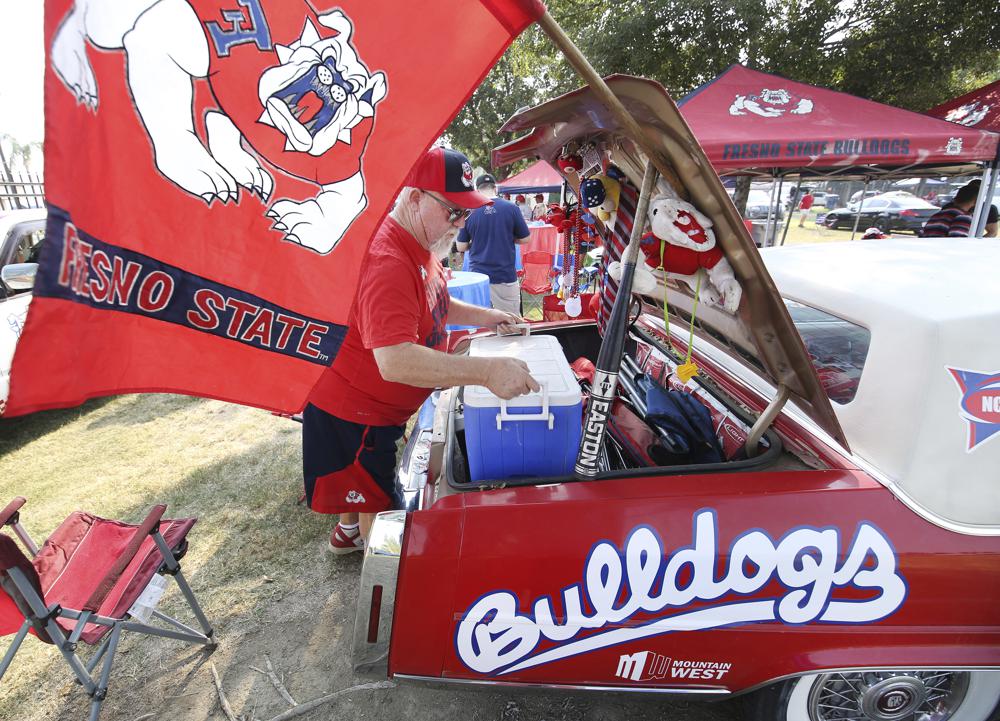
    This usually is the time of year that Mississippi alumnus Sid Seal is putting the final plans in place for the pregame tailgate parties he has organized for the last two decades.

    Ole Miss bills itself as the school that offers “the most iconic tailgating in college athletics” with fans flocking to The Grove, a 10-acre plot on the center of campus. Seal is looking forward to getting back to that this fall after the pandemic all but halted tailgating last season.

    But the 60-year-old pharmacist also regularly follows the progress of the pandemic, which has him delaying his preparations. He doesn’t know how tailgating in 2021 might differ from the way it was done before the coronavirus was on any football fan’s mind.

    “I couldn’t say we have everything planned out right now,” said Seal, who graduated from Ole Miss in 1985. “It’s going to change daily. It’s going to be a very, very fluid situation.”

    Schools across the country remain cautiously optimistic that pregame atmospheres around campus will remain close to normal as they monitor the delta variant. Some, such as LSU, Oregon and Oregon State, require proof of vaccination or a negative test to get into the stadiums, but tailgating is another matter altogether.

    About three dozen Power Five schools responded to questions from The Associated Press regarding their tailgating policies, and a clear consensus emerged.

    Nearly all the schools that responded are tentatively planning to restore the tailgating policies they had in 2019, though many of them noted that’s subject to change based on the status of COVID-19 cases in their area.

    That’s a major shift from last year, when even the schools that allowed spectators at games either prohibited or strongly discouraged tailgating.

    For example, last year South Carolina didn’t open its parking lots until 2 1/2 hours before kickoff, prohibited tents, asked large gatherings of people to disperse and discouraged the use of any grills, coolers or buffet-style spreads. This year, South Carolina is returning to its pre-2020 policies.

    The return of tailgating is great news for tens of thousands of fans who consider that a vital part of the college football experience.

    Tony Young is a 1990 Florida State graduate who says he has missed a total of five home games since 1971. Young holds tailgates before every home game and even serves fried gator before matchups with Florida. His traditional parking spot is so ideal that he says “we could throw a baseball and hit the stadium.”

    “All of our friends who go to the games, they know where we park and they know that they can always stop by and socialize,” Young said.

    For programs that don’t win very often, the tailgates often are more anticipated than the games themselves.

    “We’ve got a big banner that we put up that’s got our motto: ‘If you’re not going to win the game, win the tailgate,’” said Scott Feinstein, a Vanderbilt fan from Mount Juliet, Tennessee.

    The pregame tailgates are so special to Erin Kraak and other Wisconsin fans that they tried creative ways to replicate the atmosphere last year when Big Ten rules prohibited fans from attending home games.

    “We did a couple of tailgates in neighbors’ driveways where someone would bring a TV outside and you were able to socially distance and bundle up,” said Kraak, a 1998 Wisconsin alum. “We did that for two of the games just because we missed the tailgating so much, but it was a totally different experience.”

    Now those tailgates are back, at least in some form.

    Andy Bolgzds of Norwood, Ohio, doesn’t expect many changes. The 1982 Cincinnati graduate said he believes all the people who regularly attend his tailgates are vaccinated.

    “People are finally getting out and finally living life again,” Bolgzds said.

    Young and Feinstein said they plan to have hand sanitizer available at their tailgates or in their cars. Kraak says she will feel safe as long as she stays outside and doesn’t go inside any of the crowded bars on Regent Street near Wisconsin’s campus.

    “I don’t anticipate spending any time indoors for any reason,” Kraak said. “Maybe we would have before, especially when it gets colder, and it’s a little cold to tailgate when you get those November games. You’d have to reassess then. But as long as we’re outdoors, I don’t see it being very different.”

    Peter West, a 1984 Ole Miss alum who’s been tailgating for 25-plus years, wonders if there might not be as many people as usual. West is considering whether to recommend the use of masks at his tailgates and having them available. He also wonders if he should move away from a buffet-type food distribution setup.

    “I think a lot of people are going to be leery about crowds,” said West, a dentist from Tupelo, Mississippi.

    Seal agreed that things might not be quite the same as before, particularly if the impact of the delta variant doesn’t subside over the next couple of weeks. He wonders whether it will be safe to have kids at such large gatherings a year after he didn’t attend a single Ole Miss home game for the first time in a quarter century.

    This pandemic has taught him not to assume anything.

    “I would love to say we’re going to do everything full force like we did four or five years ago,” he said. “But it’s just really hard to say.”
  • Ida collapses Mississippi road; kills 2, injures at least 10

    Ida collapses Mississippi road; kills 2, injures at least 10

    LUCEDALE, Miss. (AP) — Barbara Cochran said she was about to get ready for bed late Monday when she heard a loud crash outside her home in rural southeastern Mississippi. Hurricane Ida had been dumping torrential rain, her husband was already asleep and the home’s air conditioner was humming loudly.

    The 83-year-old retired educator said she went onto the porch to see if a big oak tree had fallen, or if an 18-wheeler had slid off the highway down the hill from their home. She didn’t see car lights, so she didn’t think there was a wreck.

    About 10 minutes after she went back inside, she heard a second loud crash. Moments later, Cochran heard a third crash. As she was about to call the sheriff’s department, she heard the wail of sirens.

    And, she said: “I heard something that sounded like a woman screaming.”

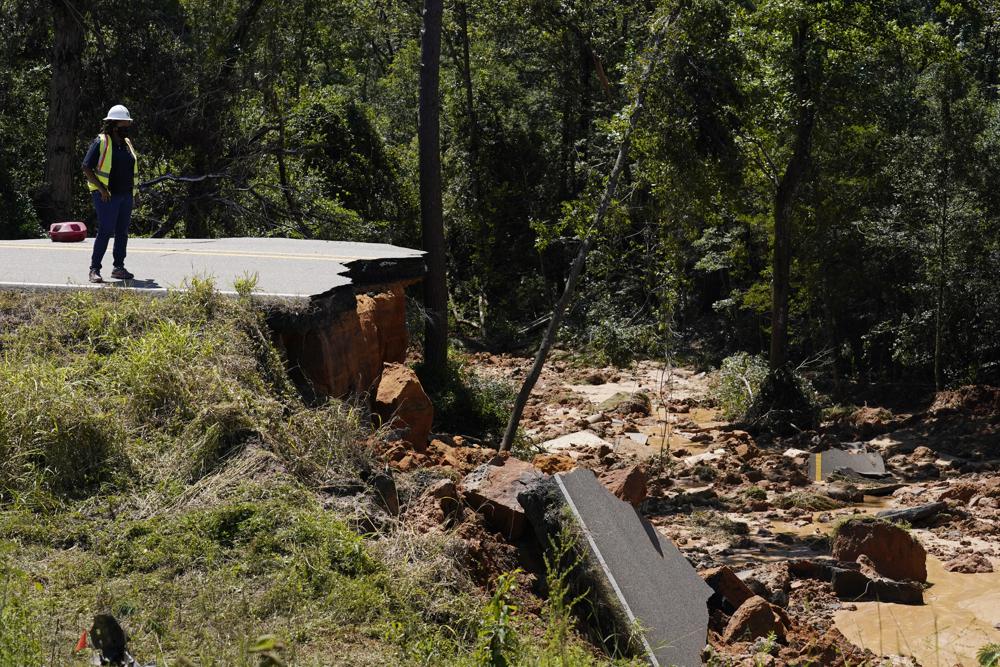
    Two people were killed and at least 10 others were injured late Monday when seven vehicles plunged, one after another, into a deep hole where a dark, rural highway collapsed as Hurricane Ida blew through Mississippi, authorities said Tuesday.

    Heavy rainfall may have caused the collapse of two-lane Mississippi Highway 26 west of Lucedale, and the drivers may not have seen that the roadway in front of them had disappeared, Mississippi Highway Patrol Cpl. Cal Robertson said. The George County Sheriff’s Department received the first call at about 10:30 p.m.

    Cochran told The Associated Press that she didn’t know about the highway collapse or the wrecks until after she woke from a fitful night’s sleep. She said she is praying for the families of those killed or hurt.

    “This is such a catastrophe,” Cochran said Tuesday.

    Robertson said some of the vehicles ended up stacked on top of each other as they crashed into the abyss, which opened up in a rural area without street lights. Ida dumped as much as 13 inches (33 centimeters) of rain as it blew through Mississippi, the National Weather Service said.

    “You can imagine driving at night with heavy rain coming down,” Robertson said. “It’s just nothing but a wall of water, your headlights kind of reflecting back on you.”

    State troopers, emergency workers and rescue teams responded to the crash site about 60 miles (96 kilometers) northeast of Biloxi, to find both the east and westbound lanes collapsed. Robertson said the hole removed about 50 to 60 feet (15 to 18 meters) of roadway, and is 20 to 30 feet (6 to 9 meters) deep.

    George County Sheriff Keith Havard told the Sun Herald that the sheriff’s department received a 911 call from a man whose car had plunged into the hole.

    “He said he was driving and all of a sudden he wasn’t driving anymore,” Havard said. “He didn’t understand what had happened. I can’t imagine anyone would.”

    The newspaper reported that 911 dispatchers heard other vehicles crash into the pit.

    The vehicles were later lifted out by a crane, leaving some debris at the bottom of the hole. A drone video published by the Sun Herald showed how a raised berm beneath the road washed away, leaving a red-clay scar that runs for hundreds of feet, from a cemetery on one side into a wooded area on the other.

    “It is a slide, which means the ground under the roadway and embankment was super-saturated and we can tell right now that’s what caused the slide,” Kelly Castleberry, district engineer for the Mississippi Department of Transportation, told the newspaper.

    Jerry Lee, 49, of Lucedale, was pronounced dead at 1:20 a.m., and Kent Brown, 49, of Leakesville, was pronounced dead 10 minutes later, George County Coroner DeeAnn Murrah said.

    George County High School said one of its students, a senior, was hospitalized with critical injuries after crashing into the hole. Local schools were closed Tuesday because the collapsed highway created problems for buses and other traffic.

    Mississippi southern district Transportation Commissioner Tom King said he didn’t know anything unusual about the soil conditions where the highway caved in.

    “We just got bombarded here in south Mississippi with rain,” King told the AP.

    King said work crews were checking other highways in areas that received heavy rain from Ida.

    Between 3,100 and 5,700 vehicles drive along the stretch of highway on an average day, according to Mississippi Department of Transportation data.

    “It’s going to take us a while to redo it and make it right again and make it safe for folks to go over,” King said of the collapsed roadbed.

    Mike Dillon is pastor of Crossroads United Pentecostal Church, which is near the crash site. He said he learned about the crashes after he woke up Tuesday and checked a community prayer page online. Like many local residents, he walked to the crash site and prayed.

    “We’re a very close-knit community,” Dillon said, “and we’re going to get through this with the help of the Lord.”

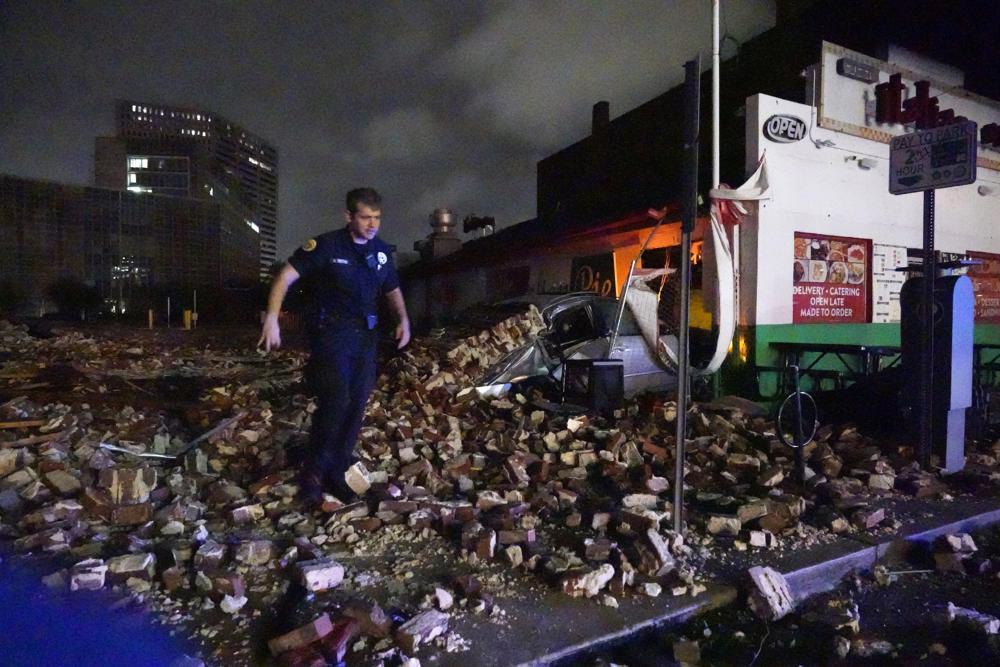
    Hurricane Ida blasted ashore Sunday as a Category 4 storm, one of the most powerful ever to hit the U.S. mainland. It knocked out power to much of southeastern Louisiana and southern Mississippi, blowing roofs off buildings and causing widespread flooding as it pushed a surge of ocean water that briefly reversed the flow of the Mississippi River.

  • Saints working 500 miles from home after displaced by Ida

    Saints working 500 miles from home after displaced by Ida

    ARLINGTON, Texas (AP) — Displaced by Hurricane Ida, the New Orleans Saints went back to work Monday about 500 miles away in the stadium of another NFL team.

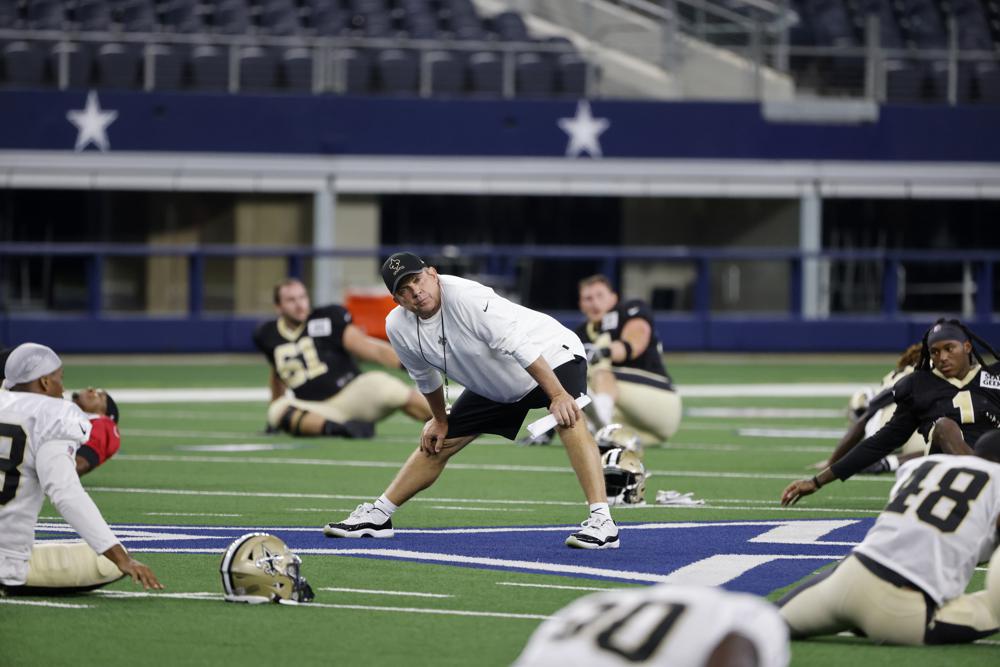
    Coach Sean Payton stood on the star logo in the middle of the home field of the Dallas Cowboys as the Saints stretched out for their first practice since before the powerful Category 4 hurricane made landfall just south of New Orleans. They will practice at AT&T Stadium through Wednesday before a previously planned break leading into the start of the regular season.

    “Then we’re going through a ton of contingency plans,” Payton said.

    Saints players and staff, along with about 120 family members, relocated to North Texas on Saturday, when their final preseason game was canceled a day before the destructive hurricane made landfall south of New Orleans with winds of 150 mph, and left that entire area without power.

    “Left behind are obviously apartments, condominiums, homes. Those are all physical things. Nonetheless, they’re still home for so many people,” Payton said on a conference call before practice. “I think to some degree that going out and being able to practice today is going to be good for everyone, because from afar, there’s only so much you can do.”

    After the break at the end of this week, part of the number of days off required by the CBA, the Saints are scheduled to resume practice next Monday.

    Payton said that it would be unrealistic to believe that would be at their headquarters in Metairie, Louisiana, even though initial reports from people there indicated that the facility handled the storm overall pretty well.

    “There’ll be important time for everyone to kind of assess where they’re at. And there’s a good chance when we start up (next) Monday … that’s going to be somewhere other than Metairie,” he said.

    There has been no word yet about the scheduled Sept. 12 season opener at home against the Green Bay Packers that is supposed to be at the Superdome.

    “Obviously we’ll have a plan B. And, you know, there are a lot of other things probably from a priority standpoint that are more important for our city,” Payton said. “But that all being said, you know, we fully anticipate starting the regular season with Green Bay and then the question would be where that game’s at.”

    The office of Louisiana Gov. John Bel Edwards has described damage to the area’s power grid appeared “catastrophic,” and officials warned it could be weeks before power is fully restored.

    Saints owner Gayle Benson said she is making an initial $1 million donation toward the Gulf Coast Renewal Fund. The team added “those wishing to donate can do so by going to NewOrleansSaints.com/hurricaneida. We will continue to be in close communication with governmental and community leaders to determine where aid and assistance can most effectively be directed. More details on the fund and other initiatives will be provided in the coming days.”

    Because of not playing last Saturday, the Saints got in only two preseason games, taking away an opportunity for some players trying to make the final roster to get more evaluation. There was another practice scheduled Tuesday, the same day the roster has to be reduced to 53 players.

    While glad to have the players and their families safe, Payton doesn’t like the environment relative to having to cut some players.

    “With all the families here, I think that’s challenging. I brought it up this morning. And we talked about it as a team and I just said hey, we just have to understand that there’s a lot of good about us being here,” Payton said. “But there are challenges when it comes to your jobs that are on the line, and we’re going to do our best to take care of everyone.”

    The arrival of Ida came 16 years to the day after Katrina devastated New Orleans. The Saints were forced to move for the entire 2005 season, setting up operations in San Antonio while playing home games there and in Baton Rouge at LSU. New Orleans also played one “home” game at Giants Stadium.

    That was before the current regime led by Payton joined the franchise fresh off three seasons as assistant head coach and quarterbacks coach for the Cowboys. The Saints went 3-13 in 2005, but spurred on by the quick restoration of the Louisiana Superdome, they went 10-6 and won the NFC South the next year.

    In 2012, the Saints evacuated to Cincinnati when Hurricane Isaac, a less powerful storm, approached New Orleans. That storm made landfall with winds of about 80 mph.

    “We were there for a couple of days and came back. Our area had not been truly affected, so we were back to normal,” said six-time Pro Bowl defensive end Cameron Jordan, a second-year Saints player then who is still with the team. “Now, we wake up this morning and it’s a lot more damage than there was in 2012 for sure … From 2012 to now, it’s completely different.”

    After seeing pictures of his house, Jordan said it will need some immediate attention, including a new roof. He said all that matters is his family is with him and safe.

    “As long as they’re OK, for me, whatever happened to our house, whatever has happened to our property in New Orleans, that’s just materialistic,” he said.

    Veteran linebacker Demario Davis said his wife, who is due with another child in October, and four young kids are with him in Texas.

    “My kids think they are on vacation right now. They don’t know, they’re so young. So they’re seeing a lot of their friends. And so they just run around and play,” Davis said. “They’re not at the age where they can fully grasp what a natural disaster is just yet.”

  • As Ida leaves Gulf, analysts foresee modest economic damage

    As Ida leaves Gulf, analysts foresee modest economic damage

    WASHINGTON (AP) — With more than 1 million customers in Louisiana and Mississippi having lost power, Hurricane Ida is sure to take a toll on the energy, chemical and shipping industries that have major hubs along the Gulf Coast. But the impact on the overall U.S. economy will likely be modest so long as damage estimates don’t rise sharply and refinery shutdowns are not prolonged, economists say.

    The hurricane is expected to inflict a less severe financial impact than Hurricane Katrina did 16 years ago, thanks in part to a lower storm surge and New Orleans’ improved levee system. Analysts at Boenning & Scattergood, a financial consultancy, noted that Ida’s wind field is smaller than Katrina’s, which likely narrows the area of catastrophic damage. The analysts estimated that losses for the insurance industry will hit around $10 billion, far less than the $90 billion-plus from Katrina.

    Oil prices barely moved Monday as oil companies and refiners assessed any damage from the storm. The price on the New York Mercantile Exchange was flat at $68.74 per barrel. Gasoline futures rose 1.2%.

    Still, Ida, which tied for the fifth-strongest hurricane ever to hit the mainland, left so many customers without electricity that any prolonged power outage could have repercussions, at least temporarily, for the oil, natural gas and chemical companies that have operations along the gulf. The longer power remains out, the longer those companies will struggle to restart their operations.

    Fewer than 2 million barrels a day of production in the Gulf of Mexico — slightly more than 15% of normal output — is shut down. Yet the disruptions aren’t expected to immediately affect the availability of gasoline nationally because of ample fuel reserves in the system. The U.S. Energy Department announced plans a week ago to sell up to 20 million barrels from the Strategic Petroleum Reserve, the largest sale this year from the federal emergency pool of oil.

    “There is a lot of crude oil that could backfill for some of these losses,” said Richard Joswick, an oil analyst with S&P Global Platts.

    Refineries with combined capacity of 2.2 million barrels a day were offline Monday, Joswick said, but it could have been far worse: Up to 4 million barrels a day might have had to be turned off had the storm tracked just slightly westward.

    “That said, they don’t have power,” he added. “If you don’t have power, you can’t run a refinery.”

    For now, the ports of Baton Rouge, Gramercy and Morgan City in Louisiana and the Port of Pascagoula, Mississippi are all closed. The Louisiana Offshore Oil Port has also suspended operations. The Port of New Orleans was closed but reported that “initial reports indicate no major damage to our facilities.”

    Early indications are that refineries along the Gulf Coast were spared the magnitude of damage they suffered during Hurricane Harvey in 2017, which caused flooding that inundated several refineries in the Houston area.

    Yet Jacques Rousseau, an analyst for Clearview Energy Partners, cautioned that “we need to wait a little longer to see if there is some sort of extensive damage that could take a refinery out for more than just a shutdown-and-restart period.”

    Over the weekend, Phillips 66 closed a refinery in Belle Chasse, Louisiana, and Exxon Mobil began shutting down production at a refinery in Baton Rouge. On Monday, an Exxon spokeswoman said the refinery didn’t suffer significant damage and would begin restoring normal operations once the company knows it will have raw materials and power.

    All of New Orleans lost power on Sunday evening as the hurricane barreled ashore. Local officials warned that it could take weeks to fully restore power. As the storm approached, offshore oil production in the Gulf was nearly entirely shut down, and crews were evacuated as a precaution.

    The hurricane and the resulting disruptions to offshore production and onshore refining are occurring just as demand for gasoline and other fuels is likely to decline, as it typically does in September and October. That trend, if it holds, could lessen the storm’s effect on prices.

    Most natural disasters cause little overall damage to the $23 trillion U.S. economy. Even the hardest-hit regions often recover quickly, thanks to all the money typically spent on rebuilding from the destruction.

    Still, New Orleans’ job market never regained its strength after Hurricane Katrina. In July 2005, the month before the hurricane struck, its metropolitan area had more than 620,000 jobs. It lost 185,000 in September and October that year as people fled the flooded city. Many never returned.

    Since then, New Orleans’ recovery has been disrupted by the Great Recession of 2007-2009 and COVID-19, which crushed an economy that depends on tourists. In July, New Orleans had 530,000 jobs, down nearly 15% from its level before Katrina. Over the same period, employment across the United States has risen 9%.

    Between Ida and a surge in COVID-19 cases linked to the highly contagious delta variant, the outlook for New Orleans’ fall tourism season has turned from hopeful to bleak.

    “We’re on a long road to recovery,” said D.J. Johnson, who owns the New Orleans Art Bar and the Baldwin & Co. bookstore, both of which sustained water damage from Ida. “We’ve just been hit very, very hard in New Orleans.’’

    Bread on Oak, a New Orleans bakery, will open Tuesday, but only so the owners, Sean and Chamain O’Mahony, can cook up ingredients on a propane grill outdoors. They hope to save at least some of the food that would spoil in refrigerators without electricity.

    The O’Mahonys are bracing for a hefty bill once they have to restock everything. And they worry about getting their 30 employees, who are dispersed and without electricity for now, back to work. Sean expects to lose some of them to better-paying jobs working on crews that will be making post-Ida repairs around the city.

    Though such personal losses are many, Adrienne Slack, a vice president at the New Orleans branch of the Federal Reserve Bank of Atlanta, called the overall preliminary damage reports “favorable.”

    “The levee structures are much improved since (Katrina), and they held up very well,” Slack said. “We’re not looking at a city that will be underwater for three weeks.”

    She cautioned that the damage assessments will take time and that the local economy can’t return to life until electricity is flowing again.

    Cellphone service was severely disrupted by the storm. T-Mobile said its network was operating at only 70% of capacity in Louisiana and Alabama. AT&T said it was running at 60% of capacity in Louisiana.

    On a national scale, Mark Zandi, chief economist at Moody’s Analytics, said the disruptions caused by Ida will likely lead him to downgrade his forecast for annual U.S. economic growth in the current July-September quarter by a few tenths of a percentage point. But that economic loss, Zandi said, could be reversed in the final quarter of the year as a result of the rebuilding from the hurricane’s damage that will likely follow.

    Analysts at Citi Investment Research agreed that any drag on growth will likely be offset by subsequent reconstruction. They said, though, that “inflationary effects may be more persistent as demand for building materials, autos and workers will confront already existing shortages.”

    “The key channel for Ida to impact the broader economy is through energy prices,” Zandi said. “We will have to see how much damage occurred to production in the Gulf and how long that production will stay offline.”

    “The worst-case scenario is Ida might add 10 cents to 20 cents to the price of a gallon of gas through September,” he said. But he suggested that the increase in pump prices might last for only a few weeks.

    Likewise, Joswick, the analyst with S&P Global Platts, foresees nothing like the jump in pump prices that occurred after Katrina, when the average retail price jumped more than 70 cents in just over a week, according to government figures.

    “This is a much more modest event,” he said “We’ll likely recover in a week or two.”

    Robert Handfield, a professor of supply chain management at North Carolina State University, said he worries that disruptions at petrochemical plants will cut off supplies to plastics factories, which are still struggling to rebound from a February deep freeze in Texas and from supply-chain bottlenecks.

    “They’re already behind where they should be,” Handfield said. “The inventories are pretty scarce.’’

  • Edwards says several rescue efforts were needed after Ida

    Edwards says several rescue efforts were needed after Ida

    Governor John Bel Edwards hopes to survey damage from hurricane Ida today, he wasn’t able to Monday due to the number of air rescues needed.

    “The National Guard had rescued 191 citizens and 27 pets across Jefferson, St. John the Baptist, and Orleans Parishes. But also conducted helicopter hoist and lift operations in LaPlace and Jean Lafitte,” said Edwards.

    Edwards said search and rescue crews spent most of Monday answering 9-1-1 calls from Sunday night once conditions were stable enough for first responders to venture out. He said today crews should begin grid searches in areas in areas that suffered extreme damage.

    Power restoration for southeast Louisiana could be lengthy and New Orleans residents have been told it could be up to 21 days before 90 percent of the metro area has power again. Edwards said well over a million customers are without power.

    “Sometimes you hear a million people are without power. It’s about 1.1 million homes and businesses, it’s well over a million people, I don’t have a precise number for you,” said Edwards.

    Edwards encourages residents to adhere to local curfews and for those who’ve evacuated to only return when it is safe to do so.

    “And that we all check on our neighbors and our families, especially those who are elderly or have special needs. And then let’s work together, let’s lift one another up in prayer, we’re going to get through this,’ said Edwards.

    Edwards said so far there’s only be one confirmed storm-related death, but he expects there will be more. The governor reminded residents that more people are killed following a hurricane as opposed to during the storm and he encouraged everyone to practice extreme caution with generators and cleanup efforts.

    Edwards says several rescue efforts were needed after Ida

  • Hurricane Ida – Update #1

    Hurricane Ida – Update #1

    Pearl, Miss. – The State of Mississippi is actively responding to Hurricane Ida. The tropical system made landfall on Sunday, August 29 at 11:55 AM near Port Fourchon, Louisiana, as an extremely dangerous Category 4 hurricane with winds of 150 mph. As Hurricane Ida pushes through the state, multiple state agencies offer tips on what to do after the storm.


    The Mississippi Emergency Management Agency is working directly with impacted counties to assess immediate needs. Once the storm passes, citizens can report structural damage to their homes using MEMA’s self-report tool: https://www.msema.org/contact/crisistrack/. Residents are also urged to begin documenting the damage and filing an insurance claim.


    Once conditions are safe, the Mississippi Department of Transportation will begin surveying affected areas, clearing roadways of debris or sand, and working diligently to re-open affected highways. MDOT’s goal is to get traffic back to normal as soon as possible to ensure the roadways are safe for anyone in need of emergency travel.


    If emergency travel is necessary, drivers should be cautious around debris and be on the lookout for roadside workers. If you come across standing water over a roadway, turn around and find an alternate route; turn around, don’t drown.


    The Mississippi Department of Health urges residents to take the following precautions:


    Food and Water Safety

    If your power is out, there are several food and water safety tips to follow to ensure what you eat and drink is safe for consumption:

    • If power is out for less than two hours, food in your refrigerator and freezer will be safe to eat. Keep refrigerator and freezer doors closed as much as possible to keep food cold longer.
    • After two hours, a freezer that is half-full will hold food safely for up to 24 hours. A full freezer will hold food safely for 48 hours.
    • After two hours, pack milk, other dairy products, meat, fish, eggs, gravy, and spoilable leftovers into a cooler surrounded by ice. Inexpensive Styrofoam coolers are fine for this purpose.


    • Safe water for drinking, cooking, and personal hygiene includes bottled, boiled, or treated water. Watch for specific boil water alerts in your area.
    • Do not use contaminated water to wash dishes, brush your teeth, wash, and prepare food, wash your hands, make ice, or make baby formula. If possible, use baby formula that does not need to have water added.
    • Boiling water, when practical, is the preferred way to kill harmful bacteria and parasites. Bringing water to a rolling boil for 1 minute will kill most organisms.


    Carbon Monoxide

    MSDH recommends the following precautions to help prevent potentially fatal carbon monoxide (CO) poisoning. Do not burn charcoal or gas grills inside a house, garage, vehicle, tent, or fireplace. Do not use gas-powered generators or pressure washers in enclosed spaces including indoors or in the garage. If you suspect you are experiencing any symptoms of CO poisoning, such as dizziness, headache or shortness of breath, open doors and windows, turn off gas appliances and go outside. In cases of severe CO poisoning, call 911 emergency services or the Mississippi Poison Control Center at 1-800-222-1222.


    Personal Protection

    When cleaning up storm-damaged areas, be sure to wear protective clothing and sturdy shoes to prevent cuts and scratches from debris. Do not let children play in floodwater and discard any items that come into contact with floodwater.


    Any food (including food in plastic or glass), medicines, cosmetics or bottled water that has come in contact with floodwater should be discarded. If in doubt, throw it out.  Intact cans may be thoroughly disinfected with one-quarter cup of bleach to one gallon of water, and then used.


    Around Your Home

    When cleaning up debris around your home, be sure ladders are secure before climbing on them to clean the roof and gutters. If you plan to use a chainsaw to clear debris, be sure to operate the machine according to the instructions. If injury occurs, call 9-1-1 or seek immediate medical help.


    Flooding can cause mold to grow inside your home, which can cause allergic reactions, asthma episodes, infections, and other respiratory problems. MSDH does not handle mold removal or abatement. You will need to call a private contractor for further assistance.


    Tetanus Information:

    Tetanus vaccination is recommended if it’s been 10 years or more since your last tetanus vaccination (Tdap is the recommended vaccine). In the event of a puncture wound or wound contaminated with floodwater, individuals should consult a healthcare provider.


    Disinfecting Private Water Wells

    Homeowners impacted by flooding who do not receive their water supply from a public water system regulated by the MSDH should have their private well inspected, disinfected and sampled in order to protect their health. For step-by-step instructions on disinfecting your private water well, visit the MSDH website at HealthyMS.com/wells.


    Vibrio bacteria naturally live in certain coastal waters and are present in higher concentrations between May and October when water temperatures are warmer.

    Vibrio vulnificus can cause life-threatening wound infections. Many people with Vibrio vulnificus infection require intensive care or limb amputations, and about 1 in 5 people with this infection die, sometimes within a day or two of becoming ill

    Anyone can get a Vibrio wound infection, but some individuals are more likely to get infection and have severe complications:

    • Have liver disease, cancer, diabetes, HIV, or thalassemia
    • Receive immune-suppressing therapy for the treatment of disease
    • Take medicine to decrease stomach acid levels
    • Have had recent stomach surgery
    • Individuals at higher risk for infections and severe complications from Vibrio bacteria should avoid wading or standing in brackish or saltwater.


    How can I prevent a Vibrio wound infection if I have a wound?

    You can reduce your chance of getting a Vibrio wound infection by following these tips:

    • If you have a wound (including from a recent surgery, piercing, or tattoo), stay out of saltwater or brackish water, if possible.
    • Cover your wound with a waterproof bandage if it could come into contact with saltwater or brackish water. This can happen when a hurricane or storm surge causes flooding.
    • Wash wounds and cuts thoroughly with soap and water after they have contact with saltwater, brackish water, raw seafood, or its juices.


    Seek medical attention immediately if you develop signs and symptoms of Vibrio infection, which can include:

    • Watery diarrhea, often accompanied by stomach cramping, nausea, vomiting, and fever
    • For bloodstream infection: fever, chills, dangerously low blood pressure, and blistering skin lesions
    • For wound infection, which may spread to the rest of the body: fever, redness, pain, swelling, warmth, discoloration, and discharge (leaking fluids).

    Mosquitoes

    Flooding can result in excessive breeding of mosquitoes, resulting in the possibility of diseases such as West Nile virus being carried by the insects.


    Protective measures include:

    • Wear long-sleeved, long-legged clothing with socks and shoes outdoor when practical;
    • Use mosquito repellant with DEET; follow label instructions; products with up to 35 percent DEET will provide adequate protection under most conditions;
    • Use repellent with 10 percent or less concentration of DEET on children as recommended by the Academy of Pediatrics; follow label directions;
    • Use a mosquito repellent with an EPA-registered ingredient such as DEET while you are outdoors; and
    • Avoid mosquitoes whenever possible; stay indoors or take personal protective measures, especially between dusk and dawn.


    Additionally, the Mississippi Department of Agriculture and Commerce’s Bureau of Regulatory Services will file an emergency rule along with the State Chemist to ensure an adequate fuel supply in the state. MDAC’s Bureau of Regulatory Services will also be following up in areas that lose power in grocery and convenience stores to ensure food safety.


    Barns on the Mississippi State Fairgrounds located at 1207 Mississippi Street in Jackson are open to shelter animals and livestock. Barns 7 and 8 are open for small animals, and Barn 23 is open for large animals.  Those wanting to utilize the barns for shelter are asked to call Greg Young at 601-214-1344 or Justin Pettway at 601-749-1668.


    The Mississippi Department of Child Protection Services (MDCPS) asks Resource Parents of children enrolled in foster care to report displacement or evacuation due to Hurricane Ida to your social worker or caseworker as soon as possible. You may also make a report by calling 1-800-222-8000.

  • Ida aims to hit New Orleans on Hurricane Katrina anniversary

    Ida aims to hit New Orleans on Hurricane Katrina anniversary

    NEW ORLEANS (AP) — New Orleans Mayor Latoya Cantrell wants everyone who lives or works outside the city’s levee protection system to evacuate. Forecasters say Ida could be a major Category 3 hurricane with top winds of 120 mph when it nears the U.S. coast. The National Hurricane Center says Ida is already rapidly intensifying and could speed across warm Gulf waters and slam into Louisiana on Sunday after hitting Cuba on Friday. Category 3 hurricanes can cause devastating damage. Climate scientist Jim Kossin says it’s headed straight towards New Orleans. Gov. John Bel Edwards has declared an emergency for all of Louisiana.

  • Ida could be devastating Cat 3 hurricane near New Orleans

    Ida could be devastating Cat 3 hurricane near New Orleans

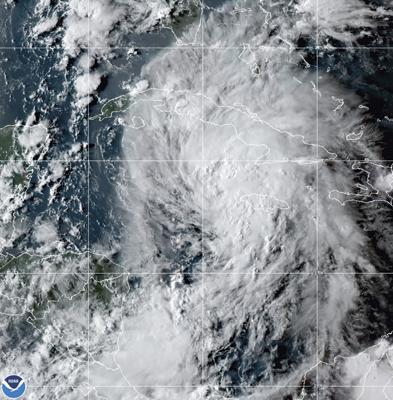
    BATON ROUGE, La. (AP) — Tropical Storm Ida intensified as it swirled toward a strike on Cuba on Friday, showing hallmarks of a rare, rapidly intensifying storm that could speed across warm Gulf waters and slam into Louisiana as a Category 3 hurricane on Sunday, the National Hurricane Center warned.

    “The forecast track has it headed straight towards New Orleans. Not good,” said NOAA’s Jim Kossin, a climate and hurricane scientist.

    Ida posed a relatively low threat to tobacco-rich western Cuba, where forecasters predicted a glancing blow on Friday. The real danger begins over the Gulf, where forecasts were aligned in predicting Ida will strengthen very quickly into a major hurricane, reaching 115 mph (185 kph) before landfall in the Mississippi River delta late Sunday or early Monday, experts said.

    “Ida certainly has the potential to be very bad,” said Brian McNoldy, a hurricane researcher at the University of Miami. “It will be moving quickly, so the trek across the Gulf from Cuba to Louisiana will only take 1.5 days.”

    Friday morning, Ida’s maximum sustained winds swiftly rose from 45 mph (75 kph) to 60 mph (95 (kph) as it moved away from Grand Cayman toward Cuba’s Isle of Youth at about 15 mph (24 kph). Tropical storm-force winds extended as far as 80 miles (130 kilometers) from the center.

    A hurricane watch for New Orleans and an emergency declaration for the state of Louisiana were declared. Category 3 hurricanes are capable of causing devastating damage.

    “Unfortunately, all of Louisiana’s coastline is currently in the forecast cone for Tropical Storm Ida, which is strengthening and could come ashore in Louisiana as a major hurricane as Gulf conditions are conducive for rapid intensification,” said Gov. John Bel Edwards.

    “By Saturday evening, everyone should be in the location where they intend to ride out the storm,” the governor added.

    A hurricane watch was in effect from Cameron, Louisiana, to the Mississippi-Alabama border — including Lake Pontchartrain, Lake Maurepas and metropolitan New Orleans.

    Dangerous storm surge was also possible along the Gulf Coast. If it pushes a storm surge at high tide, Ida could overlap some levees, with 7 to 11 feet (2.1 to 3.4 meters) of water predicted from Morgan City, Louisiana, to Ocean Springs, Mississippi.

    “There is an increasing risk of life-threatening storm surge, damaging hurricane-force winds, and heavy rainfall Sunday and Monday, especially along the coast of Louisiana,” the hurricane center said.

    The mayor of Grand Isle, a Louisiana town on a narrow barrier island in the Gulf, said a voluntary evacuation late Thursday would become mandatory on Friday.

    The storm was forecast to drop up to 20 inches of rain over western Cuba, where deadly flash floods and mudslides were possible. By the time it reaches the central Gulf Coast Sunday afternoon, it could dump 8 to 16 inches (15 to 30 centimeters) of rain, with 20 inches in isolated areas, from southeast Louisiana to coastal Mississippi and Alabama through Monday morning. More heavy rains are likely across Mississippi when Ida moves inland, causing “considerable flash, urban, small stream, and riverine flooding,” the hurricane center said.

  • Mississippi legislators revive talk of erasing income tax

    Mississippi legislators revive talk of erasing income tax

    JACKSON, Miss. (AP) — Some members of the Republican-controlled Mississippi Legislature are renewing an effort to eliminate the state income tax — a proposal that failed earlier this year amid concerns it would drain budgets for schools, roads and other services in one of the nation’s poorest states.

    Republican House Speaker Philip Gunn is leading the effort, and he said Wednesday that phasing out the state income tax could help Mississippi attract new businesses and new residents.

    “I don’t think if we just eliminate the income tax that it’s going to be ‘happy days are here again,’ but we fight enough obstacles in this state to attract people already. That’s one of them,” Gunn told reporters at the Capitol.

    Democratic Sen. Hob Bryan of Amory, opposes erasing the income tax. He said Mississippi has “crumbling” roads, widespread water and sewer problems and areas that lack reliable internet access.

    “Do you know a single human being on the face of the earth that would move to Mississippi if only we didn’t have a state income tax?” Bryan said. “It’s laughable on its face.”

    Their comments came after several members of the House and Senate spent hours listening to the state revenue commissioner, the state economist and others. The hearing extends into a second day Thursday.

    Jared Walczak, vice president of state projects for the Washington-based Tax Foundation, told legislators Wednesday that nine states do not charge an income tax: Alaska, Florida, Nevada, New Hampshire, South Dakota, Tennessee, Texas, Washington and Wyoming.

    Walczak said states without an income tax have experienced faster growth than many other states, especially those with higher rates.

    Individual income taxes made up 34% of Mississippi’s state tax revenue during the state budget year that ended June 30, according to the state Department of Revenue. That was about $2.2 billion from individual income taxes in the nearly $6.6 billion the state collected for its general fund.

    Any votes on trying to eliminate the income tax could be months away because the full Legislature is not meeting now. The next regularly scheduled legislative session begins in January.

    Republican Gov. Tate Reeves said Tuesday that he supports eliminating the income tax.

  • Louisiana State University to wipe away $7M in student debt

    Louisiana State University to wipe away $7M in student debt

    BATON ROUGE, La. (AP) — Louisiana State University announced it will use federal coronavirus aid to forgive more than $7 million in student debt for about 4,000 students.

    “In an effort to continue providing access to an LSU education, we have made the decision to clear all unpaid prior tuition and fee balances for LSU students who enrolled at any point during the COVID-19 pandemic period,” LSU Vice President for Enrollment Management Jose Aviles said in a statement Monday. “We are committed to ensuring that students have every opportunity to continue their educational pursuits.”

    The Advocate reports the debt forgiveness will apply from the spring of 2020 to the present for students with balances owed directly to LSU. Those debts could include an outstanding balance on tuition, fees, housing, meal plans or parking, according to university spokesperson Ernie Ballard.

    The average amount of debt wiped away per student is $1,816, Ballard said.

    A variety of schools around the country have announced student debt forgiveness programs financed with federal coronavirus dollars, including Baton Rouge Community College, Grambling State University and Southern University in Shreveport.