Category: Mississippi News – d2319
-
Mississippi House passes pharmacy benefit manager transparency bill
A bill that aims to increase pharmacy benefit managers’ transparency by requiring them to report data to the agency that oversees pharmacy practice in Mississippi passed in the House of Representatives Thursday.
But the Board of Pharmacy and some pharmacists say the legislation doesn’t do enough to help pharmacies and patients.
House Speaker Jason White, who authored the bill, called it “a good first step.” It will give the Board of Pharmacy – and the public – insight into the companies’ business practices to ensure they are compliant with the law, he told Mississippi Today.
The bill, which passed 88-8, does the following:
1. Prohibits pharmacy benefit managers from charging insurers more for drugs than pharmacists are paid, a practice that can be used by the companies to inflate their profits.
2. Requires pharmacy benefit managers to submit reports detailing the rebates, or cost savings, they receive from pharmaceutical companies and to disclose their affiliations with pharmacies to the Board of Pharmacy.
3. Requires drug manufacturers and health insurers to submit reports detailing wholesale drug costs and information about drug costs and spending, respectively, to the Board of Pharmacy.
4. Tasks the Board of Pharmacy with developing a website summarizing the reports.
5. Allows the Board of Pharmacy to issue subpoenas during audits of pharmacy benefit managers and forces the company to pay for the audit if it is found to be noncompliant with state statute.
It will next go to the Senate for consideration.
But some advocates say the bill does not do enough to protect independent pharmacists, or retail pharmacies not owned by a publicly traded company or affiliated with a large chain, and the customers they serve.
Many Mississippi independent pharmacists fear they may be forced to close as a result of low payments from pharmacy benefit managers, which small businesses do not have the leverage to negotiate.“Collecting the data is one thing. Doing something with it is another,” said Robert Dozier, the executive director of the Mississippi Independent Pharmacy Association. “When you look at the legislation, it does nothing to help the pharmacists, and it’s not tightening the loopholes that the Board of Pharmacy needs. It’s not going to do a whole lot.”
In a statement read by Rep. Stacey Hobgood-Wilkes, a Republican from Picayune and chair of the Drug Policy committee, on the House Floor, the Mississippi Board of Pharmacy requested that the legislation be amended to heighten the regulatory enforcement authority it holds over pharmacy benefit managers, though it did not name specific tools that would be helpful.
-

Proposal: eliminate income tax, add 5% tax on gas, allow cities, counties to levy local sales tax
House leaders on Friday unveiled a sweeping tax cut proposal that would eventually abolish the state income tax, slash taxes on groceries, increase local sales taxes and shore up funds for state and local road work.
The plan would over time take more than $1 billion from current revenue.
“We will Build Up Mississippi by eliminating the income tax to further our state’s competitive advantage and award our workforce,” House Speaker Jason White wrote on social media. “We will build up Mississippi by cutting the grocery tax in half to boost the pocketbook of Mississippians.”
Long a priority for House Republican leaders, the legislation would reduce the income tax rate from 4% to 3% this year. Then, it would reduce the rate by .3% each additional year until the tax is eliminated in 10 years.
The plan also trims the 7% sales tax on groceries to 2.5% over time. Under current law, Mississippi’s 7% sales tax is split between the state and municipalities where the tax is collected. To shore up the loss, the legislation would end the state’s 18.5% sales tax diversion to municipalities, meaning the full sales tax collected will go to the state budget.
To make municipalities whole, the bill adds a general 1.5% local sales tax for both municipalities and counties that the local governments can vote to opt out of.
The legislation also adds a new 5% tax on gasoline sales, which would go toward the Mississippi Department of Transportation’s budget for road and bridge infrastructure. The tax is expected to generate $400 million a year. Currently, Mississippi has an 18.4 cents-a-gallon flat tax on gasoline — a flat rate no matter the cost of a gallon. Transportation leaders have for years said they need an indexed tax that would rise with the cost of gasoline in order to generate enough money to keep up road maintenance.
-

Mississippi Residents Invited to Free Alzheimer’s Educational Conference on February 19 in Jackson Sponsored by the Alzheimer’s Foundation of America
The Alzheimer’s Foundation of America (AFA) will kick off its 2025 National Educating America Tour with a free Alzheimer’s & Caregiving Educational Conference for Mississippi residents on Wednesday, February 19 from 10:00 am to 1:00 pm CT at the Hilton Jackson Hotel (1001 East County Line Road, Jackson). The free conference is open to everyone and will allow participants to learn from experts in the field of Alzheimer’s disease, brain health, caregiving, and legal and long-term care planning. Register by visiting www.alzfdn.org/tour. Advance registration is highly recommended.
“Knowledge is a useful and powerful tool that can help make any situation easier to navigate, especially something as challenging as caring for a loved one with Alzheimer’s disease,” said Charles J. Fuschillo, Jr., AFA’s President & CEO. “Connecting families with useful, practical information and support that can help them now and be better prepared for the future is what this conference is all about. Whether Alzheimer’s is affecting your family, you are a caregiver or just want to learn more about brain health, we invite you to join us on February 19.”
Sessions during the AFA conference will include:
Alzheimer’s Disease and Dementia: 10 Things to Remember– Dr. Kim Tarver will provide an overview of Alzheimer’s disease and related dementia, including common questions, warning signs, and the differences between memory issues caused by dementia and normal aging. She will discuss common risk factors for Alzheimer’s disease and go over current diagnostic and treatment approaches.
Dr. Tarver is an Associate Professor of Medicine and Director of the Division of Geriatrics at the University of Mississippi Medical Center (UMMC). She also serves as Director of MIND Center Clinical Services at UMMC. Dr. Tarver is board-certified in Internal Medicine and Geriatrics and has over 20 years of experience in clinical practice and teaching in Geriatrics.
Planning for the Caregiver, Resources and Support– Dr. Chelsea B. Crittle will guide families how they can prepare to meet the demands of caregiving, develop a plan, and provide the best possible care for their loved ones. She will offer valuable information on where to seek support and access available resources.
Dr. Crittle is the Aging Division Director of the Central Mississippi Planning and Development District with the Area Agency on Aging, which provides services to older adults so they will be able to remain independent and live in their own homes as long as possible. In this role, she oversees home and community-based services on behalf of the 60-plus population and manages the funding for much needed programs and services.
Legal Planning to Pay for Long Term Care– Richard A. Courtney, CELA, will discuss the importance of estate planning and legal planning to help someone pay for long-term care. He will describe eligibility for Medicaid to pay for these expenses, as well as legal strategies to protect the assets and independence of individuals living with dementia.
Mr. Courtney is a Certified Elder Law Attorney and the Principal of Courtney Elder Law Associates PLLC. He is a former Assistant Dean and Adjunct Professor of Law; a Fellow and member of the Council of Advanced Practitioners of the National Academy of Elder Law Attorneys; the Trust and Estate Law Sections of the American and Mississippi Bar Associations; and the Special Needs Alliance, a national organization of special needs planning attorneys.
Free, confidential memory screenings will be conducted throughout the day.
For more information or to register for the February 19 conference in Jackson, visit www.alzfdn.org/tour. Those who cannot participate in the conference or have immediate questions about Alzheimer’s disease can connect with licensed social workers seven days a week through AFA’s National Toll-Free Helpline by calling 866-232-8484, texting 646-586-5283, or web chatting at www.alzfdn.org by clicking the blue and white chat icon in the right-hand corner of the page. The web chat and text message features are available in more than 90 languages.
About Alzheimer’s Foundation of America (AFA)
The Alzheimer’s Foundation of America (AFA) is a non-profit organization whose mission is to provide support, services and education to individuals, families and caregivers affected by Alzheimer’s disease and related dementias nationwide and to fund research for better treatment and a cure. Its services include a National Toll-Free Helpline (866-232-8484) staffed entirely by licensed social workers, caregiver support groups, educational programs and publications for caregivers, dementia-care training for healthcare professionals, the National Memory Screening Program, and more. For more information about AFA, call 866-232-8484, visit www.alzfdn.org, or connect with us on Facebook, X (Twitter), Instagram, or LinkedIn. AFA holds Charity Navigator’s top 4-star rating.
-
State Sen. Jenifer Branning wins a Mississippi Supreme Court seat
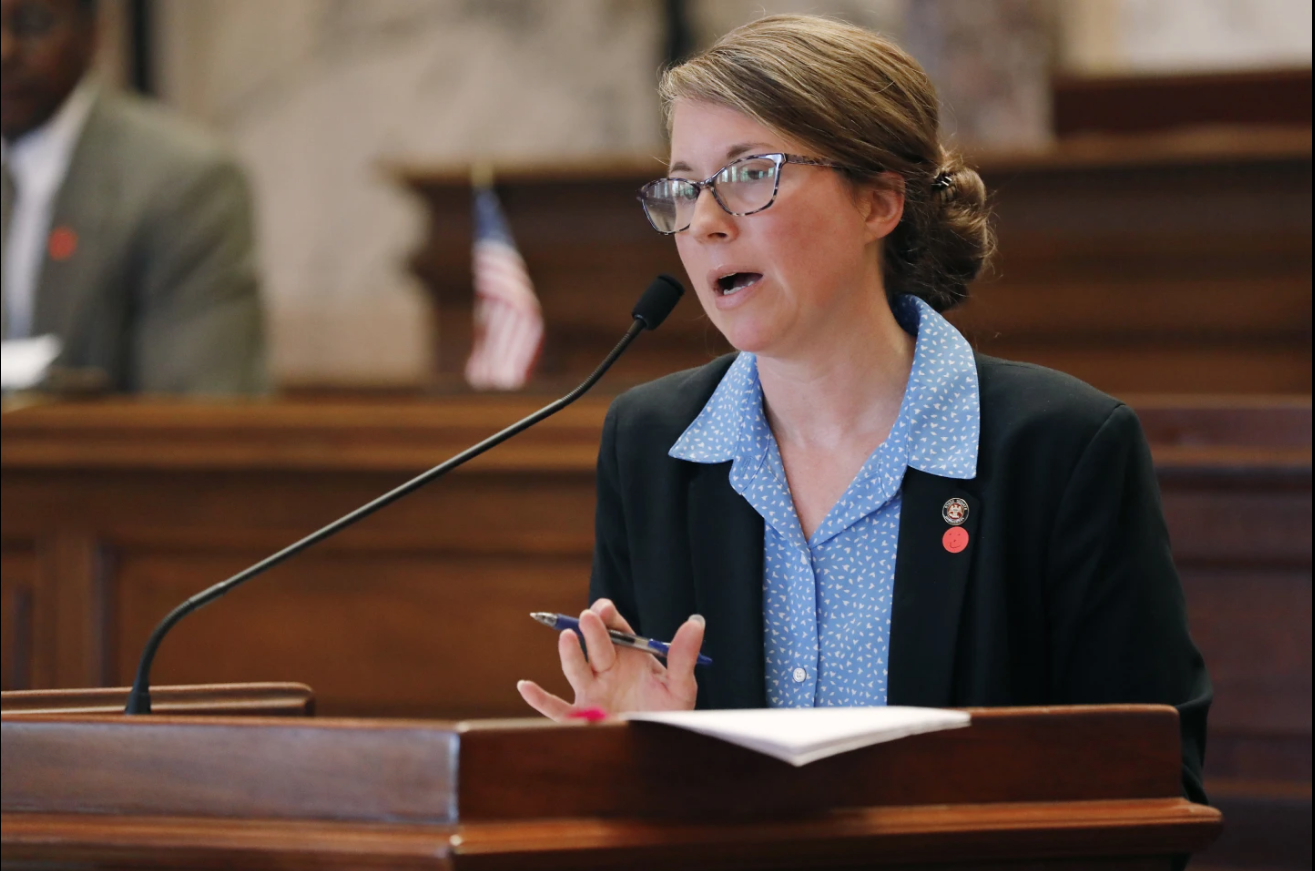
JACKSON, Miss. (AP) — State Sen. Jenifer Branning has won a seat on the Mississippi Supreme Court, defeating Justice Jim Kitchens.
The Associated Press on Friday declared the race for Branning as counties reported official results from the Nov. 26 runoff election.
Kitchens and Branning advanced to the runoff as leaders among five candidates in the Nov. 5 general election. They ran in District 1, also known as the Central District, which stretches from the Delta region through the Jackson metro area and over to the Alabama border.
Mississippi judicial candidates run without party labels. But Democratic areas largely supported Kitchens, and Republican ones supported Branning.
Kitchens issued a statement Friday congratulating Branning.
“During the 16 years that I was privileged to serve the people of Mississippi on their highest court, I have kept my oath of office by administering justice without respect to persons and by doing equal right to the poor and the rich,” Kitchens said. “I will continue to serve the cause of justice by returning to the practice of law.”
Branning serves in the Senate as a Republican and was endorsed by the state Republican Party. She calls herself a “constitutional conservative” and says she opposes “liberal, activists judges” and “the radical left.”
Kitchens was seeking a third term and is the more senior of the court’s two presiding justices, which had put him next in line to serve as chief justice. He was endorsed by the Southern Poverty Law Center’s Action Fund, which calls itself “a catalyst for racial justice in the South and beyond.”
In September, Kitchens sided with a man on death row for a murder conviction in which a key witness recanted her testimony. In 2018, Kitchens dissented in a pair of death row cases dealing with the use of the drug midazolam in state executions.
-

Stealth destroyer to be home for 1st hypersonic weapon on a US warship
The U.S. Navy is transforming a costly flub into a potent weapon with the first shipborne hypersonic weapon, which is being retrofitted aboard the first of its three stealthy destroyers.
The USS Zumwalt is at a Mississippi shipyard where workers have installed missile tubes that replace twin turrets from a gun system that was never activated because it was too expensive. Once the system is complete, the Zumwalt will provide a platform for conducting fast, precision strikes from greater distances, adding to the usefulness of the warship.
“It was a costly blunder. But the Navy could take victory from the jaws of defeat here, and get some utility out of them by making them into a hypersonic platform,” said Bryan Clark, a defense analyst at the Hudson Institute.
The U.S. has had several types of hypersonic weapons in development for the past two decades, but recent tests by both Russia and China have added pressure to the U.S. military to hasten their production.
Hypersonic weapons travel beyond Mach 5, five times the speed of sound, with added maneuverability making them harder to shoot down.
Last year, The Washington Post reported that among the documents leaked by former Massachusetts Air National Guard member Jack Teixeira was a defense department briefing that confirmed China had recently tested an intermediate-range hypersonic weapon called the DF-27. While the Pentagon had previously acknowledged the weapon’s development, it had not recognized its testing.
-

Court agrees with ban on medical marijuana advertising in Mississippi
JACKSON, Miss. (AP) — Medical marijuana businesses in Mississippi don’t have the right to advertise on billboards or other places because marijuana itself remains illegal under federal law, an appeals court says.
The owner of a medical marijuana dispensary argued that the First Amendment protects the right to advertise because Mississippi law permits the sale of cannabis products to people with debilitating medical conditions. The state enacted its law in 2022.
A three-judge panel of 5th U.S. Circuit Court of Appeals on Friday rejected the arguments about advertising. They cited the federal Controlled Substances Act, which since 1970 has prohibited the manufacture, distribution, dispensing and possession of marijuana.
The federal law applies in all states, and Mississippi “faces no constitutional obstacle to restricting commercial speech relating to unlawful transactions,” the judges wrote.
The Mississippi attorney general’s office praised the court decision for upholding “Mississippi’s reasonable restrictions on advertising for medical marijuana dispensaries by print, broadcast, and other mass communications,” said the office spokesperson, MaryAsa Lee.
Clarence Cocroft II operates Tru Source Medical Cannabis in the northern Mississippi city of Olive Branch. He sued the state in 2023 to challenge its ban on medical marijuana advertising on billboards or in print, broadcast or social media or via mass email or text messaging.
The state allows medical marijuana businesses to have websites or social media accounts that provide information about their retail dispensing locations and a list of products available. It allows them to be listed in phone books or business directories and to display cannabis in company logos. The businesses can also sponsor not-for-profit charity or advocacy events.
Cocroft is represented by the Institute for Justice, a nonprofit libertarian law firm. The firm said Monday that it is considering its next steps in the lawsuit, including possibly asking the entire appeals court to reconsider the case or an appeal to the Supreme Court.
“Mississippi cannot on the one hand create an entire marketplace for the sale of medical marijuana, and on the other hand rely on an unenforced federal law to prohibit buyers and sellers from talking about it,” said Ari Bargil, an Institute for Justice attorney.
-
Court says it’s ending dispute over Mississippi airport board but city officials disagree
JACKSON, Miss. (AP) — A federal appeals court says it is ending a long-running dispute over whether the state of Mississippi or its capital, Jackson, will control the city’s airport board.
The decision Tuesday by a three-judge panel of the 5th U.S. Circuit Court of Appeals could clear the way for a new board controlled mostly by state-appointed members. But city officials said Wednesday that they are “seeking a clarification” on the ruling.
Mayor Chokwe Antar Lumumba, the city council and the city attorney said in a statement that changing control of the airport board is “an unconstitutional takeover” of city property. They also said the appeals court overstepped its power by ordering the entire lawsuit to be dismissed rather than ruling only on a specific question of whether legislators could avoid answering questions in the case.
Republican legislators who pushed for a new board said Jackson-Medgar Wiley Evers International Airport should have a regional governing authority because it serves a regional customer base. Critics of the change said white suburban Republicans were trying to steal authority over an asset controlled by Democratic officials in majority-Black Jackson.
In 2016 some Jackson residents sued then-Gov. Phil Bryant and several legislators months after Bryant, a Republican, signed a law to create a new airport board. Changes have been on hold during the court fight.
On Tuesday a three-judge panel ordered a district judge to dismiss the suit, saying city-appointed airport board members failed to show they would be harmed by a change in the governing authority.
“Groundhog Day has come to an end,” Appeals Court Judge Edith H. Jones wrote.
Jackson has maintained control of the airport during the dispute, and city officials currently have the power to appoint a five-member board.
Under the 2016 law creating a nine-person airport board, five members would be appointed by state officials: two by the governor and one each by the lieutenant governor, the Mississippi National Guard adjutant general and the Mississippi Development Authority director. There would also be one appointment each from Jackson’s mayor and City Council and supervisors in suburban Madison and Rankin counties.
-
SWAC Issues Suspensions and Fines Following Jackson State-Alabama State Postgame Incident
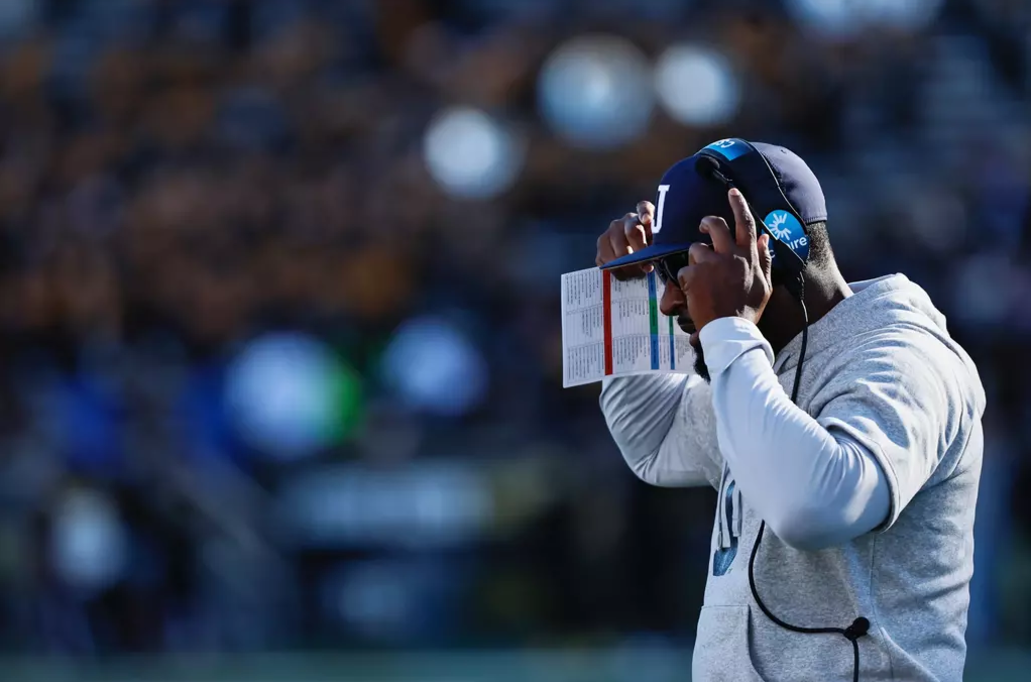
The Southwestern Athletic Conference (SWAC) has announced disciplinary actions, including suspensions and fines, following a postgame altercation between Jackson State University (JSU) and Alabama State University football teams on Saturday, November 16.
Sixteen players—seven from JSU and nine from Alabama State—have been suspended for their involvement in the fight, sidelining them from their teams’ next scheduled games. Additionally, both schools have been fined $25,000 for violating the league’s code of ethics and conduct through acts of unsportsmanlike behavior.
“Acts of unsportsmanlike conduct have zero place in the sports of intercollegiate athletics and within the Southwestern Athletic Conference,” stated SWAC Commissioner Dr. Charles McClelland. “We are extremely disappointed to have had consecutive weeks of football competition negatively impacted by these unfortunate occurrences.”
Jackson State University officials confirmed that the suspensions will affect the upcoming game against Alcorn State University, though the identities of the suspended players were not disclosed. JSU President Marcus L. Thompson, Ph.D., reiterated the university’s commitment to sportsmanship and discipline.
“Sportsmanship is a core value of Jackson State University and defines the spirit of our athletic programs,” Thompson said. “Our athletic director and head football coach are working closely with our team to ensure the standard of sportsmanship, discipline, and excellence continues to be a guiding force for the growth and success of our student-athletes.”
The penalties mark the latest in a string of incidents that have cast a shadow over recent SWAC football games. Dr. McClelland emphasized the importance of maintaining the integrity of competition across the conference, urging all teams to uphold higher standards of conduct moving forward.