Blog

  • Hundreds arrested as Kenyans mark the anniversary of deadly protests in 2024


    NAIROBI, Kenya (AP) — Police in Kenya said they detained hundreds of people and fired tear gas on Thursday as families of those killed in anti-government protests two years ago marched to the Parliament building to demand compensation and justice.

    At least 60 people were killed when police opened fire outside Parliament in Nairobi in the June 2024 protests that were triggered by tax increases. The victims’ families said that they were protesting against a lack of transparency in compensating the victims, after the government promised reparations.

    President William Ruto said last week that the protest would be allowed, but that the government would also protect schoolchildren and workers and he warned against any attempts by the demonstrators to “shut down the country.”

    Police erected roadblocks on all major highways around Nairobi, blocking motorists from accessing the city. The Parliament building was barricaded and businesses were closed.

    Interior Minister Kipchumba Murkomen said that 355 “criminals” were arrested in Nairobi and other towns. He said that the measures were necessary to “protect businesses and avert chaos.”

    Journalists and witnesses said that many ordinary Kenyans appeared to be among those detained.

    Police also fired tear gas at protesters outside Nairobi’s main police station who attempted to present a petition.

    Opposition leaders backed the protests, calling for transparency in the $15 million government’s compensation program.

    During protests on June, 25, 2024, thousands of young Kenyans stormed the Parliament building, urging legislators to vote against a finance bill that had proposed an increase in taxes despite the rising cost of living. Police opened fire outside the building, killing dozens.

    Ruto said last week that the government compensation represents “a state acknowledgment that harm occurred,” but was not an admission of guilt. He said that the compensation shouldn’t be seen as a “reward for violence or criminality,” in a country where violent protests are common.

    Several opposition figures — including former Vice President Kalonzo Musyoka, former Justice Minister Martha Karua and former Chief Justice David Maraga — marched alongside activists and the families of the 2024 crackdown victims, laying wreaths at the barbed-wire barricades around Parliament.

    Edith Wanjiku, whose 19-year-old son Ibrahim Kamau died of gunshots to the neck, said that her family has yet to receive compensation although they had submitted documents to the state-funded Kenya Human Rights Commission.

    “Only two out of 10 families whose children were shot that day near Parliament have been compensated and we are wondering what criteria the government is using,” she told The Associated Press.

    Gillian Munyao, whose son, Rex Masai, also was killed, said that compensation can’t replace justice.

    “Arrest the killer cops, that’s my message to the government,” she said.

    The chair of the compensation panel, Makau Mutua, said on Wednesday that the process was still ongoing and that every verified claim would be paid.

    Three police officers have been charged in the deaths of protesters.

  • Victoire’s Marie-Philip Poulin played through a torn ACL and is set for surgery in July


    MONTREAL (AP) — Montreal Victoire captain Marie-Philip Poulin revealed Thursday she played through a torn ACL and a torn meniscus in her right knee to help the team capture the PWHL championship and is expected to be out indefinitely after surgery set for late July.

    Poulin, 35, was initially injured in the preliminary round at the Olympics but still played for Canada in the knockout stage to help it reach the final before losing to the U.S. in overtime and leaving Milan with silver. She aggravated the injury on March 15 when Montreal played Boston.

    “It is emotional. Hockey, it is my life,” Poulin said, fighting back tears during a video news conference with Victoire general manager Danièle Sauvageau. “It’s the journey of an athlete where you give your 100% every day, things can happen, and that’s part of it. Not that I’m looking forward to it, but I am looking forward to (stepping) up in that recovery room, in that training room, to go one day at a time and come back.”

    Sauvageau said the Victoire will provide updates as they become available, adding the team is confident Poulin will return to play “in due time.”

    Poulin missed 10 games after reinjuring the knee in March, then was playoff MVP for her role in Montreal’s first Walter Cup title run, with two goals and six assists in nine games.

    “I won’t lie, yes, it was painful. Mentally and physically, it was difficult,” Poulin said. “It was hard, but to be honest, I knew the team we had was very special. I knew we were in a position to put ourselves in a very good spot to win the Walter Cup. It was one of our goals, and it was one of my goals. It was worth it.

    “I knew all the risks, what was for it and what was against it, and what I had to do. At the end of the day, I was 100% committed. And I was very happy to lift that Cup at the end of the day.”

    Poulin is widely regarded as one of the greatest women’s hockey players of all time. She has won three Olympic gold medals, scoring the winning goal in all three of those finals to earn the nickname “Captain Clutch.”

    A five-time Olympian, Poulin also is the Canadian women’s team’s all-time leading goal scorer at the Winter Games with 20.

    Poulin is the PWHL’s all-time leading scorer with 38 goals and 67 points in 70 games since the league began play in 2024. She was named league MVP in 2025.

    This past season, Poulin recorded nine goals and nine assists in 19 games.

    “I don’t think there’s any words to describe Marie, to start with, and what she had decided following this injury. It was not a ‘for sure’ to be back during the playoffs,” Sauvageau said. “To go through this process, not knowing if it’s gonna work, it was unbelievable to watch … This is what Marie-Philip is all about, a person of (few) words, but so much more action. And this is how she leads.

    “(The goal) is to be back as long as possible. We love watching her, we love having her around, she’s bigger than the sport itself and the sport needs her.”

    ___

    AP women’s hockey: https://apnews.com/hub/womens-hockey


  • David Clayton-Thomas, powerhouse lead singer of Blood, Sweat & Tears, dies at 84


    NEW YORK (AP) — David Clayton-Thomas, the lead singer of Blood, Sweat & Tears, whose husky, high-strung tenor on “Spinning Wheel,” “And When I Die” and other hits helped make the so-called brass rock band among the most popular acts of the late 1960s, has died at age 84.

    Spokesperson Eric Alper said that Clayton-Thomas died “peacefully” Wednesday at St. Michael’s Hospital in Toronto. Alper did not cite a specific cause.

    Clayton-Thomas was a onetime street fighter and petty thief from Canada who briefly became a rock superstar, the front man of a nine-member group that sold millions of records and won two Grammys for “Blood, Sweat & Tears,” which beat out the Beatles’ “Abbey Road” for best album of 1969. Calling out amid a jazzy parade of horns, keyboards and percussion, Clayton-Thomas’ urgent shout was a signature voice of the era, preaching love on the Motown cover “You’ve Made Me So Very Happy,” a lasting legacy on Laura Nyro’s “And When I Die” and a cool head on his own “Spinning Wheel.” Meanwhile, Blood, Sweat & Tears helped inspire a wave of horn-led bands, among them Chicago, the Electric Flag and Ten Wheel Drive.

    “A lot of the guys (in Blood, Sweat & Tears) would play a Broadway show matinee, then go up to Harlem and play Latin music or R&B and funk at night, or come down to the Village and play pure jazz the next night,” Clayton-Thomas told bestclassicbands.com in 2023. “I was just a blues player: give me three chords and I’ve got a song.”

    At its peak, Blood, Sweat & Tears’ appeal was so broad it helped lead to the band’s downfall.

    Hip enough to perform at the 1969 Woodstock festival, where they were among the highest paid acts, they also were known enough to the establishment to tour Eastern Europe the following year on behalf of the State Department. When Clayton-Thomas and other band members denounced the Communist regimes on the other side of the Cold War, Rolling Stone’s David Felton wrote that “the State Department got its money worth.” Yippies would turn up at a 1970 Blood, Sweat & Tears show at Madison Square Garden, carrying obscene banners outside and dumping manure by the front gate.

    The band had practical reasons for going along with the government: Clayton-Thomas, who had allegedly wielded a gun at his girlfriend, had been denied a green card and faced deportation. But after topping the charts in 1970 with the album “Blood, Sweat & Tears 3,” their appeal soon faded. A burned out Clayton-Thomas left the group in 1972, and neither he nor the remaining musicians ever regained their old stature. Blood, Sweat & Tears would continue recording over the next few years, and even briefly reunited with Clayton-Thomas, who went on to release more than a dozen solo albums and tour on his own for decades.

    Clayton-Thomas was inducted into the Canadian Music Hall of Fame in 1996. “Spinning Wheel,” covered by everyone from James Brown to TV star Barbara Eden, was voted into the Canadian Songwriters Hall of Fame a decade later.

    Clayton-Thomas is survived by his daughters, Ashleigh Clayton-Thomas and Christine Graham.

    Up from the streets

    Born David Henry Thomsett in Surrey, England, and raised near Toronto and Ottawa, he was the son of a Canadian World War II veteran and of a pianist-entertainer who helped inspire her son’s interest in music. Thomsett was lucky to have the chance. He fought violently with his father, was living in the streets by his mid-teens and by age 20 was serving time in a reformatory for vagrancy, assault and other crimes.

    An old guitar, left behind by a fellow inmate, changed his life. He taught himself to play and began spending extensive time in the early 1960s around Toronto’s Yonge Street music “strip,” where peers included the American rockabilly star Ronnie Hawkins, a mentor to Robbie Robertson and other future members of the Band and a guide for Thomsett early in his career.

    Anxious to reinvent himself, he changed his last name to Clayton-Thomas while leading his own groups. In the mid-60s, he released such albums as “Sings Like It Is” and had a hit single with the anti-war rocker “Brainwashed.” He would also befriend a rising star, Joni Mitchell, whose childlike “Circle Game” helped inspire “Spinning Wheel,” and the venerable John Lee Hooker, who would indirectly contribute to Clayton-Thomas’ breakthrough in the U.S.

    America beckons

    Hooker had encouraged Clayton-Thomas to move to New York, where the American bluesman had an engagement at the Cafe Au Go Go in Greenwich Village. When Hooker unexpectedly departed for a tour of Europe, club owner Howard Solomon needed a replacement and recruited Clayton-Thomas.

    “So I played him a couple songs on the guitar,” Clayton-Thomas told bestclassicbands.com. “He said, ‘Do you have a band?’ I said, ‘Sure,’ and went out into Greenwich Village looking for anybody carrying a guitar case or even looking like a musician, and we put together a little band and we opened there that night. We ended up staying there for several months.”

    Around the same time, session man-producer Al Kooper was looking to form a jazz-rock group and was joined by such musicians as guitarist Steve Katz, drummer Bobby Colomby and horn players Randy Brecker and Jerry Weiss. They called themselves Blood, Sweat & Tears, releasing the debut album “Child Is Father to the Man” early in 1968. Although praised by Rolling Stone publisher Jann Wenner as “a fine, exemplary group,” members were torn between those allied with Kooper and those who thought his vocals too weak to attract a substantial audience.

    By the end of the year, Kooper and others had departed, and the band was seeking a new singer. After Judy Collins saw Clayton-Thomas perform, she recommended him to Colomby.

    “I got home and just a couple of days later, Bobby Colomby called me up and said, ‘Hey, Kooper’s gone. We got four guys left out of the nine. And we still got a record contract with Columbia. Do you want to come down and try out for the band?”’ Clayton-Thomas told bestclassicbands.com. ”I said, ‘You’re damn right.’ I knew (bassist) Jim Fielder real well and I knew they were superb musicians. So I was on the next plane. We had a rehearsal that afternoon, an audition, and it was instant magic. We just knew right off the bat.”


  • Federal judge halts Trump’s election executive order seeking to create a federal voter list


    BOSTON (AP) — A federal judge on Thursday halted President Donald Trump’s executive order that sought to create a federal voter list and limit who can receive a mail ballot.

    U.S. District Court Judge Indira Talwani, who was nominated by Democratic President Barack Obama, sided with a coalition of nearly two dozen states that challenged the Republican president’s order in granting a summary judgment. Her ruling applies to this year’s midterm election cycle.

    Plaintiffs argued in two lawsuits, both filed in federal court in Boston, that Trump’s order should be found unconstitutional because the states and Congress, not the president, have the power to set election rules. The judge agreed, saying in her ruling that the provisions of Trump’s order seeking to create a federal list of eligible voters and using the U.S. Postal Service to determine who can receive a mail ballot are “legally void” because they “unconstitutionally violate the separation of powers.”

    It was the second ruling in as many days against executive orders Trump has signed seeking oversight of the nation’s elections. A separate ruling Wednesday prohibited an executive order he had signed last year that would have required people to show documents proving their citizenship when registering to vote.

    Order targeted mail voting, administration likely to appeal

    Arizona Attorney General Kris Mayes, whose state was among the plaintiffs, celebrated the court’s decision.

    “Millions of independents, Republicans and Democrats across Arizona have voted by mail for decades,” she said in a statement, noting that nearly 80% of ballots in the state are cast by that method.

    Mayes, a Democrat, singled out military families, voters in the state’s rural expanses and Native Americans who cast ballots from tribal lands.

    “Donald Trump’s executive order targeted all of these voters,” she said. “But today, the courts affirmed what the Constitution makes clear: States run their elections, not the President.”

    The White House stood by Trump’s executive order and indicated the administration would appeal the ruling. The order, said spokeswoman Abigail Jackson, “lawfully protects our elections, and we are confident that we will ultimately prevail in its implementation.”

    The administration, in its motions to dismiss the lawsuits challenging the order, argued that the motions were premature and that plaintiffs lacked the legal basis to bring their claim based on the Administrative Procedure Act, which governs how federal agencies develop and issue regulations.

    But in an interim order before Thursday’s ruling, Talwani said the motions pertaining to this year’s election cycle were relevant: “In light of the EO’s specific deadlines over the next three months, and the reality that elections will be occurring throughout this period with the November 3, 2026 midterm occurring in just five months, postponing judicial review is impracticable and may inflict significant hardship on Plaintiffs,” she wrote. That order denied the Trump administration’s motion to dismiss the challenges.

    Executive order sought to give Postal Service a central role in elections

    Trump’s executive order, the second one aimed at elections during his second term, comes as he continues to raise the specter of widespread voting by noncitizens as a reason to change election rules. But states already have detailed processes aimed at keeping their voter rolls accurate, and voting by noncitizens has been shown to be rare. It also is a felony that can be punishable by deportation.

    Trump issued his second order in March after a bill he supported to overhaul voting stalled in Congress. The order would have had the federal government — through the director of U.S. Citizenship and Immigration Services and the commissioner of the Social Security Administration — create a “state citizenship list” of eligible voters. It then directed the U.S. Postal Service to deliver mail ballots only to those on the list.

    Election officials argued that it was ripe for abuse and could cause chaos.

    The Postal Service has published a proposed rule required by Trump’s executive order in the Federal Register. Among other things, the rule would not apply to primary elections or overseas ballots.

    Postal Service workers have pushed back against the order, saying they are not equipped to determine who is eligible to vote in each state. After Trump issued his order last spring, the National Rural Letter Carriers’ Association said forcing its members into such a role “risks politicizing one of the nation’s most trusted public institutions.”

    Maine Secretary of State Shenna Bellows, a Democrat whose state was among the plaintiffs, said the executive order illustrated how Trump was attempting to “abuse power in previously unthinkable ways” to interfere in elections.

    She said it “strains credulity” to think the U.S. Postal Service could set up a workable system for pre-screening individual voters to determine whether they would be allowed to vote by mail, adding that it would be “a shocking violation of American constitutional rights.”

    The Postal Service did not immediately respond Thursday to requests for comment.

    Trump’s second election executive order faces multiple legal challenges

    The lawsuit seeking summary judgment was filed by Democratic attorneys general representing 22 states and the District of Columbia. Also signing on were attorneys representing Democratic Gov. Josh Shapiro of Pennsylvania, which has a Republican attorney general.

    The states also told the court that the move imposes a costly burden on election officials to comply and would spread fear about the possibility of prosecution. Stephen Pezzi, a lawyer for the Trump administration, had argued that no one would be prosecuted for violating the order.

    The other lawsuit filed in Talwani’s court was by the League of Women Voters and other voting rights groups, which have sought a preliminary injunction against the executive order.

    In yet another lawsuit filed against the executive order, a federal judge in Washington, D.C., in May agreed with the Trump administration that it was too early to block the order because it had yet to be implemented. That lawsuit was brought by Democratic and civil rights groups, which have appealed.

    Since his 2020 presidential election loss to Democrat Joe Biden, Trump has groundlessly claimed mail voting is rife with fraud and has launched a federal investigation into that year’s vote, even though repeated audits and investigations, including ones run by Republicans, found it was free of widespread fraud. Trump also has said he wants to “take over” election administration in Democratic areas.

    ___

    Barrow reported from Atlanta and Hanna from Topeka, Kansas.


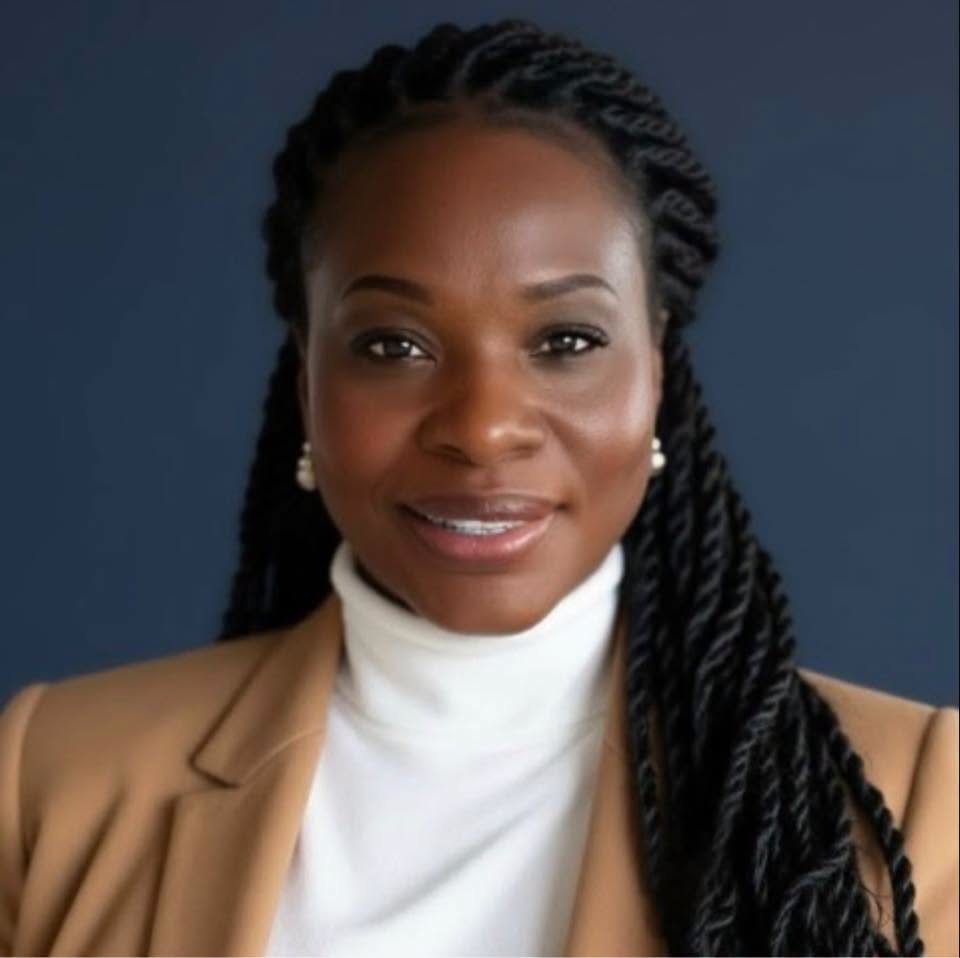
  • Tuwanna Williams Named Adams County Administrator

    Tuwanna Williams Named Adams County Administrator

    NATCHEZ, MS- Tuwanna Williams has been selected as the next Adams County Administrator following a unanimous vote by the Adams County Board of Supervisors.

    Board President Angela Hutchins said the county reviewed eight applicants before interviewing three finalists. Williams was unanimously chosen by the board and is expected to begin her new role in approximately two weeks.

    Williams succeeds Mitzi Conn, who resigned in May after serving as county administrator for about a year. She is well known in the Natchez-Adams County community for her work in workforce development, having previously led the collaborative workforce initiative before joining Copiah-Lincoln Community College.

    Listen Up Y’all Media congratulates Williams on her appointment and wishes her all the best as she begins serving Adams County in her new role.[contentDiscovery widget_name=”Content Discovery” display_title=”no” type=”latest” categories=”2419-5″ image=”none” timestamp=”show” count=”3″ paginate=”no”]

  • Tennis Hall of Famer Chris Evert says she will miss Wimbledon after recurrence of ovarian cancer


    Tennis Hall of Famer Chris Evert said Thursday her ovarian cancer has returned and treatment will prevent her from attending Wimbledon this year.

    Evert, 71, was first diagnosed with ovarian cancer in December 2021. In December 2023 she revealed her cancer had returned.

    She announced on social media on Thursday she already has had surgery “as the first step in my treatment and recovery” after tests revealed the cancer again had returned. She said she will begin chemotherapy “in the coming weeks.”

    “Because of this, I will not be attending Wimbledon this year, and I will step back from my professional commitments over the next few months to focus on my health,” Evert said.

    “Ovarian cancer is relentless, but I will stay optimistic and determined in continuing to fight this battle. I am deeply grateful to my medical team, my family, friends and everyone who has reached out with kindness and encouragement. I look forward to seeing everyone again soon.”

    Evert is an 18-time Grand Slam singles champion and has remained prominent in the sport as an analyst for ESPN.

    ___

    AP tennis: https://apnews.com/hub/tennis


  • JPMorgan Chase plans to expand Community Center program, doubling branches in low-income areas


    NEW YORK (AP) — JPMorgan Chase will significantly expand its national “Community Center” program, the bank said Thursday, with plans to double the number of these specialized branches the bank operates particularly in low-income neighborhoods.

    Along with doubling the number of Community Center branches, the bank plans to hire an additional 150 employees, known as community managers, and provide additional programming at these locations.

    The Community Center program focuses on Chase opening branches in low- and moderate-income communities, particularly in areas where residents may be underbanked or unbanked. Chase opened its first Community Center in Harlem in 2019 as an experiment and the program’s success led to 19 locations in operation across the country. Jamie Dimon, the bank’s CEO, has historically attended the grand opening of nearly all the Community Centers, and their openings are typically attended by local government officials and other dignitaries.

    “We are doubling down on our efforts to expand access,” said Diedra Porché, head of Chase’s community and business development division.

    These Community Centers are still Chase branches, but they include open areas where financial educators, local nonprofit organizations and other groups can provide financial workshops to neighborhood residents. The programs and workshops are free to the public. The bank says the locally-hired community managers who run the centers are directed not to sell products, and attendees are not required to be Chase customers or interested in Chase products.

    The centers are focused on financial education, ranging from teaching a person how to build a household budget to workshops for small business owners. The bank estimates it has hosted 14,000 of these workshops since the first community center opened, with more than 1 million attendees. Chase has set a goal of increasing the programming to reach 5 million attendees.

    Banks by law are required to provide services to low-income communities under the Community Reinvestment Act. But how banks provide these services can be in several different forms. While Chase does charitable giving through the JPMorgan Chase Foundation, Dimon has said in the past that he believes the bank can have a greater impact in low-income communities by opening branches in those neighborhoods, creating jobs and providing financing in underserved areas.

    “We try to meet people where they are, and then give them the tools and resources they might need to take their next step successfully,” Porché said.

    The program is also generally good business for the bank. While there are no salespeople involved in the actual programming, the opening of a community center branch in an underserved neighborhood tends to result in new accounts being opened and new customers for the bank. Chase has issued reports in the past that show its community centers lead to higher account openings, often far more account openings than what other branches in the area provide.


  • Supreme Court strikes down Hawaii law requiring permission to carry guns in stores and hotels


    WASHINGTON (AP) — The Supreme Court struck down a Hawaii law requiring people to get permission to carry guns into stores and hotels on Thursday, in its latest opinion backing Second Amendment rights.

    The high court’s 6-3 decision means people can carry guns onto privately owned property like shopping malls and gas stations, unless the owners specifically say guns are banned at their establishments. It comes shortly after the court found that marijuana users can’t be completely banned from owning firearms.

    It’s a win for President Donald Trump’s Republican administration, which argued the law violates the Second Amendment. The measure was sometimes referred to as a “vampire rule” because it required people with guns to get permission to enter, according to vampire lore, bloodsuckers need an invitation to enter a home.

    Hawaii argued that the 2023 measure ensured private owners could decide whether they wanted firearms on their property. The state passed the law as thousands more people got legal permission to carry guns in the wake of a 2022 Supreme Court ruling that found the Second Amendment gives most people the right to have guns in public.

    About four other states have enacted similar laws, though presumptive restrictions for guns on private property open to the public have also been blocked elsewhere.

    Hawaii also restricts guns in places like parks, beaches and restaurants that serve alcohol, but those rules weren’t before the court. They are being challenged in lower courts, however.

    The suit before the Supreme Court was filed by a gun rights group, the Hawaii Firearms Coalition, and three people from Maui. A judge originally blocked the measure, but an appeals court allowed it to be enforced. Trump’s Republican administration backed the Supreme Court appeal.

    The Second Amendment Foundation applauded the ruling. “This law was nothing more than a thinly veiled attempt to disarm peaceable citizens, and we’re grateful the Supreme Court saw through the ruse,” said Alan Gottlieb, its founder and executive vice president.

    The Hawaii Department of the Attorney General said they are disappointed, but will “continue to pursue common-sense regulation of firearms, consistent with the Second Amendment, for the safety of our people.”

    The gun-control group Everytown Law pointed out that business owners can still post signs forbidding firearms on their properties. “The Supreme Court may have changed the default rule, but it cannot take away a private property owner’s authority over their own land,” said Janet Carter, managing director of Second Amendment Litigation.

    The two Second Amendment decisions this term are the latest in a series of gun cases that have come before the Supreme Court in the wake of its 2022 ruling, which led to a flood of challenges to firearm restrictions across the country. The justices have since struck down a ban on bump stocks, gun accessories that enable rapid firing, but upheld a federal gun law intended to protect domestic violence victims as well as strict regulations on firearms known as ghost guns, which are nearly impossible to trace.

    ___

    Follow the AP’s coverage of the U.S. Supreme Court at https://apnews.com/hub/us-supreme-court.


  • Supreme Court ruling blocks thousands of lawsuits against the maker of Roundup weedkiller


    WASHINGTON (AP) — The Supreme Court sided with the maker of Roundup weedkiller Thursday in a ruling expected to block thousands of lawsuits alleging it failed to warn people the product could cause cancer.

    The case came before the justices after a tidal wave of litigation that included some multibillion-dollar verdicts against Bayer, a German agrochemical manufacturer that acquired Roundup’s original producer, Monsanto, in 2018.

    The decision is a victory for President Donald Trump’s administration, which argued in support of Bayer. But it provoked outrage from allies in the “ Make America Healthy Again” movement who want to rein in pesticide use.

    The high court, in a 7-2 ruling, held that Roundup cannot be sued in state courts for failure to warn because federal regulators have found a cancer link unlikely and do not require a warning label. Federal law also bars states from imposing additional or different labeling requirements, the opinion from Justice Brett Kavanaugh states.

    Justice Ketanji Brown Jackson, joined by Neil Gorsuch, dissented, saying that Monsanto could have added a warning without violating federal law.

    Though focused on Roundup, the ruling could affect similar health claims against other pesticide products.

    “This decision is good for American farmers who help feed the world,“ Bayer CEO Bill Anderson said. ”It provides the regulatory clarity necessary for innovators like us to develop the agricultural tools that guarantee an affordable food supply.”

    Though Bayer said the ruling should result in the dismissal of failure-to-warn lawsuits, the company said it plans to proceed with a proposed $7.25 billion class-action settlement intended to resolve many of the remaining claims.

    The ruling was denounced by environmental groups and lawyers representing people who believe they were harmed by Roundup.

    “This Supreme Court ruling wrongly slams the courthouse door on Americans sickened by pesticides,” said attorney Christopher Seeger, who is a claimant’s representative in the settlement. But he said a settlement still would allow some people to receive compensation.

    The decision “is a tragic setback for public and environmental health,” said Jay Feldman, executive director of Beyond Pesticides, a health and environmental group.

    A sickened gardener had won $1 million

    The case before the Supreme Court was filed by Missouri resident John Durnell. He developed a cancer called non-Hodgkin’s lymphoma after more than 20 years of serving as the neighborhood association’s “spray guy,” using Roundup on parks in his historic St. Louis community.

    A jury agreed that the company failed to warn him about possible cancer dangers and awarded him $1.25 million. But Durnell never received the money as his case was appealed. Durnell, 75, said Thursday that his cancer is in remission, and he will be fine without the money.

    But “there are thousands of cases that are like mine that will not see court now,” Durnell said. “So that is the biggest disappointment for me.”

    There is still fierce debate about whether Roundup’s key ingredient, glyphosate, causes cancer. The World Health Organization’s International Agency for Research on Cancer classified the chemical as “probably carcinogenic” in 2015. The Environmental Protection Agency has determined that it’s not likely to cause cancer in humans when used as directed.

    The agency approved a label without a cancer warning, and Bayer argued that it was required to follow those federal standards. The Supreme Court agreed, ruling that separate warning requirements cannot be compelled by state laws and courts. The ruling still leaves room for other lawsuits alleging problems with the product’s design, and Durnell said he is considering bringing a new case on different grounds.

    Bayer has pledged billions for settlements

    Bayer disputes the cancer claims but previously set aside $16 billion to settle cases, and earlier this year proposed a $7.25 billion class-action settlement. A federal judge recently ruled that the proposed settlement will be heard in a Missouri state court, where many of the lawsuits have been filed.

    At the same time, Bayer has tried to persuade states to pass laws shielding it from liability in failure-to-warn lawsuits. North Dakota was the first to do so, followed by Georgia and Kentucky.

    About 200,000 Roundup-related claims have been made against Bayer, mostly from home users. It has stopped using glyphosate in Roundup sold in the U.S. residential lawn and garden market.

    The company had said it might have to consider pulling glyphosate from U.S. agricultural markets if it keeps getting sued. Agricultural industry groups have said Roundup is important for a strong food supply.

    “Today’s decision protects our access to the tools that let us care for our soil, protect our crops, and keep food affordable for your family and mine,” said Blake Hurst, a corn and soybean farmer who is a former president of the Missouri Farm Bureau.

    The court ruling runs counter to the MAHA movement

    Pesticides have created a rift between the administration and members of Health Secretary Robert F. Kennedy’s MAHA movement, who were frustrated by an executive order aimed at boosting glyphosate’s production.

    Kennedy has said repeatedly that glyphosate causes cancer, even as he says he recognizes the executive order was necessary for food supply and national security reasons.

    After the high court’s decision on Thursday, prominent MAHA activist Kelly Ryerson, known to her supporters as “Glyphosate Girl,” called the Trump administration’s participation in the case “unforgivable.”

    Some health advocates contend the EPA’s approval of glyphosate-based weedkillers was based on limited information and that lawsuits in state courts have turned up additional evidence against it.

    “The fact that EPA approved a pesticide label does not mean a product is safe, and it should not become a shield for companies that fail to warn about cancer risks, neurological harm, and other serious dangers,” said Patti Goldman, senior attorney at Earthjustice, an environmental legal organization.

    ___

    Lieb reported from Jefferson City, Missouri.


  • Supreme Court clears way for Trump administration to revive restrictive policy for asylum seekers


    WASHINGTON (AP) — The Supreme Court cleared the way Thursday for the Trump administration to potentially revive an immigration policy once used to turn back migrants seeking asylum at the U.S.-Mexico border.

    The justices, in a 6-3 decision, overturned a lower court order blocking the practice that limited the number of people who could apply for asylum each day, first under the Obama administration and then expanded during President Donald Trump’s first term.

    Advocates said the tactic created a humanitarian crisis as thousands of people settled in unsafe makeshift shelters along ports of entry to await their turn for days or months. The Trump administration said it was necessary to deal with an increase in asylum seekers at the border.

    The policy is not in place now, and crowds are much thinner as authorities have imposed other restrictions on asylum seekers. The Department of Homeland Security did not say if it plans to revive it, but applauded the ruling. “This decision opens up an important tool to continue securing our southern border,” said James Percival, the agency’s general counsel.

    The administration argued that metering is a critical tool used by presidents of both parties and should remain available. Federal attorneys say people turned away at the border could come back later, though lines were thousands of people long when the policy was in place before.

    The case is one of several immigration suits the court is considering this term, including Trump’s push to restrict birthright citizenship. The high court also allowed his administration to end deportation for migrants fleeing instability and armed conflict on Thursday.

    Under federal law, migrants who arrive in the U.S. must be able to apply for asylum and be screened for fear of persecution in their home countries.

    The Justice Department argued that people stopped by authorities haven’t arrived in the country, so immigration agents don’t have to let them apply.

    The court’s conservative majority agreed. “A guest does not arrive in a house when he knocks on the front door,” Justice Samuel Alito wrote.

    But attorneys for people seeking asylum say the law has long meant anyone arriving at a port of entry should be screened, and blocking arrivals disregards the nation’s ideals.

    Justice Sonia Sotomayor dissented from the bench, saying that the majority’s opinion “regrettably and tragically extinguishes the light of the torch of the Statue of Liberty.”

    The decision could also give people a “perverse incentive” to enter the country illegally if they can’t count on being able to legally apply for asylum at a port of entry, she said, a concern that Alito’s opinion said was overblown.

    In an unusual exchange, Alito voiced a response after she finished speaking. He expressed surprise that she had read her dissent aloud and defended his opinion by noting that the policy had been used under two presidential administrations. “I won’t add anything more to that,” Alito said.

    Metering was first used under President Barack Obama when large numbers of Haitians appeared at the main crossing to San Diego from Tijuana, Mexico. It was expanded to all border crossings from Mexico during Trump’s first term in the White House.

    Customs officers often cited reaching maximum capacity in holding cells at the port of entry as a reason for delays in processing asylum seekers waiting to be accepted for inspection, but those claims were refuted by official data that was disclosed in a lawsuit in 2020. Many waiting in Mexico were exposed to violence by organized crime, severe heat during the summer and cold conditions during the winter. The queue was managed differently at each port of entry, sometimes by Mexican authorities, volunteers or migrants.

    The policy ended in 2020 when the government introduced greater restrictions during the coronavirus pandemic, and President Joe Biden formally rescinded it in 2021.

    The same year, a California-based federal judge found that metering violated the asylum seekers’ rights and the law requiring screening. A divided appeals court panel affirmed the ruling, but nearly half of the judges on the full San Francisco-based court voted to rehear it, a strong signal that might have caught the attention of the Supreme Court.

    Since Trump returned to the White House, crowds at international bridges have decreased significantly. In May, the government reported an average of 114 immigrants encountered by customs officers along the southwest ports of entry. Those numbers reached a daily high of 1,703 immigrants in May 2024.

    Attorneys with the group Democracy Forward first brought the case, and condemned Thursday’s ruling. “We are disappointed in the Court’s decision and call on all Americans to demand that our government protect the families the Court today decided to keep in harm’s way,” said President and CEO Skye Perryman.

    They represented the group Al Otro Lado, whose executive director said the decision would mean a “hardening of borders to keep out the most vulnerable” that is “sure to result in many more lives lost.”

    U.S. law allows people seeking refuge to apply for asylum once they are on American soil, regardless of whether they came legally. To qualify for asylum, they must show a fear of persecution in their homeland for specific reasons, like race, religion, nationality, membership in a particular social group or political opinion.

    People who are eventually granted asylum can’t be deported. They can legally work, bring in immediate family, apply for legal residency and seek citizenship.

    ___

    Associated Press writers Fatima Hussein and Rebecca Santana in Washington, as well as Valerie Gonzalez in McAllen, Texas, contributed to this report.