Blog

  • Adams County board’s outgoing members bid farewell

    Adams County board’s outgoing members bid farewell

    NATCHEZ, Miss. – The Adams Board of Supervisors held its final meeting of the four-year term Monday – the last for three members rejected by voters in the recent elections.

    Supervisors Calvin Butler, Mike Lazarus and David Carter will be replaced next month by three freshmen: a former county road department employee, the son of a former Natchez mayor and the only Republican holding office in Adams County government.

    New supervisors Warren Gaines, Wes Middleton and Kevin Wilson in January will be joining current board members Angela Hutchins and Ricky Gray to lead Adams County’s operations for the next four years.

    Lazarus, the county board’s longest-serving member and most loquacious, leaves his District 1 post after 12 years there. “It’s been fun,” said Lazarus, whose sentiments were echoed by Butler and Carter as they spoke at their last scheduled meeting Monday.

    Lazarus did say the job comes with challenges. “Every day you’ve got to make decisions. I hope I’ve made the right decisions.”

    He noted decisions by county supervisors can have long-lasting impact, such as setting a multimillion-dollar-a-year budget, maintaining county roads and luring new jobs-producing industries to Adams County. “When you cast those votes, it’s there forever,” Lazarus said.

    Lazarus lost the August Democratic primary to Middleton, the son of former Natchez mayor Jake Middleton who helps operate his family-owned janitorial supply business.

    Butler, who’s been president of the county board the past four years, represents District 5. First elected in 2011, he was defeated in the August primary by Gaines, who worked for the Adams County road department in recent years.

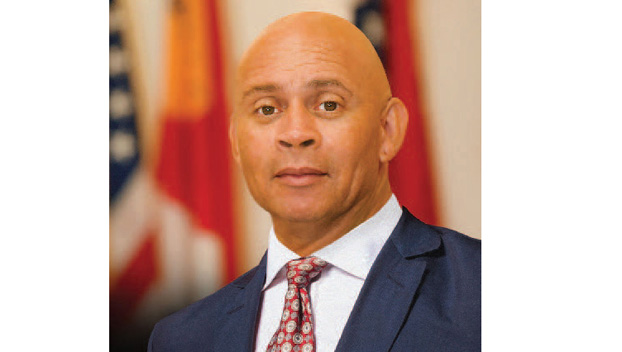
    Wilson beat Carter in last month’s general election for the District 2 supervisory position. Wilson is the only Republican holding an Adams County office — with the exception of Robert Greene, a Republican elected in November to the obscure county post of county surveyor.

    Wilson is the first GOP supervisor since Sammy Cauthen served on the county board before losing his re-election in 2007. Carter — a rarity in local government as an independent unaffiliated with a political party — served two terms.

    Wilson, owner of oil-, timber- and commercial real estate-related businesses, has been an outspoken critic of the Natchez-Adams County school board. He filed a a 2017 lawsuit set to be heard Dec. 11 at the Mississippi Supreme Court challenging the school board’s plans for financing campus building improvements.

    Gray, who begins his second term in 2020, said the two county board veterans and three new supervisors will have disagreements, but they ultimately must be “all about moving Adams County forward.”

    The supervisors will take their oaths of office at the turn of the new year and hold their first regular meeting Jan. 6.

  • Officials: 3 Dead After Small Plane Crash In San Antonio

    Officials: 3 Dead After Small Plane Crash In San Antonio

    SAN ANTONIO (AP) — Three people were killed when a single-engine plane crashed on a city street one block away from a residential area while attempting to land at San Antonio International Airport, authorities said.

    San Antonio Fire Chief Charles Hood said the plane went down around 6:30 p.m. Sunday in an area about a mile (1.6 kilometers) west of the airport. Hood said the plane had taken off from Sugar Land, southwest of Houston, and was headed to Boerne, about 30 miles (50 kilometers) north of San Antonio, when it experienced engine trouble and diverted to San Antonio.

    Hood said flight logs indicated there were three people on board the aircraft. Authorities have not yet released the names of those killed.

    The Express-News reported that the plane crashed on a street lined with warehouses and several businesses, and apartment buildings and homes are about a block away.

    “As you can imagine, we are very fortunate,” Hood said. “This plane could have dropped on (U.S. highway) 281. It could have dropped on an apartment complex.”

    Hood said his department will coordinate with the National Transportation Safety Board and the Federal Aviation Administration on the investigation.

  • Police: Man Called Out Of Work Drunk, Tried To Rob Workplace

    Police: Man Called Out Of Work Drunk, Tried To Rob Workplace

    OAKWOOD, Ga. (AP) — Police in Georgia say a man called out of his Steak ‘n Shake job because he was “intoxicated,” then showed up anyway and demanded money while holding a co-worker at gunpoint.

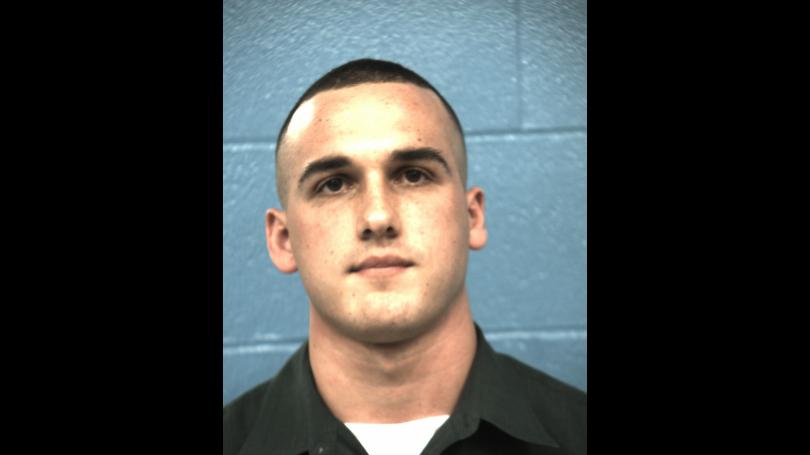
    The Gainesville Times reports 20-year-old Kentarias Gowans, of Flowery Branch, is charged with offenses including aggravated assault. Oakwood Police investigator Todd Templeton says Gowans called out on Thanksgiving, went to the restaurant that night, held a gun to a co-worker’s head and demanded money.

    Police say responding officers arrived to see employees running from the business, which had customers at the time. Police say an apparently still intoxicated Gowans briefly raised the gun at officers before dropping it. He was arrested after a brief struggle during which a stun gun was used.

    It’s unclear if Gowans has a lawyer.

    ___

    Information from: The Times, http://www.gainesvilletimes.com

  • Louisiana Deputies Storm The Wrong House With Search Warrant

    Louisiana Deputies Storm The Wrong House With Search Warrant

    LAKE CHARLES, La. (AP) — A Louisiana sheriff has apologized to the pastor and retired schoolteacher whose home was stormed by officers searching the wrong house for a wanted man.

    Calcasieu Parish Sheriff Tony Mancuso said his office is investigating why the search warrant had the incorrect address.

    “We just should not have been there,” Mancuso said. “We’re just wrong.”

    The American Press reports deputies were looking for a 25-year-old wanted on domestic abuse battery charges. Instead, deputies went Tuesday to the home of 79-year-old pastor Herman Weston and his wife Carol, who live with a granddaughter and her 3-week-old baby.

    Carol Weston said officers stormed the house with their guns drawn. She said she was handcuffed and walked to the street corner, with no explanation. Herman Weston said he was “totally embarrassed” by the incident.

    “I can’t just let this go with an apology because it was definitely wrong,” he said. “It goes far beyond that. I could have lost my life.”

    Mancuso said he met privately Wednesday with the Westons to apologize.

    ___

    Information from: American Press, http://www.americanpress.com

  • Natchez Mayor Darryl Grennell will not seek re-election

    Natchez Mayor Darryl Grennell will not seek re-election

    Natchez Mayor Darryl Grennell announced Friday evening during the annual tree lighting ceremony that he would not be seeking re-election in 2020.

    “This will be my last Christmas tree lighting I will attend as mayor of this city,” Grennell said, implying that he would not run for re-election in 2020.

    Grennell later, after the tree lighting ceremony, confirmed his intent not to run, describing the close end to his mayoral term as bittersweet.

    FOR Natchez executive director Chesney Doyle said she worked with Grennell during his 2016 campaign in which he won 92% of the vote.

    “Because of Darryl Grennell’s quiet, dignified leadership, the bar has been set higher and the course of our history has been changed for the better,” Doyle said.


    By Sabrina Robertson

  • Legal Reckoning: New Abuse Suits Could Cost Church Over $4B

    Legal Reckoning: New Abuse Suits Could Cost Church Over $4B

    NEW YORK (AP) — At the end of another long day trying to sign up new clients accusing the Roman Catholic Church of sexual abuse, lawyer Adam Slater gazes out the window of his high-rise Manhattan office at one of the great symbols of the church, St. Patrick’s Cathedral.

    “I wonder how much that’s worth?” he muses.

    Across the country, attorneys like Slater are scrambling to file a new wave of lawsuits alleging sexual abuse by clergy, thanks to rules enacted in 15 states that extend or suspend the statute of limitations to allow claims stretching back decades. Associated Press reporting found the deluge of suits could surpass anything the nation’s clergy sexual abuse crisis has seen before, with potentially more than 5,000 new cases and payouts topping $4 billion.

    It’s a financial reckoning playing out in such populous Catholic strongholds as New York, California and New Jersey, among the eight states that go the furthest with “lookback windows” that allow sex abuse claims no matter how old. Never before have so many states acted in near-unison to lift the restrictions that once shut people out if they didn’t bring claims of childhood sex abuse by a certain age, often their early 20s.

    That has lawyers fighting for clients with TV ads and billboards asking, “Were you abused by the church?” And Catholic dioceses, while worrying about the difficulty of defending such old claims, are considering bankruptcy, victim compensation funds and even tapping valuable real estate to stay afloat.

    “It’s like a whole new beginning for me,” said 71-year-old Nancy Holling-Lonnecker of San Diego, who plans to take advantage of an upcoming three-year window for such suits in California. Her claim dates back to the 1950s, when she says a priest repeatedly raped her in a confession booth beginning when she was 7 years old.

    “The survivors coming forward now have been holding on to this horrific experience all of their lives,” she said. “They bottled up those emotions all of these years because there was no place to take it.”

    Now there is.

    ___

    AP interviews with more than a dozen lawyers and clergy abuse watchdog groups offered a wide range of estimates but many said they expected at least 5,000 new cases against the church in New York, New Jersey and California alone, resulting in potential payouts that could surpass the $4 billion paid out since the clergy sex abuse first came to light in the 1980s.

    Lawyers acknowledged the difficulty of predicting what will happen but several believed payouts could exceed the $350,000 national average per child sex abuse case since 2003. At the upper end, a key benchmark is the average $1.3 million the church paid per case the last time California opened a one-year window to suits in 2003. That offers a range of total payouts in the three big Catholic states alone from $1.8 billion to as much as $6 billion.

    Some lawyers believe payouts could be heavily influenced by the recent reawakening over sexual abuse fueled by the #MeToo movement, the public shaming of accused celebrities and the explosive Pennsylvania grand jury report last year that found 300 priests abused more than 1,000 children in that state over seven decades. Since then, attorneys general in nearly 20 states have launched investigations of their own.

    “The general public is more disgusted than ever with the clergy sex abuse and the cover-up, and that will be reflected in jury verdicts,” said Mitchell Garabedian, a Boston attorney who was at the center of numerous lawsuits against the church in that city and was portrayed in the movie “Spotlight.”

    Said Los Angeles lawyer Paul Mones, who has won tens of millions in sex abuse cases against the church going back to the 1980s: “The zeitgeist is completely unfavorable to the Catholic Church.”

    For Mones, the size of lawsuit payouts under the new laws could hinge on whether most plaintiffs decide to settle their cases with dioceses or take their chances with a trial.

    “The X-factor here is whether there will be trials,” he said. “If anyone starts trying these cases, the numbers could become astronomical.”

    Since the 15 states enacted their laws at different times over the past two years, the onslaught of lawsuits is coming in waves.

    This summer, when New York state opened its one-year window allowing sexual abuse suits with no statute of limitations, more than 400 cases against the church and other institutions were filed on the first day alone. That number is now up to more than 1,000, with most targeting the church.

    New Jersey’s two-year window opens this week and California’s three-year window begins in the new year, with a provision that allows plaintiffs to collect triple damages if a cover-up can be shown. Arizona, Montana and Vermont opened ones earlier this year. Even one of the biggest holdouts, Pennsylvania, is moving closer to a window after legislators voted last month to consider amending its constitution to make it easier to pass one.

    Already, longtime clergy abuse lawyer Michael Pfau in Seattle says he’s signed up about 800 clients in New York, New Jersey and California. Boston’s Garabedian says he expects to file 225 in New York, plus at least 200 in a half-dozen other states. Another veteran abuse litigator, James Marsh, says he’s collected more than 200 clients in New York alone.

    “A trickle becomes a stream becomes a flood,” Marsh said. “We’re sort of at the flood stage right now.”

    Church leaders who lobbied statehouses for years against loosening statute-of-limitations laws say this is exactly the kind of feeding frenzy they were worried about. And some have bemoaned the difficulty of trying to counter accusations of abuse that happened so long ago that most witnesses have scattered and many of the accused priests are long dead.

    “Dead people can’t defend themselves,” said Mark Chopko, former general counsel to the U.S. Conference of Catholic Bishops. “There is also no one there to be interviewed. If a diocese gets a claim that Father Smith abused somebody in 1947, and there is nothing in Father Smith’s file and there is no one to ask whether there is merit or not, the diocese is stuck.”

    ___

    Slater’s Manhattan offices may have views of St. Patrick’s Cathedral, spiritual home of New York City’s Catholic archdiocese, but ground zero for his church abuse lawsuit operation is a call center, of sorts, about an hour’s drive away in suburban Long Island, in an office building overlooking a parking lot.

    There, headset-wearing paralegals in a dozen cubicles answer calls in response to ads on talk radio and cable TV news channels pleading: “If you were sexually abused by a member of the clergy, even if it happened decades ago … you may be entitled to financial compensation.”

    That pitch spoke to 57-year-old Ramon Mercado, who had long kept silent about the abuse he suffered in the 1970s, in part because he didn’t want to upset his devout Catholic mother. Since her recent death, he’s ready to talk about the New York City priest who invited him into his Plymouth sedan to warm up on a cold day and ended up molesting him hundreds of times over the next three years.

    “I was sitting in my living room and someone came on TV, ‘If you’ve been molested, act now,’” Mercado said. “After so many years, I said, ‘Why not?’”

    When such calls come in, the paralegals are trained to press for details but to do so gently.

    “What age would you say you were?”

    “Ten or 11? OK. Would you remember the face if you saw it?”

    “He would take you out of your bed? What did he say when he came to get you?”

    “Do you want to take a break? Are you OK? Are you sure?”

    The next step is to get a lawyer on the line to see if it’s a case they can take to court. Slater says that out of the more than 3,000 calls his firm has taken leading up to and since the opening of New York’s one-year window, it has signed up nearly 300 clients, and expects another 200 by the middle of next year.

    One recent day, lawyers talked to at least a half-dozen potential plaintiffs by lunchtime, with one saying she was raped at a first communion party and another saying a priest sodomized him after he was told to pull down his pants so his temperature could be taken.

    In a windowless break room over pizza, the lawyers recounted some of the other horrific claims they’ve heard in just the past few months: A young girl penetrated by a finger, then a fist; a boy raped by three priests at the same time; an altar boy told to perform oral sex and then swallow because it would “absolve him of his sins.”

    One plaintiff still smells the alcohol on the priest’s breath decades later. Another says he can still hear the priest approaching his classroom as he came to get him, the squeak of shoes in the school hallway.

    One man called with his story and later killed himself. A terminally-ill woman called from a hospice care center — “I’ve been holding this in my whole life.”

    Many of the accusations involve those already identified by dioceses as “credibly accused” — there are 5,173 priests, lay persons and other clergy member that meet that standard, according to a recent AP tally. Those are the easy cases.

    But many others are like Mercado’s, involving priests never accused publicly before, some long dead. And so that turns lawyers into cold-case investigators, calling retired Catholic school teachers and retired rectory staff, combing through yearbooks and, in Mercado’s case, tracking down missionary workers who went on the priest’s overseas trips.

    “This type of case isn’t for every law firm. It’s not a hit-in-the-rear car accident,” Slater said. “There is work to be done.”

    And money to be made. For his fee, Slater said he plans to ask for a full third of any awards his clients collect and he’s been spending in anticipation, hiring a half-dozen new paralegals, opening an office in New Jersey and breaking a wall in Long Island to make more room.

    One of the lawyers eating pizza, Steven Alter, pushed back when asked if the people coming forward are just in it for the money.

    “It’s not a cash grab,” he said. “They want to have a voice. They want to help other people and make sure it doesn’t happen again.

    “I haven’t had one person ask me about the money yet.”

    ___

    This is the day the Catholic Church has long feared.

    The church spent millions of dollars lobbying statehouses for decades, arguing it would be swamped with lawsuits if time limits on suing were lifted. That battle now lost, it is girding for Round Two, by turning to compensation funds and bankruptcy.

    Compensation funds offer payment to victims if they agree not take their claims to court. They offer a faster, easier way to some justice, and cash, but the settlements are typically a fraction of what victims can get in trials. And critics say the church is just using them to avoid both a bigger financial hit and full transparency.

    New York Archbishop Timothy Dolan set up the first fund in 2016, pitching it as a way to compensate victims without walloping the church and forcing it to cut programs. It has since paid more than $67 million to 338 alleged victims, an average $200,000 each.

    The idea has caught on in other states. All five dioceses in New Jersey and three in Colorado opened one, as did seven dioceses in Pennsylvania and six in California, including the Archdiocese of Los Angeles, the largest in the U.S.

    Such funds, Dolan said in a newspaper op-ed piece last year, “prevent the real possibility — as has happened elsewhere — of bankrupting both public and private organizations, including churches, that provide essential services in education, charity and health care.”

    Bill Donohue, president of the Catholic League and a longtime critic of the new statute-of-limitations laws, said their effect — if not their intent — “is to disable the church.”

    “When a diocese goes bankrupt, everyone gets hurt,” he said.

    But bankruptcy has become an increasingly more common option. Less than a month after New York’s one-year lookback window took effect, the upstate Diocese of Rochester filed for bankruptcy, the 20th diocese or religious order in the country to do so, listing claims from alleged abuse survivors and other creditors as much as $500 million. Assets to pay that are estimated at no more than one-fifth that amount.

    The Diocese of Buffalo may be next. It has begun paying victims of the 100 priests it considers “credibly accused” of abuse, tapping proceeds from the sale of a lavish $1.5 million mansion that once housed its bishop who is facing pressure to resign.

    When a diocese files for bankruptcy, lawsuits by alleged abuse survivors are suspended and payments to them and others owed money — contractors, suppliers, banks, bondholders — are frozen while a federal judge decides how much to pay everyone and still leave enough for the diocese to continue to operate. It’s orderly and victims avoid costly and lengthy court cases, but they often get less than they would if they were successful in a trial.

    A recent Penn State study of 16 dioceses and other religious organizations that had filed for bankruptcy protection by September 2018 found that victims received an average settlement of $288,168.

    Bankruptcy can also leave abuse survivors with a sense of justice denied because the church never has to face discovery by plaintiff lawyers and forced to hand over documents, possibly implicating higherups who hid the abuse.

    For many of his clients, Slater said, the fight in court is crucial because they want to expose the culture behind the crime, not just out a single priest.

    “They want to see how the church allowed them to be abused, how they ruined their lives. The church is solely in possession of the information and there is no other way to get it,” he said. “It’s a different process in bankruptcy — you don’t get discovery and you don’t get it in compensation programs. The truth never comes to light.”

    Other church tactics in the past few months could be a harbinger for the future.

    In July, the Archdiocese of New York sued 31 of its insurers, fearing they would balk at paying all the new alleged victims.

    And just last month, church officials on nearby Long Island sought to throw out New York’s new statutes of limitations law in sex abuse cases, arguing it violates the due process clause of the state constitution. The Diocese of Rockville Centre contends time limits to file suits can only be extended in “exceptional circumstances,” such as when plaintiffs are unable to file because they are abroad in a war zone.

    Another pair of long shot cases are being closely watched because of the obvious financial implications. Five men who claim they were sexually abused by priests when they were minors filed suit in Minnesota earlier this year contending some of the responsibility rests with the world headquarters of the church — the Vatican. Then came another abuse suit last month in Buffalo accusing the Vatican of racketeering.

    The Vatican is a sovereign state widely seen as off limits to abuse victims, but some lawyers say it’s time, especially now that U.S. dioceses are under attack, that it begins tapping its vast wealth.

    Raymond P. Boucher, a veteran Los Angeles sexual abuse attorney, contends the Vatican’s legendary riches include stashes of art in vaults that could not possibly be exhausted “and still pay every single claim that anybody could bring in the United States.”

    “They have them just in the vaults. They don’t even have to take anything off the walls.”
  • 9th HOA Sues Mississippi Real Estate Firm Over Missing Funds

    9th HOA Sues Mississippi Real Estate Firm Over Missing Funds

    JACKSON, Miss. (AP) — A ninth homeowner’s association is suing a Mississippi real estate company over missing funds.

    The Clarion Ledger reports the lawsuits filed against Ridgway Lane & Associates allege the company stole more than $1.6 million from Jackson-area HOA bank accounts. The lawsuits name the company, several John Does and the company’s president and vice president, David L. Lane and his son, David. W. Lane.

    A company official told the newspaper last month that the younger Lane no longer works for the company. It’s unclear when he left his position or if the move was related to the lawsuits.

    HOA attorneys told the court last week that the Lanes put their homes up for sale days after the first lawsuit was filed Nov. 6. The Lanes are expected in court next week.

    ___

    Information from: The Clarion Ledger, http://www.clarionledger.com

  • 10 Wounded In Shooting Near New Orleans’ French Quarter

    10 Wounded In Shooting Near New Orleans’ French Quarter

    NEW ORLEANS (AP) — Ten people were shot and wounded early Sunday near the French Quarter in New Orleans, a popular spot for tourists. Hours later in another part of town, another shooting killed two men and wounded two others.

    Police said both shootings remain under investigation, and authorities did not immediately draw any connection between them.

    Two of the 10 people shot on Canal Street near the French Quarter were in critical condition in local hospitals, Police Superintendent Shaun Ferguson said. No arrests were announced by midday Sunday, and police did not immediately release information about any of the victims.

    “What happened in our city overnight was a cowardly and senseless act that we cannot and will not tolerate,” Ferguson said in a statement.

    He said New Orleans has seen a significant reduction in violent crime over the past four years.

    Ferguson told The New Orleans Advocate/The Times-Picayune that a person of interest has been detained, but it was not immediately clear whether the person had any connection to the shooting.

    The first shootings happened about 3:20 a.m. on a busy commercial block of Canal Street that has streetcar tracks and is near many hotels.

    Ferguson said police quickly responded to the scene as patrols were heightened for this weekend’s Bayou Classic, the annual Thanksgiving weekend rivalry football game between Grambling State and Southern University at the Mercedes-Benz Superdome.

    “While this investigation is in the very beginning stages, one thing is certain — we will not stop until we identify and arrest those responsible,” Ferguson said in his statement.

    New Orleans Mayor Latoya Cantrell also pledged to bring the perpetrators to justice.

    “The shootings on Canal Street early this morning were an ugly disruption of an otherwise beautiful holiday weekend. We will do everything we can to wrap the victims and their families in our love and support, and to bring the criminals responsible to justice,” she said via Twitter on Sunday.

    Kenneth Culbreth told The New Orleans Advocate/The Times-Picayune that he had gone into a CVS pharmacy in the early morning hours to make a quick purchase. Moments later, he walked out to a crime scene.

    “On my way out of the CVS, I heard pops,” Culbreth said. “It was so many, I couldn’t keep count.”

    Culbreth spent the rest of the morning watching the scene, with law enforcement and several emergency vehicles moving in and out at a rapid pace.

    Police initially said 10 people were wounded. They later said 11 were wounded, but the police department then sent a statement saying the correct number was 10.

    The shooting on Canal Street happened near the spot where 10 people were shot, one of them fatally, on Bourbon Street in the French Quarter on Nov. 27, 2016. One man was convicted of attempted manslaughter and obstruction of justice, but jurors could not reach a verdict on a second-degree murder charge. Another man awaits trial.

    The shooting Sunday afternoon that killed two men and wounded two others happened in a residential area about 3 miles (5 kilometers) north of the French Quarter.

  • Arizona Official Seeks Trial Delay In Human Trafficking Case

    Arizona Official Seeks Trial Delay In Human Trafficking Case

    FAYETTEVILLE, Ark. (AP) — The Arizona official who is accused of running an adoption-fraud scheme involving smuggling women from a country in the Pacific asked an Arkansas court to delay his trail for 10 months, arguing the defense has already received hundreds of documents related to charges.

    Prosecutors say Maricopa County Assessor Paul Petersen paid pregnant women from the Marshall Islands, a string of islands about 2,500 miles (4,000 kilometers) west of Hawaii, to give up their babies for adoption in the U.S. He faces a total of 62 charges in Arkansas, Arizona and Utah.

    Petersen, 44, is free on separate bonds in the different states but must wear a GPS monitoring device per a federal court order.

    On Monday, his defense filed a motion asking the U.S. District Court in Fayetteville to push the adoption attorney’s trial from Dec. 9 to October, the Northwest Arkansas Democrat-Gazette reported.

    “As this court is aware, defendant not only faces criminal allegations in this court, but he has also been indicted by the state of Arizona and the state of Utah,” the motion said.

    Petersen’s defense has already received 100,000 sets of documents in the related cases and more are expected, according to the motion.

    “Additionally, the defense investigation into this matter will literally require work in at least three separate states and potentially a foreign nation, the Republic of Marshall Islands,” the motion said.

    U.S. Attorney Duane “Dak” Kees estimated that Petersen’s agency oversaw about 30 such adoptions a year or more in Arkansas beginning in 2014 or earlier. Petersen also organized such adoptions in Arizona and Utah, according to state charges in those jurisdictions.

    The Maricopa County Board of Supervisors last month suspended Petersen from his post as county assessor for 120 days. Petersen, a Republican, is contesting his suspension from the $77,000-a-year job he was elected to in 2016.

    He’s set to appear in court on Nov. 1 in Salt Lake City and Nov. 5 in Phoenix.

    ___

    Information from: Northwest Arkansas Democrat-Gazette, http://www.nwaonline.com

  • Texas Man Cleared After Serving 3 Years For Day Care Assault

    Texas Man Cleared After Serving 3 Years For Day Care Assault

    AUSTIN, Texas (AP) — A Texas judge has exonerated a former high school football standout who served three years in prison after being accused when he was 18 years old of sexually assaulting a young boy at a day care.

    A courtroom near Austin burst into applause Wednesday after a judge declared Greg Kelley innocent and fully exonerated. He was convicted in 2014.

    Kelley was arrested on the Leander High School campus a year earlier on charges of molesting a 4-year-old boy at an in-home day care. He was sentenced to 25 years in prison without parole.

    But his conviction began unraveling over revelations that police botched the investigation. State District Judge Donna King ruled that police didn’t interview everyone who’d been at the day care and said Kelley had ineffective counsel during trial.