Blog

  • Edwards, Rispone square off in only Louisiana runoff debate

    Edwards, Rispone square off in only Louisiana runoff debate

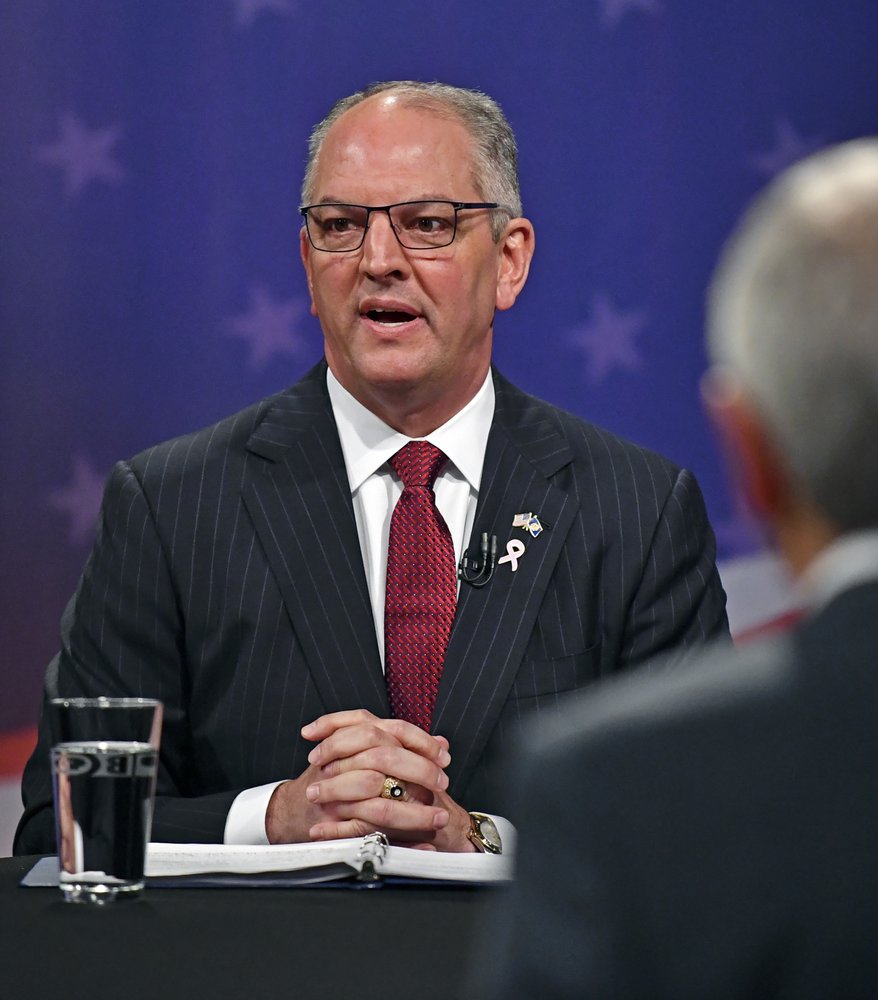
    BATON ROUGE, La. (AP) — Gov. John Bel Edwards accused Republican opponent Eddie Rispone of refusing to tell Louisiana’s voters what he’d do as governor, while Rispone repeatedly invoked his support for Donald Trump, as the two contenders tangled Wednesday in a head-to-head debate ahead of the runoff election.

    Rispone continued his strategy of sidestepping specifics of how he’d fulfill promises to boost job creation, cut taxes and increase spending on roadwork or what he wants to accomplish in detail in the constitutional convention he supports, speaking only in broad sweeps about the ideas.

    Edwards, a Democrat seeking a second term in office, struck at that lack of detail, suggesting Rispone was trying to bamboozle voters with a Washington-style partisan campaign. Rispone has limited public events since reaching the runoff and eschewed most forums where he’d face Edwards directly, refusing all but Wednesday’s debate.

    “You don’t have time for the people of Louisiana. You don’t really want to share your vision because you don’t have one,” Edwards told Rispone.

    Rispone countered that he hasn’t evaded voters: “We’ve crossed the state. I’m listening to them, what they’re talking about, what they’re concerned about.”

    The two men talked over each other in heated exchanges as they were allowed to ask each other questions, repeatedly accusing each other of dishonesty in their campaign talking points.

    “I’ll let you lie and then I’ll respond,” Edwards told his GOP challenger after Rispone accused him of threatening public safety in the criminal sentencing law rewrite he championed.

    When Edwards said Rispone’s company benefited from hundreds of millions in state tax breaks and hired foreign workers rather than Louisiana residents, Rispone replied: “That’s a lie. That’s what career politicians do.”

    The Deep South’s only Democratic governor is locked in a tight competition with Rispone, a wealthy Baton Rouge businessman who has largely self-financed his campaign. Early voting for the Nov. 16 election begins Saturday.

    Republican leaders have targeted Edwards for ouster in a ruby red state that Trump won by 20 percentage points, while Democrats are desperate to hold onto the governorship to demonstrate their viability in Southern states ahead of the 2020 election.

    Rispone, with the backing of Trump, has sought to nationalize the race, trying to make national politics a wedge issue that damages backing for Edwards in state where he’s the only Democrat to hold statewide office and where Trump remains popular. Rispone has focused in advertising and social media on his support for a border wall and his backing of the president’s policies on immigration while only lightly referencing state issues.

    “You’re always looking to Washington, D.C. There’s not inspiration to be had there,” Edwards told Rispone in one combative exchange when Rispone asked Edwards why he supported Hillary Clinton in the 2016 presidential race.

    Rispone said Edwards would back “the next wacko” that Democrats nominate, describing Edwards as a liberal out of step with his state.

    “You’re not talking about me. You’re talking about some generic Democrat that’s in your mind,” Edwards shot back.

    Rispone panned Edwards’ performance, saying he’s chased away businesses and people with tax hikes. He constantly referred to Edwards as an ally of trial lawyers, while describing himself as a conservative and outsider.

    Edwards has tried to skip talk of national politics and criticism of the president. Instead, he focuses on state-specific topics, touting the work he and the Republican-led Legislature did to stabilize state finances and end a decade of budget crises left behind by former Gov. Bobby Jindal. Louisiana has had three years of budget surpluses.

    Edwards reminded debate watchers of Rispone’s years of campaign donations and support for Jindal. He said Rispone’s tax and spending proposals would return Louisiana to the budget deficits of years past.

    The Democratic incumbent also said Rispone’s plan to “freeze” enrollment in the Edwards-created Medicaid expansion program would eventually boot hundreds of thousands of people from their health insurance coverage. Rispone said the program is rife with waste and abuse.

    Wednesday’s debate was held by Louisiana Public Broadcasting and the Council for A Better Louisiana, broadcast on public broadcasting stations around the state and online.

  • City Considers Cash Shift To Promote TV And Movie Production

    City Considers Cash Shift To Promote TV And Movie Production

    NATCHEZ, Miss. (AP) — Some officials in a southwest Mississippi city want to shift money earmarked for business recruitment and to promote film and television production.

    Natchez aldermen this week voted 5-1 to research whether up to $100,000 in property tax revenue could be redirected.

    The money now goes to Natchez Inc., an economic development authority serving Natchez and Adams County.

    A group called Film Natchez seeks $200,000 to promote area video production.

    The Natchez Democrat reports Alderwoman Joyce Arceneaux-Mathis proposed the switch.

    Mayor Darryl Grennell says he thinks a state law governing Natchez Inc. forbids such a move.

    Natchez Inc. Executive Director Chandler Russ says his group supports film production and is willing to pass additional money through to Film Natchez, but opposes diverting the $100,000 because it pays his group’s operating budget.

    ___

    Information from: The Natchez Democrat, http://www.natchezdemocrat.com/

  • Plaque Stolen From Mississippi Veteran’s Cemetery

    Plaque Stolen From Mississippi Veteran’s Cemetery

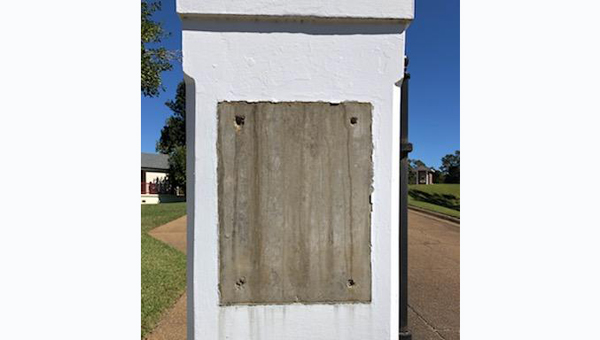
    NATCHEZ, Miss. (AP) — A veteran’s cemetery in Mississippi says a bronze marker was stolen from the entrance of the memorial.

    The Natchez Democrat reports the plaque was noticeably missing Thursday from the Natchez National Cemetery and was reported stolen.

    Robert C. Winkler, assistant director of the Veterans Affairs National Cemetery Association, says the marker was posted at the entrance across from the U.S. Department of Veterans Affairs plaque. He says the bolts holding the marker were pulled from the wall.

    Winkler says the cemetery was established in 1866 and the stolen plaque, that reads “Natchez National Cemetery,” was posted in 1930.

    He says the plaque is about 18 inches (46 centimeters) wide, 24 inches (61 centimeters) tall and weighs about 30 to 50 pounds (22 kilograms).

    The investigation is ongoing.

    ___

    Information from: The Natchez Democrat, http://www.natchezdemocrat.com/

  • Mississippi Woman Found Safe In Sequoia National Park

    Mississippi Woman Found Safe In Sequoia National Park

    SEQUOIA NATIONAL PARK, Calif. (AP) — A Mississippi woman who vanished on a visit to Sequoia National Park in California has been found safe after three days.

    Authorities say 56-year-old Mary Joanna Gomez of Jackson was found Monday after a California Air National Guard aircraft saw the letters SOS spelled out with rocks in a park area.

    The National Park Service says she was cold, thirsty and hungry but otherwise in good health. She was found off-trail about 3 ½ miles from where her car was discovered over the weekend.

    Gomez, who’s a traveling nurse based in San Francisco, had visited Kings Canyon National Park and said Thursday she intended to visit the Sequoia park. She was reported missing on Friday by her family after missing a work shift.

  • Mississippi Hospital Gets Upgrades As Part Of Takeover

    Mississippi Hospital Gets Upgrades As Part Of Takeover

    WIGGINS, Miss. (AP) — A Mississippi hospital is getting some upgrades as it gets taken over by another hospital.

    WLOX-TV reports that Memorial Hospital at Gulfport is assuming control of Stone County Hospital in Wiggins. Chas Pierce, Senior Director of System Development for Memorial Hospital, tells the news station Stone County Hospital is getting updated lighting and paint. Floors and patient rooms are also being improved.

    Stone County Hospital offers emergency services, diagnostic imaging and other specialties and will continue to offer ambulance services in the county.

    Pierce says Memorial does not plan to change anything.

    ___

    Information from: WLOX-TV, http://www.wlox.com

  • Highway Worker Killed Clearing Trees From Road

    Highway Worker Killed Clearing Trees From Road

    JACKSON, Miss. (AP) — A Mississippi highway maintenance supervisor has been killed in an accident while clearing trees from a highway following stormy weather.

    The Mississippi Department of Transportation says in a news release that Jason Boyd died in the accident on Highway 489 in Newton County. Details of the accident were not released. The department said it is under investigation.

    The statement said Boyd was a maintenance superintendent who had served the department “with distinction” for 12 years.

    High winds and heavy rains hit much of Mississippi and other Southern states Saturday as the remnants of what had been Tropical Storm Olga moved across the region.

  • Islamic State Leader Leaves A Legacy Of Terror

    Islamic State Leader Leaves A Legacy Of Terror

    BEIRUT (AP) — Abu Bakr al-Baghdadi sought to establish a new Islamic “caliphate” across Syria and Iraq, but he might be remembered more as the ruthlessly calculating militant leader of the Islamic State group who brought terror to the heart of Europe and set up a short-lived organization so extreme that it was shunned even by al-Qaida.

    With a $25 million U.S. bounty on his head, al-Baghdadi steered his chillingly violent and surprisingly disciplined followers into new territory by capitalizing on feelings of Sunni supremacy and disenfranchisement at a time of tumult that followed the Arab Spring.

    One of the few senior IS commanders still at large after two years of steady battlefield losses, al-Baghdadi died Saturday when he detonated his suicide vest in a tunnel while being pursued by U.S. forces north of Idlib, Syria, killing himself and three of his children, U.S. President Donald Trump announced Sunday. He was believed to be 48.

    “He didn’t die a hero, he died a coward, crying, whimpering and screaming,” Trump said at the White House, adding that the U.S. had al-Baghdadi under surveillance for weeks.

    Militants under his command were some of the first jihadis to grow up with the internet, and they deftly exploited social media to tout their military successes, document their mass slaughter, beheadings and stonings, and promote the Islamic State to a global audience.

    The announcement of his death came nearly two years after Iraq announced the defeat of IS and five years after the group humiliated its armed forces and seized nearly a third of the country.

    In April, U.S.-backed Kurdish-led forces in Syria declared the group’s territorial defeat after liberating the village of Baghouz in eastern Syria, its last bastion. The Islamic State saw its territory shrink from an area the size of Britain to a speck in the Euphrates River valley.

    Though at minimum a symbolic victory for Western counterterrorism efforts, it is unclear what impact his death will have on possible future attacks. He was largely regarded as a figurehead of the global terror network, and was described as “irrelevant for a long time” by a coalition spokesman in 2017.

    French President Emmanuel Macron said the death of al-Baghdadi is “only a step,” adding that the fight continues “so that the terrorist organization is definitely defeated.”

    Also unclear is who will replace him as leader. The group has lost many of its senior commanders in U.S.-led airstrikes, including Fadhil Ahmad al-Hayali, described as the group’s No. 2 who was killed in Iraq by an August 2015 U.S. airstrike, and Abu Ali al-Anbari, the extremist group’s leading finance official, who was killed in 2016. Abu Mohammed al-Adnani, the IS spokesman and one of the group’s best-known commanders, also was reported to have been killed in 2016 by a Russian airstrike.

    Al-Baghdadi was born as Ibrahim Awwad Ibrahim Ali al-Badri al-Samarrai sometime in 1971 in Samarra, Iraq, about 95 kilometers (60 miles) north of Baghdad, according to a U.N. sanctions list. His hometown later would be the site of a 2006 bombing by Sunni militants on a revered Shiite shrine — an attack that sparked a wave of sectarian violence that pushed Iraq to the brink of civil war.

    Details of his early life are murky. A brief biography posted to online jihadi forums in 2014 traced his lineage to the Prophet Muhammad’s Quraysh tribe. Its claims, which cannot be independently confirmed, describe al-Baghdadi as coming from a religious family and earning a doctorate from Saddam University for Islamic Studies, the Iraqi capital’s main center at the time for Sunni clerical scholarship. It says he promoted the Salafi jihadi movement, which advocates “holy war” to bring about a strict, uncompromising version of Islamic law, or Shariah.

    According to IS-affiliated websites, al-Baghdadi was detained by U.S. forces in Iraq and sent to Bucca prison in 2004 for his anti-U.S. militant activities, although he was considered a civilian detainee and his jailers were unaware of his jihadi role. He was released 10 months later and joined the al-Qaida branch in Iraq of Abu Musab al-Zarqawi.

    Al-Zarqawi was killed by a U.S. airstrike north of Baghdad in 2006 and al-Baghdadi became a trusted aide of its two most senior figures, Abu Omar al-Baghdadi and Abu Ayyub al-Masri. Al-Baghdadi assumed control of the group, known at the time as the Islamic State of Iraq.

    The group he inherited, al-Qaida’s official franchise in Iraq, already had been weakened by years of U.S. and Iraqi raids and the mobilization of large numbers of Sunni fighters opposed to its extremist ideology. But al-Baghdadi was playing a long game.

    Deploying suicide attackers, roadside explosives, car bombs and Kalashnikov-toting gunmen, he increased the tempo of assaults against Iraqi forces and Shiite civilians as the U.S. military drew down its troops ahead of their December 2011 withdrawal. Prison breaks, including a military-style assault on two Baghdad-area jails in July 2013 that freed more than 500 inmates, bolstered his group’s ranks.

    The chaos of the uprising against President Bashar Assad in Syria provided an opportunity to expand his influence. Al-Baghdadi sent comrades to create a like-minded Sunni extremist group known as the Nusra Front, which more moderate Sunni rebels initially welcomed.

    Over time, more of his fighters and possibly al-Baghdadi himself relocated to Syria, pursuing their plans to restore a medieval Islamic state, or caliphate, spanning both Iraq and greater Syria, also known as the Levant. In April 2013, al-Baghdadi announced what amounted to a hostile takeover of the Nusra Front, saying he was merging it into a new group known as the Islamic State of Iraq and the Levant. The move caught both the Nusra Front and al-Qaida’s central command off guard.

    Nusra Front leader Abu Mohammad al-Golani refused to accept the takeover. Ayman al-Zawahri, al-Qaida’s top leader, tried to end the squabbling and ordered al-Baghdadi’s group to be abolished.

    Al-Baghdadi, however, would not compromise, and al-Qaida eventually had enough. In February, it formally distanced itself from al-Baghdadi, saying it had no connection with his group and “is not responsible for its actions.”

    But al-Baghdadi’s organization was well on its way to achieving the proto-state it coveted, taking control of key cities such as Raqqa, Syria, and Fallujah in Iraq.

    Then came the offensive that would draw the U.S. back into Iraq. In June 2014, al-Baghdadi’s militants and allied Sunni fighters seized Iraq’s second-largest city of Mosul and other Sunni-dominated communities in the north and west of the country. Government troops in many areas put up little resistance, abandoning their posts and leaving behind valuable American-made materiel. Al-Baghdadi’s fighters posted propaganda videos of its forces gunning down captured Shiite troops en masse.

    By month’s end, the group announced its own state governed by Islamic law. Al-Baghdadi became the declared “caliph” of the newly renamed Islamic State group, and Muslims worldwide were urged to pledge allegiance to him.

    On June 29, 2014, the group released a video showing a man purporting to be al-Baghdadi giving a sermon at a Mosul mosque.

    “It is a burden to accept this responsibility to be in charge of you,” he said. “I am not better than you or more virtuous than you. If you see me on the right path, help me. If you see me on the wrong path, advise me and halt me. And obey me as far as I obey God.”

    President Barack Obama launched airstrikes against IS beginning Aug. 8. He acted after thousands of Iraqi Yazidis, followers of an ancient religion with ties to Zoroastrianism, were targeted by al-Baghdadi’s fighters, and to safeguard U.S. interests, including a consulate in the Iraqi Kurdish regional capital of Irbil.

    Islamic State militants responded by beheading Western captives, beginning with freelance American journalist James Foley, and posting their deeds in gruesome online videos.

    The U.S. and Arab allies eventually expanded the military campaign to target IS fighters with airstrikes in Syria, helping U.S.-backed Kurdish fighters battle the group.

    Under pressure in both countries, the group turned outward, claiming responsibility for the Nov. 13 attacks in Paris in which 130 people died, and the March 22 attacks in Brussels that left 32 people dead.

    Iraqi officials said al-Baghdadi was wounded in an airstrike on Nov. 8, 2014, in the town of Qaim, near the Syrian border in Iraq’s Anbar province. Days later, an online audio message purportedly from al-Baghdadi urged his followers to “explode the volcanoes of jihad everywhere.”

    Little is known about al-Baghdadi’s family. An ex-wife, Saja al-Dulaimi, and her daughter from al-Baghdadi, were detained in Lebanon in 2014. She was released a year later as part of a swap with al-Qaida in exchange for kidnapped Lebanese soldiers and police. In July 2018, IS said al-Baghdadi’s son, Huthaifa al-Badri, was killed fighting government forces in central Syria.

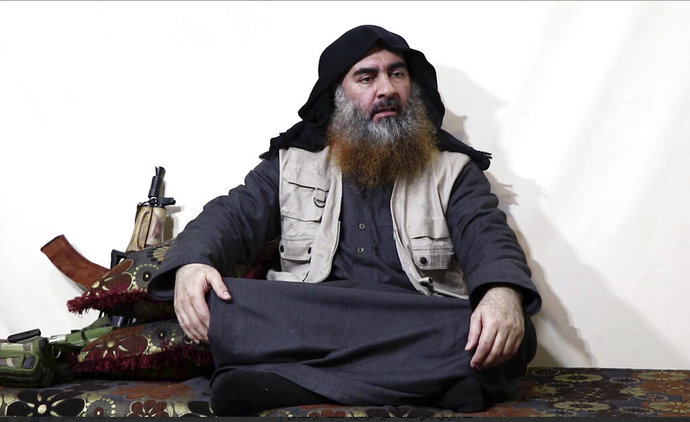
    On April 30, he appeared in a video for the first time in five years, acknowledging defeat in the group’s last stronghold in Syria but vowing a “long battle” ahead. He appeared with a bushy gray and red beard, wearing a black robe with a beige vest and seated on the floor with what appears to be an AK-74 rifle propped up next to him.

    The man said to be Abu Bakr al-Baghdadi in the video also claimed the Easter bombings in Sri Lanka that killed over 250 people were “part of the revenge” against the West.

    “Our battle today is a war of attrition to harm the enemy, and they should know that jihad will continue until doomsday,” al-Baghdadi said.

    ___

    Schreck reported from Bangkok. Associated Press writer Maamoun Youssef in Cairo contributed.

    ___

    Follow Adam Schreck on Twitter at www.twitter.com/adamschreck and Zeina Karam at www.twitter/com/zkaram

  • No Time 2 Cook Expanding To Stores Across The South

    No Time 2 Cook Expanding To Stores Across The South

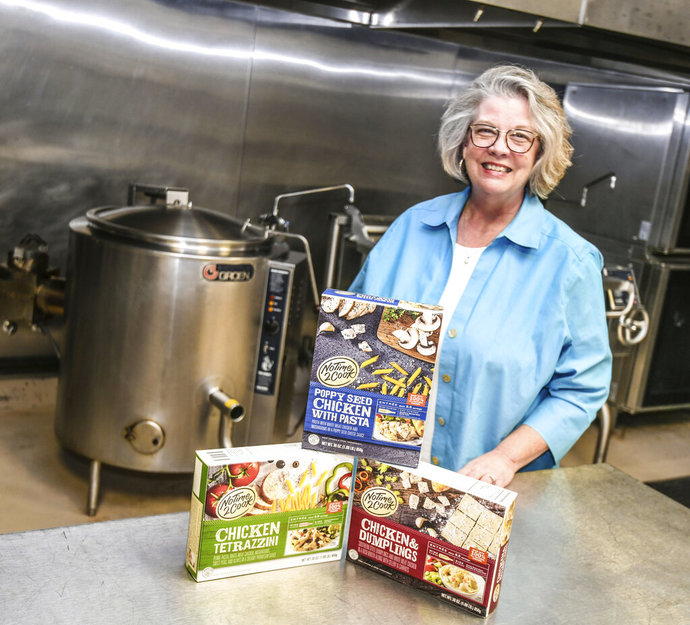
    OXFORD, Miss. (AP) — When Karen Kurr began her business, No Time 2 Cook, in 2005, she was preparing dishes out of her home.

    Fifteen years later, Kurr has turned her cottage industry into a full-fledged operation.

    No Time 2 Cook started in a family kitchen and can now be found in the freezer aisle of Kroger and, beginning next week, Walmart.

    From going to farmer’s markets in Oxford and Tupelo and buying a space at The Mustard Seed Antique Mall, Kurr has seen her family recipes become staples in the grocery stores she and her neighbors frequent.

    “It literally was birthed in my home kitchen,” Kurr said. “It didn’t take long. Once we got started, just within a couple of months, it just went so well.”

    After having to abide by government regulations for cottage industries, Kurr relocated her homegrown business to a facility off of North Lamar Boulevard behind Chicory Market. There, most of the Cajun and southern dishes she’s famous for are made from scratch and prepared to ship to Kroger and independent retailers across the Southeast.

    In 2017, Kurr applied to go to Walmart’s open call, an initiative to bring American-grown and based products to their shelves in support of creating more USA-based jobs. Kurr’s business was accepted and invited to the three-day event. The final stage is getting in front of buyers, who then try the product themselves.

    If the buyers like the products, a green card is issued to the business owner. Kurr left Walmart headquarters in Bentonville, Ark. with a green card and was invited to come back for the category review that fall.

    Around this time last year, Kurr’s products were in 250 stores across the southern region. With the expansion to Walmart, they will be in over 620 stores.

    “We’ve more than doubled our distribution in a year,” Kurr said. “We’re in all the deep south states.”

    Over the next couple of weeks, Walmart stores in Mississippi, Louisiana, Tennessee, Alabama and Georgia will begin carrying Kurr’s products.

    People will be able to find No Time 2 Cook’s chicken and dumplings, chicken tetrazzini and poppyseed chicken in Walmart stores. Kroger also carries chicken and dumplings, along with cornbread dressing with chicken.

    Marketplace at Oxford Commons and Moore’s Store in Batesville off Highway 6 are some of the independent retailers who currently carry No Time 2 Cook products.

    The demand for a new product is always there, and Kurr is using her new corporate lunch catering to test out what they have been working on in their research and development department. The catering is designed to serve as small-scale research and development, she said.

    “(The demand for new products) is like an animal that’s constantly saying, ‘What’s new? What’s new? What’s New?’” Kurr said. “We’re always wanting to bring in new products and that’s part of this catering that we’ve just launched, to help R&D.”

    Kurr said the catering side of the business has already produced some potential new products that she thinks will find their way the freezer section soon.

    ___

  • ‘Grim’ Oyster Season Brings New Tactics For Oyster Bars

    ‘Grim’ Oyster Season Brings New Tactics For Oyster Bars

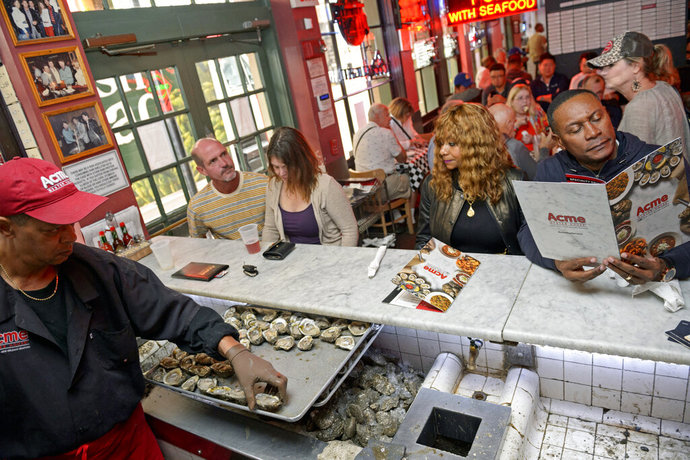
    NEW ORLEANS (AP) — People queued up as usual outside Acme Oyster House in the French Quarter one recent day, while inside the aroma of oysters bubbling on the grill filled the dining room and servers whisked past with trays of po-boys.

    But at the marble-topped oyster bar, something was starkly amiss: No one was slurping raw oysters.

    Facing a dramatic plunge in the supply of Louisiana oysters, Acme has temporarily stopped serving raw oysters at all seven of its regional restaurants.

    “If we can’t get Louisiana oysters, we’re not going to serve raw oysters at all,” Acme CEO Paul Rotner said.

    “Every oyster we get in, we’re directing them to the grill so we can at least keep that product available,” he said. “And I’m not sure how long we can even keep doing that.”

    Acme is not alone. Drago’s Seafood, another major player in the local oyster business, made the same decision.

    Restaurateur Tommy Cvitanovich said that, for now, none of his four Drago’s locations is serving raw oysters, instead reserving whatever flow of in-shell oysters the business can cobble together for the grill.

    “The charbroiled oyster is my signature dish. We have to keep that going, and it’s taking all we have,” said Cvitanovich. “It’s just that bad.”

    Dire predictions for this year’s oyster season have been stacking up since the spring, when an unprecedented influx of freshwater from the Mississippi River began washing through many of Louisiana’s prime oyster growing grounds. Now the results are showing up at oyster bars.

    Oysters are scarce, and restaurants are paying through the teeth to scrounge whatever they can. It’s forced some unusual calculations for a traditional local pleasure and brought foreboding for the future.

    Fall is when Louisiana normally begins harvesting a torrent of oysters. This year, the torrent is barely a trickle.

    Restaurants have resorted to rationing. They’re reaching far beyond their normal local supply chains to get whatever boxes and sacks of oysters they can find, revising menus and tapping stockpiles of frozen product to keep fried oysters on their po-boys and seafood platters.

    Many in the business are calling the shortage the worst they’ve ever seen, worse than the aftermath of hurricanes Katrina and Rita in 2005 or the BP oil spill disaster in 2010, both of which devastated the local industry.

    “It’s never been this bad in my lifetime,” said Carolina Bourque, oyster program manager for the Louisiana Department of Wildlife and Fisheries.

    Louisiana is the heart of the U.S. oyster industry, historically producing a third of the nation’s total harvest. In 2017, the state landed 13.3 million pounds of them, according to federal commercial fishing data. The abundance is shipped to restaurants and markets across the country and fuels a robust oyster culture around Louisiana dining tables.

    Oysters thrive in the state’s coastal estuarine environment, with its mix of freshwater and brine. But this year that mix was thrown off radically by an extraordinary influx of freshwater.

    Heavy rainfall across the Midwest led to months of high water levels on the Mississippi River and through the Atchafalaya Basin, testing the region’s flood control systems. The U.S. Army Corps of Engineers twice opened the Bonnet Carre Spillway, which protects New Orleans and downstream communities from river flooding.

    The spillway’s freshwater outflow barreled through Lake Pontchartrain toward the Gulf of Mexico and straight across some of the state’s best oyster growing areas, a swath of fertile estuary known as the Biloxi Marsh.

    All that freshwater combined with high water temperatures in the Gulf to turn a normally nurturing environment against the oyster.

    “Oysters are very resilient, they’re amazing really, but when you have these combinations of events, they can only hold on so long,” Bourque said. “For some of these areas, they’re producing close to zero oysters.”

    Everyone in the local seafood business says November can’t come soon enough. By the middle of next month, oyster experts believe production will increase in areas farther to the west of the Mississippi River that saw less freshwater flowing through them. Oysters from Texas may pick up some of the slack for southeast Louisiana’s missed production as well.

    Still, there’s no missing that the state’s normally prodigious oyster supply is scraping bottom this season.

    Ed McIntyre, who runs five locations of Mr. Ed’s Oyster Bar & Fish House, has been able to keep a limited supply of oysters in his shuckers’ hands each day. But they run out early, so he’s had to redeploy idle shuckers to other duties in the kitchens.

    “I’m trying to keep the team together to get guys through this,” McIntyre said.

    In the fall, his restaurants usually go through 500 to 600 sacks of oysters a week. Lately he’s been lucky to get 200 sacks, assembling the haul from different dealers.

    “Anything we get, it’s 10 sacks here, five there, five there. I’m constantly on the phone trying to make it happen,” McIntyre said.

    The impact will likely be felt nationally, said Raz Halili, executive vice president of Prestige Oysters. His Texas-based company is one of the largest private leaseholders of Louisiana oyster beds and supplies restaurants across the country. These days he doesn’t have good news when his customers call.

    “To be honest, it’s grim. I don’t see a good season for Louisiana at all,” he said. “We really got killed by that freshwater inflow.”

    There are other options to keep oysters on the menu, including so-called “pillow packs,” or cases of packaged frozen oysters. These are suitable for frying and other cooked preparations. Seeing warning signs of a bad season to come, some restaurants began stocking up on frozen supplies.

    But oysters on the half shell, the fullest and most delicate expression of the local oyster, require fresh, in-shell product. That’s why the shortage has shown up most noticeably at oyster bars.

    While Louisiana has struggled, fresh oysters remain available from other parts of the Gulf. That includes the specialty farmed oysters that have established a niche at some New Orleans restaurants.

    Sometimes called “off bottom oysters” or “cultivated oysters,” these are grown in floating enclosures, rather than harvested from reefs like traditional Gulf oysters. At anywhere from two to three times the price of the familiar Gulf oyster, they’re prized for the diversity of flavors they bring.

    At Peche Seafood Grill, for instance, the oyster bar is serving a changing array of three or four different types of these specialty oysters, mostly from Alabama producers. Supply has remained steady, said Ryan Prewitt, the restaurant’s chef, but the conventionally grown oysters Peche normally serves beside them are often absent.

    “It kills me to run an oyster list that doesn’t have Louisiana oysters on it,” Prewitt said. “The experience is supposed to be the diversity of flavors we can experience across them all.”

    What’s more worrisome, he said, is the long-range prognosis for the state’s oyster production. The industry may be dealing with the havoc of this year’s freshwater influx long into the future.

    “We’ve been hearing the warning bells on this all summer when the spillway was open,” he said. “What if they have to open the spillway next year too?”

    This year marked the first time the Bonnet Carre Spillway was opened twice in the same year, and it set a new record for the number of days it was kept open. It was also the first time the spillway had been opened in two consecutive years.

    Experts have attributed the increasing rain and rising water levels that led to its use to climate change.

    “If this continues, we’ll still have oysters, but we won’t have the volumes that we shipped out for years and years and years,” said Jim Gossen, a veteran of the local seafood business and chairman of the Gulf Seafood Foundation.

    Gossen has been an advocate of nascent efforts to develop more “off bottom” oyster cultivation in Louisiana, where several farms now operate around Grand Isle. He sees the potential for oyster farmers to diversify their business, and in theory, this method could also allow producers to move their oyster crop as water conditions change. Still, he said, that is far from a quick fix.

    “One of the advantages of aquaculture is you can go where the water is best, but you can’t just up and go. It can take years to get the leases in order,” Gossen said.

    The state has initiatives in place to help replenish oyster stock, transferring oysters from other areas to induce spawning and restart reefs. But it can take up to two years for Gulf oysters to grow to market size.

    Bourque, with the state’s oyster program, said it is too soon to predict what a future season might bring for the areas that are struggling now.

    “One thing we have to do is watch closely to make sure the areas that are producing don’t get depleted,” she said. “There’s a lot of demand for oysters now, but you have to leave enough to keep the populations going.”

    Prices for oysters have spiked. Cvitanovich said he’s paying 20 percent more for oyster sacks compared to this time last year.

    “We haven’t passed that increase on the customer, we’re absorbing it still, but I don’t know how long we can do it,” he said. “I am very concerned that the price of oysters has reached the ceiling and that they’ll stop being what they’ve always been, something everyone can enjoy here. You’re starting to get to the price of lobster and prime steak.”

    Still, Cvitanovich said he tries to keep this season’s woes in context. If the spillway hadn’t diverted all the water it did, he points out, New Orleans might have faced more than an oyster shortage.

    “Whatever we’re dealing with now,” he said, “all of these problems are better than if I have water in front of my restaurant.”

    ___

    Information from: The Times-Picayune/The New Orleans Advocate, http://www.nola.com
  • With Brees Back, Saints Poised For Big Things

    With Brees Back, Saints Poised For Big Things

    NEW ORLEANS (AP) — Drew Brees answered any questions about how effective he would be coming back from thumb surgery, and the New Orleans Saints posted another convincing victory despite the absences of star running back Alvin Kamara and top receiving tight end Jared Cook.

    Now they have a bye to rest up before continuing their push toward the playoffs — although not everyone in the Saints locker room sees the midst of a six-game winning streak as an ideal time to for a break.

    “I wish there wasn’t a bye week so we could keep rolling,” said Saints defensive end Cam Jordan, who had his eighth sack on Sunday. “The way we’re playing right now, I just want to take the field with my guys again.”

    Brees can relate. He fast-tracked what was expected to be a six- to eight-week recovery from surgery on Sept. 18, even though New Orleans won five straight with backup Teddy Bridgewater filling in.

    “I know the thought would be, ‘Why don’t you just wait until after the bye week? Everything seems to be going well, right? And why would you take the chance?’” Brees said. “I’m a football player. … As soon as I could get back, I was going to get back. I didn’t care about anything else.”

    Brees wound up being validated, as he often seems to be. He completed 34 of 43 passes for 373 yards and three touchdowns in a 31-9 triumph over an Arizona squad that came in on a three-game winning streak.

    “He was sharp. I thought he located the ball well,” Payton said Monday after reviewing video of the game. “He felt good and I don’t think there was a hiccup relative to the decision to start him.”

    To some extent, Brees relied on No. 1 receiver Michael Thomas, who had 11 catches for 112 yards and a touchdown. But Brees also connected with eight other receivers.

    When he wasn’t throwing deep to Ted Ginn Jr. (two catches, 42 yards) or tossing short passes to running back Latavius Murray (nine catches, 55 yards, TD), he was finding reserve QB and utility player Taysom Hill (three catches, 63 yards, TD) and tight end Josh Hill (three catches, 39 yards). Dan Arnold, Deonte Harris, Zach Line and Austin Carr also caught at least one ball.

    Brees “sets expectations and the bar so high,” Taysom Hill said. “It gives everyone a calming sensation that he’s going to make us right.”

    Murray, now in his seventh season, never had a receiving touchdown in his first six seasons. In what was his second full game playing alongside Brees, he finally got one.

    “It has been a long time coming,” Murray said. “It was a special day, especially coming from a guy like Drew.”

    With the 40-year-old Brees back in form, and with the defense delivering a string of shut-down performances, New Orleans (7-1) looks poised for big things.

    Brees sounds particularly optimistic about the prospects for this year’s Saints, who are less than a full season removed from an infamous officiating mistake that might have cost them a trip to the Super Bowl.

    “I feel like there are a lot of great moments ahead,” Brees began. “But I’m going to really appreciate each and every one of them, one at a time, try to stay in the moment and really make the most of it.”

    WHAT’S WORKING

    The defense sacked Kyler Murray three times Sunday and held Arizona to 40 yards rushing. It has limited five straight opponents to 257 or fewer net yards and hasn’t allowed a 100-yard rusher in 34 games, including playoffs.

    WHAT NEEDS HELP

    While the defense has been exceptional overall, New Orleans has intercepted just three passes and ranks 24th in that category.

    STOCK UP

    In two games serving as the No. 1 running back because of Kamara’s injury, Murray has surpassed 100 yards rushing each time and totaled at least 150 yards from scrimmage while scoring two TDs in each game.

    STOCK DOWN

    Wil Lutz, who has exhibited a strong, accurate leg for most of his three-and-a-half seasons with the Saints, has missed three of his last five field goal attempts.

    INJURED

    The Saints did not have a single player knocked out of action against Arizona because of an injury. The question now is whether injured regulars such as Kamara, Cook, and receiver Tre’Quan Smith are ready after the bye.

    KEY NUMBER

    62 — Total number of touches Murray has had rushing or receiving in New Orleans’ past two victories.

    NEXT STEPS

    The Saints’ next four games are against NFC South foes, with two coming against the struggling Falcons, one against reeling Tampa Bay and one against Carolina. Further down the road is a clash of potential NFC title contenders when New Orleans hosts San Francisco.

    ___

    More AP NFL coverage: https://apnews.com/NFL and https://twitter.com/AP_NFL