Blog

  • Louisiana session ends in flurry of tax and financial votes

    Louisiana session ends in flurry of tax and financial votes

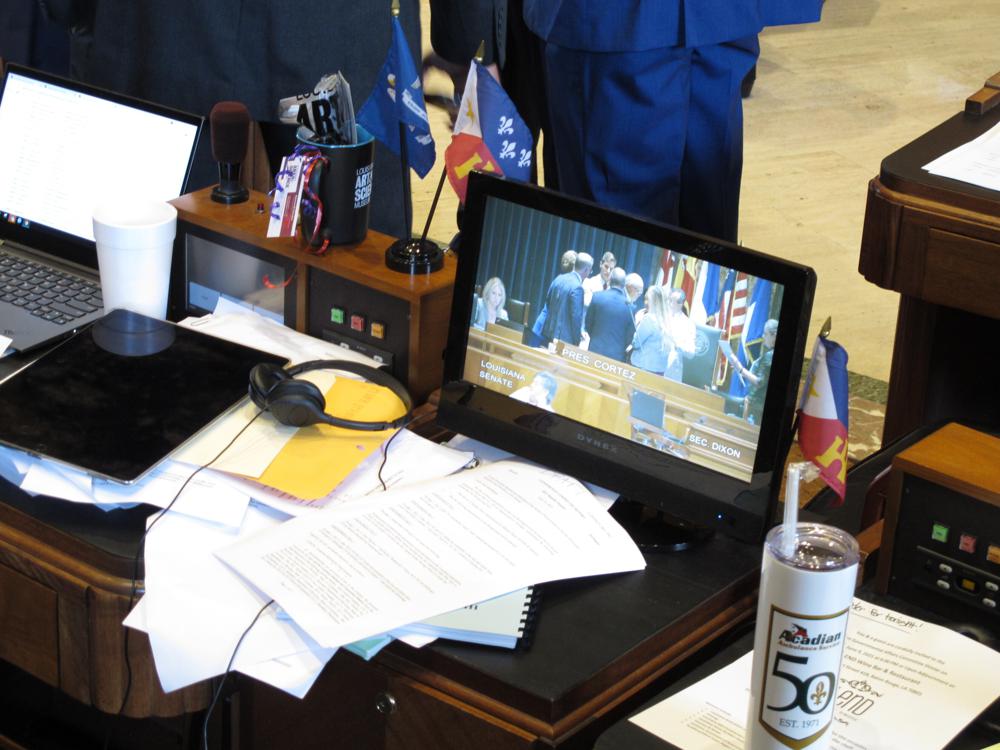
    BATON ROUGE, La. (AP) — Louisiana lawmakers Thursday completed a nine-week legislative session where they spent hefty sums of coronavirus recovery money, worked to overhaul the state’s tax structure and found themselves battling over social issues that nearly derailed the financial debates.

    Years of cash crunches and financial worries gave way to a budget largesse, with federal pandemic assistance pouring into Louisiana along with an unexpected boom in state tax collections. The majority-Republican Legislature used the new cash to give pay raises to teachers, boost spending on public colleges and student aid programs and steer tens of millions to pet projects back home.

    Federal dollars will pay for road and bridge work, water system improvements, tourism marketing, hurricane recovery and grant programs to businesses. Some of the aid will help shore up the state’s nearly-bankrupt unemployment trust fund.

    The House and Senate brokered a bipartisan deal in the dwindling hours of session on a complicated set of tax swaps they hope to persuade voters to pass in the fall election, arguing the measures will bring more sustainability to the state’s tax structure by disentangling it from federal tax payments.

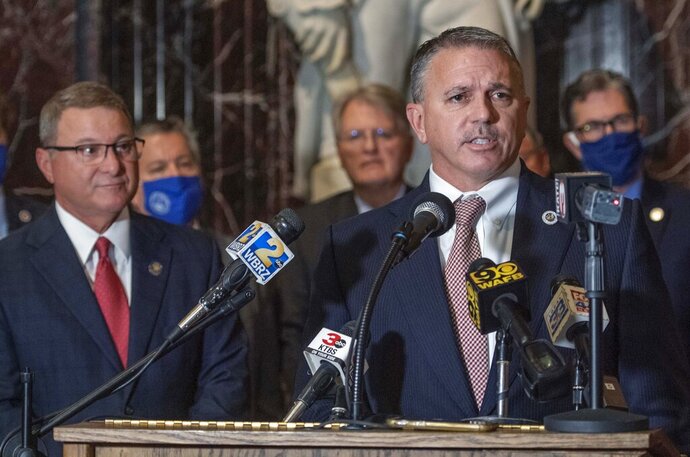
    “This is a monumental moment and a monumental session for this Legislature,” said Republican House Speaker Clay Schexnayder.

    Shortly before they wrapped up, lawmakers agreed to shift about $300 million a year in the sales taxes charged on purchases of cars and trucks to road and bridge work, and away from the state general fund where it helps to pay for health care, education and other government operations. The shift would be phased in over two years starting in 2023, with some provisions for lessening the size of the transfer if the state faces budget gaps.

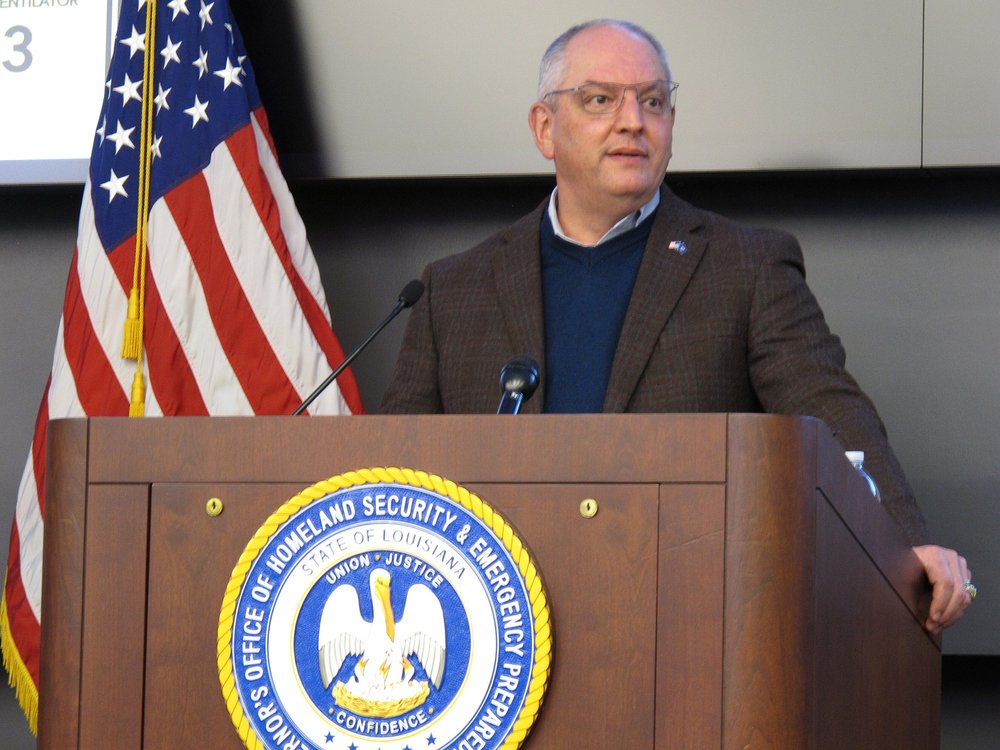
    Gov. John Bel Edwards described the session as “all in all a very good effort” from lawmakers, and said he expects to sign the tax swap bills tied to voter approval. But the Democratic governor was iffier on the vehicle sales tax shift for infrastructure. He worried about the impact on other services by reshuffling the money.

    “There’s a lot of question marks out there,” Edwards said.

    The House and Senate also agreed to exempt purchases of diapers and feminine hygiene products from state sales taxes, starting next year, and to continue an expanded tax break that helps the working poor, called the Earned Income Tax Credit, through 2030.

    Across the session, lawmakers crafted the regulations for sports betting to start as early as this fall. They agreed to expand Louisiana’s medical marijuana program and eliminate jail time for possession of small amounts of pot for recreational use. And they enacted tougher regulations for how colleges must respond to allegations of sexual assault, harassment and other misconduct — legislation that grew out of a recent scandal at Louisiana State University.

    Edwards was expected to veto measures sent to his desk to ban transgender athletes from competing on girls’ sports teams in schools and to do away with the permitting requirements to carry a concealed handgun. The governor on Thursday issued line-item vetoes to state budget bills, striking a few legislative pet projects and language that would have given lawmakers more oversight of agencies’ financial decisions.

    The governor, an avid backer of the coronavirus vaccine, also seemed likely to reject a bill passed Thursday to prohibit government agencies from refusing to issue licenses, permits and degrees or barring access to public facilities to someone who isn’t vaccinated against COVID-19. The ban would remain in place until the vaccination has full authorization from the U.S. Federal Drug Administration, rather than an emergency use regulation.

    Edwards had a light agenda and largely negotiated financial and other deals with lawmakers behind the scenes rather than taking a high profile for the session.

    Fights over social issues — such as how to address police misconduct and how to teach issues of race in schools — provoked racial tensions in the House mid-session that threatened to derail the tax restructuring priorities of Schexnayder and Republican Senate President Page Cortez. But Schexnayder, who was elected with the help of Black lawmakers, managed to steer the chamber through the feuds, at least enough to broker the tax deals.

    If approved by voters statewide, the main tax proposal would get rid of personal income tax and corporate tax deductions for federal income taxes paid in exchange for lowering the state’s income tax rates. Louisiana also would permanently eliminate the corporate franchise tax for small businesses and lower the tax rate for others.

    The tax package is more generous to corporations than individual taxpayers.

    Complaints that Louisiana’s tax structure is riddled with loopholes that make the system less fair went unaddressed this session, amid opposition from special interest groups and business lobbyists.

  • Northern Mississippi deluged with days of heavy rainfall

    Northern Mississippi deluged with days of heavy rainfall

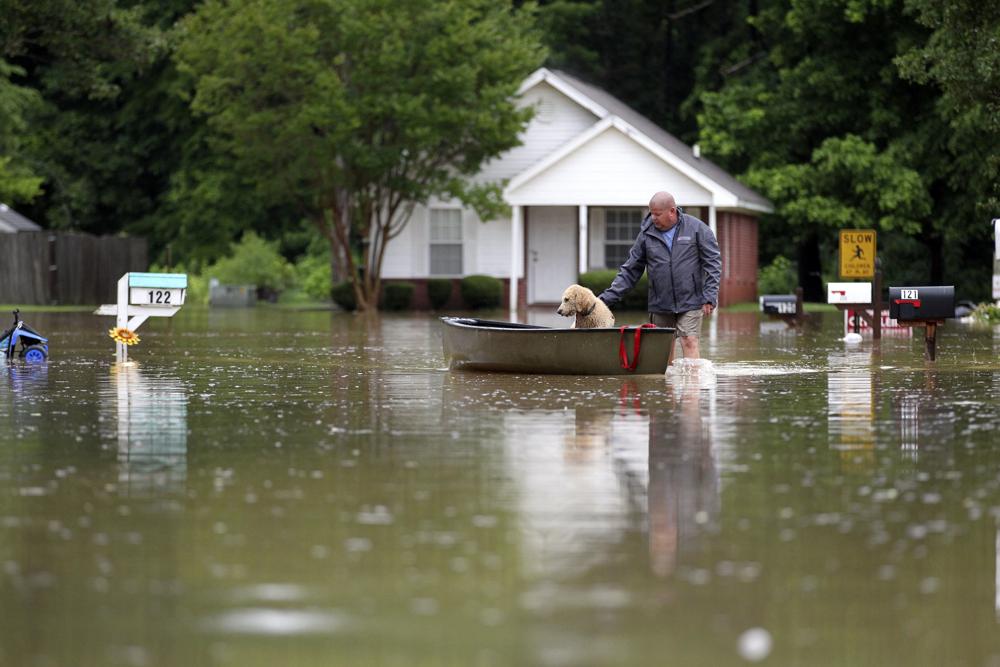
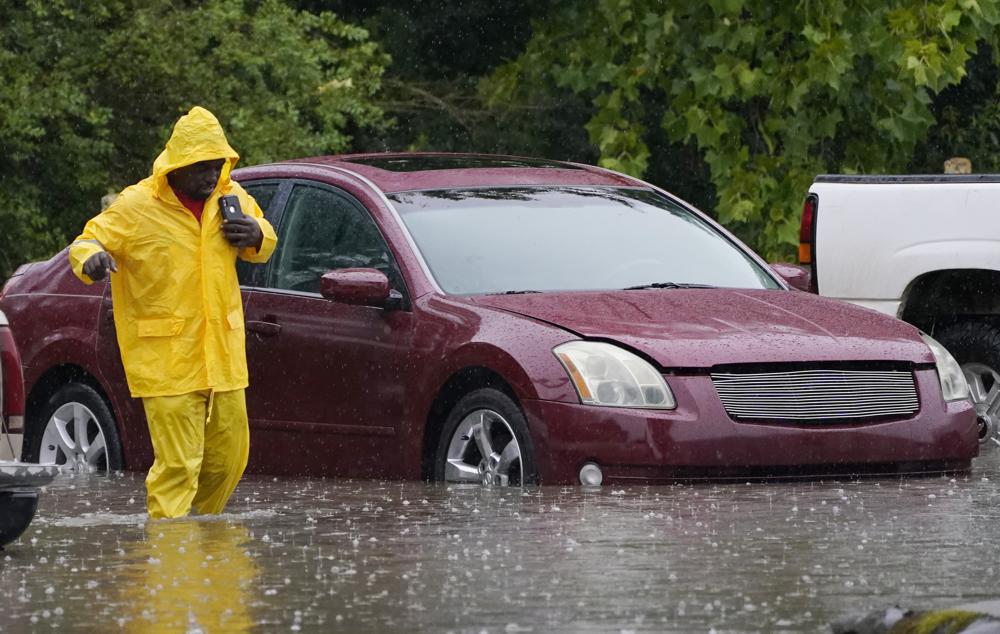
    OXFORD, Miss. (AP) — Heavy rainfall this week has flooded homes, businesses and farmland in north Mississippi, washing out some roads and making travel dangerous.

    The National Weather Service said more than 15 inches (38 centimeters) of rain fell in Tallahatchie County from Tuesday to Thursday. It also said Thursday that 7.8 inches (19.8 centimeters) of rain had fallen within 24 hours at Greenwood-Leflore County Airport, and 3.9 inches (9.9 centimeters) of rain fell Wednesday in Tupelo.

    The weather service also warned Thursday about the “high probability” that a dam in rural Carroll County could fail.

    Bolivar County Emergency Management Agency Director Michael Lamb told the Clarion Ledger that water went into 150 to 200 homes.

    “We’ve had to use boats to rescue people and get them to safe ground,” Lamb said. “All the roads are under water, so we’ll have to wait until the water goes down before we can see if we have some infrastructure damage.”

    The Mississippi Emergency Management Agency released video of farmland that flooded in Tallahatchie County. Delta Council, which represents agriculture interests, said farmers were losing thousands of dollars worth of crops and chemicals because of flooding in soybean and rice fields.

    Rising waters forced evacuations Wednesday in the Willow Creek subdivision in Saltillo, near Tupelo.

    In Yalobusha County, rain swept away a section of a road east of Water Valley. A truck crashed into the hole and crews rescued the occupant, WTVA-TV reported. Lee County officials Wednesday closed a section of road after the underside swept away but the road surface remained intact.

    Oxford resident Jamie Mardis told WMC-TV that he received a text message Wednesday from the nurse who does in-home care for his 4-year-old son. Rain had fallen throughout the previous night.

    “She said, ’You might want to go close the garage door because it’s coming down pretty good,” Mardis said.

    Within the hour, rain flooded Mardis’ yard and water moved into the garage.

    “The water was all the way up to the bottom of the door seal,” he said, pointing at the duct tape barrier he had created. “So we started making steps to try and get the furniture up inside and get prepared for the floodwaters inside the house.”

    Mardis said the water kept rising rapidly.

    “I was scared. I was afraid I might lose everything I got,” he said “You know, this is what I’ve been working for the last 10 years, all piled up in this house.”

    Mardis’ son, Liam, has a medical condition that requires around-the-clock care and expensive medical equipment in the home. Liam had been taken Tuesday night to Le Bonheur Children’s Hospital in Memphis, Tennessee, and water never reached the inside of the house.

    Flooding happened throughout Oxford and Lafayette County.

    “It blew out some roads, blew out some culverts,” said Joe Bynum, the county roads manager.

    Emergency officials in Lafayette County told residents to evacuate several homes Wednesday after heavy rain created concern about a dam on a small lake. Crews from the county fire department pumped water out of Tara Lake to relieve pressure on a levee near the Tara Estates and Gum Tree subdivisions outside Oxford. A sinkhole was forming on the levee by the lake, according to the Mississippi Emergency Management Agency. The fire department said late Wednesday that people were allowed to return to their homes.

  • College Football Playoff considering expansion to 12 teams

    College Football Playoff considering expansion to 12 teams

    The College Football Playoff announced Thursday it will consider expanding from four to 12 teams to settle the national championship, with six spots reserved for the highest-ranked conference champions and the other six going to at-large selections.

    The CFP’s surprising announcement outlined a plan that would triple the number teams that enter the postseason with a chance to win it all.

    Even if the format is adopted — no earlier than this fall — there was no indication in the proposal about when an expanded playoff could be in place. The soonest would seem to be for the 2023 season, but it is probably more likely to be after the 2026 season.

    A selection committee would still be involved, and the proposed 12-team playoff would not limit how many teams can come from any one conference. The four highest-ranked conference champions would receive first-round byes and teams 5-12 would face each other in four games played on campus sometime during the two-week period following conference championship weekend, typically early December.

    The plan calls for no re-seeding of the bracket as teams advance. Quarterfinals would be hosted by bowl games on New Year’s Day —- unless that falls on a Sunday, in which case those games will be played Jan. 2 — and an adjacent day.

    The semifinals would also be hosted by bowl games, as is the case now.

    The proposal includes no dates for semifinals and the championship game to be played, but did indicate the semifinals would not be played as a doubleheader on a single day.

    Currently six bowl games have a three-year rotation for hosting the semifinals and the championship game site is open to bidders, similar to the what the NFL does with the Super Bowl. The current semifinal bowl rotation includes the Rose, Sugar, Orange, Fiesta, Cotton and Peach bowls, not they are not guaranteed to be hosts in the proposed expansion plan.

    “The process for selecting the six bowls that would rotate as hosts of the quarterfinals and semifinals (is) still to be determined,” the CFP plan said.

    The proposal will be considered by the full CFP management committee in Chicago on June 17-18.

    On Thursday, a subcommittee comprised of Southeastern Conference Commissioner Greg Sankey, Big 12 Commissioner Bob Bowlsby, Mountain West Commissioner Craig Thompson and Notre Dame athletic director Jack Swarbick presented the proposal to the rest of conference commissioners in a Zoom meeting.

    The group has been working on an expansion plan for almost two years and it might have been put forth sooner if not for the pandemic.

    “The four-team format has been very popular and is a big success,” the members of the four-person working group said in a statement. “But it’s important that we consider the opportunity for more teams and more student-athletes to participate in the playoff. After reviewing numerous options, we believe this proposal is the best option to increase participation, enhance the regular season and grow the national excitement of college football.”

    The full management committee will determine next week whether it will recommend expansion to university presidents who make up the CFP oversight committee. The presidents are scheduled to meet with the management committee in Dallas on June 22.

    If the presidents sign off, the next step is determining over the summer whether the plan can be implemented and when. The final approval would likely come in September.

    The College Football Playoff is entering year eight of a 12-year agreement with ESPN. The deal doesn’t lock in a format but an assumption has been that any changes would come after that deal expires following the 2025 season.

    CFP executive director Bill Hancock has said no changes to the CFP format could be made this season or in 2022.

    The four-team playoff was implemented in 2014, a natural progression from the Bowl Championship Series, which matched No. 1 vs. No. 2 in the title game from 1998-2013.

    The playoff’s popularity seems to have waned as only a few teams have grabbed the majority of the spots since 2014. Alabama and Clemson have each made the playoff six times in seven years. Ohio State and Oklahoma have each been selected four times. That’s 71% of the playoff spots to just four of the 130 teams that play major college football.

    A 12-team field with six spots reserved for conference champions would guarantee at least one team from outside the Power Five conferences would be in the playoff each season. The Group of Five has never had a team crack the field of four or been particularly close.

  • Preservation Commission reviews plan for Natchez riverboat dock

    Preservation Commission reviews plan for Natchez riverboat dock

    NATCHEZ, Miss. – The city’s architectural review board on Wednesday saw plans Viking has for its riverboat dock being built in Natchez on the Mississippi River.


    While the  Natchez Preservation Commission approved the floating dock’s initial conceptual design, final approval is contingent on it also being OKed by the U.S. Army Corps of Engineers and the Mississippi Department of Archives and History.


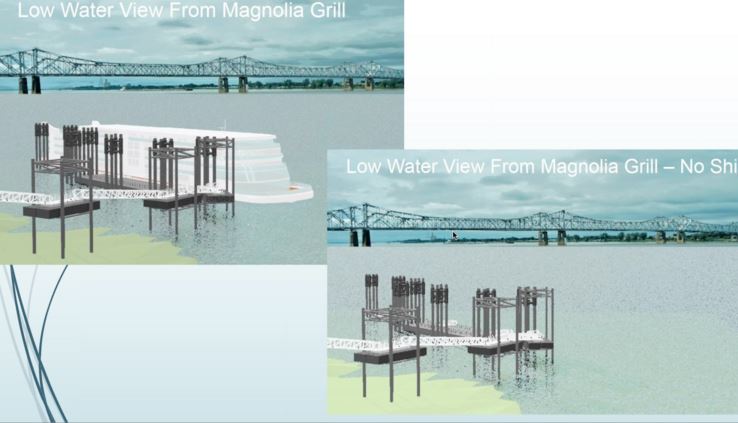
    The dock — to be located at the end of Silver Street by the current boat ramp — is in the design phase as Viking prepares  to begin cruising the Mississippi River next year to bring tourists to Natchez.


    The dock will be large enough to berth the 386-passenger Viking Mississippi cruise ship but should “be as unobtrusive as possible,” said Natchez Planning Director Rico Giani.


    The Natchez Board of Aldermen last month approved leases with Viking Cruises and American Cruise Lines for them to use the city-owned property for their docks. The companies at their expense will build separate landings for their riverboats. The two docking facilities will 100 feet apart near where the Isle of Capri floating casino was formerly berthed.


    In addition to revenues generated by the leases, the city is getting $500,000 from ACL and Viking to help build an elevated street where the river frequently floods Natchez Under-the-Hill. ACL and Viking are putting up $250,000 each.


    With the inclusion of the American Queen Steamboat Co. — which plans to build a third Silver Street dock — riverboats visiting Natchez by autumn 2022 are projected to bring up to 2,000 passengers a week to tour Natchez, according to Mayor Dan Gibson.


    After a year of no river cruises because of the COVID pandemic, ACL and AQSC resumed their Natchez visits in March. Viking plans to inaugurate its Mississippi River cruises in August 2022.


    Viking  is building similar riverboat docking facilities at Vicksburg, St. Francisville, La., and the Houmas House near New Orleans.


    Gibson has said the ACL dock will be open to the general public for viewing the river and sunsets but not for fishing. American Queen plans to dock its boats by the ramp in front of The Camp restaurant and Under-the-Hill Saloon.


    In other action Wednesday, the Natchez Preservation Commission approved the placement of telescopic viewers along the Natchez bluff trail overlooking the Mississippi River on Broadway Street. They’re being donated by the Rotary Club of Natchez.


    The commission regulates the design, restoration and construction of buildings and fixtures in Natchez’ historic districts to ensure they’re architecturally appropriate.


  • Louisiana lawmakers OK sports betting rules, send to Edwards

    Louisiana lawmakers OK sports betting rules, send to Edwards

    BATON ROUGE, La. (AP) — Months after most Louisiana voters agreed to legalize sports betting, lawmakers Thursday gave final passage to rules that will allow the wagering through sports book sites, mobile apps and kiosk locations in parishes where voters supported the activity.

    33-3 Senate vote sent the regulatory bill by Republican Senate President Page Cortez to the governor’s desk. The House earlier had voted 78-15 for the legislation. Democratic Gov. John Bel Edwards is expected to sign the measure into law, paving the way for betting on sports events to begin as early as the fall.

    Voters in 55 of Louisiana’s 64 parishes agreed to allow sports betting on live-action games, but lawmakers had to set the rules and the tax rates before the gambling can begin. The tax bill received final legislative passage earlier in the session.

    Lawmakers are creating 20 licenses for sports book operators, with Louisiana’s casinos and racetracks given first chance to get those licenses. If those casinos and racetracks don’t seek all 20 licenses by Jan. 1, fantasy sports betting operators and video poker establishments in the parishes where sports wagering is legal will be eligible to apply.

    Any operator that gets a license to conduct sports betting onsite also can do the wagering through a website and mobile app. The Louisiana Lottery Corporation will operate its own sports book through an online site, mobile app and kiosk locations set up in bars and restaurants that serve alcohol.

    Those interested in placing bets will have to be 21 or older and set up an account with a sports betting operator in the state. No bets can be placed on high school or youth sports events. Athletes, coaches and referees can’t bet on a sports event in which they are involved. People who lives in parishes that did not approve sports betting can place wagers if they head to a parish where sports betting was legalized.

    The state will tax the net gaming proceeds of the sports betting operators, with a 10% tax collected on wagering at onsite locations and a 15% tax on wagering through mobile apps and electronic devices. Sports betting operators also will be charged application and licensing fees. Edwards has already signed the tax and fee measure into law.

    Lawmakers were still deciding how they want to spend the money sports betting could generate for the state.

    ___

    The bill is filed as Senate Bill 247.

  • Louisiana session reaches final day with tax votes pending

    Louisiana session reaches final day with tax votes pending

    BATON ROUGE, La. (AP) — Louisiana lawmakers Thursday were completing a nine-week legislative session where they spent hefty sums of coronavirus recovery money, worked to overhaul the state’s tax structure and found themselves battling over social issues that nearly derailed the financial debates.

    Years of cash crunches and financial worries gave way to a budget largesse, with federal pandemic assistance pouring into Louisiana along with an unexpected boom in state tax collections. The majority-Republican Legislature used the new cash to give pay raises to teachers, boost spending on public colleges and student aid programs and steer tens of millions to pet projects back home.

    Federal dollars will pay for road and bridge work, water system improvements, tourism marketing, hurricane recovery and grant programs to businesses. Some of the aid will help shore up the state’s nearly-bankrupt unemployment trust fund.

    The House and Senate brokered a bipartisan deal in the dwindling hours of session on a complicated set of tax swaps they hope to persuade voters to pass in the fall election, arguing the measures will bring more sustainability to the state’s tax structure by disentangling it from federal tax payments. The Senate still had to take one last set of votes on the bills Thursday.

    “We’re taking the first step … to right-size Louisiana, to move our state forward,” said Rep. Gerald “Beau” Beaullieu, a New Iberia Republican who handled some of the tax bills in the House.

    Awaiting a final agreement was a plan championed by Senate Republican leaders to steer a portion of state sales taxes charged on purchases of cars and trucks to road and bridge projects in future budget years. But that would strip dollars from the state general fund that are used to pay for health care programs, education, public safety services and other government operations.

    The legislative session must end by 6 p.m.

    Lawmakers were expected to put the finishing touches on the regulations for sports betting to start this fall. They agreed to expand Louisiana’s medical marijuana program and eliminate jail time for possession of small amounts of pot for recreational use. And they enacted tougher regulations for how colleges must respond to allegations of sexual assault, harassment and other misconduct — legislation that grew out of a recent scandal at Louisiana State University.

    Gov. John Bel Edwards, a Democrat, was expected to veto measures sent to his desk to ban transgender athletes from competing on girls’ sports teams in schools and to do away with the permitting requirements to carry a concealed handgun.

    Fights over social issues — such as how to address police misconduct and how to teach issues of race in schools — provoked racial tensions in the House mid-session that threatened to derail the tax restructuring priorities of Senate President Page Cortez and House Speaker Clay Schexnayder, both Republicans. But Schexnayder, who was elected with the help of Black lawmakers, managed to steer the chamber through the feuds, at least enough to broker the tax deals.

    If approved by voters statewide, the main tax proposal would get rid of personal income tax and corporate tax deductions for federal income taxes paid in exchange for lowering the state’s income tax rates. Louisiana also would permanently eliminate the corporate franchise tax for small businesses and lower the tax rate for others.

    The tax package is more generous to corporations than individual taxpayers.

    Lawmakers said they expect to largely raise the same amount of revenue, to stay in compliance with federal coronavirus aid legislation that won’t allow the assistance to flow to states that cut taxes. But a nonpartisan financial analysis of the bills suggests the state could lose some money in the early years of the changes.

    The measures were the main pieces of a widespread revamp of Louisiana’s tax laws pushed by GOP leaders to address bipartisan criticism by government watchdog groups, tax experts and economists that the state’s tax provisions are unnecessarily complex.

    But complaints that Louisiana’s tax structure is riddled with loopholes that make the system less fair went unaddressed this session, amid opposition from special interest groups and business lobbyists.
  • Heavy rains cause flooding across northern Mississippi

    Heavy rains cause flooding across northern Mississippi

    OXFORD, Miss. (AP) — Heavy rainfall this week has flooded roads and neighborhoods in parts of north Mississippi, and forecasters said Thursday that more rain was expected.

    The National Weather Service said more than 15 inches (38 centimeters) of rain fell in Tallahatchie County from Tuesday to Thursday.

    Rising waters forced evacuations Wednesday in the Willow Creek subdivision in Saltillo, near Tupelo.

    In Yalobusha County, rain swept away a section of a road east of Water Valley. A truck crashed into the hole and crews rescued the occupant, WTVA-TV reported. Lee County officials Wednesday closed a section of road after the underside swept away but the road surface remained intact.

    Oxford resident Jamie Mardis told WMC-TV that he received a text message Wednesday from the nurse who does in-home care for his 4-year-old son. Rain had fallen throughout the previous night.

    “She said, ’You might want to go close the garage door because it’s coming down pretty good,” Mardis said.

    Within the hour, rain flooded Mardis’ yard and water moved into the garage.

    “The water was all the way up to the bottom of the door seal,” he said, pointing at the duct tape barrier he had created. “So we started making steps to try and get the furniture up inside and get prepared for the floodwaters inside the house.”

    Mardis said the water kept rising rapidly.

    “I was scared. I was afraid I might lose everything I got,” he said “You know, this is what I’ve been working for the last 10 years, all piled up in this house.”

    Mardis’ son, Liam, has a medical condition that requires around-the-clock care and expensive medical equipment in the home. Liam had been taken Tuesday night to Le Bonheur Children’s Hospital in Memphis, Tennessee, and the water never reached the inside of the house.

    Flooding happened throughout Oxford and Lafayette County.

    “It blew out some roads, blew out some culverts,” said Joe Bynum, the county roads manager.

    Emergency officials in Lafayette County told residents to evacuate several homes Wednesday after heavy rain created concern about a dam on a small lake. Crews from the county fire department pumped water out of Tara Lake to relieve pressure on a levee near the Tara Estates and Gum Tree subdivisions outside Oxford. A sinkhole was forming on the levee by the lake, according to the Mississippi Emergency Management Agency. The fire department said late Wednesday that people were allowed to return to their homes.

  • Mississippi approves first wind turbine electricity facility

    Mississippi approves first wind turbine electricity facility

    TUNICA, Miss. (AP) — The state of Mississippi has approved its first wind turbine facility to generate electricity in the Mississippi Delta, the Mississippi Public Service Commission announced Wednesday.

    The electricity generation facility will be built on 13,000 acres (5,260 hectares) in Tunica County and will consist of up to 100 turbines, according to a press release. The facility will generate enough power to provide energy to approximately 70,000 homes. Construction on the project is expected to begin this summer.

    Northern District Public Service Commissioner Commissioner Brandon Presley said the project will send a signal to investors that Mississippi is open for renewable energy projects.

    “Research continues to show great potential in the Mississippi Delta for wind and solar power generation,” he said.

    Central District Commissioner Brent Bailey said Tunica Windpower LLC requires a minimal footprint for installation and will utilize existing farm roads, “allowing land managers to continue to provide food, feed and fiber – and now energy – from the Mississippi Delta.”


  • Board OKs $2 million for Natchez parks improvements, street upgrades

    Board OKs $2 million for Natchez parks improvements, street upgrades

    NATCHEZ, Miss. – The city is expected to have $2 million in hand by August as it starts improving Natchez’ six municipal parks, with the bulk of that money going to renovate the Duncan Park golf clubhouse and the North Natchez youth center.


    “It will take a few months and even into next year. But the important thing is we’re starting,” Mayor Dan Gibson said of the parks project.


    The Board of Aldermen agreed Tuesday to move forward on borrowing $2 million through bonds. While the list of park improvements has a projected cost of about $1.75 million, aldermen decided to add another $250,000 for city street resurfacing and other structural repairs.


    Improving city parks has been a high priority for Gibson since he took office in July. The mayor said the city can handle the additional debt load and will not need to increase taxes for this.


    The list of park projects includes spending $500,000 for restoring the deteriorating Duncan Park Golf Course clubhouse and $365,000 for the dilapidated North Natchez youth center. New tennis courts, playground equipment and splash pads are also among the recreational offerings to be in the works. Gibson said park restroom improvements are already beginning.


    While not a city park, the Natchez National Historical Park is listed as a high priority by the Biden administration for $540,000 to preserve and develop the Forks of the Road, the site of a former Natchez slave market. The U.S Department of the Interior announced Monday that it wants Congress to allocate the funds as part of national parks’ “initiatives that advance racial equity and tell the stories of historically underrepresented communities and the struggle for civil rights.”


    Natchez officials have scheduled a June 18 ceremony to mark the donation of nearly three acres of city-owned land for the National Park Service to make part of the Forks of the Road historic site by St. Catherine Street. Gibson said U.S. Sen. Roger Wicker is expected to be there.


    Gibson also said $2 million has been earmarked for Morgantown Road in proposed legislation introduced in the U.S. House of Representatives. Natchez and Adams County leaders have been seeking funds to upgrade the road that’s considered dangerous and prone to rain-caused flooding.


    Funds for Forks of the Road and Morgantown Road must pass through the congressional appropriations process in the coming months before the federal government can actually provide the money.