Blog

  • College fans might not notice new first-down clock rule, but some coaches are wary of its effect

    College fans might not notice new first-down clock rule, but some coaches are wary of its effect

    The NCAA rule change that drew the most notice in the offseason might go mostly unnoticed by fans once the college football season is underway.

    For the first season since 1967, the clock will continue to run, as it does in the NFL, when a team makes a first down on a play that ends inbounds rather than stopping until the chains are set and the referee signals ready for play. The exception is during the last two minutes of the second and fourth quarters.

    The primary rationale for the change was to cut the number of plays to reduce players’ potential injury exposures, national supervisor of officials Steve Shaw said — not to necessarily shorten the nearly 3 1/2 hours it takes to play the average game.

    The importance of limiting exposures will grow as more teams play in the College Football Playoff. The playoff goes from four to 12 teams in the 2024-25 season, and further expansion is possible after that.

    The NCAA Football Rules Committee projects that the new rule will trim seven or eight plays from the average of about 180 per game in 2022. An eight-play reduction over a 12-game season would save 96 potential injury exposures per team, and there would be over 100 fewer exposures for teams that advance to the playoff.

    The new rule will be used on every NCAA level except Division III, which was granted a request to delay its implementation until 2024.

    Shaw said he expects consternation about the rule to wear off much like changes to blocking-below-the-waist rules did last year. The blocking rule drew initial outcry from coaches, Shaw said, but the transition went smoothly and the net result has been fewer lower-body injuries.

    “No one is going to look up in the middle of the first quarter or middle of the second and say, ‘They didn’t stop the clock on a first down and that just ruined this drive. That’s just awful,’” Shaw said. “It’s just one of those things that will disappear, and when you get your final numbers at the end, you may see seven plays less in a game that no one would have known at all.”

    A couple other changes address pace of play. One bars a team from calling consecutive timeouts during the same dead-ball period. The second eliminates playing an untimed down when a penalty occurs as time expires in the first and third quarters. The play following the penalty will carry over to the following quarter.

    Coaches’ opinions vary on how much it will impact games.

    North Carolina’s Mack Brown and Maryland’s Mike Locksley are worried fewer plays will cut down on opportunities for backups who need development.

    “Unlike the NFL, we’ve got 85 scholarship players, 120 in our program and they all want to play,” Locksley said.

    Of course, the way a game unfolds usually determines the number of snaps for reserves, with more available when the score isn’t close.

    TCU, for example, had 10 of its 15 games last season decided by 10 points or less. It had no starting defensive linemen play fewer than 590 plays from scrimmage, according to Pro Football Focus, and only two D-line backups got 100 snaps.

    Georgia had two of its 15 games decided by 10 points or less, and no starting defensive lineman was on the field for more than 531 plays. Eight backups got at least 100 snaps.

    Oklahoma State’s Mike Gundy said the new first-down clock rule will allow teams to more easily protect leads in the fourth quarter if they are effective running the ball. Gundy’s offseason emphasis was to upgrade his run game, which ranked ninth in the Big 12 last season, and the new rule adds urgency.

    “If you can’t rush the ball, and you have to throw passes and the pass is incomplete, the clock stops,” Gundy said. “The new rule allows us to effectively rush the ball and use the clock if we want to.”

    Texas’ Steve Sarkisian said his players, especially quarterbacks, will need to heighten their awareness about potential clock management changes late in second and fourth quarters.

    Central Florida’s Gus Malzahn, Clemson’s Dabo Swiney, Pittsburgh’s Pat Narduzzi and Oklahoma’s Brent Venables said they expect the rule to make no tangible difference.

    Then there’s Big Ten coordinator of football officials Bill Carolla, who joked that the guys on the chain crews will notice the difference more than anyone.

    “They’re old, broken down players or officials who just want a front row seat to see coaches,” Carolla said, “so they’re going to have to get down there a little bit quicker.”

  • Trump pleads not guilty in Georgia election subversion case and says he’ll skip next week’s hearing

    Trump pleads not guilty in Georgia election subversion case and says he’ll skip next week’s hearing

    ATLANTA (AP) — Former President Donald Trump pleaded not guilty on Thursday and said he’ll skip a hearing next week in the case accusing him and others of illegally trying to overturn the results of the 2020 election in Georgia.

    That means he won’t have to show up for the arraignment hearing that Fulton County Superior Court Judge Scott McAfee had set for next week. Trump’s decision to waive arraignment averts the dramatic arraignments that have accompanied the three other criminal cases Trump faces in which the former president has been forced amid tight security into a courtroom and entered “not guilty” pleas before crowds of spectators.

    Trump and 18 others were charged earlier this month in a 41-count indictment that outlines an alleged scheme to subvert the will of Georgia voters who had chosen Democrat Joe Biden over the Republican incumbent in the presidential election.

    Several other people charged in the indictment had already waived arraignment in filings with the court, saving them a trip to the courthouse in downtown Atlanta. Trump previously traveled to Georgia on Aug. 24 to turn himself in at the Fulton County Jail, where he became the first former president to have a mug shot taken.

    The case, filed under Georgia’s Racketeer Influenced and Corrupt Organizations Act, or RICO, is sprawling, and the logistics of bringing it to trial are likely to be complicated. Legal maneuvering by several of those charged has already begun.


  • Heather Willis

    [vc_single_image image=”1514″ img_size=”large” alignment=”center”][vc_single_image image=”1515″ img_size=”large” alignment=”center”][headerText widget_name=”Birthday and Anniversary Cakes Provided By Dairy Queen” level=”h3″ url=”” el_class=””]

    Happy Birthday to Heather Willis!

    Birthday Cake winner 08/31/23

  • Adams County Road Department to Close Liberty Road for Emergency Repairs

    Adams County Road Department to Close Liberty Road for Emergency Repairs

    The Adams County Road Department will close Liberty Road in Natchez and Adams County from 698 Liberty Road to LaGrange Road beginning Thursday, August 31, 2023, at 9:00 AM for emergency road repairs. The road is expected to reopen on September 5, 2023, at 9:00 AM.

    For more information, please contact the Adams County Road Department at (601) 445-7935.


  • Today in Sports – Ken Griffey and Ken Griffey Jr. become the 1st father and son to play on same team

    Aug 31st

    1881 — The first U.S. men’s single tennis championships begin at the Newport Casino, in Newport, Rhode Island.

    1895 — The first professional football game is played at Latrobe, Pa., between Latrobe and Jeannette, Pa. Latrobe pays $10 to quarterback John Brallier for expenses.

    1934 — The Chicago Bears and the College All-Stars played to a 0-0 tie before 79,432 in the first game of this series.

    1950 — Brooklyn’s Gil Hodges ties a major league record by hitting Boston Brave pitching for four homers in the Dodgers’ 19-3 rout. Hodges also added a single for 17 total bases.

    1955 — Nashua, ridden by Eddie Arcaro, goes wire-to-wire to defeat Swaps, ridden by Bill Shoemaker in a match race at Washington Park. Nashua’s victory avenges his second-place finish, behind Swaps, in the 1955 Kentucky Derby.

    1972 — American super swimmer Mark Spitz wraps up the Olympic butterfly double with a world record 54.27 in the 100m in Munich, having already won the 200m in world record time 2:00.70.

    1977 — John McEnroe plays his first U.S. Open match and receives his first Open code of conduct penalty in a 6-1, 6-3 first-round win over fellow 18-year-old Eliot Teltscher.

    1979 — Sixteen-year-old Tracy Austin defeats 14-year-old Andrea Jaeger, 6-2, 6-2, in the second round of the U.S. Open Earlier in the day, John Lloyd defeats Paul McNamee, 5-7, 6-7, 7-5, 7-6, 7-6, in the longest match by games at the Open since the introduction of the tie-break. The two play 63 of a maximum 65 games in three hours and 56 minutes.

    1984 — Pinklon Thomas wins a 12-round decision over Tim Witherspoon in Las Vegas to win the WBC heavyweight title.

    1985 — Angel Cordero Jr., 42, becomes the third rider in history behind Bill Shoemaker and Laffit Pincay Jr. to have his mounts earn $100 million, while riding at Belmont Park.

    1990 — Baseball outfielders Ken Griffey and Ken Griffey Jr. become the 1st father and son to play on same team (Seattle Mariners), the pair hit back-to-back singles in the first inning and both scored.

    1991 — Houston quarterback David Klingler sets an NCAA record with six touchdown passes in the second quarter as the Cougars pound Louisiana Tech 73-3.

    1996 — Oklahoma State becomes the first Division I-A team to win a regular-season overtime game, avoiding an embarrassing loss to Division I-AA Southwest Missouri State, when David Thompson’s 13-yard touchdown run gives the Cowboys a 23-20 win.

    1997 — Eddie George rushes for 216 yards, the second best opening-day NFL performance, in helping Tennessee past Oakland 24-21 in overtime.

    1999 — The U.S. Open loses two-time defending champion Patrick Rafter because of injury. Rafter, bothered by a right shoulder injury, retires after Cedric Pioline breaks his serve in the opening game of the fifth set. It’s the first time a defending champion — man or woman — loses in the first round in the history of this Grand Slam tournament going back to 1881.

    2001 — Pitcher Danny Almonte who dominated the Little League World Series with his 70 mph fastballs is ruled ineligible after government records experts determine he actually is 14, and that birth certificates showing he was two years younger are false. The finding nullifies all the victories by his Bronx, N.Y., team, the Rolando Paulino Little League All-Stars.

    2007 — Jeremy Wariner leads an American sweep of the medals in the 400 meters at the track and field world championships. Wariner wins in a personal best 43.45 seconds, with LaShawn Merritt taking silver and Angelo Taylor getting bronze. It’s the first medal sweep for any country in the men’s 400 at the world championships.

    2007 — Exactly 28 years to the day, No. 3 Novak Djokovic and Radek Stepanek tie the U.S. Open record for most games played (63 of a maximum 65) in a match. Djokovic outlasts Stepanek 6-7 (4), 7-6 (5), 5-7, 7-5, 7-6 (2), in the four-hour, 44-minute match.

    2018 — Aaron Donald of the Los Angeles Rams becomes the NFL’s highest-paid defensive player. The All-Pro defensive tackle agrees to a six-year, $135 million deal, which surpasses Von Miller’s contract in Denver as the new benchmark for defenders.

  • Nebraska volleyball stadium event draws 92,003 to set women’s world attendance record

    Nebraska volleyball stadium event draws 92,003 to set women’s world attendance record

    LINCOLN, Neb. (AP) — Nebraska’s fight song begins, “There is no place like Nebraska.” When it comes to volleyball, those words never rang more true than Wednesday night.

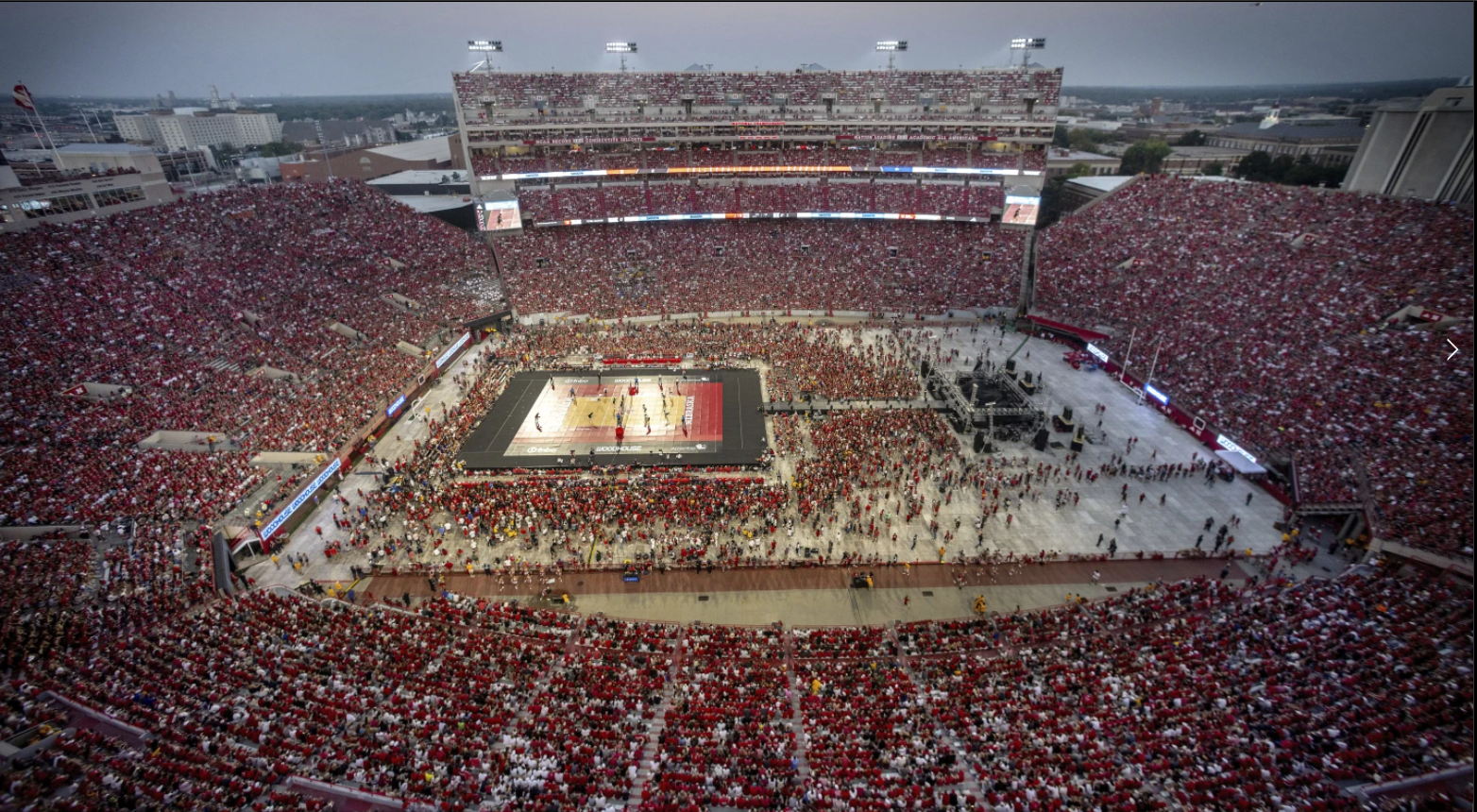
    The Cornhuskers laid claim to the world record for largest attendance at a women’s sporting event with 92,003 filling Memorial Stadium for their volleyball match against Omaha.

    The university took aim at the record last spring when it announced it would hold a daylong celebration of a sport that enjoys immense popularity in this state of fewer than 2 million.

    “We took a chance by playing in Memorial Stadium, and to go for the record and break it. … I don’t think anybody could have envisioned that when this whole thing started,” Nebraska coach John Cook said. “It feels like a great accomplishment for this sport called volleyball played by women. It’s a state treasure. We proved it.”

    The event began with an exhibition between in-state Division II powers Nebraska-Kearney and Wayne State and was followed by the Huskers’ three-set sweep of Omaha in a regular-season match. Country artist Scotty McCreery performed afterward.

    The previous attendance record was 91,648, set during a Champions League soccer match when Barcelona defeated Real Madrid 5-2 at the Camp Nou Stadium in 2022.

    Memorial Stadium’s official capacity is just over 85,000 for football, but that number was higher for this event because there were seats and standing room on the field.

    Fans in red and white started their tailgate parties outside the stadium hours before first serve of an exhibition Wayne State won in three sets. The stadium was one-quarter full at the start of that match and gradually filled to capacity as players for Omaha and Nebraska were warming up.

    There was a flyover during the national anthem and, minutes before first serve, Cook led his Huskers into the stadium to the Tunnel Walk, the longtime tradition of the football team. Synchronized chants of “Go Big Red!” were heard all around.

    Conditions were 83 degrees, clear skies and a south wind listed at 4-mph at court level with gusts that sometimes moved the ball in unpredictable ways.

    Though 91,648 was widely acknowledged as the women’s sports attendance record, at least one match at the unofficial 1971 Women’s World Cup in Mexico City reportedly drew 110,000 people.

    The American record attendance for a women’s sporting event had been 90,185 for the 1999 World Cup soccer final between the United States and China at the Rose Bowl in Pasadena, California — the game where Brandi Chastain ripped off her shirt after scoring the decisive penalty shot for the U.S. win.

    The NCAA does not track attendance across all sports, but associate director of media coordination and statistics Jeff Williams said a crowd of 90,000-plus was easily among the largest for a non-football game. A 2010 outdoor hockey game between Michigan and Michigan State at Michigan Stadium in Ann Arbor drew more than 113,000 fans.

    A message seeking comment from officials of Guinness World Records was not immediately returned.

    Nebraska has sold out 306 consecutive regular-season matches. (Wednesday’s event won’t count toward the streak because it is not being held on the team’s Devaney Center court.) The Huskers have led the nation in attendance every season since 2013, and eight of the top nine crowds in NCAA volleyball history are matches that have involved Nebraska.

    Nebraska has won five national championships in volleyball, and its program is one of the few in Division I women’s sports that turns a profit — $1 million last year, according to athletic department CFO Doug Ewald.

    “This is a statement on Title IX, and having two daughters of my own, what Title IX has done for women’s sports is huge,” fan Troy Pfannenstiel of Omaha said before the matches.

    Chancellor Rodney Bennett canceled classes for the day. NCAA President Charlie Baker, Big Ten Commissioner Tony Petitti were on hand, as was Gov. Jim Pillen. So were Husker volleyball players who were part of iconic coach Terry Pettit’s teams over four decades. High school teams from across a state stretching 430 miles border to border were excused from classes to attend.

    There are 75 women from the state of Nebraska who are on Division I volleyball rosters this season. At 44 players per million in population, the state trails only Hawaii (67 per million) in Division I players produced per capita, according to volleyball statistician and historian Rich Kern of RichKern.com.

    “You don’t think you’re going to be part of a world record event, and seeing how much everyone supports volleyball and wanted to be part of that record is awesome to see,” Omaha’s Shayla McCormick said.

    Volleyball has surpassed basketball as the No. 1 girls high school team sport in the United States. It’s long been No. 1 in Nebraska.

    About 7,000 girls play high school volleyball in the state. Volleyball has been played in varying forms in Nebraska since the early 1900s. For many years, girls volleyball matches were warmup acts for boys basketball games. Volleyball became a sanctioned sport in 1972 and took off in the late 1970s when Pettit invited many of the state’s high school coaches to work at his camps in Lincoln.

    Pettit also conducted so-called “satellite” clinics in small towns across the state. In a place where boys grow up dreaming of becoming Cornhusker football players, many girls are equally passionate about some day playing volleyball for a Nebraska team that annually ranks among the nation’s elite.

    Ella Beck, 10, came with a group from tiny Pierce to see her first college volleyball match and root for her favorite player, setter Lexi Rodriguez.

    Neveah Kehr, 10, came with her mom, Nicki, from Bismarck, North Dakota, to be part of the event. Nicki graduated from Nebraska, and she brought up her daughter watching the Huskers on television.

    Neveah wore the No. 5 jersey of middle blocker Bekka Allick at a pep rally before the matches and, with more than 1,000 fans cheering, was invited to walk to where the players stood and was introduced to the woman she called her idol.

    Neveah teared up, and Bekka gave her a hug.

  • Airplane turbulence / How much to pay for dog grooming/ McDonald’s is changing their fries

    How to handle turbulence on an airplane.

    How much to pay for grooming for an itty bitty dog.

    Sam says McDonalds is about to change their fries. That’s in the food dude.


  • Zach Arnett names MSU’s permanent captains

    Zach Arnett names MSU’s permanent captains

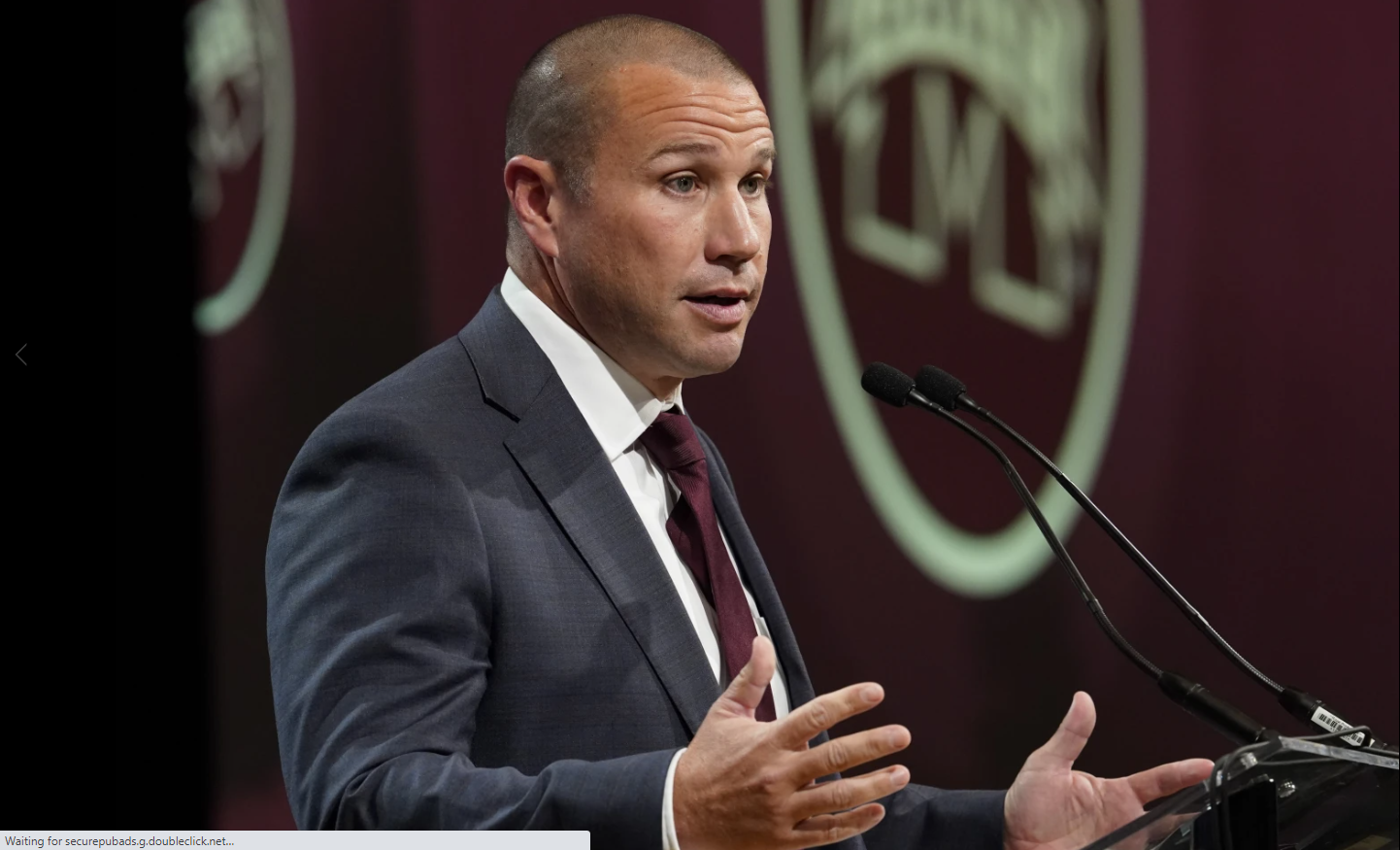
    Zach Arnett, Mississippi State’s new head coach, has revealed the permanent captains who will lead the Bulldogs this season.

    During Wednesday’s SEC teleconference, Arnett explained the criteria for selecting the captains. First-year players had votes worth 1 point, second-year players had a vote worth 2 points and so on. In the end, QB Will Rogers and LB Nathaniel “Bookie” Watson were named the permanent captains.

    Arnett also revealed the Bulldogs will rotate 2 additional captains on a weekly basis:

    “Will Rogers and Bookie Watson are our 2 captains permanent captains and we will kind of rotate captains of the week, 2 additional captains,” said Arnett. “So either one from either side of the ball, or a special teams guy because we’ve got a pretty veteran group with a lot of guys who are well-respected amongst their teammates.”

    As for the distribution of votes, Rogers and Watson were clearly the team-leading vote-getters but a “big chunk of guys” finished with similar vote totals.

    “Will and Bookie were the 2 highest vote getters, but then we had a big chunk of guys kind of all got similar vote totals, so that guys us the opportunity to kind of honor those guys, those vets who have done a lot for the program,” Arnett explained. “But then also as we get into the season, too, kind of have an honorary captain of the week if a guy’s playing really at a high level, doing whatever’s best for the team, kind of celebrate and honor those guys as well.”

  • Mississippi Democrat wins primary, set to become the state’s first openly gay lawmaker

    Mississippi Democrat wins primary, set to become the state’s first openly gay lawmaker

    JACKSON, Miss. (AP) — Mississippi will have its first-ever openly gay state legislator after a House candidate won his Democratic primary election runoff Tuesday.

    Fabian Nelson, a 38-year-old realtor from Byram, prevailed over Roshunda Harris-Allen, an education professor at Tougaloo College and alderwoman in Byram. The race to represent the House district in the south Jackson metro area was decided in a runoff after neither Nelson nor Allen received a majority vote in the Aug. 8 primary. A local pastor finished a distant third and did not advance to the runoff.

    Nelson’s victory comes on the heels of a historic wave of restrictions passed by Republican-controlled legislatures targeting the rights of transgender people. LGBTQ+ advocates say they’ve seen a record number of measures aimed at their community in 2023. In February, Mississippi enacted a ban on gender-affirming hormones or surgery for anyone in the state younger than 18.

    Republicans did not field a candidate for the general election, so Nelson will go on to represent the district. He will be sworn in before the next legislative session in January. His win marks the fulfillment of a goal he’s had since visiting the Capitol on an elementary school field trip and telling his teacher he’d sit on the House floor one day.

    “I still think I’m in a dream. I’m still trying to process it and take it in,” Nelson said in an interview Wednesday. “It’s still shocking to me, I have to be honest.”

    Nelson was endorsed by the Human Rights Campaign, the nation’s largest organization devoted to LGBTQ+ rights. In June, the organization declared a state of emergency for LGBTQ+ people in the U.S., pointing to the passage of bills it deems discriminatory.

    “It sends a real message in a time when we are seeing attacks legislatively and through violence against the LGBTQ+ community that the majority of people reject that kind of animus,” Rob Hill, state director of the Human Rights Campaign’s Mississippi chapter, said in an interview after Nelson’s victory. “I think a lot of youth around the state who have felt like their leaders are rejecting them or targeting them won’t feel as lonely today.”

    The Hinds County district includes Southwest Jackson and part of Byram, Salem and Terry. Nelson said he connected with voters by relying on his deep local ties. In office, he wants to increase health care access for low-income people by pushing for Medicaid expansion.

    “Don’t get me wrong, it’s great being first, but ultimately what won this campaign is the fact that I’m in touch with my community and the issues my community is facing,” Nelson said.

    He also wants to be a voice against policies that harm marginalized communities, he said.

    “At the end of the day, I put my suit on the same way every other person who walks in that statehouse does,” Nelson said. “I’m going to walk in there, and I’m going to be a sound voice as to why things like this can’t continue to go on in the state of Mississippi.”

    In a statement, Annise Parker, president of the LGBTQ+ Victory Fund, said Mississippi is “one of the last two states to achieve the milestone of electing an out LGBTQ+ lawmaker. ”

    “Voters in Mississippi should be proud of the history they’ve made but also proud to know they’ll be well-represented by Fabian,” Parker said.

    One of the authors of Mississippi’s ban on gender-affirming care for minors, Republican Rep. Nick Bain from Corinth, was trailing Wednesday in a nail-biting primary runoff in north Mississippi. The race still had not been called Wednesday, but Bain trailed fellow Republican Brad Mattox, who owns a gun shop called Big Bang Trading Company.

    In south Mississippi, Felix Gines, a Biloxi City Council member first elected as a Democrat, lost a Republican runoff to Zachary Grady, a former police officer.

    Rodney Hall, a recent aide to GOP Congressman Trent Kelly and former Army veteran, won the Republican primary in a northeast Mississippi district and faces no opponent in November. He is set to become the first Black Republican elected to the state Legislature since the 1890s.