Tag: civil rights

  • Navy vet beaten by federal agents: ‘They came out to fight’

    Navy vet beaten by federal agents: ‘They came out to fight’

    Video of the Saturday night incident has gone viral.

    SALEM, Ore. (AP) — The Navy veteran stands passively in Portland, Oregon, amid swirling tear gas. One of the militarized federal agents deployed by President Donald Trump swings a baton at him with full force. With both hands. Five times.

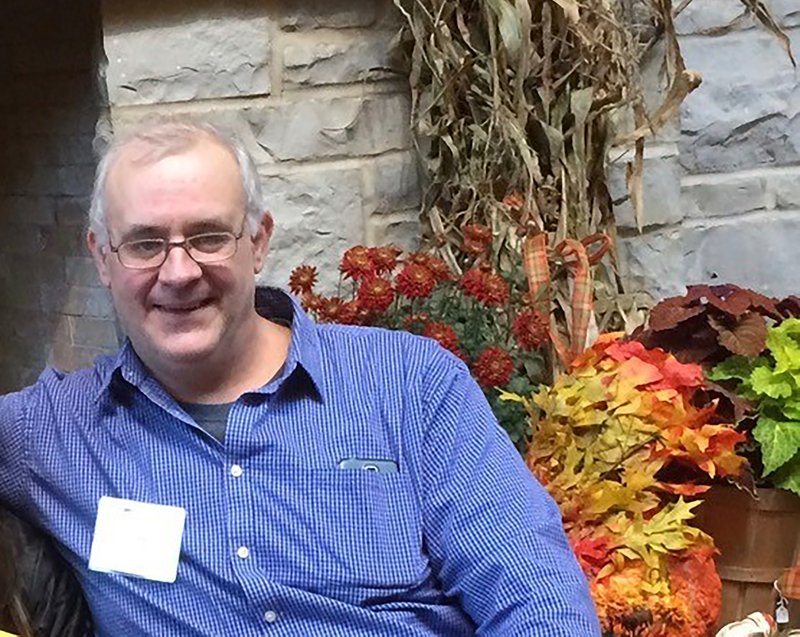
    Under the assault, 53-year-old Christopher David seems like a redwood tree — impervious to the blows. But in a video shot by a reporter, another officer — wearing green military camouflage, a helmet and gas mask — sprays David full in the face with what appears to be pepper gas.  Accounts of it have been reported by news outlets in the United States and around the world.

    Today, David, who suffered two broken bones in his hand, finds himself a reluctant symbol of the protests taking place in Oregon’s largest city and the federal response to it. Militarized officers from a handful of agencies have been using tear gas, flash-bangs, pepper spray, “less-lethal” impact weapons and other munitions to disperse crowds.

    “It isn’t about me getting beat up. It’s about focusing back on the original intention of all of these protests, which is Black Lives Matter,” David said in a phone interview Monday with The Associated Press.

    The U.S. Department of Homeland Security, which has deployed officers to Portland, did not immediately respond to a request for comment on the incident that David recounted. DHS said in a statement about Saturday night’s events that some of the protesters were “violent anarchists” who had launched objects at federal officers, including fireworks and bags of paint, and tried to barricade officers inside the federal building.

    Some vandalism, including graffiti, has occurred in the Portland protests, now in their 53rd day, and federal officials say they’ve responded to protect property and help restore order. One protester was arrested after allegedly assaulting a federal officer with a hammer.

    But people peacefully protesting police brutality and racism, including a county commissioner and religious clerics, have been subjected to riot-control munitions. One demonstrator was hit in the head by an impact munition, shattering bones in his face and head. Some were snatched off the streets by the federal officers and stuffed into unmarked vehicles.

    David, a graduate of the U.S. Naval Academy and a Navy veteran, was so disturbed by what he’d heard that he came to a protest site outside the federal building in downtown Portland on Saturday night.

    He put on a sweatshirt with “Navy” emblazoned across the chest and a Navy ballcap, figuring the federal officers would be, like him, a military veteran. He figured they’d listen as he reminded them “that you take the oath to the Constitution; you don’t take the oath to a particular person.”

    “What they were doing was unconstitutional,” David said. ”Sometimes I worry that people take the oath of office or the oath to the Constitution, and it’s just a set of words that mean nothing. They really don’t feel in their heart the weight of those words.”

    There was no talking. The federal officers, in full tactical gear, came charging out of the federal building.

    “They came out in this phalanx, running, and then they plowed into a bunch of protesters in the intersection of the street and knocked them over. They came out to fight,” David said. One officer pointed a semi-automatic weapon at David’s chest, he said, and video shows another shoving him backwards as he tried to talk with the officers.

    “I took a couple steps back, straightened up, and then just stood my ground right there, arms down by my side,” David recalled.

    One officer began whacking at David with the baton. When he doesn’t fall or even flinch, another officer sprays him full in the face. David then retreats a few steps while making an obscene gesture.

    “They are thugs and goons,” David said. “I couldn’t recognize anything tactically that they were attempting to do that was even remotely related to crowd control. It looked to me like a gang of guys with sticks.”

    David will need reconstructive surgery with pins and plates on his ring finger that was shattered. A bone in his hand was also broken.

    He’s not going back out to protest.

    “My ex-wife and my daughter would kill me if I did that. They’re so angry at me for doing it in the first place because I got beat up,” he said. “I’m not a redwood tree. I’m an overweight, 53-year-old man.”

  • Remembering civil rights icon John Lewis, who passed away Friday

    Remembering civil rights icon John Lewis, who passed away Friday


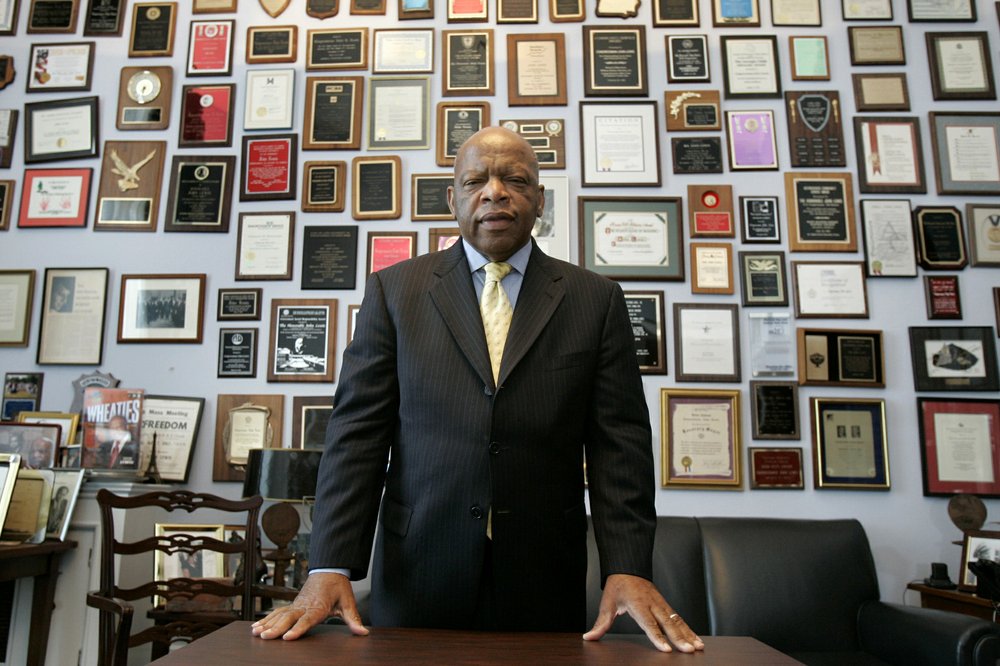
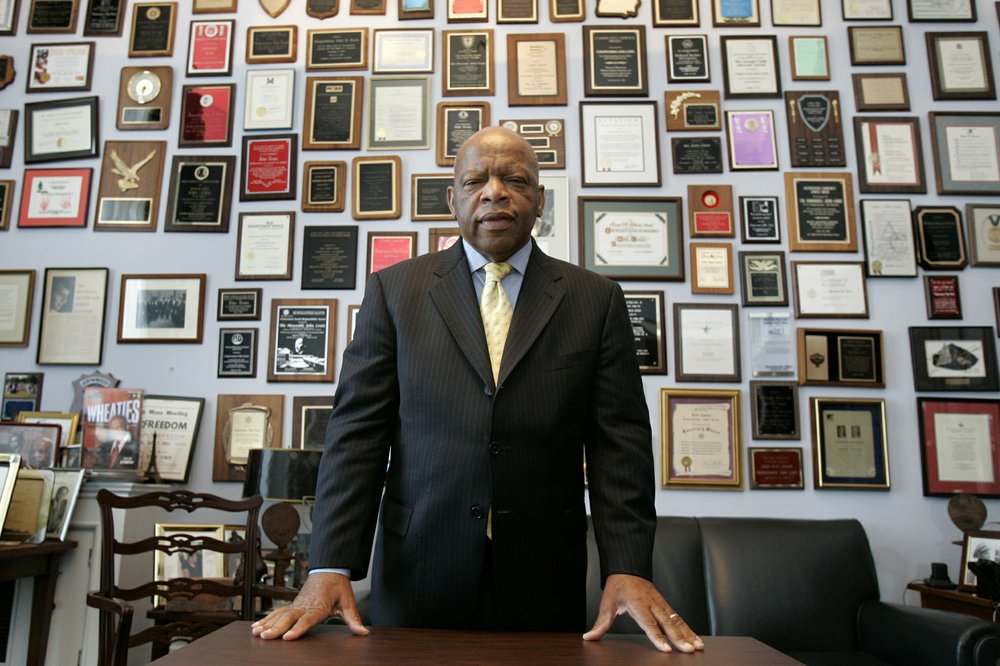
    WASHINGTON (AP) — People paid great heed to John Lewis for much of his life in the civil rights movement. But at the very beginning — when he was just a kid wanting to be a minister someday — his audience didn’t care much for what he had to say.

    A son of Alabama sharecroppers, the young Lewis first preached moral righteousness to his family’s chickens. His place in the vanguard of the 1960s campaign for Black equality had its roots in that hardscrabble Alabama farm and all those clucks.

    Lewis, who died Friday at age 80, was the youngest and last survivor of the Big Six civil rights activists who organized the 1963 March on Washington, and spoke shortly before the group’s leader, Rev. Martin Luther King Jr., gave his “I Have a Dream” speech to a vast sea of people.

    If that speech marked a turning point in the civil rights era — or at least the most famous moment — the struggle was far from over. Two more hard years passed before truncheon-wielding state troopers beat Lewis bloody and fractured his skull as he led 600 protesters over Selma’s Edmund Pettus Bridge.

    Searing TV images of that brutality helped to galvanize national opposition to racial oppression and embolden leaders in Washington to pass the landmark 1965 Voting Rights Act five months later.

    “The American public had already seen so much of this sort of thing, countless images of beatings and dogs and cursing and hoses,” Lewis wrote in his memoirs. “But something about that day in Selma touched a nerve deeper than anything that had come before.”

    That bridge became a touchstone in Lewis’s life. He returned there often during his decades in Congress representing the Atlanta area, bringing lawmakers from both parties to see where “Bloody Sunday” went down.

    Lewis earned bipartisan respect in Washington, where some called him the “conscience of Congress.” His humble manner contrasted with the puffed chests on Capitol Hill. But as a liberal on the losing side of many issues, he lacked the influence he’d summoned at the segregated lunch counters of his youth, or later, within the Democratic Party, as a steadfast voice for the poor and disenfranchised.

    “John is an American hero who helped lead a movement and risked his life for our most fundamental rights; he bears scars that attest to his indefatigable spirit and persistence,” House Majority Leader Steny Hoyer said after Lewis announced his cancer diagnosis.

    He was a 23-year-old firebrand, a founder of the Student Nonviolent Coordinating Committee, when he joined King and four other civil rights leaders at the Roosevelt Hotel in New York to plan and announce the Washington demonstration. The others were Whitney Young of the National Urban League; A. Philip Randolph of the Negro American Labor Council; James L. Farmer Jr., of the interracial Congress of Racial Equality; and Roy Wilkins of the NAACP.

    At the National Mall months later, he had a speaking slot before King and toned down his intended remarks, bowing to pressure that “incensed” him.

    “I wanted it to have an air of militancy,” Lewis said.

    He dropped a reference to leading a “scorched earth” campaign across the South, like Civil War Maj. Gen. William Tecumseh Sherman’s March to the Sea. (“John, that doesn’t sound like you,” he recalled King telling him.) He scaled back criticism of President John Kennedy’s civil rights record.

    It was a potent speech nonetheless. He vowed: “By the forces of our demands, our determination and our numbers, we shall splinter the segregated South into a thousand pieces and put them together in an image of God and democracy.”

    His words were soon and for all time overshadowed by the speech of King. “He changed us forever,” Lewis said of King’s oratory that day.

    But the change the movement sought would take many more sacrifices.

    After months of training in nonviolent protest, demonstrators led by Lewis and the Rev. Hosea Williams began a march of more than 50 miles from Selma to Alabama’s capital in Montgomery. They didn’t get far: On March 7, 1965, a phalanx of police blocked their exit from the Selma bridge. Authorities swung truncheons, fired tear gas and charged on horseback, sending many to the hospital. The nation was horrified.
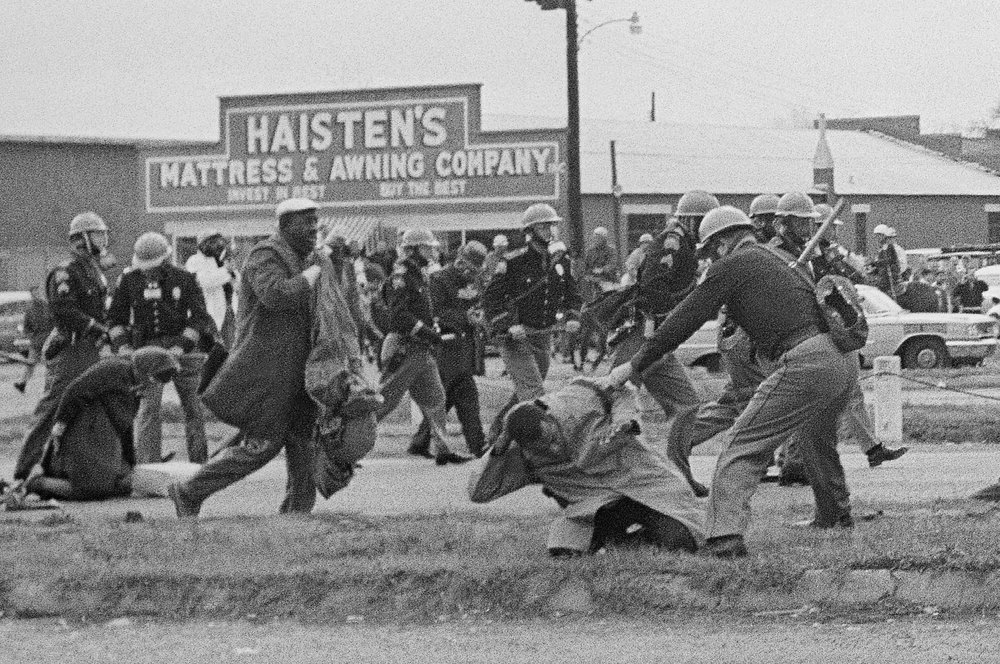
    “This was a face-off in the most vivid terms between a dignified, composed, completely nonviolent multitude of silent protesters and the truly malevolent force of a heavily armed, hateful battalion of troopers,” Lewis wrote. “The sight of them rolling over us like human tanks was something that had never been seen before. People just couldn’t believe this was happening, not in America.”

    King swiftly returned to the scene with a multitude, and the march to Montgomery was made whole before the end of the month.

    Lewis was born on Feb. 21, 1940, outside Troy, in Alabama’s Pike County. He attended segregated public schools and was denied a library card because of his race, but he read books and newspapers avidly, and could rattle off obscure historical facts even in his later years.

    He was a teenager when he first heard King, then a young minister from Atlanta, preach on the radio. They met after Lewis wrote him seeking support to become the first Black student at his local college. He ultimately attended the American Baptist Theological Seminary and Fisk University instead, in Nashville, Tennessee.

    Soon, the young man King nicknamed “the boy from Troy” was organizing sit-ins at whites-only lunch counters and volunteering as a Freedom Rider, enduring beatings and arrests while challenging segregation around the South. Lewis helped form the Student Nonviolent Coordinating Committee to organize this effort, led the group from 1963 to 1966 and kept pursuing civil rights work and voter registration drives for years thereafter.

    President Jimmy Carter appointed Lewis to lead ACTION, a federal volunteer agency, in 1977. In 1981, he was elected to the Atlanta City Council, and then won a seat in Congress in 1986.

    Humble and unfailingly friendly, Lewis was revered on Capitol Hill. When Democrats controlled the House, he tried to keep them unified as his party’s senior deputy whip, a behind-the-scenes leadership post. The opening of the Smithsonian’s National Museum of African American History and Culture was a key victory. But as one of the most liberal members of Congress, spending much of his career in the minority, he often lost policy battles, from his effort to stop the Iraq War to his defense of young immigrants.

    Lewis also met bipartisan success in Congress in 2006 when he led efforts to renew the Voting Rights Act, but the Supreme Court invalidated much of the law in 2013, and it became once again what it was in his youth, a work in progress.

    Lewis initially endorsed Hillary Rodham Clinton in the 2008 Democratic presidential primary, but belatedly backed Barack Obama when it became clear he had more Black support. After Obama’s swearing-in, he signed a commemorative photograph for Lewis that reflected much more than his endorsement, writing “Because of you, John. Barack Obama.” Later, they marched hand in hand in Selma on the 50th anniversary of the attack.

    And when Obama was succeeded by a president who sought to dismantle much of his legacy, Lewis made no effort to hide his pain.

    Lewis refused to attend Donald Trump’s inauguration, saying he didn’t consider him a “legitimate president” because Russians had conspired to get him elected. When Trump later complained about immigrants from “s—hole countries,” Lewis declared, “I think he is a racist … we have to try to stand up and speak up and not try to sweep it under the rug.”

    Lewis said he’d been arrested 40 times in the 1960s, five more as a congressman. At 78, he told a rally he’d do it again to help reunite immigrant families separated by the Trump administration.

    “There cannot be any peace in America until these young children are returned to their parents and set all of our people free,” Lewis said. “If we fail to do it, history will not be kind to us,” he shouted. “I will go to the border. I’ll get arrested again. If necessary, I’m prepared to go to jail.”

    In a speech the day of the House vote to impeach Trump, Lewis explained the importance of that vote.

    “When you see something that is not right, not just, not fair, you have a moral obligation to say something, to do something. Our children and their children will ask us ’what did you do? what did you say?” While the vote would be hard for some, he said: We have a mission and a mandate to be on the right side of history.”

    Lewis announced in late December 2019 that he had been diagnosed with advanced pancreatic cancer.

    “I have never faced a fight quite like the one I have now,” he said at the time.

    “I’ve seen courage in action on many occasions,” the late Republican Sen. John McCain of Arizona, a Navy pilot tortured in Vietnam, once said. “I can’t say I’ve seen anyone possess more of it, and use it for any better purpose and to any greater effect, than John Lewis.”

    Lewis’ wife of four decades, Lillian Miles, died in 2012. They had one son, John Miles Lewis.

    If the Voting Rights Act that Lewis cherished was a work in progress, so was America, Lewis observed as he spoke once again from the Lincoln Memorial, a half-century after the March on Washington.

    “Fifty years later we can ride anywhere we want to ride, we can stay where we want to stay,” he said that day in August 2013. “Those signs that said ‘white’ and ’colored are gone. And you won’t see them anymore except in a museum, in a book, on a video.

    “But there are still invisible signs buried in the hearts in humankind that form a gulf between us. Too many of us still believe our differences define us instead of the divine spark that runs through all of human creation.”

    Then came the cheers and applause. This time he was no warm-up act for a giant of history. This was his moment, and there was not a cluck to be heard.
  • Military chief: Troops were issued bayonets during police brutality protests in Washington DC

    Military chief: Troops were issued bayonets during police brutality protests in Washington DC

    Roughly 700 members of the 82nd Airborne Division were sent on that day to two military bases near the District Capitol Area armed with live rounds, bayonets, and riot gear.

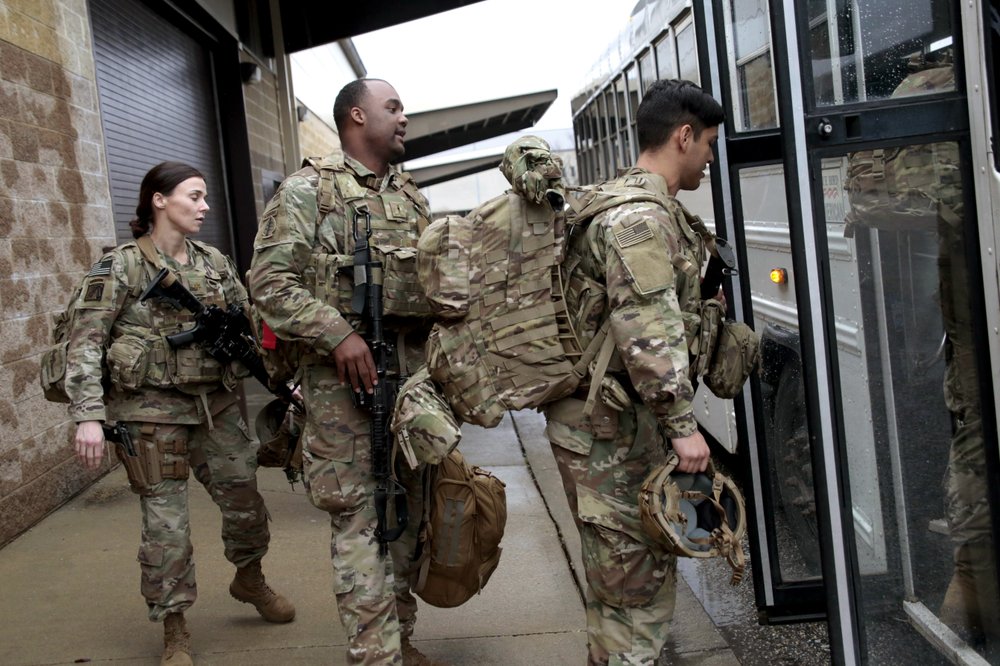
    CHARLOTTE, N.C. (AP) — The chairman of the Joint Chiefs of Staff has confirmed a report by The Associated Press that some of the service members who were mobilized to Washington, D.C., last month in response to civil unrest over the killing of George Floyd were issued bayonets. Defense documents obtained by the AP show some were not trained in riot response.

    Members of the Army’s 82nd Airborne Division from Fort Bragg, North Carolina, and the 3rd U.S. Infantry Regiment, which is based in D.C. and typically guards the Tomb of the Unknown Soldier, were mobilized last month to respond to massive protests over the treatment of Black Americans and systemic issues of police brutality. But the troops were never actually sent to the protests after they arrived.

    The soldiers were issued bayonets for their June 2 deployment — but told they were to remain in their scabbards and not attached to their service rifles, Joint Chiefs Chairman Army Gen. Mark A. Milley wrote to two U.S. representatives in a letter that was obtained by the AP. The soldiers were also told no weapons were to enter the capital without clear orders and only after nonlethal options were first reviewed, he said.

    Milley said the order to mobilize the troops came from Army Maj. Gen. Omar Jones, who serves as commander of the military district of Washington. Milley’s letter, dated June 26, was sent to Democratic Reps. Raja Krishnamoorthi of Illinois and Rep. Ted Lieu of California, who demanded an explanation after the AP first reported on the use of bayonets on June 2.

    The AP previously reported soldiers were armed with live rounds, bayonets, and riot gear. Bloomberg reported on June 11 that the 3rd U.S. Infantry Regiment, nicknamed “The Old Guard,” was also issued bayonets.

    Upon arrival, neither the 82nd nor The Old Guard were ever called off base and into the city to respond to protests. Division paratroopers were sent back to Fort Bragg on June 4.

    But the reports led to sharp condemnation and outrage on social media platforms.

    An unclassified military document obtained by the AP also shows that some of the soldiers were not prepared to deal with the protesters. Instead, commanders planned to give them the proper training within 96 hours of their arrival in Washington.

    While some infantry soldiers are trained in crowd control, especially those preparing for overseas deployment, they don’t typically undergo training for riot control and domestic civil unrest.

    In a letter to Milley on June 22, Krishnamoorthi and Lieu expressed concern that the use of bayonets could escalate any potential violence at protests. They drew parallels to the 1970 Kent State shootings in which four students were killed by National Guardsmen.

    “The escalation and violence leading up to and following those killings included those same troops meeting peaceful demonstrators with bayonets,” the representatives wrote.

    In his response, Milley stopped short of agreeing to bar service members from deploying to domestic protests with bayonets in the future. He said each situation would have to be dealt with individually.

    In a joint statement to the AP on Thursday, the U.S. representatives wrote: “While we are grateful for General Milley’s responses to our questions concerning the arming of troops with bayonets for potential deployment against protesters, we were disappointed he was not willing to commit to banning the practice.”

    They added: “We recognize the necessity of the Joint Force preserving flexibility to respond to varying circumstances, but it is difficult for us to imagine a circumstance which could necessitate or justify the deployment of bayonets against American civilians.”

    The bayonet news broke at the same time the AP first reported that President Donald Trump ordered military aircraft to fly above demonstrators in a “show of force.” That information came from two Defense Department officials who insisted on anonymity because they were not authorized to discuss ongoing operations publicly.

    Show-of-force missions within the U.S. military are designed to intimidate an opposing force and to warn of potential military action if provoked further. Army Secretary Ryan McCarthy told reporters that the incident, involving an Army National Guard medical evacuation helicopter that hovered low over protesters in Washington, D.C., is under investigation.

    Milley also found himself embroiled in controversy after he walked with President Donald Trump to a photo-op outside St. John’s Church after passing through Lafayette Park, which the military cleared of protesters beforehand.

    He later apologized and said he “should not have been there.”

  • AP Exclusive: 13 tons of human air products from Chinese prison camps seized

    AP Exclusive: 13 tons of human air products from Chinese prison camps seized

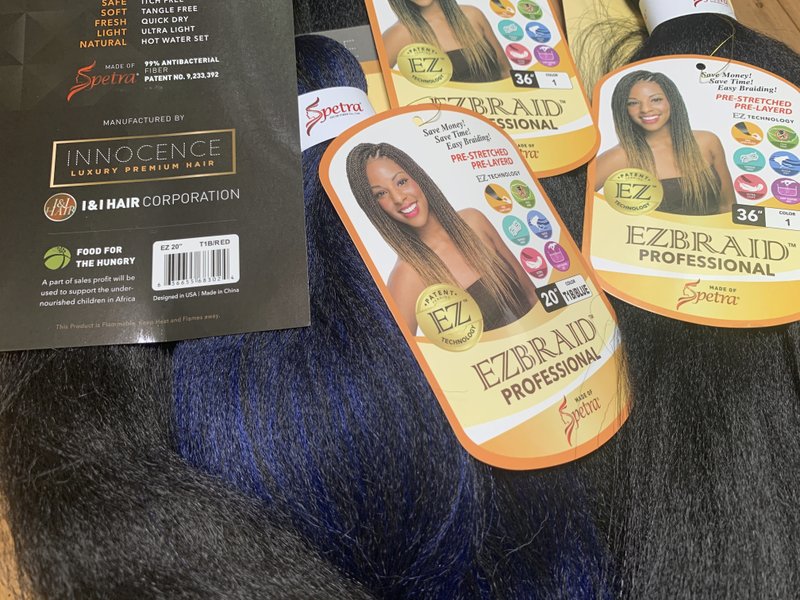
    Federal authoritiesseized a shipment of weaves and other beauty accessories suspected to be made out of human hair taken from people locked inside a Chinese internment camp.

    U.S. Customs and Border Protection officials told The Associated Press that 13 tons (11.8 metric tonnes) of hair products worth an estimated $800,000 were in the shipment.

    “The production of these goods constitutes a very serious human rights violation, and the detention order is intended to send a clear and direct message to all entities seeking to do business with the United States that illicit and inhumane practices will not be tolerated in U.S. supply chains,” said Brenda Smith, executive assistant commissioner of CBP’s Office of Trade.


    This is the second time this year that CBP has slapped one of its rare detention orders on shipments of hair weaves from China, based on suspicions that people making them face human rights abuses. The orders are used to hold shipping containers at the U.S. ports of entry until the agency can investigate claims of wrongdoing.

    Rushan Abbas, a Uighur American activist whose sister, a medical doctor, went missing in China almost two years ago and is believed to be locked in a detention camp, said women who use hair weaves should think about who might be making them.

    “This is so heartbreaking for us,” she said. “I want people to think about the slavery people are experiencing today. My sister is sitting somewhere being forced to make what, hair pieces?”

    Wednesday’s shipment was made by Lop County Meixin Hair Product Co. Ltd. In May, a similar detention was placed on Hetian Haolin Hair Accessories Co. Ltd., although those weaves were synthetic, not human, the agency said. Hetian Haolin’s products were imported by Os Hair in Duluth, Georgia, and I & I Hair, headquartered in Dallas. I & I’s weaves are sold under the Innocence brand to salons and individuals around the U.S.

    Both of the exporters are in China’s far west Xinjiang region, where, over the past four years, the government has detained an estimated 1 million or more ethnic Turkic minorities.

    The ethnic minorities are held in internment camps and prisons where they are subjected to ideological discipline, forced to denounce their religion and language and physically abused. China has long suspected the Uighurs, who are mostly Muslim, of harboring separatist tendencies because of their distinct culture, language and religion.

    Reports by the AP and other news organizations have repeatedly found that people inside the internment camps and prisons, which activists call “black factories,” are making sportswear and other apparel for popular U.S. brands.

    The AP tried to visit Hetian Haolin Hair Accessories Co. more than a year ago during an investigation into forced labor inside the camps. But police called the cab driver taking AP journalists to the area, ordering the driver to turn back and warning that the cab’s coordinates were being tracked.

    From the road, it was clear the factory — topped with “Haolin Hair Accessories” in big red letters — was ringed with barbed wire fencing and surveillance cameras, and the entrance was blocked by helmeted police. Across the street, what appeared to be an educational facility was topped with political slogans declaring “the country has power” and urging people to obey the Communist Party. It was unclear whether the factory was part of a detention center, but former detainees in other parts of Xinjiang have described being shuttled to work in fenced, guarded compounds during the day and taken back to internment camps at night.

    The Chinese Ministry of Affairs has said there is no forced labor, nor detention of ethnic minorities.

    “We hope that certain people in the United States can take off their tinted glasses, correctly understand and objectively and rationally view normal economic and trade cooperation between Chinese and American enterprises,” the ministry said in a statement.

    Last December, Xinjiang authorities announced that the camps had closed and all the detainees had “graduated,” a claim difficult to corroborate independently given tight surveillance and restrictions on reporting in the region. Some Uighurs and Kazakhs have told the AP that their relatives have been released, but many others say their loved ones remain in detention, were sentenced to prison or transferred to forced labor in factories.

    While tariffs and embargoes over political issues are fairly common, it’s extremely rare for the U.S. government to block imports produced by forced labor.

    The 1930 Tariff Act prohibited those imports, but the government has only enforced the law 54 times in the past 90 years. Most of those bans, 75%, blocked goods from China, and enforcement has ramped up since then-President Barack Obama strengthened the law in 2016.

    Rep. Chris Smith said that while the allegations of forced labor are appalling, “sadly they are not surprising.”

    “It is likely that many slave labor products continue to surreptitiously make it into our stores,” said Smith, a New Jersey Republican who has taken a lead on anti-human trafficking legislation.

    On June 17, President Donald Trump signed the bipartisan Uyghur Human Rights Policy Act of 2020, condemning “gross human rights violations of specified ethnic Muslim minority groups in the Xinjiang region in China.”

    Earlier, calling for its passage, House Speaker Nancy Pelosi decried what she described as China’s mass incarceration, forced sterilization and journalist suppression.

    “Beijing’s barbarous actions targeting the Uyghur people are an outrage to the collective conscience of the world,” she said in a statement.

  • Mississippi To Lose Confederate Emblem From Flag

    Mississippi To Lose Confederate Emblem From Flag

    A commission will design a new flag that cannot include the Confederate symbol.

    Mississippi lawmakers voted Sunday to surrender the Confederate battle emblem from the state flag, more than a century after white supremacist legislators adopted the design a generation after the South lost the Civil War.

    Spectators cheered and applauded after the historic votes in the House and Senate.

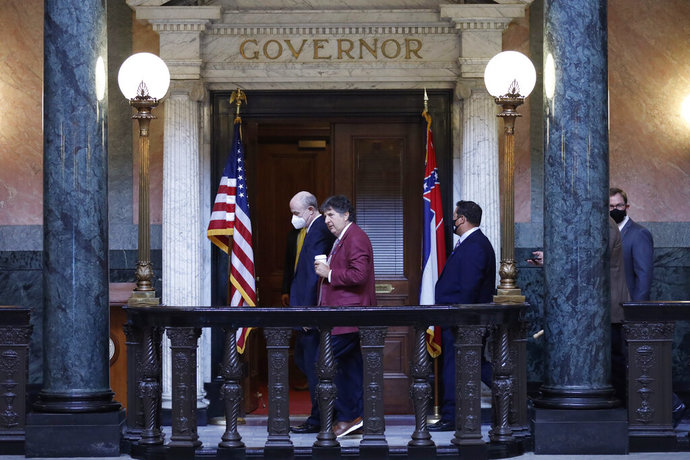
    Each chamber had broad bipartisan support for the landmark decision. Republican Gov. Tate Reeves has said he will sign the bill, and the state flag will lose its official status as soon as he acts. That could happen “in coming days,” said his spokeswoman, Renae Eze.

    Mississippi has a 38% Black population — and the last state flag with the emblem that’s widely seen as racist. The state faced mounting pressure to change its flag as weeks of international protests against racial injustice in the United States have led to the toppling or removal of Confederate statues and monuments.

    After an emotional day Sunday, legislators hugged each other — even those on opposing sides.

    Democratic Rep. Robert Johnson of Natchez choked back tears as he told reporters that he has seen white colleagues develop more empathy about how the Confederate symbol is painful to him and other African Americans.

    “They began to understand and feel the same thing that I’ve been feeling for 61 years of my life,” Johnson said.

    A commission will design a new flag that cannot include the Confederate symbol and that must have the words “In God We Trust.” Voters will be asked to approve the new design in the Nov. 3 election. If they reject it, the commission will set a different design using the same guidelines, and that would be sent to voters later.

    Republican House Speaker Philip Gunn, who is white, has pushed for five years to change the flag, saying the Confederate symbol is offensive. The House passed the bill 91-23 Sunday afternoon. Within hours, the Senate followed suit, 37-14.

    “How sweet it is to celebrate this on the Lord’s day,” Gunn said. “Many prayed to Him to bring us to this day. He has answered.”

    An increasing number of cities and all Mississippi’s public universities have taken down the state flag in recent years. But until now, efforts to redesign the flag sputtered in the Republican-dominated Legislature.

    That dynamic shifted as an extraordinary and diverse coalition of political, business, religious groups and sports leaders pushed for change.

    At a Black Lives Matter protest outside the Mississippi Governor’s Mansion in early June, thousands cheered as an organizer said the state needs to divorce itself from all Confederate symbols.

    Religious groups — including the large and influential Mississippi Baptist Convention — said erasing the rebel emblem from the state flag is a moral imperative.

    Business groups said the banner hinders economic development in one of the poorest states in the nation.

    In a sports-crazy culture, the biggest blow might have happened when college sports leagues said Mississippi could lose postseason events if it continued flying the Confederate-themed flag. Nearly four dozen of Mississippi’s university athletic directors and coaches came to the Capitol to lobby for change.

    Many people who wanted to keep the emblem on the Mississippi flag said they see it as a symbol of heritage.

    Legislators put the Confederate emblem on the upper left corner of Mississippi flag in 1894, as whites were squelching political power that African Americans had gained after the Civil War.

    The battle emblem is a red field topped by a blue X with 13 white stars. The Ku Klux Klan and other hate groups have waved the rebel flag for decades. Georgia put the battle emblem prominently on its state flag in 1956, during a backlash to the civil rights movement. That state removed the symbol from its banner in 2001.

    The Mississippi Supreme Court found in 2000 that when the state updated its laws in 1906, portions dealing with the flag were not included. That meant the banner lacked official status. The Democratic governor in 2000, Ronnie Musgrove, appointed a commission to decide the flag’s future. It held hearings across the state that grew ugly as people shouted at each other about the flag.

    Legislators then opted not to set a flag design themselves. They put the issue on a 2001 statewide ballot, and people voted to keep the flag.

    Former Mississippi Gov. William Winter, who is now 97, served on then-President Bill Clinton’s national advisory board on race in the 1990s and was chairman of the Mississippi flag commission in 2000. Winter said Sunday that removing the Confederate symbol from the banner is “long overdue.”

    “The battle for a better Mississippi does not end with the removal of the flag, and we should work in concert to make other positive changes in the interest of all of our people,” said Winter, a Democrat who was governor from 1980 until 1984.

    Democratic state Sen. Derrick Simmons of Greenville, who is African American, said the state deserves a flag to make all people proud.

    “Today is a history-making day in the state of Mississippi,” Simmons told colleagues. “Let’s vote today for the Mississippi of tomorrow.”

  • Mississippi Could Strip Confederate Symbol From State Flag

    Mississippi Could Strip Confederate Symbol From State Flag

    The battle emblem was put on the Mississippi flag in 1894 by the State Legislature as backlash to the political power that African Americans gained after the Civil War.

    JACKSON, Miss. (AP) — Mississippi lawmakers could vote this weekend to remove the Confederate battle emblem from the state flag, a symbol that has come under intensifying criticism in recent weeks amid nationwide protests against racial injustice.

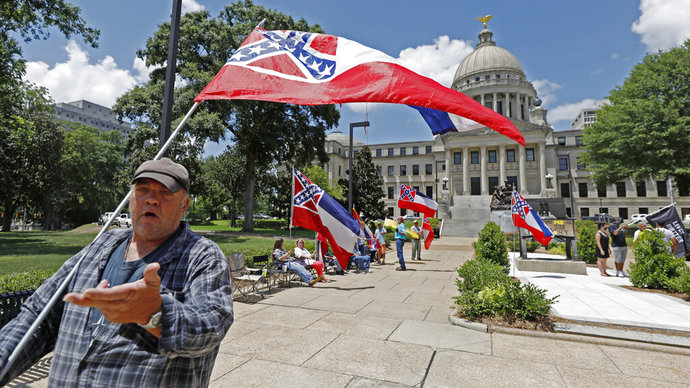
    People for and against the current flag were gathering at the state Capitol on Saturday morning as lawmakers arrived.

    Karen Holt of Edwards, Mississippi, was with several people asking lawmakers to adopt a new banner with a magnolia, which is both the state tree and the state flower, and with stars to represent Mississippi as the 20th state. She said it would represent “joy of being a citizen of the United States,” unlike the current flag.

    “We don’t want anything flying over them, lofty, exalting itself, that grabs onto a deadly past,” Holt said.

    Dan Hartness of Ellisville, Mississippi, walked outside the Capitol carrying a pole that had both the American flag and the current Mississippi flag. He said the current state flag pays tribute to those who fought in the Civil War.

    “Being a veteran, that’s important to me — that you remember these guys that fought in battle, whether they’re on the right side or the wrong side,” Hartness said.

    Mississippi has the last state flag that includes the Confederate battle emblem — a red field topped by a blue X with 13 white stars.

    Lawmakers could adopt a new Mississippi flag without Confederate imagery. Or they could kick the volatile issue to a statewide election, giving voters choices that might or might not include the current banner.

    The battle emblem has been in the upper-left corner of the Mississippi flag since 1894. White supremacists in the Legislature put it there during backlash to the political power that African Americans gained after the Civil War.

    The Mississippi Supreme Court ruled in 2000 that the flag lacked official status. State laws were updated in 1906, and portions dealing with the flag were not carried forward. Legislators set a flag election in 2001, and voters kept the rebel-themed design.

    But the flag has remained divisive in a state with a 38% Black population. All of the state’s public universities and several cities and counties have stopped flying it because of the Confederate symbol that many see as racist.

    Influential business, religious, education and sports groups are calling on Mississippi to drop the Confederate symbol. Flag supporters say the banner should be left alone or put on the statewide ballot for voters to decide its fate.

    The state’s annual legislative session is almost over, and it takes a two-thirds majority of the House and Senate to consider a bill after the normal deadlines have passed. Leaders have been working to secure those majorities. Republican Gov. Tate Reeves said Saturday that he would sign a bill to change the flag if the Legislature passes one.

  • Louisiana Civil Rights Activist Dr. Harry Blake Dies At 85

    Louisiana Civil Rights Activist Dr. Harry Blake Dies At 85

    Governor John Bel Edwards offered condolences on Thursday

    SHREVEPORT, La. (AP) — A leader in the civil rights movement in north Louisiana, who put his life on the line in the fight for racial equality, has died after possibly being exposed to the coronavirus.

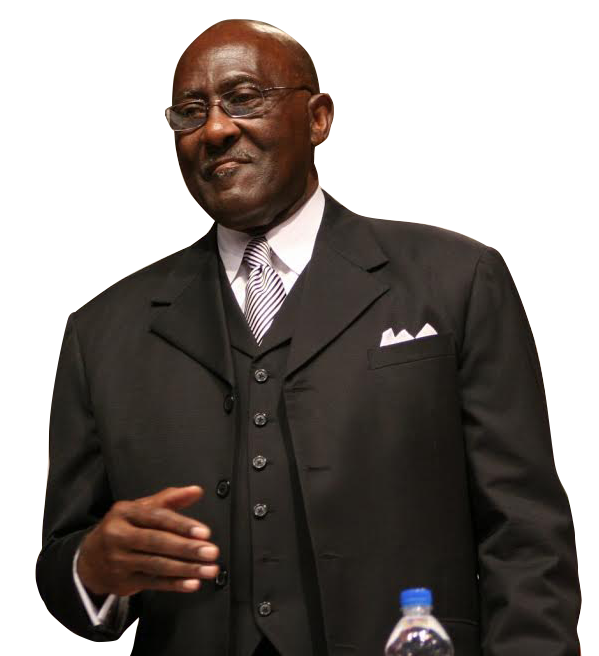
    Dr. Harry Blake, pastor emeritus at Mt. Canaan Baptist Church in Shreveport, died Wednesday. He was 85.

    Blake’s daughter, Monica Blake Mickle, wrote on Facebook that her father was ill after being exposed to the virus but had been getting better, the Times reported. She said tests results on whether he actually had COVID-19 have not been confirmed.

    Gov. John Bel Edwards offered condolences on Thursday to Blake’s family during his daily press conference regarding the impact of the virus on the state.

    “He was an iconic leader of the civil rights movement,” Edwards said of Blake. “He endured many hardships during his life but never wavered in his faith nor in his work toward equality and justice for all people The state of Louisiana is forever grateful to Dr. Blake.”

    Blake joined the Southern Christian Leadership Conference in 1960. While a student at Bishop College in Texas, he was inspired by a speech he heard by Dr. Martin Luther King Jr.

    In October of that year, as he drove home from the SCLC’s annual convention in Shreveport, a gunman tried to kill him, firing bullets into Blake’s car window, Blake recalled during an oral history project for the Library of Congress.

    He also recalled being beaten by several police officers during a memorial service at Little Union Baptist Church in Shreveport to honor the four girls killed at the 16th Street Baptist Church in Birmingham, Alabama, in early September 1963. Blake required stitches for cuts to his scalp as a result.

    Shreveport Mayor Adrian Perkins called Blake “a man of God who lived with great purpose.″

    “Harry Blake was beaten and jailed, but he never wavered in his commitment to God or his fellow man,″ Perkins wrote in a post on Twitter.

    Blake held high-ranking positions in both the Louisiana Baptist State Convention where he was president and the National Baptist Convention where he was general secretary.

    This announcement was posted on his Facebook page on Wednesday, April 8th

    For immediate release:
    April 8, 2020

    Reverend Harry Blake Family Statement

    The Passing of Dr. Harry Blake
    Pastor Emeritus of Mt. Canaan Baptist Church

    Dr. Harry Blake, 85, Pastor Emeritus of the historic Mt. Canaan Baptist Church of Shreveport, Louisiana and Interim Pastor of St. Rest Baptist Church, also in Shreveport, passed tonight after a brief illness. Funeral arrangements are incomplete.

    Reverend Harry Blake served the Mt. Canaan Baptist Church for more 52 years. Pastor Blake was a recognized icon in the Civil Rights movement that led to justice and equality for many.

    The family is appreciative of the outpouring of support that has come for the local community and from across the nation. During this critical time, The Blake family requests private time as they, together, mourn the passing of their father, brother, grandfather, and uncle.

    No media interviews will be granted. No telephone calls or electronic inquiries to the family will be accepted at this time. The family will issue statements on future arrangements.