Tag: congress

  • House Approves Bill to Make Daylight Saving Time Permanent

    House Approves Bill to Make Daylight Saving Time Permanent

    Americans are one step closer to ending the twice-yearly ritual of changing their clocks after the U.S. House of Representatives approved legislation Tuesday that would make Daylight Saving Time permanent across most of the country.

    The Sunshine Protection Act (H.R. 139) passed the House by a 308-117 bipartisan vote. The legislation received support from 193 Republicans, 114 Democrats and one Independent, while 22 Republicans and 95 Democrats voted against it. Six members did not vote.

    If the bill ultimately becomes law, Americans would no longer “spring forward” each March or “fall back” each November. Instead, Daylight Saving Time would remain in effect year-round, eliminating the twice-yearly clock changes observed across most of the United States.

    The legislation now moves to the U.S. Senate. If approved there and signed by President Donald Trump, the change would take effect nationwide. Hawaii and most of Arizona, which already do not observe Daylight Saving Time, would remain exempt under current law.

    For residents across Mississippi, Louisiana and the rest of the Miss-Lou, the most noticeable change would come during the winter months. Sunset would occur about an hour later, providing more daylight in the evening for commuting, shopping, youth sports and outdoor recreation. The tradeoff would be darker mornings, with sunrise occurring roughly an hour later than it does under the current system.

    Supporters of the legislation say eliminating the twice-yearly clock changes would end a practice many Americans find inconvenient while providing additional evening daylight that could benefit businesses, recreation and tourism. They also point to studies suggesting the seasonal clock changes can temporarily disrupt sleep schedules and daily routines.

    Opponents, however, argue permanent standard time is better aligned with the body’s natural circadian rhythm and have expressed concerns that darker winter mornings could affect schoolchildren waiting for buses and morning commuters traveling before sunrise.

    Congress has debated ending the clock changes for years. In 2022, the Senate unanimously approved a similar version of the Sunshine Protection Act, but the measure never received a vote in the House before the end of that congressional session. The current bill must still clear the Senate before it can become law.

    How Mississippi and Louisiana’s Representatives Voted

    Mississippi’s congressional delegation largely supported the Sunshine Protection Act, with Rep. Bennie Thompson casting the state’s only “no” vote. In Louisiana, every representative who voted supported the measure, while Rep. Cleo Fields did not cast a vote.

    Mississippi

    Voted Yes

    • Trent Kelly (R), Mississippi’s 1st District
    • Michael Guest (R), Mississippi’s 3rd District
    • Mike Ezell (R), Mississippi’s 4th District

    Voted No

    • Bennie Thompson (D), Mississippi’s 2nd District

    Louisiana

    Voted Yes

    • Steve Scalise (R), Louisiana’s 1st District
    • Troy Carter (D), Louisiana’s 2nd District
    • Clay Higgins (R), Louisiana’s 3rd District
    • Mike Johnson (R), Louisiana’s 4th District
    • Julia Letlow (R), Louisiana’s 5th District

    Did Not Vote

    • Cleo Fields (D), Louisiana’s 6th District

    The legislation is not yet law. Before any changes take effect, it must pass the U.S. Senate and then be signed by President Donald Trump.

    Until then, Americans—including residents throughout Mississippi, Louisiana and the Miss-Lou—should still plan to turn their clocks back one hour this November.

  • Remembering civil rights icon John Lewis, who passed away Friday

    Remembering civil rights icon John Lewis, who passed away Friday


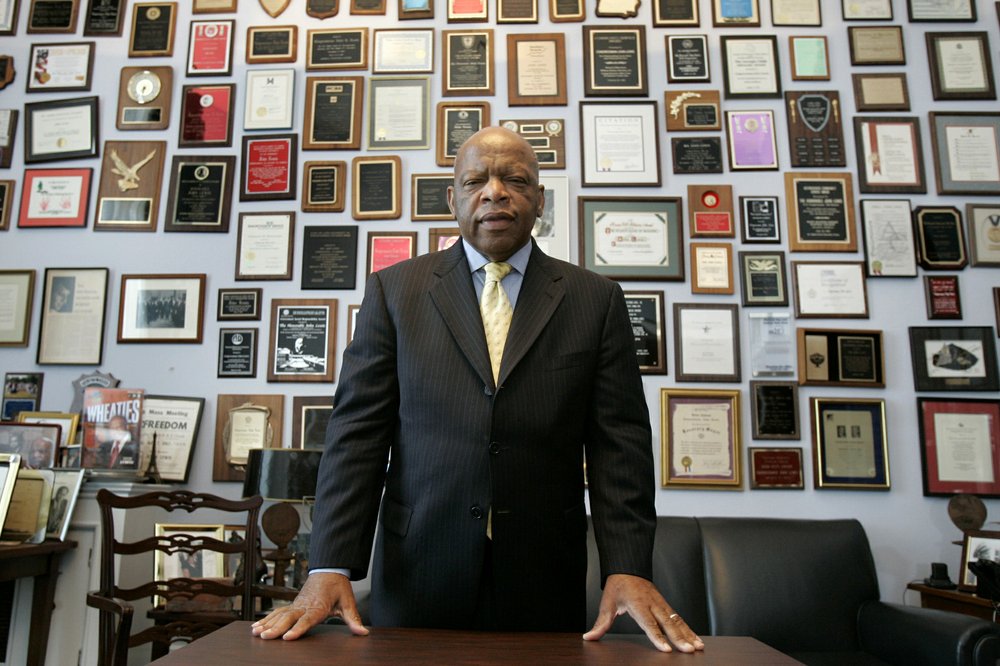
    WASHINGTON (AP) — People paid great heed to John Lewis for much of his life in the civil rights movement. But at the very beginning — when he was just a kid wanting to be a minister someday — his audience didn’t care much for what he had to say.

    A son of Alabama sharecroppers, the young Lewis first preached moral righteousness to his family’s chickens. His place in the vanguard of the 1960s campaign for Black equality had its roots in that hardscrabble Alabama farm and all those clucks.

    Lewis, who died Friday at age 80, was the youngest and last survivor of the Big Six civil rights activists who organized the 1963 March on Washington, and spoke shortly before the group’s leader, Rev. Martin Luther King Jr., gave his “I Have a Dream” speech to a vast sea of people.

    If that speech marked a turning point in the civil rights era — or at least the most famous moment — the struggle was far from over. Two more hard years passed before truncheon-wielding state troopers beat Lewis bloody and fractured his skull as he led 600 protesters over Selma’s Edmund Pettus Bridge.

    Searing TV images of that brutality helped to galvanize national opposition to racial oppression and embolden leaders in Washington to pass the landmark 1965 Voting Rights Act five months later.

    “The American public had already seen so much of this sort of thing, countless images of beatings and dogs and cursing and hoses,” Lewis wrote in his memoirs. “But something about that day in Selma touched a nerve deeper than anything that had come before.”

    That bridge became a touchstone in Lewis’s life. He returned there often during his decades in Congress representing the Atlanta area, bringing lawmakers from both parties to see where “Bloody Sunday” went down.

    Lewis earned bipartisan respect in Washington, where some called him the “conscience of Congress.” His humble manner contrasted with the puffed chests on Capitol Hill. But as a liberal on the losing side of many issues, he lacked the influence he’d summoned at the segregated lunch counters of his youth, or later, within the Democratic Party, as a steadfast voice for the poor and disenfranchised.

    “John is an American hero who helped lead a movement and risked his life for our most fundamental rights; he bears scars that attest to his indefatigable spirit and persistence,” House Majority Leader Steny Hoyer said after Lewis announced his cancer diagnosis.

    He was a 23-year-old firebrand, a founder of the Student Nonviolent Coordinating Committee, when he joined King and four other civil rights leaders at the Roosevelt Hotel in New York to plan and announce the Washington demonstration. The others were Whitney Young of the National Urban League; A. Philip Randolph of the Negro American Labor Council; James L. Farmer Jr., of the interracial Congress of Racial Equality; and Roy Wilkins of the NAACP.

    At the National Mall months later, he had a speaking slot before King and toned down his intended remarks, bowing to pressure that “incensed” him.

    “I wanted it to have an air of militancy,” Lewis said.

    He dropped a reference to leading a “scorched earth” campaign across the South, like Civil War Maj. Gen. William Tecumseh Sherman’s March to the Sea. (“John, that doesn’t sound like you,” he recalled King telling him.) He scaled back criticism of President John Kennedy’s civil rights record.

    It was a potent speech nonetheless. He vowed: “By the forces of our demands, our determination and our numbers, we shall splinter the segregated South into a thousand pieces and put them together in an image of God and democracy.”

    His words were soon and for all time overshadowed by the speech of King. “He changed us forever,” Lewis said of King’s oratory that day.

    But the change the movement sought would take many more sacrifices.

    After months of training in nonviolent protest, demonstrators led by Lewis and the Rev. Hosea Williams began a march of more than 50 miles from Selma to Alabama’s capital in Montgomery. They didn’t get far: On March 7, 1965, a phalanx of police blocked their exit from the Selma bridge. Authorities swung truncheons, fired tear gas and charged on horseback, sending many to the hospital. The nation was horrified.
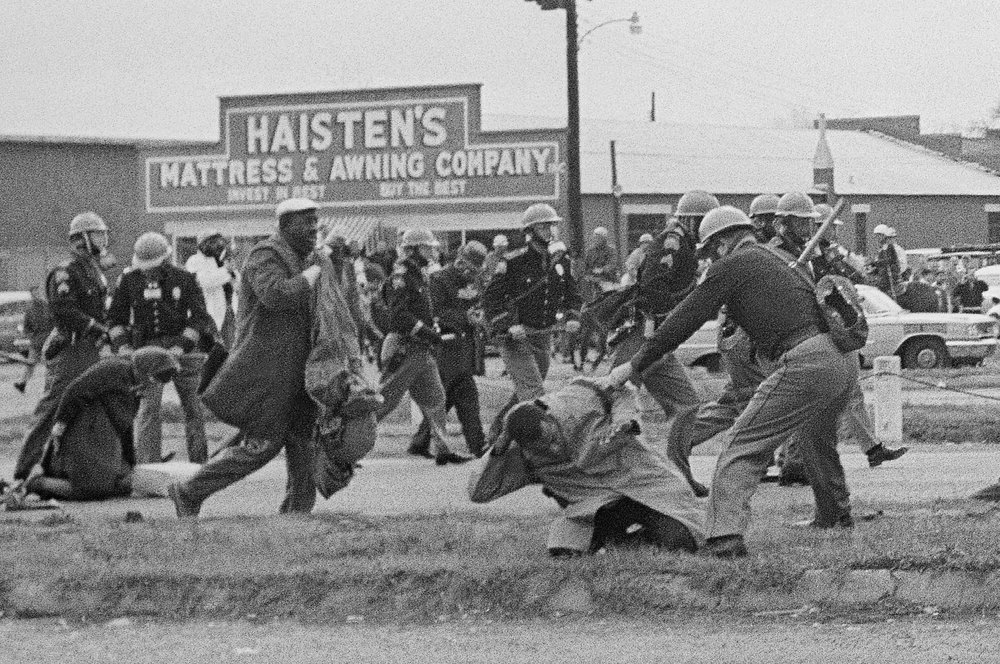
    “This was a face-off in the most vivid terms between a dignified, composed, completely nonviolent multitude of silent protesters and the truly malevolent force of a heavily armed, hateful battalion of troopers,” Lewis wrote. “The sight of them rolling over us like human tanks was something that had never been seen before. People just couldn’t believe this was happening, not in America.”

    King swiftly returned to the scene with a multitude, and the march to Montgomery was made whole before the end of the month.

    Lewis was born on Feb. 21, 1940, outside Troy, in Alabama’s Pike County. He attended segregated public schools and was denied a library card because of his race, but he read books and newspapers avidly, and could rattle off obscure historical facts even in his later years.

    He was a teenager when he first heard King, then a young minister from Atlanta, preach on the radio. They met after Lewis wrote him seeking support to become the first Black student at his local college. He ultimately attended the American Baptist Theological Seminary and Fisk University instead, in Nashville, Tennessee.

    Soon, the young man King nicknamed “the boy from Troy” was organizing sit-ins at whites-only lunch counters and volunteering as a Freedom Rider, enduring beatings and arrests while challenging segregation around the South. Lewis helped form the Student Nonviolent Coordinating Committee to organize this effort, led the group from 1963 to 1966 and kept pursuing civil rights work and voter registration drives for years thereafter.

    President Jimmy Carter appointed Lewis to lead ACTION, a federal volunteer agency, in 1977. In 1981, he was elected to the Atlanta City Council, and then won a seat in Congress in 1986.

    Humble and unfailingly friendly, Lewis was revered on Capitol Hill. When Democrats controlled the House, he tried to keep them unified as his party’s senior deputy whip, a behind-the-scenes leadership post. The opening of the Smithsonian’s National Museum of African American History and Culture was a key victory. But as one of the most liberal members of Congress, spending much of his career in the minority, he often lost policy battles, from his effort to stop the Iraq War to his defense of young immigrants.

    Lewis also met bipartisan success in Congress in 2006 when he led efforts to renew the Voting Rights Act, but the Supreme Court invalidated much of the law in 2013, and it became once again what it was in his youth, a work in progress.

    Lewis initially endorsed Hillary Rodham Clinton in the 2008 Democratic presidential primary, but belatedly backed Barack Obama when it became clear he had more Black support. After Obama’s swearing-in, he signed a commemorative photograph for Lewis that reflected much more than his endorsement, writing “Because of you, John. Barack Obama.” Later, they marched hand in hand in Selma on the 50th anniversary of the attack.

    And when Obama was succeeded by a president who sought to dismantle much of his legacy, Lewis made no effort to hide his pain.

    Lewis refused to attend Donald Trump’s inauguration, saying he didn’t consider him a “legitimate president” because Russians had conspired to get him elected. When Trump later complained about immigrants from “s—hole countries,” Lewis declared, “I think he is a racist … we have to try to stand up and speak up and not try to sweep it under the rug.”

    Lewis said he’d been arrested 40 times in the 1960s, five more as a congressman. At 78, he told a rally he’d do it again to help reunite immigrant families separated by the Trump administration.

    “There cannot be any peace in America until these young children are returned to their parents and set all of our people free,” Lewis said. “If we fail to do it, history will not be kind to us,” he shouted. “I will go to the border. I’ll get arrested again. If necessary, I’m prepared to go to jail.”

    In a speech the day of the House vote to impeach Trump, Lewis explained the importance of that vote.

    “When you see something that is not right, not just, not fair, you have a moral obligation to say something, to do something. Our children and their children will ask us ’what did you do? what did you say?” While the vote would be hard for some, he said: We have a mission and a mandate to be on the right side of history.”

    Lewis announced in late December 2019 that he had been diagnosed with advanced pancreatic cancer.

    “I have never faced a fight quite like the one I have now,” he said at the time.

    “I’ve seen courage in action on many occasions,” the late Republican Sen. John McCain of Arizona, a Navy pilot tortured in Vietnam, once said. “I can’t say I’ve seen anyone possess more of it, and use it for any better purpose and to any greater effect, than John Lewis.”

    Lewis’ wife of four decades, Lillian Miles, died in 2012. They had one son, John Miles Lewis.

    If the Voting Rights Act that Lewis cherished was a work in progress, so was America, Lewis observed as he spoke once again from the Lincoln Memorial, a half-century after the March on Washington.

    “Fifty years later we can ride anywhere we want to ride, we can stay where we want to stay,” he said that day in August 2013. “Those signs that said ‘white’ and ’colored are gone. And you won’t see them anymore except in a museum, in a book, on a video.

    “But there are still invisible signs buried in the hearts in humankind that form a gulf between us. Too many of us still believe our differences define us instead of the divine spark that runs through all of human creation.”

    Then came the cheers and applause. This time he was no warm-up act for a giant of history. This was his moment, and there was not a cluck to be heard.

  • NOT REAL NEWS: A Look At What Didn’t Happen This Week

    NOT REAL NEWS: A Look At What Didn’t Happen This Week

    A roundup of some of the most popular but completely untrue stories and visuals of the week.

    CLAIM: Wearing face masks can cause fungal and bacterial pneumonia.

    THE FACTS: There’s no evidence that normal use of face masks can cause fungal or bacterial infections. On June 19, a Florida congressional candidate posted a tweet claiming that wearing face masks could lead to pneumonia. “Excessive use of face masks causes fungal and bacterial pneumonia,” wrote Jessi Melton, a conservative business owner who is running to represent Florida’s 22nd Congressional District. The false post had over 16,000 retweets as of Wednesday. Davidson Hamer, an infectious disease specialist at Boston University, said he was unaware of any harm that comes from wearing masks besides discomfort. “There’s no evidence of masks leading to fungal or bacterial infections of the upper airway or the lower airway as in pneumonia,” said Hamer, who is also a professor of global health and medicine at the university. Hamer noted that bacterial growth could occur, in theory, if someone wore a mask that was already contaminated with moisture and became moldy. “Theoretically, it could happen, but it’s highly unlikely with just typical mask use,” he said in a phone call with the AP. However, he added, paper masks that become visibly wet should be discarded. Anne Monroe, an internal medicine physician and epidemiologist at George Washington University’s Milken Institute School of Public Health, agreed: “There’s no evidence to back up this claim. Digging into it a little bit more, in terms of mask use, it is important to follow general sanitation guidelines.” She said it’s important that disposable masks be discarded and cloth masks be washed. “The idea that contamination could cause fungal pneumonia is not a valid conclusion,” she said. Monroe agreed with Hamer that it’s “potentially theoretical,” but that it has not been documented. The real danger, Hamer said, is “spreading incorrect information like this, especially at a time when we really need to be encouraging more people to wear masks.” The number of confirmed new coronavirus cases per day in the U.S. hit an all-time high of 40,000 Friday — eclipsing the mark set during one of the deadliest stretches in late April.

    ___

    CLAIM: A May 20 tweet sent and later deleted by U.S. Rep. Alexandria Ocasio-Cortez, a Democrat representing New York, argues that governors should keep businesses closed until after the presidential election because economic recovery will help get President Donald Trump reelected.

    THE FACTS: The tweet was fabricated. It does not appear in archived versions of Ocasio-Cortez’s Twitter feed or in databases that track deleted tweets by politicians. The congresswoman also knocked down the tweet on her Twitter feed: “I usually don’t tweet to correct fake posts about me bc the right circulates so many, but needless to say the alleged ‘deleted’ reopening tweet people are saying I wrote is a photoshopped fake being circulated by Republicans.” On Tuesday, June 23 — the same day as New York state’s primary election — an image of the tweet supposedly posted by Ocasio-Cortez circulated rapidly on Twitter, Facebook and Instagram. “It’s vital that Governors maintain restrictions on businesses until after the November Elections because economic recovery will help Trump be re-elected,” the fabricated tweet read. “A few business closures or job losses is a small price to pay to be free from his presidency. #KeepUsClosed.” Social media users sharing the image in Facebook groups and other social media forums claimed the congresswoman deleted the tweet after it had already amassed more than 20,000 retweets. They used the image to criticize the congresswoman and her intentions on the same day she was defending her seat in a Democratic primary election. “Lil’ miss enemy of the people strikes again,” one Instagram user said. But an investigation into the supposed tweet reveals there is no evidence that it ever appeared on Ocasio-Cortez’s Twitter timeline. Archived versions of her account from the day it was allegedly posted don’t show the tweet. Neither do databases that track deleted tweets by politicians. There’s also no indication that the tweet was re-shared by anyone between May 20, the date on the supposed tweet, and June 23. A tool that tracks the first Twitter user to post certain words and phrases showed that the message didn’t appear on the site until June 23.

    ___

    CLAIM: In North Carolina, you can be charged with a class H felony if you have a concealed carry permit and carry while wearing a mask, according to state statute 14-12.

    THE FACTS: North Carolina state statutes do not prohibit people with permits to carry concealed guns from doing so while wearing a mask. As counties in North Carolina began requiring masks to prevent spread of the coronavirus, posts online have circulated suggesting that gun owners permitted to carry a concealed gun would face a felony charge if they carry while wearing a mask. North Carolina Gov. Roy Cooper announced Wednesday that face coverings would be required while out in public saying that “people must wear face coverings when in public places, indoors or outdoors.” Posts circulating on social media warn that those who decide to concealed carry and wear a mask can be charged with a felony. “Once you have a felony you can no longer carry,” stated one post with more than 5,000 shares on Facebook. The posts online referenced “NC Gen. Statute 14-12” as the reason state residents with “concealed carry” permits could not carry their gun and wear a mask at the same time. But in May, as part of its Covid-19 Recovery Act, the North Carolina state legislature made a temporary exception to the state’s mask law due to public health concerns. The bill also stipulates that a person wearing a mask shall remove the mask upon request of a law enforcement officer. The law dates to the 1950s, when masks were banned in public. Several states passed such laws at the time in response to the Ku Klux Klan. “We are not aware of any statutes that would prohibit people from continuing to concealed carry, which is their legal right in North Carolina, and also wear a mask to protect themselves,” Patrick Ryan, spokesman for North Carolina Senate leader Phil Berger, said.

    ___

    CLAIM: NASCAR allows a Black Lives Matter-themed car, but won’t allow its audience to wear MAGA hats or other Trump clothing.

    THE FACTS: The auto racing association has not banned Trump-themed clothing, according to NASCAR spokesman Mike Forde. This claim emerged as a piece of satire on June 13, days after NASCAR announced it would ban the Confederate flag from its events and properties. Daily World Update, a self-described satire website, published a piece that said NASCAR would no longer allow “Make America Great Again” hats or other political clothing “in order to stem any conflicts resulting from disagreements among ‘politically charged’ attendees.” The trouble came when Facebook users began spreading the claim as real. Over the last several days, posts claiming NASCAR has instituted a MAGA hat and Trump clothing ban have eclipsed 6 million views and been shared more than 100,000 times on Facebook. “WOW HOW TO DIG YOUR OWN GRAVE AND JUMP IN : NASCAR HAS NOW BANNED ALL MAGA HATS AND TRUMP CLOTHING !!! JUST WOW,” one post read. Many other posts claimed NASCAR was hypocritical for allowing its athlete Bubba Wallace to drive a Black Lives Matter-themed car while banning Trump gear. Forde confirmed that beyond the Confederate flag ban, people at NASCAR events are free to wear political clothing as they please. “There is no ban on maga hats or Trump clothing,” he said in an email.

    ____

    CLAIM: In a Facebook post, tennis star Serena Williams said she was sick of COVID-19, “black vs. white,” “gay vs. straight” and “Democrats vs. Republicans,” and that people should “stop thrusting your beliefs on others.”

    THE FACTS: This is a case of mistaken identity. Another Facebook user named Serena Williams shared the comments. Screenshots of her post are being shared on social media, mistaking her for the tennis athlete. In late June, Facebook and Twitter users began sharing a screenshot of the Facebook post, which showed the name Serena Williams next to a message about COVID-19 and political tension. “I’m sick of COVID-19. I’m sick of black vs. white. I’m sick of Democrats vs. Republicans. I’m sick of gay vs. straight. I’m sick of Christians vs atheists. I’m REALLY sick of the media. I’m sick of no one being allowed to think what they want & feel what they do without offending someone,” said the message, which went on for three more paragraphs, encouraging people to be tolerant of others’ opinions. ”If you can’t handle the fact that you may have a friend that has opposing views as you then you are not any better than the bigots and the racists. I don’t have to agree with everything you believe to be a decent human being & your friend,” it concluded, with a heart emoji at the end. But the actual Facebook user who posted the opinions on Sunday, June 14, is not the athlete Serena Williams — they just happen to share the same name. “Nope, not THAT Serena Williams,” the user’s Facebook bio reads. The message in the post appears to have originated with a different Facebook user who shared the same words on Facebook on June 2. The tennis star Serena Williams has been outspoken on social media about racial injustice, denouncing racism on Twitter and hosting discussions on the topic on her Instagram page. Williams’ publicist confirmed the tennis star didn’t make the post.

    ____

    CLAIM: Photo shows a massive crowd in a parking lot at President Trump’s rally in Tulsa, Oklahoma.

    THE FACTS: The photo shows an event in Arlington, Virginia, not Trump’s rally in Tulsa. On Saturday, June 21, as Trump prepared for a rally in Tulsa, posts began circulating online sharing a photo of a red car passing a parking lot crowded with people. “Look at Tulsa now!!!!” stated one Facebook post with more than 3,000 shares. In reality, the photo shows the North Pentagon parking lot in Arlington, Virginia, a location that has been used by the Rolling Thunder, a group that honors prisoners of war and service members killed in action, for their annual motorcycle demonstration. Similar photos on the Rolling Thunder Washington, DC Inc., Facebook page match the parking lot, surrounding greenery and a building in the background of the one being misrepresented online. Rolling Thunder Washington, DC confirmed to The Associated Press that the photo appeared to show a Rolling Thunder event in a Pentagon parking lot. Photos of the event online also show the Washington Monument in the background. “First Amendment Demonstration Run – Bikes leave the North Pentagon parking lot to begin their run through the Mall area,” Rolling Thunder organizers wrote on their website, showing a map of the area. The photo was widely misrepresented on social media, including by Donald Trump Jr., who posted it to Facebook the day of his father’s rally. “The Silent Majority is about to GET LOUD,” he wrote. The misrepresented Arlington photo was labeled: “Line for today’s Trump rally.” One Instagram post sharing the misrepresented photos received about 30,000 likes. Posts falsely identifying the photo also circulated widely following reports that turnout at Trump’s Tulsa rally on Saturday was far lower than anticipated. According to estimates by the city’s fire marshal’s office, about 6,200 people gathered in the BOK center for the rally. The center will hold about 19,000 people. Other posts shared the photo in a side-by-side comparison with a photo that appeared to show poor turnout at a June 17 campaign event for Democratic presidential nominee Joe Biden in Darby, Pennsylvania. “A Joe Biden ‘rally’ this week,” said the caption with the photo taken at the Biden event, which was closed to the public and allowed only journalists and nine official attendees.

    ___

    CLAIM: Photo depicts Japanese police spraying looters and rioters with blue dye so they could be identified and arrested later.

    THE FACTS: The photo is miscaptioned and being shared out of context. A reverse-image search reveals it actually shows Hong Kong police spraying pro-democracy protesters in 2019 with water containing blue dye. The photo of people on a street being drenched with blue-tinted water circulated widely on Facebook with a false caption this week, reaching more than 6 million people. “Japan sprays looters and rioters with indelible blue dye so they can be identified and arrested later,” a caption with the photo read. “How about it America?” The misrepresented photo was being shared in the wake of nationwide protests in the U.S. following the death of George Floyd in Minneapolis. Floyd, who is Black, died May 25 after a white officer used his knee to pin him down by the neck. Peaceful protests supporting the Black Lives Matter movement have erupted in Japan in the past month — but this image doesn’t show one of them. Instead, an internet search for the photo reveals it was taken in Hong Kong in 2019, amid protests sparked by a proposed law that would allow suspects there to be extradited to mainland China to stand trial. During the protests in 2019, Hong Kong police used water cannons with blue dye in them, The Associated Press reported at the time.

    ___

    CLAIM: “Congratulations, Dr. Michelle Obama! Since her husband left the White House, and her children are out of the house, Mrs. Obama decided to complete her ‘PHD in law.’”

    THE FACTS: Social media users are posting Facebook photos of Michelle Obama and falsely congratulating her for supposedly completing a new law degree after leaving the White House in 2016. The posts, many of which were made in May or June, have received thousands of shares on Facebook. Obama was already accomplished on this front, having earned a juris doctor from Harvard Law School in 1988, decades before her husband assumed the presidency in 2008. She earned that degree three years after finishing her bachelor’s degree at Princeton University. A spokeswoman for Obama confirmed in an email to The Associated Press that she has not earned any new degrees since leaving the White House in 2016. Obama has received several honorary degrees from universities after giving commencement speeches, including honorary doctorate degrees from Oregon State University in 2012, Bowie State University in 2013 and Jackson State University in 2016. Since the end of her time as first lady, Obama released a memoir, “Becoming,” in 2018 that was followed by a 34-city book tour that concluded last year, and a Netflix documentary was unveiled this year.

    ___

    This is part of The Associated Press’ ongoing effort to fact-check misinformation that is shared widely online, including work with Facebook to identify and reduce the circulation of false stories on the platform.

    ___

    Find all AP Fact Checks here: https://apnews.com/APFactCheck

  • Relief Package Billions Can’t Buy Hospitals Out Of Shortages

    Relief Package Billions Can’t Buy Hospitals Out Of Shortages

    Leaders of both parties promise the money will give doctors and nurses the resources they need.

    The billions of tax dollars headed for hospitals and states as part of the $2.2 trillion coronavirus response bill won’t fix the problem facing doctors and nurses: a critical shortage of protective gowns, gloves and masks.

    The problem isn’t a lack of money, experts say. It’s that there’s not enough of those supplies available to buy. What’s more, the crisis has revealed a fragmented procurement system now descending into chaos just as demand soars, The Associated Press has found.

    Hospitals, state governments and the Federal Emergency Management Agency are left bidding against each other and driving up prices.

    For more than a week, governors have pushed back against administration assurances that supplies are available now, bitterly complaining to President Donald Trump that there’s no coordination.

    “It’s pretty much every state for itself,” said Virginia’s secretary of finance, Aubrey Layne, who is deeply involved with his state’s effort to buy medical supplies.

    Masks that were priced at $2.50 a week ago are now being quoted as high as $9, he said, and suppliers make clear that there are “plenty of people out here” looking to buy, even at the high prices.

    “There is a lot of opportunism going on,” Layne said.

    Even if someone took some of this money and built the equipment to make masks, gowns and gloves, it would not solve the problem because none of the materials are made in the United States. That includes latex and rubber, largely from Southeast Asia, as well as textiles used in surgical gowns that can repel fluids but are easily disposable.

    “The suppliers that provide the raw materials needed to make such items have to increase their capacity in order to deliver more materials to manufacturers, which could take time and may not be feasible if the suppliers are located in other parts of the world that are currently crippled by the coronavirus,” said Kaitlin Wowak, an assistant professor at University of Notre Dame business school who specializes in analytics and operations.

    The coronavirus is spreading at an unbelievable rate so you can only expect the demand for personal protective equipment and other medical supplies to follow the same trajectory, which is scary given that there is already a massive shortage of such items at hospitals,” said Wowak.

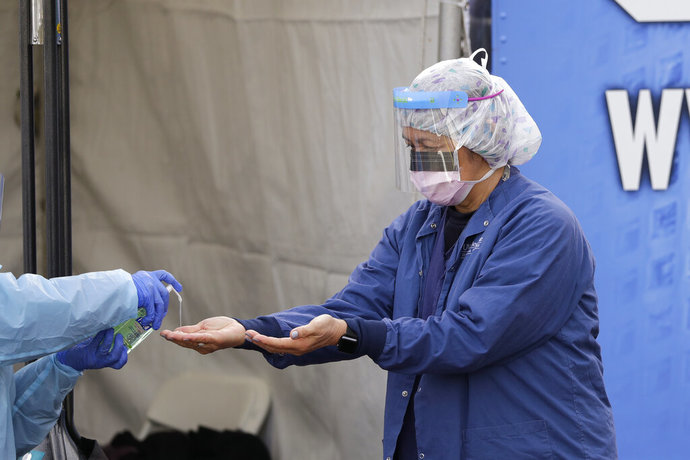
    Doctors and nurses in hot spots like New York and New Orleans are caring for feverish, wheezing COVID-19 patients without adequate masks, gloves or gowns.

    Can the $100 billion carved out for hospitals in the stimulus package solve that?

    “It is not about throwing money at this problem,” said Lisa Ellram, a professor of supply chain management at Miami University of Ohio.

    Just like consumers who today wander past empty shelves in the toilet paper aisle, state governments and hospitals are finding their suppliers’ warehouses are bare.

    The AP reported last week that imports of critical medical supplies were plummeting due to factory closures in China, where manufacturers had been required to sell all or part of their goods internally rather than export to other countries.

    Now that bottleneck has tightened as the pandemic sweeps through the world, shuttering potential backup factories from one country to the next. Many manufacturers have been ordered to shut down or limit production throughout Southeast Asia and Latin America, including in India and Mexico. In Malaysia, where 75 percent of the world’s medical gloves are made, AP found factories were shut down and only allowed to reopen with half staff, who are now locked in hostels at their workplaces.

    Shipments of medical gloves are down 23% so far this month compared with 2019, and medical gown imports are down 64% for the same period, according to trade data compiled by Panjiva and ImportGenius, services that track imports and exports.

    No medical-grade N95 masks, made almost entirely in China, have arrived at U.S. ports so far this month.

    An Oregon Nurses Association member who spoke on condition of anonymity out of concern for her job said she’s allowed one N95 mask a day to protect against tiny particulates.

    “Wearing the same mask from patient to patient to patient, what are you doing? Are we taking care of them or putting them at greater risk?” she said.

    A colleague has already tested positive for COVID-19, she said. Her own test was lost so she’s being retested. But she continues to work treating patients even though she has minor symptoms.

    Doctors and nurses working in hospitals have also told AP about shortages of saline flushes to clean intravenous catheters, disposable CaviWipe towelettes to clean hospital surfaces, defibrillator electrodes to shock hearts back into beating and oxygen concentrators, which help respiratory patients breathe.

    For most people, the new coronavirus causes mild or moderate symptoms, such as fever and cough that clear up in two to three weeks. For some, especially older adults and people with existing health problems, it can cause more severe illness, including pneumonia, and death.

    Six weeks ago, the Center for Global Development warned that the U.S. should get ready to rapidly scale-up medical supply manufacturing. Minnesota’s 3M Co. was already ramping up, but only in the past week have many others followed.

    A frenzied push to increase domestic production is too little and too late, said Prashant Yadav, a visiting fellow at the center.

    Trump on Friday announced that he was using his power under the Defense Production Act to order General Motors to begin manufacturing ventilators — work that had already been underway, AP reported.

    Yadav said that in addition to more supplies, states and hospitals need a better way to allocate medical supplies to the places they’re needed most.

    “The real challenge is not having a clear dashboard-like function that can help match demand and supply. Just infusing more cash doesn’t create that,” he said Friday.

    Before the crisis, hospitals typically bought masks, gloves and other equipment through independent purchasers that bargain with suppliers to keep costs down. But those groups haven’t been able to fill orders.

    Soumi Saha, director of advocacy at Premier, which purchases equipment for roughly 4,000 hospitals, said 56% of hospitals didn’t receive their orders for N95 masks in February. She said traditional wholesale markets are depleted and hospitals are turning to the gray market, rife with scams and counterfeit products. In a 72-hour period last week, Premier fielded more than 130 requests from hospitals to evaluate unregulated suppliers, none of which were legitimate, Saha said.

    “The short-term solutions are patchwork. We need to start implementing longer term solutions now or I don’t know how much longer the Band Aid can hold on,” she said.

    The new nonprofit Project N95, launched by tech entrepreneurs, former government officials and supply chain experts, is one of many new impromptu clearinghouses for medical equipment trying to solve the crisis.

    Its website says it has requests from more than 2,000 institutions needing more than 100 million items of personal protection equipment in the next 30 days.

    The $100 billion earmarked for hospitals in the stimulus package will help quickly repurpose operating rooms into intensive care units, subsidize hospitals losing revenue due to canceled procedures, and hire additional staff to replace infected workers, said Ashley Thompson, the American Hospital Association’s senior vice president for policy.

    Hospitals will also receive an additional 20 percent Medicare reimbursement for COVID-19 patients, whose providers can use up to two weeks of personal protection equipment in a single day.

    Leaders of both parties promise the money will give doctors and nurses the resources they need.

    Lawmakers are “proud to have secured truly historic investment of hundreds of billions of dollars in hospitals, health systems, state and local governments, ensuring that they have the tools they need to combat the virus,” said House Speaker Nancy Pelosi, D-Calif., on Friday.

    But even some in Congress are dubious.

    “If the administration has a list of critical supplies it is providing, what’s on that list?” said Rep, Norma Torres, D-Calif. “If they’ve conducted a nationwide needs assessment, what did they find? If they’ve met with industry to encourage new manufacturing, who did they meet with?”

    ___

    Associated Press writers Sarah Rankin and Alan Suderman in Richmond, Virginia, and Brian Witte in Annapolis, Maryland., contributed to this report.