Tag: mississippi

  • Itta Bena May Be Left In The Dark Over Unpaid Power Bill

    Itta Bena May Be Left In The Dark Over Unpaid Power Bill

    As of August 1, the city owed more than $800,000 to its wholesale electrical provider.

    ITTA BENA, Miss. (AP) — A decade ago, the sole grocery store in the city of Itta Bena shuttered. The last bank left a few years later, followed by the pharmacy — lifelines for a small, rural community.

    Now, the lights may go out for all 1,800 residents.

    Because of long-standing debt with its wholesale electrical provider, the city faces complete disconnection Dec. 1. As of August, Itta Bena owed more than $800,000. That’s equal to one-third of the annual budget for the whole city — located in the Mississippi Delta, a region along the Mississippi River known for its long history of cotton farming and deep impoverishment.

    The news is devastating for the community, where 40% of people live below the poverty line and 90% are Black. Itta Bena has long struggled with a decreasing tax base, white flight and job loss. The coronavirus pandemic has sparked more worry.


    “It just feels like we keep losing and losing. There’s no growth,” said Patricia Young, a day care owner who submitted a petition signed by 300 residents asking the state auditor to investigate the city’s electrical department. “We just can’t take the hurt anymore. You start to wonder, ‘Do they really want us to survive?’”

    Itta Bena’s electric system is city-run and owned, and unregulated by the state. Mississippi’s Public Service Commission, which oversees utilities, opened an investigation anyway and invited the state auditor, citing safety and quality-of-life concerns. State officials are organizing meetings among the city, wholesale electrical provider Municipal Energy Agency of Mississippi, and other providers to find coverage for Itta Bena.

    Brandon Presley, a public service commissioner, said he’s never seen an electric provider threaten to pull out of a city in Mississippi — or any other state. He said it’s a “failure of the city government” and that residents “deserve better than to be left in the dark.”

    Itta Bena Mayor J.D. Brasel said some of the debt — more than $300,000 — stems from residents’ unpaid bills that the city now must cover. As a middleman of sorts between residents and MEAM, the city purchases electricity from the wholesaler to sell residents and is responsible for the bill.

    Former Mayor Thelma Collins, who left office in 2017, said officials have long known about the debt but prioritized other projects. She said lack of vision and planning exacerbate problems.

    Itta Bena was founded around 1850 by plantation owner, Confederate general and former Gov. Benjamin Grubb Humphreys. He chose the name, which means “forest camp” in the language of the Choctaw people, who were forcibly removed from the land. Humphreys brought slaves to help turn the Delta into the South’s cotton-producing capital.

    After the Civil War, slaves were freed into a sharecropping system that resulted in generational poverty. Black families were blocked from educational and political opportunities. Industrialization led to fewer jobs in the fields. And after the Civil Rights movement made strides for racial equity and integration, white families began leaving, taking tax dollars with them.

    From 2000 to 2010, white population decreased from 20% to 10% of Itta Bena. Total population has decreased by one-third — from around 3,000 to 1,800 — since 1980.

    Birdia and John Williams bought their home 23 years ago from a white family moving away. She remembers driving through and seeing a beautiful neighborhood of nice, clean houses.

    “While we moved in, they were all moving out,” said Williams, 64, a Black woman. “It’s not the same city today as it used to be. We have good people here, lovely people. But there’s nothing here anymore.”

    Emma Harris, 66, was raised 10 miles away, where her parents worked on a white-owned plantation. She said her husband was born and worked on the plantation, until they married and moved to the Itta Bena area in 1978. Growing up, she remembers traveling the country road to shop in Itta Bena and seeing the “city lights” downtown.

    Today, 20 downtown storefronts are abandoned. Remaining are a laundromat, a used-car seller, a clinic run by a nurse practitioner, a bar, a credit union. The corner store sells canned food, bread, fishing gear – with a small food menu from a kitchen in back.

    The nearest grocery store is 10 miles away; a Dollar General sells some fruits and vegetables. Some folks, like Williams, travel 45 miles to a bargain store in Grenada for groceries.

    Businesses and city offices will lose power if MEAM leaves. Some businesses purchased generators as backup. Only institutions like the historically Black Mississippi Valley State University, whose utility system is separate from the city’s, will be unaffected.

    Itta Bena’s financial woes aren’t new. In 2014, the federal government placed a tax lien on city assets after officials failed to pay $200,000 in payroll taxes. In 2016, a former city clerk was convicted of embezzlement. The power debt dates back to 2009.

    MEAM didn’t answer a request for comment, but in a letter shared with the Public Service Commission, President and CEO Geoffrey Wilson said the company has exercised “extraordinary patience” trying to collect.

    “The situation brought about by the City’s failure to pay its MEAM invoices in full is regrettable, but it is a situation of Itta Bena’s own making,” Wilson wrote.

    Residents said they were surprised to learn the city was so in debt. Itta Bena light bills are notoriously high.

    Williams said monthly bills for her one-story home sometimes exceed $650. Kathy Gee, who’s lived in Itta Bena for 40 years and is on disability for lupus, said her income is about $500 monthly, and she’s received bills over $400. The mayor said he’s aware of high bills, and that rates are calculated correctly.

    Harris said she’s tried approaching City Hall with partial payments, in hopes her power wouldn’t be shut off.

    “My lights have been out many, many, many times because I didn’t have the money,” she said. “Knowing they are the ones in debt, you feel used. You work so hard for so long, and it feels like you get nothing in return.”
  • Kanye West makes presidential ballot in Mississippi

    Kanye West makes presidential ballot in Mississippi

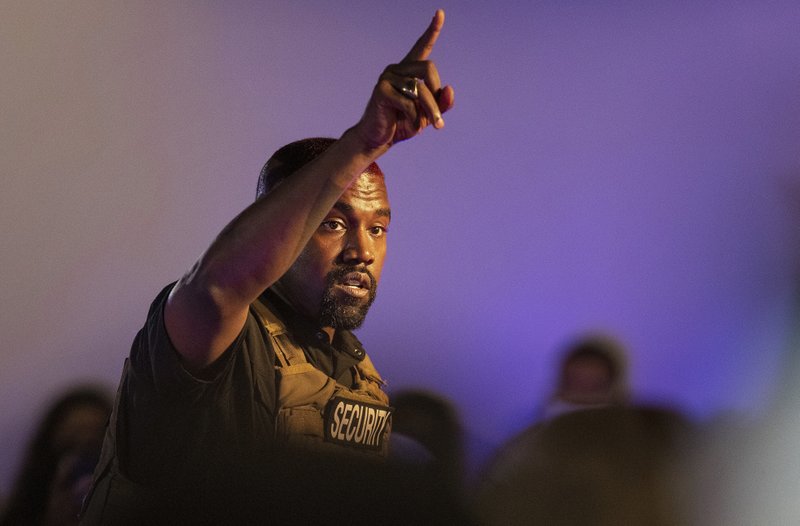
    JACKSON, Miss. (AP) — Kanye West will appear as a presidential candidate on Mississippi’s ballot in November, after being approved as a qualified candidate by the State Board of Election Commissioners on Tuesday.

    The rapper has already qualified to appear on the ballot as an independent candidate in several states, including Arkansas, Idaho, Iowa, Tennessee, Oklahoma and Utah.

    To qualify in Mississippi, he was required to pay a $2,500 fee to the Secretary of State’s Office and get the signatures of at least 1,000 Mississippi voters.

    “It was interesting to see him pick Mississippi, and obviously it will be interesting to see what happens with that vote on Nov. 3,” Mississippi Secretary of State Michael Watson said after the board’s meeting. “But he did qualify.”

    West, who once backed Republican President Donald Trump, announced last month that he had broken with Trump and would launch his own presidential bid. His campaign filed paperwork July 15 with the Federal Election Commission.

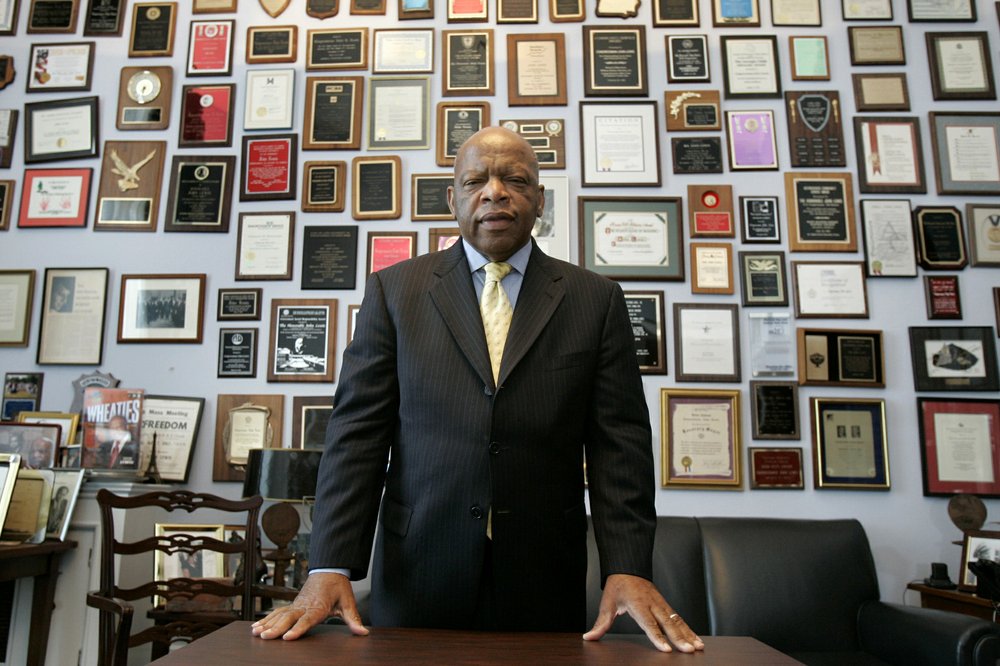
  • Remembering civil rights icon John Lewis, who passed away Friday

    Remembering civil rights icon John Lewis, who passed away Friday


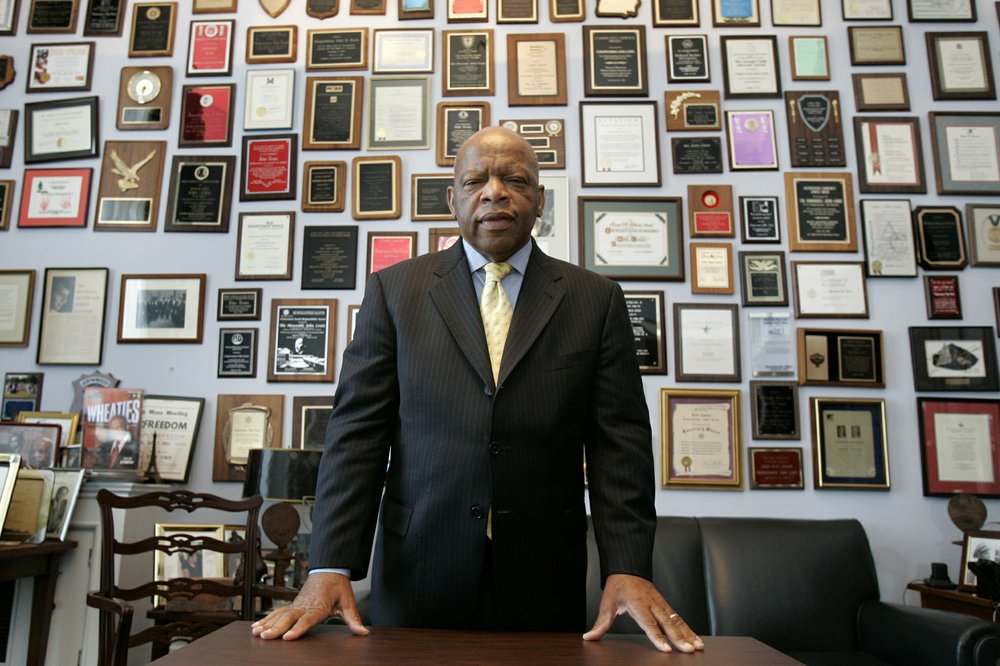
    WASHINGTON (AP) — People paid great heed to John Lewis for much of his life in the civil rights movement. But at the very beginning — when he was just a kid wanting to be a minister someday — his audience didn’t care much for what he had to say.

    A son of Alabama sharecroppers, the young Lewis first preached moral righteousness to his family’s chickens. His place in the vanguard of the 1960s campaign for Black equality had its roots in that hardscrabble Alabama farm and all those clucks.

    Lewis, who died Friday at age 80, was the youngest and last survivor of the Big Six civil rights activists who organized the 1963 March on Washington, and spoke shortly before the group’s leader, Rev. Martin Luther King Jr., gave his “I Have a Dream” speech to a vast sea of people.

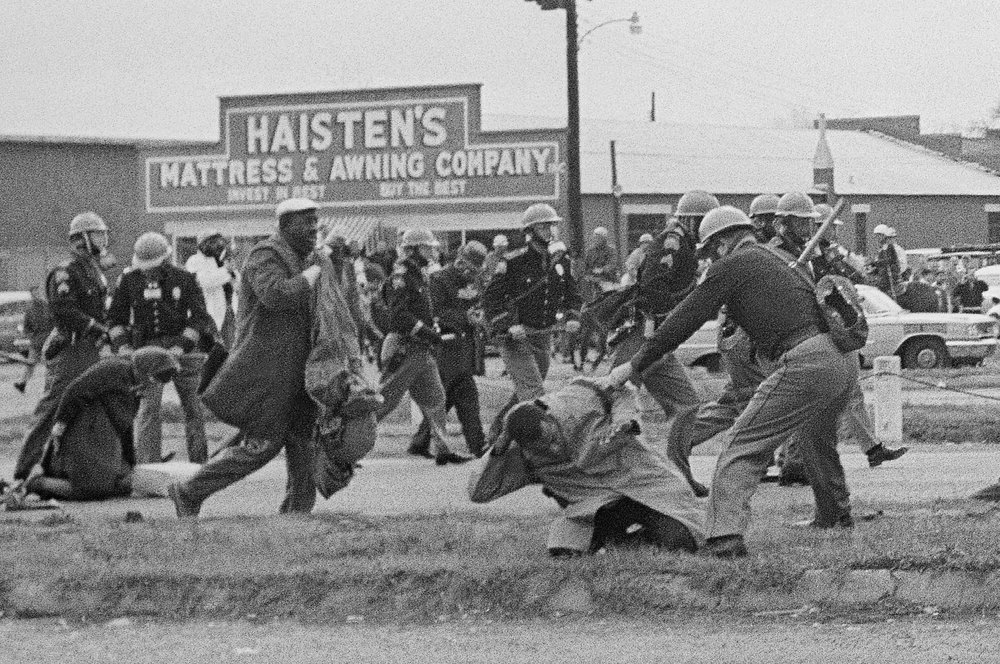
    If that speech marked a turning point in the civil rights era — or at least the most famous moment — the struggle was far from over. Two more hard years passed before truncheon-wielding state troopers beat Lewis bloody and fractured his skull as he led 600 protesters over Selma’s Edmund Pettus Bridge.

    Searing TV images of that brutality helped to galvanize national opposition to racial oppression and embolden leaders in Washington to pass the landmark 1965 Voting Rights Act five months later.

    “The American public had already seen so much of this sort of thing, countless images of beatings and dogs and cursing and hoses,” Lewis wrote in his memoirs. “But something about that day in Selma touched a nerve deeper than anything that had come before.”

    That bridge became a touchstone in Lewis’s life. He returned there often during his decades in Congress representing the Atlanta area, bringing lawmakers from both parties to see where “Bloody Sunday” went down.

    Lewis earned bipartisan respect in Washington, where some called him the “conscience of Congress.” His humble manner contrasted with the puffed chests on Capitol Hill. But as a liberal on the losing side of many issues, he lacked the influence he’d summoned at the segregated lunch counters of his youth, or later, within the Democratic Party, as a steadfast voice for the poor and disenfranchised.

    “John is an American hero who helped lead a movement and risked his life for our most fundamental rights; he bears scars that attest to his indefatigable spirit and persistence,” House Majority Leader Steny Hoyer said after Lewis announced his cancer diagnosis.

    He was a 23-year-old firebrand, a founder of the Student Nonviolent Coordinating Committee, when he joined King and four other civil rights leaders at the Roosevelt Hotel in New York to plan and announce the Washington demonstration. The others were Whitney Young of the National Urban League; A. Philip Randolph of the Negro American Labor Council; James L. Farmer Jr., of the interracial Congress of Racial Equality; and Roy Wilkins of the NAACP.

    At the National Mall months later, he had a speaking slot before King and toned down his intended remarks, bowing to pressure that “incensed” him.

    “I wanted it to have an air of militancy,” Lewis said.

    He dropped a reference to leading a “scorched earth” campaign across the South, like Civil War Maj. Gen. William Tecumseh Sherman’s March to the Sea. (“John, that doesn’t sound like you,” he recalled King telling him.) He scaled back criticism of President John Kennedy’s civil rights record.

    It was a potent speech nonetheless. He vowed: “By the forces of our demands, our determination and our numbers, we shall splinter the segregated South into a thousand pieces and put them together in an image of God and democracy.”

    His words were soon and for all time overshadowed by the speech of King. “He changed us forever,” Lewis said of King’s oratory that day.

    But the change the movement sought would take many more sacrifices.

    After months of training in nonviolent protest, demonstrators led by Lewis and the Rev. Hosea Williams began a march of more than 50 miles from Selma to Alabama’s capital in Montgomery. They didn’t get far: On March 7, 1965, a phalanx of police blocked their exit from the Selma bridge. Authorities swung truncheons, fired tear gas and charged on horseback, sending many to the hospital. The nation was horrified.

    “This was a face-off in the most vivid terms between a dignified, composed, completely nonviolent multitude of silent protesters and the truly malevolent force of a heavily armed, hateful battalion of troopers,” Lewis wrote. “The sight of them rolling over us like human tanks was something that had never been seen before. People just couldn’t believe this was happening, not in America.”

    King swiftly returned to the scene with a multitude, and the march to Montgomery was made whole before the end of the month.

    Lewis was born on Feb. 21, 1940, outside Troy, in Alabama’s Pike County. He attended segregated public schools and was denied a library card because of his race, but he read books and newspapers avidly, and could rattle off obscure historical facts even in his later years.

    He was a teenager when he first heard King, then a young minister from Atlanta, preach on the radio. They met after Lewis wrote him seeking support to become the first Black student at his local college. He ultimately attended the American Baptist Theological Seminary and Fisk University instead, in Nashville, Tennessee.

    Soon, the young man King nicknamed “the boy from Troy” was organizing sit-ins at whites-only lunch counters and volunteering as a Freedom Rider, enduring beatings and arrests while challenging segregation around the South. Lewis helped form the Student Nonviolent Coordinating Committee to organize this effort, led the group from 1963 to 1966 and kept pursuing civil rights work and voter registration drives for years thereafter.

    President Jimmy Carter appointed Lewis to lead ACTION, a federal volunteer agency, in 1977. In 1981, he was elected to the Atlanta City Council, and then won a seat in Congress in 1986.

    Humble and unfailingly friendly, Lewis was revered on Capitol Hill. When Democrats controlled the House, he tried to keep them unified as his party’s senior deputy whip, a behind-the-scenes leadership post. The opening of the Smithsonian’s National Museum of African American History and Culture was a key victory. But as one of the most liberal members of Congress, spending much of his career in the minority, he often lost policy battles, from his effort to stop the Iraq War to his defense of young immigrants.

    Lewis also met bipartisan success in Congress in 2006 when he led efforts to renew the Voting Rights Act, but the Supreme Court invalidated much of the law in 2013, and it became once again what it was in his youth, a work in progress.

    Lewis initially endorsed Hillary Rodham Clinton in the 2008 Democratic presidential primary, but belatedly backed Barack Obama when it became clear he had more Black support. After Obama’s swearing-in, he signed a commemorative photograph for Lewis that reflected much more than his endorsement, writing “Because of you, John. Barack Obama.” Later, they marched hand in hand in Selma on the 50th anniversary of the attack.

    And when Obama was succeeded by a president who sought to dismantle much of his legacy, Lewis made no effort to hide his pain.

    Lewis refused to attend Donald Trump’s inauguration, saying he didn’t consider him a “legitimate president” because Russians had conspired to get him elected. When Trump later complained about immigrants from “s—hole countries,” Lewis declared, “I think he is a racist … we have to try to stand up and speak up and not try to sweep it under the rug.”

    Lewis said he’d been arrested 40 times in the 1960s, five more as a congressman. At 78, he told a rally he’d do it again to help reunite immigrant families separated by the Trump administration.

    “There cannot be any peace in America until these young children are returned to their parents and set all of our people free,” Lewis said. “If we fail to do it, history will not be kind to us,” he shouted. “I will go to the border. I’ll get arrested again. If necessary, I’m prepared to go to jail.”

    In a speech the day of the House vote to impeach Trump, Lewis explained the importance of that vote.

    “When you see something that is not right, not just, not fair, you have a moral obligation to say something, to do something. Our children and their children will ask us ’what did you do? what did you say?” While the vote would be hard for some, he said: We have a mission and a mandate to be on the right side of history.”

    Lewis announced in late December 2019 that he had been diagnosed with advanced pancreatic cancer.

    “I have never faced a fight quite like the one I have now,” he said at the time.

    “I’ve seen courage in action on many occasions,” the late Republican Sen. John McCain of Arizona, a Navy pilot tortured in Vietnam, once said. “I can’t say I’ve seen anyone possess more of it, and use it for any better purpose and to any greater effect, than John Lewis.”

    Lewis’ wife of four decades, Lillian Miles, died in 2012. They had one son, John Miles Lewis.

    If the Voting Rights Act that Lewis cherished was a work in progress, so was America, Lewis observed as he spoke once again from the Lincoln Memorial, a half-century after the March on Washington.

    “Fifty years later we can ride anywhere we want to ride, we can stay where we want to stay,” he said that day in August 2013. “Those signs that said ‘white’ and ’colored are gone. And you won’t see them anymore except in a museum, in a book, on a video.

    “But there are still invisible signs buried in the hearts in humankind that form a gulf between us. Too many of us still believe our differences define us instead of the divine spark that runs through all of human creation.”

    Then came the cheers and applause. This time he was no warm-up act for a giant of history. This was his moment, and there was not a cluck to be heard.

  • Natchez 2020 Municipal General Election Results – LIVE

    Natchez 2020 Municipal General Election Results – LIVE

    Below are the Final Results of the Natchez Mississippi Municipal General Election. These results are official and include absentee ballots and affidavits.[vc_single_image image=”1386″ img_size=”large” alignment=”center” onclick=”custom_link” img_link_target=”_blank” link=”https://www.natchezford.com/”][vc_single_image image=”1387″ img_size=”large” alignment=”center” onclick=”custom_link” img_link_target=”_blank” link=”https://www.crye-leike.com/natchez/ms”][vc_single_image image=”1388″ img_size=”large” alignment=”center” onclick=”custom_link” img_link_target=”_blank” link=”https://www.unitedms.bank/”][vc_single_image image=”1389″ img_size=”large” alignment=”center” onclick=”custom_link” img_link_target=”_blank” link=”https://www.themarketsonline.com/”][vc_btn title=”Click here for Detailed Live Results by Precinct!” color=”primary” size=”lg” align=”center” button_block=”true” link=”url:https%3A%2F%2Fdocs.google.com%2Fspreadsheets%2Fd%2Fe%2F2PACX-1vSckhpslyAqkDdI9i5N5o7x_iPYcNzOC4NwIQvgOjuSLYHCWXzz5jYJjFyA0coWGdFD_rdbJjT4h47D%2Fpubhtml%3Fgid%3D1165255779%26single%3Dtrue||target:%20_blank|”]

  • Mississippi To Lose Confederate Emblem From Flag

    Mississippi To Lose Confederate Emblem From Flag

    A commission will design a new flag that cannot include the Confederate symbol.

    Mississippi lawmakers voted Sunday to surrender the Confederate battle emblem from the state flag, more than a century after white supremacist legislators adopted the design a generation after the South lost the Civil War.

    Spectators cheered and applauded after the historic votes in the House and Senate.

    Each chamber had broad bipartisan support for the landmark decision. Republican Gov. Tate Reeves has said he will sign the bill, and the state flag will lose its official status as soon as he acts. That could happen “in coming days,” said his spokeswoman, Renae Eze.

    Mississippi has a 38% Black population — and the last state flag with the emblem that’s widely seen as racist. The state faced mounting pressure to change its flag as weeks of international protests against racial injustice in the United States have led to the toppling or removal of Confederate statues and monuments.

    After an emotional day Sunday, legislators hugged each other — even those on opposing sides.

    Democratic Rep. Robert Johnson of Natchez choked back tears as he told reporters that he has seen white colleagues develop more empathy about how the Confederate symbol is painful to him and other African Americans.

    “They began to understand and feel the same thing that I’ve been feeling for 61 years of my life,” Johnson said.

    A commission will design a new flag that cannot include the Confederate symbol and that must have the words “In God We Trust.” Voters will be asked to approve the new design in the Nov. 3 election. If they reject it, the commission will set a different design using the same guidelines, and that would be sent to voters later.

    Republican House Speaker Philip Gunn, who is white, has pushed for five years to change the flag, saying the Confederate symbol is offensive. The House passed the bill 91-23 Sunday afternoon. Within hours, the Senate followed suit, 37-14.

    “How sweet it is to celebrate this on the Lord’s day,” Gunn said. “Many prayed to Him to bring us to this day. He has answered.”

    An increasing number of cities and all Mississippi’s public universities have taken down the state flag in recent years. But until now, efforts to redesign the flag sputtered in the Republican-dominated Legislature.

    That dynamic shifted as an extraordinary and diverse coalition of political, business, religious groups and sports leaders pushed for change.

    At a Black Lives Matter protest outside the Mississippi Governor’s Mansion in early June, thousands cheered as an organizer said the state needs to divorce itself from all Confederate symbols.

    Religious groups — including the large and influential Mississippi Baptist Convention — said erasing the rebel emblem from the state flag is a moral imperative.

    Business groups said the banner hinders economic development in one of the poorest states in the nation.

    In a sports-crazy culture, the biggest blow might have happened when college sports leagues said Mississippi could lose postseason events if it continued flying the Confederate-themed flag. Nearly four dozen of Mississippi’s university athletic directors and coaches came to the Capitol to lobby for change.

    Many people who wanted to keep the emblem on the Mississippi flag said they see it as a symbol of heritage.

    Legislators put the Confederate emblem on the upper left corner of Mississippi flag in 1894, as whites were squelching political power that African Americans had gained after the Civil War.

    The battle emblem is a red field topped by a blue X with 13 white stars. The Ku Klux Klan and other hate groups have waved the rebel flag for decades. Georgia put the battle emblem prominently on its state flag in 1956, during a backlash to the civil rights movement. That state removed the symbol from its banner in 2001.

    The Mississippi Supreme Court found in 2000 that when the state updated its laws in 1906, portions dealing with the flag were not included. That meant the banner lacked official status. The Democratic governor in 2000, Ronnie Musgrove, appointed a commission to decide the flag’s future. It held hearings across the state that grew ugly as people shouted at each other about the flag.

    Legislators then opted not to set a flag design themselves. They put the issue on a 2001 statewide ballot, and people voted to keep the flag.

    Former Mississippi Gov. William Winter, who is now 97, served on then-President Bill Clinton’s national advisory board on race in the 1990s and was chairman of the Mississippi flag commission in 2000. Winter said Sunday that removing the Confederate symbol from the banner is “long overdue.”

    “The battle for a better Mississippi does not end with the removal of the flag, and we should work in concert to make other positive changes in the interest of all of our people,” said Winter, a Democrat who was governor from 1980 until 1984.

    Democratic state Sen. Derrick Simmons of Greenville, who is African American, said the state deserves a flag to make all people proud.

    “Today is a history-making day in the state of Mississippi,” Simmons told colleagues. “Let’s vote today for the Mississippi of tomorrow.”

  • Mississippi Could Strip Confederate Symbol From State Flag

    Mississippi Could Strip Confederate Symbol From State Flag

    The battle emblem was put on the Mississippi flag in 1894 by the State Legislature as backlash to the political power that African Americans gained after the Civil War.

    JACKSON, Miss. (AP) — Mississippi lawmakers could vote this weekend to remove the Confederate battle emblem from the state flag, a symbol that has come under intensifying criticism in recent weeks amid nationwide protests against racial injustice.

    People for and against the current flag were gathering at the state Capitol on Saturday morning as lawmakers arrived.

    Karen Holt of Edwards, Mississippi, was with several people asking lawmakers to adopt a new banner with a magnolia, which is both the state tree and the state flower, and with stars to represent Mississippi as the 20th state. She said it would represent “joy of being a citizen of the United States,” unlike the current flag.

    “We don’t want anything flying over them, lofty, exalting itself, that grabs onto a deadly past,” Holt said.

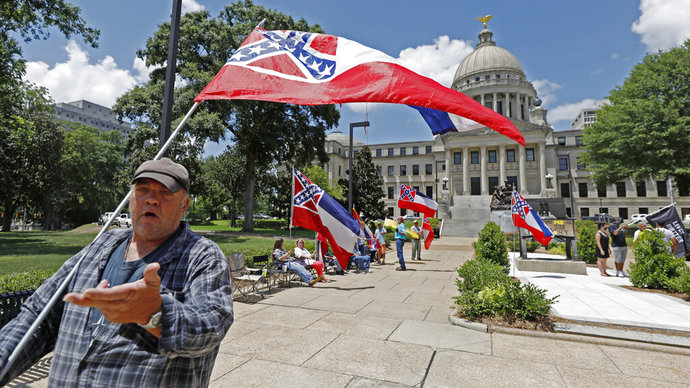
    Dan Hartness of Ellisville, Mississippi, walked outside the Capitol carrying a pole that had both the American flag and the current Mississippi flag. He said the current state flag pays tribute to those who fought in the Civil War.

    “Being a veteran, that’s important to me — that you remember these guys that fought in battle, whether they’re on the right side or the wrong side,” Hartness said.

    Mississippi has the last state flag that includes the Confederate battle emblem — a red field topped by a blue X with 13 white stars.

    Lawmakers could adopt a new Mississippi flag without Confederate imagery. Or they could kick the volatile issue to a statewide election, giving voters choices that might or might not include the current banner.

    The battle emblem has been in the upper-left corner of the Mississippi flag since 1894. White supremacists in the Legislature put it there during backlash to the political power that African Americans gained after the Civil War.

    The Mississippi Supreme Court ruled in 2000 that the flag lacked official status. State laws were updated in 1906, and portions dealing with the flag were not carried forward. Legislators set a flag election in 2001, and voters kept the rebel-themed design.

    But the flag has remained divisive in a state with a 38% Black population. All of the state’s public universities and several cities and counties have stopped flying it because of the Confederate symbol that many see as racist.

    Influential business, religious, education and sports groups are calling on Mississippi to drop the Confederate symbol. Flag supporters say the banner should be left alone or put on the statewide ballot for voters to decide its fate.

    The state’s annual legislative session is almost over, and it takes a two-thirds majority of the House and Senate to consider a bill after the normal deadlines have passed. Leaders have been working to secure those majorities. Republican Gov. Tate Reeves said Saturday that he would sign a bill to change the flag if the Legislature passes one.

  • Mississippi Announces 550 New Reported COVID Cases

    Mississippi Announces 550 New Reported COVID Cases

    Gov. Tate Reeves extends his Safe Return Executive Order

    JACKSON, Miss. (AP) — The Mississippi Department of Health announced an additional 550 confirmed cases of the new coronavirus Friday, after record-high numbers reported the day before.

    After the department reported 1,092 new cases of coronavirus Thursday, State Health Officer Dr. Thomas Dobbs warned of continuing increases if people do not take social distancing and mask-wearing seriously.

    “If we’re not careful, Mississippi is going to look like New York at the height of the pandemic,” Dobbs said at a press briefing.

    On Friday evening, Gov. Tate Reeves announced the extension of his Safe Return Executive Order, which limits the amount of people who can gather in groups, and recommends retail stores, bars and restaurants limit capacity to 50%. The Safe Return Order is extended through July 6. Reeves also extended all unemployment benefits to those out of work due to the coronavirus until the end of July.

    “The threat is far from over. Extending our Safe Return order will give us much-needed time to assess this rapidly-changing situation and adapt our response to slow the spread,” Reeves said in a statement.

    Reeves said he needs Mississippians to increase their efforts to follow health and safety guidelines.

    “We’re taking every step possible at the state-level to protect public health, but we can’t do it alone,” he said. The only way through this pandemic is together. I urge my fellow Mississippians to do their part to help limit transmission in their communities and take care of each other.”

    In his order, Reeves also announced that public pools can now be open 24 hours a day if social distancing is adhered to. Concession stands at sporting complexes can now be open if employees wear masks and customers stand 6 feet apart.

    The Health Department said Friday that Mississippi — with a population of about 3 million — has had at least 25,066 cases and 1,022 deaths from the coronavirus as of Thursday evening. That is six additional deaths from the day before.

    The Health Department said at least 2,514 cases of the virus have been confirmed in long-term care facilities such as nursing homes, with at least 507 virus-related deaths in those facilities.

    The number of coronavirus infections is thought to be far higher because many people have not been tested, and studies suggest people can be infected without feeling sick. For most people, the coronavirus causes mild or moderate symptoms that clear up within weeks. But for others, especially older adults and people with existing health problems, it can cause severe symptoms and be fatal.

  • Bill Proposes $50M To Expand Broadband Access For Students

    Bill Proposes $50M To Expand Broadband Access For Students

    Providing broadband accessibility to students in the state as a key priority.

    JACKSON, Miss. (AP) — Legislation in the Mississippi House proposes using $50 million of the state’s federal coronavirus relief funding to improve broadband access for students in underserved areas during the pandemic.

    “These kids have been out of school since the middle of March, and some of them have had zero, if little instruction since because of broadband accessibility,” Republican Rep. C. Scott Bounds, sponsor of House Bill 1788, said on the House floor Friday. Mississippi ranked 49th in broadband coverage in 2018, according to data from BroadbandNow. A 2017 report by the Census Bureau showed that only 61% of Mississippians had access to broadband in 2015.

    The legislature intends to finish work on spending plans before the new budget year begins on Wednesday. Mississippi has received $1.25 billion from the federal government through the coronavirus relief bill. The state is spending $300 million on grants for small businesses, and officials still need to decide how to spend most of the rest of the money.

    Bounds, of Philadelphia, said HB 1788 would task the Department of Education with administering the $50 million to public schools, Native American tribal schools and private schools throughout the state on a first-come, first-served basis. District superintendents would then negotiate and contract with broadband providers. Districts would identify students in need through Federal Communications Commission data, census blocks and district surveys, Bounds said.

    Bounds said leaving it up to the districts to connect with families will allow them to be innovative to fill the needs of each student.

    “We can’t come up with a cookie-cutter approach sitting in this building that will fit every area,” Bounds said. “This is a broad bill; I understand that. It is a broad bill, but it allows a lot of flexibility for districts to educate students.”

    Republican Rep. Brady Williamson, of Oxford, said he sees providing broadband accessibility to students in the state as a key priority, especially during the coronavirus pandemic, when many districts have turned to virtual education. However, he warned against going forward without a statewide bidding process.

    “(Students have) been waiting awhile. Can they wait a little longer for a bidding process?” he asked Friday, on the House floor. “More times than not, a no-bid contract comes under scrutiny.”

    Bounds said bidding processes can take a long time, and students need access to broadband when school starts in August. He said there isn’t time to wait.

    The $50 million attached to the bill would need to be spent by Dec. 1, 2020. Any unused money would go to Mississippi’s unemployment trust fund, Bounds said.

    ___

    Leah Willingham is a corps member for the Associated Press/Report for America Statehouse News Initiative. Report for America is a nonprofit national service program that places journalists in local newsrooms to report on undercovered issues.

  • “Mississippi Girl” Faith Hill Demands Change In State Flag

    “Mississippi Girl” Faith Hill Demands Change In State Flag

    “It’s time to change” says the five-time Grammy winning Mississippi native.

    Country singer Faith Hill made the announcement in a series of tweets yesterday amidst the state legislature’s debate over the current Mississippi flag.

    https://twitter.com/FaithHill/status/1276267799875399680

    https://twitter.com/FaithHill/status/1276267801095942146

    https://twitter.com/FaithHill/status/1276267803373383682

    The Mississippi legislative session was scheduled to expire today, June 26th.  However legislators can vote to extend a session if needed.

  • Mississippi High School Football Player Dead After Collapsing On Field

    Mississippi High School Football Player Dead After Collapsing On Field

    SHANNON, Miss. (AP) — A high school football player in Mississippi died after collapsing on the field at practice.

    Lee County Coroner Carolyn Green identified the student as Jakobe Kyshon Cooper, news outlets reported.

    Cooper, 16, collapsed “during a routine football practice” Tuesday morning, the Lee County School District said in a statement to news outlets.

    The teen was pronounced dead at North Mississippi Medical Center in Tupelo, according to news outlets. His body was sent to the state crime lab to determine his official cause of death.

    Cooper was a running back and linebacker at Shannon High School, news outlets reported.

    “The Lee County School District and the Shannon Red Raider Family extend our deepest sympathy to this young man’s family,” district spokesman Robert Byers said in the statement.