Tag: virus

  • Virus cases top 500 in Louisiana, new testing sites open

    Virus cases top 500 in Louisiana, new testing sites open

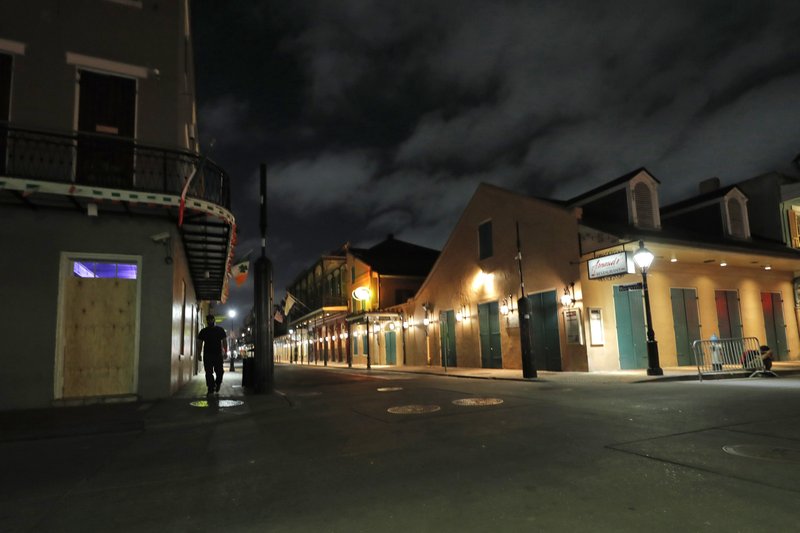
    NEW ORLEANS (AP) — Additional testing centers for the new coronavirus ran out of the day’s supply of tests within hours of opening Friday in New Orleans, one of the nation’s hot spots for the virus.

    Four more state residents died, including the first victim outside of southeastern Louisiana, as doctors worried about dwindling supplies and an expected spike in patients.

    Also Friday, Mayor LaToya Cantrell bolstered her earlier efforts to prevent gatherings that could result in the virus spreading with a “stay at home mandate.” She said at a news conference that people should leave their homes only for “critical needs” such as food or grocery runs or doctor visits. Restaurants can continue to offer takeout food.

    “You can go outside for recreation but do not do so in a group,” said Dr. Jennifer Avegno, the city’s health director.

    Tests were available at New Orleans’ two new drive-thru sites, in the parking lots of a local theater and a university arena. But they initially were being offered only to health care workers and first responders showing symptoms consistent with the COVID-19 disease caused by the virus, according to New Orleans Mayor LaToya Cantrell’s office. The sites are supplied by the federal government.

    Both locations, with materials for 100 tests a day, shut down by early afternoon — several hours earlier than advertised — after reaching their day’s testing capacity early. They were expected to reopen Saturday.

    More than 500 people in Louisiana tested positive for the virus by Friday morning, and 14 Louisiana residents have died from COVID-19, according to state health department data.

    While more than three-quarters of positive tests were in the New Orleans area, cases of the virus were showing up in nearly every metropolitan region of the state, and in 28 of Louisiana’s 64 parishes.

    One of the deaths announced Friday by the state health department was a 38-year-old Catahoula Parish resident who had existing health problems, the first person known to die from the virus in central Louisiana — and the state’s youngest recorded death from the virus.

    Gov. John Bel Edwards, like other states’ leaders, has offered dire warnings about the risk of health care shortages, if residents don’t actively decrease contact with others. Edwards has closed schools, shuttered bars and gyms and limited restaurants to takeout and delivery.

    The vast majority of people recover within weeks after catching the virus, and for most, it causes only mild or moderate symptoms, such as fever and cough. But for older adults and people with existing health problems, it can cause severe illness requiring hospitalization.

    Hospitals were canceling elective procedures and moving staff from other facilities to ready for increases in COVID-19 patients. Health care facilities in Louisiana, like counterparts around the nation, were having difficulty getting medical equipment.

    Dr. Katherine Williams said she has the needed supplies in her Covington obstetrics and gynecology office right now. But she’s watching it dwindle — even toilet paper and paper towels are on back order for doctors.

    As president of the Louisiana State Medical Society, Williams is hearing concerns from doctors around the state. Surgical masks are running low. Disinfectant wipes are running out. Gloves are difficult to find. Hospitals are rationing and sterilizing items they once tossed in the trash can after one use.

    Williams is urging companies that produce masks, gloves and cleaning products to give health care workers a priority for getting those items. She said medical supply levels likely will reach critical lows by next week.

    “The ability for us to care for those who are most sick is going to be diminished,” Williams said.

    The slow rate of testing — and the lag time in getting results — further stretched resources, said Paul Salles, president of the Louisiana Hospital Association. Hospitals were using protective gear for any patient who had symptoms consistent with COVID-19 until a test returned negative. With those test results taking up to seven days, Salles said: “We’re just burning through equipment faster than expected.”
  • Mississippi limits dine-in at restaurants to slow virus

    Mississippi limits dine-in at restaurants to slow virus

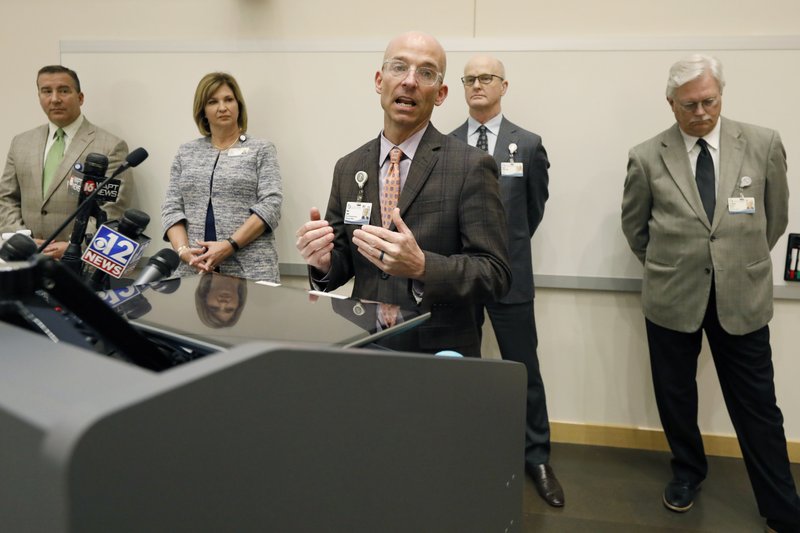
    JACKSON, Miss. (AP) — The Mississippi State Department of Health recommended on Friday that all restaurants and bars immediately stop dine-in services and that people not attend weddings, funerals, church services or other gatherings of 10 or more people, all to help slow the spread of the new coronavirus

    Health officials also said a drive-through testing center for the virus will open Tuesday on the Mississippi State Fairgrounds in Jackson.

    Separately, the Mississippi Emergency Management Agency announced that it will work with the state Health Department and the National Guard, starting Saturday, to distribute medical workers’ personal protective equipment. Some of it will come from gear already held in reserve by the state and some from a national stockpile.

    And, Gov. Tate Reeves said, federal loans are available for small businesses affected by a downturn in commerce because of the virus.

    “Small businesses and their employees are struggling to stay afloat during this trying time, but we will get through this together,” Reeves said Friday in announcing that the Small Business Administration is making loans of up to $2 million.

    The state health officer, Dr. Thomas Dobbs, said bars and restaurants may still provide carry-out food. He said the recommendation to close dining rooms “will in no way affect gas stations, pharmacies, grocery stores or food marts.”

    The drive-through testing center opening Tuesday on the fairgrounds will see patients by appointment only. People will need to answer questions to be screened for an appointment. Other drive-through centers are already operating in some parts of the state, including Tupelo, Philadelphia and Batesville.

    The testing site in Jackson will be operated by the University of Mississippi Medical Center and the Mississippi State Department of Health. Up to 128 appointments a day will be available for people who show symptoms of the virus, including fever.

    To get an appointment, people must answer questions either by telephone or by using a health app created by C Spire, a Mississippi-based wireless provider.

    “If you do not do that and you just show up at the testing site, you will not be tested,” said Dr. Alan Jones, head of emergency medicine at UMMC.

    Screening by phone call or app begins Monday, and appointments begin Tuesday. Officials said the testing site could be closed during thunderstorms or other dangerous weather.

    Mississippi reported 80 cases of the new coronavirus as of Friday, up from 50 Thursday. The state Health Department said 775 people had been tested in Mississippi by Friday.

    A Mississippi man died of the new coronavirus in a Louisiana hospital, the Mississippi State Department of Health said Thursday. The department said the Hancock County resident was between 60 and 65 years old and had an underlying medical condition.

    A growing number of Mississippi cities are closing bars and telling restaurants to either limit or temporarily stop dine-in options because of concerns about the coronavirus pandemic. Casinos in the state are closed, and auto manufacturing plants will shut down temporarily.

    The vast majority of people infected with this novel coronavirus get only mild or moderate symptoms, such as fever and cough, and recover in about two weeks. But many will need hospitalization. Particularly vulnerable are older adults and those with existing health problems who can develop severe complications, including pneumonia.

    The Mississippi state health officer, Dr. Thomas Dobbs, said Friday that some people who have sought testing so far are the “worried well.” He urged people to practice social distancing and to wash their hands to slow the spread of the virus.

    “It’s going to be a hard few weeks, for sure … but the main thing right now is to cut this epidemic off,” Dobbs said.

    The mayor of Jackson issued an order banning gatherings of 10 or more people. The co-owner of three Jackson-area restaurants said he and his partner made the difficult decision to close all three outlets until the virus threat passes. Jeff E. Good said they first tried to limit service to carry-out orders.

    “We just didn’t see how we could still prepare food and deliver it to you curbside, since by definition we were not practicing any social distancing and had many folks involved in the make, bake and take process,” Good wrote on Facebook.

    Reeves said Thursday that public schools will be closed until at least April 17 to curb the spread of the virus.

  • SBA Offers Disaster Assistance to Mississippi Small Businesses Economically Impacted by the Coronavirus (COVID-19)

    ATLANTA – The U.S. Small Business Administration is offering low-interest federal disaster loans for
    working capital to Mississippi small businesses suffering substantial economic injury as a result of the
    Coronavirus (COVID-19), SBA Administrator Jovita Carranza announced today. SBA acted under its
    own authority, as provided by the Coronavirus Preparedness and Response Supplemental
    Appropriations Act that was recently signed by the President, to declare a disaster following a request
    received from Gov. Tate Reeves on March 18, 2020.
    The disaster declaration makes SBA assistance available in the entire state of Mississippi; and the
    contiguous counties of Choctaw, Colbert, Franklin, Lamar, Lauderdale, Marion, Mobile, Pickens,
    Sumter and Washington in Alabama; Chicot, Crittenden, Desha, Lee, Phillips in Arkansas; Concordia,
    East Carroll, East Feliciana, Madison, Saint Helena, Saint Tammany, Tangipahoa, Tensas, Washington
    and West Feliciana in Louisiana; and Fayette, Hardeman, Hardin, McNairy and Shelby in Tennessee.
    “SBA is strongly committed to providing the most effective and customer-focused response possible
    to assist Mississippi small businesses with federal disaster loans. We will be swift in our efforts to help
    these small businesses recover from the financial impacts of the Coronavirus (COVID-19),” said
    Administrator Carranza.
    SBA Customer Service Representatives will be available to answer questions about SBA’s Economic
    Injury Disaster Loan program and explain the application process.
    “Small businesses, private non-profit organizations of any size, small agricultural cooperatives and
    small aquaculture enterprises that have been financially impacted as a direct result of the Coronavirus
    (COVID-19) since Jan. 31, 2020, may qualify for Economic Injury Disaster Loans of up to $2 million to
    help meet financial obligations and operating expenses which could have been met had the disaster
    not occurred,” said Carranza.
    “These loans may be used to pay fixed debts, payroll, accounts payable and other bills that can’t be
    paid because of the disaster’s impact. Disaster loans can provide vital economic assistance to small
    businesses to help overcome the temporary loss of revenue they are experiencing,” Carranza added.
    Eligibility for Economic Injury Disaster Loans is based on the financial impact of the Coronavirus
    (COVID-19). The interest rate is 3.75 percent for small businesses. The interest rate for private nonprofit organizations is 2.75 percent. SBA offers loans with long-term repayments in order to keep
    payments affordable, up to a maximum of 30 years and are available to entities without the financial
    ability to offset the adverse impact without hardship.
    Applicants may apply online, receive additional disaster assistance information and download
    applications at https://disasterloan.sba.gov/ela. Applicants may also call SBA’s Customer
    Service Center at (800) 659-2955 or email disastercustomerservice@sba.gov for more
    information on SBA disaster assistance. Individuals who are deaf or hard-of-hearing may call
    (800) 877-8339. Completed applications should be mailed to U.S. Small Business Administration,
    Processing and Disbursement Center, 14925 Kingsport Road, Fort Worth, TX 76155.
    The deadline to apply for an Economic Injury Disaster Loan is Dec. 21, 2020.
    For more information about Coronavirus, please visit: Coronavirus.gov.
    For more information about available SBA resources and services, please visit: SBA.gov/coronavirus.
    ###
    About the U.S. Small Business Administration
    The U.S. Small Business Administration makes the American dream of business ownership a reality. As
    the only go-to resource and voice for small businesses backed by the strength of the federal
    government, the SBA empowers entrepreneurs and small business owners with the resources and
    support they need to start, grow or expand their businesses, or recover from a declared disaster. It
    delivers services through an extensive network of SBA field offices and partnerships with public and
    private organizations. To learn more, visit www.sba.gov.

  • New York joins California in locking down against the virus

    New York joins California in locking down against the virus

    New York state joined California on Friday in ordering nearly all residents to stay home, as governors watched with growing alarm as southern Europe buckled under the strain of the coronavirus outbreak.

    “We’re going to close the valve, because the rate of increase in the number of cases portends a total overwhelming of our hospital system,” New York Gov. Andrew Cuomo said as cases in the state climbed to more than 7,000.

    Cuomo said is he directing all workers in nonessential businesses to stay home and banning gatherings statewide. The move came after California, the nation’s most populous state, with some 40 million people, all but confined its population in the biggest lockdown in the U.S.

    The increasingly drastic measures in the U.S. came as gasping patients filled the wards of hospitals in Spain and Italy, and the global death toll surpassed 10,000, with the virus still multiplying and gaining footholds in new corners of the world.

    The World Health Organization noted the epidemic’s dramatic speed.

    “It took over three months to reach the first 10,000 confirmed cases and only 12 days to reach the next 100,000,” the U.N. health agency said.

    Countries frantically prepared for an onslaught of patients in the coming weeks.

    In Britain, the government asked 65,000 retired nurses and doctors to return to work. A convention center and hotels in Madrid were being turned into field hospitals for nearly 10,000 patients. France’s military worked to build a makeshift medical center in the hard-hit town of Mulhouse. The U.S. readied military hospitals for civilian use, and more than 4,000 National Guard members were deployed in 31 states to help distribute food, scrub down surfaces and help in other ways.

    The Trump administration warned Americans abroad to return home or risk spending an “indefinite” period away. And the income tax filing deadline was moved from April 15 to July 15.

    “We’re about to enter into a new way of living here in Los Angeles,” Mayor Eric Garcetti said as California went into lockdown, with people told venture outside only for essential jobs or errands and some exercise. “What we do and how we do it and if we get this right will determine how long this crisis lasts.”

    The virus has stuck at the very identities of many countries: closing down cafes, restaurants and boulevard life in France, ending la dolce vita in Italy, forcing the cancellation of the ceremonial changing of the guard at England’s Buckingham Palace and wrecking sales of tulips in Holland.

    In Bergamo, the epicenter of the outbreak in Italy, cemeteries were overwhelmed. Patients at the city’s main hospital lined up in a narrow ward, struggling for breath as doctors and nurses moved swiftly from one beeping machine to the next.

    “When the virus arrived here, there was no containment and it spread through the valleys very quickly. … Some said it was the normal flu. We doctors knew it was not,” said Dr. Luca Lorini, head of intensive care at the hospital, where nearly 500 beds were dedicated to people suffering severe symptoms of the virus. Eighty of the patients were in intensive care.

    In the Italian farm town of Fondi, home to a wholesale produce market serving Rome and Naples, a new ordinance banned all but essential people from entering or leaving after 40 elderly residents became infected.

    At a convent on the outskirts of Rome, 19 of 21 nuns were infected, according to the Italian daily Il Messaggero. A Vatican decree absolved the sins of the faithful who were sick or in quarantine, as well as those of their caregivers, if they met certain conditions.

    “Certain medical centers are suffering stress that is reaching the limit,” said Fernando Simón, director of Spain’s center for health alerts and emergencies. “The difficult days in which we must bear down are coming now. We must keep our focus.”

    Although the illness is mild in most people, the elderly are particularly susceptible to serious symptoms. Italy has the world’s second-oldest population, and the vast majority of its dead — 87% — were over 70.

    Some of the only good news came from Wuhan, the Chinese city where the outbreak began and were hospitals were struggling just weeks ago. For the second day in a row, no new infections were reported and only 39 cases were recorded nationwide — all brought from the outside, the government said.

    With the crisis waning, China has begun sending medical supplies to Europe.

    The effects of the global economy grinding to a halt took their toll, from millions of unsold flowers rotting in piles in Kenya to the slow emptying of the world’s skies.

    In the U.S., Congress worked to put together a $1 trillion emergency package to prop up industry and small businesses and dispense relief checks of $1,200 for adults and $500 per child.

    In Nevada, where Las Vegas casinos were shut down on the governor’s orders, casino manager Patricia Beck lamented: “I know why he did it. I get it. But they don’t understand the impact of a four-hour notice that your life’s over.”

    Scientists advising the British government warned that restrictions on daily life may have to be in place for a year, with periods of less stringent and more stringent measures.

    Governments are trying to balance locking down residents with the need to keep food, medicine and other essentials flowing. In Britain, the category of vital workers includes doctors, nurses and paramedics — and also vicars, truckers, garbage collectors and journalists.

    French President Emmanuel Macron urged employees to keep working in supermarkets, production sites and other necessary businesses amid stringent movement restrictions.

    “We need to keep the country running,” Macron said.

    Worldwide, the number of infections exceeded 244,000, according to a Johns Hopkins University tally.

    Italy, with 60 million citizens, recorded at least 3,405 deaths, exceeding the 3,248 in China, a country with a population over 20 times larger. Spain, second behind Italy in Europe, reported 1,002 deaths and 19,980 infections. The U.S. death toll rose to at least 206.

    More than 86,000 people have recovered, mostly in China.

    Iran’s official toll of more than 1,400 dead was rising quickly as well amid fears it is underreporting its cases. Tehran accused Washington of helping spread the virus by retaining sanctions that prevent it importing desperately needed medicine and medical equipment.

    As the virus strengthened its foothold in Africa, the continent’s busiest airport, in Johannesburg, announced that foreigners will no longer be allowed to disembark.

  • Parents, police struggle to herd the young in virus outbreak

    Parents, police struggle to herd the young in virus outbreak

    Teen: “I can’t stay here all day. What about my friends!?”

    Parent: “Are you kidding? This is serious!”

    The adolescent brain is definitely in play as authorities around the globe struggle to keep young people from gathering, while parents fret at home about what they’re up to as the coronavirus spreads.

    “It’s like herding chickens,” said Southampton, New York, mom Anastasia Gavalas, with five of her own who range from 13 to 21.

    She spoke Tuesday, just two days into school closings that could last for weeks.

    “They feel well and the weather has been nice so they think they can go and do anything. If they can climb over locked gates and play ball in the park, they will. If there’s one store that’s remained open, they’ll find it and go in. No matter how much I ask, they’re getting out and doing something,” Gavalas said.

    Impulsiveness, unsound judgment, egocentricity. Toddlers or teens?

    Rachel Busman, a child and adolescent psychologist with the Child Mind Institute in New York, said the still-developing adolescent brain can exhibit those traits and more, only now teens with thoughts of invincibility can potentially do real harm to themselves and others.

    For most people, the coronavirus causes only mild or moderate symptoms, such as fever and cough. For some, especially older adults and people with existing health problems, it can cause more severe illness, including pneumonia. The vast majority of people recover.

    Some teens are skipping over the reality that they’re potential carriers.

    “They’re very much primed toward reward and primed toward immediate gratification,” Busman said.

    What’s a parent to do? Especially those of highly mobile older teens used to far greater freedoms than virus restrictions allow, including college kids whose schools have gone to remote learning or remain on spring break.

    “If you start the conversation with, ‘You can’t do that,’ you’re probably going to be met with, ‘Oh yes I can, I’m an adult’ kind of thing,’” Busman said. “The first step is validate. Let your teen know you get it, even if you don’t fully understand.”

    In Europe and elsewhere, authorities have stepped in.

    Belgian media reported roughly 300 people attended a rave in the Luxembourg Province town of Tenneville last Saturday. Police and federal agents swooped in and broke it up.

    In France, teens who defy a lockdown on nonessential trips out could cost their parents fines of $40 to $150. All residents must fill out a form documenting why they’ve left their homes during the 15-day period. Hanging out with friends is not considered a valid reason.

    Just as spring weather arrived in Germany, with schools, clubs and concert halls closed, “corona” parties have surfaced despite restrictions. In addition, police dispersed young people from several parks across Berlin on Tuesday, according to local media.

    “It is not reasonable to invite a big party at home or other celebrations with many people,” said Lars Schaade, the deputy head of Germany’s public health agency.

    Groups of teens have been congregating in cafes elsewhere in Europe.

    Asked about the problem of roving young people, U.S. President Donald Trump joined the chorus Wednesday of those noting “they’re feeling invincible,” and sternly urged them to “heed the advice” to take care.

    His coronavirus coordinator, Deborah Birx, warned of “concerning reports” out of France and Italy that young people have become seriously ill from COVID-19.

    Some parents are doing what they can.

    In Williston, Vermont, Ann Schmidt said her 17-year-old son isn’t one to sit around the house. He’s a soccer player and skier, but his soccer center has shut down along with the slopes.

    “He’s been tooling around in his car, visiting friends. It’s very hard,” she said. “Taking away his physical activity is having a dramatic impact. I’m trying to be as empathetic as possible while keeping him safe.”

    Schmidt sent him to a store with a credit card to buy an Xbox so at least he can play FIFA online.

    In Manhattan, mom Alina Adams is holding her own with her three, ages 13, 16 and a 20-year-old home since his college closed.

    “I’m being completely hands off because I know that the minute I suggest they do anything, they’ll be instantly against it,” she said. “My 13-year-old daughter has been making plenty of TikToks.”

  • Health department confirms Mississippi’s first coronavirus death

    Health department confirms Mississippi’s first coronavirus death

    JACKSON, Miss. (WLBT) – The Mississippi State Department of Health has confirmed the first coronavirus death in Mississippi.

    A Hancock County man between the age of 60-65 years old died in a Louisiana hospital. He had chronic underlying health conditions.

    “As the coronavirus outbreak began claiming lives across the world, we knew this would eventually hit Mississippi. But that doesn’t make it any easier for Mississippi to lose one of our own. Elee and I are praying for all their loved ones and their community as we all deal with this tragic loss,” said Governor Tate Reeves.

  • 80 cases of coronavirus identified by Miss. Dept. of Health; 1 death

    80 cases of coronavirus identified by Miss. Dept. of Health; 1 death

    JACKSON, Miss. (WLBT) – The number of presumed positive coronavirus cases in Mississippi is now at 80.

    As of Thursday, 602 people in Mississippi have been tested. On March 19, the first in-state death from the virus was reported of a man from Hancock County.

    Thirty new cases were identified Friday, March 20. They include: Adams, Coahoma, DeSoto, Franklin, Hancock, Harrison, Hinds, Holmes, Humphreys, Jackson, Lafayette, Lawrence, Lee, Leflore, Mardison, Marshall, Monroe, Pike, Rankin, Tippah and Webster counties.

    Sixteen new cases were identified Thursday morning, with Harris and Pearl River counties each seeing three new cases. DeSoto, Forrest, Holmes, Jackson, Jones, Smith, Walthall, Wilkinson, Winston and Yazoo counties each saw one new confirmed case of the virus.

    Thirteen new cases were reported Wednesday morning, with Madison County seeing their first case. Bolivar County now has two cases, Perry County has one case and DeSoto County now has one.

    Coahoma County is now at two cases, Hancock County has one case, Harrison County now has three, and Pearl River County has two new cases, leaving them with four total.

    Nine new cases were reported Tuesday morning, with four in Hinds County, three in Leflore County, one in Jackson County and one in Harrison County.

    The first case was reported Wednesday night by an adult man in Forrest County.

    Another is a woman over 65 who recently traveled to North Carolina. That woman is in the hospital.

    A third case is an adult man in Forrest County who recently traveled to Florida. He’s been self-isolating at home.

    The fourth case is in Leflore County. That is in a woman who is isolating at home.

    The fifth case is a woman over 65 in Copiah County. She is currently hospitalized.

    The sixth is another woman over 65 in Pearl River County, who is also hospitalized.

    The next two cases were in Hinds and Copiah counties.

    Monday morning, two more cases were reported in Monroe and Pearl River counties.

    Mississippi Department of Health has a hotline open 8 a.m. to 5 p.m. Monday through Friday for any coronavirus-related questions: 877-978-6453.

  • UUMMC experts give tips on dealing with anxiety and stress during coronavirus outbreak

    JACKSON, Miss. (WLBT) – Many of us are trying to find ways to cope with these unsettling times. two doctors at UMMC who specialize in well-being offer advice on how to stay positive and deal with the stress as we navigate our way through the Coronavirus Outbreak.

    There are questions, fears about getting the highly contagious virus, concerns and confusion as we deal with the COVID-19 Outbreak. If you are also holed up at home, seclusion could become another issue.

    Some of us may be kicking ourselves because we did not buy extra toilet paper or other items when we saw them in stores. Two doctors at the University of Mississippi Medical Center say you should take a step back and focus on what’s in your power, not what isn’t.

    Dr. Daniel Williams, Division Chief in the Department of Psychiatry and Human Behavior and Associate Director in the Office of Well-Being says quote…”I don’t have control over whether there will be toilet paper in the store. All I can do is make reasonable attempts to get it, and if worst comes to worst, come up with a plan B. He adds. when people don’t have things, they get very creative. No matter what is upsetting you, your feelings are normal and nothing to be ashamed of.

    Dr. Williams also shares, “These are unprecedented times. What we are experiencing is abnormal, and we’re having anxiety that we normally wouldn’t have. We need to recalibrate and recognize this as a period of uncertainty, and we need to adjust. It’s not helpful to think that things will be normal in a while. He says, they won’t.”

    Dr. Williams and other Medical Center experts offer these tips. Try not to fixate on worrisome things, no matter how big or small that you can’t change. ” They say to remember we don’t have control over the stock market, so don’t put time and energy into that. Also know you can take steps but ultimately you can’t control whether your loves ones will stay well, but you can practice social distancing and washing your hands.

    Try to stay positive. A trip to the grocery store can be frightening when the shelves are empty or that’s all you see on Facebook. Dr. Williams says, remember every day grocery stores are being restocked, don’t hoard food even though there’s the impulse to get as much as you can. That’s not in anybody’s best interest.

    Also unplug. Avoid information overload, it can create more stress and create an anxious way of living. And find safe ways to get around social distancing.

    Dr. Mann says social distancing does not mean we have to do emotional distancing.
    Dr. Mann says social distancing does not mean we have to do emotional distancing. (Source: UMMC)

    Dr. Joshua Mann, Chair of the Department of Preventive Medicine and Director of the Office of Well- Being is in quarantine for two weeks after recent out of state travel. He says, “just because we’re doing social distancing doesn’t mean we have to do emotional distancing. Use it as a chance to reconnect with old friends. Really reach out to each other for support.”

    His tips, reduce anxiety about getting the virus or spreading it by taking healthy actions that make you feel safe. Clean surfaces you come in contact with, that includes your phone. Create structure in your day. Wake up at the same time you usually do, go to bed at the same time. Good deeds and meaningful action can help you de-stress Dr. Mann says.

    Help the elderly by protecting them, that means not showing up at stores during the time set aside for them. Serving others helps reduce stress. And lastly talk about it. There is no need to pretend this is normal. Talking about it helps bring things into perspective and helps to process feelings. Both doctors remind us that we can adjust. Life will go on, and the sun will come up the next day.

  • New virus testing sites open in New Orleans as cases surge

    New virus testing sites open in New Orleans as cases surge

    NEW ORLEANS (AP) — Additional testing centers for the new coronavirus were ramping up Friday in New Orleans, which has become one of the nation’s hot spots for the virus.

    Tests at the city’s two new drive-thru sites, in the parking lots of a local theater and a university arena, initially will be offered only to health care workers and first responders showing symptoms consistent with the COVID-19 disease caused by the virus, according to New Orleans Mayor LaToya Cantrell’s office.

    Nearly 400 people in Louisiana have tested positive for the virus, more than three-quarters of them in the New Orleans area, and 10 Louisiana residents have died from COVID-19, according to state health department data. But cases of the coronavirus are starting to show up in nearly every metropolitan region of the state, with positive tests in parishes in northwestern, central and southwestern Louisiana. The virus has shown up in 26 of Louisiana’s 64 parishes.

    Gov. John Bel Edwards, like other states’ leaders, offered dire warnings Thursday to President Donald Trump. Edwards said a surge in new coronavirus cases filling hospital beds could push the state past its capacity to deliver health care in seven to 10 days — what he described as a worst-case scenario if residents don’t actively decrease contact with others.

    “Our trajectory is basically the same as what they had in Italy,” the Democratic governor said.

    Edwards has closed schools, shuttered bars and gyms and limited restaurants to takeout and delivery only. He’s repeatedly called on people to stay home if possible.

    The vast majority of people recover within weeks after catching the virus, and for most people, it causes only mild or moderate symptoms, such as fever and cough. But for older adults and people with existing health problems, it can cause severe illness requiring hospitalization.

    Because of limited testing, public health officials have said most of these early positive tests for coronavirus in Louisiana involve people with serious symptoms who need more intensive health care treatment.

    Tulane Health System in New Orleans planned to shut down a suburban emergency room Friday to move staff to its downtown New Orleans campus to deal with “a surge of COVID-19 and suspected COVID-19 patients.” Other hospitals were canceling elective procedures to help free up space.

    In addition to strained bed capacity, Edwards said health care facilities in Louisiana, like counterparts around the nation, were having difficulty getting medical equipment, particularly ventilators.