Author: Imported Author 1852151

  • Progress slow on virus relief bill as negotiations continue

    Progress slow on virus relief bill as negotiations continue

    WASHINGTON (AP) — Negotiators on a huge coronavirus relief bill reported slight progress after talks resumed in the Capitol, with issues like food for the poor and aid to schools struggling to reopen safely assuming a higher profile in the talks.

    Multiple obstacles remain, including an impasse on extending a $600-per-week pandemic jobless benefit, funding for the Postal Service, and aid to renters facing eviction. Democratic negotiators spoke of progress Monday at almost the very moment that top Senate Republican Mitch McConnell was slamming them for taking a hard line in the talks.

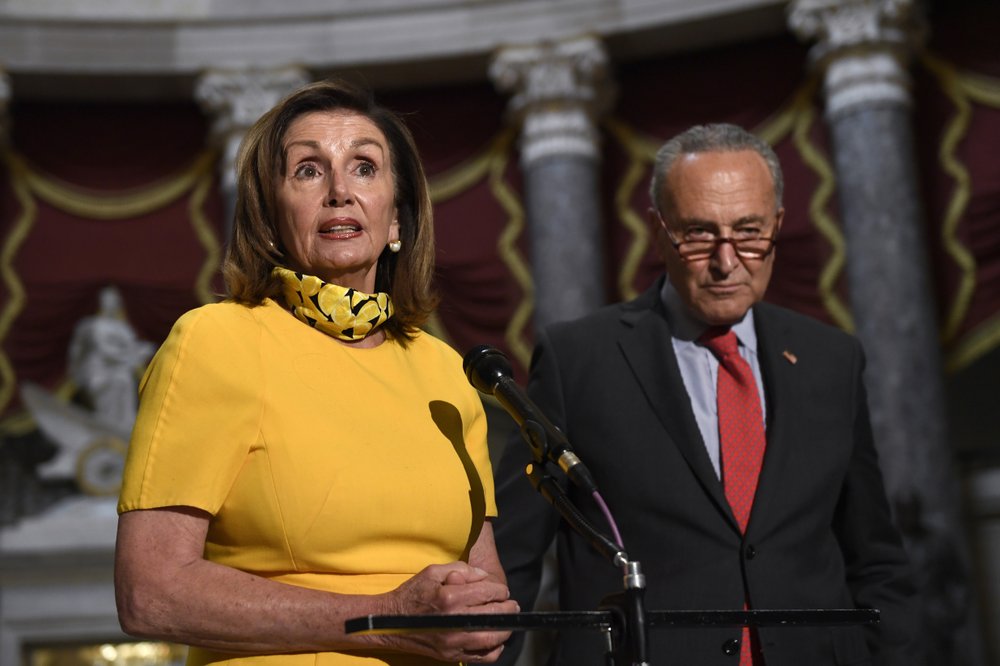
    “We are really getting an understanding of each side’s position. And we’re making some progress on certain issues moving closer together,” said Senate Minority Leader Chuck Schumer, D-N.Y. “There are a lot of issues that are still outstanding. But I think there is a desire to get something done as soon as we can.”

    After the meeting, Pelosi told her Democratic colleagues on a call that she’s hopeful a deal could be reached this week, but doesn’t know if it’s possible, according to a Democratic aide who was granted anonymity to describe the private discussion.

    Treasury Secretary Steven Mnuchin, a lead negotiator for President Donald Trump, said afterward that “we continue to make a little bit of progress” and that the administration is not insistent on a small-bore approach centered on extending the supplemental unemployment benefit and leaving other items for later. A GOP move to advance a slimmed-down relief package has been a recent point of conflict, with Democrats insisting there must be a comprehensive deal.

    “We’re open to a bigger package if we can reach an agreement,” Mnuchin said.

    On the Senate floor, McConnell, R-Ky., re-upped his complaint that Democrats are taking too tough a line. McConnell is not a direct participant in the talks but is likely to be an important force in closing out any potential agreement.

    “The speaker of the House and the Democratic Leader are continuing to say ‘our way or the highway’ with a massive wish list for left-wing lobbyists that was slapped together a few weeks ago called a coronavirus bill,” McConnell said.

    Speaking to reporters after the two-hour session, Democratic negotiators pressed the case for additional food aid, funding for the Postal Service, and the $600-per-week jobless benefit that lapsed last week. The benefit has helped prop up the economy and family budgets as the coronavirus has wrought havoc.

    The White House is seeking opportunities to boost Trump, like providing another round of $1,200 stimulus payments and extending the supplemental jobless benefit and partial eviction ban. Pelosi appears intent on an agreement as well, but she’s made it clear she needs big money for state and local governments, unemployment benefits and food aid.

    “It was productive, we’re moving down the track. We still have our differences, we are trying to have a clearer understanding of what the needs are, and the needs are that millions of children in our country are food insecure,” Pelosi said. “Millions of people in our country are concerned about being evicted. Tens of millions of people are on unemployment insurance.”

    Most members of the Democratic-controlled House have left Washington and won’t return until there is an agreement to vote on, but the GOP-held Senate is trapped in the capital.

    “I can’t see how we can go home and tell people we’ve failed, so I think that’s going to be a lot of pressure on everybody to come up with something,” said Sen. John Cornyn, R-Texas. “It really is a matter of will. It’s not a matter of substance at this point. This is just a painful period between people finally deciding OK, we want a deal, and then what that deal will ultimately look like.”

    Areas of agreement already include the $1,200 direct payment and changes to the Paycheck Protection Program to permit especially hard-hit businesses to obtain another loan under generous forgiveness terms.

    But the terms and structure of the unemployment benefit have remained a sticking point, along with the money for state and local governments. Democrats want almost $1 trillion for localities grappling with pandemic-related revenue losses.

    Speaking to reporters Monday evening, Trump made clear the two sides were still far apart on that issue.

    “They want to bail out cities and states that have been in trouble for years of bad management,” Trump said. “In all cases Democrat-run cities, and we don’t think that’s fair.”

    McConnell is insistent on a liability shield against lawsuits by workers, students, and others against institutions seeking to remain open during the pandemic, including businesses, universities and charities.

    On Monday, unions representing professional athletes — including NFL players and Major League Basesball players — weighed in against McConnell’s proposal, saying in a letter to lawmakers, “It makes little sense during these uncertain times to both ask employees to return to work and, at the same time, accept all the risk for doing so.”

    On unemployment, Pelosi said she’d consider reducing the $600 benefit for people in states with lower unemployment rates. Republicans want to cut the benefit to encourage beneficiaries to return to work and say it is bad policy since it pays many jobless people more money than they made at their previous jobs.

    Another sticking point is that Republicans want to give more school aid to systems that are restarting with in-school learning, even as Dr. Deborah Birx, Trump’s top coronavirus adviser, cautioned that schools in areas with spikes in cases should delay reopening.

    Pelosi said Monday’s talks featured extensive discussion on reopening schools. Schumer said the discussion got into the details on the dollar figures involving school aid and food aid.

    The House passed a $3.5 trillion measure in May, but Republicans controlling the Senate have demanded a slower approach, saying it was necessary to take a “pause” before passing additional legislation. Since they announced that strategy, however, coronavirus caseloads have spiked and the economy has absorbed an enormous blow.

    ___

    Associated Press writer Mary Clare Jalonick contributed to this report.

  • Monday Blood Drive To Include COVID-19 Antibody Testing

    Monday Blood Drive To Include COVID-19 Antibody Testing

    Blood drive today at the Adams County Safe Room from 11:30 until 5:30

    Appointments Required! Click here to make your appointment for today’s blood drive in Natchez.

    Mississippi Blood Services is hosting the blood drive today.  As part of your donation, they will test your blood for COVID-19 antibodies.

    Here is what you need to know about COVID-19 antibody testing.

    Is the COVID-19 antibody test different from a diagnostic test?

    The COVID-19 antibody test does not test for the presence of COVID-19. The
    antibody test looks to see if the blood contains antibodies to the virus. The test
    does not check for the presence of an active COVID-19 infection.

    Do I need to donate blood to get the COVID-19 antibody test?

    Yes, in order to get the COVID-19 antibody test, a complete donation must be
    given. This test is available to donors that complete a whole blood, platelet or
    double red blood cell donation.

    If I test positive for the COVID-19 antibody, then what?

    We would encourage you to consider donating Convalescent Plasma. Plasma
    derived from donations that test positive for the COVID-19 antibody will likely
    be designated as convalescent plasma. Learn more about donating convalescent
    plasma by contacting Noreen Haley at nhaley@msblood.com.

    How will I receive my results after I donate?

    Your results will be sent to you via email within 1 week of your donation. You
    will need to make sure you provide your email to the phlebotomist during
    registration to ensure receipt of your results. IF you do not recieve your emailed
    results within 1 week of donation date, please email sates@msblood.com.

    Can previous donations be used to test for COVID-19 antibody?

    No. However stay tuned as we may offer antibody testing again in the near future.


  • “Watchmen’ leads charge with 26 Emmy nominations, Netflix earns 160 total

    “Watchmen’ leads charge with 26 Emmy nominations, Netflix earns 160 total

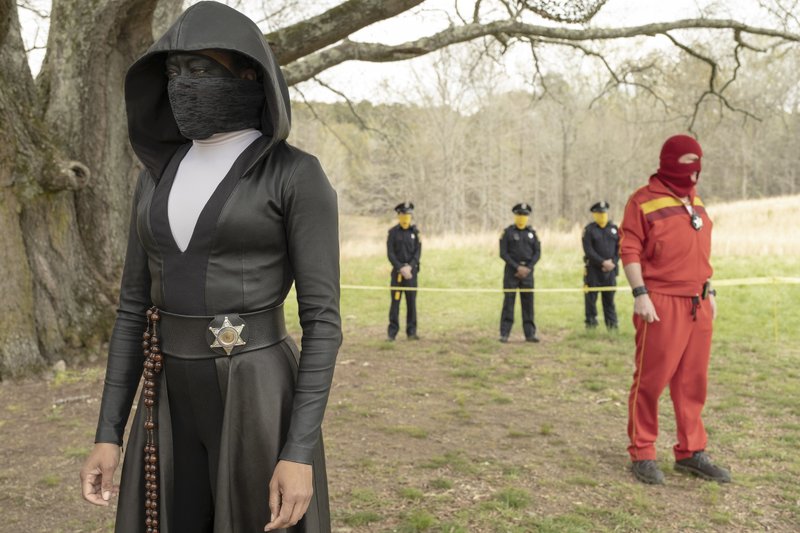
    LOS ANGELES (AP) — “Watchmen,” cloaked in superhero mythology and grounded in real-world racism, received a leading 26 nominations Tuesday for the prime-time Emmy Awards.

    The HBO series, which captured America’s deep unease as it faces racial and political discord amid a pandemic, was nominated as best limited series and received bids for cast members including Regina King and Jeremy Irons.  King was part of a vanguard of actors of color indicating that TV academy voters took heed of the social climate.  “Zendaya!” exclaimed Emmy announcement host Leslie Jones, her gleeful reaction to the “Euphoria” star’s nomination as best actress in a drama. “This is a great day,” Jones said.

    She was part of a socially distanced, virtual release of nominees that was online, not on television as is usual. But nothing is usual during a coronavirus era that has brought Hollywood production to a virtual standstill and is making the Emmys and other awards grasp for alternatives.

    The strong showing by Netflix’s “Ozark” helped the streaming service achieve a record-setting 160 nominations that bested onetime perennial leader HBO, which earned 107 nods. Netflix, although the Emmy veteran among streamers, has yet to win a best comedy or drama series trophy.

    treaming newcomer Apple TV+ earned attention in its first season with Jennifer Aniston’s best drama actress bid for “The Morning Show.” Another streaming newbie, Disney+, saw its Star Wars franchise spinoff, “The Mandalorian,” claim a best drama nomination among its hefty 15 total nods.

    The Amazon comedy “The Marvelous Mrs. Maisel” is the second most-nominated series with 20, followed by Netflix’s “Ozark” with 18.

    “This year, we are also bearing witness to one of the greatest fights for social justice in history. And it is our duty to use this medium for change,” Frank Scherma, chairman and CEO of the Television Academy said at the outset of the presentation.

    The acting categories included a record number of Black nominees, 35, among the 102 contenders for lead, supporting and guest performances in drama, comedy and limited series or TV movie. At slightly more than 34 percent of nominees, that bettered the 2018 record of just under 28 percent of Black actors in those categories.

    In sharp contrast, few other people of color were recognized. Among them: Sandra Oh, repeating as a best actress nominee for “Killing Eve,” and Dev Patel, who received a comedy guest actor nod for “Modern Love.”

    Kerry Washington’s four nominations covered a wide range, including lead actress for “Little Fires Everywhere” and for her production company’s work on the limited series and other programs.

    Washington said she was most emotional about the posthumous nomination for “Little Fires Everywhere” director Lynn Shelton, who died from a blood disorder in May.

    “For the academy to acknowledge her in her passing, deservedly so, it’s really moving. We’re at a moment where we so desperately need the voices of storytellers from marginalized communities: women directors, people of color,” Washington said.

    Billy Porter, who last year became the first openly gay man to win the top drama series acting prize, was nominated again this year for “Pose.”

    Diversity was especially notable in the comedy categories after being nearly absent last year.

    “Ramy,” which finds nuanced humor in a young Muslim American’s crisis of identity and faith, earned a best actor bid for its star and co-creator, Ramy Youssef. Issa Rae returned to the best comedy actress category for her series “Insecure,” which earned a best comedy bid.


  • Taylor Swift will release surprise album ‘Folklore’ Friday

    Taylor Swift will release surprise album ‘Folklore’ Friday

    While in isolation, Taylor Swift has created a new album and is releasing it Friday.

    The pop star made the surprise announcement Thursday on Instagram. “Folklore,” her eighth record, comes less than a year after she dropped “Lover.”

    “Most of the things I had planned this summer didn’t end up happening, but there is something I hadn’t planned on that DID happen. And that thing is my 8th studio album, folklore. Surprise,” she wrote. “Tonight at midnight I’ll be releasing my entire brand new album of songs I’ve poured all of my whims, dreams, fears, and musings into. I wrote and recorded this music in isolation.”

    Swift says the standard edition will include 16 tracks and the album will feature Bon Iver, Aaron Dessner of The National and frequent collaborator Jack Antonoff.

    “Before this year I probably would’ve overthought when to release this music at the ‘perfect’ time, but the times we’re living in keep reminding me that nothing is guaranteed. My gut is telling me that if you make something you love, you should just put it out into the world. That’s the side of uncertainty I can get on board with,” Swift wrote.

    She also said that the music video for the song “Cardigan” will premiere at midnight Eastern. She says because of the coronavirus pandemic, they took extra safety precautions while filming.

    “The entire shoot was overseen by a medical inspector, everyone wore masks, stayed away from each other, and I even did my own hair, makeup, and styling,” Swift wrote, ending the post with a laughing emoji.

  • Navy vet beaten by federal agents: ‘They came out to fight’

    Navy vet beaten by federal agents: ‘They came out to fight’

    Video of the Saturday night incident has gone viral.

    SALEM, Ore. (AP) — The Navy veteran stands passively in Portland, Oregon, amid swirling tear gas. One of the militarized federal agents deployed by President Donald Trump swings a baton at him with full force. With both hands. Five times.

    Under the assault, 53-year-old Christopher David seems like a redwood tree — impervious to the blows. But in a video shot by a reporter, another officer — wearing green military camouflage, a helmet and gas mask — sprays David full in the face with what appears to be pepper gas.  Accounts of it have been reported by news outlets in the United States and around the world.

    Today, David, who suffered two broken bones in his hand, finds himself a reluctant symbol of the protests taking place in Oregon’s largest city and the federal response to it. Militarized officers from a handful of agencies have been using tear gas, flash-bangs, pepper spray, “less-lethal” impact weapons and other munitions to disperse crowds.

    “It isn’t about me getting beat up. It’s about focusing back on the original intention of all of these protests, which is Black Lives Matter,” David said in a phone interview Monday with The Associated Press.

    The U.S. Department of Homeland Security, which has deployed officers to Portland, did not immediately respond to a request for comment on the incident that David recounted. DHS said in a statement about Saturday night’s events that some of the protesters were “violent anarchists” who had launched objects at federal officers, including fireworks and bags of paint, and tried to barricade officers inside the federal building.

    Some vandalism, including graffiti, has occurred in the Portland protests, now in their 53rd day, and federal officials say they’ve responded to protect property and help restore order. One protester was arrested after allegedly assaulting a federal officer with a hammer.

    But people peacefully protesting police brutality and racism, including a county commissioner and religious clerics, have been subjected to riot-control munitions. One demonstrator was hit in the head by an impact munition, shattering bones in his face and head. Some were snatched off the streets by the federal officers and stuffed into unmarked vehicles.

    David, a graduate of the U.S. Naval Academy and a Navy veteran, was so disturbed by what he’d heard that he came to a protest site outside the federal building in downtown Portland on Saturday night.

    He put on a sweatshirt with “Navy” emblazoned across the chest and a Navy ballcap, figuring the federal officers would be, like him, a military veteran. He figured they’d listen as he reminded them “that you take the oath to the Constitution; you don’t take the oath to a particular person.”

    “What they were doing was unconstitutional,” David said. ”Sometimes I worry that people take the oath of office or the oath to the Constitution, and it’s just a set of words that mean nothing. They really don’t feel in their heart the weight of those words.”

    There was no talking. The federal officers, in full tactical gear, came charging out of the federal building.

    “They came out in this phalanx, running, and then they plowed into a bunch of protesters in the intersection of the street and knocked them over. They came out to fight,” David said. One officer pointed a semi-automatic weapon at David’s chest, he said, and video shows another shoving him backwards as he tried to talk with the officers.

    “I took a couple steps back, straightened up, and then just stood my ground right there, arms down by my side,” David recalled.

    One officer began whacking at David with the baton. When he doesn’t fall or even flinch, another officer sprays him full in the face. David then retreats a few steps while making an obscene gesture.

    “They are thugs and goons,” David said. “I couldn’t recognize anything tactically that they were attempting to do that was even remotely related to crowd control. It looked to me like a gang of guys with sticks.”

    David will need reconstructive surgery with pins and plates on his ring finger that was shattered. A bone in his hand was also broken.

    He’s not going back out to protest.

    “My ex-wife and my daughter would kill me if I did that. They’re so angry at me for doing it in the first place because I got beat up,” he said. “I’m not a redwood tree. I’m an overweight, 53-year-old man.”

  • Mississippi football practice can start Aug. 10 and events can start Aug. 17

    Mississippi football practice can start Aug. 10 and events can start Aug. 17

    Mississippi high school sports officially have a schedule.

    The Mississippi High School Activities Association voted on Tuesday to begin the process of scheduling fall 2020 sporting events. Per the vote, practices for high school football can begin on Aug. 17 and games can begin on Sept. 4. Volleyball, cross country and swimming can begin practicing on Aug. 10 and start events on Aug. 17.

    This announcement delays the start of the season by two weeks but still allows for events to happen for most of the fall. The delay, of course, comes in the wake of the COVID-19 pandemic which has caused widespread shutdowns and rescheduling for business and sports leagues across the country.

    The coronavirus pandemic ended the MHSAA spring athletics schedule early on top of the limitations it put upon public schools for general educational purposes.

    For football, Classes 1A, 5A and 6A will play 10-game seasons and 2A, 3A and 4A will play nine-game seasons. Football teams can host a scrimmage between two teams on Aug. 28 but will not be permitted to host a jamboree in that first week before the regular season begins.

    The playoffs are not being rescheduled. Teams in 2A, 3A and 4A will begin their playoffs on Nov. 6 and teams in 1A, 5A and 6A will begin the postseason on Nov. 13. The North State and South State championships are still scheduled for Nov. 27 for all classifications and the state championship games will be held on Dec. 4 and 5.

    Postseason schedules for volleyball, cross country and swimming remain on dates as scheduled as well. Meets or events that are being lost because of the two-week delay can be rescheduled if both schools can agree on an appropriate date.

    Original Article At: The Clarion Ledger

    Contact Nick Suss at 601-408-2674 or nsuss@gannett.com. Follow @nicksuss on Twitter.

  • Revised Plan for Start of School in Natchez-Adams School District

    Revised Plan for Start of School in Natchez-Adams School District

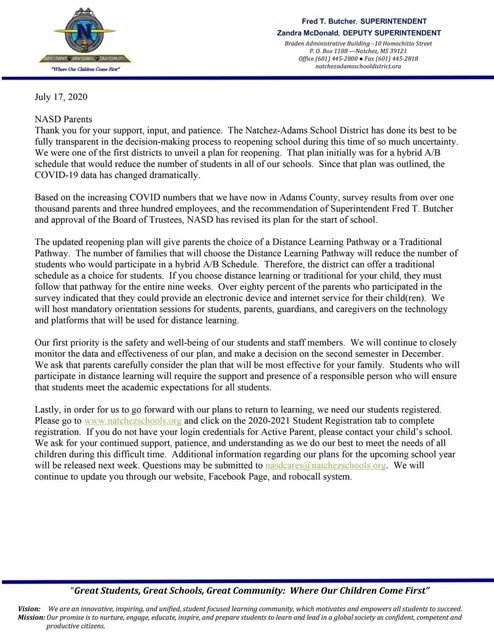
    A Message from the Natchez-Adams School District Regarding Revised Plan for the start of school:

    Thank you for your support, input, and patience. The Natchez-Adams School District has done its best to be fully transparent in the decision-making process to reopening school during this time of so much uncertainty. We were one of the first districts to unveil a plan for reopening. That plan initially was for a hybrid A/B schedule that would reduce the number of students in all of our schools. Since that plan was outlined, the COVID-19 data has changed dramatically.

    Based on the increasing COVID numbers that we have now in Adams County, survey results from over one thousand parents and three hundred employees, and the recommendation of Superintendent Fred T. Butcher and approval of the Board of Trustees, NASD has revised its plan for the start of school.

    The updated reopening plan will give parents the choice of a Distance Learning Pathway or a Traditional Pathway. The number of families that will choose the Distance Learning Pathway will reduce the number of students who would participate in a hybrid A/B Schedule. Therefore, the district can offer a traditional schedule as a choice for students. If you choose distance learning or traditional for your child, they must follow that pathway for the entire nine weeks. Over eighty percent of the parents who participated in the survey indicated that they could provide an electronic device and internet service for their child(ren). We will host mandatory orientation sessions for students, parents, guardians, and caregivers on the technology
    and platforms that will be used for distance learning.

    Our first priority is the safety and well-being of our students and staff members. We will continue to closely monitor the data and effectiveness of our plan, and make a decision on the second semester in December. We ask that parents carefully consider the plan that will be most effective for your family. Students who will participate in distance learning will require the support and presence of a responsible person who will ensure that students meet the academic expectations for all students.

    Lastly, in order for us 10 go forward with our plans to return to learning, we need our students registered. Please go to www.natchezschools.org and click on the 2020-2021 Student Registration tab to complete registration. If you do not have your login credentials for Active Parent, please contact your child’s school. We ask for your continued support, patience, and understanding as we do our best to meet the needs of all children during this difficult time. Additional information regarding our plans for the upcoming school year will be released next week. Questions may be submitted to nasdcares@natchezschools.org We will continue to update you through our website, Facebook Page, and robocall system.


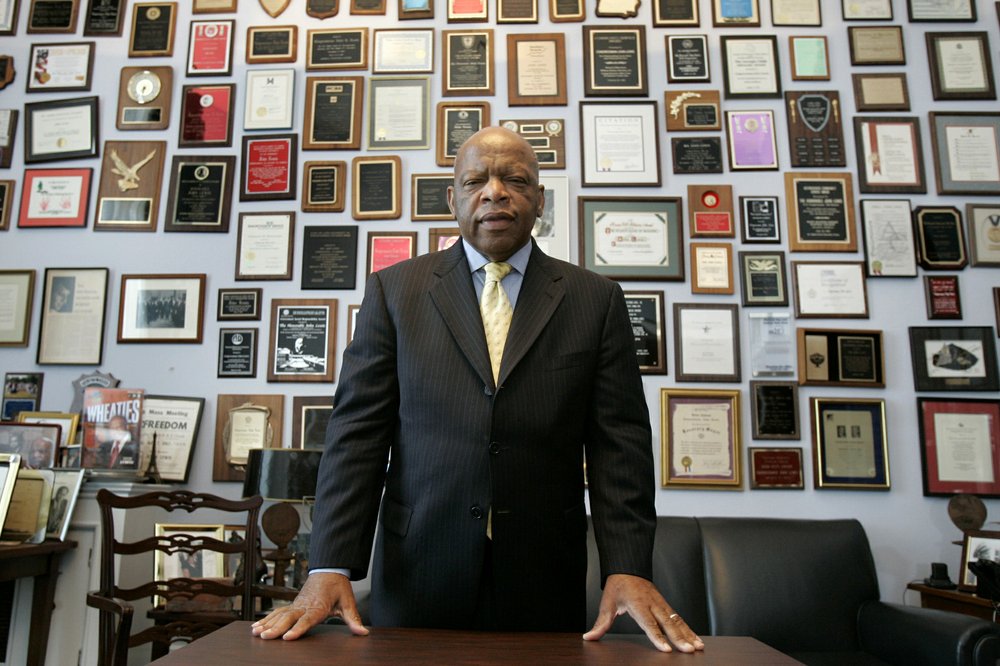
  • Remembering civil rights icon John Lewis, who passed away Friday

    Remembering civil rights icon John Lewis, who passed away Friday


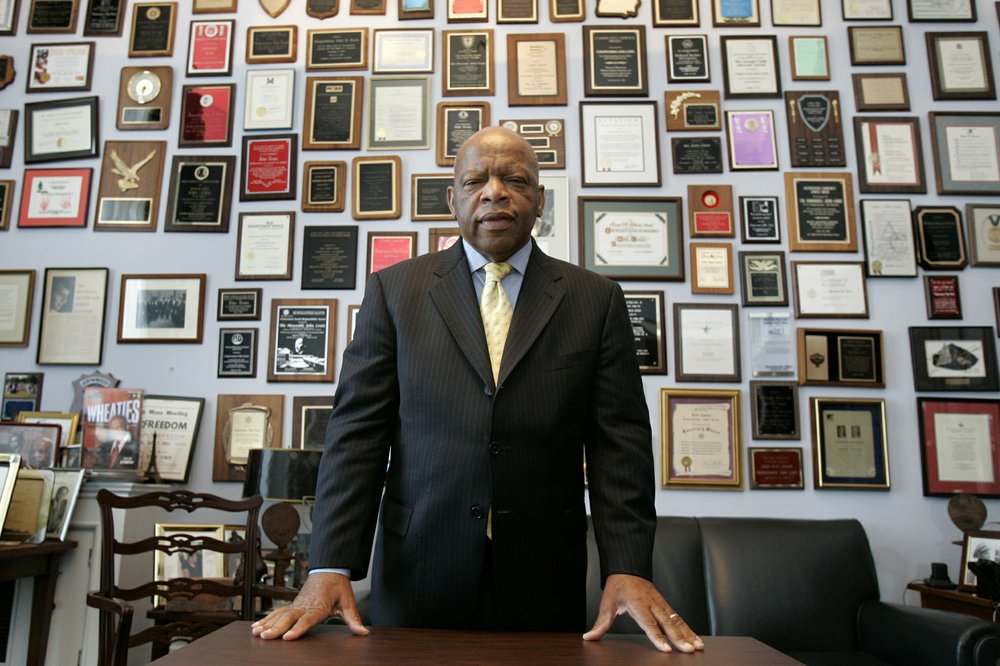
    WASHINGTON (AP) — People paid great heed to John Lewis for much of his life in the civil rights movement. But at the very beginning — when he was just a kid wanting to be a minister someday — his audience didn’t care much for what he had to say.

    A son of Alabama sharecroppers, the young Lewis first preached moral righteousness to his family’s chickens. His place in the vanguard of the 1960s campaign for Black equality had its roots in that hardscrabble Alabama farm and all those clucks.

    Lewis, who died Friday at age 80, was the youngest and last survivor of the Big Six civil rights activists who organized the 1963 March on Washington, and spoke shortly before the group’s leader, Rev. Martin Luther King Jr., gave his “I Have a Dream” speech to a vast sea of people.

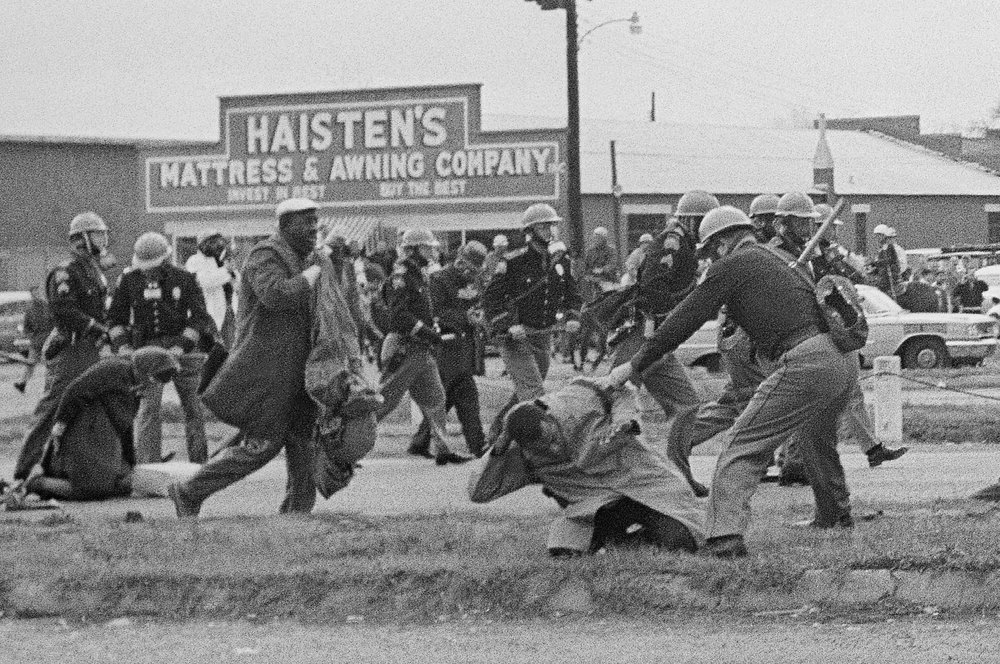
    If that speech marked a turning point in the civil rights era — or at least the most famous moment — the struggle was far from over. Two more hard years passed before truncheon-wielding state troopers beat Lewis bloody and fractured his skull as he led 600 protesters over Selma’s Edmund Pettus Bridge.

    Searing TV images of that brutality helped to galvanize national opposition to racial oppression and embolden leaders in Washington to pass the landmark 1965 Voting Rights Act five months later.

    “The American public had already seen so much of this sort of thing, countless images of beatings and dogs and cursing and hoses,” Lewis wrote in his memoirs. “But something about that day in Selma touched a nerve deeper than anything that had come before.”

    That bridge became a touchstone in Lewis’s life. He returned there often during his decades in Congress representing the Atlanta area, bringing lawmakers from both parties to see where “Bloody Sunday” went down.

    Lewis earned bipartisan respect in Washington, where some called him the “conscience of Congress.” His humble manner contrasted with the puffed chests on Capitol Hill. But as a liberal on the losing side of many issues, he lacked the influence he’d summoned at the segregated lunch counters of his youth, or later, within the Democratic Party, as a steadfast voice for the poor and disenfranchised.

    “John is an American hero who helped lead a movement and risked his life for our most fundamental rights; he bears scars that attest to his indefatigable spirit and persistence,” House Majority Leader Steny Hoyer said after Lewis announced his cancer diagnosis.

    He was a 23-year-old firebrand, a founder of the Student Nonviolent Coordinating Committee, when he joined King and four other civil rights leaders at the Roosevelt Hotel in New York to plan and announce the Washington demonstration. The others were Whitney Young of the National Urban League; A. Philip Randolph of the Negro American Labor Council; James L. Farmer Jr., of the interracial Congress of Racial Equality; and Roy Wilkins of the NAACP.

    At the National Mall months later, he had a speaking slot before King and toned down his intended remarks, bowing to pressure that “incensed” him.

    “I wanted it to have an air of militancy,” Lewis said.

    He dropped a reference to leading a “scorched earth” campaign across the South, like Civil War Maj. Gen. William Tecumseh Sherman’s March to the Sea. (“John, that doesn’t sound like you,” he recalled King telling him.) He scaled back criticism of President John Kennedy’s civil rights record.

    It was a potent speech nonetheless. He vowed: “By the forces of our demands, our determination and our numbers, we shall splinter the segregated South into a thousand pieces and put them together in an image of God and democracy.”

    His words were soon and for all time overshadowed by the speech of King. “He changed us forever,” Lewis said of King’s oratory that day.

    But the change the movement sought would take many more sacrifices.

    After months of training in nonviolent protest, demonstrators led by Lewis and the Rev. Hosea Williams began a march of more than 50 miles from Selma to Alabama’s capital in Montgomery. They didn’t get far: On March 7, 1965, a phalanx of police blocked their exit from the Selma bridge. Authorities swung truncheons, fired tear gas and charged on horseback, sending many to the hospital. The nation was horrified.

    “This was a face-off in the most vivid terms between a dignified, composed, completely nonviolent multitude of silent protesters and the truly malevolent force of a heavily armed, hateful battalion of troopers,” Lewis wrote. “The sight of them rolling over us like human tanks was something that had never been seen before. People just couldn’t believe this was happening, not in America.”

    King swiftly returned to the scene with a multitude, and the march to Montgomery was made whole before the end of the month.

    Lewis was born on Feb. 21, 1940, outside Troy, in Alabama’s Pike County. He attended segregated public schools and was denied a library card because of his race, but he read books and newspapers avidly, and could rattle off obscure historical facts even in his later years.

    He was a teenager when he first heard King, then a young minister from Atlanta, preach on the radio. They met after Lewis wrote him seeking support to become the first Black student at his local college. He ultimately attended the American Baptist Theological Seminary and Fisk University instead, in Nashville, Tennessee.

    Soon, the young man King nicknamed “the boy from Troy” was organizing sit-ins at whites-only lunch counters and volunteering as a Freedom Rider, enduring beatings and arrests while challenging segregation around the South. Lewis helped form the Student Nonviolent Coordinating Committee to organize this effort, led the group from 1963 to 1966 and kept pursuing civil rights work and voter registration drives for years thereafter.

    President Jimmy Carter appointed Lewis to lead ACTION, a federal volunteer agency, in 1977. In 1981, he was elected to the Atlanta City Council, and then won a seat in Congress in 1986.

    Humble and unfailingly friendly, Lewis was revered on Capitol Hill. When Democrats controlled the House, he tried to keep them unified as his party’s senior deputy whip, a behind-the-scenes leadership post. The opening of the Smithsonian’s National Museum of African American History and Culture was a key victory. But as one of the most liberal members of Congress, spending much of his career in the minority, he often lost policy battles, from his effort to stop the Iraq War to his defense of young immigrants.

    Lewis also met bipartisan success in Congress in 2006 when he led efforts to renew the Voting Rights Act, but the Supreme Court invalidated much of the law in 2013, and it became once again what it was in his youth, a work in progress.

    Lewis initially endorsed Hillary Rodham Clinton in the 2008 Democratic presidential primary, but belatedly backed Barack Obama when it became clear he had more Black support. After Obama’s swearing-in, he signed a commemorative photograph for Lewis that reflected much more than his endorsement, writing “Because of you, John. Barack Obama.” Later, they marched hand in hand in Selma on the 50th anniversary of the attack.

    And when Obama was succeeded by a president who sought to dismantle much of his legacy, Lewis made no effort to hide his pain.

    Lewis refused to attend Donald Trump’s inauguration, saying he didn’t consider him a “legitimate president” because Russians had conspired to get him elected. When Trump later complained about immigrants from “s—hole countries,” Lewis declared, “I think he is a racist … we have to try to stand up and speak up and not try to sweep it under the rug.”

    Lewis said he’d been arrested 40 times in the 1960s, five more as a congressman. At 78, he told a rally he’d do it again to help reunite immigrant families separated by the Trump administration.

    “There cannot be any peace in America until these young children are returned to their parents and set all of our people free,” Lewis said. “If we fail to do it, history will not be kind to us,” he shouted. “I will go to the border. I’ll get arrested again. If necessary, I’m prepared to go to jail.”

    In a speech the day of the House vote to impeach Trump, Lewis explained the importance of that vote.

    “When you see something that is not right, not just, not fair, you have a moral obligation to say something, to do something. Our children and their children will ask us ’what did you do? what did you say?” While the vote would be hard for some, he said: We have a mission and a mandate to be on the right side of history.”

    Lewis announced in late December 2019 that he had been diagnosed with advanced pancreatic cancer.

    “I have never faced a fight quite like the one I have now,” he said at the time.

    “I’ve seen courage in action on many occasions,” the late Republican Sen. John McCain of Arizona, a Navy pilot tortured in Vietnam, once said. “I can’t say I’ve seen anyone possess more of it, and use it for any better purpose and to any greater effect, than John Lewis.”

    Lewis’ wife of four decades, Lillian Miles, died in 2012. They had one son, John Miles Lewis.

    If the Voting Rights Act that Lewis cherished was a work in progress, so was America, Lewis observed as he spoke once again from the Lincoln Memorial, a half-century after the March on Washington.

    “Fifty years later we can ride anywhere we want to ride, we can stay where we want to stay,” he said that day in August 2013. “Those signs that said ‘white’ and ’colored are gone. And you won’t see them anymore except in a museum, in a book, on a video.

    “But there are still invisible signs buried in the hearts in humankind that form a gulf between us. Too many of us still believe our differences define us instead of the divine spark that runs through all of human creation.”

    Then came the cheers and applause. This time he was no warm-up act for a giant of history. This was his moment, and there was not a cluck to be heard.

  • Natchez 2020 Municipal General Election Results – LIVE

    Natchez 2020 Municipal General Election Results – LIVE

    Below are the Final Results of the Natchez Mississippi Municipal General Election. These results are official and include absentee ballots and affidavits.[vc_single_image image=”1386″ img_size=”large” alignment=”center” onclick=”custom_link” img_link_target=”_blank” link=”https://www.natchezford.com/”][vc_single_image image=”1387″ img_size=”large” alignment=”center” onclick=”custom_link” img_link_target=”_blank” link=”https://www.crye-leike.com/natchez/ms”][vc_single_image image=”1388″ img_size=”large” alignment=”center” onclick=”custom_link” img_link_target=”_blank” link=”https://www.unitedms.bank/”][vc_single_image image=”1389″ img_size=”large” alignment=”center” onclick=”custom_link” img_link_target=”_blank” link=”https://www.themarketsonline.com/”][vc_btn title=”Click here for Detailed Live Results by Precinct!” color=”primary” size=”lg” align=”center” button_block=”true” link=”url:https%3A%2F%2Fdocs.google.com%2Fspreadsheets%2Fd%2Fe%2F2PACX-1vSckhpslyAqkDdI9i5N5o7x_iPYcNzOC4NwIQvgOjuSLYHCWXzz5jYJjFyA0coWGdFD_rdbJjT4h47D%2Fpubhtml%3Fgid%3D1165255779%26single%3Dtrue||target:%20_blank|”]

  • Louisiana 2020 Election Results – LIVE

    [vc_single_image image=”9299″ img_size=”full” alignment=”center”][vc_single_image image=”9307″ img_size=”full” alignment=”center” title=”Final Unofficial Results”]