Author: Imported Author 1852151

  • Face Coverings to be Mandatory in Louisiana Starting Monday, July 13, 2020

    Face Coverings to be Mandatory in Louisiana Starting Monday, July 13, 2020

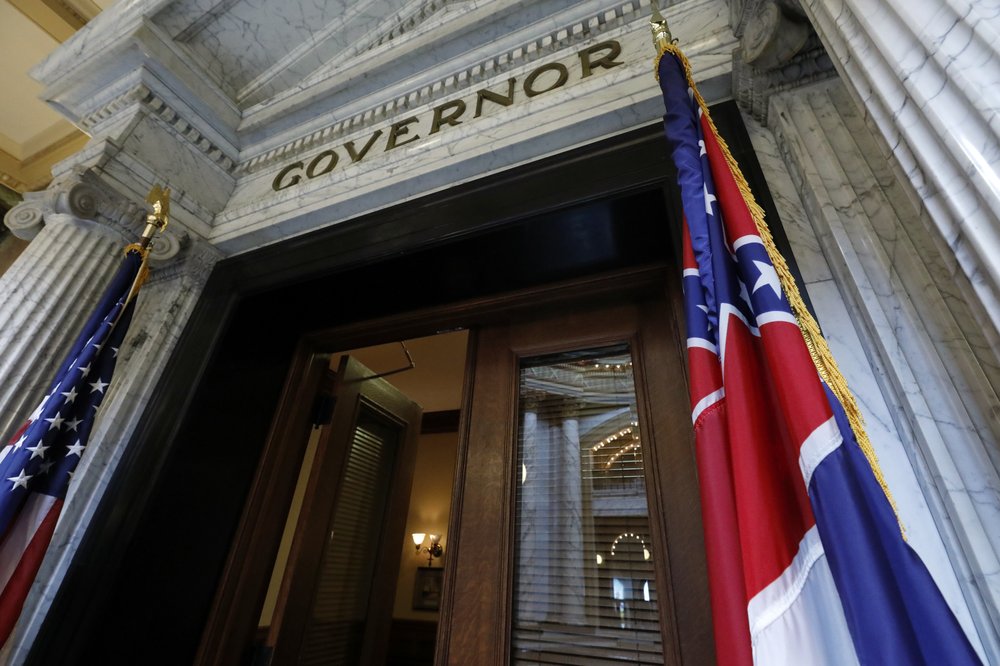
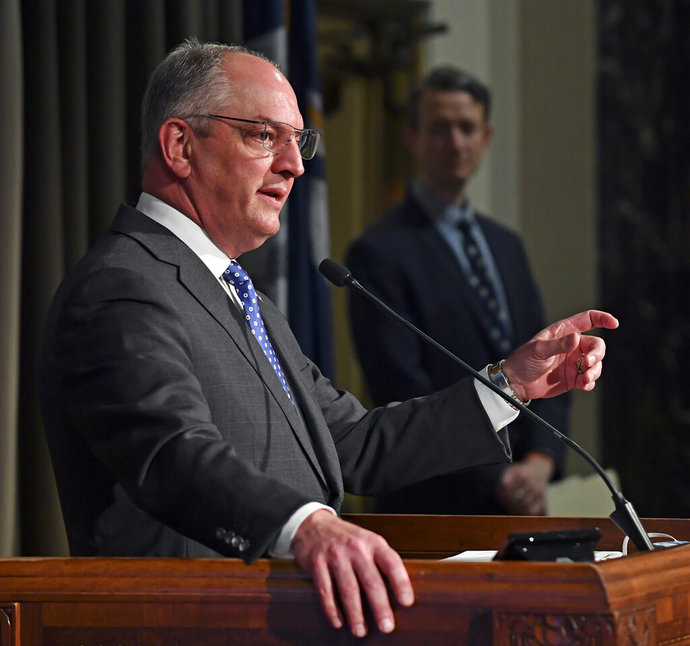
    Today, Gov. John Bel Edwards announced a mandatory mask requirement for Louisiana and ordered bars in the state closed to on-premises consumption, as the state experiences increasing spread of COVID-19. The Governor also limited indoor social gatherings like wedding receptions, class reunions and parties to 50 total people. With these additional restrictions, Louisiana remains in Phase Two of the Roadmap for a Resilient Louisiana.

    The statewide mask mandate, which will allow for parishes without high COVID-19 incidence to opt out if they choose, and bar closures go into effect Monday, July 13 at 12:01 a.m., per a revised Phase Two proclamation signed today. The order will also limit the size of gatherings to 50. The new order is set to expire July 24, 2020, but could be extended.

    “Cases in Louisiana continue to increase, including setting a record-high number of new cases reported in one day, today and yesterday. More than two thousand new COVID infections reported each of these days and increased hospitalizations are signs that we continue to go in the wrong direction in our work to control COVID-19 in our state. While I had hoped to avoid going backwards on restrictions, it is obvious that it is necessary to slow the spread of infection in our state, as COVID-19 has spread to every corner, at a level higher than we have previously seen. This is why I am now mandating face coverings statewide and also closing all bars in Louisiana to on-premises consumption, in addition to putting in limits on the size of indoor gatherings,” Gov. Edwards said. “Right now, all Louisianans need to work together to reduce the spread of COVID-19 by wearing their face masks, keeping social distance, washing their hands frequently and staying at home when they are feeling sick. These are reasonable expectations while we fight to reduce the spread of the illness in our state. This approach also gives us the best possible chance to again flatten the curve without moving back to Phase One.”

    MASK MANDATE
    The statewide mask mandate applies to all 64 parishes in Louisiana. However, parishes with a COVID-19 incidence of fewer than 100 cases per 100,000 people for the most recent two-week period for which data is available could choose to opt out of the mandate. Parish presidents do not have to opt out and may choose to keep a mask mandate in place. Currently, only three parishes in Louisiana do not exceed this standard, which will be updated every other week by the Louisiana Department of Health: Grant, Red River and West Feliciana.

    The order requires face coverings for everyone ages 8 and older except for the following:

    • Anyone who has a medical condition that prevents the wearing of a face covering
    • Anyone who is consuming a drink or food
    • Anyone who is trying to communicate with a person who is hearing impaired
    • Anyone who is giving a speech for broadcast or to an audience
    • Anyone temporarily removing his or her face covering for identification purposes
    • Anyone who is a resident of a parish without a high COVID incidence that has opted out of the masking mandate

    Masks are strongly recommended for children ages 2 to 7.

    CLOSURE OF BARS TO ALL ON PREMISES CONSUMPTION
    All bars, including those with food permits from the Louisiana Department of Health, will be closed to on-premises consumption. They can operate for curbside takeout or delivery service only.

    Since the start of the crisis, Louisiana has identified at least 36 outbreaks, impacting at least 405 people, involving bars, which were actually closed under the Governor’s original Stay at Home order. Public health officials believe going to bars is a higher public health risk than visiting other types of businesses because people are socializing and cannot wear masks when they drink. In addition, young people under the age of 30 make up the largest percentage of new COVID cases in Louisiana.

    GATHERING SIZE
    The new order also limits the size of social gatherings to 50 people indoors. Outdoor social gatherings are also limited to 50 people if individuals cannot avoid being within six feet of one another.

    This crowd size limitation shall not apply to those businesses deemed essential as defined by the Cybersecurity and Infrastructure Security Agency or any businesses and organizations operating at 50% capacity pursuant to Paragraphs (1) through (6) of Subsection (G) of Section 2 of 83 JBE 2020, including churches and other faith-based organizations.

    The 50-person limit will apply to indoor gatherings, like receptions, weddings and others. The changes are based on the advice of public health officials.

    Click here to read the proclamation.

  • Protective gear for medical workers begins to run low again

    Protective gear for medical workers begins to run low again

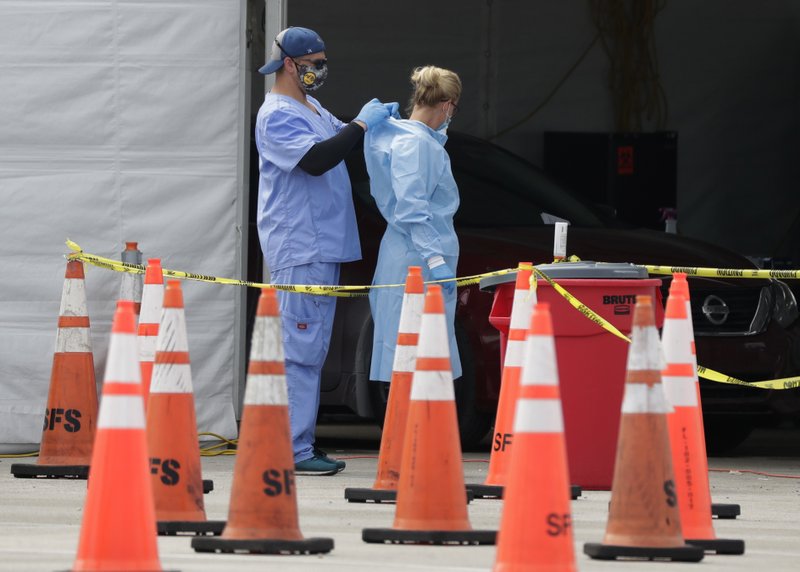
    The personal protective gear that was in dangerously short supply during the early weeks of the coronavirus crisis in the U.S. is running low again as the virus resumes its rapid spread and the number of hospitalized patients climbs.

    A national nursing union is concerned that gear has to be reused. A doctors association warns that physicians’ offices are closed because they cannot get masks and other supplies. And Democratic members of Congress are pushing the Trump administration to devise a national strategy to acquire and distribute gear in anticipation of the crisis worsening into the fall.

    “We’re five months into this and there are still shortages of gowns, hair covers, shoe covers, masks, N95 masks,” said Deborah Burger, president of National Nurses United, who cited results from a survey of the union’s members. “They’re being doled out, and we’re still being told to reuse them.”

    When the crisis first exploded in March and April in hot spots such as New York City, the situation was so desperate that nurses turned plastic garbage bags into protective gowns. The lack of equipment forced states and hospitals to compete against each other, the federal government and other countries in desperate, expensive bidding wars.

    In general, supplies of protective gear are more robust now, and many states and major hospital chains say they are in better shape. But medical professionals and some lawmakers have cast doubt on those improvements as shortages begin to reappear.

    In other virus-related developments Tuesday:

    — Brazil’s president, Jair Bolsonaro, said he has tested positive for COVID-19 after months of downplaying the virus’ severity. The 65-year-old populist confirmed the test results while speaking to reporters in the capital of Brasilia. Bolsonaro has often appeared in public to shake hands with supporters and mingle with crowds, at times without a mask.

    — The Trump administration formally notified the United Nations of its withdrawal from the World Health Organization. The move makes good on President Donald Trump’s vow to terminate U.S. participation in the WHO, which he has criticized for its response to the pandemic and accused of bowing to Chinese influence. The pullout will not take effect until next year, meaning it could be rescinded under a new administration or if circumstances change.

    — Education Secretary Betsy DeVos said the nation’s schools must reopen this fall and be “fully operational” even as cases of COVID-19 continue to surge around the country. She said anything short of a full reopening would fail students and taxpayers. DeVos made the comments during a call with governors. Audio of the call was obtained by The Associated Press.

    Speaking about protective equipment on the call, U.S. Health and Human Services Secretary Alex Azar said Tuesday that it’s important for gear to be reused and repurposed as a way to stretch the stocks and avoid shortages.

    Dr. Aisha Terry said that she has good access to PPE as an associate professor of emergency medicine at George Washington University in Washington, but some non-academic and rural health facilities have much less.

    “I think overall, production, distribution and access has improved,” Terry said. “But the fear is that we will become complacent” and allow supplies to dwindle in some places.

    The American Medical Association wrote to the Federal Emergency Management Agency, Vice President Mike Pence and members of Congress calling for a coordinated national strategy to buy and allocate gear.

    Rep. Carolyn Maloney, a New York Democrat, released a memo last week ahead of a congressional committee hearing that raised concerns about looming problems in the supply chain. Her report was based on interviews with unnamed employees at medical supply companies, one of whom warned that raw material for gowns is not available at any price in the amounts needed, leading to an “unsustainable” situation.

    Rear Adm. John Polowczyk, who is in charge of coronavirus-related supplies for the White House, told Congress last week that more than than one-fourth of the states have less than a 30-day supply.

    “It would seem like in less than 30 days, we’re going to have a real crisis,” said Rep. Bill Foster, an Illinois Democrat.

    FEMA, one of the main federal agencies in charge of the coronavirus response, would not break down which states have enough gear to last beyond 30 days and which do not. It referred those questions to individual states. In June, the government started replenishing its once-depleted stockpile with the goal of building up a two-month supply.

    As of June 10, FEMA had distributed or directed private companies to distribute more than 74 million N95 masks and 66 million pairs of gloves, along with other gear. The agency said it changed its distribution method to send more equipment to hot spots.

    Although all U.S. states and territories have received some protective gear from FEMA, an Associated Press analysis of the agency’s own data found that the amounts varied widely when measured by population and the number of confirmed COVID-19 cases.

    The AP analysis found that low-population, mostly rural states received the largest FEMA allocations per confirmed case. As of mid-June, for example, Montana had received 1,125 items of protective gear per case, compared with 32 items per case in Massachusetts, an early hot spot. States including California, Iowa and Nebraska, all of which have seen a surge in confirmed infections, received among the lowest amounts of protective gear from FEMA per case, according to the AP analysis.

    Many states say the federal supplies make up a small part of their stockpiles after they spent millions of dollars to acquire equipment on their own. FEMA told the AP that its initial distributions were made on a per-capita basis, but also said the agency has tried to accommodate individual requests from the states.

    Concerns extend beyond the amount of gear. In New Hampshire, an association representing nursing homes said most items sent by FEMA in early June were unusable, including child-size gloves, surgical masks with ear loops that broke when stretched and isolation gowns with no arm openings.

    A nonprofit group called #GetUsPPE was established in March by physicians to help distribute donated protective gear.

    The group had a 200% increase in requests during the last two weeks of June from medical providers in Texas, a state with a big surge in confirmed virus cases. State officials there have said their supplies are adequate.

    “We anticipated that we would need to be around for a few weeks until someone else stepped in and solved this problem,” said Dr. Megan Ranney, an emergency physician at Rhode Island Hospital who was among the group’s founders. “Here we are, still getting hundreds of thousands of requests a week.”

    ___

    Fassett, a data journalist based in Santa Cruz, California, is a corps member for The Associated Press/Report for America Statehouse News Initiative. Report for America is a nonprofit national service program that places journalists in local newsrooms to report on under-covered topics.

    ___

    Mulvihill reported from Cherry Hill, New Jersey. Follow him at http://www.twitter.com/geoffmulvihill. Follow Fassett at http://www.twitter.com/camfassett.

  • Face Coverings Now Mandatory in Natchez and Adams County

    Face Coverings Now Mandatory in Natchez and Adams County

    Effective immediately through July 31st by Order of the Mayor, the Board of Aldermen, and the Adams County Board of Supervisors:  

    • FACE MASKS must be worn at all times in PUBLIC PLACES where person-to-person contact occurs. 
    • This includes ALL STORES (department stores, grocery stores, convenience stores, retail shops, and restaurants), as well as schools and outdoor spaces. 
    • Your mask must cover your NOSE and MOUTH and it may be a scarf, bandanna, or other fabric.
    • This Order will be enforced by the Natchez Police and the Adams County Sheriff’s Department. 
    • Please make the RIGHT CHOICES and lead the way to our recovery:  Wear your mask. Stay 6-feet away from others. Avoid crowds. Wash your hands. 

    The health of our community and our economy depends on YOU.   

    To read the full mandate click here

  • Missing Texas solider was killed at Fort Hood by a fellow soldier.

    Missing Texas solider was killed at Fort Hood by a fellow soldier.

    Authorities said they are still awaiting positive identification of human remains found near Fort Hood

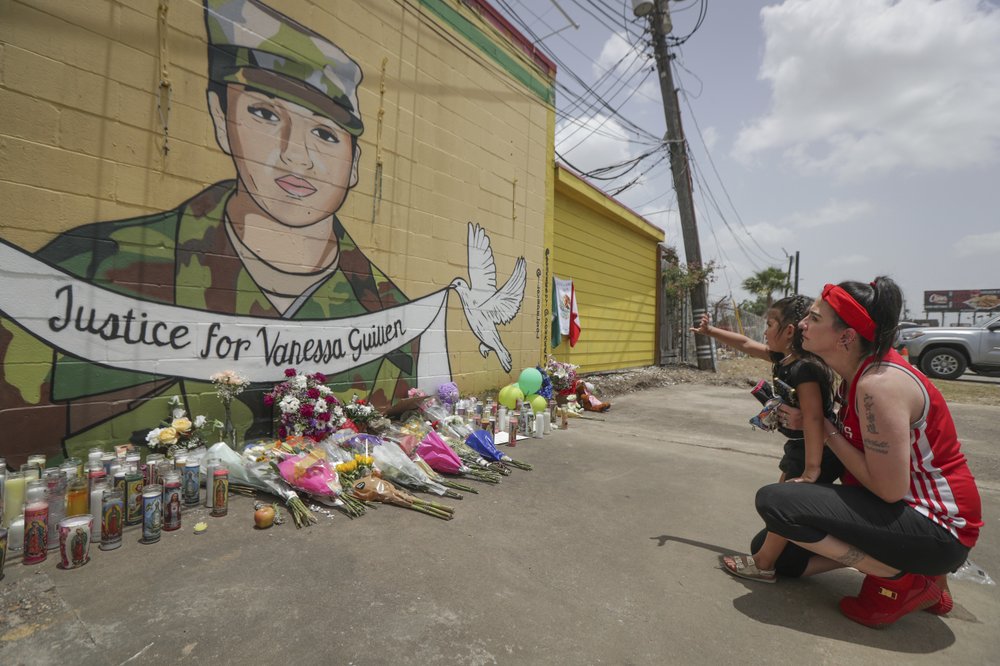
    AUSTIN, Texas (AP) — Federal and military investigators said Thursday a soldier missing since April was killed by a fellow soldier stationed at the same Texas base. The revelation followed demands for the Army to release details about its investigation of the disappearance.

    A criminal complaint released by the U.S. Attorney’s Office for the Western District of Texas charges a civilian with helping hide the body of 20-year-old solider Vanessa Guillen. The document, prepared in conjunction with the Army Criminal Investigative Command and the FBI, says the civilian helped the other soldier get rid of evidence after he bludgeoned Guillen with a hammer at Fort Hood in Central Texas and later dismembered and dumped the body.

    Human remains were found Tuesday near the Leon River in Bell County, about 20 miles (32 kilometers) east of Fort Hood, in the search for Guillen. Her family said through attorney Natalie Khawam that they believe evidence shows the remains are Guillen, but authorities said they are still awaiting positive identification.

    “The whole thing is devastating, gruesome, barbaric,” Khawam said.

    The Army said Wednesday that the soldier suspected in Guillen’s disappearance had killed himself.

    In a press conference Thursday, the Army identified the soldier suspected in Guillen’s disappearance as Aaron David Robinson. Army investigators declined to comment further on the details of Guillen’s case, saying they did not want to compromise the ongoing investigation.

    The criminal complaint released later Thursday said the civilian arrested in connection to the Guillen case is Cecily Aguilar, 22, of Killeen, Texas, near Fort Hood. Aguilar faces one count of conspiracy to tamper with evidence.

    Robinson enlisted Aguilar to help him dispose of Guillen’s body, according to the complaint. Aguilar later recognized Guillen, the complaint says, and helped Robinson mutilate and hide her body.

    Aguilar was arrested Wednesday and was being held Thursday in the Bell County Jail in Belton, Texas, according to booking records. It was unclear whether she had an attorney to speak on her behalf.

    Khawam said the U.S. Army Criminal Investigations Division told her Robinson cleaned up the area where Guillen was killed, placed her body in a container and wheeled her out to his car. After driving to pick up Aguilar, Khawam said, the pair drove to a nearby river and tried to burn Guillen’s body, but later chopped it up with a machete. Then, they put cement on the body and buried the remains.

    Tim Miller, of Texas Equusearch, who was assisting in the search for Guillen, told KHOU that investigators found a lid last week that belonged to a container consistent with one a witness saw loaded into a car at 8:30 the night Guillen disappeared.

    Investigators were called back to the scene this week when a man working in the area reported a foul odor. Miller said it appeared the suspect “buried her, put lime on her, mixed up concrete, put that over her, put dirt over her, rocks and stuff.”

    The family had said they believe Guillen was sexually harassed by the military suspect and is calling for a congressional investigation, Khawam said Wednesday.

    Guillen’s older sister, Mayra Guillen, told The Associated Press on Thursday that her family was distraught after learning details about her sister’s disappearance. The family had previously said they believe the Army was covering up details of Vanessa Guillen’s disappearance.

    “There are a lot of horrifying things that happened that day,” said Mayra Guillen, 22. “There are just no words.””

    Mayra Guillen said her sister had spoken with their mother about experiencing sexual harassment, but that her mother has been to devastated to talk about it. From their text conversations, Mayra Guillen said she believed her sister was afraid during her time at Fort Hood.

    Army investigators said Thursday that they had no credible evidence that Vanessa Guillen had been sexually harassed or assaulted.

    “We are still investigating their interactions but at this time there is no credible information for reports that specialist Robinson sexually harassed specialist Guillen,” said Fort Hood CID Special Agent Damon Phelps.

    Guillen was last seen April 22 in a parking lot at Fort Hood. She was set to be promoted to specialist this month. Her car keys, barracks room key, ID card and wallet were found in the room where she was working the day she disappeared.

    Authorities said Wednesday that Robinson, 20, of Calumet City, Illinois, a Chicago suburb on the Indiana border, pulled a gun and shot himself as police were trying to make contact with him.

    The Army CID and the League of United Latin American Citizens offered a $50,000 reward for information leading to Guillen’s whereabouts.

    ___

    Acacia Coronado is a corps member for the Associated Press/Report for America Statehouse News Initiative. Report for America is a nonprofit national service program that places journalists in local newsrooms to report on undercovered issues.

  • Military chief: Troops were issued bayonets during police brutality protests in Washington DC

    Military chief: Troops were issued bayonets during police brutality protests in Washington DC

    Roughly 700 members of the 82nd Airborne Division were sent on that day to two military bases near the District Capitol Area armed with live rounds, bayonets, and riot gear.

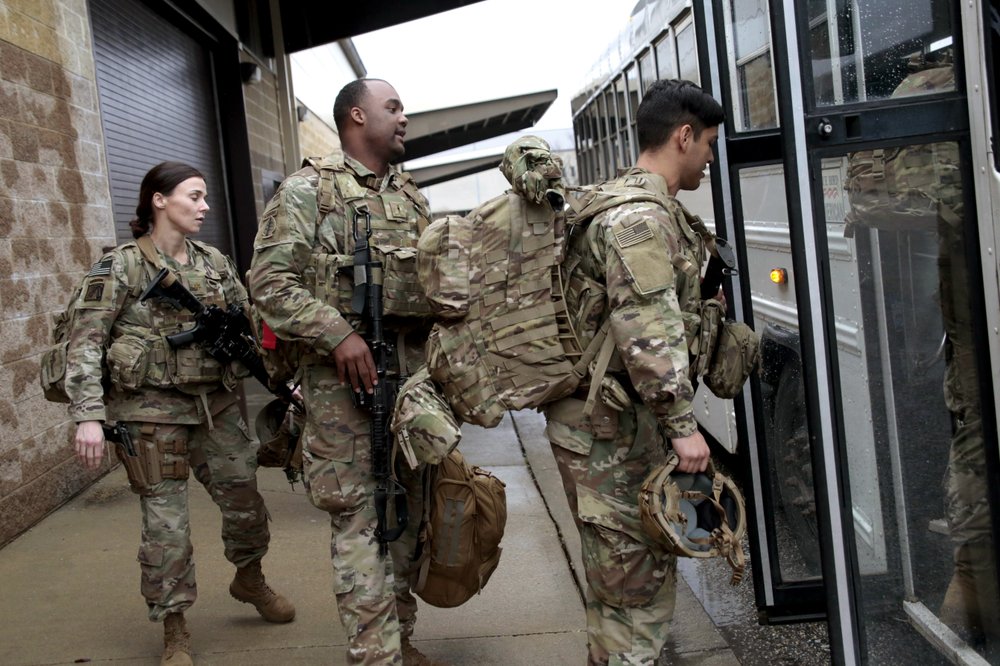
    CHARLOTTE, N.C. (AP) — The chairman of the Joint Chiefs of Staff has confirmed a report by The Associated Press that some of the service members who were mobilized to Washington, D.C., last month in response to civil unrest over the killing of George Floyd were issued bayonets. Defense documents obtained by the AP show some were not trained in riot response.

    Members of the Army’s 82nd Airborne Division from Fort Bragg, North Carolina, and the 3rd U.S. Infantry Regiment, which is based in D.C. and typically guards the Tomb of the Unknown Soldier, were mobilized last month to respond to massive protests over the treatment of Black Americans and systemic issues of police brutality. But the troops were never actually sent to the protests after they arrived.

    The soldiers were issued bayonets for their June 2 deployment — but told they were to remain in their scabbards and not attached to their service rifles, Joint Chiefs Chairman Army Gen. Mark A. Milley wrote to two U.S. representatives in a letter that was obtained by the AP. The soldiers were also told no weapons were to enter the capital without clear orders and only after nonlethal options were first reviewed, he said.

    Milley said the order to mobilize the troops came from Army Maj. Gen. Omar Jones, who serves as commander of the military district of Washington. Milley’s letter, dated June 26, was sent to Democratic Reps. Raja Krishnamoorthi of Illinois and Rep. Ted Lieu of California, who demanded an explanation after the AP first reported on the use of bayonets on June 2.

    The AP previously reported soldiers were armed with live rounds, bayonets, and riot gear. Bloomberg reported on June 11 that the 3rd U.S. Infantry Regiment, nicknamed “The Old Guard,” was also issued bayonets.

    Upon arrival, neither the 82nd nor The Old Guard were ever called off base and into the city to respond to protests. Division paratroopers were sent back to Fort Bragg on June 4.

    But the reports led to sharp condemnation and outrage on social media platforms.

    An unclassified military document obtained by the AP also shows that some of the soldiers were not prepared to deal with the protesters. Instead, commanders planned to give them the proper training within 96 hours of their arrival in Washington.

    While some infantry soldiers are trained in crowd control, especially those preparing for overseas deployment, they don’t typically undergo training for riot control and domestic civil unrest.

    In a letter to Milley on June 22, Krishnamoorthi and Lieu expressed concern that the use of bayonets could escalate any potential violence at protests. They drew parallels to the 1970 Kent State shootings in which four students were killed by National Guardsmen.

    “The escalation and violence leading up to and following those killings included those same troops meeting peaceful demonstrators with bayonets,” the representatives wrote.

    In his response, Milley stopped short of agreeing to bar service members from deploying to domestic protests with bayonets in the future. He said each situation would have to be dealt with individually.

    In a joint statement to the AP on Thursday, the U.S. representatives wrote: “While we are grateful for General Milley’s responses to our questions concerning the arming of troops with bayonets for potential deployment against protesters, we were disappointed he was not willing to commit to banning the practice.”

    They added: “We recognize the necessity of the Joint Force preserving flexibility to respond to varying circumstances, but it is difficult for us to imagine a circumstance which could necessitate or justify the deployment of bayonets against American civilians.”

    The bayonet news broke at the same time the AP first reported that President Donald Trump ordered military aircraft to fly above demonstrators in a “show of force.” That information came from two Defense Department officials who insisted on anonymity because they were not authorized to discuss ongoing operations publicly.

    Show-of-force missions within the U.S. military are designed to intimidate an opposing force and to warn of potential military action if provoked further. Army Secretary Ryan McCarthy told reporters that the incident, involving an Army National Guard medical evacuation helicopter that hovered low over protesters in Washington, D.C., is under investigation.

    Milley also found himself embroiled in controversy after he walked with President Donald Trump to a photo-op outside St. John’s Church after passing through Lafayette Park, which the military cleared of protesters beforehand.

    He later apologized and said he “should not have been there.”

  • University of Alabama students threw “COVID contest” parties

    University of Alabama students threw “COVID contest” parties

    Students put money in a pot and whoever got COVID first would get the cash.

    TUSCALOOSA, Ala. (AP) — Several college students in an Alabama city organized “COVID-19” parties as a contest to see who would get the virus first, officials said.

    Tuscaloosa City Councilor Sonya McKinstry said students hosted the parties to intentionally infect each other with the new coronavirus, news outlets reported.

    McKinstry said party organizers purposely invited guests who tested positive for COVID-19. She said the students put money in a pot and whoever got COVID first would get the cash.

    “It makes no sense,” McKinstry said. “They’re intentionally doing it.”

    Tuscaloosa Fire Chief Randy Smith confirmed the incidents to the City Council on Tuesday.

     The department thought the parties were rumors, but Smith said after some research, officials discovered the parties were real.

    “Not only do the doctors’ offices confirm it but the state confirmed they also had the same information,” Smith said.

    Smith did not say whether actions would be taken against the students. He also did not say which schools the students attend.

    Tuscaloosa is home to The University of Alabama and several other colleges.

    Tuscaloosa City Council members unanimously approved a mask requirement during a meeting Tuesday.

  • AP Exclusive: 13 tons of human air products from Chinese prison camps seized

    AP Exclusive: 13 tons of human air products from Chinese prison camps seized

    Federal authoritiesseized a shipment of weaves and other beauty accessories suspected to be made out of human hair taken from people locked inside a Chinese internment camp.

    U.S. Customs and Border Protection officials told The Associated Press that 13 tons (11.8 metric tonnes) of hair products worth an estimated $800,000 were in the shipment.

    “The production of these goods constitutes a very serious human rights violation, and the detention order is intended to send a clear and direct message to all entities seeking to do business with the United States that illicit and inhumane practices will not be tolerated in U.S. supply chains,” said Brenda Smith, executive assistant commissioner of CBP’s Office of Trade.


    This is the second time this year that CBP has slapped one of its rare detention orders on shipments of hair weaves from China, based on suspicions that people making them face human rights abuses. The orders are used to hold shipping containers at the U.S. ports of entry until the agency can investigate claims of wrongdoing.

    Rushan Abbas, a Uighur American activist whose sister, a medical doctor, went missing in China almost two years ago and is believed to be locked in a detention camp, said women who use hair weaves should think about who might be making them.

    “This is so heartbreaking for us,” she said. “I want people to think about the slavery people are experiencing today. My sister is sitting somewhere being forced to make what, hair pieces?”

    Wednesday’s shipment was made by Lop County Meixin Hair Product Co. Ltd. In May, a similar detention was placed on Hetian Haolin Hair Accessories Co. Ltd., although those weaves were synthetic, not human, the agency said. Hetian Haolin’s products were imported by Os Hair in Duluth, Georgia, and I & I Hair, headquartered in Dallas. I & I’s weaves are sold under the Innocence brand to salons and individuals around the U.S.

    Both of the exporters are in China’s far west Xinjiang region, where, over the past four years, the government has detained an estimated 1 million or more ethnic Turkic minorities.

    The ethnic minorities are held in internment camps and prisons where they are subjected to ideological discipline, forced to denounce their religion and language and physically abused. China has long suspected the Uighurs, who are mostly Muslim, of harboring separatist tendencies because of their distinct culture, language and religion.

    Reports by the AP and other news organizations have repeatedly found that people inside the internment camps and prisons, which activists call “black factories,” are making sportswear and other apparel for popular U.S. brands.

    The AP tried to visit Hetian Haolin Hair Accessories Co. more than a year ago during an investigation into forced labor inside the camps. But police called the cab driver taking AP journalists to the area, ordering the driver to turn back and warning that the cab’s coordinates were being tracked.

    From the road, it was clear the factory — topped with “Haolin Hair Accessories” in big red letters — was ringed with barbed wire fencing and surveillance cameras, and the entrance was blocked by helmeted police. Across the street, what appeared to be an educational facility was topped with political slogans declaring “the country has power” and urging people to obey the Communist Party. It was unclear whether the factory was part of a detention center, but former detainees in other parts of Xinjiang have described being shuttled to work in fenced, guarded compounds during the day and taken back to internment camps at night.

    The Chinese Ministry of Affairs has said there is no forced labor, nor detention of ethnic minorities.

    “We hope that certain people in the United States can take off their tinted glasses, correctly understand and objectively and rationally view normal economic and trade cooperation between Chinese and American enterprises,” the ministry said in a statement.

    Last December, Xinjiang authorities announced that the camps had closed and all the detainees had “graduated,” a claim difficult to corroborate independently given tight surveillance and restrictions on reporting in the region. Some Uighurs and Kazakhs have told the AP that their relatives have been released, but many others say their loved ones remain in detention, were sentenced to prison or transferred to forced labor in factories.

    While tariffs and embargoes over political issues are fairly common, it’s extremely rare for the U.S. government to block imports produced by forced labor.

    The 1930 Tariff Act prohibited those imports, but the government has only enforced the law 54 times in the past 90 years. Most of those bans, 75%, blocked goods from China, and enforcement has ramped up since then-President Barack Obama strengthened the law in 2016.

    Rep. Chris Smith said that while the allegations of forced labor are appalling, “sadly they are not surprising.”

    “It is likely that many slave labor products continue to surreptitiously make it into our stores,” said Smith, a New Jersey Republican who has taken a lead on anti-human trafficking legislation.

    On June 17, President Donald Trump signed the bipartisan Uyghur Human Rights Policy Act of 2020, condemning “gross human rights violations of specified ethnic Muslim minority groups in the Xinjiang region in China.”

    Earlier, calling for its passage, House Speaker Nancy Pelosi decried what she described as China’s mass incarceration, forced sterilization and journalist suppression.

    “Beijing’s barbarous actions targeting the Uyghur people are an outrage to the collective conscience of the world,” she said in a statement.

  • Hollowed out public health system faces more cuts amid virus

    Hollowed out public health system faces more cuts amid virus

    The U.S. public health system has been starved for decades and lacks the resources to confront the worst health crisis in a century.

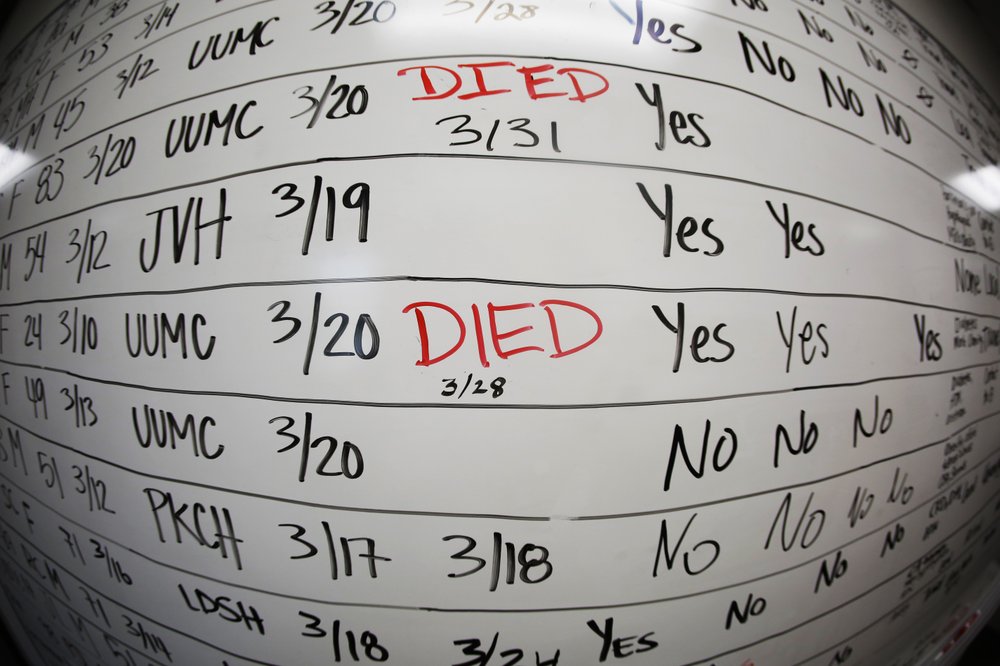
    Marshaled against a virus that has sickened at least 2.6 million in the U.S., killed more than 126,000 people and cost tens of millions of jobs and $3 trillion in federal rescue money, state and local government health workers on the ground are sometimes paid so little, they qualify for public aid.

    They track the coronavirus on paper records shared via fax. Working seven-day weeks for months on end, they fear pay freezes, public backlash and even losing their jobs.

    Since 2010, spending for state public health departments has dropped by 16% per capita and spending for local health departments has fallen by 18%, according to a KHN and Associated Press analysis of government spending on public health. At least 38,000 state and local public health jobs have disappeared since the 2008 recession, leaving a skeletal workforce for what was once viewed as one of the world’s top public health systems.
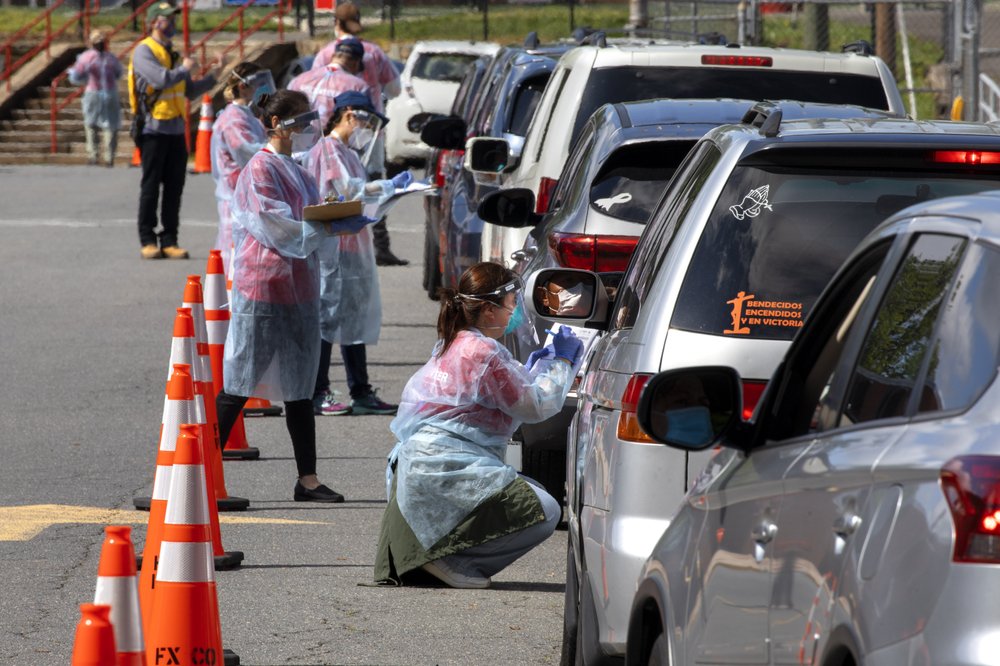
    KHN, also known as Kaiser Health News, and AP interviewed more than 150 public health workers, policymakers and experts, analyzed spending records from hundreds of state and local health departments, and surveyed statehouses. On every level, the investigation found, the system is underfunded and under threat, unable to protect the nation’s health.

    Robert Redfield, the director of the Centers for Disease Control and Prevention, said in an interview in April that his “biggest regret” was “that our nation failed over decades to effectively invest in public health.”

    So when this outbreak arrived — and when, according to public health experts, the federal government bungled its response — hollowed-out state and local health departments were ill-equipped to step into the breach.

    Over time, their work had received so little support that they found themselves without direction, disrespected, ignored, even vilified. The desperate struggle against COVID-19 became increasingly politicized and grew more difficult.
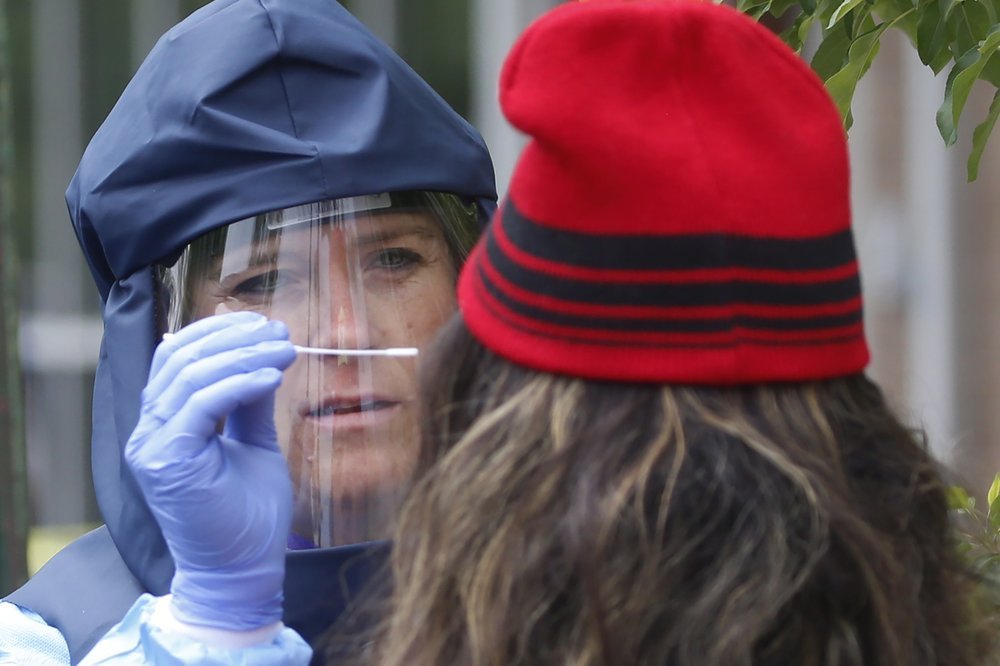
    States, cities and counties in dire straits have begun laying off and furloughing their limited staff, and even more devastation looms, as states reopen and cases surge. Historically, even when money pours in following crises such as Zika and H1N1, it disappears after the emergency subsides. Officials fear the same thing is happening now.

    “We don’t say to the fire department, ‘Oh, I’m sorry. There were no fires last year, so we’re going to take 30% of your budget away.’ That would be crazy, right?” said Dr. Gianfranco Pezzino, the health officer in Shawnee County, Kansas. “But we do that with public health, day in and day out.”

    Ohio’s Toledo-Lucas County Health Department spent $17 million, or $40 per person, in 2017.

    Jennifer Gottschalk, 42, works for the county as an environmental health supervisor. When the coronavirus struck, the county’s department was so short-staffed that her duties included overseeing campground and pool inspections, rodent control and sewage programs, while also supervising outbreak preparedness for a community of more than 425,000 people.

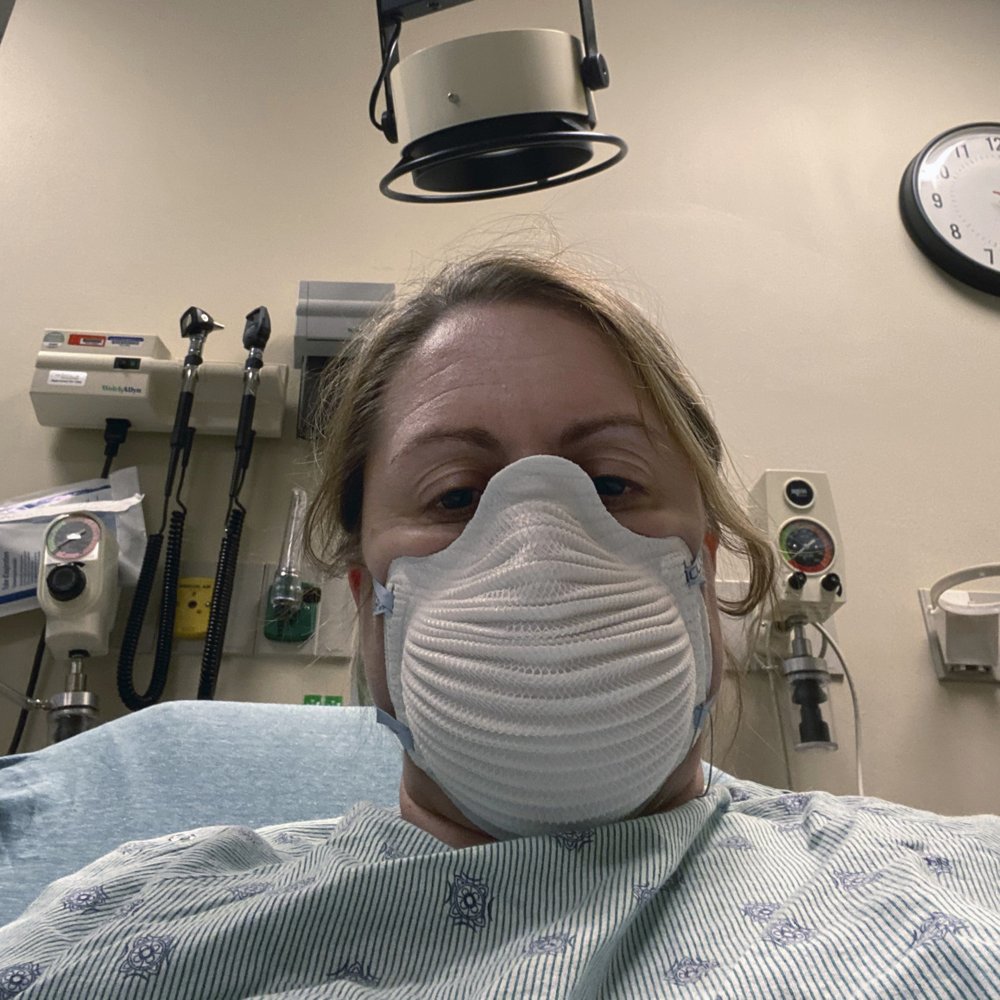
    When Gottschalk and five colleagues fell ill with COVID-19, she found herself fielding calls about a COVID-19 case from her hospital bed, then working through her home isolation. She only stopped when her coughing was too severe to talk on calls.

    “You have to do what you have to do to get the job done,” Gottschalk said.

    Now, after months of working with hardly a day off, she says the job is wearing on her. So many lab reports on coronavirus cases came in, the office fax machine broke. She faces a backlash from the community over coronavirus restrictions and there are countless angry phone calls.

    Things could get worse; possible county budget cuts loom.

    But Toledo-Lucas is no outlier. Public health ranks low on the nation’s financial priority list. Nearly two-thirds of Americans live in counties that spend more than twice as much on policing as they spend on nonhospital health care, which includes public health.

    More than three-quarters of Americans live in states that spend less than $100 per person annually on public health. Spending ranges from $32 in Louisiana to $263 in Delaware, according to data provided to KHN and AP by the State Health Expenditure Dataset project.

    That money represents less than 1.5% of most states’ total spending, with half of it passed down to local health departments.

    The share of spending devoted to public health belies its multidimensional role. Agencies are legally bound to provide a broad range of services, from vaccinations and restaurant inspections to protection against infectious disease. Distinct from the medical care system geared toward individuals, the public health system focuses on the health of communities at large.

    “Public health loves to say: When we do our job, nothing happens. But that’s not really a great badge,” said Scott Becker, chief executive officer of the Association of Public Health Laboratories. “We test 97% of America’s babies for metabolic or other disorders. We do the water testing. You like to swim in the lake and you don’t like poop in there? Think of us.”

    But the public doesn’t see the disasters they thwart. And it’s easy to neglect the invisible.
    A HISTORY OF DEPRIVATION

    The local health department was a well-known place in the 1950s and 1960s, when Harris Pastides, president emeritus of the University of South Carolina, was growing up in New York City.

    “My mom took me for my vaccines. We would get our injections there for free. We would get our polio sugar cubes there for free,” said Pastides, an epidemiologist. “In those days, the health departments had a highly visible role in disease prevention.”

    The United States’ decentralized public health system, which matches federal funding and expertise with local funding, knowledge and delivery, was long the envy of the world, said Saad Omer, director of the Yale Institute for Global Health.

    “A lot of what we’re seeing right now could be traced back to the chronic funding shortages,” Omer said. “The way we starve our public health system, the way we have tried to do public health outcomes on the cheap in this country.”

    In Scott County, Indiana, when preparedness coordinator Patti Hall began working at the health department 34 years ago, it ran a children’s clinic and a home health agency with several nurses and aides. But over time, the children’s clinic lost funding and closed. Medicare changes paved the way for private services to replace the home health agency. Department staff dwindled in the 1990s and early 2000s. The county was severely outgunned when rampant opioid use and needle sharing sparked an outbreak of HIV in 2015.

    Besides just five full-time and one part-time county public health positions, there was only one doctor in the outbreak’s epicenter of Austin. Indiana’s then-Gov. Mike Pence, now leading the nation’s coronavirus response as vice president, waited 29 days after the outbreak was announced to sign an executive order allowing syringe exchanges. At the time, a state official said that only five people from agencies across Indiana were available to help with HIV testing in the county.

    The HIV outbreak exploded into the worst ever to hit rural America, infecting more than 230 people.

    At times, the federal government has promised to support local public health efforts, to help prevent similar calamities. But those promises were ephemeral.

    Two large sources of money established after Sept. 11, 2001 — the Public Health Emergency Preparedness program and the Hospital Preparedness Program — were gradually chipped away.

    The Affordable Care Act established the Prevention and Public Health Fund, which was supposed to reach $2 billion annually by 2015. The Obama administration and Congress raided it to pay for other priorities, including a payroll tax cut. The Trump administration is pushing to repeal the ACA, which would eliminate the fund, said Carolyn Mullen, senior vice president of government affairs and public relations at the Association of State and Territorial Health Officials.

    Former Iowa Sen. Tom Harkin, a Democrat who championed the fund, said he was furious when the Obama White House took billions from it, breaking what he said was an agreement.

    “I haven’t spoken to Barack Obama since,” Harkin said.

    If the fund had remained untouched, an additional $12.4 billion would eventually have flowed to local and state health departments.

    But local and state leaders also did not prioritize public health over the years.

    In Florida, for example, 2% of state spending goes to public health. Spending by local health departments in the state fell 39%, from a high of $57 in inflation-adjusted dollars per person in the late 1990s to $35 per person last year.

    In North Carolina, Wake County’s public health workforce dropped from 882 in 2007 to 614 a decade later, even as the population grew by 30%.

    In Detroit, the health department had 700 employees in 2009, then was effectively disbanded during the city’s bankruptcy proceedings. It’s been built back up, but today still has only 200 workers for 670,000 residents.

    Many departments rely heavily on disease-specific grant funding, creating unstable and temporary positions. The CDC’s core budget, some of which goes to state and local health departments, has essentially remained flat for a decade. Federal money currently accounts for 27% of local public health spending.

    Years of such financial pressure increasingly pushed workers in this predominantly female workforce toward retirement or the private sector and kept potential new hires away.

    More than a fifth of public health workers in local or regional departments outside big cities earned $35,000 or less a year in 2017, as did 9% in big city departments, according to research by the Association of State and Territorial Health Officials and the de Beaumont Foundation.

    Even before the pandemic, nearly half of public health workers planned to retire or leave their organizations for other reasons in the next five years. Poor pay topped the list of reasons.

    Armed with a freshly minted bachelor’s degree, Julia Crittendon took a job two years ago as a disease intervention specialist with Kentucky’s state health department. She spent her days gathering detailed information about people’s sexual partners to fight the spread of HIV and syphilis. She tracked down phone numbers and drove hours to pick up reluctant clients.

    The mother of three loved the work, but made so little money that she qualified for Medicaid, the federal-state insurance program for America’s poorest. Seeing no opportunity to advance, she left.

    “We’re like the redheaded stepchildren, the forgotten ones,” said Crittendon, 46.

    Such low pay is endemic, with some employees qualifying for the nutrition program for new moms and babies that they administer. People with the training for many public health jobs, which can include a bachelor’s or master’s degree, can make much more money in the private health care sector, robbing the public departments of promising recruits.

    Dr. Tom Frieden, a former CDC director, said the agency “intentionally underpaid people” in a training program that sent early-career professionals to state and local public health departments to build the workforce.

    “If we paid them at the very lowest level at the federal scale,” he said in an interview, “they would have to take a 10-20% pay cut to continue on at the local health department.”

    As low pay sapped the workforce, budget cuts sapped services.

    In Alaska, the Division of Public Health’s spending dropped 9% from 2014 to 2018 and staffing fell by 82 positions in a decade to 426. Tim Struna, chief of public health nursing in Alaska, said declines in oil prices in the mid-2010s led the state to make cuts to public health nursing services. They eliminated well-child exams for children over 6, scaled back searches for the partners of people with certain sexually transmitted infections and limited reproductive health services to people 29 and younger.
    A DECIMATED SURGE CAPACITY

    As the public health director for the Kentucky River District Health Department in rural Appalachia, Scott Lockard is battling the pandemic with 3G cell service, paper records and one-third of the employees the department had 20 years ago.

    He redeployed his nurse administrator to work round-the-clock on contact tracing, alongside the department’s school nurse and the tuberculosis and breastfeeding coordinator. His home health nurse, who typically visits older patients, now works on preparedness plans. But residents aren’t making it easy on them.

    “They’re not wearing masks, and they’re throwing social distancing to the wind,” Lockard said in mid-June, as cases surged. “We’re paying for it.”

    Even with more staff since the HIV outbreak, Indiana’s Scott County Health Department employees worked evenings, weekends and holidays to deal with the pandemic, including outbreaks at a food packing company and a label manufacturer. Indiana spends $37 a person on public health.

    “When you get home, the phone never stops, the emails and texts never stop,” said Hall, the preparedness coordinator.

    All the while, she and her colleagues worry about keeping HIV under control and preventing drug overdoses from rising. Other health problems don’t just disappear because there is a pandemic.

    “We’ve been used to being able to `MacGyver’ everything on a normal day, and this is not a normal day,” said Amanda Mehl, the public health administrator for Boone County, Illinois, citing a TV show.

    Pezzino, whose department in Kansas serves Topeka and Shawnee County, said he had been trying to hire an epidemiologist, who would study, track and analyze data on health issues, since he came to the department 14 years ago. Finally, less than three years ago, they hired one. She just left, and he thinks it will be nearly impossible to find another.

    While epidemiologists are nearly universal in departments serving large populations, hardly any departments serving smaller populations have one. Only 28% of local health departments have an epidemiologist or statistician.

    Strapped departments are now forced to spend money on contact tracers, masks and gloves to keep their workers safe and to do basic outreach.

    Melanie Hutton, administrator for the Cooper County Public Health Center in rural Missouri, pointed out the local ambulance department got $18,000, and the fire and police departments got masks to fight COVID-19.

    “For us, not a nickel, not a face mask,” she said. “We got (5) gallons of homemade hand sanitizer made by the prisoners.”

    Public health workers are leaving in droves. At least 34 state and local public health leaders have announced their resignation, retired or been fired in 17 states since April, a KHN/AP review found. Others face threats and armed demonstrators.

    Ohio’s Gottschalk said the backlash has been overwhelming.

    “Being yelled at by residents for almost two hours straight last week on regulations I cannot control left me feeling completely burned out,” she said in mid-June.

    Many are putting their health at risk. In Prince George’s County, Maryland, public health worker Chantee Mack died after, family and co-workers believe, she and several colleagues contracted the disease in the office.

    A DIFFICULT ROAD AHEAD

    Pence, in an op-ed in The Wall Street Journal on June 16, said the public health system was “far stronger” than it was when coronavirus hit.

    It’s true that the federal government this year has allocated billions for public health in response to the pandemic, according to the Association of State and Territorial Health Officials. That includes more than $13 billion to state and local health departments, for activities including contact tracing, infection control and technology upgrades.

    A KHN/AP review found that some state and local governments are also pledging more money for public health. Alabama’s budget for next year, for example, includes $35 million more for public health than it did this year.

    But overall, spending is about to be slashed again as the boom-bust cycle continues.

    In most states, the new budget year begins July 1, and furloughs, layoffs and pay freezes have already begun in some places. Tax revenues evaporated during lockdowns, all but ensuring there will be more. At least 14 states have already cut health department budgets or positions or were actively considering such cuts in June, according to a KHN/AP review.

    Since the pandemic began, Michigan temporarily cut most of its state health workers’ hours by one-fifth. Pennsylvania required more than 65 of its 1,200 public health workers to go on temporary leave, and others lost their jobs. Knox County, Tennessee, furloughed 26 out of 260 workers for eight weeks.

    Frieden, formerly of the CDC, said it’s “stunning” that the U.S. is furloughing public health workers amid a pandemic. The country should demand the resources for public health, he said, just the way it does for the military.

    “This is about protecting Americans,” Frieden said.


    By LAUREN WEBER, LAURA UNGAR, MICHELLE R. SMITH, HANNAH RECHT and ANNA MARIA BARRY-JESTER
  • With a pen stroke, Mississippi drops Confederate-themed flag

    With a pen stroke, Mississippi drops Confederate-themed flag

    JACKSON, Miss. (AP) — With a stroke of the governor’s pen, Mississippi is retiring the last state flag in the U.S. with the Confederate battle emblem — a symbol that’s widely condemned as racist.

    Republican Gov. Tate Reeves on Tuesday signed the historic bill that takes the 126-year-old state flag out of law, immediately removing official status for the banner that has been a source of division for generations.

    “This is not a political moment to me but a solemn occasion to lead our Mississippi family to come together, to be reconciled, and to move on,” Reeves said in a statement. “We are a resilient people defined by our hospitality. We are a people of great faith. Now, more than ever, we must lean on that faith, put our divisions behind us, and unite for a greater good.”

    Mississippi has faced increasing pressure to change its flag since protests against racial injustice have focused attention on Confederate symbols.

    A broad coalition of legislators on Sunday passed the landmark legislation to change the flag, capping a weekend of emotional debate and decades of effort by Black lawmakers and others who see the rebel emblem as a symbol of hatred.

    The Confederate battle emblem has a red field topped by a blue X with 13 white stars. White supremacist legislators put it on the upper-left corner of the Mississippi flag in 1894, as white people were squelching political power that African Americans had gained after the Civil War.

    Critics have said for generations that it’s wrong for a state where 38% of the people are Black to have a flag marked by the Confederacy, particularly since the Ku Klux Klan and other hate groups have used the symbol to promote racist agendas.

    Mississippi voters chose to keep the flag in a 2001 statewide election, with supporters saying they saw it as a symbol of Southern heritage. But since then, a growing number of cities and all the state’s public universities have abandoned it.

    Several Black legislators, and a few white ones, kept pushing for years to change it. After a white gunman who had posed with the Confederate flag killed Black worshipers at a South Carolina church in 2015, Mississippi’s Republican speaker of the House, Philip Gunn, said his religious faith compelled him to say that Mississippi must purge the symbol from its flag.

    The issue was still broadly considered too volatile for legislators to touch, until the police custody death of an African American man in Minneapolis, George Floyd, set off weeks of sustained protests against racial injustice, followed by calls to take down Confederate symbols.

    A groundswell of young activists, college athletes and leaders from business, religion, education and sports called on Mississippi to make this change, finally providing the momentum for legislators to vote.

    Before the governor signed the bill Tuesday, state employees raised and lowered several of the flags on a pole outside the Capitol. The secretary of state’s office sells flags for $20 each. A spokeswoman for that office, Kendra James, said Tuesday there has been a recent increase in requests from people wanting to buy one.

    During news conferences in recent weeks, Reeves had repeatedly refused to say whether he thought the Confederate-themed flag properly represents present-day Mississippi, sticking to a position he ran on last year, when he promised people that if the flag design was going to be reconsidered, it would be done in another statewide election.

    Now, a commission will design a new flag, one that cannot include the Confederate symbol and must have the words “In God We Trust.” Voters will be asked to approve the new design in the Nov. 3 election. If they reject it, the commission will draft a different design using the same guidelines, to be sent to voters later.

    Said Reeves in signing over the flag’s demise, “We are all Mississippians and we must all come together. What better way to do that than include “In God We Trust” on our new state banner.”

    He added: “The people of Mississippi, black and white, and young and old, can be proud of a banner that puts our faith front and center. We can unite under it. We can move forward —together.”

  • USDA: Pilgrim’s Pride Corporation Recalls Nearly 60,000 Pounds Of Chicken Nuggets due to Possible Foreign Matter Contamination

    USDA: Pilgrim’s Pride Corporation Recalls Nearly 60,000 Pounds Of Chicken Nuggets due to Possible Foreign Matter Contamination

    Pilgrim’s Pride Corporation, a Waco, Texas establishment, is recalling approximately 59,800 pounds of fully cooked chicken breast nugget products

    These products may be contaminated with extraneous materials, specifically flexible rubber material, the U.S. Department of Agriculture’s Food Safety and Inspection Service (FSIS) announced today. The frozen ready-to-eat (RTE) chicken breast nugget items were produced on May 6, 2020. The following products are subject to recall :

    • 4-lb. plastic bag packages containing “Pilgrim’s FULLY COOKED CHICKEN BREAST NUGGETS,” with a Best-By date of 06 MAY 2021 and lot code of 0127 printed on the retail package. Product cases contain lot codes 0127105009, 0127105010, 0127105011, 0127105012, 0127105013, 0127105014, 0127105015, or 0127105016 printed on the box.

    package label

    The products subject to recall bear establishment number “P-20728” printed on individual retail packages as well as product cases. These items were shipped to retail locations in Arizona, Idaho, Oregon, and Texas.

    The problem was discovered after the firm received a consumer complaint reporting rubber pieces in the chicken breast nuggets product.

    There have been no confirmed reports of adverse reactions due to consumption of these products. Anyone concerned about an injury or illness should contact a healthcare provider.

    FSIS is concerned that some product may be in consumers’ freezers. Consumers who have purchased these products are urged not to consume them. These products should be thrown away or returned to the place of purchase.

    FSIS routinely conducts recall effectiveness checks to verify recalling firms notify their customers of the recall and that steps are taken to make certain that the product is no longer available to consumers.

    Consumers with questions about the recall can contact Ed Tyrrell, Consumer Relations Manager for Pilgrim’s Pride Corporation, at (800) 321-1470. Members of the media with questions about the recall can contact Nikki Richardson, Director of Communications for Pilgrim’s Pride Corporation, at (970) 506-8028.

    Consumers with food safety questions can call the toll-free USDA Meat and Poultry Hotline at 1-888-MPHotline (1-888-674-6854) or live chat via Ask USDA from 10 a.m. to 6 p.m. (Eastern Time) Monday through Friday. Consumers can also browse food safety messages at Ask USDA or send a question via email to MPHotline@usda.gov. For consumers that need to report a problem with a meat, poultry, or egg product, the online Electronic Consumer Complaint Monitoring System can be accessed 24 hours a day at https://foodcomplaint.fsis.usda.gov/eCCF/