Author: Imported Author 1852151

  • “Mississippi Girl” Faith Hill Demands Change In State Flag

    “Mississippi Girl” Faith Hill Demands Change In State Flag

    “It’s time to change” says the five-time Grammy winning Mississippi native.

    Country singer Faith Hill made the announcement in a series of tweets yesterday amidst the state legislature’s debate over the current Mississippi flag.

    https://twitter.com/FaithHill/status/1276267799875399680

    https://twitter.com/FaithHill/status/1276267801095942146

    https://twitter.com/FaithHill/status/1276267803373383682

    The Mississippi legislative session was scheduled to expire today, June 26th.  However legislators can vote to extend a session if needed.

  • Natchez Municipal Runoff Election Results

    Natchez Municipal Runoff Election Results

    Below are the Live Results of the Natchez Mississippi Municipal Runoff Election. These results are unofficial and do not include absentee ballots or affidavits.[vc_single_image image=”1386″ img_size=”large” alignment=”center” onclick=”custom_link” img_link_target=”_blank” link=”https://www.natchezford.com/”][vc_single_image image=”1387″ img_size=”large” alignment=”center” onclick=”custom_link” img_link_target=”_blank” link=”https://www.crye-leike.com/natchez/ms”][vc_single_image image=”1388″ img_size=”large” alignment=”center” onclick=”custom_link” img_link_target=”_blank” link=”https://www.unitedms.bank/”][vc_single_image image=”1389″ img_size=”large” alignment=”center” onclick=”custom_link” img_link_target=”_blank” link=”https://www.themarketsonline.com/”]

  • Powerful earthquake shakes Southern, Central Mexico

    Powerful earthquake shakes Southern, Central Mexico

    The U.S. Geologic Survey said the magnitude 7.4 quake hit at 10:29 a.m.

    MEXICO CITY (AP) — A powerful earthquake centered near the resort of Huatulco in southern Mexico swayed buildings Tuesday in Mexico City and sent thousands into the streets.

    Seismic alarms sounded midmorning with enough warning for residents to exit buildings. Power was knocked out to some areas, but there were no immediately reports of damage or injuries.

    Helicopters flew over downtown Mexico City and police patrols sounded their sirens.

    The U.S. Geologic Survey said the magnitude 7.4 quake hit at 10:29 a.m. (11:29 a.m. Eastern) along Mexico’s southern Pacific coast at a depth of 16 miles (26 km). The epicenter was 7 miles (12 km) south-southwest of Santa Maria Zapotitlan in Oaxaca state

    It was felt in Guatemala and throughout south and central Mexico.

    In Huatulco, a laid-back beach destination known for surfing and small protected coves, the earthquake knocked goods off shelves and some rubble from buildings.

    Mari González of the Princess Mayev hotel in Huatulco said staff and guests were able to evacuate the building before the quake, but that 45 minutes after the initial quake they were still outside as strong aftershocks continued.

    “It was strong, very strong,” she said.

    González said there was some visible broken glass and mirrors, but no major damage. The staff was waiting for the aftershocks to dissipate before fully evaluating the property.

    Local news media reported damage to some buildings in the state capital, Oaxaca city. State officials said they were looking for damage.

    The USGS estimated that some 2 million people felt strong or moderate shaking and another 49 million felt weak or light shaking.

  • Music Memorabilia from Elvis Presley, Kurt Cobain, Prince and others sells for big bucks at Julien’s Auctions

    Music Memorabilia from Elvis Presley, Kurt Cobain, Prince and others sells for big bucks at Julien’s Auctions

    Elvis’ macrame belt sold for nearly $300,000

    It was a big weekend at Julien’s Auctions in Beverly Hills, California.  The “record setting” auction house

    specializes in sales of iconic artifacts and notable collections including Marilyn Monroe, John Lennon, Ringo Starr, Lady Gaga, Banksy, Cher, Michael Jackson, U2, Barbra Streisand, Les Paul, Neil Young, Elvis Presley, Frank Sinatra, Jimi Hendrix and many more.

    Julien’s hosted a “Music Icons” auction over the weekend, and some high-ticket items went on the auction block.  The 1959 D-18E Martin guitar Kurt Cobain played sold for $6,010,000 to the founder of Rode microphones.  A macrame belt worn on stage by Elvis Presley sold for just under $300,000.  The dress Madonna wore in the “Vogue” music video sold for $179,000.  Check out their Facebook page to see what else sold at Julien’s over the weekend.

    Kurt Cobain’s guitar set five new records:

         World’s Most Expensive Guitar
         World’s Most Expensive Acoustic Guitar
         World’s Most Expensive Martin Guitar
         World’s Most Expensive Piece of Memorabilia
         World’s Most Expensive Nirvana Memorabilia


  • NCAA: No championship games in Mississippi under current state flag

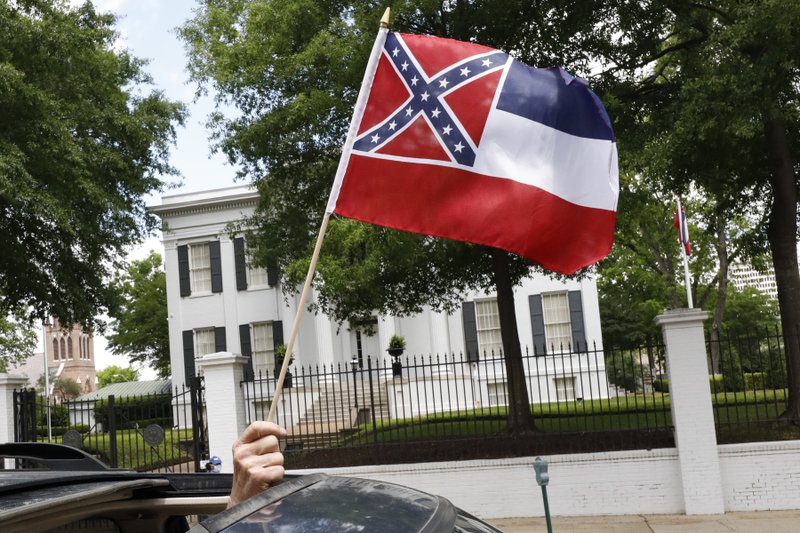
    NCAA: No championship games in Mississippi under current state flag

    Mississippi is the only state currently affected by the policy.

    The NCAA is expanding its policy banning states with prominent Confederate symbols from hosting its championship events.

    The current ban, in place since 2001, prevents states from hosting what the NCAA calls predetermined championship sites, such as men’s basketball tournament games.

    This means no NCAA Regional baseball games can be held inside the state of Mississippi moving forward — unless Mississippi changes its state flag.

    The expanded policy means that even when sites of NCAA events are determined by performance, as they are in sports such as baseball, women’s basketball and lacrosse, Mississippi schools will not be permitted to host.

  • Is it safe to stay in hotels and motels as reopenings get underway?

    Is it safe to stay in hotels and motels as reopenings get underway?

    To reassure potential guests, many hotels are sharing the changes they’re making on their websites.

    It depends on the precautions both you and the hotel take. It’s best to call ahead to see how the place you’re considering is working to minimize the risk of COVID-19. The U.S. Centers for Disease Control and Prevention suggests asking if the staff is wearing face coverings, for example, and whether cleaning practices have been stepped up.

    New practices may include adding hand sanitizer stations in lobbies, disinfecting surfaces like elevator buttons more frequently and removing extra items in rooms, such as pens and paper. Breakfast buffets may also be replaced with prepackaged meals.

    Once at a hotel, Dr. Albert Ko at the Yale School of Public Health says guests should continue to follow social distancing guidelines, since the virus spreads mainly from person-to-person contact. Dine outside if possible, he says, and don’t crowd into elevators.

    The CDC also suggests taking the stairs when possible and minimizing the use of common areas.

    __

    The AP is answering your questions about the coronavirus in this series. Submit them at: FactCheck@AP.org.

  • The Historical Significance Of Juneteenth

    The Historical Significance Of Juneteenth

    Juneteenth commemorates when the last enslaved African Americans learned they were free 155 years ago.

    Now, with support growing for the racial justice movement, 2020 may be remembered as the year the holiday reached a new level of recognition.

    While the Emancipation Proclamation freed slaves in the South in 1863, it wasn’t enforced in many places until after the end of the Civil War two years later. Confederate soldiers surrendered in April 1865, but word didn’t reach the last enslaved black people until June 19, when Union soldiers brought the news of freedom to Galveston, Texas.

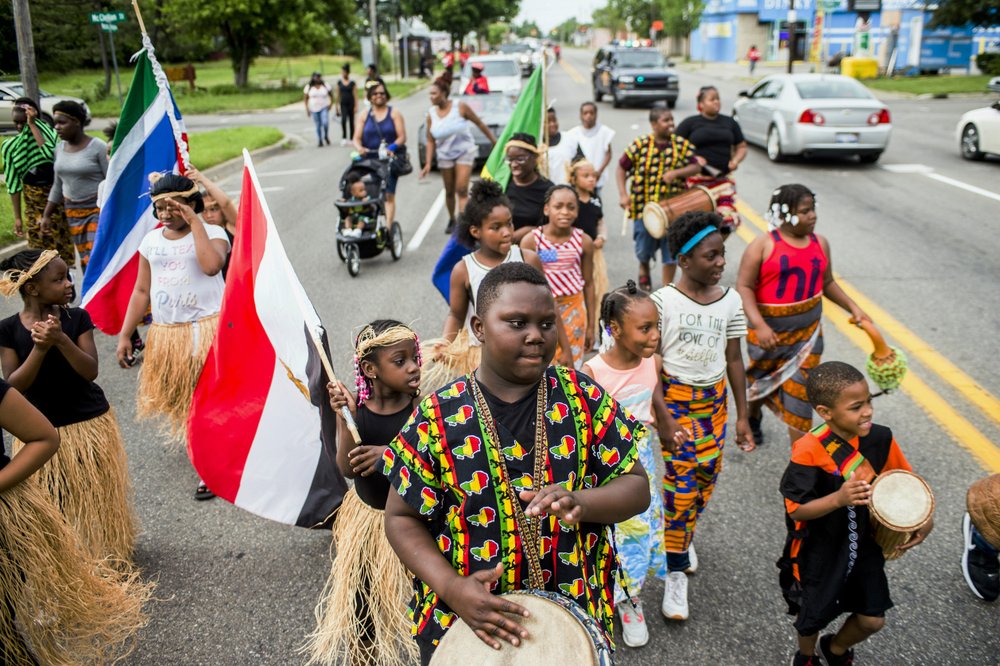
     Celebrations have typically included parades, barbecues, concerts and readings of the Emancipation Proclamation. But after massive demonstrations over George Floyd’s death at the hands of Minneapolis police, there has been a seismic shift to further elevate black voices. That desire is being felt as states and cities move to make Juneteenth an official paid holiday.

    Here’s a look at the holiday and its history:

    BEGINNINGS

    When Union troops arrived in Galveston on June 19, 1865, Maj. Gen. Gordon Granger delivered General Order No. 3, which said: “The people of Texas are informed that, in accordance with a proclamation from the Executive of the United States, all slaves are free. This involves an absolute equality of personal rights and rights of property between former masters and slaves.”

    The next year, former slaves started celebrating Juneteenth in Galveston, and it eventually reached other states.

    Early Juneteenth celebrations were mostly cookouts or barbecues, said Robert Widell Jr., a professor of African American history at the University of Rhode Island and author of “Birmingham and the Long Black Freedom Struggle.” They were typically large, joyous gatherings as former enslaved people prioritized trying to reunite with family.

    “It seems fitting that this celebration to commemorate emancipation and commemorate freedom would have that element of a family reunion,” Widell said.

    To simply hold a gathering was hugely significant after the Civil War. Former Confederate states used restrictive measures, known as the “black codes,” to keep the dynamics of slavery in place, Widell said.

    “Just claiming that public space is indicative of efforts to claim freedom for yourself and to define the terms of what that freedom is going to be and not have somebody else define what your freedom is going to look like,” he said.

    WHAT DOES JUNETEENTH MEAN?

    The term Juneteenth is a blend of the words June and 19th. The holiday also has been called Juneteenth Independence Day or Freedom Day.

    Cliff Robinson, who runs the Juneteenth.com website that tracks annual celebrations, said there will be some kind of event in nearly every major U.S. city but because of the coronavirus pandemic, many will be virtual.

    AN OFFICIAL HOLIDAY

    Juneteenth celebrations eventually stretched beyond Texas, which was the first state to make it a holiday in 1980, as black people continued the tradition after moving out of state or overseas.

    Most states and the District of Columbia recognize Juneteenth as a state holiday or day of recognition, like Flag Day. Countries like South Korea, Ghana, Israel, Taiwan, France, and the U.S. territory of Guam also have held Juneteenth celebrations.

    Some states, cities and companies now want to go beyond simply acknowledging the day. In Virginia, once home to the capital of the Confederacy, Gov. Ralph Northam moved to make Juneteenth an official holiday, giving executive branch employees a paid day off Friday and proposing legislation to make it a permanent state holiday.

    New York Gov. Andrew Cuomo similarly designated Juneteenth a paid holiday for state employees and vowed to push legislation next year making it a permanent holiday.

    Philadelphia also made Juneteenth a holiday, while Portland, Oregon, and Chicago are considering similar action.

    Companies like Nike and Target also took the step. Robinson said it’s hard for people to ignore Juneteenth when giant retailers are bringing it into the mainstream.

    “Besides being a wonderful thing, it was just something completely out of the box,” Robinson said. “We’ve been focused on getting a governmental blessing as a holiday. … It never crossed my mind that the corporate world would be the one to make it that way.”

    NEW URGENCY

    Robinson, who created Juneteenth.com in 1996, thought it would be useful to have an online hub where people could share details about Juneteenth events or ask advice about staging their own. He also began building a network of local leaders and academics who could give talks on the holiday.

    Robinson has received a noticeable uptick in calls and emails asking about the history of Juneteenth and ways to honor it. Many inquiries have come from small businesses that aren’t black owned and want a speaker for a virtual celebration.

    “The requests we’ve gotten is for folks who want to know more about the history, who want someone to tap into a video session and give some background on what it means this year as opposed to years past,” Robinson said.

    Juneteenth is a time of reflection and for black people to take pride in what they and their ancestors have overcome, Robinson said. This year’s celebrations will “without a doubt” be different.

    “I think there’ll be more of an urgency and a sense of responsibility to celebrate and to express your feelings,” he said.

    Typically, there would be a slew of parades and concerts around the country. But amid the COVID-19 pandemic, most events happening Thursday through Saturday will either be scaled-down, socially distanced versions or completely digital.

    Other groups plan to hold peaceful protests, voter registration drives or black-owned business crawls.

    ___

    Terry Tang reported from Phoenix and is a member of The Associated Press

  • This Father’s Day, dads have new respect for duties at home

    This Father’s Day, dads have new respect for duties at home

    Dads are spending more time taking care of children under 6 than they did before the coronavirus pandemic started.

    NEW YORK (AP) — Rahul Gandhi’s twin girls were born dangerously premature, with a slim chance they would have normal lives after barely surviving birth eight years ago.

    “They eventually came home and beat those odds,” said the 40-year-old father, who treasures the time he’s had to discover new facets of his young fighters while working from home in Brooklyn during the coronavirus pandemic.

    Like millions of dads around the globe, Gandhi has taken on more responsibilities at home during lockdown. There have been challenges with distance learning, for one, which have revealed important lessons about his girls.

    “I learned more about their different personalities in school,” he said. “While one is quiet and reserved, which is the opposite at home, the other is engaged and raises her hand to participate non-stop, also the reverse at home. I saw their evolving interests, whether arts and sciences or math, and how much more they support each other than I thought.”

    Other fathers, including those who already were entrenched in housework, child care and meal prep, have developed a newfound respect for the “second shift,” a term coined in the 1980s after research showed that women still shouldered most duties at home despite working outside jobs.

    “I’ve almost perfected my one-trick repertoire of girls’ hairstyles that is the pony tail,” joked 46-year-old Anthony Bianco, who became the primary caregiver in Brisbane, Australia, to two daughters, ages 6 and 9, as his wife works as a community nurse.

    He lost a job last October and has been home since another fell through in February, before pandemic chaos ensued.

    “I’ve been the primary caregiver, including doing most of the remote learning,” he said. “It’s made us closer. I’ve also realized that people take teachers way too much for granted.”

    Pediatrician Craig Garfield studies the roles of fathers in their children’s lives and is a professor of pediatrics and medical social sciences at Northwestern University in Chicago.

    “The pandemic has reshaped the way fathers are involved with their families and children,” he said via email. “Whether it’s play, reading a book or getting down on the floor and spending time with their kids, this is an unprecedented opportunity for fathers to be really involved.”

    According to one preliminary study, 45% of fathers said they have spent more time taking care of children under 6 than they did before the coronavirus scare sent them home.

    The researchers, Daniel L. Carlson of the University of Utah, Richard Petts of Ball State University and Joanna R. Pepin of the University of Texas-Austin, surveyed 1,060 U.S. parents in mixed-gender marriages in late April to see how divisions of housework and child care may have changed since the beginning of the pandemic.

    Stay-at-home orders were issued and schools, child care centers and non-essential businesses were shuttered, putting a strain on families and demolishing barriers between work and home. Millions of people lost their jobs.

    The preliminary study found that 43% of fathers reported pitching in more with care of older children, and 42% reported an overall increase in housework time. The percentages of mothers who said their partners increased their time doing housework and caring for children were markedly lower, from 20 percent to 34 percent, according to the study.

    “The truth probably lies somewhere in the middle,” Garfield said.

    There was no such disagreement on what mothers have been doing. More than one-quarter of both fathers and mothers reported an increase in the housework and child care that mothers perform.

    “I think of single parents with two kids and a job that obligates them to show up in person. What does one do? In the beginning, it felt like my wife and I were making life-changing decisions on a nearly daily basis,” said Zach Kubin, who left New York City for Connecticut in March with his family.

    Kubin, 37, and his wife have two children, ages 3 and a year and a half. Both parents are working full time at home. Before the pandemic, Kubin spent most of his time on the road meeting with clients as head of sales for an advertising tech company.

    “I wouldn’t say I’ve become the ‘primary caregiver,’” Kubin said. “More that I’ve become a `caregiver.’ I make the milk. I change the diapers. I think about what to do for lunch and dinner. Things that I usually would just do on the weekend are now things that require thought every day.”

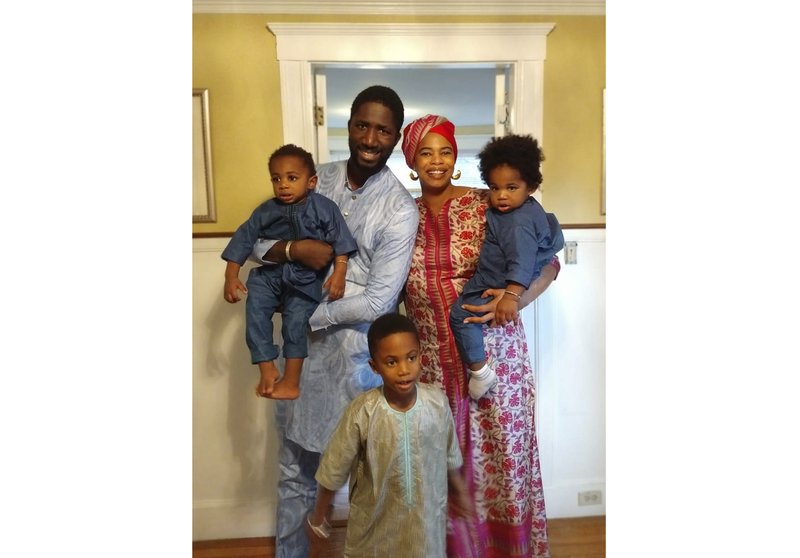
    In Boston, 33-year-old Bouba Dieme is particularly vulnerable to the new virus as he awaits a heart transplant. He and his wife have both been working full time at home since March while pitching in with their three boys, a 5-year-old and year-old twins.

    They’re among the lucky. Their nanny has continued to come during the day throughout lockdown.

    Dieme used to commute about 90 minutes each way to his office at a consortium working on energy efficiency at utility companies. His wife is a director at a Federal Reserve bank.

    “We’ve been tag teaming on the older son’s schooling,” Dieme said. “I feel very grateful. We’re much more appreciative of the little things. I’m very patient by nature, but the kids can really take me to the limits. It was a matter of learning to be more patient and getting more creative with the kids.”

    Two years ago, 34-year-old Tyler Moore left his job as a school administrator in New York to return to the classroom. He’s been teaching remotely. His wife left her job as a pediatric occupational therapist prior to the birth of their third child earlier this year just as the pandemic struck.

    “One of my greatest challenges with working and caring for the girls has been that I don’t feel like I’m doing any one thing well. Not until I tried to balance teaching, parenting and helping around the house did I truly feel the weight of this,” Moore said.

    “Before the quarantine I really struggled to understand some of the frustrations that my wife had with caring for our girls, managing the household and crossing things off her to-do list,” he said. “Her primary frustration is that she never seemed to get as much done as she thought she would and that she never had thinking time or alone time. I totally get that now.”


  • New Solo Version Of Aretha Song About Race, Faith Released

    New Solo Version Of Aretha Song About Race, Faith Released

    “Never Gonna Break My Faith” won best gospel performance at the 50th Grammy Awards in 2008

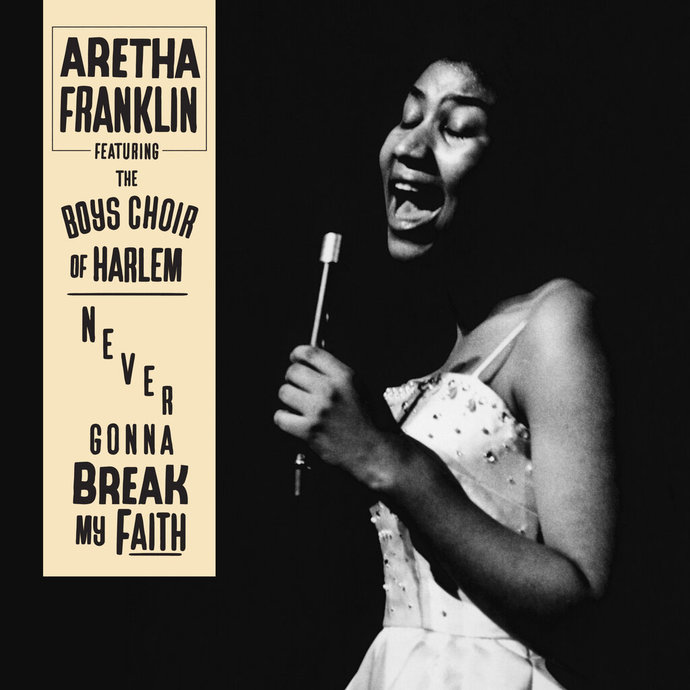
    NEW YORK (AP) — A never-before-heard solo version of the late Aretha Franklin’s riveting and powerful collaboration with Mary J. Blige about faith and race, 2006’s “Never Gonna Break My Faith,” has arrived on Juneteenth.

    Sony’s RCA Records, RCA Inspiration and Legacy Recordings released the song Friday, aligning with the holiday celebrating the day in 1865 that all enslaved black people learned they had been freed from bondage

    “Never Gonna Break My Faith” resonates today, featuring lyrics like: “You can lie to a child with a smiling face/Tell me that color ain’t about a race.”

    “The world is very different now. Change is everywhere and each of us, hopefully, is doing the best he or she can to move forward and make change as positive as possible,” Clive Davis, Sony Music’s chief creative officer and Franklin’s close friend and collaborator, said in a statement.

    Dozens of artists have released new songs detailing the black experience amid the global protests sparked by the recent deaths of George Floyd, Breonna Taylor, Ahmaud Arbery and many others. Some performers have released covers of protest anthems or re-released older songs that resonate with the times, like “Never Gonna Break My Faith.”

    Lyrics from the song include: “My Lord, won’t you help them to understand/That when someone takes the life of an innocent man/Well they’ve never really won, and all they’ve really done/Is set the soul free, where it’s supposed to be.”

    Calling Franklin’s performance “chilling,” Davis said the song’s lyrics and relevance “will shake every fiber in your body.”

    “Everyone should hear this record,” Davis said. “It deserves to be an anthem.”

    “Never Gonna Break My Faith” won best gospel performance at the 50th Grammy Awards in 2008, marking Franklin’s 18th and final Grammy win. She died in 2018 at age 76.

    The song was originally featured in the film “Bobby,” about U.S. Sen. Robert F. Kennedy’s 1968 assassination, and features background vocals from The Boys Choir of Harlem.

    “This solo version has been sitting on my computer for years, and when I heard Clive was making a film on Aretha’s life, I sent this version to him. The world hasn’t heard her full performance and it really needed to be heard,” Grammy-winning singer Bryan Adams, who co-wrote the song, said in a statement. “I’m so glad it’s being released, the world needs this right now.”

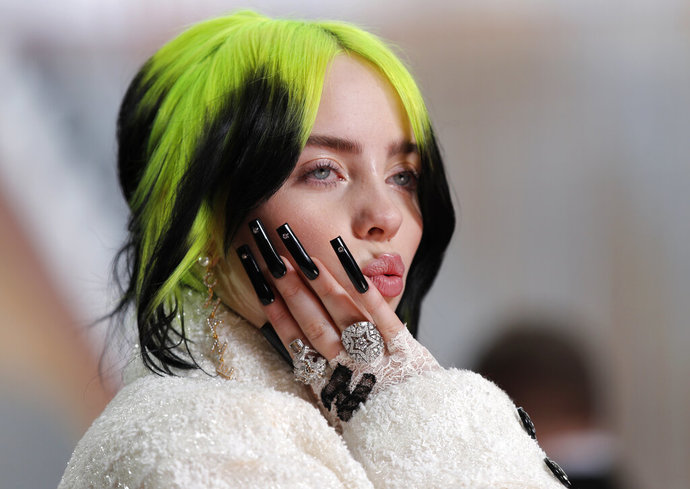
  • Billie Eilish Gets 3-Year Restraining Order For Trespasser

    Billie Eilish Gets 3-Year Restraining Order For Trespasser

    The order can be amended and extended if necessary

    LOS ANGELES (AP) — A judge has extended to three years a restraining order taken out by Billie Eilish against a man who repeatedly appeared at her Los Angeles home.

    In a hearing, Superior Court Judge Dianna Gould-Saltman agreed to the extension of the May 11 order preventing 24-year-old Prenell Rousseau of Farmingville, New York from attempting to contact or coming within 100 yards (91 meters) of the 18-year-old pop star or her parents.

    Eilish, her attorney and her parents phoned in to the hearing, held in a courtroom that was empty except for a reporter from The Associated Press and court staff because of tight coronavirus restrictions. All including the judge wore face masks.

    The order also prohibits Rousseau from assaulting or harassing the family, or from coming near Eilish’s workplaces.

    Neither Rousseau nor an attorney for him appeared at the hearing. Messages left with possible relatives seeking comment from him were not immediately returned.

    Eilish listened by phone but did not speak. Both of her parents answered yes when the judge asked them if they would like to be included in the order.

    Eilish said in court documents that Rousseau showed “erratic behavior” as he appeared at the home she shares with her parents seven times on May 4 and 5 until he was finally arrested for trespassing.

    Her attorney Mark D. Passin asked the judge for a five-year restraining order, but Gould-Saltman settled on three years after hearing that Rousseau had made no attempt to contact Eilish or her family outside of those two days.

    The judge said she was not trying to minimize the threat, and emphasized that the order can be amended and extended if necessary.

    In his first appearance at the home, Rousseau rang the doorbell and asked Eilish’s father through the a surveillance camera whether she lived there, and persisted after he was told he had the wrong house.

    The family called their private security service when he returned later the same evening.

    “While we waited for security, Mr. Rousseau remained on our porch, sat down and began to read a book, while also continuing to engage in a periodic monologue,” Eilish said in court documents. “My father repeatedly asked him to leave, but he refused.”

    The documents say Eilish and her family were frightened by Rousseau, in part because he did not wear a face mask in five of his appearances at the home, and repeatedly touched the doorbell and doorknob without gloves.