Author: Imported Author 1852163

  • Marker approved for Miss-Lou Memorial Day Parade

    Marker approved for Miss-Lou Memorial Day Parade

    NATCHEZ, Miss. – A historical marker honoring the 30th of May Parade, which is now known as the Miss-Lou Memorial Day Parade, has been approved by the Mississippi Department of Archives and History.

    The parade is one of the longest running Memorial Day traditions in the United States.

    “The 30th of May Parade is an important tradition in Natchez. I look forward to the marker dedication ceremony that will fit well with our state’s celebration of all things patriotic for America250,” said Brother Rogers, MDAH historian and secretary-treasurer for the Mississippi Historical Society.

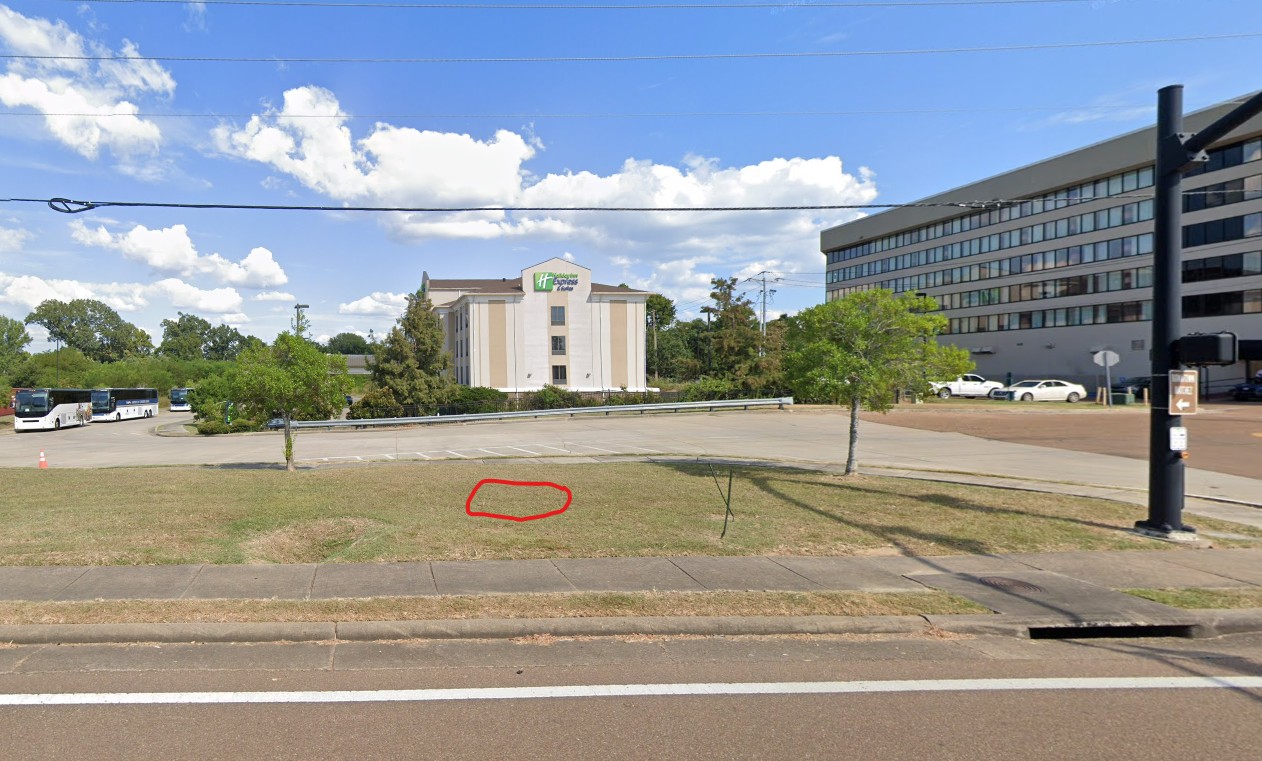
    The marker will be installed at 639 S. Canal St., in front of the Holiday Inn Express and across the street from the Natchez Visitor Center, where the parade participants stop on their way to the Natchez National Cemetery. Its precise location will be the grassy strip on the east side of Canal near the Holiday Inn parking lot. Installation date is set for early 2026.

    “We are so grateful to finally be giving this longstanding tradition it’s due,” said Mayor Dan Gibson. “Even before I became mayor, I have been honored to participate in this annual observance. It is not only one of the very oldest continuing Memorial Day rituals in the country, but it has become an event we as a community look forward to each year, both Black and white. And how fitting that something that began as a tribute to our U.S. Colored Troops has become a regional celebration of all who served in every conflict to keep America the ‘land of the free and the home of the brave’.”

    The Memorial Day parade, which started in the late 1800s, was originally held on May 30. “We named it the Miss-Lou Memorial Day Parade because we wanted to keep Vidalia and Natchez together,” said Laura Ann Jackson, who chairs the Miss-Lou Memorial Day Parade Committee. “We wanted everyone involved to be united.”

    Jackson said that while she has chaired the committee for more than 15 years, she was part of the committee for a number of years before her current position. Also, she added, she has been involved with the parade since the age of five. “When I was five years old, I marched with Army veteran Jimmy Williams of Vidalia,” she said.

    From its earlier days, and before the original Natchez-Vidalia Bridge was built in 1940, parade participants sailed from Vidalia on a ferry to Silver Street. From there, they marched to the Natchez National Cemetery, where a ceremony was held to honor the deceased military service members.

    After the bridge was built, hundreds of participants began their trek at the foot of the Louisiana side of the bridge and crossed over to Natchez. The tradition now includes a stop at the Natchez Visitor Center at 640 S. Canal, where the participants rest for 30 minutes before proceeding to the cemetery.

    Jackson said she and her committee are happy about the marker.

    “I want to thank all of the people, including MDAH, Mayor Dan Gibson, and Dr. Roscoe Barnes III of Visit Natchez, who made this happen, because it’s been a long time coming, and it is well deserved,” she said. “This marker is not just for one group of people. It’s for everybody.”

    The idea for the marker originated with filmmaker James Theres, the executive producer and director of the film, “The 30th of May” (2016). He said in 2024 that it was time to honor the people – and the Memorial Day tradition — by erecting a marker that gives them the recognition they deserve.

  • Child Care Payment Program to Resume Applications for Mississippi Families on August 1, 2025

    Jackson, MS — The Mississippi Department of Human Services (MDHS), through its Division of Early Childhood Care & Development (DECCD), has announced the highly anticipated reopening of the Child Care Payment Program (CCPP) for working families beginning August 1, 2025.

    Waitlist Processing Begins

    Families that joined the CCPP waitlist on or after April 1, 2025, will be the first to receive application invitations. The applications will be sent in the order families were added to the waitlist.

    Eligible families will receive:

    • An email notification from MDHS with a personalized application link and a unique access code.

    • 10 calendar days to complete the application after receiving the email.

    If an application is not submitted within the 10-day period, the opportunity will pass to the next eligible family on the waitlist.

    12 Months of Child Care Assistance

    Approved applicants will receive 12 months of subsidized child care, giving families much-needed financial relief and stability. The continuation of services beyond this period will depend on the availability of additional funding in 2026.

    Once approved, families will be empowered to choose a local child care provider that best fits their child’s needs, emphasizing both convenience and personalized care.

    Leadership Comments

    “MDHS is pleased to resume serving Mississippi’s working families,” said Dr. Chad Allgood, Director of the Division of Early Childhood Care & Development. “We are committed to distributing this support fairly and efficiently to strengthen family stability and workforce participation across Mississippi.”

    MDHS Executive Director Robert G. (Bob) Anderson echoed this sentiment, adding, “We appreciate the critical funding that has enabled MDHS to lift the pause on child care certificates for working families across the State of Mississippi.”

    Important Reminders for Families

    • Check your email frequently, especially folders like SPAM or Junk, for a message from ccnotices@mdhs.ms.gov.

    • Add the sender to your contacts to ensure you receive the application notification.

    • Act quickly upon receiving your link to avoid missing your spot in line.

    The waitlist will remain active until current funding is exhausted. Once that happens, the application process will pause again until more funds become available.

    Contact Information & Support

    For additional support or questions, families are encouraged to:

    This reopening of the CCPP represents a critical opportunity for Mississippi’s working families to access child care support and improve their overall quality of life. Families are urged to stay alert and be ready to apply once notified.

  • From the Mayor’s Desk: Violent Crime Reform – A Must for Mississippi

    From the Mayor’s Desk: Violent Crime Reform – A Must for Mississippi

    Tough on Crime. This has been a caption we have heard in almost every Mississippi election for decades. Every politician has made the promise. For years we have “talked the talk”. But have we “walked the walk?” There is a saying I think applies here: Your actions are speaking so loudly I can’t hear a word you’re saying.

    Let’s consider a few facts: In Mississippi a person can attempt to commit murder and fail. Let’s say the person shoots someone but his targeted victim lives. Sounds like a serious crime? Apparently not in Mississippi. Bail and bonding guidelines in the Mississippi code allow a judge to set the accused shooter free on bail for as little as $20,000. But wait – the suspect doesn’t have $20K handy? That’s ok. He only has to post ten percent, which in this case is $2,000. But wait again – still doesn’t have the cash? Again, that’s ok. He can finance it with a bail bondsman for as little as $100 down and $100 a month, plus some fees and interest. That gives him possibly a year or more to walk around free waiting on his trial date – plenty of time to hurt someone else. Shocking isn’t it? But it is happening in Mississippi.

    Let’s consider another scenario. Let’s say that person while out on bond for attempted murder decides to get into a fight with a police officer or sheriff deputy, assaulting them with malice and intent to kill. Gets arrested again, remember – while on bond for attempted murder. Again, in Mississippi that’s ok. Within a few months he can be tried, found guilty and released for time served. Here’s your get out of jail free card. Oh – the charge for attempted murder? That’s ok too. Just come back when your trial date rolls around, if it rolls around. Your bond for the attempted murder charge is still in force. But this brings up another scenario.

    In Mississippi, the State Crime Labs, due to lack of funding and staffing, are seriously backed up. Evidence by forensic scientists may not be returned to a municipality or sheriff’s office for a year or more. And in Mississippi, jurisdictions only have 270 days to indict a case or the accused felon walks free. In many cases the suspect in a violent crime walks free to commit other crimes with no concern that the State of Mississippi will do anything about it.

    Are you angry yet? You should be. I can tell you as a mayor in rural Mississippi trying to create a safe environment for our citizens and law enforcement officers alike it makes me angry. Something has to change. Each of the illustrations I have just described has happened recently in a place near you – possibly even right here in Natchez. Our citizens deserve better.

    This past week at the annual meeting of the Mississippi Municipal League, I presented the case for Violent Crime Reform to mayors, aldermen, police chiefs, prosecutors, and other officials from all over the state. The resounding response was the same: IT’S TIME FOR A CHANGE.

    In the coming weeks we will be working with leaders across our state to formulate a Violent Crime Reform Bill for passage in the 2026 MS Legislative Session. It will include a demand for full funding and staffing at Mississippi’s State Crime Labs. It will include increases in the bonding guidelines for Mississippi judges to follow on violent crime, including limits on their ability to release dangerous persons back onto the street for ridiculously low bond amounts. It will also include mandatory sentencing in certain cases such as assault on law enforcement officers. And financing of bail on violent crimes will be made illegal.

    If we truly are to be a state that is tough on crime, we must walk the walk and our actions must match our words. Situations like the ones I have described in this message must stop. Violent Crime Reform is a must for Mississippi. Because Mississippi Deserves More.

  • City of Natchez Launches “The Miss-Lou Train to Gain Program” with $300,000 Grant from Delta Regional Authority

    Natchez, MS— The City of Natchez and Natchez Workforce Development are proud to announce the launch of The Miss-Lou Train to Gain Program, a transformative workforce development initiative awarded $300,000 in grant funding from the Delta Regional Authority (DRA). Natchez’s application was selected as one of the 25 awardees of over 120 applicants. The grant, which begins April 14, 2025, and runs through April 13, 2027, is part of a strategic effort to uplift and empower underserved communities across Southwest Mississippi and neighboring Louisiana parishes.

    The program is designed to train 100 dislocated workers, including formerly incarcerated individuals and veterans, and aims to place at least 75 participants in high-skill, high-wage jobs that offer career advancement, stackable credentials, and industry-recognized certifications.

    “Some of the most vulnerable in our population are about to receive workforce training, obtain industry-recognized credentials, and get started in a career pathway quickly that will provide more than livable wages,” said Tuwanna N. Williams, our Director of Workforce Development at the City of Natchez and the program’s grant author. “People are being empowered to purchase homes, provide and receive education for their children and themselves, and live and work right at home—investing in the local community and actively assisting us in maintaining its growth.”

    Mayor Dan M. Gibson celebrated the announcement, stating:

    “This investment in the people of Natchez and our region is truly a blessing. It represents hope, opportunity, and progress. We are building not just a workforce—but a future. Thanks to the Delta Regional Authority and the leadership of Tuwanna Williams, we are putting tools in the hands of those who need them most, and we’re changing lives.”

    The initiative will serve six persistent-poverty counties in Southwest Mississippi—Adams, Claiborne, Franklin, Jefferson, Pike, and Wilkinson—as well as Catahoula and Concordia Parishes in Louisiana.

    In collaboration with partners including Copiah-Lincoln Community College, Natchez-Adams County Board of Supervisors, Natchez-Adams School District, Natchez, Inc., WIN Job Center, MAGCOR, and the Natchez-Adams Chamber of Commerce, the program goals are to:

    · Address regional workforce shortages through public-private partnerships

    · Expand apprenticeships and on-the-job training opportunities

    · Provide rapid, high-impact training to dislocated workers, veterans, and ex-offenders

    The Miss-Lou Train to Gain Program directly supports federal and state workforce initiatives including the DRA State and Federal Plans and the Workforce Innovation and Opportunity Act (WIOA) State Plan, with a shared focus on Workforce Competitiveness, Community Capacity, and Coordinated Interagency Partnerships.

    This program represents a significant step toward lowering unemployment, boosting economic resilience, and creating pathways to sustainable, long-term success for individuals and families in the Miss-Lou region.

    For media inquiries or to learn more about program enrollment, please contact Tuwanna N. Williams at (601) 597-3093 or via email at twilliams@natchez.ms.us.

  • Markeith Thompson awarded $1,000 scholarship by  Hugh Green Scholarship Foundation

    Markeith Thompson awarded $1,000 scholarship by Hugh Green Scholarship Foundation

    NATCHEZ, Miss. – Markeith Thompson, 2025 graduate of Natchez High School, is the 2025 recipient of a $1,000 scholarship awarded by the Hugh Green Scholarship Foundation.

    Hugh Green, a retired NFL football player and the namesake of the award, recently met with Thompson on the Bluff and presented him with the scholarship. Green is a native of Natchez and graduate of Natchez High School. He and Thompson were joined by Thompson’s family and friends, and members of the Hugh Green Scholarship Foundation.

    The foundation committee members included Eva Dunkley, president; Wilbur Johnson, secretary; and Laura Jackson, treasurer.

    Jackson said the award is an athletic scholarship presented each year to deserving students from all local high schools who plan to attend college or university.

    “Thompson was a track star who has been running track since middle school,” Jackson said. He plans to attend the University of Southern Mississippi. “This award is a stipend to help him with his finances,” she said.

    In June, The Natchez Democrat reported Thompson was named the 2024-25 Gatorade State Player of the Year, which capped “off a record-breaking season and securing his place as one of the top athletes in the state of Mississippi.”

    Thompson said he was happy to receive the Hugh Green scholarship. “I’m very thankful,” he said. “This will help me a lot in getting the essential needs for college.”

    Thompson said he will major in business marketing. The 17-year-old is the son of Alexis Davis and the grandson of Marva Gaylor. He said he is grateful to them for their support over the years, as well as the support of his aunts, Amber Davis and Victoria Gaylor.

    Thompson also offered special thanks to his Amateur Athletic Union coach, Eddie Ray Jackson, and his high school coaches, Kelly Thomas and Veronica Green.

    The Hugh Green Scholarship Foundation was created about 30 years ago by a group of local men who wanted to help students with their education, according to Jackson. She said it was organized by the late George A. Dunkley.

    Last year’s recipient of the award was Ceairra Franklin, who also attends the University of Southern Mississippi, where she is studying to become a licensed laboratory technician.

  • Mayor’s Desk: Natchez is Booming – Population Growth

    As the third in a series of articles about the historic economic progress happening in our city, I am excited to share great news about our population numbers. The good news: statistics are finally catching up with our Natchez Renewal. We’ve known we are growing, and we finally have the data to back this up.
    Like many cities, Natchez did not fare well in the US Census completed during the national pandemic of 2020 and prior to the beginning of our administration. Response rate was poor, and the snapshot taken of our statistics at that time were “pre-Natchez Renewal” and accounted for none of the growth we have experienced since the fall of 2020. For a better picture of what is happening in Natchez, we sought out a more recent census study by the nationally respected firm Cubit Planning. Its numbers confirm what we are witnessing every day: Natchez is growing – for the first time in many decades.
    Cubit’s study shows that Adams County, Mississippi, of which Natchez is the county seat and only municipality, has a current population of 29,208. While Natchez has seen a general decline for several decades, things are now beginning to trend in the opposite direction. This study has projected an annual growth rate of +0.8%, equating to an increase of over 2,400 people over the next ten years. We are encouraged by this data, but we believe our rate of growth is actually higher.
    Since July of 2020, we have celebrated the opening of over 400 new businesses and the expansion of dozens more. According to city privilege license data, and data provided by some key employers, this has resulted in close to 1400 new jobs. Another metric we follow, sales tax, shows an increase of over $600,000 per year, up 10 percent since pre-2020 numbers. During the same time period, the city has issued 1,143 building permits totaling close to $100 million in new construction, a record for our city. This doesn’t even count an additional $100 million in major projects currently slated for the next 16 months.
    Also setting records for the past five years have been real estate purchases. According to MLS (Multiple Listing Service) data, 1260 residential properties have been purchased in Natchez since 2020. This does not reflect the many commercial properties that have also been purchased and the large number of “for sale by owner” transactions that have taken place.
    Looking forward, Natchez, “America’s Most Affordable City” according to NPR, is poised for even more growth. Downtown development is up, a $30 million renovation is planned for the historic Eola Hotel, and more new employers are slated for vacant sites within the city. The city’s oldest shopping center, Trace Town, vacant for decades, is currently being redeveloped with a new Hobby Lobby and several other outstanding stores slated for opening in 2026. This project alone represents close to $40 million in future development, the largest retail investment in our region in four decades. Add to this the proposed $40 million Horne Properties retail development of 30 acres just one mile north of Trace Town, adjacent to the Natchez Walmart and slated to be home to more new retailers including one client larger in terms of employment and sales numbers than Hobby Lobby. Included in both developments is a total new jobs projection of close to 600.
    With data like this, population growth is not only happening now – it is bound to happen in the future. With our growing opportunities, Natchez will have no choice but to grow.
    In coming articles, we will discuss specific corporations and businesses that are growing in Natchez, along with the challenge of increasing our number of skilled workers to meet the growing demand. Just this week, 700 available job listings were listed on Indeed.com for a 35-mile radius of Natchez. Data proves we have the jobs, with more on the way. We just need to get them filled. Because Natchez Deserves More.
  • Natchez community celebrates Medgar Evers’ 100th birthday

    NATCHEZ, Miss. — A recent panel discussion on slain civil rights leader Medgar Evers presented him as a family man, a fearless leader in the Civil Rights Movement, and a thriving student at Alcorn State University, where his legacy is recognized to this day.

    About 70 people attended the event where they heard discussions about Ever’s family, his investigative work on civil rights cases throughout Mississippi, as well his — and Myrlie Evers’ — time at Alcorn.

    Joyce Arceneaux-Mathis, president of Natchez NAACP, said she was excited about the panel discussion, and she praised all of the participants. She said she was also happy to see the turnout for the program.

    Flora Terrell, co-publisher of The Bluff City Post, said the panel discussion was engaging and thought-provoking. “The Moderator, Dr. Roscoe Barnes III, presented the topics and the well-versed panelists showed enthusiasm and made the audience know just who Medgar Wiley Evers was,” she said. “I left the event feeling uplifted and grateful for all those who fought so hard that we may have the ‘right to life, liberty, and the pursuit of happiness.’”

    The panel discussion was held Tuesday, July 1, at NAPAC Museum. It was one of two programs held in Natchez as a celebration of Medgar Evers’ 100th birthday. The second program, which included a showing of the film, “The Evers” by filmmaker Loki Mulholland, was held on Wednesday, July 2, at Pilgrim Missionary Baptist Church.

    The two-day event was titled, “A Centennial Celebration of the Life and Work of Medgar Wiley Evers (July 2, 1925 – June 12, 1963).” It was presented by the Natchez Branch of the NAACP in collaboration with the Natchez Business and Civic League, NAPAC Museum, and Visit Natchez.

    Medgar Evers worked as the first NAACP field secretary in Mississippi. He was assassinated on June 12, 1963, at his home, which he shared with his wife, Myrlie, and their children, in Jackson.

    Ben Tucker, a retired Army veteran, was one of many people who said he enjoyed the panel discussion. “I think it was well organized,” he said. “The moderator did an excellent job, and the presentations were set up really well, which made it possible for all the panelists to get engaged. There were good questions and the panelists answered them by providing information that was of interest to the audience.”

    Tucker said the panelists held everyone’s attention.

    The panelists included Olivia Spann, supervisory park ranger at the Medgar & Myrlie Evers Home National Monument in Jackson and two Alcorn administrators: Dr. Shirley Evers-Manly, interim dean of the Alcorn State University School of Nursing; and Dr. Marcus Ward, senior vice-president of Institutional Advancement and executive director of the ASU Foundation at Alcorn State University.

    Dr. Tracy M. Cook, president of Alcorn, also joined the panel. He commented on Medgar Evers’ bravery and sacrifice, describing him as a “remarkable individual.”

    “As a leader, so often individuals want the title and the money, but not the responsibility,” Cook said. “We’re talking about an individual who took on that responsibility, spending so much time away from his family. … I get security escorts when I go to different places, I have a security detail, but think about an individual traveling up and down that dangerous highway, knowing that every day could be his last day. But he did it for a common goal, for a better way of life and opportunity for his kids.”

    As moderator of the panel discussion, Barnes, cultural heritage tourism manager at Visit Natchez, presented the panelists with a list of pre-prepared questions on Medgar Evers’ life and legacy. He also invited questions from the audience.

    Spann talked about Medgar Evers investigative work on several civil rights cases, including the 1955 murder of Emmitt Till. She mentioned a colorful anecdote about him having his car “souped up” so he could speed out of town when faced with danger.

    Spann said Medgar Evers was a busy man and always on the road. He even tried to integrate the beaches on the Gulf Coast, she said.

    People should know that this civil rights leader was a young man with his own family, she said, stressing he was only 36 when he was assassinated.

    “It’s important to know that he was out doing his work, working the cases, and working with widows and these mothers while his own young wife was at home raising their three children just so he could try and create a better world for them,” Spann said.

    Ward focused on Medgar and Myrlie Evers’ time as students at Alcorn, which was previously named Alcorn Agricultural and Mechanical College. In addition to sharing the actual 1951 yearbook that Medgar Evers edited at Alcorn, Ward discussed how he and Myrlie began dating and fell in love.

    Medgar Evers was a business major, along with his brother, Charles, and they both were very athletic, he said. Ward also outlined the many ways in which the Evers’ legacy is recognized at Alcorn, including the erection of a monument in his honor.

    Evers-Manly, a cousin of Medgar Evers, spoke about his courage and commitment to the cause of civil rights and human rights, and how he and his brother, Charles, were inspired by their parents to be fearless in the face of danger.

    The Evers family was one of pride, strength, and compassion, according to Evers-Manly. She noted the children in the family grew up learning about strategies and the struggle for freedom and civil rights. She said the philosophy of fighting for a good cause was instilled in the family.

    Near the end of the program, Mulholland shared remarks by Zoom about his film, “The Evers.” He asked the audience to remember Medgar Evers’ final words, “Turn me loose.” Medgar shared those words as he was being taken to the hospital after being shot.

    “In this time that we are in and trials that we are facing, those words seem to resonate with people,” Mulholland said. “I think when those of us who truly believe in the America that Medgar dreamed of and believe in the freedom that he was fighting for, pray that we all have that same spirit and that we say inside of ourselves, ‘Turn me loose’ and ‘Let me get to work.’”

  • Beulah Missionary Baptist Church has a new look

    Beulah Missionary Baptist Church has a new look

    NATCHEZ, Miss. — A $150,000 grant awarded in 2024 by the National Trust for Historic Preservation has made a difference in the appearance, stability, and preservation of Beulah Missionary Baptist Church.

    The funding, which came through the Preserving Black Churches program of the African American Cultural Heritage Action Fund, was used for the restoration of the steeple and exterior windows of the 112-year-old structure.

    “When the time is right, the Lord will make it happen, and it has happened at Beulah Baptist Church,” said Pastor Johnathan T. Hargrave. “We’re so thankful for the blessings of our Lord and Savior Jesus Christ.”

    Other restoration work included the walls and ceiling in the church foyer, said Deacon Robert Morgan. He and other church officials are excited about the project being completed, and they are pleased with the results, Morgan said.

    He noted the construction began in November 2024 and was completed in May 2025. Johnny Waycaster of Waycaster Dungan Architecture and Engineering was the architect on the project, and Smith Painting and Contracting completed the work.

    “Everybody was overjoyed,” Morgan said of the congregation. “They were so pleased that they actually made more trips to the church. Some people who don’t even attend the church said they made it a habit to drive by to see how it looks.”

    For Morgan, the project is about the legacy of the church. “It means that the legacy continues,” he said. “Each generation does its best to take what the previous generation gave and makes it better. In this case, the legacy continues for the next generation, which won’t have that problem (of the steeple) to deal with.”

    Carter Burns, executive director of Historic Natchez Foundation, assisted the church with its grant application.

    “We’re thankful that the Historic Natchez Foundation was able to assist Beulah in receiving this grant from the Preserving Black Churches program of the National Trust for Historic Preservation to restore the steeple on this important historic church building here in Natchez,” Burns said.

    Beulah is located at 710 Beulah St. or B Street. It played an important role in the Civil Rights Movement in Natchez. According to historians, it was regularly used as a meeting place by the Natchez NAACP.

    In early October 1965, NAACP meetings at the church launched protests that resulted in the arrest of several hundred protesters who defied a court ban against marching.

    When the local jails became full, the authorities bused 150 of them to Parchman Penitentiary where they endured harsh treatment. It is said that they were “Proud to Take a Stand.” Their experience became known as “The Parchman Ordeal.”

    Beulah was founded in 1896 by William Rochester, a U.S. Colored Troops veteran and commander-in-chief of the Mississippi and Louisiana Department of the Grand Army of the Republic.

    The church officially organized on December 30, 1896, but its original wooden building was constructed in 1901, according to Hargrave. Unfortunately, he said, it was destroyed by fire on March 4, 1911, and rebuilt in 1912.

    Beulah was one of 31 churches out of more than 550 applicants across the United States approved for funding by the National Trust for Historic Preservation, which awarded a total of $4 million for the institutions.

    A dedication ceremony for the steeple will be held at 4 p.m. , Sunday, July 20, during the church homecoming service. It is open to the public.

  • Pelicans and Wizards Strike Deal Ahead of Draft

    In a move that reshapes both rosters, the New Orleans Pelicans have agreed to send CJ McCollum, Kelly Olynyk, and a future second-round pick to the Washington Wizards in exchange for Jordan Poole, Saddiq Bey, and the No. 40 selection in this year’s draft, according to ESPN.

    The trade involves three established players on each side and a swap of draft capital that provides both franchises with strategic options for the future. For New Orleans, acquiring the 40th overall pick adds another swing at this year’s talent pool (pun not intended) while welcoming Poole and Bey into the fold. Washington, meanwhile, secures a future second-rounder to bolster long-term flexibility and brings in McCollum and Olynyk as part of its evolving core.

    With league sources confirming the deal, the transaction will become official once trade paperwork and physicals are completed.

  • Bobby Sherman, teen idol in the 1960s and ’70s, and later a CPR teacher, dies at 81

    Bobby Sherman, teen idol in the 1960s and ’70s, and later a CPR teacher, dies at 81

    Bobby Sherman, whose winsome smile and fashionable shaggy mop top helped make him into a teen idol in the 1960s and ’70s with bubblegum pop hits like “Little Woman” and “Julie, Do Ya Love Me,” has died. He was 81.

    His wife, Brigitte Poublon, announced the death Tuesday and family friend John Stamos posted her message on Instagram: “Bobby left this world holding my hand — just as he held up our life with love, courage, and unwavering grace.” Sherman revealed he had Stage 4 cancer earlier this year.

    Sherman was a squeaky-clean regular on the covers of Tiger Beat and Sixteen magazines, often with hair over his eyes and a choker on his neck. His face was printed on lunch boxes, cereal boxes and posters that hung on the bedroom walls of his adoring fans. He landed at No. 8 in TV Guide’s list of “TV’s 25 Greatest Teen Idols.”

    He was part of a lineage of teen heartthrobs who emerged as mass-market, youth-oriented magazines and TV took off, connecting fresh-scrubbed Ricky Nelson in the 1950s to David Cassidy in the ’60s, all the way to Justin Bieber in the 2000s.

    Sherman had four Top 10 hits on the Billboard Hot 100 chart — “Little Woman,” “Julie, Do Ya Love Me,” “Easy Come, Easy Go,” and “La La La (If I Had You).” He had six albums on the Billboard 200 chart, including “Here Comes Bobby,” which spent 48 weeks on the album chart, peaking at No. 10. His career got its jump start when he was cast in the ABC rock ’n’ roll show “Shindig!” in the mid-’60s. Later, he starred in two television series — “Here Come the Brides” (1968-70) and “Getting Together” (1971).

    After the limelight moved on, Sherman became a certified medical emergency technician and instructor for the Los Angeles Police Department, teaching police recruits first aid and CPR. He donated his salary.

    “A lot of times, people say, ‘Well, if you could go back and change things, what would you do?’” he told The Tulsa World in 1997. “And I don’t think I’d change a thing — except to maybe be a little bit more aware of it, because I probably could’ve relished the fun of it a little more. It was a lot of work. It was a lot of blood, sweat and tears. But it was the best of times.”

    Sherman, with sky blue eyes and dimples, grew up in the San Fernando Valley, singing Ricky Nelson songs and performing with a high-school rock band.

    “I was brought up in a fairly strict family,” he told the Sunday News newspaper in Lancaster, Pennsylvania, in 1998. “Law and order were important. Respect your fellow neighbor, remember other people’s feelings. I was the kind of boy who didn’t do things just to be mischievous.”

    He was studying child psychology at a community college in 1964 when his girlfriend took him to a Hollywood party, which would change his life. He stepped onstage and sang with the band. Afterward, guests Jane Fonda, Natalie Wood and Sal Mineo asked him who his agent was. They took his number and, a few days later, an agent called him and set him up with “Shindig!”

    Sherman hit true teen idol status in 1968, when he appeared in “Here Come the Brides,” a comedy-adventure set in boom town Seattle in the 1870s. He sang the show’s theme song, “Seattle,” and starred as young logger Jeremy Bolt, often at loggerheads with brother, played by David Soul. It lasted two seasons.

    Following the series, Sherman starred in “Getting Together,” a spinoff of “The Partridge Family,” about a songwriter struggling to make it in the music business. He became the first performer to star in three TV series before the age of 30. That television exposure soon translated into a fruitful recording career: His first single, “Little Woman,” earned a gold record in 1969.

    “While the rest of the world seemed jumbled up and threatening, Sherman’s smiling visage beamed from the bedroom walls of hundreds of thousands of teen-age girls, a reassuring totem against the riots, drugs, war protests and free love that raged outside,” The Tulsa World said in 1997.

    His movies included “Wild In Streets,” “He is My Brother” and “Get Crazy.”

    Sherman’s pivot to becoming an emergency medical technician in 1988 was born out of a longtime fascination with medicine. Sherman said that affinity blossomed when he raised his sons with his first wife, Patti Carnel. They would get scrapes and bloody noses and he became the family’s first-aid provider. So he started learning basic first aid and cardiopulmonary resuscitation from the Red Cross.

    “If I see an accident, I feel compelled to stop and give aid even if I’m in my own car,” he told the St. Petersburg Times. “I carry equipment with me. And there’s not a better feeling than the one you get from helping somebody out. I would recommend it to everybody.”

    In addition to his work with the Los Angeles Police Department, he was a reserve deputy with the San Bernardino County Sheriff’s Department, working security at the courthouse. Sherman estimated that, as a paramedic, he helped five women deliver babies in the backseats of cars or other impromptu locations.

    In one case, he helped deliver a baby on the sidewalk and, after the birth, the new mother asked Sherman’s partner what his name was. “When he told her Bobby, she named the baby Roberta. I was glad he didn’t tell her my name was Sherman,” he told the St. Petersburg Times in 1997.

    He was named LAPD’s Reserve Officer of the Year for 1999 and received the FBI’s Exceptional Service Award and the “Twice a Citizen” Award by the Los Angeles County Reserve Foundation.

    In a speech on the floor of the U.S. House of Representatives in 2004, then-Rep. Howard McKeon wrote: “Bobby is a stellar example of the statement ‘to protect and serve.’ We can only say a simple and heartfelt thank you to Bobby Sherman and to all the men and women who courageously protect and serve the citizens of America.”

    Later, Sherman would join the 1990s-era “Teen Idols Tour” with former 1960s heartthrobs Micky Dolenz and Davy Jones of the Monkees and Peter Noone of Herman’s Hermits.

    The Chicago Sun-Times in 1998 described one of Sherman’s performances: “Dressed to kill in black leather pants and white shirt, he was showered with roses and teddy bears as he started things off with ‘Easy Come, Easy Go.’ As he signed scores of autographs at the foot of the stage, it was quickly draped by female fans of every conceivable age group.”

    Sherman also co-founded the Brigitte and Bobby Sherman Children’s Foundation in Ghana, which provides education, health, and welfare programs to children in need.

    He is survived by two sons, Christopher and Tyler, and his wife.

    “Even in his final days, he stayed strong for me. That’s who Bobby was — brave, gentle, and full of light,” Poublon wrote.