Author: Imported Author 1852163

  • GOP Reaching For Supermajority In Louisiana House Runoffs

    GOP Reaching For Supermajority In Louisiana House Runoffs

    BATON ROUGE, La. (AP) — The partisan frontline of Louisiana’s legislative runoff elections centers on the state House of Representatives, where Republicans are within striking distance of gaining a veto-proof, two-thirds supermajority.

    The GOP already has reached that benchmark in the Senate for the new term that begins in January, after capturing two Senate seats in the October primary election that had been held by Democrats. With those gains, Republicans are assured 26 of the Senate’s 39 seats.

    Seven contested House seats in the Nov. 16 runoff will determine whether Republicans in the lower chamber also will reach a supermajority, 70 of 105 seats.

    Securing two-thirds of the members of the House and Senate means if the GOP votes as a bloc, its members could override a gubernatorial veto and could make certain budget and tax decisions without working with Democrats.

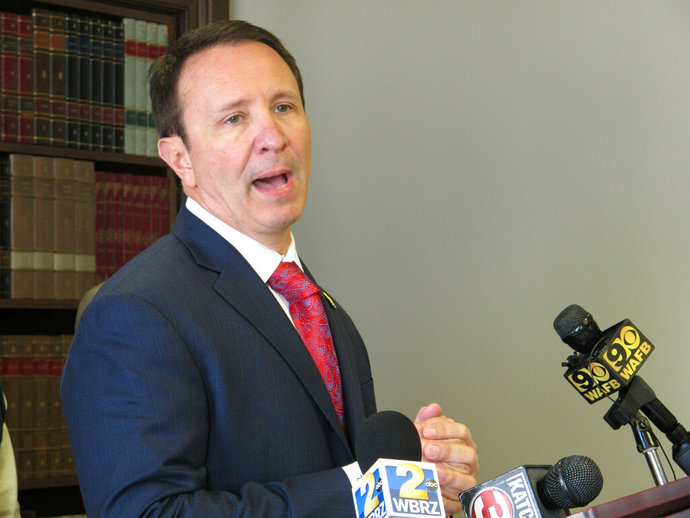
    The Louisiana Committee for a Conservative Majority — led by Attorney General Jeff Landry and U.S. Sen. John Kennedy — helped flip the two state Senate seats to the GOP and is now working toward that veto-proof majority in the House.

    Landry said the Senate elections will lead to “one of the most conservative legislatures in the country.” He had criticized the current GOP-led Senate as packed with too many moderates willing to work with Democratic Gov. John Bel Edwards, who is running for a second term on the November ballot.

    “This election gave us the first opportunity to go in and put in place true Republicans, conservatives,” Landry said.

    The PAC won most of the seats it targeted in the primary, including four House seats held by white Democrats who were term-limited.

    In the runoff, the organization is backing eight GOP contenders for the House, including four in competitions that will help decide whether Republicans reach the two-thirds benchmark. For example, the PAC is supporting Republican incumbent Chris Leopold of Plaquemines Parish against a Democratic challenger and trying to replace independent Roy Daryl Adams of East Feliciana Parish with a Republican.

    Landry said the PAC’s initial focus was to build a new Senate configuration that’s less moderate. After winning many of those races without a runoff, “that gave us the ability to reposition ourselves and look at other (House) races that were equally important to us and we just didn’t have the bandwidth to address in the first go-round,” he said.

    The Louisiana Democratic Party is working to keep Republicans from reaching their goal, offering Democratic legislative candidates assistance with voter data, fundraising emails and texting platforms, said Stephen Handwerk, party executive director.

    Though the party already has lost two Senate seats and four House seats, Handwerk said Democrats see possible opportunities to flip a New Orleans-based House seat held by Republican Stephanie Hilferty and a vacant Baton Rouge-based House seat, among others.

    “I’m of course incredibly disappointed that we lost the seats. I’m disappointed with candidate recruitment. We all should have done better,” Handwerk said. “But we still have some strong candidates, and we have some very good opportunities to pick up seats.”

    Twenty-four House seats are on the November ballot. But 16 of those competitions are between candidates of the same party. Of the remaining eight seats, Republicans are competing in seven — and need to win each one to reach the 70-member supermajority.

    The partisan makeup of the Senate was largely settled in the primary.

    While five Senate seats are on the runoff ballot, all but one of the competitions is between members of the same party. The tossup Senate contest is the Baton Rouge-based race between Beverly Brooks Thompson, a Democrat, and Franklin Foil, a Republican.

    The Louisiana Committee for a Conservative Majority also is working to oust GOP incumbent Sen. Ryan Gatti of Bossier Parish, arguing he isn’t conservative enough.

  • 2 New California Fires Burn Homes, Send Residents Fleeing

    2 New California Fires Burn Homes, Send Residents Fleeing

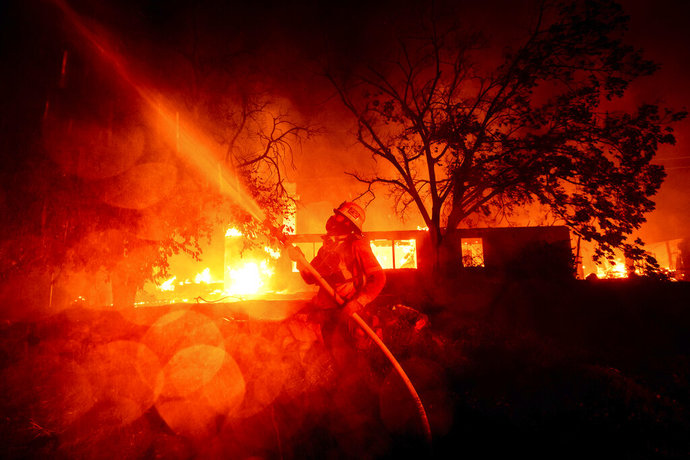
    SIMI VALLEY, Calif. (AP) — Strong winds fanned new Southern California wildfires on Thursday, burning homes and forcing residents to flee their homes in a repeat of the frightening scenario already faced by tens of thousands across the state.


    The latest blazes erupted in the heavily populated inland region east of Los Angeles as strong, seasonal Santa Ana winds continued to blow with gusts of up to 60 mph (96 kph) predicted to last until the evening before they fade away.

    A fast-moving fire spread into the northern neighborhoods of the city of San Bernardino, forcing the evacuation of 490 homes — approximately 1,300 people, the San Bernardino County Fire Department said. Fire Chief Don Trapp said initial assessment showed that six homes and two outbuildings were destroyed or damaged in the 200-acre (80-hectare) fire.

    In the nearby city of Jurupa Valley, evacuation orders were issued for homes around a 150-acre (60-hectare) fire. Three residences and two outbuildings were confirmed destroyed, the county’s fire department said.

    That fire came after another blaze Wednesday in Jurupa Valley forced the evacuation of two mobile home parks and a psychiatric nursing care facility, where elderly people wearing face masks and wrapped in blankets were taken out in wheelchairs and gurneys as smoke swirled overhead. The blaze grew to 200 acres (80 hectares) in size before its spread was stopped.

    “There was one moment when I could see nothing but dark smoke and I was like, ‘We’re going to die,’” said Qiana McCracken, assistant director of nursing for the Riverside Heights Healthcare Center.

    The Santa Anas winds that help create California’s most destructive wildfires prompted a brushfire to quickly explode in size after it broke out before dawn Wednesday near the Ronald Reagan Presidential Library between the cities of Simi Valley and Moorpark northwest of Los Angeles.

    Officials ordered about 30,000 people to evacuate, although some were being allowed back home Wednesday night as fire crews began to get a handle on the blaze.

    Crews remained at the scene through the night to make sure embers would not rekindle more fires after an army of firefighters helped protect the hilltop Reagan museum, which sat like an island in a soot-black sea. There was no damage, library spokeswoman Melissa Giller said.

    Nearby residents had little time to heed evacuation orders as the flames approached.

    Elena Mishkanian was able to gather only some basics. Her son, Troy, 13, netted six pet fish from a tank and put them in pots.

    “Fish have feelings!” he said when his sister Megan teased him about it.

    Frightened horses screamed in a nearby barn as Beth Rivera used a garden hose to water down the edges of her home to keep embers from igniting dry grass and trees. Friends helped evacuate 11 horses.

    The cause was not yet determined, but Southern California Edison filed a report with state regulators to say it began near its power lines. Electrical equipment has sparked some of California’s worst wildfires in recent years and prompted utilities to resort to precautionary power outages. SoCal Edison had not cut power in the area at the time this fire started.

    As winds buffeted the state this week, utilities deliberately cut power to more than a million people to prevent high winds from damaging power lines and sparking wildfires.

    Pacific Gas & Electric, which has staged three sweeping blackouts this week, restored power to hundreds of thousands of people Wednesday and expected to have it back for the others sometime Thursday.

    In the Northern California city of Novato, at least 20 seniors with wheelchairs and walkers were essentially trapped , in the dark, in a low-income apartment complex during a two-day power shut-off.

    The waves of days-long outages have been angrily condemned by state officials and consumers.

    PG&E Corp. CEO Bill Johnson acknowledged hardships but said outages will be necessary in the future as seasonal fire threats increase.

    “As long as they remain the best tool that we have to keep people safe, and our communities safe, they’re the tool we will use,” he said.

    PG&E equipment that wasn’t de-energized may have ignited a massive blaze in Sonoma County wine country that has destroyed 133 homes.

    Firefighters reported making significant progress as high winds in the area eased Wednesday and the fire was 45 percent contained.

    Southern California Edison said its safety power cuts still affected about 215,000 people by late Wednesday night and warned that outages were under consideration for about 800,000 people.

    The days of windstorms are not unusual for the fall season, which has seen vicious gusts propel a series of deadly and destructive California wildfires in recent years.

    But at least in the short term, there was good news from forecasters.

    “This is the last event in our near future. We are not expecting any Santa Anas next week,” weather service meteorologist Kristen Stewart said.

    But she noted the forecast only extends out seven days.

    “Once we get past that, all bets are off,” she said.

  • Democrats Push Impeachment Rules Package Through House

    Democrats Push Impeachment Rules Package Through House

    WASHINGTON (AP) — Democrats rammed a package of ground rules for their impeachment inquiry of President Donald Trump through a sharply divided House Thursday, the chamber’s first formal vote in a fight that could stretch into the 2020 election year.


    The vote was 232-196, with all Republicans against the resolution and two Democratic defectors joining them.

    The vote laid down the rules as lawmakers transition from weeks of closed-door interviews with witnesses to public hearings and ultimately to possible votes on whether to recommend Trump’s removal from office.

    The action also took on more than technical meaning, with each party aware that the impeachment effort looms as a defining issue for next year’s presidential and congressional campaigns.

    Democrats spoke of lawmakers’ duty to defend the Constitution, while Republicans cast the process as a skewed attempt to railroad a president whom Democrats have detested since before he took office.

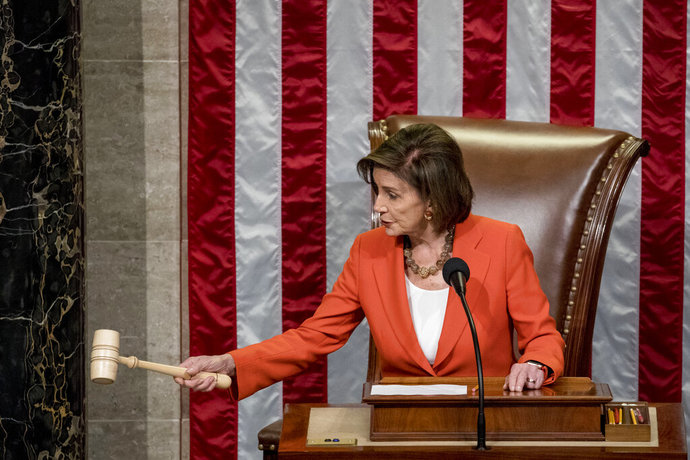
    “What is at stake in all this is nothing less than our democracy,” said House Speaker Nancy Pelosi, D-Calif. Underscoring her point, she addressed the House with a poster of the American flag beside her and began her remarks by reading the opening lines of the preamble to the Constitution.

    House Minority Leader Kevin McCarthy, R-Calif., said Trump had done nothing impeachable and accused Democrats of trying to remove him “because they are scared they cannot defeat him at the ballot box.” Noting that elections are just a year away, he added, “Why do you not trust the people?”

    No. 3 House GOP leader Steve Scalise, R-La., accused Democrats of imposing “Soviet-style rules,” speaking in front of a bright red poster depicting the Kremlin.

    The investigation is focused on Trump’s efforts to push Ukraine to investigate his Democratic political opponents by withholding military aid and an Oval Office meeting craved by the country’s new president.

    Democrats said the procedures — which give them the ability to curb the president’s lawyers from calling witnesses — are similar to rules used during the impeachment proceedings of Presidents Richard Nixon and Bill Clinton. Republicans complained they were skewed against Trump.

    It is likely to take weeks or more before the House decides whether to vote on actually impeaching Trump. If the House does vote for impeachment, the Senate would hold a trial to decide whether to remove the president from office.

    Both parties’ leaders were rounding up votes as Thursday’s roll call approached, with each side eager to come as close to unanimity as possible.

    Republicans said a solid GOP “no” vote would signal to the Senate that the Democratic push is a partisan crusade against a president they have never liked.

    Democrats were also hoping to demonstrate solidarity from their most liberal elements to their most moderate members. They argued that GOP cohesion against the measure would show that Republicans are blindly defending Trump, whatever facts emerge.

    “It will show the other party has become the party of Trump. It’s really not the Republican Party any longer,” said Rep. Dan Kildee, D-Mich.

    Republicans said they’d use the vote to target freshman Democrats and those from districts Trump carried in 2016. They said they would contrast those Democrats’ support for the rules with campaign promises to focus on issues voters want to address, not on impeaching Trump.

    The House GOP’s campaign arm sent emails to reporters all but taunting some of those Democrats including freshman Rep. Chris Pappas, D-N.H. “Pappas wants to be a one-termer,” one said.

    GOP leaders called the rules “Speaker Pelosi’s sham process designed to discredit the Democratic process” in their daily impeachment email to lawmakers.

    Pelosi decided to have the vote following weeks of GOP claims that the inquiry was invalid because the chamber had not voted to formally commence the work.

    The rules lay out how the House Intelligence Committee — now leading the investigation by deposing diplomats and other officials behind closed doors — would transition to public hearings.

    That panel would issue a report and release transcripts of the closed-door interviews it has been conducting.

    The Judiciary Committee would then decide whether to recommend that the House impeach Trump.

    According to the rules for hearings, Republicans could only issue subpoenas for witnesses to appear if the entire panel approved them — in effect giving Democrats veto power.

    Attorneys for Trump could participate in the Judiciary Committee proceedings. But in a bid for leverage, panel Chairman Jerrold Nadler, D-N.Y., would be allowed to deny “specific requests” by Trump representatives if the White House continued refusing to provide documents or witnesses sought by Democratic investigators.

    The rules also direct House committees “to continue their ongoing investigations” of Trump.

    Top Democrats think that language will shield their members from weeks of Republican complaints that the inquiry has been invalid because the House had not formally voted to begin that work.

    Democrats have said there’s no constitutional provision or House rule requiring such a vote.

  • Police: Louisiana deputy accused of rape investigated in ’14

    LIVINGSTON, La. (AP) — Louisiana State Police say a deputy accused of child pornography had been previously investigated on accusations he inappropriately touched an underage girl.

    The Advocate reports State Police released a report Wednesday detailing a 2014 investigation into Livingston Parish deputy Dennis Perkins that never resulted in charges.

    The parish sheriff said a Baton Rouge officer told authorities Perkins inappropriately touched a child. Perkins denied it and no further investigation happened.

    Perkins and his wife were arrested on separate allegations last week and charged with more than 60 counts each of producing pornography of a child under 13 and two counts each of first degree rape, among other charges.

    When re-interviewed last week, the Baton Rouge officer told police Perkins was seen in bed watching a movie with a girl in 2013. State Police reiterated Wednesday no criminal act happened.

  • Mississippi examiner says slain 6-year-old was shot 4 times

    Mississippi examiner says slain 6-year-old was shot 4 times

    CANTON, Miss. (AP) — Trial testimony in the case of a slain Mississippi 6-year-old reveals the child was shot four times after being taken in his mother’s stolen car.

    News outlets report chief medical examiner Mark LeVaughn testified Wednesday that Kingston Frazier was shot in the head and arms in 2017 after the car he was sleeping in was stolen from a parking lot where his mother briefly left him.

    The testimony was given during the trial of 20-year-old Dwan Wakefield, who’s facing an accessory charge. Prosecutors say he picked up the convicted murder.

    Kingston’s mother testified Tuesday she left her car unlocked because she saw a police officer there. She says she went into a store to get items for Kingston’s kindergarten graduation.

    Byron McBride was sentenced to life in prison for murder. D’Allen Washington was sentenced to 15 years on an accessory charge.

  • NCAA Board Approves Athlete Compensation For Image, Likeness

    NCAA Board Approves Athlete Compensation For Image, Likeness

    The NCAA took a major step Tuesday toward allowing college athletes to cash in on their fame, voting to permit them to “benefit from the use of their name, image and likeness.”


    The nation’s largest governing body for college sports and its member schools now must figure out how to allow athletes to profit — something they have fought against doing for years — while still maintaining rules regarding amateurism. The NCAA Board of Governors, meeting at Emory University in Atlanta, directed each of the NCAA’s three divisions to create the necessary new rules immediately and have them in place no later than January 2021.

    Board chair Michael Drake, the president of Ohio State University, said the NCAA must embrace change and modernize “to provide the best possible experience for college athletes.”

    But such changes will come with limitations, he said.

    “The board is emphasizing that change must be consistent with the values of college sports and higher education and not turn student-athletes into employees of institutions,” Drake told The Associated Press.

    A group of NCAA administrators has been exploring since May the ways in which athletes could be allowed to receive compensation for the use of their names, images and likenesses. The working group, led by Ohio State athletic director Gene Smith and Big East Commissioner Val Ackerman, presented a status report Tuesday to the university presidents who make up the Board of Governors.

    Smith and Ackerman’s group laid out principles and guidelines, endorsed by the board, to be followed as NCAA members go about crafting new rules and tweaking existing ones, including:

    Some college sports leaders fear allowing athletes to earn outside income could open the door to corruption.

    “One of the most distinctive things about college sports is this whole recruitment process,” NCAA President Mark Emmert told the AP. “The whole notion of trying to maintain as fair a playing field as you can is really central to all this. And using sponsorship arrangements, in one way or another, as recruiting inducements is something everybody is deeply concerned about.”

    Ackerman and Smith said the challenges lie in determining what regulations need to be set in place; what markets athletes should be allowed to access; what entities and individuals they should be permitted to work with; and whether the schools themselves could provide funds to athletes through licensing deals.

    The NCAA’s move came a month after California passed a law that would make it illegal for NCAA schools to prohibit college athletes from making money on endorsements, autograph signings and social media advertising, among other activities.

    “California has made it clear that we won’t accept any arbitrary limitations on college athletes’ right to their name, image, and likeness,” state Sen. Nancy Skinner, who co-sponsored the bill, posted in Twitter.

    The California law goes into effect in 2023. More than a dozen states have followed with similar legislation, some of which could be on the books as soon as next year.

    “This is another attempt by the NCAA at stalling on this issue,” said Ramogi Huma, executive director of the National College Players Association, an advocacy group.

    It’s hard to say exactly how much athletes could fetch on an open market for their names. It could range from a few hundred dollars for creating personalized video and audio greetings for fans through companies such as Cameo, to thousands of dollars for doing television advertisements for local businesses.

    NCAA rules allow for an athletic scholarship that covers tuition, room and board, books and a cost-of-attendance stipend. The cost of attendance is determined by the institution using federal guidelines and generally ranges from $2,000-$5,000 per semester.

    Gabe Feldman, director of the Tulane University sports law program, said the NCAA has taken an important step by recognizing its rules are antiquated.

    “But the ultimate question is how are the rules modified to both allow college athletes to profit from their name, image and likeness while also being consistent with the collegiate model,” Feldman said.

    The NCAA has said California’s law is unconstitutional, and any states that pass similar legislation could see their athletes and schools being declared ineligible to compete. But the board also said it hopes to reach a resolution with states without going to court.

    In addition to pending state laws, North Carolina Republican U.S. Rep. Mark Walker has proposed a national bill that would prohibit the NCAA and its member schools from restricting athletes from selling the rights to their names, images and likenesses to third-party buyers on the open market.

    “We’re going to continue to communicate with legislators at the state and federal level,” Emmert said. “That’s one of the things that the board is asking of me and my staff and the membership in general, and hopefully we can avoid anything that’s a direct conflict with our state legislators.”

  • Nationals top Astros in Game 7 to win 1st World Series title

    Nationals top Astros in Game 7 to win 1st World Series title

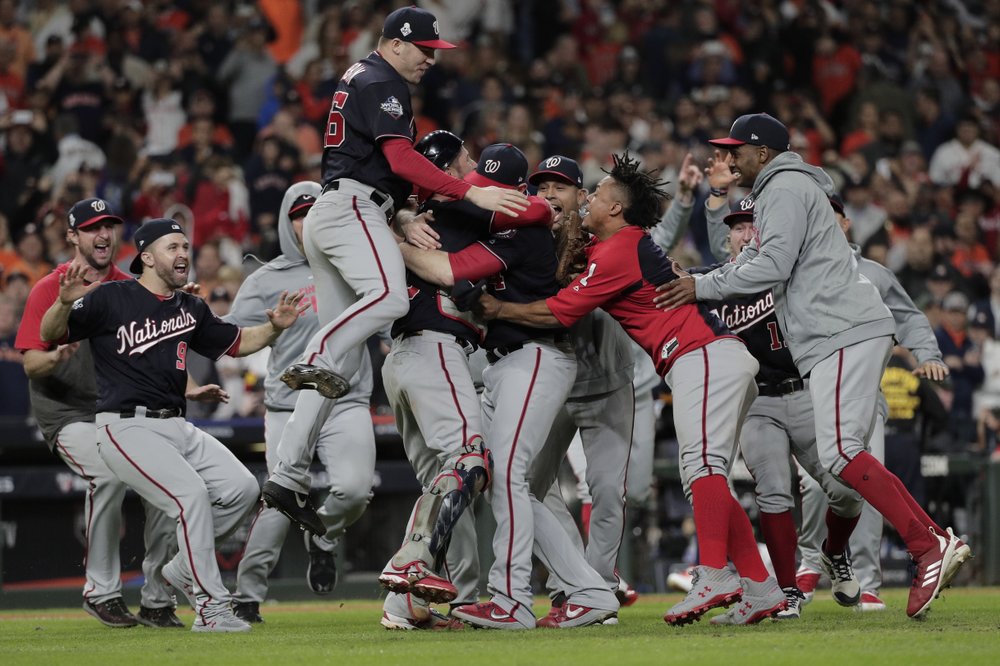
    HOUSTON (AP) — Stephen Strasburg paraded the MVP trophy for delirious fans packed behind the dugout. Max Scherzer tearfully hugged his teammates. Gerardo Parra did the Baby Shark chop, Sean Doolittle flapped snow angels next to the mound.

    Almost out of contention in May, champs in October.

    Howie Kendrick, Anthony Rendon and the Washington Nationals completed their amazing comeback journey — fittingly with one last late rally on the road.

    In Game 7 of the World Series, no less.

    Kendrick and Rendon homered in the seventh inning as the Nationals overcame a two-run deficit, rocking the Houston Astros 6-2 Wednesday night to win the first title in franchise history.

    With all eyes on Scherzer and his remarkable recovery after a painkilling injection, these Nationals truly embraced their shot in the only Series when the road team won every game.

    Even more against the odds: Juan Soto and Washington came from behind to win five elimination games this postseason, an unprecedented feat.

    “What a story,” said Ryan Zimmerman, the only player who’s been a part of every Nationals team.

    “The way this game went is the way our whole season went.”

    Strasburg, new lefty Patrick Corbin and the Nats brought the first World Series championship to the nation’s capital since ol’ Walter Johnson delivered the crown for the Senators in 1924.

    This franchise started out as the Montreal Expos in 1969 when the major leagues expanded beyond the border, putting a team with tricolor caps at jaunty Jarry Park. They moved to D.C. in 2005, ending Washington’s three-decade-plus wait for big league baseball after the Senators skipped town to become the Texas Rangers.

    But the incredible path these wild-card Nationals with the curly W logo took, well, no one could have imagined.

    Because in one topsy-turvy week, they put aside the pain of past playoff failures and upended heavily favored Houston. Quite an ending to a season that began back in February with the Nationals and Astros working out side-by-side at the spring training complex they share in Florida.

    “Resilient, relentless bunch of guys,” manager Dave Martinez said. “They fought all year long.”

    Having lost star slugger Bryce Harper in free agency and beset by bullpen woes, Washington plummeted to 19-31 in late May. It got so bad there was talk the Nationals might fire Martinez and trade away Scherzer.

    Instead, they stuck with the mantra that sprung up on T-shirts — Stay In The Fight.

    “That was our motto,” Scherzer said.

    And months later they finished it, indeed.

    Shut out on one hit by Zack Greinke going into the seventh, they still found a way to win.

    “Guess what? We stayed in the fight. We won the fight!” Martinez shouted during the trophy celebration on the field.

    “We were down and out. We were 19-31. We didn’t quit then, we weren’t going to quit now,” he said.

    Strasburg earned the World Series MVP award with a pair of wins, including Game 6.

    “It’s almost like we’ve done it so many times that we have to get punched in the face to kind of wake up,” he said.

    As pitcher Aníbal Sánchez told Scherzer while hugging him in the middle of the diamond: “We won one. We finally won one.”

    For the 43,326 revved-up fans at Minute Maid Park, it was a combination of shock and disappointment. So close to seeing José Altuve, Alex Bregman, George Springer and their Astros add to the title they won in Game 7 at Dodger Stadium two years ago, they watched this chance suddenly vanish.

    “I’ve got a group of heartbroken men in there that did everything they could to try to bring a World Series championship to this city. And we fell one win shy,” Astros manager AJ Hinch said.

    “Let’s be honest, there’s 28 other teams that would love to have our misery today,” he said. “And I just told our team, it’s hard to put into words and remember all the good that happened because right now we feel as bad as you can possibly feel,” he added.

    President Donald Trump, greeted with chants of “Lock him up!” when he attended Game 5 in Washington, tweeted his congratulations to the Nationals from the White House.

    “Game 7 was amazing!” Trump tweeted.

    Washington kept pulling away after taking the lead, with the sensational Soto hitting an RBI single in the eighth and Adam Eaton adding a two-run single in the ninth off rookie José Urquidy.

    Acquired from Arizona at the July trade deadline, Greinke was in complete control until Rendon — a Houston prep and college star — hit a solo homer with one out in the seventh that trimmed it to 2-1.

    “Just gave us a little bit of hope,” Nationals leadoff man Trea Turner said.

    When Soto followed with a one-out walk, Hinch decided to make a move. He’d had ace starter Gerrit Cole warming up earlier, but left him in the bullpen.

    “I wasn’t going to pitch him unless we were going to win the World Series and have a lead,” Hinch said. “He was going to close the game in the ninth.”

    Instead, Hinch signaled for reliable reliever Will Harris.

    Kendrick connected on the second pitch, slicing a drive that hit the screen attached to the right field foul pole for a 3-2 lead. Just like that, everything had changed for the team in orange that led the majors with 107 regular-season wins, and the ballpark fell silent.

    For Kendrick, another timely blow. At 36, playing on the oldest team in the majors, he was the NL Championship Series MVP against St. Louis after hitting the winning grand slam in the 10th inning of the deciding Game 5 in the Division Series at Dodger Stadium.

    Then again, this was nothing new for the Nationals.

    Washington rallied in the eighth to beat Milwaukee in the wild-card game and took the last two to beat Los Angeles in the NLDS, setting up a sweep of the Cardinals in the NLCS.

    “This is now the most 2019 Nats thing to ever happen,” Doolittle said. “Another elimination game, another come-from-behind win.”

    Far away, a sizable crowd poured into Nationals Park for a watch party. That was the stadium where Houston hammered the Nats for three games last weekend in taking a 3-2 edge, but their luck changed in Texas.

    They won the last two against a team that posted the best home record in the majors (60-21) over the last two decades. Houston earned home-field advantage throughout the postseason, but it didn’t help in the end as the Astros went a stunning 0-4 in their own ballpark during the Series.

    Martinez said Soto, who turned 21 last week, celebrated with his first beer. Meanwhile, the skipper, who had a heart procedure six weeks ago and can’t resume his six-cups-a-day coffee habit, headed back to the clubhouse for a special treat.

    “I am,” he said, “going to smoke a cigar.”

    With Greinke and Scherzer grunting on every pitch, Game 7 started as a classic duel.

    Yuli Gurriel put the Astros ahead with a home run in the second and Carlos Correa added an RBI single off Scherzer that made it 2-0 in the fifth.

    Scherzer was done after the fifth. Only a few days earlier, the three-time Cy Young Award winner had been unable to lift his right arm due to nerve irritation near his neck.

    Corbin, the $140 million starter, threw three scoreless innings in relief.

    Daniel Hudson, released by the Angels in March, closed for the Nationals, who made Houston pay for stranding so many runners all game. Hudson struck out Michael Brantley for the last out, then threw his glove to start the celebration.

    The Astros breezed to the AL West title, edged Tampa Bay in a five-game ALDS and topped the Yankees in the ALCS. They had a front-office fiasco in October, which led to the firing of an executive for a boorish rant at female reporters during a clubhouse celebration.

    “Yeah, the ultimate goal is to win the World Series, and we fell short to a great team. You can’t hang your head low about that,” Springer said. “You move on and start getting ready for spring training.”

    GOING WILD

    The Nationals became the first wild-card team to win the Series since Madison Bumgarner and the Giants in 2014. The last six champs have clinched on the road.

    UP NEXT

    The Astros and Nationals open exhibition play with a World Series rematch on Feb. 22 at Ballpark of the Palm Beaches. They met in their Grapefruit League opener this year and Scherzer gave up a home run to the first batter of the game.
  • Edwards, Rispone square off in only Louisiana runoff debate

    Edwards, Rispone square off in only Louisiana runoff debate

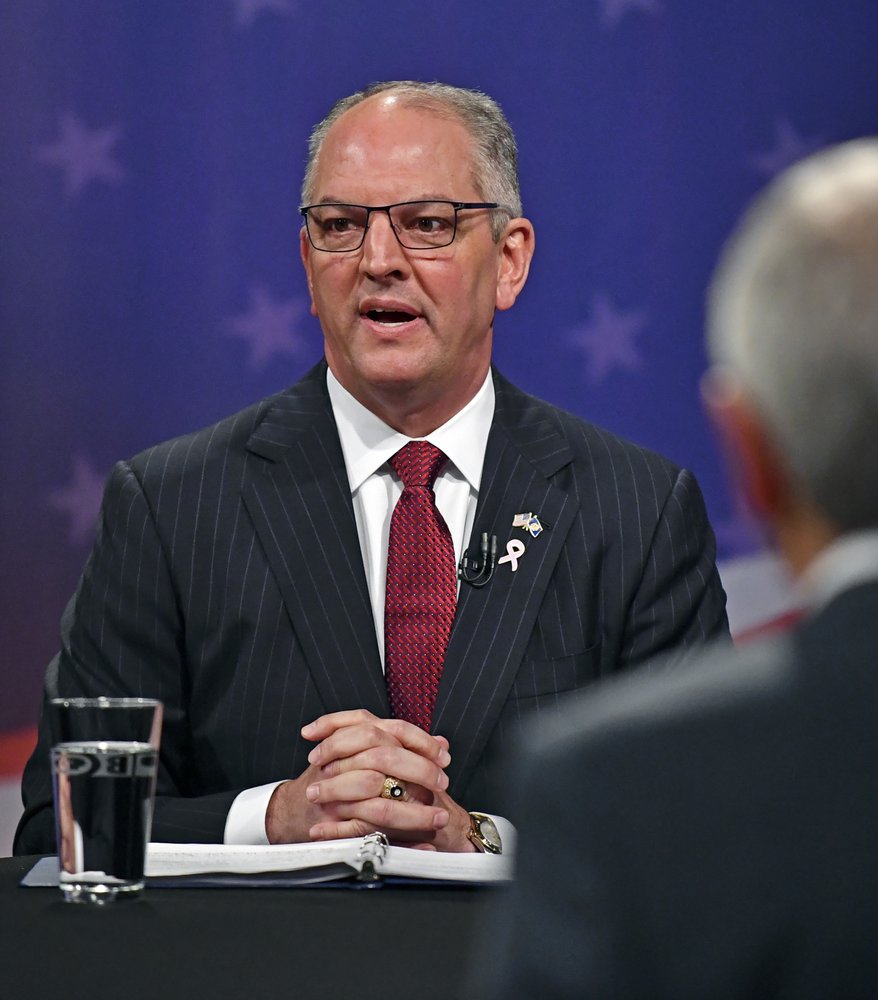
    BATON ROUGE, La. (AP) — Gov. John Bel Edwards accused Republican opponent Eddie Rispone of refusing to tell Louisiana’s voters what he’d do as governor, while Rispone repeatedly invoked his support for Donald Trump, as the two contenders tangled Wednesday in a head-to-head debate ahead of the runoff election.

    Rispone continued his strategy of sidestepping specifics of how he’d fulfill promises to boost job creation, cut taxes and increase spending on roadwork or what he wants to accomplish in detail in the constitutional convention he supports, speaking only in broad sweeps about the ideas.

    Edwards, a Democrat seeking a second term in office, struck at that lack of detail, suggesting Rispone was trying to bamboozle voters with a Washington-style partisan campaign. Rispone has limited public events since reaching the runoff and eschewed most forums where he’d face Edwards directly, refusing all but Wednesday’s debate.

    “You don’t have time for the people of Louisiana. You don’t really want to share your vision because you don’t have one,” Edwards told Rispone.

    Rispone countered that he hasn’t evaded voters: “We’ve crossed the state. I’m listening to them, what they’re talking about, what they’re concerned about.”

    The two men talked over each other in heated exchanges as they were allowed to ask each other questions, repeatedly accusing each other of dishonesty in their campaign talking points.

    “I’ll let you lie and then I’ll respond,” Edwards told his GOP challenger after Rispone accused him of threatening public safety in the criminal sentencing law rewrite he championed.

    When Edwards said Rispone’s company benefited from hundreds of millions in state tax breaks and hired foreign workers rather than Louisiana residents, Rispone replied: “That’s a lie. That’s what career politicians do.”

    The Deep South’s only Democratic governor is locked in a tight competition with Rispone, a wealthy Baton Rouge businessman who has largely self-financed his campaign. Early voting for the Nov. 16 election begins Saturday.

    Republican leaders have targeted Edwards for ouster in a ruby red state that Trump won by 20 percentage points, while Democrats are desperate to hold onto the governorship to demonstrate their viability in Southern states ahead of the 2020 election.

    Rispone, with the backing of Trump, has sought to nationalize the race, trying to make national politics a wedge issue that damages backing for Edwards in state where he’s the only Democrat to hold statewide office and where Trump remains popular. Rispone has focused in advertising and social media on his support for a border wall and his backing of the president’s policies on immigration while only lightly referencing state issues.

    “You’re always looking to Washington, D.C. There’s not inspiration to be had there,” Edwards told Rispone in one combative exchange when Rispone asked Edwards why he supported Hillary Clinton in the 2016 presidential race.

    Rispone said Edwards would back “the next wacko” that Democrats nominate, describing Edwards as a liberal out of step with his state.

    “You’re not talking about me. You’re talking about some generic Democrat that’s in your mind,” Edwards shot back.

    Rispone panned Edwards’ performance, saying he’s chased away businesses and people with tax hikes. He constantly referred to Edwards as an ally of trial lawyers, while describing himself as a conservative and outsider.

    Edwards has tried to skip talk of national politics and criticism of the president. Instead, he focuses on state-specific topics, touting the work he and the Republican-led Legislature did to stabilize state finances and end a decade of budget crises left behind by former Gov. Bobby Jindal. Louisiana has had three years of budget surpluses.

    Edwards reminded debate watchers of Rispone’s years of campaign donations and support for Jindal. He said Rispone’s tax and spending proposals would return Louisiana to the budget deficits of years past.

    The Democratic incumbent also said Rispone’s plan to “freeze” enrollment in the Edwards-created Medicaid expansion program would eventually boot hundreds of thousands of people from their health insurance coverage. Rispone said the program is rife with waste and abuse.

    Wednesday’s debate was held by Louisiana Public Broadcasting and the Council for A Better Louisiana, broadcast on public broadcasting stations around the state and online.

  • Still near bottom, but some progress for Louisiana schools

    NEW ORLEANS (AP) — A national education assessment released Wednesday shows math scores for Louisiana’s eighth graders went up five points over the past two years — the best rate of improvement in the nation.

    The Nation’s Report Card shows Louisiana still near the bottom in math and reading scores for fourth and eighth graders. And the percentage of students judged at least proficient was below 30% at each level: 29% for fourth grade math, 26% for fourth grade reading, 23% for eighth grade math and 27% for eighth grade reading.

    Still, the state’s education superintendent, John White, pointed to the nation-leading improvement rate for eighth-grade math as a sign of progress. The state education department also released figures showing Louisiana ranking high among states in improving proficiency for math and reading in grades four and eight.

    “Over the last decade, Louisiana ranks in the top 10 among all states for improvement on each of the four NAEP tests,” White said in a Wednesday news release. “This is further evidence that Louisiana’s children are as smart and capable as any in America. When we raise expectations for students and support our teachers, we will see progress. It is critical that we keep the progress going.”

    NAEP is administered by the National Center for Education Statistics within the U.S. Department of Education.

  • Wrongful death suit against Louisiana officers dismissed

    NEW ORLEANS (AP) — A federal judge has dismissed a wrongful death lawsuit accusing Louisiana correctional officers of failing to supply heart medication to a man who died from cardiac arrest the day he was booked into jail.

    The Advocate reports Judge Greg Guidry ruled this week that jail officials tried to find out what medications Edward Murphy Jr. needed and administer them. But an Assumption Parish officer couldn’t say whether Murphy received a dose of his critical blood thinners. It’s also not known if those thinners could’ve prevented his death.

    The 2018 lawsuit had to prove jail officials showed “deliberate indifference” to Murphy’s well-being, but Guidry wrote that officers didn’t intend to harm him.

    Murphy’s mother, the plaintiff, can still file a state negligence suit. Her lawyers said on Tuesday they’re filing one in Assumption Parish.