Author: Imported Author 1852163

  • Karla Brown seeks volunteers for Memorial Day event

    Karla Brown seeks volunteers for Memorial Day event

    NATCHEZ, Miss. — When Karla Brown goes out this year to honor the deceased U.S. service members on Memorial Day, she will keep a promise she made years ago to G. Mark LaFrancis, who was president of the Home with Heroes Foundation Inc.

    Brown did not have flowers for the graves of all of the service members, but LaFrancis asked her to remember one in particular.

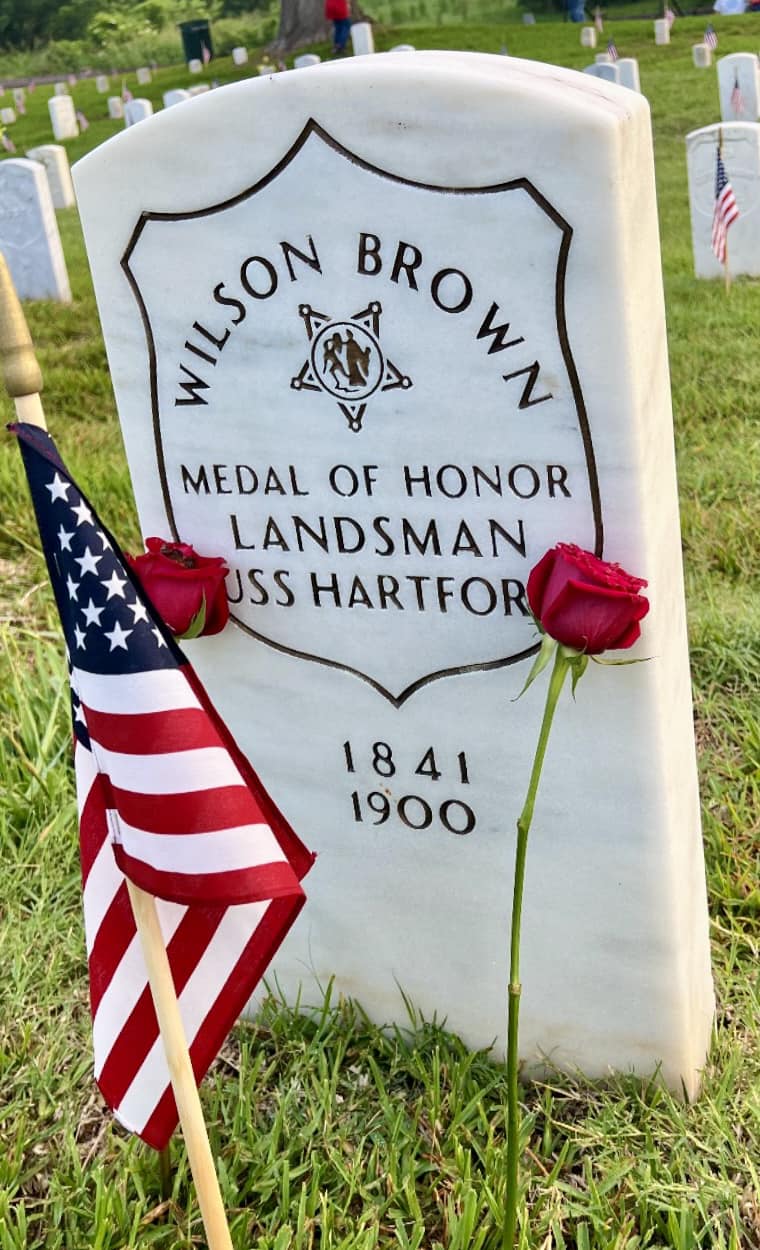
    “He donated $100, and he asked me to make sure we placed a flower on the grave of Wilson Brown, who was African American, and the only Medal of Honor recipient buried in the Natchez National Cemetery,” Brown recalled. “Each year we place two roses on his grave.”

    LaFrancis died in June 2024 following a long battle with cancer. This year, Brown and her volunteers will honor him by placing a flower on his grave.

    LaFrancis was a retired veteran of the military. He served a total of 23 years in the Air Force, Air National Guard and Air Force Reserve. He was also director of the Miss-Lou Military Museum and Veterans Welcome/Information Center.

    Memorial Day will be observed on Monday, May 26, and as the day approaches, Brown is seeking volunteer help — and donation of flowers. Brown is known for her work through Downtown Karla Brown.

    “Last year we had eight buckets of flowers, which was a record,” Brown said, noting her volunteer project “gets bigger each year.” Last year, they bought out the flowers at Walmart in Natchez and Vidalia and grocery stores, she said. They want to do the same this year.

    She also had about a dozen volunteers, she said.

    When the Flower Station learned of Brown’s needs last year, the business quickly donated flowers for the cause, Brown said. Moreton’s Flowerland also pitched in to help. Brown said she was extremely grateful to these businesses.

    Brown typically purchases all of the flowers that she can afford and place them in a bucket of water one day before Memorial Day. Early the next day, she visits the cemetery where she and her volunteers place one flower in front of the graves of the military service members.

    While she would love to honor all of the service members with a flower, she usually does not have enough to go around, she said. Even so, she is mindful to cover the graves of men and women who served in all of the wars — and all branches of the military, she said.

    Brown said she moved to Natchez 13 years ago, and for the last 12 years, she has been placing flowers on the graves of U.S. service members. Natchez is the first place she has lived that has a national cemetery, she said.

    “Memorial Day is about our fallen soldiers,” she said. “We honor them because of their sacrifice and because we’re living in a free country.”

    Placing flowers on the graves is an act of reverence and something that should not be rushed, Brown said. She asks her volunteers to take a flower, stand in front of the grave, reflect and say, “Thank you.”

    “I ask them to really think about what these people did and to give some reverence,” she said. “We take our time and think about their service to our nation. I really encourage people to do that.”

    As in previous years, Brown is asking all volunteers to meet her at the Natchez National Cemetery at 6:30 a.m. She said they can finish in about 30 to 40 minutes, depending on the amount of help she has. Afterwards, they will go to breakfast.

    Anyone interested in assisting Brown as a volunteer or who wishes to make a donation for the purchase of flowers may contact her at 907-540-0001.
  • Cypress knees exhibit highlights little-known piece of Natchez history

    Cypress knees exhibit highlights little-known piece of Natchez history

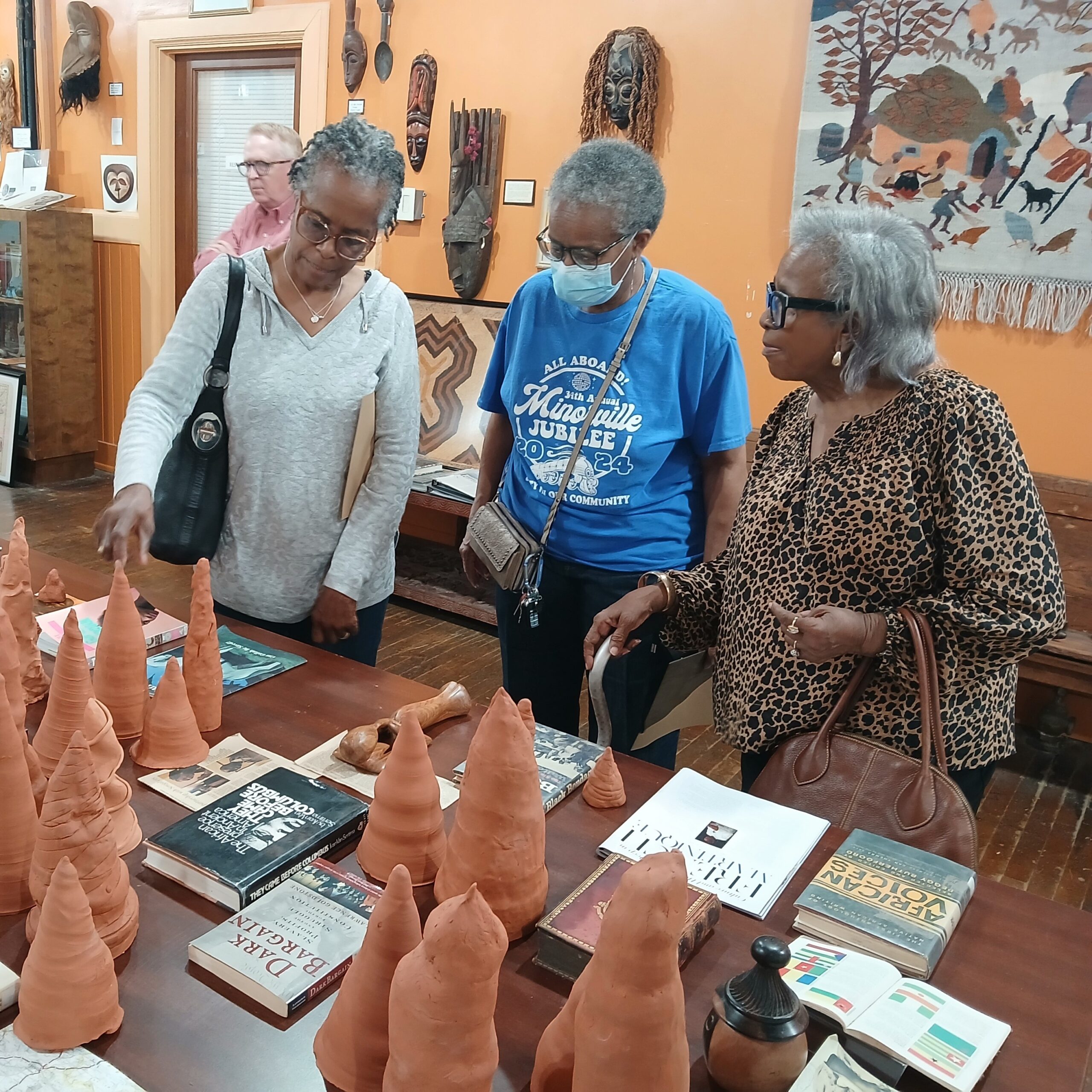
    NATCHEZ, Miss. — Members of the Woven Wind project used clay sculptures of cypress knees Friday, April 25, to highlight the history of the Toles family and their enslaved ancestors at Monmouth.

    An exhibit of the cypress knees was featured for one day at the Natchez Museum of African American History and Culture. The knees were also placed on the grounds of Monmouth near a pond, said Nashville-based curator Courtney Adair Johnson.

    “The clay objects, which symbolically carry the voices of the enslaved, will dissolve with the landscape over time to memorialize the site of the family’s painful history,” Johnson said, adding the unfired pieces of art will simply melt into the ground.

    Some of the sculptures will be donated to the museum and Monmouth, she said.

    Melisande Short-Colomb, research and community engagement associate at the Laboratory for Global Performance and Politics at Georgetown University, said nobody can really explain the purpose of the cypress knees in nature.

    “They don’t grow into trees, but they are part of the network, the eco system, and the environment of the cypress swamp,” she said. “They connect all of the trees.”

    Short-Colomb spoke about the cypress knees at the museum. She was joined by Vesna Pavlović, the Paul E. Shwab Chair in Fine Arts Professor of Art at Vanderbilt University.

    “Part of what scientists believe is the cypress roots are in the water,” Short-Colomb said. “The knees come up to get some air and store water in periods of draught when the water may recede or go down when it doesn’t rain. Because of the cypress knees, the cypress trees continue to have a source of water. We chose the knees as a representative of the continuity of family through time.”

    “The connection between the cypress knees and the trees shows the connectivity of a family,” said Bobby Dennis, director of the museum. “Each knee is attached to a tree. They all have the same resource as that tree, yet they’re all different.”

    Furthermore, Short-Colomb said, the cypress knees sculpture is an artistic representation of the region. “The trees themselves hold the memory of everything that has happened there. The soil, the water, all of that is a memory that lives in the environment all over Natchez.”

    Short-Colomb said Natchez was the richest city in America for 90 years, and the remnants of memory remain in the environment, even though the cycles of humanity continues to change. “One day we’re born, and one day we die. The environment of the earth contains all of us. It receives all of us,” she said.

    Short-Colomb said their work as Woven Wind “was connecting the archives of John A. Quitman, who was an enslaver, a human trafficker, to descendants of a complete and full name mentioned in the archives of the Quitman family.”

    Their aim, she said, was to connect the living descendants to their ancestor, Frank Toles, who was mentioned in the archives. The archives are held in the University of the South in Sewanee, Tennessee.

    According to Pavlović’s website, Woven Wind is a multi-layered research project drawing from artistic translations of the Lovell Quitman archive, which includes extensive Quitman Plantation records and photographs of the Civil War era.

    The creation of the cypress knees involves the use of clay as a community activity, said Short-Colomb. The work is done by people who are not professional potters.

    “Those knees are part of a multi-disciplinary art installation that includes the film of the Toles family, painted art work, a portfolio of photographs, and original music composed for the film and was performed in Nashville, she said.

  • McDonald delivers message of hope at 85th commemoration of the Rhythm Night Club fire

    McDonald delivers message of hope at 85th commemoration of the Rhythm Night Club fire

    NATCHEZ, Miss. – Zandra McDonald delivered a message of hope and inspiration at the 85th commemoration of the 1940 Rhythm Night Club fire held Saturday, April 26, at the Rhythm Night Club (on site) Memorial Museum.

    “The Rhythm Night Club fire took so much from this community, but it could not take the spirit of this community,” said McDonald, who serves as the superintendent of the Natchez-Adams School District. “It could not take the hope of this community and it could not take the future of this community. Yesterday shaped us, today strengthens us, and tomorrow awaits us. Education is the way we climb.  Education is the way we honor. Education is the way we rise.”

    Betty Sago, who co-owns the museum with her husband, Monroe Sago, said McDonald’s message came from the heart. “It was so beautiful and inspiring,” she said. “As superintendent, she’s working with the present and future generations. Her message was dynamic.”

    McDonald’s message underscored the program’s theme, “Yesterday, Today, Tomorrow: Education the Way Up.” The program included music by several soloists and remarks by Mayor Dan Gibson.

    “Every year we come here to a site that is so important to the history of Natchez and also to the history of our country,” said Gibson. “Because of this site, countless lives have been actually saved across our country and all of the years since because valuable lessons were learned here.”

    Gibson said those who perished in the fire did not die in vain. “They are to this day remembered and appreciated,” he said. “But that does not come without a sacrifice and that sacrifice has been made by the Sagos.”

    Octavius Saul Jr. was this year’s recipient of a $1,000 scholarship awarded by the Sagos for writing the winning essay about the Rhythm Night Club fire. Saul, a senior at Natchez High School, plans to attend Southern University in Baton Rouge where he will major in photography, said Betty Sago.

    Saul is the son of Octavius Sr. and Quantonya Saul, both of whom were present for the scholarship award.

    McDonald began her presentation by acknowledging the contributions of the Sagos through the museum. “Thank you for creating this sacred space — a place where memory lives, where history breathes, and where our community can come together to honor, to heal, and to dream forward,” she said. “Your vision and dedication ensure that the lives we lost are never forgotten, and that the hope they carried lives on through all of us.”

    She said the program’s theme is one “that not only speaks to our dreams for the future but also calls us to remember the echoes of the past.”

    In keeping with the theme, McDonald said “Yesterday” is about remembering, especially those who lost their lives. She noted the fire of April 23, 1940, changed Natchez forever. “Over 200 lives were taken in the blink of an eye — mothers, fathers, sons, daughters, musicians, and dreamers. A tragedy that left a scar on our hearts but also taught us the power of resilience. It reminds us that every breath we take today is a gift paid for by those who came before us — those who, though gone, still sing in the spirit of this city.”

    “Today” is about reflection, McDonald said. “We recognize that education is not merely about books and tests,” she said. “It is about freedom — the kind of freedom that allows a child to dream beyond circumstances, to envision a life untouched by tragedy, limited only by the size of their imagination. Today, we gather as proof that the seeds of progress planted generations ago are still growing — that from ashes and sorrow, hope can rise.”

    McDonald said, “Tomorrow” is about rising. “Tomorrow belongs to the students we nurture, the leaders we inspire, the dreams we dare to believe,” she said. “Education is — and has always been — the way up. It is the bridge from despair to destiny, from loss to legacy, from brokenness to brilliance. When we teach a child, we don’t just change their life — we change the very future of our communities, our cities, our world.”

    The Rhythm Night Club commemoration is held each year to honor the 200-plus victims who died in the club’s 1940 fire. It also pays homage to the survivors.

  • Freedom celebration for Prince Ibrahima and Isabella at Jefferson College

    Freedom celebration for Prince Ibrahima and Isabella at Jefferson College

    NATCHEZ, Miss. — A special event celebrating the 197th Freedom Anniversary of Prince Abdul Rahman Ibrahima and his wife, Isabella, will be held from 1 to 3 p.m. Saturday, May 10, at Historic Jefferson College at 16 Old North St. It is free to the public.

    Titled, “Freedom: Retold,” the event aims to retell the story of Ibrahima using new scholarship, an exhibition, and tours that focus on the prince and Isabella and “their incredible narratives of love, liberty, and lasting legacies,” said Dr. Artemus W. Gaye, chief organizer of the event.

    Ibrahima was a Muslim prince from Timbo, West Africa, who was captured in his homeland and sold to slave traders. He arrived in Natchez in 1788, where he was sold to Thomas Foster. Ibrahima spent 40 years enslaved on Foster’s plantation before he and Isabella gained their freedom in 1828. They sailed to Monrovia, Liberia in 1829, where he died of a disease. He was 67.

    Gaye said the public will learn more about the prince during the celebration. He said the program will feature a panel discussion by Dr. Eric J. Hearst of the Center Church of Hartford, Connecticut, the home church of Thomas Gallaudet (1787-1851), who was a supporter of Ibrahima.

    Other panelists will include Dr. Abu Bakarr Jalloh, author of “The Fulani & Liberia: An Inclusive Approach” (2025); David Dreyer, local historian and genealogist; and Judy Rose, author of “A Legacy of Heirs: The Final Truth” (Jefferson Chapel Family & Friends Foundation Inc., 2016).

    The exhibition will include paintings from Africa and new portraits of the prince, Isabella, Simon, and the family migration to Liberia, Gaye said. Creative renderings of artists’ impressions of Liberia from the 1820s to the 1860s, as well as the repatriated Africans who lived there, will be part of the exhibition, he said.

    The day’s events will include a tour of various sites related to Ibrahima’s history.

    Gaye said the event is also an opportunity to reconnect with local Ibrahima descendants and others who interacted with the West African descendants in 2003. Gaye, who was born in Monrovia, Liberia – the place where Ibrahima died in July 1829 — is a seventh generation descendant of the prince.

    Specifically, Gaye noted, he is a descendent of Simon Rahman, one of the sons of the prince and Isabella, who returned to Liberia with his children, wife, and his brother, Levi, in 1831 on the ship, The Carolinian, and settled in Monrovia and New Georgia, Liberia.

    Gaye is the author of “Dr. Isabella Rahman and the African Prince of Fouta Djallon” (Forte Publishing International, 2023) and “A Tossed American Pie: The Controversial Conception and Creation of Liberia by White Americans, Black Repatriates and Liberated Africans” (Forte Publishing International, 2023).

    According to Gaye, the selection of Jefferson College as the site for the celebration is significant because of its connection to Ibrahima.

    First, the land occupied by Jefferson College was donated by John Foster and James Foster, according to the National Register of Historic Places. Both men were brothers of Thomas Foster.

    Second, it was in the area near the college that Ibrahima recognized Dr. John Coats Cox in 1807 at the market. Cox, an Irishman, had sailed to West Africa in 1781. After going ashore to hunt, he became lost and ill, but was rescued by the Fulani people and taken to Timbo, where Ibrahima’s father cared for him.

    After their chance meeting in Mississippi, the doctor tried for many years to purchase Ibrahima’s freedom, but Thomas Foster refused to release him. Even so, Ibrahima’s fame spread because of his meeting with Cox, and it eventually led to his freedom.

    Ibrahima’s story is told in Dr. Terry Alford’s book, “Prince Among Slaves: The True Story of an African Prince Sold into Slavery in the American South” (Oxford University Press, 1977).

    The May 10 celebration is organized by the Prince Ibrahim Isabella Freedom Foundation and co-sponsored by the Friends of the Forks of the Roads Society Inc.

    For more information, send email to liberiaaldc@gmail.com

  • Zandra McDonald to speak at 85th commemoration of the Rhythm Night Club Fire

    Zandra McDonald to speak at 85th commemoration of the Rhythm Night Club Fire

    NATCHEZ, Miss. – Zandra McDonald, superintendent of the Natchez-Adams School District, will be the guest speaker for the 85th commemoration of the Rhythm Night Club fire of April 23, 1940. The ceremony is set for 12 p.m. Saturday, April 26, at the Rhythm Night Club (on site) Memorial Museum at 5 St. Catherine St. It is free to the public.

    The theme this year is, “Yesterday, Today, Tomorrow: Education the Way Up,” according to Monroe and Betty Sago, the museum’s owners. Betty Sago said McDonald was the perfect choice this year given the program’s focus on education: “She is a product of Natchez public schools. She was born and raised here in Natchez.”

    McDonald has worked for more than 25 years in different capacities in the school district. Her education includes a master’s degree from Louisiana State University and a Master of Education from the University of Phoenix. She earned her bachelor’s degree in English and Literature from Tougaloo College.

    In addition to McDonald, Saturday’s program will feature Wynetta Dangerfield, teacher and co-leader of Natchez High School’s African American Culture Club. Dangerfield will give a presentation on the club.

    Music will be provided by several people who will perform as soloists. They include Dangerfield, Tony Fields, Lawrence Reggie Winston, and Lakeria Kaho.

    One of the highlights of the program is the presentation of a $500 to $1,000 scholarship, which is awarded each year to a student who writes a winning essay on the museum. Last year’s recipient of a $1,000 scholarship was Daisha Green, a direct descendant of the late Mary Christmas, who died in the Rhythm Night Club fire. She plans to study pre-dentistry at Mississippi State University, according to the Sagos.

    The program typically begins with the siren blast of a fire engine from the Natchez Fire Department. It includes a presentation of door prizes, refreshments, and a tour of the museum.

    A new feature of the museum is a theater room where visitors can watch recordings of the people who survived the 1940 fire.

    The Sagos have been holding this commemoration for the past 17 years to pay homage to the 209-plus victims that died in the club fire of April 23, 1940, as well those who survived. Those who died included students, business leaders, and Woodrick McGuire, band director of Brumfield School. Musician Walter Barnes and members of his band also died in the fire.

    For more information, call 601-597-0557 or send email to bettysago@rnconsitemm.org.

  • From the Mayor’s Desk: An Easter Message

    From the Mayor’s Desk: An Easter Message

    Easter has always been a highlight of the year for me. Set in Spring, it is indeed a time of renewal, a time of new birth and new life, and a time to celebrate the wondrous love of God. He gave His only son so that we all might live. Truly, we are blessed to have a Savior. His name is Jesus. He was tortured, crucified, and placed in a borrowed tomb. Those who killed Him thought that was the end of Him. But on the third day, He arose – and He lives to this day in the hearts of all who believe in Him.

    If ever we needed Jesus, we need Him now. To observe what is taking place in our country and in other parts of the world, we would think that the love of the Father is far from us. Division, hate, even war, dominate the headlines. Yet I know that God’s love is ever with us. A noisy world tries desperately to drown Him out. It’s the story of time – evil desperate to silence good. But our God can’t be silenced. His voice of love rings through the ages and continues to be the greatest force, able to turn a lion into a lamb with one touch.

    It is amazing to me how the simplest act of love can overcome the vilest act of hate. We see this in the story of Jesus who, on the cross between two thieves, in the throws of death, asked the Father to forgive those who had crucified Him, “for they know not what they do.” When one of the thieves beside Him begged His forgiveness, Jesus granted it, promising him, “Truly I tell you, today you will be with me in paradise.”

    When conveying a message, I often turn to songs and lyrics. I guess this comes from my love of music and the fact that I have for years enjoyed singing for others. I truly believe music is the universal language of love. On a spring day, many years ago, I along with the other graduating sixth graders at Jackson’s Boyd Elementary School, sang a special song at our commencement program. Burt Bacharach’s lyrics continue to live in my memory to this day, just as relevant now as they were then: “What the world needs now is love, sweet love. It’s the only thing that there’s just too little of. No, not just for some, but for everyone.”

    Indeed – what the world needs now is love, God’s love. Truly it’s the answer – for everyone.

    This Easter, my prayer is that God’s love will transform the world around us and set us free – that His love will conquer hate, bring peace, and make us one with Him – in our homes and within our community. All it takes is a willing soul, willing to trust in God’s love.

    Happy Easter. May God bless you and yours with His love, now and always.

  • Fundraiser launched for Dr. John Bowman Banks Museum

    Fundraiser launched for Dr. John Bowman Banks Museum

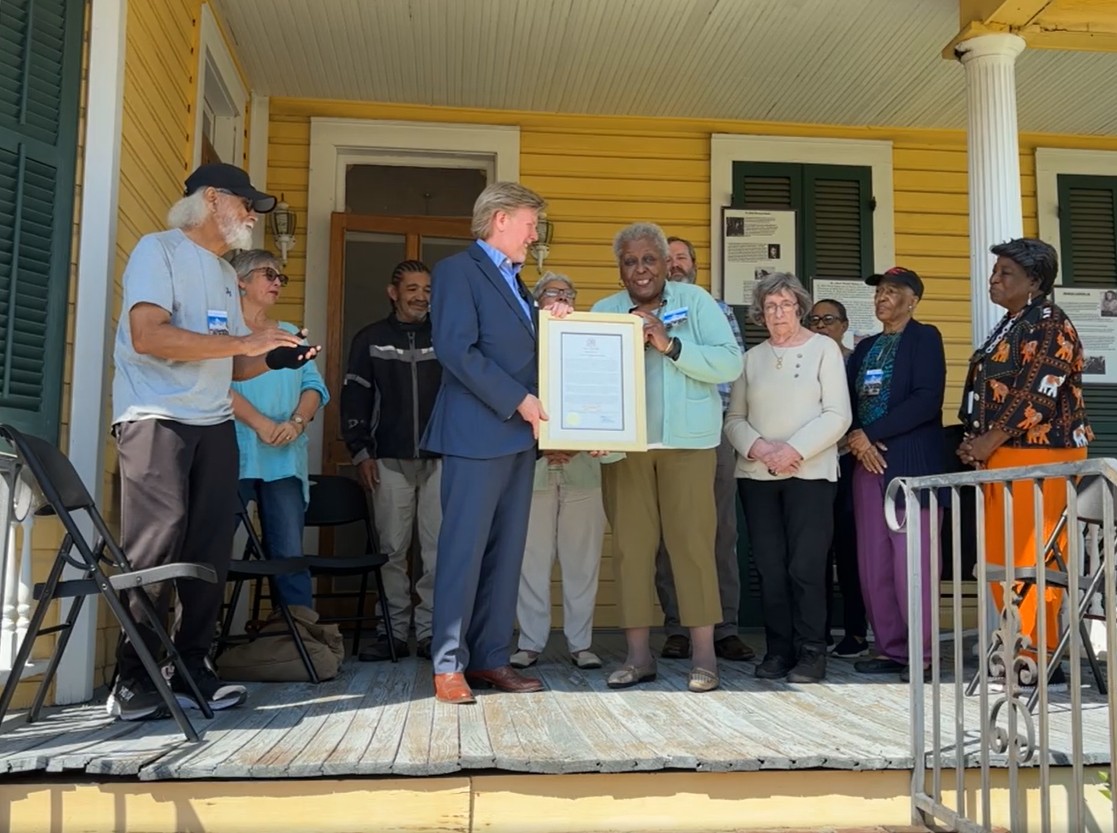
    NATCHEZ, Miss. — Mayor Dan Gibson kicked off a fundraising campaign Wednesday, April 9, for the Dr. John Bowman Banks Museum, which is commonly known as the Dr. John Banks House. Gibson was joined by the museum staff and other community members. He said a total of $15,000 is being sought to repair the building’s aging roof.

    The two-story wood-framed house, which is located at 9 St. Catherine Street, was built in 1892. It is named for Dr. John Bowman Banks, the city’s first Black physician. Banks was also a co-founder of the Bluff City Savings Bank, the city’s only Black-owned bank.

    While discussing the building’s history, Gibson honored Banks posthumously with a Key to the City, which he presented to Dora Hawkins and other museum staff, including Thelma Newsome, Willie Woods, and Jacqulyn Williams.

    “It’s so very important, and we give a big thanks for the idea that you came up with to seek funds to continue to maintain this illustrious home,” Hawkins said to the mayor. “So we continue to invite you, all who are here today, the public to come visit and to see what this home is all about. It is those finances that will keep us going along with the work that our members are giving and bringing forth to maintain this home.”

    Gibson said the house is a treasure in the Natchez community, and it is important to preserve it.

    “The house currently is suffering from leaks — water intrusion,” he said. “These leaks threaten this important property. We are very grateful however to have found a roofer who has provided a very reasonable estimate to cure the problem. We need to raise $15,000 to get this done.”

    Gibson said the second phase of the project is to restore and seal the building’s historic metal roof. “It’s important that the metal roof not be removed,” he said. “It can be restored without replacing it.”

    Banks’ house was initially built in the Queen Anne style, but around 1905, it was remodeled in the Colonial Revival style, according to the Historic Natchez Foundation.

    Gibson said donations are needed immediately for the building’s roof, which has ongoing leaks and major water damage affecting ceilings, walls, and floors, among other places. A couple of people in the community are ready to anonymously match the donations, he said, adding, “We want to beat the spring rains.”

    The house is an important part of Natchez’s history, Gibson said. In addition to being listed on the National Register of Historic Places, it is the site of Natchez’s first Mississippi Freedom Trail marker, which was erected in 2023.

    During the 1960s, the house became the headquarters for the Natchez NAACP and the home of NAACP President George Metcalfe, whose car was bombed by the Ku Klux Klan on August 27, 1965. Metcalfe survived the bombing, but the tragedy became a pivotal point in the Civil Rights Movement.

    The house is featured in the film, “Black Natchez” (1967). It also served as “Metcalfe’s Boarding House” in the 1960s for members of the Student Nonviolent Coordinating Committee (SNCC) during the Civil Rights Movement.

    Today, the house is owned and managed by Rose Hill Missionary Baptist Church, the oldest Black Baptist church in Mississippi. The church inherited the house from Frank Robinson Jr., Bank’s grandson. The house was officially designated as a museum in 2020.

    Tours of the house are available by appointment. Information on tours or donations is available by calling 601-807-2537. All donations are tax-deductible. Checks should be made out to the Dr. John Bowman Banks Museum and mailed to P.O. Box 501, Natchez, MS 39121.

  • Woven Wind is coming to Natchez

    Woven Wind is coming to Natchez

    NATCHEZ, Miss. – The Natchez Museum of African American History and Culture will host the Woven Wind project featuring clay vessels and the showing of the film in progress, “Toles Family: Coming Home,” on Friday, April 25, at 301 Main St., Natchez.

    The event, which will feature a talk and reception, will be held from 4 to 5 p.m. It is free and open to the public.

    The film includes oral histories of the descendants of the late Tom Toles’ family who was enslaved at Monmouth plantation. Members of the family, like the late Mary Lee Davis Toles, became prominent members of the Natchez community.

    Mary Lee Davis Toles, who was Tom Toles’ wife, served as an Adams County Justice Court Judge and president of the Natchez NAACP. She was also a founding member of NAPAC museum.

    The exhibition and film will be preceded by Woven Wind’s community clay workshop, which is set for 12 to 2 p.m. Friday, at the Mississippi School of Folk Arts at 5 E Franklin St., Natchez. The workshop is also free to the public.

    “‘Woven Wind’ is a living, breathing project that evolves with each exhibition, workshop, and performance,” said Vesna Pavlović, the Paul E. Shwab Chair in Fine Arts Professor of Art at Vanderbilt University.

    According to Nashville-based curator Courtney Adair Johnson, Woven Wind is a multi-layered artistic endeavor grounded in critical research on the Lovell-Quitman archive at the University of the South, Sewanee.

    “Extensive plantation records, photographs, and objects found in the archive, document the lives of the officer William Storrow Lovell and wife Antonia, whose father was John A. Quitman (1799-1858), a large slave owner and former governor of Mississippi,” she said.

    Johnson noted the inventories of the enslaved people produced in 1858 after Quitman’s death led their team of artists with a genealogist to locate a family of descendants.

    “Following this lead, the team met the Toles family to record their oral histories and examine America’s history of slavery and bondage using their voice,” she said. “In the film, family members talk about tracing and searching for their ancestors, the value of repair, the legacy of racism, and how it affected their family. They also share their thoughts on moving forward and what reparations could look like.”

    As for the clay workshop, it will include a trip to Monmouth, where community members will place unfired clay objects on site, Johnson said. Monmouth was Quitman’s former family home where the Toles family ancestors were enslaved.

    “The clay objects, which symbolically carry the voices of the enslaved, will dissolve with the landscape over time to memorialize the site of the family’s painful history,” Johnson said.

    Woven Wind is supported by many institutions, the list of which includes: the National Endowment for the Arts Grant for Arts Projects; Vanderbilt University Scaling Success Grant; Mellon Partners for Humanities Education Collaboration Grant; Vanderbilt University’s Engine for Art, Democracy, and Justice; Tennessee State University; Curb Center for Art, Enterprise and Public Policy Catalyst Grant; the Roberson Project on Slavery, Race, and Reconciliation at the University of the South, Sewanee; and Natchez Museum of African American History and Culture.

    For more information, call 601-445-0728.

  • From the Mayor’s Desk: Celebrating Dr. John Bowman Banks –  His Beautiful House Needs Our Help!

    From the Mayor’s Desk: Celebrating Dr. John Bowman Banks – His Beautiful House Needs Our Help!

    Drive down Historic Saint Catherine Street and on your right, just across from the beautiful Holy Family Church, you will see a stately Queen Anne historic home, yellow in color with an iconic silver metal roof. Built in 1892, the Dr. John Bowman Banks House is indeed one of our city’s most historic properties. And it needs our help! On Wednesday, April 9, at 3 p.m., we will do two things. We will celebrate the 140th anniversary of a spectacular moment in both the history of Natchez and of Mississippi. And we will also kick off a campaign to save a house integral to the telling of that story.

    On April 9, 1885, Dr. John Bowman Banks received his medical license from the Mississippi State Board of Health and became the very first black doctor in not only Natchez but the entire State of Mississippi. Born on Valentines Day, 1862, in rural Louisiana and raised in Summit, Mississippi, just north of McComb, John Banks knew he was destined for more than anyone could imagine. He was blessed with a brilliant mind. Excelling in his early schooling, by age 15 he was already enrolled at Leland University in New Orleans. His quest for higher education was almost ended by a yellow fever pandemic that swept the college, but he persevered, eventually graduating from Meharry Medical College, a private historically black medical school in Nashville. After receiving his medical license, he was recruited by Dr. Albert Woods Dumas to move to Natchez. Dr. Dumas would go on to become the Bluff City’s second black physician.

    Dr. Banks and his wife Sarah began construction on their beautiful home in 1892. They lived happy lives there, raising a daughter, Alberta Beatrice Banks and a son, Oliver M. Banks. Dr. and Mrs. Banks were pillars of the community. They attended Zion Chapel A.M.E. Church, the same church where former US Senator Hyram Revels was once pastor, and they immersed themselves in the community and in public service, for both black and white. Dr. Banks was vital in the founding of Natchez’ first and only black-owned financial institution, the Bluff City Savings Bank, serving as its President alongside other founders and officers, Albert Woods Dumas, Walton A. Barland, S.H. Owens, G.W. Brumfield, and J.R. Ross. Among his many friends Dr. Banks also counted the legendary leader Booker T. Washington, who was a guest in his home during a visit to Natchez in the early 1900’s.

    Sadly Dr. Banks passed away in 1911 of a brain hemorrhage. He was only 49. But his legacy lived on. His daughter Alberta taught at the Union School, an institution Dr. and Mrs. Banks supported to help black citizens receive an education, and his son Oliver followed in his father’s footsteps as a physician.

    Eventually, the Dr. Banks House would become the home of another great leader of Natchez, Goerge Metcalfe, who was born ironically the very year Dr. Banks passed away. A World War II Veteran and President of the Natchez Chapter of the NAACP during the American Civil Rights

    Movement, Mr. Metcalfe’s service, and near-death experience as a result, continue to inspire all who cherish freedom and equality. His home served as NAACP headquarters during this tumultuous time and even housed volunteers from other parts of the country during Freedom Summer of 1964. In the aftermath of the killing of Natchez Civil Rights Leader Wharlest Jackson, Sr., Charles Evers, brother of Medgar Evers and State Field Director of the NAACP, made a historic visit to the Dr. Banks House, an occasion famously preserved in historic photographs.

    In 2011, upon the death of Dr. Banks’ grandson Frank Robinson Jr., ownership of the house transferred by inheritance to Rose Hill Missionary Baptist Church, the oldest Black Baptist church in Mississippi. It was officially designated as the Dr. John Bowman Banks Museum in 2020. As a non-profit, the museum conducts tours and is actively working to preserve this important place of history.

    Now listed on the National Register of Historic Places, and our city’s first site to be listed on both the American Civil Rights Trail and Mississippi Freedom Trail in 2023, the Dr. Banks House needs our help. Still graced with its iconic metal roof that appears in many of its historic photographs, this beautiful structure is currently threatened by leaks and water intrusion. Fortunately, we have a roofer ready to make the repairs while preserving the historic roof. But as is always the case, it will take money.

    Please join us on the front steps of the Dr. Banks House next Wednesday. And bring your checkbooks! We have anonymous donors ready to match donations, but time is of essence. Spring showers aren’t waiting, and repairs must commence soon. It is important that we do all we can to both tell our Natchez story and preserve it. We need to make sure this landmark continues to stand the test of time. Because Natchez Deserves More.

    To make a contribution, please make checks payable to the Dr. John Bowman Banks Museum, P.O. Box 501, Natchez, MS 39121

    For historic information, visit https://natchez.org/education/historic-natchez/dr-john-banks-house

    For tour information, visit https://visitnatchez.org/listing/dr-john-bowman-banks-house/

  • Will Hash

    [vc_single_image image=”1514″ img_size=”large” alignment=”center”][vc_single_image image=”1515″ img_size=”large” alignment=”center”][headerText widget_name=”Birthday and Anniversary Cakes Provided By Dairy Queen” level=”h3″ url=”” el_class=””]

    Happy Birthday to Will Hash!

    Birthday Cake winner 3/21/25