Author: Imported Author 1932006

  • Company unveils plans to resume Mississippi River cruises

    Company unveils plans to resume Mississippi River cruises

    VICKSBURG, Miss. (AP) — A second company has announced its plans to resume cruises on the Mississippi River.

    American Cruise Lines announced this week that it plans to resume cruises in late June.

    The American Harmony is expected to arrive in Vicksburg June 29 and depart June 30, The Vicksburg Post reported.

    The announcement comes after the American Queen Steamboat Co. announced that the American Queen would also resume cruises in late June. That vessel is scheduled to dock in Vicksburg on June 24.

  • Louisiana COVID-19 hospitalizations dip below 800

    Louisiana COVID-19 hospitalizations dip below 800

    NEW ORLEANS (AP) — The number of confirmed COVID-19 cases in Louisiana climbed to about 38,500 in figures reported Wednesday, an increase of more than 400 from the day before as the number of tests conducted in the state continues to grow.

    However, the number of people hospitalized with the disease caused by the new coronavirus has fallen below 800 for the first time since late March.

    A falling hospitalization rate is one of the factors state officials use to decide how and when restrictions on public gatherings and business can be eased.

    The death toll in the state from the disease rose to 2,617, up by 21 from Tuesday. Officials say at least 28,700 people have recovered from the disease.

    For most people, the new coronavirus causes mild or moderate symptoms, such as fever and cough that clear up within weeks. For some, especially older adults and those with existing health problems, it can cause more severe illness and be life-threatening.

  • Swift Firings For Minneapolis Officers In Death Of George Floyd

    Swift Firings For Minneapolis Officers In Death Of George Floyd

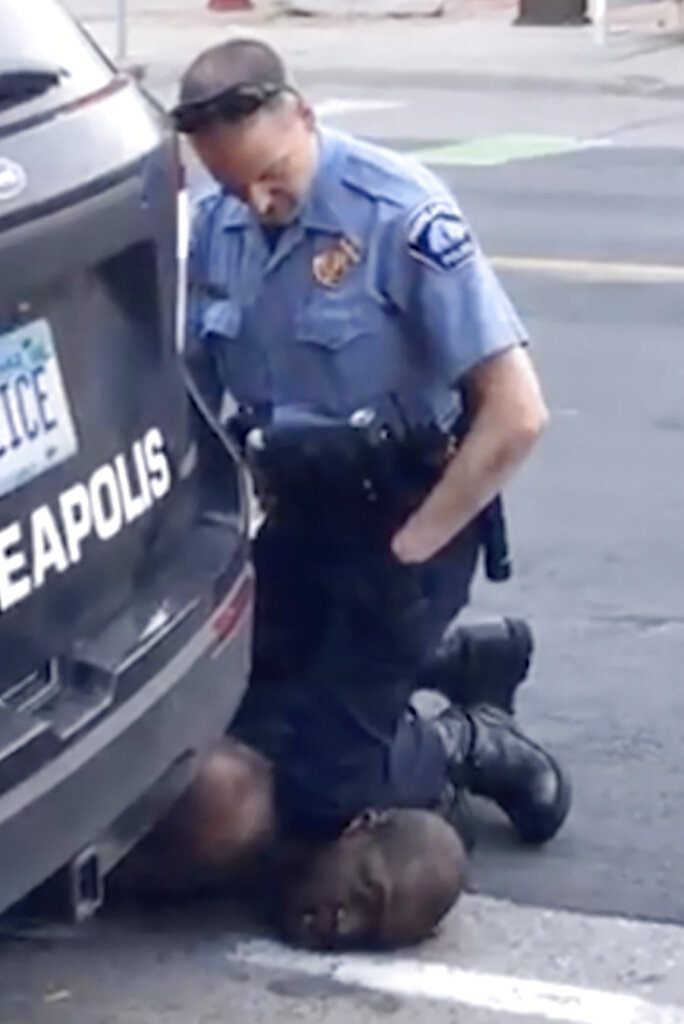
    MINNEAPOLIS (AP) — To the general public, the video of a white police officer pressing his knee into the neck of a black man prone on the street, crying out for help until he finally stopped moving, was horrifying.

    Four officers were fired a day after George Floyd’s death, a stunning and swift move by the Minneapolis chief with the mayor’s full backing. But despite their dismissal, whether the incident will be considered criminal, or even excessive force, is a more complicated question that will likely take months to investigate.

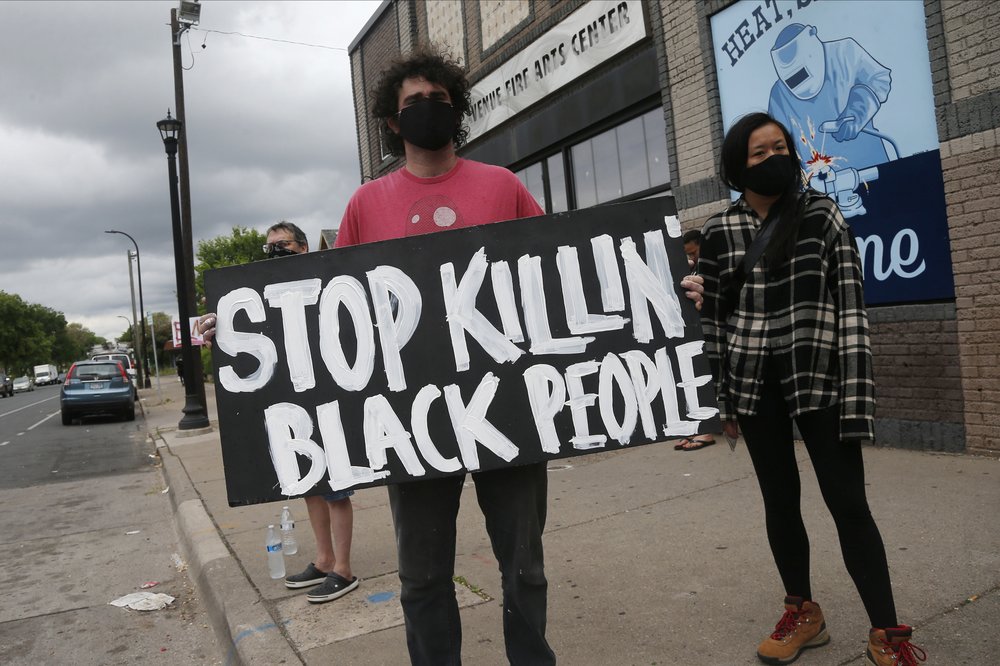
    The officers were dismissed soon after a bystander’s video taken outside a south Minneapolis grocery store Monday night showed an officer kneeling on the handcuffed man’s neck, even after he pleaded that he could not breathe and stopped moving. Floyd’s death prompted protests Tuesday, with thousands taking to the streets at the intersection where he died.

    Many protesters marched more than 2 miles (3.2 kilometers) to the police precinct station in that part of the city, with some damaging the building’s windows and squad cars and spraying graffiti. Police in riot gear eventually confronted them with tear gas and projectiles, with tense skirmishes stretching late into the evening.

    Bridgett Floyd told NBC’s “Today” show in an interview Wednesday morning that the officers involved in her brother’s death should be charged with murder because “that’s exactly what they did.” She said she hadn’t watched the bystander’s video, but told ABC’s “Good Morning America” that “I don’t understand how someone could possibly let an individual go out like that.”

    Mayor Jacob Frey announced the firings on Twitter, saying: “This is the right call.”

    The FBI and state law enforcement were investigating Floyd’s death, which immediately drew comparisons to the case of Eric Garner, an unarmed black man who died in 2014 in New York after he was placed in a chokehold by police and pleaded for his life, saying he could not breathe.

    But in the Garner case, local prosecutors, the NYPD’s internal affairs unit, and the Justice Department all finished investigations into the case before the officer was ultimately fired. Garner’s family and activists spent years begging for the officer to be removed.

    The officers in the Minneapolis incident haven’t even been publicly identified, though one defense attorney has confirmed he is representing Derek Chauvin, the officer seen with his knee on Floyd’s neck. The attorney, Tom Kelly, declined to comment further.

    The police union asked the public to wait for the investigation to take its course and not to “rush to judgment and immediately condemn our officers.” Messages left with the union after the firings were not returned.

    During Tuesday’s protests, some chanted and carried banners that read, “I can’t breathe” and “Jail killer KKKops.” And some stacked shopping carts to make a barricade at a Target store across the street from the station.

    Police Chief Medaria Arradondo said the department would conduct a full internal investigation, and prosecutors will decide whether to file criminal charges against the officers involved. The Hennepin County Attorney’s Office said it was “shocked and saddened” by the video and pledged to handle the case fairly. Part of that investigation will likely focus on the intent of the officers, whether they meant to harm Floyd or whether it was a death that happened in the course of police work. The FBI was investigating whether the officers willfully deprived Floyd of his civil rights.

    News accounts show Chauvin was one of six officers who fired their weapons in the 2006 death of Wayne Reyes, who police said pointed a sawed-off shotgun at officers after stabbing two people. Chauvin also shot and wounded a man in 2008 during a struggle after Chauvin and his partner responded to a reported domestic assault. Police did not immediately respond to a request for Chauvin’s service record.

    In Minneapolis, kneeling on a suspect’s neck is allowed under the department’s use-of-force policy for officers who have received training in how to compress a neck without applying direct pressure to the airway. It is considered a “non-deadly force option,” according to the department’s policy handbook.

    A chokehold is considered a deadly force option and involves someone obstructing the airway. According to the department’s use-of-force policy, officers are to use only an amount of force necessary that would be objectively reasonable.

    But two use-of-force experts told The Associated Press that the officer clearly restrained the man too long, noting that the man was under control and no longer fighting. Andrew Scott, a former Boca Raton, Florida, police chief who now testifies as an expert witness in use-of-force cases, called Floyd’s death “a combination of not being trained properly or disregarding their training.”

    “He couldn’t move. He was telling them he couldn’t breathe, and they ignored him,” Scott said. “I can’t even describe it. It was difficult to watch.”

    In a post on his Facebook page, the mayor, who is white, apologized Tuesday to the black community for the officer’s treatment of Floyd, 46, who worked security at a restaurant.

    “Being Black in America should not be a death sentence. For five minutes, we watched a white officer press his knee into a Black man’s neck. Five minutes. When you hear someone calling for help, you’re supposed to help. This officer failed in the most basic, human sense,” Frey posted.

    Police said the man matched the description of a suspect in a forgery case at a grocery store, and that he resisted arrest.

    The video starts with the man on the ground, and does not show what happened in the moments prior. The unidentified officer is kneeling on his neck, ignoring his pleas. “Please, please, please, I can’t breathe. Please, man,” said Floyd, who has his face against the pavement.

    Even in the coronavirus pandemic that has killed nearly 100,000 people in the U.S. and prompted police departments around the country to change how they’re doing work, the officers in the video aren’t wearing masks. In some cities, low-level arrests such as attempted forgery are skipped right now.

    Floyd also moans. One of the officers tells him to “relax.” Floyd calls for his mother and says: “My stomach hurts, my neck hurts, everything hurts … I can’t breathe.” As bystanders shout their concern, one officer says, “He’s talking, so he’s breathing.”

    But Floyd slowly becomes motionless under the officer’s restraint. The officer does not remove his knee until the man is loaded onto a gurney by paramedics.

    Several witnesses had gathered on a nearby sidewalk, some recording the scene on their phones. The bystanders become increasingly agitated. One man yells repeatedly. “He’s not responsive right now!” Two witnesses, including one woman who said she was a Minneapolis firefighter, yell at the officers to check the man’s pulse. “Check his pulse right now and tell me what it is!” she said.

    At one point, an officer says: “Don’t do drugs, guys.” And one man yells, “Don’t do drugs, bro? What is that? What do you think this is?”

    The Hennepin County medical examiner identified Floyd but said the cause of death was pending.

    Floyd had worked security for five years at a restaurant called Conga Latin Bistro and rented a home from the restaurant’s owner, Jovanni Thunstrom.

    He was “a good friend, person and a good tenant,” the restaurateur told the Star Tribune. “He was family. His co-workers and friends loved him.”

    Ben Crump, a prominent civil rights and personal injury attorney, said he had been hired by Floyd’s family.

    The death came amid outrage over the death of Ahmaud Arbery, who was fatally shot Feb. 23 in Georgia after a white father and son pursued the 25-year-old black man they had spotted running in their subdivision. More than two months passed before charges were brought. Crump also represents Arbery’s father.

    ___

    Associated Press writers Gretchen Ehlke in Milwaukee and Todd Richmond in Madison, Wisconsin, contributed to this report.


  • Tropical Storm Bertha forms, hits South Carolina coast

    Tropical Storm Bertha forms, hits South Carolina coast

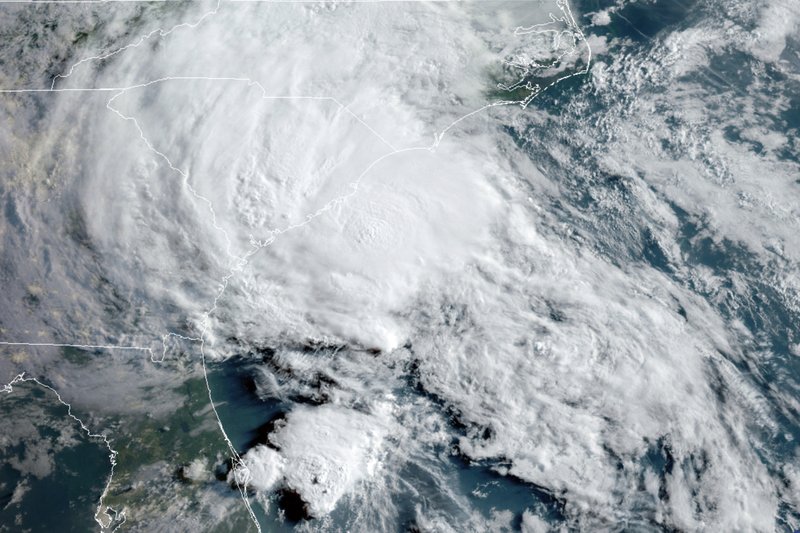
    MIAMI (AP) — Tropical Storm Bertha made landfall on South Carolina’s coast Wednesday morning shortly after it formed, becoming the second named storm before the official start of this year’s Atlantic hurricane season.

    A tropical storm warning was issued for South Carolina’s coast and the storm was expected to bring heavy rainfall, the U.S. National Hurricane Center said.

    Bertha’s maximum sustained winds were near 50 mph (80 kph) as it came ashore but it was expected to weaken to a tropical depression after moving inland. The storm was centered about 20 miles (40 kilometers) east of Charleston, South Carolina, and was moving northwest near 9 mph (15 kph).

    Along America Street in Charleston, residents awoke Wednesday to an intersection that had become a water-filled canal. Cars parked on the curb had water up to their doors, The Post and Courier reported.

    Garbage cans had spilled over, and dirty diapers, magazines and food scraps clogged drains in the area, the newspaper reported.

    Earlier this month, Tropical Storm Arthur brought rain to North Carolina before moving out to sea. It was the sixth straight year that a named storm has developed before June 1, the official start of the Atlantic hurricane season.

    The last time there were two named storms before June was in 2016, according to Phil Klotzbach, a research scientist with Colorado State University’s atmospheric science department. It also happened in 1887, 1908, 1951 and 2012, he said.

    “Most of these early season named storms form, at least in part, from non-tropical or subtropical processes and don’t necessarily imply anything about the remainder of the season,” Klotzbach said in an e-mail to The Associated Press.

  • ‘A step toward normalcy’ – NHL shapes a return to play plan

    Rosy as the news might sound, Gary Bettman made no promises in announcing the NHL has the framework of a plan in place to return to the ice.

    “We hope,” the commissioner said, “that this is a step back toward normalcy.”

    The league and its players overcame a significant hurdle Tuesday when Bettman formally unveiled a 24-team expanded playoff format in which games could start as early as late July in two yet-to-be-determined cities.

    The plan — as with anything involving forming a timetable around the coronavirus pandemic —- comes with no certainties.

    “Obviously, there are lots of things to be done,” Bettman said, noting health and safety come first. “But this marks a very important step along the journey that we’re undertaking.”

    Under the plan, the top four teams in each conference have already qualified for the round of 16, and will play a round-robin tournament to determine seeding. The remaining eight teams in each conference will be seeded and take part in best-of-five series to determine the remaining playoff teams.

    The NHL might be ahead of Major League Baseball and the NBA in terms of when and how it might return to action, but numerous questions remain before a puck is dropped in a meaningful game for the first time since hockey was put on pause in March.

    “You have to do these in a sequence. You have to prepare for what we hope is going to be a consensus that we can and should play,” NHL Players’ Association executive director Don Fehr told The Associated Press. “This is but a meaningful start, I think. But it’s only a start.”

    Timing is an issue. The NHL projects players might be allowed to begin returning for voluntary workouts next week.

    Another concern is how long it might take players, including the dozens who have spent the past few months with their families overseas, to return to their home cities and whether they will have to spend two weeks self-quarantining upon their return. There might be a solution for that.

    “We’ve reached an understanding with the Canadian government that players can cross the Canadian border as well both internationally from overseas but also from the United States so they can return to their home city without problem,” Deputy Commissioner Bill Daly said.

    The next phase will feature a roughly three-week training camp starting no earlier than July 1. The league hopes all 24 teams are cleared to hold full practices based on local health regulations.

    There are also outstanding questions on health and safety protocols, and determining which two cities will serve as hubs. Bettman announced the NHL has narrowed the list to 10: Chicago, Columbus, Ohio, Dallas, Las Vegas, Pittsburgh and Minneapolis/St. Paul in the U.S. and Edmonton, Toronto and Vancouver in Canada.

    Should all those issues be resolved, the NHL can then proceed with playing games.

    On the bright side, the NHL still has time on its hands in the event of needing a contingency plans, with Bettman saying the 2020-21 season could start at late as January.

    “If it has to slide more, then it’ll slide,” Bettman said, referring to the timetable. “There’s a reason that we’re not giving you dates now because anybody who gives you a date is guessing, and we think we’d rather take a more holistic approach to doing this.”

    Hockey is benefiting from what’s been an effective and collaborative approach conducted by its Return to Play committee, which features player and league representatives. The committee not only proposed the 24-team format, but also devised a list of protocols for teams to follow once players return to their facilities.

    Teams will be responsible for testing players during workouts and training camp, with the league taking over when games begin.

    Daly said players would be tested for COVID-19 daily and he added that medical advisers contend, for now, “that one single positive test depending on the circumstance should not necessarily shut the whole operation down.”

    “Obviously we can’t be in a situation where we have an outbreak, and that will affect our ability to continue playing,” Daly said. “But a single positive test or isolated positive tests throughout a two-month tournament should not necessarily mean an end to the tournament.

    The decision to call off the 189 regular-season games that were not played ends the season for Buffalo, New Jersey, Anaheim, Los Angeles, San Jose, Ottawa and Detroit.

    Those seven teams will now prepare for one of potentially two draft lotteries to determine the top 15 selections. The lottery will be held June 26, with another scheduled later depending on which of the remaining eight teams qualify for the 16-team playoff.

    Sabres co-owner and president Kim Pegula said the emphasis was placed on completing the season and ensuring the Stanley Cup will be awarded, even if it came at Buffalo’s expense. The Sabres extended their playoff drought to a ninth season, finishing just behind Montreal.

    “We’re all trying to find that right chord, what’s best for the league,” Pegula told The AP. “It’s one of those times when you’ve just got to look at it that way.”

  • Players call MLB economic proposal `extremely disappointing’

    Players call MLB economic proposal `extremely disappointing’

    NEW YORK (AP) — A rookie at the major league minimum would keep about 47% of his original salary this year while multimillionaire stars Mike Trout and Gerrit Cole would lose more than 77% under a sliding-scale proposal by big league teams that players found “extremely disappointing.”

    Major League Baseball made the proposal to the players’ union on Tuesday during a digital meeting rather than the 50-50 revenue-sharing plan that owners initially approved for their negotiators on May 11, several people familiar with the plan told The Associated Press. The people spoke on condition of anonymity because details were not announced.

    In addition to its reaction on the economics, the union said “the sides also remain far apart on health and safety protocols” aimed at starting the pandemic-delayed season around the Fourth of July. The sides have been grappling with how to aim for an opening day originally scheduled for March 26 but pushed back because of the new coronavirus.

    “We made a proposal to the union that is completely consistent with the economic realities facing our sport,” MLB said in a statement. “We look forward to a responsive proposal from the MLBPA.”

    Players agreed March 26 to a deal in which they would receive prorated shares of their salaries based on what percentage of each team’s 162-game schedule is played. In exchange, players were guaranteed that if no games are played they would receive service time for 2020 matching what they accrued in 2019.

    MLB has proposed an 82-game schedule and says the March 26 deal would result in huge losses because it did not necessarily account for a season with no fans in ballparks.

    Under the plan given the union Tuesday, a player would keep 90% of his salary up to the $563,500 big league minimum, including those with lower salaries while on optional or outright assignments in the minor leagues, according to information obtained by the AP.

    The amount would decrease to 72.5% from $563,501 though $1 million, to 50% from $1,000,001 through $5 million, to 40% from $5,000,001 through $10 million, to 30% from $10,000,0001 through $20 million and to 20% from $20,000,001 and up.

    Each player’s figure then would be prorated by the 82/162 formula agreed to in March, causing a loss of 49.4%.

    There would be an additional $200 million in postseason bonus money that would be given in a higher proportion to players with larger salaries.

    As a result, a player at the minimum would earn $262,217, according to calculations MLB gave the union. A $1 million salary would be cut to $434,143, $5 million to $1,642,113, $10 million to $2,947,895, $15 million to $4,049,497, $20 million to $5,151,099, $25 million to $6,048,520, $30 million to $6,945,942 and $35 million to $7,843,363.

    Any performance or award bonuses earned would be received at the rate for the income level they fall in.

    MLB estimates 2020 player salaries would drop from roughly $4 billion to $1.23 billion, including the postseason bonus pool.

    The revenue-sharing plan earlier this month was met with immediate hostility from the union the day owners gave their negotiators the go-ahead. That plan was not presented to players when talks began the following day.

    During that session, MLB gave the union a presentation claiming billions of dollars of anticipated losses and held off making an economic proposal for two weeks.

    Salaries in the major leagues range from the $563,500 minimum to $36 million each for Trout, the three-time MVP outfielder on the Los Angeles Angels, and Cole, the pitcher signed by the New York Yankees as a free agent this offseason.

    According to a study by the AP, 369 of 899 players have salaries of $600,000 or less, according to the rosters frozen in March.

    Under MLB’s proposal, the playoffs would expand from 10 teams to 14 and players would get bonus money if a complete postseason is played. Usually, salaries are earned during the regular season only and players receive money from the postseason pool, a maximum of about $382,000 last year for a full share on World Series champion Washington.

    MLB told the union on May 12 it hoped to play a season in which teams would face each division rival 13 times and every club in the corresponding division in the other league six times: AL East vs. NL East, for example.

    Several governors have said teams are welcome to play in their regular-season ballparks but without fans due to the new coronavirus and mandates for social distancing. MLB told the union during the May 12 presentation if teams paid players prorated salaries in a 2020 season with no fans in ballparks, the clubs would combine to have negative $3.58 billion earnings before interest, taxes, depreciation and amortization.

    Many players and union leadership have said the March 26 agreement would stand and no additional salary should be given up. Tampa Bay Rays All-Star pitcher Blake Snell, the 2018 AL Cy Young Award winner, said he would not take the mound this year if his pay is cut further, proclaiming: “I’m not playing unless I get mine.”

    Teams are worried about being at risk if a second wave of the virus causes cancellation of the postseason, which results in MLB receiving $787 million in broadcast revenue this year.

    There is room for maneuvering in the economic negotiations, but no commitment on what areas to delve into.

    Players could propose a longer regular season, which would result in receiving a higher percentage of their salary in the initial calculation of cuts. For instance, increasing to 94 games would reduce the initial cut from 49.4% to 42%. That could be accomplished by adding a week, inserting a few additional doubleheaders and eliminating a couple of off days.

    In addition, the sides could start to address next offseason’s market for spending on free agents and players eligible for arbitration. The union could propose suspending the luxury tax for 2020 and 2021, which in theory would give the higher-revenue teams more money to spend, and eliminating the loss of amateur draft picks for clubs signing qualified free agents.

    Lower-revenue clubs would want something in return. One possibility would be to give them additional competitive balance-round picks in amateur drafts, where a pick in the 42-52 range overall yields prospects with slot values of $1.4 million to $1.8 million who have a better chance historically of becoming big leaguers.

    As protection to teams against a lost postseason, salaries could be deferred with interest.

  • Elliott ends Busch’s win streak, collects $100,000 bounty

    Elliott ends Busch’s win streak, collects $100,000 bounty

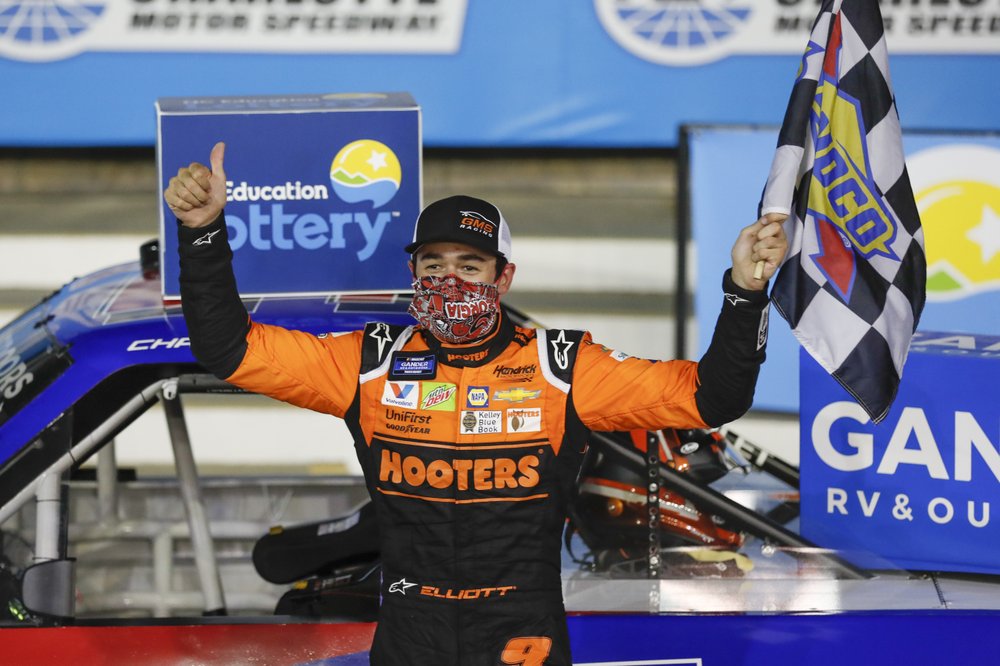
    CONCORD, N.C. (AP) — Chase Elliott gained a measure of revenge against Kyle Busch on Tuesday night — and then let him know about it.

    Elliott snapped Busch’s seven-race Truck Series winning streak and collected a $100,000 bounty at Charlotte Motor Speedway before imitating Busch’s victory celebration after the race by bowing to the camera.

    “Hopefully nobody gets their feelings hurt over it,” Elliott chuckled.

    Busch appeared noticeably upset after the race, but it had nothing to do with the bow.

    He cursed in an interview with Fox after the race.

    The interview wasn’t aired live, but Busch said “it sucks when you start the race with broken pieces after you’ve been sitting for six months. There’s going to be some (expletive) talking when I get home.”

    Busch was upset over a splitter problem that caused problems for his No. 51 Toyota all night long.

    Later, on a Zoom call, he was informed about Elliott’s bow.

    “Imitation is the strongest form of flattery or whatever it is. But, hmmm, that’s cute,” Busch said sarcastically.

    “It was a spur of the moment thing,” Elliott said. “I thought we had so much fun with this with Kevin (Harvick) putting up the money and Kyle was a good sport. It’s not a dig at anybody. It’s just having fun. It was about beating him and we did and had some fun with it.”

    Harvick pledged before the race to donate $50,000 to Covid-19 relief for any full-time Cup driver who finished ahead of Busch. Marcus Lemonis, the CEO of Gander RV & Outdoors, which sponsors the Truck Series, agreed to match Harvick’s pledge, bringing the total to $100,000 for pandemic relief. Elliott, John Hunter Nemechek and Brennan Poole were the three full-time Cup drivers eligible to collect the bounty.

    The win comes six days after Busch wrecked Elliott in a Cup Series race at Darlington and two days after Elliott’s costly decision to pit late in the Coca-Cola 600, opened the door for Brad Keselowski to steal an almost certain win from him had the race stayed green.

    “It doesn’t make up for Sunday but it was still a really good night,” Elliott said.

    It was Elliott’s first Truck Series race since 2017 when he won at Martinsville.

    He said he wanted to race at Charlotte just to beat Busch.

    “It was about beating Kyle and we did that so I guess I can quit now,” Elliott said.

    Zane Smith finished third and Brett Moffitt was fourth in the first truck race since Feb. 21.

    Busch had won 57 Truck Series races entering the night, the most of any driver in history, and appeared to be the favorite. But he could never chase down Elliott on a long green flag stretch to close the race, getting no closer than 0.3 seconds of the leader.

    Busch started 16th and quickly made a move to sixth place before splitter issues forced him to pit and dropped him back to 33rd place. But the winner of 210 races across NASCAR’s three top series quickly moved back into contention with a strong second stage and took the lead on lap 69.

    But when Busch pitted with 34 laps to go it dropped him all the way back to 23rd and he could never regain the lead. Busch said the problem involved some front travel limiters that prevent the splitter from crashing to the ground.

    He said “they just broke. First lap.”

    Busch called the problems self-inflicted.

    “Threw it away,” Busch said. “Had six months to prepare and screwed it up.”

    This was Busch’s third race in three nights. He followed up a fourth-place finish in the Coca-Cola 600 on Sunday by winning the Xfinity Series race on Monday in overtime after passing Austin Cindric on the final lap.

    For Elliott, the win ended a string of bad luck and should help his confidence heading into the second Cup race in four days at Charlotte Motor Speedway on Wednesday night.

    “It was certainly was rewarding,” Elliott said. “But it doesn’t fix the last two races on the Cup side. Those were really important for every day life and this doesn’t fix that.”

  • Swift firings for Minneapolis officers in death of black man

    Swift firings for Minneapolis officers in death of black man

    MINNEAPOLIS (AP) — To the general public, the video of a white police officer pressing his knee into the neck of a shirtless black man prone on the street, crying out for help until he finally stopped moving, was horrifying.

    Four officers were fired a day after George Floyd’s death, a stunning and swift move by the Minneapolis chief with the mayor’s full backing. But despite their dismissal, whether the incident will be considered criminal, or even excessive force, is a more complicated question that will likely take months to investigate.

    The officers were dismissed soon after a bystander’s video taken outside a south Minneapolis grocery store Monday night showed an officer kneeling on the handcuffed man’s neck, even after he pleaded that he could not breathe and stopped moving.

    Mayor Jacob Frey announced the firings on Twitter, saying: “This is the right call.”

    The FBI and state law enforcement were investigating Floyd’s death, which immediately drew comparisons to the case of Eric Garner, an unarmed black man who died in 2014 in New York after he was placed in a chokehold by police and pleaded for his life, saying he could not breathe.

    But in the Garner case, local prosecutors, the NYPD’s internal affairs unit, and the Justice Department all finished investigations into the case before the officer was ultimately fired. Garner’s family and activists spent years begging for the officer to be removed.

    The officers in the Minneapolis incident haven’t even been publicly identified, though one defense attorney has confirmed he is representing Derek Chauvin, the officer seen with his knee on Floyd’s neck. The attorney, Tom Kelly, declined to comment further.

    The police union asked the public to wait for the investigation to take its course and not to “rush to judgment and immediately condemn our officers.” Messages left with the union after the firings were not returned.

    Police Chief Medaria Arradondo said the department would conduct a full internal investigation, and prosecutors will decide whether to file criminal charges against the officers involved. The Hennepin County Attorney’s Office said it was “shocked and saddened” by the video and pledged to handle the case fairly. Part of that investigation will likely focus on the intent of the officers, whether they meant to harm Floyd or whether it was a death that happened in the course of police work. The FBI was investigating whether the officers willfully deprived Floyd of his civil rights.

    News accounts show Chauvin was one of six officers who fired their weapons in the 2006 death of Wayne Reyes, whom police said pointed a sawed-off shotgun at officers after stabbing two people. Chauvin also shot and wounded a man in 2008 in a struggle after Chauvin and his partner responded to a reported domestic assault. Police did not immediately respond to a request for Chauvin’s service record.

    In Minneapolis, kneeling on a suspect’s neck is allowed under the department’s use-of-force policy for officers who have received training in how to compress a neck without applying direct pressure to the airway. It is considered a “non-deadly force option,” according to the department’s policy handbook.

    A chokehold is considered a deadly force option and involves someone obstructing the airway. According to the department’s use-of-force policy, officers are to use only an amount of force necessary that would be objectively reasonable.

    But two use-of-force experts told The Associated Press that the officer clearly restrained the man too long. They noted the man was under control and no longer fighting. Andrew Scott, a former Boca Raton, Florida, police chief who now testifies as an expert witness in use-of-force cases, called Floyd’s death “a combination of not being trained properly or disregarding their training.”

    “He couldn’t move. He was telling them he couldn’t breathe, and they ignored him,” Scott said. “I can’t even describe it. It was difficult to watch.”

    In a post on his Facebook page, the mayor, who is white, apologized Tuesday to the black community for the officer’s treatment of Floyd, 46, who worked security at a restaurant.

    “Being Black in America should not be a death sentence. For five minutes, we watched a white officer press his knee into a Black man’s neck. Five minutes. When you hear someone calling for help, you’re supposed to help. This officer failed in the most basic, human sense,” Frey posted.

    Police said the man matched the description of a suspect in a forgery case at a grocery store, and that he resisted arrest.

    The video starts with the shirtless man on the ground, and does not show what happened in the moments prior. The unidentified officer is kneeling on his neck, ignoring his pleas. “Please, please, please, I can’t breathe. Please, man,” said Floyd, who has his face against the pavement.

    Even in the coronavirus pandemic that has killed nearly 100,000 people in the U.S. and prompted police departments around the country to change how they’re doing work, the officers in the video aren’t wearing masks. In some cities, low-level arrests such as attempted forgery are skipped right now.

    Floyd also moans. One of the officers tells him to “relax.” Floyd calls for his mother and says: “My stomach hurts, my neck hurts, everything hurts … I can’t breathe.” As bystanders shout their concern, one officer says, “He’s talking, so he’s breathing.”

    But Floyd slowly becomes motionless under the officer’s restraint. The officer does not remove his knee until the man is loaded onto a gurney by paramedics.

    Several witnesses had gathered on a nearby sidewalk, some recording the scene on their phones. The bystanders become increasingly agitated. One man yells repeatedly. “He’s not responsive right now!” Two witnesses, including one woman who said she was a Minneapolis firefighter, yell at the officers to check the man’s pulse. “Check his pulse right now and tell me what it is!” she said.

    At one point, an officer says: “Don’t do drugs, guys.” And one man yells, “Don’t do drugs, bro? What is that? What do you think this is?”

    The Hennepin County medical examiner identified Floyd but said the cause of death was pending.

    Floyd had worked security for five years at a restaurant called Conga Latin Bistro and rented a home from the restaurant owner, Jovanni Thunstrom.

    He was “a good friend, person and a good tenant,” the restaurateur told the Star Tribune. “He was family. His co-workers and friends loved him.”

    Protesters filled the intersection Tuesday evening in the street where Floyd died, chanting and carrying banners that read, “I can’t breathe” and “Jail killer KKKops.” They eventually marched about 2 1/2 miles to a city police precinct, with some protesters damaging windows, a squad car and spraying graffiti on the building.

    A line of police in riot gear eventually confronted the protesters, firing tear gas and projectiles. Some protesters kicked canisters back toward police. Some protesters stacked shopping carts to make a barricade at a Target store across the street from the station, and though steady rain diminished the crowd, tense skirmishes stretched late into the evening.

    Ben Crump, a prominent civil rights and personal injury attorney, said he had been hired by Floyd’s family.

    The death came amid outrage over the death of Ahmaud Arbery, who was fatally shot Feb. 23 in Georgia after a white father and son pursued the 25-year-old black man they had spotted running in their subdivision. More than two months passed before charges were brought. Crump also represents Arbery’s father.

  • Virus expands grip in many areas, as US nears 100,000 deaths

    Virus expands grip in many areas, as US nears 100,000 deaths

    SEOUL, South Korea (AP) — South Korea reported its highest number of new coronavirus infections in weeks on Wednesday and India saw another record single-day jump of more than 6,000 cases, as the pandemic expanded its grip across much of the globe.

    Still, optimism over reopening economies from business shutdowns to fight the virus spurred a rally on Wall Street, even as the official U.S. death toll approached 100,000.

    Outbreaks are still climbing in much of the Americas, while many countries in Asia and much of Europe are making steady progress in containing the deadliest pandemic in years.

    Cyprus announced Wednesday that it was preparing to welcome tourists back on June 9 and would cover all costs — lodging, food, drink and medication — for anyone testing positive for the coronavirus, and their family members, while on vacation in the east Mediterranean island nation.

    The pledge came in a five-page letter that was sent out to governments, airlines and tour operators outlining strict health and hygiene protocols, including a requirement for COVID-19 testing three days before departure, as the tourism-reliant country seeks to woo vacationers. Cyprus has confirmed about 940 cases of the virus and fewer than 20 deaths.

    In New Zealand, which is still banning foreign arrivals, the Ministry of Health said there were no COVID-19 patients under treatment in the country’s hospitals. The nation took aggressive and early action to stop transmissions and has reported only 21 deaths. It has 21 active cases out of 1,504 confirmed and probable ones.

    In South Korea, 40 newly confirmed cases — the biggest daily jump in nearly 50 days — raised alarm as millions of children were returning to school.

    All but four of the new cases were in the densely populated Seoul region, where officials are scrambling to stop transmissions linked to nightclubs, karaoke rooms and an e-commerce warehouse. South Korea has reported 269 deaths and 11,265 cases, after managing to contain a severe earlier outbreak.

    Authorities were testing 3,600 employees of a local e-commerce giant, Coupang, after discovering dozens of coronavirus infections linked to workers at the company’s warehouse near Seoul.

    India saw another record single-day jump, reporting 6,387 new cases on Wednesday, as the government prepared new guidelines for the next phase of a 2-month-old national lockdown that is due to end on Sunday.

    In the Americas, from Mexico to Chile, health officials were reporting surging coronavirus cases and overwhelmed hospitals.

    Mexico’s health department reported 501 deaths from the coronavirus on Tuesday, a new one-day high, and 3,455 more infections. Its daily death toll is approaching that of the U.S., at about 620. Brazil currently leads in daily deaths with more than 800.

    Authorities in Chile said their intensive care units were near full capacity, with about 4,000 new cases being confirmed daily. “This is an extraordinarily difficult time,” Health Minister Jaime Mañalich said.

    A U.S. travel ban took effect Tuesday for foreigners coming from Brazil, where President Jair Bolsonaro has raged against state and local leaders enforcing stay-at-home measures despite warnings that the outbreak is deepening.

    Brazil has about 375,000 coronavirus infections — second only to the 1.6 million cases in the U.S. — and has counted over 23,000 deaths, but many fear its true toll is much higher.

    Worldwide, the virus has infected nearly 5.6 million people and killed over 350,000, according to a tally by Johns Hopkins University. Europe has recorded about 170,000 deaths, while the U.S. has reported more than 98,900 in a span of less than four months, more than the number of Americans killed in the Vietnam and Korean wars combined.

    The actual number of deaths is thought to be significantly higher, with experts saying many victims died of the virus without ever being tested for it.

    President Donald Trump several months ago likened the coronavirus to the flu and dismissed worries that it could lead to so many deaths. The administration’s leading scientists have since warned that as many as 240,000 could die from the virus.

    The White House said Tuesday that the president was committed to holding a Fourth of July celebration in the nation’s capital even as local officials warned that the region — one of the hardest hit by the coronavirus — will not be ready to hold a major event.

    “Given the number of individuals that would try to attend such an event, logistically such an event would be impossible to put on safely,” lawmakers from the city wrote in a statement.

    Washington Mayor Muriel Bowser said Tuesday that the city won’t be issuing any permits for large gatherings in the immediate future. The capital is still under a stay-at-home order, with plans to shift to Phase One of its reopening this weekend.

    Reopenings are pushing ahead even as more than a dozen states are still seeing increasing numbers of new cases. News of relaxations of precautions was cheered on Wall Street, with the S&P 500 closing 1.2% higher, and the Dow Jones Industrial Average gaining nearly 530 points, or 2.2%.

    Nevada Gov. Steve Sisolak announced Tuesday night that casinos can reopen on June 4, welcoming tourists to the gambling mecca of Las Vegas. Sisolak shuttered the casinos, which draw millions of tourists and power the state economy, 10 weeks ago to help stop the spread of the coronavirus.

    In New York, the state with the highest death toll from the virus, Gov. Andrew Cuomo said it was time to focus on relaunching New York City’s moribund economy. After ringing open the New York Stock Exchange’s trading floor for the first time in two months, he laid out a plan that included accelerating major infrastructure projects and tackling transmission of the virus in the hardest-hit neighborhoods.

    Cuomo reported a one-day total of 73 deaths on Tuesday, the lowest figure in months.

    “In this absurd new reality, that is good news,” he said.

  • Judge: Health Dept. must respond to public records request

    Judge: Health Dept. must respond to public records request

    JACKSON, Miss. (AP) — A Mississippi judge ruled Tuesday that the state Health Department must respond to a newspaper’s public records request about long-term care facilities where outbreaks of the new coronavirus have occurred.

    Hinds County Chancery Judge Tiffany Grove granted an emergency injunction in favor of Hattiesburg Publishing Inc., which owns the Pine Belt News.

    Grove wrote that the Health Department has seven days to either provide information what the newspaper is requesting or cite a specific exemption in the state Public Records Act for denying the information.

    The judge wrote that “the public interest is served by maintaining transparency and public access to public information when the appropriate requests for such information are made.”

    The publishing company filed a lawsuit May 12 against the Health Department, saying that the department had improperly denied the newspaper’s request for the names of Forrest County nursing homes where at least one case of COVID-19 had been found. The lawsuit said the department spokeswoman did not provide a specific reason for not releasing the information and said her action violated the state’s public records law.

    Other news organizations have sought the names of nursing homes where coronavirus cases have been found.

    The state health officer, Dr. Thomas Dobbs, said in response to questions at a May 13 news conference that the Health Department will not release the names of long-term care facilities where residents or employees test positive for COVID-19, just as it does not release the names of facilities where other diseases such as tuberculosis are found.

    “Ever since I’ve been at the Department of Health, we’ve recognized the real potential danger of identifying nursing homes in outbreaks,” Dobbs said. “In other states, we’ve seen adverse events where people are identified and stigmatized and even the centers were stigmatized. If a center gets stigmatized, there’s difficulty finding staff, and then there is a possibility of undermining the integrity of the care.”

    In a news release Tuesday, Pine Belt News publisher David Gustafson praised Grove’s ruling.

    “Unfortunately, we live in a day and age when secrecy in government generates suspicion and mistrust on the part of our citizenry and I’m proud to lead a news organization that isn’t afraid to ask the tough questions and seek the answers that our readers deserve,” Gustafson said.

    The Health Department said Tuesday that at least 1,727 cases of the virus have been confirmed in long-term care facilities such as nursing homes, with at least 332 virus-related deaths in those facilities.

    Dobbs also said Tuesday that the department has completed coronavirus testing on about 60% of residents and employees of long-term care facilities in the state, with a goal of testing all of them within days.

    For most people, the coronavirus causes mild or moderate symptoms, such as fever and cough. For others, especially older adults and people with existing health problems, it can cause severe symptoms and be fatal.