Author: Imported Author 1932006

  • Trump: Aim of killing Iranian general was to ‘stop a war’

    WASHINGTON (AP) — President Donald Trump said Friday he ordered the killing of a top Iranian general “to stop a war,” not start one, but in the tense aftermath the Pentagon braced for retaliation by sending more troops to the Middle East. Democrats complained that Trump hadn’t consulted Congress, and some worried that the strike made war more likely.

    Secretary of State Mike Pompeo argued the U.S. case with allies in the Middle East and beyond, asserting that Friday’s drone strike killing Gen. Qassem Soleimani was a necessary act of self defense. He asserted that Soleimani was plotting a series of attacks that endangered many American troops and officials across the Middle East.

    The ramifications of Trump’s decision to kill Soleimani were still coming into focus Friday; they could include an end to the U.S. military partnership with Iraq in fighting the Islamic State extremist group. Some Iraqi politicians called the attack, which also killed an Iraqi general, a violation of Iraqi sovereignty and questioned whether U.S. forces should be expelled. The U.S. has about 5,200 troops in Iraq, mostly to train and advise Iraqi forces fighting IS.

    In brief remarks to the nation, Trump said the Iranian general had been plotting “imminent and sinister” attacks. At the Pentagon, Army Gen. Mark Milley, chairman of the Joint Chiefs of Staff, said the U.S. had “compelling, clear, unambiguous intelligence” of Soleimani plotting violent acts.

    “Oh, by the way, it might still happen,” Milley said, referring to the planned attacks.

    Trump called Soleimani a ruthless figure who “made the death of innocent people his sick passion. … We take comfort in knowing that his reign of terror is over.”

    The president warned Iran against retaliating. He said the U.S. military has Iranian targets “fully identified” for counter-retaliation. The U.S. has a wide range of offensive and defensive forces in the Gulf area within range of Iran.

    Asked about possible retaliation, Milley told reporters, “Is there risk? You’re damn right there’s risk.” He added, “There is a range of possible futures here, and the ball is in the Iranian court.”

    As Iran warned of “harsh” reprisals, the U.S. Homeland Security Department watched for trouble brewing on the domestic front and reported “no specific, credible threats” in the first hours after the American attack in Baghdad, said the department’s acting secretary, Chad F. Wolf.

    Senior State Department officials, in a briefing for reporters, said the drone strike near the Baghdad international airport was based on intelligence that suggested Soleimani was traveling in the area to put final touches on plans for attacks that would have hit U.S. diplomats, troops and American facilities in Iraq, Lebanon, Syria and elsewhere in the Mideast. The officials, who spoke on condition of anonymity under State Department ground rules, would not be more specific about the intelligence but said it clearly called for a decisive U.S. response.

    Democrats in Congress questioned the administration’s approach, while making clear they don’t regret Soleimani’s demise. Sen. Mark Warner, a Virginia Democrat, noted that Pompeo said the administration wants to “de-escalate” tensions with Iran.

    “I think the jury’s out on that,” Warner said. “I hope they’re successful on that. I think it could have brought in more congressional leaders and allies to help make that case ahead of time.”

    Rep. Adam Schiff, a California Democrat, said he has not heard a satisfactory explanation for the timing of the U.S. attack.

    “And the question is why the administration chose this moment, why this administration made the decision to remove him from the battlefield and other administrations, both parties, decided that would escalate the risks, not reduce them,” he said.

    Fears about the repercussions of killing Soleimani persisted throughout the administrations of President George W. Bush, a Republican, and President Barack Obama, a Democrat, according to officials who served under both. Soleimani, they calculated, was just as dangerous dead and martyred as he was alive and plotting against Americans.

    A decades-long U.S. nemesis, Iran holds a range of options for striking back, militarily or otherwise. Tens of thousands of American troops in the Persian Gulf area, including in Iraq and Qatar, are within easy range of Iranian missiles, and Iran has the capability to act more clandestinely with cyber attacks or military proxy strikes on U.S. targets abroad.

    Last summer, following a string of intelligence indications that Iran was planning attacks on U.S. targets in the Gulf area, the Pentagon accelerated the deployment of an aircraft carrier to the region and deployed additional missile defenses. In all, about 14,000 additional U.S. troops were sent to the area over the summer and fall, but that did not deter Iran, which is feeling an extreme squeeze from U.S. sanctions that have all but shut off its oil exports.

    The final sequence of actions leading to the killing of Soleimani began in October with rocket attacks in Iraq that Washington blamed on Iran-supported Shiite militias. A Dec. 27 rocket attack near Kirkuk killed an American contractor and wounded U.S. and Iraqi soldiers. The U.S. blamed an Iran-backed militia called Kataeb Hezbollah, or KH, and on Dec. 29 it bombed five KH-linked facilities. Two days later, KH militiamen and their supporters stormed the U.S. Embassy compound in Baghdad, an attack Trump cited as evidence that Soleimani deserved to be eliminated.

    “The Iranian regime’s aggression in the region, including the use of proxy fighters to destabilize its neighbors, must end and it must end now,” Trump said.

    Trump’s final pre-strike consultations were held behind the palm trees at his Mar-a-Lago club in Palm Beach, Florida, where the president has spent two weeks largely out of sight before his impeachment trial in the Senate. In the days before the attack, Trump huddled with aides, including Pompeo and his national security adviser, Robert O’Brien.

    After the Soleimani killing, Pompeo announced that he was placing the Iran-backed Iraqi militia Asaib Ahl al-Haq on the State Department’s “foreign terrorist organization” blacklist, which blocks any assets the group may have in U.S. jurisdictions and bars Americans from providing it with material support.

    The Pentagon was largely silent Friday on details of the drone strike and its aftermath. Officials announced the deployment of nearly 3,000 additional soldiers from the 82nd Airborne Division at Fort Bragg, North Carolina, to Kuwait as reinforcements. Separately, the 173rd Airborne Brigade, based in Italy, had been placed on alert for possible deployment of parts of the brigade to Lebanon to help defend the U.S. Embassy in Beirut.

    The additional troop deployments reflect concerns about potential Iranian retaliatory action. But they also run counter to Trump’s repeated push to extract the United States from Mideast conflicts. He has repeatedly called for withdrawing from Syria and Afghanistan, but over the past year he has greatly increased U.S. troop totals in the Middle East.

    More broadly, some congressional Democrats and national security analysts questioned whether the Trump administration is prepared for Iranian retaliation and the prospect of political backlash in Iraq, where American troops are working with Iraqi forces in a sometimes tense partnership against the Islamic State extremist group. The Pentagon said it wants to sustain that work, but some Iraqi leaders said it might be time for U.S. troops to leave.

    In Baghdad, Prime Minister Adel Abdul-Mahdi condemned the American drone strike, which also killed an Iraqi general who was deputy commander of the Iranian-backed militias in Iraq known as the Popular Mobilization Forces. Abdul-Mahdi called the killings an “aggression against Iraq.” An emergency session of parliament was called for Sunday, and the deputy speaker, Hassan al-Kaabi, said it would make “decisions that put an end to the U.S. presence in Iraq.”

    Ordering out American forces would heavily damage Washington’s influence and make the U.S. troop presence in neighboring Syria more tenuous. But Iraq’s leadership is likely to be divided over such a step. President Barham Salih called for “the voice of reason and wisdom to dominate, keeping in mind Iraq’s greater interests.”

    Associated Press writers Lisa Mascaro, Jonathan Lemire and Matthew Lee contributed.
  • Karma Had a Hand in Top 5 ‘Feel-Good’ Sports Moments of 2019

    Karma Had a Hand in Top 5 ‘Feel-Good’ Sports Moments of 2019

    Karma had a career year in 2019.

    She draped a green jacket on Tiger Woods, handed soccer’s World Cup to a tough-as-nails U.S. Women’s National Team, shipped the NBA’s Larry O’Brien Trophy to a cool-as-they-come rookie coach and players from the Great White North, righted a wrong that happened a quarter-mile from the finish line at the Kentucky Derby, and turned a baseball tribute to a fallen teammate into something truly unforgettable.

    So if sports didn’t make you smile at least once in the last 12 months, well, that’s probably on you. Here are the top five feel-good stories of 2019 (and one honorable mention):

    — Fourteen years after his last Masters win and 11 years after his last major, after fighting through chronic back problems, multiple surgeries, a bout with painkillers and long after just about everybody had written him off, Woods claimed his fifth green jacket in April.

    “It’s overwhelming, just because of what’s transpired,” he said afterward. “It’s unreal for me to experience this.”

    His win was called the “greatest comeback in sports,” “the feel-good story of the century” and some pundits predicted that people would forever remember where they were when Woods walked off the 18th at Augusta National.

    But it might not even have been the most karmic moment in golf in 2019.

    (Honorable mention) At the Phoenix Open in late January, PGA Tour pro Gary Woodland helped Amy Bockerstette, a community college golfer with Down Syndrome, finish off one of the most heart-warming pars golf has ever seen. At the U.S. Open in June, he borrowed her mantra — “I’ve got this” — en route to the biggest win of his career.

    Playing with Woodland in front of a big practice-day crowd at the famed 16th hole, Bockerstette sensed he was more nervous than she was. So before each shot, she put Woodland at ease with the words she repeats when tackling life’s other challenges: “I’ve got this.”

    Five months later, with Woodland leading the U.S. Open after three rounds, Bockerstette did it again. He’d held the 54-hole lead at a PGA Tour event seven times before and failed to seal the deal. Woodland said Bockerstette’s tweet the night before the final round helped make a difference this time.

    “Amy told me a million times when we were on that hole … ‘I’ve got this, I’ve got this,’” Woodland recalled after his win at Pebble Beach. “And I told myself that a million times today, ‘I’ve got this.’”

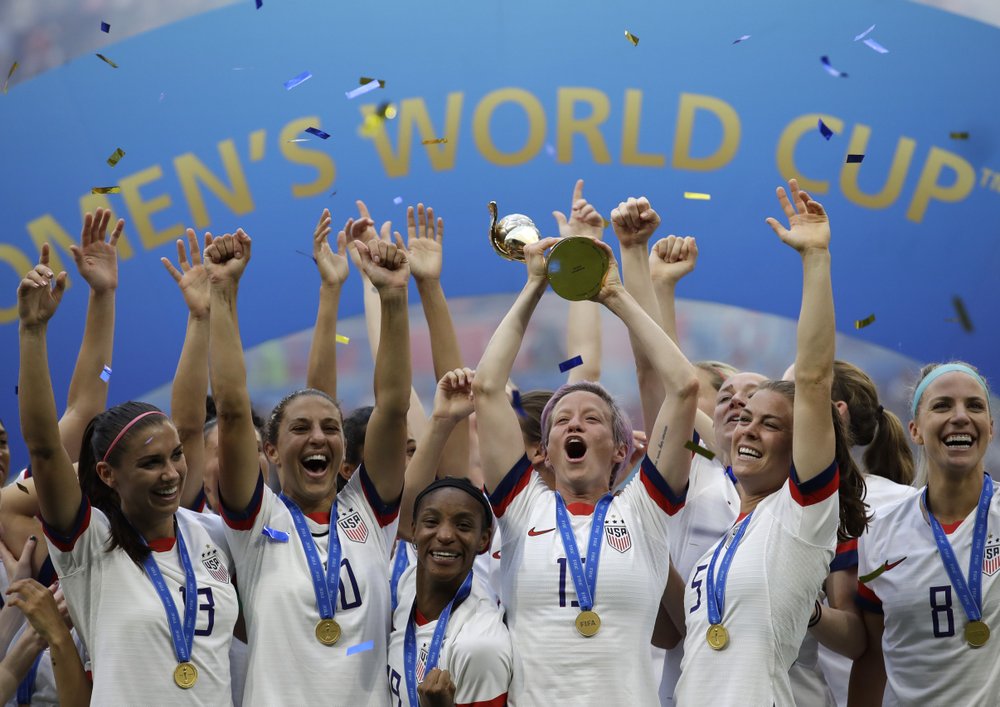
    — The U.S. National Women’s Team hardly needed reassuring. If anything, captain Megan Rapinoe and her teammates were deemed too brash as they gallivanted across France in pursuit of their third World Cup — and second in a row. Along the way, they sparred with President Trump over politics and highlighted a gender-discrimination lawsuit against their own federation in a fight for recognition and equal pay.

    They scored 13 goals against lowly Thailand in a group-stage match and caught flak for celebrating too much. They responded by celebrating subsequent tallies with snarky golf claps and tea-time toasts, remaining ruthless until the final whistle in a 2-0 championship-game win over the Netherlands. That’s what happens when you send women to do a job that the better-paid men’s national team has never come close to completing.

    “We’ve done exactly what we set out to do, done exactly what we wanted to do, said what we feel,” said Rapinoe. “I know sometimes my voice is louder, but everybody is in this together.”

    — The Toronto Raptors, on the other hand, weren’t marked for greatness until that moment in Game 7 of a playoff series against Philadelphia, when Kawhi Leonard’s buzzer-beating, fadeaway jumper bounced four times on the rim before capping a 92-90 win.

    “It looked like it was going in the whole time to me,” quipped Raptors rookie coach Nick Nurse afterward.

    Lucky or not, the Raptors turned that break into a title. They outlasted Milwaukee in the Eastern Conference final and riding Leonard’s masterful performances on both ends of the floor, ended the Golden State Warriors’ dynastic dreams in six games.

    Not long after the championship parade wound its way through Toronto, Leonard announced he was leaving town to join the Los Angeles Clippers. Undaunted, Nurse went back to work and has the Raptors back in contention. Over more than three decades, he’d coached in Great Britain, at G-League stops in Des Moines, Iowa, and Edinburg, Texas, and starting over was nothing new.

    “He looks young,” Raptors guard Kyle Lowery said, “but he’s pretty old.”

    — A drenching early May rainstorm turned the Churchill Downs track sloppy even before the start of the 145th Kentucky Derby. But the real mess materialized at the end, when Maximum Security, the first horse across the finish line, also became the first winner disqualified for an in-race foul.

    Track stewards pored over replays for 22 agonizing minutes before awarding the win to Country House, ruling that Maximum Security had drifted into the path of War of Will, setting off a dustup that affected at least two other horses. That decision turned the tote board upside-down and handed Bill Mott, a training legend who’d won everything else racing has to offer, his first Kentucky Derby.

    “I’m glad I wasn’t in their shoes,” Mott said. “I’m glad I didn’t have to make the decision in front of over 100,000 people and the millions of people that are watching this on TV and around the world.”

    — The sudden death of popular Los Angeles Angels left-hander Tyler Skaggs in early July rocked the baseball world. His death was later attributed to an overdose of opioids, sparking a rare agreement between Major League Baseball and the players union to add a treatment-based approach and evaluation protocol regarding opioid use to the current drug-testing program.

    But the Angels weren’t thinking long-term when they planned to honor Skaggs in their first home game — against the Seattle Mariners — after more than a week away. They wanted his teammates and fans to remember a promising young pitcher whose personality lit up the clubhouse.

    The Angels players donned jerseys with Skaggs’ name and his No. 45 on the back. His mother, Debbie, threw out the first pitch. Then the magic started.

    Mike Trout hit a 454-foot home run to open the scoring. Pitchers Taylor Cole and Felix Pena combined to throw a no-hitter — the 11th in franchise history, which was the number Skaggs wore in high school. After scoring seven times in the first inning, the final score was 13-0, which aligned with Skaggs’ 7/13 birthday.

    After the final out, the Angels ventured out to the mound and laid their jerseys on the bump.

    “Every time you’d go up to him, he’d have that smirk on his face. Either sarcastically, jokingly, or he was trying to put a smile on your face,” Trout recalled. “We’re always going to be thinking about him.”

  • US stocks nearly flat at early close for Christmas

    US stocks nearly flat at early close for Christmas

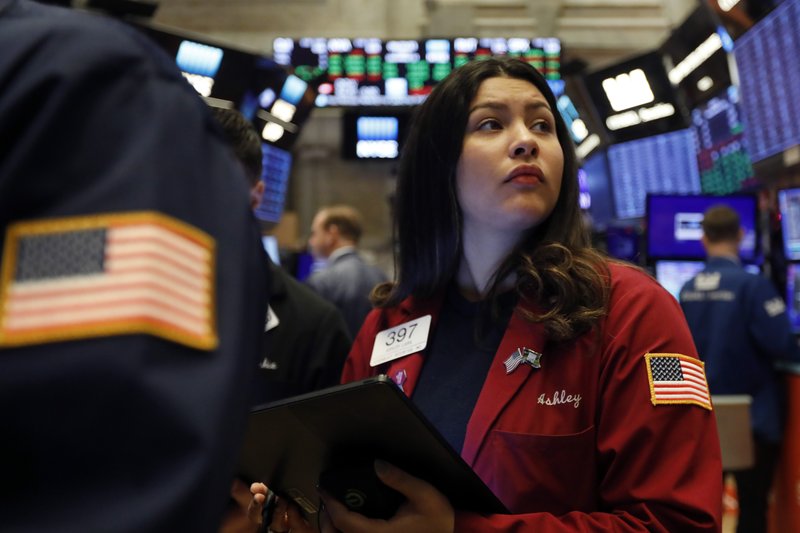
    Major US stock indexes are closing nearly flat in muted trading as the market closes early for the Christmas holiday. Industrial and health care stocks are the biggest losers. Those losses outweigh broad gains for retailers and homebuilders. The market’s modest pullback follows a strong winning streak for stocks that has propelled the major indexes to record highs this month. The benchmark S&P 500 index has finished with a weekly gain in 10 out of the past 11 weeks. The S&P 500 was down less than 0.1%. The Dow is down 0.1%. The Nasdaq composite was up less than 0.1%.

    THIS IS A BREAKING NEWS UPDATE. AP’s earlier story follows below.

    Major U.S. stock indexes wavered between small gains and losses Tuesday morning in muted trading ahead of an early close for the Christmas holiday.

    Industrial and health care stocks were the biggest decliners. Cintas lost 1.2% and Edwards Lifesciences fell 1.1%.

    Those losses outweighed broad gains for retailers , restaurant chains and other companies that rely on consumer spending. Home Depot rose 0.7%, Ross Stores added 0.9% and Yum Brands rose 0.4%.

    Homebuilders bounced back Tuesday after falling broadly the day before following a disappointing home sales report. Lennar climbed 1.8% and D.R. Horton rose 0.7%

    Several energy stocks notched gains as the price of crude oil headed higher. Diamondback Energy rose 1.9%.

    The market’s modest slide follows a strong winning streak for stocks that has propelled the major indexes to record highs this month. The benchmark S&P 500 index has finished with a weekly gain in 10 out of the past 11 weeks.

    Rising optimism around a “Phase 1” trade deal announced earlier this month between the United States and China helped put investors in a buying mood in recent weeks. Fears about a possible recession have also faded since the summer after the Federal Reserve cut interest rates three times, and the central bank appears set to keep them low for a long time.

    Still, as traders turn their attention to 2020, fears about the outlook for the global economy remain as do concerns over unresolved trade issues between Washington and Beijing. Next year also has the added complication of the U.S. presidential election.

    KEEPING SCORE: The S&P 500 was down less than 0.1% as of 11:37 a.m. Eastern time. The Dow Jones Industrial Average dropped 26 points, or 0.1%, to 28,524. The Nasdaq composite recovered from an early slide. It was up less than 0.1%.

    Markets are scheduled to close at 1:00 pm. Eastern time.

    SHARE THIS: Uber rose 1.2% on news that ex-CEO Travis Kalanick will resign from the board next week, effectively severing ties with the ride-hailing company he co-founded a decade ago. Kalanick was ousted as CEO in the summer of 2017 with the company mired in numerous lawsuits.

    The departure did not come as a surprise. Kalanick recently sold more than $2.5 billion worth of shares in the company, more than 90% of his holdings.

    SOLID GOLD: Shares in mining company Freeport-McMoRan are up 2.2% as the price of gold rose. Gold gained $15.10, or 1%, to $1,503.60 per ounce.

    MORTGAGE RATE IMPACT: Homebuilders rose as the 10-year Treasury yield declined. Mortgage rates tend to track the yield, so a lower yield can make a home loan less expensive, giving homebuyers more pricing power. Lennar climbed 1.9%.

    YIELDS: The 10-year Treasury yield slipped to 1.91% from 1.93% late Monday.

    ENERGY: Benchmark U.S. crude oil gained 51 cents to $61.03 per barrel. Brent crude, the international standard, added 68 cents at $66.10 per barrel.

    MARKETS ABROAD: Stock markets in Europe were either closed or were open for limited hours Tuesday. Britain’s FTSE 100 index closed 0.1% higher, while the CAC 40 in Paris ended flat. Both markets opened for only half the day, and will remain closed until Friday. Germany’s DAX was closed for Christmas Eve and it won’t reopen until Friday.

    Major stock indexes in Asia finished mixed. Tokyo’s Nikkei 225 closed less than 0.1% higher, while Hong Kong’s Hang Seng shed 0.2%. Seoul’s Kospi declined 0.6%, while Sydney’s S&P-ASX inched 0.1% higher. New Zealand and Singapore advanced, while Taiwan and India declined.

  • Trump rallies supporters as House impeaches him

    BATTLE CREEK, Mich. (AP) — Defiant in the face of a historic rebuke, President Donald Trump labeled his impeachment by the House of Representatives on Wednesday “a suicide march” for the Democratic Party.

    “Crazy Nancy Pelosi’s House Democrats have branded themselves with an eternal mark of shame,” Trump told the crowd at a campaign rally in battleground Michigan, where he took the stage just minutes before becoming only the third president in U.S. history to be impeached. “It’s a disgrace”

    It was a dramatic and discordant split-screen moment, with Trump emerging from a mock fireplace like Santa Claus at the Christmas-themed rally as the impeachment debate in Washington was underway.

    As he spoke — seemingly unaware of the unfolding votes for a stretch — the House voted to impeach him on two counts. The first charges him with abuse of power for allegedly pressuring the president of Ukraine to investigate his Democratic rivals while crucial U.S. security aid was being withheld. The second charges him with obstruction of Congress for stonewalling investigative efforts.

    While Trump and his aides have tried to brush off the significance of the vote — noting there is little chance he will be convicted by the Republican-controlled Senate and removed from office — allies say Trump has been fuming over the stain that impeachment will leave on his legacy.

    Youtube video thumbnail

    Yet even as Trump slammed his impeachment as “illegal” and accused Democrats of demonstrating “deep hatred and disdain” for voters, he spent much of his speech zigzagging through a litany of unrelated topics. He offered an extended riff on U.S. pilots being cuter than “Top Gun” star Tom Cruise, went after Democratic presidential candidate Pete Buttigieg’s difficult-to-pronounce last name and reveled — yet again — in his 2016 victory.

    And after a day of harsh tweets, Trump at times projected a less-concerned demeanor.

    “It doesn’t really feel like we’re being impeached,” he said, later adding: “I don’t know about you, but I’m having a good time. It’s crazy.”

    At another point, he declared: “I’m not worried. I’m not worried.”

    Trump also worked to highlight the Republicans who have stood with him, telling the crowd that the Republican Party has “never been so united” and predicting victory in 2020.

    He unleashed plenty on Democrats, declaring, “After three years of sinister witch hunts, hoaxes, scams, tonight the House Democrats are trying to nullify the ballots of tens of millions of patriotic Americans.

    “You are the ones interfering in America’s elections. You are the ones subverting American democracy,” he said of Democrats.

    Aides had said that Trump would wait to see the House vote before coming out to address the rally, but he didn’t wait, appearing onstage ahead of the votes and promising “the best speech you’ve ever heard.”

    Throughout the day, Trump had stared down the impending vote as he has every obstacle in his presidency: by broadcasting his grievances via tweet.

    “Can you believe that I will be impeached today by the Radical Left, Do Nothing Democrats, AND I DID NOTHING WRONG!” Trump wrote in one of 45 tweets posted before noon. He asked his followers to “Say a PRAYER!”

    Trump’s urgency appeared to escalate as he switched to all capital letters: “SUCH ATROCIOUS LIES BY THE RADICAL LEFT, DO NOTHING DEMOCRATS. THIS IS AN ASSAULT ON AMERICA, AND AN ASSAULT ON THE REPUBLICAN PARTY!!!!”

    As the impeachment debate wore on, Trump aides, including White House counselor Kellyanne Conway, fanned out across Capitol Hill to bolster the president’s message that impeachment is helping Republicans and damaging Democrats. Vice President Mike Pence got to Michigan ahead of Trump for a daylong bus tour before the Battle Creek rally.

    Serving as a warm-up act for Trump at the rally, Pence labeled the impeachment drive “a disgrace” and told the crowd that Democrats were “trying to impeach this president because they know they can’t defeat this president.”

    He said Pelosi and the Democrats are “having their say tonight, but the Republican Senate is going to have their say in January.”

    Conway said recent polling and the influx of money suggest “this entire exercise has blown up in the Democrats’ face.” Polls indicate the public is divided over whether Trump should be impeached and removed from office, though opinions have generally remained steady.

    Trump’s campaign has experienced a surge in contributions and volunteers during the impeachment inquiry and aides were hoping to raise an additional $2 million Wednesday ahead of the votes.

    Rep. Kevin McCarthy, the House minority leader, and Rep. John Ratcliffe, R-Texas, said they were among a group of GOP lawmakers who met with Trump at the White House on Tuesday evening to talk strategy about Wednesday’s House session and the likely Senate trial in January.

    McCarthy insisted that Trump remains focused on moving forward with his agenda, despite the implications for his legacy.

    “Anybody else, this would be traumatic for them,” McCarthy said. “I’ve never seen a man so strong. … He is focused on what the American people need.”

    It was a message repeated by White House press secretary Stephanie Grisham, who insisted on “Fox & Friends” that “I must tell you that while he’s frustrated … he is also so focused, and he is leading our White House and keeping us calm and telling us, ‘That’s OK, we’re going to move forward, we’re focused, this is going to take us through to 2020.’”

    ___

    Colvin reported from Washington. Associated Press writers Aamer Madhani and Kevin Freking in Washington and Jonathan Lemire in New York contributed to this report.

  • President Donald Trump impeached by US House on 2 charges

    WASHINGTON (AP) — President Donald Trump was impeached by the U.S. House of Representatives Wednesday night, becoming only the third American chief executive to be formally charged under the Constitution’s ultimate remedy for high crimes and misdemeanors.

    The historic vote split along party lines, much the way it has divided the nation, over a charge that the 45th president abused the power of his office by enlisting a foreign government to investigate a political rival ahead of the 2020 election. The House then approved a second charge, that he obstructed Congress in its investigation.

    The articles of impeachment, the political equivalent of an indictment, now go to the Senate for trial. If Trump is acquitted by the Republican-led chamber, as expected, he still would have to run for reelection carrying the enduring stain of impeachment on his purposely disruptive presidency.

    “The president is impeached,” Pelosi declared after the vote. She called it “great day for the Constitution of the United States, a sad one for America that the president’s reckless activities necessitated us having to introduce articles of impeachment.”

    Trump, who began Wednesday tweeting his anger at the proceedings, pumped his fist before an evening rally in Battle Creek, Michigan, boasting of “tremendous support” in the Republican Party and saying, “By the way it doesn’t feel like I’m being impeached.”

    Youtube video thumbnail

    The votes for impeachment were 230-197-1 on the first charge, 229-198-1 on the second.

    Democrats led Wednesday night’s voting, framed in what many said was their duty to protect the Constitution and uphold the nation’s system of checks and balances. Republicans stood by their party’s leader, who has frequently tested the bounds of civic norms. Trump called the whole affair a “witch hunt,” a “hoax” and a “sham,” and sometimes all three.

    The trial is expected to begin in January in the Senate, where a vote of two-thirds is necessary for conviction. While Democrats had the majority in the House to impeach Trump, Republicans control the Senate and few if any are expected to diverge from plans to acquit the president ahead of early state election-year primary voting.

    Pelosi, once reluctant to lead Democrats into a partisan impeachment, gaveled both votes closed, risking her majority and speakership to follow the effort to its House conclusion.

    No Republicans voted for impeachment, and Democrats had only slight defections on their side. Voting was conducted manually with ballots, to mark the moment.

    On the first article, abuse of power, two Democrats, Jeff Van Drew of New Jersey, who is considering switching parties to become a Republican, and Collin Peterson of Minnesota voted against impeaching Trump. On the second article, obstruction, those two and freshman Rep. Jared Golden of Maine voted against. Democratic Rep. Tulsi Gabbard of Hawaii, who is running for president, voted “present” on both.

    What Pelosi called a sad and solemn moment for the country, coming in the first year after Democrats swept control of the House, unfolded in a caustic daylong session that showcased the nation’s divisions.

    The House impeachment resolution laid out in stark terms the articles of impeachment against Trump stemming from his July phone call when he asked the Ukrainian president for a “favor” — to announce he was investigating Democrats including potential 2020 rival Joe Biden.

    At the time, Zelenskiy, new to politics and government, was seeking a coveted White House visit to show backing from the U.S. as he confronted a hostile Russia at his border. He was also counting on $391 million in military aid already approved by Congress. The White House delayed the funds, but Trump eventually released the money once Congress intervened.

    Narrow in scope but broad in its charges, the impeachment resolution said the president “betrayed the nation by abusing his high office to enlist a foreign power in corrupting democratic elections,” and then obstructing Congress’ oversight like “no president” in U.S. history.

    “President Trump, by such conduct, has demonstrated that he will remain a threat to national security and the Constitution if allowed to remain in office,” it said.

    Republicans argued that Democrats were impeaching Trump because they can’t beat him in 2020.

    Said Rep. Chris Stewart of Utah: “They want to take away my vote and throw it in the trash.”

    But Democrats warned the country cannot wait for the next election to decide whether Trump should remain in office because he has shown a pattern of behavior, particularly toward Russia, and will try to corrupt U.S. elections again.

    “The president and his men plot on,” said Chairman Adam Schiff, D-Calif., of the Intelligence Committee that led the inquiry. “The danger persists. The risk is real.”

    The outcome brings the Trump presidency to a milestone moment that has been building almost from the time the New York businessman-turned-reality-TV host unexpectedly won the White House in 2016 amid questions about Russian interference in the U.S. election.

    Democrats drew from history, the founders and their own experiences, as minorities, women and some immigrants to the U.S. spoke of seeking to honor their oath of office to uphold the Constitution. Rep. Lou Correa of California spoke in Spanish asking God to unite the nation. “In America,” said Hakeem Jeffries of New York, “no one is above the law.”

    Republicans aired Trump-style grievances about what Arizona Rep. Debbie Lesko called a “rigged” process.

    “We face this horror because of this map,” said Rep. Clay Higgins of Alabama before a poster of red and blue states. “They call this Republican map flyover country, they call us deplorables, they fear our faith, they fear our strength, they fear our unity, they fear our vote, and they fear our president.”

    The political fallout from the vote will reverberate across an already polarized country with divergent views of Trump’s July phone call when he asked Zelenskiy to investigate Democrats in the 2016 election, Biden and Biden’s son Hunter, who worked on the board of a gas company in Ukraine while his father was the vice president.

    Trump has repeatedly implored Americans to read the transcript of the call he said was “perfect.” But the facts it revealed, and those in an anonymous whistleblower’s complaint that sparked the probe, are largely undisputed.

    More than a dozen current and former White House officials and diplomats testified for hours in impeachment hearings. The open and closed sessions under oath revealed what one called the “irregular channel” of foreign policy run by Trump’s personal lawyer Rudy Giuliani, which focused on investigating the Bidens and alternative theories of 2016 election interference.

    The question for lawmakers was whether the revelations amounted to impeachable offenses.

    Few lawmakers crossed party lines.

    Van Drew, who is considering changing parties over his opposition to impeachment, sat with Republicans. Rep. Justin Amash, the Michigan conservative who left the Republican party and became an independent over impeachment, said: “I come to this floor, not as a Republican, not as a Democrat, but as an American.”

    Beyond the impeachments of Andrew Johnson and Bill Clinton, this first impeachment of the 21st century is as much about what the president might do in the future as what he did in the past. The investigation of Richard Nixon ended when he resigned rather than face the House vote over Watergate.

    Rank and file Democrats said they were willing to lose their jobs to protect the democracy from Trump. Some newly elected freshmen remained in the chamber for hours during the debate.

    Top Republicans, including Rep. Devin Nunes on the Intelligence Committee, called the Ukraine probe little more than a poor sequel to special counsel Robert Mueller’s investigation of Russian interference in the 2016 election.

    Mueller spent two years investigating the potential links between Moscow and the Trump campaign but testified in July that his team could not establish that Trump conspired or coordinated with Russia to throw the election. Mueller did say he could not exonerate Trump of trying to obstruct the investigation, but he left that for Congress to decide.

    The next day, Trump called Ukraine. Not quite four months later, a week before Christmas, Trump was impeached.

    __

    Associated Press writers Laurie Kellman, Matthew Daly, Alan Fram and Andrew Taylor in Washington contributed to this report.