Author: Imported Author 1932006

  • NHL’s plan to return face possible border restriction hurdle

    NHL’s plan to return face possible border restriction hurdle

    The NHL is still more than a week away from determining a return-to-play format, a person familiar with discussions told The Associated Press on Tuesday.

    And what that plan resembles could be complicated further should the U.S. and Canada extend border restrictions to non-essential travel into July, the person said, speaking on the condition of anonymity because the discussions are private.

    The person spoke after Canadian Prime Minister Justin Trudeau announced border restrictions will stay in effect through June 21. This marks the second time the restrictions have been extended since first being put into place March 18 because of the new coronavirus pandemic.

    “I am hopeful that today’s announcement will not have a material impact on our return to play discussions and timeline,” NHL Deputy Commissioner Bill Daly wrote in an email.

    Though the NHL has left open the possibility of having training camps open as late as early August, it was unclear what effect further border restrictions will have on a league with seven of its 31 teams based in Canada.

    There’s also a question of how travel restrictions will affect players, many of whom have returned to their offseason homes — including about 17% of players currently self-isolating overseas.

    In a separate development, the NHLPA’s executive board voted to defer the final payment of players’ regular season salaries through the end of May. Players were owed their final checks on April 15, before voting to defer those payments for a month.

    The decision provides temporary relief to the NHL’s bottom line, opening the possibility of players foregoing some or the entire remainder of their final checks. The players stand to lose all or a portion of what they are owed under the collective bargaining agreement.

    Players and owners split hockey-related revenue on a 50-50 basis, with a percentage of players’ salaries placed in an escrow fund. Owners can draw from the fund should their share fall below 50%, which is projected to happen this season.

    Owners considered the players previous decision to defer payment as a sign of good faith. Daly declined to comment on the latest deferment, saying it’s a decision left entirely to players.

    The NHL paused its season on March 12, with Commissioner Gary Bettman adamant the league intends to award the Stanley Cup, even it means extending the playoffs into September.

    The decision on when and how to resume the season is being left with a committee made up of representatives of the NHL and NHL Players’ Association.

    The topics of discussion include whether it’s feasible to conclude all or a portion of the regular season or go directly into the playoffs. The season was postponed with 189 games remaining and teams having played an uneven number of games.

    Among the options discussed are an expanded playoff format, featuring as many as 24 teams, and the likelihood of having groups of teams gather and play games in a select number of hub cities around the continent and without fans present.

    There is no set deadline as to when play must resume before the NHL considers canceling the season. Games could feasibly be played into October with the 2020-21 season potential opening in December or January.

    New Jersey Devils defenseman Connor Carrick said both sides are attempting to make the best of a difficult situation.

    “It’s going to be an interesting solution, and I think you embrace the novelty with it,” Carrick said.

    One concern is how a potential nine-month layoff would affect players on non-playoff teams.

    On Monday, veteran Devils goaltender Cory Schneider said a growing number of players are concerned the NHL will announce a “drop-dead” deadline for returning to play.

    “I think that’s everyone’s concern right now,” said Schneider, the team’s union representative. “It’s a lot of guys asking is there a drop-dead date? What’s the date that it’s just too late, that you can get a semblance of a season or a playoff.”
  • Louisiana lawmaker scraps proposal to cut unemployment aid

    Louisiana lawmaker scraps proposal to cut unemployment aid

    BATON ROUGE, La. (AP) — A Louisiana lawmaker Wednesday shelved his effort to cut state unemployment aid during the coronavirus outbreak after learning the proposal would keep the state from receiving the boosted benefits offered by the federal government.

    Republican Rep. Gerald “Beau” Beaullieu, from New Iberia, was trying to keep unemployment aid for Louisiana residents who are out of work from exceeding the money they earned in their previous jobs.

    Louisiana Workforce Commission Secretary Ava Dejoie told the House labor committee the proposal would run afoul of federal virus aid requirements. She said it would make Louisiana’s 450,000 unemployed workers ineligible to receive the $600 weekly federal unemployment benefit available through July.

    “We’d be the only state in the nation” refusing the federal aid for those out of work, Dejoie said.

    With that information, Beaullieu — who said he hadn’t spoken with the labor department ahead of the hearing — pulled his bill from consideration. He said he hadn’t intended to jeopardize the federal payments.

    Congress provided the boosted unemployment aid on top of the benefits states offer amid the widespread layoffs stemming from the virus pandemic. In Louisiana, that means unemployed workers get $600 a week on top of a state payment that maxes out at $247 weekly.

    Beaullieu said hefty unemployment payments could discourage someone from wanting to return to work, and he said the high rate of unemployment was draining Louisiana’s unemployment fund.

    “We want to protect that trust fund. We also want to make sure that employees are not disincentivized from going back to work,” Beaullieu said. He said his bill would help “those small businesses get their employees to work.”

    A political nonprofit organization formed to support Democratic Gov. John Bel Edwards’ agenda, called A Stronger Louisiana, released a statement describing the legislation as “mean-spirited.”

    “We hope that (the) Legislature will spend the final days of this session doing more to help the people of Louisiana and less to penalize them,” the group’s leader Richard Carbo, former Edwards campaign manager, said in a statement.

  • NCAA Postseason Bans Nearly Double Despite Steady APR Stats

    NCAA Postseason Bans Nearly Double Despite Steady APR Stats

    INDIANAPOLIS (AP) — The number of teams facing postseason bans because of low scores on the NCAA’s Academic Progress Rate has nearly doubled in one year.

    Fifteen teams face the most severe sanction next season or the season after compared with eight in 2019-20. Stephen F. Austin and Alabama A&M each had three teams on the list released Tuesday.

    Any teams posting a four-year score below 930, which predicts about a 50% graduation rate, can be penalized. Scores are based on academic eligibility, graduation and retention. Each athlete receives one point per semester if they remain academically eligible and another if they graduate or return to school for the next term.

    The NCAA announced last week that a record 1,266 teams had perfect scores of 1,000.

    But these scores, which cover 2015-16 through 2018-19, shows seven teams in Division I falling below 900, with two each at Stephen F. Austin and Alabama A&M.

    The men’s basketball team at Stephen F. Austin posted the worst score of any Division I team, an 810, while the Lumberjacks’ football program finished with an 894. Both programs, along with the school’s baseball team now face postseason bans.

    Ryan Ivey, the school’s athletic director, declined to comment ahead of a news conference later Wednesday.

    Alabama A&M’s men’s track and field team posted the second-lowest score in the nation, 866, and will be prohibited from postseason play along with its men’s basketball and women’s soccer teams. Athletic director Kenyatta Walker, however, cited improving single-year scores as well as better marks in other sports as examples of progress the school’s athletes have made in the classroom.

    “Our student-athletes have been resilient and have risen to the occasion,” Walker said. “We are excited to see the continued improvement in our athletic department’s APR scores, this is a true testament to the commitment and excellence from our student-athletes, the academic support staff and coaches.”

    Of the 23 teams facing penalties, which can include reductions in practice time and games played, 18 are from historically black colleges and universities. The other five: Chicago State’s men’s basketball program, McNeese State’s football program and the three teams from Stephen F. Austin.

    Those schools could elect to delay the penalty by one year following last week’s vote by the Division I committee on academics.

    Howard and Prairie View A&M will be ineligible in football while Delaware State and Alabama State face tourney bans in men’s basketball.

    “The current state of our men’s basketball program as it pertains to APR has been difficult for all parties involved,” Alabama State athletics director Jennifer Lynne Williams said. “The staff of ASU’s department of intercollegiate athletics is particularly saddened for our student-athletes. Their complete student-athlete experience is what we value most, and to have an obstacle such as this one impede on their experience is extremely disappointing.”

    All of this comes at a time the NCAA’s numbers reveal a rather stable academic picture: Athletes posted an overall score of 983 for the third consecutive year.

    When broken down by sport, things didn’t change much, either. Baseball and women’s basketball teams each improved by one point, to 977 and 983, respectively, while football maintained last year’s score of 977. Men’s basketball dropped one point to 966.

    And for the first time, schools will see an economic payoff from classroom success.

    The NCAA will distributing money to schools that post an all-sport, single-year score of 985 or higher; that have a Graduation Success Rate of 90% or higher; or produce a federal graduation rate among athletes that tops the federal average of non-athletes by at least 13 percentage points.

    The Division I board of directors said it will not announce which schools receive the payout but acknowledged the dollar amounts were impacted by the cancellation of the men’s basketball tournament.

    “The sustained academic achievement of Division I student-athletes is nothing short of remarkable,” NCAA President Mark Emmert said in a statement. “Their hard work in the classroom is just as evident as their efforts on the field. Their success is something to be celebrated.”

  • Body found on LA beach identified as WWE pro Shad Gaspard

    Body found on LA beach identified as WWE pro Shad Gaspard

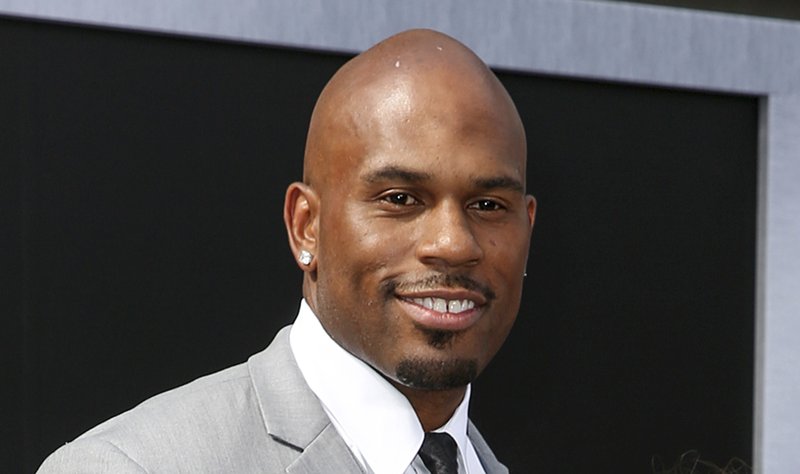
    LOS ANGELES (AP) — The body of former World Wrestling Entertainment pro Shad Gaspard was found early Wednesday on Los Angeles’ Venice Beach, after he was caught in a rip current last weekend, police said.

    Patrol officers were flagged down around 1:25 a.m. by a person reporting that a body had washed ashore, a Police Department statement said.

    He was identified as Gaspard and his family was notified, police said. Gaspard went missing last Sunday after he went swimming with his 10-year-old son, Aryeh.

    The boy was rescued and several other swimmers made it out of the water safely.

    Gaspard, 39, gained prominence in the WWE as one half of the tag-team group Cryme Time, along with his partner, JTG. After retiring in 2010, Gaspard has had small roles on TV and in movies, including the 2015 Kevin Hart comedy “Get Hard.”

    He was about 50 yards (46 meters) from shore when he was last spotted by a lifeguard, police said. A wave crashed over him and he was swept out to sea.

    His wife, Siliana Gaspard, issued a statement Tuesday thanking authorities and fans.

    “We would like to express our gratitude to the first responders who rescued Aryeh and to the lifeguards, coast guard, divers, fire and police departments for their continued efforts to help find our beloved Shad,” the statement said.


  • AP Exclusive: Power Five spend big on lobbying Congress

    AP Exclusive: Power Five spend big on lobbying Congress

    The Power Five conferences spent $350,000 on lobbying in the first three months of 2020, more than they had previously spent in any full year, as part of a coordinated effort to influence Congress on legislation affecting the ability of college athletes to earn endorsement money.

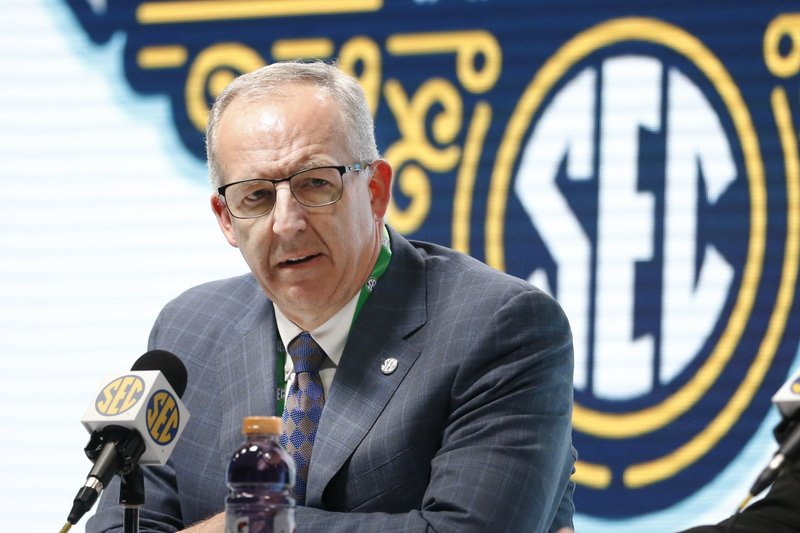
    The Southeastern Conference was the biggest spender, hiring three lobbying firms and paying them a total of $140,000, according to lobbying disclosure forms reviewed by The Associated Press. Before this year, the SEC did not employ Washington lobbyists, instead leaving the work of influencing Congress to individual universities and the NCAA.

    In a statement to AP, SEC Commissioner Greg Sankey said the conference hired lobbyists so it could be part of the discussion as Congress gets more serious about reforming college sports.

    “It is important for the SEC to have a voice in this national dialogue,” Sankey said. “We look forward to a constructive exchange of ideas about ways we can further enhance our student-athletes’ educational and athletic experiences while ensuring that any future changes can be administered fairly on a national level.”

    The NCAA announced last month it was moving forward with a plan to allow college athletes to earn money for endorsements and other activities including personal appearances and social media content. California and other states have passed laws that would that would guarantee that right to athletes with few of the restrictions the NCAA is seeking. Florida could be the first to have its law take effect, starting next year.

    The NCAA is pushing Congress for a federal law that would render those state laws moot and perhaps stave off future legal challenges.

    Conference commissioners have spoken about a chaotic recruiting environment that would result from a handful of states passing athlete-friendly laws and schools using them to entice the best players.

    At a hearing in February, NCAA President Mark Emmert said Congress needs to put “guardrails” on athletes’ ability to earn money, in part to protect against potential recruiting abuses and endorsement money being used as a pay-for-play scheme. That argument was met with skepticism by some lawmakers and athlete advocates, who believe scholarship athletes should have access to the free market like any other college student.

    The NCAA’s lobbyists have continued to press the case for those guardrails, and now they have more help. A document circulated by the Power Five lobbyists, obtained by AP, lists the conferences’ “core principles” for athlete compensation, and most of those principles include limitations.

    They include: a requirement for “one term of academic progress” before athletes can sign endorsement deals; a ban on athlete deals with “advertising categories inconsistent with higher education”; and limits on who can advise athletes on third-party contracts to prevent “unscrupulous actors.”

    Each of the Power Five hired the same two lobbying firms this year, and each of those firms collected $10,000 from each conference. The firms — Marshall & Popp, led by ex-Republican congressional staffers; and Subject Matter, led by Democrats — both stated as their objective a “national solution to preserve the unique model of American college athletics” while allowing players to earn money from their names, images and likenesses (NIL).

    “In this particular case, the (Power Five) conferences are working together on this so that there’s less confusion, not more, in terms of the messaging to congressional leaders that helps explain NIL and what the concerns are, and how it might work,” Atlantic Coast Conference commissioner John Swofford told The Associated Press.

    Like the SEC, the Pac-12 and the Big Ten also hired their first Washington lobbyists. The Pac-12 spent $70,000, giving $50,000 to its own firm and $10,000 each to Marshall & Popp and Subject Matter. The Big Ten paid $20,000 to the firms working for all the Power Five but did not hire its own dedicated lobbyist.

    The ACC and the Big 12 each spent $60,000 — $40,000 on their own lobbyists and $20,000 on the Power Five firms. Both conferences had the same lobbyists last year, the first year either had spent significant money to influence members of Congress.

    Last year, the NCAA spent $450,000 on lobbying, the most it has spent in any year since 2014, and it continued at that accelerated pace by spending $130,000 in the first quarter of this year, records show.

    Rep. Mark Walker, a North Carolina Republican and an outspoken NCAA critic who has introduced legislation on the topic, said the NCAA and its allies were “tone deaf” for spending money on lobbying to limit the earning power of athletes during a pandemic that has wrecked the U.S. economy.

    “You’ve got millions of Americans struggling. Close to 500,000 student-athletes have had practices and competitions canceled, and they want Congress to drop everything and give them some kind of legal backdrop, cover, after decades of abuse,” Walker said.

    The coronavirus pandemic, however, has not stopped the debate over athletes’ pay, either in Washington or in statehouses. Swofford said he expected the Power Five to continue to have a lobbying presence.

    “With the potential financial implications that come with the pandemic, I think any and all expenditures will be considered,” Swofford said. “But this is also a very important issue in terms of the future of college athletics and what it looks like.”

  • NFL teams can reopen training facilities with government OK

    NFL teams can reopen training facilities with government OK

    A limited number of NFL teams are reopening their training facilities Tuesday, while many are prohibited by government restrictions during the coronavirus pandemic.

    Commissioner Roger Goodell gave the 32 clubs the go-ahead for limited reopenings as long as state and local municipalities allow them. Coaching staffs and all players except those undergoing injury rehabilitation are barred from the facilities in the first phase of the league’s plan.

    With such states as California, New York, New Jersey, Washington, Illinois, Michigan, Massachusetts and Virginia still under heavy restrictions, that immediately leaves 12 franchises unable to use their facilities. The Raiders, headed for Las Vegas for the upcoming season, still have their training complex in Alameda, California.

    The Packers, Ravens, Dolphins, Vikings, Titans, Buccaneers, Browns, Panthers, Saints, Eagles and Packers have chosen not to reopen Tuesday. Cincinnati expects to reopen on Wednesday. Jacksonville has set May 26 for its reopening, and Denver also is targeting next week.

    Among the teams taking advantage of using their buildings on the first day they are allowed are the Cowboys, Falcons, Texans, Cardinals, Chiefs and Colts.

    “We’ve spent the entire quarantine period preparing to reopen,” the Colts said in a statement, ”… but it will be very gradual and deliberate. And of course we’re taking steps to make sure we’re in compliance with state and local regulations, and NFL and CDC guidelines.”

    That means primarily employees that must be in the office to do their jobs: people who need to access files that are only at the office; maintenance workers; trainers; and technology workers.

    Those people will have their temperature taken when entering the building and must wear personal protective equipment. The Colts have set up one-way hallways with arrows on the carpet pointing to the proper direction, and there will be limits on how many people can be in rooms at the same time.

    Coach Frank Reich was realistic about a full return to the training complex.

    “The guys who have been hurt, who have been coming into the building, keep coming in and rehabbing and doing their thing,” he said.

    “Other than that, as soon as we can get more players in the building — we want that to make up for a little bit of lost time. The sooner we can get together and get out there working, the better it will be.”

    Cowboys owner Jerry Jones took part in an owners conference call from the team’s practice facility, The Star. About two dozen staffers were present at the complex.

    The Steelers are doing a soft reopening Tuesday mainly for medical personnel and rehabbing players. They expect to ramp up use of their facility next week under league guidelines.

    As the Cardinals reopen, only essential staffers will be involved, far fewer than the 75 allowed at the facility. The Super Bowl champion Chiefs also opted for a soft opening, as did the Falcons, with only about 15 people at their complex on Tuesday. Those numbers will increase over the next week.

    “The fact that some teams can get in today with limited staff in non-football functions, we didn’t think in any way, shape or form that created a competitive balance issue,” said Falcons President Rich McKay, who also is co-chairman of the league’s powerful competition committee.

    The Falcons train in Flowery Branch, Georgia, about 45 miles from their downtown Atlanta stadium.

    “There’s one entrance to come in and out of. There’s all the social distancing to be complied with,” McKay added. “Everyone’s temperature is checked at the door and you’re asked a series of questions. Everyone must put gloves on and wear a mask the whole time unless they’re alone in a closed office. We don’t have the cafeteria open. We don’t have the team meeting rooms open.

    “As we move around building, we’ll see if there are areas that give us a challenge and go from there.”

    The Texans sent less than 10 people to their facility, and said, “We are considering this Phase Zero which will lead in to Phase 1 (up to 70 to 75 people) in the future.”

    The Vikings are one of the teams to delay their return to their facility. Star receiver Adam Thielen notes it’s important not to rush things.

    “When they say it’s OK,” he said of when he anticipates players being approved to enter team facilities.

    “I’m not paid to know when that is, but when they say it’s OK to be back and the facilities open up to players, I’ll be there, and I’ll be comfortable with it. I’m trying to control what I can control. That is not one of those things that I can control.

    “For me, I’m leaving it up to the professionals, and when they say we can go back and we can start practicing, I’ll be there and I’ll be excited to be back.”

    Goodell has extended virtual workouts for teams through most of June. All of the clubs normally would be having organized team activities (OTAs), which are voluntarily, at this time.

    “That protocol was developed with a lot of input from not only infectious disease and public health expects, but the CDC and others,” Dr. Allen Sills, the NFL’s chief medical officers, said of the league’s phased program for reopenings.

    “I’ve used the phrase that we want to walk, then jog, then run as we talk about how we reopen our facilities.”

    According to the Tampa Bay Times, though, new Buccaneers quarterback Tom Brady worked out with teammates at a local high school Tuesday morning.

  • Spouse Of Broadcaster Killed In Louisiana Plane Crash Sues

    Spouse Of Broadcaster Killed In Louisiana Plane Crash Sues

    LAFAYETTE, La. (AP) — The husband of a broadcast journalist who was killed in a Louisiana plane crash along with four others has filed a lawsuit against the aircraft’s owners and insurers, as well as the pilot’s estate.

    Steven Ensminger Jr., the son of Louisiana State University’s offensive coordinator, sued the defendants in Lafayette Parish court this month seeking unspecified damages for the death of his wife, Carley McCord, news outlets reported.

    McCord was one of five people who died in December when the small plane crashed on its way to Atlanta for a college football playoff game between Louisiana State University and the University of Oklahoma. A sixth passenger was severely injured and multiple victims were hurt when the plane hit the ground shortly after taking off from the Lafayette Regional Airport.

    Ensminger’s suit alleges that the owners of the plane, Global Data Systems, Inc., Cheyenne Partners, LLC., Eagle Air, LLC. and Southern Lifestyle Development Company, LLC, failed to properly inspect and maintain it, and were negligent in letting the pilot, Ian Biggs, fly in non-ideal conditions without proper training, news outlets reported, citing the lawsuit. Biggs died in the crash.

    Chuck Vincent of Eagle Air declined to comment, as did Southern Lifestyle. Global Data Systems, owned by a man whose wife and son died in the crash, along with a company vice president, did not immediately respond to a request for comment.

    The suit also names two insurance companies and Biggs’ estate.

    The families of two other victims, as well as the sole survivor — Global Data Vice President Stephen Wade Berzas — and Kristie Danielle Britt, whose vehicle was hit by the plane, filed lawsuits naming the same defendants, The Advocate reported. Details on those lawsuits were not available, the newspaper said.

    The National Transportation and Safety Board has not released its final report about the fatal crash, but did say visibility was low at the time. The agency was set to assess weather conditions as well as the pilot’s training and the aircraft’s maintenance history, among other factors, during its investigation.

  • Google Says It Won’t Build AI Tools For Oil And Gas Drillers

    Google Says It Won’t Build AI Tools For Oil And Gas Drillers

    Google says it will no longer build custom artificial intelligence tools for speeding up oil and gas extraction, separating itself from cloud computing rivals Microsoft and Amazon.

    A statement from the company Tuesday followed a Greenpeace report that documents how the three tech giants are using AI and computing power to help oil companies find and access oil and gas deposits in the U.S. and around the world.

    The environmentalist group says Amazon, Microsoft and Google have been undermining their own climate change pledges by partnering with major oil companies including Shell, BP, Chevron and ExxonMobil that have looked for new technology to get more oil and gas out of the ground.

    But the group applauded Google on Tuesday for taking a step away from those deals.

    “While Google still has a few legacy contracts with oil and gas firms, we welcome this indication from Google that it will no longer build custom solutions for upstream oil and gas extraction,” said Elizabeth Jardim, senior corporate campaigner for Greenpeace USA.

    Google said it will honor all existing contracts with its customers, but didn’t specify what companies. A Google cloud executive had earlier in May revealed the new policy during a video interview.

    Greenpeace’s report says Microsoft appears to be leading the way with the most oil and contracts, “offering AI capabilities in all phases of oil production.” Amazon’s contracts are more focused on pipelines, shipping and fuel storage, according to the report. Their tools have been deployed to speed up shale extraction, especially from the Permian Basin of Texas and New Mexico.

    Some of the contracts have led to internal protests by employees who are pushing their companies to do more to combat climate change.

    Amazon declined to comment on the Greenpeace report, but pointed to wording on its website that said “the energy industry should have access to the same technologies as other industries.”

    Microsoft published a blog statement Tuesday that didn’t address Greenpeace’s claims but emphasized the company’s commitment to remove from the air all the carbon it has ever emitted by 2050.

    __

    AP reporter Joseph Pisani contributed to this report.

  • Thousands Evacuated As River Dams Break In Central Michigan

    Thousands Evacuated As River Dams Break In Central Michigan

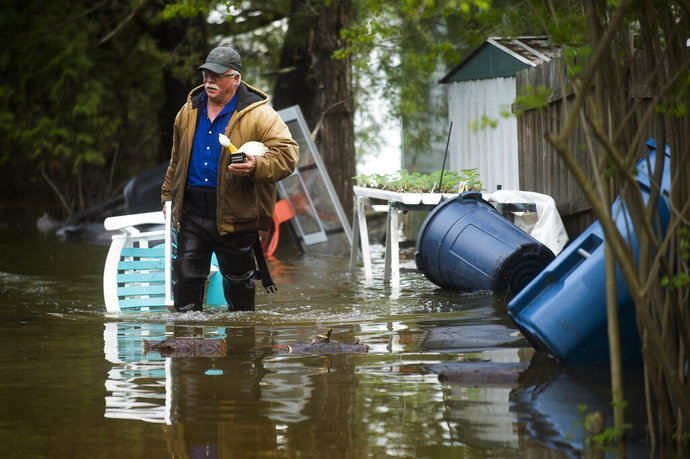
    MIDLAND, Mich. (AP) — Rapidly rising water overtook dams and forced the evacuation of about 10,000 people in central Michigan, where flooding struck communities along rain-swollen waterways and the governor said one downtown could be “under approximately 9 feet of water” by Wednesday.

    For the second time in less than 24 hours, families living along the Tittabawassee River and connected lakes in Midland County were ordered Tuesday evening to leave home. By Wednesday morning, water that was several feet high covered some streets near the river in downtown Midland, including riverside parkland, and reaching a hotel and parking lots.

    The river in Midland on Wednesday morning topped a previous record reading of 33.9 feet (10.3 meters) set during flooding in 1986, the National Weather Service said. Its flood stage is 24 feet (7.3 meters), and it was expected to crest by day’s end at about 38 feet (11.6 meters).

    The Weather Service urged anyone near the river to seek higher ground following “castastrophic dam failures” at the Edenville Dam, about 140 miles (225 kilometers) north of Detroit, and the Sanford Dam, about seven miles (11 kilometers) downriver. The evacuations come as Michigan remains under a stay-at-home order to prevent the spread of the coronavirus.

    While Michigan has been a national hotspot for COVID-19 with more than 52,000 cases and 5,000 deaths, Midland County has had only a small number of those with fewer than 80 cases and less than 10 deaths. Still, some dealing with the flooding and evacuations remained aware of the dangers posed by the virus.

    Cots at some area schools set up Tuesday as shelters were spaced apart to adhere to social distancing guidelines.

    Michigan Gov. Gretchen Whitmer, said downtown Midland, a city of 42,000 about 8 miles (14 kilometers) downstream from the Sanford Dam, faced an especially serious flooding threat. Dow Chemical Co.’s main plant sits on the city’s riverbank.

    “In the next 12 to 15 hours, downtown Midland could be under approximately 9 feet of water,” the governor said during a late Tuesday briefing. “We are anticipating an historic high water level.”

    Midland is a quintessential company town with a downtown parks located at the confluence of the Tittabawassee and Chippewa rivers. It has been home to the global chemical giant Dow for more than 120 years. One high school is named after the company’s founder. The other high school’s mascot is the Chemics. A Dow foundation has funded many community amenities such as a botanical garden.

    On Tuesday, Dow Chemical activated its emergency operations center and will be adjusting operations, spokeswoman Rachelle Schikorra said in an email.

    Steve Carlson, 61, said he and his wife, Patty, fled their Midland home about 8:30 p.m. Tuesday on their own accord after an evacuation order was issued for large swath of the city and they noticed neighborhood creeks were spilling over local roads, threatening some homes.

    “They had risen a lot and the worst was yet to come,” he said Wednesday morning.

    One couple who lives in their neighborhood decided to stay put, but Carlson said everyone else evacuated themselves from the area. They spent the night in a hotel. He said they’ve been wearing face masks in the hotel to protect themselves from the coronavirus.

    “The hotel was very happy to be see people coming in. There were refugees coming in,” he said with a laugh.

    Further down the Tittabawassee River, communities in Saginaw County were on alert for flooding.

    “It’s going to continue downriver,” Sara Pampreen, a weather service meteorologist, said Wednesday morning. “Just exactly how much, that’s the question.”

    Whitmer declared a state of emergency for Midland County and urged residents threatened by the flooding to find a place to stay with friends or relatives or to seek out one of several shelters. She encouraged people to do their best to take precautions to prevent the spread of the coronavirus.

    Emergency responders had gone door-to-door early Tuesday morning warning residents living near the Edenville Dam of the rising water. Some residents were able to return home, only to be told to leave again following the dam’s breach several hours later. The evacuations include the towns of Edenville, Sanford and parts of Midland, according to Selina Tisdale, spokeswoman for Midland County.

    There have been no reported injuries or fatalities due to the flooding, and no reports of anyone trapped by the high water, Tisdale said Wednesday.

    In 2018, the Federal Energy Regulatory Commission revoked the license of the company that operated the Edenville Dam due to non-compliance issues that included spillway capacity and the inability to pass the most severe flood reasonably possible in the area.

    The Edenville Dam, which was built in 1924, was rated in unsatisfactory condition in 2018 by the state. The Sanford Dam, which was built in 1925, received a fair condition rating.

    Both dams are in the process of being sold.

    There were 19 high hazard dams in unsatisfactory or poor condition in Michigan in 2018, ranking 20th among the 45 states and Puerto Rico for which The Associated Press obtained condition assessments.

    Flood warnings in Michigan were issued following widespread rainfall of 4 to 7 inches (10.2 to 17.8 centimeters) since Sunday, according to the Weather Service. Heavy runoff pushed rivers higher. Saturday could see a 30% chance of rain, with more moving into the area Sunday and Monday.

    “Our hope is we get a little time for the water to recede,” Tisdale said.

  • Voting rights advocates criticize US appeals court nominee

    Voting rights advocates criticize US appeals court nominee

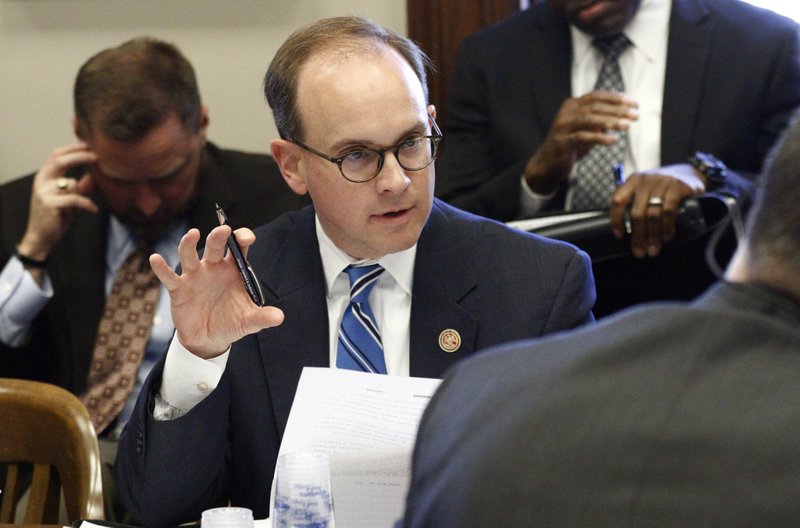
    JACKSON, Miss. (AP) — The American Bar Association is rating a Mississippi judge as “well qualified,” but Cory Wilson’s federal appeals court nomination is drawing opposition from advocates for voting rights, expanded access to health care and marriage equality, among a range of Democratic priorities that Wilson has pilloried.

    The U.S. Senate Judiciary Committee was scheduled to hold a hearing Wednesday on Wilson’s nomination to the 5th U.S. Circuit Court of Appeals, which handles cases for Louisiana, Mississippi and Texas and is known as one of the most conservative.

    Wilson, 49, was first-term Republican state representative when he was appointed to Mississippi’s state Court of Appeals in February 2019 by then-Gov. Phil Bryant, a Republican allied with President Donald Trump. Before that, Wilson had been appointed to various state government jobs.

    A majority of those handling the American Bar Association ratings said Wilson is “well qualified,” while a minority ranked him “qualified.” Wilson has the support of Mississippi’s Republican U.S. senators, Roger Wicker and Cindy Hyde-Smith.

    “He is a smart, thoughtful, conservative jurist who will follow the rule of law,” Wicker said.

    Opponents of Wilson’s nomination point to a long series of partisan comments he’s made, attacking President Barack Obama and many Democratic party priorities. The Houston Area Urban League and the Baton Rouge National Organization for Women are among 13 groups that issued a letter Tuesday opposing Wilson’s nomination.

    It criticized his record of supporting states’ laws that require voters to show identification at the polls.

    “Mr. Wilson’s refusal to acknowledge the reality of this country’s history of voting rights violations and the prevalence of voter suppression is unsettling and indicates he would not have an open mind in such critical civil rights cases that often arise in the Fifth Circuit,” the letter said.

    The letter also criticized articles Wilson wrote about Obama’s signature health care law, the Affordable Care Act. It said that in a 2013 article, Wilson referred to the law as “liberal-utopia-dictated healthcare.”

    Trump previously nominated U.S. District Judge Sul Ozerden of Mississippi to the 5th Circuit seat. During a hearing in July, Republican Sens. Ted Cruz of Texas and Josh Hawley of Missouri questioned Ozerden about his 2012 dismissal of a Catholic diocese lawsuit that challenged Affordable Care Act’s mandate that insurance plans cover contraception.

    Ozerden said he was following a binding precedent by the 5th Circuit, but his nomination stalled and never came up for a confirmation vote. Trump announced Wilson’s nomination to the seat on March 30.

    Trump initially nominated Wilson to become a federal district judge in southern Mississippi in 2019. The Judiciary Committee held a hearing on that nomination in January, but the nomination was still pending when Trump chose Wilson for a higher court.

    Wilson earned his undergraduate degree from the University of Mississippi and his law degree from Yale University, where he worked on the Yale Law Journal. He was a law clerk to Judge Emmett Ripley Cox of the 11th U.S. Circuit Court of Appeals.