Author: Imported Author 1932006

  • US says it’s pulling out of Open Skies surveillance treaty

    US says it’s pulling out of Open Skies surveillance treaty

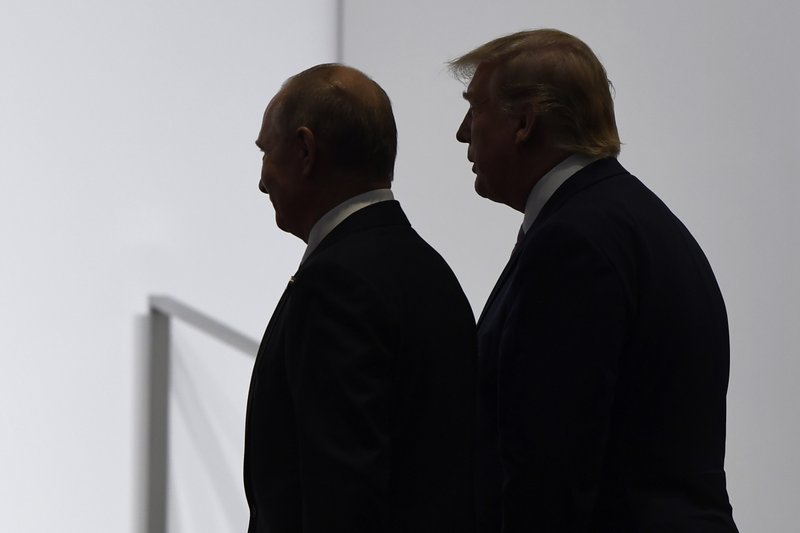
    WASHINGTON (AP) — The Trump administration notified international partners on Thursday that it is pulling out of a treaty that permits 30-plus nations to conduct unarmed, observation flights over each other’s territory — overflights set up decades ago to promote trust and avert conflict.

    The administration says it wants out of the Open Skies Treaty because Russia is violating the pact, and imagery collected during the flights can be obtained quickly at less cost from U.S. or commercial satellites. Exiting the treaty, however, is expected to strain relations with Moscow and upset European allies and some members of Congress.

    President Dwight Eisenhower first proposed that the United States and the former Soviet Union allow aerial reconnaissance flights over each other’s territory in July 1955. At first, Moscow rejected the idea, but President George H.W. Bush revived it in May 1989, and the treaty entered into force in January 2002. Currently, 34 nations have signed it; Kyrgyzstan has signed but not ratified it yet.

    More than 1,500 flights have been conducted under the treaty, aimed at fostering transparency about military activity and helping monitor arms control and other agreements. Each nation in the treaty agrees to make all its territory available for surveillance flights, yet Russia has restricted flights over certain areas.

    Last month, top Democrats on the Foreign Affairs and Armed Services committees in both the House and the Senate wrote to Trump accusing the president of “ramming” a withdrawal from the treaty as the entire world grapples with COVID-19. They said it would undermine U.S. alliances with European allies who rely on the treaty to keep Russia accountable for its military activities in the region.

    “The administration’s effort to make a major change to our national security policy in the midst of a global health crisis is not only shortsighted, but also unconscionable,” wrote Rep. Adam Smith, D-Wash., Rep. Eliot Engel, D-N.Y., and Sens. Jack Reed, D-R.I., and Bob Menendez, D-N.J.

    “This effort appears intended to limit appropriate congressional consultation on, and scrutiny of, the decision,” they wrote.

    They said they weren’t moved by the defense secretary’s argument that $125 million to replace aging aircraft used for treaty verification, which was already appropriated by Congress, is too costly. “The total cost of replacing the aircraft is a tiny portion of the overall defense budget,” they said.

    Earlier this month, 16 former senior European military and defense officials signed a statement supporting the treaty, saying that a U.S. withdrawal from the treaty would be a blow to global security and further undermine the international arms control agreements.

    The officials asked the U.S. to reconsider its exit. But if the U.S. leaves, they called for European states to stay in the treaty, fulfill obligations under the treaty and refrain from restricting the length of observation flights or banning flights over certain territories.

    Senior administration officials said Trump last fall ordered a comprehensive review of the costs and benefits of U.S. participation in the Open Skies Treaty. At the end of an eight-month review, which included extensive input from allies, it became clear that it was no longer in America’s interest to remain party to the treaty, the officials said. The U.S. notified other members of the treaty on Thursday, and the United States will formally pull out in six months.

    The senior administration officials said Russian violations of the treaty were the main reason for exiting the treaty. They said Russia has restricted flights over Moscow and Chechnya and near Abkhazia and South Ossetia. Russian restrictions also make it difficult to conduct observation in the Kaliningrad, a Russian enclave sandwiched between Lithuania and Poland that is home to Russia’s Baltic fleet, they said.

    Russia uses illegal overflight restrictions along the Georgian border in support of its propaganda narrative that the Russian-occupied enclaves of Georgia are independent countries. The senior administration officials said that amounted to an illegal restriction, under the treaty, coupled with a narrative that justifies Russia’s regional aggression.

    The U.S. has been working on a proposal to backfill partners and allies with imagery that the U.S. would have shared from its open skies flights.
  • Cities Find Green Ways To Reduce Storm Floods

    Cities Find Green Ways To Reduce Storm Floods

    NEW ORLEANS (AP) — For more than a century, New Orleans has depended on canals and pumps to get rid of stormwater in a city where about half the land is below sea level.

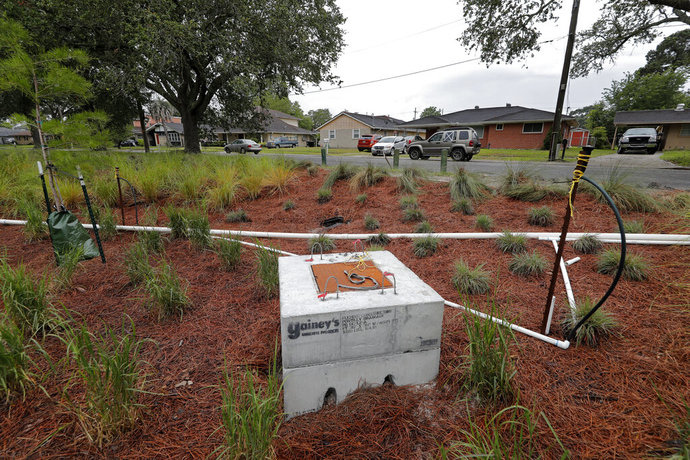
    Now the bustling Mississippi River port that expanded by filling in wetlands is spending $270 million to create spaces for rainwater, such as the water garden planned on a 25-acre site provided by nuns who lived there before Hurricane Katrina.

    The city is also installing underground holding tanks, porous pavement and other measures to reduce storm flooding and stress on huge pumps built in the 1910s.

    “We’ve got a scenario for everything,” said Mary Kincaid, the city’s chief resilience officer.

    Tropical storms can dump amazing amounts of rain, and hurricane season starts June 1. But smaller storms can also overwhelm storm drainage.

    So cities around the country are taking creative steps to tame stormwater as climate change increases the number and intensity of hurricanes and other storms. Rising sea levels also elevate groundwater levels in coastal communities, reducing the soil’s ability to absorb rain.

    “Stormwater runoff is one of the fastest growing sources of pollution,” the federal Environmental Protection Agency states on its website. “When rain hits rooftops, parking lots and roads instead of wetlands, forests and grasslands, it tends to run into storm drains that are directly connected to our waterways.”

    In Pittsburgh, as in about 850 other areas where storm drains tie into sewer lines, sewage sometimes backs up into basements, floods streets and pours into rivers.

    To attack one neighborhood’s problem, the Pittsburgh Water & Sewer Authority installed underground tanks and planted grasses and other native plants near a hilltop as a water-absorbent “bioswale.”

    In New Orleans, where the highest neighborhoods reach 10 to 11 feet (3 to 3.3 meters) above sea level, Kincaid said, “We want to put in storage in the higher ground areas.” The aim is to capture the rain before it can reach lower ground and pool up.

    One such project is just off Bayou St. John and down the street from Parkway Bakery and Tavern, where owner Jay Nix switched his parking lot from concrete to much more expensive permeable pavement. That has noticeably lowered flooding in the restaurant, said Nix, who once had to use big plastic bags of “fish fry” breading as sandbags. He has high hopes for the city’s project, which features an underground storage tank and rain gardens.

    “I think it’s going to work. It has to work,” he said.

    Other techniques include planting trees and digging lagoons in wide roadway medians. Jurisdictions such as Portland, Oregon, require greenery-covered “ecoroofs” on some buildings.

    Earlier, Portland bought 60 houses over 15 years, then turned a regularly flooded neighborhood into Foster Floodplain Natural Area. The work, which included creek restoration for migrating salmon and steelhead trout, increased the flood storage capacity six-fold — enough to fill nearly 70 Olympic-sized swimming pools.

    Since the 63-acre park’s completion in 2012, an adjoining highway that flooded annually has flooded only once, officials said. And more than 600 nearby homes and businesses north of the highway also are seeing less flooding.

    Nearly all money for New Orleans’ projects comes from the U.S. Department of Housing and Urban Development and the Federal Emergency Management Agency, so Kincaid said they’re not affected by new coronavirus-related budget holes.

    The city won a $141 million HUD grant in 2016 to make New Orleans’ Gentilly neighborhood a “resilience district.”

    The centerpiece will be a big water garden where the Congregation of St. Joseph’s convent was destroyed by Katrina flooding in 2005 and a later fire. The nuns are leasing the land to the city for $1 a year as long as it’s used for water management and environmental education.

    “We wanted to do something that could benefit the future and that dealt with an immediate need,” said Sister Joan Laplace, 79, who lived at the convent on and off since 1960.

    Atlanta’s $90 million in current and planned “green infrastructure” projects have included replacing more than four miles of neighborhood streets with porous pavers and adding 32 stormwater planters alongside.

    Since Hurricane Irma toppled trees in 2017, Miami has moved away from planting palms and has planted nearly 4,700 live oaks and other trees that take up more water and provide shade.

    Miami expects to finish updating its long-term stormwater management plan next year, said Jane Gilbert, the city’s chief resilience officer.

    Florida, once a coral reef, is now “one big porous limestone bed,” Gilbert said. “As the sea level rises, so do our groundwater levels,” reducing drainage.

    “We have to look at as many ways as possible of absorbing, containing, slowing the flow of water,” she said.

    When Hurricane Katrina broke New Orleans’ levees and killed more than 1,400 people, that raised global awareness of the limits of flood protection by dikes and pumping stations, said Stephane Hallegatte, a lead economist with the World Bank’s Global Facility for Disaster Reduction and Recovery.

    “We need protection which can fail gracefully,” he said. “The advantage to a nature-based system is they tend not to fail in catastrophic fashion.”

    ___

    Video journalist Stacey Plaisance in New Orleans and Rhonda Shafner of the AP’s News Information Research Center contributed to this report.

  • Donation brings a bit of Mardi Gras to hospital workers

    NEW ORLEANS (AP) — Emily Bauman is a believer in the power of music. So when she got her stimulus check, she put that power to work — for New Orleans’s hospital workers and the city’s out-of-work musicians.

    Bauman and a friend funded the stimulus serenade, a concert for front-line health care workers in one of the nation’s coronavirus hot spots, and a paying gig for musicians who badly need one.

    Health care workers in masks and hair coverings hoisted umbrellas and waved handkerchiefs, danced and clapped as nine members of the New Orleans Jazz Orchestra performed outside New Orleans East Hospital. They played “Do Whatcha Wanna” and “Hot Sausage Rag” and Paul Barbarin’s “Second Line.”

    In a city known for music and good times, last Friday’s serenade was a balm for difficult ones.

    “This was fantastic therapy for us and our staff,” said Takeisha Charles Davis, a doctor at the hospital and among those dancing there on Friday. “The last 8½ weeks have been tremendously stressful.”

    Their benefactor is not even a local resident. A professor, classical pianist and jazz enthusiast, Bauman lives in New York City. (An anonymous friend also donated a stimulus check to the project.)

    At first, the plan was to present the serenade in New York. When Bauman was told it wasn’t practical to do it there, she was elated to hear it would be workable in New Orleans.

     Bauman, 49, said she fell hard for NOLA when she lived there temporarily as part of the Teach for America program in the 1990s.

    “Music, I think, is really important as a way for us to communicate with each other in these isolating times,” she said.

    Her hope: to inspire copycats who will fund stimulus serenades across the country and in New Orleans.

    Adonis Rose, artistic director for the jazz orchestra and one of the musicians performing at the serenade, said the 20 of the group’s members who typically perform all over town are now unemployed due to the pandemic and subsequent business closures.

    Rose said the gift was a boost to musicians who have been unemployed and in quarantine for more than two months.

    “This was great for the musicians to keep the musicians working and also to show support for the health care workers and the patients affected by the virus,” Rose said. “Being able to bring them together, to be able to do it for such a great cause, was amazing.”

    There’s enough money left over for a second concert, planned for later this month at the Lambeth House, the retirement and assisted living facility where a dozen died early on in the pandemic.

    Bauman, more than 1,400 miles away, watched the hospital concert on the jazz orchestra’s website.

    “I loved it and found it very emotional but also very joyful, which I didn’t expect,” she said. “The dancing was so inspiring and made me feel watching it like I was there and part of it. I actually felt like the serenade was sending courage and soul to me, too, and I was one of the ones organizing it!”

  • Loughlin, Giannulli to serve prison time for college scam

    Loughlin, Giannulli to serve prison time for college scam

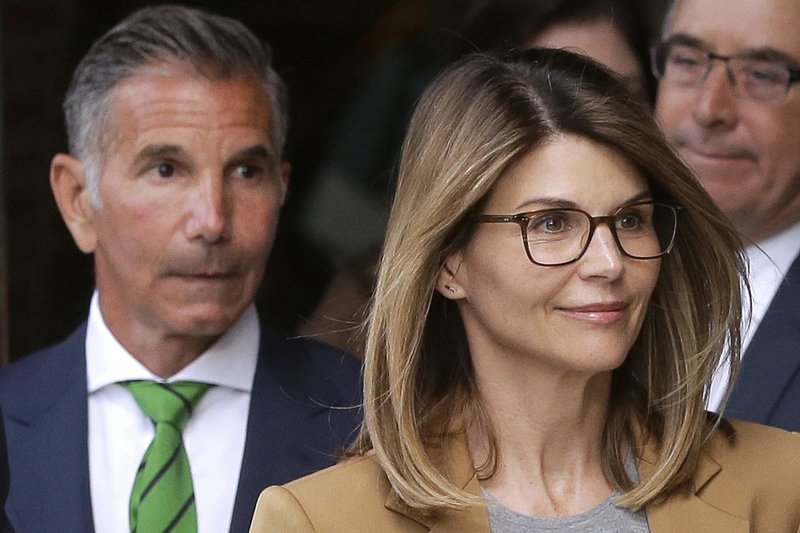
    “Full House” Actress Lori Loughlin and her fashion designer husband, Mossimo Giannulli, agreed to serve prison time as part of a plea deal in the college admissions bribery case, according to court papers filed Thursday.

    Loughlin has agreed to serve two months behind bars and Giannulli has agreed to serve five months under the deal that must be approved by the judge. They are scheduled to plead guilty Friday via video conference.

    Loughlin and Giannulli were scheduled to go to trial in October on charges that they paid $500,000 in bribes to get their daughters into the University of Southern California as crew team recruits, even though neither of them played the sport.

    The famous couple had insisted they were innocent and said they believed their payments were legitimate donations. Earlier this month, the judge rejected their bid to dismiss the case over allegations of misconduct by FBI agents investigating the scam.

    They agreed to plead guilty to conspiracy to commit wire and mail fraud in a plea agreement filed in Boston’s federal court. Prosecutors have agreed to dismiss charges of money laundering and federal programs bribery that were added after the case was filed.

    “Under the plea agreements filed today, these defendants will serve prison terms reflecting their respective roles in a conspiracy to corrupt the college admissions process and which are consistent with prior sentences in this case,” U.S. Attorney Andrew Lelling said in an emailed statement. “We will continue to pursue accountability for undermining the integrity of college admissions.”

    An attorney for the couple declined to comment.

    Loughlin and Giannulli were among 50 people arrested last year in the case dubbed “Operation Varsity Blues” that rocked the word of higher education. They are the 23rd and 24th parents to plead guilty in the case.

    The case uncovered a scheme in which wealthy parents paid huge sums to secure students’ admission at elite schools as fake athletic recruits or have someone cheat on their entrance exams, authorities said.

    Others who have pleaded guilty in the case include “Desperate Housewives” actress Felicity Huffman. She served nearly two weeks in prison late last year after she admitted to paying $15,000 to have someone correct her daughter’s entrance exam answers.

  • Trump Administration Cuts Royalty Rates For Oil And Gas

    Trump Administration Cuts Royalty Rates For Oil And Gas

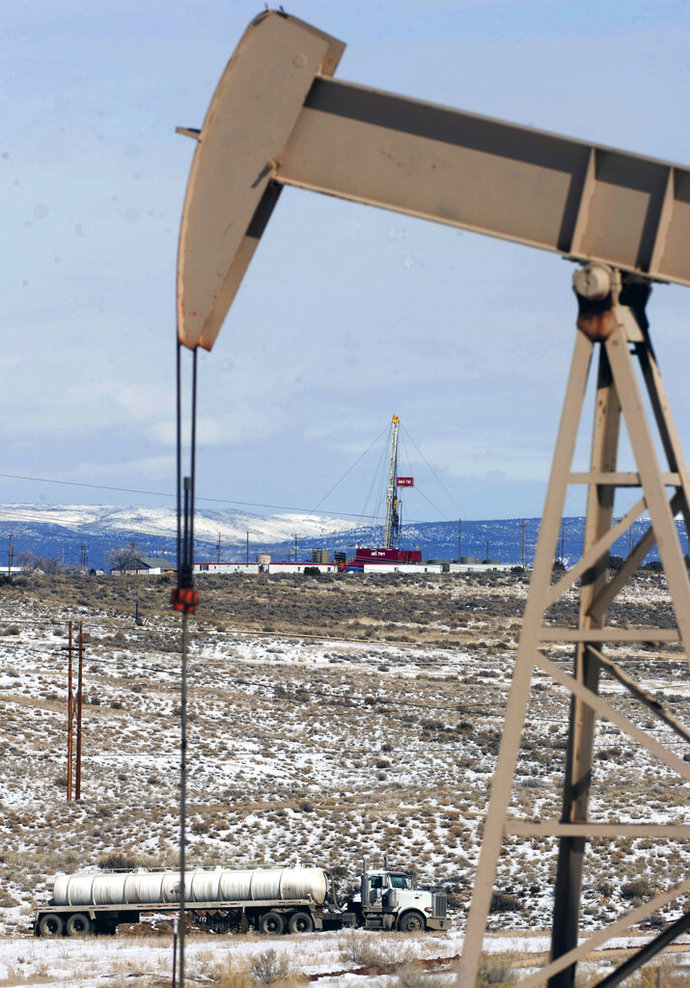
    BILLINGS, Mont. (AP) — The Trump administration has started giving energy companies temporary breaks on royalties and rent they pay to extract oil and gas from leases on public lands because of the coronavirus pandemic.

    The move drew quick criticism as a handout to industry that will mean less money for state governments. A Democratic lawmaker called for an investigation into whether the breaks were justified.

    Government data shows companies in Utah receiving steep cuts in the standard 12.5% royalty rate, to as low as 2.5% of the value of the oil and gas they produce. More reductions are expected in the coming days in other states with oil and gas activity on federal lands, primarily in the western U.S.

    The Interior Department’s Bureau of Land Management said last month that royalty-rate cuts were possible if companies could show they could not successfully operate public energy leases economically or can’t maintain enough employees at drilling sites.

    Half the money that comes in through royalty payments is typically disbursed to the states where the oil or gas was extracted. The payments totaled $2.9 billion nationwide in 2019, including $94 million in Utah.

    The rate cuts in Utah included 76 leases on tens of thousands of acres of public lands.

    In a related action in recent days, bureau officials in 85 cases suspended rent payments that companies pay on their oil and gas leases on federal lands, according to government data. The suspensions to date have all been in Wyoming and were linked by agency officials to the pandemic.

    Other states with federal oil and gas leases that generate significant amounts of revenue include New Mexico, North Dakota, California, Colorado, Alaska and Montana.

    All royalty relief will be temporary and last a maximum of 60 days, Bureau of Land Management spokesman Chris Tollefson said. Some elected officials and organizations had called for blanket relief for the industry, he said. But the Interior Department rejected those requests and determined each leaseholder must follow the longstanding process for obtaining relief.

    “These laws and regulations have existed for decades and across multiple administrations,” Tollefson said. “No special circumstances have been granted.”

    But critics of the administration jumped on the cuts. House Natural Resources Committee Chairman Raul Grijalva asked the Government Accountability Office to investigate if they were necessary and properly handled, and how much they could cost in lost revenues.

    “I am concerned that in its haste to approve huge numbers of royalty cuts, BLM (the Bureau of Land Management) may not be fully following the requirements in the regulation,” Grijalva wrote.

    The government has broad authority to grant royalty reductions for both onshore and offshore oil and gas activity provided companies meet its criteria, said American Petroleum Institute vice president Lem Smith.

    He said the organization backs the process for granting companies relief as long as it is “equitable, transparent and easily understood” and added that it’s traditionally been done on a case-by-case basis.

    A National Wildlife Federation representative called the rate cuts a “sweetheart deal” benefiting fossil fuel companies even as the administration seeks more money from renewable energy companies that rent federal lands.

    “It is simply not fair and is one more signal that oil and gas drilling takes precedence over everything else on our public lands,” National Wildlife Federation Vice President Tracy Stone-Manning said.

    How much value the relief will have for companies is not known. It will depend on the amount of fuel they extract and how many relief applications are granted going forward.

    Interior’s Office of Natural Resources Revenue, which collects the royalties from companies, does not do future projections, spokesman Chris Mentasti said.

    ___

    Follow Matthew Brown at @matthewbrownap

  • Nearly 39 million have sought US jobless aid since virus hit

    Nearly 39 million have sought US jobless aid since virus hit

    WASHINGTON (AP) — More than 2.4 million people applied for U.S. unemployment benefits last week in the latest wave of layoffs from the viral outbreak that triggered widespread business shutdowns two months ago and sent the economy into a deep recession.

    Roughly 38.6 million people have now filed for jobless aid since the coronavirus forced millions of businesses to close their doors and shrink their workforces, the Labor Department said Thursday.

    An additional 2.2 million people sought aid under a new federal program for self-employed, contractor and gig workers, who are now eligible for jobless aid for the first time. These figures aren’t adjusted for seasonal variations, so the government doesn’t include them in the overall number of applications

    The continuing stream of heavy job cuts reflects an economy that is sinking into the worst recession since the Great Depression. The nonpartisan Congressional Budget Office estimated this week that the economy is shrinking at a 38% annual rate in the April-June quarter. That would be by far the worst quarterly contraction on record.

    Nearly half of Americans say that either their incomes have declined or they live with another adult who has lost pay through a job loss or reduced hours, the Census Bureau said in survey data released Wednesday More than one-fifth of Americans said they had little or no confidence in their ability to pay the next month’s rent or mortgage on time, the survey found.

    During April, U.S. employers shed 20 million jobs, eliminating a decade’s worth of job growth in a single month. The unemployment rate reached 14.7%, the highest since the Depression. Millions of other people who were out of work weren’t counted as unemployed because they didn’t look for a new job.

    Since then, 10 million more laid-off workers have applied for jobless benefits. Federal Reserve Chair Jerome Powell said in an interview Sunday that the unemployment rate could peak in May or June at 20% to 25%.

    Across industries, major employers continue to announce job cuts. Uber said this week that it will lay off 3,000 employees, on top of 3,700 it has already cut, because demand for its ride-hailing services has plummeted. Vice, a TV and digital news organization tailored for younger people, announced 155 layoffs globally last week.

    Digital publishers Quartz and BuzzFeed, magazine giant Conde Nast and the company that owns the business-focused The Economist magazine also announced job cuts last week.

    THIS IS A BREAKING NEWS UPDATE. AP’s earlier story is below:

    The government will provide its latest snapshot Thursday of the layoffs that have left tens of millions of people unemployed but that have begun to slow as states allow some businesses to reopen and fewer companies slash jobs.

    Millions more people likely filed for unemployment benefits last week, after 36 million sought aid in the previous eight weeks as the coronavirus forced employers to close and sent the economy into a deep recession.

    The pace of layoffs has declined for six straight weeks, and some reopened businesses have rehired a portion of their laid-off employees. By historical standards, though, the number of weekly applications remains immense.

    The continuing job cuts reflect an economy that is gripped by the worst downturn since the Great Depression. The Congressional Budget Office estimates that the economy is shrinking at a 38% annual rate in the April-June quarter. That would be, by far, the worst quarterly contraction on record.

  • Mississippi church suing on virus restrictions burns down

    Mississippi church suing on virus restrictions burns down

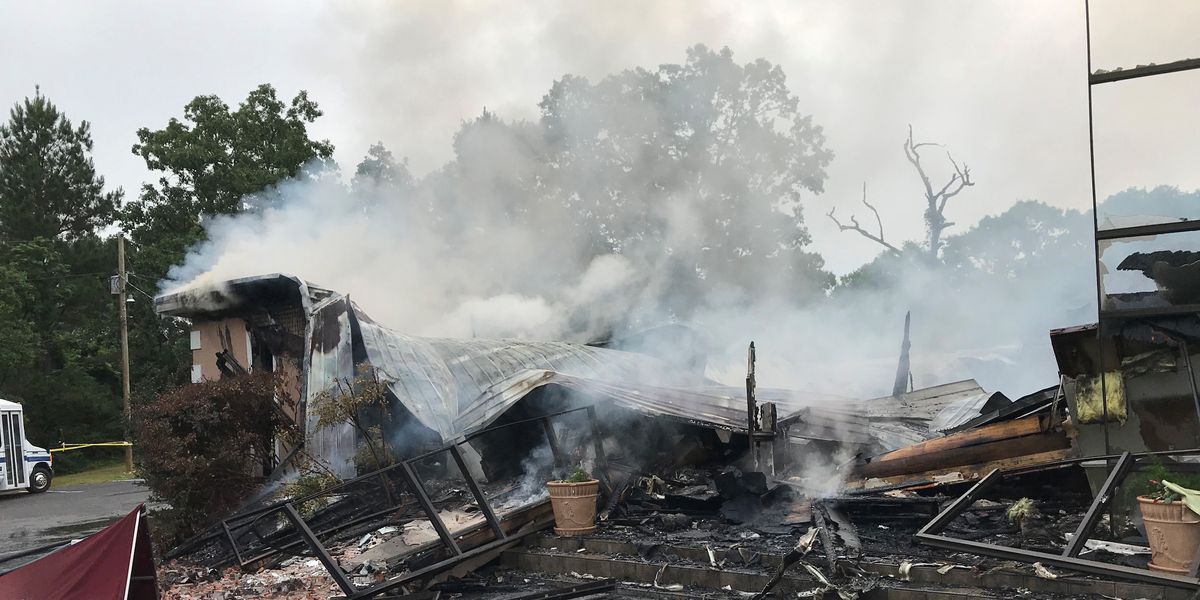
    HOLLY SPRINGS, Miss. (AP) — A church in Mississippi was destroyed by a suspected arson fire, about a month after its pastor filed a lawsuit challenging the city of Holly Springs on gathering restrictions amid the coronavirus outbreak.

    First Pentecostal Church in Holly Springs, Mississippi, burned down Wednesday morning, news outlets reported. When investigators from the Marshall County Sheriff’s Office got to the scene, they found graffiti in the church parking lot that read: “Bet you stay home now you hypokrites.”

    “We’ve kind of racked our brains and we have no idea,” Jerry Waldrop, the pastor of the church, said. “No enemies that we know of. We don’t know anyone that we even think could be capable of doing something like this.”

    Waldrop had filed a lawsuit against the city of Holly Springs last month, alleging police officers had disrupted a church bible study and Easter service. Holly Springs City Attorney Shirley Byers said nearly 40 parishioners inside the church building were not practicing social distancing on April 10 when a violation citation was issued for the church.

    Churchgoers practiced social distancing while indoors and only held indoor services when bad weather would not allow them to gather outside, the lawsuit said. Waldrop’s complaint also asked for a temporary restraining order to keep city officials from preventing church services.

    While Mississippi Gov. Tate Reeves’s safer-at-home order allowed churches to operate as essential businesses, Byers said the city did not give churches the same latitude until they amended their local order in late April to allow for drive-thru services. She said Waldrop’s lawsuit has yet to be served.

    Authorities are offering a reward for tips on the arson investigation.


    Photo comes from WLBT News here

  • ‘We’re expendable’: Russian doctors face hostility, mistrust

    ‘We’re expendable’: Russian doctors face hostility, mistrust

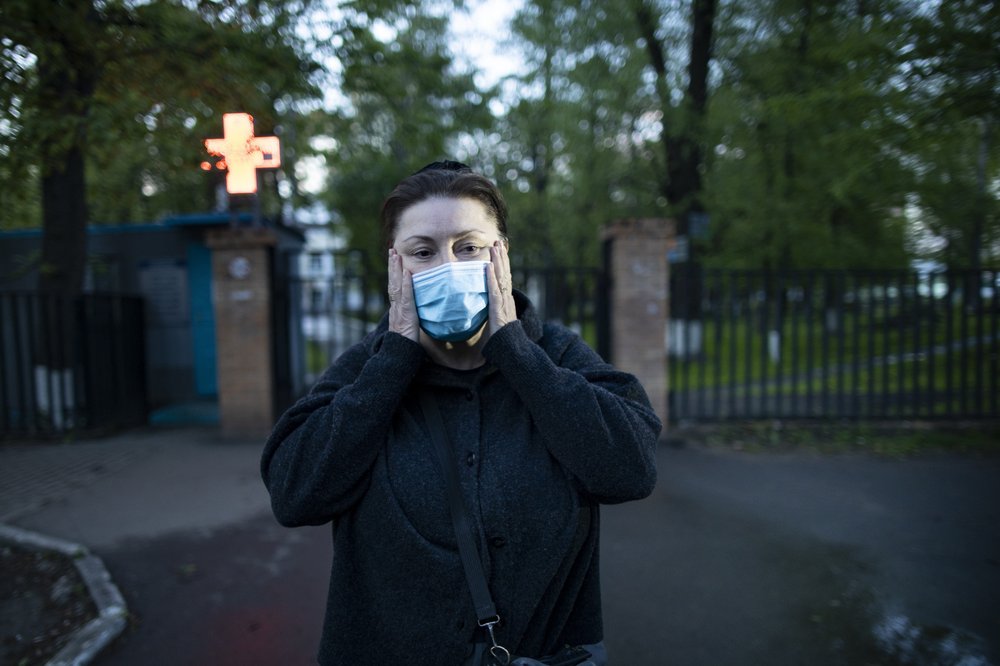
    MOSCOW (AP) — There are no daily public displays of gratitude for Russian doctors and nurses during the coronavirus crisis like there are in the West. Instead of applause, they face mistrust, low pay and even open hostility.

    Residents near the National Medical Research Center for Endocrinology, a Moscow hospital now treating virus patients, complained when they saw medical workers walking out of the building in full protective gear, fearing the workers would spread contagion.

    “Maybe once the disease knocks on the door of every family, then the attitude to medics will change,” said Dr. Alexander Gadzyra, a surgeon who works exhausting shifts.

    The outbreak has put enormous pressure on Russia’s medical community. While state media hails some of them as heroes, doctors and nurses interviewed by The Associated Press say they are fighting both the virus and a system that fails to support them.

    They have decried shortages of protective equipment, and many say they have been threatened with dismissal or even prosecution for going public with their complaints. Some have quit and a few are suspected to have killed themselves.

    Government officials insist the shortages are isolated and not widespread.

    Antipathy toward the medical profession is widespread in Russia, said social anthropologist Alexandra Arkhipova, who studies social media posts peddling virus conspiracy theories. More than 100 theories she studied say doctors diagnose COVID-19 cases so they can get more money; others say they help the government cover up the outbreak.

    “It’s a crisis of trust that the epidemic underscored,” she said. “I haven’t seen this attitude anywhere else.”

    Trust in government institutions has always been low in Russia, according to opinion polls, and most of its hospitals are state-run.

    Russia is struggling in the pandemic, with over 300,000 infections and 2,972 deaths. The government has disputed critics who have questioned the relatively low number of fatalities.

    Official statements and news reports in more than 70 Russian regions show that at least 9,479 medical workers have been infected with the virus in the past month, and more than 70 have died. Health care workers believe the death toll to be much higher and they have compiled a list of more than 250.

    Dr. Irina Vaskyanina said at least 40 workers are infected at a hospital in Reutov, outside Moscow, where she headed a department handling blood transfusions.

    She also said insults and threats from superiors became common after she complained about working conditions to her bosses, to law enforcement and even to President Vladimir Putin.

    “I handed in my notice,” Vaskyanina said. “They’re not letting me do my job. I love my job and I want to keep doing it, but I can’t go on like this.”

    She said 13 of her 14 colleagues have also quit.

    Dr. Tatyana Revva, an intensive care specialist in the town of Kalach-on-Don, was summoned by police for questioning and slapped with disciplinary action after recording a video about equipment shortages. The hospital’s head reported her to a prosecutor for “spreading false information” — an offense punishable by fines of up to $25,000 or a prison term.

    “I am one reprimand away from being fired,” Revva told AP.

    Dr. Oleg Kumeiko, head of Revva’s hospital, rejected the claims. He told the AP there were no shortages of protective equipment in the hospital, and said he had no intention of firing Revva. Disciplinary action against her was justified, he said, and “had nothing to do with her public activity.”

    “I don’t understand why they treat us like we’re expendable,” said Nina Rogova, a nurse in the Vladimir region 200 kilometers (120 miles) east of Moscow. She is recovering from the virus after getting it at work and she says she is being threatened with dismissal after she told local media about a lack of protective gear.

    Doctors in the southern region of Chechnya who complained about equipment shortages later had to retract their statements as a “mistake” and apologize on TV. The predominantly Muslim region’s leader, Ramzan Kadyrov, has a reputation for stifling dissent, and he has demanded they be fired.

    Adding to the frustration is pay. Health workers say they haven’t gotten bonuses the government promised them for working with coronavirus patients. In early April, Putin personally promised generous bonuses to monthly salaries — about $1,100 for doctors, $680 for nurses and paramedics, and $340 for orderlies.

    A month later, social media was filled with photos of pay slips reflecting bonuses from 10 to 100 times smaller than promised. Dr. Yevgeniya Bogatyryova, a Moscow-area paramedic, told AP the April bonuses varied from $2 to $120. “They’re calculating the time ambulance doctors spend with a coronavirus patient and pay by the hour, apparently,” Bogatyryova said.

    More than 110,000 people signed an online petition demanding the government keep its promise. Dozens of paramedics protested in the Nizhny Novgorod region 400 kilometers (240 miles) east of Moscow, and scores more from Siberia to southern Russia made videos demanding the bonuses.

    “Whoever we ask in our management, our superiors, they say, ‘Putin promised you (bonuses), so Putin should pay you,’” Natalia Salomatova, an orderly at a hospital in the Siberian city of Chita, told the AP. April bonuses for her colleagues ranged from the equivalent of 41 cents to $6.86. Salomatova herself didn’t receive any.

    Only after Putin went on TV twice last week and angrily demanded that officials pay what was promised did medical workers in some regions start getting the payments.

    “Makes you wonder: Who should we protect the medics from, the infection or the administrators?” said Arkhipova, the social anthropologist.

    Russia’s Health Ministry did not immediately respond to a request for comment.

    Reports of health care workers resigning are surfacing. Over 300 quit in the western Kaliningrad region two weeks ago, dozens of paramedics reportedly resigned in the Siberian city of Novosibirsk in May and 40 workers gave notice at a hospital in the Vladimir region.

    That could further cripple Russia’s health care system, already impaired by a widely criticized reform that closed half of its 10,000 hospitals in 20 years, with thousands of layoffs. In December, Deputy Prime Minister Tatyana Golikova called the reform “horrible” and said it significantly affected the quality and the accessibility of health care.

    “Now we’re facing the threat of a complete destruction of the medical community,” said Semyon Galperin, head of the Doctors Defense League rights group.

  • NFL reinstates Cowboys’ Aldon Smith, who last played in ’15

    NFL reinstates Cowboys’ Aldon Smith, who last played in ’15

    FRISCO, Texas (AP) — Aldon Smith will be able to take part in team activities with the Dallas Cowboys after the NFL on Wednesday conditionally reinstated the pass rusher from an indefinite suspension for off-field issues.

    Smith, who hasn’t played in an NFL game since 2015, will be able to participate in the Cowboys’ virtual offseason program starting next week. He can also meet with teammates and coaches.

    The Cowboys, who lost sacks leader Robert Quinn in free agency, signed Smith to a one-year contract last month despite his uncertain playing status. Smith was reinstated after meeting with NFL Commissioner Roger Goodell on a video teleconference last week.

    Smith was drafted seventh overall by San Francisco in 2011 and had 14 sacks as a rookie. He was an All-Pro in 2012 when he had 19 1/2 sacks and the 49ers reached the Super Bowl. He had 44 sacks in 50 games during his first four NFL seasons in San Francisco with defensive line coach Jim Tomsula, now on the Cowboys staff for new head coach Mike McCarthy.

    Smith had several legal issues as a player with San Francisco and Oakland. He was first suspended with the 49ers in 2014 before receiving a one-year ban in November 2015 with the Raiders. Smith applied for reinstatement to the NFL in 2016, but that decision was initially deferred.

    Oakland retained Smith’s contractual rights before releasing him in 2018 after San Francisco police issued a warrant for his arrest in a domestic violence case.

    The Cowboys still have a suspended pass rusher under contract in Randy Gregory, who is seeking reinstatement. Gregory was indefinitely suspended in February 2019 for violating the NFL’s substance-abuse policy, his fourth league suspension coming about seven months after he had been reinstated by Goodell.

    Gregory slid to the Cowboys late in the second round of the 2015 draft after testing positive for marijuana at the NFL combine.

  • NCAA to lift moratorium on football, basketball workouts

    NCAA to lift moratorium on football, basketball workouts

    The NCAA Division I Council voted Wednesday to lift a moratorium on voluntary workouts by football and basketball players effective June 1 as a growing number of college leaders expressed confidence that fall sports will be possible in some form despite concerns about the coronavirus pandemic.

    This decision clears the way for individual workouts by athletes, mostly on their own, subject to safety and health protocols decided by their schools or local health officials..

    NCAA officials noted that the workouts could go on as long as all local, state and federal regulations are followed. The status of voluntary workouts for other sports will be determined later.

    “We encourage each school to use its discretion to make the best decisions possible for football and basketball student-athletes within the appropriate resocialization framework,” Penn athletic director and council chair M. Grace Calhoun said in a statement. “Allowing for voluntary athletics activity acknowledges that reopening our campuses will be an individual decision but should be based on advice from medical experts.”

    From Notre Dame to LSU and more, a number of schools have announced plans to reopen campuses for the fall semester and conferences have begun setting up plans for how to play football amid the pandemic. The latest came this week with the Florida State system announcing plans for its 12 schools and more than 420,000 students.

    Many questions remain, including specific safety protocols and whether fans would be allowed if games proceed.

    Ohio State athletic director Gene Smith said in conference call Wednesday that he believes the Buckeyes could safely play home games with 20,000 to 30,000 fans in its 105,000-seat stadium.

    “I think we can get there,” Smith said.

    Smith said he hadn’t figured out yet how those 20,000 to 30,000 spectators would be chosen. He said masks and other precautions would be required to prevent the spread of COVID-19.

    Smith added that Ohio State is ready to open the 15,000-square-foot Woody Hayes Athletic Center to athletes starting June 8 if the NCAA allows it. About 10 players at a time would be allowed to work out on staggered scheduled with social-distancing and other hygiene precautions in place. Some coaches returned to the complex on a limited basis this week.

    Other schools also are looking into ways they can hold workouts as safely as possible.

    Middle Tennessee athletic director Chris Massaro said his school plans to take the temperature of players daily and make sure they are wearing masks. Massaro has even discussed moving some equipment from the weight room to the Red Floyd Stadium concourse to make sure workouts allow social distancing.

    “We’re a little bit kind of almost like guinea pigs,” Middle Tennessee coach Rick Stockstill said. “We’re the ones that are coming back first, football’s coming back first all across the country. So we’ve got to make sure we’re doing our part so there’s not a setback, and it’s going to take all of us buying in and doing whatever we can to keep everybody else healthy and safe.”

    The presidents of Miami and Notre Dame said in separate interviews they expect the football season to be played.

    Notre Dame President Fr. John Jenkins told MSNBC he expects to have clarity on how — or if — the football season can happen in the next few weeks.

    “The team itself, I feel we can manage that one,” Jenkins said. “Then the question is people in the stands. We have an 85,000-person stadium. Can we get 85,000 people in there? That will be a big challenge to do that. But could we get a smaller number — 10,000, 15,000, 20,000? I don’t know.”

    Miami President Julio Frenk told CNN he hopes the Hurricanes can play this fall and that safety would be the top priority.

    “They will probably play in empty stadiums, like so many other sports,” Frenk said.

    Scott Woodward, the athletic director at defending national champion LSU, has said that his school was preparing to welcome back its athletes after the Southeastern Conference’s closure of athletic facilities to students is slated to end May 31.

    LSU will offer summer classes online and doesn’t have plans to reopen its campus to the general student population at least until the fall semester.

    The Division I Council also passed a series of waivers that included suspending the minimum football attendance required of Football Bowl Subdivision members for two years.

    Most athletic departments need the revenue generated from football to fund their other sports. Hundreds of schools are reeling financially from the effects of the pandemic. Athletic departments, particularly at smaller schools and in Division II, have already cut a number of sports.

    The NCAA this week lowered the minimum and maximum number of games Division II schools are required to play in all sports next year. The move includes a 33% reduction in the minimum number of games needed for sponsorship and championship qualification in most sports.

    Under the plan, D-II schools must play at least five football games to maintain NCAA sponsorship and at least seven games to be eligible for playoff consideration. The maximum number of allowable games is 10.

    The requirements would return to normal in 2021-22.