Author: Imported Author 1932006

  • House GOP largely backing Louisiana governor’s budget plan

    House GOP largely backing Louisiana governor’s budget plan

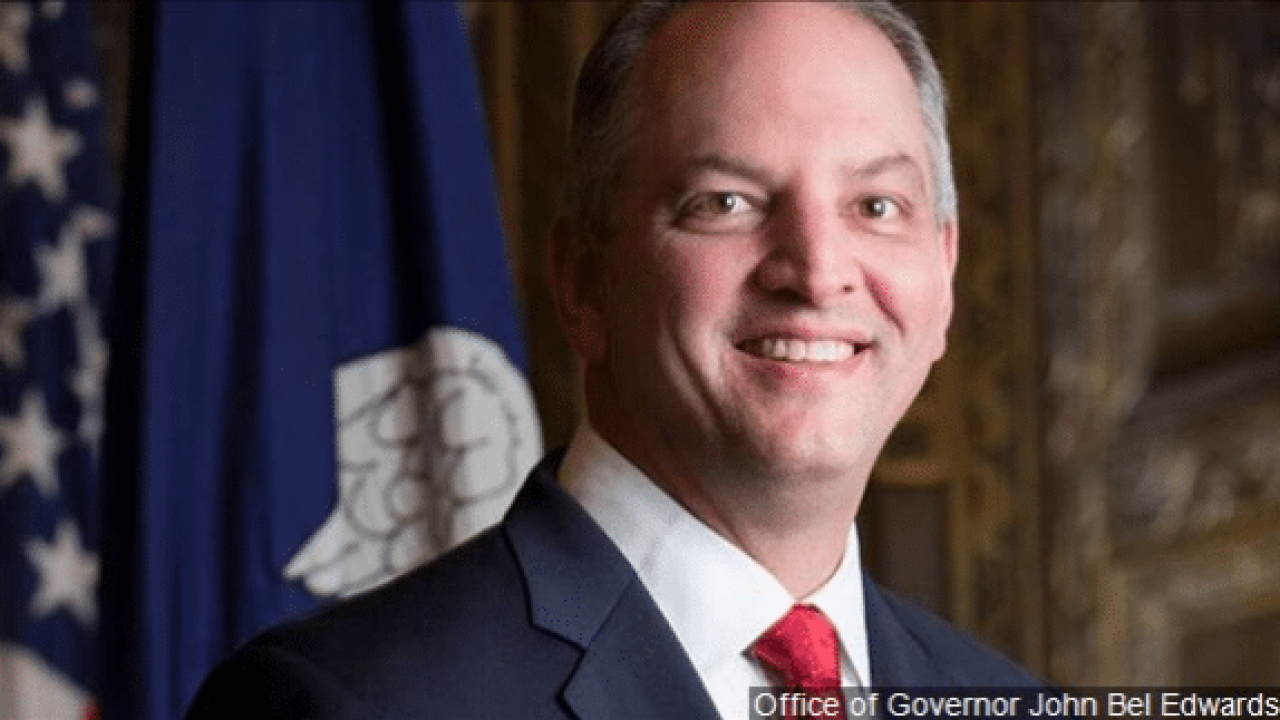
    BATON ROUGE, La. (AP) — House Republican leaders Thursday started advancing a budget plan that largely mirrors Democratic Gov. John Bel Edwards’ proposal to use federal coronavirus aid to close a $1 billion gap caused by the pandemic without deeply slashing state services.

    The House Appropriations Committee rewrote the package of budget measures to account for state tax and fee dollars lost because of the virus outbreak. The bills would rebalance this year’s budget without cuts and would craft spending plans for the upcoming 2020-21 year with only modest reductions.

    The committee sent those to the full House for debate without objection, a rare moment of bipartisan financial agreement.

    In the upcoming budget year that starts July 1, the TOPS college tuition program, the K-12 school financing formula and the social services department would be spared reductions. College campuses, health programs and some other state agencies would take some cuts.

    Spending increases that Edwards and many lawmakers wanted for teacher pay, public colleges and early learning programs have been stripped from next year’s budget because Louisiana can no longer afford them.

    “Overall, the plan balances need for some reductions while maximizing the use of federal recovery dollars,” said Appropriations Chairman Jerome “Zee” Zeringue, a Houma Republican.

    Fears that the virus’s hit to the state treasury would force steep slashing across programs don’t play out under the proposal. The bills would use nearly $1.2 billion in federal assistance approved by Congress to respond to the pandemic and about $90 million from the rainy day fund to fill most shortfalls across the current and next budget years.

    “This seems like very good news,” said Rep. Gary Carter, a New Orleans Democrat. “We were expecting some drastic measures that may have to be taken in the budget. I’m just so pleased.”

    Commissioner of Administration Jay Dardenne, the governor’s chief financial adviser, said the more than $30 billion House budget plan for the upcoming year that begins July 1 differs from Edwards’ proposal by only about $12 million in state financing.

    “We agree on a lot more than we disagree,” Dardenne said.

    Louisiana’s tax collections are being hammered by widespread unemployment and shuttered businesses from the virus outbreak and a resulting steep dive in oil prices worsened by an international feud.

    The full House will debate the package of budget bills Tuesday. If approved there, they’ll move next to the Senate for consideration. The regular legislative session must end June 1, and legislative leaders have questioned whether they’ll complete the budget work by then or wrap it up in a special session.

    Some Republicans expressed concern about how the state will replace the one-time use of federal aid in future budget years if Louisiana’s tax collections don’t rebound quickly to fill the gap when the federal assistance disappears. State economists have warned that Louisiana’s economic recovery could be slow.

    The proposal to balance this year’s budget and craft next year’s spending plan uses nearly $1 billion in direct federal aid Louisiana received from Congress through the CARES Act to respond to COVID-19. The dollars can be spent on virus-related expenses, and the Edwards administration said it found expenses across multiple agencies that meet the criteria.

    “Are you guys pretty confident we’re on solid ground with the use of the CARES Act money?” Republican Rep. Tony Bacala of Prairieville asked Dardenne.

    Dardenne replied: “We feel confident that we are staying within the guardrails” given by federal officials.

    To lower state costs, the budget also uses $190 million in increased federal Medicaid financing that Louisiana, like other states, received because of the coronavirus.

    The budget for the financial year starting July 1 would include a $40 million state financing cut to the Health Department, a $22 million cut to higher education and smaller cuts to other agencies. House lawmakers added language blocking the Health Department from using a new reimbursement model for hospitals that provide Medicaid services, amid a disagreement over the approach.

  • Some Mississippi casinos reopen after 2-month virus hiatus

    Some Mississippi casinos reopen after 2-month virus hiatus

    JACKSON, Miss. (AP) — Some casinos in Mississippi reopened Thursday for the first time in two months, following state guidelines to try to mitigate the spread of the new coronavirus.

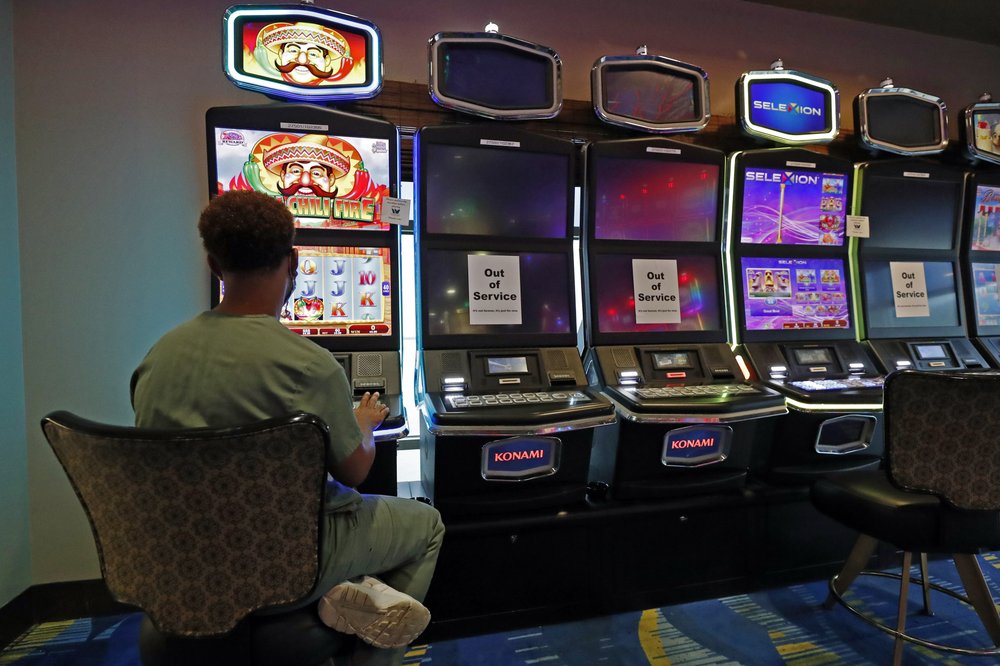
    At least three dozen people stood in line waiting to get into WaterView Casino in Vicksburg as it opened. A manager came outside to do a countdown until opening. Customers were allowed to enter one at a time. They were screened for COVID-19 symptoms and were offered masks, although many already had their own.

    Notes were attached to video games and slot machines, reminding customers and staff to sanitize the machines before each use. Stickers placed on the floor to tell people to remain at least 6 feet (1.8 meters) apart.

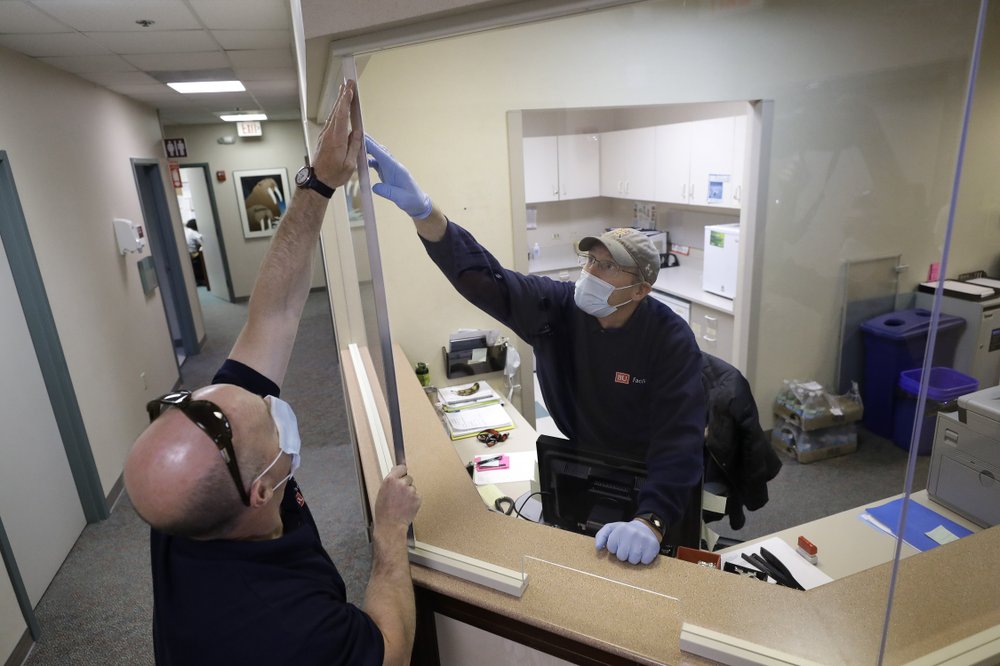
    Plastic shields have been installed around cashiers’ stations. The state Gaming Commission limits the numbers of players for blackjack and other table games. Casinos are required to set up hand sanitizing stations.

    The state Health Department said Thursday that Mississippi — with a population of about 3 million — had at least 12,222 confirmed cases and 580 deaths from the coronavirus as of Wednesday evening. That was an increase of 255 cases and 10 deaths from the numbers reported a day earlier.

    The number of coronavirus infections is thought to be far higher because many people have not been tested, and studies suggest people can be infected with the virus without feeling sick. For most people, the coronavirus causes mild or moderate symptoms, such as fever and cough. For others, especially older adults and people with existing health problems, it can cause severe symptoms and be fatal.

    The Health Department said Thursday that at least 125,970 coronavirus tests had been conducted in Mississippi as of Wednesday. The department said at least 1,590 cases of the virus had been confirmed in long-term care facilities such as nursing homes, with at least 289 virus-related deaths in those facilities.

  • Court: Convicted ex-prisons leader and wife owe income taxes

    JACKSON, Miss. (AP) — A Mississippi court has affirmed a ruling that says an imprisoned former corrections commissioner and his wife must pay more than $69,000 in state income taxes.

    A Hinds County chancery judge ruled last year that Christoper Epps and his wife, Catherlean, waited too long to challenge the Department of Revenue’s order that they must pay $69,489 in individual income tax for 2007 to 2014. The Mississippi Court of Appeals on Tuesday affirmed that judge’s ruling, the Clarion Ledger reported.

    Epps was head of the state prison system for a dozen years. After resigning on Nov. 5, 2014, he was indicted on charges of accepting bribes and kickbacks in exchange for contracts and illicit activity with various corrections facilities. He pleaded guilty in 2015 to money laundering and filing a false income tax return.

    Epps was sentenced in May 2017 by U.S. District Judge Henry Wingate to almost 20 years in federal prison and fined $100,000 for running one of the largest and longest criminal conspiracies in the state’s history. Catherlean Epps was never implicated in any wrongdoing.

    A 49-count federal indictment accused Christopher Epps of taking nearly $1.5 million in bribes and kickbacks to steer more than $800 million worth of state prison contracts.

    A Department of Revenue audit determined the couple owed the additional taxes and issued an assessment letter dated Oct. 23, 2017. The couple appealed to a Department of Revenue review board and later to chancery court.

    Chancery Judge Tiffany Grove dismissed the appeal last year, agreeing with the Department of Revenue that the couple had missed the deadline by one day to file an appeal in chancery court.

    The Mississippi Court of Appeals agreed with Grove’s ruling, saying the couple failed to appeal within the required 60 days.

    The couple’s attorney, James McGee Jr., argued they had two to three additional days to appeal the Board of Tax Appeal decision since it was mailed to them. Matthew Henry, an attorney for the state, argued that state law only applied when filing an appeal to a state agency, not to a court.

  • Xfinity Series’ return again delayed by rain at Darlington

    Xfinity Series’ return again delayed by rain at Darlington

    DARLINGTON, S.C. (AP) — The return of Xfinity Series racing has been delayed once again by rain at Darlington Raceway on Thursday.

    The race — the first for the series since March 7 due to the coronvirus pandemic — was originally set for Tuesday night, but heavy storms washed out that plan. Organizers were set to try again Thursday at noon and that, too, had to be put on hold because of rain at the old, country track.

    The NASCAR Cup Series had a successful return at Darlington with two races this week.

    Kevin Harvick earned his 50th Cup win when he took Sunday’s race, the first for the series in 10 weeks. Denny Hamlin won a rain-shortened race Wednesday night, the first time the series ran on that day since 1984.

    Xfinity hopes to bring NASCAR’s reopening week to a successful conclusion — whenever the rain lets up.

  • Colleges plan fall opening, but campuses won’t look the same

    Colleges plan fall opening, but campuses won’t look the same

    Growing numbers of U.S. colleges are pledging to reopen this fall, with dramatic changes to campus life to keep the coronavirus at bay. Big lectures will be a thing of the past. Dorms will will be nowhere near capacity. Students will face mandatory virus testing. And at some smaller schools, students may be barred from leaving campus.

    Even as some universities abandon hope of in-person instruction next semester, citing concerns from public health officials, dozens are announcing plans to welcome students back in August. They acknowledge that an outbreak could force classes back online, but many of their leaders say the financial and political pressures to reopen are too large to ignore.

    At West Virginia University, President E. Gordon Gee said students don’t want to wait for a vaccine, and the school can’t afford to.

    “If it was simply based on science, we would keep everything shut down until we have a vaccine and until it’s working. But I don’t feel that that’s feasible, either economically or socially, and certainly not educationally,” Gee said. “We will open, but it will be different.”

    Colleges planning to reopen include Purdue University, Texas A&M University, the University of Notre Dame and statewide systems in Arizona, Florida, New Hampshire and elsewhere. Some plan to make decisions this summer, including Princeton University, where officials say it’s too soon to make a call.

    The California State University system, by contrast, has said its 23 campuses will stay mostly online this fall, citing predictions of a virus resurgence later this year. Others including the University of South Carolina, Rice and Creighton universities plan to bring students back but end the term early, before Thanksgiving, anticipating a second wave could hit later in the fall.

    President Donald Trump has encouraged schools to reopen despite concerns from his top infectious disease expert, Dr. Anthony Fauci. Speaking at a Senate hearing last week, Fauci said it would be “a bit of a bridge too far” to expect a vaccine before the fall. Trump countered that the comment was “not an acceptable answer.”

    New guidelines issued by the Centers for Disease Control and Prevention this week say colleges should work with state and local officials to decide how to reopen. But the agency suggests a range of safety measures for campuses, saying they should keep common spaces closed if possible, hold smaller classes in larger rooms, and install plastic barriers in areas where it’s hard to stay apart.

    In other countries emerging from lockdown, universities have been slow to reopen. Primary schools in France were allowed to reopen earlier this month, but universities are expected to remain closed through the summer. Universities in New Zealand have been granted permission to reopen, but most say they plan to stay online until July or later.

    Britain’s Cambridge University announced Wednesday that all in-person lectures will be canceled through the 2020-21 academic year because of the pandemic.

    In the U.S., colleges that plan to reopen have told students to expect strict social distancing measures, including mandatory use of face masks. College leaders say widespread virus testing will be the linchpin to a safe reopening. At many schools, students who test positive would be placed in dorm rooms reserved as quarantine space.

    But there are questions about schools’ ability to provide large numbers of tests. Some research universities say they have the lab equipment to analyze virus tests, but not enough swabs and testing chemicals. Smaller schools will need to hire companies to handle tests, likely at a significant cost.

    In a call with 14 university leaders last week, Vice President Mike Pence pledged to help colleges ramp up testing operations. But some on the call said details, especially about funding, remain hazy.

    “This testing is going to cost money, and many academic institutions are already going to be fiscally challenged,” said Michael Lovell, president of Marquette University in Milwaukee, Wisconsin. “There’s not a clear path from an institutional point of view.”

    Once students are back on campus, the primary goal will be to keep them spaced out, colleges say. Classroom desks will be arranged 6 feet apart. Class schedules may be staggered. Big lectures will be split up or moved online. Some colleges are discussing teaching certain classes outside or in tents.

    A growing number of colleges say they will offer a “hybrid flex” model, in which classes are offered online and in person at the same time, and students can choose either option. Professors at some colleges will also be allowed to continue teaching remotely through video feeds projected in the classroom.

    Most vexing for colleges, however, is the dilemma of dorm life. At some schools, suites meant for several students will be limited to one or two. Bathrooms shared by entire floors will be restricted to a handful of students. With only so much dorm space, some colleges have been scrambling to rent nearby apartments as overflow housing.

    At Trinity College, a school of 2,000 in Hartford, Connecticut, officials hope to place every student in their own room. Staff members have been scouring campus with tape measures in recent weeks to make sure students will have space to stay 6 feet apart.

    “I have a huge incentive to want to reopen. I want to see our students. I want to see them educated in the best way possible,” Trinity President Joanne Berger-Sweeney said. “And I also want to remain a significant and good employer in the state of Connecticut at a time when that’s really important.”

    Boston University is exploring whether the housing problem can be solved by placing students into “family groups” that live together but have little social interaction with other groups. Robert Brown, the school’s president, said placing all students alone “may be overly isolating for students and lead to another set of problems.”

    At Claremont McKenna College near Los Angeles, officials are wondering how their single dining hall will accommodate 900 students who buy meal plans. The school is weighing measures to restrict capacity in the hall, which may require students to eat in shifts or take their meals outside.

    It’s just one way in which campus life will “not be the same as what we have grown so accustomed to,” said Hiram Chodosh, president of the college.

    Hoping to keep the virus away, some smaller colleges are considering limits or even outright bans on travel in and out of campus. In a recent letter to students, Amherst College in Massachusetts said officials “may need to require that you limit your movement to on-campus locations only.”

    At West Virginia, Gee said he’ll rely on students to police their own behavior. He argues that peer pressure is more effective “than a 76-year-old university president saying don’t do it.” Gee, known for his impromptu appearances at student activities on campus and off, said he will scale back this fall, much to his chagrin.

    “It’s going to be a lot different for me, and I’m going to miss that,” Gee said. “But I view us as dancing with the coronavirus. This is going to be with us forever, even once we find a vaccine. We just need to learn how to manage it in a way that allows life to go on.”

  • Shooter ‘neutralized,’ 1 sailor hurt at Texas naval station

    Shooter ‘neutralized,’ 1 sailor hurt at Texas naval station

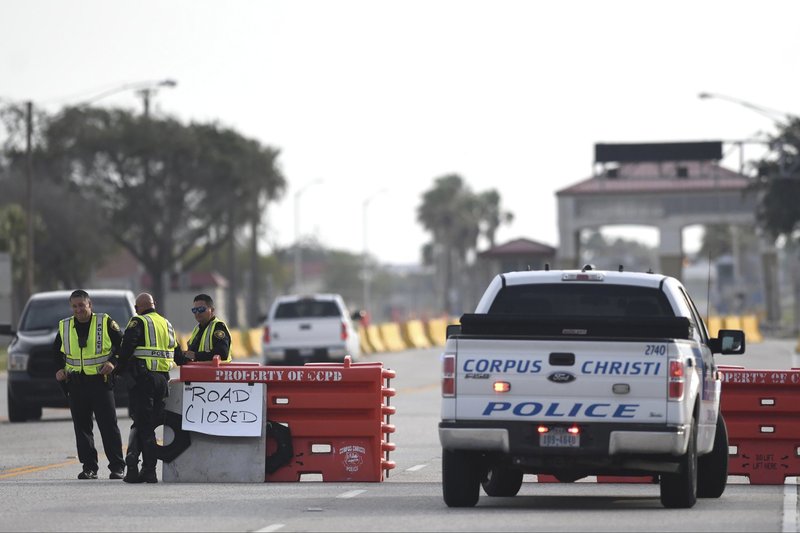
    CORPUS CHRISTI, Texas (AP) — A security team “neutralized” an active shooter early Thursday at a Texas naval air station, the U.S. Navy said.

    The security team responded to the Naval Air Station-Corpus Christi at about 6:15 a.m. One sailor assigned to the security force team was injured but was in good condition, the Navy said.

    The injured Navy sailor was shot but was wearing body armor, said a U.S. official who spoke on condition of anonymity to provide information not yet made public.

    All gates remained closed and the facility remained on lockdown Thursday morning.

    The station had a similar lockdown last December. In another incident at the base last year, a man pleaded guilty to destruction of U.S. government property and possession of a stolen firearm for ramming his truck into a barricade at the Corpus Christi station.

  • Boy, 6, cracks open robbery case by reeling in sunken safe an hour ago

    JOHNS ISLAND, S.C. (AP) — A 6-year-old boy helped crack open a nearly decade-old robbery case when he reeled in a locked safe from the bottom of a South Carolina lake.

    Knox Brewer of Johns Island took up “magnet fishing” and began hunting for metal objects underwater as a way to pass time during the coronavirus pandemic, his family members told WCIV-TV this week.

    The boy was out with his family at Whitney Lake this month when the magnet attached to his line stuck to something heavy in the mud below, the news outlet reported. With the help of a bystander, Knox pulled in and pried open what turned out to be a waterlogged lockbox containing debris-covered jewelry and credit cards, as well as a checkbook, according to a video of the discovery.

    “I knew the right thing to do was go ahead and call the local authorities, get them involved and try to solve this mystery,” the child’s father, Jonathan Brewer, told the outlet.

    Authorities determined the sunken safe belonged to a woman who lived across the street from the lake. She said it had been stolen from her home eight years ago, the outlet reported.

    While most of the expensive items had been taken, the find still turned out to be a valuable catch, according to the Brewers. They said they were able to reunite her with charms from an old bracelet.

    “The first thing that she did was just kneel down, hug Knox and thanked him and thanked him for bringing that closure to her,” Jonathan Brewer said.

  • Lessons from 1918: Old pandemic is a murky guide for sports

    Lessons from 1918: Old pandemic is a murky guide for sports

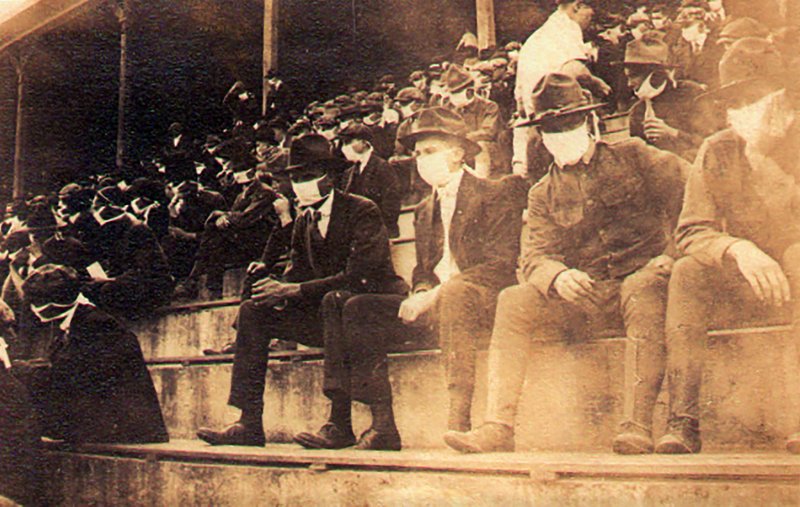
    The image is striking: Fans watching a college football game in the midst of a pandemic, wearing masks with a smidge of social distance between them on row after row of bleacher seats.

    The photo is 102 years old.

    The Georgia Tech alumni Twitter feed posted a black-and-white photo of the scene at Grant Field in 1918. Decades before tailgates, prime-time kickoffs and billions in program-supporting TV money, the ethos of the die-hard college football fan was not much different than today: Risks be damned, we’re going to the game.

    And once fans are allowed back in stadiums, history has shown that football could come back strong.

    “That’s really what started the big boom of college football in the 1920s,” said Jeremy Swick, historian at the College Football Hall of Fame. “People were ready. They were back from war. They wanted to play football again. There weren’t as many restrictions about going out. You could enroll back in school pretty easily. You see a great level of talent come back into the atmosphere. There’s new money. It started to get to the roar of the Roaring ’20s and that’s when you see the stadiums arm race. Who can build the biggest and baddest stadium?”

    A comeback seems a long away off even as some schools try to prepare for what many hope will be a full season this fall. For now, headlines are still dominated by discussions about what can be done safely.

    “I think a lot of people will hesitate to attend sporting events as spectators until there is a proven vaccine,” Georgia Tech professor of sports history Johnny Smith said.

    “I think there are parallels in what we can learn from 1918 in terms of how we respond to a pandemic,” Smith added. “The cities that were hesitant and didn’t impose closure orders as quickly had far more fatalities. I think the lesson we can draw in general from 1918 about how to respond to a pandemic is that closure orders and social distancing is effective.”

    College football back then was already trying to field teams amid the lingering effects of World War I. There were restrictions on travel, practice and number of games played. The storied Army-Navy game was canceled in 1918 and the lone postseason game was the 1919 Tournament East-West game in Pasadena, California, a game better known today as the Rose Bowl.

    The pandemic sickened players and coaches, shortened seasons and even forced some universities to scrap their seasons. On Oct. 13, 1918, The Washington Post carried a story that declared the epidemic “sweeping the country has dealt the death blow to necessary preparations, and with the stage still undetermined, the outlook is anything but bright.”

    Penn coach Bob Folwell, better known as the first coach of the New York Giants, was hospitalized with Spanish flu and missed six weeks during the 1918 season. West Virginia failed to field a team and at least one player died when he ignored a cold that morphed into the virus. The Missouri Valley Conference, which included Kansas, Kansas State and Missouri, shut down for the season. Pittsburgh and Michigan shared the national championship, though neither team played more than five games and all but one was held in November.

    In September 1918, the second and by far deadliest wave hit in the U.S., the final blow for teams trying to schedule a full season. The headlines that followed included “Masks for Michigan Men” (Daily Pennsylvanian, Oct. 23) and “Rough Year For Football, But Game Shows Its Mettle” (Chicago Daily Tribune, Oct. 21).

    “A lot of them closed up camp, especially once the second wave hit,” Swick said.

    The pandemic killed more than 50 million people worldwide, including 675,000 in the United States. Even with lower numbers in 2020, Smith said, fans will still be cautious.

    “I think generally people are going to be more hesitant to return to stadiums today,” Smith said. “I think there will be a certain segment of the population that is more concerned about a second wave. That’s another lesson to keep in mind from 1918.”

    And if fans are allowed, what rules will be in place? The bleak question looms large should campuses open to students in the fall: Is it safe to pack fans inside The Swamp or The ’Shoe if the pandemic is still on?

    “I think when we look back on this idea of people wearing masks to attend a football game and raise the question today, would people do that? I’m not sure that people would,” Smith said.

    College football commissioners in mid-April insisted sports cannot be played this fall if campuses are not open, a stance echoed by NCAA President Mark Emmert. Still, schools are working hard to find ways to play, and there are encouraging signs even if campuses are not fully open in the traditional sense.

    Much more is at stake from a century ago: TV money, bowl games, conference championships, cross-country travel all need to be sorted out. In 1918, there were no more than 90 college football teams. There are 130 major college football teams alone in 2020, spread across 41 states and competing in 10 conferences, save for a handful of independents.

    To play or not to play is still the essential dilemma a century later but football — and sports — will return at some point, as it did in 1919. The Ogden Standard noted after the sport’s yearlong break in the state it was “anxiously awaiting the rustle of the cleated shoes, the line plunges of victory and the return of the greatest of all college sports.”

    “People really wanted to get back to their lives,” Smith said. “Sports is all about the human experience, human connection. We’re not meant to isolated. That’s a frustration a lot of people have in 1918 and today. I think people not being able to attend sporting events is symbolic of a larger sense of loss in America.”

  • Apple, Google Release Technology For Pandemic Apps

    Apple, Google Release Technology For Pandemic Apps

    Apple and Google on Wednesday released long-awaited smartphone technology to automatically notify people if they might have been exposed to the coronavirus.

    The companies said 22 countries and several U.S. states are already planning to build voluntary phone apps using their software. It relies on Bluetooth wireless technology to detect when someone who downloaded the app has spent time near another app user who later tests positive for the virus.

    Many governments have already tried, mostly unsuccessfully, to roll out their own phone apps to fight the spread of the COVID-19 pandemic. Many of those apps have encountered technical problems on Apple and Android phones and haven’t been widely adopted. They often use GPS to track people’s location, which Apple and Google are banning from their new tool because of privacy and accuracy concerns.

    Public health agencies from Germany to the states of Alabama and South Carolina have been waiting to use the Apple-Google model, while other governments have said the tech giants’ privacy restrictions will be a hindrance because public health workers will have no access to the data.

    The companies said they’re not trying to replace contact tracing, a pillar of infection control that involves trained public health workers reaching out to people who may have been exposed to an infected person. But they said their automatic “exposure notification” system can augment that process and slow the spread of COVID-19 by virus carriers who are interacting with strangers and aren’t yet showing symptoms.

    The identity of app users will be protected by encryption and anonymous identifier beacons that change frequently.

    “User adoption is key to success and we believe that these strong privacy protections are also the best way to encourage use of these apps,” the companies said in a joint statement Wednesday.

    The companies said the new technology — the product of a rare partnership between the rival tech giants — solves some of the main technical challenges that governments have had in building Bluetooth-based apps. It will make it easier for iPhones and Android phones to detect each other, work across national and regional borders and fix some of the problems that led previous apps to quickly drain a phone’s battery.

    The statement Wednesday also included remarks from state officials in North Dakota, Alabama and South Carolina signaling that they plan to use it.

    “We invite other states to join us in leveraging smartphone technologies to strengthen existing contact tracing efforts, which are critical to getting communities and economies back up and running,” said North Dakota Gov. Doug Burgum, a Republican.

    North Dakota had already launched a location-tracking app that about 4% of state residents are using, higher than other U.S. states with similar apps but falling far short of the participation rate that experts say is needed to make such technology useful.

    Tim Brookins, the CEO of ProudCrowd, a startup that developed North Dakota’s app, said Wednesday that North Dakotans will now be asked to download two complementary apps — his model, to help public health workers track where COVID-19 patients have been, and the Apple-Google model, to privately notify people who might have been exposed to the virus.

    Some privacy advocates have favored the Google-Apple approach because it offers more privacy and security. But others, including Ryan Calo, a law professor who co-directs the University of Washington’s Tech Policy Lab, said he is concerned about its effectiveness if people get too many false alerts asking them to quarantine themselves. He said public health agencies would be better off being able to track location with careful safeguards.

    Calo said Google and Apple have been more upfront about the limitations of their model, but he said he’s still worried some governments will treat it as a substitute for crucial investments in free, widespread testing and hiring an army of human contact tracers.

    “We’re just not going to get out of this global pandemic with a clever app,” he said.

  • Trump To Tour Ford’s Ventilator Assembly Plant Near Detroit

    Trump To Tour Ford’s Ventilator Assembly Plant Near Detroit

    WASHINGTON (AP) — A day after threatening to withhold funds over Michigan’s mail-in ballot effort, President Donald Trump was set to visit the electoral battleground Thursday to learn how the medical breathing machines governors begged for during the height of the coronavirus pandemic are made.

    But hovering over his visit to a repurposed Ford Motor Co. factory in Ypsilanti, outside of Detroit, is whether he will wear a face covering.

    Trump has refused to wear a face mask in public, a practice that federal health authorities say all Americans should adopt to help slow the spread of the virus.

    Ford says everyone in its factories must wear personal protective equipment, including masks, and that its policy has been communicated to the White House. Trump wouldn’t commit to wearing a mask at the plant when he was asked about the matter earlier this week.

    Michigan Attorney General Dana Nessel said that mask-wearing isn’t just Ford’s policy but it’s also the law in a state that’s among those hardest hit by the virus. She sent Trump a letter Wednesday asking him to respect Ford’s employees by covering his nose and mouth during the visit, which will include a roundtable discussion with black leaders, a factory tour and speech.

    “Anyone who has potentially been recently exposed, including the president of the United States, has not only a legal responsibility, but also a social and moral responsibility, to take reasonable precautions to prevent further spread of the virus,” Nessel said.

    At least two people who work in the White House and had been physically close to Trump recently tested positive for the virus. Trump is tested daily; the White House says he remains negative.

    An executive order issued by Gov. Gretchen Whitmer requires factories to suspend all nonessential in-person visits, including tours, though Nessel said her office would not bar Trump.

    The Republican president and Whitmer, a Democrat, have clashed during the coronavirus outbreak over her criticism of the federal government’s response to the state’s needs for medical equipment, like ventilators, and personal protective gear, such as gloves, masks and gowns.

    In the early days of the crisis, Whitmer and other governors and medical workers clamored for ventilators, fearing a shortage of the machines would prove deadly as the virus made breathing difficult for the scores of afflicted patients who were being brought to hospitals.

    But the U.S. now has a surplus of the breathing machines, leading Trump to begin describing the U.S. as the “king of ventilators.”

    Whitmer was not expected to accompany Trump during the visit.

    “We do not have plans to meet, but I did speak with him yesterday on the phone,” Whitmer told “CBS This Morning” on Thursday. “I made the case that, you know, we all have to be on the same page here. We’ve gotta stop demonizing one another and, really, focus on the fact that the common enemy is the virus.”

    On Wednesday, Trump threatened to withhold federal funds from Michigan after its secretary of state mailed absentee ballot applications to millions of voters. Trump first tweeted — erroneously — that the Democratic state official had mailed absentee ballots to Michigan voters. He later sent a corrected tweet specifying that applications to request absentee ballots had been mailed.

    Trump narrowly won Michigan in 2016. He insists mail-in voting is ripe for fraud, although there is scant evidence of wrongdoing.

    At the White House, Trump said he and Whitmer in their call discussed the coronavirus pandemic and the catastrophic flooding and mass evacuations caused by the failure of dams in the state’s central region — not his tweeted threat to withhold federal money.

    Trump also needled Whitmer on Twitter over her decision to keep stay-at-home orders largely in place. He said military and federal emergency management teams had been sent to assist with the flood response but added that the “Governor must now ‘set you free’ to help.”

    That was a reference to his strong push for states to lift stay-at-home restrictions and allow businesses to reopen so people can resume shopping and dining out.

    Last month, Trump tweeted “LIBERATE MICHIGAN” as residents there and in other states began holding protests against orders to stay at home.

    ___

    Follow Darlene Superville on Twitter: http://www.twitter.com/dsupervilleap