Author: Imported Author 1932006

  • Detective, nurse, confidant: Virus tracers play many roles

    SALT LAKE CITY (AP) — Health investigator Mackenzie Bray smiles and chuckles as she chats by phone with a retired Utah man who just tested positive for the coronavirus.

    She’s trying to keep the mood light because she needs to find out where he’s been and who he’s been around for the past seven days. She gently peppers him with questions, including where he and his wife stopped to buy flowers on a visit to a cemetery. She encourages him to go through his bank statement to see if it reminds him of any store visits he made.

    Midway through the conversation, a possible break: His wife lets slip that they had family over for Mother’s Day, including a grandchild who couldn’t stop slobbering.

    “Was there like a shared food platter or something like that?” Bray asks. “There was, OK, yep … sharing food or sharing drinks, even just being on the same table, it can spread that way.’”

    Suddenly, with a shared punch bowl, the web has widened, and Bray has dozens more people to track down.

    She is among an army of health professionals around the world filling one of the most important roles in the effort to guard against a resurgence of the coronavirus. The practice of so-called contact tracing requires a hybrid job of interrogator, therapist and nurse as they try coax nervous people to be honest.

     The goal: To create a road map of everywhere infected people have been and who they’ve been around.

    While other countries have devised national approaches, a patchwork of efforts has emerged in the U.S. where states are left to create their own program.

    Bray normally does this type of work to track contacts for people with sexually transmitted diseases. She is now one of 130 people at the Salt Lake County health department assigned to track coronavirus cases in the Salt Lake City area. The investigators, many of them nurses, each juggle 30 to 40 cases, and try to reach everyone the original person was within 6 feet (1.8 meters) of for 10 minutes or more. They stay in touch with some people throughout the 14-day incubation period, and calls can take 30 minutes or more as they meticulously go through a list of questions.

    Some estimate as many as 300,000 contact tracers would be needed in the U.S. to adequately curtail the spread. While some states like Utah have reported having enough contact tracers, others are hundreds or even thousands of people short.

    The contact tracers often find themselves in a tangled web of half-truths and facts that don’t match up. Language and cultural barriers arise that require interpreters and taxing conversations that leave the investigators wondering if the person understands what they’re trying to do.

  • Hamlin scores 2nd win of season at rain-shortened Darlington

    Hamlin scores 2nd win of season at rain-shortened Darlington

    DARLINGTON, S.C. (AP) — Denny Hamlin won NASCAR’s first Wednesday race since 1984 when rain stopped the event with 20 laps remaining at Darlington Raceway.

    The Daytona 500 winner was out front but out of fresh tires and trying to hang on when he got unintended help from Joe Gibbs Racing teammate Kyle Busch. The reigning Cup champion caused Chase Elliott to crash eight laps earlier to bring out the caution.

    A furious Elliott waited for Busch on the apron of the track and flipped Busch the middle finger as he passed. As NASCAR cleaned the track, it started to rain and the cars were called to pit road under red-flag.

    It was an already active evening at “The Track Too Tough To Tame” as drivers were racing against the field and the weather. As the drivers sat in their cars waiting for NASCAR to pull the plug, a handful of Elliott’s crew members sat on the pit wall staring down Busch.

    One of Busch’s crew members sat between them on the wall and NASCAR eventually ordered everyone back over the wall. Eight minutes later, the race was called and Busch was greeted by Alan Gustafson, Elliott’s crew chief and Busch’s former crew chief when he drove for Hendrick Motorsports, for a conversation between two masked competitors.

    Busch immediately copped to the error.

    “There’s no question I made a mistake and just misjudged the gap,” Busch said. “They’re upset, they’re mad. I’m not just going to fix and we’re going to go have ice cream tomorrow. They’re going to dwell on it and I’m sure there are repercussions of it I’m going to have down the road.”

    Meanwhile, a fox was scampering across the deserted track and Hamlin, wearing a mask that depicted his actual smile, was having a muted celebration in the rain.

    He walked to victory lane under a large black umbrella. It was a 1-2 finish for Joe Gibbs Racing and Toyota. Hamlin has won three times at Darlington and has two wins this season.

    “I got my happy face on. Made sure I brought it with me,” Hamlin said of his mask. He said he also had masks made with a “sad face” but only brought the smiling masks to a track he counts among his favorite.

    Hamlin thought he was in good shape when he made his last pit stop but a caution by Clint Bowyer, who won the first two stages of the race, jumbled the strategy with 34 laps remaining.

    Hamlin had no choice but to stay out on the track, and his crew chief Chris Gabehart told him over the radio, “you ain’t going to like it, but we’re going to have to eat our vegetables here.”

    Hamlin, the leader because he didn’t pit on the restart with 29 to go, only had to hold off traffic for one lap before the Busch and Elliott collision. The rain then came and Hamlin earned the trophy.

    “It’s a driver’s race track,” he said. “You can do different things to make (the car) handle. We got it right.”

    The race marked the first time in NASCAR history that the Cup Series had two points-paying races at the same track in one week.

    The start of NASCAR’s second race back during the coronavirus pandemic was moved up an hour because of poor weather, but that was then delayed nearly 90 minutes because it rained most of the day.

    When the action finally began, the 310-mile affair was spirited from start to finish because drivers were unsure if they were racing to the halfway point — the mark a race becomes official — or the distance.

    NASCAR returned to action Sunday at Darlington after a 10 weeks off by using a a strict health protocol and limiting those in attendance to only the most essential for conducting a race.

    Health screenings were required to enter the track and each of the 40 cars were allowed just 16 team members.

    Fox Sports again broadcast the race primarily from a studio in Charlotte, North Carolina, with just one pit reporter at Darlington. For its prerace show, drivers used varying technology to make brief appearances while sitting alone in their motorhomes.

    Drivers had to travel to the track alone, pass through a health screening and then isolate before the race. They are required to wear face masks.

    NASCAR has an ambitious return plan of 20 races spanning its three national series between Sunday’s return and June 21. Spectators are not expected to be permitted to any of the events in this span.

    Rain disrupted the schedule Tuesday night when the Xfinity Series was washed out. That race is now scheduled to be held Thursday afternoon.

  • Dems question judicial nominee about past partisan remarks

    Dems question judicial nominee about past partisan remarks

    JACKSON, Miss. (AP) — Democratic members of the U.S. Senate Judiciary Committee on Wednesday repeatedly asked a federal appeals court nominee from Mississippi about derisive comments he made in newspaper opinion pieces and on social media about former President Barack Obama and his signature health care legislation.

    “Did you call the passage of the Affordable Care Act ‘perverse’ and ‘illegitimate’ and say that (you) ‘hope the court’ — you meant the Supreme Court — ‘strikes down the law?’,” Democratic Sen. Mazie Hirono of Hawaii asked the nominee, Cory Wilson, during a hearing shown online.

    Wilson, who serves on the state appeals court, responded: “Senator, before I ever became a judge, I wrote commentary and served in the Legislature where I took a number of…”

    Hirono cut him off: “The answer is yes.”

    Wilson, 49, is nominated for a seat on the 5th U.S. Circuit Court of Appeals, which hears cases from Louisiana, Mississippi and Texas and is considered one of the most conservative appeals courts.

    He said during the hearing Wednesday in Washington that as a judge, he puts aside his past criticism of Democrats and some of their policies. He also said in response to questions that he will follow the precedent of a Supreme Court ruling that upheld the Affordable Care Act, which Obama signed into law in 2010.

    Wilson was a first-term Republican state representative when he was appointed to the Mississippi Court of Appeals in February 2019 by then-Gov. Phil Bryant, a Republican allied with President Donald Trump. Before that, Wilson had worked for the Mississippi secretary of state and the state treasurer.

    The American Bar Association has rated Wilson as “well qualified” for the federal appeals court judgeship. But, his nomination has drawn opposition from advocates for voting rights, expanded access to health care and marriage equality, among a range of Democratic priorities that Wilson has pilloried.

    Wilson has the support of Mississippi’s Republican U.S. senators, Roger Wicker and Cindy Hyde-Smith.

    “Judge Wilson’s credentials, intellect and respect for the rule of law are well established,” Wicker said during the hearing Wednesday.

    Opponents of Wilson’s nomination point to partisan comments he’s made, attacking Obama and many Democratic party priorities. The Houston Area Urban League and the Baton Rouge National Organization for Women are among 13 groups that issued a letter Tuesday opposing Wilson’s nomination. It criticized his record of supporting states’ laws that require voters to show identification at the polls.

    “Mr. Wilson’s refusal to acknowledge the reality of this country’s history of voting rights violations and the prevalence of voter suppression is unsettling and indicates he would not have an open mind in such critical civil rights cases that often arise in the Fifth Circuit,” the letter said.

    The letter said Wilson referred to the Affordable Care Act as “liberal-utopia-dictated healthcare.”

    Trump previously nominated U.S. District Judge Sul Ozerden of Mississippi to the 5th Circuit seat. During a hearing in July, Republican Sens. Ted Cruz of Texas and Josh Hawley of Missouri questioned Ozerden about his 2012 dismissal of a Catholic diocese lawsuit that challenged the Affordable Care Act’s mandate that insurance plans cover contraception.

    Ozerden said he was following a binding precedent by the 5th Circuit, but his nomination stalled and never came up for a confirmation vote. Trump announced Wilson’s nomination to the seat on March 30.

    Trump initially nominated Wilson to become a federal district judge in southern Mississippi in 2019. The Judiciary Committee held a hearing on that nomination in January, but the nomination was still pending when Trump chose Wilson for a higher court.

    Wilson earned his undergraduate degree from the University of Mississippi and his law degree from Yale University, where he worked on the Yale Law Journal. He was a law clerk to Judge Emmett Ripley Cox of the 11th U.S. Circuit Court of Appeals.

  • Mississippi gov OKs business grants from virus relief fund

    Mississippi gov OKs business grants from virus relief fund

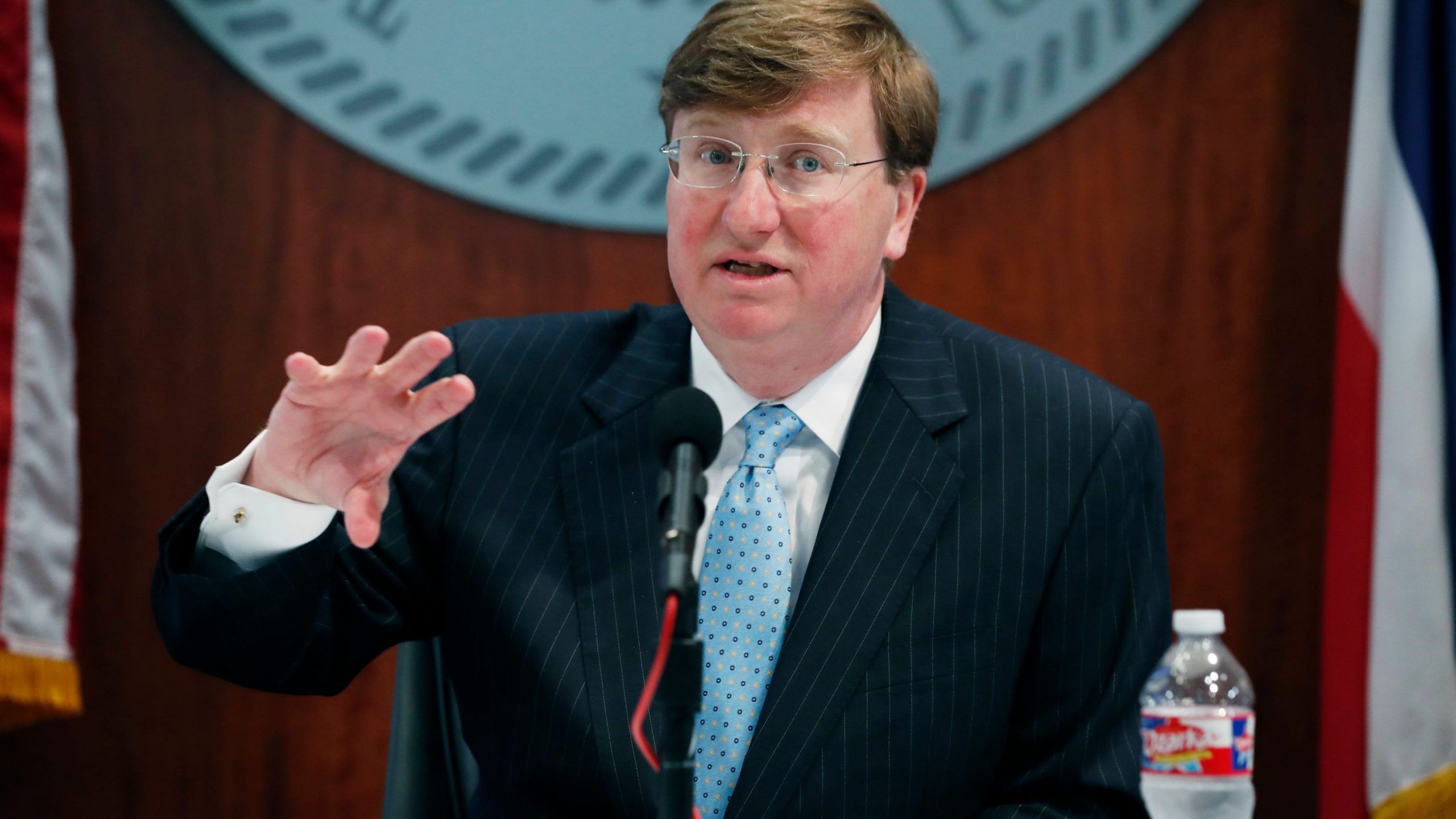
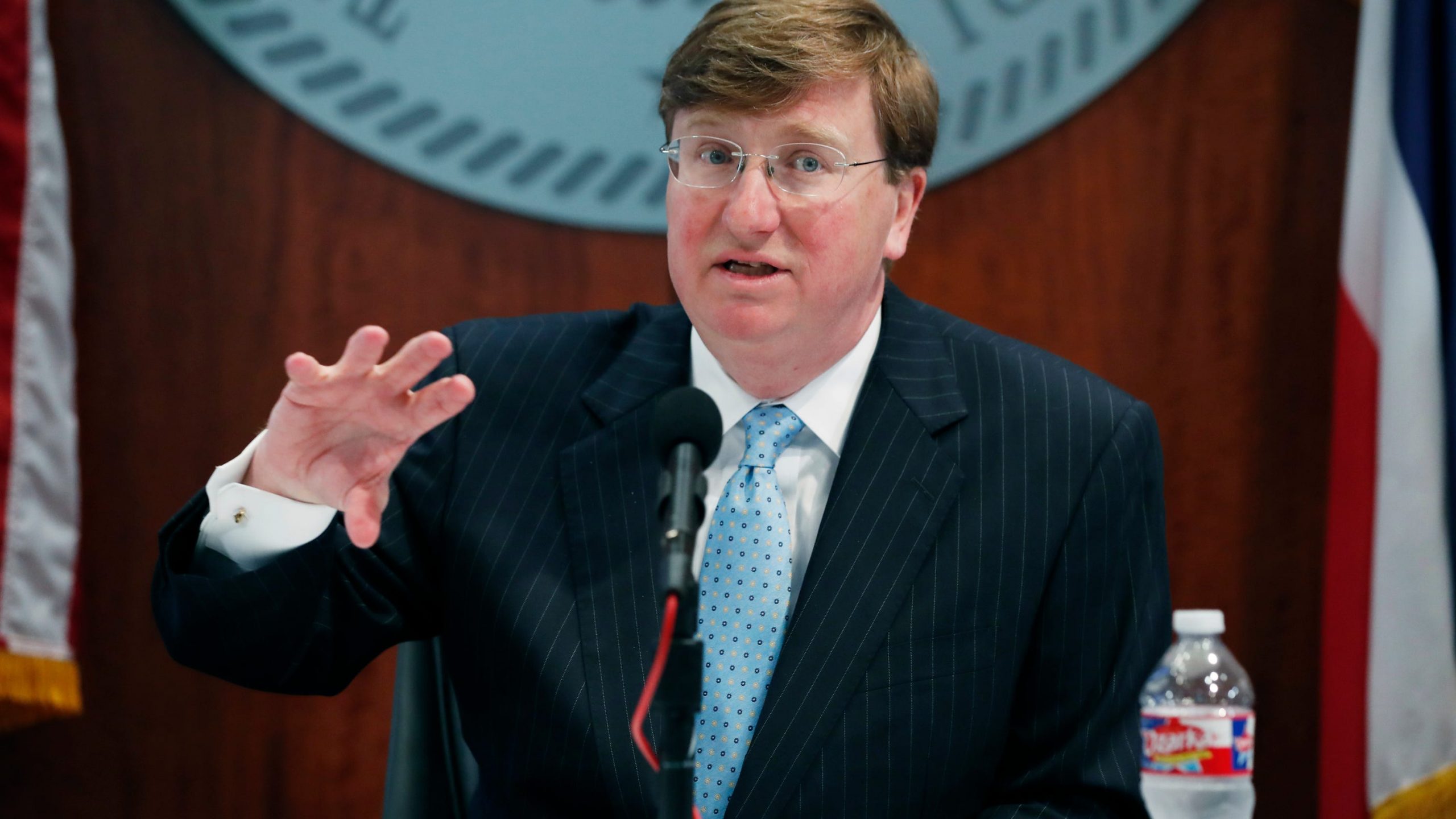
    JACKSON, Miss. (AP) — Mississippi Gov. Tate Reeves said Wednesday that he is signing a bill that creates a $300 million grant program for small businesses hurt by the coronavirus pandemic.

    Legislators passed the bill with broad bipartisan support last week, using part of the $1.25 billion Mississippi has received from a federal relief package. Republican Reeves and his staff helped write the legislation, but the governor said he wanted to thoroughly review the bill before signing it into law.

    Asked on Wednesday how soon the state might start sending checks to businesses, Reeves said: “As soon as possible.”

    The program is divided into two parts. One has $60 million to provide $2,000 for businesses that were forced to closed by government orders, including barbershops, salons, dance studios, gyms and child care centers.

    The other part has $240 million for grants ranging from $1,500 to $25,000 to cover expenses for virus response. For the first 21 days, the only applications considered would be from businesses that did not receive aid from the federal Paycheck Protection Program. And for the first 60 days, $40 million of this money is reserved for minority-owned businesses.

    Mississippi casinos are allowed to start reopening Thursday for the first time in two months, with precautions to mitigate the spread of the highly contagious virus. Reeves said Wednesday that he continues to consult with health officials about when it might be possible to open other tourist attractions and leisure activities, including youth baseball tournaments.

    The state Health Department said Wednesday that Mississippi — with a population of about 3 million — had at least 11,967 confirmed cases and 570 deaths from the coronavirus as of Tuesday evening. That was an increase of 263 cases and 16 deaths from the numbers reported a day earlier.

    The number of coronavirus infections is thought to be far higher because many people have not been tested, and studies suggest people can be infected with the virus without feeling sick. For most people, the coronavirus causes mild or moderate symptoms, such as fever and cough. For others, especially older adults and people with existing health problems, it can cause severe symptoms and be fatal.

    The Health Department said Wednesday that at least 120,680 coronavirus tests had been conducted in Mississippi as of Tuesday. The department said at least 1,568 cases of the virus had been confirmed in long-term care facilities such as nursing homes, with at least 281 virus-related deaths in those facilities.

  • Number Of Hospitalized COVID-19 Patients Drops Below 1,000

    Number Of Hospitalized COVID-19 Patients Drops Below 1,000

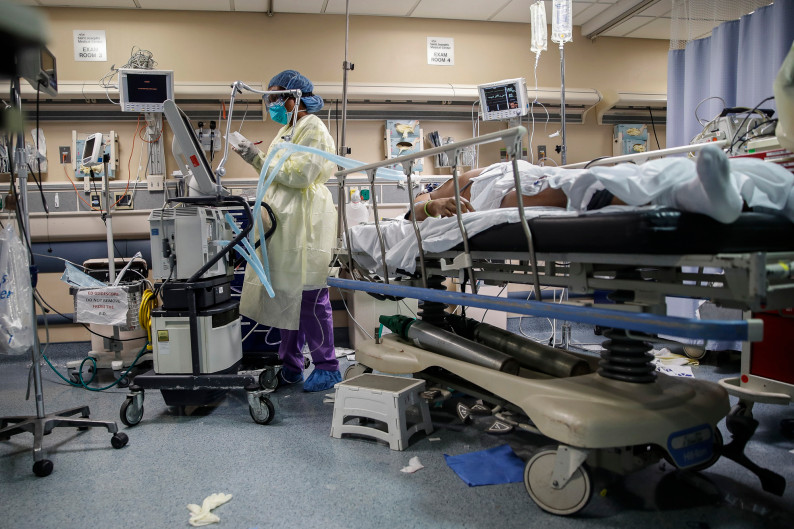
    BATON ROUGE, La. (AP) — The number of COVID-19 patients in Louisiana hospitals has dropped below 1,000 for the first time since late March.

    “Just over a month ago we had 2,134 individuals in the hospital from COVID-19,” and Wednesday’s number was 931, Gov. John Bel Edwards said on his monthly call-in radio show.

    Louisiana Department of Hospitals data show 927 were hospitalized on March 28, and the figure jumped to 1,032 the next day, with the peak Edwards noted on April 13.

    The 110 patients on ventilators Wednesday was the lowest since March 25 — the second day for which the state coronavirus website shows such reports. It showed 94 patients needing mechanical help to breathe on March 24 and 163 on March 25.

    The number of ventilated patients peaked nine days before hospitalizations, at 571 on April 4.

    More than 35,300 cases have been reported in the state and 2,485 people have died from the disease.

    Edwards eased pandemic restraints on some businesses Friday and noted it takes a week or two to see whether the increased movement has increased the number of cases.

    Three outbreaks reported this week were at crawfish farms and processing plants. People close to the crawfish business told The Advocate they are not surprised since workers live and work close together.

    “It’s like a house with a family in it,” farmer and processor David Savoy told The Advocate. “If one person gets it, there’s a good chance everyone’s going to get sick. That’s just the reality of the situation.”

    State health officials said this week that 100 people at three Acadiana crawfish facilities have been infected by the novel coronavirus. They wouldn’t identify the businesses, saying they are private and are complying with department recommendations. They are in Lafayette and Acadia parishes, said Tina Stefanski, the Louisiana Department of Health Region Four director.

    Savoy said his farm and factory, near Church Point in Acadia Parish, have not been affected.

    Such businesses rely on workers from Mexico and other countries for seasonal harvesting and processing.

    Workers on H-2B visas make up as much as 70% of the processors’ staffs, said Maria Bampasidou, an assistant professor of agriculture economics and agribusiness at Louisiana State University.

    Many such workers and those on H-2A visas at crawfish farms rent trailers or dormitory-like housing from their employers.

    Close working quarters have fueled outbreaks at slaughterhouses and meatpacking plants across the country, noted Dr. Susanne Straif-Bourgeois, an associate professor of epidemiology at LSU Health Sciences Center New Orleans and a former epidemiologist for the state health department.

    With crawfish facilities, she said, “the problem is they’re living together.”

    One outbreak was at a crawfish farm with “dormitory-like settings,” Dr. Alex Billioux, assistant secretary for the state’s Office of Public Health, said Monday.

    Republican state Rep. John Stefanski of Crowley said he wasn’t surprised by the outbreaks. “It’s the nature of the industry, especially with crawfish peeling plants,” he said. “It’s people working in very close quarters as well as living in the same area.”

    Producers say they have taken pandemic precautions. Savoy said his plant is regularly sanitized and workers’ temperatures are taken.

    There’s no way to build new housing quickly enough to space out workers, he said, but workers are away from people who don’t live near the rural plant.

    Sabina Hinz-Foley Trejo, lead organizer for the Seafood Workers Alliance, said the virus has intensified numerous labor problems in the crawfish business. Workers don’t get hazard pay and have limited access to clean masks, she said.

    “It’s elbow to elbow,” she said. “No shields. In some places, no masks.”

    The New Orleans Workers’ Center for Racial Justice, an advocacy group that launched the Seafood Workers Alliance, said workers must risk their pay and housing to speak up, the “perfect recipe for unsafe working conditions going unreported.”

    Straif-Bourgeois, the epidemiology professor, noted that the crawfish themselves don’t pose any risk.

    “I would urge everyone to eat crawfish and boil them,” she said.

    ___

    Follow AP coverage of the pandemic at https://apnews.com/VirusOutbreak and https://apnews.com/UnderstandingtheOutbreak.

  • Saints Exploring Superdome Naming Rights Options

    Saints Exploring Superdome Naming Rights Options

    NEW ORLEANS (AP) — The New Orleans Saints are preparing to look for a new naming rights holder for the Superdome.

    Mercedez-Benz has held naming rights under a 10-year agreement that expires in July 2021 and Saints have said this week that the German automaker does not intend to extend the deal.

    In 2015, Mercedes-Benz also entered into a 27-year naming rights contract with the home stadium of the NFL’s Atlanta Falcons, which opened in 2017.

    “Each contract came about for different reasons rather than a desire to have two stadiums,” the Mercedes-Benz public relations department stated in an email to The Associated Press. “The Mercedes-Benz Superdome was an opportunity that came to us during a time when we were trying to channel business and funds to New Orleans for the post- (Hurricane) Katrina rebuilding a decade ago.”

    The statement went on to say that buying naming rights to Mercedez-Benz Stadium represented an opportunity to mark the company’s decision five years ago to move its North American headquarters to Atlanta.

    Mercedes-Benz said it is “fully prepared to honor” its current contract with the Saints.

    “That said, we understand that the Saints need to plan for their future and we fully support them in exploring their options,” the statement said.

    The Superdome currently is undergoing $450 million in renovations and is slated to host the NCAA men’s basketball Final Four in 2022 and the Super Bowl in 2024.

    ___

    More AP NFL: https://apnews.com/NFL and https://twitter.com/AP_NFL

  • NCAA weighs moratorium amid push to offer fall sports

    NCAA weighs moratorium amid push to offer fall sports

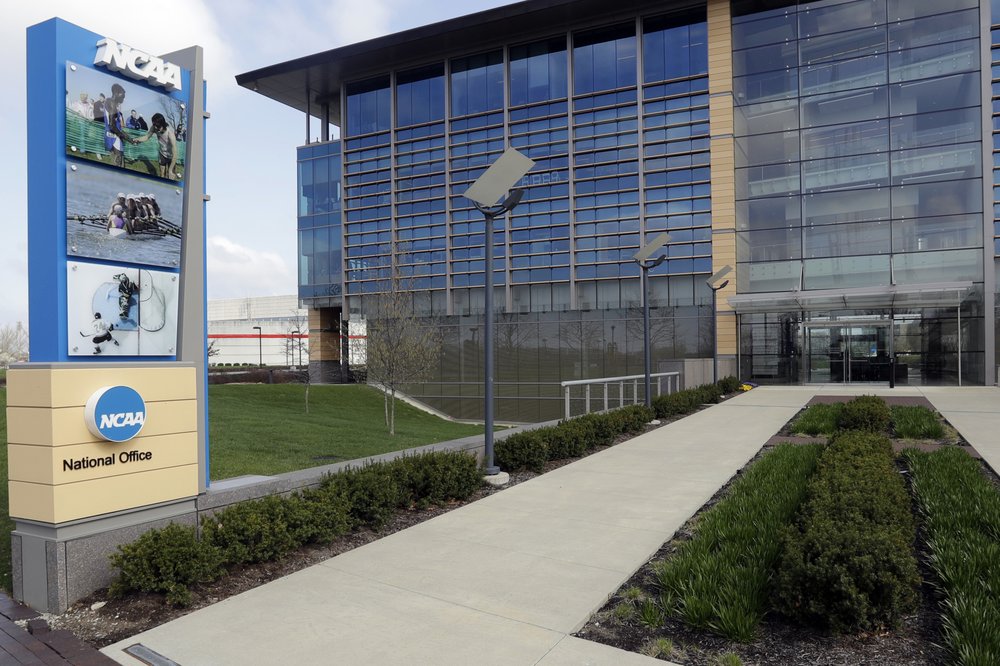
    The NCAA Division I Council is debating whether to let a moratorium on voluntary workouts on campus expire at the end of the month as a growing number of college leaders express confidence that fall sports will be played in some form.

    NCAA spokeswoman Michelle Hosick said the topic was on the agenda for the council for Wednesday, though it was not clear a decision would be made. The moratorium on athletic activities for all sports currently runs through May 31.

    From Notre Dame to LSU and more, a number of schools have announced plans to reopen their campuses for the fall semester and conferences have begun setting up plans for how to play football amid the coronavirus pandemic. The latest came this week with the Florida State system announcing plans for its 12 schools and more than 420,000 students.

    Many questions remain, including specific safety protocols and whether fans would be allowed if games proceed. But the presidents of Miami and Notre Dame said in separate interviews Wednesday they expect the football season to be played.

    Notre Dame President Fr. John Jenkins told MSNBC he expects to have clarity on how — or if — the football season can happen in the next few weeks.

    “The team itself, I feel we can manage that one,” Jenkins said. “Then the question is people in the stands. We have an 85,000-person stadium. Can we get 85,000 people in there? That will be a big challenge to do that. But could we get a smaller number — 10,000, 15,000, 20,000? I don’t know.”

    Miami President Julio Frenk told CNN he hopes the Hurricanes can play this fall and that safety would be the top priority.

    “They will probably play in empty stadiums, like so many other sports,” Frenk said. “But we hope to have a season and we hope to have a winning season.”

    Scott Woodward, the athletic director at defending national champion LSU, said his school was preparing to welcome back its athletes after the Southeastern Conference’s closure of athletic facilities to students is slated to end May 31.

    LSU will offer summer classes online and doesn’t have plans to reopen its campus to the general student population at least until the fall semester.

    Most athletic departments need the revenue generated from football to fund their other sports. Hundreds of schools are reeling financially from the effects of the pandemic. Athletic departments, particularly at smaller schools and in Division II, have already cut a number of sports.

    The NCAA this week lowered the minimum and maximum number of games Division II schools are required to play in all sports next year. The move includes a 33% reduction in the minimum number of games needed for sponsorship and championship qualification in most sports.

    Under the plan, D-II schools must play at least five football games to maintain NCAA sponsorship and at least seven games to be eligible for playoff consideration. The maximum number of allowable games is 10.

    The requirements would return to normal in 2021-22.

  • After 2 votes, new Louisiana education superintendent chosen

    After 2 votes, new Louisiana education superintendent chosen

    BATON ROUGE, La. (AP) — The leader of one of Louisiana’s largest suburban school systems was chosen Wednesday as the state’s new education superintendent, defeating the business-backed candidate in a last-minute decision from the state’s top school board.

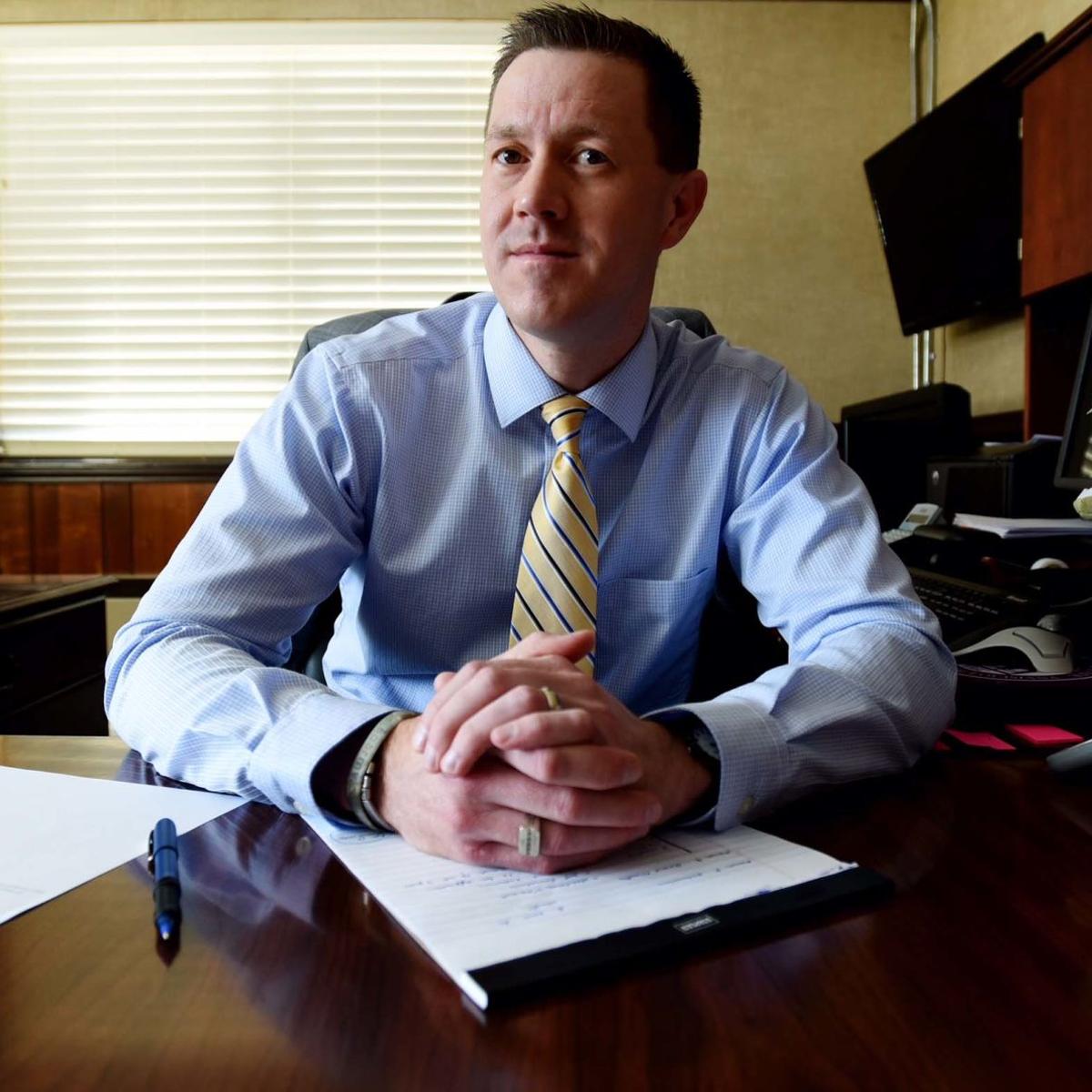
    Jefferson Parish Schools Superintendent Cade Brumley won the second vote taken by the Louisiana Board of Elementary and Secondary Education after board members deadlocked on the first vote.

    Brumley received the backing of Gov. John Bel Edwards’ three appointees to the board, along with five elected members, including board President Sandy Holloway. Two-thirds of the 11-member board must agree to hire a superintendent. Brumley received exactly the eight votes needed.

    He was favored over Jessica Baghian, an assistant state superintendent at the Department of Education who was backed by business organizations and pro-charter school groups, and Lonnie Luce, former superintendent of the St. James Parish school system.

    In the first round of voting, each of the three nominated contenders received only five votes. Board members took a short recess, then came back for the second vote that selected Brumley.

    Louisiana’s education superintendent oversees and sets policies governing more than 700,000 public school students across the state. Longtime leader John White resigned as superintendent in March after holding the position since 2012. White received a $275,000 salary.

    It wasn’t immediately clear when Brumley would start in the position. Contract negotiations will decide his start date and salary, according to the education board.

  • Strong finish for ESPN’s Jordan doc, ‘The Last Dance’

    Strong finish for ESPN’s Jordan doc, ‘The Last Dance’

    NEW YORK (AP) — In basketball terms, “The Last Dance” had a strong fourth quarter.

    The last two episodes of the 10-part Michael Jordan documentary, strung out over the last five Sunday nights, averaged 5.9 million viewers, the Nielsen company said. It was simulcast on ESPN and ESPN2.

    That’s easily the highest-rated documentary project ever for the sports network. It was also a desperately-needed bright spot for ESPN, which has been suffering because of the absence of live sporting events during the coronavirus pandemic.

    It was considered such a high-profile event that some newspaper sports pages — also deprived of material — have covered the documentary like its own event.

    “The exceptional content of the series has cut through culturally and sparked conversations far beyond ESPN platforms,” said Connor Schell, the network’s executive vice president for content.

    The series also had a consistency that the former Chicago Bulls star would appreciate. Live viewership for each episode ranged between 4.9 and 6.3 million people, meaning viewers kept coming back, Nielsen said.

    The live count will also ultimately be a fraction of the series’ impact. Adding delayed viewing through DVRs and reruns, the first episode has already been seen nearly 15 million times, ESPN said.

    ESPN hopes to make Sunday night documentary-watching a habit among its viewers. In the next month, the network has scheduled films about disgraced cyclist Lance Armstrong, martial arts star Bruce Lee and the 1998 home run race between Mark McGwire and Sammy Sosa.

  • Mississippi gov is pranked in shout-out to high school grads

    Mississippi gov is pranked in shout-out to high school grads

    JACKSON, Miss. (AP) — This one slipped through the cracks.

    Mississippi Gov. Tate Reeves asked people to submit names of high school seniors so he could read them aloud on a webcast — a recognition for teenagers who are missing traditional graduation ceremonies because of the coronavirus pandemic.

    On a Facebook live session Saturday, Reeves started reading the names of graduates from Florence High School, his alma mater, when he came to one his staff now assumes someone submitted as a prank — “Harry Azcrac.” The 45-year-old Republican governor read it, paused briefly and kept going.

    A video clip became the butt of jokes on Twitter, and the governor handled it with good humor.

    “Harry’s submitter has a bright future as a Simpson’s writer!” Reeves tweeted, also noting that he would be back online reading more graduates’ names: “Maybe even Ben — the pride of the Dover family.”

    Reeves spokeswoman Renae Eze said Wednesday that the governor’s staff spent hours grouping almost 10,000 individually submitted names by school. As for Harry Azcrac, she said: “We can probably say it’s not a real person.”