Author: Imported Author 1932006

  • Saints Add Versatile Running Back, Returner Montgomery

    Saints Add Versatile Running Back, Returner Montgomery

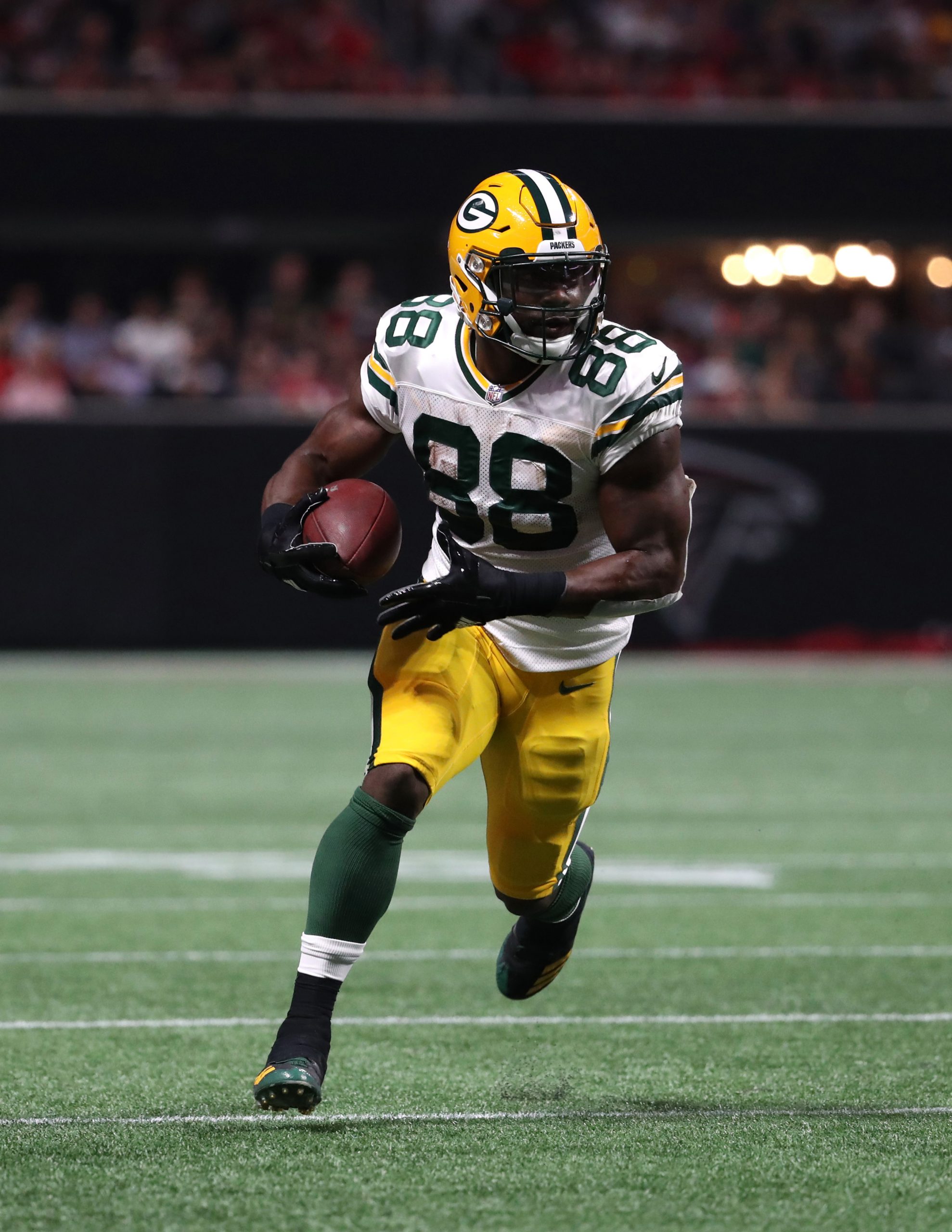
    METAIRIE, La. (AP) — The New Orleans Saints have signed veteran running back Ty Montgomery, general manager Mickey Loomis said Friday.

    The 6-foot, 216-pound Montgomery comes to New Orleans after spending last season in largely a reserve and special teams role with the New York Jets.

    Montgomery rushed 15 times last season for 83 yards, caught 13 passes for 90 yards and returned 18 kickoffs for 364 yards.

    Montgomery was a receiver in college at Stanford and converted to a running back after being selected by Green Bay in the third round of the 2015 draft. He has appeared in 58 career games with 16 starts for Green Bay, Baltimore and the Jets.

    He has rushed for 1,035 yards with seven touchdowns in his career to go with 120 receptions for 982 yards with three touchdowns. He also has returned 53 kickoffs for 1,158 yards.

    In a corresponding move, the Saints waived tight end Mitch Loewen.

  • Q&A: Oil Prices Go Negative. What Does That Mean?

    Q&A: Oil Prices Go Negative. What Does That Mean?

    NEW YORK (AP) — The world is awash in oil, there’s little demand for it and we’re running out of places to put it.

    That in a nutshell explains Monday’s strange and unprecedented action in the market for crude oil futures contracts, where traders essentially offered to pay someone else to deal with the oil they were due to have delivered next month.

    The price of U.S. benchmark crude that would be delivered in May was selling for around $15 a barrel Monday morning, but fell as low as -$40 per barrel during the day. It was the first time that the price on a futures contract for oil has gone negative, analysts say.

    “It’s the worst oil price in history, which shouldn’t surprise us, because it’s the inevitable result of the biggest supply and demand disparity in history,” said Ryan Sitton, commissioner at the Texas Railroad Commission, which regulates the state’s oil industry.

    There’s little mystery as to why there’s so little demand for oil: Efforts to limit the spread of the coronavirus have major cities around the world on lockdown, air travel has been seriously curtailed, and millions of people are working from home, leading to far fewer commuters on the roads.

    But pumps are still running, extracting oil from the ground, and all that oil has to go somewhere. Here are some questions and answers about the latest developments in the oil patch:

    ___

    HAS THE PRICE OF OIL EVER GONE NEGATIVE BEFORE?

    Sometimes, the price on the future delivery of oil will get skewed by a surprise event, say an oil pipeline bursts. That can cause the price of a futures contract for a given month to be sharply higher or lower than that of the futures contract for the next month.

    Usually, this is smoothed out by the market, but the sharp pullback in demand combined with a glut of oil has led to a dearth of oil storage capacity. That made it hard for traders with contracts for crude delivery in May to find buyers, which sent the contract price into negative territory.

    “This has never happened before, not even close,” said Tim Bray, senior portfolio manager at GuideStone Capital Management in Dallas. “We’ve never seen a negative price on a futures contract for oil.”

    ___

    ARE OIL COMPANIES PAYING PEOPLE TO TAKE AWAY THEIR CRUDE?

    While some companies may be paying others to take away their crude oil, that does not appear to be widespread.

    Many analysts described the dip in crude oil prices as technical, related to the way futures contracts are written. Most buyers are currently purchasing oil that would be delivered in June, not May.

    Even so, there were more than 150,000 of those futures contracts that traded hands, enough volume to make it meaningful, said Ryan Fitzmaurice, energy strategist at Rabobank.

    “In my view, today’s move was more technical in nature and related to the futures contract expiration,” Fitzmaurice said. “We could see isolated incidents where oil companies pay people to take their oil away as storage and pipeline capacity become scarce but that is unlikely on a sustained basis.”

    ___

    WHAT’S GOING ON WITH OIL STORAGE?

    With far less gasoline and jet fuel being consumed, oil tanks are starting to fill up. Experts have been warning that global storage could fill up in late April or early May.

    That’s led some producers to decide to move oil now, because the space may become more valuable than the oil, Sitton said.

    “There’s so much oversupply, and storage is fulling up,” Sitton said. “Eventually you go to a point where literally there’s so much of a valuable commodity in the world that the commodity no longer has value. And that’s what we’re seeing.”

    ___

    WHERE WILL THE OIL GO?

    With many oil tanks filling up, the federal government is negotiating with companies to store crude oil in the Strategic Petroleum Reserve. But if all the storage tanks are full, oil companies will begin shutting in wells, which can damage oil fields. Many tankers are full of oil and floating at sea.

    ___

    WHY DIDN’T THE OPEC DEAL FIX THIS?

    Earlier this month, OPEC and its allies, with political pressure from the U.S. government, agreed to cut production by nearly 10 million barrels per day — about 10% of current global output. But some analysts feel the deal didn’t go far enough to curb massive oversupply. It kept prices from falling farther for the time being, but there’s still too much oil in the world.

    ___

    HOW WILL THIS AFFECT THE PRICE OF GASOLINE?

    Cheap oil leads to cheaper prices at the pump, which are often viewed as a boon for consumers. The average price in the U.S. for a gallon of regular gasoline fell to about $1.49 or less, more than $1 less than a year ago, according to AAA. But this time around, it’s not good for anybody, said Jim Burkhard, vice president at IHS Markit.

    “Typically when oil prices fall, gasoline prices fall and that benefits consumers,” Burkhard said. “But prices are falling today because hardly anyone driving, they’re driving a lot, lot less. So it’s difficult for anyone to take advantage of these lower gasoline prices if they’re not driving. So there’s no winner in this situation today.”

    ___

    AP Video Journalist Terry Chea in Alameda, Calif., and AP Business Writer Alex Veiga in Los Angeles contributed to this report.

  • Analysis: Reeves Gets His Katrina With Challenge Of Virus

    Analysis: Reeves Gets His Katrina With Challenge Of Virus

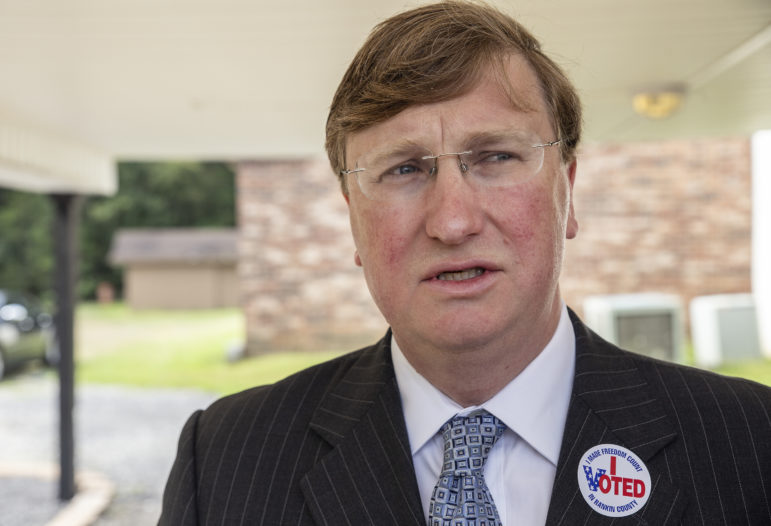
    JACKSON, Miss. (AP) — Mississippi Gov. Tate Reeves was a first-term state treasurer when the state was rocked by a massive and expensive disaster with Hurricane Katrina in 2005. He worked with then-Gov. Haley Barbour to shape the short-term response and long-term recovery.

    Now just a few months into his own time as governor, Reeves is in charge of Mississippi’s response to the coronavirus pandemic, a global problem that endangers lives and threatens to destabilize the economy.

    Reeves appears to have learned lessons from Barbour, a fellow Republican he views as a mentor.

    Reeves faced sharp criticism for his delay in issuing a statewide order for people to stay at home to try to slow the spread of the highly contagious virus, even as case numbers rose rapidly in next-door Louisiana.

    By the time Reeves announced on Wednesday that he was setting a shelter-in-place order to take effect Friday evening and extend until the morning of April 20, he did it with the backing of big business groups — a classic approach by Barbour, who often rounded up support of influential groups before announcing public policy proposals.

    Mississippi Economic Council president and CEO Scott Waller and Mississippi Manufacturers Association president and CEO John McKay issued a joint statement Wednesday praising Reeves’s order and applauding health care providers.

    “This measure will help protect the health and safety of our citizens, while at the same time recognizing the vital role essential businesses provide by assuring delivery of necessary services,” they said.

    Reeves’s order tells people to work from home, where possible. It also deems many types of businesses and manufacturing operations as essential and says they can remain open. This includes poultry processing and shipbuilding.

    Reeves said Friday that some businesses are testing people’s temperatures as they enter work. While some with the virus could have fever, doctors have said that many may not know they have contracted the virus until well after they’ve infected others. Most infected people experience mild or moderate symptoms, such as fever and cough that clear up in two to three weeks, but a fraction suffering more severe illnesses can require ventilators to survive, and as the caseload rapidly grows, hospitals are bracing for a wave of patients.

    The coronavirus is harder on people with underlying health conditions, and Mississippi has high rates of obesity, diabetes, hypertension and other chronic problems.

    The state also has the lowest number of physicians per capita, according to the Mississippi State Medical Association.

    For years, Reeves and other Republicans who control state government have opposed the expansion of Medicaid to the working poor, and Reeves has said the coronavirus pandemic has not changed his mind. Expansion is an option under the health care overhaul that then-President Barack Obama signed into law in 2010, and Mississippi is in the minority of states rejecting it.

    Democrats have said Mississippi has lost hundreds of millions of dollars by not expanding Medicaid, and that has endangered small rural hospitals, closing some of them.

    The nonpartisan HOPE Policy Institute, which advocates for programs to help low-income residents, said in an analysis April 1 that the coronavirus “will exacerbate existing challenges, particularly for low-income, rural communities of color.” Using data from the Kaiser Family Foundation, HOPE said 188 of the 383 counties or parishes in Deep South states either don’t have an intensive care unit or don’t have a hospital at all. Mississippi had 40 counties without an ICU, the highest number in any of the states.

    After Katrina, Barbour often praised Mississippians for being resilient and compassionate. Reeves is doing the same now, even as he acknowledges the stay-home order won’t be easy.

    “We’re not afraid of hard moments. We step up during tough times,” Reeves said Friday. “You’re protecting your parent, your spouse, your friend, your neighbor, and more. By committing to follow the rules, you’re protecting yourself.”

    ____

    Emily Wagster Pettus has covered Mississippi government and politics since 1994. Follow her on Twitter: http://twitter.com/EWagsterPettus.

  • Virus forces Wimbledon cancellation for 1st time since WWII

    Virus forces Wimbledon cancellation for 1st time since WWII

    For the first time in its nearly century-and-a-half history, Wimbledon was canceled for a reason other than war, scrapped in 2020 on Wednesday because of the coronavirus pandemic.

    With Britain under a nationwide lockdown, the All England Club announced its decision to call off its storied two-week grass-court tennis tournament, something that hadn’t happened to the sport’s oldest Grand Slam event in 75 years.

    “It has weighed heavily on our minds that the staging of The Championships has only been interrupted previously by World Wars,” club chairman Ian Hewitt said, “but, following thorough and extensive consideration of all scenarios, we believe that it is a measure of this global crisis that it is ultimately the right decision to cancel this year’s Championships, and instead concentrate on how we can use the breadth of Wimbledon’s resources to help those in our local communities and beyond.”

    Wimbledon was scheduled to be played on the outskirts of London from June 29 to July 12. Instead, the next edition of the tournament will be June 28 to July 11, 2021.

    Eight-time Wimbledon champion Roger Federer surely spoke for many tennis players, officials and fans with a one-word message on Twitter: “Devastated.”

    Also Wednesday, the ATP and WTA announced that the men’s and women’s professional tours would be suspended until at least July 13, bringing the number of elite tennis tournaments affected by the new coronavirus since early March to more than 30. The top tours already had been on hold through June 7. Lower-level events on the Challenger Tour and ITF World Tennis Tour also are called off for the first two weeks of July now.

    Wimbledon first was held in 1877 and has been contested every year since, with the exception of two stretches: from 1915-18 because of World War I, and from 1940-45 because of World War II.

    Now the prestigious tournament — known for its carefully manicured grass, its Royal Box at Centre Court, its rules about wearing white, its strawberries and cream and, alas, its rain delays — joins the growing list of major sports events called off in 2020 because of the COVID-19 outbreak.

    That includes the Tokyo Olympics — which have been pushed back 12 months — and the NCAA men’s and women’s college basketball tournaments.

    Wimbledon is the first Grand Slam tournament wiped out because of the coronavirus; the start of the French Open was postponed from late May to late September.

    Shortly after the news came from Wimbledon, the U.S. Tennis Association issued a statement saying it “still plans to host the U.S. Open as scheduled,” from Aug. 31 to Sept. 13 in New York.

    As of now, the French Open is set to begin six days after the men’s final at Flushing Meadows, where a facility housing indoor practice courts is now a temporary 350-bed hospital and Louis Armstrong Stadium is being used to prepare 25,000 meal packages per day for patients, workers, volunteers and schoolchildren in the city.

    Wednesday’s decision by the All England Club means Novak Djokovic and Simona Halep will not get a chance to defend their Wimbledon titles from 2019.

    “We are going through something bigger than tennis and Wimbledon will be back!” Halep wrote on social media. “And it means I have even longer to look forward to defending my title.”

    Serena Williams retweeted the club’s message about the cancellation and wrote: “I’m Shooked.”

    The move takes away what might have been one of Federer’s best chances to try to add to his men’s-record 20 Grand Slam titles. Federer, who turns 39 in August, is recovering from knee surgery and planned to return in time for the European grass-court circuit that now has been erased from the calendar.

    In a statement last week, the All England Club said that postponing the two-week event would not come “without significant risk and difficulty” because of the grass surface that is affected by weather conditions. The club also said then that it had ruled out “playing behind closed doors” without spectators.

    Hundreds of thousands of people have caught COVID-19 around the globe, and tens of thousands have died. For most people, the new coronavirus causes mild or moderate symptoms, which can include fever and cough, but also milder cases of pneumonia, sometimes requiring hospitalization.

    The All England Club said it would work to help with the emergency response to the pandemic, including distributing medical equipment and food and offering the use of their facilities in other ways.

    Regular day-to-day life has come to a halt in many ways in many parts of the world in recent weeks, and sports has reflected that.

    The NBA, NHL and Major League Baseball are on hold indefinitely; the Kentucky Derby and Indianapolis 500 were pushed back several months until September; England’s Premier League and other club soccer competitions are currently suspended; and the European soccer championship — scheduled to end in London on the same day as the Wimbledon men’s final — was postponed from 2020 to 2021.

    “I have been fortunate to go to Wimbledon every year since 1961, and I am certainly going to miss it this year,” said Billie Jean King, who won a total of 20 trophies at the All England Club — six for singles, 10 for women’s doubles, four for mixed doubles. “Right now, we need to make sure we are taking good care of ourselves and our loved ones. These are challenging times for all of us and now is the time for us to do what is right for our world and what works for our sport.”

    ___

    Follow Howard Fendrich on Twitter at https://twitter.com/HowardFendrich

    ___

    More AP Tennis coverage: https://www.apnews.com/apf-Tennis and https://twitter.com/AP_Sports

  • Virus outbreak means (mis)information overload: How to cope

    Virus outbreak means (mis)information overload: How to cope

    The coronavirus pandemic is leading to information overload for many people, often making it difficult to separate fact from fiction and rumor from deliberate efforts to mislead.

    Already, text messages predicting a nationwide lockdown have circulated, along with social media posts telling people that one way to get tested for the virus is by donating blood or warning that mosquitoes can carry it. All are untrue. Such falsehoods can endanger public health, sow confusion and fear, and prevent important information from reaching people during a crisis. The Associated Press has debunked many such claims, including one about bananas supposedly preventing people from catching the virus and another on “Harry Potter” actor Daniel Radcliffe testing positive.

    COVID-19, the illness caused by the virus, has stricken thousands across the globe but usually presents only mild or moderate symptoms, such as fever and cough. For older adults and people with other health problems, it can cause complications or sometimes death. Most people recover.

    Here are some things you can do to separate fact from misinformation:

    LOOK FOR THE SOURCE

    We are more likely to believe things our friends tell us — that’s human nature. It’s why rumors spread and why misinformation travels on social media. It’s also why the chain text message warning of a nationwide lockdown worked so well: Everyone heard it from a friend of a friend who “knows someone.” Be wary of important-sounding information that is not coming from a clear, authoritative source, such as local government agencies and health departments, or national and international public health institutes such as the Centers for Disease Control and Prevention and the World Health Organization. Posts may also claim that a politician said or did something. You can check that information through legitimate news outlets or the candidates’ own verified social media accounts.

    CDC AND THE WHO

    The top public health institutes in the United States and other countries, along with the WHO, are some of the most trusted sources of information about the outbreak. They provide the latest statistics, advisories and guides on everything from sanitizing your home to managing stress.

    Dr. Jessica Justman, an infectious disease expert at Columbia University, said the sheer amount of information online about the coronavirus pandemic can quickly become overwhelming. That’s one reason she encourages people to check the websites of the CDC and the WHO.

    “It’s not just misinformation, it’s also a lack of good information,” Justman said. “There’s so much information out there that many people are just saying ‘I can’t read it, it makes me too anxious.’”

    “Go straight to the source,” she said. “The CDC has been putting out great information.”

    At the same time, be mindful of scammers taking advantage of the CDC’s and other organizations’ trusted names.

    ACT LIKE A JOURNALIST

    “Everyone right now is trying to figure out: What is going on? What do I need to know? Who can I trust?” said John Silva, director of education at the News Literacy Project, a Washington D.C.-based nonprofit that works with educators to teach students how to navigate the news.

    Silva said anyone searching for accurate information about the virus needs to act a little like a journalist by verifying suspicious claims.

    Be wary of information from groups or news organizations you don’t know — in some cases the groups behind misinformation create websites and social media accounts that look like a legitimate news organization. Remember that there’s a difference between news stories and opinion pieces. News stories should include the source of the information. If there’s no source or attribution, be suspicious.

    In addition to seeking authoritative sources, journalists also seek to confirm information from multiple sources. Even if a news outlet is at first alone in reporting a big development, others will soon follow. If this doesn’t happen, it could be a red flag.

    PAUSE, TAKE A BREATH

    A 2018 study by MIT researchers found that false news travels faster than real news — often much faster. That’s because it’s often designed to grab people’s attention by connecting with their emotions, such as fear or outrage. The researchers, who studied how false news travels on Twitter, also found that misinformation spreads quickly because people retweet it, not due to bot activity. It’s easy to get caught up in the moment and retweet a terrifying headline before reading the accompanying article. But pausing before reposting can save you from embarrassment and prevent falsehoods from spreading farther.

    DON’T BELIEVE EVERYTHING YOU SEE

    Bad actors and trolls looking to exploit people’s fears around coronavirus are using a variety of techniques to sow confusion. False news articles are just a small part of this.

    Photos and videos can be edited and altered, and real images can be presented out of context. Again, it helps to look for the source. Google’s reverse image search can help find the origins of a photo. For videos, take a look at who uploaded it — was it a random user? A news outlet? The CDC?

    Americans have a duty not to add to an already anxious time by spreading misinformation that could alarm others — or put them at risk, said Dr. Ruth Parker, a physician at Emory University School of Medicine in Atlanta and an expert on health literacy.

    “It’s a scary time,” Parker said. “We don’t want to add fuel to the fire. Good information won’t cure us, but it will help to calm us.”

    ___

    Follow AP coverage of the outbreak at https://apnews.com/VirusOutbreak and https://apnews.com/UnderstandingtheOutbreak

    ___

    The Associated Press receives support for health and science coverage from the Howard Hughes Medical Institute’s Department of Science Education. The AP is solely responsible for all content.

  • Sanders, Buttigieg seen as top targets in Dems’ NH debate

    Sanders, Buttigieg seen as top targets in Dems’ NH debate

    MANCHESTER, N.H. (AP) — The Democratic Party’s seven strongest presidential contenders are preparing for what could be the fiercest debate of the 2020 primary season as the race barrels ahead toward a series of contests that will help determine the course of the nomination fight.

    The field has been shaken and reshaped by chaotic Iowa caucuses earlier this week, and Friday’s debate in New Hampshire — coming four days before the state’s primary — offers new opportunity and risk for the shrinking pool of White House hopefuls. At least one leading campaign was predicting a “forceful, fiery” performance.

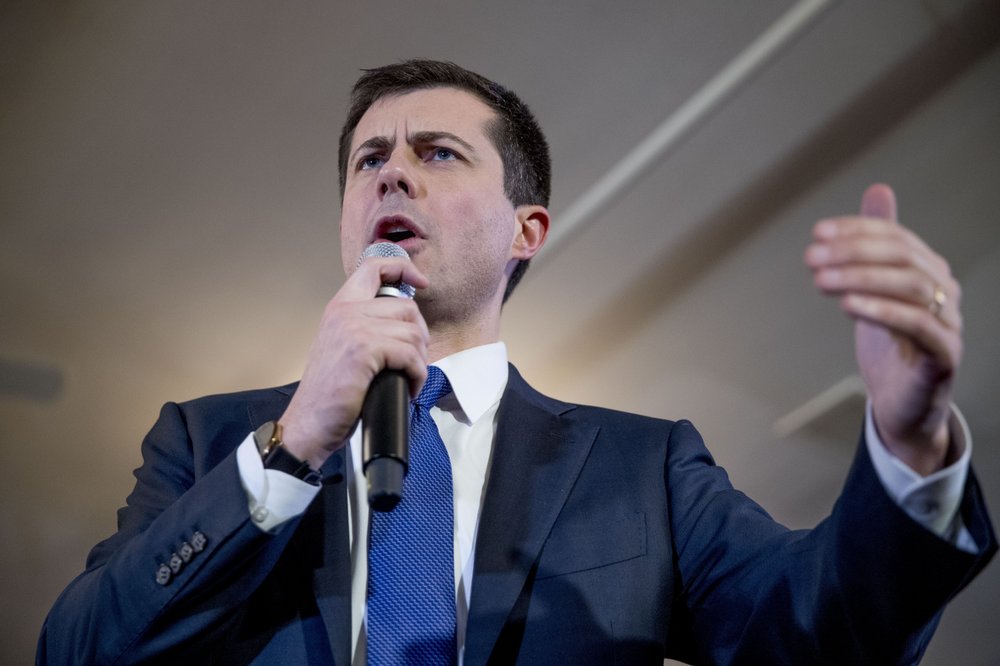
    Two candidates, Vermont Sen. Bernie Sanders and former Midwestern mayor Pete Buttigieg, enter the night as the top targets, having emerged from Iowa essentially tied for the lead. Those trailing after the first contest — including former Vice President Joe Biden, Massachusetts Sen. Elizabeth Warren and Minnesota Sen. Amy Klobuchar — have an urgent need to demonstrate strength.

    Billionaire activist Tom Steyer and New York entrepreneur Andrew Yang, meanwhile, are fighting to prove they belong in the conversation.

    The rapidly evolving dynamic means that the candidates have a very real incentive to mix it up with their Democratic rivals in the 8 p.m. debate hosted by ABC. They may not get another chance.

    “This is the time when voters are eager for candidates to show they can compare and contrast, but also show they’re in it to win it,” said Democratic strategist Lily Adams, who worked on California Sen. Kamala Harris’ unsuccessful 2020 presidential campaign. “Expect it to get more feisty.”

    Sanders previewed one line of attack at a breakfast event in New Hampshire’s largest city by slamming Buttigieg for accepting campaign cash from wealthy donors, which Sanders and Warren have refused to do.

    “I like Pete Buttigieg. Nice guy,” Sanders said before reading a series of headlines about wealthy donors backing Buttigieg. “But we are in a moment where billionaires control, not only our economy but our political life.”

    Channeling an old folk ballad popularized by Pete Seeger, Sanders added: “This campaign is about, Which side are you on?’”

    Traditionally, the knives come out during this phase in the presidential primary process.

    It was the pre-New Hampshire debate four years ago on the Republican side when then-New Jersey Gov. Chris Christie devastated Florida Sen. Marco Rubio’s presidential ambitions with a well-timed take-down. Rubio never recovered, making it easier for Donald Trump to emerge as his party’s presidential nominee.

    The stakes are particularly high this week for Biden, who has played front-runner in virtually every one of the previous seven debates but left Iowa in distant fourth place. While reporting irregularities have blunted the impact of the Iowa contest, Biden’s weakness rattled supporters who encouraged him to take an aggressive tack Friday night.

    One of Biden’s more prominent New Hampshire backers, Democratic operative Jim Demers, said this is the time to fight.

    “People want to see the fire, they want to see fight and they want to see the differences,” he said.

    Lest there be any doubt about his intentions, Biden adopted a decidedly more aggressive tone with his rivals in the days leading up to Friday’s debate, having largely avoided direct attacks against other Democrats for much of the last year. But Wednesday in New Hampshire, the former vice president went after Sanders and Buttigieg by name and questioned their ability to beat Trump.

    On Sanders, Biden seized on the Vermont senator’s status as a self-described democratic socialist. And on Buttigieg, he knocked the 38-year-old former mayor’s inexperience.

    Biden also conceded the obvious — that his Iowa finish was underwhelming at best. He called it a “gut punch” before embracing the underdog role: “This isn’t the first time in my life I’ve been knocked down.”

    Deputy campaign manager Kate Bedingfield highlighted Biden’s post-Iowa strategy of going more directly after his opponents, and she said it would continue on the debate stage.

    “All of the candidates have progressive plans. Only one has a lifelong record of making them reality,” Bedingfield said. “You can expect in the debate tonight that Vice President Biden will make a forceful, fiery case for his candidacy and will raise some tough questions for voters to consider about who they want taking on Donald Trump.”

    The seven-person field also highlights the evolution of the Democrats’ 2020 nomination fight, which began with more than two dozen candidates and has been effectively whittled down to a handful of top-tier contenders.

    There are clear dividing lines based on ideology, age and gender. But just one of the candidates on stage, Yang, is an ethnic minority.

    Two African Americans and the only Latino candidate were forced from the race even before voting began. The only black contender still in the running, former Massachusetts Gov. Deval Patrick, did not meet the polling or fundraising thresholds to qualify for Friday’s event.

    Beyond Biden’s struggles, there are several subplots to watch.

    The debate is the first since a progressive feud erupted on national television between Sanders and Warren. The Massachusetts senator refused to shake her New England neighbor’s hand and accused him of calling her a liar moments after the Jan. 14 meeting in Iowa.

    The pointed exchange threatened to cause a permanent fissure in the Democratic Party’s far-left flank. Warren has embraced her gender as a political strength in the weeks since, highlighting the successes of female candidates in the Trump era and her own record of defeating a male Republican to earn a seat in the Senate.

    That said, she stressed unity at campaign stops in recent days: “We’ve got to pull together as a party. We cannot repeat 2016,” she said.

    She even points to her sprawling campaign organization to prove her dedication to party unity, noting that aides from rival candidates no longer in the race have chosen to work for her.

    “I have an open campaign,” Warren said during a rally Wednesday at a community college in Nashua. “An inclusive campaign, a campaign that invites people in.”

    Yet Warren has been willing to attack before. Aside from the post-debate skirmish with Sanders, she seized on Buttigieg’s fundraising practices in past meetings.

    While Warren and Sanders as presidential candidates have sworn off wealthy donors, Buttigieg and the rest of the field have continued to hold private finance events with big donors, some with connections to Wall Street. In fact, Buttigieg took the unusual step of leaving New Hampshire this week to hold three fundraisers with wealthy donors in the New York area.

    Buttigieg should expect to be under attack Friday night, said Joel Benenson, a debate adviser to Buttigieg last year and a prominent Democratic pollster.

    “He’s got to be prepared for incoming from the people behind him, who are going to be punching up and trying to take votes away,” Benenson said.

    “He’s got to be prepared to counterpunch, as well, and push back strenuously, but drive his message even when he’s responding,” he added. “If they draw sharp contrasts, he has to, as well.”

    ___

    Associated Press writers Will Weissert in Manchester, New Hampshire, and Thomas Beaumont in Des Moines, Iowa, contributed to this report.

    ___

    Catch up on the 2020 election campaign with AP experts on our weekly politics podcast, “Ground Game.”

    ___

    Corrects that folk song referenced by Bernie Sanders, “Which Side Are You On?″ was not written by Woody Guthrie but was popularized by Pete Seeger

  • Super Rally: Mahomes, Chiefs win Super Bowl with late surge

    Super Rally: Mahomes, Chiefs win Super Bowl with late surge

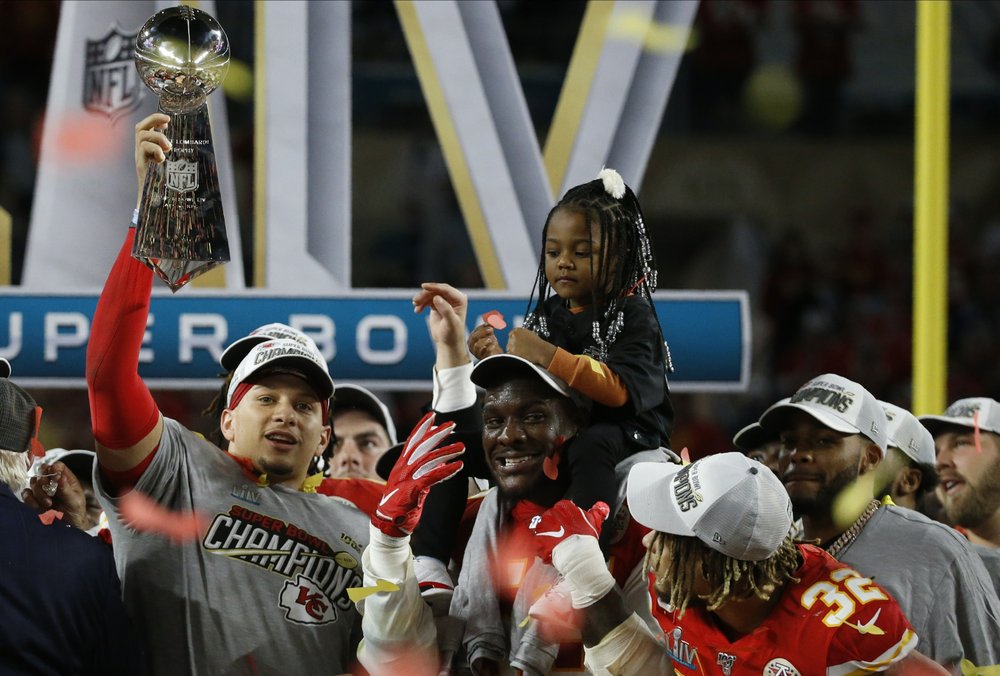
    MIAMI GARDENS, Fla. (AP) — Uncomfortable and under duress for much of the game, Patrick Mahomes suddenly recaptured his mojo and lifted Andy Reid and the Chiefs to a Super Bowl victory, the team’s first NFL championship in a half-century.

    All it took was falling behind by double digits in the postseason, again. Then Mahomes led the Chiefs to 21-straight points in the final 6:13, hitting two long passes on touchdown drives for a 31-20 victory Sunday over the San Francisco 49ers.

    “We never lost faith,” Mahomes said. “That’s the biggest thing. Everybody on this team, no one had their head down. We believed in each other. That’s what we preached all year long.”

    The Chiefs (15-4) trailed 24-0 and 17-7 in their previous playoff games. This time, Kansas City nearly didn’t have time for a comeback.

    Kansas City’s fans in the crowd of 62,417 at Hard Rock Stadium got little opportunity to chant and do the tomahawk chop as KC fell behind 20-10 in the third quarter. Mahomes even threw his second interception of the night after they fell behind.

    But the vaunted 49ers defense wilted late and Mahomes brought the magic that makes him special.

    He completed passes of 44 yards to Tyreek Hill and 38 to Sammy Watkins. The touchdowns came on short throws to Travis Kelce to cut the deficit to three and to Damien Williams for the lead. The first NFL title in Chiefs coach Reid’s two-decade career was clinched by Williams’ 38-yard TD run, sending red-clad Chiefs fans into chants of “Andy!” Andy!”

    Reid, 61, won a Super Bowl ring with the 1996 Packers while in charge of tight ends. He’s been seeking one as a head coach since being hired by Philadelphia in 1999. The Eagles lost in their only trip to the big game after the 2004 season.

    “This is what it’s all about,” Reid said. “What a great team, great coaches. Appreciate every bit of it.”

    Mahomes found Hill, whose bobble led to the second San Francisco pick, for 44 yards on a third-and-15 — the first long pass completed by Kansas City. A 20-yard pass interference call on Tarvarius Moore, who had that earlier pick, put the ball at the 1 and Kelce was wide open for the score.

    The Chiefs defense confounded by the Niners’ misdirection much of the game got stingy and forced a three-and-out. Mahomes soon hit Watkins down the right sideline behind Richard Sherman for a 38-yard gain, leading to Williams’ first score.

    San Francisco (15-4) had nothing left in the fourth quarter, and its coach, Kyle Shanahan saw yet another late-game meltdown by his team. Three years ago, as offensive coordinator in Atlanta, he was part of the Falcons’ Super Bowl collapse and loss in overtime to New England.

    Kansas City, an original AFL franchise, won the final Super Bowl before the full merger, beating Minnesota in 1970. Chiefs owner Lamar Hunt even coined the phrase Super Bowl.

    Now the Hunt family can add a Vince Lombardi Trophy to the Lamar Hunt Trophy earned with the AFC crown.

    “It’s a beautiful trophy,” Chiefs owner Clark Hunt said. “I’m so happy for our players, coaches and fans. And especially Andy Reid. Nobody deserves this trophy more than Andy Reid.”

    San Francisco went 4-12 in 2018 and Shanahan was on something of a hot seat this season. He came close to a ring once again, but down the stretch the Niners couldn’t slow the no-huddle attack at which Mahomes, Hill, Kelce, Williams and all the other Chiefs excel.

    “We have heart,” Mahomes said. “We never give up and those guys around us, the leaders on the team , have that mindset that we never give up.”

    The fourth quarter fireworks by the Chiefs were along the lines of the expected offensive explosion. Earlier, there were some strong drives but not a lot of huge plays.

    The 49ers used up nearly six minutes on their opening drive, yet got only Robbie Gould’s 38-yard field goal. Kansas City took up 7:26 for its next march, including a fourth-and-1 run by Williams on a direct snap to the 49ers 1. All four Chiefs in the backfield spun around before the snap.

    Mahomes took it in to end the 15-play series on a run option.

    The 7-3 deficit was the first for San Francisco since Game 15. It soon became 10-3 after Jimmy Garoppolo’s ill-advised lob under pressure was intercepted by Bashaud Breeland. Another fourth-down gamble paid off for KC, with Williams gaining 3 on a pitchout. But the Chiefs stalled and Harrison Butker kicked a 31-yard field goal.

    San Francisco needed a spark and, as it often has this season, the running game provided it. Gouging the Chiefs in the trenches, the 49ers gained 53 yards on five straight rushes before Garoppolo hit on a pair of passes. The second completion, over the middle to Kyle Juszczyk, saw the fullback look like anything but with a nifty open-field move past safety Daniel Sorensen — perhaps Kansas City’s best tackle. Juszczyk surged into the end zone for a 15-yard TD to tie it at 10.

    Once more, Garoppolo was brilliant on a drive after being picked off. He improved 39 for 42 for 461 yards, three touchdowns and no interceptions with a 136.2 rating on such series after the TD.

    Gould’s 42-yarder gave the Niners their first lead, capping the opening drive of the second half. Again, their misdirection plays kept the Chiefs off-balance on defense.

    As Garoppolo did in the first half, Mahomes then threw into heavy coverage trying to hit Hill and was picked by Fred Warner. It was the first interception of Mahomes in five postseason games.

    And it paid off with another efficient series for the Niners, keyed by a 26-yard completion to Kendrick Bourne on third down. Raheem Mostert, the star of the NFC title game, surged in from the 1 for a 20-10 edge.

    Hardly unfamiliar territory for Kansas City, which trailed Houston 24-0 and Tennessee 17-7 in the playoffs. Both of those holes were dug in the first half. This one came with 17 1-2 minutes remaining.

    Mahomes, Reid and Company merely shrugged, rallied, and brought a first championship since 1970 to Kansas City.

    ___

    More AP NFL: https://apnews.com/NFL and https://twitter.com/AP_NFL

  • Saints helped shape accused clergy list, victim lawyers say

    Saints helped shape accused clergy list, victim lawyers say

    NEW ORLEANS (AP) — The New Orleans Saints maintain their behind-the-scenes public relations work on the area’s Roman Catholic sexual abuse crisis was “minimal,” but attorneys suing the church allege hundreds of confidential Saints emails show the team actively helping to shape a list of credibly accused clergy that appears to be an undercount.

    New court papers filed this week by lawyers for about two dozen men making sexual abuse claims against the Archdiocese of New Orleans gave the most detailed description yet of the emails that have rocked the NFL team and remain shielded from the public.

    “This goes beyond public relations,” the attorneys wrote, accusing the Saints of issuing misleading statements saying their work for the archdiocese involved only “messaging” and handling media inquiries as part of the 2018 release of the clergy names.

    Instead, they wrote, “The Saints appear to have had a hand in determining which names should or should not have been included on the pedophile list.”

    “In order to fulfill this role … the Saints must have known the specific allegations of sexual abuse against a priest … and made a judgment call about whether those allegations by a particular victim against a named priest were, in its opinion, legitimate enough to warrant being included on the pedophile list.”

    That list, the Saints’ involvement in it and how accurate it was have become key questions in a controversy that has swirled around the team since news of the emails broke last week.

    Victims’ advocates have long argued that the New Orleans archdiocese list of 57 credibly accused clergy, since expanded by six more names, minimizes the problem. An Associated Press analysis of the list suggests it underestimated the actual number of publicly accused clergy members in the region by at least 20.

    Plaintiffs’ attorneys alleged in earlier court papers that Saints executives joined in the archdiocese’s “pattern and practice of concealing its crimes,” and one email from late 2018 referred to Saints Senior Vice President of Communications Greg Bensel joining unnamed “third parties” in a discussion about “removing priests from the pedophile list.” It was not clear which other Saints officials may have been involved.

    The Saints, whose devoutly Catholic owner Gayle Benson is close friends with the local archbishop, have disputed as “outrageous” any suggestion that the team helped cover up crimes. They have accused plaintiffs’ attorneys of mischaracterizing what is in the emails.

    Even as the team’s attorneys went to court to keep the 276 documents from being released to the public, they said in a court filing this week, “Neither the Saints nor any of their personnel have anything to hide.” The team says it does not object to the emails becoming public later if they are admitted into evidence in the case.

    In a lengthy statement Wednesday, the Saints said its spokesman Bensel advised the archdiocese to be “direct, open and fully transparent,” when it released its list to the media and to make sure all law enforcement agencies were alerted.

    “Never did the Saints organizations offer advice to conceal information,” the team’s statement said. “In fact, we advised that as new information relative to credible evidence about other clergy came to light, then those names should be released and given to the proper authorities.”

    The National Football League has not responded to repeated queries from the AP about whether such PR work by the team was appropriate or violated league conduct policies.

    But victims’ advocates say the Saints have at least created the appearance of impropriety.

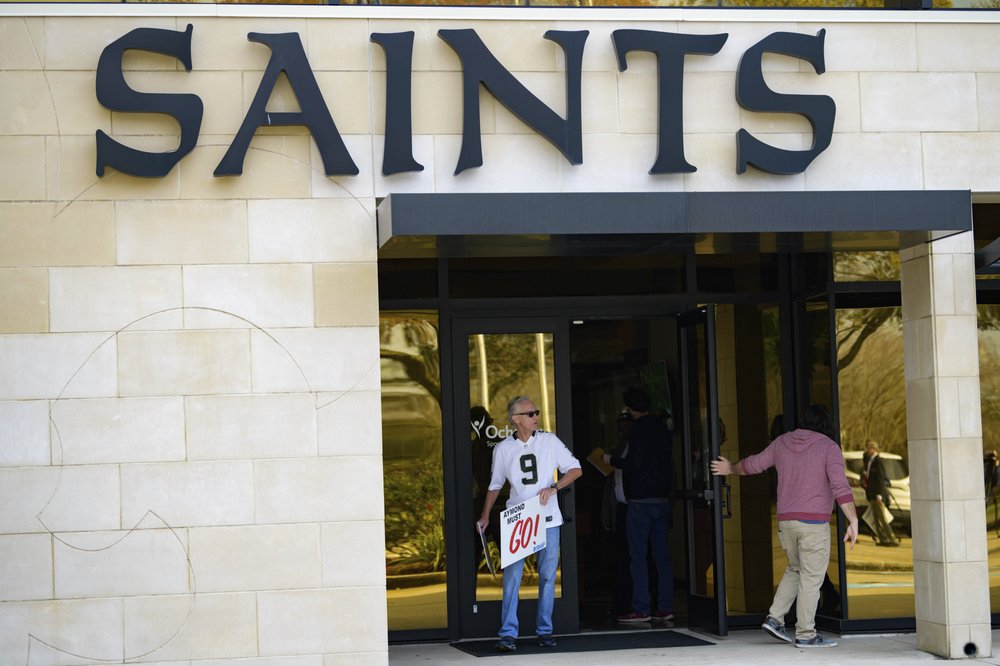
    “It’s inappropriate for a football team to involve itself in a sex abuse scandal,” said Kevin Bourgeois, who is both a local volunteer leader of the Survivors Network of those Abused by Priests and a Saints season ticket holder.

    “Their response was that they told the archbishop to be straightforward and open,” said Bourgeois, who wore a black Saints jersey at a news conference this week outside the team’s suburban practice facility. “And we believe that that’s completely not true.”

    The AP, which first reported on the Saints email controversy last week, filed a motion with the court this month supporting the release of the documents as a matter of public interest.

    Both the Saints and the archdiocese have opposed the AP’s involvement and a court hearing was set Friday on whether the news organization may be heard. After that issue is settled, a special master will schedule another hearing on whether the Saints emails given to plaintiffs’ attorneys through discovery may be released to the public.

    The litigation has brought fresh attention to the process by which the New Orleans archdiocese came to produce its list of 57 names of clergy it deemed “credibly accused” of sexually abusing minors — the first roster of its kind to be released in heavily Catholic Louisiana.

    The list was published in November 2018 as the archdiocese was reeling from a scandal in which a longtime deacon and schoolteacher, George F. Brignac, continued serving as a lay minister in the church decades after he was accused of sexually abusing children. An Orleans Parish grand jury indicted Brignac last year on claims he raped an altar boy beginning the late 1970s.

    An AP investigation identified 20 clergy members who had been accused in lawsuits or charged by law enforcement with child sexual abuse who are missing from the New Orleans archdiocese list — including two who were charged and convicted of crimes.

    The AP analysis included a review of bankruptcy documents, lawsuits, settlement information, grand jury reports, media accounts and a database of accused priests tracked by the group BishopAccountability.org.

    Meanwhile, a new lawsuit accuses local church leaders of refusing to disclose the names of 17 people accused of abusing children at a church-run home called Madonna Manor in suburban Jefferson Parish. The names were omitted from the list even though the archdiocese has paid millions of dollars to settle claims of sexual abuse at the home, the lawsuit says.

    When the credibly accused list was released in late 2018, Archbishop Gregory Aymond expressed confidence in its accuracy and said it implicated 2 percent of local clergy following a review of 2,432 files dating to 1950.

    That percentage would be significantly lower than the representation of abusive priests seen in jurisdictions around the country, said Terry McKiernan, founder of BishopAccountability.org, a Massachusetts-based nonprofit group that tracks clergy sexual abuse cases.

    The church’s own numbers, published by the U.S. Conference of Catholic Bishops, put the national average around 6 percent, while some advocacy groups contend it’s as high as 10 percent.

    McKiernan said it would be “objectionable” for Bensel to hold the dual role of directing damage control and weighing in on the contents of the credibly accused list.

    “One would hope that the church is not viewing this as a PR matter any more but a matter for truth and justice,” McKiernan said. “If you have someone helping you spin not only the problem but the supposedly accurate list that describes the problem, you have a lot of work to do.”

  • Iran strikes back at US with missile attack at air base

    Iran strikes back at US with missile attack at air base

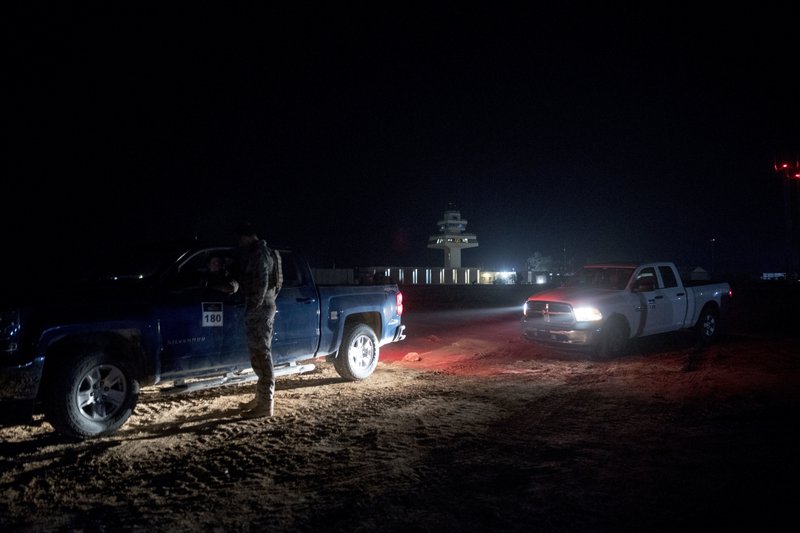
    TEHRAN, Iran (AP) — Iran struck back at the United States for the killing of a top Iranian general early Wednesday, firing a series of surface-to-surface missiles at an Iraqi air base housing U.S. troops and warning the United States and its allies in the region not to retaliate.

    U.S. officials confirmed airstrikes at the air base. There was no immediate word on injuries.

    Iranian state TV said the attack was in revenge for the killing of Revolutionary Guard Gen. Qassem Soleimani, whose funeral Tuesday in his hometown of Kerman prompted angry calls to avenge his death, which drastically raised tensions in the Middle East.

    Iran’s Revolutionary Guard warned the U.S. and its regional allies against retaliating over the missile attack against the Ain Assad air base in Iraq’s western Anbar province. The Guard issued the warning via a statement carried by Iran’s state-run IRNA news agency.

    “We are warning all American allies, who gave their bases to its terrorist army, that any territory that is the starting point of aggressive acts against Iran will be targeted,” The Guard said. It also threatened Israel.

    Ain Assad air base is in Iraq’s western Anbar province. It was first used by American forces after the 2003 U.S.-led invasion that toppled dictator Saddam Hussein. It later saw American troops stationed there amid the fight against the Islamic State group in Iraq and Syria.

    State TV said the operation’s name was “Martyr Soleimani.” It said the Guard’s aerospace division that controls Iran’s missile program launched the attack. Iran said it would release more information later.

    Wednesday’s revenge attack came a mere few hours after crowds in Iran mourned Soleimani and as the U.S. continued to reinforce its own positions in the region and warned of an unspecified threat to shipping from Iran in the region’s waterways, crucial routes for global energy supplies. U.S. embassies and consulates from Asia to Africa and Europe issued security alerts for Americans. The U.S. Air Force launched a drill with 52 fighter jets in Utah, just days after President Donald Trump threatened to hit 52 sites in Iran.

    A stampede broke out Tuesday at Soleimani’s funeral for a top Iranian general slain in a U.S. airstrike, and at least 56 people were killed and more than 200 were injured as thousands thronged the procession, Iranian news reports said.

    Tuesday’s deadly stampede took place in Soleimani’s hometown of Kerman as his coffin was being borne through the city in southeastern Iran, said Pirhossein Koulivand, head of Iran’s emergency medical services.

    There was no information about what set off the crush in the packed streets, and online videos showed only its aftermath: people lying apparently lifeless, their faces covered by clothing, emergency crews performing CPR on the fallen, and onlookers wailing and crying out to God.

    “Unfortunately as a result of the stampede, some of our compatriots have been injured and some have been killed during the funeral processions,” Koulivand said, and state TV quoted him as saying that 56 had died and 213 had been injured.

    Soleimani’s burial was delayed, with no new time given, because of concerns about the huge crowd at the cemetery, the semi-official ISNA news agency said.

    A procession in Tehran on Monday drew over 1 million people in the Iranian capital, crowding both main avenues and side streets in Tehran. Such mass crowds can prove dangerous. A smaller stampede at the 1989 funeral for Ayatollah Ruhollah Khomeini killed at least eight people and injured hundreds.

    Hossein Salami, Soleimani’s successor as leader of the Revolutionary Guard, addressed a crowd of supporters gathered at the coffin in a central square in Kernan. He vowed to avenge Soleimani, who was killed in a U.S. drone strike Friday near Baghdad’s airport.

    “We tell our enemies that we will retaliate but if they take another action we will set ablaze the places that they like and are passionate about,” Salami said.

    “Death to Israel!” the crowd shouted in response, referring to one of Iran’s longtime regional foes.

    Salami praised Soleimani’s work, describing him as essential to backing Palestinian groups, Yemen’s Houthi rebels and Shiite militias in Iraq and Syria. As a martyr, Soleimani represented an even greater threat to Iran’s enemies, Salami said.

    Soleimani will ultimately be laid to rest between the graves of Enayatollah Talebizadeh and Mohammad Hossein Yousef Elahi, two former Guard comrades killed in Iran’s 1980s war with Iraq. They died in Operation Dawn 8, in which Soleimani also took part. It was a 1986 amphibious assault that cut Iraq off from the Persian Gulf and led to the end of the war that killed 1 million.

    The funeral processions in major cities over three days have been an unprecedented honor for Soleimani, seen by Iranians as a national hero for his work leading the Guard’s expeditionary Quds Force.

    The U.S. blames him for killing U.S. troops in Iraq and accused him of plotting new attacks just before he was killed. Soleimani also led forces supporting Syrian President Bashar Assad in that country’s civil war, and he also served as the point man for Iranian proxies in countries like Iraq, Lebanon and Yemen. Russian President Vladimir Putin met with Assad in Syria on Tuesday amid the tensions between Washington and Tehran.

    Soleimani’s slaying already has led Tehran to abandon the remaining limits of its 2015 nuclear deal with world powers as his successor and others vow to take revenge.

    In Iraq, pro-Iranian factions in parliament have pushed to oust American troops from Iraqi soil following Soleimani’s killing. Germany and Canada announced plans to move some of their soldiers in Iraq to neighboring countries.

    According to a report on Tuesday by the semi-official Tasnim news agency, Iran has worked up 13 sets of plans to avenge Soleimani’s death. The report quoted Ali Shamkhani, the secretary of Iran’s Supreme National Security Council, as saying that even the weakest among them would be a “historic nightmare” for the U.S. He declined to elaborate,

    “If the U.S. troops do not leave our region voluntarily and upright, we will do something to carry their bodies horizontally out,” Shamkhani said.

    The state-run IRNA news agency later published a statement from the Supreme National Security Council denying Shamkhani made the comment.

    The U.S. Maritime Administration warned ships across the Mideast, citing the rising threats. “The Iranian response to this action, if any, is unknown, but there remains the possibility of Iranian action against U.S. maritime interests in the region,” it said.

    Oil tankers were targeted in mine attacks last year that the U.S. blamed on Iran. Tehran denied responsibility, although it did seize oil tankers around the crucial Strait of Hormuz, the narrow mouth of the Persian Gulf through which 20% of the world’s crude oil travels.

    The U.S. Navy’s Bahrain-based 5th Fleet said it would work with shippers in the region to minimize any possible threat.

    The 5th Fleet “has and will continue to provide advice to merchant shipping as appropriate regarding recommended security precautions in light of the heightened tensions and threats in the region,” 5th Fleet spokesman Cmdr. Joshua Frey told The Associated Press.

    Meanwhile, Iranian Gen. Alireza Tabgsiri, the chief of the Guard’s navy, issued his own warning.

    “Our message to the enemies is to leave the region,” Tabgsiri said, according to ISNA. The Guard routinely has tense encounters with the U.S. Navy in the Persian Gulf.

    Separately, Iran summoned the British ambassador over comments by Prime Minister Boris Johnson and the British defense minister about Soleimani’s killing, the semi-official Mehr news agency reported.

    Iran’s parliament, meanwhile, has passed an urgent bill declaring the U.S. military’s command at the Pentagon and those acting on its behalf in Soleimani’s killing as “terrorists,” subject to Iranian sanctions. The measure appears to be in response to a decision by Trump in April to declare the Revolutionary Guard a “terrorist organization.”

    The U.S. Defense Department used that terror designation to support the strike that killed Soleimani. The action by Iran’s parliament was done by a special procedure to speed it into law and also saw the lawmakers approve funding for the Quds Force with an additional 200 million euros, or about $224 million.

    Also Tuesday, Iranian Foreign Minister Mohammad Javad Zarif said the U.S. had declined to issue him a visa to travel to New York for meetings at the United Nations. As the host of the U.N. headquarters, the U.S. is supposed to allow foreign officials to attend such meetings.

    “This is because they fear someone will go there and tell the truth to the American people,” Zarif said. “But they are mistaken. The world is not limited to New York. You can speak with American people from Tehran too and we will do that.”

    Asked about Zarif, U.S. Secretary of State Mike Pompeo told journalists America would comply with its obligations under U.N. rules to grant visas. He then referred to the Iranian diplomat as “a propagandist of the first order.”

    A U.S. official who wasn’t authorized to speak on the record said the application couldn’t be processed in time for Zarif’s travel although it wasn’t clear if his request had been formally denied. A formal rejection would trigger legal technicalities that could affect future visa applications and could violate the host country agreement the U.S. has with the U.N.

    ___

    Gambrell reported from Dubai, United Arab Emirates. Associated Press writer Matthew Lee in Washington contributed.

  • Trump warns of sanctions if Iraq tries to expel U.S. troops

    WASHINGTON (AP) — President Donald Trump insists that Iranian cultural sites are fair game for the U.S. military, dismissing concerns within his own administration that doing so could constitute a war crime under international law. He also warned Iraq that he would levy punishing sanctions if it expelled American troops in retaliation for a U.S. airstrike in Baghdad that killed a top Iranian official.

    Trump’s comments Sunday came amid escalating tensions in the Middle East following the killing of Gen. Qassem Soleimani, the head of Iran’s elite Quds force. Iran has vowed to retaliate and Iraq’s parliament responded by voting Sunday to oust U.S. troops based in the country.

    Trump first raised the prospect of targeting Iranian cultural sites Saturday in a tweet. Speaking with reporters Sunday as he flew back to Washington from his holiday stay in Florida, he doubled down, despite international prohibitions.

    “They’re allowed to kill our people. They’re allowed to torture and maim our people. They’re allowed to use roadside bombs and blow up our people. And we’re not allowed to touch their cultural sites? It doesn’t work that way,” Trump said.

    The targeted killing of Soleimani sparked outrage in the Middle East, including in Iraq, where more than 5,000 American troops are still on the ground 17 years after the U.S. invasion. Iraq’s parliament voted Sunday in favor of a nonbinding resolution calling for the expulsion of the American forces.

    Youtube video thumbnail

    Trump said the U.S. wouldn’t leave without being paid for its military investments in Iraq over the years — then said if the troops do have to withdraw, he would hit Baghdad with economic penalties.

    “We will charge them sanctions like they’ve never seen before ever. It’ll make Iranian sanctions look somewhat tame,” he said. “If there’s any hostility, that they do anything we think is inappropriate, we are going to put sanctions on Iraq, very big sanctions on Iraq.”

    He added: “We’re not leaving until they pay us back for it.”

    The administration has scrambled to contend with the backlash to the killing of Soleimani. Though he was responsible for the deaths of hundreds of Americans, the targeted American strike marked a stark escalation in tensions between Washington and Tehran.

    Secretary of State Mike Pompeo said the U.S. military may well strike more Iranian leaders if the Islamic Republic retaliates. He tip-toed around questions about Trump’s threat to attack Iranian cultural sites, a military action that likely would be illegal under the laws of armed conflict and the U.N. charter.

    Pompeo said only that any U.S. military strikes inside Iran would be legal.

    “We’ll behave inside the system,” Pompeo said. “We always have and we always will.”

    Trump’s warnings rattled some administration officials. One U.S. national security official said the president had caught many in the administration off guard and prompted internal calls for others in the government, including Pompeo, to clarify the matter. The official, who was not authorized to speak publicly to the issue, said clarification was necessary to affirm that the U.S. military would not intentionally commit war crimes.

    Oona Hathaway, an international law professor at Yale and a former national security law official in the Defense Department’s legal office, said Trump’s threat amounted to “a pretty clear promise of commission of a war crime.”

    The president’s threats to Iran did little to quell Tehran’s furor over the death of Soleimani. Iranian state television reported that the country would no longer abide by any limits of the 2015 nuclear deal it signed with the United States and other world powers. Trump withdrew the U.S. from the deal in 2018 and stepped up economic sanctions on Tehran — actions that accelerated a cycle of hostilities leading to the last week’s killing.

    The administration also pushed back Sunday on questions about the legality of the strike on Soleimani. Pompeo said the administration would have been “culpably negligent” in its duty to protect the United States if it had not killed him. He did not provide evidence for his previous claims that Soleimani was plotting imminent attacks on Americans. Instead of arguing that an attack had been imminent, he said it was inevitable.

    “We watched him continue to actively build out for what was going to be a significant attack – that’s what we believed – and we made the right decision,” he said, adding later: “We continue to prepare for whatever it is the Iranian regime may put in front of us within the next 10 minutes, within the next 10 days, and within the next 10 weeks.”

    Congressional Democrats were skeptical.

    “I really worry that the actions the president took will get us into what he calls another endless war in the Middle East. He promised we wouldn’t have that,” said Chuck Schumer of New York, the Senate’s top Democrat.

    Schumer said Trump lacks the authority to engage militarily with Iran and Congress needs a new war powers resolution “to be a check on this president.” To which Pompeo said: “We have all the authority we need to do what we’ve done to date.”

    Sen. Mark Warner, D-Va., said the administration violated the Constitution by not consulting with Congress in advance.

    Congressional staffs got their first briefings from the administration on Friday, and members were expected to be briefed this week.

    But Trump made clear Sunday that he saw little reason to give Congress advanced warning if he orders the military to carry out further actions against Iran.

    “These Media Posts will serve as notification to the United States Congress that should Iran strike any U.S. person or target, the United States will quickly & fully strike back, & perhaps in a disproportionate manner,” he wrote on Twitter. “Such legal notice is not required, but is given nevertheless!”

    Democrats in Congress have complained that Trump’s order to kill Soleimani took place without first consulting with or informing top lawmakers, noting that Congress still holds sole power to declare war. Trump did meet the 48-hour deadline required by the War Powers Act to notify Congress of the deadly drone strike, though the document provided Saturday was entirely classified and no public version was released.

    Moving swiftly to rebuke Trump for not consulting with Congress, House Speaker Nancy Pelosi said late Sunday the House would introduce and vote this week on a war powers resolution to limit the president’s military actions regarding Iran. In a letter to House Democrats, Pelosi called the airstrike “provocative and disproportionate” and that it had “endangered our servicemembers, diplomats and others by risking a serious escalation of tensions with Iran.” A similar resolution was introduced in the Senate.

    Some of the Democrats running to challenge Trump in November questioned whether he had a long-term plan for the Mideast.

    Former Vice President Joe Biden said Trump was ill-prepared for the repercussions of the strike on Soleimani and had alienated allies by not alerting them of the plans. “I think we need a president who could provide steady leadership on Day One,” he said. “The next president is going to inherit a divided nation and a world in disarray.”

    Pete Buttigieg, the former mayor of South Bend, Indiana. said: “When you’re dealing with the Middle East, you need to think about the next and the next and the next move. This is not checkers. And I’m not sure any of us really believe that this president and the people around him″ are “really going through all of the consequences of what could happen next.”

    Pompeo appeared on ABC’s “This Week,” CNN’s “State of the Union,” NBC’s “Meet the Press,”′ CBS’ “Face the Nation,″ ”Fox News Sunday” and Fox News Channel’s “Sunday Morning Futures.” Schumer was on ABC, Warner was on NBC and Buttigieg was on CNN.