Category: COVID-19

  • Governor: Mississippi Not ‘Dictator’ On Limits During Virus

    Governor: Mississippi Not ‘Dictator’ On Limits During Virus

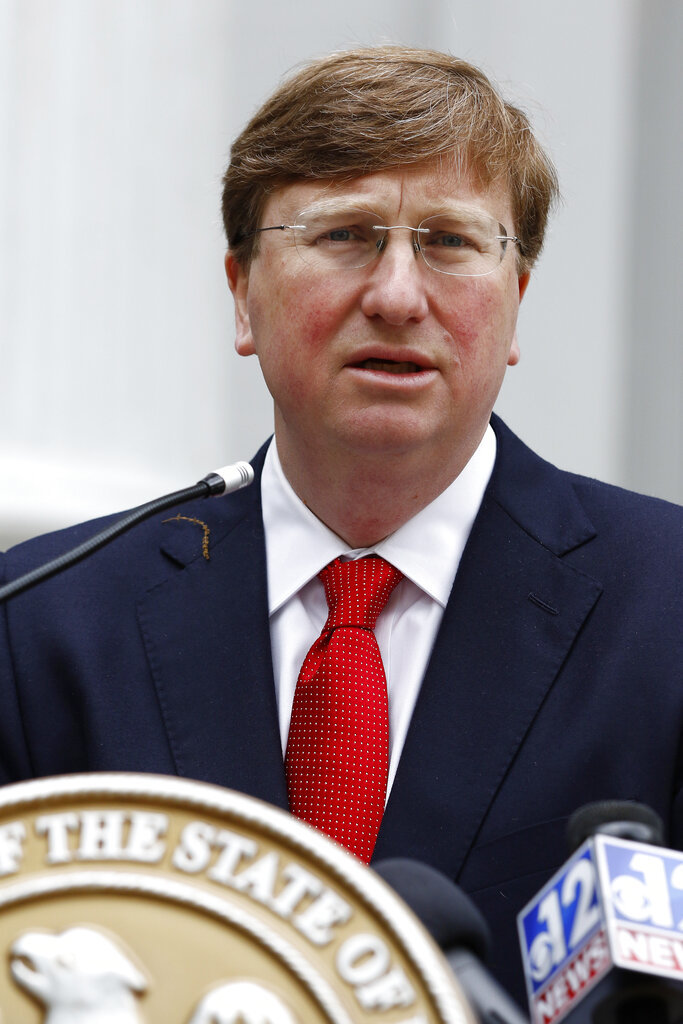
    JACKSON, Miss. (AP) — Mississippi Gov. Tate Reeves said Wednesday that he is rejecting “dictator models like China” to strictly control people’s movements to curb the spread of the new coronavirus.

    “We’re following our experts and I’ve spent many sleepless nights praying for wisdom in this unprecedented time,” Republican Reeves said on his Facebook and Twitter accounts.

    His comments came a day after he issued an executive order that seeks to limit people’s physical interactions. Reeves told restaurants and bars statewide to close their dining rooms and limit service to carry-out or deliver meals. He has encouraged people to remain home, but has not issued a stay-at-home order, as many other governors have done.

    Also Wednesday, a day after Reeves said he wants Mississippi’s only abortion clinic to stop doing elective surgeries, the clinic was still seeing patients. Protesters and clinic escorts sometimes stood close to each other on the sidewalk outside, ignoring suggestions by medical professionals that people keep a 6-foot (2-meter) distance between themselves and others.

    Mississippi on Wednesday reported four new coronavirus deaths, bringing the state total to five, although testing remains so limited that it’s unclear whether the outbreak has caused other deaths without being identified as the reason.

    The state Health Department said the new deaths were Holmes County man who was 60-65 years old, a Webster County man who was 65-70, a Wilkinson County man who was 85-90 and a Tunica County woman who was 75-80. The department said the three men had underlying health conditions and died while hospitalized, and the woman died in a long-term care facility. The first death, announced last week, was a Hancock County man with underlying health conditions who died in a Louisiana hospital.

    The Health Department said Wednesday that Mississippi had at least 377 confirmed cases of the coronavirus as of Tuesday evening. Because testing remains limited, most people now spreading the highly contagious virus may not know that they’ve been infected.

    For most people, the new coronavirus causes mild or moderate symptoms, such as fever and cough that clear up in two to three weeks, and the overwhelming majority of people recover. But severe cases can need respirators to survive, and with infections spreading exponentially, hospitals across the country are either bracing for a coming wave of patients, or already struggling to keep up.

    Some Mississippi cities and counties are setting curfews and other restrictions tighter than the ones ordered statewide by Reeves. Clarksdale, Greenwood, Hattiesburg, Jackson, Meridian, Oxford Port Gibson and Tupelo are among the cities where officials have told people not to congregate in large groups. Adams County has set a nighttime curfew.

    Reeves’ order tells people to stop visiting hospitals, nursing homes or long-term care facilities that house those most vulnerable to becoming sick. An exception is for visiting people receiving “imminent end-of-life care.”

    Reeves said Tuesday that he wants businesses to allow “every possible employee” to work from home. His order lists several types of businesses that should remain open because they are considered essential.

    ____

    Follow AP coverage of the virus outbreak at https://apnews.com/VirusOutbreak and https://apnews.com/UnderstandingtheOutbreak.

  • New York Mobilizes Against Onslaught From The Virus

    New York Mobilizes Against Onslaught From The Virus

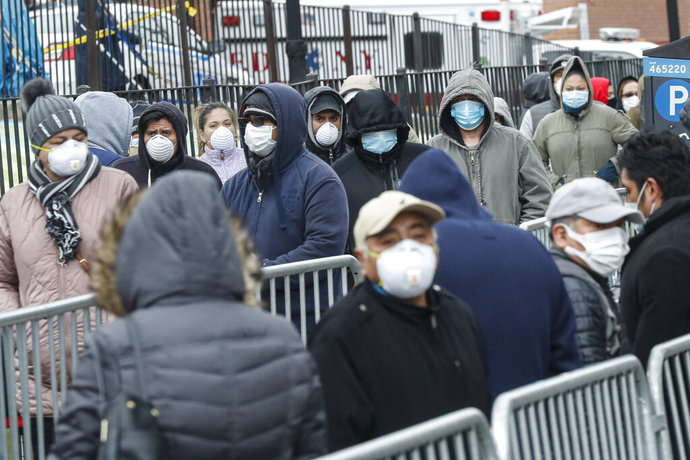
    NEW YORK (AP) — Just days after New York leaders ordered people to stay home, authorities mobilized to head off a potential public health disaster Wednesday, with the city’s emergence as the nation’s biggest coronavirus hot spot a warning flare — and perhaps a cautionary tale — for the rest of the country.

    A makeshift morgue was set up outside Bellevue Hospital, and the city’s police, their ranks dwindling as more fall ill, were told to patrol nearly empty streets to enforce social distancing.

    Public health officials hunted down beds and medical equipment and put out a call for more doctors and nurses for fear the number of sick will explode in a matter of weeks, overwhelming hospitals the way the virus did in Italy and Spain. New York University offered to let its medical students graduate early so that they could join the battle.

    Worldwide, the death toll climbed past 20,000, according to a running count kept by Johns Hopkins University. The number of dead in the U.S. topped 800, with more than 60,000 infections.

    New York State alone accounted for more than 30,000 cases and close to 300 deaths, most of them in New York City.

    Gov. Andrew Cuomo, again pleading for help in dealing with the onslaught, attributed the cluster to the city’s role as a gateway to international travelers and the sheer density of its population, with 8.6 million people sharing subways, elevators, apartment buildings and offices.

    “Our closeness makes us vulnerable,” he said. “But it’s true that your greatest weakness is also your greatest strength. And our closeness is what makes us who we are. That is what New York is.”

    Some public health experts also attributed the city’s burgeoning caseload in part to the state’s big push to test people.

    Troy Tassier, a Fordham University professor who studies economic epidemiology, suggested the increase shows New York would have fared better had it acted sooner to order social distancing.

    Nearly 7 million people in the San Francisco area were all but confined to their homes on March 17, and California put all 40 million of its residents under a near-lockdown on March 20.

    The order to stay at home in New York State did not go into effect until Sunday evening, March 22, and New York City’s 1.1 million-student school system was not closed until March 15, well after other districts had shut down.

    Dr. Mark Dworkin, an epidemiology professor at University of Illinois-Chicago, said he hadn’t followed New York’s situation closely enough to say whether he would have done it differently, but he noted that moving quickly is critical — and sometimes difficult to do at early points, when the public doesn’t sense an imminent threat.

    “At first, I think there’s a certain amount of disbelief that goes on,” he said. “I think that contributes, to some extent, to the lack of putting the foot on the gas pedal on some of the control measures that we know we need to do.”

    After New York”s first positive test came back on March 2 — in a health care worker who had traveled to Iran and secluded herself upon returning — Mayor Bill de Blasio and Cuomo initially cast the disease as a dangerous threat but one that the city’s muscular hospital system could handle.

    The risk to most New Yorkers, they said, was relatively low.

    But their message shifted, as it did with many other leaders, who found themselves acting on new information in an uncharted, fast-changing situation.

    Tassier said it wasn’t too late: “We can still make things better than they would be otherwise.”

    In other developments around the globe:

    — The White House and legislative leaders reached agreement on a mammoth economic relief package, a $2 trillion plan to help businesses survive the crisis and give households checks of $1,200 per adult and $500 per child. Stocks rallied on Wall Street for the second day in a row.

    — Prince Charles, the 71-year-old heir to the British throne, tested positive for the virus but was showing only mild symptoms and was isolating himself at a royal estate in Scotland, his office said.

    — Spain’s death toll rose past 3,400, eclipsing China’s, after a one-day spike of 700 fatalities. It is now second only to Italy, with over 7,500 deaths. “We are collapsing. We need more workers,” said Lidia Perera, a nurse at Madrid’s 1,000-bed Hospital de la Paz.

    — China’s Hubei province, where the outbreak first emerged late last year, started lifting its lockdown.

    — Russian President Vladimir Putin postponed a nationwide vote on proposed constitutional amendments that could enable him to extend his hold on power. The decision came as Russia reported its first deaths from the virus, two elderly patients who had underlying conditions.

    — The French Riviera city of Cannes opened the site of its world-famous film festival to the homeless.

    — British Prime Minister Boris Johnson said more than 400,000 people responded within a day to the government’s call for volunteers to help the country’s most vulnerable people. They will deliver medicine, drive people home from doctor’s appointments and make phone calls to check on patients.

    Around the country, other states braced for a version of New York’s nightmare, with fears over public events held in the weeks before the virus exploded.

    A month after Mardi Gras in and around New Orleans, Louisiana is seeing a ballooning number of cases and now has the third-highest rate per capita in the U.S., according to the governor. Sixty-five Louisiana residents have died, and the virus has been confirmed in three-quarters of the state’s 64 parishes.

    Small towns and rural areas are beginning to sound the alarm as well.

    In Georgia, a state that has seen cases grow to more than 1,200, an Albany hospital’s three intensive care units were already full, and doctors were working to discharge people as quickly as possible to make way for new patients.

    “We’re quickly approaching the point of maximum capacity. We need a relief valve,” said Steven Kitchen, chief medical officer at Phoebe Putney Memorial Hospital.

    For most people, the coronavirus causes mild or moderate symptoms, such as fever and cough that clear up in two to three weeks. For some, especially older adults and people with existing health problems, it can cause more severe illness, including pneumonia.

    ___

    Long reported from Washington. Associated Press reporters around the world contributed.

  • Mississippi Reports 2nd Confirmed Death From Coronavirus

    Mississippi Reports 2nd Confirmed Death From Coronavirus

    JACKSON, Miss. (AP) — Mississippi reported its second confirmed death from coronavirus on Wednesday, although testing remains so limited in the state that it’s unclear whether the outbreak has caused other deaths without being identified as the reason.

    The state Department of Health said the man was 60-65 years old and had underlying health conditions, died in a hospital and was from Holmes County, a rural area in central Mississippi. It did not provide other details.

    An executive order issued by Gov. Tate Reeves on Tuesday further restricts people’s physical interactions to try to slow the spread of the virus, but he has not mandated that people stay at home, a step many other governors have taken.

    “Understand that we are not at the end of this pandemic. In fact, we may still be at the beginning stages of this fight,” Reeves said during a news conference Tuesday outside the Governor’s Mansion.

    The Health Department said Wednesday that Mississippi had at least 377 confirmed cases as of Tuesday evening. The first death was a Hancock County man with underlying health conditions who died last week in a Louisiana hospital. But testing remains limited, meaning most people now spreading the highly contagious virus may not know that they’ve been infected.

    For most people, the new coronavirus causes mild or moderate symptoms, such as fever and cough that clear up in two to three weeks, and the overwhelming majority of people recover. But severe cases can need respirators to survive, and with infections spreading exponentially, hospitals across the country are either bracing for a coming wave of patients, or already struggling to keep up.

    Reeves ordered Mississippi restaurants and bars statewide to close their dining rooms and offer only carry-out or delivery meals. Some cities and counties have already taken this step.

    Reeves also said during the news conference that he wants businesses to allow “every possible employee” to work from home. His order lists several types of businesses that should remain open because they are considered essential; that includes farming and construction operations. It also lists essential government services, including courts and child protective services.

    Governors in several other states, including Louisiana, are putting tighter limits on people’s movements, including stay-at-home orders. But Reeves, a Republican, said he is encouraging — still not mandating — that people remain home. He said the ban on gatherings includes funerals, weddings and church services.

    His order tells people to stop visiting hospitals, nursing homes or long-term care facilities that house those most vulnerable to becoming sick. An exception is for visiting people receiving “imminent end-of-life care.”

    The governor said he knows of no confirmed coronavirus cases in Mississippi prisons or county jails, but he also said he did not know whether anyone in those facilities has been tested. The state prison system stopped allowing visitors several days ago, and Reeves said workers are increasing sanitation efforts.

    Mississippi public schools are closed until at least April 17, but some public and private schools have started online classes. He said that as of Tuesday, more than 360 sites were providing lunches for students, either for pickup or delivery.

    ____

    Follow AP coverage of the virus outbreak at https://apnews.com/VirusOutbreak and https://apnews.com/UnderstandingtheOutbreak.

  • Coronavirus Closures Pushing New US Jobless Claims Sky High

    Coronavirus Closures Pushing New US Jobless Claims Sky High

    NEW ORLEANS (AP) — Barely a week ago, David McGraw was cooking daily for hundreds of fine diners at one of New Orleans’ illustrious restaurants.

    Today, he’s cooking for himself, at home — laid off along with hundreds of thousands of people across the U.S. in a massive economic upheaval spurred by efforts to slow the spread of the coronavirus.

    U.S. Department of Labor figures to be released Thursday are expected to shatter the old record for the greatest number of new unemployment claims filed in a single week. There are more suddenly jobless Americans than during the Great Recession. And more than in the aftermath of major natural disasters such as hurricanes, fires and floods.

    But McGraw, and others like him, don’t need official numbers to understand the new realities of life in one of the nation’s hot spots for the virus that causes the COVID-19 disease.

    “The whole city, laid off. Everybody,” said McGraw, using an exaggeration that didn’t seem like much of one. “Everybody who worked at a restaurant is laid off.”

    Restaurants, hotels, airlines, automakers and entertainment venues all have been hit hard as cities, states and entire countries have ordered the closure of non-essential businesses and directed residents to remain at home.

    The goal is to prevent the spread of the new coronavirus. For most people, it causes mild or moderate symptoms, such as fever and cough that clear up in two to three weeks. But for some, especially older adults and people with existing health problems, it can cause more severe illness, including pneumonia and death.

    Virus precautions have affected the worldwide economy. Companies in Europe are laying off workers at the fastest pace since the global financial crisis in 2009, according to surveys of business managers.

    Official labor statistics for Europe are not yet out, but companies have been announcing tens of thousands of job cuts, both permanent and temporary. The rise in joblessness may not be as sharp as in the U.S., however, because it is harder to fire workers in Europe, where many governments are supporting companies financially to keep workers on partially paid leave.

    Some economists project that the U.S. could see around 3 million new unemployment insurance claims when figures are released for the week of March 15-21. That would be around 12 times as many as the previous week.

    “It’s going to be an astronomical increase,” said Constance Hunter, president of the National Association for Business Economists and chief economist at the accounting firm KPMG. “We don’t have any recorded history of anything like this.”

    In Labor Department records dating to 1967, the largest seasonally adjusted one-week number of new unemployment insurance claims was 695,000 in October 1982, when the national unemployment rate was around 10%.

    Before coronavirus concerns escalated this month, the U.S. unemployment rate had been at a 50-year-low of 3.5%

    That is certain to rise as the number of laid-off workers soars.

    In Louisiana alone, 71,000 people filed new unemployment applications last week, compared to the usual 1,400 or 1,500 people per week, said state labor secretary Ava Dejoie.

    Louisiana has one of the highest per capita counts of coronavirus cases in the U.S. Democratic Gov. John Bel Edwards has ordered nonessential businesses to close, limited restaurants to takeout and delivery, banned gatherings over 10 people and called on residents to remain at home.

    New Orleans restaurant owner and caterer Keisha Henry said she lost $10,000 in revenue last week after three big functions she was slated to cater ended up canceling. Meanwhile, she still has expenses related to launching a bar and lounge six months ago. Henry said she had to lay off several employees.

    “I wish I could just keep them on and pay them, but being a small business, I don’t have enough capital to pay for the employees when we are not putting out a product,” she said.

    Workers can seek unemployment benefits from their home state immediately after losing their jobs. But it typically takes two to three weeks before they receive any money, because state agencies first have to contact their former employers to verify their work history and then calculate the amount of their weekly benefits based on their previous wages.

    That wait for cash could last longer because of the sudden spike in unemployment claims. People should expect “that first benefit payments will take much longer than 21 days,” California’s Legislative Analyst’s Office warned earlier this week.

    Until last week, many state unemployment agencies had been staffed to handle a comparative trickle of claims. Now they are scrambling to add workers to handle the influx.

    “Nobody can ramp up that fast without a little bit of a hiccup,” said Michele Evermore, a senior policy analyst at the National Employment Law Project, a New York-based group that advocates for low-wage workers and the unemployed.

    Legislation signed last week by President Donald Trump could distribute $1 billion among states to help with the administration of unemployment claims. But it could take a while for that money to reach the states.

    Under legislation pending Wednesday in Congress, unemployed workers would get whatever amount a state usually provides for jobless benefits, plus a $600 per week add-on funded by the federal government.

    Many recently unemployed workers have reported frustrations with jammed phone lines and overloaded internet sites as they try to apply for unemployment aid.

    Corey Rickmers, of Rockville, Maryland, was furloughed last week from his job as a digital engagement manager for a publishing company. This was his first time filing for unemployment benefits, and his claim was complicated by the fact he had previously worked out of state.

    Rickmers said it took several hours of phone calls on Monday before he finally reached a person who could help him at the state’s labor department.

    “The process is frustrating,” he said. “I can only imagine what millions of people around the country … are having to fight for right now.”

    Florida Gov. Ron DeSantis, a Republican, said a recent survey of more than 6,600 businesses in his state showed more than half of them have laid off employees. Normally, the state’s Department of Economic Opportunity receives between 250 and 1,000 unemployment claims a day. But DeSantis said the agency received 21,000 claims on Monday.

    “We are working on getting them the relief,” DeSantis said. “But, man, that’s not only going to have an economic cost, that will have a health cost unless we work hard to remedy that as soon as possible.”

    Rene Morgan, a web developer who lives in Davie, Florida, is among those filing new claims.

    He had been working for only a couple of weeks at a biotechnology startup when he was let go earlier this month after the company’s supply chain from China was disrupted by the coronavirus crisis. He is putting his collection of iconic typewriters for sale on eBay to make money to pay rent while he waits to receive unemployment benefits from the state.

    “I check back every day, and it keeps saying that my application is being processed,” Morgan said.

    ___

    Lieb reported from Jefferson City, Missouri.

    ___

    Associated Press writers Michael Kunzelman in Silver Spring, Maryland; Adriana Gomez Licon in Miami; Carlo Piovano in London; and Christopher Rugaber in Washington contributed to this report.

  • Increased Testing Shows Ballooning Virus Cases In Louisiana

    Increased Testing Shows Ballooning Virus Cases In Louisiana

    BATON ROUGE, La. (AP) — Louisiana scrambled to ready makeshift hospitals and gather medical supplies as the steady uptick of coronavirus cases continued Wednesday, with increased testing capacity demonstrating what officials feared, a ballooning number of infected people that remained among the highest per-capita rates in the nation.

    Nearly 1,800 people in the state were confirmed to have the COVID-19 disease caused by the coronavirus, according to the latest figures from Louisiana’s health department, an increase of 400 from the previous day. Sixty-five Louisiana residents have died from the disease, only two weeks after the state’s first positive test, the data shows. The disease has been confirmed in three-quarters of Louisiana’s 64 parishes.

    President Donald Trump granted a federal disaster declaration for Louisiana on Tuesday night, acknowledging the scale of Louisiana’s outbreak and unlocking millions of dollars in federal aid for the state’s response. The designation, which had been sought by Gov. John Bel Edwards, adds Louisiana to a list that includes California, Washington and New York to get reimbursement for certain expenses dating back to Jan. 20 and other forms of assistance.

    Louisiana has the third-highest rate of confirmed virus cases per capita, Edwards said.

    “Quite frankly we haven’t yet seen the curve, the spread curve start to flatten in a way that’s going to help us,” the Democratic governor said Wednesday on WWL radio. “And if we stay on the trajectory we’re on now, we know that we will — even after surging our hospital capacity — sometime around April 7 or so, we will exceed our capacity to deliver health care” in the New Orleans area, a few days later than prior estimates.

    Edwards issued a statewide “stay at home” order for most of Louisiana’s 4.6 million residents that began Monday evening. He said he’s hopeful that compliance with the restrictions will start to shrink daily spikes in new virus cases, particularly those that require hospitalization.

    In New Orleans, doctors and hospital officials said they were coping with an increased number of patients needing intensive care and working to avoid the possible overwhelming of their systems. Dr. John Schieffelin, an assistant professor at Tulane’s medical school who also practices in the LCMC hospital system in New Orleans, said hospitals are stressed, but coping so far.

    “If the numbers keep on doubling every few days, then in a couple of weeks we’ll really have a problem again,” Schieffelin said Wednesday.

    Officials with Ochsner Health system, with facilities across much of south Louisiana, said they were urging staff to conserve personal protective equipment — in some cases safely reusing masks and patients’ gowns — to avoid falling short as needs rise.

    The Ochsner system had 271 confirmed COVID-19 cases Wednesday and nearly 300 more suspected.

    For most people, the new coronavirus causes mild or moderate symptoms, such as fever and cough that clear up in two to three weeks. For some, especially older adults and people with existing health problems, it can cause more severe illness, including pneumonia and death. The vast majority of people recover. But the virus is highly contagious and has caused a global pandemic.

    To supplement diminishing hospital space, Louisiana is working to contract with hotels to provide additional hospital beds as needed, Edwards said. Three state parks have been converted into isolation sites that can receive quarantined patients who can’t go home, and 26 people were staying at those sites by Tuesday evening, according to the governor’s office. Edwards also has asked the Trump administration to set up a military field hospital in the state.

    Louisiana, like other states, is scrounging for gloves, masks and ventilators to treat the sick.

    “The people that manage logistics for the hospital are just at it 24/7, looking at needs and seeking out supplies,” said Dr. Jimmy Ellis, a cancer specialist affiliated with West Jefferson Medical Center outside New Orleans.

    Hospitals were getting help from local businesses. A local maker of apparel has turned to making masks, and a local distillery has begun making and donating hand sanitizer, Ochsner CEO Warner Thomas and Chief Medical Officer Robert Hart said during a news conference.

    ___

    Follow AP coverage of the virus outbreak at https://apnews.com/VirusOutbreak and https://apnews.com/UnderstandingtheOutbreak.

  • White House, Congress Agree On $2 Trillion Virus Rescue Bill

    White House, Congress Agree On $2 Trillion Virus Rescue Bill

    WASHINGTON (AP) — The White House and Senate leaders of both parties announced agreement early Wednesday on an unprecedented $2 trillion emergency bill to rush sweeping aid to businesses, workers and a health care system slammed by the coronavirus pandemic.

    View all (16)

    The urgently needed measure is the largest economic rescue bill in history. It is intended as a weekslong or monthslong patch for an economy spiraling into recession — or worse — and a nation facing a potentially ghastly toll.

    “To the American people, we say, big help, quick help is on the way,” Senate Minority Leader Chuck Schumer, D-N.Y., said Wednesday morning on CNN.

    Schumer said he expected approval by the Republican-led Senate later in the day.

    That would leave final congressional approval up to the Democratic-controlled House. In a written statement, Speaker Nancy Pelosi, D-Calif., said the bipartisan agreement “takes us a long way down the road in meeting the needs of the American people” but she stopped short of fully endorsing it.

    “House Democrats will now review the final provisions and legislative text of the agreement to determine a course of action,” she said.

    House members are scattered around the country and the timetable for votes in that chamber are unclear.

    House Democratic and Republican leaders have hoped to clear the measure for President Donald Trump’s signature by a voice vote without having to call lawmakers back to Washington. But that may prove challenging, as the bill is sure to be opposed by some conservatives upset at its cost and scope. Ardent liberals were restless as well.

    Top White House aide Eric Ueland announced the agreement in a Capitol hallway shortly after midnight early Wednesday, capping days of often intense haggling and mounting pressure. Some final pieces of the agreement need to be finalized in detailed legislative language.

    The sprawling, 500 page-plus measure is the third coronavirus response bill produce by Congress and by far the largest, building on earlier efforts focused on vaccines and emergency response, sick and family medical leave for workers, and food aid.

    It would give direct payments to most Americans, expand unemployment benefits and provide a $367 billion program for small businesses to keep making payroll while workers are forced to stay home.

    One of the last issues to close concerned $500 billion for guaranteed, subsidized loans to larger industries, including a fight over how generous to be with the airlines. Hospitals would get significant help as well.

    “After days of intense discussions, the Senate has reached a bipartisan agreement on a historic relief package for this pandemic,” said Majority Leader Mitch McConnell, R-Ky., a key negotiator. “It will rush new resources onto the front lines of our nation’s health care fight. And it will inject trillions of dollars of cash into the economy as fast as possible to help Americans workers, families, small businesses and industries make it through this disruption and emerge on the other side ready to soar.”

    Five days of arduous talks produced the bill, creating tensions among Congress’ top leaders, who each took care to tend to party politics as they maneuvered and battled over crafting the legislation. But failure was never an option, which permitted both sides to mark big wins.

    Even before the deal was reached, news of the likely but elusive agreement had sent the stock market rocketing on Tuesday. The rescue package would be larger than the 2008 bank bailout and 2009 recovery act combined.

    The package would give one-time direct payments to Americans — $1,200 per adult making up to $75,000 a year, and $2,400 to a married couple making up to $150,000, with $500 payments per child.

    A huge cash infusion for hospitals expecting a flood of COVID-19 patients grew during the talks at Schumer’s insistence. Republicans pressed for tens of billions of dollars for additional relief to be delivered through the Federal Emergency Management Agency, the lead federal disaster agency.

    Democrats said the package would help replace the salaries of furloughed workers for four months, rather than the three months first proposed. Furloughed workers would get whatever amount a state usually provides for unemployment, plus a $600 per week add-on, with gig workers like Uber drivers covered for the first time.

    Schumer said businesses controlled by members of Congress and top administration officials — including Trump and his immediate family members — would be ineligible for assistance from receiving loans or investments from new Treasury programs. The New York Democrat immediately sent out a roster of negotiating wins for transit systems, hospital, and cash-hungry state governments that were cemented after Democrats blocked the measure in votes held Sunday and Monday to maneuver for such gains.

    Republicans won inclusion of an “employee retention” tax credit that’s estimated to provide $50 billion to companies that retain employees on payroll and cover 50% of workers’ paychecks. Companies would also be able to defer payment of the 6.2% Social Security payroll tax.

    Democrats pointed to gains for hospitals, additional oversight of the huge industry stabilization fund and money for cash-strapped states. A companion appropriations package ballooned as well, growing from a $46 billion White House proposal to more than $300 billion, which dwarfs earlier disasters — including Hurricane Katrina and Superstorm Sandy combined.

    To provide transparency, the package is expected to create a new inspector general and oversight board for the corporate dollars, much as was done during the 2008 Troubled Asset Relief Program bank rescue, officials said.

    At the White House on Tuesday, even as the public health crisis deepened, President Donald Trump expressed eagerness to nudge many people back to work in the coming weeks and held out a prospect, based more on hope than science, that the country could be returning to normal in less than a month.

    “We have to go back to work, much sooner than people thought,” Trump told a Fox News town hall. He said he’d like to have the country “opened up and just raring to go” by Easter, April 12. But in a White House briefing later, Trump said that “our decision will be based on hard facts and data.”

    Medical professionals say social distancing needs to be stepped up, not relaxed, to slow the spread of infections. At the White House briefing, the public health authorities said it was particularly important for people in the hard-hit New York City metropolitan area to quarantine themselves for 14 days and for those who have recently left the city to do the same.

    Dr. Anthony Fauci, the government’s top infectious disease expert, said pointedly at the briefing, “No one is going to want to tone down anything when you see what is going on in a place like New York City.”

    For most people, the new coronavirus causes mild or moderate symptoms, such as fever and cough that clear up in two to three weeks. For some, especially older adults and people with existing health problems, it can cause more severe illness, including pneumonia and death. The vast majority of people recover.

    The virus has caused a global pandemic that has sickened more than 425,000 people and killed about 19,000 worldwide. In the United States, more than 55,000 people have been sickened and more than 800 have died.

    ___

    Associated Press writers Lolita C. Baldor, Zeke Miller, Mary Clare Jalonick, Ricardo Alonso-Zaldivar, Alan Fram and Padmananda Rama contributed to this report.

  • What You Need To Know Today About The Virus Outbreak

    What You Need To Know Today About The Virus Outbreak

    The White House and Senate leaders of both parties have agreed on unprecedented emergency legislation to rush sweeping aid totaling some $2 trillion to businesses, workers and a health care system slammed by the coronavirus pandemic.

    Meanwhile, India’s 1.3 billion people joined the global lockdown, and Prince Charles has tested positive for the new coronavirus.

    Here are some of AP’s top stories Wednesday on the world’s coronavirus pandemic. Follow APNews.com/VirusOutbreak for updates through the day and APNews.com/UnderstandingtheOutbreak for stories explaining some of its complexities.

    WHAT’S HAPPENING TODAY:

    — Trains carrying factory employees back to work after two months in locked-down cities rolled out of Hubei province, the center of China’s virus outbreak, as the government began lifting the last of the controls that confined tens of millions of people to their homes.

    — A “cacophony of coughing” in packed emergency rooms. Beds squeezed in wherever there is space. Overworked, sleep-deprived doctors and nurses rationed to one face mask a day and wracked by worry about a dwindling number of available ventilators. Such is the reality inside New York City’s hospitals, which have become the war-zone-like epicenter of the nation’s coronavirus crisis.

    — Despite what you may have read in a text message or on social media, there are currently no plans for a national quarantine, let alone martial law. Rumors of a military-enforced national lockdown have been debunked repeatedly by state and federal authorities who say their recurrence shows just how persistent false claims can be during an emergency, and why it’s vital to find reliable sources of information.

    — For most Americans, the idea of a shared national sacrifice is an abstraction. It’s a memory passed on from a grandparent or through a book or movie. Will America step up as it enters what one historian calls “a new moment”?

    —Even as the country has largely hunkered down, some powerful people in Washington have defied preventative measures aimed at curbing the spread of the contagious coronavirus.

    WHAT YOU NEED TO KNOW:

    For most people, the new coronavirus causes mild or moderate symptoms, such as fever and cough that clear up in two to three weeks. For some, especially older adults and people with existing health problems, it can cause more severe illness, including pneumonia and death. The vast majority of people recover.

    Here are the symptoms of the virus compared with the common flu.

    One of the best ways to prevent spread of the virus is washing your hands with soap and water. The U.S. Centers for Disease Control and Prevention recommends first washing with warm or cold water and then lathering soap for 20 seconds to get it on the backs of hands, between fingers and under fingernails before rinsing off.

    You should wash your phone, too. Here’s how.

    Misinformation overload: How to separate fact from fiction and rumor from deliberate efforts to mislead.

    ___

    ONE NUMBER:

    $300,000: The money donated by the Michael Jackson estate to help people in the entertainment industry hurt by the coronavirus pandemic. The donations will focus on Broadway workers, as well as workers in Las Vegas and in the music industry. Jackson’s estate announced Wednesday that it will give $100,000 apiece to Broadway Cares, Three Square food bank in Nevada and the Recording Academy’s MusiCares. The estate’s co-executor John Branca tells The Associated Press the gifts are personal for the keepers of Jackson’s affairs and legacy and are in line with the singer’s charitable endeavors during his lifetime.

    ___

    IN OTHER NEWS:

    PLAYING THROUGH: Many golf courses around the country have remained open during the coronavirus pandemic. The hope is that golf can provide an outlet for the stir crazy and a dose of normalcy. The question is whether recreational golf safe enough under the circumstances. Courses have barred touching the flagsticks and turned the hole cups upside down so golfers don’t need reach in to retrieve the ball.

    ___

    Follow AP coverage of the virus outbreak at https://apnews.com/VirusOutbreak and https://apnews.com/UnderstandingtheOutbreak

  • Trump Approves Federal Disaster Declaration For Louisiana

    Trump Approves Federal Disaster Declaration For Louisiana

    BATON ROUGE, La. (AP) — President Donald Trump Tuesday evening granted a federal disaster declaration exists in Louisiana and ordered assistance to supplement recovery efforts in the areas affected by COVID-19.

    Louisiana’s governor on Tuesday asked the White House to declare a major disaster in his state to free up more direct federal aid to cope with the surging coronavirus outbreak, warning that the New Orleans area could run out of hospital beds by early April. The the declaration dates back to Jan. 20.

    Gov. John Bel Edwards’ request to President Donald Trump comes as the number of people in Louisiana confirmed to have COVID-19 surged to nearly 1,400, only two weeks after the state’s first positive test. Forty-six Louisiana residents have died from the disease, according to the state health department.

    Edwards issued a statewide “stay at home” order for most of Louisiana’s 4.6 million residents that began Monday evening.

    “The response to the spread of COVID-19 has overwhelmed the capabilities of state and local resources,” the Democratic governor said in his letter to the Trump administration, released Tuesday. “I have determined that this incident is of such severity and magnitude that effective response is beyond the capabilities of state and local governments.”

    Trump has granted federal disaster declarations for California, Washington and New York, according to the Louisiana governor’s office. Edwards said Louisiana has the third-highest rate of confirmed virus cases per capita.

    Although the president talked Tuesday about easing restrictions that have hammered the national economy, Edwards suggested such conversations were too soon for Louisiana.

    “Until we see the curve flattening and we can see daylight at the end of this tunnel, it’s hard for me to pick a date on the calendar and say, ‘By this date, we believe we’re going to be out on the other side,’” the governor said. He added: “Until we tackle the medical challenges in front of us, it is very difficult for me to see the economy coming back.”

    As businesses shuttered, unemployment claims have skyrocketed. Louisiana Labor Secretary Ava Dejoie said 71,000 people filed new unemployment applications last week, compared with the usual 1,400 or 1,500 people per week.

    Edwards said with the current rate of increasing virus-related hospitalizations, the New Orleans region — which is the epicenter of the state’s outbreak — is estimated to run out of hospital capacity to treat patients on April 4.

    To supplement the diminishing hospital space, the state is working to contract with hotels to provide additional hospital beds and converted three state parks into isolation sites that can receive quarantined patients who can’t go home, Edwards said. Louisiana also has purchased trailers to house virus patients. Edwards asked the Trump administration to set up a military field hospital in the state.

    This coronavirus causes only minor flu-like symptoms in most people, who recover in a matter of weeks. But it is highly contagious and can cause severe illness or death in higher numbers among the elderly and people with underlying health problems.

    Beyond space constraints, medical workers are having trouble replenishing supplies.

    “Physicians and health care workers are discussing ways to reuse personal protective equipment, which we’ve never had to do before,” said Dr. Richard Oberhelman, an infectious disease specialist with the Tulane School of Health in New Orleans. “That’s certainly a point of concern as is the fact that we’re still on the upward slope of the curve.”

    The governor requested federal reimbursement for state and local agencies’ emergency response work and other types of disaster assistance, as FEMA typically provides after a damaging flood or hurricane. He said government agencies in Louisiana already have spent $66 million on virus response efforts.

    Edwards has ordered nonessential businesses to close and restaurants limited to takeout and delivery, banned gatherings over 10 people and called on residents to voluntarily stay at home unless they need to carry out essential tasks such as getting food or medicine. First responders and workers in grocery stores, pharmacies, doctors’ offices and other critical operations are exempt from the directive, which remains in effect through at least April 12.

    Local leaders are reporting promising compliance with the restrictions, Edwards said. But he cautioned: “I know that there are still individuals out there who maybe haven’t taken this seriously yet. I implore them to do so. We’re running out of time.”

    ___

    AP reporter Kevin McGill contributed to this report from New Orleans.

    ___

    Follow AP coverage of the virus outbreak at https://apnews.com/VirusOutbreak and https://apnews.com/UnderstandingtheOutbreak.

  • Mississippi Governor Bans Most Gatherings Of 10 Or More

    Mississippi Governor Bans Most Gatherings Of 10 Or More

    JACKSON, Miss. (AP) — Mississippi Gov. Tate Reeves on Tuesday issued an executive order that further restricts people’s physical interactions to try to slow the spread of the coronavirus, but he is not mandating that people stay at home.

    View all (15)

    He did not specify whether any steps will be taken to enforce the things he is ordering, including a ban on “nonessential” gatherings of 10 or more people until April 17. Health care facilities, grocery stores, pharmacies and airports are allowed to have more people, but Reeves suggests social distancing.

    “Understand that we are not at the end of this pandemic. In fact, we may still be at the beginning stages of this fight,” Reeves said during a news conference Tuesday outside the Governor’s Mansion.

    He ordered Mississippi restaurants and bars statewide to close their dining rooms and offer only carry-out or delivery meals. Some cities and counties have already taken this step.

    Reeves said during the news conference that he wants businesses to allow “every possible employee” to work from home. His order lists several types of businesses that should remain open because they are considered essential; that includes farming and construction operations. It also lists essential government services, including courts and child protective services.

    Governors in several other states, including Louisiana, are putting tighter limits on people’s movements, including stay-at-home orders.

    Reeves, a Republican, said he is encouraging — but still not mandating — that people remain home. He said the ban on gatherings includes funerals, weddings and church services.

    His order tells people to stop visiting hospitals, nursing homes or long-term care facilities that house those most vulnerable to becoming sick. An exception is for visiting people receiving “imminent end-of-life care.”

    The state Health Department said Tuesday that Mississippi had at least 320 coronavirus cases and one death as of Monday evening. A Hancock County resident with underlying health conditions died last week in a Louisiana hospital.

    The vast majority of people infected with the novel coronavirus get only mild or moderate symptoms, such as fever and cough, and recover in about two weeks. But many will need hospitalization. Particularly vulnerable are older adults and those with existing health problems who can develop severe complications, including pneumonia.

    Reeves said in response to questions Tuesday that the only abortion clinic in Mississippi should follow the state Health Department’s guideline to temporarily stop elective surgeries.

    “It is without question that the lone clinic in Jackson does, in fact, operate doing procedures that are elective and not required,” Reeves said. He said if the clinic does not stop, “I would be prepared to try to take additional action,” Reeves said, although he did not specify what that would be.

    The Health Department said Thursday that medical facilities must postpone elective procedures to conserve protective medical gear that’s in short supply. During the news conference Tuesday, the state health officer, Dr. Thomas Dobbs, said he would review what the abortion clinic is doing before he makes any comments.

    The clinic’s owner, Diane Derzis, told The Associated Press on Monday that she considers abortion an essential health care service, not an elective one.

    Texas Gov. Greg Abbott issued an order during the weekend that prohibits “any type of abortion that is not medically necessary to preserve the life or health of the mother.” In Ohio, abortion clinics received letters Friday from the Republican state attorney general ordering them to cease all “non-essential” surgical abortions.

    Reeves said Tuesday that Mississippi’s income tax filing deadline has been moved from April 15 to May 15.

    The governor said he knows of no confirmed coronavirus cases in Mississippi prisons or county jails, but he also said he did not know whether anyone in those facilities has been tested. The state prison system stopped allowing visitors several days ago, and Reeves said workers are increasing sanitation efforts.

    Mississippi public schools are closed until at least April 17, but some public and private schools have started online classes. He said that as of Tuesday, more than 360 sites were providing lunches for students, either for pickup or delivery.

    The Mississippi Emergency Management Agency has started providing public notices about the coronavirus in Spanish as well as English.

    ____

    Follow AP coverage of the virus outbreak at https://apnews.com/VirusOutbreak and https://apnews.com/UnderstandingtheOutbreak.

  • Natchez Board of Aldermen approved an emergency measure Tuesday for COVID-19

    Natchez Board of Aldermen approved an emergency measure Tuesday for COVID-19

    NATCHEZ, Miss. – The Board of Aldermen approved an emergency measure Tuesday urging Natchez residents to stay at home except to shop for groceries, visit their health-care providers and tend to other vital needs while businesses deemed nonessential must close their doors as the coronavirus pandemic worsens.

    Natchez police officers are being empowered to warn nonessential businesses to close and may arrest business operators who insist on continuing to stay open in violation of the order.

    In responding to the global crisis, the board also voted to postpone next month’s municipal election to May.

    While Natchez-Adams County has only two people confirmed to have COVID-19, strong steps are needed to ensure more don’t get the highly contagious disease, said Mayor Darryl Grennell.

    Natchez “cannot wait on data to come in (showing more people are infected). We have to be proactive with this disease and the spread,” Grennell said in urging the six aldermen to approve the stay-at-home order he presented.

    While the Board of Aldermen unanimously approved Grennell’s proposition with some revisions, they expressed qualms about it.

    “I think we’re going too far,” said Alderman Billie Joe Frazier. “We don’t want to be a police state.”

    Natchez’s stay-at-home resolution — similar to what communities are enacting throughout the country — takes effect 5 p.m. today.

    The city board’s action Tuesday follows a curfew adopted by Adams County officials effective today for Natchez and the county to keep people inside daily from 10 p.m. to 5 a.m. indefinitely. It does not apply to essential workers, such as health-care providers, grocery employees and critical manufacturing employees.

    The city’s shelter-in-place declaration was discussed in sketchy details by Natchez aldermen during a teleconference meeting that had the mayor, board and city staffers remotely interacting while public listeners were also on the line. While a copy of the resolution was viewable online for the public, time was limited to study details of the four-page document.

    In defining essential businesses, the board deemed them to include grocery stores, gas stations, doctors’ offices, hardware stores, plumbing/electrical companies, banks and others. However, they must adhere to federal coronavirus-prevention guidelines, such as sanitizing, social distancing and not having more than 10 people grouped together.

    Nonessentials as defined by city officials include hair salons, bars and retail stores (unless they provide curbside service). Natchez churches and private clubs are to limit their gatherings to 10 or fewer people.

    Parks are closed except walking trails. Outdoor exercising is encouraged but in groups of 10 or fewer.

    In voting to delay Natchez’s elections that were approaching in two weeks April 7, the board agreed to move them to May 12 for the Democratic primary, June 2 for any runoffs and June 16 for the general election. The new mayor and Board of Aldermen are to take office July 1.

    Grennell has been ill this past week and tested to determine whether he has the coronavirus, but no mention was made of that publicly during Tuesday’s meeting of the mayor and board.

    According to the Adams County emergency management office, the county’s night-time curfew does not include essential workers, such as:

    • Healthcare workers and caregivers
    • Mental Health and Social Service workers
    • Pharmacy employees
    • Workers supporting groceries, pharmacies and other retail sales of food and beverage products
    • Restaurant carryout and quick-serve food operations and food delivery employees
    • Farm workers
    • Electricity and Utility Industry Employees
    • Critical Manufacturing Employees (medical supply chains, energy, transportation, food, chemical)
    • Petroleum, Natural and Propane Gas Workers
    • Transportation and Logistic Workers
    • Communications and Information Technology Employees
    • Financial Services and Banking Industry