Blog

  • Mississippi Man Convicted Of Felony Dogfighting Charges

    Mississippi Man Convicted Of Felony Dogfighting Charges

    NATCHEZ, Miss. (AP) — A Mississippi man has been convicted of felony dogfighting charges, two years after law enforcement officers found a dogfighting operation on his property in Adams County.

    A jury on Thursday found Tommie Queen guilty of three of the nine counts he faced. Circuit Judge Debra Blackwell sentenced him to nine years in prison — the maximum of three years for each of the charges on which he was convicted, the Natchez Democrat reported. Circuit Judge Debra Blackwell sentenced him to nine years in prison — the maximum of three years for each of the charges on which he was convicted.

    Adams County deputies said they found more than 50 injured and starving dogs and the bones of dozens of deceased animals at Queen’s property in November 2017.

    During the trial, a veterinarian, Dr. Robert Savant, testified that he had to euthanize nine dogs because they were so badly injured. He said he saw multiple old and fresh lacerations on the dogs’ faces, chests and front legs that appeared to be dog bites. While examining photographs kept as evidence, Savant said all the dogs resembled pit bulls.

    Savant said one dog had an eye infection, another had a fractured jaw that emitted a putrid smell and a third dog had a swollen gash in its front leg.

    Kyle Held, an investigator for the American Society for the Prevention of Cruelty to Animals, said the animals’ injuries were consistent with those found after dogfights and were mostly on the front of their bodies.

    Held also said he observed the dogs tethered on heavy chains inside dirt circles in the grass, which indicated the dogs were positioned just far enough apart that they could face each other but not touch.

    Defense attorney Damon Stevenson said no evidence that indicated Queen had organized or planned to conduct a dogfight.

    “It is extremely important that none of these witnesses have ever witnessed a dogfight,” Stevenson said.

    District Attorney Ronnie Harper said prosecutors produced enough evidence to convict Queen.

    “It’s not just about dogfighting,” Harper said. “It’s anyone who owns a dog with the intent to enter it or to participate in a fight, or anyone who trains a dog for the purpose of participating in a fight.”

    ___

    Information from: The Natchez Democrat, http://www.natchezdemocrat.com/

  • Texas Petrochemical Plant Fire Environmental Impact Unclear

    Texas Petrochemical Plant Fire Environmental Impact Unclear

    HOUSTON (AP) — Researchers are uncertain about the environmental impact of toxic chemicals used to extinguish a three-day blaze at a Houston-area petrochemical storage facility after some leaked into a busy commercial waterway.

    The fire at the Intercontinental Terminals Company facility in Deer Park began in a naphtha tank March 17, igniting other tanks at the plant and sending plumes of thick, black smoke over the area. The fire and resulting air pollution forced the closure of roads, schools and the Houston Shipping Channel. It triggered air quality warnings but caused no injuries.

    Foam used to control the spread of the fire was inadvertently released into the channel when a containment wall failed. Researchers with the Galveston Bay Foundation and Texas A&M Superfund Research Center spent months collecting and analyzing water samples from the channel and uncovered traces of perfluoroalkyl and polyfluoroalkyl substances, known as PFAs, the Houston Chronicle reported.

    PFAs have been in use since the 1940s and can be found in products including food wrappers, fabrics and firefighting foam. Some PFA compounds have been linked to illnesses including cancer.

    “The area where the fire was tidal, so the tides flow upstream and downstream a couple of times a day. So basically this stuff just sloshed around for a while before it could flush into the system into Galveston Bay proper and ultimately . be flushed down into the Gulf of Mexico as well,” Bob Stokes, director of the foundation, said while presenting the researchers’ findings in Seabrook last week.

    Stokes said people aren’t drinking water from the channel, and it’s unlikely anyone is swimming in it. But he expressed concern that that the chemicals don’t break down, and that researchers don’t know how they could harm fish and the people who fish in the area.

    “For the vast majority of these compounds, there aren’t any regulatory limits at all and very little data on toxicity to use as a benchmark to compare whether or not levels we found are or are not of concern,” said Weihsueh Chiu, professor at Texas A&M.

    Stokes said the testing of samples from the channel is only a first step.

    “What it doesn’t do, and what we think there needs to be more research on, is what it really means, what health impacts might be caused because of this,” Stokes said.

    ___

    Information from: Houston Chronicle, http://www.houstonchronicle.com

  • Coroner: 16-Year-Old Appears To Have Been Beaten To Death

    Coroner: 16-Year-Old Appears To Have Been Beaten To Death

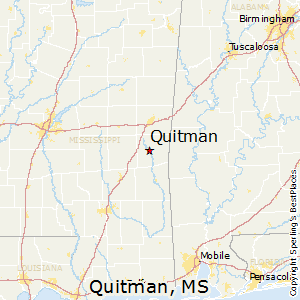
    QUITMAN, Miss. (AP) — A coroner says a preliminary autopsy shows a 16-year-old girl in east Mississippi appears to have died of blunt-force trauma “due to a beating.”

    Clarke County coroner Greg Fairchild tells the Clarion Ledger that the teen had cuts to her head, including the face, and multiple bruises to her body and neck. Fairchild says multiple old injuries suggested a pattern of abuse.

    Fairchild says the state crime lab is investigating whether the teenager had a heart condition.

    News outlets have not reported the girl’s name.

    Her parents, Allen Donta McGay and Shakeithia Deneice McGay, were charged last week with felony child abuse in her Oct. 31 death.

    An employee at the Clarke County Sheriff’s Department said Monday that records did not list an attorney’s name for either of the McGays.

  • Ex-Teacher Pleads Guilty To Sex Charges Involving Student

    Ex-Teacher Pleads Guilty To Sex Charges Involving Student

    TUPELO, Miss. (AP) — A former high school teacher in Mississippi will spend 10 years in prison after pleading guilty to sexual battery of a 16-year-old student.

    The Northeast Mississippi Daily Journal reports 37-year-old Braden Bishop pleaded guilty Friday. Under state law, there’s no chance of parole or time off for good behavior. He also received a 15-year suspended sentence after pleading guilty to one count of fondling the same student. He’ll have to register as a sex offender.

    Bishop taught at Tupelo High School.

    He originally was indicted on five felonies, but three were dropped in the plea deal. Circuit Judge Paul Funderburk said the victim’s family agreed to the deal so the teenager would not have to testify in court.

    ___

    Information from: Northeast Mississippi Daily Journal, http://djournal.com

  • Adams County Safe Room Open Tonight

    Adams County Safe Room Open Tonight

    Adams County residents we will open the Safe Room tonight starting at 8pm through 8am for a warming shelter. The Safe Room will re-open Tuesday night starting at 7 pm thru Wednesday afternoon or until outdoor temperatures reach above freezing levels. If you know anyone who may not have heat in their homes or homeless during this severe cold front we ask that you dial 911 and let the Adams County E911 Dispatch Center know. We also ask that you check on your neighbors and your pets if you have them. The number to the Adams County Safe Room is (601) 445-3525 Thanks please share

    Robert Bradford, Adams County Emergency Management Agency, Director

  • Police: Teen Says Gunshot Self-Inflicted While Dancing Drunk

    Police: Teen Says Gunshot Self-Inflicted While Dancing Drunk

    LOGAN, Utah (AP) — Police in northern Utah are investigating a shooting in which a 17-year-old boy says a gunshot wound to one of his legs was self-inflicted when his gun accidentally discharged as he danced while intoxicated.

    The Deseret-News reports that North Park police say the teen sought treatment at a Logan hospital Oct. 5 and that witnesses told investigators that the shooting happened when the teen got out of a car at an apartment complex and started dancing.

    According to police, the teen told officers that the gun was in his sweatshirt pocket.

    Police said the youth’s account is plausible but that their investigation into possible firearm and alcohol violations continued Friday.

  • Big Names Like Marvel, Star Wars As Disney Streaming Debuts

    Big Names Like Marvel, Star Wars As Disney Streaming Debuts

    NEW YORK (AP) — Disney will sprinkle its pixie dust on the streaming arena Tuesday, as its Disney Plus service debuts with an arsenal of marquee franchises including Marvel and Star Wars, original series with a built-in fan base and a cheap price to boot.

    FILE – In this April 3, 2019, file photo characters from Disney and Fox movies are displayed behind Cathleen Taff, president of distribution, franchise management, business and audience insight for Walt Disney Studios during the Walt Disney Studios Motion Pictures presentation at CinemaCon 2019, the official convention of the National Association of Theatre Owners (NATO) at Caesars Palace in Las Vegas. On Tuesday, Nov. 12, Disney Plus launches its streaming service. (Photo by Chris Pizzello/Invision/AP, File)View all (2)
    The $7-a-month commercial-free service is poised to set the standard for other services like WarnerMedia’s HBO Max and NBCUniversal’s Peacock to follow, as major media companies behind hit TV shows and movies seek to siphon the subscription revenue now going to Netflix and other streaming giants.

    Disney’s properties speak to its strengths. Besides classic characters such as Snow White and Pinocchio, Disney has Pixar, Marvel, Star Wars and National Geographic — big names that most people would recognize. Disney Plus will also have all 30 past seasons of “The Simpsons.” Original shows include “The Mandalorian,” set in the Star Wars universe, and one on the Marvel character Loki.

    Melissa Knerr, 26, a criminal defense attorney in Springfield, Missouri, already has Hulu, Netflix and Amazon Prime and wasn’t sure she wanted to pay for another one. She said she was swayed by Disney Plus’s price tag and its “sheer amount of content.”

    “I really love both the Star Wars and Marvel franchises and I grew up watching classic Disney shows and movies so I do think there will be enough content for me,” she said.

    Marlina Yates, who works in marketing in Kansas City, said she signed up because of her husband’s enthusiasm about the Star Wars series “The Mandalorian” and her daughter’s “love affair with princesses and everything Disney.”

    Disney Plus’s $7 a month price is about half of the $13 Netflix charges for its most popular plan, and there are discounts for paying for a full year up front. Disney is also offering a $13 package bundling Disney Plus with two other services it owns, Hulu and ESPN Plus. That’s $5 cheaper than signing up for each one individually.

    Everything won’t be available to stream right away, though, as Disney needs to wait for existing deals with rival services to expire. Recent movies missing at launch include the animated Pixar movie “Coco” and the live-action “Beauty and the Beast.” Others like “Maleficent: Mistress of Evil” haven’t been released for streaming yet. Disney expects 620 movies and 10,000 TV episodes by 2024, up from 500 movies and 7,500 episodes on Tuesday.

    Disney has said that it is losing about $150 million in licensing revenue in the most recent fiscal year from terminating deals with Netflix and other services. But Disney is betting that what it makes through subscriptions will more than make up for that — at least eventually.

    Disney is boosting its subscription base initially with heavy promos, much as Apple TV Plus has done and HBO Max and Peacock plan to do. Members of Disney’s free D23 fan club were eligible to buy three years of Disney Plus service up front for the price of two years. Customers of some Verizon wireless and home-internet plans can get a year free.

    The hope is that subscribers will stick around once they see what the service offers.

    Long-term success is by no means guaranteed. With a slew of services launching, subscription fees can add up quickly. Consumers might be reluctant to drop an existing service such as Netflix or Amazon Prime to pay for something untested.

    “I can’t keep up with so many services. It gets expensive,” said William Pearson, a Drexel University student who describes himself as a “massive” Marvel fan but already pays for Netflix, HBO and the DC Comics streaming service.

    But compared with other newcomers, experts believe Disney will have no problem gaining — and keeping — the 60 million to 90 million worldwide subscribers it is targeting for 2024.

    “Disney Plus has a gigantic array of content and a library that’s unmatched, so it feels like an easy addition for consumers to get a gigantic library at that low price,” said Tim Hanlon, CEO of Vertere Group.

    Bernie McTernan, internet and media analyst at Rosenblatt Securities, said Apple’s venture into streaming, Apple TV Plus, has to build brand recognition for its new shows, while viewers may have difficulties seeing what HBO Max offers beyond the standard HBO subscription.

    Disney said it was pleased with a recent test in the Netherlands, in which consumers got to try the service for free, without original content or full library of classics.

    “The service connected with users across all four quadrants, male and female, adults and kids, driven by the breadth of our content and the affinity people have with it,” Disney CEO Bob Iger told financial analysts Thursday.

    Connor Clifton, 29, from Houston, Texas, said he is looking forward to “The Mandalorian” Star Wars series as well as catching up on recent Pixar films.

    “Paying for individual channels is frustrating,” he said, “but I want to see the content so I’m willing to pay for it.”

  • What’s Coming In Impeachment: The Inquiry Goes Public

    What’s Coming In Impeachment: The Inquiry Goes Public

    WASHINGTON (AP) — For only the fourth time in U.S. history, the House of Representatives has started a presidential impeachment inquiry. House committees are trying to determine whether President Donald Trump violated his oath of office by asking Ukraine to investigate political rival Joe Biden’s family and the 2016 U.S. presidential election all while the White House was withholding military aid to the East European ally that borders Russia.

    A quick forecast of what’s coming this week:

    LIGHTS, CAMERAS, HEARINGS

    Americans will have their first public view of the impeachment inquiry, as the proceedings emerge from the secure closed-door facility in the Capitol basement to live hearings.

    House Intelligence Committee Chairman Adam Schiff, D-Calif., will gavel in the sessions Wednesday and Friday.

    What’s unclear, though, is what people will see in two days of hearings . Will the proceedings serve as a clarifying moment for the country, when a common narrative emerges over the president’s actions and whether or not they are, in fact, impeachable? Or in this era of peak partisanship, will the days devolve into a reality-TV episode showcasing the divide?

    Unlike Watergate in the 1970s or even Bill Clinton’s impeachment in the 1990s, Americans consume their news at different times and in different ways, making it hard to know if this week will produce a where-were-you-when moment.

    ___

    SPOTLIGHT ON WITNESSES

    Bill Taylor . George Kent . Marie “Masha” Yovanovitch.

    Once little-known State Department officials are about to become household names as they testify publicly in the impeachment inquiry.

    Taylor, a Vietnam War veteran who has spent 50 years in public service, will set the tone as the first witness. All three have testified in the closed setting, defying the White House’s instructions not to comply. But they are providing a remarkably consistent account of the Trump administration’s actions.

    Republicans want to hear from others , including Biden’s son Hunter, as well as the anonymous government whistleblower who sparked the impeachment inquiry, but Democrats who have majority control are not likely to agree to those requests.

    ___

    PERSUADING VOTERS

    Republicans have struggled to articulate a unified defense of Trump. Democrats have had difficulty synthesizing their arguments into a simple narrative for the public.

    Both will be sharpening efforts to persuade American voters.

    Rep. Jim Himes, D-Conn., said Sunday on NBC’s “Meet the Press” what the public will hear is “immensely patriotic, beautiful articulated — articulate people telling the story of a president who — let’s forget quid pro quo; quid pro quo is one of these things to muddy the works — who extorted a vulnerable country by holding up military aid.”

    But Republicans have focused their attacks with a resolution criticizing the House process. Some in the party want to reveal the name of the government whistleblower.

    Sen. Lindsey Graham, R-S.C., said on Fox News Channel’s “Sunday Morning Futures,” ”I consider any impeachment in the House that doesn’t allow us to know who the whistleblower is to be invalid, because without the whistleblower complaint, we wouldn’t be talking about any of this.”

    Graham added that there’s a “need for Hunter Biden to be called to adequately defend the president. And if you don’t do those two things, it’s a complete joke.”

    ___

    WHAT WILL TRUMP DO?

    For those watching television Wednesday afternoon, the president is offering some counterprogramming to the impeachment inquiry’s public hearing: a joint news conference with Turkey’s president, Recep Tayyip Erdogan, amid strains in relations between the two nations.

    On impeachment, the president tried to give his allies on Capitol Hill some talking points Sunday, tweeting out his advice for how they should defend him — namely by insisting, as he did, that his call with the Ukrainian president was “PERFECT.”

    “Read the Transcript!” Trump intoned on Twitter. “There was NOTHING said that was in any way wrong. Republicans, don’t be led into the fools trap of saying it was not perfect, but is not impeachable. No, it is much stronger than that. NOTHING WAS DONE WRONG!”

    The White House released a rough transcript of his July call and Trump also says he will release, probably on Tuesday, an account of an April phone call he had with Ukraine’s leader, Volodymyr Zelenskiy, soon after Zelenskiy won election.

    Testimony in the closed proceedings shows that the April congratulatory call did not raise concerns, but the tone shifted on the July call that caused alarms among U.S. officials.

    ___

    MORE TRANSCRIPTS, MORE HEARINGS COMING

    House investigators have been steadily releasing transcripts from hundreds of pages of testimony they received behind closed doors.

    More transcripts are expected. Nearly a dozen people have testified in the inquiry and investigators are building the public record of their findings. But this week’s hearings will probably not be the last.

    House investigators may still call others to testify, most likely Lt. Col. Alexander Vindman, an Army officer assigned to the National Security Council, and Fiona Hill, a former White House adviser on Russia. Both testified behind closed doors of their concerns about the Trump administration’s effort to push Ukraine to investigate Democrats.

    Eventually the Intelligence Committee will send a report of its findings to the Judiciary Committee, which would decide whether to pursue articles of impeachment against the president. A House vote on impeachment could come by Christmas.

    ___

    WORTH READING

    The House committees probing Trump’s Ukraine dealings are releasing transcripts of the depositions:

    Taylor transcript: http://apne.ws/vtAi9aX

    Kent transcript: http://apne.ws/gX69QfC

    Yovanovitch transcript: http://apne.ws/mBvxghb

    Vindman transcript: http://apne.ws/hOMTyHP

    Hill transcript: http://apne.ws/ShWUXZO

    Gordon Sondland, U.S. ambassador to the European Union: http://apne.ws/8NmlA02

    Kurt Volker, former U.S. envoy to Ukraine: http://apne.ws/rTdEmG4

    Michael McKinley, former adviser to Secretary of State Mike Pompeo: http://apne.ws/PrBMFaM

    ___

    This story has been corrected to show Graham spoke on “Sunday Morning Futures,” not “Fox News Sunday.”

  • Thousands Face Life-Threatening Floods From Aging Dams

    Thousands Face Life-Threatening Floods From Aging Dams

    On a cold morning last March, Kenny Angel got a frantic knock on his door. Two workers from a utility company in northern Nebraska had come with a stark warning: Get out of your house.

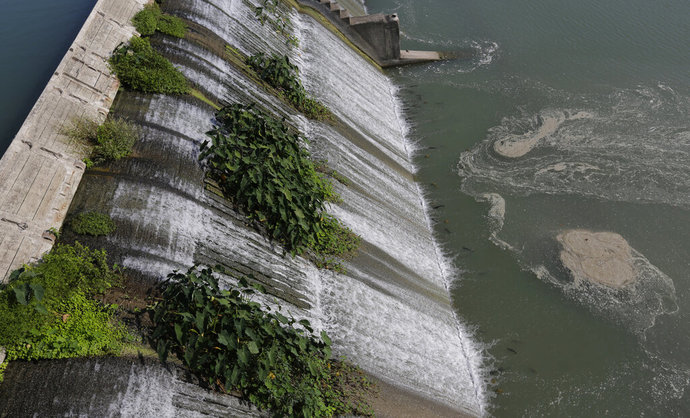
    Just a little over a quarter-mile upstream, the 92-year-old Spencer Dam was straining to contain the swollen, ice-covered Niobrara River after an unusually intense snow and rainstorm. The workers had tried but failed to force open the dam’s frozen wooden spillway gates. So, fearing the worst, they fled in their truck, stopping to warn Angel before driving away without him.

    Minutes later, the dam came crashing down, unleashing a wave of water carrying ice chunks the size of cars. Angel’s home was wiped away; his body was never found.

    “He had about a 5-minute notice, with no prior warning the day before,” Scott Angel, one of Kenny’s brothers, said.

    State inspectors had given the dam a “fair” rating less than a year earlier. Until it failed, it looked little different from thousands of others across the U.S. — and that could portend a problem.

    A more than two-year investigation by The Associated Press has found scores of dams nationwide in even worse condition, and in equally dangerous locations. They loom over homes, businesses, highways or entire communities that could face life-threatening floods if the dams don’t hold.

    A review of federal data and reports obtained under state open records laws identified 1,688 high-hazard dams rated in poor or unsatisfactory condition as of last year in 44 states and Puerto Rico. The actual number is almost certainly higher: Some states declined to provide condition ratings for their dams, claiming exemptions to public record requests. Others simply haven’t rated all their dams due to lack of funding, staffing or authority to do so.

    Deaths from dam failures have declined since a series of catastrophic collapses in the 1970s prompted the federal and state governments to step up their safety efforts. Yet about 1,000 dams have failed over the past four decades, killing 34 people, according to Stanford University’s National Performance of Dams Program.

    Built for flood control, irrigation, water supply, hydropower, recreation or industrial waste storage, the nation’s dams are over a half-century old on average. Some are no longer adequate to handle the intense rainfall and floods of a changing climate. Yet they are being relied upon to protect more and more people as housing developments spring up nearby.

    “There are thousands of people in this country that are living downstream from dams that are probably considered deficient given current safety standards,” said Mark Ogden, a former Ohio dam safety official who is now a technical specialist with the Association of State Dam Safety Officials.

    The association estimates it would take more than $70 billion to repair and modernize the nation’s more than 90,000 dams. But unlike much other infrastructure, most U.S. dams are privately owned. That makes it difficult for regulators to require improvements from operators who are unable or unwilling to pay the steep costs.

    “Most people have no clue about the vulnerabilities when they live downstream from these private dams,” said Craig Fugate, a former administrator at the Federal Emergency Management Agency. “When they fail, they don’t fail with warning. They just fail, and suddenly you can find yourself in a situation where you have a wall of water and debris racing toward your house with very little time, if any, to get out.”

    ___

    It’s unclear whether Angel, a 71-year-old Vietnam War veteran, declined to flee or simply ran out of time after workers with the Nebraska Public Power District warned him that water was overtopping the dam near Spencer, a town of fewer than 500 residents.

    An attorney for Angel’s wife, who wasn’t home when the dam broke, has filed a $5 million lawsuit alleging negligence. It claims the power utility failed to properly maintain the dam, train its employees or inform the Angels of dangerous conditions.

    Even though the Angels’ home was squarely in its path, the dam was rated as a “significant” rather than “high” hazard, meaning it wasn’t required under Nebraska law to have a formal emergency action plan. About 20% of state-regulated high-hazard dams nationwide still lack emergency plans, according to the U.S. Army Corps of Engineers, which maintains the national dam inventory.

    When last inspected in April 2018 , Spencer Dam’s “fair” rating was accompanied by an ominous notation: “Deficiencies exist which could lead to dam failure during rare, extreme storm events.”

    Tim Gokie, chief engineer of Nebraska’s dam safety program, said the warning was due to past water seepage the power utility addressed by installing a drain system. Ultimately, Gokie said, the rising Niobrara River simply overwhelmed the concrete and earthen dam, which was built in 1927 to generate hydroelectricity, not for flood control.

    “The fact was that it was just an unprecedented situation,” Nebraska Public Power District spokesman Mark Becker said. “It was beyond what everybody anticipated.”

    Nebraska was among the states hardest hit by storms and floods this year that have caused an estimated $1.5 billion in damage to roads, dams, utilities and other infrastructure in 28 states, according to an AP analysis.

    A National Climate Assessment released by the White House last year noted growing frequency and intensity of storms as the climate changes. That can push some dams beyond what they were designed to handle.

    Even if kept in good condition, thousands of dams could be at risk because of extreme rainstorms, said Fugate, the former FEMA official.

    “These are like ticking bombs just sitting there, waiting for the wrong conditions to occur to cause catastrophic failure,” he said.

    ___

    The nation’s dams are categorized as high, significant or low hazard in the National Inventory of Dams database. High hazard means loss of human life is likely if a dam were to fail. A significant rating means no deaths are likely, although economic and environmental damage are possible.

    There is no national standard for inspecting dams, leading to a patchwork of state regulations. Some states inspect high-hazard dams every year while others wait up to five years. Some states never inspect low-hazard dams — though even farm ponds can eventually pose a high hazard as housing developments encroach.

    Dam conditions are supposed to be rated as unsatisfactory, poor, fair or satisfactory. But the ratings are subjective — varying by state and the interpretations of individual inspectors — and are not always publicly disclosed.

    Since the Sept. 11, 2001, terror attacks, the U.S. government has cited national security grounds in refusing to include dams’ conditions in its inventory, which was updated most recently in 2018. But the AP was able to determine both condition and hazard ratings for more than 25,000 dams across the country through public records requests.

    The tally includes some of the nation’s most well-known dams, such as Hoover Dam along the Colorado River, but mostly involves privately owned dams. Many are used for recreation.

    The AP then examined inspection reports for hundreds of high-hazard dams in poor or unsatisfactory condition. Those reports cited a variety of problems: leaks that can indicate a dam is failing internally; unrepaired erosion from past instances of overtopping; holes from burrowing animals; tree growth that can destabilize earthen dams; and spillways too small to handle a large flood. Some dams were so overgrown with vegetation that they couldn’t be fully inspected.

    Georgia led the nation with nearly 200 high-hazard dams in unsatisfactory or poor condition, according to the AP’s analysis.

    Among them is Reservoir No. 1 in Atlanta, a 180 million-gallon water supply dating to the late 1800s that has been out of service much of the past few decades. The city made repairs and brought it back online in 2017, only to shut it down again after leaks were noticed.

    If the dam were to catastrophically fail, the water could inundate more than 1,000 homes, dozens of businesses, a railroad and a portion of Interstate 75, according to an emergency action plan .

    Joel Iverson has previously noticed water trickling out of the dam near the brewery he co-founded, Monday Night Brewing.

    “If that one goes, it’s going to wash away us and a lot of beer,” Iverson said.

    The Atlanta Watershed Management Department declined the AP’s request for an interview about the reservoir and instead asked for questions in writing. When those were submitted, it declined to answer them.

    ___

    One of the most common problems for aging dams are spillways incapable of handling an extreme rainfall event.

    If water can’t escape quickly enough through spillways, it could flow over the top of a dam, which increases the probability of rapid erosion that can cause it to collapse.

    The spillway at the 107-year-old Willett Pond Dam near the Boston suburb of Norwood is capable of handling just 13% of the water flow from a serious flood before the dam is overtopped, according to a recent state inspection report. If the dam were to give way, it could send hundreds of millions of gallons of water into the heart of the city of nearly 30,000 people.

    “We are not talking of just flooding someone’s house. We are talking about covering their house,” said Murray Beach, who lives on the shore of the 220-acre privately owned lake and belongs to a citizens group that has lobbied for years for the spillway to be repaired.

    A 2017 inspection report said improvements to the spillway could cost between $1 million and $5 million. A nonprofit that owns the lake received a $215,000 state grant last year to design spillway improvements. But there is no timeline to fix it.

    More than 1,300 properties lie within the dam’s inundation zone, including several shopping centers and at least two elementary schools, as well as more than 70 roads and two railroads.

    Tamiko Porter, who operates a Montessori school serving some 75 students, said she was surprised to learn there was a dam upstream that could flood her school if it failed.

    “Oh God, please let it happen when my kids aren’t here,” Porter said.

    Norwood emergency management director Bernard Cooper said there is no imminent risk of dam failure.

    “Yes, it needs work. The spillway should be rebuilt. Absolutely, no question,” Cooper acknowledged. But “there is no money in the system for that.”

    Concerns about inadequate dam spillways date back decades to when the Corps of Engineers undertook its first nationwide assessment of dams posing a high risk to life and property. From 1978 to 1981, the Corps inspected 8,818 dams. About one-third were deemed unsafe due to deficiencies, and about 80% of those cited inadequate spillway capacities.

    One of the dams cited for a “seriously inadequate” spillway in 1978 was Lake Sebago, located in a New York state park near the village of Sloatsburg. Forty years later, nothing has changed.

    A 2018 state inspection letter warned of “inadequate spillway capacity and dam stability” and asked for an improvement plan within 30 days. None was provided.

    The state dam safety office has no authority to force the state parks department to make repairs.

    To modify the Lake Sebago spillway, workers would have to rebuild a road and bridge that pass over the dam. The project could cost over $15 million, said Jim Hall, the recently retired executive director of the Palisades Interstate Park Commission, which manages multiple dams.

    “That structure has been in place with the same spillway capacity for over probably 60 to 70 years and it hasn’t been overtopped,” Hall said. “Should it be improved to meet all codes? Yeah, that would be nice. Does it make it the highest priority for us to do in relation to other dam structures we have? Probably not.”

    ___

    In a 1982 report summarizing its nationwide dam assessment, the Corps of Engineers said most dam owners were unwilling to modify, repair or maintain the structures, and most states were unwilling to spend enough money for an effective dam safety program.

    Since then, every state but Alabama has created a dam safety program.

    But the Great Recession a decade ago forced many states to make widespread budget and personnel cuts. Since a low point in 2011, states’ total spending on dam safety has grown by about one-third to nearly $59 million in the 2019 fiscal year while staffing levels have risen by about one-fifth, according to data collected by the Corps of Engineers.

    California, which runs the nation’s largest dam safety program, accounts for much of that gain. It boosted its budget from $13 million to $20 million and the number of full-time staff from 63 to 77 following the failure of the Oroville dam spillway in 2017.

    The scare at Oroville, the nation’s tallest dam, led to evacuation orders for nearly 200,000 people, although no one was injured and the dam ultimately held. An independent investigation cited “a long-term systemic failure ” by regulators and the dam industry to recognize and address warning signs.

    California spent $1.1 billion repairing the Lake Oroville spillway, enacted new emergency plan requirements and launched a review of 93 other dams with similar spillways.

    In South Carolina, after more than 70 dams failed following heavy rains in 2015 and 2016, the state tripled the personnel in its dam safety program and ratcheted up spending from about $260,000 annually to more than $1 million.

    But some states have continued to pare back their dam safety programs. Thirteen states and Puerto Rico were spending less in 2019 than they did in 2011, and 11 states had fewer full-time positions in their programs.

    The Association of State Dam Safety Officials says almost every state faces a serious need to pump additional money and manpower into dam safety programs.

    “If you don’t have the staff to inspect a dam, or don’t have the authority to do that, you don’t know what the problems are,” said the association’s Ogden.

    “If you are able to do the inspection but you can’t follow up, and you have dam owners who don’t have the resources to fix their dam, then ultimately you know what the problem is but you can’t get it addressed,” he added.

    Many states face a quandary when it comes to problematic private dams when they can’t identify the owners. Rhode Island’s two-person dam safety office last year listed 32 high- or significant-hazard dams with safety concerns whose owners were unknown.

    “If we don’t know the owner, then we can’t take any action to order anybody to fix it,” said David Chopy, chief of compliance and inspection for the Rhode Island Department of Environmental Management.

    In some states, dams go uninspected because of exemptions in state law.

    A 2013 Texas law exempts all dams on private property with a capacity of less than 163 million gallons that are rated significant or low hazard and are located outside of city limits in any county with fewer than 350,000 people. As a result, about 45% of its roughly 7,200 dams are exempt from regulation.

    Missouri performs safety inspections on only about 650 of its more than 5,000 dams. That’s because state law exempts all dams that are under 35 feet, used for agricultural purposes or subject to federal regulation.

    Former Missouri Gov. Matt Blunt attempted to significantly expand the number of dams under state supervision after the mountaintop Taum Sauk Reservoir collapsed in December 2005, injuring a state park superintendent’s family. But the legislation failed after some rural landowners expressed concerns. Then the proposal quietly faded away as new officials took over.

    “Maybe it’s time to take a look at that again and make sure that our dams are safe,” said Missouri state Rep. Tim Remole, who now leads the House committee overseeing dam safety.

    ___

    Until Angel’s death in Nebraska this year, the last fatal dam failure in the U.S. occurred on the Hawaiian island of Kauai in 2006.

    An earthen wall of the Kaloko Reservoir collapsed during heavy rains and sent a wave of water rushing down a hillside. Seven people — including a pregnant woman — were killed on Bruce Fehring’s property, including his daughter, son-in-law and grandson.

    Fehring, who wasn’t there at the time, got a phone call from a neighbor saying something terrible had happened. He was shocked by the scene.

    “It took a while to register, and I went, ‘Oh my God, everything’s been washed away,’” Fehring recalled. “I mean, you have no idea the power of water (until) you see what it can do in a very short amount of time.”

    Dam owner James Pflueger pleaded no contest to felony reckless endangerment and was sentenced to seven months of confinement and five years of probation. His property company pleaded no contest to seven counts of manslaughter. Prosecutors said Pflueger had filled in the dam’s spillway while attempting to make space for a waterfront development.

    The victims’ families and those whose property was damaged, including actress Bette Midler, agreed to a $25 million civil settlement. Though categorized by the state as low hazard at the time it failed, Kaloko Reservoir is now listed as a high-hazard facility in poor condition . It remains largely unrepaired.

    That’s also the case with Lake Dunlap Dam, northeast of San Antonio. On a sunny morning in May, one of the 91-year-old dam’s corroded spillway gates suddenly gave way. No one was hurt in the rush of water, but scores of homeowners’ lakeside docks were left high and dry, facing barren swaths of dried lakebed after the river retreated, leaving boats stranded.

    The dam was the second hydroelectric facility along the river to fail within the past three years. The Guadalupe-Blanco River Authority responded with plans to drain a chain of four lakes because of concerns their similarly designed spillway gates also could fail.

    But after property owners sued, the river authority agreed in September to a temporary injunction delaying the plan for a year. That could allow time to find funding for the estimated $90 million to $210 million to repair the dams.

    “This is something that communities and states all across the country are grappling with as we are reckoning with our aging infrastructure,” said Tess Coody-Anders, a homeowner near Lake McQueeney, one of the dams slated to be drained.

    “I hope that everyone will recognize that, like in our community, entire economies and ways of life have developed around what started out as a civil engineering project,” she added. “And you can’t take that away.”

    ___

    Lieb reported from Jefferson City, Missouri; Casey from Concord, New Hampshire; and Minkoff from Washington, D.C.

    ___

    Associated Press writers Eric Gay in San Antonio and Caleb Jones in Honolulu contributed to this report.

  • After Push From Perry, Backers Got Huge Gas Deal In Ukraine

    After Push From Perry, Backers Got Huge Gas Deal In Ukraine

    KYIV, Ukraine (AP) — Two political supporters of U.S. Energy Secretary Rick Perry secured a potentially lucrative oil and gas exploration deal from the Ukrainian government soon after Perry proposed one of the men as an adviser to the country’s new president.

    Perry’s efforts to influence Ukraine’s energy policy came earlier this year, just as President Volodymyr Zelenskiy’s new government was seeking military aid from the United States to defend against Russian aggression and allies of President Donald Trump were ramping up efforts to get the Ukrainians to investigate his Democratic rival Joe Biden.

    Ukraine awarded the contract to Perry’s supporters little more than a month after the U.S. energy secretary attended Zelenskiy’s May inauguration. In a meeting during that trip, Perry handed the new president a list of people he recommended as energy advisers. One of the four names was his longtime political backer Michael Bleyzer.

    A week later, Bleyzer and his partner Alex Cranberg submitted a bid to drill for oil and gas at a sprawling government-controlled site called Varvynska. They offered millions of dollars less to the Ukrainian government than their only competitor for the drilling rights, according to internal Ukrainian government documents obtained by The Associated Press. But their newly created joint venture, Ukrainian Energy, was awarded the 50-year contract because a government-appointed commission determined they had greater technical expertise and stronger financial backing, the documents show.

    Perry likely had outsized influence in Ukraine. Testimony in the impeachment inquiry into Trump shows the energy secretary was one of three key U.S. officials who were negotiating a meeting between Trump and the Ukrainian leader.

    The sequence of events suggests the Trump administration’s political maneuvering in Ukraine was entwined with the big business of the energy trade.

    Perry made clear during trips to Kyiv that he was close to Bleyzer, a Ukrainian-American investor and longtime Perry supporter who lives in Houston, and Cranberg, a Republican mega-donor who provided Perry the use of a luxury corporate jet during the energy secretary’s failed 2012 presidential bid.

    Perry’s spokeswoman said Wednesday that the energy secretary has championed the American energy industry all over the world, including in Ukraine.

    “What he did not do is advocate for the business interests of any one individual or company,” said Shaylyn Hynes, the press secretary for the Energy Department.

    Jessica Tillipman, who teaches anti-corruption law at George Washington University, said even if Perry did seek to influence foreign officials to award contracts to his friends, it is likely not illegal.

    “My gut says it’s no crime,” she said. “It’s just icky.”

    Zelenskiy’s office did not respond to requests for comment.

    In a statement to AP, Bleyzer denied that Perry helped his firm get the gas deal.

    “I believe that Secretary Perry’s conversations with Ukrainian government officials, if they in fact took place, did not play any role in Ukrainian Energy winning its bid,” Bleyzer said Tuesday. He said the process was competitive and transparent and “will hopefully serve as an example of how the Ukrainian energy market can be opened for new investments.”

    Amy Flakne, a lawyer for Cranberg’s company Aspect Holdings, said Wednesday that Perry and other U.S. officials supported “a fair, competitive process to bring foreign capital and technology to Ukraine’s lagging energy sector.”

    “Aspect neither sought, nor to our knowledge received, special intervention on its behalf,” Flakne said.

    ___

    ‘FREEDOM GAS’

    As Trump’s energy secretary, Perry has flown around the globe to push for U.S. exports of liquefied natural gas, which he calls “Freedom Gas.” He’s made multiple trips to Ukraine and other former Soviet-bloc nations, where shipments of American gas and drilling technology take on strategic importance as a potential alternative to continued dependence on imports from Russia.

    Ukraine has long suffered from a reputation for political corruption, particularly in its oil and gas sector. In the chaotic days following the breakup of the Soviet Union, the newly independent Ukrainian government sold off many state-owned businesses worth billions to a cadre of well-connected oligarchs who amassed immense fortunes.

    As Ukraine sought economic and security support from the U.S. and other Western democracies, those countries pressed it to put in place a more open and transparent process for awarding oil and gas exploration rights on state land.

    At the urging of Western partners, Ukraine’s government created a process requiring that exploration contracts be put out to bid and awarded following review from a selection board appointed by the president’s cabinet of ministers. The board recommends the winners, pending final approval from the ministers.

    Those Western partners also advised Ukraine to appoint an independent supervisory board at Naftogaz, the state-owned energy company, as a guard against corruption and self-dealing.

    In February, the Ukrainian government opened up bidding for nine oil and gas blocks encompassing 4,428 square miles (11,469 square kilometers) of land. Ukrainian Energy, the joint venture between Bleyzer’s investment firm SigmaBleyzer and Cranberg’s Aspect Energy, submitted a single bid for the largest block, which covers 1,340 square miles (3,471 square kilometers).

    Under the contracts, the winning bidder is awarded exclusive rights to extract petroleum for up to 50 years. After the initial costs are recovered, the company and the government split the profits.

    An internal review of the proposals by the Ukrainian Ministry of Energy and Coal Mining obtained by the AP show they were not the highest bidder.

    The only competing bidder, UkrGasVydobuvannya, known by the acronym UGV, offered more than $60 million for the first phase of the project, compared with $53 million from Bleyzer and Cranberg, the document shows. UGV is Ukraine’s largest domestic gas producer and is a subsidiary of Naftogaz, the state-owned company where Perry sought to replace board members.

    Despite the lower upfront investment, the selection board gave the Americans higher scores for technical expertise and overall financial resources, according to the document reviewed by AP.

    Of the nine gas deals awarded on July 1, Bleyzer and Cranberg’s bid was the only one of the winners that didn’t include the participation of a Ukrainian company. UGV won four of the remaining bids.

    Two members of the board that helped select the bid winners told the AP that the process is designed to be difficult to improperly influence because it is a mix of government representatives and industry experts.

    Roman Opimakh, a commission member who is the head of the State Service of Geology and Subsoil of Ukraine, said the government was looking for foreign investment, particularly U.S., and the board considered that as a factor. He said it’s an advantage if a company is well-connected in Washington but added that he saw no indication that U.S. officials influenced the process.

    Perry, who served 14 years as the governor of Texas, has publicly championed the potential of U.S. hydraulic fracturing technology to boost oil and gas production in Ukraine and pressed for the bidding process to be opened up to U.S. companies.

    At an energy industry roundtable in Kyiv in November 2018, Perry said the potential for oil and gas development in Ukraine is “staggering.” Ukraine, he declared, had a chance to become “the Texas of Europe.”

    At the same event, which was co-sponsored by the nonprofit U.S.-Ukraine Business Council, Perry plugged Cranberg’s expertise. Both Cranberg and Bleyzer were in the room, along with several American and Ukrainian energy industry officials.

    “You know, Alex Cranberg, who has been in this business a long time, can attest to this probably as well as anyone sitting around the table, that we have the potential to change the world,” Perry said, according to a transcript released by the U.S. Embassy in Kyiv.

    During the same 2018 trip, Perry had a private meeting with then-Ukrainian President Petro Poroshenko, where they discussed deepening the ties between the two country’s energy industries, according to a U.S. Embassy summary of the meeting

    Records suggest Perry has also met regularly with Bleyzer. Visitor logs released by the Energy Department through a public records request show Bleyzer entering through the VIP check-in desk at the building where Perry’s office is at least three times, most recently on May 8.

    Less than two weeks later, Perry was on a plane to Kyiv to attend the inauguration ceremony for Zelenskiy, who had defeated Poroshenko in an April election. It was during that trip that Perry presented his list of recommended advisers that included Bleyzer and remarked on their long friendship, according to a person in the room who spoke on condition of anonymity for fear of retaliation. Attendees left the meeting with the impression that Perry wanted to replace an American representative on the Naftogaz board with someone “reputable in Republican circles,” according to the person who was there.

    Bleyzer said Tuesday that he had been included in what he described as a brainstorming session with Energy Department officials about creating an informal group knowledgeable about Ukraine’s energy industry to help develop U.S. strategy, but he had no idea his name would be forwarded to the country’s new president.

    “I was not aware at any time that my name was recommended by Secretary Perry to the Ukrainian government to act in any capacity,” Bleyzer said.

    Perry’s work in Ukraine places him at the center of the House impeachment inquiry into efforts by Trump and his personal lawyer Rudy Giuliani to press Zelenskiy to open an investigation into Biden and his son Hunter’s business dealings with Burisma, another Ukrainian gas company.

    Perry, who announced last month that he is resigning by the end of the year, has refused to cooperate with the congressional probe. In an Oct. 4 interview with the Christian Broadcasting Network, Perry said that “as God as my witness” he never discussed Biden or his son in meetings with Ukrainian or U.S. officials.

    But Perry was at the White House for a key July 10 meeting where senior Ukrainian officials were told continued U.S. support was conditional on Zelenskiy’s government opening investigations into Democrats and Burisma, Army Lt. Col. Alexander Vindman, an aide on Trump’s National Security Council, testified last month.

    ___

    TEXAS TIES

    Bleyzer and Perry’s ties go back at least a decade. As governor, Perry appointed Bleyzer in 2009 to serve as a member of a Texas state advisory board overseeing state funding to emerging technology ventures. The following year, Bleyzer contributed $30,000 to Perry’s 2010 campaign for Texas governor.

    The Ukrainian-born Texan cuts a flamboyant figure in the energy world. A 2012 profile in the Houston Chronicle is set in his modernist 15,000-square-foot mansion. In an accompanying photo, he stands next to his wife, a mane of gray hair to his shoulders, on a balcony overlooking a swimming pool.

    A former engineer at Exxon, Bleyzer was born in Ukraine’s Kharkiv region and trained in digital electronics and quantum physics. In 1994, he founded SigmaBleyzer Investment group, a private equity firm that specializes in developing corporate stakes in Eastern Europe. The company says it manages about $1 billion in assets.

    Bleyzer also has ties to Giuliani. In 2008, Bleyzer’s company hired Giuliani’s former Houston-based law firm, Bracewell & Giuliani, to help it acquire and consolidate cable holdings in 16 Ukrainian cities, including Kyiv, according to an announcement at the time. The same year, Bleyzer donated $2,300 to Giuliani’s presidential campaign.

    Bleyzer’s company is the primary funder of the U.S.-Ukraine Business Council, which promotes the interests of American businesses operating in Ukraine. According to tax records, the business council is run out of the Washington, D.C, offices of its president and CEO, Morgan Williams, who is also listed as the government affairs director for SigmaBleyzer.

    The council, which sponsors events that feature senior U.S. and Ukrainian government officials, pushes for policy priorities that dovetail with Bleyzer’s business interests — including lobbying to create the very process that opened Ukraine’s state-controlled oil and gas fields to foreign investment, according to the webpage of the state geology service.

    Days after the government in Ukraine posted the gas blocks for bidding in February, visitor logs show Williams accompanied Bleyzer through the VIP entrance at the Energy Department.

    On May 28, the day the bids were due in Kyiv, Williams again accompanied Bleyzer, who photos show was sporting a Western-style shirt with a Stars and Stripes pattern, to the offices of Ukraine’s energy ministry to submit their company’s bid.

    On June 5 — while Bleyzer and Cranberg’s proposal was under review — Williams met with a key Zelenskiy adviser, Oleg Ustenko, and told him that significant expansion of oil and gas production in Ukraine could only be achieved with investments from private companies, including ones from the United States, according to a summary of the meeting posted on the business council’s website.

    In an apparent dig at the company competing against Bleyzer and Cranberg for the gas deal, Williams also told Ustenko that the “participation of the state monopoly player” undermined the chances of private companies to win, according to the summary.

    What the council’s media release failed to mention is that, like Williams, Ustenko serves dual roles. In addition to advising the Ukrainian president, the economist is the longtime executive director of The Bleyzer Foundation, a Kyiv-based nonprofit organization founded by Bleyzer in 2001. The group’s website describes its mission as promoting private-sector investment in Ukraine.

    Less than four weeks later, Ukraine Energy was named the winner of the Varvynska block over the Naftogaz subsidiary.

    Bleyzer would not say whether he considered it a conflict for his employee to simultaneously be leading the international trade group while also advocating for his private business interests.

    He said the U.S.-Ukraine Business Council is just one of many organizations that strongly support the participation of foreign companies in the bidding process “as one of the key factors in helping Ukraine achieve its energy independence from Russia.”

    As with Bleyzer, Cranberg also has longtime ties to Perry.

    A graduate of the University of Texas in Austin, Cranberg was appointed by Perry in 2011 to serve a six-year term on the state university system’s board of regents. He is a generous political donor, giving more than $3 million since the mid-1980s primarily to Republican candidates and fundraising committees, according to federal and state campaign finance records.

    In the last 13 months, Cranberg has contributed just over $650,000 to two committees focused on electing Republicans to House seats, $637,000 to the National Republican Senatorial Committee and $258,000 to the National Republican Congressional Committee. He and his wife each gave $50,000 last April to Trump Victory, the joint entity that funds the president’s reelection campaign and the Republican National Committee.

    When Perry campaigned for president in 2011, federal disclosures show his campaign paid more than $16,000 to a holding company for a private jet used by Cranberg.

    Cranberg is also among those who entered through the VIP desk at the Energy Department, logging in with his wife for a visit in April 2018.

    Last year, his company hired Perry’s former campaign manager, Jeff Miller, as a lobbyist. Miller has been to the Energy Department’s headquarters at least a dozen times since Perry became secretary, according to the visitor logs. He mostly signed in through the VIP entrance.

    ___

    Biesecker, Braun and Lardner reported from Washington.

    ___

    Follow Associated Press investigative reporters Desmond Butler at https://twitter.com/desmondbutler , Michael Biesecker at http://twitter.com/mbieseck and Richard Lardner at http://twitter.com/rplardner

    ___

    Contact AP’s global investigative team at Investigative@ap.org