Blog

  • Judge Suggests Reducing Rape Sentence For $150,000 To Victim

    Judge Suggests Reducing Rape Sentence For $150,000 To Victim

    BATON ROUGE, La. (AP) — A Louisiana judge who sentenced a rapist to 12 years in prison said he’d reduce the time if the rapist pays the victim $150,000.

    The offer offended the woman, who said outside court Thursday that she doesn’t want any amount of money from her attacker. She had just read her impact statement in court, saying that 44-year-old Sedrick Hills took at least 16 years of her life way by raping her. She asked the judge to take the same from him.

    Hills was convicted last year of raping the her in 2003 when she was 15.

    The Advocate reports that both prosecutors and the defense were surprised by Judge Bruce Bennett’s offer to reduce the time if the woman agreed to cash restitution.

    ___

    Information from: The Advocate, http://theadvocate.com

  • Red Snapper Season Now Includes Veterans Day

    Red Snapper Season Now Includes Veterans Day

    BATON ROUGE, La. (AP) — Recreational fishing for red snapper will be allowed on Veterans Day this year in Louisiana waters and adjacent federal waters.

    The state Department of Wildlife and Fisheries says Secretary Jack Montoucet has signed a declaration approving an additional day of red snapper fishing on Monday, Nov. 11.

    The department news release says it will be in addition to the current weekends-only season that is open until further notice.

    Louisiana is operating under its second year of a permit that allows the state to manage the private recreational red snapper season in state and federal waters. Under the program, participating anglers are allowed to fish red snapper in the state territorial seas and adjoining federal Exclusive Economic Zone waters from shore to 200 nautical miles.

  • Secret Service Study: School Attackers Showed Warning Signs

    Secret Service Study: School Attackers Showed Warning Signs

    WASHINGTON (AP) — Most students who committed deadly school attacks over the past decade were badly bullied, had a history of disciplinary trouble and their behavior concerned others but was never reported, according to a U.S. Secret Service study released Thursday.

    In at least four cases, attackers wanted to emulate other school shootings, including those at Columbine High School in Colorado, Virginia Tech University and Sandy Hook Elementary School in Connecticut. The research was launched following the shooting at Marjory Stoneman Douglas High School.

    The study by the Secret Service’s National Threat Assessment Center is the most comprehensive review of school attacks since the Columbine shootings in 1999. The report looked in-depth at 41 school attacks from 2008 through 2017, and researchers had unprecedented access to a trove of sensitive data from law enforcement including police reports, investigative files and nonpublic records.

    The information gleaned through the research will help train school officials and law enforcement on how to better identify students who may be planning an attack and how to stop them before they strike.

    “These are not sudden, impulsive acts where a student suddenly gets disgruntled,” Lina Alathari, the center’s head, said in an Associated Press interview. “The majority of these incidents are preventable.”

    The fathers of three students killed in 2018 at Marjory Stoneman Douglas High School in Parkland, Florida, attended a media conference Thursday in support of the study.

    Tony Montalto, whose daughter, Gina Rose Montalto, died, said the research was invaluable and could have helped their school prevent the attack.

    “My lovely daughter might still be here today,” he said. “Our entire community would be whole instead of forever shaken.”

    Montalto urged other schools to pay attention to the research.

    “Please, learn from our experience,” he said. “It happened to us, and it could happen to your community, too.”

    Nearly 40 training sessions for groups of up to 2,000 people are scheduled. Alathari and her team trained about 7,500 people during 2018. The training is free.

    The Secret Service is best known for its mission to protect the president. The threat assessment center was developed to study how other kinds of attacks could be prevented. Officials use that knowledge and apply it in other situations, such as school shootings or mass attacks.

    Since the Columbine attack, there have been scores of school shootings. Some, like Sandy Hook in 2012, were committed by nonstudents. There were others in which no one was injured. Those were not included in the study.

    The report covers 41 school attacks from 2008 through 2017 at K-12 schools. They were chosen if the attacker was a current or recent former student within the past year who used a weapon to injure or kill at least one person at the school while targeting others.

    “We focus on the target so that we can prevent it in the future,” Alathari said.

    Nineteen people were killed and 79 were injured in the attacks they studied; victims included students, staff and law enforcement.

    The Secret Service put out a best practices guide last July based on some of the research to 40,000 schools nationwide, but the new report is a comprehensive look at the attacks.

    The shootings happened quickly and were usually over within a minute or less. Law enforcement rarely arrived before an attack was over. Attacks generally started during school hours and occurred in one location, such as a cafeteria, bathroom or classroom.

    Most attackers were male; seven were female. Researchers said 63% of the attackers were white, 15% were black, 5% Hispanic, 2% were American Indian or Alaska Native, 10% were of two or more races, and 5% were undetermined.

    The weapons used were mostly guns, but knives were used, as well. One attacker used a World War II-era bayonet. Most of the weapons came from the attackers’ homes, the investigators reported.

    Alathari said investigators were able to examine detailed information about attackers, including their home lives, suspension records and past behaviors.

    There’s no clear profile of a school attacker, but some details stand out: Many were absent from school before the attack, often through a school suspension; they were treated poorly by their peers in person, not just online; they felt mistreated; some sought fame, while others were suicidal. They fixated on violence and watched it online, played games featuring it or read about it in books.

    The key is knowing what to look for, recognizing the patterns and intervening early to try to stop someone from pursuing violence.

    “It really is about a constellation of behaviors and factors,” Alathari said.

    The attackers ranged in age but were mostly young adults, seventh-graders to seniors. More than three-quarters initiated their attack after an incident with someone at school.

    In one case, a 14-year-old shot a classmate at his middle school after he’d been mocked and called homophobic names. The attacker later reported the victim made comments that made him uncomfortable, and they were the final straw in his decision to attack. Seven attackers documented their plans, and five researched their targets before the attack.

    Thirty-two were criminally charged, with 22 charged as adults. Most took plea deals. More than half are incarcerated. A dozen more were treated as juveniles. Seven killed themselves, and two were fatally wounded.

    Alathari said the report shows that schools may need to think differently about school discipline and intervention.

    The report does not weigh in on political topics such as whether guns are too accessible or whether teachers should be armed.

    She said their goal is to make schools a safer place where no more attacks occur.

    ___

    This story has been corrected to fix the spelling of the Florida school to Marjory Stoneman Douglas High School, not Marjorie Stoneman Douglas High School.

  • Hopes Rise That Lifting Tariffs Could Allow US-China Accord

    Hopes Rise That Lifting Tariffs Could Allow US-China Accord

    BEIJING (AP) — Prospects appear to have brightened for a preliminary breakthrough in the U.S.-China trade war after the two sides agreed to reduce some punitive tariffs on each other’s goods as part of an initial agreement.

    A Chinese spokesman announced the development Thursday as talks on ending the trade war progressed — a development that triggered a rally in U.S. stock markets.

    The agreement came during talks aimed at working out details of a “Phase 1” deal that was announced Oct. 12. Financial markets had been rattled by reports that China was pushing for tariffs to be lifted, which posed the prospect of a breakdown in talks.

    Negotiators agreed to a “phased cancellation” of tariff hikes if talks progress, said a Commerce Ministry spokesman, Gao Feng.

    “If the two sides achieve a ‘Phase 1’ agreement, then based on the content of that agreement, tariffs already increased should be canceled at the same time and by the same rate,” Gao said at a news briefing.

    As for the size of reductions, Gao said that would depend on the agreement.

    “For almost two years now, the U.S./China trade tussle has posed the biggest headwind to global growth,” BMO Economics said in a research note. “But with promising signs of progress on the trade front, a shift in global central banks to easing … and mostly better-than-expected corporate profits, U.S. stocks” are reaching all-time highs.”

    On Wall Street, stocks pushed toward another round of records in the wake of the encouraging report from Beijing. The Dow Jones Industrial Average was up nearly 200 points in late-afternoon trading.

    Governments of the two biggest global economies have raised tariffs on billions of dollars of each other’s goods in the fight over China’s trade surplus and technology ambitions. That weighs on trade worldwide and threatens to depress corporate earnings and global economic growth, which is already showing signs of slowing.

    The Oct. 12 agreement was modest and details have yet to be put on paper but it was welcomed as a sign of progress toward ending the trade war.

    President Donald Trump agreed to postpone a planned tariff hike while lower-level officials hammered out details.

    Trump said China agreed to buy up to $50 billion of American farm goods. Beijing has yet to confirm the scale of its commitment.

    News reports said Beijing wants 15% tariffs imposed in September on $125 billion of Chinese imports removed before it will make a formal commitment.

    There had been no indication whether Trump might agree, which raised the possibility of another breakdown in negotiations.

    China’s imports of American soybeans and other goods tumbled 26.4% in the first nine months of this year following tariff hikes and orders to importers to find other suppliers.

    The Oct. 12 agreement helped to ease financial market jitters, but the two sides have yet to report progress on major disagreements over technology and other irritants following 13 rounds of talks.

    Trump and Xi were due to meet at this month’s gathering of Asia-Pacific leaders in Chile but that event was canceled due to protests there.

    That dampened hopes a face-to-face meeting might produce progress. But U.S. officials say the two governments are looking for a different location.

    U.S. Commerce Secretary Wilbur Ross said this week any “Phase 1” agreement would be general and cover trade in specific areas such as soybeans and liquefied natural gas.

    More complicated issues would be tackled in later negotiations, Ross said. He gave no indication whether rolling back tariffs was a possibility at this stage.

  • Fire Survivors Transform California City That Took Them In

    Fire Survivors Transform California City That Took Them In

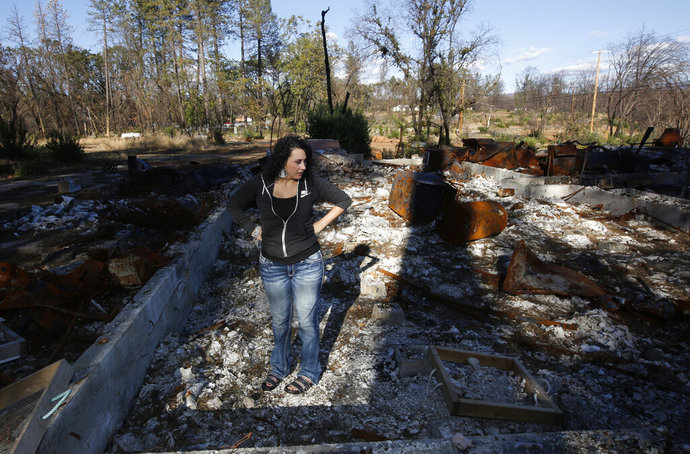
    CHICO, Calif. (AP) — Amber Blood got to Chico on Nov. 8, 2018, wearing pink slacks and her favorite white peacoat. It was all she had left.

    Blood was among tens of thousands forced to flee as a wildfire roared through Paradise and nearby communities in Northern California, killing 85 people and destroying roughly 19,000 buildings.

    Nothing burned in Chico, the closest big city. And within hours, another city had moved in — filling up hotels, living in trailers, sleeping on friends’ couches and buying up every available home, apartment and spare room.

    A year later, most are still there. State officials estimate Chico has added 20,000 people, boosting the population from 92,000 to more than 112,000. The city didn’t expect that number until at least 2030.

    “We all feel lost, still,” said Blood, who has since bought a home in Chico. “This house is beautiful, and I don’t even feel like it is my home. It’s weird.”

    What’s happened in Chico in the year since California’s deadliest wildfire shows how blazes — growing more frequent and destructive with climate change — have lasting effects far beyond the flames.

    “You normally would have a decade to prepare for such growth,” Chico Police Chief Michael O’Brien said. “We had about 10 hours.”

    Chico officials say they need close to half a billion dollars to improve infrastructure and hire enough police officers and firefighters to cover the surge in people. But because the city is outside the burn area, it isn’t eligible for most state and federal disaster funds. The most it’s gotten is $3 million from the Legislature.

    Aside from housing shortages and more traffic, the influx has strained the city in unexpected ways. About three weeks after the fire, Chico’s sewer system was handling an additional million gallons (4 million liters) a day, or the equivalent of adding an extra 5,000 homes.

    City officials had hoped the increase was temporary. But now, the system is handling an additional 600,000 gallons (2.3 million liters) a day from fire survivors, costing an extra $53,000 per month. That’s money Chico doesn’t have.

    City Manager Mark Orme says Chico will likely have to raise rates to pay for it.

    “It’s one of the unanticipated consequences of being the friendly neighbor,” he said.

    The effects go beyond government services. The region had four hospitals before the fire. But Feather River Hospital in Paradise closed and has not reopened. Since then, Enloe Medical Center in Chico has seen up to an extra 700 patients per month, according to Judy Cline, director of the emergency department.

    The hospital has added seven around-the-clock nursing shifts to keep up, but it’s having trouble filling the positions because potential employees can’t find places to live.

    “Our community is completely different than it once was, and it will always be completely different,” Cline said.

    Even before the fire, Chico’s home sales vacancy rate was below 1%. Along with hospital workers and others, former Paradise residents have struggled to find a place to call home.

    Laura Smith and her family had 2 acres in Paradise. Now, they live in a small apartment where the neighbors complain if you shut your door too hard. She dreams of moving back.

    “We’re in Chico, but we’re Paradise residents,” Smith said. “There is something separate about us.”

    It was even hard for Blood, a real estate agent in Paradise, to find somewhere for her and her children.

    They lived in a cramped, two-bedroom apartment for months. It was unfurnished, but shopping was exhausting. The first thing she bought after the fire was an expensive fake plant because it was one of the few things left in the store.

    When Blood finally bought a house a few months later from a woman who was moving overseas, she said she paid the seller an extra $7,000 to leave the furniture.

    “We literally walked in, the house was ready to go,” Blood said.

    Gov. Gavin Newsom signed a law this summer designed to speed up construction of new housing by temporarily suspending the state’s lengthy environmental review process for fire-affected areas. But the law does not include Chico because Mayor Randall Stone and most of the City Council opposed it.

    Some residents were so angry they launched an effort to remove Stone and another councilman from office. Stone said he is “beyond confident” the recall won’t succeed, saying the state law would strip authority from local governments and was an attempt by Republican lawmakers to dodge environmental protections.

    The mayor said he plans other actions to address the housing crisis, including adjusting fees for developers so they build more affordable housing. He said he was proud of Chico for coming together to help.

    “We didn’t literally have fire on our homes in this community, but we’re impacted by it,” Stone said. “We’re all burdens on each other.”

    The recall has added to tension in the community, compounded by small things like longer wait times at restaurants and heavier traffic.

    But Chico residents are careful when they complain, said Katy Thoma, president and CEO of the Chico Chamber of Commerce.

    “We’re trying to be sensitive to the people in Paradise who lost everything,” Thoma said. “Chico is a real friendly, warm town, and it’s the kind of town where you don’t honk at people when the light turns green. You let people in. There seems to be less of that.”

    All of these are signs of a city getting to know itself.

    “I don’t think we know what the new normal is,” said Alexa Benson-Valavanis, executive director of the Chico-based North Valley Community Foundation, which has given $27 million in grants since the fire. “But we’re figuring out how to take care of everybody here. I think we have a heart and a will to do that.”


  • Millions At Stake In Dinosaur Fight: Are Fossils Minerals?

    Millions At Stake In Dinosaur Fight: Are Fossils Minerals?

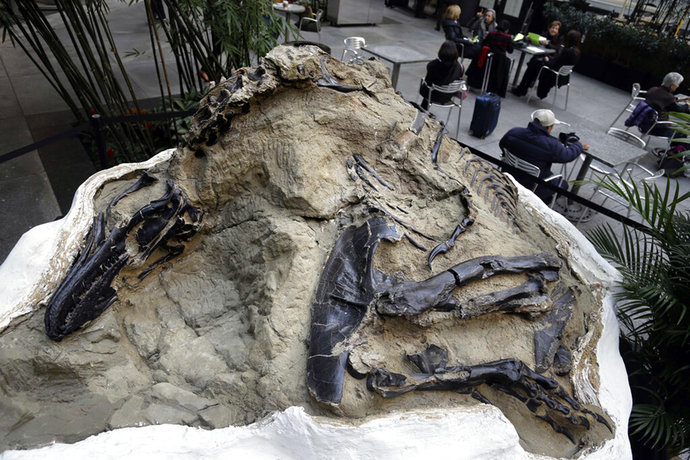
    HELENA, Mont. (AP) — The discovery of two fossilized dinosaur skeletons intertwined in what looks like a final death match could make a Montana ranching couple rich beyond their dreams. Or they may have to share the wealth.

    It all comes down to how the state Supreme Court answers a seemingly simple question: Are fossils minerals? The Montana justices heard arguments Thursday but did not rule right away.

    The outcome is key to a dispute over ownership of the “dueling dinosaurs,” worth more than $5 million, and distribution of millions of dollars in proceeds from the sale of other fossils unearthed from clay and sandstone in a fossil-rich area of central Montana.

    While someone can own what’s on top of a piece of land, others can own material like oil, gas and coal that’s found below the surface. In property sales, an owner can keep some or all of those below-surface mineral rights.

    Mary Ann and Lige Murray own the surface rights and one-third of the mineral rights on the ranch near the tiny town of Jordan, while brothers Jerry and Robert Severson own two-thirds of the mineral rights after a 2005 property sale. Neither side expected to find fossils on the property, and they’re not mentioned in the contract, court documents show.

    A few months later, amateur paleontologist Clayton Phipps discovered a 22-foot-long (7-meter-long) carnivorous theropod and a 28-foot-long (9-meter-long) plant-eating ceratopsian believed to have died 66 million years ago. Imprints of the dinosaurs’ skin were found in the sediment.

    When the Murrays went to sell the “dueling dinosaurs” for what they hoped would be at least $6 million, potential buyers wanted assurances they owned the fossils. The Murrays sought a court ruling.

    Both sides have seen rulings in their favor as the case has made its way through four courts since 2013.

    A U.S. judge in Montana ruled in 2016 that fossils were not included in the ordinary definition of a mineral because not all fossils with the same mineral composition are considered valuable. The judge said the value was based on things like the completeness of the specimen, the species of dinosaur and how well it is preserved.

    The Seversons appealed. A panel of the 9th U.S. Circuit Court of Appeals ruled 2-1 last year that the dinosaur fossils were minerals both scientifically and under mineral rights laws.

    The Murrays asked for a full panel of the appeals court to hear the case. The judges agreed but first asked the Montana Supreme Court to rule whether fossils are considered part of a property’s mineral estate under state law.

    Eric Wolff, an attorney for the Seversons, argued Thursday that the fossils in this case are composed of minerals and are valuable and are therefore part of the mineral estate.

    His clients would then be part owners of the fossil finds, which include a nearly complete Tyrannosaurus rex that was sold to a Dutch museum in 2014 for what a justice and Wolff suggested was about $15 million. That value couldn’t be independently confirmed.

    “What a mineral right is, is a lottery ticket under the ground,” Wolff said. “I give you the property, and I say, ‘If there’s valuable rocks under there, I am retaining my interest in it.’”

    He asked the justices for a narrow ruling based on just the fossils in this case, not a decision on all fossilized dinosaur bones, some of which aren’t valuable.

    “What you want us to answer is to say, ‘Some are, some aren’t?’” asked Justice James Shea, wondering how it would be practical for courts to decide ownership on a case-by-case basis.

    Harlan Krogh, an attorney for the Seversons, urged the justices to answer the question the 9th Circuit posed: Whether Montana law says dinosaur fossils constitute minerals when someone is retaining the mineral rights to a property.

    “Montana has never recognized dinosaur fossils as a mineral” like it has oil, coal or gold, he said, adding that fossils are not mined, processed, milled or smelted.

    State law was silent on the issue until earlier this year, when lawmakers unanimously passed a measure that says dinosaur fossils are part of the surface estate unless there’s a contract saying otherwise.

    “The citizens have spoken about the answer to that question,” Krogh said.

    However, the new law also says it cannot be a factor in any cases already in court.

  • Travelers Mull Safety Amid Arizona-Mexico Border Violence

    Travelers Mull Safety Amid Arizona-Mexico Border Violence

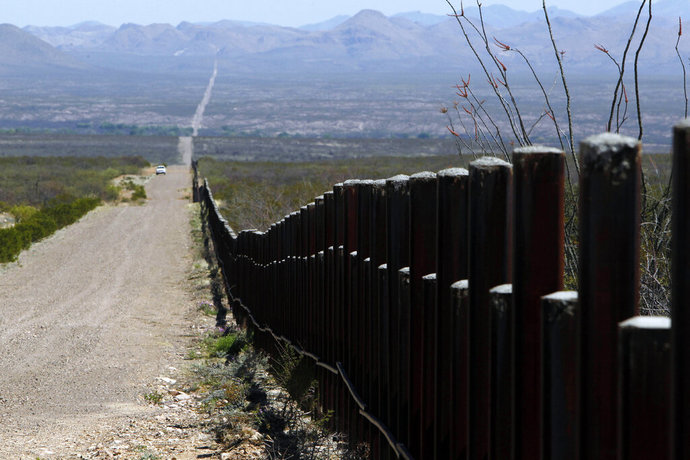
    PHOENIX (AP) — An unusual string of violence south of Arizona’s border with Mexico has sparked warnings by American authorities and is forcing U.S. citizens who say they won’t stop crossing into Mexico to at least consider how to travel more safely.

    Unaccustomed to the kind of violence long seen along some parts of the Texas-Mexico border, those who frequently cross into Mexico from Arizona say they will now think twice about traveling after dark and will confine themselves to busy commercial areas.

    “I travel across quite often,” said Ana Borrajo, a chef living in Bisbee, Arizona, who frequents the border communities of Agua Prieta and Naco in Mexico. “I go to the doctor, to the dentist, I go to eat, and I don’t feel threatened.”

    But after a recent fatal shootout in Agua Prieta and the ambush killings of three women and six children about an hour’s drive farther south, “I’ll try to go during the day, will try to be more cautious,” Borrajo said.

    Terrified residents of Douglas, Arizona, were awakened early Monday by the shootout that erupted between warring drug groups in Agua Prieta. The gunfire was confined to south of the border and reports suggest at least two people were killed.

    A similar shootout in June left at least 10 people dead in Agua Prieta and Naco, a 45-minute drive away.

    Several hours after the shootout, the women and children — nine members of an extended family with dual U.S.-Mexico citizenship — were killed by cartel gunmen in an isolated area in the mountains between Sonora and Chihuahua states. The family’s ancestors broke away many years ago from The Church of Jesus Christ of Latter-day Saints, but they still call themselves Mormons.

    After the Agua Prieta shootout, the Arizona city of Douglas and Cochise County Sheriff Mark Dannels warned residents to reconsider unnecessary travel south of the border.

    Mexican Army chief of staff Gen. Homero Mendoza said authorities are investigating a possible connection between the Agua Prieta shootout and the ambush of the family about 70 miles (117 kilometers) to the south. Both appear to be related to a turf war between the Sinaloa and Juarez cartels.

    “We have an increased presence at the ports of entry,” said Dannels, whose jurisdiction encompasses a section of southeastern Arizona that includes Douglas and Bisbee. “We are an international community down here, with a lot of people going across the border every day, so we put out the facts so people can make good decisions.”

    Dannels issued a similar travel advisory after the June shootout between rival factions of the Sinaloa cartel.

    For some Americans who regularly cross the border, the remote area where the women and children were killed seems far from the places they frequent.

    Even last month’s discovery of at least 42 bodies and skeletons in burial pits near the Gulf of California has not deterred some people who regularly visit the nearby resort of Puerto Penasco, also known as Rocky Point. Women searching for the remains of loved ones in the area say armed gunmen warned them to stay away.

    The kidnapping last week of a New York businessman who was taken from Eloy, Arizona, to the Mexican state of Sonora, where he was found unharmed, doesn’t seem to have scared off travelers, either.

    “I usually go to Rocky Point three or four times a year and have found it to be very safe,” Phoenix resident Tracy Sallen said.

    “Maybe I’m being silly, but those killings were probably the result of drugs,” she said, referring the mass grave. “The Mexicans want our tourism because it contributes to their economy.”

    Since April, the U.S. State Department has suggested that U.S. citizens reconsider travel plans to Sonora, calling it a “key location used by the international drug trade and human trafficking networks.”

    The travel advisory remains in effect and suggests that Americans not travel at all to hyper-violent Tamaulipas state, on the border with Texas.

    Sonora Gov. Claudia Pavlovich, who works closely with Arizona Gov. Doug Ducey on trade and other issues, took to Twitter to express anger and pain over the “cowardly” killings of the women and children and vowed to make the “monsters” responsible pay.

    Although the latest violence in Sonora is somewhat unusual, it’s not unheard of. Some Mexican officials have suggested that the clandestine grave was filled largely with the victims of a more violent period several years ago.

    Sonora’s Puerto Penasco was the scene of a raging gunbattle six years ago when government forces tried to capture a reputed top lieutenant of the Sinaloa drug cartel staying at a beachfront villa.

    Two government helicopter gunships opened fire in December 2013 on 10 vehicles fleeing a luxury condo complex with Gonzalo Inzunza, a top officer in the cartel then run by drug lord Joaquin “El Chapo” Guzman, now serving time in a U.S. prison.

    Cartel members carried away the bodies of Inzunza and several other comrades who were killed.

    Two federal officers were wounded in that gunfight, but no foreigners, visitors or residents were harmed.

  • Show Notes For November Seventh

    Show Notes For November Seventh

    Thursday Show Notes

    Two local football teams are in the playoffs, and two more play their final games of the season tomorrow night.

    football

    Go Greenwave, Go Rebels, Go Bulldogs and Geaux Storm! Streaming links are here. 


    Boss pays off Vietnam Veteran’s mortgage so he can retire early

    Is your boss that nice?


    LEGOs + Chris Stapleton = The Greatest Country Music Video ever

    Chris and Morgane Stapleton’s Outlaw State of Kind fund will be donating royalties from the video to organizations implementing the LEGO Foundation’s Playful Parenting program


    Throwback Thursday!

    Tons of incredible songs were sitting at #1 this week in country music history!

    https://www.youtube.com/watch?v=Wc5GLG5JtQo

  • Ridgecrest, LA BOIL ADVISORY IN EFFECT

    Boil Advisory

    Town of Ridgecrest

    PWS ID #1029009

    Concordia Parish, Louisiana


    The Town of Ridgecrest is experiencing problems with the water system.

    Reason:  Making repairs at water plant

    Because of these problems, the water produced by our water supply system is of questionable microbiological quality

    Therefor, as a precaution, the Town of Ridgecrest is issuing a BOIL ADVISORY effective immediately.  This BOIL ADVISORY is to remain in effect until rescinded by the Town of Ferriday.

    It is recommended that all consumers disinfect their water before consuming it (including fountain drink), making ice, brushing teeth, or using it for food preparation or rinsing of foods by the following mean:

    Boil water for one (1) full minute in a clean container.  The one minute starts after the water has been brought to a rolling boil.  (The flat taste can be eliminated by shaking the water in a clean bottle or pouring it from one clean container to another.

    Again, please be sure to disinfect your own water prior to consumption until you have been advised otherwise.

    Upon notification from the Office of Public Health’s State Regional Laboratory that the samples collected from our water supply have been found to be safe, the State Health Department will notify the water supply of the sample results.  Upon such notification, the Town of Ridgecrest will then rescind the Boil Advisory and notify its customer that the water has been found to be safe.

    If you have any questions, please call JCP Management Inc./Town of Ridgecrest Water Department at   318-757-4497.

  • Boss Pays Off Vietnam Veteran’s Mortgage So He Can Retire Early

    Boss Pays Off Vietnam Veteran’s Mortgage So He Can Retire Early

    Feel Good Story Of The Day for November Seventh

    69-year-old Vietnam veteran Albert Brigas has been a loyal, hard-working employee at Renown Auto Restoration in San Antonio for the past 13 years.  Albert wanted to work until he paid off his mortgage, and only had about a year left to go.  Albert’s boss Rudy had other plans for him.