Is it possible to stop ending up in weird sleep positions?! We’ll tell you how to give it a shot.
Most USEFUL marriage advice, ever.
Sam’s “single summer” plans!
Is it possible to stop ending up in weird sleep positions?! We’ll tell you how to give it a shot.
Most USEFUL marriage advice, ever.
Sam’s “single summer” plans!
Did you find it unnerving or beautiful when Meta went down for a bit?

NATCHEZ, Miss. – Adams County supervisors have decided to gear up plans for building a new jail that could be on about 35 acres of land being donated by a company that supervisors declined to publicly name. Monday’s action is just the first of many steps needed in determining how the jail is to be funded and what form the facility will take, but Sheriff Travis Patten applauded the county board’s initiative. “It’s not a backburner issue,” he said of the pressing need to replace the county’s deteriorating jail that’s nearly 50 years old.Adams County supervisors for more than a decade have been struggling to maintain the old jail that they’ve said can’t be replaced because of the high costs.Jail conditions have worsened so much that Adams County this past year has been sending most inmates to the nearby Concordia Parish detention facility, which is paid by the county to detain them.The Board of Supervisors on Monday voted to accept the donated land to potentially build the new jail. Board members declined to name the donor or specify the site’s location. Supervisors will get a Jackson-based construction company to update jail-design plans and the building costs it prepared for the county in 2014.The state Legislature will be asked to allow Adams County to arrange special long-term financing for the construction, said board attorney Scott Slover.
The 2014 plan prepared by Benchmark Construction Corp. of Jackson called for a new 185-inmate detention center costing about $7 million to build. However, any new Adams County jail is expected to have a smaller capacity.
The 49-year-old building is so outdated and poorly designed that “the only feasible path forward for Adams County is with a new jail facility,” stated jail consultant Kathryn Bryan in a 2022 report she did for Adams County.
It’ll be four or more years before a new jail could be built for Adams County, said county board President Kevin Wilson.
Natchez has also contracted with the Concordia Parish detention center to house people arrested by the Natchez Police Department. The city closed its jail a few years ago and was paying to detain those arrested by the NPD at the county jail.
Murphy embarrasses himself in front of his favorite neighbor.
The new hobby many of us have that’s probably unhealthy.
The Food Dude has – the greatest chocolate molten cake ever?!
Jodi has made a special request for her daughter this year. Will she get her wish?
[vc_single_image image=”1514″ img_size=”large” alignment=”center”][vc_single_image image=”1515″ img_size=”large” alignment=”center”][headerText widget_name=”Birthday and Anniversary Cakes Provided By Dairy Queen” level=”h3″ url=”” el_class=””]
Happy Birthday to Ryker Davis!
Birthday Cake winner 3/4/24
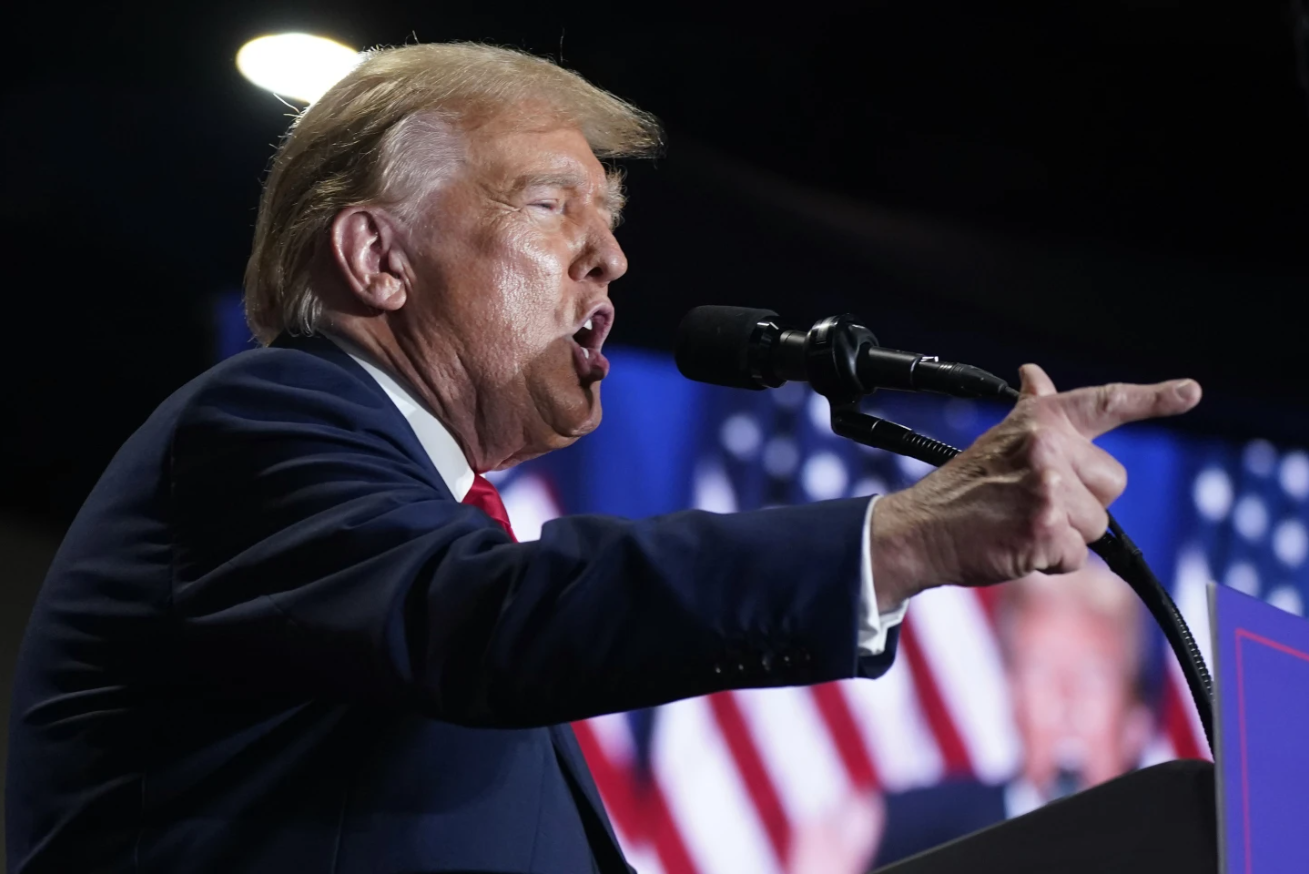
WASHINGTON (AP) — The Supreme Court on Monday unanimously restored Donald Trump to 2024 presidential primary ballots, rejecting state attempts to ban the Republican former president over the Capitol riot.
The justices ruled a day before the Super Tuesday primaries that states cannot invoke a post-Civil War constitutional provision to keep presidential candidates from appearing on ballots. That power resides with Congress, the court wrote in an unsigned opinion.
Trump posted on his social media network shortly after the decision was released: “BIG WIN FOR AMERICA!!!”
The outcome ends efforts in Colorado, Illinois, Maine and elsewhere to kick Trump, the front-runner for his party’s nomination, off the ballot because of his attempts to undo his loss in the 2020 election to Democrat Joe Biden, culminating in the Jan. 6, 2021, attack on the Capitol.
Colorado Secretary of State Jena Griswold expressed disappointment in the court’s decision as she acknowledged that “Donald Trump is an eligible candidate on Colorado’s 2024 Presidential Primary.”
Trump’s case was the first at the Supreme Court dealing with a provision of the 14th Amendment that was adopted after the Civil War to prevent former officeholders who “engaged in insurrection” from holding office again.
Colorado’s Supreme Court, in a first-of-its-kind ruling, had decided that the provision, Section 3, could be applied to Trump, who that court found incited the Capitol attack. No court before had applied Section 3 to a presidential candidate.
The justices sidestepped the politically fraught issue of insurrection in their opinions Monday.
The court held that states may bar candidates from state office. “But States have no power under the Constitution to enforce Section 3 with respect to federal offices, especially the Presidency,” the court wrote.
While all nine justices agreed that Trump should be on the ballot, there was sharp disagreement from the three liberal members of the court and a milder disagreement from conservative Justice Amy Coney Barrett that their colleagues went too far in determining what Congress must do to disqualify someone from federal office.
Justices Sonia Sotomayor, Elena Kagan and Ketanji Brown Jackson said they agreed that allowing the Colorado decision to stand could create a “chaotic state by state patchwork” but said they disagreed with the majority’s finding a disqualification for insurrection can only happen when Congress enacts legislation. “Today, the majority goes beyond the necessities of this case to limit how Section 3 can bar an oathbreaking insurrectionist from becoming President,” the three justices wrote in a joint opinion.
It’s unclear whether the ruling leaves open the possibility that Congress could refuse to certify the election of Trump or any other presidential candidate it sees as having violated Section 3.
Derek Muller, a law professor at Notre Dame University, said “it seems no,” noting that the liberals complained that the majority ruling forecloses any other ways for Congress to enforce the provision. Rick Hasen, a law professor at the University of California-Los Angeles, wrote that it’s frustratingly unclear what the bounds might be on Congress.
Hasen was among those urging the court to settle the issue so there wasn’t the risk of Congress rejecting Trump under Section 3 when it counts electoral votes on Jan. 6, 2025.
“We may well have a nasty, nasty post-election period in which Congress tries to disqualify Trump but the Supreme Court says Congress exceeded its powers,” he wrote.
Both sides had requested fast work by the court, which heard arguments less than a month ago, on Feb. 8. The justices seemed poised then to rule in Trump’s favor.
Trump had been kicked off the ballots in Colorado, Maine and Illinois, but all three rulings were on hold awaiting the Supreme Court’s decision.
The case is the court’s most direct involvement in a presidential election since Bush v. Gore, a decision delivered a quarter-century ago that effectively handed the 2000 election to Republican George W. Bush. And it’s just one of several cases involving Trump directly or that could affect his chances of becoming president again, including a case scheduled for arguments in late April about whether he can be criminally prosecuted on election interference charges, including his role in the Jan. 6 Capitol attack. The timing of the high court’s intervention has raised questions about whether Trump will be tried before the November election.
The arguments in February were the first time the high court had heard a case involving Section 3. The two-sentence provision, intended to keep some Confederates from holding office again, says that those who violate oaths to support the Constitution are barred from various positions including congressional offices or serving as presidential electors. But it does not specifically mention the presidency.
Conservative and liberal justices questioned the case against Trump. Their main concern was whether Congress must act before states can invoke the 14th Amendment. There also were questions about whether the president is covered by the provision.
The lawyers for Republican and independent voters who sued to remove Trump’s name from the Colorado ballot had argued that there is ample evidence that the events of Jan. 6 constituted an insurrection and that it was incited by Trump, who had exhorted a crowd of his supporters at a rally outside the White House to “fight like hell.” They said it would be absurd to apply Section 3 to everything but the presidency or that Trump is somehow exempt. And the provision needs no enabling legislation, they argued.
Trump’s lawyers mounted several arguments for why the amendment can’t be used to keep him off the ballot. They contended the Jan. 6 riot wasn’t an insurrection and, even if it was, Trump did not go to the Capitol or join the rioters. The wording of the amendment also excludes the presidency and candidates running for president, they said. Even if all those arguments failed, they said, Congress must pass legislation to reinvigorate Section 3.
The case was decided by a court that includes three justices appointed by Trump when he was president. They have considered many Trump-related cases in recent years, declining to embrace his bogus claims of fraud in the 2020 election and refusing to shield tax records from Congress and prosecutors in New York.
The 5-4 decision in Bush v. Gore case more than 23 years ago was the last time the court was so deeply involved in presidential politics. Justice Clarence Thomas is the only member of the court who was on the bench then. Thomas has ignored calls by some Democratic lawmakers to step aside from the Trump case because his wife, Ginni, supported Trump’s effort to overturn the 2020 election results and attended the rally that preceded the storming of the Capitol by Trump supporters.

1942
Born on this day in in Paris, Arkansas was American guitarist Bob Wootton. He joined Johnny Cash’s backing band, the Tennessee Three, after original lead guitarist Luther Perkins, died in a house fire. He was Cash’s guitarist for nearly thirty years. Wootton died on April 9, 2017 age 75.
1967
“Jackson” a duet by Johnny Cash and June Carter (with Carl Perkins, guitar) entered the C&W chart, going on to peak at #2. The song was quickly covered by Nancy Sinatra and Lee Hazlewood which gave them a pop hit three months later.
1968
Winners at the third Academy of Country Music Awards hosted by Pat Buttram included: Man of the Year – Joey Bishop, Top Female Vocalist of the Year – Lynn Anderson, Top Male Vocalist of the Year – Glen Campbell, Top Vocal Group – Sons of the Pioneers, Most Promising Female Vocalist of the Year – Bobbie Gentry, Most Promising Male Vocalist of the Year – Jerry Inman and Bonnie Owens and Merle Haggard won Top Duo of the Year.
1971
Born on this day in Gilmer, Texas, was Jason Sellers country music artist. Has worked with Ricky Skaggs, recorded two solo studio albums: 1997’s I’m Your Man and 1999’s A Matter of Time which produced five singles on the Country Singles charts; Jason has had continued success as a songwriter, with acts such as Lonestar, Kenny Chesney, and Montgomery Gentry all recording his songs.
1978
The Public Broadcasting System broadcast live, the first complete Grand Ole Opry show from the new Grand Ole Opry House. The show featured George Hamilton IV, Bill Monroe, Del Reeves, The Willis Brothers, Billy Grammer, Ronnie Milsap, Lonzo and Oscar, Porter Wagoner, Roy Acuff, The Crook Brothers, The Fruit Jar Drinkers, Grandpa Jones, and others.
1983
Country singer, George Jones married Nancy Sepulveda in Woodville, Texas, (his fourth marrige). The newlyweds had their wedding-night dinner at the local Burger King in Jasper, Texas.
2000
“Amazed” by Lonestar became the first country song to have topped both the Billboard Hot Country Singles & Tracks and the Billboard Hot 100 chart since the Kenny Rogers-Dolly Parton duet, “Islands In The Stream” in October 1983.
2008
Alan Jackson released his fifteenth studio album Good Time which debuted at #1 on the US Billboard 200 chart. The album produced five singles on the country singles charts. The first three of these “Small Town Southern Man”, the title track, and “Country Boy” were all #1 hits.
2010
Rascal Flatts were guest stars on CSI: Crime Scene Investigation, starring as themselves. In the episode, Jay DeMarcus received an electic shock from his own bass guitar during a performance at a Vegas club, leaving the musician with total amnesia.
2016
American country music singer and songwriter Joey Feek died from cancer aged 40. From 2008 to 2016, the duo Joey + Rory comprised of Joey and her husband, Rory Lee Feek.
2023
Michael Rhodes died at the age of 69 of pancreatic cancer. He played bass player, and worked with Rodney Crowell, Wynonna Judd, Dixie Chicks, Reba McEntire, Tanya Tucker, Hank Williams, Jr., Rosanne Cash, Vince Gill, Dolly Parton, Randy Travis, Faith Hill, Toby Keith, and Kenny Chesney.
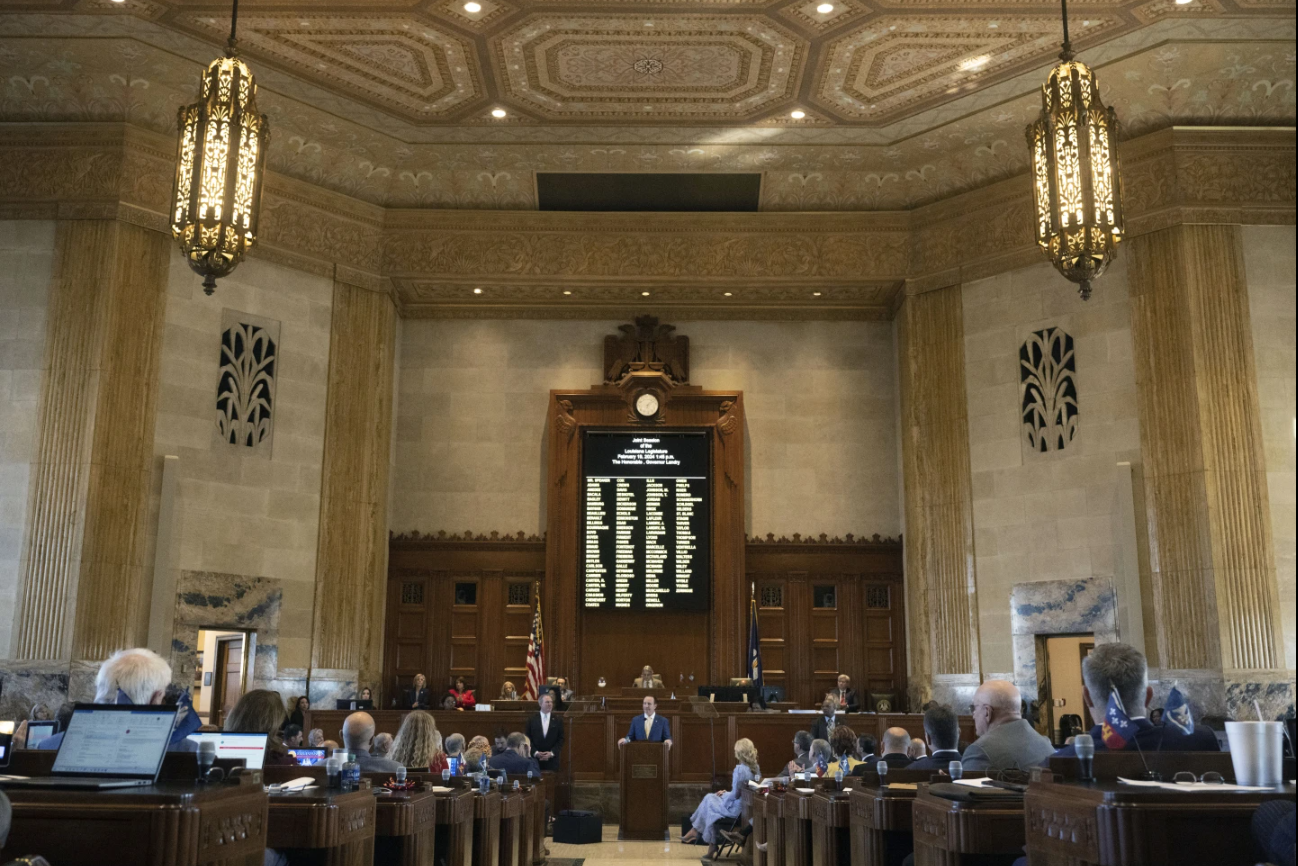
BATON ROUGE, La. (AP) — Louisiana’s Republican-dominated legislature concluded a two-week special session Thursday that was called to address one of the state’s most pressing issues — violent crime.
During the session lawmakers passed a slew of tough-on-crime policies, including expanding death row execution methods, charging 17-year-olds as adults and eliminating parole for most people who are jailed in the future.
The bills enjoy broad GOP support, but Democrats fear they won’t deter crime and will actually exacerbate Louisiana’s ailing and crowded prison system.
Here’s a look at the approved bills, which now head to the desk of Republican Gov. Jeff Landry to be signed into law or vetoed.
Currently 58 people sit on Louisiana’s death row. No executions are scheduled at the moment.
Like most states that have capital punishment, Louisiana has relied on lethal injection. But amid legal battles and challenges over the drugs involved, some states have explored other methods.
Proponents of expanding the allowed execution methods say it’s past time for the state to uphold “contractual obligations” between victims’ families and the state. Opponents question the legality of the proposed methods, saying they could amount to cruel and unusual punishment.
Republicans say youths are terrorizing cities with violent carjackings, shootings and homicides.
As a result, lawmakers passed a bill that will treat all 17-year-olds charged with crimes, including misdemeanors, as adults. The measure is a rollback of the state’s “Raise the Age” law.
While critics of the bill agree that juvenile lawbreakers should be held accountable, they have raised safety and recidivism concerns.
Legislators also passed a law making certain juvenile criminal records public.
Lawmakers spent a portion of the session debating sweeping changes that could determine how long certain incarcerated people remain in prison and when, or if, they would be allowed a second chance at freedom.
One bill that was passed effectively eliminates parole for anyone convicted after Aug. 1, with few exceptions — including groups for whom it is constitutionally required, such as those who were sentenced to life terms as juveniles.
In addition, the legislature passed a bill that reduces the amount of “good time credit” that prisoners can accumulate to shave time off their sentence.
Supporters say the measures will reduce instances of inmates only serving a “fraction of their sentence” and, hopefully, decrease recidivism.
Critics say the legislation will not deter crime, would cost the state millions as it continues to house inmates who could be paroled, and would create less incentive for good behavior and involvement in programs designed to help former inmates succeed in the outside world.
Other bills propose harsher penalties for certain crimes.
Under one of them, the minimum sentence for a carjacking conviction will increase from two years to five. If a carjacking results in bodily injury, the offender will serve 20 to 30 years.
Another measure toughens fentanyl-related penalties, specifically in cases where people distribute the drug in a way that appeals to children, such as the shape, color, taste or design of packaging. The crime would be punishable by a minimum of 25 years in jail.
A bill allowing residents 18 and older to carry a concealed handgun without a permit received final approval Wednesday.
Legislators also passed a bill providing a level of immunity from civil liability for someone who holds a concealed carry permit and uses their firearm to shoot a person in self-defense.
Lawmakers will return to the capitol March 11 for their three-month-long regular session, in which they can take up additional crime-related bills.

JACKSON, Miss. (AP) — A Mississippi police department in one of the nation’s poorest counties unconstitutionally jailed people for unpaid fines without first assessing whether they could afford to pay them, the U.S. Department of Justice said Thursday.
The announcement comes amid a Justice Department probe into alleged civil rights violations by police in Lexington, Mississippi. The ongoing investigation, which began in November, is focused on accusations of systemic police abuses in the majority-Black city of about 1,600 people some 65 miles (100 kilometers) north of the capital of Jackson.
In a letter addressed to Katherine Barrett Riley, the attorney for the city of Lexington, federal prosecutors said the Lexington Police Department imprisons people for outstanding fines without determining whether the person has the means to pay them — a practice that violates the Fourteenth Amendment. Riley did not immediately respond to a phone message Thursday.
“It’s time to bring an end to a two-tiered system of justice in our country in which a person’s income determines whether they walk free or whether they go to jail,” said Kristen Clarke, the department’s assistant attorney general for civil rights. “There is great urgency underlying the issues we have uncovered in Mississippi, and we stand ready to work with officials to end these harmful practices.”
Prosecutors said the conduct of police in Lexington violates the constitution’s prohibition on wealth-based detention. It does so by requiring people who are arrested to pay outstanding fines before they can be released from jail, and by issuing and arresting people on warrants for outstanding fines, they said.
About 86% of Lexington’s population is Black and it has a poverty rate approaching 30%. The area also has a storied place in civil rights history. In 1967, Holmes County residents elected Robert Clark, the first Black man to win a seat in the Mississippi Legislature in the 20th century.
The civil rights division’s sweeping investigation into the Lexington Police Department includes allegations of excessive force, discriminatory policing and First Amendment violations.
The city’s former police chief, Sam Dobbins, was fired after a civil rights organization obtained an audio recording of him using racial slurs and talking about how many people he had killed in the line of duty.
Justice Department officials said they met with city leaders Thursday. The local officials have pledged to work with the Justice Department to reform their procedures, prosecutors said.