Blog

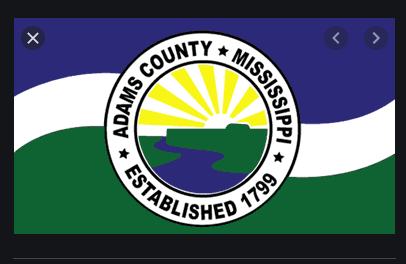
  • Adams County board hears plans for new public defenders office

    Adams County board hears plans for new public defenders office

    NATCHEZ, Miss. – Newly appointed Adams County Public Defender Jeffrey Harness said he’s selected four attorneys to help him represent people charged with crimes who can’t afford to hire their own lawyers.


    Attorneys Lydia Blackmon, Tim Blalock, Zach Jex and Aisha Sanders will be working with Harness, who was appointed by Circuit Judge Lillie Blackmon Sanders as the county’s chief public defender.


    At Sanders’ request, the Adams County Board of Supervisors last month agreed to create the public defenders office to replace the previous practice of retaining nine private attorneys the court randomly calls on to represent criminal defendants.


    The costs of paying the five attorneys and other expenses is projected at about $320,000 a year. It’s more money than the previous system but is considered a better way to ensure accused criminals’ rights to effective legal representation are secured. Harness said the five attorneys selected are committed to adequately defending their indigent clients.


    The attorneys will continue in their private practices, and Harness said he’ll continue serving as a member of the Mississippi House of Representatives from Jefferson County.


    It’s uncertain how many hours the part-time defenders will be working in Adams County courts. Harness noted Adams County generally has about 30 to 40 criminal cases per court term. He said Blackmon and Sanders will not be representing clients in cases being heard by Judge Sanders, who’s related to the two attorneys.


    The board agreed to continue to jointly operate the E-911 system with Natchez for dispatchers taking emergency police, fire and ambulance phone calls. The total annual cost is about $657,000 with the county and city evenly sharing the expenses on a 50-50 basis.


    Natchez and Adams County officials continue to reassess their jointly funded recreation program and plan to visit Vicksburg on Friday to see how the city operates its parks and sports venues. While Natchez and Adams County boards consolidated their recreation programs in 2015, the joint venture has not lived up to expectations.


    The Board of Supervisors agreed to help the city demolish the old A&P grocery store to make way for an expanded parking lot for the new business that will occupy the now-vacant Regions bank building on Franklin Street. The county will provide heavy equipment and operators for the demolition project. Natchez and Adams County workers are tearing down the long-closed grocery store as part of the accommodations state and local governments are providing to attract Loss Prevention Services and its 200 employees expected to work in the adjacent bank building.


    County workers continue their clean-up operations after Hurricane Delta roared through the region Oct. 9. Strong winds downed more than 200 trees, destroyed four houses and damaged 26, according to Adams County officials. They’re planning to get county workers into neighborhoods next week to remove storm debris gathered by residents for curbside pickup, said county road manager Robbie Dollar.


    Jack Blaney told county supervisors his plans to organize a “minuteman” group has been “misconstrued” to mean it’ll be promoting “bigotry and hate.” “I never brought that up,” he said, pointing to his previous meeting with the board two weeks ago to discuss his plans to help law-enforcement authorities. Blaney noted then he wanted to donate money to purchase tasers for law officers, and he vaguely mentioned the “minutemen” group he planned to organize in the Kingston area to address public safety. Adams County Sheriff Travis Patten has said he doesn’t want such a group of civilians.

  • Adams County board extends mask mandate

    Adams County board extends mask mandate

    NATCHEZ, Miss. – The Adams County Board of Supervisors extended the local mask mandate through November as the number of COVID cases continues to increase. However, the board was split 3-2 Monday on whether people should be required to wear face coverings in public places or just be encouraged to do so.

    The total number of confirmed COVID cases in Adams County surpassed 1,000 last week, according to the state Department of Health’s tally that began in March. At least 1,043 Adams County residents have been diagnosed with the virus as of Sunday – an increase from the 994 cases confirmed through Oct. 10.

    As of Sunday, 42 Adams County residents have died since March from the highly contagious respiratory disease, up by two from the previous week.

    While the weekly increases of new Adams County cases since Sept. 26 had been about 23 each week, the rise this past week was by nearly 50. There were last week 45 “active” cases of county residents with the coronavirus while 953 are “presumed” recovered, said Adams County Emergency Management Director Brad Bradford.

    Adams County is not among the nine Mississippi counties identified Monday as COVID hotspots by Gov. Tate Reeves. He imposed new requirements on their residents to include wearing face coverings at indoor venues where people gather.

    Saying he wants “to avoid the heavy hand of government unless it is truly necessary,” the Republican governor did not reimpose the statewide mask mandate he lifted at the end of September.

    Adams County Supervisor Wes Middleton said his board colleagues should follow the governor so that people are just “strongly urged” to wear masks in public when they can’t socially distance. Joining Middleton in voting Monday against extending the local face-covering requirement until Nov. 30 was Kevin Wilson. Voting for it were the three other supervisors: Ricky Gray, Angela Hutchins and Warren Gaines.

    Gray said elected officials have the responsibility to ensure people are protected from the coronavirus. Face coverings are widely considered the most effective precaution along with social distancing and hand washing.

    While the local mask mandate has been in place for Natchez and Adams County since July, its enforcement has been difficult. Adams County Sheriff Travis Patten noted he saw many people not wearing face coverings as they congregated close together at the Natchez Balloon Festival this past weekend.

  • Trump Says Sudan Will Be Removed From Terrorism List

    Trump Says Sudan Will Be Removed From Terrorism List

    CAIRO (AP) — President Donald Trump on Monday said Sudan will be removed from the U.S. list of state sponsors of terrorism, a move that would open the door for the African country to get the international loans and aid that are essential for reviving its battered economy and rescue the country’s transition to democracy.

    The decision was contingent on Sudan following through on its agreement to pay $335 million to U.S. terror victims and families.

    The announcement came after Treasury Secretary Stephen Mnuchin was in Bahrain to cement the Gulf state’s recognition of Israel. It came as the Trump administration pursues further Arab recognition of Israel. Delisting Sudan from the state sponsors blacklist is a key incentive for the Sudanese government to normalize relations with Israel.

    Trump tweeted: “GREAT news! New government of Sudan, which is making great progress, agreed to pay $335 MILLION to U.S. terror victims and families. Once deposited, I will lift Sudan from the State Sponsors of Terrorism list. At long last, JUSTICE for the American people and BIG step for Sudan!”

    Sudan’s transitional government is expected to take steps towards establishing diplomatic ties with Israel, lending Trump another diplomatic victory ahead of next month’s U.S. presidential election. U.S. officials have linked the delisting to normalization with Israel, causing divisions within Sudan’s joint military-civilian government.

    But removal from the list is also contingent on Sudan paying compensation for victims of the 1998 bombings of the U.S. embassies in Kenya and Tanzania, attacks conducted by Osama bin Laden’s al-Qaida network while bin Laden was living in Sudan.

    Sudan is on a fragile path to democracy after a popular uprising last year led the military to overthrow autocratic leader Omar al-Bashir in April 2019. A military-civilian government now rules the country, with elections possible in late 2022.

    Top Sudanese military leaders have become increasingly vocal in their support for normalization with Israel as part of a quick deal with Washington ahead of the U.S. election.

    The top civilian official in the coalition, Prime Minister Abdalla Hamdok, has repeatedly urged the U.S. administration not to link Sudan’s removal from the list to normalization with Israel.

    Hamdok argued that the transitional government does not have the mandate to decide on foreign policy issues of this magnitude.

    The designation of Sudan as a state sponsor of terrorism dates back to the 1990s, when Sudan briefly hosted Osama bin Laden and other wanted militants. Sudan was also believed to have served as a pipeline for Iran to supply weapons to Palestinian militants in the Gaza Strip.

    The transitional authorities are desperate to have sanctions lifted that are linked to its listing by the U.S. as a terror sponsor. That would be a key step toward ending its isolation and rebuilding its battered economy, which has plunged in recent months, threatening to destabilize the political transition to democracy.

    Sudanese officials have been negotiating the terms of removing the country from the list for more than a year but the U.S. effort to repair relations with Sudan dates to the end of President Barack Obama’s administration, which initiated the process in January 2017.

    Sudan’s transitional government has already agreed with the U.S. State Department, in theory, to a compensation deal for victims of the 1998 bombings of the American embassies in Kenya and Tanzania, which were orchestrated by bin Laden’s al-Qaida network while he was living in Sudan.

    ___

    Associated Press writer Matthew Lee in Washington contributed to this report.

  • Trump Goes After Fauci, Tries To Buck Up His Campaign Team

    Trump Goes After Fauci, Tries To Buck Up His Campaign Team

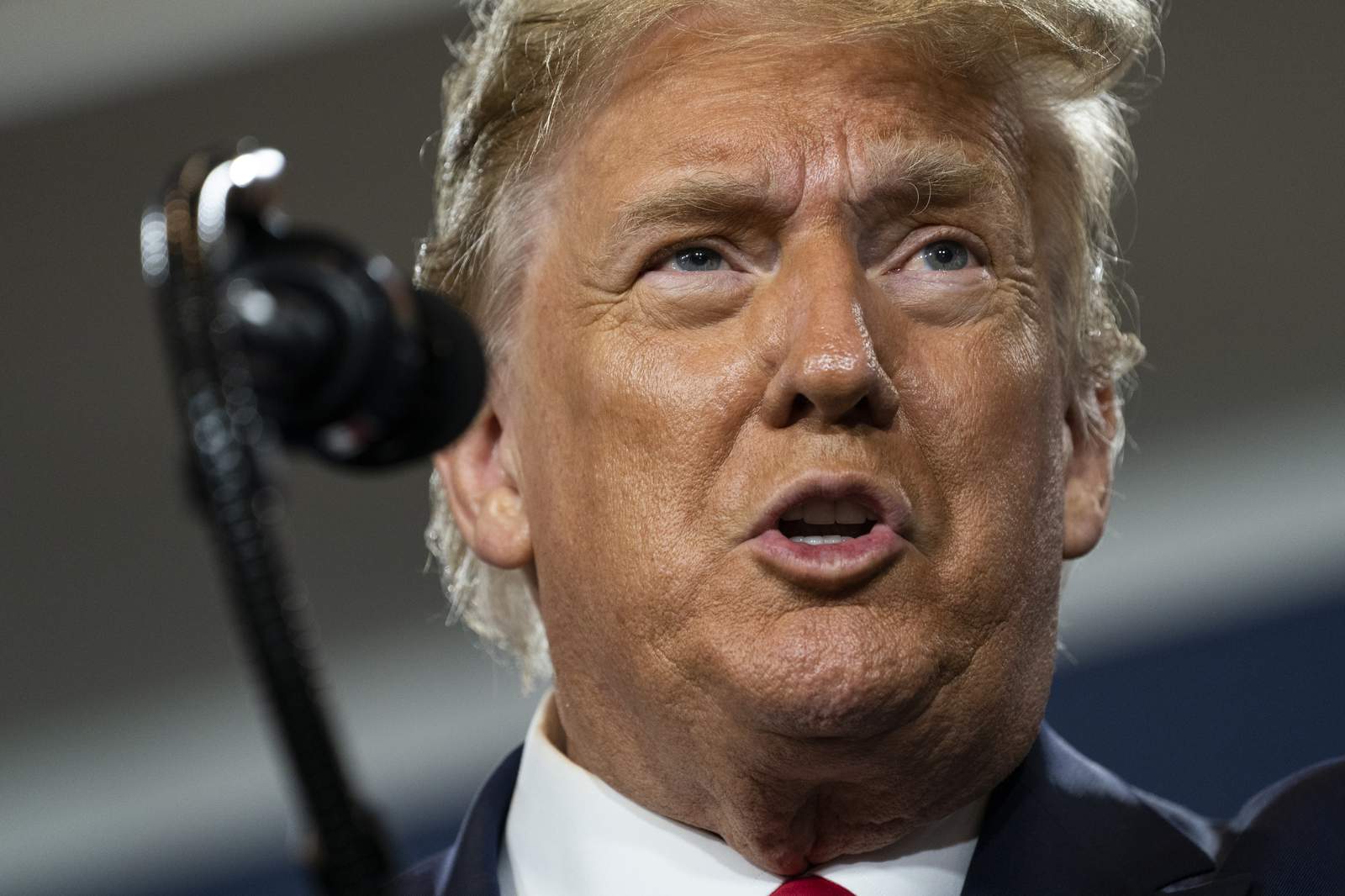
    LAS VEGAS (AP) — President Donald Trump sought Monday to buck up his campaign staff two weeks from Election Day, dismissing the cautionary coronavirus advice of his scientific experts as well as polling showing him trailing Democratic rival Joe Biden across key battleground states.

    Trump was facing intense pressure to turn around his campaign, hoping for the type of last-minute surge that revived his candidacy four years ago and plunging into an aggressive travel schedule despite the pandemic. But his lack of a consistent message, the surging virus cases and his attacks on experts like Dr. Anthony Fauci could undermine final efforts to appeal to voters outside of his most loyal base.

    Speaking to campaign aides on a conference call, Trump said he believes he’s going to win, allowing that he didn’t have that same sense of confidence two weeks ago when he was hospitalized with COVID-19. One week since returning to the campaign trail, where his handling of the pandemic is a central issue to voters, Trump blasted his government’s own scientists for their criticism of his performance.

    “People are tired of hearing Fauci and all these idiots,” Trump said of the government’s top infectious disease expert. “Every time he goes on television, there’s always a bomb. but there’s a bigger bomb if you fire him. But Fauci’s a disaster.”

    The doctor is both respected and popular, and Trump’s rejection of scientific advice on the pandemic has already drawn bipartisan condemnation.

    Fauci, in an interview with CBS’s “60 Minutes” that aired Sunday, said he was not surprised that Trump contracted the virus after he held large events with few face coverings. Fauci also objected to the president’s campaign using his words in a campaign ad.

    “I was worried that he was going to get sick when I saw him in a completely precarious situation of crowded, no separation between people, and almost nobody wearing a mask,” Fauci said of the president.

    Trump held his call with campaign staffers from Las Vegas, where he was on the third day of a western campaign swing. He was to hold Arizona rallies in Prescott and Tucson later in the day before returning to the White House.

    The president’s professed confidence stood in contrast to his public comments in recent days reflecting on the prospect that he could lose.

    “If Crazy Joe becomes president, it’s not even conceivable,” he told a rally crowd in Janesville, Wisconsin, over the weekend. “Running against him, it puts such pressure because I’m running against the worst in the history. … If I lose, I will have lost to the worst candidate, the worst candidate in the history of presidential politics. If I lose, what do I do? I’d rather run against somebody who’s extraordinarily talented, at least, this way I can go and lead my life.”

    Last week, Trump asked a crowd in Macon, Georgia: “Could you imagine if I lose my whole life? What am I going to do? I’m going to say I lost to the worst candidate in the history of politics, I’m not going to feel so good. Maybe I’ll have to leave the country. I don’t know.”

    On Sunday, he expressed confusion that he could possibly be tied with Biden in Nevada — where polls actually show Trump trailing.

    “How the hell can we be tied?” he said at a rally in Carson City. “What’s going on? … We get these massive crowds. He gets nobody. And then they say we’re tied. … It doesn’t make sense.”

    In Carson City, Trump addressed thousands of supporters who sat elbow to elbow, cheering him and booing Biden and the press. The vast majority wore no masks to guard against the coronavirus, though cases in the state are on the rise, with more than 1,000 new infections reported Saturday. The Republican president, as he often does, warned that a Biden election would lead to further lockdowns and appeared to mock Biden for saying he would listen to scientists.

    “He’ll listen to the scientists. If I listened totally to the scientists, we would right now have a country that would be in a massive depression,” Trump said.

    Biden, meanwhile, was in Delaware for several days of preparation ahead of Thursday’s final presidential debate. His running mate, California Sen. Kamala Harris, was returning to the campaign trail after several days in Washington after a close adviser tested positive for the coronavirus.

    In addition to public polling that indicates Biden has an edge, the former vice president enjoys another considerable advantage over Trump: money.

    Trump raked in $12 million during a fundraiser Sunday afternoon at the Newport Beach home of top GOP donor and tech mogul Palmer Luckey, which also featured a performance by the Beach Boys.

    But over the past four months, Biden has raised over $1 billion, a massive amount of money that has eclipsed Trump’s once-overwhelming cash advantage.

    That’s become apparent in advertising, where Biden and his Democratic allies are on pace to spend twice as much as Trump and the Republicans in the closing days of the race, according to data from the ad tracking firm Kantar/CMAG.

    “We have more than sufficient air cover, almost three times as much as 2016,” said Trump campaign manager Bill Stepien, who insisted Trump had the advantage with the campaign’s field staff and data targeting.

    Though Trump has pulled back from advertising in Midwestern states that secured his 2016 win, he’s invested heavily elsewhere, including North Carolina, where he is on pace to slightly outspend Biden in the days ahead.

    In Nevada, which Trump came close to winning in 2016, Democrats are set to outspend Trump in the closing days by a more than 3-to-1 ratio.

    Trump argued that his rallies could help make up the difference in states that remain close.

    “Where we have states that are sort of tipping, could go either way,” he said. “I have an ability to go to those states and rally. Biden has no ability, I go to a rally we have 25,000 people. He goes to a rally and he has four people.”

    Trump’s visit to the state is part of an aggressive schedule of campaign events, where he has leaned heavily into fear tactics.

    Trump’s Carson City rally was held at an airport with a golden scrub brush-covered hill providing a dramatic backdrop. He relived fond moments from his 2016 campaign against Hillary Clinton, revisited his long-running feud with NFL players and went on an extended riff about water management policy, which he blamed for people having to “flush their toilet 15 times.”

    ___ Miller reported from Washington and Weissert from Wilmington, Delaware. Brian Slodysko in Washington contributed to this report.

  • Autopsies Set On 2 Mississippi Inmates Who Died In Hospitals

    Autopsies Set On 2 Mississippi Inmates Who Died In Hospitals

    JACKSON, Miss. (AP) — The Mississippi Department of Corrections says autopsies will be done on two inmates who died last week in Jackson hospitals.

    The department said in a news release Saturday that Charles Bates, 66, died Friday at Merit Health Central and Thaddeus Antwon Scales, 44, died Thursday at the University of Mississippi Medical Center.

    Bates was serving 27 years at Central Mississippi Correctional Facility. He was sentenced Aug. 4, 2008, for a child pornography conviction and March 4, 2010, for a conviction on sale of a controlled substance in Marion County.

    Scales was serving 10 years at South Mississippi Correctional Institution for second-degree murder. He was sentenced May 13, 2019, in Marshall County.

    Bates was at least the 85th inmate to die in Mississippi prisons since late December. Several inmates died during outbursts of violence in late December and early January. The U.S. Justice Department announced in February that it is investigating the state’s prison system.

  • Gipson: Mississippi State Fair Will Reopen For Extra Days

    Gipson: Mississippi State Fair Will Reopen For Extra Days

    ACKSON, Miss. (AP) — The Mississippi State Fair closed late Sunday after a 12-day run, but state Agriculture Commissioner Andy Gipson says officials will take the unusual step of reopening the fair this weekend.

    Gipson said in a Monday news release that the fair will open again Thursday morning for a four-day run. It will feature 58 rides, games, food and the Mississippi Department of Agriculture and Commerce’s Biscuit Booth. There also will be a Saturday concert by The Gaither Vocal Band.

    Some attractions won’t be back for the extension, including the petting zoo, pig races, pony and camel rides, Fetch-N-Fish, the Timberworks Lumberjack Show, and Mississippi Trade Mart exhibits.

    “The extension provides the Mississippi State Fair the opportunity to continue its time-tested, fall tradition that has been a staple of the Jackson area for 161 years,” Gipson’s release said.

    Gipson said Monday on Twitter that days are being added because Hurricane Delta brought rain that hurt attendance during the first weekend.

    The fair was also affected by the COVID-19 pandemic. Gov. Tate Reeves lifted Mississippi’s statewide mask mandate before the fair started. Gipson encouraged people at the fair to wear masks if they could not maintain social distance.

    Overall attendance figures for the 12 days were not available Monday.

  • Analysis: Same Names, Some New Dynamics In US Senate Contest

    Analysis: Same Names, Some New Dynamics In US Senate Contest

    JACKSON, Miss. (AP) — Mississippi’s 2020 U.S. Senate race has the same top candidates as in 2018 — Republican incumbent Cindy Hyde-Smith and challenger Mike Espy.

    The world is different because of the coronavirus pandemic, which puts new emphasis on the candidates’ differences over health care policies.

    The election dynamics are also different because this year’s ballot has two items that could increase voter turnout — a presidential race and and a yes-or-no decision about a new Mississippi flag.

    Hyde-Smith defeated Espy in a November 2018 special election runoff to fill the final two years of a term started by longtime Republican Sen. Thad Cochran. She received about 54% to Espy’s 46%.

    At the time, Hyde-Smith had been in the Senate a few months. She is a former state lawmaker and was in her second term as Mississippi agriculture commissioner when then-Gov. Phil Bryant appointed her to temporarily serve when Cochran retired in early 2018 because of poor health.

    Espy assembled a 2018 campaign on short notice, but he was already well known in Mississippi politics. He had been elected to the U.S. House in a Delta district in 1986, becoming the state’s first Black congressman since Reconstruction. In 1993, then-President Bill Clinton chose Espy as U.S. secretary of agriculture. After leaving the Cabinet post in 1994, Espy went back to working as an attorney in private practice.

    Hyde-Smith is the first woman to represent Mississippi on Capitol Hill. Espy is trying to become Mississippi’s first Black U.S. senator since Reconstruction.

    A Libertarian candidate, Jimmy L. Edwards, is running a low-budget campaign for Senate this year.

    Hyde-Smith presents herself as an unshakable supporter of President Donald Trump, and he campaigned for her in Mississippi in 2018.

    Espy supports the Democratic presidential nominee, former Vice President Joe Biden, and Biden has endorsed Espy in the Senate race.

    The Senate candidates have strong differences on health care policy.

    Espy says he supports the Affordable Care Act that then-President Barack Obama signed into law in 2010. Espy has also said Mississippi’s rural hospitals are hurting because the Republican-controlled state Legislature has not expanded Medicaid to cover working people who cannot afford private health insurance. Expansion is an option under the Affordable Care Act, but Republican leaders in Mississippi, including Gov. Tate Reeves, have said they don’t want to put more people on a government program.

    Hyde-Smith has said she wants Congress to repeal the Affordable Care Act, although she and other Republicans recently voted for a bill that would protect part of the law — the requirement for insurers to cover people with pre-existing health conditions. An Oct. 1 news release from Hyde-Smith said the bill was “stalled on party lines,” Republicans voting yes and Democrats voting no.

    Espy and Hyde-Smith have taken different paths on the state flag. Amid the national reckoning over racial injustice, Mississippi legislators voted in late June to retire the last state flag that included the Confederate battle emblem.

    Espy called on legislators to make the change, telling The Associated Press on June 25: “That flag is ugly. That flag is divisive. That flag is anachronistic. And it hearkens back to an ugly time that I don’t want my children and grandchildren to grow up under.”

    Hyde-Smith did not take a stance on whether legislators should surrender the Confederate-themed flag. On June 30, the governor signed a law that retired the old flag and required that a commission design new flag that declares, “In God We Trust.” Hyde-Smith issued a statement that day praising the mandate for the religious phrase.

    “By boldly and publicly acknowledging our faith in God, we will continue to show the world the true heart of Mississippi as a state of proud, hardworking, loving, innovative, and God-fearing Americans,” Hyde-Smith said.

    Voters will accept or reject a single proposal for a new flag. It features a magnolia, stars and “In God We Trust.”

    Espy displayed the proposed new flag at a news conference last week and said he will vote for it because “we have to close a chapter on the old Mississippi.”

    ____

    Emily Wagster Pettus has covered Mississippi government and politics since 1994. Follow her on Twitter: http://twitter.com/EWagsterPettus.

  • Part-Time Officer Shot During Traffic Stop; Suspect Arrested

    Part-Time Officer Shot During Traffic Stop; Suspect Arrested

    RAYVILLE, La. (AP) — A part-time north Louisiana police officer was being treated Saturday after he was shot during a traffic stop, authorities said. A suspect is in custody.

    Marshall Waters works part-time for the Mangham Police Department and is a full-time emergency technician with Northeast Louisiana Ambulance. He was airlifted to Rapides Medical Center after the shooting, Shane Scott, a spokesman for the ambulance company, confirmed. His condition was not immediately available.

    In a Facebook post, Franklin Parish Sheriff Kevin Cobb said Waters had stopped a vehicle on Louisiana Highway 425 at about 1 p.m. near the Franklin and Richland parish line. Scott said Waters was shot once in the lower abdomen as he exited his vehicle. The bullet hit beneath his safety vest, Scott said.

    Law enforcement said the suspect fled after shooting Waters. The suspect’s car was found wrecked on Louisiana 562 near Fort Necessity, about 20 miles (32 km) from where Waters was shot, The News-Star reported.

    At about 3 p.m., Hermandus Semien, 27, of Ville Platte, was taken into custody without further incident, authorities said. Police have not said what charges he will face and it was not immediately clear whether he had an attorney who could speak on his behalf.

    Scott said the thoughts and prayers of the ambulance company are with Waters and his colleagues who responded to the call.

    “He is an individual who spends most, if not all, of his time dedicated to public service and public safety,” Scott said. He also urged members of the community to keep Waters in their prayers.

  • Governor Tate Reeves Announces Additional COVID-19 Measures

    Governor Tate Reeves Announces Additional COVID-19 Measures

    JACKSON — Today, Governor Reeves announced additional measures to slow the spread of COVID-19. A new executive order places a 10% capacity requirement on healthcare facilities across the state. If hospitals cannot maintain 10% of their capacity for COVID-19 patients, they must delay elective procedures. This was a vital part of the effort to prevent hospitals from becoming overwhelmed during the summer wave. Mississippi’s COVID-19 cases have increased over the past few weeks—part of a global and national trend of increasing cases.

    The governor also announced additional targeted measures for counties which meet the standards established during the summer wave. In these counties, indoor social gatherings should be limited to groups of 10. Outdoor social gatherings should be limited to groups of 50. Face coverings are required while indoors and interacting with the public without social distancing.

    “We’ve seen this before. We know what can happen if we allow this to get out of control, and so we want to be proactive to prevent that from happening,” said Governor Tate Reeves. “None of these elements are silver bullets. None of them will totally eliminate the virus. We have to allow for life to go on in the meantime. As we wait for a vaccine, our mission is the same as it ever was: to prevent our healthcare system from being overwhelmed. That has to be the focus.”

    The counties with additional COVID-19 safety measures are Chickasaw, Claiborne, DeSoto, Forrest, Itawamba, Jackson, Lamar, Lee, and Neshoba.

    Counties must meet the following criteria for additional measures: more than 500 cases per 100,000 residents over a designated two-week period or more than 200 cases total over the designated two-week period (with more than 200 cases per 100,000 residents).

    A copy of the executive order can be found here.

  • Torched Black Churches Weigh Justice, Forgiveness

    Torched Black Churches Weigh Justice, Forgiveness

    PORT BARRE, La. (AP) — From her front steps, Debra Mallet can see the plot of sandy-colored earth where her church once stood.

    View all (2)

    It was where her daughter got married and where her husband is buried, a sacred house of memories that, on a rainy spring night in 2019, was reduced to ashes while she slept.

    “It was hard, because if I looked outside, I’d see the rubble. If I went to work I’d see it,” Mallet said. She pointed to a well-loved leather Bible that’s become more worn since the fire. “That’s been my guidance right there.”

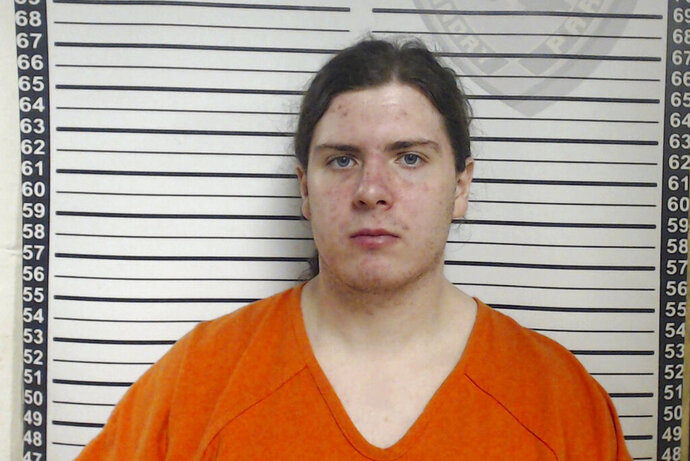
    St. Mary Baptist Church, Mallet’s beloved sanctuary, was the first of three historically Black churches set ablaze in St. Landry Parish by Holden Matthews, the white 23-year-old son of a local sheriff’s deputy. Matthews torched St. Mary, Greater Union and Mount Pleasant Baptist churches over a 10-day span between March 26 and April 4 in 2019.

    On Oct. 16, a federal judge will sentence Matthews to up to 70 years in prison after he pleaded guilty to three counts of intentional damage to religious property and one count of using a fire to commit a felony. For a usually-quiet South Louisiana community rocked by 10 days of blazing terror, the sentencing will bring the only sort of closure the criminal justice system can offer three congregations rendered homeless by the fires.

    Still, waiting 18 months for that closure has been a trial of faith for members of the three churches.

    “It’s taking its toll on everyone,” said St. Mary Rev. Kyle Sylvester. “Not just us but the community. … Keep praising God, keep the faith in what Christ has done for you and keep going. But at the same time, the flesh, the natural man, has to go through the process.”

    No matter the sentence handed down, Matthews’ crimes have forced the congregations to weigh a complicated question: What does justice look like for a faith founded on forgiveness?

    Security camera footage and social media messages obtained by law enforcement show Matthews didn’t just plan three arsons. He took pictures of the fires and sent them to friends. In the cases of St. Mary and Greater Union, he recorded videos of the infernos and watched the flames burn for nearly an hour at both sites before they were reported to 911.

    “I pray that he will be saved,” Mallet said. “If we would hold grudges and everything, what are we as a church? What are we as Christians? We have to learn to be forgiving and try to build from it.”

    In the aftermath, Rev. Sylvester reminded his congregants that they had lost only their church building, not their church and not the fabric of faith that holds a church together.

    At Mount Pleasant, Rev. Gerald Toussaint eagerly shared the Biblical signs he discovered among the burnt bricks.

    “The day the fire was, it was pouring down raining,” Toussaint said. “The day they told us they caught him, it was a very beautiful, sunny day. The Bible tells us when Jesus was crucified … it was very dark and started to rain. When he rose from the dead, it was a beautiful, sunny day. That has resonated with me. I know he’s present with us. It blesses my heart.”

    The parishioners’ path to reconciliation was not without anguish. Mallet, who speaks of anger like a 4-letter word, admits that she felt something close to it the night she woke up to a phone call from her son telling her the church was in flames. The day Matthews was arrested, she again felt resentment. She asked for her church’s prayers while at Bible study later that day.

    “I’ve got to have love for him,” Mallet said of Matthews almost a year later. “The act that he committed, I have to understand that it’s not for me to pass judgment on him. I can hate the crime, but I can’t hate him.”

    Arson not race-based but fires stoke familiar fear

    The fear Matthews brought to St. Landry Parish, a rural community about two hours west of New Orleans, is a familiar one for Black churches across the South, said Christopher Strain, a Florida Atlantic University professor who studies the history of American church fires.

    “A racial terrorist knows two things about Black churches: He knows that they’re traditional seats of power to the Black community, and he also knows that they’re vulnerable, soft targets,” Strain said.

    In the 1960s, white supremacists burned and bombed Black churches during the Civil Rights movement. In the 1990s, when a surge of arsons prompted the establishment of the National Church Arson Task Force, nearly a third of the 945 arsons investigated targeted Black churches; 43% of those occurred in the South. In 2015, at least six predominantly black churches were burned in the South in the week after Dylann Roof shot and killed nine people at Mother Emanuel AME Church in Charleston, South Carolina, though at least two were not deemed to be arson.

    The fire at St. Mary raised suspicions among parishioners since it had rained that night but there had been no lightning. After Greater Union met a similar fate, the late Rev. Harry Richard, who oversaw the church, said he hoped they were both accidents. Two days later, Mount Pleasant burned, setting off whispers about racial targeting.

    After Matthews’ arrest, law enforcement assured the community he was the sole assailant and stilled fears of more church fires. A search of his messages by law enforcement revealed that he set the fires as an homage to the church burnings conducted by Norwegian black metal artists in the 1990s, according to court records.

    In Facebook messages, Matthews lamented to a friend that media outlets were trying to make the burnings about race. He also said he chose the three churches because they were made of wood and easier to burn than the area’s Catholic churches.

    “Holden Matthews is following in that tradition that extends not only back to Dylann Roof, five years ago, but extends further back into the 1960s and to the Civil Rights era,” Strain said. “He says he was trying to boost his black metal cred, whatever that means, but the fact that he burned three predominately African American churches is hard to ignore.”

    St. Mary parishioner Sandra Smith, who was working offshore when she received news that her church caught fire, drew a similar connection.

    “I just went back to earlier years when that was the norm, when it was normal to do such a thing back in the Civil Rights days: burning down churches, putting bombs in churches,” Smith said. “When it first happened, I was angry. Extremely angry. I hated him for what he did.”

    Smith’s mother was buried at the church. In the following months, her son and brother died. She buried both behind where the church once sat, and its absence added to the loss.

    But along with her fellow parishioners, Smith began to actively search for peace through her faith. The resentment was too heavy a weight to carry forward.

    “We can’t judge him for what he did. Only God can judge him,” she said. “Just from a human standpoint…yeah, put him in prison. But that’s not what it’s all about. He’s a sick individual that needs help. He needs Jesus.”

    A FAITH THAT ‘CAN’T BE BURNED AWAY’

    In the Book of Daniel, three Hebrew men named Shadrach, Meshach, and Abednego are thrown into fire, only to escape unscathed due to their faith in God.

    In many ways, the three St. Landry Parish churches still bear wounds from the flames. St. Mary relocated to an unmarked strip mall storefront that felt more like a hideaway than a home. None of the churches have been rebuilt.

    But like the three men, the churches continue to survive on their devotion.

    “I’m not going to say we escaped unscathed, because the little church that was there, it was symbolic of our faith and our togetherness,” Smith said. “But out of that we’re going to get bigger.”

    Mount Pleasant has started to erect a new building, and an outpouring of donations means Toussaint will be able to build long-anticipated additions such as a carport and an expanded worship center.

    Like many churches, St. Mary moved to online services earlier this year due to COVID-19, and Smith said they’ve drawn hope from an unexpected boost in membership.

    On Oct. 4, the congregation held a parking lot service, the first on church grounds since the fire. Smith said the moment was “strange” but “still felt like home.”

    “That’s what God is allowing right now. That little church that burned wouldn’t be big enough to hold the people that he is sending to us,” Smith said.

    St. Mary’s church may still be gone, but a new worship center was recently completed on the same plot of land and will be able to house the congregation after the pandemic. The worship center’s concrete had been poured before the fires and was one of the few things to escape damage. A day or so after the church burned, Mallet saw the construction materials arrive.

    “Maybe a blessing in disguise,” Mallet said.

    Sitting on her couch thumbing through her Bible, Mallet begins skimming the passages that have helped her the most since her normalcy went up in flames. Romans 12:14. “Bless those who persecute you.” Romans 12:17. “Pay no evil for evil.”

    As she reads, a single plaque hangs on the wall behind her: “A house is made of walls and beams, a home is built with love and dreams.”

    “The memories we made in the church, to us the building was a sacred place,” Mallet said. “But when you come to realize that the sacred place is in your heart, that can’t be taken away.

    “It can’t be burned away.”