Blog

  • Court Strikes Louisiana’s ‘Sex Offender’ ID Requirement

    Court Strikes Louisiana’s ‘Sex Offender’ ID Requirement

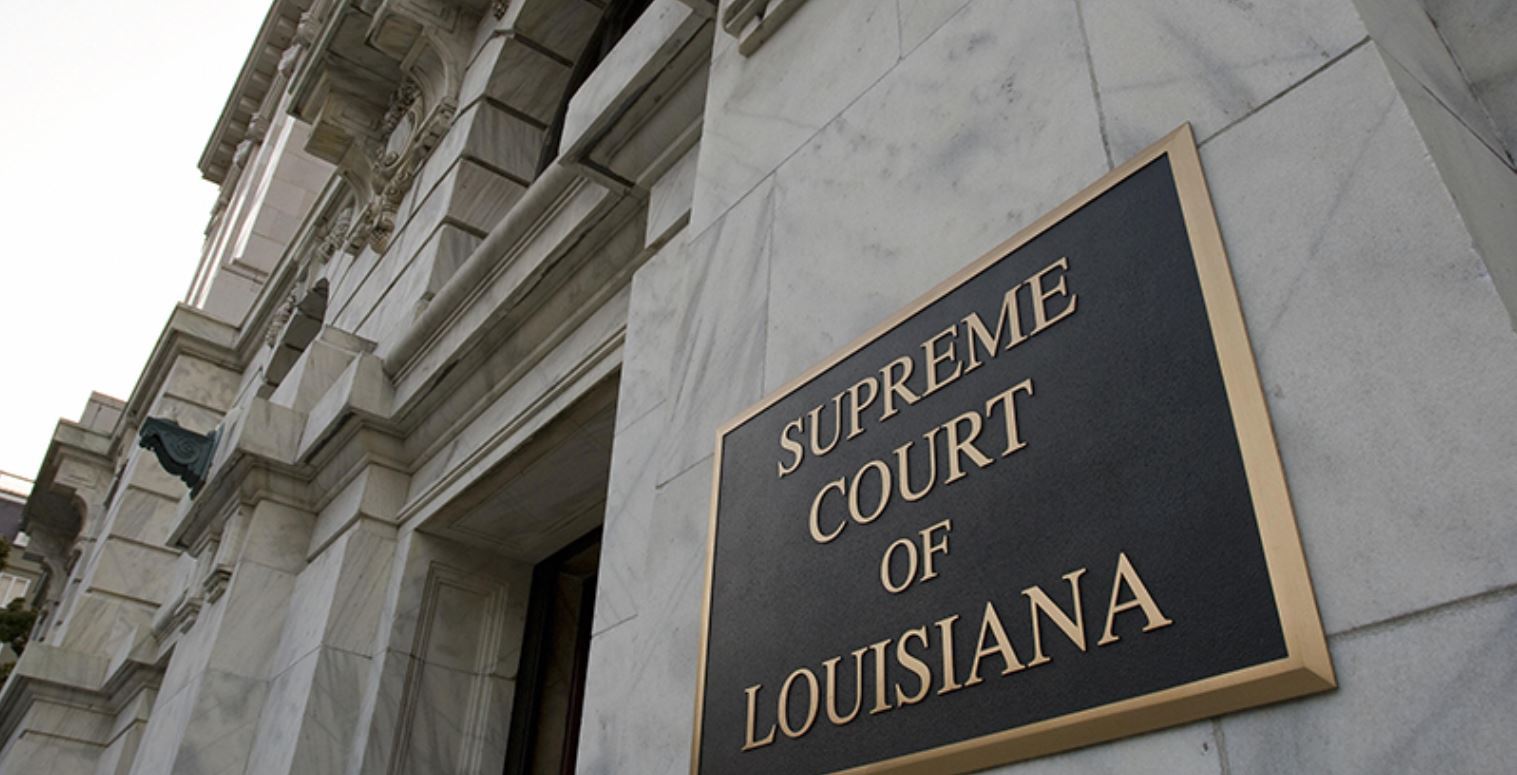
    NEW ORLEANS (AP) — Louisiana’s requirement that people convicted of certain sex crimes carry a state-issued ID card with the words “SEX OFFENDER” printed on it in orange capital letters is unconstitutional, the state’s Supreme Court ruled Tuesday.

    The 6-1 ruling upholds a decision by a state judge in Lafayette who last year threw out a charge filed against a man who altered his card to remove the label.

    State attorneys had argued that the state had a legitimate interest in having the information on the ID card: to let law enforcement officers know the cardholder’s criminal history.

    But Justice James Genovese, writing for the majority, said there are less restrictive ways to inform law enforcement than requiring someone to show the branded card every time they are required to produce a government ID.

    “A symbol, code, or a letter designation would inform law enforcement that they are dealing with a sex offender and thereby reduce the unnecessary disclosure to others during everyday tasks,” Genovese wrote.

    He added that the state has a sex offender registry and other methods of notifying the public without compelling the offender to repeatedly self-identify as one every time an ID must be produced.

    “As Louisiana has not used the least restrictive means of advancing its otherwise compelling interest, the branded identification requirement is unconstitutional,” Genovese wrote.

    Justice William Crain dissented, arguing that the speech involved is the government’s not the defendant’s.

    “The speaker is the government: the words are stamped by a governmental agency on a government-issued identification card in accordance with a government enacted statute,” Crain wrote. “This is the embodiment of government speech.”

  • Up To $1,000 Reward In Alligator’s Crossbow Killing

    Up To $1,000 Reward In Alligator’s Crossbow Killing

    BATON ROUGE, La. (AP) — Louisiana authorities are offering up to $1,000 for information leading to the conviction of whoever killed an alligator with a crossbow and then abandoned the body.

    Alligator hunting is tightly regulated. Hunters in Louisiana need a special license, and must lock a harvest tag to the tail of each animal killed.

    Department of Wildlife and Fisheries agents were told on Monday that a 12.5-foot (3.8-meter) alligator that had been killed by an arrow was in Bayou Manchac near Alligator Bayou in Ascension Parish, the agency said in a news release Tuesday.

    Agents found the animal with a 20-inch carbon crossbow arrow sticking out from the hinge of its jaws, agency enforcement division spokesman Adam Einck said in an email. The arrow had green-and-white fletching.

    Louisiana’s alligator season ends Oct. 24 in southeast Louisiana, and Oct. 31 in the rest of the state. It usually runs for 30 days but was extended to 60 this year.

    It’s legal for a licensed hunter to use a gun or arrow to shoot an alligator that has taken bait hanging above a waterway. However, each alligator must be kept and tagged.

    Einck said there were no bait lines in the area where the alligator was found.

    Agents are asking anyone with information about this shooting to contact Louisiana’s Operation Game Thief at 1-800-442-2511 or use the tip411 app. “People with information can remain anonymous and could be eligible for up to a $1,000 reward,” the news release said.

  • Frat Suspended, Probe Launched Into Possible LSU Hazing

    Frat Suspended, Probe Launched Into Possible LSU Hazing

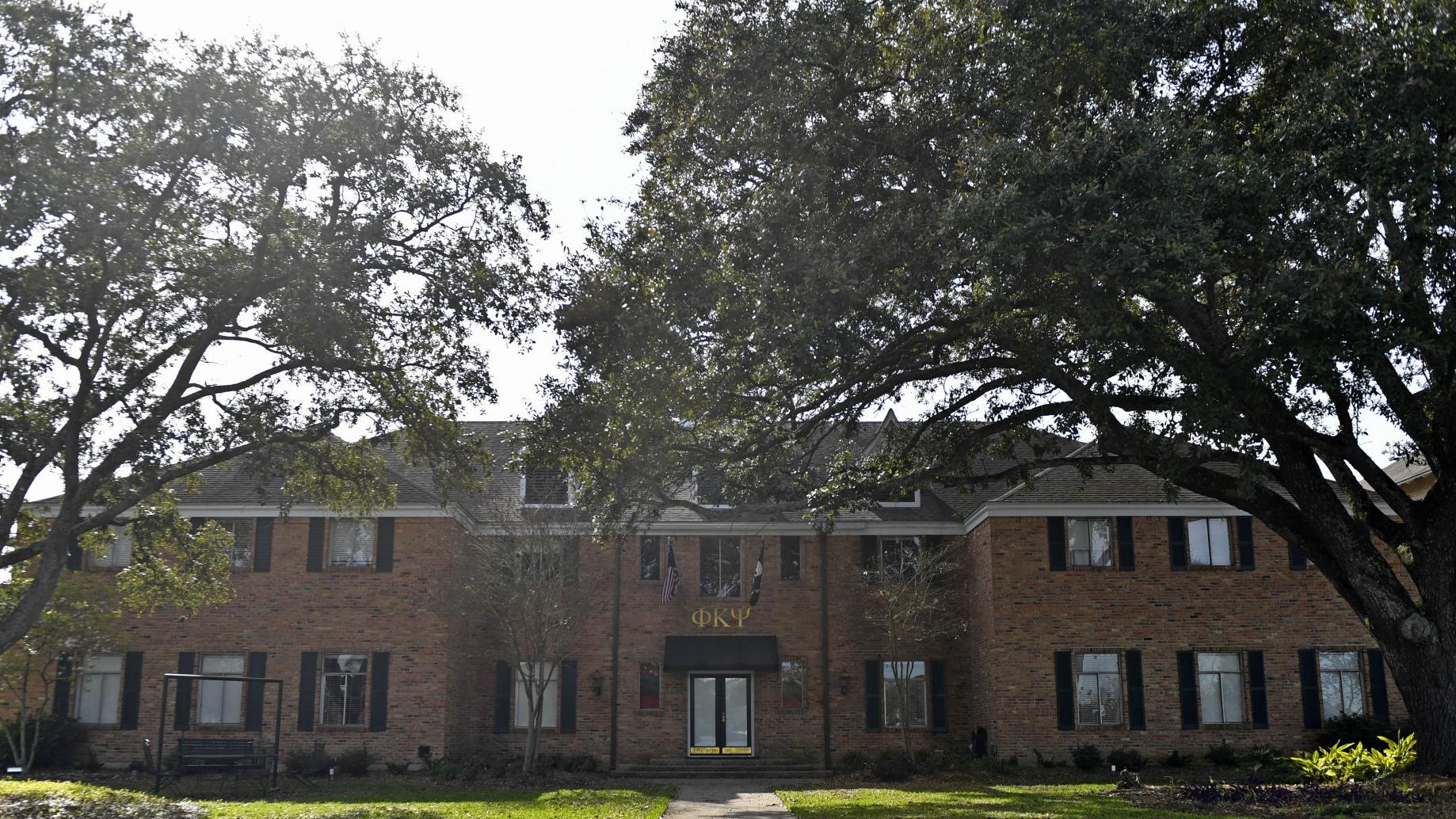
    BATON ROUGE, lA. (AP) — A fraternity chapter at Louisiana State University has been suspended and a Baton Rouge prosecutor said Tuesday that police are investigating a possible case of illegal hazing.

    The developments surrounding the suspension of the Phi Kappa Psi chapter were announced a day after an LSU student was hospitalized.

    Details have not been released though Baton Rouge news outlets report District Attorney Hillar Moore said police are looking into a possible hazing incident that led to the hospitalization.

    Moore said the case appears similar to that of Max Gruver, an LSU freshman who died in 2017 after a night of coerced drinking at a fraternity house. Phi Delta Theta is banned from the LSU campus until at least 2033 because of the events leading to Gruver’s death.

    “This case looks unbelievably similar to the Gruver case. There are a lot of parallels, with one exception: Everyone who has been questioned so far is cooperating with the investigation,” Moore told the news outlets.

    Gruver, from the Atlanta suburb of Roswell, Georgia, had been at LSU for a month when he died of alcohol poisoning in 2017.

    Matthew Naquin of Fair Oaks Ranch, Texas, was convicted of negligent homicide and sentenced in November 2019 to five years in prison in connection with the Gruver case, but a judge suspended all but 2½ years.

    In the latest incident, Moore said officials are interviewing witnesses and collecting evidence to determine whether the circumstances meet the criminal definition of hazing that was enacted by the Legislature following Gruver’s death.

    That law makes hazing that kills someone a felony, requires schools to teach students about hazing, and calls for fines on organizations that knowingly allow hazing.

  • No Tax Hikes, Benefit Drops For Louisiana Unemployment Fund

    No Tax Hikes, Benefit Drops For Louisiana Unemployment Fund

    BATON ROUGE, La. (AP) — The steep drop in Louisiana’s unemployment trust fund balance during the coronavirus outbreak won’t trigger a decline in benefits for jobless workers or tax hikes on businesses, state lawmakers have decided.

    The House unanimously gave final passage Tuesday to a package of measures by Senate President Page Cortez and Sen. Mike Reese, both Republicans, that will keep the unemployment benefits and tax rates on businesses that pay into the fund at the status quo through 2021.

    The Senate already had unanimously agreed to the proposals, so Tuesday’s votes were the last needed.

    However, lawmakers haven’t found a long-term fix to refilling the fund that topped $1 billion in March and was drained as hundreds of thousands of people lost their jobs during the pandemic. Louisiana, like many other states, is borrowing money from the federal government to pay jobless benefits.

    Legislators meeting in the monthlong special session have steered $85 million to the unemployment trust fund, a bill awaiting a decision from Gov. John Bel Edwards, who supports the infusion of cash. But that funding isn’t enough to return the unemployment trust fund to stability.

    “Right now we’re still dishing out more than we’re taking in. Hopefully we’ll get people back to work soon,” said Rep. Beau Beaullieu, a New Iberia Republican.

    Without action from lawmakers, the emptying of the trust fund would have required businesses to pay more taxes into the fund to refill it. Meanwhile, benefits to jobless workers — which at a maximum of $247 per week are already among the nation’s lowest — would have fallen to the country’s bottom rate of $221 a week.

    Lawmakers argued businesses and out-of-work residents struggling in the coronavirus outbreak shouldn’t be further penalized. Beaullieu said the move will save businesses $60 million in taxes. Lawmakers said the delay of tax hikes and benefit drops will buy some time for the Democratic governor and Republican legislative leaders to find a long-term plan for returning the trust fund to solvency and repaying the government loans.

    The legislation “will provide some breathing room,” said Rep. Mike Echols, a Monroe Republican.

    Edwards and lawmakers are hoping Congress will intervene to help states after the November election.

    Tuesday’s completion of the unemployment trust fund plans was among the first major issues to be settled in the special session, which must end Oct. 27. Lawmakers also gave final passage later Tuesday to a bill that would give themselves more ability to loosen Edwards’ coronavirus restrictions, though that could face a veto from the governor.

    Nearing final passage is a proposal to give lawmakers more authority over emergency elections plans — an outgrowth of the dispute over the plan being used for the fall elections.

    Senate Republican leader Sharon Hewitt sought to remove the governor’s authority to veto any emergency elections plan submitted by Louisiana’s secretary of state. That concept passed the Senate, but ran into constitutional concerns in the House elections oversight committee.

    The House and Governmental Affairs Committee rewrote the bill as proposed by Rep. Barry Ivey to retain the governor’s veto authority — but to give lawmakers the ability to override a veto with a two-thirds vote by mailed ballot.

    “I wanted to make sure we maintained the checks and balances,” said Ivey, a Baton Rouge Republican.

    Hewitt, who oversees the Senate elections oversight committee, agreed to the rewrite.

    “It does respect the separation of powers. It allows us to continue our roles in oversight,” she said.

    Republican Secretary of State Kyle Ardoin supports the bill, and Ivey’s changes seemed to alleviate some concerns from Democrats who objected to the previous version that passed the Senate. The House committee advanced the measure without objection to the full House.

    The proposal comes after Ardoin offered an emergency plan for the Nov. 3 and Dec. 5 elections that won support from the majority-GOP House and Senate but was blocked by Edwards. The governor said the plan didn’t do enough to expand mail-in balloting for the pandemic. A federal judge later agreed with Edwards and required Ardoin to offer more absentee-by-mail balloting this fall.

    ___

    The legislation is filed as Senate Concurrent Resolutions 5 and 9 and Senate Bills 20 and 55.

    ___

    Follow Melinda Deslatte on Twitter at http://twitter.com/melindadeslatte.
  • LSU: $6M For Engineering Scholarships For Working Students

    LSU: $6M For Engineering Scholarships For Working Students

    BATON ROUGE, La. (AP) — Louisiana State University has received $6 million to expand a scholarship program for engineering students who are working their way through school, a news release said Wednesday.

    The gift from the late William Alfred “Bill” Brookshire’s family means the program he founded can help more than 300 students a year for the next three years, said Sara Whittaker, spokeswoman for the LSU Foundation.

    She said more than 1,300 juniors and seniors have received S&B Engineers and Constructors Scholarships since the program began in 2010.

    It helps students who keep up at least a 2.5 grade point average while putting in at least 30 hours a week of combined coursework and employment, according to a news release.

    “Our father’s vision and legacy are honored each and every year by the exemplary hard work and perseverance of the Brookshire Scholars,” the Brookshire family said in the news release.

    Years before his death in 2017, Brookshire told LSU: “I think the whole thrust of my giving at the University of Houston, LSU, my high school and the community college was to support students working their way through school. I want to help people who are helping themselves.”

    The College of Engineering currently has 1,008 third-year and 1,572 fourth-year students enrolled, Whittaker said.

    The donation is one of the largest given for LSU scholarships and is the largest such gift made for immediate use, the university said.

  • Trump Camp: Stop Using His Name In Medical Marijuana Effort

    JACKSON, Miss. (AP) — President Donald Trump’s campaign is telling a Mississippi group to stop saying that Trump supports a ballot measure that would legalize medical marijuana in the state.

    Mississippians for Compassionate Care is a group promoting Initiative 65. It paid for a letter signed by several prominent Republicans, and the outside of the envelope said: “Join President Trump and 3 out of 4 Mississippi Republicans who support medical marijuana.”

    The letter said: “President Trump Supports Medical Marijuana … and allowing states to decide on that issue.”

    Michael Glassner, chief operating officer of the Trump campaign, sent a “cease and desist” letter to the group Oct. 12, and opponents of Initiative 65 released Glassner’s letter Tuesday.

    “This unauthorized use of the President’s name in support of your group’s cause is unfair to Mississippi voters who may be led to vote ‘Yes’ on Initiative 65 on the false belief that President Trump supports the measure,” Glassner wrote. “Therefore, let us be clear about this: President Trump has never stated his support for passage of Initiative 65 or the legalization of medical marijuana in Mississippi.”

    Initiative 65 would allow patients to use medical marijuana to treat debilitating conditions, as certified by physicians.

    An alternative measure that is also on the Mississippi ballot, Initiative 65A, would allow patients with debilitating conditions to use medical marijuana. It says the state would create a program based on “sound medical principles.”

    Jamie Grantham, communications director for Mississippians for Compassionate Care, said in a statement Tuesday that the group had accurately portrayed Trump’s position on medical marijuana. She said that “politicians and bureaucrats” opposing Initiative 65 “clearly orchestrated this letter from the Trump campaign.”

    “It’s just the latest example of the lengths to which they will go to prevent any form of medical marijuana in Mississippi,” Grantham said. “President Trump himself has said he supports medical marijuana and is letting the states decide.”

    More than 100,000 registered voters petitioned to put Initiative 65 on the ballot. The alternative was put there by legislators. Sponsors of the original initiative say the alternative is intended to cause confusion and kill the original.

    There’s a two-step process for voting on 65 and 65A. The ballot first instructs people to “Vote for approval of either, or against both.” It then says, “And for vote for one” — either 65 or 65A.

    Secretary of State Michael Watson said that even if people vote against both initiatives on the first part, they can still vote for one of the proposals on the second part.

    ____

    Follow Emily Wagster Pettus on Twitter at http://twitter.com/EWagsterPettus.

  • Two men charged with bank fraud involving purchases of Natchez hotels

    Two men charged with bank fraud involving purchases of Natchez hotels

    Federal prosecutors have charged two men with bank fraud and money laundering in their recent purchases of   Hotel Vue and The Briars in Natchez.


    Ryan P. Mullen and Duane A. Dufrene allegedly “utilized fictitious entities, falsified tax returns and provided fraudulent financial statements and appraisals to orchestrate their scheme to defraud the lenders for the purchases,” according to a statement issued Tuesday by U.S. Attorney Peter Strasser of Louisiana.
    Mullen and Dufrene are Louisiana-based businessmen whose scheme also allegedly involved a third Natchez hotel, the Super 8 by Wyndham, according to the federal indictment. The three hotels are all adjacent properties by the Mississippi River and the Natchez-Vidalia bridges.
    “The sales of The Briars and the two hotels were not only premised upon false information prepared by Dufrene
    and given to the financial institutions by Mullen, but also upon inflated appraisals based on side sales agreements between Mullen and Dufrene,” the U.S. attorney’s office said.
    “After the sales of the bed and breakfast (The Briars) and hotel properties, Mullen paid Dufrene $90,000. Mullen pocketed over $3 million from the overvalued loans and used the proceeds to buy at least 20 high-end luxury cars.”
    The alleged scheme involved them purchasing The Briars for $1.75 million and Hotel Vue for $3.95 million, according to the federal indictment filed in U.S. District Court in New Orleans.
    While Mullen and Dufrene are presumed innocent until proven guilty, they each face a maximum sentence of 30 years for the bank fraud counts and a sentence of up 10 years on the money laundering counts, according to the U.S. attorney’s office.  
  • The U.S.S. Constitution Museum in Boston has acquired more than 150 documents that shed light on the warship’s early years

    The U.S.S. Constitution Museum in Boston has acquired more than 150 documents that shed light on the warship’s early years

    The collection had been in private hands for more than 225 years.

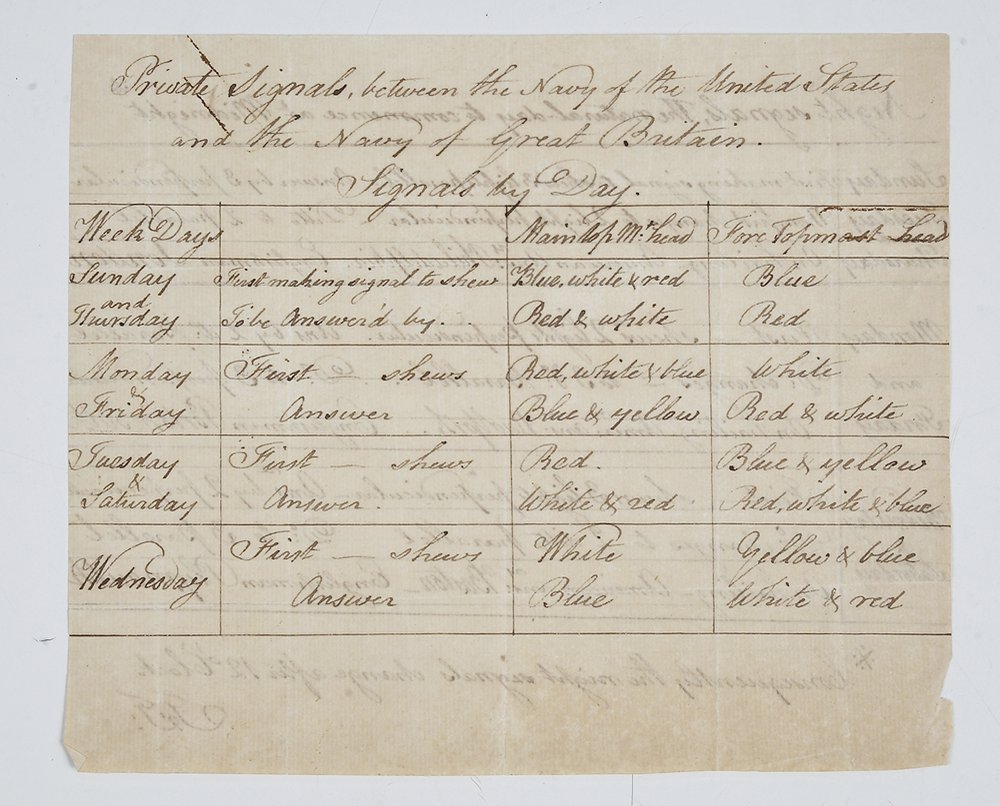
    The U.S.S. Constitution Museum has acquired more than 150 documents, including correspondence from President George Washington’s secretary of war and the leader of the Haitian Revolution, that shed light on the warship’s early years and the young United States’ first international conflict.

    The collection acquired at auction had been in private hands for more than 225 years and will be unveiled during a Facebook Live celebration of the ship’s 223rd birthday Wednesday.  It is the largest acquisition the Boston-based U.S.S. Constitution Museum has made in nearly a decade.

    “I have been looking for collections for this museum for over 30 years and have never seen anything like it,” museum President and CEO Anne Grimes Rand said in a statement. “The U.S.S. Constitution Museum is actively pursuing its mission in tough times by acquiring these documents that shed light on previously unknown aspects of the construction, outfitting, and first movements of U.S.S. Constitution.”  The cost of the documents was not disclosed, but they were paid for by a group of museum supporters known as the Commodores, she said.  “We rallied them and we were able to bid aggressively and we landed the collection,” she said.

    The museum is the nonprofit that preserves the history of the ship known as Old Ironsides, which is still an active-duty U.S. Navy vessel berthed in the city’s Charlestown neighborhood.  The U.S.S Constitution is the world’s oldest commissioned warship afloat. It was undefeated in battle and earned its nickname during the War of 1812, when British cannonballs bounced off its wooden hull.

    The papers cover several topics, including the construction of the U.S. Navy’s first six frigates, which include the Constitution, and strategic plans for the undeclared Quasi-War with France from 1798 until 1800.  The collection belonged to Capt. James Sever, first commander of U.S.S. Congress, another frigate constructed at the same time as Constitution. It had been in his family ever since.  Sever supervised construction of Congress and was deployed with the ship to the Caribbean to protect U.S. merchant ships from French privateers. Old Ironsides served alongside Congress in the conflict.

    The collection includes handwritten correspondence and papers from the Constitution’s commander, Capt. Silas Talbot; Henry Knox, secretary of war under Washington, who oversaw the appropriations for the construction of the Constitution and its sister frigates; and Toussaint Louverture, the formerly enslaved leader of the Haitian Revolution, who corresponded with U.S. Navy commanders about U.S. support of his government.

    The documents will be archived at the museum and shared publicly via email newsletters and social media posts at first. They will also be digitized and made available on the museum’s website.

  • Louisiana lawmakers pass bill striking at governor’s power

    Louisiana lawmakers pass bill striking at governor’s power

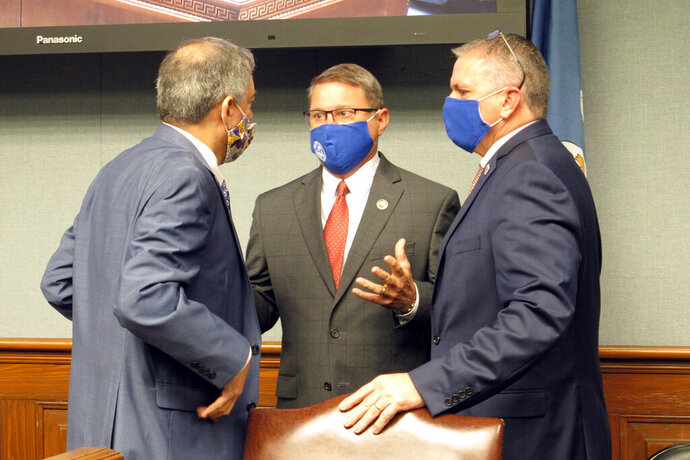
    BATON ROUGE, La. (AP) — Republican Louisiana lawmakers voted Tuesday to give themselves more authority to curb Gov. John Bel Edwards’ coronavirus restrictions and emergency powers, under a deal brokered between House and Senate GOP leaders that ended a stalemate on the major issue of the special session.

    After days of negotiations behind closed doors, the agreement was included in a bill by Covington Republican Rep. Mark Wright. The final language won Senate support Tuesday in a 23-13 vote, followed by House backing in a 54-30 vote.

    The votes largely were along party lines, with most Republicans in favor and Democrats opposed.

    “It’s no longer a situation where you have to have the governor running the entire emergency response,” House Republican leader Blake Miguez said. “This is to allow the Legislature to get involved in the process.”

    The measure heads next to the governor’s desk, where Edwards could choose to veto it. He’s repeatedly said he doesn’t support any attempts to lessen his emergency authority.

    The House doesn’t have enough Republican members to override a gubernatorial veto. That raises questions about whether lawmakers will return home without a permanent law change to the governor’s emergency powers and legislative oversight — the major disagreement between GOP lawmakers and the Democratic governor that prompted the special session.

    Republicans say Edwards’ statewide mask mandate, business restrictions and crowd size limits at football games and other events are too harsh seven months after the coronavirus outbreak began in Louisiana.

    Edwards has loosened his restrictions several times, noting that his rules are in line with guidance from the White House’s coronavirus task force and are less strict than what exists in many other states.

    The process outlined in Wright’s bill would come into play when a governor renews a state of disaster or emergency declaration after the first 30 days of the proclamation. Edwards has repeatedly renewed — and tweaked — his public health emergency declaration and restrictions for months, since first issuing it in March.

    Under the bill, if one of the top two elected leaders of both the House and Senate agree that provisions of a governor’s renewed order exceed his authority or “are not narrowly tailored to address the disaster,” they could ask lawmakers to vote by mailed ballot on whether to revoke individual sections of that order. That means they could pick and choose which coronavirus restrictions enacted by Edwards they want to end.

    Approval of Wright’s legislation in the House came with some confusion about what the Senate’s rewrite of the bill does. Still, GOP leaders rushed the compromise agreement to final passage, even though some Republicans in the House asked for a vote delay. Wright wasn’t in the House chamber for the vote; Miguez handled the bill.

    Rep. Barry Ivey, a Baton Rouge Republican, urged lawmakers to slow the vote: “Let’s take the time and get it right.”

    Livingston Parish Republican Rep. Sherman Mack said his constituents want lawmakers to do something to lessen the restrictions.

    “I’m not saying this bill is perfect, but I do think it is a step in the right direction,” Mack said.

    Miguez said the measure wouldn’t change a current process in state law that allows lawmakers to revoke a governor’s entire emergency declaration through a petition signed by a majority of members in either the House or Senate.

    With Tuesday’s vote, legislative leaders said the special session, which must end Oct. 27, may wrap up a few days early.

  • Mississippi expands curbside voting, sets absentee ‘cure’

    Mississippi expands curbside voting, sets absentee ‘cure’

    JACKSON, Miss. (AP) — Mississippi is expanding access to curbside voting for people with symptoms of COVID-19 and setting a new process to let voters correct, or “cure,” minor discrepancies with signatures on absentee ballots.

    The changes are being made after voting-rights groups sued the state in federal court. U.S. District Judge Daniel P. Jordan signed an order Tuesday that ends the lawsuit. The plaintiffs obtained some of the changes they sought, but not all.

    A new rule issued by Secretary of State Michael Watson says curbside or open-air voting must be made available to people showing signs of COVID-19, including coughing, vomiting, headaches, fever, sore throat, congestion, or loss of taste or smell.

    Also, election officials must notify a voter about any problem with his or her signature on an absentee ballot, and the voter must be given a chance to correct it, according to groups that sued the state. Officials must offer the voter an “absentee cure form” by mail, email or fax within one business day. The voter has 10 calendar days after the election to correct the issue so the ballot can be counted.

    Jennifer Nwachukwu, an attorney with the Lawyers’ Committee for Civil Rights Under Law, said in a statement that the new procedures should help ensure that absentee ballots are not “arbitrarily rejected.”

    “Just because a record number of voters in Mississippi will vote by mail this year does not mean there needs to be a record number of disenfranchised voters,” Nwachukwu said. “This is a key victory in protecting the integrity of our election and ensuring the voice of the people is heard.”

    Mississippi requires absentee ballot applications to be notarized. The state also requires most people to provide an excuse to vote absentee, such as being out of town on Election Day. The plaintiffs argued those two requirements are unconstitutional. However, those procedures are not being changed.

    The lawsuit was filed in August by attorneys from the Lawyers’ Committee for Civil Rights Under Law and the Southern Poverty Law Center on behalf of three Mississippi residents, the League of Women Voters of Mississippi and the Mississippi State Conference of the NAACP. It says Mississippi election laws could force people to choose between their health and their constitutional right to vote. It also said Watson and Attorney General Lynn Fitch “have failed to take necessary steps to protect Mississippi voters’ fundamental right to vote despite the public health risks of voting in person during the COVID-19 pandemic.”

    The Associated Press left phone messages for Watson and his spokeswoman on Tuesday, seeking comment about the election procedure changes.

    Caren Short, senior staff attorney for the Southern Poverty Law Center, said in a statement that people who cast absentee ballots by mail should include a phone number and email address so election officials can reach them if there are questions about the signature.

    “It is critical that every Mississippi voter can cast their ballot safely and have their vote counted,” Short said.

    Mississippi does not allow widespread early voting. Instead, state law says absentee voting is available to anyone 65 or older, or to voters of any age who are permanently disabled or will be out of their home county on Election Day. People who have to work on Election Day when the polls are open also are allowed to vote absentee.

    Legislators tweaked the law this year with provisions that expire at the end of 2020. Those allow absentee voting by someone with a temporary or permanent disability that may include “a physician-imposed quarantine due to COVID-19” or by a person who is “caring for a dependent that is under a physician-imposed quarantine due to COVID-19.”