Blog

  • Louisiana GOP Lawmakers Try To Yank Governor’s Virus Rules

    Louisiana GOP Lawmakers Try To Yank Governor’s Virus Rules

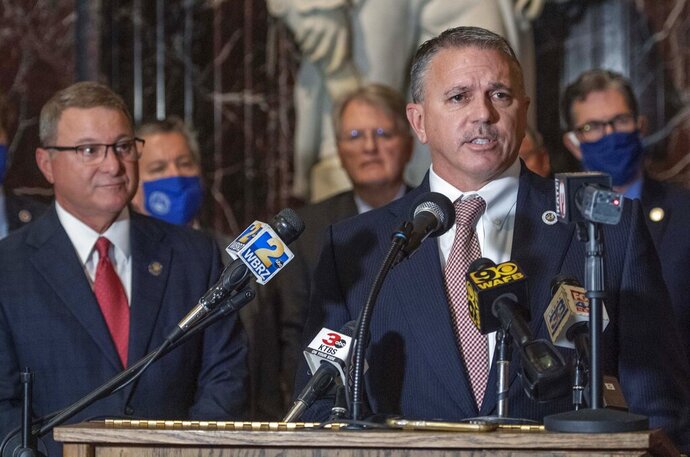
    BATON ROUGE, La. (AP) — Louisiana House Republicans planned to file a petition Friday to revoke Gov. John Bel Edwards’ coronavirus restrictions for a week, as lawmakers wound down a special session in which they sought more power over the Democratic governor’s emergency actions but appeared likely to see that effort vetoed.

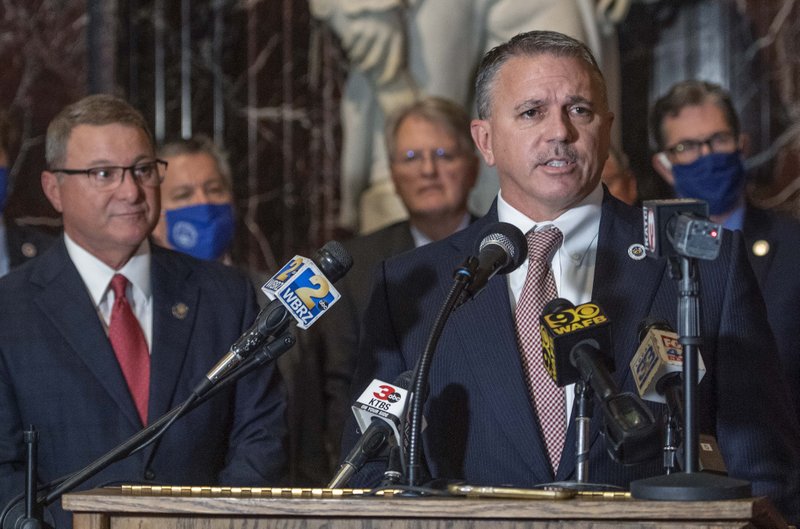
    House GOP leader Blake Miguez said Republicans are invoking a never-before-used process outlined in state law. He said a majority of House lawmakers have signed a petition to nullify the governor’s public health emergency declaration — and all restrictions tied to it, such as the statewide mask mandate and business restrictions.

    Lawmakers intend to deliver the petition spearheaded by House Speaker Clay Schexnayder, which aims to keep Edwards from enacting any more restrictions for seven days, to the governor later Friday.

    “We’ve exhausted all of our options,” said Miguez, of Erath. “This is our only available option to reopen the state.”

    The issue almost certainly will be settled in court.

    The Edwards administration argues the law allowing legislators in only one chamber to overturn a governor’s emergency declaration is unconstitutional. That’s a point Schexnayder himself has made, but he changed his position on advice of Republican Attorney General Jeff Landry.

    Democrats called the petition “dangerous, reckless and short-sighted.” House Democratic leader Sam Jenkins, of Shreveport, said Louisiana’s economy cannot be sustained if people are getting sick, and he credited Edwards with making decisions based on science.

    “A petition is not a cure,” Jenkins told his colleagues.

    House Republicans’ action came as the Louisiana Legislature was completing its special session a few days ahead of its Tuesday deadline.

    Republican lawmakers convened the nearly four-week session themselves, their second special session this year, hoping to curb the governor’s COVID-19 restrictions on businesses, high school sports and other activities. The House and Senate, however, were at odds over the constitutional limits of what they could do to insert themselves more heavily into emergency actions.

    After haggling, GOP lawmakers in the two chambers struck a deal Tuesday that would give them the ability to nullify individual pieces of a governor’s emergency order by a majority vote through mailed ballot, for any emergency declaration extended beyond 30 days.

    While Edwards hasn’t publicly said he’ll veto the bill, lawmakers seem certain he intends to do so.

    “Those negotiations and discussions didn’t progress,” Miguez said.

    The governor has resisted efforts to curb his emergency decisions and objected to the entire special session.

    “The constitution charges me with the authority and, therefore, the obligation to manage public health emergencies,” Edwards said this week. “You have to have all the tools necessary at your disposal.”

    Republicans say Edwards’ statewide mask mandate, business restrictions and crowd size limits at football games and other events are too harsh seven months after the coronavirus outbreak began in Louisiana. Edwards has loosened his restrictions several times, noting his rules are in line with guidance from the White House’s coronavirus task force and are less strict than what exists in many other states.

    Beyond that debate, lawmakers agreed to keep unemployment benefits and tax rates on businesses that pay into the unemployment trust fund at their current levels, despite the bankruptcy of the fund.

    But they didn’t find a long-term fix to refilling the fund that topped $1 billion in March and was drained as hundreds of thousands of people lost their jobs during the pandemic. Louisiana, like many other states, is borrowing money from the federal government to pay jobless benefits. Lawmakers steered $85 million to the trust fund to help pay for benefits, but that’s not nearly enough to reach solvency again.

    The House and Senate passed new rounds of business tax breaks, including a multimillion-dollar severance tax cut for the oil industry, and backed a one-time November sales tax holiday aimed at helping people recover from the pandemic and this fall’s hurricanes. It’s unclear how they’ll cover the costs of the tax breaks.

    They passed legislation to give more rights for family and clergy to visit patients in nursing homes, hospitals and other long-term care facilities during public health emergencies. They sent Edwards a bill that would give the House and Senate the ability to overrule a governor’s rejection of emergency elections plans.

    Lawmakers added $20 million-plus in pet projects to the budget. And they steered $20 million in state surplus cash to jumpstart repairs to state-owned buildings damaged by hurricanes Laura and Delta, while they wait for insurance proceeds and federal rebuilding aid to arrive.

    ___

    Follow Melinda Deslatte on Twitter at http://twitter.com/melindadeslatte.

  • Louisiana Ex-Priest Accused Of Molestation Jailed In Georgia

    Louisiana Ex-Priest Accused Of Molestation Jailed In Georgia

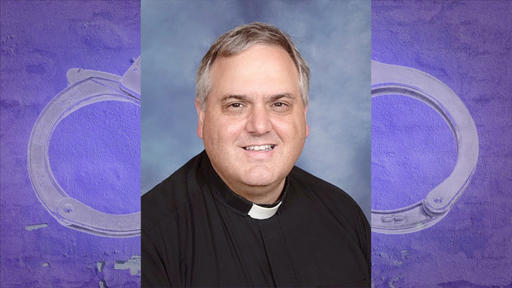
    COVINGTON, La. (AP) — A former priest from a New Orleans suburb faces charges of molesting a juvenile and has been arrested as a fugitive in west-central Georgia, authorities in Louisiana said Friday.

    Patrick Wattigny was arrested Thursday night at a home in Troup County, Georgia, the St. Tammany Parish Sheriff’s Office said in a news release. The county’s online jail roster showed that he was arrested by police in West Point and was being held without bond.

    It was not immediately clear whether he has an attorney who could speak for him.

    St. Tammany Parish deputies obtained a warrant Thursday accusing Wattigny, now 53, of sexually abusing a minor four times in 2013 while serving as pastor of “St. Luke’s” in Slidell, the Louisiana sheriff’s office said.

    “Wattigny started grooming the victim, who was 15 at the time, through general conversation, which led to telephone and text message conversations and eventually in-person visits,” the statement said. It said some of the alleged molestation was in the church rectory.

    Archbishop Gregory Aymond removed Wattigny, then a priest at St. Luke the Evangelist Catholic Church, from the ministry on Oct. 1 after he confessed to abusing a minor in 2013, news outlets reported.

    Slidell is a city of 27,600. West Point is a city of about 3,700, located about 75 miles (120 kilometers) south-southwest of Atlanta and 320 miles (515 kilometers) northeast of Slidell.

  • Long After Murders, Black Voting Is Still Troubled In Miss.

    Long After Murders, Black Voting Is Still Troubled In Miss.

    Meridian, Miss. (AP) — The old civil rights worker was sure the struggle would be over by now.

    He’d fought so hard back in the ’60s. He’d seen the wreckage of burned churches, and the injuries of people who had been beaten. He’d seen men in white hoods. At its worst, he’d mourned three young men who were fighting for Black Mississippians to gain the right to vote, and who were kidnapped and executed on a country road just north of here.

    But Charles Johnson, sitting inside the neat brick church in Meridian where he’s been pastor for over 60 years, worries that Mississippi is drifting into its past.

    “I would never have thought we’d be where we’re at now, with Blacks still fighting for the vote,” said Johnson, 83, who was close to two of the murdered men, especially the New Yorker everyone called Mickey. “I would have never believed it.”

    The opposition to Black voters in Mississippi has changed since the 1960s, but it hasn’t ended. There are no poll taxes anymore, no tests on the state constitution. But on the eve of the most divisive presidential election in decades, voters face obstacles such as state-mandated ID laws that mostly affect poor and minority communities and the disenfranchisement of tens of thousands of former prisoners.

    By at least one measure, it’s harder to vote in Mississippi than any other state. And despite Mississippi having the largest percentage of Black people of any state in the nation, a Black person hasn’t been elected to statewide office in 130 years. After years of being shut out of state races, Democrats hope mobilizing Black voters and recruiting Black candidates can eventually give them a path back to relevance in one of the reddest of red states.

    But sometimes, it can seem that voting rights in Mississippi are like its small towns and dirt roads, which can appear frozen in the past.

    ______

    This story was produced with the support of the Pulitzer Center on Crisis Reporting.

    _____

    Decades after the murders, the narrow county road where they happened still turns pitch black after dark. Pine forests press in from both sides. The only light comes from a couple distant houses and the ocean of stars overhead.

    One night in early October we stopped the car along the road and I stepped out. The songs of crickets filled the air. In the distance, I could hear the occasional truck driving past on Highway 19.

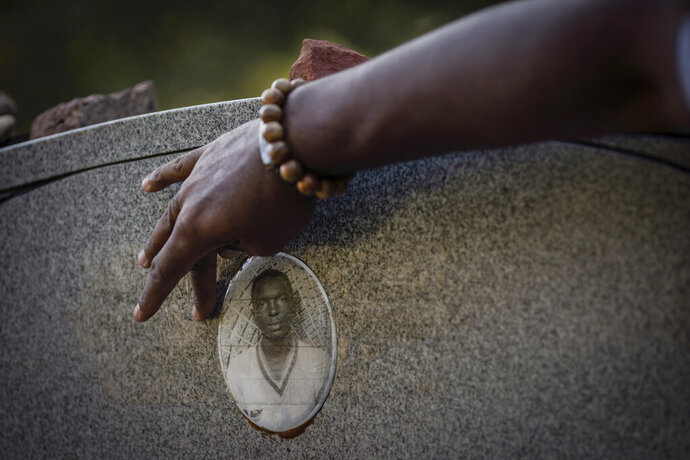
    The killers who traveled that road in 1964 were local men – Ku Klux Klan members, a deputy sheriff, a few others. The victims were three young civil rights workers – the oldest just 24 – who had joined a mass campaign that over the coming years helped bring voting rights to Black Mississippi. The men, one Black and two white, were shot at close range. Their bodies were found in an earthen dam 44 days later.

    Today, with the presidential election weeks away, three of us on a reporting trip across America wanted to see what things were like in a state where the simple act of voting was impossible for nearly every Black person well into the 1960s. In a year when America has been marked by so many convulsions – a pandemic, an economic crisis, countless protests for racial justice, a virulent political divide – the road trip has been a way to look more deeply at a country struggling to define itself.

    We came to Mississippi because what happened here in 1964 was also about elections, and because of the three men murdered on that little road outside the little town of Philadelphia.

    The case grabbed attention all the way to the White House. Along with such seminal events as the 1963 murder in Mississippi of Black civil rights activist Medgar Evers, it helped lead to the passage of the landmark Voting Rights Act of 1965, which prohibited racial discrimination in voting.

    Eventually, so much changed for Black voters in Mississippi.

    And yet so much didn’t.

    ___

    Today, voters in Mississippi face a series of government-created barriers that make it, according to a study in the Election Law Journal in 2018, far and away the most difficult state in which to vote.

    Mississippi has broad restrictions on absentee voting, no early voting or online registration, absentee ballots that must be witnessed by notaries and voter ID laws that overwhelmingly affect the poor and minorities, since they are less likely to have state-approved identification. The restrictions have grown even tighter since a 2013 Supreme Court decision blocked many voting rights protections.

    “Anything that increases the ‘costs’ of voting – the time it takes, the effort it takes – that tends to decrease voter turnout,” said Conor Dowling, a professor of political science at the University of Mississippi. “And there is evidence that some of these burdens are disproportionately felt by minority voters.”

    Mississippi also has widespread poverty. Nearly one-third of Black people here live below the poverty line, more than double the rate for white people, which means taking a day off work to vote can be too expensive.

    Then there are the felony voting restrictions, which in Mississippi have disenfranchised almost 16% of the Black population, researchers say — compared to just 5% in nearby Missouri, another deeply Republican state. The Southern Poverty Law Center calls Mississippi’s restrictions a holdover from an old state constitution designed specifically to disenfranchise Black voters.

    Demarkio Pritchett, who said he was convicted as a teenager of drug possession “and some other stuff,” understands that.

    A lanky 29-year-old Black man now out of prison, he lives with his grandmother in Jackson, the state capital, in a poor neighborhood of battered houses with peeling paint, small well-kept homes and empty lots overgrown with trees and kudzu. His grandmother’s house, which manages to be both neat and battered, has an election sign out front for Mike Espy, a Black Democrat running for the U.S. Senate.

    Democrats here see hope in candidates like Espy, a former congressman and the first Black Agriculture Secretary, who is focused on registering Black voters. Their long-term strategy hinges on mobilizing Black voters and recruiting Black candidates.

    Pritchett’s grandmother is zealous about voting. But her grandson can’t vote in Mississippi for the rest of his life. Anyone convicted here of one of 22 crimes, from murder to felony shoplifting, has their voting rights permanently revoked. Pritchett’s only chance: getting a pardon from the governor, or convincing two-thirds of the state’s lawmakers to pass a bill written just for him.

    “I want to vote, but they make it so I can’t,” he said, sitting on the front porch with a friend on a recent afternoon. “We just can’t beat the government. We just can’t.”

    Distrust of the government runs deep in the Black community in Mississippi, where harsh voter suppression tactics – voting fees, tests on the state constitution, even guessing the number of beans in a jar – kept all but about 6% of Black residents from voting into the 1960s. A Black person who even tried to register to vote could find themselves fired from their job and evicted from their home.

    As a result, Black politicians have long been fighting an apathy born of generations of frustration.

    Anthony Boggan sometimes votes, but is sitting it out this year, disgusted at the choices.

    “They’re all going to tell you the same thing,” he said. “Anything to get elected.”

    A 49-year-old Black Jackson resident with a small moving company, Boggan likes how the economy boomed during the Trump years, but can’t bring himself to vote for a man known for his insults and name-calling.

    “He’s a butthole,” Boggan said, as a group of Black friends, including one who planned to vote for Trump, laughed and nodded in agreement. “Everybody knows he’s a butthole.”

    As for Biden: He and Trump both “got dementia,” Boggan said, and he hates how the former vice president tries to curry favor in the Black community.

    “Why does everything he says got to be about the Black? ‘I did more of this for the Black. I’m going to do all of this for the Black,’” he said, angrily mimicking Biden. “Just have them do all this for the American people!”

    One man in the group, which was doing construction on a friend’s house on a recent morning, simply refuses to vote.

    “Most of the presidents that got in there, they lied all the way,” said Clyde Lewis, a 59-year-old mechanic. “They hurt us more than they help us.”

    That kind of talk is painful for Kim Houston.

    “Sometimes I think we beat ourselves,” said Houston, the president of the Meridian City Council, the frustration clear in her voice. “There’s this mindset that (voting) doesn’t matter, that nothing is going to change, that the election system is rigged.”

    It adds up to a state where plenty of Black people have reached office – by some estimates it has the highest number of Black officials in the country – but many of them are local: mayors, city council members, city officials.

    With those officials came significant infrastructure improvements, such as roads paved in Black neighborhoods and sewage systems installed that allowed Black homeowners to finally abandon their outhouses. But in Mississippi, a Black politician can rise only so high, they say, and are kept from those statewide offices.

    “When it comes to the positions that really matter, we’re not sitting at that table,” said Houston, a Black woman who also runs an insurance company.

    This is why people like Houston, Johnson and countless pastors and activists push so hard to get more Black people to the polls.

    Black registration and turnout rates are actually reasonably high in Mississippi. In 2016, for example, 81% of Black Mississippians were registered and 69% turned out to vote.

    Roshunda Osby is one of those voters. A 37-year-old certified nursing assistant, she goes to the polls in every election, she said, including local ones.

    “If you don’t get out and vote you shouldn’t even have an opinion about what’s going on,” said Osby, who detests Trump for his racism.

    “I don’t know much about Joe Biden, but we only have two options, and he’s going to be the better candidate than Trump,” she said, sighing.

    Black women are, in many ways, the electoral bedrock of the Democratic Party, a fiercely partisan community known for turning out in force.

    But Black women are not enough in a state where politics and race are so tightly interwoven. Mississippi, which is 38% Black, has very few Black Republican voters and relatively few white Democratic voters.

    “It almost doesn’t matter if (Black voter turnout rates) are comparable to other states,” said Dowling, the political science professor. “It’s not enough for them to win elections unless it gets better.”

    ___

    Johnson, the civil rights worker, remembers well how things used to be in Mississippi.

    Mississippi could seem like a different country in the years leading up to the civil rights movement. It was far poorer than most of America, it barely bothered to fund some Black schools, it openly treated Black people as third-class citizens.

    And Mississippi fought bitterly to deny the vote to Black residents, fearing their numbers would give them political power.

    The racism was not subtle.

    “I call on every red-blooded white man to use any means to keep the (Black people) away from the polls,” Mississippi Sen. Theodore Bilbo told a group of supporters during his 1946 election campaign, using a virulently racist term. “If you don’t understand what that means you are just plain dumb.”

    Johnson was repeatedly refused the right to register to vote. But his anger pushed him to try again and again.

    “It made me feel like whatever they try, I was going to knock it down,” he said.

    As the civil rights movement took hold, Johnson focused on organizing boycotts of businesses that wouldn’t hire Black people. In 1964, he joined with activist groups who were busing in hundreds of out-of-state volunteers to help organize Black voter registration drives and set up “Freedom Schools” for Black children.

    That was when he met Michael Schwerner, a charismatic white 24-year-old who ran a small community center in Meridian with his wife. Schwerner often worked with James Chaney, a quiet 21-year-old Black plasterer and rights activist who sometimes attended Johnson’s church. Chaney and Schwerner traveled to meeting after meeting in this part of Mississippi, encouraging and cajoling people to try to register.

    Sometimes, the two would sleep in a car in front of Johnson’s church, fearing it would be targeted in the wave of Black church burnings that swept Mississippi that year.

    Then, on June 21, Schwerner, Chaney and a newly arrived volunteer – 20-year-old white New Yorker Andrew Goodman – drove to a little Black church on the outer edges of the town of Philadelphia to meet with witnesses to a KKK attack. The Mt. Zion United Methodist Church, where Schwerner and Chaney had spoken a couple months earlier, had been burned down and its parishioners beaten by a group of Klansmen.

    Over the coming hours, the men would be briefly jailed in Philadelphia on trumped-up charges, released and then forced to stop on the highway as they tried to drive home to Meridian. The kidnappers, led by a deputy sheriff and local Klansmen, drove Chaney, Schwerner and Goodman to that narrow country road and shot them at close range.

    Johnson was heading to a church meeting in Portland, Oregon on the day of the killing. He stepped off a train to see newspaper front pages declaring the three were missing.

    “I knew they were dead,” he said. “If they went that far to take two white boys and a Black boy, I knew somebody was going to die.”

    “It looked like there was no good that existed.”

    He’s driven down the road a couple times since then, and it reminds him of the continued difficulties that Black people face in Mississippi when it comes to voting.

    “I’m afraid the road is just as crooked now as it was then,” he said.
  • Southwest Airlines Returning To Mississippi Airport In 2021

    Southwest Airlines Returning To Mississippi Airport In 2021

    JACKSON, Miss. (AP) — Southwest Airlines will start offering flights to and from Mississippi’s capital city in 2021, about seven years after the low-cost carrier stopped the service.

    Southwest board chairman and CEO Gary C. Kelly said in a third-quarter financial statement Thursday that in the the first half of 2021, the airline intends to return to Jackson-Medgar Wiley Evers International Airport and to add service at Colorado Springs Municipal Airport and at Savannah/Hilton Head International Airport in Georgia.

    “We are leveraging additional airports in cornerstone cities where our customer base is large, along with adding easier access to popular leisure-oriented destinations from across our domestic-focused network,” Kelly said.

    Southwest offered flights to and from the Jackson airport for 17 years, but it stopped in June 2014. That departure was among reasons the state tried to take control over the airport board from the city, sparking a lawsuit that is still in court.

    Jackson Mayor Chokwe Antar Lumumba praised the Jackson airport board and CEO for working to bring back the carrier.

    “It’s great news for our city and great news for travelers throughout the region who have been missing access to Southwest’s accessible flights and low fares,” Lumumba said in a news release.

    The city of Jackson sued in 2016 to block a law signed by then-Gov. Phil Bryant, which would have removed Jackson’s role in appointing the five-member board overseeing the airport.

    The law would have created a new nine-person board, four of whom would be appointed by the governor or his appointees. Jackson’s mayor and city council would get one appointment each; suburban Madison and Rankin counties would get one each; and the lieutenant governor would get an appointee.

    Legislators who pushed for the change argued, in part, that Southwest’s departure was evidence of poor management by the five-member airport board, even though airline executives said the decision was made for financial reasons.

    Jackson and airport officials have called the airport restructuring law a hostile takeover. The Federal Aviation Administration said it would not consider approving any change until courts resolve the struggle.

    Democratic Sen. John Horhn of Jackson told WLBT-TV that with Southwest returning, he wants to try to repeal the law on restructuring the airport board.

    “The arguments from the get-go were hollow,” Horhn said. “They were just smoke screens to cover the Republicans’ desire to … control the airport and wrest control from the city of Jackson.”

    Republican Sen. Josh Harkins of Brandon said Southwest’s decision to return to the Jackson market doesn’t change his opinion that the airport needs regional leadership.

    “It’s not a takeover in my mind, but an expansion of the board,” Harkins said.

  • DA Could Bring Case In 2017 Shooting By Mississippi Police

    DA Could Bring Case In 2017 Shooting By Mississippi Police

    JACKSON, Miss. (AP) — A Mississippi prosecutor said he might seek charges against two police officers in a 2017 shooting that wounded a man they were chasing.

    Hinds County District Attorney Jody Owens said Thursday that he is reviewing the case after the Clarion Ledger obtained video that appeared to show Jackson police shooting the fleeing man in the back.

    Owens said he had not seen the video until the newspaper brought it to his attention. He said the footage contradicts statements made by officers.

    On Oct. 27, 2017, Jackson Police Department officers Codey Smith and Kenneth Short were investigating reports of a shooting and approached Devon Modacure as a possible suspect. The officers said that when they tried to pat him down, Modacure ran and pointed a handgun at them.

    Modcure’s family obtained video from a nearby home and provided it to an attorney who represented him, the newspaper reported. The video shows a man running down a sidewalk with officers in pursuit. An officer can be seen pointing his gun at Modacure as Modacure’s back is turned.

    Modacure disappears from the video frame but is picked up by an additional camera that faces a carport. Modacure collapses as the two officers catch up to him. Medical records confirmed he was shot in the back.

    Owens told the newspaper the video “contradicts” officers’ statement but “there is some gray there about what happened.”

    Federal court records show that in June 2019, Modacure pleaded guilty to one count of possession of a firearm by a felon. He received a three-year sentence, and he is now 26 and in a federal prison in Alabama. The Clarion Ledger reported that the federal charges were unrelated to the 2017 case in Jackson.

    In 2018, a Hinds County grand jury declined to indict Smith and Short. Owens, who became district attorney this year, said prosecutors at the time did not have the video of the shooting.

    Owens said his office would bring a case before a grand jury in coming months.

    “If the officers are found to have culpability and there was no justification for the use of their firearms, the case will be presented as aggravated assault,” Owens said.

    The Clarion Ledger reported that Jackson Police Department spokesman did not respond to a question about Smith’s employment, and Jackson Mayor Chokwe Antar Lumumba said Short no longer works as a Jackson police officer

  • Louisiana lawmakers skirmish in special session’s final days

    Louisiana lawmakers skirmish in special session’s final days

    BATON ROUGE, La. (AP) — As they reached the final days of their special session, Louisiana lawmakers Thursday haggled over elections issues and a controversial police financing measure, skirmishes that kept them bickering rather than wrapping up the session early.

    Gov. John Bel Edwards, who didn’t support the special session, said he hopes lawmakers won’t keep going until their Tuesday deadline.

    “The truth is that they don’t seem to be getting a whole lot done right now,” the Democratic governor said. He added that continuing a session that costs an estimated $40,000 to $50,000 per day until the final allowed minutes “wouldn’t be a wise investment of their time or the public’s money.”

    Lawmakers hoped to end the session Friday, though it remained unclear if they would do so.

    Republican lawmakers called the monthlong special session, their second of this year, to try to curb Edwards’ coronavirus restrictions on businesses and activities and give lawmakers more authority over emergency decision-making.

    After days of behind-the-scenes haggling, the House and Senate agreed Tuesday to a proposal that would give lawmakers the ability to scrap individual coronavirus rules enacted by the governor. Edwards hasn’t said whether he’ll veto the bill, though he’s resisted any efforts to lessen his authority.

    With that emergency powers measure passed, lawmakers found other issues over which to argue Thursday.

    The House voted 59-27 for a proposal to give lawmakers more authority over emergency elections plans.

    Senate Republican leader Sharon Hewitt initially sought to remove the governor’s authority to veto any emergency elections plan submitted by Louisiana’s secretary of state. That concept ran into constitutional concerns in the House.

    A rewrite spearheaded by Baton Rouge Republican Rep. Barry Ivey would keep the governor’s ability to jettison the emergency elections plan, but give lawmakers the ability to override a veto with a two-thirds vote by mailed ballot. The Senate needed to decide whether it would support the rewrite. Democrats oppose the bill.

    The measure stems from a dispute between Edwards and Republicans over the emergency plan for the Nov. 3 and Dec. 5 elections that had a federal judge determining the procedures to govern the balloting process.

    The Senate, meanwhile, rewrote a House-backed proposal from Republican Rep. Lance Harris, who is running for a congressional seat on the November ballot, that would allow lawmakers to strip some state construction funding and sales tax allocations for municipalities that deeply cut their police departments.

    Sen. Heather Cloud, a Turkey Creek Republican, said lawmakers want to make sure local government remains committed to public safety.

    “If they have justifiable reasons to cut their police department, just come to us,” Cloud said.

    Senators expanded the bill to also allow the penalties for steep reductions to fire and parks departments. The rewritten bill narrowly escaped the Senate in a 20-14 vote. Harris refused to accept the changes, so a final deal must be struck by the House and Senate before the bill can reach the governor.

    Harris has acknowledged no municipality is proposing to “defund” its police department or make deep cuts. Critics suggest he’s using the proposal to drum up attention for his congressional campaign.

    “Our concerns here are about constitutionality. Our concerns here are about overreach,” said Sen. Troy Carter, a New Orleans Democrat. “This is not a tool to be used for someone else’s political advancement.”

    The House and Senate unanimously agreed to a proposal that calls for Louisiana’s Department of Health to create rules requiring hospitals and nursing homes to allow pastors, priests and other clergy members to visit patients during the coronavirus pandemic and future public health emergencies, if the patient seeks the visit.

    Lawmakers in both chambers also unanimously agreed to steer $20 million in surplus cash to help jumpstart repairs on and rebuilding of state-owned buildings that were damaged by Hurricanes Laura and Delta.

    Last week, lawmakers added $20 million-plus in pet projects to this year’s budget, a list crafted privately with no public review process. Edwards said Thursday he was still going through the 113 individual projects and hadn’t made a final decision on which ones he might strike with his line-item veto.

    “Right now it’s safe to say not all of those will survive the veto pen … But I suspect most of them will,” the governor said. “That’s just part of the give and take of the different branches of government.”

  • The Latest: Aide: Trump Tests Negative For Virus Pre-Debate

    The Latest: Aide: Trump Tests Negative For Virus Pre-Debate

    WASHINGTON (AP) — The Latest on the presidential campaign (all times local):

    3:20 p.m.

    The White House chief of staff says President Donald Trump has tested negative for the coronavirus ahead of Thursday night’s second and final presidential debate.

    Mark Meadows says Trump was tested onboard Air Force One while en route to Nashville, Tennessee, and tested negative.

    Biden’s campaign said Thursday that he, too, was tested Thursday and tested negative.

    The test comes after Trump’s bout with the virus, which put him in the hospital for three nights.

    Both campaigns had been required to certify that their candidates and VIP guests have tested negative ahead of the debates. But Trump and the White House have repeatedly refused to say whether Trump actually was tested before participating in the first.

    Trump was diagnosed with the virus two days later.

    ___

    HERE’S WHAT YOU NEED TO KNOW ABOUT THE PRESIDENTIAL RACE:

    After last month’s chaotic debate, President Donald Trump and his Democratic challenger, Joe Biden, will take the stage Thursday in Nashville, Tennessee, to give it another go.

    Read more:

    — Face to face: Trump and Biden to meet for final debate

    — Viewers’ Guide: After chaotic 1st debate, Trump, Biden try again

    — Trump posts unedited ’60 Minutes’ interview before it airs

    ___

    HERE’S WHAT ELSE IS HAPPENING:

    2:45 p.m.

    President Donald Trump plans to cast his ballot in person on Saturday, taking advantage of Florida’s early voting period.

    The White House says the president will vote in West Palm Beach, a short drive from his Mar-a-Lago private club and, as of 2019, his official residence. The club is located in the town of Palm Beach, which doesn’t have any early voting locations.

    Trump moved his residence to Florida a year ago from New York, citing his frustration with New York’s political leadership. He also hoped it would give him a boost in the critical battleground state. His path to another term in the White House is virtually nonexistent without a repeat victory in Florida.

    ___

    1:25 p.m.

    President Donald Trump says “it will be so good” if the Supreme Court puts an end to the Obama-era health law when the justices hear challenges to the Affordable Care Act next month.

    Trump made the comment in an interview with CBS’ “60 Minutes” that’s set to air Sunday night. The president posted the full, unedited interview on Facebook on Thursday.

    Democrats argue that Republicans are counting on the Senate confirmation of Trump nominee Amy Coney Barrett to the Supreme Court to be the death knell of the law, which is also called “Obamacare.”

    Republicans have bristled at the Democrats’ claim about what could happen if the appeals court judge joins the high court.

    With Barrett on the path to confirmation in the coming days, Trump is signaling that he’s confident that court’s expected swing to the right portends the demise of the health law.

    Trump says in the interview: “I think it’ll end” and “I hope that they’ll end it.”

    The interview taped earlier this week. The White House posted it on social media after Trump complained he hadn’t been treated fairly by CBS correspondent Lesley Stahl.

    ___

    11:50 a.m.

    President Donald Trump has posted his full, unedited interview with CBS’s “60 Minutes” on Facebook ahead of the show’s Sunday air date.

    The footage shows Trump growing increasingly prickly as anchor Lesley Stahl presses him on the coronavirus pandemic, his slipping support with suburban women and other issues.

    Trump tweeted with the Facebook link: “Look at the bias, hatred and rudeness on behalf of 60 Minutes and CBS.” And he again preemptively criticized the moderator of Thursday’s final presidential debate.

    The “60 Minutes” interview starts on a tense footing as Stahl asks the Republican president, “Are you ready for some tough questions?” It only grows more testy.

    Trump complains, “That’s no way to talk.” He later comments, “You’re so negative.”

    Trump faces Democrat Joe Biden in the debate on Thursday night in Nashville, Tennessee.

    ___

    11:20 a.m.

    Democratic presidential nominee Joe Biden says he has tested negative for COVID-19 ahead of his debate with President Donald Trump.

    Biden made the comments to reporters in Wilmington, Delaware, on Thursday before flying to Nashville, Tennessee, where he’s scheduled to participate in the second debate with the Republican president, the final scheduled meeting of the two candidates before the Nov. 3 election. Biden says he underwent the coronavirus testing on Thursday.

    Last week during a town hall-style interview on MSNBC, Trump did not specify when he was asked when he had been tested before the Sept. 29 debate. The White House announced two days later Trump had tested positive. Trump spent three nights at Walter Reed National Military Medical Center before returning to the White House.

    The White House was asked Thursday morning whether Trump had been tested, as Biden was, in preparation for the debate. It has not released an update.

    ___

    8:35 a.m.

    Democratic presidential nominee Joe Biden won’t rule out studying the addition of members to the U.S. Supreme Court as part of a commission he plans to name to look at court reforms if he’s elected.

    During an interview with CBS’s “60 Minutes” recorded Monday but not yet aired, Biden was asked by anchor Norah O’Donnell if the commission would study whether to pack the court. Biden says the commission’s charge would “go well beyond packing.”

    Biden said last week he was “not a fan” of the idea of adding justices to the court to balance it ideologically. He said he would answer the question of whether he planned to support it before the final presidential debate, scheduled for Thursday in Nashville, Tennessee.

    Questions of whether Biden would support court-packing have emerged since Justice Ruth Bader Ginsburg’s death on Sept. 18 and the Republican-controlled Senate’s move forward with Judiciary Committee hearings on President Donald Trump’s nominee, Amy Coney Barrett, before the Nov. 3 election.

  • Jewish Museum To Honor Magicians Houdini, David Copperfield

    Jewish Museum To Honor Magicians Houdini, David Copperfield

    PHILADELPHIA (AP) — The Philadelphia-based National Museum of American Jewish History will honor two men who entertained the world with their magic.

    The museum announced on Thursday it will induct illusionists Harry Houdini and David Copperfield into its hall of fame on Dec. 12. The museum says the award recognizes the achievements and contributions of American Jews “who share and exemplify the ideals of the stories explored in the museum.”

    Houdini was born Erik Weisz in Hungary in 1874 and came to America when he was 4 years old. The son of a rabbi, he toured the U.S. and the world as a magician until his death in 1926 at age 52.

    Copperfield, 64, was born David Kotkin in New Jersey. He has earned 21 Emmy Awards, and will accept the honor from his International Museum and Library of the Conjuring Arts in Las Vegas.

    “From immigrant Harry Houdini to first-generation American David Copperfield, this event clearly demonstrates what’s possible when individuals are simply given the chance to be great,” said museum trustee Sharon Tobin Kestenbaum.

    Previous recipients of the museum’s award include the late Supreme Court Justice Ruth Bader Ginsburg and director Steven Spielberg.

  • Sports Complex Planned At Former Mississippi Water Park Site

    Sports Complex Planned At Former Mississippi Water Park Site

    JACKSON, Miss. (AP) — A sports complex is being planned at the site of a former water park near Mississippi’s capital city, according to officials.

    P360 Performance Sports announced Tuesday a project under development for the property where Rapids on the Reservoir park once operated at the Ross Barnett Reservoir in Rankin County.

    The baseball academy has operations in Jackson and Hattiesburg, and the 27-acre (11-hectare) commercial property is set to be the site of its new headquarters. Plans for the property include a new baseball academy and training center, turf baseball fields and areas for athlete performance training and sports medicine, officials said.

    It is also set to have a volleyball center, restaurant and hotel, among other features. The company said the Pearl River Valley Water Supply District Board of Directors has approved initial plans, according to news outlets.

    The site is about 5 miles (8 kilometers) northeast of Jackson, and proponents of the development said the location would make it ideal for a large travel baseball community within driving distance of the area.

  • US Jobless Claims Drop To 787,000, But Layoffs Remain High

    US Jobless Claims Drop To 787,000, But Layoffs Remain High

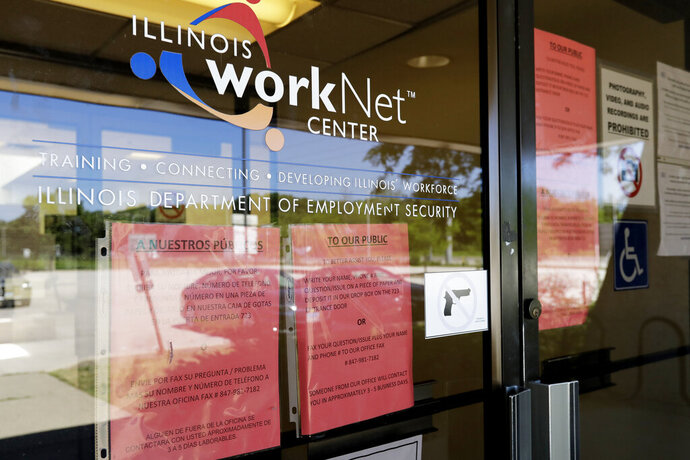
    WASHINGTON (AP) — The number of laid-off Americans seeking unemployment benefits fell last week to 787,000, a sign that job losses may have eased slightly but are still running at historically high levels.

    Last week’s figure was down from 842,000 the previous week, the Labor Department said Thursday. The government also revised down the number of people who sought aid in the two weeks before that. The revised total for the week that ended Oct. 3 was 767,000, the fewest since the viral pandemic erupted in March, though still more than three times the levels that preceded the pandemic.

    Economists welcomed the declines as evidence that the job market is still recovering from the pandemic recession. But some cautioned that the improvement could prove short-lived. With confirmed infections having neared 60,000 in the past week, the most since July, consumers have been unable or reluctant to shop, travel, dine out or congregate in crowds — a trend that has led some employers to keep cutting jobs. Several states are reporting a record number of hospitalizations from the virus.

    “We doubt it will continue as COVID infections spread rapidly, pushing down demand for discretionary consumer services, especially in the hospitality sector,” said Ian Shepherdson, chief economist at Pantheon Macroeconomics, referring to the portion of the economy that includes hard-hit hotels, restaurants and bars.

    The downward revisions in applications for unemployment aid reflect a sharp decline in California, which in recent months has accounted for one-fourth of the nation’s total jobless claims. California stopped processing new applications for two weeks while it implemented anti-fraud technology and sought to process a huge backlog. The state’s workforce agency is now reporting a 30% drop in the number of new applications compared with its earlier levels.

    A drop that sharp suggests that the state’s previous figures had overstated layoffs and jobless claims in California. Many economists have grown skeptical of the accuracy of the government’s weekly figures.

    That’s because of fraud and the concern that some states may be double-counting applicants in their regular unemployment programs and in a new program that made contractors and gig workers eligible for jobless aid for the first time. In many states, contractors and gig workers must apply for aid under both the regular program and the new program to determine their eligibility.

    Applications fell broadly last week across the country, not just in California, declining in 39 states while rising in 11. They dropped nearly 12,000 in Florida, 10,000 in New York and 5,800 in Washington state.

    Thursday’s report also said the number of people who are continuing to receive unemployment benefits tumbled by 1 million to 8.4 million. The decline shows that some of the unemployed are being recalled to their old jobs or are finding new ones. But it also indicates that many jobless Americans have used up their state unemployment aid — which typically expires after six months — and have transitioned to a federal extended benefits program that lasts an additional three months.

    Many jobless recipients are now receiving only regular state unemployment payments because a federal weekly supplement of $300 has ended in nearly all states. And a $600-a-week federal benefit expired over the summer.

    The still-elevated number of jobless claims underscores that a full recovery from the pandemic recession remains far off. Job growth has slowed for three straight months, leaving the economy still 10.7 million jobs short of its pre-pandemic level. The unemployment rate remains high at 7.9%.

    And some major companies keep announcing layoffs. Aramark, a food services contractor that provides concessions at sports stadiums, said Wednesday that it would lay off 975 workers in Denver, most of whom worked at Coors Field, home of the Colorado Rockies. The company is also cutting 550 jobs in Kansas City. Most major league baseball games this season were played with limited or no crowds, thereby reducing the need for concession workers

    Amtrak said at a congressional hearing Wednesday that it would have to cut 2,400 jobs unless Congress approves emergency aid as part of another stimulus bill.

    Yet negotiations in Congress over another round of financial aid have largely stalled, with little prospect for a deal before Election Day. Democratic House Speaker Nancy Pelosi and Treasury Secretary Steven Mnuchin are continuing to negotiate. But Republican Senate Majority Leader Mitch McConnell has warned the White House against agreeing to a large package that would be opposed by most Senate Republicans

    Unless Congress can agree on a significant new rescue aid program, most economists expect growth to slow in the final three months of the year from a rapid rebound in the July-September quarter. That would mean a more prolonged recovery of the jobs and output that the economy lost to the coronavirus.

    Congress’ failure to extend aid would also deepen the hardship for many of the jobless, who are struggling to pay bills with unemployment checks that, on average, replace just one-third of their prior earnings. Nearly one in six renters — 11.8 million people — are behind on their rent payments, according to an analysis of Census data by the Center on Budget and Policy Priorities.

    The number of people whose state benefits have expired and are now receiving aid for an additional 13 weeks from federal and state extended benefit programs rose 600,000 last week to 3.7 million, the government said.

    An additional 345,000 people applied for jobless aid under a separate program that made the self-employed, contractors and gig workers eligible for unemployment benefits for the first time. Those figures aren’t adjusted for seasonal trends, so they are reported separately.

    Both the extended aid and the jobless aid for contractors and gig workers will expire by year’s end. Millions of unemployed people would then be left without any benefits at all. An exception is in states with particularly high unemployment, where laid-off workers can receive 13 more weeks of state aid.