Tag: coronavirus

  • Mississippi Announces 550 New Reported COVID Cases

    Mississippi Announces 550 New Reported COVID Cases

    Gov. Tate Reeves extends his Safe Return Executive Order

    JACKSON, Miss. (AP) — The Mississippi Department of Health announced an additional 550 confirmed cases of the new coronavirus Friday, after record-high numbers reported the day before.

    After the department reported 1,092 new cases of coronavirus Thursday, State Health Officer Dr. Thomas Dobbs warned of continuing increases if people do not take social distancing and mask-wearing seriously.

    “If we’re not careful, Mississippi is going to look like New York at the height of the pandemic,” Dobbs said at a press briefing.

    On Friday evening, Gov. Tate Reeves announced the extension of his Safe Return Executive Order, which limits the amount of people who can gather in groups, and recommends retail stores, bars and restaurants limit capacity to 50%. The Safe Return Order is extended through July 6. Reeves also extended all unemployment benefits to those out of work due to the coronavirus until the end of July.

    “The threat is far from over. Extending our Safe Return order will give us much-needed time to assess this rapidly-changing situation and adapt our response to slow the spread,” Reeves said in a statement.

    Reeves said he needs Mississippians to increase their efforts to follow health and safety guidelines.

    “We’re taking every step possible at the state-level to protect public health, but we can’t do it alone,” he said. The only way through this pandemic is together. I urge my fellow Mississippians to do their part to help limit transmission in their communities and take care of each other.”

    In his order, Reeves also announced that public pools can now be open 24 hours a day if social distancing is adhered to. Concession stands at sporting complexes can now be open if employees wear masks and customers stand 6 feet apart.

    The Health Department said Friday that Mississippi — with a population of about 3 million — has had at least 25,066 cases and 1,022 deaths from the coronavirus as of Thursday evening. That is six additional deaths from the day before.

    The Health Department said at least 2,514 cases of the virus have been confirmed in long-term care facilities such as nursing homes, with at least 507 virus-related deaths in those facilities.

    The number of coronavirus infections is thought to be far higher because many people have not been tested, and studies suggest people can be infected without feeling sick. For most people, the coronavirus causes mild or moderate symptoms that clear up within weeks. But for others, especially older adults and people with existing health problems, it can cause severe symptoms and be fatal.

  • Is it safe to stay in hotels and motels as reopenings get underway?

    Is it safe to stay in hotels and motels as reopenings get underway?

    To reassure potential guests, many hotels are sharing the changes they’re making on their websites.

    It depends on the precautions both you and the hotel take. It’s best to call ahead to see how the place you’re considering is working to minimize the risk of COVID-19. The U.S. Centers for Disease Control and Prevention suggests asking if the staff is wearing face coverings, for example, and whether cleaning practices have been stepped up.

    New practices may include adding hand sanitizer stations in lobbies, disinfecting surfaces like elevator buttons more frequently and removing extra items in rooms, such as pens and paper. Breakfast buffets may also be replaced with prepackaged meals.

    Once at a hotel, Dr. Albert Ko at the Yale School of Public Health says guests should continue to follow social distancing guidelines, since the virus spreads mainly from person-to-person contact. Dine outside if possible, he says, and don’t crowd into elevators.

    The CDC also suggests taking the stairs when possible and minimizing the use of common areas.

    __

    The AP is answering your questions about the coronavirus in this series. Submit them at: FactCheck@AP.org.

  • This Father’s Day, dads have new respect for duties at home

    This Father’s Day, dads have new respect for duties at home

    Dads are spending more time taking care of children under 6 than they did before the coronavirus pandemic started.

    NEW YORK (AP) — Rahul Gandhi’s twin girls were born dangerously premature, with a slim chance they would have normal lives after barely surviving birth eight years ago.

    “They eventually came home and beat those odds,” said the 40-year-old father, who treasures the time he’s had to discover new facets of his young fighters while working from home in Brooklyn during the coronavirus pandemic.

    Like millions of dads around the globe, Gandhi has taken on more responsibilities at home during lockdown. There have been challenges with distance learning, for one, which have revealed important lessons about his girls.

    “I learned more about their different personalities in school,” he said. “While one is quiet and reserved, which is the opposite at home, the other is engaged and raises her hand to participate non-stop, also the reverse at home. I saw their evolving interests, whether arts and sciences or math, and how much more they support each other than I thought.”

    Other fathers, including those who already were entrenched in housework, child care and meal prep, have developed a newfound respect for the “second shift,” a term coined in the 1980s after research showed that women still shouldered most duties at home despite working outside jobs.

    “I’ve almost perfected my one-trick repertoire of girls’ hairstyles that is the pony tail,” joked 46-year-old Anthony Bianco, who became the primary caregiver in Brisbane, Australia, to two daughters, ages 6 and 9, as his wife works as a community nurse.

    He lost a job last October and has been home since another fell through in February, before pandemic chaos ensued.

    “I’ve been the primary caregiver, including doing most of the remote learning,” he said. “It’s made us closer. I’ve also realized that people take teachers way too much for granted.”

    Pediatrician Craig Garfield studies the roles of fathers in their children’s lives and is a professor of pediatrics and medical social sciences at Northwestern University in Chicago.

    “The pandemic has reshaped the way fathers are involved with their families and children,” he said via email. “Whether it’s play, reading a book or getting down on the floor and spending time with their kids, this is an unprecedented opportunity for fathers to be really involved.”

    According to one preliminary study, 45% of fathers said they have spent more time taking care of children under 6 than they did before the coronavirus scare sent them home.

    The researchers, Daniel L. Carlson of the University of Utah, Richard Petts of Ball State University and Joanna R. Pepin of the University of Texas-Austin, surveyed 1,060 U.S. parents in mixed-gender marriages in late April to see how divisions of housework and child care may have changed since the beginning of the pandemic.

    Stay-at-home orders were issued and schools, child care centers and non-essential businesses were shuttered, putting a strain on families and demolishing barriers between work and home. Millions of people lost their jobs.

    The preliminary study found that 43% of fathers reported pitching in more with care of older children, and 42% reported an overall increase in housework time. The percentages of mothers who said their partners increased their time doing housework and caring for children were markedly lower, from 20 percent to 34 percent, according to the study.

    “The truth probably lies somewhere in the middle,” Garfield said.

    There was no such disagreement on what mothers have been doing. More than one-quarter of both fathers and mothers reported an increase in the housework and child care that mothers perform.

    “I think of single parents with two kids and a job that obligates them to show up in person. What does one do? In the beginning, it felt like my wife and I were making life-changing decisions on a nearly daily basis,” said Zach Kubin, who left New York City for Connecticut in March with his family.

    Kubin, 37, and his wife have two children, ages 3 and a year and a half. Both parents are working full time at home. Before the pandemic, Kubin spent most of his time on the road meeting with clients as head of sales for an advertising tech company.

    “I wouldn’t say I’ve become the ‘primary caregiver,’” Kubin said. “More that I’ve become a `caregiver.’ I make the milk. I change the diapers. I think about what to do for lunch and dinner. Things that I usually would just do on the weekend are now things that require thought every day.”

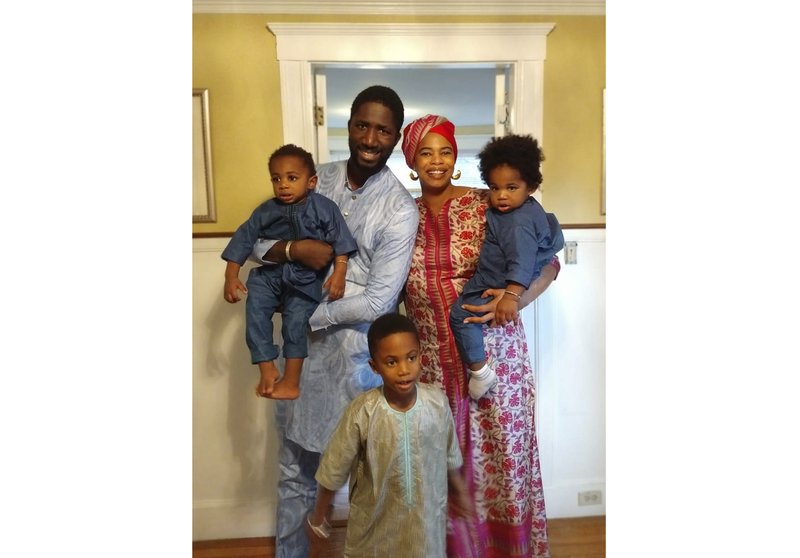
    In Boston, 33-year-old Bouba Dieme is particularly vulnerable to the new virus as he awaits a heart transplant. He and his wife have both been working full time at home since March while pitching in with their three boys, a 5-year-old and year-old twins.

    They’re among the lucky. Their nanny has continued to come during the day throughout lockdown.

    Dieme used to commute about 90 minutes each way to his office at a consortium working on energy efficiency at utility companies. His wife is a director at a Federal Reserve bank.

    “We’ve been tag teaming on the older son’s schooling,” Dieme said. “I feel very grateful. We’re much more appreciative of the little things. I’m very patient by nature, but the kids can really take me to the limits. It was a matter of learning to be more patient and getting more creative with the kids.”

    Two years ago, 34-year-old Tyler Moore left his job as a school administrator in New York to return to the classroom. He’s been teaching remotely. His wife left her job as a pediatric occupational therapist prior to the birth of their third child earlier this year just as the pandemic struck.

    “One of my greatest challenges with working and caring for the girls has been that I don’t feel like I’m doing any one thing well. Not until I tried to balance teaching, parenting and helping around the house did I truly feel the weight of this,” Moore said.

    “Before the quarantine I really struggled to understand some of the frustrations that my wife had with caring for our girls, managing the household and crossing things off her to-do list,” he said. “Her primary frustration is that she never seemed to get as much done as she thought she would and that she never had thinking time or alone time. I totally get that now.”

  • $250 Payment Proposed For Louisiana’s Front-Line Workers

    $250 Payment Proposed For Louisiana’s Front-Line Workers

    Disagreement remains over how to fund the $50 million in payments

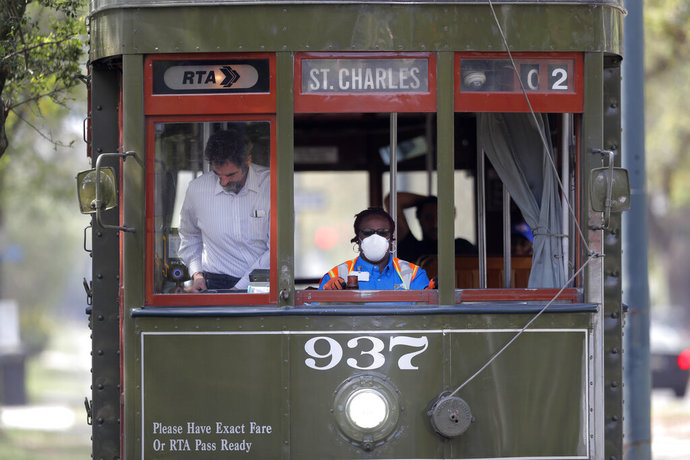
    BATON ROUGE, La. (AP) — Grocery store employees, nurses, bus drivers and other front-line workers who stayed on their jobs in the early days of Louisiana’s coronavirus outbreak could receive a one-time $250 state payment, under a bill that started advancing Wednesday in the state House.

    Democratic lawmakers are pushing the hazard pay proposal — paid out of $50 million in federal virus aid from Congress — in an ongoing special session focused largely on business recovery from the pandemic. They’re trying to broker a deal with Republicans who need some Democratic support to pass certain business tax breaks and other pro-business measures.

    The Ways and Means Committee sent the $250 hazard pay bill by House Democratic leader Sam Jenkins of Shreveport to the full House for debate without objection Wednesday, in a bipartisan show of support.

    “This committee has gone above and beyond to support our big business and our small businesses,” said Rep. Matthew Willard, a New Orleans Democrat. “We have yet to do anything for the working people of Louisiana. While some had the luxury of staying home and protecting their health and safety, others … did not have that choice.”

    Jenkins said the state should offer aid to grocery store workers, nurses, janitors, nursing home employees, bus drivers, EMS workers, fire and rescue employees, sanitation workers and others who risked their health to keep businesses operating during Louisiana’s stay-at-home order.

    “We do believe that these funds will immediately go back into our local economies. We think it will be a stimulus,” Jenkins said. “We feel like this is an immediate investment into our economy.”

    The $250 payments would be available to workers with an adjusted gross income on their 2019 tax return of $50,000 or less and who had to report to a job outside of their home for at least 200 hours from March 22 through May 14. They would have to hold one of the long list of jobs considered “essential critical infrastructure” under the bill.

    The Department of Revenue would verify an applicant’s eligibility, and the state’s Board of Commerce and Industry would have to approve the applications before payments are made.

    But disagreement remains over how to fund the $50 million in payments, raising questions about whether a deal can be reached before the special session must end June 30.

    Republican legislative leaders want to take the money from more than $500 million in federal aid set aside to reimburse local governments for expenses responding to the virus outbreak. Democrats want the dollars to come from $300 million in federal aid earmarked for small business grants.

    The House committee adopted language by Rep. John Stefanski, a Crowley Republican, that targets the local government assistance money to pay for the $250 one-time supplement for workers.

    “I want to make sure that our small businesses are protected as well,” Stefanski said.

    Willard said local governments are “in dire need” of assistance to help with their virus-related expenses.

    “I promise that I will try to find a compromise,” Stefanski told Willard.


  • First drug proves able to improve survival from COVID-19

    First drug proves able to improve survival from COVID-19

    Researchers estimated that the drug would prevent one death for every eight patients treated

    Researchers in England say they have the first evidence that a drug can improve COVID-19 survival: A cheap, widely available steroid called dexamethasone reduced deaths by up to one third in severely ill hospitalized patients.

    Results were announced Tuesday and researchers said they would publish them soon. The study is a large, strict test that randomly assigned 2,104 patients to get the drug and compared them with 4,321 patients getting only usual care.

    The drug was given either orally or through an IV. After 28 days, it had reduced deaths by 35% in patients who needed treatment with breathing machines and by 20% in those only needing supplemental oxygen. It did not appear to help less ill patients.

    “This is an extremely welcome result,” one study leader, Peter Horby of the University of Oxford, said in a statement. “The survival benefit is clear and large in those patients who are sick enough to require oxygen treatment, so dexamethasone should now become standard of care in these patients. Dexamethasone is inexpensive, on the shelf, and can be used immediately to save lives worldwide.”

    Even though the drug only helps in severe cases, “countless lives will be saved globally,” said Nick Cammack of Wellcome, a British charity that supports science research.

    “Dexamethasone must now be rolled out and accessed by thousands of critically ill patients around the world,” said Cammack, who had no role in the study. “It is highly affordable, easy to make, can be scaled up quickly and only needs a small dosage.”

    Steroid drugs reduce inflammation, which sometimes develops in COVID-19 patients as the immune system overreacts to fight the infection. This overreaction can prove fatal, so doctors have been testing steroids and other anti-inflammatory drugs in such patients. The World Health Organization advises against using steroids earlier in the course of illness because they can slow the time until patients clear the virus.

    Researchers estimated that the drug would prevent one death for every eight patients treated while on breathing machines and one for every 25 patients on extra oxygen alone.

    This is the same study that earlier this month showed the malaria drug hydroxychloroquine was not working against the coronavirus. The study enrolled more than 11,000 patients in England, Scotland, Wales and Northern Ireland who were given either standard of care or that plus one of several treatments: dexamethasone; the HIV combo drug lopinavir-ritonavir, the antibiotic azithromycin; the anti-inflammatory drug tocilizumab; or plasma from people who have recovered from COVID-19 that contains antibodies to fight the virus.

    Research is continuing on the other treatments. The research is funded by government health agencies in the United Kingdom and private donors including the Bill and Melinda Gates Foundation.

    ___

    AP medical writer Maria Cheng contributed reporting from London.

  • Louisiana COVID-19 hospitalizations dip below 800

    Louisiana COVID-19 hospitalizations dip below 800

    NEW ORLEANS (AP) — The number of confirmed COVID-19 cases in Louisiana climbed to about 38,500 in figures reported Wednesday, an increase of more than 400 from the day before as the number of tests conducted in the state continues to grow.

    However, the number of people hospitalized with the disease caused by the new coronavirus has fallen below 800 for the first time since late March.

    A falling hospitalization rate is one of the factors state officials use to decide how and when restrictions on public gatherings and business can be eased.

    The death toll in the state from the disease rose to 2,617, up by 21 from Tuesday. Officials say at least 28,700 people have recovered from the disease.

    For most people, the new coronavirus causes mild or moderate symptoms, such as fever and cough that clear up within weeks. For some, especially older adults and those with existing health problems, it can cause more severe illness and be life-threatening.

  • WHO warns that 1st wave of pandemic not over; dampens hopes

    WHO warns that 1st wave of pandemic not over; dampens hopes

    BANGKOK (AP) — As Brazil and India struggle with surging coronavirus cases, a top health expert is warning that the world is still smack in the middle of the pandemic, dampening hopes for a speedy global economic rebound and renewed international travel.

    “Right now, we’re not in the second wave. We’re right in the middle of the first wave globally,” said Dr. Mike Ryan, the World Health Organization’s executive director.

    “We’re still very much in a phase where the disease is actually on the way up,” Ryan told reporters, pointing to South America, South Asia and other areas where infections are still on the rise.

    India saw a record single-day jump in new cases for the seventh straight day. It reported 6,535 new infections Tuesday, raising its total to 145,380, including 4,167 deaths.

    The virus has taken hold in some of India’s poorest, most densely populated areas, underscoring the challenges that authorities face in curbing the spread of a virus for which a vaccine or cure isn’t yet in sight.

    Most of India’s cases are concentrated in the western states of Maharashtra, home to the financial hub of Mumbai, and Gujarat. Infections have also climbed in the east as migrant workers stranded by lockdowns returned to their native villages from India’s largest cities.

    Despite this, India allowed domestic flights to resume Monday following a two-month hiatus, but at a fraction of normal traffic levels.

    WHO poured cold water on the hopes of Brazilian President Jair Bolsonaro and others of quickly re-opening the economy, warning that authorities must first have enough testing in place to control the spread of the pandemic. Brazil has 375,000 coronavirus infections — second only to the 1.6 million cases in the U.S. — and has counted over 23,000 deaths but many fear Brazil’s true toll is much higher.

    Ryan said Brazil’s “intense” transmission rates means it should keep some stay-at-home measures in place, regardless of the negative impacts on its economy.

    “You must continue to do everything you can,” he said.

    But Sao Paulo Gov. João Doria has ruled out a full lockdown in Brazil’s largest state economy and plans to start loosening restrictions on June 1.

    In Rio de Janeiro, Mayor Marcelo Crivella, an evangelical bishop, designated religious institutions as “essential services” so they could stay open with social distancing rules despite recommendations for people to stay at home and most businesses remaining shut.

    A U.S. travel ban was taking effect Tuesday for foreigners coming from Brazil, moved up two days earlier than its original date. It does not apply to U.S. citizens.

    In Europe, the Russian government reported a record daily spike Tuesday of 174 deaths, bringing the country’s confirmed death toll to 3,807. Russia’s coronavirus caseload surpassed 360,000 — the third highest in the world — with almost 9,000 new infections registered.

    The country’s comparatively low mortality rate has raised questions among experts both in Russia and in the West. Russian officials, however, vehemently deny manipulating any figures and attribute the low numbers to the effectiveness of the country’s lockdown measures.

    The question of who can travel where and when remains a dilemma that officials still have yet to solve.

    Spain’s foreign minister said Tuesday that European Union members should commonly agree to open borders and jointly determine which non-EU countries are designated as safe for travel. Arancha González Laya told Cadena SER radio that resuming cross-border travel should be decided collectively even if countries in the 27-nation bloc are phasing out lockdowns at different dates.

    “We have to start working with our European partners to retake the freedom of movement in European territories,” she said.

    The minister said Spain is eager to welcome tourists to shore up an industry that accounts for 12% of the country’s GDP but plans to do it with “health, sustainability and safety.”

    South Korea on Tuesday began requiring people to wear masks on public transit and in taxis. The country is tracing dozens of infections linked to nightclubs and other entertainment venues as it prepares for 2.4 million students to return to school on Wednesday.

    But South Korean rights groups have criticized government plans to require some businesses to register customers with smartphone QR codes. They say the country’s technology-driven approach to controlling COVID-19 has increased state surveillance too much.

    South Korea’s Health Ministry said beginning in June “high-risk” businesses such as bars, nightclubs, gyms, karaoke rooms and concert halls will be required to use QR codes to register customers so they could be found more easily when infections occur.

    In a joint statement Tuesday, groups including privacy watchdog Jinbo Net called the move excessive.

    “That’s exactly how we step into a surveillance state,” the statement said.

    Tests by a U.S. biotechnology company, Novavax, have begun in Australia with hopes of releasing a proven vaccine this year. A Novavax executive said 131 volunteers were getting injections in the first phase of the trial to test the vaccine’s safety and effectiveness.

    Novovax expects the results of the Australian trial to be known in July.

    About a dozen experimental vaccines are in early stages of testing or poised to start, and it’s not clear whether any will prove safe and effective. But they use different methods and technologies, increasing the odds that one might succeed.

    “We are in parallel making doses, making vaccine in anticipation that we’ll be able to show it’s working and be able to start deploying it by the end of this year,” Novovax’s research chief, Dr. Gregory Glenn, told a virtual news conference from the company’s headquarters in Maryland.

    Meanwhile, WHO said it will temporarily drop hydroxychloroquine — the malaria drug U.S. President Trump said he is taking — from its global study into experimental COVID-19 treatments.

    WHO director-general Tedros Adhanom Ghebreyesus said there would be a “temporary pause” on the hydroxychloroquine arm of its global clinical trial. The announcement came after a paper in the Lancet showed that people taking the drug were at higher risk of death and heart problems.

    Still, several countries in Europe and North Africa are using chloroquine and hydroxychloroquine to treat COVID-19 patients. Brazil’s Bolsonaro has ordered an army lab to boost its production of chloroquine.

    Other treatments in the WHO study, including the experimental drug remdesivir and an HIV combination therapy, are still being pursued.

    Worldwide, the virus has infected nearly 5.5 million people, killing over 346,000, according to a tally by Johns Hopkins University. Europe has had about 170,000 deaths and the U.S. has seen nearly 100,000. Experts say the tally understates the real effects of the pandemic due to counting issues in many nations.

  • AP count: Over 4,300 virus patients sent to NY nursing homes

    AP count: Over 4,300 virus patients sent to NY nursing homes

    NEW YORK (AP) — More than 4,300 recovering coronavirus patients were sent to New York’s already vulnerable nursing homes under a controversial state directive that was ultimately scrapped amid criticisms it was accelerating the nation’s deadliest outbreaks, according to a count by The Associated Press.

    AP compiled its own tally to find out how many COVID-19 patients were discharged from hospitals to nursing homes under the March 25 directive after New York’s Health Department declined to release its internal survey conducted two weeks ago. It says it is still verifying data that was incomplete.

    Whatever the full number, nursing home administrators, residents’ advocates and relatives say it has added up to a big and indefensible problem for facilities that even Gov. Andrew Cuomo — the main proponent of the policy — called “the optimum feeding ground for this virus.”

    “It was the single dumbest decision anyone could make if they wanted to kill people,” Daniel Arbeeny said of the directive, which prompted him to pull his 88-year-old father out of a Brooklyn nursing home where more than 50 people have died. His father later died of COVID-19 at home.

    “This isn’t rocket science,” Arbeeny said. “We knew the most vulnerable — the elderly and compromised — are in nursing homes and rehab centers.”

    Told of the AP’s tally, the Health Department said late Thursday it “can’t comment on data we haven’t had a chance to review, particularly while we’re still validating our own comprehensive survey of nursing homes admission and re-admission data in the middle of responding to this global pandemic.”

    Cuomo, a Democrat, on May 10 reversed the directive, which had been intended to help free up hospital beds for the sickest patients as cases surged. But he continued to defend it this week, saying he didn’t believe it contributed to the more than 5,800 nursing and adult care facility deaths in New York — more than in any other state — and that homes should have spoken up if it was a problem.

    “Any nursing home could just say, ‘I can’t handle a COVID person in my facility,’” he said, although the March 25 order didn’t specify how homes could refuse, saying that ”no resident shall be denied re-admission or admission to the (nursing home) solely based” on confirmed or suspected COVID-19.

    Over a month later, on April 29, the Health Department clarified that homes should not take any new residents if they were unable to meet their needs, including a checklist of standards for coronavirus care and prevention.

  • Colleges plan fall opening, but campuses won’t look the same

    Colleges plan fall opening, but campuses won’t look the same

    Growing numbers of U.S. colleges are pledging to reopen this fall, with dramatic changes to campus life to keep the coronavirus at bay. Big lectures will be a thing of the past. Dorms will will be nowhere near capacity. Students will face mandatory virus testing. And at some smaller schools, students may be barred from leaving campus.

    Even as some universities abandon hope of in-person instruction next semester, citing concerns from public health officials, dozens are announcing plans to welcome students back in August. They acknowledge that an outbreak could force classes back online, but many of their leaders say the financial and political pressures to reopen are too large to ignore.

    At West Virginia University, President E. Gordon Gee said students don’t want to wait for a vaccine, and the school can’t afford to.

    “If it was simply based on science, we would keep everything shut down until we have a vaccine and until it’s working. But I don’t feel that that’s feasible, either economically or socially, and certainly not educationally,” Gee said. “We will open, but it will be different.”

    Colleges planning to reopen include Purdue University, Texas A&M University, the University of Notre Dame and statewide systems in Arizona, Florida, New Hampshire and elsewhere. Some plan to make decisions this summer, including Princeton University, where officials say it’s too soon to make a call.

    The California State University system, by contrast, has said its 23 campuses will stay mostly online this fall, citing predictions of a virus resurgence later this year. Others including the University of South Carolina, Rice and Creighton universities plan to bring students back but end the term early, before Thanksgiving, anticipating a second wave could hit later in the fall.

    President Donald Trump has encouraged schools to reopen despite concerns from his top infectious disease expert, Dr. Anthony Fauci. Speaking at a Senate hearing last week, Fauci said it would be “a bit of a bridge too far” to expect a vaccine before the fall. Trump countered that the comment was “not an acceptable answer.”

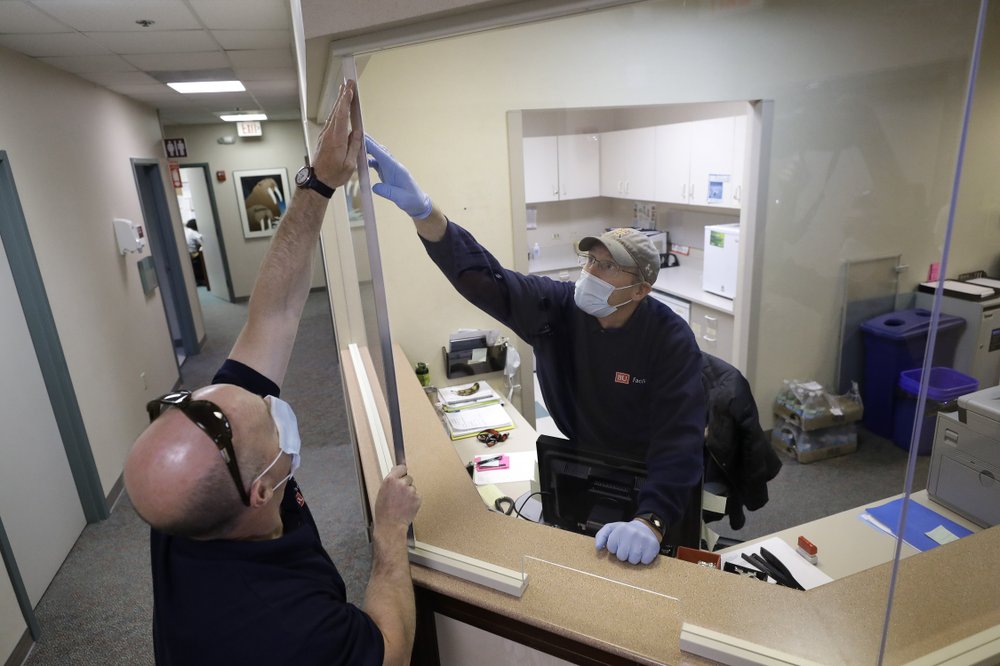
    New guidelines issued by the Centers for Disease Control and Prevention this week say colleges should work with state and local officials to decide how to reopen. But the agency suggests a range of safety measures for campuses, saying they should keep common spaces closed if possible, hold smaller classes in larger rooms, and install plastic barriers in areas where it’s hard to stay apart.

    In other countries emerging from lockdown, universities have been slow to reopen. Primary schools in France were allowed to reopen earlier this month, but universities are expected to remain closed through the summer. Universities in New Zealand have been granted permission to reopen, but most say they plan to stay online until July or later.

    Britain’s Cambridge University announced Wednesday that all in-person lectures will be canceled through the 2020-21 academic year because of the pandemic.

    In the U.S., colleges that plan to reopen have told students to expect strict social distancing measures, including mandatory use of face masks. College leaders say widespread virus testing will be the linchpin to a safe reopening. At many schools, students who test positive would be placed in dorm rooms reserved as quarantine space.

    But there are questions about schools’ ability to provide large numbers of tests. Some research universities say they have the lab equipment to analyze virus tests, but not enough swabs and testing chemicals. Smaller schools will need to hire companies to handle tests, likely at a significant cost.

    In a call with 14 university leaders last week, Vice President Mike Pence pledged to help colleges ramp up testing operations. But some on the call said details, especially about funding, remain hazy.

    “This testing is going to cost money, and many academic institutions are already going to be fiscally challenged,” said Michael Lovell, president of Marquette University in Milwaukee, Wisconsin. “There’s not a clear path from an institutional point of view.”

    Once students are back on campus, the primary goal will be to keep them spaced out, colleges say. Classroom desks will be arranged 6 feet apart. Class schedules may be staggered. Big lectures will be split up or moved online. Some colleges are discussing teaching certain classes outside or in tents.

    A growing number of colleges say they will offer a “hybrid flex” model, in which classes are offered online and in person at the same time, and students can choose either option. Professors at some colleges will also be allowed to continue teaching remotely through video feeds projected in the classroom.

    Most vexing for colleges, however, is the dilemma of dorm life. At some schools, suites meant for several students will be limited to one or two. Bathrooms shared by entire floors will be restricted to a handful of students. With only so much dorm space, some colleges have been scrambling to rent nearby apartments as overflow housing.

    At Trinity College, a school of 2,000 in Hartford, Connecticut, officials hope to place every student in their own room. Staff members have been scouring campus with tape measures in recent weeks to make sure students will have space to stay 6 feet apart.

    “I have a huge incentive to want to reopen. I want to see our students. I want to see them educated in the best way possible,” Trinity President Joanne Berger-Sweeney said. “And I also want to remain a significant and good employer in the state of Connecticut at a time when that’s really important.”

    Boston University is exploring whether the housing problem can be solved by placing students into “family groups” that live together but have little social interaction with other groups. Robert Brown, the school’s president, said placing all students alone “may be overly isolating for students and lead to another set of problems.”

    At Claremont McKenna College near Los Angeles, officials are wondering how their single dining hall will accommodate 900 students who buy meal plans. The school is weighing measures to restrict capacity in the hall, which may require students to eat in shifts or take their meals outside.

    It’s just one way in which campus life will “not be the same as what we have grown so accustomed to,” said Hiram Chodosh, president of the college.

    Hoping to keep the virus away, some smaller colleges are considering limits or even outright bans on travel in and out of campus. In a recent letter to students, Amherst College in Massachusetts said officials “may need to require that you limit your movement to on-campus locations only.”

    At West Virginia, Gee said he’ll rely on students to police their own behavior. He argues that peer pressure is more effective “than a 76-year-old university president saying don’t do it.” Gee, known for his impromptu appearances at student activities on campus and off, said he will scale back this fall, much to his chagrin.

    “It’s going to be a lot different for me, and I’m going to miss that,” Gee said. “But I view us as dancing with the coronavirus. This is going to be with us forever, even once we find a vaccine. We just need to learn how to manage it in a way that allows life to go on.”

  • Donation brings a bit of Mardi Gras to hospital workers

    NEW ORLEANS (AP) — Emily Bauman is a believer in the power of music. So when she got her stimulus check, she put that power to work — for New Orleans’s hospital workers and the city’s out-of-work musicians.

    Bauman and a friend funded the stimulus serenade, a concert for front-line health care workers in one of the nation’s coronavirus hot spots, and a paying gig for musicians who badly need one.

    Health care workers in masks and hair coverings hoisted umbrellas and waved handkerchiefs, danced and clapped as nine members of the New Orleans Jazz Orchestra performed outside New Orleans East Hospital. They played “Do Whatcha Wanna” and “Hot Sausage Rag” and Paul Barbarin’s “Second Line.”

    In a city known for music and good times, last Friday’s serenade was a balm for difficult ones.

    “This was fantastic therapy for us and our staff,” said Takeisha Charles Davis, a doctor at the hospital and among those dancing there on Friday. “The last 8½ weeks have been tremendously stressful.”

    Their benefactor is not even a local resident. A professor, classical pianist and jazz enthusiast, Bauman lives in New York City. (An anonymous friend also donated a stimulus check to the project.)

    At first, the plan was to present the serenade in New York. When Bauman was told it wasn’t practical to do it there, she was elated to hear it would be workable in New Orleans.

     Bauman, 49, said she fell hard for NOLA when she lived there temporarily as part of the Teach for America program in the 1990s.

    “Music, I think, is really important as a way for us to communicate with each other in these isolating times,” she said.

    Her hope: to inspire copycats who will fund stimulus serenades across the country and in New Orleans.

    Adonis Rose, artistic director for the jazz orchestra and one of the musicians performing at the serenade, said the 20 of the group’s members who typically perform all over town are now unemployed due to the pandemic and subsequent business closures.

    Rose said the gift was a boost to musicians who have been unemployed and in quarantine for more than two months.

    “This was great for the musicians to keep the musicians working and also to show support for the health care workers and the patients affected by the virus,” Rose said. “Being able to bring them together, to be able to do it for such a great cause, was amazing.”

    There’s enough money left over for a second concert, planned for later this month at the Lambeth House, the retirement and assisted living facility where a dozen died early on in the pandemic.

    Bauman, more than 1,400 miles away, watched the hospital concert on the jazz orchestra’s website.

    “I loved it and found it very emotional but also very joyful, which I didn’t expect,” she said. “The dancing was so inspiring and made me feel watching it like I was there and part of it. I actually felt like the serenade was sending courage and soul to me, too, and I was one of the ones organizing it!”