Tag: covid

  • Mississippi football practice can start Aug. 10 and events can start Aug. 17

    Mississippi football practice can start Aug. 10 and events can start Aug. 17

    Mississippi high school sports officially have a schedule.

    The Mississippi High School Activities Association voted on Tuesday to begin the process of scheduling fall 2020 sporting events. Per the vote, practices for high school football can begin on Aug. 17 and games can begin on Sept. 4. Volleyball, cross country and swimming can begin practicing on Aug. 10 and start events on Aug. 17.

    This announcement delays the start of the season by two weeks but still allows for events to happen for most of the fall. The delay, of course, comes in the wake of the COVID-19 pandemic which has caused widespread shutdowns and rescheduling for business and sports leagues across the country.

    The coronavirus pandemic ended the MHSAA spring athletics schedule early on top of the limitations it put upon public schools for general educational purposes.

    For football, Classes 1A, 5A and 6A will play 10-game seasons and 2A, 3A and 4A will play nine-game seasons. Football teams can host a scrimmage between two teams on Aug. 28 but will not be permitted to host a jamboree in that first week before the regular season begins.

    The playoffs are not being rescheduled. Teams in 2A, 3A and 4A will begin their playoffs on Nov. 6 and teams in 1A, 5A and 6A will begin the postseason on Nov. 13. The North State and South State championships are still scheduled for Nov. 27 for all classifications and the state championship games will be held on Dec. 4 and 5.

    Postseason schedules for volleyball, cross country and swimming remain on dates as scheduled as well. Meets or events that are being lost because of the two-week delay can be rescheduled if both schools can agree on an appropriate date.

    Original Article At: The Clarion Ledger

    Contact Nick Suss at 601-408-2674 or nsuss@gannett.com. Follow @nicksuss on Twitter.

  • Face Coverings to be Mandatory in Louisiana Starting Monday, July 13, 2020

    Face Coverings to be Mandatory in Louisiana Starting Monday, July 13, 2020

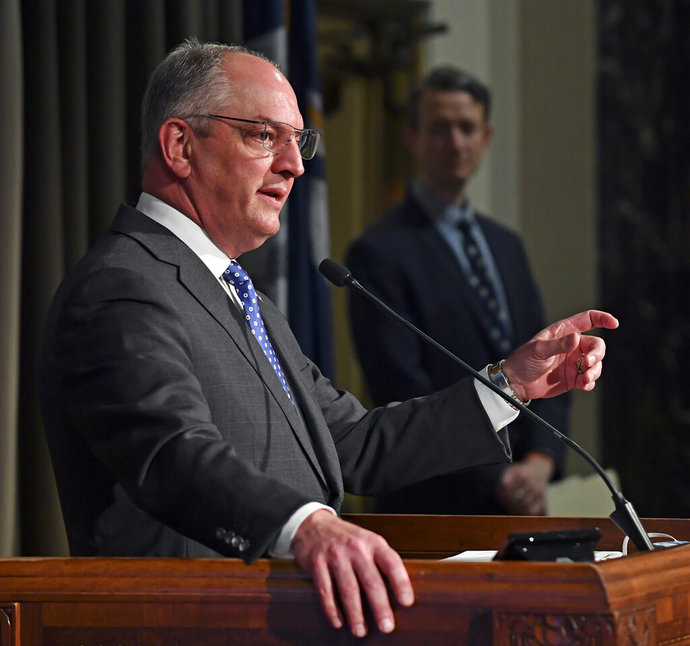
    Today, Gov. John Bel Edwards announced a mandatory mask requirement for Louisiana and ordered bars in the state closed to on-premises consumption, as the state experiences increasing spread of COVID-19. The Governor also limited indoor social gatherings like wedding receptions, class reunions and parties to 50 total people. With these additional restrictions, Louisiana remains in Phase Two of the Roadmap for a Resilient Louisiana.

    The statewide mask mandate, which will allow for parishes without high COVID-19 incidence to opt out if they choose, and bar closures go into effect Monday, July 13 at 12:01 a.m., per a revised Phase Two proclamation signed today. The order will also limit the size of gatherings to 50. The new order is set to expire July 24, 2020, but could be extended.

    “Cases in Louisiana continue to increase, including setting a record-high number of new cases reported in one day, today and yesterday. More than two thousand new COVID infections reported each of these days and increased hospitalizations are signs that we continue to go in the wrong direction in our work to control COVID-19 in our state. While I had hoped to avoid going backwards on restrictions, it is obvious that it is necessary to slow the spread of infection in our state, as COVID-19 has spread to every corner, at a level higher than we have previously seen. This is why I am now mandating face coverings statewide and also closing all bars in Louisiana to on-premises consumption, in addition to putting in limits on the size of indoor gatherings,” Gov. Edwards said. “Right now, all Louisianans need to work together to reduce the spread of COVID-19 by wearing their face masks, keeping social distance, washing their hands frequently and staying at home when they are feeling sick. These are reasonable expectations while we fight to reduce the spread of the illness in our state. This approach also gives us the best possible chance to again flatten the curve without moving back to Phase One.”

    MASK MANDATE
    The statewide mask mandate applies to all 64 parishes in Louisiana. However, parishes with a COVID-19 incidence of fewer than 100 cases per 100,000 people for the most recent two-week period for which data is available could choose to opt out of the mandate. Parish presidents do not have to opt out and may choose to keep a mask mandate in place. Currently, only three parishes in Louisiana do not exceed this standard, which will be updated every other week by the Louisiana Department of Health: Grant, Red River and West Feliciana.

    The order requires face coverings for everyone ages 8 and older except for the following:

    • Anyone who has a medical condition that prevents the wearing of a face covering
    • Anyone who is consuming a drink or food
    • Anyone who is trying to communicate with a person who is hearing impaired
    • Anyone who is giving a speech for broadcast or to an audience
    • Anyone temporarily removing his or her face covering for identification purposes
    • Anyone who is a resident of a parish without a high COVID incidence that has opted out of the masking mandate

    Masks are strongly recommended for children ages 2 to 7.

    CLOSURE OF BARS TO ALL ON PREMISES CONSUMPTION
    All bars, including those with food permits from the Louisiana Department of Health, will be closed to on-premises consumption. They can operate for curbside takeout or delivery service only.

    Since the start of the crisis, Louisiana has identified at least 36 outbreaks, impacting at least 405 people, involving bars, which were actually closed under the Governor’s original Stay at Home order. Public health officials believe going to bars is a higher public health risk than visiting other types of businesses because people are socializing and cannot wear masks when they drink. In addition, young people under the age of 30 make up the largest percentage of new COVID cases in Louisiana.

    GATHERING SIZE
    The new order also limits the size of social gatherings to 50 people indoors. Outdoor social gatherings are also limited to 50 people if individuals cannot avoid being within six feet of one another.

    This crowd size limitation shall not apply to those businesses deemed essential as defined by the Cybersecurity and Infrastructure Security Agency or any businesses and organizations operating at 50% capacity pursuant to Paragraphs (1) through (6) of Subsection (G) of Section 2 of 83 JBE 2020, including churches and other faith-based organizations.

    The 50-person limit will apply to indoor gatherings, like receptions, weddings and others. The changes are based on the advice of public health officials.

    Click here to read the proclamation.

  • Protective gear for medical workers begins to run low again

    Protective gear for medical workers begins to run low again

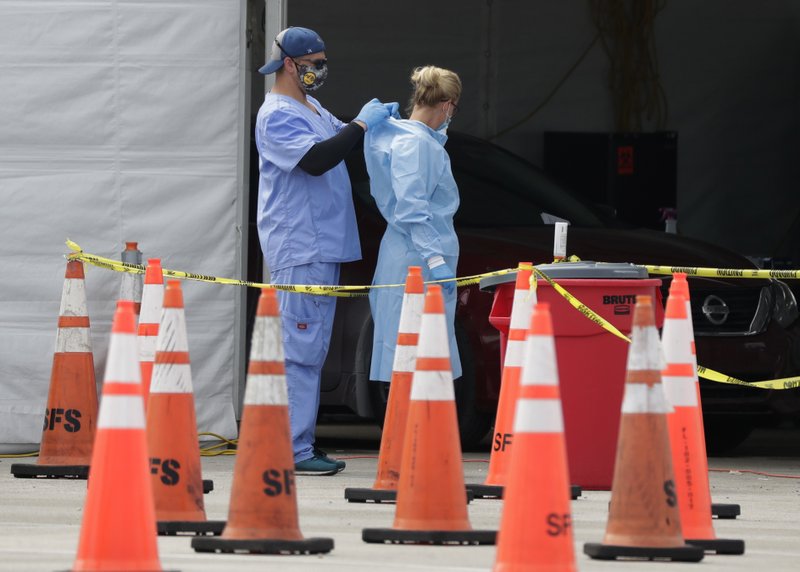
    The personal protective gear that was in dangerously short supply during the early weeks of the coronavirus crisis in the U.S. is running low again as the virus resumes its rapid spread and the number of hospitalized patients climbs.

    A national nursing union is concerned that gear has to be reused. A doctors association warns that physicians’ offices are closed because they cannot get masks and other supplies. And Democratic members of Congress are pushing the Trump administration to devise a national strategy to acquire and distribute gear in anticipation of the crisis worsening into the fall.

    “We’re five months into this and there are still shortages of gowns, hair covers, shoe covers, masks, N95 masks,” said Deborah Burger, president of National Nurses United, who cited results from a survey of the union’s members. “They’re being doled out, and we’re still being told to reuse them.”

    When the crisis first exploded in March and April in hot spots such as New York City, the situation was so desperate that nurses turned plastic garbage bags into protective gowns. The lack of equipment forced states and hospitals to compete against each other, the federal government and other countries in desperate, expensive bidding wars.

    In general, supplies of protective gear are more robust now, and many states and major hospital chains say they are in better shape. But medical professionals and some lawmakers have cast doubt on those improvements as shortages begin to reappear.

    In other virus-related developments Tuesday:

    — Brazil’s president, Jair Bolsonaro, said he has tested positive for COVID-19 after months of downplaying the virus’ severity. The 65-year-old populist confirmed the test results while speaking to reporters in the capital of Brasilia. Bolsonaro has often appeared in public to shake hands with supporters and mingle with crowds, at times without a mask.

    — The Trump administration formally notified the United Nations of its withdrawal from the World Health Organization. The move makes good on President Donald Trump’s vow to terminate U.S. participation in the WHO, which he has criticized for its response to the pandemic and accused of bowing to Chinese influence. The pullout will not take effect until next year, meaning it could be rescinded under a new administration or if circumstances change.

    — Education Secretary Betsy DeVos said the nation’s schools must reopen this fall and be “fully operational” even as cases of COVID-19 continue to surge around the country. She said anything short of a full reopening would fail students and taxpayers. DeVos made the comments during a call with governors. Audio of the call was obtained by The Associated Press.

    Speaking about protective equipment on the call, U.S. Health and Human Services Secretary Alex Azar said Tuesday that it’s important for gear to be reused and repurposed as a way to stretch the stocks and avoid shortages.

    Dr. Aisha Terry said that she has good access to PPE as an associate professor of emergency medicine at George Washington University in Washington, but some non-academic and rural health facilities have much less.

    “I think overall, production, distribution and access has improved,” Terry said. “But the fear is that we will become complacent” and allow supplies to dwindle in some places.

    The American Medical Association wrote to the Federal Emergency Management Agency, Vice President Mike Pence and members of Congress calling for a coordinated national strategy to buy and allocate gear.

    Rep. Carolyn Maloney, a New York Democrat, released a memo last week ahead of a congressional committee hearing that raised concerns about looming problems in the supply chain. Her report was based on interviews with unnamed employees at medical supply companies, one of whom warned that raw material for gowns is not available at any price in the amounts needed, leading to an “unsustainable” situation.

    Rear Adm. John Polowczyk, who is in charge of coronavirus-related supplies for the White House, told Congress last week that more than than one-fourth of the states have less than a 30-day supply.

    “It would seem like in less than 30 days, we’re going to have a real crisis,” said Rep. Bill Foster, an Illinois Democrat.

    FEMA, one of the main federal agencies in charge of the coronavirus response, would not break down which states have enough gear to last beyond 30 days and which do not. It referred those questions to individual states. In June, the government started replenishing its once-depleted stockpile with the goal of building up a two-month supply.

    As of June 10, FEMA had distributed or directed private companies to distribute more than 74 million N95 masks and 66 million pairs of gloves, along with other gear. The agency said it changed its distribution method to send more equipment to hot spots.

    Although all U.S. states and territories have received some protective gear from FEMA, an Associated Press analysis of the agency’s own data found that the amounts varied widely when measured by population and the number of confirmed COVID-19 cases.

    The AP analysis found that low-population, mostly rural states received the largest FEMA allocations per confirmed case. As of mid-June, for example, Montana had received 1,125 items of protective gear per case, compared with 32 items per case in Massachusetts, an early hot spot. States including California, Iowa and Nebraska, all of which have seen a surge in confirmed infections, received among the lowest amounts of protective gear from FEMA per case, according to the AP analysis.

    Many states say the federal supplies make up a small part of their stockpiles after they spent millions of dollars to acquire equipment on their own. FEMA told the AP that its initial distributions were made on a per-capita basis, but also said the agency has tried to accommodate individual requests from the states.

    Concerns extend beyond the amount of gear. In New Hampshire, an association representing nursing homes said most items sent by FEMA in early June were unusable, including child-size gloves, surgical masks with ear loops that broke when stretched and isolation gowns with no arm openings.

    A nonprofit group called #GetUsPPE was established in March by physicians to help distribute donated protective gear.

    The group had a 200% increase in requests during the last two weeks of June from medical providers in Texas, a state with a big surge in confirmed virus cases. State officials there have said their supplies are adequate.

    “We anticipated that we would need to be around for a few weeks until someone else stepped in and solved this problem,” said Dr. Megan Ranney, an emergency physician at Rhode Island Hospital who was among the group’s founders. “Here we are, still getting hundreds of thousands of requests a week.”

    ___

    Fassett, a data journalist based in Santa Cruz, California, is a corps member for The Associated Press/Report for America Statehouse News Initiative. Report for America is a nonprofit national service program that places journalists in local newsrooms to report on under-covered topics.

    ___

    Mulvihill reported from Cherry Hill, New Jersey. Follow him at http://www.twitter.com/geoffmulvihill. Follow Fassett at http://www.twitter.com/camfassett.

  • Face Coverings Now Mandatory in Natchez and Adams County

    Face Coverings Now Mandatory in Natchez and Adams County

    Effective immediately through July 31st by Order of the Mayor, the Board of Aldermen, and the Adams County Board of Supervisors:  

    • FACE MASKS must be worn at all times in PUBLIC PLACES where person-to-person contact occurs. 
    • This includes ALL STORES (department stores, grocery stores, convenience stores, retail shops, and restaurants), as well as schools and outdoor spaces. 
    • Your mask must cover your NOSE and MOUTH and it may be a scarf, bandanna, or other fabric.
    • This Order will be enforced by the Natchez Police and the Adams County Sheriff’s Department. 
    • Please make the RIGHT CHOICES and lead the way to our recovery:  Wear your mask. Stay 6-feet away from others. Avoid crowds. Wash your hands. 

    The health of our community and our economy depends on YOU.   

    To read the full mandate click here

  • University of Alabama students threw “COVID contest” parties

    University of Alabama students threw “COVID contest” parties

    Students put money in a pot and whoever got COVID first would get the cash.

    TUSCALOOSA, Ala. (AP) — Several college students in an Alabama city organized “COVID-19” parties as a contest to see who would get the virus first, officials said.

    Tuscaloosa City Councilor Sonya McKinstry said students hosted the parties to intentionally infect each other with the new coronavirus, news outlets reported.

    McKinstry said party organizers purposely invited guests who tested positive for COVID-19. She said the students put money in a pot and whoever got COVID first would get the cash.

    “It makes no sense,” McKinstry said. “They’re intentionally doing it.”

    Tuscaloosa Fire Chief Randy Smith confirmed the incidents to the City Council on Tuesday.

     The department thought the parties were rumors, but Smith said after some research, officials discovered the parties were real.

    “Not only do the doctors’ offices confirm it but the state confirmed they also had the same information,” Smith said.

    Smith did not say whether actions would be taken against the students. He also did not say which schools the students attend.

    Tuscaloosa is home to The University of Alabama and several other colleges.

    Tuscaloosa City Council members unanimously approved a mask requirement during a meeting Tuesday.

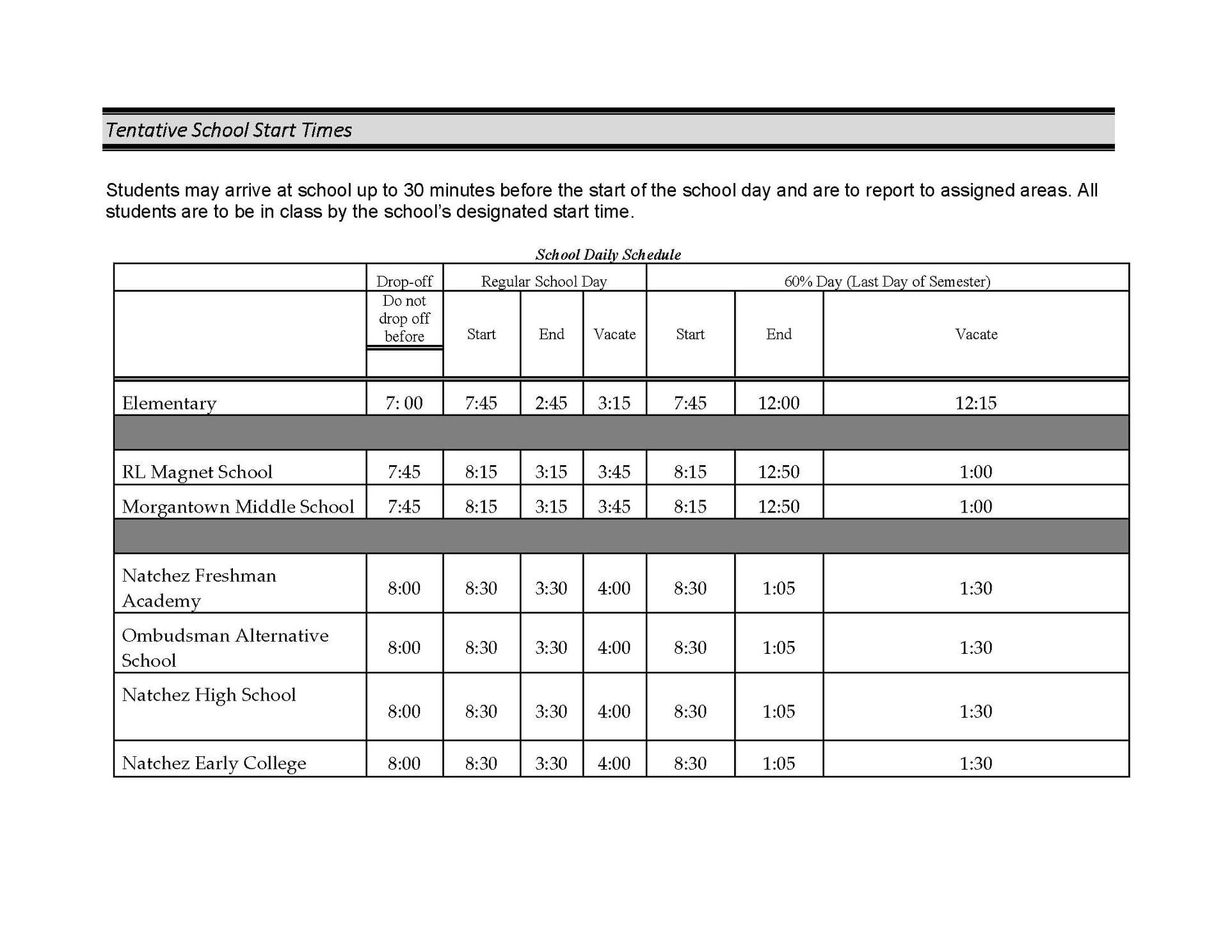
  • Natchez-Adams School District, using guidance from MDE and CDC recommendations, plans to reopen school on August 10,2020.

    Natchez-Adams School District, using guidance from MDE and CDC recommendations, plans to reopen school on August 10,2020.

    Natchez-Adams School District announces its Blueprint for Reopening Schools:

    Using guidance from MDE and CDC recommendations, Natchez-Adams School District plans to reopen school on August 10,2020. We will open school using a Hybrid A/B Schedule. The attached video will provide additional information regarding that schedule.

    The District is committed to transparency with our parents and community as we continue to refine our reopening plans. We are working diligently with MDE guidance, joint meetings with parents, staff, community members, medical personnel, and utilizing the data that we have to make plans to open schools in the best possible way. We want to ensure that students are afforded quality instruction in the safest environment possible.

    Please view our 3-minute video as it outlines the “Hybrid A/B Schedule” approved by The NASD Board of Trustees for the upcoming school year.

    Alternate plans for students with chronic medical conditions will be made available.

    We will continue to update our parents, students, and community as plan continues to be refined over the next several weeks.

    Please visit www.natchezschools.org and click on the Covid-19 Back to School Blueprint tab for additional information.

    If you have any questions about the information presented, please e-mail us at nasdcares@natchezschools.org

    Video Link explaining the Hybrid A/B Schedule:
    https://www.natchezadamsschooldistrict.org/…/pag…/index.jsp…

  • New Beijing outbreak raises virus fears for rest of world

    New Beijing outbreak raises virus fears for rest of world

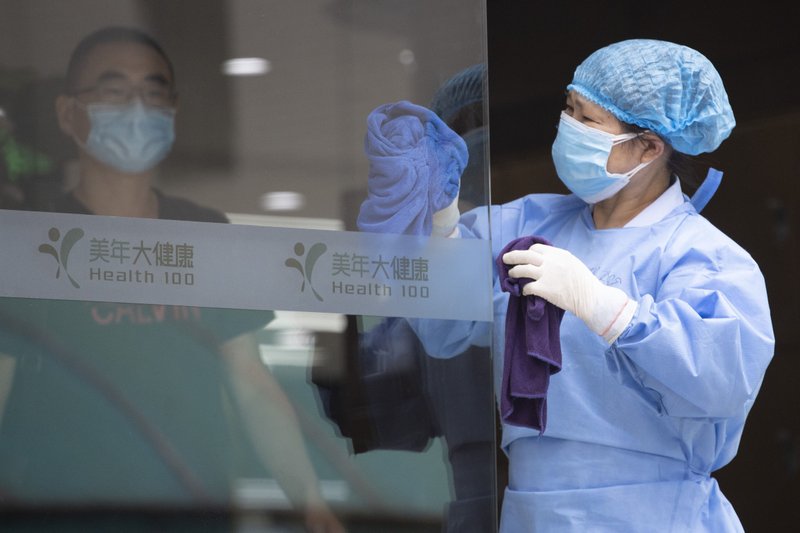
    BEIJING (AP) — China raised its emergency warning to its second-highest level and canceled more than 60% of the flights to Beijing on Wednesday amid a new coronavirus outbreak in the capital. It was a sharp pullback for the nation that declared victory over COVID-19 in March and a message to the rest of the world about how tenacious the virus really is.

    New infections spiked in India, Iran and U.S. states including Florida, Texas and Arizona as authorities struggled to balance restarting economic activity without accelerating the pandemic.

    European nations, which embarked on a wide-scale reopening this week, looked on with trepidation as the Americas struggled to contain the first wave of the pandemic and Asian nations like China and South Korea reported new outbreaks.

    Chinese officials described the situation in Beijing as “extremely grave.”

    “This has truly rung an alarm bell for us,” Party Secretary Cai Qi told a meeting of Beijing’s Communist Party Standing Committee.

    After a push that began June 14, the city expects to have tested 700,000 people by the end of the day, said Zhang Qiang, a Beijing party official. About half of them were workers from the city’s food markets, nearby residents and close contacts.

    The party’s Global Times said 1,255 flights to and from the capital’s two major airports were scrapped by Wednesday morning, about two-thirds of those scheduled.

    Since the virus emerged in China late last year and spread worldwide, there have been more than 8.1 million confirmed cases and at least 443,000 deaths, according to a tally kept by Johns Hopkins University. Experts say the true toll is much higher, due to the many who died without being tested and other factors.

    The U.S. has the most infections and deaths in the world, with a toll that neared 117,000 on Wednesday, surpassing the number of Americans who died in World War I.

    Arizona reported a daily high of nearly 2,400 new infections for a total of more than 39,000, while in Texas, Gov. Greg Abbott insisted the state’s health care system could handle the fast-rising number of new cases and hospitalizations.

    Tuesday marked the eighth time in nine days that Texas set a new high for COVID-19 hospitalizations at 2,518. State health officials reported 2,622 new cases.

    “It does raise concerns, but there is no reason right now to be alarmed,” Abbott said.

    Texas began aggressively reopening its economy May 1. Abbott noted that Texans may have become lax in wearing masks or practicing social distancing and urged people to stay home as much as possible.

    Canada and the U.S. extended to July 21 a deal to keep their border closed to nonessential travel, with many Canadians fearing cases arriving from the U.S.

    As the U.S. struggles with the first wave of the virus, other countries where it was widely thought to be under control faced disturbing developments.

    In South Korea, authorities reported 43 new cases amid increased public activity. Authorities said 25 of them came from around Seoul, where hundreds of infections have been linked to nightclubs, church gatherings, e-commerce workers and door-to-door salespeople. Twelve of the new cases came from international arrivals.

    Not long after declaring itself virus-free, New Zealand saw a reemergence of the virus. Prime Minister Jacinda Ardern assigned a top military leader to oversee the border quarantines after what she described as an “unacceptable failure” by health officials.

    Two New Zealand citizens who had returned from London to see a dying relative were allowed to leave quarantine before being tested. After the women tested positive, New Zealand began tracing their potential contacts to ensure the virus is contained.

    Their cases raised the specter that international air travel could ignite a new surge of the virus just as countries seek to boost devastated tourism industries.

    China also limited other travel around the capital, keying in on hot spots. Beijing had essentially eradicated local transmissions until recent days, with 137 new cases since last week.

    On Wednesday, the city of 20 million raised its threat level from 3 to 2, canceling classes, suspending reopenings and strengthening requirements for social distancing. China had relaxed many lockdown controls after the Communist Party declared victory over the virus in March.

    India, with the fourth-highest caseload after the U.S., Brazil and Russia, added more than 2,000 deaths to its tally after Delhi and Maharashtra states included 1,672 previously unreported fatalities. Its death toll of 11,903 is now eighth-highest in the world. India has reported 10,000 new infections and more than 300 deaths each day for the last two weeks.

    Iran’s latest outbreak comes after a major Muslim holiday last month and as travel and lockdown restrictions were relaxed. Health Minister Saeed Namaki said he realized the extent of the challenge when he took a domestic flight.

    “Many people have become careless, frustrated with wearing masks,” he said. “They did not observe (social) distancing in the flight’s seating and the airliner’s ventilation system was not working.”

    In Europe, which has seen over 184,000 virus-related deaths, Spanish Prime Minister Pedro Sánchez announced the country will hold a ceremony July 16 to honor its more than 27,000 dead.

    German officials said over 400 people at a large meatpacking plant had tested positive for COVID-19, prompting authorities to order the closure of all schools and childcare centers in the western region of Guetersloh. The industry has seen several outbreaks in recent weeks, prompting the government to impose stricter safety rules.

    Denmark’s health minister urged anyone who joined a large racial injustice protest on June 7 to be tested “whether you have symptoms or not” after one person in the crowd was found to be infected.

    “As long as we have the virus in Europe and in Denmark, it will flare up. We are dealing with a very, very contagious disease,” said Health Minister Magnus Heunicke.


  • Louisiana COVID-19 hospitalizations dip below 800

    Louisiana COVID-19 hospitalizations dip below 800

    NEW ORLEANS (AP) — The number of confirmed COVID-19 cases in Louisiana climbed to about 38,500 in figures reported Wednesday, an increase of more than 400 from the day before as the number of tests conducted in the state continues to grow.

    However, the number of people hospitalized with the disease caused by the new coronavirus has fallen below 800 for the first time since late March.

    A falling hospitalization rate is one of the factors state officials use to decide how and when restrictions on public gatherings and business can be eased.

    The death toll in the state from the disease rose to 2,617, up by 21 from Tuesday. Officials say at least 28,700 people have recovered from the disease.

    For most people, the new coronavirus causes mild or moderate symptoms, such as fever and cough that clear up within weeks. For some, especially older adults and those with existing health problems, it can cause more severe illness and be life-threatening.

  • WHO warns that 1st wave of pandemic not over; dampens hopes

    WHO warns that 1st wave of pandemic not over; dampens hopes

    BANGKOK (AP) — As Brazil and India struggle with surging coronavirus cases, a top health expert is warning that the world is still smack in the middle of the pandemic, dampening hopes for a speedy global economic rebound and renewed international travel.

    “Right now, we’re not in the second wave. We’re right in the middle of the first wave globally,” said Dr. Mike Ryan, the World Health Organization’s executive director.

    “We’re still very much in a phase where the disease is actually on the way up,” Ryan told reporters, pointing to South America, South Asia and other areas where infections are still on the rise.

    India saw a record single-day jump in new cases for the seventh straight day. It reported 6,535 new infections Tuesday, raising its total to 145,380, including 4,167 deaths.

    The virus has taken hold in some of India’s poorest, most densely populated areas, underscoring the challenges that authorities face in curbing the spread of a virus for which a vaccine or cure isn’t yet in sight.

    Most of India’s cases are concentrated in the western states of Maharashtra, home to the financial hub of Mumbai, and Gujarat. Infections have also climbed in the east as migrant workers stranded by lockdowns returned to their native villages from India’s largest cities.

    Despite this, India allowed domestic flights to resume Monday following a two-month hiatus, but at a fraction of normal traffic levels.

    WHO poured cold water on the hopes of Brazilian President Jair Bolsonaro and others of quickly re-opening the economy, warning that authorities must first have enough testing in place to control the spread of the pandemic. Brazil has 375,000 coronavirus infections — second only to the 1.6 million cases in the U.S. — and has counted over 23,000 deaths but many fear Brazil’s true toll is much higher.

    Ryan said Brazil’s “intense” transmission rates means it should keep some stay-at-home measures in place, regardless of the negative impacts on its economy.

    “You must continue to do everything you can,” he said.

    But Sao Paulo Gov. João Doria has ruled out a full lockdown in Brazil’s largest state economy and plans to start loosening restrictions on June 1.

    In Rio de Janeiro, Mayor Marcelo Crivella, an evangelical bishop, designated religious institutions as “essential services” so they could stay open with social distancing rules despite recommendations for people to stay at home and most businesses remaining shut.

    A U.S. travel ban was taking effect Tuesday for foreigners coming from Brazil, moved up two days earlier than its original date. It does not apply to U.S. citizens.

    In Europe, the Russian government reported a record daily spike Tuesday of 174 deaths, bringing the country’s confirmed death toll to 3,807. Russia’s coronavirus caseload surpassed 360,000 — the third highest in the world — with almost 9,000 new infections registered.

    The country’s comparatively low mortality rate has raised questions among experts both in Russia and in the West. Russian officials, however, vehemently deny manipulating any figures and attribute the low numbers to the effectiveness of the country’s lockdown measures.

    The question of who can travel where and when remains a dilemma that officials still have yet to solve.

    Spain’s foreign minister said Tuesday that European Union members should commonly agree to open borders and jointly determine which non-EU countries are designated as safe for travel. Arancha González Laya told Cadena SER radio that resuming cross-border travel should be decided collectively even if countries in the 27-nation bloc are phasing out lockdowns at different dates.

    “We have to start working with our European partners to retake the freedom of movement in European territories,” she said.

    The minister said Spain is eager to welcome tourists to shore up an industry that accounts for 12% of the country’s GDP but plans to do it with “health, sustainability and safety.”

    South Korea on Tuesday began requiring people to wear masks on public transit and in taxis. The country is tracing dozens of infections linked to nightclubs and other entertainment venues as it prepares for 2.4 million students to return to school on Wednesday.

    But South Korean rights groups have criticized government plans to require some businesses to register customers with smartphone QR codes. They say the country’s technology-driven approach to controlling COVID-19 has increased state surveillance too much.

    South Korea’s Health Ministry said beginning in June “high-risk” businesses such as bars, nightclubs, gyms, karaoke rooms and concert halls will be required to use QR codes to register customers so they could be found more easily when infections occur.

    In a joint statement Tuesday, groups including privacy watchdog Jinbo Net called the move excessive.

    “That’s exactly how we step into a surveillance state,” the statement said.

    Tests by a U.S. biotechnology company, Novavax, have begun in Australia with hopes of releasing a proven vaccine this year. A Novavax executive said 131 volunteers were getting injections in the first phase of the trial to test the vaccine’s safety and effectiveness.

    Novovax expects the results of the Australian trial to be known in July.

    About a dozen experimental vaccines are in early stages of testing or poised to start, and it’s not clear whether any will prove safe and effective. But they use different methods and technologies, increasing the odds that one might succeed.

    “We are in parallel making doses, making vaccine in anticipation that we’ll be able to show it’s working and be able to start deploying it by the end of this year,” Novovax’s research chief, Dr. Gregory Glenn, told a virtual news conference from the company’s headquarters in Maryland.

    Meanwhile, WHO said it will temporarily drop hydroxychloroquine — the malaria drug U.S. President Trump said he is taking — from its global study into experimental COVID-19 treatments.

    WHO director-general Tedros Adhanom Ghebreyesus said there would be a “temporary pause” on the hydroxychloroquine arm of its global clinical trial. The announcement came after a paper in the Lancet showed that people taking the drug were at higher risk of death and heart problems.

    Still, several countries in Europe and North Africa are using chloroquine and hydroxychloroquine to treat COVID-19 patients. Brazil’s Bolsonaro has ordered an army lab to boost its production of chloroquine.

    Other treatments in the WHO study, including the experimental drug remdesivir and an HIV combination therapy, are still being pursued.

    Worldwide, the virus has infected nearly 5.5 million people, killing over 346,000, according to a tally by Johns Hopkins University. Europe has had about 170,000 deaths and the U.S. has seen nearly 100,000. Experts say the tally understates the real effects of the pandemic due to counting issues in many nations.

  • AP count: Over 4,300 virus patients sent to NY nursing homes

    AP count: Over 4,300 virus patients sent to NY nursing homes

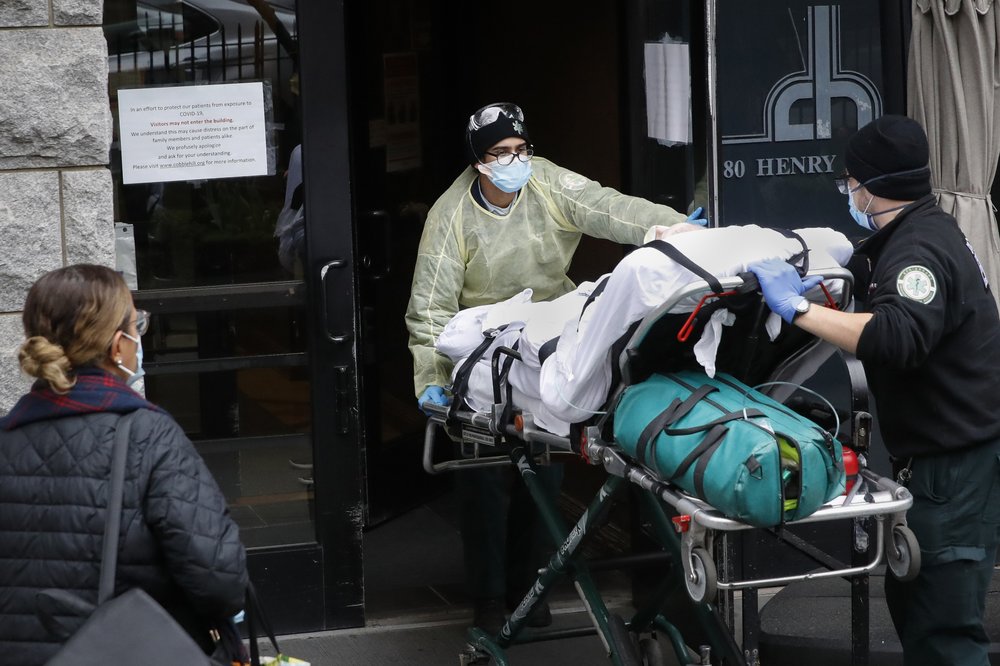
    NEW YORK (AP) — More than 4,300 recovering coronavirus patients were sent to New York’s already vulnerable nursing homes under a controversial state directive that was ultimately scrapped amid criticisms it was accelerating the nation’s deadliest outbreaks, according to a count by The Associated Press.

    AP compiled its own tally to find out how many COVID-19 patients were discharged from hospitals to nursing homes under the March 25 directive after New York’s Health Department declined to release its internal survey conducted two weeks ago. It says it is still verifying data that was incomplete.

    Whatever the full number, nursing home administrators, residents’ advocates and relatives say it has added up to a big and indefensible problem for facilities that even Gov. Andrew Cuomo — the main proponent of the policy — called “the optimum feeding ground for this virus.”

    “It was the single dumbest decision anyone could make if they wanted to kill people,” Daniel Arbeeny said of the directive, which prompted him to pull his 88-year-old father out of a Brooklyn nursing home where more than 50 people have died. His father later died of COVID-19 at home.

    “This isn’t rocket science,” Arbeeny said. “We knew the most vulnerable — the elderly and compromised — are in nursing homes and rehab centers.”

    Told of the AP’s tally, the Health Department said late Thursday it “can’t comment on data we haven’t had a chance to review, particularly while we’re still validating our own comprehensive survey of nursing homes admission and re-admission data in the middle of responding to this global pandemic.”

    Cuomo, a Democrat, on May 10 reversed the directive, which had been intended to help free up hospital beds for the sickest patients as cases surged. But he continued to defend it this week, saying he didn’t believe it contributed to the more than 5,800 nursing and adult care facility deaths in New York — more than in any other state — and that homes should have spoken up if it was a problem.

    “Any nursing home could just say, ‘I can’t handle a COVID person in my facility,’” he said, although the March 25 order didn’t specify how homes could refuse, saying that ”no resident shall be denied re-admission or admission to the (nursing home) solely based” on confirmed or suspected COVID-19.

    Over a month later, on April 29, the Health Department clarified that homes should not take any new residents if they were unable to meet their needs, including a checklist of standards for coronavirus care and prevention.