Tag: covid

  • ‘We’re expendable’: Russian doctors face hostility, mistrust

    ‘We’re expendable’: Russian doctors face hostility, mistrust

    MOSCOW (AP) — There are no daily public displays of gratitude for Russian doctors and nurses during the coronavirus crisis like there are in the West. Instead of applause, they face mistrust, low pay and even open hostility.

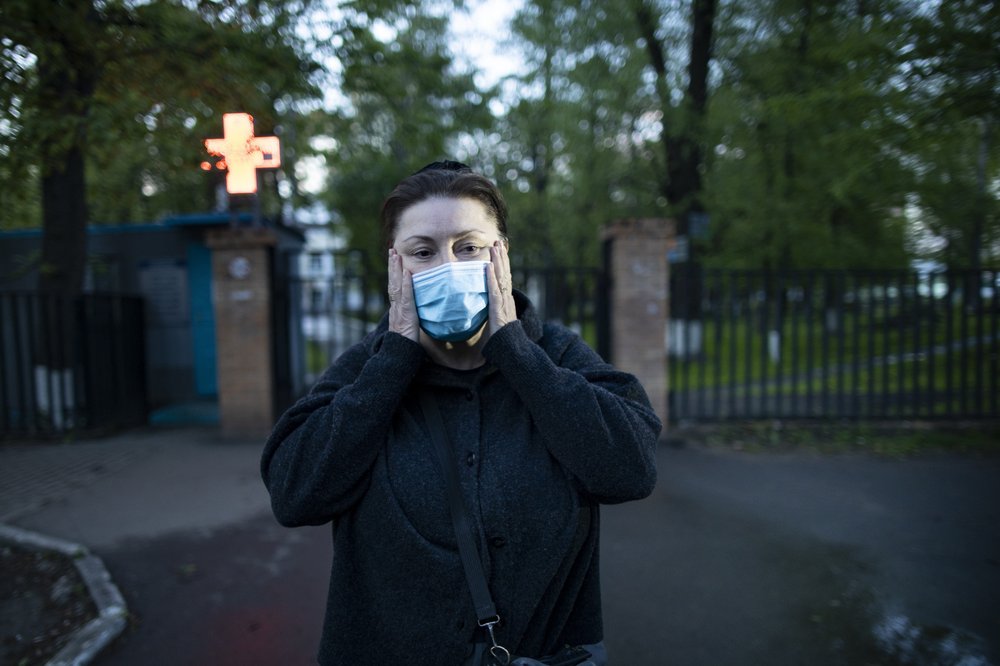
    Residents near the National Medical Research Center for Endocrinology, a Moscow hospital now treating virus patients, complained when they saw medical workers walking out of the building in full protective gear, fearing the workers would spread contagion.

    “Maybe once the disease knocks on the door of every family, then the attitude to medics will change,” said Dr. Alexander Gadzyra, a surgeon who works exhausting shifts.

    The outbreak has put enormous pressure on Russia’s medical community. While state media hails some of them as heroes, doctors and nurses interviewed by The Associated Press say they are fighting both the virus and a system that fails to support them.

    They have decried shortages of protective equipment, and many say they have been threatened with dismissal or even prosecution for going public with their complaints. Some have quit and a few are suspected to have killed themselves.

    Government officials insist the shortages are isolated and not widespread.

    Antipathy toward the medical profession is widespread in Russia, said social anthropologist Alexandra Arkhipova, who studies social media posts peddling virus conspiracy theories. More than 100 theories she studied say doctors diagnose COVID-19 cases so they can get more money; others say they help the government cover up the outbreak.

    “It’s a crisis of trust that the epidemic underscored,” she said. “I haven’t seen this attitude anywhere else.”

    Trust in government institutions has always been low in Russia, according to opinion polls, and most of its hospitals are state-run.

    Russia is struggling in the pandemic, with over 300,000 infections and 2,972 deaths. The government has disputed critics who have questioned the relatively low number of fatalities.

    Official statements and news reports in more than 70 Russian regions show that at least 9,479 medical workers have been infected with the virus in the past month, and more than 70 have died. Health care workers believe the death toll to be much higher and they have compiled a list of more than 250.

    Dr. Irina Vaskyanina said at least 40 workers are infected at a hospital in Reutov, outside Moscow, where she headed a department handling blood transfusions.

    She also said insults and threats from superiors became common after she complained about working conditions to her bosses, to law enforcement and even to President Vladimir Putin.

    “I handed in my notice,” Vaskyanina said. “They’re not letting me do my job. I love my job and I want to keep doing it, but I can’t go on like this.”

    She said 13 of her 14 colleagues have also quit.

    Dr. Tatyana Revva, an intensive care specialist in the town of Kalach-on-Don, was summoned by police for questioning and slapped with disciplinary action after recording a video about equipment shortages. The hospital’s head reported her to a prosecutor for “spreading false information” — an offense punishable by fines of up to $25,000 or a prison term.

    “I am one reprimand away from being fired,” Revva told AP.

    Dr. Oleg Kumeiko, head of Revva’s hospital, rejected the claims. He told the AP there were no shortages of protective equipment in the hospital, and said he had no intention of firing Revva. Disciplinary action against her was justified, he said, and “had nothing to do with her public activity.”

    “I don’t understand why they treat us like we’re expendable,” said Nina Rogova, a nurse in the Vladimir region 200 kilometers (120 miles) east of Moscow. She is recovering from the virus after getting it at work and she says she is being threatened with dismissal after she told local media about a lack of protective gear.

    Doctors in the southern region of Chechnya who complained about equipment shortages later had to retract their statements as a “mistake” and apologize on TV. The predominantly Muslim region’s leader, Ramzan Kadyrov, has a reputation for stifling dissent, and he has demanded they be fired.

    Adding to the frustration is pay. Health workers say they haven’t gotten bonuses the government promised them for working with coronavirus patients. In early April, Putin personally promised generous bonuses to monthly salaries — about $1,100 for doctors, $680 for nurses and paramedics, and $340 for orderlies.

    A month later, social media was filled with photos of pay slips reflecting bonuses from 10 to 100 times smaller than promised. Dr. Yevgeniya Bogatyryova, a Moscow-area paramedic, told AP the April bonuses varied from $2 to $120. “They’re calculating the time ambulance doctors spend with a coronavirus patient and pay by the hour, apparently,” Bogatyryova said.

    More than 110,000 people signed an online petition demanding the government keep its promise. Dozens of paramedics protested in the Nizhny Novgorod region 400 kilometers (240 miles) east of Moscow, and scores more from Siberia to southern Russia made videos demanding the bonuses.

    “Whoever we ask in our management, our superiors, they say, ‘Putin promised you (bonuses), so Putin should pay you,’” Natalia Salomatova, an orderly at a hospital in the Siberian city of Chita, told the AP. April bonuses for her colleagues ranged from the equivalent of 41 cents to $6.86. Salomatova herself didn’t receive any.

    Only after Putin went on TV twice last week and angrily demanded that officials pay what was promised did medical workers in some regions start getting the payments.

    “Makes you wonder: Who should we protect the medics from, the infection or the administrators?” said Arkhipova, the social anthropologist.

    Russia’s Health Ministry did not immediately respond to a request for comment.

    Reports of health care workers resigning are surfacing. Over 300 quit in the western Kaliningrad region two weeks ago, dozens of paramedics reportedly resigned in the Siberian city of Novosibirsk in May and 40 workers gave notice at a hospital in the Vladimir region.

    That could further cripple Russia’s health care system, already impaired by a widely criticized reform that closed half of its 10,000 hospitals in 20 years, with thousands of layoffs. In December, Deputy Prime Minister Tatyana Golikova called the reform “horrible” and said it significantly affected the quality and the accessibility of health care.

    “Now we’re facing the threat of a complete destruction of the medical community,” said Semyon Galperin, head of the Doctors Defense League rights group.
  • Natchez board lets restaurants, hair salons open doors with COVID regulations in place

    Natchez board lets restaurants, hair salons open doors with COVID regulations in place

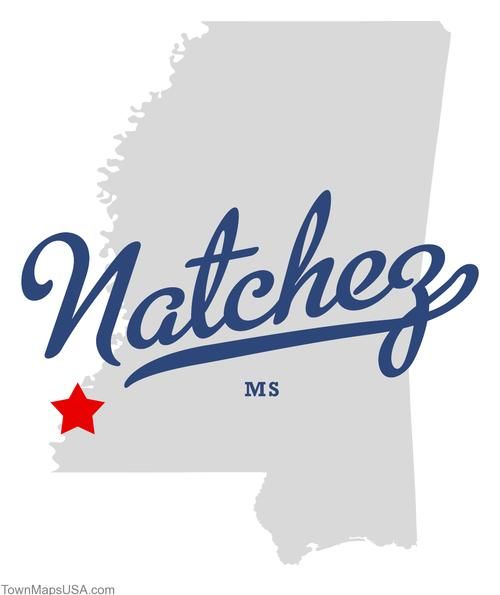
    NATCHEZ, Miss. –The Board of Aldermen today agreed to let Natchez restaurants reopen for indoor dining if they adhere to strict rules that include limiting the number of patrons inside and requiring waiters to wear facial coverings to help slow the spread of the Coronavirus.
    With Natchez restaurants being closed by the city for dine-in services since March 25, they’re starving financially as local and state governments have imposed stringent controls on people getting together in public.
    The board also decided to let Natchez hair salons, barber shops and fitness centers reopen if they also take steps to keep their facilities sanitized and less crowded.
    What Natchez aldermen implemented today will let these businesses “begin to recover economically and provide services in a safe environment,” said Mayor Darryl Grennell.
    The new city order is much like Gov. Tate Reeves’ directives implemented statewide in the past week to let businesses considered “nonessential” to open their doors for customers. Natchez — as other Mississippi cities — is allowed to enact stricter regulations if they don’t impede on essential services or rights.
    Natchez remains in a public-health crisis that compels people to stay home, avoid contact with others, wear masks in public, wash hands often and take other steps against the highly contagious respiratory disease. However, with the socioeconomic shutdown of the past two months, there’s a “strong sense of unrest developing among the citizens of our community,” said William Thames, who chairs a committee counseling the Natchez mayor and aldermen during the COVID-19 global pandemic.
    While Thames recommended letting Natchez eateries and hair salons reopen their doors, they must follow “very onerous and stringent regulations and guidelines.” Those include having fewer people being inside at one time and being spaced farther apart; wearing face masks covering mouth and nose; deep-cleaning to ensure facilities are sanitized; and testing employees to ensure they’re not sick.
    “It is important to note that we are not in a safety zone. We are still in a state of emergency,” Thames said.
    At least 15 people from Adams County have died from the novel coronavirus of the 161 people sickened by it here since March 11, according to the Mississippi Department of Health’s count Tuesday. That’s an increase from three weeks ago, when four Adams County residents had died and 70 had the disease.
    Of the 15 who’ve died, eight were in nursing homes, eight were black and seven were white, according to the state statistics. Of the total 161 victims hit by the virus from Adams County, 95 are black and 42 white.
    The rising number of coronavirus cases in Adams County appears to be stabilizing, said Blane Mire, a Natchez physician advising Grennell and city aldermen. However, he stressed there must be a reduction of cases for two weeks to know if the virus is abating here. “This is only going to happen with a continued mitigation strategy…. to reduce the spread,” Mire told the city officials Tuesday.
    People, he said, must exercise social distancing, stay home as much as possible, avoid close contact with others, wash hands often  — and wear face masks when interacting with other people inside stores and elsewhere.
    “If this isn’t done smartly, … we could turn this into another spike in cases and see an outbreak again,” Mire said.
    The six city aldermen’s actions Tuesday revised the various city quarantine orders that were initiated March 24 and gradually eased since then for most businesses to be open with various public-health regulations in place. They’re currently set to expire May 31. This includes an 11 p.m. – 5 a.m. curfew forbidding Natchez-Adams County residents being outside their homes unless for essential duties or services.
    Natchez Police Chief Walter Armstrong said most people appear to be complying with the city’s COVET-19 restrictions, but he noted there have been isolated incidents of violators causing “significant problems.” He noted fines up to $1,000 can be imposed on violators found guilty in city court.
    Tuesday’s meeting of the mayor and Board of Aldermen was conducted as a teleconference to avoid person-to-person contact. They’ve been meeting like this since March.
  • Restaurants in Natchez must remain closed for inside dining

    Restaurants in Natchez must remain closed for inside dining

    NATCHEZ, Miss. –Restaurants in Natchez must remain closed for inside dining even though Gov. Tate Reeves decided Monday to allow patrons to dine in if eateries adhere to strict measures to curb the coronavirus’ spread.
    The city’s six-week-old ban on restaurants opening their dining rooms should remain in place through May, said Natchez Mayor Darryl Grennell. They can only serve drive-through, pickup or delivery customers.
    While Reeves’ easing of the state’s quarantine order goes into effect, Grennell said Natchez’ stricter mandates are needed to combat the worsening rate of people sickened by the highly contagious respiratory disease.
    “Our order will stay in place until May 31. Our numbers are too high here in Adams County,” Grennell said.
    At least 149 people in Natchez-Adams County have been sickened by the novel coronavirus and nine have died since March 11, according to the Mississippi Department of Health’s count Monday. That’s an increase from two weeks ago, when four Adams County residents had died from it and 70 were confirmed to have had it.
    Adams County Emergency Management Director Brad Bradford cited statistics Monday indicating about 80 of the nearly 150 people who’ve had COVID-19 here have recovered.
    The Board of Aldermen last week extended Natchez’ restrictions on public gatherings through May but to allow some nonessential businesses to reopen as the global coronavirus continues to sicken more people and cripple the economy.
    The city order – which includes a requirement for people in stores to wear facial coverings — continues measures implemented in March encouraging people to stay home isolated from others to deter the spread of the virus. However, certain businesses deemed nonessential were allowed last week to open their doors for customers but with various requirements.
    Among them: Businesses must require employees and customers to wear masks covering their mouth and nose; limit the number of store patrons to half of their building’s capacity; ensure they’re at least six feet apart; require employees to frequently sanitize hands and surfaces and offer hand sanitizers to customers.
    Natchez restaurants and bars, however, must continue to close their doors for sit-down dining but be allowed to serve take-out food.
    Churches and funerals should also not have more than 10 people gathered at one time.
    The governor decided Monday to let people gather in Mississippi parks with limitations, but Natchez parks must remain closed except for walking trails, as directed by the city board-adopted order. The city park’s entrance gate was open but with a sign saying park is closed – “enter at your own risk.”
    Barber shops and hair salons still aren’t allowed to open, as directed by both the state and city orders currently in place.
    Mississippi cities and counties can enact COVID-19 lockdowns stricter than the state if they don’t impact essential services.
    The Adams County Board of Supervisors on Monday extended the county’s curfew through May to prohibit people being out of their homes from 10 p.m. to 5 a.m. daily. It does not apply to essential workers, such as health-care providers, grocery employees and critical manufacturing employees.
    While the various mandates and restrictions imposed since March seem strict, they’re not as severe as what city officials did in past Natchez epidemics and quarantines, according to historical accounts.
    During the 1871 yellow fever epidemic, “Natchez became virtually abandoned, as a strict quarantine was enforced and the epidemic dragged on into late October, ruining business,” wrote Aaron Anderson, author of Builders of a New South: Merchants, Capital and the Remaking of Natchez, 1865-1914.
  • Louisiana Stay at Home Order Extended Until May 15

    Louisiana Stay at Home Order Extended Until May 15

    Everyone in Louisiana should wear masks when in public; Next announcement will be May 11

    Today, Gov. John Bel Edwards announced he will extend Louisiana’s Stay at Home order until May 15 to continue to slow the spread of COVID-19. Louisiana does not currently meet the White House criteria for entering Phase One of reopening.

    While Louisiana has seen positive, improving trends statewide in terms of new case growth and new hospitalizations, in several regions across the state, new cases and hospitalizations continue to increase or to plateau, according to data from the Louisiana Department of Health. The White House criteria calls for declining numbers of new cases and hospitalizations, among other things.

    “Thanks to the commitment of the people of Louisiana, our state has made progress in flattening the curve and reducing the spread of the novel coronavirus. Unfortunately, we still have a little work to do before we meet the criteria to safely move to the next phase of reopening, so I will extend the state’s Stay at Home order until May 15, with a few minor changes,” Gov. Edwards said. “While this is not the announcement I want to make, I am hopeful, and all of Louisiana should be hopeful, that we will enter into the next phase of reopening soon, in mid-May. I am anxious to get all areas of our economy reopened, but if we accelerate too quickly, we may have to slam on the brakes. That will be bad for public health and for businesses, bad for our people and bad for our state.”

    Gov. Edwards’ decision is based on regional data that shows that while overall new cases and hospitalizations have decreased, this is not the case in several regions. In the Baton Rouge and Monroe regions, both new cases and new hospitalizations have increased. Some increases are also being seen in terms of new cases in Acadiana and a plateau for hospitalizations in Southwest Louisiana and a plateau of new cases on the Northshore.

    • Click here to view the Governor’s presentation on regional data trends.

    Under the extended order, which will be issued on Friday, May 1, businesses that previously were directed to be closed will remain closed, including salons, barber shops, bars and casinos, among other things. Businesses that are deemed essential under the third phase of federal CISA guidance may still be open. Non-essential retail businesses in Louisiana continue to be able to open with fewer than 10 people total inside.

    Three major changes in the new Stay at Home order include:

    • Malls will remain closed to the public, but stores may open for curbside delivery.
    • Restaurants will be allowed to open their outside areas for patrons to eat meals only, without tableside service.
    • All employees of a business who have contact with the public must wear a mask.

    Additionally, both the CDC and the Louisiana Department of Health strongly urge everyone to wear masks when in public.

    “Wearing cloth masks or protective face coverings is part of the new normal,” Gov. Edwards said. “Wearing a mask is being a good neighbor and in Louisiana, we pride ourselves on being good neighbors. Your mask protects me and other people and my mask protects you.”

    Hopefully, Louisiana will meet the White House criteria and move to Phase 1 on May 15, provided symptoms, new case counts and hospitalizations decrease and the state continues to surge testing and contact tracing capacity. Phase 1 lifts the Stay at Home order and eases restrictions on some public spaces like houses of worship and restaurants and opens other businesses that have been closed such as barber shops and salons, but with restrictions on occupancy and strict requirements for personal distancing and masks to keep everyone safe. Phase One occupancy for these businesses will be limited to 25 percent.

    As Louisiana prepares for its next phase of reopening, business owners and faith leaders are encouraged to plan as well, including understanding their building’s maximum occupancy limits, which may require contacting local government or the State Fire Marshal’s office. They should also plan on ensuring their employees have masks.

    Gov. Edwards intends to make his next announcement on moving to Phase 1 in Louisiana on or by May 11. Members of the public can continue to get information from the Governor’s office on coronavirus.la.gov and by texting LACOVID to 67283.