Category: COVID-19

  • Dueling Town Halls For Trump, Biden After Debate Plan Nixed

    Dueling Town Halls For Trump, Biden After Debate Plan Nixed

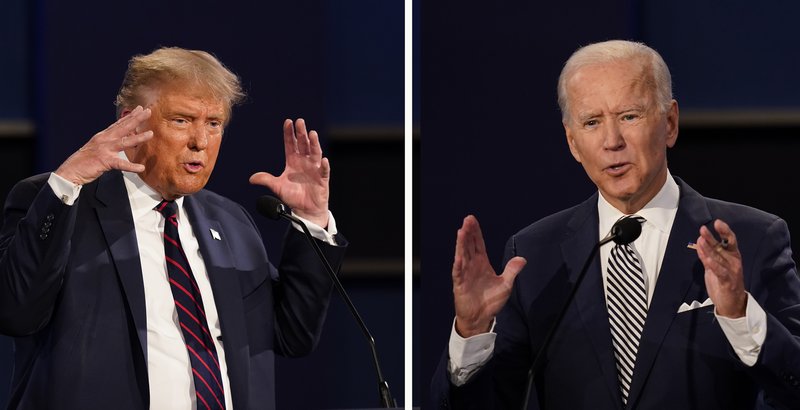
    WASHINGTON (AP) — President Donald Trump and challenger Joe Biden will compete for TV audiences in dueling town halls instead of meeting face-to-face for their second debate as originally planned.

    The two will take questions in different cities on different networks Thursday night: Trump on NBC from Miami, Biden on ABC from Philadelphia. Trump backed out of plans for the presidential faceoff originally scheduled for the evening after debate organizers shifted the format to a virtual event following Trump’s coronavirus diagnosis.

    As the pace of the campaign speeds up in its final weeks, the two candidates first are taking care of other electoral necessities Thursday: Trump has a midday rally in battleground North Carolina, and Biden is raising campaign cash at a virtual event.

    But with just 19 days until Election Day, there remains time for unexpected developments to throw off the candidates’ plans — like they did Thursday, when Biden campaign manager Jen O’Malley Dillon announced the campaign was canceling running mate Sen. Kamala Harris’ in-person campaign events through Sunday “out of an abundance of caution” after two people associated with the campaign tested positive for the coronavirus.

    The campaign told reporters Thursday morning that Harris’ communications director and a flight crew member tested positive after a campaign trip to Arizona last week, during which Harris and Biden campaigned together throughout the state. Biden and Harris both have tested negative multiple times since then, and the campaign said Harris was never in “close contact” with the staffers. But in an effort to draw a contrast with Trump, the campaign has emphasized its strict protocols in dealing with the virus and said it’d be moving Harris’ campaign events online whenever possible in the next few days.

    Meanwhile Trump, after recovering from his own coronavirus diagnosis, has been trying to shore up support from constituencies that not so long ago he thought he had in the bag: big business and voters in the red state of Iowa.

    In a Wednesday morning address to business leaders, he expressed puzzlement that they would even consider supporting Biden, arguing that his own leadership was a better bet for a strong economy. Later, the president held his third campaign rally in three nights, this time in Iowa, a state he won handily in 2016 but where Biden is making a late push.

    Trump claimed to be leading in the most recent Iowa poll he saw. “For me to only be up six, I’m a little bit concerned,” he asserted. Multiple polls have shown a much closer race.

    Biden, for his part, held a virtual fundraiser from Wilmington, Delaware, and used his appearance to say that Trump was trying to rush through Amy Coney Barrett, his nominee for the Supreme Court, to help his efforts to repeal the Obama health care law, calling that “an abuse of power.”

    Trump used his economic address Wednesday to play up his administration’s commitment to lowering taxes and deregulation of industry, and he didn’t hide his frustration with signs that some in the business community are tilting to Biden.

    “I know I’m speaking to some Democrats, and some of you are friends of mine,” Trump said in a virtual address to the Economic Clubs of New York, Florida, Washington, D.C., Chicago, Pittsburgh and Sheboygan, Wisconsin. Should Biden be elected, he continued, “you will see things happen that will not make you happy. I don’t understand your thinking.”

    The former vice president has collected more than $50 million in campaign contributions from donors in the securities and investment sectors, according to the private nonpartisan Center for Responsive Politics. During his decades in the Senate representing Delaware, a center for the credit card and banking industries, Biden built relationships and a voting record in the business sector that has raised suspicion on the left but provides Wall Street with a measure of ease at the prospect of a Biden administration.

    After being sidelined by the coronavirus, Trump resumed a breakneck schedule this week, with aides saying he is expected to travel and host campaign rallies every day through Nov. 3. Trump has appeared hale in his public appearances since reemerging from quarantine, though at moments during his economic address on Wednesday his voice was raspy.

    In Iowa, Trump tossed away his tie and donned a red hat to fight off the stiff breeze on the airport tarmac. He made a direct appeal to the state’s farmers, saying that he was responsible for $28 billion in aid designed to help offset damage stemming from his trade war with China. “I hope you remember that on Nov. 3,” Trump said.

    But after years of farmers supporting him despite the trade war, some Republicans say Trump’s renewable fuel policy has sown some doubt.

    Trump’s Environmental Protection Agency granted dozens of waivers to petroleum companies seeking to bypass congressional rules requiring the level of the corn-based fuel additive ethanol that gasoline must contain. He has recently denied more waiver requests, but the EPA’s previous action removed about 4 billion gallons of ethanol demand, resulting in the closure — at least temporarily — of more than a dozen ethanol plants in Iowa.

    While mostly laying low on Wednesday, Biden has stepped up campaign travel in the past week, with visits to Arizona, Nevada, Florida and Pennsylvania. The former vice president isn’t introducing new themes in his pitch that he’s a steady alternative to Trump. Biden and his aides believe the president’s scattershot campaign messaging since his COVID-19 diagnosis proves the core of Biden’s case.

    Trump’s return to Iowa came as he has been forced into playing defense following a widely panned performance in the first debate and his illness. Republicans have raised alarm that enthusiasm among Trump’s base has waned slightly after the one-two punch of those events, casting his reelection into doubt.

    ___

    Barrow reported from Wilmington, Del., and Madhani from Chicago.

  • Louisiana Bill Would Ensure Clergy Visits Happen In Pandemic

    Louisiana Bill Would Ensure Clergy Visits Happen In Pandemic

    BATON ROUGE, La. (AP) — Louisiana state senators agreed Tuesday they want to ensure a person’s pastor or priest can visit in the hospital, nursing home or assisted living facility during the current coronavirus pandemic or any future public health emergency.

    The measure by Sen. Robert Mills, a Minden Republican, would require Louisiana’s Health Department to create rules requiring inpatient health care facilities to allow members of the clergy to visit patients during such an emergency — if the patient asks for the visit.

    The health care facility would receive immunity from most civil lawsuits for injury or death for the exposure of the pastor, priest or other clergy member to COVID-19 or another infectious disease, unless the facility is proven to have been grossly negligent in its actions, under the bill.

    In the legislation, lawmakers declare that they are trying “to protect the religious liberty of each patient or resident and to protect inpatient health care facilities from costly lawsuits and administrative complaints on the basis of religious discrimination.”

    Those state rules, however, could be preempted if federal regulators require tougher restrictions on patient visitation.

    The Senate voted 34-0 for the measure, sending it to the House for debate.

    Several lawmakers have complained about decisions by Gov. John Bel Edwards and health care facilities to block visitors to hospitals and nursing homes during the coronavirus pandemic. Those restrictions have since been loosened.

    Mills’ bill comes in a monthlong special session where Republican lawmakers are trying to chisel away at the Democratic governor’s emergency authority, give the Legislature more say in the decision-making and revoke some of Edwards’ current coronavirus restrictions.

    ___

    The bill is filed as Senate Bill 12.

    ___

    Follow AP coverage of the pandemic at https://apnews.com/VirusOutbreak and https://apnews.com/UnderstandingtheOutbreak.

    ___

    Follow Melinda Deslatte on Twitter at http://twitter.com/melindadeslatte.

  • Trump Says He’s Ready For Rallies But Details Slim On Health

    Trump Says He’s Ready For Rallies But Details Slim On Health

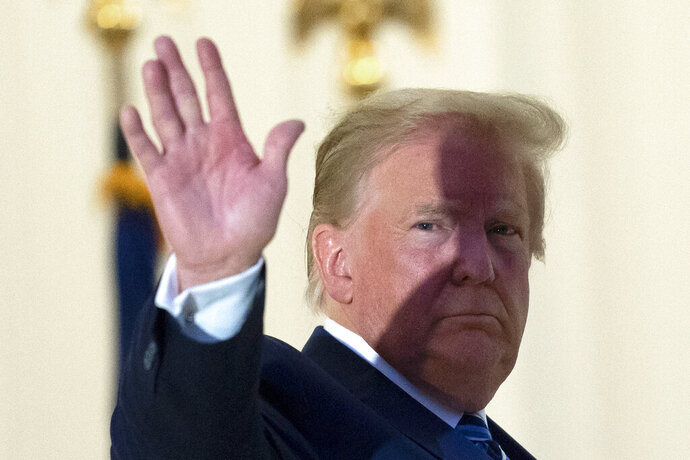
    WASHINGTON (AP) — President Donald Trump insisted Thursday that he is ready to resume campaign rallies and feels “perfect” one week after his diagnosis with the coronavirus that has killed more than 210,000 Americans, as his doctor said the president had ”completed his course of therapy” for the disease.

    The president has not been seen in public — other than in White House-produced videos — since his Monday return from the military hospital where he received experimental treatments for the virus. On Thursday, his physician, Navy Cmdr. Sean Conley, said in a memo that Trump would be able to safely “return to public engagements” on Saturday, as the president tries to shift his focus to the election that’s less than four weeks away, with millions of Americans already casting ballots.

    While Trump said he believes he’s no longer contagious, concerns about infection appeared to scuttle plans for next week’s presidential debate.

    “I’m feeling good. Really good. I think perfect,” Trump said during a telephone interview with Fox Business, his first since he was released from a three-day hospital stay Monday. “I think I’m better to the point where I’d love to do a rally tonight,” Trump said. He added, “I don’t think I’m contagious at all.”

    The Centers for Disease Control and Prevention says individuals can discontinue isolation 10 days after the onset of symptoms, which for Trump was Oct. 1, according to his doctors. Conley said that meant Trump, who has been surrounded by minimal staffing as he works out of the White House residence and the Oval Office, could return to holding events on Saturday.

    He added that Trump was showing no evidence of his illness progressing or adverse reactions to the aggressive course of therapy prescribed by his doctors.

    Earlier this week, the president’s doctors suggested they would work closely with military medical research facilities and other laboratories on “advanced diagnostic testing” to determine when the president was no longer contagious, but did not elaborate.

    Dr. Anthony Fauci, the government’s top infectious disease expert, said two negative PCR lab tests 24 hours apart are a key factor in determining whether someone is still contagious.

    “So, if the president goes 10 days without symptoms, and they do the tests that we were talking about, then you could make the assumption, based on good science, that he is not infected,” Fauci said Thursday on MSNBC.

    While reports of reinfection are rare, the CDC recommends that even people who recover from COVID-19 continue to wear a mask, stay distanced and follow other precautions. It was unclear if Trump, who eschewed mask-wearing in most settings, would abide by that guidance.

    The White House, meanwhile, continued to decline to share when Trump last tested negative for the virus — which would help pinpoint when he was infected. Strategic communications director Alyssa Farah said that information was Trump’s “private medical history.”

    Trump’s campaign and the White House were already drawing up plans for Trump to resume campaigning, eyeing a visit to Pennsylvania on Monday and Michigan on Tuesday ahead of what was to have been next Thursday’s debate.

    But the Commission on Presidential Debates announced that event would be held “virtually” in order to “protect the health and safety of all involved.” Trump swiftly rejected that offer, and his campaign later called on the commission to delay the final two debates by a week to alleviate concerns about an in-person contest.

    Over the objections of some aides, Trump returned to the Oval Office on Thursday, even though a workspace had been set up in the residential section of the White House. Aides were discussing a potential photo opportunity with the president at the White House either Thursday or Friday but plans had not been finalized, according to two White House officials not authorized to publicly discuss internal deliberations. Only a few senior aides, medical staff and security personnel have laid eyes on the president since he returned to the White House on Monday afternoon.

    Trump also released a video Thursday morning, filmed a day earlier, directly addressing the nation’s seniors — a critical demographic for his campaign that is also at greatest risk of poor outcomes from the virus — saying, “I want you to get the same care that I got.”

    On Thursday, Trump continued to credit an experimental drug for the seemingly quick pace of his recovery. He called his diagnosis a “blessing in disguise” in the nation’s battle against the pandemic.

    Seemingly sensitive to the fact that his treatment course has been far more comprehensive than the care received by average Americans, he promised to swiftly get the drug approved for broader use — and distribute it for free — even though he does not have the power to order that himself.

    Trump received an experimental antibody drug made by Regeneron through a “compassionate use” exemption, a recognition of the above-and-beyond standard of care he receives as president. The safety and effectiveness of the drug have not yet been proven. And there is no way for the president or his doctors to know that the drug had any effect. Most people recover from COVID-19.

    “I had tremendous luck with this Regeneron,” Trump said during the interview.

    Dr. Sean Conley, the White House physician, said in a memo Wednesday that Trump had been symptom-free for over 24 hours, and that his oxygen saturation level and respiratory rate were normal.

    Trump speculated that he caught the virus either at the Sept. 26 Rose Garden event announcing his new Supreme Court nominee or at a meeting with military families the following day. He said family members often want to get up close to him and “kiss” and “hug” him.

    “I can’t say ’Back up. Stand 10 feet” away, Trump said.

    ___

    Associated Press writers Marilynn Marchione in Milwaukee and Lauran Neergaard, Matthew Perrone, Deb Riechmann, Aamer Madhani, and Jonathan Lemire in Washington contributed to this report.

  • McConnell Says No COVID-19 Bill Likely Before Election Day

    McConnell Says No COVID-19 Bill Likely Before Election Day

    WASHINGTON (AP) — President Donald Trump’s most powerful GOP ally in the Senate said Friday that Congress is unlikely to deliver another big COVID-19 relief bill before the election, casting doubt on the on-again, off-again negotiations that have failed to deliver results so far despite weeks of talks.

    Majority Leader Mitch McConnell told an audience in Kentucky that he doesn’t see a deal coming together soon out of a “murky” situation in which the participants in the negotiations are elbowing for political advantage.

    “I’d like to see us rise above that like we did in March and April but I think it’s unlikely in the next three weeks,” McConnell said.

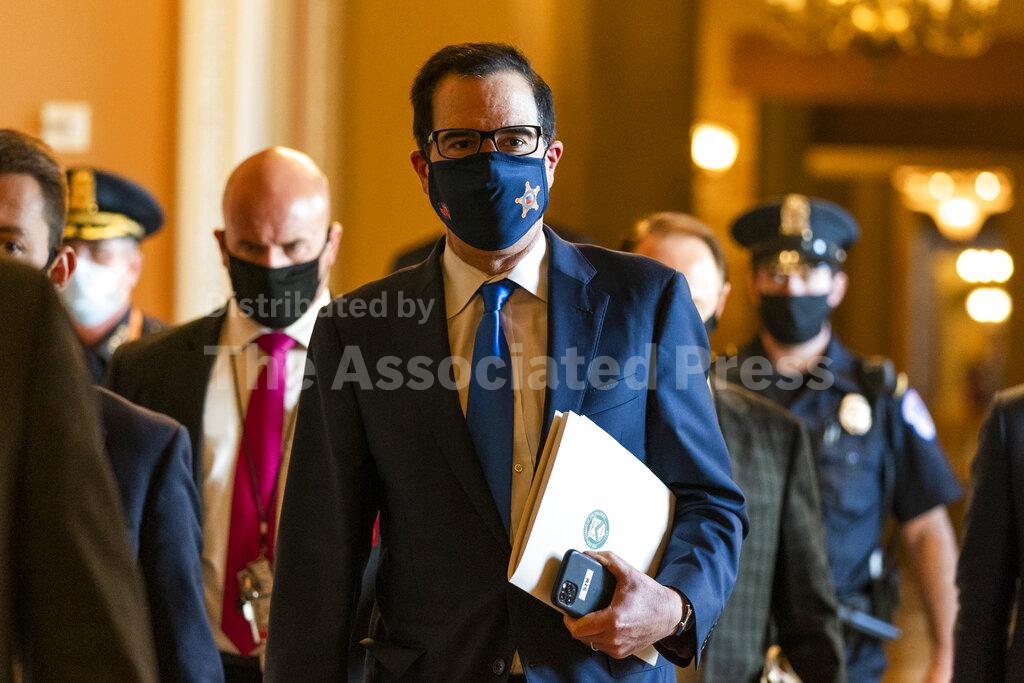
    He spoke after Trump apparently performed an about-face, empowering Treasury Secretary Steven Mnuchin to resume negotiations with House Speaker Nancy Pelosi, D-Calif., on a larger, comprehensive coronavirus relief package despite calling off the talks just days before.

    Trump on Friday took to Twitter to declare, “Covid Relief Negotiations are moving along. Go Big!”

    And White House economic adviser Lawrence Kudlow told reporters that “developments are positive” and that the “the bid and the offer have narrowed” in advance of a telephone conversation later Friday between Pelosi and Mnuchin.

    McConnell remains a skeptic that a deal can come together — and he’s has issued private warnings that many Senate Republicans will oppose a deal in the range that Pelosi is seeking.

    “We do need another rescue package,” McConnell said. “But the proximity to the election and the differences about what is need at this particular juncture are pretty vast.”

    His remarks capped a tumultuous week in which Trump and sent conflicting signals and made unworkable demands. On Tuesday, he ordered an end to the weekslong talks after being told that few Republicans in Congress would end up voting for a possible Pelosi-Mnuchin deal.

    After taking blowback for that decision, Trump sought to revive the negotiations on Thursday. Yet even as Mnuchin was reengaging with Pelosi, staffers in the White House — working under Chief of Staff Mark Meadows, a key negotiator — were issuing demands for a smaller package stuffed with Trump’s priorities.

    All of this comes as Trump is sliding in the polls and is sidelined by his COVID-19 infection. The White House is short-staffed and dealing with infections among its staff. And the president and Pelosi are attacking each other’s mental health.

    That the talks were headed nowhere was an open secret among close observers in Washington, but both sides had been reluctant to declare them dead until Trump did so on Tuesday, making himself a magnet for blame. The talks are still unlikely to produce results in the near term because even if there was a breakthrough, it could take weeks to process.

    McConnell says he is open to resuming the negotiations in a post-election lame-duck session, but that prospect is murky as well, depending on the results.

    On Friday, Pelosi issued a downbeat assessment in a letter to her colleagues.

    “Clearly and sadly, the Administration does not share this priority of crushing the virus. The President does not have the capacity,” Pelosi wrote.

    ___

    Schreiner contributed from Sheperdsville, Kentucky.

  • US Layoffs Still High, But So Is Skepticism On Jobless Data

    WASHINGTON (AP) — The number of Americans seeking unemployment benefits dipped last week to a still-high 840,000, evidence that layoffs remain elevated seven months into the pandemic recession.

    Yet economists say they are increasingly dubious about the unemployment claims figures, even though there is little doubt that hiring has slowed and employers have continued to lay off workers.

    Disney said last week that it would cut 28,000 jobs. And American Airlines and United Airlines combined furloughed 32,000 employees last week. Airlines had been barred from cutting jobs as long as they were receiving federal aid, which expired this month. The American Hotel & Lodging Association has said that nearly three-quarters of hotels say they’ll have to lay off more workers without further financial aid.

    One reason layoffs remain high is that companies often hold on to workers when a recession begins, if they can, in hopes of outlasting the downturn. Yet if the recession drags on, many will eventually give up and cut jobs.

    “Some of these new layoffs are coming from firms that didn’t want or didn’t have to lay people off at first,” said Constance Hunter, chief economist at KPMG. Now, “they have no choice but to start reducing their workforce.”

    At face value, the Labor Department’s report Thursday indicated that more than 800,000 people are still being laid off each week, a historically huge number — more than in any week during the 2008-2009 Great Recession. Weekly applications for unemployment benefits have long been considered a proxy for job cuts.

    But the flood of layoffs during the pandemic recession and the creation of some new jobless-aid programs have overwhelmed state unemployment agencies. A result is that the jobless claims figures the government has been reporting have become an object of skepticism.

    “We can’t view it as real-time job separation data,” said Elizabeth Pancotti, a policy adviser at Employ America, a left-leaning advocacy group, referring to layoffs. “We’re still seeing massive overcounting of initial claims.”

    Some states are still processing backlogged applications from this summer, Pancotti noted. California, for example, stopped accepting new claims for two weeks so it could clear a backlog of 600,000 applications that are more than three weeks old.

    In many states, the data for initial jobless claims also includes workers who had been laid off previously, then found temporary work or were recalled temporarily — only to lose their jobs again and reapply for unemployment benefits. These repeat applicants account for roughly half of jobless claims in California, according to the California Policy Lab.

    Till von Wachter, an economist at UCLA and director of the Policy Lab, said that initial applications can also include workers who have used up their 26 weeks of state unemployment and are transitioning to an extended benefits program that provides three additional months of payments.

    And this spring, Congress created a new program, Pandemic Unemployment Assistance, or PUA, that made self-employed and gig workers eligible for unemployment aid for the first time. Yet in many states, to qualify for the PUA program, the unemployed must first apply for regular jobless benefits. Only after they have been rejected under that system can they apply for PUA.

    Last week, more than 464,000 people applied for aid through PUA. These figures aren’t adjusted for seasonal trends, so the government reports them separately from the traditional jobless claims. Yet the figure may include some people who applied under the traditional benefits program.

    Organized fraud has also been a problem, particularly in the PUA program, in which it’s difficult for states to verify applicants’ incomes. Contractors and gig workers, for example, rarely have W-2 tax forms, which employees in traditional jobs receive.

    Thursday’s report from the Labor Department said the number of people who are continuing to receive unemployment benefits dropped 1 million to 11 million. The decline suggests that many of the unemployed are finding work. But it also reflects the fact that some have used up the 26 weeks of their regular state benefits and have transitioned to extended benefit programs.

    About 2 million people are receiving aid under a federal extended benefit program created this spring, and an additional 11.4 million people are doing so through PUA. All told, 25.5 million people were receiving some form of unemployment aid in the week that ended Sept. 19, the government said.

    Yet those figures are also likely inflated, mostly by double-counting. California and other states have counted retroactive payments under PUA as multiple payments to separate individuals.

    “Nobody knows exactly how many people are receiving unemployment insurance benefits right now,” said Heidi Shierholz, policy director at the Economic Policy Institute and former chief economist at the Labor Department. That is a “reminder that we need to invest heavily in our data infrastructure and technology.”

    The figures nevertheless point to a flagging recovery and come two days after President Donald Trump cut off talks over a new rescue aid package that economists say is urgently needed. A failure to enact another round of government aid would crimp household income and spending, and some economists say it would raise the risk of a double-dip recession.

    Congress is still considering extending the airline aid in stand-alone legislation. But there is little sign that a deal will be reached with the White House.

    Across the country, hiring has slowed just as federal rescue aid has run out, hampering an economy still climbing out of the deep hole created by the pandemic. Employers added just 661,000 jobs in September, less than half of August’s gain and the third straight monthly decline.

    Just over half the 22 million jobs lost to the coronavirus have been recovered, leaving the economy with 10.7 million fewer jobs than in February — a figure that exceeds all the job losses from the Great Recession.

  • ‘So Frustrating’: Doctors And Nurses Battle Virus Skeptics

    ‘So Frustrating’: Doctors And Nurses Battle Virus Skeptics

    MISSION, Kan. (AP) — Treating the sick and dying isn’t even the toughest part for nurse Amelia Montgomery as the coronavirus surges in her corner of red America.

    It’s dealing with patients and relatives who don’t believe the virus is real, refuse to wear masks and demand treatments like hydroxychloroquine, which President Donald Trump has championed even though experts say it is not effective against the scourge that has killed over 210,000 in the U.S.

    Montgomery finds herself, like so many other doctors and nurses, in a world where the politics of the crisis are complicating treatment efforts, with some people even resisting getting tested.

    It’s unclear how Trump’s bout with the virus will affect the situation, but some doctors aren’t optimistic. After a few days of treatment at a military hospital, the president tweeted Monday, “Don’t be afraid of Covid. Don’t let it dominate your life. … I feel better than I did 20 years ago!”

    After one tough shift in the coronavirus unit at Cox South Hospital in Springfield, Missouri, Montgomery went onto Facebook to vent her frustrations about caring for patients who didn’t socially distance because they didn’t believe the virus was real. The hospital later shared her post on its website.

    She complained that some people demand the anti-malaria drug hydroxychloroquine and think the only patients who get really sick have underlying health problems.

    “The majority of people don’t understand and can’t picture what we are seeing. That has been frustrating for all of us,” Montgomery said in an interview, adding: “It wears.”

    Combating virus skeptics is a battle across the country.

    In Georgia, at Augusta University Medical Center, visitors have tried to get around the mask requirement by wearing face coverings made of fishnet and other material with visible holes, something the hospital has dubbed “malicious compliance.” People also have shown up with video cameras in an attempt to collect proof the virus is a hoax, said Dr. Phillip Coule, the health system’s chief medical officer, who contracted the virus in July and has seen two staff members die.

    “Just imagine that while you are caring for your own staff that are dying from this disease, and while you are trying to keep yourself safe, and you are trying to keep your family safe, and you are trying to deal with a disease that such little is known about, and then to have somebody tell you that it is all a hoax after you have been dealing with that all day,” he said. “Imagine the emotional distress that that causes.”

    He said most skeptics — including some who have argued with him on Facebook — are converted to believers when they get sick themselves. And he is starting to hear fewer people dismiss the virus entirely since the president was diagnosed.

    “It is unfortunate that the president has contracted the disease, but it is difficult for groups who support the president to be out there saying it doesn’t exist,” he said.

    But he also said he fears people may draw the wrong lesson about the seriousness of the disease from what happened to Trump: “People may extrapolate that the risk for a 74-year-old is low when the reality is the risk to a 74-year-old is quite high.”

    Dr. Beth Oller, who practices family medicine with her physician-husband in rural Kansas’ Rooks County, isn’t optimistic the president’s diagnosis will change much in her community, where cases are on the rise, many resist masks, and weddings with hundreds of guests have been held in recent weeks.

    “None of the things he did since he had it have helped us a bit, and, if anything, would fly in the face of it,” she said, noting that the president took his mask off as soon as he returned to the White House. “All he did was continue to show people that the things we are saying to do are overblown and an overreaction. As a physician, it is so damn frustrating.”

    The issue has been a challenge in red states for months.

    In Iowa, home health nurse Lisa Dockery was fired from her job caring for a boy with severe disabilities after arguing with his parents, who said COVID-19 is a “hoax.” The argument started because the parents refused to wear masks around Dockery and the boy, even though she told them their son’s life was in danger because he has respiratory problems, relies on tube feedings and cannot walk, state unemployment records show.

    The case ended with a judge ordering her former employer to pay her unemployment.

    Dr. Gary LeRoy, president of the American Academy of Family Physicians, said he isn’t surprised that it has been so hard to persuade the public, noting that there was also a lot of denial as the Spanish flu was sweeping across the world a century ago, killing tens of millions of people.

    “When you look at human history, it is what happens in every situation,” he said. “In war, in famine, in disease, there is going to be a population of people where the bombs are dropping all around them and they don’t believe that it exists.”

    Dr. Brad Burmeister, an emergency medicine physician at Bellin Hospital in Green Bay, Wisconsin, said he has encountered a few patients who have declined to be tested for the coronavirus despite having possible symptoms.

    “They say they don’t want to become a statistic or some kind of rhetoric like that,” he said, adding that he thinks a shift might be coming, given what happened to Trump. “It just sort of shows how infectious COVID-19 is and how easily it can spread, that even when you are taking all of those precautions, you can still get infected with the virus.”

    Dr. Natasha Bhuyan, a family physician in Phoenix, said politics often come up in discussions with patients who come in asking whether the death toll is being inflated.

    “It’s an info-demic as well as a pandemic,” she lamented.

    Dr. Jay W. Lee, a family physician in Orange County, California, recalled a patient who demanded the “largest hydroxychloroquine prescription you can give me.”

    “If I didn’t have my mask on, he would have seen my mouth agape,” said Lee, chief medical officer of the Share Our Selves medical clinics, adding that a small number of patients “flat-out said this was a hoax.”

    He has found himself turning to social media and meeting with elected leaders to combat some of the misinformation.

    “I think part of it is we feel like we can’t just sit back and take it because silence is complicity,” he said.

  • Second Trump-Biden debate to be virtual due to Trump’s COVID-19

    Second Trump-Biden debate to be virtual due to Trump’s COVID-19

    The nonpartisan Commission on Presidential Debates debates made the announcement Thursday morning.


    WASHINGTON (AP) — The second presidential debate between President Donald Trump and Democratic nominee Joe Biden will take place virtually amid the fallout from the president’s diagnosis of COVID-19.

    The candidates will “participate from separate remote locations,” while the participants and moderator remain in Miami, the commission said.

    Trump was diagnosed with the coronavirus a week ago and but in a Tuesday tweet said he looked forward to debating Biden on stage in Miami, “It will be great!” he tweeted.

    Biden, for his part, said he and Trump “shouldn’t have a debate” as long as the president remains COVID positive.

    Biden told reporters in Pennsylvania that he was “looking forward to being able to debate him” but said “we’re going to have to follow very strict guidelines.”

    Trump fell ill with the virus last Thursday, just 48 hours after debating Biden in person for the first time in Cleveland. While the two candidates remained a dozen feet apart during the debate, Trump’s infection sparked health concerns for Biden and sent him to undergo multiple COVID-19 tests before returning to the campaign trail.

    Trump was still contagious with the virus when he was discharged from Walter Reed National Military Medical Center on Monday but his doctors have not provided any detailed update on his status. According to the Centers for Disease Control and Prevention, those with mild to moderate symptoms of COVID-19 can be contagious for as many as — and should isolate for at least — 10 days.

  • In About-Face, Trump Seeks To Salvage Parts Of Virus Aid

    In About-Face, Trump Seeks To Salvage Parts Of Virus Aid

    WASHINGTON (AP) — The White House on Wednesday tried to salvage its favorite items lost in the rubble of COVID-19 relief talks that President Donald Trump blew up, with his administration pressing for $1,200 stimulus checks and a new wave of aid for airlines and other businesses hard hit by the pandemic.

    View all (6)

    In a barrage of tweets, Trump pressed for passage of these chunks of assistance, an about-face from his abrupt and puzzling move on Tuesday afternoon to abandon talks with a longtime rival, House Speaker Nancy Pelosi. The California Democrat has rejected such piecemeal entreaties all along.

    Trump’s tweets amounted to him demanding his way in negotiations that he himself had ended.

    He called on Congress to send him a “Stand Alone Bill for Stimulus Checks ($1,200)” — a reference to a preelection batch of direct payments to most Americans that had been a central piece of negotiations between Pelosi and the White House.

    “I am ready to sign right now. Are you listening Nancy?” Trump said on Twitter Tuesday evening. He also urged Congress to immediately approve $25 billion for airlines and $135 billion for the Paycheck Protection Program to help small businesses.

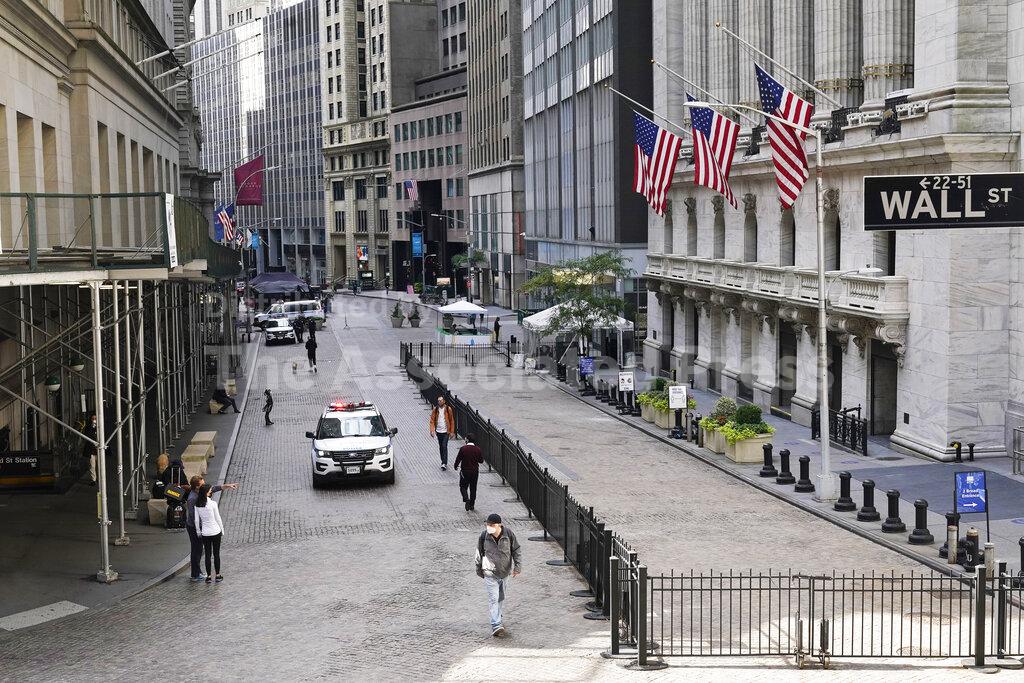
    The stock market fell precipitously after Trump pulled the plug on the talks but was recovering in morning trading Wednesday after he floated the idea of piecemeal aid.

    Trump’s decision to scuttle talks between Treasury Secretary Steven Mnuchin and Pelosi came after the president was briefed on the landscape for the negotiations — and on the blowback that any Pelosi-Mnuchin deal probably would have received from his GOP allies in Congress.

    “It became very obvious over the last couple of days that a comprehensive bill was just going to get to a point where it didn’t have really much Republican support at all,” White House chief of staff Mark Meadows said Wednesday on Fox News. “It was more of a Democrat-led bill, which would have been problematic, more so in the Senate than in the House.”

    Pelosi told reporters that “all the president wants is his name on a check” for direct aid payments.

    The unexpected turn could be a blow to Trump’s reelection prospects and comes as his administration and campaign are in turmoil. Trump is quarantining in the White House with a case of the coronavirus, and the latest batch of opinion polls shows him significantly behind Democrat Joe Biden with the election four weeks away.

    Trump’s withdrawal from the talks came immediately after he spoke with the GOP leaders in Congress, Many Republican senators had signaled they would not be willing to go along with any measure that topped $1 trillion, and GOP aides had been privately dismissive of the prospects for a deal. Any Pelosi-sponsored agreement of close to $2 trillion raised the potential of a GOP revolt if such a plan came to a vote.

    Pelosi and Mnuchin talked briefly on Wednesday morning about the chances for a stand-alone airline rescue, Pelosi spokesman Drew Hammill tweeted. Pelosi directed Mnuchin to a measure she had attempted to pass on Friday on short notice under fast-track procedures, but only after Democrats made a number of changes Republicans did not like.

    The talks have been troubled from their start in July and never appeared to close in on an agreement both sides could embrace.

    Pelosi had been demanding a host of Democratic wins on food aid, unemployment benefits, help for renters and homeowners, and aid to state and local governments. Republicans charged she was dragging the talks to deny Trump a political victory before the Nov. 3 election.

    Early rounds of virus aid passed by overwhelming margins as the economy went into lockdown in March. After that, Trump and many of his GOP allies focused on loosening social and economic restrictions as the key to recovery instead of more taxpayer-funded help.

    Still, the decision to halt negotiations now could be politically perilous. While the stock market has clawed much of its way back after cratering in the early weeks of the crisis, unemployment stands at 7.9%, and the nearly 10 million jobs that remain lost since the start of the pandemic exceed the number that the nation shed during the entire 2008-09 Great Recession.

    The economy has recovered more quickly than most economists had expected, largely because of the aid Congress approved in a $2 trillion package in March. The $1,200 stimulus checks, supplemental $600 unemployment benefits each week, and aid to small businesses boosted household incomes and enabled many low-income Americans to pay bills and rent and maintain their overall spending, according to data from Opportunity Insights.

    But the recovery has slowed and certain sectors such as restaurants, hotels, theaters and airlines remain in bad shape, shedding jobs and risking permanent realignment. Without more stimulus, economists expect growth will slow significantly in the final three months of the year.

    “You’re going to see quite a significant drag on growth,” said Gregory Daco, chief U.S. economist at Oxford Economics, a consulting firm. It “would really risk a double-dip recession.”

    ___

    AP Economics Writer Christopher Rugaber contributed to this report.

  • Pence-Harris Debate To Unfold As Trump Recovers From Virus

    Pence-Harris Debate To Unfold As Trump Recovers From Virus

    SALT LAKE CITY (AP) — Vice President Mike Pence and his Democratic challenger, California Sen. Kamala Harris, are set to face off in a debate that will offer starkly different visions for a country confronting escalating crises.

    The debate Wednesday night in Salt Lake City is the most highly anticipated vice presidential debate in recent memory. It will unfold while President Donald Trump recovers at the White House from the coronavirus after spending several days in the hospital, a serious setback for his campaign that adds pressure on Pence to defend the administration’s handling of the pandemic.

    For Harris, the debate is her highest profile opportunity to say how Democratic presidential nominee Joe Biden would stabilize the United States, especially when it comes to the pandemic and racial justice. She will have the chance to explain her views on law enforcement, an area in which she’s viewed warily by some progressives, given her past as a prosecutor.

    Ultimately, the debate is a chance for voters to decide whether Pence and Harris are ready to step into the presidency at a moment’s notice. It’s hardly a theoretical question: The 74-year-old Trump is fighting the virus and Biden, at 77, would become the oldest person elected president.

    Pence aims to highlight the administration’s economic record and attempt to portray the Democratic ticket as beholden to the “radical left,” said former GOP Gov. Scott Walker of Wisconsin, who is helping the vice president prepare for the debate, on “Fox & Friends.”

    While the debate will likely cover a range of topics, the virus will be at the forefront.

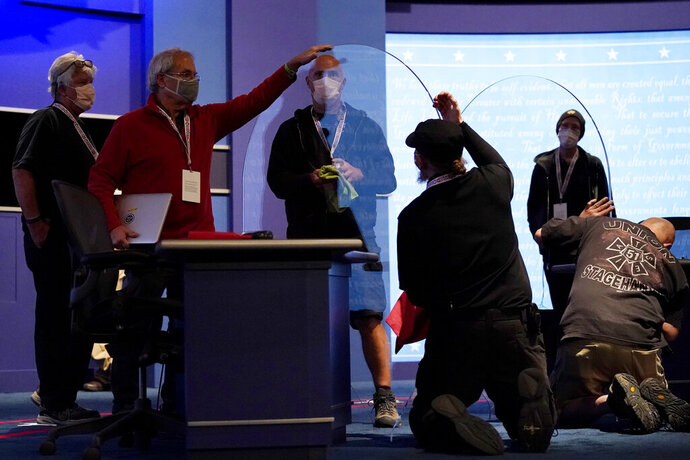
    Pence and Harris will appear on stage exactly 12.25 feet (3.7 meters) apart and separated by plexiglass barriers. Anyone in the small audience who refuses to wear a mask will be asked to leave. Both candidates last tested negative for the coronavirus on Tuesday, their teams said.

    Pence last week was with Trump and others who have since tested positive, and the vice president has faced questions about whether he should be at the debate at all. He has repeatedly tested negative for the virus, and his staff and doctors insist he does not need to quarantine under Centers for Disease Control and Prevention guidelines.

    The CDC defines risky “close contact” as being within 6 feet (1.8 meters) of an infected person for at least 15 minutes starting from two days before the onset of symptoms or a positive test.

    Pence’s team objected to Harris’ request for plexiglass barriers, arguing it was medically unnecessary. But the Commission on Presidential Debates had already agreed to the barriers. Pence’s chief of staff, Marc Short, said the vice president would be there because it’s “too important for the American people.”

    Sabrina Singh, a spokesperson for Harris, said the senator “will be at the debate, respecting the protections that the Cleveland Clinic has put in place to promote safety for all concerned.” The Cleveland Clinic serves as a health adviser to the commission.

    The debate is unlikely to be a repeat of the chaotic debate between Trump and Biden last week.

    Pence is eager to focus on what he and Trump see as the Democrats’ too-liberal policies, but it may be difficult to shift the conversation away from the Republican administration’s uneven handling of the pandemic. Pence serves as chair of the president’s coronavirus task force, which has failed to implement a comprehensive national strategy even as Trump himself recovers from the disease and the national death toll surges past 210,000 with no end in sight.

    Biden has raised questions about whether he will participate in next week’s scheduled debate with Trump, telling reporters on Tuesday: “I think if he still has COVID, then we shouldn’t have a debate.”

    The vice president is a 61-year-old former Indiana governor and ex-radio host, an evangelical Christian known for his folksy charm and unwavering loyalty to Trump.

    Harris is a 55-year-old California senator, the daughter of a Jamaican father and an Indian mother. She is also a former prosecutor whose pointed questioning of Trump’s appointees and court nominees helped make her a Democratic star.

    She will make history as the first Black woman to appear in a vice presidential debate. Democrats hope the historic nature of her candidacy will help energize key groups of likely Democratic voters — African Americans and young people, in particular — who have shown less excitement for Biden.

    It’s unclear how aggressive the candidates will be with each other.

    Both have adopted a cautious approach on the trail in line with past running mates who, above all, are tasked with not hurting their party’s ticket.

    Some Harris allies fear that a conservative approach will prevent her from shining.

    “Overly scripting Kamala Harris is tantamount to removing five bullets out of her gun before you walk into a gun fight,” said Nathan Barankin, who served as Harris’ chief of staff in the Senate and when she was California attorney general.

    While some Democrats have set high expectations for the debate, Harris and her allies have been trying to keep them low. Last month, when California’s state Senate president told Harris on a Zoom call that home state fans were excited to watch her debate, shes quickly interjected.

    “He’s a good debater,” she said of Pence, laughing. “I’m just, I’m so concerned, like I can only disappoint.”

    Gender could also play a role in the debate, Hillary Clinton, the first woman to lead a presidential ticket, said during a recent fundraiser.

    She suggested Pence would try to paint Harris as “the inexperienced woman candidate.” Harris will have to be mindful of a double standard for women in politics as she responds, Clinton said.

    “She’s got to be firm and effective in rebutting any implication that comes from the other side, but to do it in a way that doesn’t, you know, scare or alienate voters,” Clinton said.

    Harris has been preparing for the debate in Salt Lake City since Saturday. Karen Dunn, a Washington lawyer who helped prepare Clinton for her 2016 debates against Trump, is leading Harris’ debate preparations.

    Harris plans to focus on what she and Biden see as failures of leadership by the Trump-Pence administration but avoid personal attacks against Trump, as Biden has done since the president was hospitalized for the virus, according to a campaign aide who wasn’t authorized to discuss debate planning publicly and spoke on condition of anonymity.

    Pence has spent the last four years defending the president on a near-daily basis, endeavoring to turn Trump’s sometimes-chaotic rhetoric into more palatable, middle-of-the-road commentary.

    Aides note that Pence’s criticism has focused almost exclusively on Biden and his record instead of Harris. It’s likely to stay that way Wednesday.

    ___

    Peoples reported from New York. Colvin reported from Washington.

  • Ethicists Say Trump Special Treatment Raises Fairness Issues

    Ethicists Say Trump Special Treatment Raises Fairness Issues

    The special treatment President Donald Trump received to access an experimental COVID-19 drug raises fairness issues that start with the flawed health care system many Americans endure and end with the public’s right to know more about his condition, ethics and medical experts say.

    Regeneron Pharmaceuticals Inc. revealed on Tuesday how rare it was for anyone to get the drug it gave Trump outside of studies testing its safety and effectiveness. The drug, which supplies antibodies to help the immune system clear the coronavirus, is widely viewed as very promising.

    Trump also received the antiviral remdesivir and the steroid dexamethasone, and it’s impossible to know whether any of these drugs did him any good.

    “He deserves special treatment by virtue of his office,” said George Annas, who heads Boston University’s center for law and health ethics. “The question is whether it’s good treatment.”

    These drugs are unproven for mild illness and have not been tested in combination. The steroid seems at odds with medical guidelines based on what doctors have said about the severity of his illness.

    “The public is getting mixed messages about his condition and that’s a problem,” Annas said, adding that there’s a right to know anything that could affect Trump’s ability to do his job.

    HOW HE GOT THE DRUG

    Trump’s doctors asked for the Regeneron drug under “compassionate use” rules, which allow a patient with a life-threatening disease to get an experimental medicine if they can’t enroll in a study testing it and there’s no good alternative.

    Trump was given the drug at the White House on Friday before he was taken to Walter Reed National Military Medical Center. Walter Reed is not a site where the drug is being tested, so he may have met that criterion on technical grounds. Had he enrolled in a study, he would have risked being randomly assigned to a comparison group getting usual care rather than getting the drug.

    Compassionate use requests are decided on a case-by-case basis, and both the drug company and the U.S. Food and Drug Administration must agree. An FDA spokeswoman refused comment on the FDA’s decision or to say how many others have asked for the drug.

    HOW SPECIAL WAS THIS?

    Fewer than 10 of these requests have been granted, said Regeneron spokeswoman Alexandra Bowie. The drug is in limited supply, the priority is using it for the ongoing studies, and emergency access is granted “only in rare and exceptional circumstances,” she wrote in an email.

    Regeneron also contacted Democratic presidential nominee Joe Biden’s campaign “to make them aware of the compassionate use mechanism, should they need to apply” if Biden becomes infected, Bowie wrote. “There was no promise of access to the medicine,” she added.

    Alison Bateman-House, an ethicist at NYU Langone Health, said Regeneron’s overture to Biden raises concern.

    “That crosses lines of appearing to promote a potentially unapproved product” in violation of FDA rules, she said. Rather than directing people to enroll in studies, it suggests “just call us up and we’ll cut the line for you,” she said.

    As for Trump, “it’s not clear to me that this was an emergency situation,” said Dr. Steven Joffe, medical ethics chief at the University of Pennsylvania.

    “I think there is something wrong with the privileged, the president, getting special treatment that’s not available to the rest of us,” he said. “There’s so much injustice in our health care system, with so many people not even having access to the basics,” that the favoritism shown Trump is “a symptom of a much larger problem.”

    Trump spent three nights at a military hospital with a team of doctors watching him around the clock there and at the White House.

    HOW SICK IS HE?

    Trump’s doctor has dodged some questions about details of Trump’s illness and cited health privacy rules. He has repeatedly portrayed Trump’s symptoms as mild, and said that oxygen was given to him on two occasions but that he was not short of breath. The steroid Trump was given is only recommended for hospitalized patients who need extra oxygen — studies suggest it can be harmful in less sick patients.

    “We’re certainly getting a very confusing picture. There are aspects of the story that don’t seem to fit together,” Joffe said.

    “The White House has an obligation to provide the American people with a clear picture of the health of the commander in chief during a health crisis,” even if it withholds specific details such as his moment-to-moment vital signs, perhaps at Trump’s request, he said.

    Trump’s medical team “has not met their moral responsibility to the American public” to be honest and forthcoming on his health, Bateman-House said. “You forgo much of your privacy when you become president.”

    Finally, some are dismayed that Trump received special care while flaunting public health advice about wearing a mask and other steps to curb the spread of the virus.

    “He has an obligation to follow the rules of the United States and he has an obligation to set a good example,” she said. “We have problems on both of those counts.”

    ___

    Marilynn Marchione can be followed on Twitter at http://twitter.com/MMarchioneAP

    ___

    The Associated Press Health and Science Department receives support from the Howard Hughes Medical Institute’s Department of Science Education. The AP is solely responsible for all content.