Category: COVID-19

  • Mississippi Family Sues School In ‘Jesus Loves Me’ Mask Ban

    Mississippi Family Sues School In ‘Jesus Loves Me’ Mask Ban

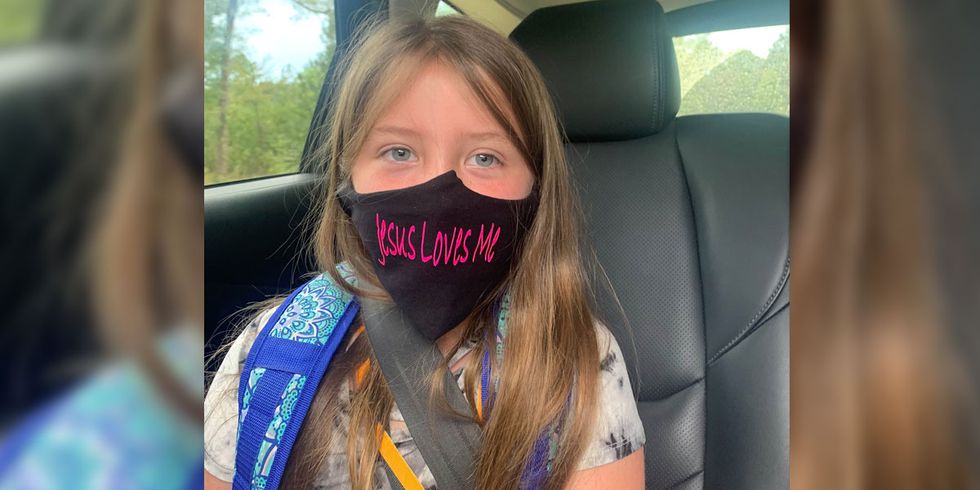
    JACKSON, Miss. (AP) — A Mississippi couple is suing a school district because they say their 9-year-old daughter was told she could not wear a mask with the phrase “Jesus Loves Me.”

    Their lawsuit accuses the Simpson County School District of discriminating against the third grader because she wants to express her religious beliefs. The district requires students to wear face masks to try to reduce the spread of COVID-19.

    The couple is asking a federal judge to declare that the district’s policy banning “political, religious, sexual or inappropriate statements” on masks is unconstitutional. The lawsuit also seeks unspecified “nominal damages” and attorneys’ fees.

    The child attends Simpson Central School in Pinola. The lawsuit was filed Monday in U.S. District Court in Jackson and represents one side of a legal argument. It identifies the child by her initials, L.B.

    “Pursuant to her sincerely held religious beliefs, L.B. desires to wear masks to SCS with positive and uplifting religious messages, like the ‘Jesus Loves Me’ mask the Defendants barred her from wearing,” the lawsuit says.

    The lawsuit says the Simpson County School District’s mask policy originally did not prohibit religious messages but that the policy was changed after a teacher and an administrator told L.B. she could not wear the “Jesus Loves Me” mask.

    The Simpson County School District school board attorney, Wesla Sullivan Leech, told The Associated Press on Wednesday that the district had not been formally served with the lawsuit and could not comment on it.

    The couple who filed the suit are represented by attorneys from Alliance Defending Freedom, a nonprofit group that wrote much of a 2015 Mississippi law that allows merchants and government officials to cite their own religious beliefs in denying services to same-sex couples.

    Lawsuits over masks in schools have been filed in other parts of the U.S.

    A state judge in Connecticut on Monday rejected a request for an emergency order to block the state’s mandate for children to wear masks in schools. Connecticut Freedom Alliance and several parents and children argue that wearing masks can be harmful. Judge Thomas Moukawsher in Hartford said there is little evidence to support those arguments. That lawsuit continues.

    A Catholic school in Michigan filed a federal lawsuit Oct. 22 challenging mandates that students wear masks while in classrooms, the Lansing State Journal reported. The lawsuit says mask mandates force students to “either violate their sincerely held religious beliefs or face criminal prosecution.”

    ____

    Follow Emily Wagster Pettus on Twitter at http://twitter.com/EWagsterPettus.

  • Biden Vows Not To Make ‘False Promises’ About Pandemic

    Biden Vows Not To Make ‘False Promises’ About Pandemic

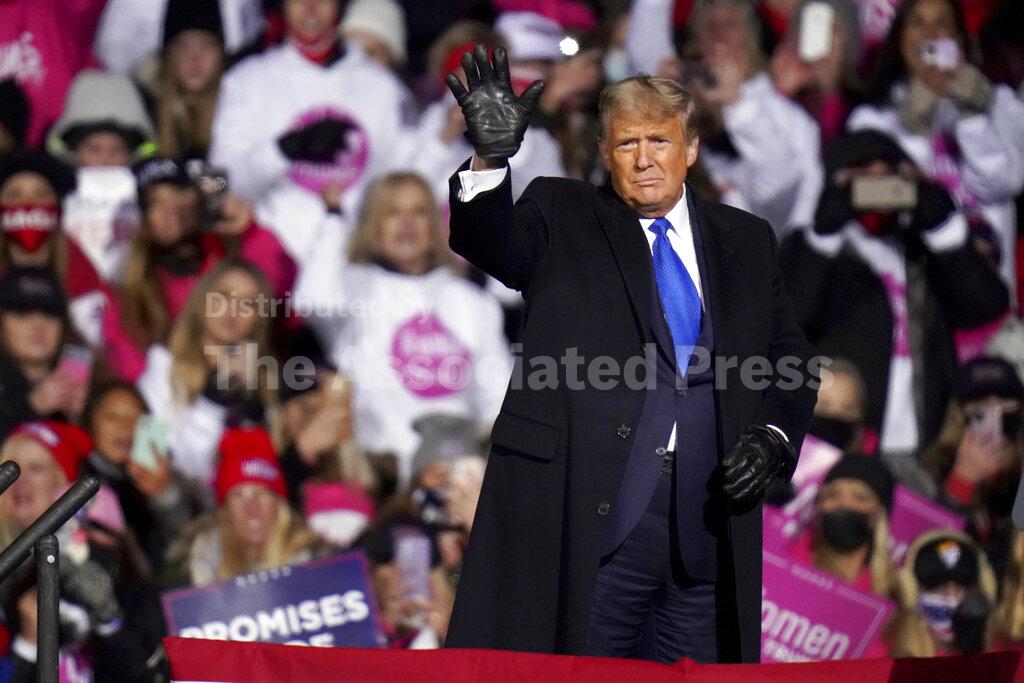
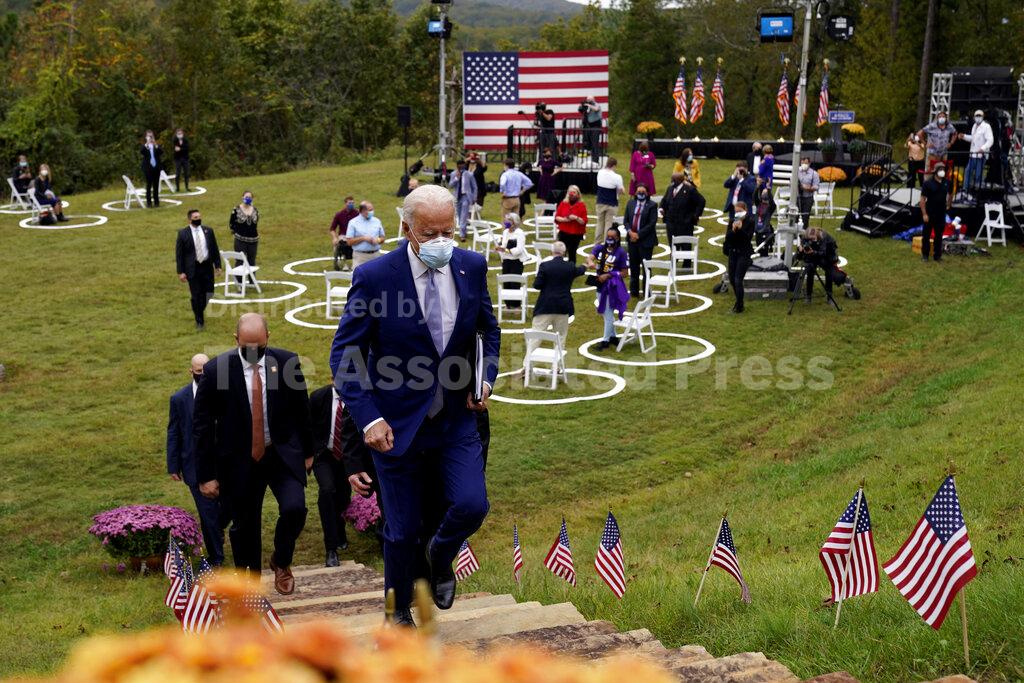
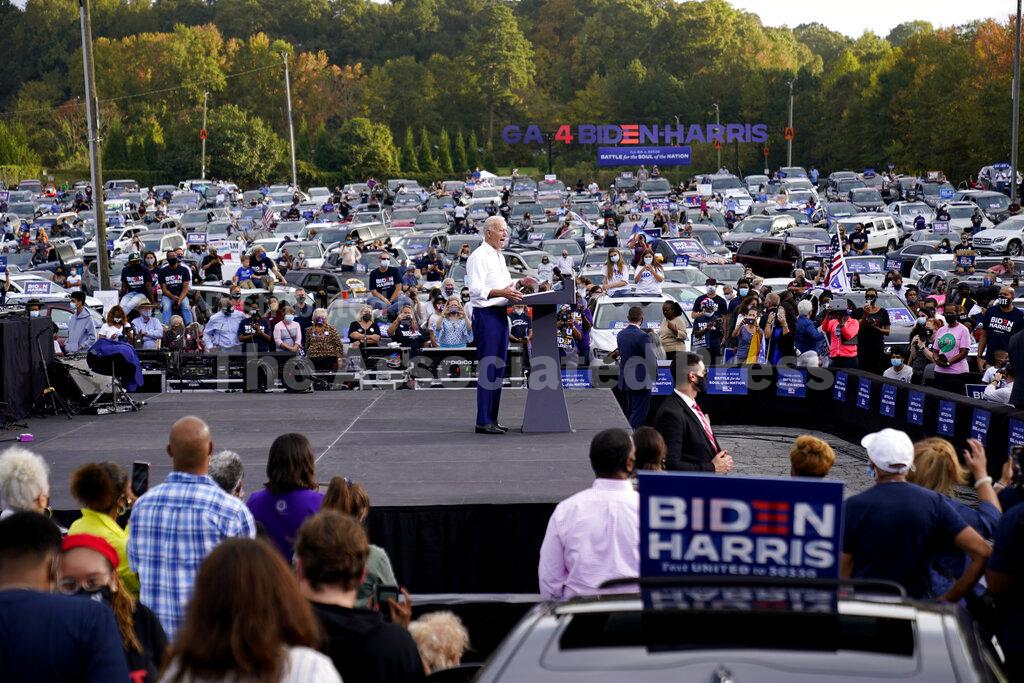
    LAS VEGAS (AP) — Joe Biden said Wednesday he’s “not running on the false promises of being able to end this pandemic by flipping a switch” but would prioritize science, while President Donald Trump used the race’s final days to keep up a whirlwind campaign schedule aimed at focusing on anything but the cornavirus.

    View all (8)

    The Democratic presidential nominee tried to keep the focus on health care, arguing that a Supreme Court conservative majority stretched to 6-3 by newly confirmed Justice Amy Coney Barrett could dismantle the Obama administration’s signature health law and leave millions of Americans with preexisting conditions devoid of insurance coverage.

    Biden kept most of his focus on the virus, saying Trump’s handling of the pandemic was an “insult” to its victims, especially as cases rise dramatically around the country.

    “Even if I win, it’s going to take a lot of hard work to end this pandemic,” Biden said during a speech in Wilmington, Delaware, where he lives. “I’m not running on the false promises of being able to end this pandemic by flipping a switch. But I do promise this: We will start on day one doing the right things.”

    Trump began the day in Las Vegas but was set to hold two rallies in Arizona, including one just across the Colorado River from Nevada that he hoped to use to appeal to voters in that state, hoping to flip it from blue to red.

    The president was under pressure to avoid one negative result of a September rally in Nevada that attracted thousands of people: The airport that hosted that event was fined more than $5,500 for violating crowd restrictions aimed at preventing the spread of the coronavirus.

    Rather than curb the crowds as virus cases spike across the U.S., Trump is simply shifting his event across the banks of the Colorado River to Bullhead City, Arizona. It’s the latest example of Trump’s efforts to downplay the virus and criticize Democratic leaders in states such as Nevada who have imposed limits on gatherings to combat the worst public health crisis in more than a century.

    Trump held an outdoor rally in Omaha, Nebraska, on Tuesday night. After he left, police took some attendees to the hospital, worried about exposure to the cold. The Trump campaign said it sent it a series of shuttlebuses to help the crowd disperse, but Biden said Trump “gets his photo op and then gets out.”

    With less than a week until Election Day, Trump is trailing Biden in most national polls. Biden also has an advantage, though narrower, in the key swing states that could decide the election.

    Biden voted early in Delaware on Wednesday and also received a virtual briefing from public health experts. One, Dr. David Kessler, director of the Center for Science in the Public Interest, warned, “We are in the midst of the third wave, and I don’t think anyone can tell you how high this is going to get.”

    In the U.S., more than 71,000 people a day are testing positive for the virus on average, up from 51,000 two weeks ago. Cases are rising in all but two states, Hawaii and Delaware, and deaths are climbing in 39, with an average of 805 people dying in the U.S. per day, up from 714 two weeks ago.

    Overall, about 227,000 Americans have now been killed by the virus.

    Trump views Nevada, a state that hasn’t backed a Republican for president since 2004, as one option for success. Hillary Clinton won it by less than 2.5 percentage points in 2016.

    The president is also aiming to keep Arizona in his column. The state hasn’t backed a Democratic presidential candidate since 1996, but it is competitive this year for both the presidency and the Senate. Democrat Mark Kelly is in a close race against GOP Sen. Martha McSally.

    Democrats aren’t ceding either Nevada or Arizona to Trump in the final days of the campaign. Biden’s running mate, California Sen. Kamala Harris, hit Nevada in an effort to prevent the state from flipping to Trump.

    “A path to the White House runs right through this field,” Harris said in a Las Vegas park Tuesday evening.

    She was also traveling to Arizona, meeting with Latina business leaders in Tucson and African American community leaders in Phoenix, as well as holding drive-in, voter mobilization rallies both places Wednesday. On Friday, Harris will visit Fort Worth, Houston and the U.S.-Mexico border town of McAllen in Texas — a state that hasn’t backed a Democrat for president since 1976 or even elected one to statewide office since 1994.

    Texas has long been so solidly red that top national Democrats visited only to hold fundraisers, then spent their hauls in places thought to be more competitive. The state has remained fiercely conservative, despite a booming Latino population.

    “I am really grateful for the attention that they have given Texas because it has been so long since a presidential campaign gave this state a look,” said Beto O’Rourke a former Texas congressman and one of Biden’s former presidential primary rivals.

    But O’Rourke declined to predict that Biden would win the state next week.

    Democrats point to a larger number of their party members returning absentee ballots in pivotal states like Pennsylvania — results that could be decisive since more people are likely to vote by mail during the pandemic. Trump’s team argues that enough of its supporters will vote on Election Day to overwhelm any Biden advantage.

    Around 71.5 million people nationwide have now voted in advance, either by casting early, in-person ballots or voting by mail, according to an Associated Press analysis. That already represents far more than the advance ballots cast in the 2016 presidential election.

    Trump’s campaign is facing a cash crunch, meanwhile, which has pinched his advertising budget at a time when Biden is using his funding advantage to flood the airwaves with ads in battleground states. That’s forced Trump to do more of his signature rallies as a substitute, despite a worsening pandemic.

    In Arizona, Biden is nearly doubling the spending of Trump and the Republican National Committee, which has more cash on hand than the president and has been tapped to help pay for ads in the closing weeks.

    In Nevada, the gulf is even more dramatic, with Trump and the RNC’s minimal $500,000 ad buy for the week getting drowned out by $3.3 million in advertising from Biden and his allies, according to data from the ad tracking firm CMAG/Kantar.

    ___

    Weissert reported from Washington, Jaffe from Wilmington. Associated Press writers Kathleen Ronayne in Las Vegas and Brian Slodysko in Washington contributed.

    ___

    AP’s Advance Voting guide brings you the facts about voting early, by mail or absentee from each state: https://interactives.ap.org/advance-voting-2020/.

  • Mississippi Governor’s Mask Mandate Expands To 16 Counties

    Mississippi Governor’s Mask Mandate Expands To 16 Counties

    JACKSON, Miss. (AP) — Mississippi Gov. Tate Reeves said Monday that he is extending a mask mandate to seven additional counties to try to control the spread of the coronavirus as cases increase rapidly in some areas.

    His new order takes effect Wednesday and lasts until at least Nov. 11. When it is in place, 16 of Mississippi’s 82 counties will have a requirement for people to wear face coverings when they are indoors away from their homes. Social gatherings in those 16 counties also will be limited to 10 people indoors or 50 people outdoors.

    The counties Reeves is adding are two of the larger ones in the state, Harrison and Madison, along with the less-populated Benton, Carroll, Jones, Leake and Marshall counties. Those with restrictions he set last week are DeSoto, Jackson, Lee, Forrest, Lamar, Itawamba, Neshoba, Claiborne and Chickasaw counties.

    Reeves said the restrictions are in counties that have had at least 200 confirmed virus cases or at least 500 confirmed cases per 100,000 residents during a recent two-week period.

    “If you live anywhere in Mississippi and you want to be in the game and help us reduce the risk of spread and overwhelming the health care system — you go out in public, wear a mask,” Reeves said during a news conference. “Stay socially distanced. Don’t get close to one another. Don’t have big events … for social purposes.”

    The Republican governor said he does not anticipate that he will set a statewide mandate for people to wear masks to polling places on or before the Nov. 3 election.

    “I do anticipate that the vast majority of Mississippians, when they go vote, are going to wear a mask,” Reeves said.

    Mississippi confirmed its first cases of COVID-19 in March. For the first few months, Reeves set county-by-county mask mandates only in places with rapidly increasing case numbers. His only statewide mask mandate was in place from Aug. 4 to Sept. 30.

    The state health department said Monday that Mississippi, with a population of about 3 million, has reported more than 115,000 confirmed cases and at least 3,263 deaths from COVID-19 as of Sunday evening.

    ___

    Follow AP coverage of the pandemic at https://apnews.com/VirusOutbreak and https://apnews.com/UnderstandingtheOutbreak.

  • US Jobless Claims Drop To 787,000, But Layoffs Remain High

    US Jobless Claims Drop To 787,000, But Layoffs Remain High

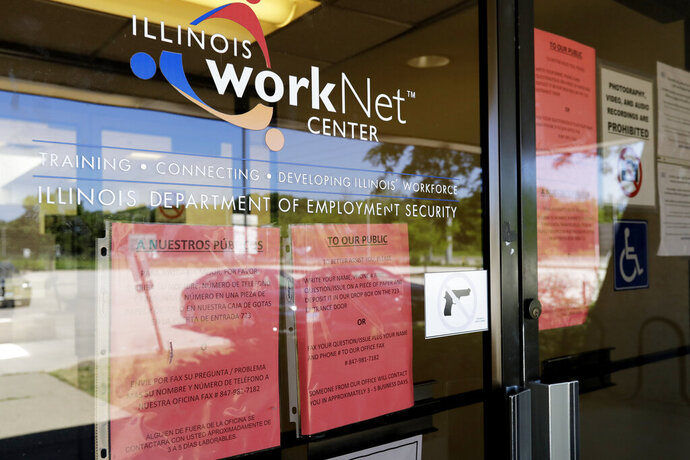
    WASHINGTON (AP) — The number of laid-off Americans seeking unemployment benefits fell last week to 787,000, a sign that job losses may have eased slightly but are still running at historically high levels.

    Last week’s figure was down from 842,000 the previous week, the Labor Department said Thursday. The government also revised down the number of people who sought aid in the two weeks before that. The revised total for the week that ended Oct. 3 was 767,000, the fewest since the viral pandemic erupted in March, though still more than three times the levels that preceded the pandemic.

    Economists welcomed the declines as evidence that the job market is still recovering from the pandemic recession. But some cautioned that the improvement could prove short-lived. With confirmed infections having neared 60,000 in the past week, the most since July, consumers have been unable or reluctant to shop, travel, dine out or congregate in crowds — a trend that has led some employers to keep cutting jobs. Several states are reporting a record number of hospitalizations from the virus.

    “We doubt it will continue as COVID infections spread rapidly, pushing down demand for discretionary consumer services, especially in the hospitality sector,” said Ian Shepherdson, chief economist at Pantheon Macroeconomics, referring to the portion of the economy that includes hard-hit hotels, restaurants and bars.

    The downward revisions in applications for unemployment aid reflect a sharp decline in California, which in recent months has accounted for one-fourth of the nation’s total jobless claims. California stopped processing new applications for two weeks while it implemented anti-fraud technology and sought to process a huge backlog. The state’s workforce agency is now reporting a 30% drop in the number of new applications compared with its earlier levels.

    A drop that sharp suggests that the state’s previous figures had overstated layoffs and jobless claims in California. Many economists have grown skeptical of the accuracy of the government’s weekly figures.

    That’s because of fraud and the concern that some states may be double-counting applicants in their regular unemployment programs and in a new program that made contractors and gig workers eligible for jobless aid for the first time. In many states, contractors and gig workers must apply for aid under both the regular program and the new program to determine their eligibility.

    Applications fell broadly last week across the country, not just in California, declining in 39 states while rising in 11. They dropped nearly 12,000 in Florida, 10,000 in New York and 5,800 in Washington state.

    Thursday’s report also said the number of people who are continuing to receive unemployment benefits tumbled by 1 million to 8.4 million. The decline shows that some of the unemployed are being recalled to their old jobs or are finding new ones. But it also indicates that many jobless Americans have used up their state unemployment aid — which typically expires after six months — and have transitioned to a federal extended benefits program that lasts an additional three months.

    Many jobless recipients are now receiving only regular state unemployment payments because a federal weekly supplement of $300 has ended in nearly all states. And a $600-a-week federal benefit expired over the summer.

    The still-elevated number of jobless claims underscores that a full recovery from the pandemic recession remains far off. Job growth has slowed for three straight months, leaving the economy still 10.7 million jobs short of its pre-pandemic level. The unemployment rate remains high at 7.9%.

    And some major companies keep announcing layoffs. Aramark, a food services contractor that provides concessions at sports stadiums, said Wednesday that it would lay off 975 workers in Denver, most of whom worked at Coors Field, home of the Colorado Rockies. The company is also cutting 550 jobs in Kansas City. Most major league baseball games this season were played with limited or no crowds, thereby reducing the need for concession workers

    Amtrak said at a congressional hearing Wednesday that it would have to cut 2,400 jobs unless Congress approves emergency aid as part of another stimulus bill.

    Yet negotiations in Congress over another round of financial aid have largely stalled, with little prospect for a deal before Election Day. Democratic House Speaker Nancy Pelosi and Treasury Secretary Steven Mnuchin are continuing to negotiate. But Republican Senate Majority Leader Mitch McConnell has warned the White House against agreeing to a large package that would be opposed by most Senate Republicans

    Unless Congress can agree on a significant new rescue aid program, most economists expect growth to slow in the final three months of the year from a rapid rebound in the July-September quarter. That would mean a more prolonged recovery of the jobs and output that the economy lost to the coronavirus.

    Congress’ failure to extend aid would also deepen the hardship for many of the jobless, who are struggling to pay bills with unemployment checks that, on average, replace just one-third of their prior earnings. Nearly one in six renters — 11.8 million people — are behind on their rent payments, according to an analysis of Census data by the Center on Budget and Policy Priorities.

    The number of people whose state benefits have expired and are now receiving aid for an additional 13 weeks from federal and state extended benefit programs rose 600,000 last week to 3.7 million, the government said.

    An additional 345,000 people applied for jobless aid under a separate program that made the self-employed, contractors and gig workers eligible for unemployment benefits for the first time. Those figures aren’t adjusted for seasonal trends, so they are reported separately.

    Both the extended aid and the jobless aid for contractors and gig workers will expire by year’s end. Millions of unemployed people would then be left without any benefits at all. An exception is in states with particularly high unemployment, where laid-off workers can receive 13 more weeks of state aid.

  • After Mandate Repeal, Masks Required Again In Nine Counties

    After Mandate Repeal, Masks Required Again In Nine Counties

    JACKSON, Miss. (AP) — Mississippi Gov. Tate Reeves announced Monday that he is imposing a mask mandate for public indoor spaces and other restrictions in nine counties to curb the spread of coronavirus amid weeks of steadily rising case numbers.

    “Here in Mississippi, we have seen this before,” Reeves said, referencing a spike in cases the state saw in the summer. “We know what can happen if we allow this to get out of control, so want to be proactive to prevent that from happening.”

    Reeves said explicitly that he does not think what is happening in Mississippi qualifies as a spike.

    “We’ve seen a relatively slow, slight increase over the last six weeks, which has really been exacerbated over the last 10 or 11 days,” he said.

    In the past week, Mississippi had two days when the number of new cases reported in one day reached more than 1,000, something the Department of Health hadn’t reported since mid-August. The seven-day rolling average of daily new confirmed cases in Mississippi has risen from 518 per day on Oct. 4 to 725 cases on Sunday, according to Johns Hopkins data analyzed by The Associated Press.

    Reeves’ method of imposing restrictions for counties by case count is similar to how he approached restrictions at the start of the pandemic. The Republican governor first resisted imposing a statewide mask mandate, focusing instead on individual counties with high cases, until cases were spiking throughout the state in early August. Reeves’ statewide mask mandate went into effect on Aug. 4 and was repealed on Sept. 30.

    He said the new restrictions will be imposed in counties that have 200 recent confirmed cases of coronavirus or 500 confirmed cases per 100,000 residents. Exceptions to that rule are counties with 200 recent cases that have fewer than 200 cases per 100,000 residents.

    The counties where restrictions will be imposed are DeSoto, Jackson, Lee, Forrest, Lamar, Itawamba, Neshoba, Claiborne and Chickasaw.

    In those nine counties, masks will be required indoors in public when social distancing is not possible. Social gatherings will be limited to 10 people indoors and 50 outdoors.

    Additionally, Reeves said he is requiring that hospitals statewide reserve 10% of total space for COVID-19 patients. If hospitals fail to comply with this order, they will not be allowed to perform non-urgent elective procedures.

    Reeves said no single “silver bullet” solution exists to bring case numbers down.

    “I know a lot of y’all will say, ‘Why don’t you just throw that statewide mask mandate back on and everything will be fine.’ Go look at the data in Arkansas. Go look at the data in Alabama. Never have taken their statewide mask mandates off, and their curve looks much worse than ours,” he said.

    Reeves said his primary concern is making sure Mississippi’s health care system is able and prepared to care for both coronavirus and non-coronavirus patients.

    “Our goal in Mississippi has never been to completely eradicate the virus. It has never been to completely eliminate the virus, because we do not believe — or at least I don’t — that that’s a realistic goal,” he said. “Our goal has always been to protect the integrity of our healthcare system.”

    The state Health Department said Monday that Mississippi, with a population of about 3 million, has reported more than 110,500 confirmed cases and at least 3,171 deaths from COVID-19 as of Sunday evening. That’s an increase of 586 confirmed cases and zero deaths from numbers reported over the weekend.

    ___

    Willingham is a corps member for the Associated Press/Report for America Statehouse News Initiative. Report for America is a nonprofit national service program that places journalists in local newsrooms to report on undercovered issues.

    ___

    Follow AP coverage of the pandemic at https://apnews.com/VirusOutbreak and https://apnews.com/UnderstandingtheOutbreak.

  • Adams County board extends mask mandate

    Adams County board extends mask mandate

    NATCHEZ, Miss. – The Adams County Board of Supervisors extended the local mask mandate through November as the number of COVID cases continues to increase. However, the board was split 3-2 Monday on whether people should be required to wear face coverings in public places or just be encouraged to do so.

    The total number of confirmed COVID cases in Adams County surpassed 1,000 last week, according to the state Department of Health’s tally that began in March. At least 1,043 Adams County residents have been diagnosed with the virus as of Sunday – an increase from the 994 cases confirmed through Oct. 10.

    As of Sunday, 42 Adams County residents have died since March from the highly contagious respiratory disease, up by two from the previous week.

    While the weekly increases of new Adams County cases since Sept. 26 had been about 23 each week, the rise this past week was by nearly 50. There were last week 45 “active” cases of county residents with the coronavirus while 953 are “presumed” recovered, said Adams County Emergency Management Director Brad Bradford.

    Adams County is not among the nine Mississippi counties identified Monday as COVID hotspots by Gov. Tate Reeves. He imposed new requirements on their residents to include wearing face coverings at indoor venues where people gather.

    Saying he wants “to avoid the heavy hand of government unless it is truly necessary,” the Republican governor did not reimpose the statewide mask mandate he lifted at the end of September.

    Adams County Supervisor Wes Middleton said his board colleagues should follow the governor so that people are just “strongly urged” to wear masks in public when they can’t socially distance. Joining Middleton in voting Monday against extending the local face-covering requirement until Nov. 30 was Kevin Wilson. Voting for it were the three other supervisors: Ricky Gray, Angela Hutchins and Warren Gaines.

    Gray said elected officials have the responsibility to ensure people are protected from the coronavirus. Face coverings are widely considered the most effective precaution along with social distancing and hand washing.

    While the local mask mandate has been in place for Natchez and Adams County since July, its enforcement has been difficult. Adams County Sheriff Travis Patten noted he saw many people not wearing face coverings as they congregated close together at the Natchez Balloon Festival this past weekend.

  • Governor Tate Reeves Announces Additional COVID-19 Measures

    Governor Tate Reeves Announces Additional COVID-19 Measures

    JACKSON — Today, Governor Reeves announced additional measures to slow the spread of COVID-19. A new executive order places a 10% capacity requirement on healthcare facilities across the state. If hospitals cannot maintain 10% of their capacity for COVID-19 patients, they must delay elective procedures. This was a vital part of the effort to prevent hospitals from becoming overwhelmed during the summer wave. Mississippi’s COVID-19 cases have increased over the past few weeks—part of a global and national trend of increasing cases.

    The governor also announced additional targeted measures for counties which meet the standards established during the summer wave. In these counties, indoor social gatherings should be limited to groups of 10. Outdoor social gatherings should be limited to groups of 50. Face coverings are required while indoors and interacting with the public without social distancing.

    “We’ve seen this before. We know what can happen if we allow this to get out of control, and so we want to be proactive to prevent that from happening,” said Governor Tate Reeves. “None of these elements are silver bullets. None of them will totally eliminate the virus. We have to allow for life to go on in the meantime. As we wait for a vaccine, our mission is the same as it ever was: to prevent our healthcare system from being overwhelmed. That has to be the focus.”

    The counties with additional COVID-19 safety measures are Chickasaw, Claiborne, DeSoto, Forrest, Itawamba, Jackson, Lamar, Lee, and Neshoba.

    Counties must meet the following criteria for additional measures: more than 500 cases per 100,000 residents over a designated two-week period or more than 200 cases total over the designated two-week period (with more than 200 cases per 100,000 residents).

    A copy of the executive order can be found here.

  • New Orleans Relaxes COVID-19 Rules, Will Investigate Crowds

    New Orleans Relaxes COVID-19 Rules, Will Investigate Crowds

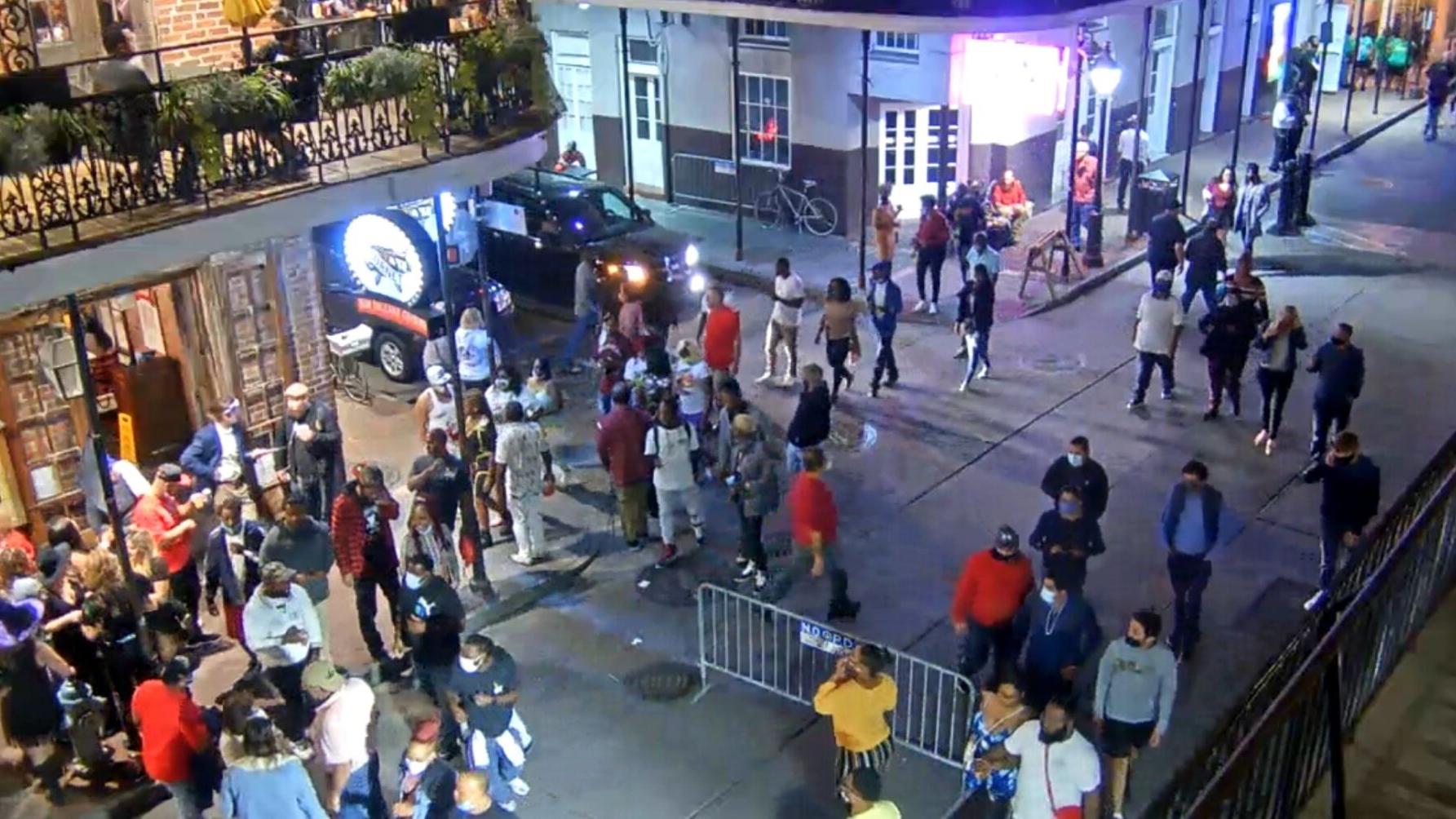
    NEW ORLEANS (AP) — New Orleans officials say they’ll investigate crowds that gathered in the French Quarter after the city relaxed coronavirus pandemic restrictions.

    Saturday was the first day that bars could have outdoor seats under guidelines set by Mayor LaToya Cantrell, who is taking a more gradual approach than the state.

    Tweets on Sunday from the city’s official Twitter account said officials had been made aware of crowds gathering in the French Quarter and would enforce the rules, WWL-TV reported.

    Under the city’s guidelines, bars may have outdoor seats for up to 25% of their normal capacity or 50 people — whichever is smaller.

    Police and the city’s code enforcement task force enforced the 11 p.m. curfew on alcohol takeout and sales “in the French Quarter and throughout the city,” it said.

    “Businesses not in compliance with Phase 3.2 guidelines will be met with enforcement action,” another tweet said. “Our people have put in the work which has allowed us to ease restrictions, but actions that lead to super spreader events will not be condoned. We cannot go back.”

    The city did not mention enforcement against people making up crowds outside bars, the station noted.

  • White House Puts ‘Politicals’ At CDC To Try To Control Info

    White House Puts ‘Politicals’ At CDC To Try To Control Info

    NEW YORK (AP) — The Trump White House has installed two political operatives at the nation’s top public health agency to try to control the information it releases about the coronavirus pandemic as the administration seeks to paint a positive outlook, sometimes at odds with the scientific evidence.

    View all (2)

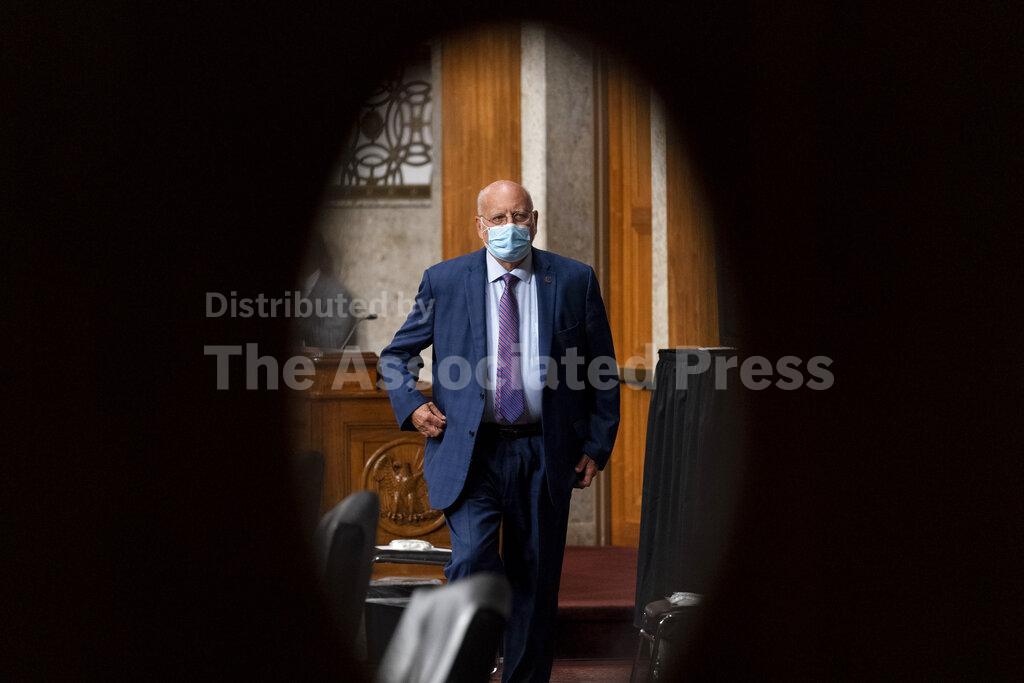
    The two appointees assigned to the Centers for Disease Control and Prevention’s Atlanta headquarters in June have no public health background. They have instead been tasked with keeping an eye on Dr. Robert Redfield, the agency director, as well as scientists, according to a half-dozen CDC and administration officials who spoke to The Associated Press on the condition of anonymity to discuss internal government affairs.

    The appointments were part of a push to get more “politicals” into the CDC to help control messaging after a handful of leaks were “upsetting the apple cart,” said an administration official.

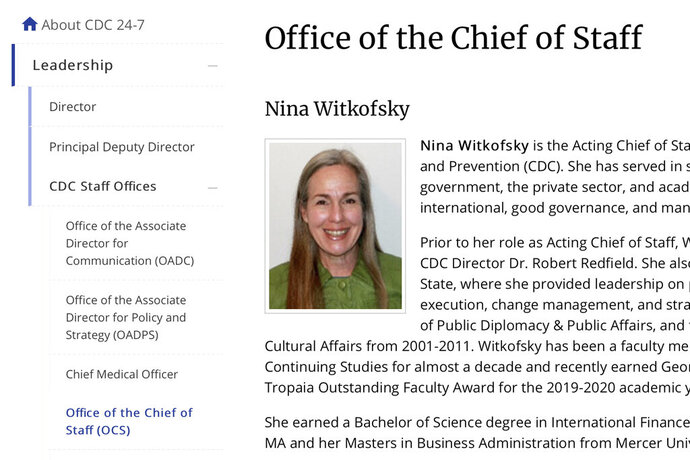
    When the two appointees showed up in Atlanta, their roles were a mystery to senior CDC staff, the people said. They had not even been assigned offices. Eventually one, Nina Witkofsky, became acting chief of staff, an influential role as Redfield’s right hand. The other, her deputy Chester “Trey” Moeller, also began sitting in on scientific meetings, the sources said.

    It’s not clear to what extent the two appointees have affected the agency’s work, according to interviews with multiple CDC officials. But congressional investigators are examining that very question after evidence has mounted of political interference in CDC scientific publications, guidance documents and web postings.

    The White House declined to comment. A CDC spokesperson confirmed that Witkofsky and Moeller were working at the agency reporting to Redfield, but did not comment further.

    Moeller said in an email to The AP, “I work for Dr. Redfield who is 100% committed to the science and the thousands of incredibly dedicated employees at the CDC working on behalf of the American people.”

    During previous pandemics such as Ebola or SARS, the CDC was the public face of the U.S. response, offering scientifically driven advice to doctors and patients alike. The agency played the same role at the beginning of the COVID-19 pandemic, but stumbled in February when a test for the virus sent to states proved to be flawed. Then, in late February, a top CDC infectious disease expert, Dr. Nancy Messonnier, upset the administration by speaking frankly at a news conference about the dangers of the virus when the president was still downplaying it.

    Within weeks, the agency was pushed offstage as President Donald Trump and other administration officials, during daily news briefings, became the main sources of information about the U.S. epidemic and the attempts to control it.

    Still, CDC persisted in assembling science-based information that conflicted with the White House narrative. In May, a series of leaked emails and scientific documents obtained by The AP detailed how the White House had buried CDC’s detailed guidelines for communities reopening during a still-surging pandemic. The emails revealed that the administration was vetting CDC’s science through the Office of Management and Budget, rather than relying on its medical experts on the White House coronavirus task force. The resulting news stories of the shelving of the documents angered the administration, and sparked renewed efforts to exert control over CDC, according to current and former officials.

    On a Monday in June, the new faces arrived at CDC’s Atlanta offices. One was Witkofsky, who according to federal election records had a minor role in Trump’s presidential campaign.

    Witkofsky was installed initially as a senior adviser to Redfield. In a few weeks, she would take over as the agency’s acting chief of staff and gradually become the person at CDC headquarters who has the most daily interactions with him, the CDC officials said.

    Senior CDC staff found out about the appointments the week before they happened, according to a CDC official who also spoke on the condition of anonymity to discuss internal agency affairs. They had no office, and no one knew their role.

    “They just showed up on a Monday,” the official said.

    Presidential administrations appoint CDC directors. And there’s nothing new about a White House seeking a better handle on information released by the CDC, said Glen Nowak, a University of Georgia professor who ran the agency’s media relations for more than a dozen years. But past administrations placed overtly political appointees at HHS in Washington; the Trump administration has taken it to a new level by placing other people in CDC’s Atlanta headquarters, Nowak said.

    Before Witkofsky and Moeller, the Trump administration had appointed others at CDC in Atlanta who were viewed by staff with some suspicion. But none of the predecessors’ roles was so clearly to report internal agency business up to Washington, according to officials who talked to The AP.

    And Witkofsky seemed a particularly strange fit for the nation’s top public health agency. She studied finance and business administration in college and graduate school, and at one point worked as a publicist and talent booker for Turner Broadcasting’s Cartoon Network. Her political work included being an events director during the George W. Bush 2000 presidential campaign. As a State Department official, she developed an international engagement program for U.S. athletes and coaches.

    Her lack of familiarity with the CDC, and how it worked, quickly became clear in meetings, according to multiple agency officials. At one, Witkofsky expressed surprise that the CDC had a supporting foundation, one agency official recalled.

    Though Witkofsky was largely unknown, she had met a few CDC workers months earlier. In March, on behalf of the administration, she had worked communications when Trump visited a CDC lab. Clad in a red “Keep America Great” baseball cap, Trump had praised the CDC and assured the public “we’re prepared for anything.” Trump asserted that he has a terrific grasp of public health. “Maybe I have a natural ability,” he boasted.

    In her new role, Witkofsky communicated regularly with Michael Caputo, chief of communications for CDC’s parent agency, the U.S. Department of Health and Human Services, two administration officials said. At the time Caputo’s office was attempting to gain control over the Morbidity and Mortality Weekly Report, or MMWR, a CDC scientific weekly known for publishing authoritative and unvarnished information about disease-fighting efforts, according to multiple accounts.

    Witkofsky’s deputy, Moeller, who began work on the same day, is a longtime GOP supporter who worked on the Bush-Cheney presidential campaign in 2004. The most recent post on his Facebook page was a “Make America Great Again” Trump campaign banner.

    They wanted him to sit in meetings and “listen to scientists,” said a former CDC official.

    Witkofsky was added to CDC’s website when she became acting chief of staff, but Moeller’s name appears nowhere on either the HHS or CDC sites.

    An HHS spokesperson said both Witkofsky and Moeller report to Redfield but refused to comment further on personnel matters.

    Some CDC officials noted that a pandemic like this involves many parts of the government, and the political people sent to Atlanta have at times helped speed the flow of information coming to the agency from Washington.

    But there has been a huge downside, public health experts and former CDC staffers say: damage to the once-venerated CDC.

    The agency’s guidance for how to reduce viral infections has been largely ignored by the Trump White House, where officials have refused to wear masks and continued to hold large gatherings with few protective measures.

    Witkofsky and Moeller are among officials the House Select Subcommittee on the Coronavirus Crisis is seeking to interview as part of a probe it launched in mid-September into allegations the Trump administration blocked the CDC from publishing accurate scientific reports during the pandemic.

    The subcommittee’s investigators want to know more about Witkofsky and Moeller’s roles in reported attempts by Caputo and administration officials to gain editorial control over the MMWR and other CDC publications. The investigators are also interested in whether Witkofsky and Moeller were involved in making changes to CDC COVID-19 guidance for schools, as well as agency information that has been changed multiple times on how the virus spreads through the air.

    Caputo took a leave of absence from HHS after he described government scientists as the “resistance” against Trump in a video posted online. In an HHS podcast, Caputo accused Democrats in the government, along with the news media, of not wanting a vaccine so as to punish the president. After the incidents gained news coverage, one of Caputo’s top advisers, Dr. Paul Alexander, resigned.

    The apparent meddling and political pressure from the Trump White House, and from HHS, have caused even scientific experts to question some CDC decisions. And they have made an already trying job of responding to the worst pandemic in a century even harder, according to multiple CDC officials who spoke on the condition of anonymity.

    “I don’t trust the (political appointees) that they’ve dropped into the CDC,” said Dr. Rick Bright, a federal vaccine expert who filed a whistleblower complaint alleging he was reassigned to a lesser job because he resisted political pressure to allow widespread use of hydroxychloroquine, a malaria drug pushed by Trump as a COVID-19 treatment. Bright said CDC scientists should be the face of the federal response, as has been the tradition, and the absence of their counsel to the public has contributed to confusion.

    “That is absolutely frightening,” he said. “(It) leads to the mixed signals to the public. And I think that is increasing the magnitude and duration of this entire pandemic.”

    Bright resigned last week from his post at the National Institutes of Health, saying his superiors had ignored a national coronavirus testing strategy he’d developed.

    All of the added political pressure is contributing to a high burnout rate for CDC scientists working on the coronavirus response. One agency official said it “creates distractions from the real threat” of the virus, and extra work.

    From March through September, there has been a constantly changing organizational structure and leadership in CDC’s COVID response, according to internal organizational charts obtained by The AP.

    In a chart from March, Messonnier was listed as a “Senior Official,” one step below the director, Redfield. But in the following chart, posted weeks after the press conference that angered the White House, her name disappeared completely from the top ranks. A new box had appeared on next to Redfield’s name: the White House Coronavirus Task Force led by Vice President Mike Pence.

    In previous pandemics and outbreaks like Ebola that lasted for months or years, records and interviews show that the CDC’s leadership remained largely stable to create a consistency that staff could rely upon.

    The appearance of political interference and disarray are hurting the agency’s standing, experts say.

    “There’s a cumulative effect. And each one of them is doing its own damage to the agency’s credibility,” Nowak said.

    ___

    Lardner reported from Washington.

    ___

    To contact AP’s investigative team, email investigative@ap.org
  • WHO Study Finds Remdesivir Didn’t Help COVID-19 Patients

    WHO Study Finds Remdesivir Didn’t Help COVID-19 Patients

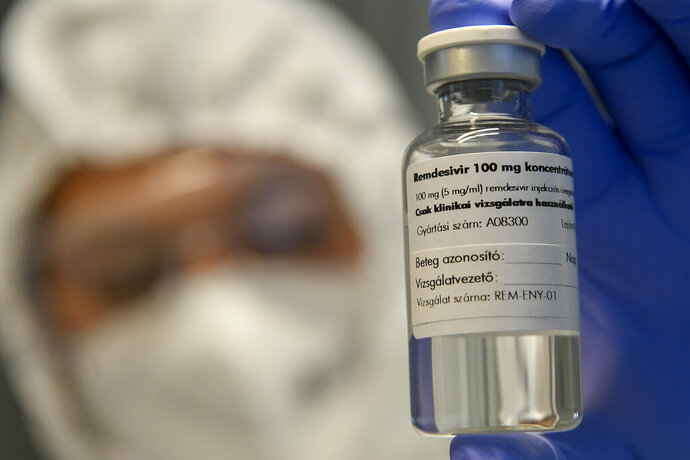
    GENEVA (AP) — A large study led by the World Health Organization suggests that the antiviral drug remdesivir did not help hospitalized COVID-19 patients, in contrast to an earlier study that made the medicine a standard of care in the United States and many other countries.

    The results announced Friday do not negate the previous ones, and the WHO study was not as rigorous as the earlier one led by the U.S. National Institutes of Health. But they add to concerns about how much value the pricey drug gives because none of the studies have found it can improve survival.

    The drug has not been approved for COVID-19 in the U.S., but it was authorized for emergency use after the previous study found it shortened recovery time by five days on average. It’s approved for use against COVID-19 in the United Kingdom and Europe, and is among the treatments U.S. President Donald Trump received when he was infected earlier this month.

    The WHO study involved more than 11,000 patients in 30 countries. About 2,750 were randomly assigned to get remdesivir. The rest got either the malaria drug hydroxychloroquine, the immune-system booster interferon, the antiviral combo lopinavir-ritonavir, or just usual care. The other drugs have largely been ruled out for COVID-19 by previous studies, but not remdesivir.

    Death rates after 28 days, the need for breathing machines and time in the hospital were relatively similar for those given remdesivir versus usual care.

    The results have not been published in a journal or reviewed by independent scientists, but were posted on a site researchers use to share results quickly.

    “The big story is the finding that remdesivir produces no meaningful impact on survival,” Martin Landray, an Oxford University professor who led other coronavirus treatment research, said in a statement.

    “This is a drug that has to be given by intravenous infusion for five to 10 days,” and costs about $2,550 per treatment course, he said. “COVID affects millions of people and their families around the world. We need scalable, affordable and equitable treatments.”

    Dr. Margaret Harris, a WHO spokeswoman, attributed the difference in the conclusions of the two studies to the fact WHO’s was larger.

    “It’s just a much higher-powered study,” she said. “It’s quadruple the number of people in all the other studies.”

    However, Dr. Andre Kalil, a University of Nebraska infectious disease specialist who helped lead the U.S. remdesivir study, said the WHO one was poorly designed, which makes its conclusions less reliable. Patients and doctors knew what treatment they were using, there was no placebo infusion to help avoid biased reporting of risks or benefits, there was little information about the severity of patients’ symptoms when treatments began and a lot of missing data, he said.

    “Poor quality study design cannot be fixed by a large sample size, no matter how large it is,” Kalil wrote in an email.

    Furthermore, the WHO study tested 10 days of remdesivir, so some patients may have been hospitalized longer than they needed to be just to finish treatment, making their length of stay look bad in comparison to others getting usual care.

    Remdesivir’s maker, Gilead Sciences, said in a statement that the results are inconsistent with more rigorous studies and have not been fully reviewed or published.

    ___

    Marchione reported from Milwaukee.

    ___

    The Associated Press Health and Science Department receives support from the Howard Hughes Medical Institute’s Department of Science Education. The AP is solely responsible for all content.

    ___

    This story has been corrected to remove an erroneous reference to remdesivir being a repurposed malaria drug.