Category: COVID-19

  • Louisiana Landlords Sue To Overturn CDC Eviction Order

    Louisiana Landlords Sue To Overturn CDC Eviction Order

    MONROE, La. (AP) — Louisiana landlords have filed a federal lawsuitseeking to overturn a moratorium on some rental evictions ordered by the U.S. Centers for Disease Control and Prevention to avoid spreading the novel coronavirus.

    “The CDC’s eviction moratoriumrepresents a sweeping assumption of power by an administrative agency that it simply does not possess,” says the suit filed Thursday in Monroe, the location of a company that manages 725 rental units in several northeast Louisiana cities. Landlords in Georgia, Ohio and Tennessee have filed similar lawsuits against the CDC moratorium, and those in 13 other states and the District of Columbia are trying to overturn state or city eviction moratoriums, according to information assembled by John Pollock at the National Coalition for the Civil Right to Counsel and provided by the Seattle-based Housing Justice Project.

    The Pacific Legal Foundation filed the Louisiana challenge for Chambless Enterprises LLC, of Monroe, and the statewide Apartment Association of Louisiana, with 376 members that own or manage 118,000 apartments.

    The CDC’s Sept. 1 order came about three weeks after President Donald Trump issued an executive order telling federal health officials to consider measures to temporarily halt evictions

  • Biden Seeks Window On Vaccine Plans As Trump Stalls Handoff

    Biden Seeks Window On Vaccine Plans As Trump Stalls Handoff

    WASHINGTON (AP) — President-elect Joe Biden’s scientific advisers plan to meet with vaccine makers in coming days even as a stalled presidential transition keeps them out of the loop on government plans to inoculate all Americans against COVID-19.

    President Donald Trump’s refusal to accept that he lost the election means that the Biden team lacks a clear picture of the groundwork within the government for a mass vaccination campaign that will last the better part of next year, says Biden’s chief of staff, Ron Klain.

    “We now have the possibility … of a vaccine starting perhaps in December or January,” Klain said. “There are people at HHS making plans to implement that vaccine. Our experts need to talk to those people as soon as possible so nothing drops in this change of power we’re going to have on January 20th.”

    A lack of coordination between outgoing and incoming administrations would be especially problematic in a worsening public health crisis, said the government’s top infectious disease expert, Dr. Anthony Fauci.

    “Of course it would be better if we could start working with them,” said Fauci, head of the National Institute of Allergy and Infectious Diseases, who has been through multiple presidential transitions during 36 years of government service.

    He likened the process to runners passing on the baton in a relay race. “You don’t want to stop and then give it to somebody,” he said. “You want to just essentially keep going.”

    The president-elect’s outreach to vaccine manufacturers comes as the coronavirus pandemic in the United States has entered perhaps its most dangerous phase. The seven-day rolling average for new daily cases stood at 148,725 on Sunday, according to data from Johns Hopkins University. That means the U.S. is adding about 1 million new cases a week. Deaths averaged 1,103 a day as of Sunday, a 33% increase over two weeks.

    Pfizer’s announcement that preliminary data indicate its vaccine is 90% effective lifted financial markets last week and gave people worldwide hope that an end to the pandemic will be coming. On Monday, another company, Moderna, said its vaccine appears to be 94.5% effective, according to preliminary data.

    “We’re going to start those consultations this week,” said Klain, including Pfizer and other pharmaceutical companies.

    But in some ways the more critical issue is getting a detailed understanding of distribution plans being finalized by the Department of Health and Human Services and the Pentagon.

    “We need to be talking to them as quickly as possible,” Klain said. “It’s great to have a vaccine, but vaccines don’t save lives: vaccinations save lives. And that means you’ve got to get that vaccine into people’s arms all over this country. It’s a giant logistical project.”

    Fauci stressed the arrival of vaccines won’t be like flipping a switch to return to normal life. The first doses will become available for people in high-risk groups later this year. He said Americans will have to keep up preventive measures such as wearing masks, observing social distancing and frequently washing their hands well into next year.

    “Everyone is sensitive to what we call ‘COVID fatigue,’“ Fauci said. “People are worn out about this. But we have got to hang in there a bit longer. … We have got to hang together on this.”

    Other vaccine makers are also in the final phase of testing their formulations, and Fauci said he expects those vaccines will also be highly effective.

    The government has launched a program called “Operation Warp Speed,” backed by the White House, to quickly manufacture and distribute tens of millions of doses of vaccines. The shots will be free to Americans, and the goal is to have most people vaccinated by about this time next year. Many people will need two doses.

    Initial access to the vaccine will be limited to high-priority groups such as hospital and nursing home workers.

    A top Trump administration health official said 20 million doses could be available by the end of this month, and an additional 20 million by the end of the year. Adm. Brett Giroir, assistant HHS secretary, seconded Fauci’s admonition that Americans must keep following basic public health precautions such as wearing masks.

    “If we do these things combined with the testing that we have, we can flatten the curve,” he said. “If we do not do these things, the cases will continue to go up.” Giroir said the country is in a critical situation.

    Pressed on whether the administration should be talking to the Biden team, Giroir responded: “Look, I want to be as transparent as possible with everybody. This is not a political issue. This is an issue of public health and saving American lives. And I think there’s nothing more important than that.”

    The risks are real. Around the country, hospitals report that doctors and nurses are being stretched to cope with rising numbers of hospitalized COVID-19 patients requiring special care. In some communities, hospitals have started limiting elective procedures in order to conserve resources.

    Fauci was on CNN’s “State of the Union,” Klain appeared on NBC’s “Meet the Press” and Giroir spoke on ABC’s “This Week.”

    ___

    Weissert reported from Wilmington, Delaware.

  • 2nd Virus Vaccine Shows Overwhelming Success In U.S. Tests

    2nd Virus Vaccine Shows Overwhelming Success In U.S. Tests

    Moderna said Monday its COVID-19 vaccine is proving highly effective in a major trial, a second ray of hope in the global race for a shot to tame a resurgent virus that is now killing more than 8,000 people a day worldwide.

    The company said its vaccine appears to be 94.5% effective, according to preliminary data from Moderna’s ongoing study. A week ago, competitor Pfizer Inc. announced its own vaccine appeared similarly effective — news that puts both companies on track to seek permission within weeks for emergency use in the U.S.

    The results are “truly striking,” said Dr. Anthony Fauci, the U.S. government’s top infectious diseases expert. Earlier this year, Fauci said he would be happy with a COVID-19 vaccine that was 60% effective.

    A vaccine can’t come fast enough, as virus cases topped 11 million in the U.S. over the weekend — 1 million of them recorded in just the past week — and governors and mayors are ratcheting up restrictions ahead of Thanksgiving. The pandemic has killed more than 1.3 million people worldwide, over 245,000 of them in the U.S.

    Stocks rallied on Wall Street and elsewhere around the world on rising hopes that the global economy could start returning to normal in the coming months. Moderna was up 7.5% in the morning, while companies that have benefited from the stay-at-home economy were down, including Zoom, Peloton and Netflix.

    Dr. Stephen Hoge, Moderna’s president, welcomed the “really important milestone” but said having similar results from two different companies is what’s most reassuring.

    “That should give us all hope that actually a vaccine is going to be able to stop this pandemic and hopefully get us back to our lives,” Hoge told The Associated Press. He added: “It won’t be Moderna alone that solves this problem. It’s going to require many vaccines” to meet the global demand.

    The National Institutes of Health helped create the vaccine Moderna is manufacturing, and NIH’s director, Dr. Francis Collins, said the exciting news from two companies “gives us a lot of confidence that we’re on the path towards having effective vaccines.”

    But “we’re also at this really dark time,” he warned, saying people can’t let down their guard during the months it will take for doses of any vaccines cleared by the Food and Drug Administration to start reaching a large share of the population.

    Scientists not involved with the testing were encouraged by the early findings but cautioned that the FDA still must scrutinize the safety data and decide whether to allow vaccinations outside of a research study.

    “We’re not to the finish line yet,” said Dr. James Cutrell, an infectious disease expert at UT Southwestern Medical Center in Dallas. “If there’s an impression or perception that there’s just a rubber stamp, or due diligence wasn’t done to look at the data, that could weaken public confidence.”

    If the FDA allows emergency use of Moderna’s or Pfizer’s candidate, there will be limited, rationed supplies before the end of the year.

    Both vaccines require people to get two shots, several weeks apart. U.S. officials said they hope to have about 20 million Moderna doses and another 20 million doses of the vaccine made by Pfizer and its German partner BioNTech to use in late December.

    Exactly who is first in line is yet to be decided. But Health and Human Services Secretary Alex Azar said the hope is that enough doses are available by the end of January to vaccinate adults over 65, who are at the highest risk from the coronavirus, and health care workers. Fauci said it may take until spring or summer for enough for anyone who is not high risk and wants a shot to get one.

    States are gearing up for what is expected to be the biggest vaccination campaign in U.S. history. First the shots have to arrive where they’re needed, and Pfizer’s must be kept at ultra-cold temperatures — around minus 94 degrees Fahrenheit. Moderna’s vaccine also starts off frozen, but the company said Monday it can be thawed and kept in a regular refrigerator for 30 days, easing that concern.

    Another important message: Additional vaccines that work in different ways are still in testing — and despite the promising news about Moderna’s and Pfizer’s shots, more volunteers are needed for those studies.

    Moderna’s vaccine is being studied in 30,000 volunteers who received either the real thing or a dummy shot. On Sunday, an independent monitoring board examined 95 infections that were recorded after volunteers’ second shot — and only five of the illnesses occurred among people given the real vaccine.

    The study is continuing, and Moderna acknowledged the protection rate might change as more COVID-19 infections are detected. Also, it’s too soon to know how long protection lasts. Both cautions apply to Pfizer’s vaccine as well.

    But Moderna’s independent monitors reported some additional, promising tidbits: All 11 severe COVID-19 cases were among placebo recipients, and there were no significant safety concerns. The main side effects were fatigue, muscle aches and injection-site pain after the second dose.

    The Cambridge, Massachusetts, company’s vaccine is among 11 candidates in late-stage testing around the world, four of them in huge studies in the U.S.

    Both Moderna’s shots and the Pfizer-BioNTech candidate are so-called mRNA vaccines, a brand-new technology. They aren’t made with the coronavirus itself, meaning there’s no chance anyone could catch it from the shots. Instead, the vaccine contains a piece of genetic code that trains the immune system to recognize the spiked protein on the surface of the virus.

    Pfizer CEO Albert Bourla tweeted that that he was thrilled at Moderna’s news, saying, “Our companies share a common goal — defeating this dreaded disease.”

    ___

    The Associated Press Health and Science Department receives support from the Howard Hughes Medical Institute’s Department of Science Education. The AP is solely responsible for all content.
  • With COVID-19 Surging, Schools Suspend In-Person Education

    With COVID-19 Surging, Schools Suspend In-Person Education

    With COVID-19 cases and hospitalizations in the state spiking to record levels, bus drivers and teachers in quarantine, students getting sick and the holidays looming, Schools Superintendent Scott Hanback in Tippecanoe County, Indiana, made a tough decision this week.

    The school system, he decreed, would switch to remote learning until after Thanksgiving.

    It seemed like the only safe way to proceed after the myriad disruptions caused by the surging coronavirus.

    ‘’It has been very, very difficult,’’ Hanback said, adding that he has been doing ‘’a lot of prayer, rest and trying to just take care of my mental health and physical health just so I can stay sharp.’’

    Facing equally grim conditions, school systems around the U.S. and abroad are taking similarly tough action. Boston, Detroit, Indianapolis and Philadelphia are among those that are closing classrooms or abandoning plans to offer in-person classes later in the school year, and New York City may be next.

    Such decisions are complicated by a host of conflicting concerns — namely, safety versus the potential educational and economic damage from schooling children at home, in front of computers, under their parents’ supervision.

    Virus transmission does not appear to be rampant within schools themselves. Instead, many of the infections that are proving so disruptive are believed to be occurring out in the community. Educators fear things could get worse during upcoming holiday breaks, when students and staff gather with family and friends or travel to other hot spots.

    The nation has entered “an extremely high-risk period,’’ said experts at PolicyLab, a Children’s Hospital of Philadelphia team that develops guidance. They shifted their advice this week, advocating online-only instruction for areas with rapidly rising rates, at least until after Thanksgiving.

    Newly confirmed infections per day in the U.S. are shattering records at nearly every turn, hitting more than 153,000 on Thursday and pushing the running total in the U.S. to about 10.5 million, with about a quarter-million deaths, by Johns Hopkins University’s count. The number of people now in the hospital reached an all-time high of over 67,000 on Thursday, according to the COVID Tracking Project.

    In Hanback’s district in Tippecanoe County, which includes the city of Lafayette, 51 cases out of 13,800 students were confirmed during the first nine weeks of in-person classes. In less than three weeks that followed, that number almost doubled, and cases among teachers and staff jumped fivefold, Hanback said.

    “The spread isn’t really occurring in the classroom. The spread is occurring in nights and weekends and holidays and social gatherings,” he said.

    Because of the resulting shortage of bus drivers, students were arriving at school an hour late and getting home an hour late, Hanback said.

    ‘’Inside the schools, the same thing was happening with classroom teachers and classroom aides,” he said. “We are exhausting our substitute pool and it became a daily struggle.’

    Weekly reports by the American Academy of Pediatrics and the Children’s Hospital Association show there have been more than 900,000 COVID-19 cases in children and teens in the U.S., and they have been steadily rising. Almost 74,000 cases were recorded during the week ending Nov. 5, an all-time high.

    Severe illness among children and teens is rare, particularly in younger ones, but they can often spread the disease without showing any symptoms. When schools are disrupted, it’s often because teachers, staff and other adult employees have gotten sick.

    The academy has stressed the importance of in-person education but says uncontrolled spread in many areas means that cannot happen safely in many schools.

    By some estimates, more than half of U.S. schools have been offering at least some in-person classes.

    In New Mexico, where cases and hospitalizations are at record highs, Amy Armstrong and her husband face a dilemma. They have been sending their 7-year-old son, Damien, to school four days a week since September. But the district outside Albuquerque announced this week that classes will be online-only starting Monday.

    Quitting their jobs to watch over their children — she’s a bank employee, he does electrical work — could mean losing their house.

    Armstrong said she understands the rationale for shutting schools.

    ‘’But do they understand the impact financially, emotionally and physically it’s having on people, on families, on the kids especially?’’ she said.

    In Europe, most schools reopened to a degree in September, only to see the virus spike and hospitals start to fill with COVID-19 patients. Greece reluctantly closed all but elementary schools this month, while Italy kept high schools on a partial schedule.

    France, which has suffered more infections than anywhere else in Europe, kept schools open even after closing restaurants, bars and all but essential stores. The number of children under 19 testing positive has dropped markedly since the semi-lockdown began on Oct. 29 but remains high.

    Michael Hinojosa, schools superintendent in Dallas, has been watching and worrying as case numbers rise all around him. Texas surpassed 1 million cases this week.

    Many of the district’s 150,000 students are from disadvantaged families, and about half attend at least some in-person classes. Switching to all-remote learning could mean a loss of state funding, Hinojosa said, but if schools reach a crisis point, “we have to be able to pivot on a dime.”

    Five district schools had to revert to all-remote education briefly when cases were detected in students and staff. School numbers have been relatively low; just 2% of the district’s 22,000 teachers and staff have been infected, and the rate among students is well below that.

    But Hinojosa fears that bubble could burst over the holidays.

    “We are a very blue city in a purple county in a red state. The governor wants all restaurants open,” he said.

    Detroit announced Thursday it will suspend in-person classes next week for the roughly 50,000 students because of the city’s rising infection rate.

    For some kids, especially those from impoverished or dysfunctional families, schools are safer than being home. Some are falling behind with remote-only instruction.

    That is the case at Indio High School, in California’s southern desert, said Principal Derrick Lawson.

    Most students are from impoverished homes, and many have parents who are farmworkers, laboring in the date palm and produce fields. Others have jobless parents who worked in now-shuttered hotels and golf courses. Several have lost family members to COVID-19, he said.

    Cases and deaths have been rising since summer in the county, where at least half the residents are Hispanic. The trend will need to reverse for schools to start offering in-person education in January, as hoped, Lawson said.

    “Because we’re virtual, I’m not worried about an outbreak” among students and staff, Lawson said. “My big worry is we have so many kids who are experiencing loss or who are despondent.’’

    The school has set up links to counselors, a suicide prevention group, relaxation techniques and other services.

    ‘’I’ve got some confused high school kids, looking at their world and wondering what is happening,’’ Lawson said.

    ___

    Follow AP Medical Writer Lindsey Tanner at @LindseyTanner.

    ___

    Associated Press writers Cedar Attanasio in Santa Fe, New Mexico; Lori Hinnant in Paris; and Ed White in Detroit contributed to this story.

    ___

    The Associated Press Health and Science Department receives support from the Howard Hughes Medical Institute’s Department of Science Education. The AP is solely responsible for all content.

  • Louisiana Governor’s Staffer Tests Positive For Virus

    Louisiana Governor’s Staffer Tests Positive For Virus

    BATON ROUGE, La. (AP) — A member of Louisiana Gov. John Bel Edwards’ staff has tested positive for COVID-19, the governor’s office said Thursday.

    The staffer tested positive on Tuesday evening, the governor’s news release said.

    The statement did not identify the staffer. It said the person who tested positive is in isolation and did not have close contact with the governor.

    Another staff member who had close contact with the infected person is quarantining for 14 days, according to the news release.

  • US Hits Record COVID-19 Hospitalizations Amid Virus Surge

    US Hits Record COVID-19 Hospitalizations Amid Virus Surge

    NEW YORK (AP) — The U.S. hit a record number of coronavirus hospitalizations Tuesday and surpassed 1 million new confirmed cases in just the first 10 days of November amid a nationwide surge of infections that shows no signs of slowing.

    The new wave appears bigger and more widespread than the surges that happened in the spring and summer — and threatens to be worse. But experts say there are also reasons to think the nation is better able to deal with the virus this time around.

    “We’re definitely in a better place” when it comes to improved medical tools and knowledge, said William Hanage, a Harvard University infectious-disease researcher.

    Newly confirmed infections in the U.S. were running at all-time highs of well over 100,000 per day, pushing the total to more than 10 million and eclipsing 1 million since Halloween. There are now 61,964 people hospitalized, according to the COVID Tracking Project.

    Several states posted records Tuesday, including over 12,600 new cases in Illinois, 10,800 in Texas and 7,000 in Wisconsin.

    Deaths — a lagging indicator, since it takes time for people to get sick and die — are climbing again, reaching an average of more than 930 a day.

    Hospitals are getting slammed. And unlike the earlier outbreaks, this one is not confined to a region or two.

    “The virus is spreading in a largely uncontrolled fashion across the vast majority of the country,” said Dr. William Schaffner, an infectious-disease expert at Vanderbilt University.

    Governors made increasingly desperate pleas for people to take the fight against the virus more seriously.

    In an unusual prime-time speech hours after Wisconsin set new records for infections and deaths, Democratic Gov. Tony Evers announced that he was advising people to stay in their houses and businesses to allow people to work remotely, require masks and limit the number of people in stores and offices.

    Minnesota Gov. Tim Walz, a Democrat, ordered bars and restaurants to close at 10 p.m., and Iowa Gov. Kim Reynolds, a Republican, said she will require masks at indoor gatherings of 25 or more people, inching toward more stringent measures after months of holding out.

    While deaths are still well below the U.S. peak of about 2,200 per day back in April, some researchers estimate the nation’s overall toll will hit about 400,000 by Feb. 1, up from about 240,000 now.

    But there is also some good news.

    Doctors now better know how to treat severe cases, meaning higher percentages of the COVID-19 patients who go into intensive care units are coming out alive. Patients have the benefit of new treatments, namely remdesivir, the steroid dexamethasone and an antibody drug that won emergency-use approval from the Food and Drug Administration on Monday. Also, testing is more widely available.

    In addition, a vaccine appears to be on the horizon, perhaps around the end of the year, with Pfizer this week reporting early results showing that its experimental shots are a surprising 90% effective at preventing the disease.

    And there’s a change pending in the White House, with President-elect Joe Biden vowing to rely on a highly respected set of medical advisers and carry out a detailed coronavirus plan that experts say includes the kind of measures that will be necessary to bring the surge under control.

    Biden pledged during the campaign to be guided by science, make testing free and widely available, hire thousands of health workers to undertake contact-tracing, and instruct the Centers for Disease Control and Prevention to provide clear, expert advice.

    “We are already seeing encouraging signs from President-elect Biden with regard to his handling of COVID-19,” said Dr. Kelly Henning, a veteran epidemiologist who heads the Bloomberg Philanthropies’ public health programs.

    “I am relieved to see he’s already put some of the smartest scientific minds on his new coronavirus task force and that they are acting urgently to try and get the pandemic under control as quickly as possible,” Henning said.

    While the first surge in the Northeast caught many Americans unprepared and cut an especially deadly swath through nursing homes, the second crest along the nation’s Southern and Western rim was attributed mostly to heedless behavior, particularly among young adults over Memorial Day and July Fourth, and hot weather that sent people indoors, where the virus spreads more easily.

    The fall surge similarly has been blamed largely on cold weather driving people inside and disdain for masks and social distancing, stoked by President Donald Trump and other politicians.

    Even in parts of the country that have been through coronavirus surges before, “you see people breaking out of it” and letting their guard down, Schaffner said.

    “There really is COVID fatigue that is blending into COVID annoyance,” he said.

    The short-term outlook is grim, with colder weather and Thanksgiving, Christmas and New Year’s ahead. Generations of family members gathering indoors for meals for extended periods “is not a recipe for anything good,” Hanage said.

    Other factors could contribute to the spread of the virus in the coming weeks: Last weekend saw big street celebrations and protests over the election. On Saturday night, an upset victory by Notre Dame’s football team sent thousands of students swarming onto the field, many without masks.

    Meanwhile, the next two months will see a lame-duck Congress and a president who might be even less inclined than before to enact disease-control measures. Those voted out of office or no longer worried about reelection for at least two more years, “are not going to be motivated to do a fantastic job,” Hanage said.

    Experts are increasingly alarmed about the virus’s resurgence in places like Massachusetts, which has seen a dramatic rise in cases since Labor Day, blamed largely on young people socializing.

    Republican Gov. Charlie Baker is warning that the health care system could become overwhelmed this winter, and he recently ordered restaurants to stop table service, required many businesses to close by 9:30 p.m., and instructed residents to stay home between 10 p.m. and 5 a.m.

    Brooke Nichols, a professor and infectious-disease mathematical modeler at Boston University School of Public Health, said the governor’s actions don’t go far enough.

    “Right now because of the exponential growth, throw the kitchen sink at this, and then you can do it for not as long,” Nichols said.

    Meanwhile, political leaders in a number of newer coronavirus hot spots are doing less. In hard-hit South Dakota, Gov. Kristi Noem has made it clear she will not institute a mask requirement and has voiced doubt in health experts who say face coverings prevent infections from spreading.

    Even higher case and death rates have been seen in North Dakota, where many people have refused to wear masks. Gov. Doug Burgum has pleaded with people to do so, and praised local towns and cities that have mandated masks. But he has avoided requiring masks himself.

    Both Noem and Burgum are Republicans and have taken positions in line with those of the president.

    “It would be simplistic to say it’s a red-vs.-a-blue experience, but it does kind of go along party lines of whether people took it seriously, tried to prevent it and took painful measures, versus those who said, ‘Let it rip,’” said Dr. Howard Markel, a public health historian at the University of Michigan.

    ___

    Associated Press writer Alanna Durkin Richer in Boston contributed to this report.

    ___

    The Associated Press Health and Science Department receives support from the Howard Hughes Medical Institute’s Department of Science Education. The AP is solely responsible for all content.

  • Texas Prisons, Jails Worst COVID-19 Hotspots Of Any In US

    Texas Prisons, Jails Worst COVID-19 Hotspots Of Any In US

    More Texas jail and prison inmates and staff have been infected and killed by COVID-19 than those of any other state’s criminal justice system, according to a university report released Monday.

    At least 231 inmates and staff members have died of COVID-19 in Texas prisons and jails, according to the report by the Lyndon B. Johnson School of Public Affairs at the University of Texas.

    The study also found that Texas inmates and staff tested positive for the coronavirus virus that causes COVID-19 at a 490% higher rate than the state’s general population. Also, nine Texas inmates approved for parole died in prison before their release.

    Federal prison facilities and Immigration and Customs Enforcement facilities were excluded from the analysis, the LBJ School said in a statement.

    “COVID-19 has had a devastating impact on prisons and jails across the country, and especially in Texas,” said Michele Deitch, the study’s lead author and a criminal justice policy expert at the LBJ School. He added that the data show “the urgency of taking steps to reduce the risks of additional COVID deaths in Texas prisons and jails.”

    However, the Texas Department of Criminal Justice, which operates the state’s prison system, contends the report does not tell the whole story.

    “While this report attempts to capture the impact of the virus on the prison population, what is noticeably absent is a discussion of the TDCJ’s first in the nation, sustained, and aggressive mass asymptomatic testing campaign,” said TDCJ spokesman Jeremy Desel. “To date, more than 65,000 employee and 219,000 inmate tests have been carried out. This is far more than any other correctional system in the country.”

    Even when adjusted for size, Texas still has the second-highest rate of COVID infections and is tied for the third-highest proportion of its prison population that has died from COVID, among the ten largest prison systems.

    Texas has had significantly more staff deaths from COVID than any other prison system, the study found, and 80% of people those who of COVID-19 in Texas county jails were pretrial and not convicted of a crime. Other states that started off with a higher number of COVID-19 prison deaths have been dramatically more successful in reducing deaths than Texas, the study found.

    Seven out of the 106 prisons in the Texas system account for over half of the COVID-19 deaths in prison in Texas. Almost 6% of the inmate population at the Duncan Unit geriatric prison near Lufkin in East Texas has died of COVID-19, and more than 80% of the COVID-19 Texas prison fatalities were over age 55, the report states.

    That was to be expected, the TDCJ said.

    “As reflected in Texas’ general population, most of these individuals were elderly and had numerous pre-existing conditions. Unlike many states, a thorough review of each inmate’s death is conducted to include an autopsy or medical review by doctors to determine if the virus was the immediate cause of death,” said spokesman Desel.

    Of the inmates who have died of COVID-19 in Texas prisons, 58% of the people of them were eligible for parole at the time of their death. Twenty-one prison inmates died behind bars with less than two years left to serve on their sentences.

    Elsewhere, officials in the southernmost Texas county have imposed a midnight curfew, with a 10 p.m. curfew for juveniles age 17 and younger. Cameron County Judge Eddie Treviño Jr. in Brownsville also ordered no gatherings of more than 10 persons not part of a single family, that everyone age 10 and over continue to wear face masks in public, that bars and similar establishments limit themselves to 50 percent of their normal capacities.

    The order is effective from 12:01 a.m. Tuesday until midnight Dec. 2.

    Health officials reported 3,816 new cases of the new coronavirus and 26 new COVID-19 deaths statewide on Monday, bringing the total cases since the pandemic hit Texas in early March to 963,019 and the state’s total COVID-19 death toll to 18,769. Of those confirmed cases, an estimated 126,412 were active Monday and 6,103 were hospitalized, according to the Texas Department of State Health Services.

  • New Orleans To Allow Bars To Open At 25% Capacity

    New Orleans To Allow Bars To Open At 25% Capacity

    NEW ORLEANS (AP) — New Orleans will this week allow bars to operate at 25% of their indoor capacity as it further eases restrictions aimed at preventing the spread of COVID-19, Mayor LaToya Cantrell said Monday.

    Other changes include an increase in the number of people allowed at indoor gatherings from 50 to 100. At outdoor gatherings, the limit goes from 100 to 150.

    The new “Phase 3.3” restrictions take effect Wednesday. They bring the city close to eased restrictions imposed by the state, although the state allows larger gatherings for indoor and outdoor events.

    The city eased restrictions and let bars open for a time earlier this year, only to shut them down again amid a second surge of the coronavirus. Since then, the city has incrementally eased restrictions — for example allowing outdoor seating at bars, allowing take out alcoholic beverages and allowing bars that operate as restaurants to have limited indoor service.

    Dr. Jennifer Avegno, the city health director, said the city is in a position to further ease restrictions this week because New Orleans has so far avoided the latest resurgence of cases that has occurred in much of the nation. “We’re an outlier,” she said. “We are a good outlier and we want to remain it.”

    She said there has been a recent spike in cases at local universities. She added that university officials have increased testing and are cooperating with city efforts to prevent more new cases. And she said the percentage of tests with positive results is expected to stay low.

    Avegno said the city’s priority remains maintaining safety at schools. Public schools in the city have gradually increased in-school classes since mid-October and city officials have stressed that restrictions will be tightened if need be to protect that progress.

    Officials also addressed the Monday announcement from Pfizer that early results from its coronavirus vaccine suggest it may be 90% effective at preventing COVID-19, putting the company on track to apply later this month for emergency-use approval from the Food and Drug Administration.

    Avegno said the city has been working with the state and others in preparation for distribution of a vaccine, which she noted is still likely months away. Once a vaccine is available to the general public, she said— noting that health care workers and vulnerable populations such as nursing home residents will get high priorities — distribution in the city will be similar in many ways to public testing, with efforts to make vaccinations available for many at drive-through and walk-up locations.

    Cantrell announced the new restrictions after harshly criticizing organizers of a weekend religious music event in the French Quarter. She said organizers didn’t comply with city guidelines and the city is looking into possible legal action.

    Avegno said she believes New Orleans has been able to avoid the spike in cases affecting other areas of the country in part because of warmer south Louisiana weather. “Mask wearing is the norm here,” she added. “And it has been for months. And that has saved countless lives and allowed businesses to open.”

    ___

    Follow AP coverage of the pandemic at https://apnews.com/VirusOutbreak and https://apnews.com/UnderstandingtheOutbreak.

  • Biden Implores Americans To Wear Masks Amid Vaccine Progress

    Biden Implores Americans To Wear Masks Amid Vaccine Progress

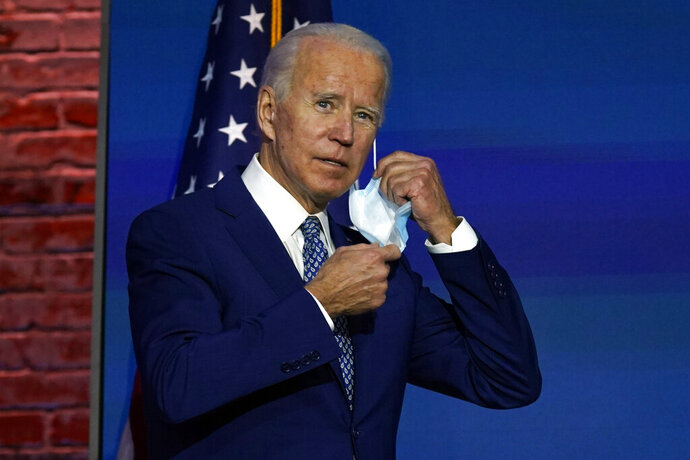
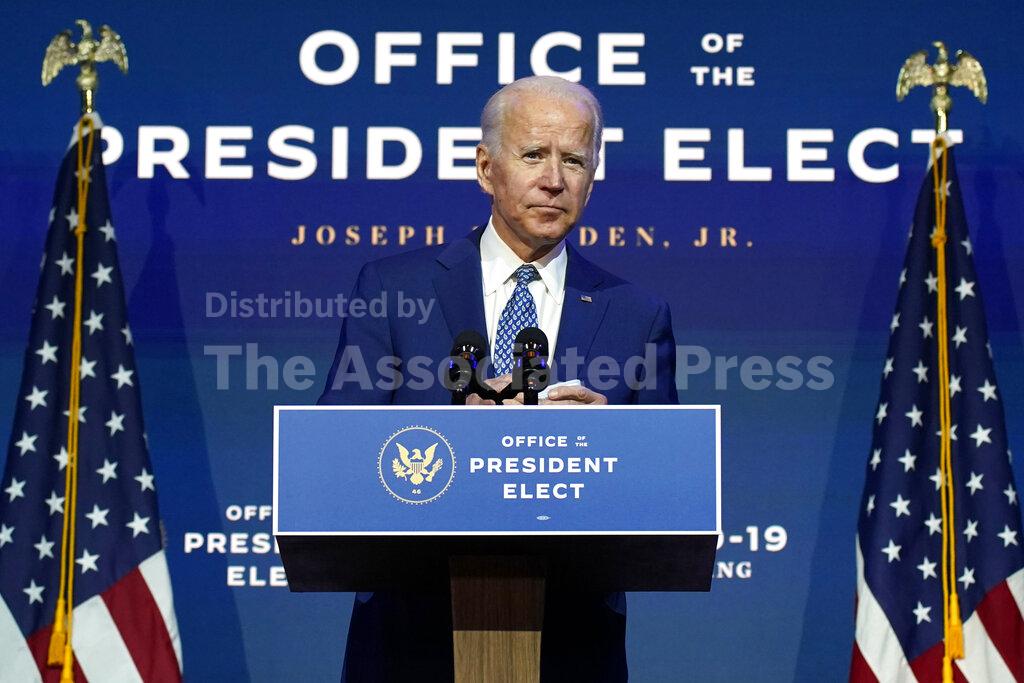
    WILMINGTON, Delaware (AP) — President-elect Joe Biden on Monday implored Americans to wear masks to slow the spread of the coronavirus, even as he cheered news about the promising development of a vaccine being developed by pharmaceutical giant Pfizer.

    View all (6)

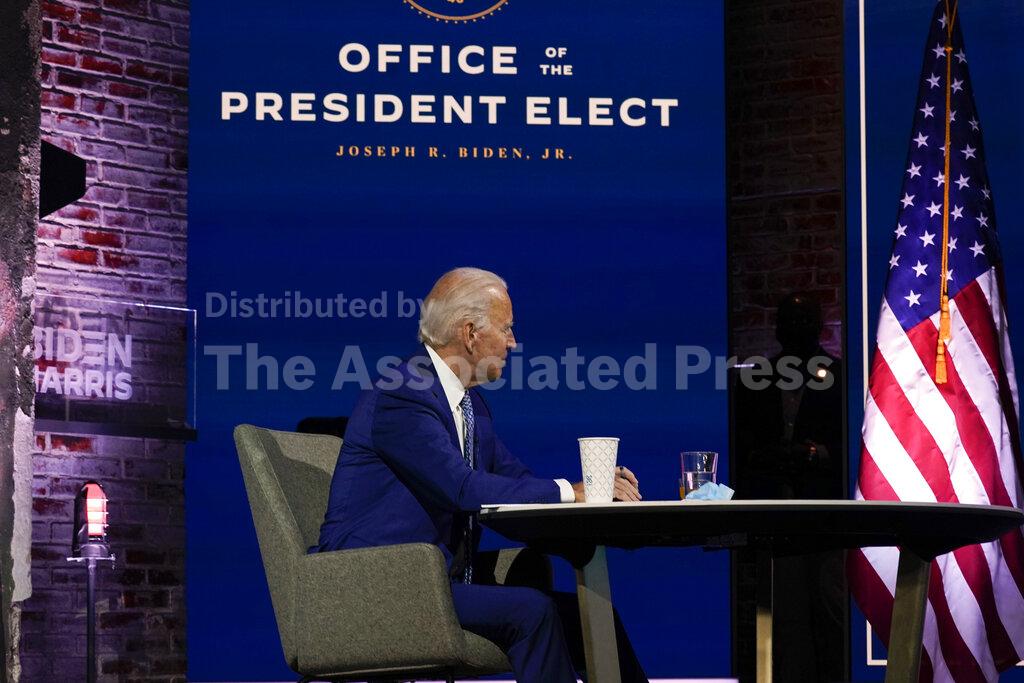
    Biden in remarks after meeting with his newly formed coronavirus advisory board cautioned that Americans still face “a dark winter” and need to be aggressive about mask wearing and social distancing as infections continue to surge around the country. Though Pfizer announced promising results from a vaccine trial and is on track to file an emergency use application with regulators this month, Biden noted it could be months before a vaccine is widely available.

    “We could save tens of thousands of lives if everyone would just wear a mask for the next few months. Not Democratic or Republican lives, American lives,” Biden said. “Please, I implore you, wear a mask.”

    The Democrat’s transition team also unveiled members of Biden’s coronavirus working group tasked with developing his administration’s pandemic response — something Biden says he wants to put in motion as soon as he takes office in January.

    The board will be led by former Surgeon General Dr. Vivek Murthy, former Food and Drug Administration Commissioner David Kessler and Yale University public health care expert Dr. Marcella Nunez-Smith.

    Pfizer, which developed the vaccine with the German drugmaker BioNTech, said it is on track to file an emergency use application with U.S. regulators this month.

    Biden is starting his transition plans as the pandemic climbs to a new high point. Over the past two weeks, the number of confirmed COVID-19 cases has risen nearly 65%: the 7-day rolling average for daily new cases in the U.S. went from 66,294 on Oct. 25 to 108,736.7 on Nov. 8.

    In the past week, 1 out of every 433 Americans was diagnosed with COVID-19. Hospitals in several states are running out of space and staff, and the death toll is soaring. So far, the U.S. has recorded more than 9.8 million infections and more than 237,000 deaths from COVID-19.

    While Biden greeted the news with cautious optimism, President Donald Trump took to Twitter to herald the moment with capital-letters exuberance: “STOCK MARKET UP BIG, VACCINE COMING SOON. REPORT 90% EFFECTIVE. SUCH GREAT NEWS!”

    An interim analysis of the Pfizer vaccine, from an independent data monitoring board, looked at 94 infections recorded so far in a study that has enrolled nearly 44,000 people in the U.S. and five other countries.

    Pfizer says an early peek at its vaccine data suggests the shots may be 90% effective at preventing COVID-19, indicating the company is on track later this month to file an emergency use application with U.S. regulators.

    Trump throughout his campaign said that the nation — even as the infection rate has surged to record highs — was rounding the corner on the coronavirus and that a vaccine was imminent. Vice President Mike Pence was set to hold a meeting of the White House coronavirus task force on Monday. Pence in a tweet called Pfizer’s reported progress “HUGE NEWS.”

    The White House task force, which includes the federal government’s leading infectious disease expert Dr. Anthony Fauci, has been diminished in recent months as Trump grew impatient that efforts to slow the virus was having deleterious impact on the economy.

    After declaring victory Saturday, Biden quickly pivoted from a bitter campaign battle to reining in the pandemic that has hit the world’s most powerful nation harder than any other.

    Biden announced the members of his advisory board will develop a blueprint for fighting the pandemic. It includes doctors and scientists who have served in previous administrations, many of them experts in public health, vaccines and infectious diseases.

    Notable among the members is Rick Bright, a vaccine expert and former head of the Biomedical Advanced Research and Development Authority. He had filed a whistleblower complaint alleging he was reassigned to a lesser job because he resisted political pressure to allow widespread use of hydroxychloroquine, a malaria drug pushed by Trump as a COVID-19 treatment.

    Other members include Dr. Luciana Borio, who had senior leadership positions at the FDA and National Security Council during the Obama and Trump administrations; Dr. Ezekiel Emanuel, who served as a special adviser for health policy in the Obama administration; Dr. Atul Gawande, a senior adviser in the Department of Health and Human Services in the Clinton administration and medical writer; and Michael Osterholm, an epidemiologist who served as an adviser to Health and Human Services Secretary Tommy Thompson during the George W. Bush administration.

    Public health officials warn that the nation is entering the worst stretch yet for COVID-19 as winter sets in and the holiday season approaches, increasing the risk of rapid transmission as Americans travel, shop and celebrate with loved ones.

    “The next two months are going to be rough, difficult ones,” said Dr. Albert Ko, an infectious disease specialist and department chairman at the Yale School of Public Health. “We could see another 100,000 deaths by January.”

    Biden pledged during the campaign to make testing free and widely available; to hire thousands of health workers to help implement contact-tracing programs; and to instruct the Centers for Disease Control and Prevention to provide clear, expert-informed guidelines, among other proposals.

    He also made Trump’s mishandling of the pandemic a central focus of his campaign. But much of what Biden has proposed will take congressional action, and he’s certain to face challenges in a closely divided House and Senate.

    Establishing some consensus with state leaders on a national response, including a nationwide mask mandate, should be a top priority, she said. Opposition to wearing masks remains a stubborn issue, particularly in some of the hardest-hit states.

    “Each state is acting fairly autonomously on their own policies, and we’ve seen how that’s played out,” said Ko, the Yale expert. “This disease needs national and global responses.”

    During his first remarks as president-elect, Biden said Saturday that his COVID-19 task force will create a plan “built on bedrock science” and “constructed out of compassion, empathy and concern.”

    There’s also hope in the wider medical community that a Biden presidency will help restore U.S. leadership on global public health challenges, including the development and distribution of a vaccine when it becomes available.

    Dr. Soumya Swaminathan, the chief scientist of the World Health Organization, said she was more optimistic that a Biden administration would join Covax, a WHO-led project aimed to help deploy vaccines to the neediest people worldwide, whether they live in rich or poor countries.

    “Everyone recognizes that for a pandemic, you cannot have a country-by-country approach. You need a global approach,” Swaminathan said.

    But in Kansas, one of the states seeing a significant surge in virus cases in recent weeks, at least one hospital official remains skeptical about what a new president can do to turn the tide of the pandemic in the U.S.

    “I think the damage is done,” said Kris Mathews, the administrator of Decatur Health, a small hospital in the rural northwest part of the state. “People have made up their minds about how they react to it.”

    __

    Marcelo reported from Boston and Madhani from Chicago. Associated Press writers Heather Hollingsworth in Kansas, Alexandra Jaffe and Thomas Strong in Washington and Jamey Keaten in Geneva contributed to this story

  • Longtime Mississippi Sheriff Dies Of COVID-19 In Alabama

    Longtime Mississippi Sheriff Dies Of COVID-19 In Alabama

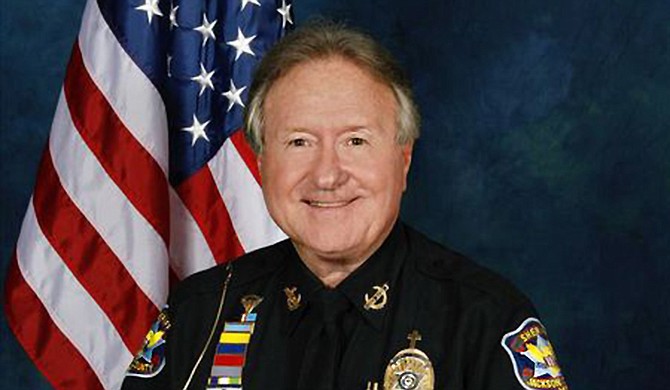
    PASCAGOULA, Miss. (AP) — A longtime Mississippi sheriff has died of COVID-19 in the hospital where he was being treated.

    The Sun Herald reported that former Jackson County Sheriff Mike Byrd died Thursday on his 71st birthday after battling the illness caused by the new coronavirus.

    Byrd had been hospitalized on a ventilator at a hospital in Mobile, Alabama, and the sheriff’s department announced his death on its Facebook page.

    Byrd, who served four terms as sheriff, resigned in 2013 before pleading to state and federal charges involving his office. He was still known as a devout Christian who sang gospel music and was a good friend and family man.

    “Mike had the greatest personality,” said Circuit Clerk Randy Carney. “Every time I saw him, he would hug my neck. Mike would tell me, ‘Man, if you need anything, just let me know,’ He had a great sense of humor.”